SCRIPTURAL READING He has provided us a mighty Saviour, a descendant of His servant David. He promised through His holy prophets long ago, that He would save us from our enemies, from the power of all those who hate us. He said He would show mercy to our ancestors and remember His sacred covenant. With a solemn oath to our ancestor Abraham, He promised to rescue us from our enemies and allow us to serve Him without fear, so that we might be holy and righteous before Him all the days of our life in His presence...(Lk. 1:69-75)
MEDITATION
“Do not be afraid Mary, God has been gracious to you. You will become pregnant and give birth to a son and you will name him Jesus. He will be great and will be called the Son of the Most High God.’ Mary said to the angel, ‘ I am a virgin, how then can this be?’ The angel answered: ‘The Holy Spirit will come on you and God’s power will rest upon you. For this reason, the holy Child will be called the Son of God.”…(Lk. 1:30-35)
PRAYER
Lord Jesus Christ,
You gave us the Eucharist
as a memorial of Your suffering and death,
may our worship of the Sacrament of Your Body and Blood,
help us to experience the salvation You won for us
and the peace of the kingdom
where You live with the Father
and the Holy Spirit,
one God, forever and ever.
Bless me through the marvellous goodness
of Your Sacred Heart, which chose death to bring us life.
Bless me through the love with which You plead for us
before the throne of God,
bless me in the Blessed Sacrament
with which You give Yourself to me in Holy Communion.
Grant that all this love and bitter pain,
may not be lost on me.
Eternal Son, in Your mercy, grant my petition:
…………………….(mention your petition)
Most Holy Trinity, Godhead indivisible,
Father, Son, and Holy Spirit,
our first beginning and our last end,
You have made us after Your own image and likeness.
Grant that all the thoughts of my mind,
all the words of my mouth,
all the affections of my heart
and all my actions be always conformed to Your holy Will.
After having seen You here below in Your manifestations and by faith,
may I come at last to see You face to face,
in the perfect possession of You forever in heaven.
Amen
Our Morning Offering – 22 May “Mary’s Month!” Tuesday of the 7th Week in Ordinary Time Year B
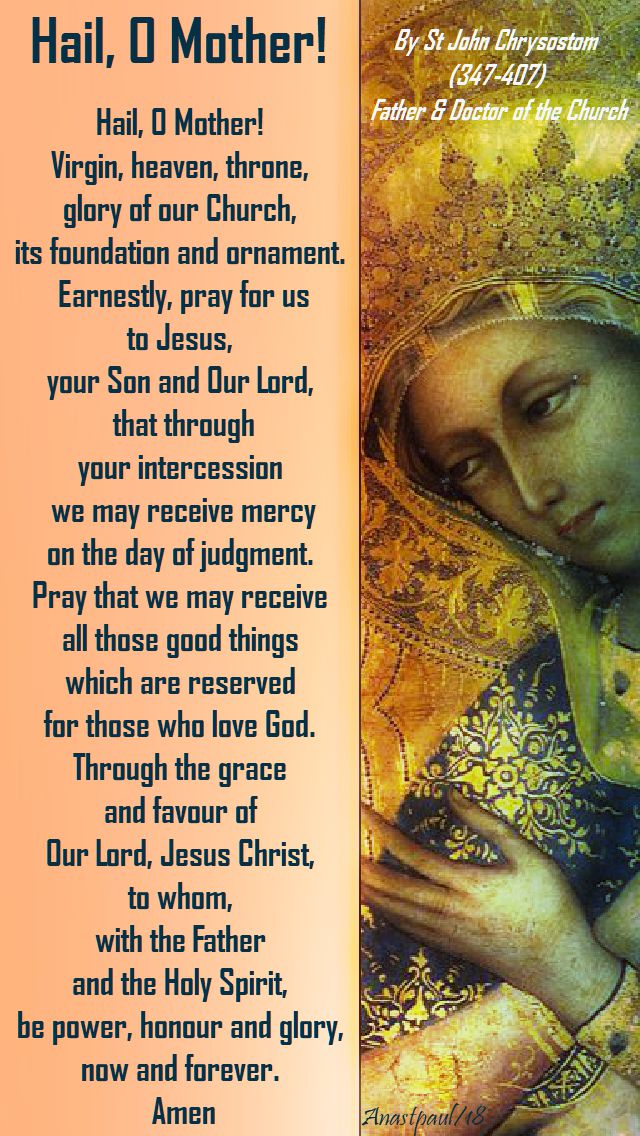
Hail, O Mother! By St John Chrysostom (347-407) Father & Doctor of the Church
Hail, O Mother!
Virgin, heaven, throne,
glory of our Church,
its foundation and ornament.
Earnestly, pray for us to Jesus,
your Son and Our Lord,
that through your intercession
we may receive mercy
on the day of judgment.
Pray that we may receive
all those good things
which are reserved for those who love God.
Through the grace
and favour of Our Lord, Jesus Christ,
to whom,
with the Father
and the Holy Spirit,
be power, honour and glory,
now and forever.
Amen
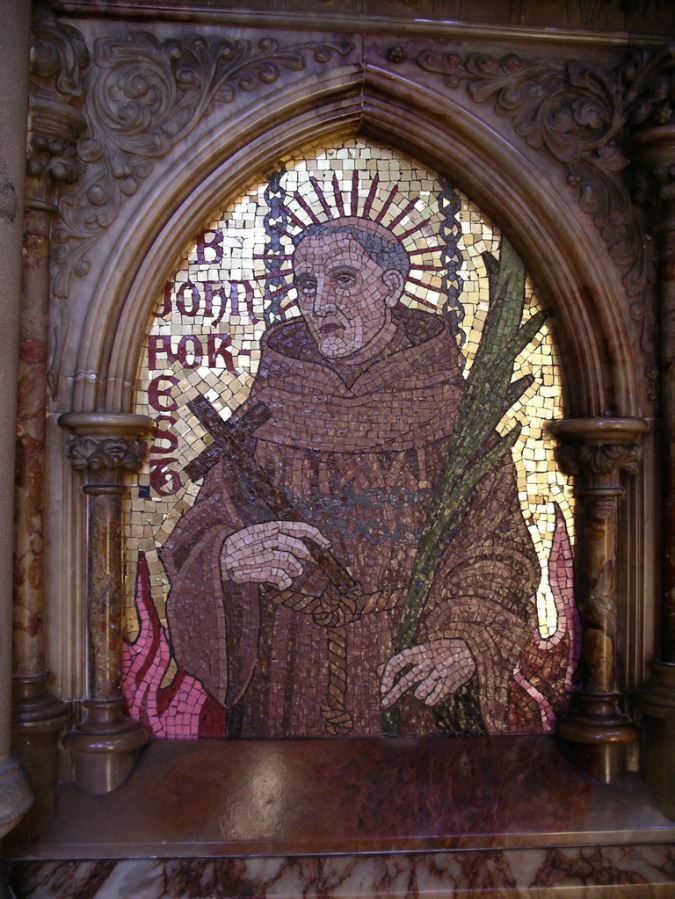
Saint of the Day – 22 May – Bl John Forest O.F.M. (1471-1538) Martyr – Franciscan Priest and Friar and Martyr – Born in 1471 at Oxford, England – died by being hanged and burned on 22 May 1538 at Smithfield, England. Additional Memorial – 1 December as one of the Martyrs of Oxford University.
Already by the 15th century, England was upset about church and country relations. Many of the people were very proud to be English; in fact too proud. They did not want to listen to their Bishops and Priests and they did not want to obey the Pope in Rome. They felt that they knew what was best concerning the laws of the church and the laws of the country but they were wrong, very, very wrong.
During this period of time, in 1471, a very great man was born; his name was John Forest. He was born at Oxford, England of noble, well-to-do parents. In spite of their wealth, John did not become a worldly person and during his boyhood, he got a very good religious education. When he was 21 years old, he entered the Strict Franciscan Order at the Greenwich Monastery. He proved to be a very brilliant student when he was sent to study at Oxford and there he received his doctorate in Theology, when he was about 26 years old.
In time, John Forest became a Franciscan priest. As the years passed, Fr Forest became known as a very holy and learned man. And in 1520, when he was about 49 years old, the Franciscan brothers elected him as the Provincial Superior. Then five years later, Cardinal Wolsey appointed him to be a regular preacher at St Paul’s, in the capital, London.
Then there quickly followed the appointment that was to lead him down the narrow road to martyrdom. Catherine of Aragon was married to Henry VIII, the King of England. She was a very devout Third Order Franciscan and asked Fr Forest to become her Confessor and Chaplain. But before King Henry VIII got married to Catherine of Aragon, he had to get a dispensation from Pope Julius, to marry the widow of his dead brother. Catherine was actually his sister-in-law. The Pope gave the dispensation and after Henry and Catherine were married they had three sons and a daughter, Princess Mary. Little Mary lived o, but the three boys died. In time King Henry wanted to get an annulment from the Pope. Henry figured that since he had to get permission to marry his sister–in-law in the first place, the Pope could now give him an annulment. But the King was in for a big surprise when the Pope said he would not give Henry an annulment, their marriage was valid and he should stay married to his good wife Catherine.
By now, King Henry was already starting to look at another woman,her name was Anne Boleyn. And to make matters worse, Anne was also looking at King Henry. Now, both you and I know that it is wrong to desire to have another man or woman, when you are already married. Henry’s second desire, was to have a male heir to the throne, he wanted a King to rule England, not a Queen!
Covetousness and Pride; these were Henry’s faults. In 1527, Henry asked Pope Clement VII to annul the marriage, or to grant him a divorce. But when the good Pope refused to go along with the king’s stupid ideas, Henry was most angry. He got a divorce from Catherine and married Anne Boleyn, he didn’t care what the Pope told him to do. In 1533, the Pope declared that King Henry was truly married to Catherine and that he was not married to Anne Boleyn. Because of this, Henry VIII hated Catherine and all that was connected with her. Now, not only Catherine, but also young Princess Mary and Fr Forest as well, suffered from the King’s anger. Henry thought that when his wife Catherine had written to the Pope, that Fr Forest should have stopped her from doing so.
Fr Forest and the other Franciscan Friars lived at Greenwich, near King Henry’s palace. The friars discussed Henry’s affairs among themselves and they thought that they had nothing to fear from Henry because he had always admired these friars. In fact, in the past, King Henry had written to Pope Leo X, telling him: “I admire the holiness and life of the Greenwich Franciscans. I find it quite impossible to describe their merits, as they deserve. They present an ideal of Christian poverty, sincerity and charity. Their lives are devoted to fasting, watching and prayer. They are occupied in hard toil by day and night, to win sinners back to God.”
After, their discussions, the friars, especially Fr Forest, sided with Queen Catherine and not Henry VIII. They knew that Henry was in the wrong and that Catherine was right. When Henry found out that the friars were against him, he demanded that Fr Forest be replaced by another person. After a meeting, Fr Forest was moved to a convent in the North and later, in 1534, King Henry had the holy priest cast into prison at Newgate. While in this prison, Fr Forest spent his time in prayer and in writing a book, defending the Pope and the Church. His reason for writing this book was because King Henry VIII had left the Catholic Church and was now calling himself the “Supreme Head of the Church” of England. Only the Pope is the Head of the Church Henry was making a terrible mistake! When Henry found out that Fr Forest had written this book, the King was furious. He condemned the holy priest to death, because he refused to recognise the King as the Head of the Church, in England.
Henry also persecuted the Strict Franciscan Friars in England. He took away all their monasteries and cast many of them into prison, where fifty of them died. But a good friend also helped a lot of these good friars to escape to France and Scotland.
Because Fr Forest did not expect to be long in prison, he sent his rosary to Queen Catherine. In a letter he had sent with the rosary, he had written: “I presume to make you a poor present of my beads, as I have been given only three more days to live on this earth.”He was now 63 years old and had been a monk for forty-three years.
But Fr Forest’s sufferings were just beginning, he was to be in prison for four years, (1534-1538). During this long time in prison, King Henry had sent men to question and torture Fr Forest, so that he would break down and follow Henry’s new law. But the good priest chose to suffer, rather than give up his faith. Catherine died a few years before Fr Forest did and during her life she did all she could to ease the sufferings of the good priest. After two more years of imprisonment, Fr. Forest was condemned to be hanged over a fire and slowly burned to death because he would not swear that the King was the Supreme Head of the Church of England.
On 22 May 1538, Fr Forest’s hands and feet were tied to a hurdle and he was dragged to the place of execution at Smithfield, near a Franciscan Monastery. Upon arrival, the poor priest was forced to listen to an hours talk on the glories of the Supreme Headship of King Henry, given by Bishop Latimer, who had become an apostate. Then Fr Forest’s tortures began, chains were wrapped around his waist and under his armpits and then he was suspended in the air above a fire. The fire was kept low so that it would burn his feet and cause the poor priest even more suffering. And all the while a bunch of apostates scoffed and jeered at the holy priest. Throughout the two long hours that Fr Forest swayed over the fire, he prayed: “In the shadow of Thy wings I will trust, O God, until iniquity pass away.”
John Forest was the only Catholic martyr to be burned at the stake. Extra fuel for the pyre is said to have been provided by an enormous statue of St Derfel, from the pilgrimage site of Llandderfel in north Wales and of which it was prophesied, would “one day set a forest on fire.” Fr Forest, together with fifty-three other English martyrs, was Beatified by Pope Leo XIII on 9 December 1886. His relics rest near the priory gate of at Smithfield.
The tough times are returning. We are fighting to keep the Catholic Faith, so be faithful in saying your Rosary, wearing the Brown Scapular and being a good Catholic and God will help you now and in the tough times. Blessed John Forest—Pray for Us!
Bl John Forest, nave statue – St Etheldreda, Ely Place, London
St Rita of Cascia (Optional Memorial)
—
St Aigulf of Bourges
St Atto of Pistoia
St Aureliano of Pavia
St Ausonius of Angoulême
St Baoithin of Ennisboyne
St Basiliscus of Pontus
St Bobo of Provence
St Boethian of Pierrepont
St Castus the Martyr
St Conall of Inniscoel
Bl Diego de Baja
Bl Dionisio Senmartin
St Emilius the Martyr
St Faustinus the Martyr
St Francisco Salinas Sánchez
St Fulgencio of Otricoli
Bl Fulk of Castrofurli
Bl Giacomo Soler
Bl Giusto Samper
St Helen of Auxerre
St Humility of Faenza
Bl John Baptist Machado
Bl John Forest O.F.M. (1471-1538) Martyr of Oxford University
St John of Parma
St José Quintas Durán
St Julia of Corsica
St Lupo of Limoges
St Marcian of Ravenna
St Margaret of Hulme
Bl Maria Rita Lopes Pontes de Souza Brito
Bl Pedro of the Assumption
St Quiteria
St Romanus of Subiaco
St Timothy the Martyr
St Venustus the Martyr
—
Martyred in the Spanish Civil War:
• Blessed Francisco Salinas Sánchez
• Blessed José Quintas Durán
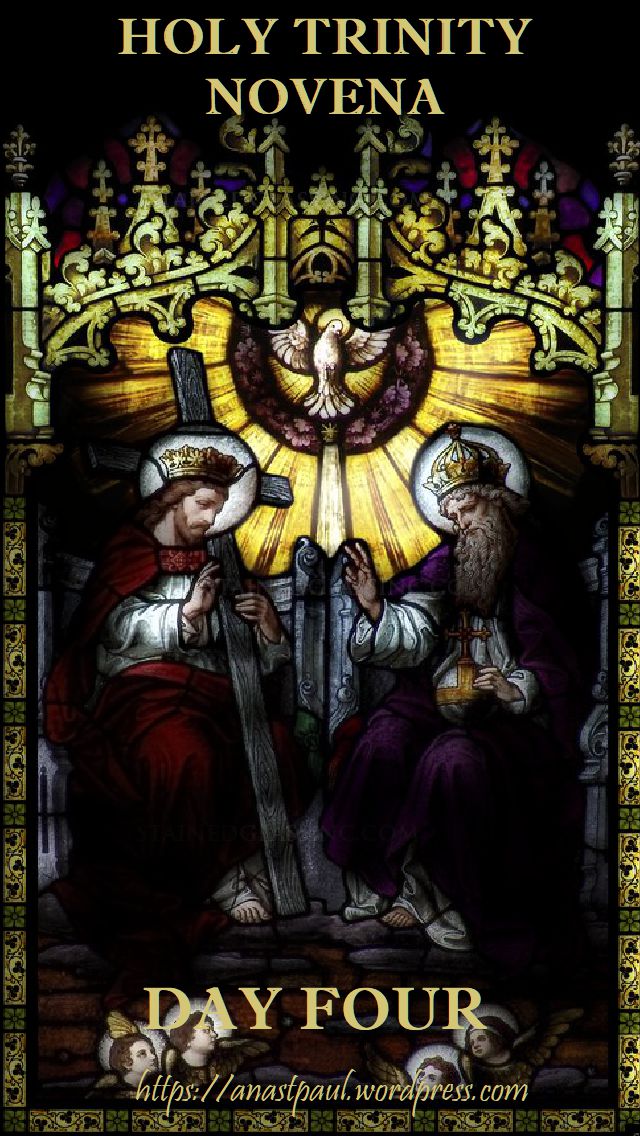
DAY FOUR GOD THE CREATOR (Father) “In the beginning, when God created the universe”
SCRIPTURAL READING
In the beginning, when God created the Heavens and the earth, the earth was a formless wasteland and darkness covered the abyss, while the mighty wind swept over the waters.
Then God said, “Let there be light,” and there was light. God saw how good the light was. God then separated the light from the darkness. God called the light “day,” and the darkness he called “night.” Thus evening came, and the morning followed – the first day.
Then God said: “Let there be a dome in the middle of the waters, to separate one body of water from another.” And so it happened: God made the dome, and it separated the water above the dome from the water below it. God called the dome “the sky.” Evening came, and morning followed – the second day.
Then God said, “Let the water under the sky be gathered into a single basin, so that the dry land may appear.” And so it happened: the water under the sky was gathered into a basin, and the land appeared…Genesis 1:1-9
MEDITATION “And so the whole universe was completed. By the seventh day, God finished what He had been doing and stopped working. He blessed the seventh day and set it apart as special, because by that day He had completed His creation and stopped working and that is how the universe was created.” ...Genesis 2:1-4
PRAYER
God Eternal Father,
bless me through the love,
with which You have begotten Your only Son
from all eternity and shared with Him,
the fullness of Your Divinity.
Bless me through the love, which has adopted us as children
and made us partakers, of the treasures of Your Divinity.
Bless me through the love, which sent us Your Son
and the Holy Spirit to work the miracles of Your power
and mercy in us.
Grant that I may always revere and honour You
as my great God
and love You with my whole heart
as the best of fathers.
Eternal Father, please grant my petition:
…………………….(mention your petition)
Godhead indivisible, Father, Son and Holy Spirit,
our first beginning and our last end,
You have made us after Your own image and likeness.
Grant that all the thoughts of my mind,
all the words of my mouth,
all the affections of my heart
and all my action, be always conformed to Your holy Will.
After having seen You here below in Your manifestations
and by faith, may I come at last,
to see You face to face,
in the perfect possession of You
forever in heaven. Amen.
Moses said: “The Lord, the lord, a merciful and gracious God, slow to anger and rich in kindness and fidelity, continuing His kindness for a thousand generation, and forgiving wickedness and crime and sin; yet not declaring the guilty, guiltless, but punishing children and grandchildren to the third and fourth generation for their fathers’ wickedness!” (Ex. 34, 6-7)
Marian thought for the Day – 21 May 2018 “Mary’s Month!” – The First Memorial of Mary, Mother of the Church
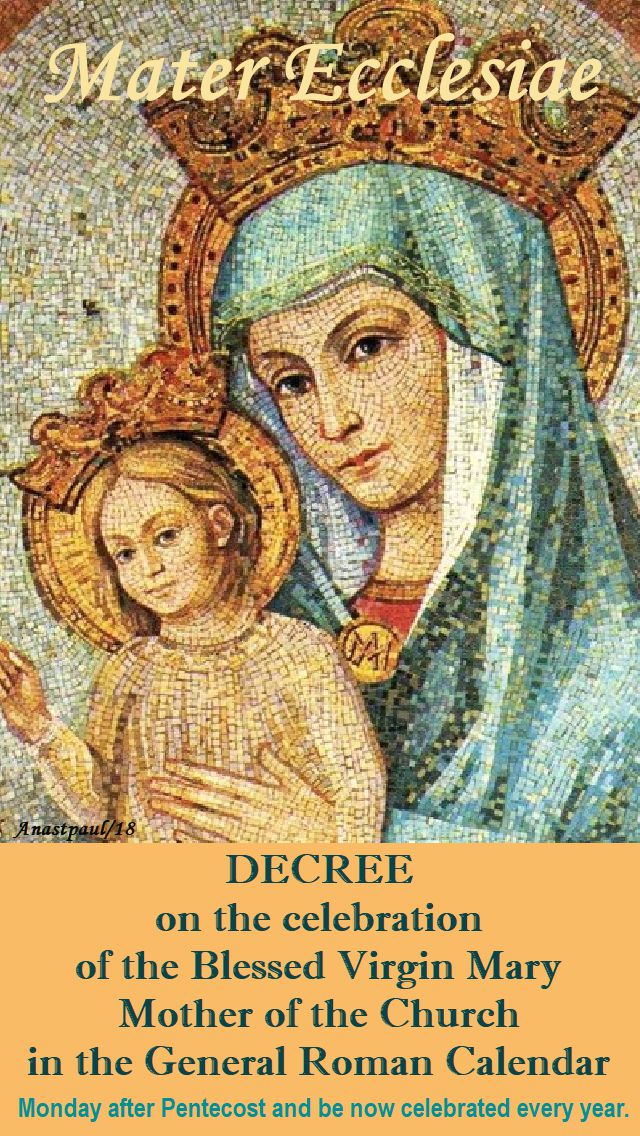
“Mary Mother of the Church, Mater Ecclesiae
our new Universal Memorial today!
Blessed Pope Paul VI explicitly proclaimed Mary Mother of the Church and asked that she be honoured and invoked with this title by all the Christian people.
The title “Mother of the Church” thus reflects the deep conviction of the Christian faithful, who see in Mary not only the mother of the person of Christ but also of the faithful. She who is recognised as mother of salvation, life and grace, mother of the saved and mother of the living, is rightly proclaimed Mother of the Church.
Pope Paul VI would have liked the Second Vatican Council itself to have proclaimed “Mary Mother of the Church, that is, of the whole People of God, of the faithful and their Pastors”. He did so himself in his speech at the end of the Council’s third session (21 November 1964), also asking that “henceforth the Blessed Virgin be honoured and invoked with this title by all the Christian people” (AAS 1964, 37).
In this way, my venerable Predecessor explicitly enunciated the doctrine contained in chapter eight of Lumen gentium, hoping that the title of Mary, Mother of the Church, would have an ever more important place in the liturgy and piety of the Christian people.” – St Pope John Paul II (1920-2005)
“We need to meditate frequently on the fact that the Church is a deep, great mystery, so that we never forget it. We cannot fully understand the Church on this earth. If men, using only their reason, were to analyse it, they would see only a group of people who abide by certain precepts and think in a similar way. But that would not be the Church.
In the Church we Catholics find our faith, our norms of conduct, our prayer, our sense of fraternity. Through it we are united with all our brothers and sisters who have already left this life and are being cleansed in Purgatory—the Church suffering—and with those who already enjoy the beatific vision and love forever the thrice holy God—the Church triumphant. The Church is in our midst and at the same time transcends history. It was born under the mantle of our Lady and continues to praise her on earth and in heaven as its Mother (“The Supernatural Aim of the Church,” 28 May 1972).
If we become identified with Mary and imitate her virtues, we will be able to bring Christ to life, through grace, in the souls of many who will in turn become identified with him through the action of the Holy Spirit. If we imitate Mary, we will share in some way in her spiritual motherhood. And all this silently, like Our Lady; without being noticed, almost without words, through the true and genuine witness of our lives as Christians, and the generosity of ceaselessly repeating her fiat, which we renew as an intimate link between ourselves and God.” – St Josemaria Escrivá (1902-1975) – Friends of God, 281-283
“….We have spoken about Mary, about Jesus. What about us? We who are the Church? What kind of love do we bring to others? Is it the love of Jesus that shares, that forgives, that accompanies, or is it a watered-down love, like wine so diluted that it seems like water? Is it a strong love, or a love so weak that it follows the emotions, that it seeks a return, an interested love? Another question: is self-interested love pleasing to Jesus? No, it is not because love should be freely given, like His is. What are the relationships like in our parishes, in our communities? Do we treat each other like brothers and sisters? Or do we judge one another, do we speak evil of one another, do we just tend our own vegetable patch? Or do we care for one another? These are the questions of charity!
And briefly, one last aspect: Mary as the model of union with Christ. The life of the Holy Virgin was the life of a woman of her people: Mary prayed, she worked, she went to the synagogue… But every action was carried out in perfect union with Jesus. This union finds its culmination on Calvary, here Mary is united to the Son in the martyrdom of her heart and in the offering of his life to the Father for the salvation of humanity. Our Lady shared in the pain of the Son and accepted with Him the will of the Father, in that obedience that bears fruit, that grants the true victory over evil and death.
The reality Mary teaches us, is very beautiful: to always be united with Jesus. We can ask ourselves: do we remember Jesus only when something goes wrong and we are in need, or is ours a constant relation, a deep friendship, even when it means following him on the way of the Cross?
Let us ask the Lord to grant us His grace, His strength, so that the model of Mary, Mother of the Church, may be reflected in our lives and in the life of every ecclesial community. So be it!”...Pope Francis 23 October 2013
Quote/s of the Day – 21 May 2018 “Mary’s Month!” – The First Memorial of Mary, Mother of the Church and the Memorial of St Eugene de Mazenod (1782-1861)
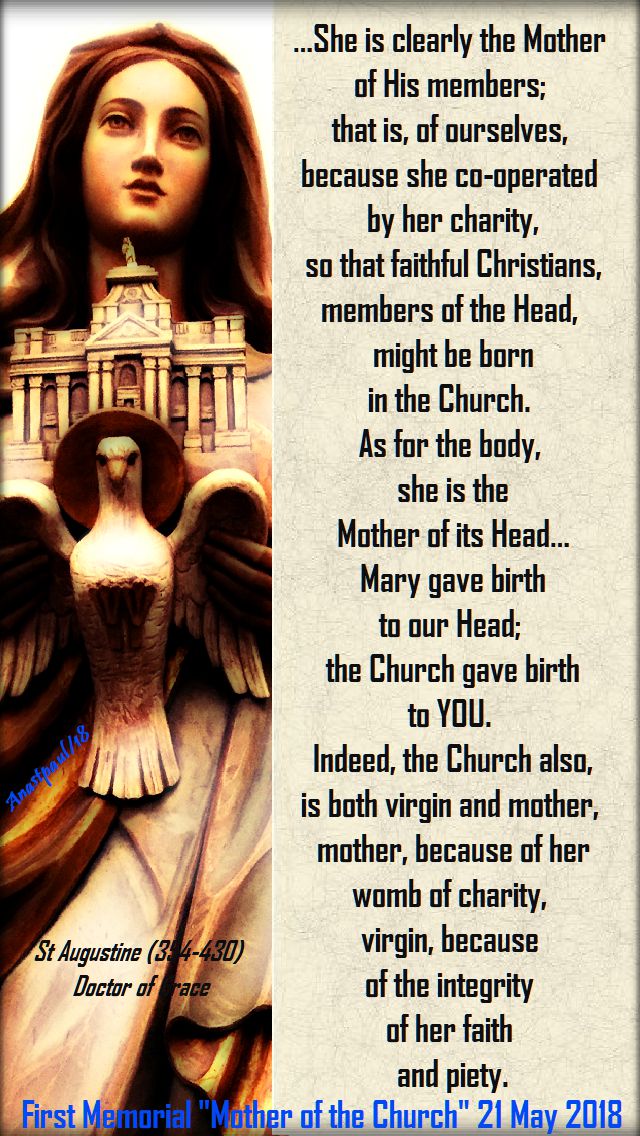
“…She is clearly the Mother of his members; that is, of ourselves, because she cooperated by her charity, so that faithful Christians, members of the Head, might be born in the Church. As for the body, she is the Mother of its Head… Mary gave birth to our Head; the Church gave birth to you. Indeed, the Church also, is both virgin and mother, mother, because of her womb of charity, virgin, because of the integrity of her faith and piety.”
St Augustine (354-430) Doctor of Grace
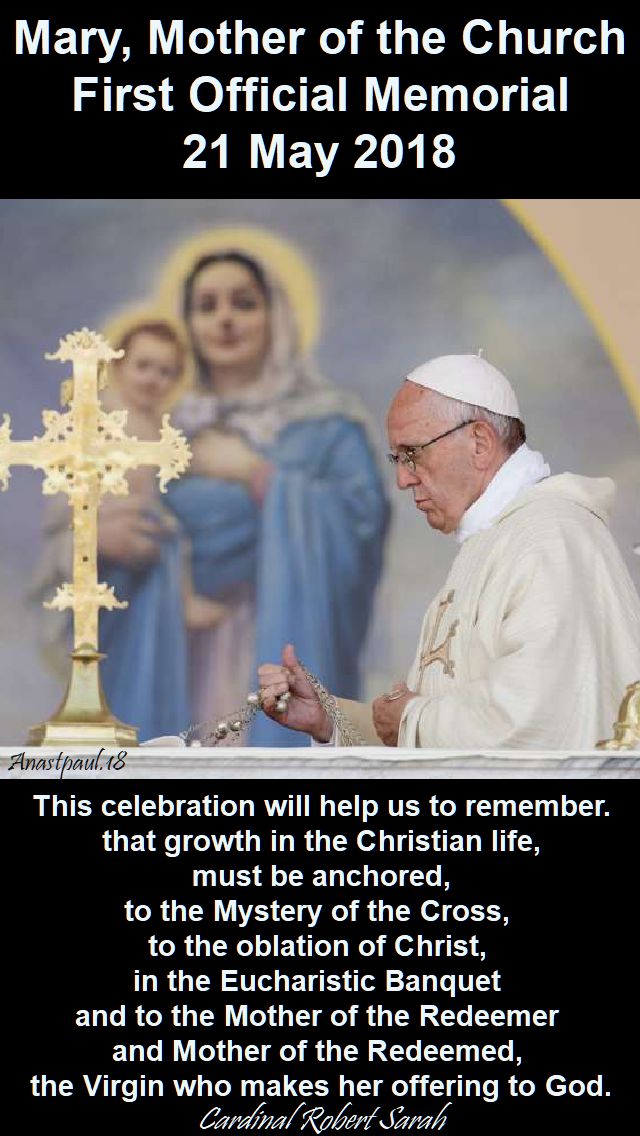
“This celebration will help us to remember. that growth in the Christian life, must be anchored to the Mystery of the Cross, to the oblation of Christ in the Eucharistic Banquet and to the Mother of the Redeemer and Mother of the Redeemed, the Virgin who makes her offering to God.”
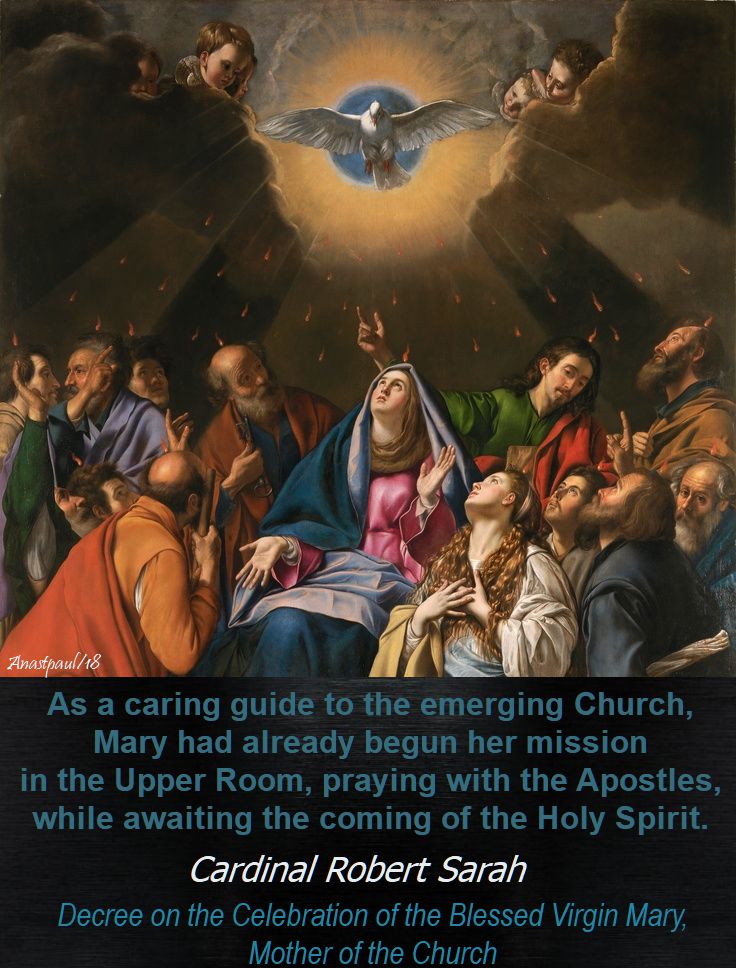
“As a caring guide to the emerging Church, Mary had already begun her mission in the Upper Room, praying with the Apostles, while awaiting the coming of the Holy Spirit.”
Cardinal Robert Sarah
Congregation of Divine Worship and the Discipline of the Sacraments, 11 February 2018, the memorial of the Blessed Virgin Mary of Lourdes. DECREE ON THE CELEBRATION OF THE BLESSED VIRGIN MARY, MOTHER OF THE CHURCHIN THE GENERAL ROMAN CALENDAR
“We glorify God in the masterpiece of His power and love… it is the Son whom we honour in the person of His Mother.”
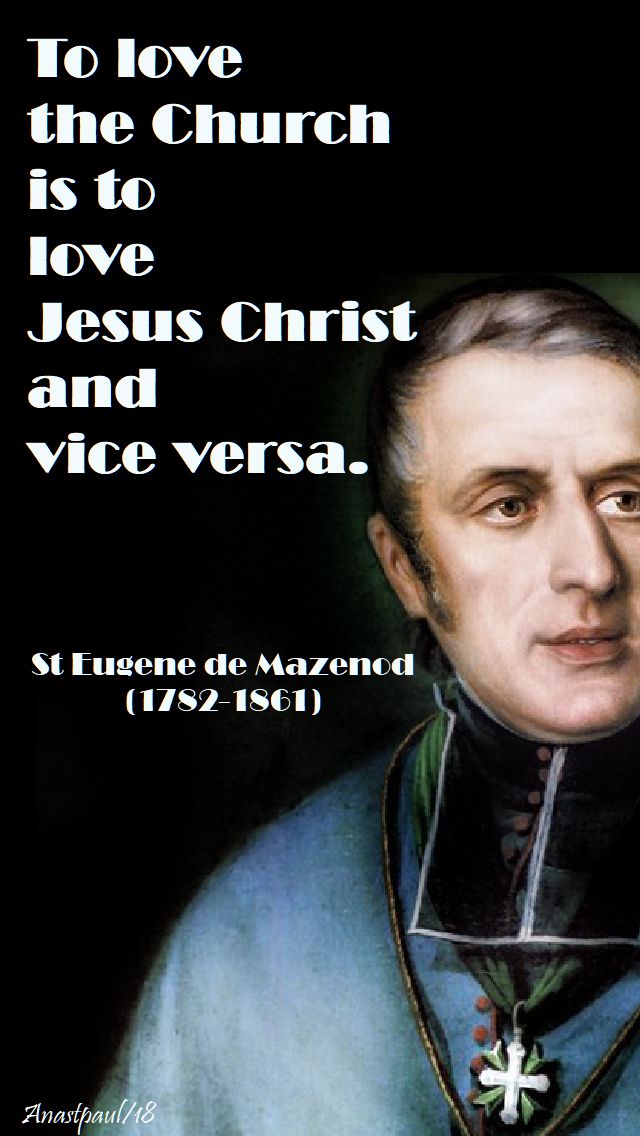
“To love the Church is to love Jesus Christ and vice versa.”
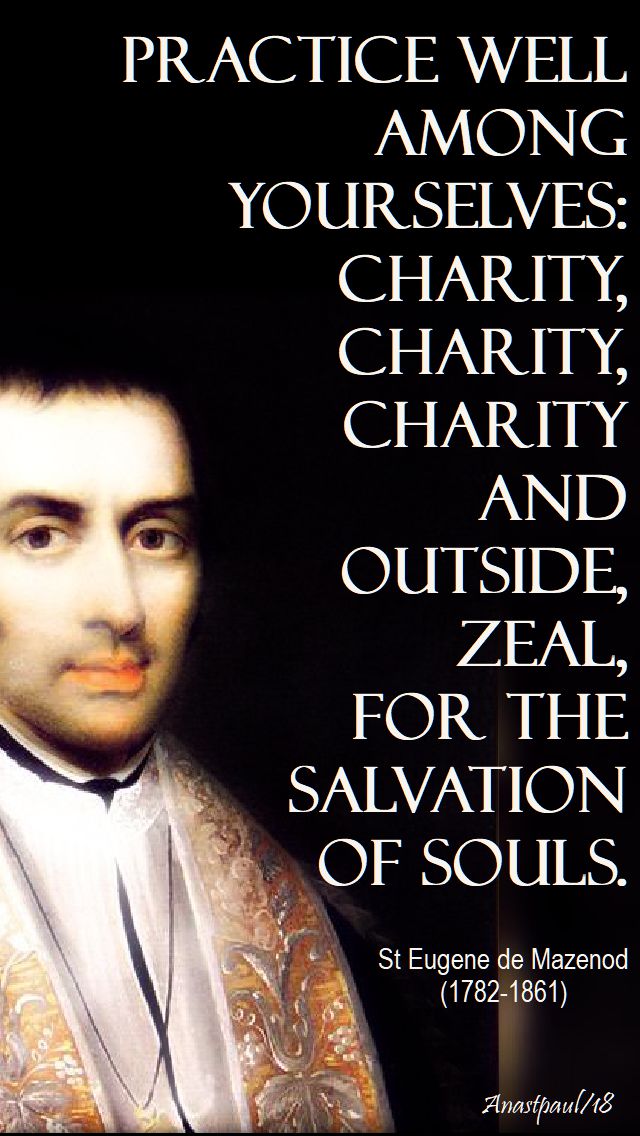
“Practice well among yourselves: charity, charity, charity and outside, zeal for the salvation of souls”
One Minute Marian Reflection – 21 May 2018 “Mary’s Month!” – The First Memorial of Mary, Mother of the Church
And Mary kept all these things, reflecting on them in her heart….Luke 2:19
REFLECTION – “MARY’S PRAYER – “Let us ask the Blessed Virgin to make us contemplatives, to teach us to recognise the constant calls from God at the door of our heart. Let us ask her now: Our Mother, you brought to earth Jesus, who reveals the love of our Father God. Help us to recognise Him in the midst of the cares of each day. Stir up our mind and will so that we may listen to the voice of God, to the calls of grace.” …St Josemaria Escrivá (1902-1975) – “Cause of Our Joy,” Christ is Passng By, 174. Let us offer to our Mother today: A visit to Jesus truly present in the Blessed Sacrament.
PRAYER – Lord God, You bestowed the Holy Spirit on Your Apostles while they were at prayer with Mary, the Mother of Jesus. Fill us too with the gift of Your grace in the Holy Spirit, that we may live our lives both in prayer and action and grant, that by Mary’s prayer, we may give You faithful service and spread abroad the glory of Your name, by word and example. We make our prayer through Christ our Lord, Your divine Son, in union with the Holy Spirit, one God, forever and ever, amen.
Our Morning Offering – 21 May 2018 “Mary’s Month!” – The First Memorial of Mary, Mother of the Church
Prayer to Mary, Mother of the Church and Mother of our Faith
By our Holy Father, Pope Francis
Mother, help our faith! Open our ears to hear God’s word and to recognise His voice and call. Awaken in us a desire, to follow in His footsteps, to go forth from our own land and to receive His promise. Help us to be touched by His love, that we may touch Him in faith. Help us to entrust ourselves fully to Him and to believe in His love, especially at times of trial, beneath the shadow of the cross, when our faith is called to mature. Sow in our faith the joy of the Risen One. Remind us that those who believe are never alone. Teach us to see all things with the eyes of Jesus, that He may be light for our path. And may this light of faith, always increase in us, until the dawn of that undying day, which is Christ Himself, your Son, our Lord! Amen
Prayer to Mary at the conclusion of the Encyclical Lumen Fidei (29 June 2013) Image of Mary – Our Lady of the Column in St Peter’s Basilica
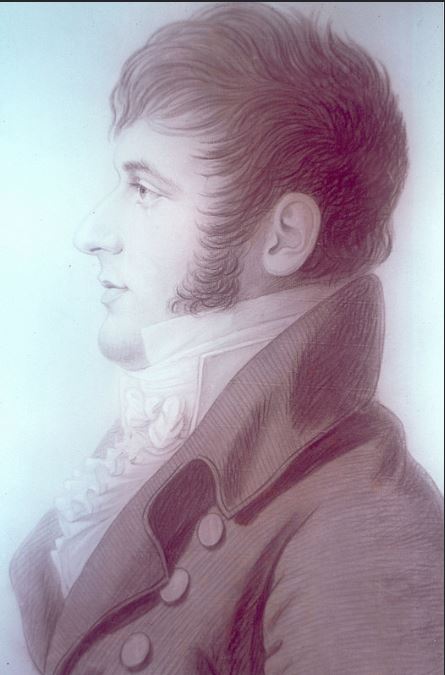
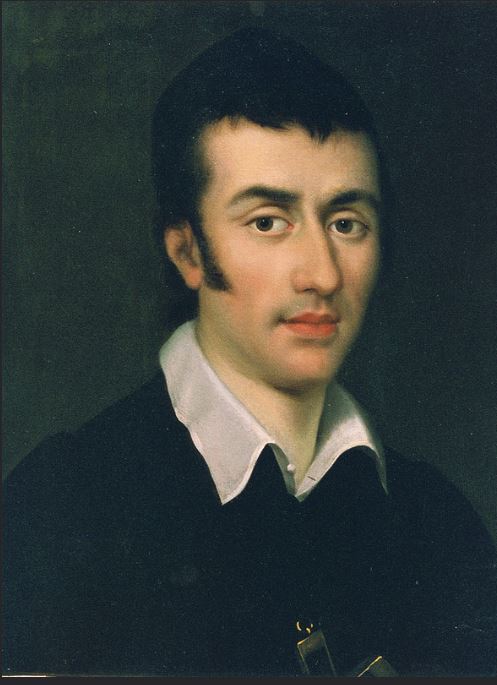
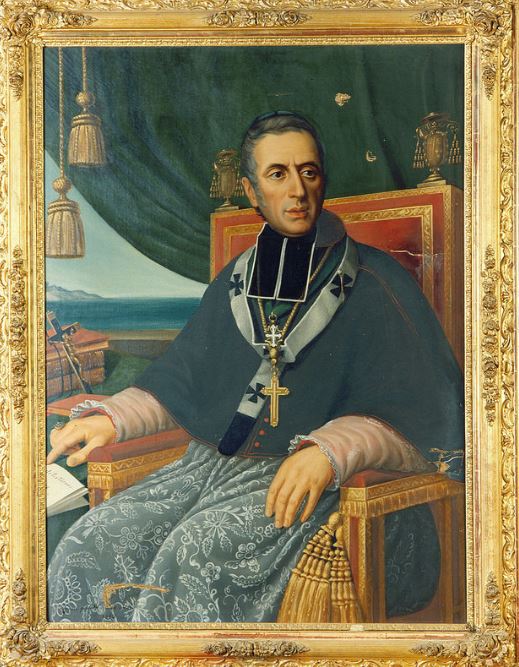
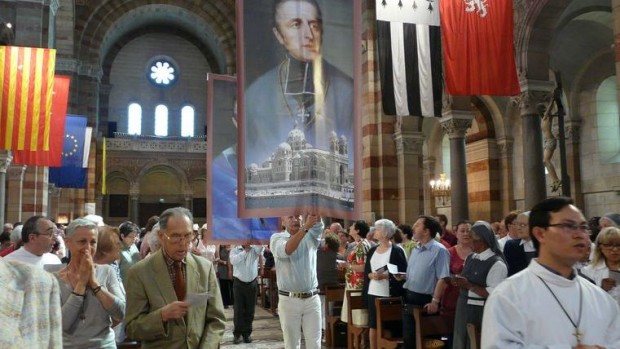
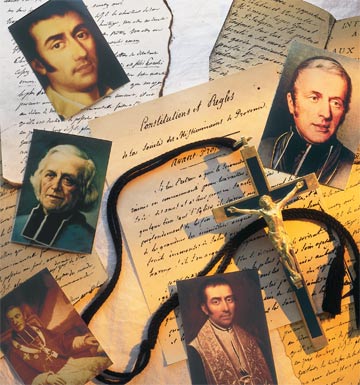
Saint of the Day – 21 May – St Eugene de Mazenod O.M.I. (1782-1861) Priest, Bishop, Founder of the Oblates of Mary Immaculate, Evangeliser, Missionary Preacher, Apostle of the poor and marginalised – born Charles-Joseph-Eugène de Mazenod on 1 August 1782 at Aix-en-Provence, southern France and died on 21 May 1861 at Marseille, France of cancer. When his body was exhumed in 1936 it was found to be incorrupt. Patronages – refugees, missionaries, families.
Eugene de Mazenod was born into an aristocratic family, on 1 August 1782 and baptised the following day in the Église de la Madeleine in Aix-en-Provence. His father, Charles Antoine de Mazenod, was one of the Presidents of the Court of Finances and his mother was Marie Rose Joannis. Eugene began his schooling at the College Bourbon but this was interrupted by the events of the French Revolution. With the approach of the French revolutionary forces, the family was forced to flee to Italy.
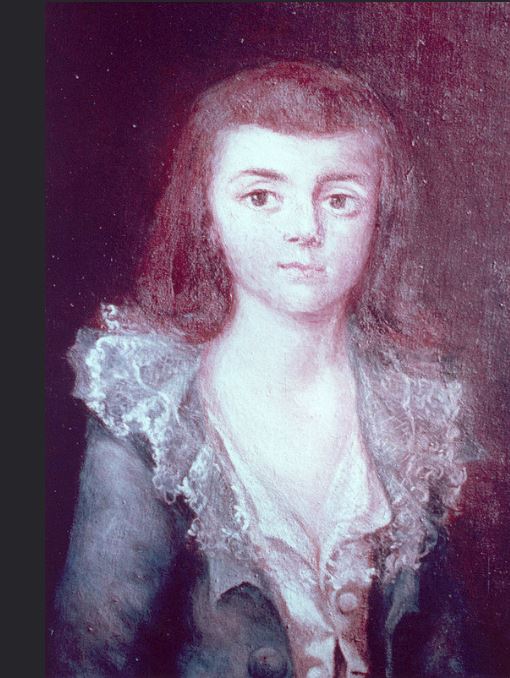
St Eugene aged 5
He became a boarder at the College of Nobles in Turin but a move to Venice meant the end to formal schooling. With their money running out, Eugene’s father was forced to seek various employments, none of which were successful. His mother and sister returned to France – eventually seeking a divorce so as to be able to regain their property that had been seized. Eugene was fortunate to be welcomed by the Zinelli family in Venice. This is how it happened:
One day when Eugene was playing at the window of his house, Fr Bartolo Zinelli (1766-1803) appeared on the other side of the street and asked him, “Are you not afraid of wasting your time?” “Alas, responded Eugene, it is really awful, but what can I do? I am a foreigner here without any books available to me.” “Well, then”, replied Don Bartolo, “I am right in my library at the moment and here I have many books in Latin, Italian and French.” Having said this, he took up the stick that was used to bar the shutters and put a book on it and passed it over the narrow, approximately one and one half meter street.
After having read the book, Eugene, following the advice of his father, went to Don Bartolo’s house to thank him for this kind gesture. “Well,” said Don Bartolo, “do you see this lovely library? All of these books are available to you as well.” Then, Don Bartolo showed Eugene his study where he and his brother Don Pietro used to study and told him, “You can take the place here of my younger brother who has died.” Eugene could not contain his joy. “Well, then, you can begin tomorrow already.”
Fr Bartolo Zinelli took special care of Eugene and saw to his education in the well-provided family library where the young adolescent spent many hours each day and was a major influence in the human, academic and spiritual development of Eugene.
Once again the French army chased the émigrés from Venice, forcing Eugene and his father and two uncles to seek refuge in Naples for less than a year and, finally, to flee to Palermo in Sicily. Here Eugene was invited to become part of the household of the Duke and Duchess of Cannizaro as a companion to their two sons. Being part of the high society of Sicily became the opportunity for Eugene to rediscover his noble origins and to live a lavish style of life. He took to himself the title of ‘Comte’ (“Count”) de Mazenod, did all the courtly things and dreamed of a bright future.
Spiritual journey of conversion
At the age of twenty, Eugene returned to France and lived with his mother in Aix en Provence. Initially he enjoyed all the pleasures of Aix as a rich young nobleman, intent on the pursuit of pleasure and money – and a rich girl who would bring a good dowry. Gradually he became aware of how empty his life was and began to search for meaning in more regular church involvement, reading and personal study and charitable work among prisoners. His journey came to a climax on Good Friday, 1807 when he was 25 years old. Looking at the sight of the Cross, he had a religious experience. The sight of the oblation of Jesus on the Cross, with his arms outstretched in love, led Eugene to respond in love: “What more glorious occupation than to act in everything and for everything only for God, to love Him above all else, to love Him all the more as one who has loved Him too late.”
Priest
In 1808, he expressed his desire for dedication to Jesus the Saviour by beginning his studies for the priesthood at the Saint-Sulpice Seminary in Paris and was ordained a priest at Amiens (Picardy), on 21 December 1811. Since Napoleon had expelled the Sulpician priest from the seminary, Eugene stayed on as a formator for a semester. As a member of the Seminary, notwithstanding personal risk, Eugene committed himself to serve and assist Pope Pius VII, who at this time was a prisoner of emperor Napoleon I at Fontainebleau. In this way, he experienced at firsthand, the suffering of the post-Revolutionary Church.
On his return to Aix, Father de Mazenod asked not to be assigned to a parish but to dedicate himself fully to evangelising those who were not being touched by the structures of the local church: the poor who spoke only the Provençal language, prisoners, youth, the inhabitants of poor villages who were ignorant of their faith. His constant message was, to invite people to enter into the same experience of Jesus, that he had at his conversion. Looking at everyone and every situation through the eyes of the Saviour, he showed the poor the human and spiritual dignity that was theirs and taught them how to live in relationship with the Saviour. The goal of his priestly preaching and ministry was always to lead others to develop themselves fully as humans, then as Christians and finally to become saints.
Oblates of Mary Immaculate
On 25 January 1816, “impelled by a strong impulse from outside of himself” he invited other priests to join him in his life of total oblation to God and to the most abandoned of Provence. Initially called “Missionaries of Provence,” they dedicated themselves to evangelization through preaching parish missions in the poor villages, youth and prison ministry. In 181, a second community was established, at the Marian shrine of Notre Dame du Laus. This became the occasion for the missionaries to become a religious congregation, united through vows and the evangelical counsels. Changing their name to Missionary Oblates of Mary Immaculate, the group received papal approbation on 17 February 1826.
Foreign Missions
In 1841, Bishop Bourget of Montreal invited the Oblates to Canada. At the same time there was an outreach to the British Isles. This was the beginning of an inspiring history of missionary outreach to the most abandoned peoples in Canada, United States, Mexico, England and Ireland, Algeria, Southern Africa and Ceylon during the Founder’s lifetime. In 200 years this zeal spread and took root in the establishment of the Oblates in nearly 70 countries.
From 1837 to 1861, he was the Bishop of Marseille, in Provence (south-eastern France). During his episcopacy, he commissioned Notre-Dame de la Garde, an ornate Neo-Byzantine basilica on the south side of the old port of Marseille . He inspired local priest Joseph-Marie Timon-David to found the Congregation of the Sacred Heart of Jesus in Marseille in 1852.
Notre-Dame de la Garde, Marseilles
Towards the end of his life, Eugene had become very free. Faced with the prospect of the Cardinalate which had been promised and which slipped away from him because of political considerations, he had this to say: “After all, it is all the same whether one is buried in a red cassock or a purple one; the main thing is that the bishop gets to heaven”.
Shortly before his death on May 21, 1861, in keeping with his temperament, the elderly and seriously ill bishop said to those around him: “Should I happen to doze off, or if I appear to be getting worse, please wake me up! I want to die knowing that I am dying”.
His last words to the Oblates were a testament that summed up his life: “Practice well among yourselves charity, charity, charity and outside, zeal for the salvation of souls”. Saint Eugene died on Pentecost Sunday, to the prayer of the Salve Regina. It was his final salute on earth to the one he considered as the “Mother of the Mission”.
St Eugene was Beatified on 19 October 1975 by Blessed Pope Paul VI and Canonised on 3 December 1995 by Sr Pope John Paul II.
Martyrs of the Mexican Revolution (Optional Memorial): The 1917 Mexican constitution was pointedly anti-clerical and anti-Church, and its adoption instituted years of violent religious persecution including expulsion of foreign priests, closing of parochial schools, and the murders of several priests and lay leaders who work to minister to the faithful and support religious freedom. 25 of them who died at different times and places but all as a result of this persecution were celebrated together. They each have separate memorials but are also remembered as a group.
• Saint Agustin Caloca Cortes
• Saint Atilano Cruz Alvarado
• Saint Cristobal Magallanes Jara
• Saint David Galván-Bermúdez
• Saint David Roldán-Lara
• Saint David Uribe-Velasco
• Saint Jenaro Sánchez DelGadillo
• Saint Jesús Méndez-Montoya
• Saint Jose Isabel Flores Varela
• Saint José María Robles Hurtado
• Saint Julio álvarez Mendoza
• Saint Justino Orona Madrigal
• Saint Luis Batiz Sainz
• Saint Manuel Moralez
• Saint Margarito Flores-García
• Saint Mateo Correa-Magallanes
• Saint Miguel de la Mora
• Saint Pedro de Jesús Maldonado-Lucero
• Saint Pedro Esqueda Ramírez
• Saint Rodrigo Aguilar Alemán
• Saint Roman Adame Rosales
• Saint Sabas Reyes Salazar
• Saint Salvador Lara Puente
• Saint Toribio Romo González
• Saint Tranquilino Ubiarco Robles
Canonised: 21 May 2000 by Pope John Paul II
—
St Adalric of Bèze
Bl Adilio Daronch
St Ageranus of Bèze
St Ansuinus of Bèze
St Antiochus of Caesarea Philippi
St Bairfhion of Killbarron
St Berard of Bèze
St Collen of Denbighshire
St Constantine the Great
St Donatus of Caesarea
St Eugene de Mazenod O.M.I. (1782-1861)
St Eutychius of Mauretania
Bl Franz Jägerstätter
St Genesius of Bèze
St Godric of Finchale
Bl Hemming of Åbo
St Hospitius of Cap-Saint-Hospice
Bl Hyacinth-Marie Cormier
St Isberga of Aire
Bl Jean Mopinot
Bl Lucio del Rio
St Mancio of Évora
Bl Manuel Gómez González
St Nicostratus of Caesarea Philippi
Bl Pietro Parenzo
St Polieuctus of Caesarea
St Polius of Mauretania
St Restituta of Corsica
St Rodron of Bèze
St Secundinus of Cordova
St Secundus of Alexandria
St Serapion the Sindonite
St Sifrard of Bèze
Bl Silao
St Synesius
St Theobald of Vienne
St Theopompus
St Timothy of Mauretania
St Valens of Auxerre
St Vales
St Victorius of Caesarea
—
Martyrs of Egypt: Large number of bishops, priests, deacons and lay people banished when the Arian heretics seized the diocese of Alexandria, Egypt in 357 and drove out Saint Athanasius and other orthodox Christians. Many were old, many infirm and many, many died of abuse and privations while on the road and in the wilderness. Very few survived to return to their homes in 361 when Julian the Apostate recalled all Christians and then many of those later died in the persecutions of Julian.
Martyrs of Pentecost in Alexandria: An unspecified number of Christian clerics and lay people who, on Pentecost in 338, were rounded up by order of the Arian bishop and emperor Constantius and were either killed, or exiled, for refusing to accept Arian teachings. 339 in Alexandria, Egypt.
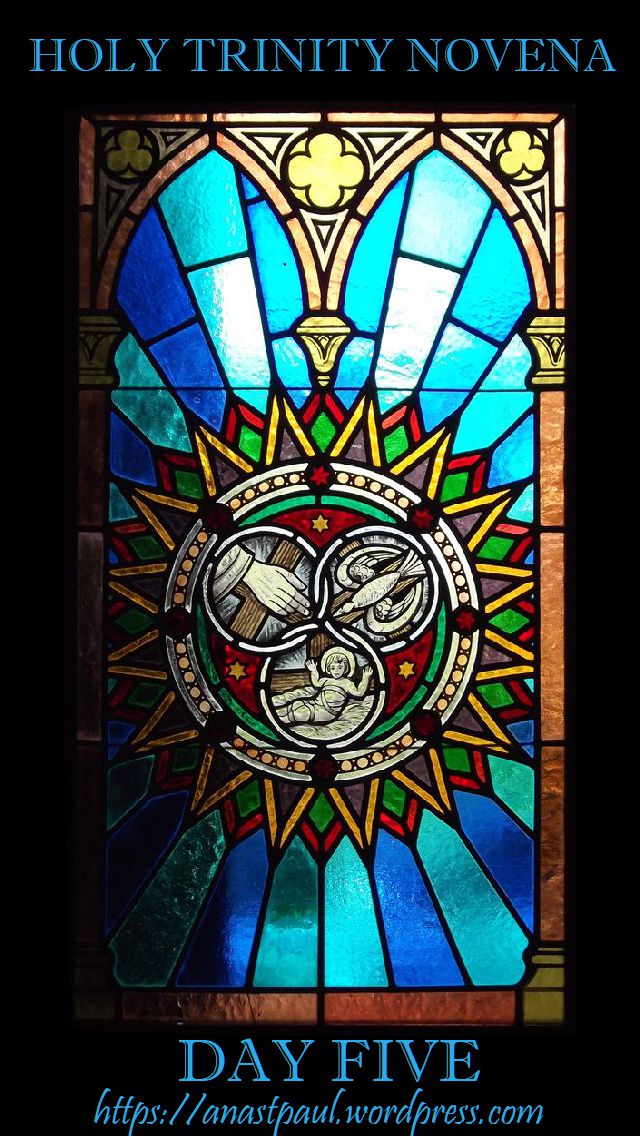
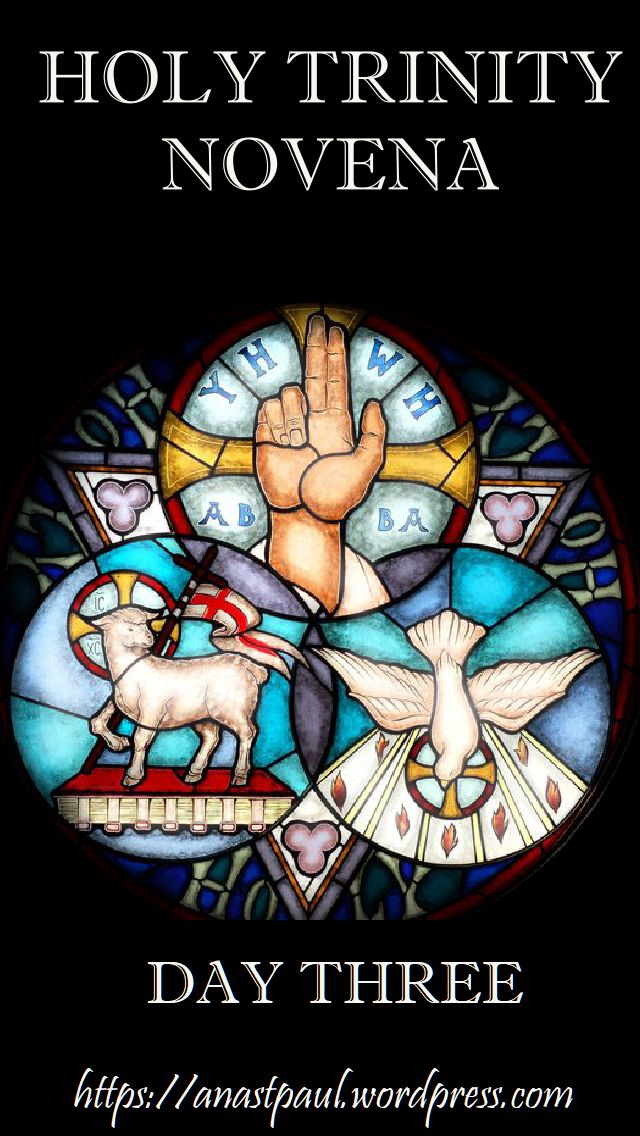
DAY THREE GOD THE HOLY SPIRIT “I will send you the Holy Spirit”
SCRIPTURAL READING But when He comes, the Spirit of Truth, He will guide you to all truth. He will not speak on His own but He will speak what He hears and will declare to you the things that are coming. He will glorify Me, because He will take from what is Mine and declare it to you. Everything that the Father has is Mine; for this reason I told you that He will take from you what is Mine and declare it to you...John 16:13-15
MEDITATION “Do not leave Jerusalem but wait for the Gift I told you about, the Gift my Father promised. John baptised with water but in a few days, you will be baptised with the Holy Spirit.” (Acts 1, 4-5) “Baptise all nations in the name of the Father, the Son and of the Holy Spirit.” (Mt. 28, 19) Now this is the abiding presence of the Blessed Trinity.
PRAYER
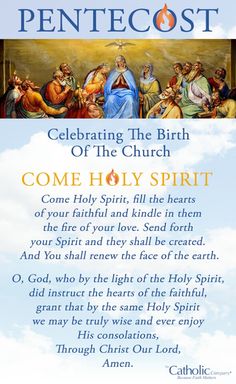
Come Holy Spirit,
fill the hearts of Thy faithful
and enkindle in them, the fire of Thy love.
Send forth Thy Spirit
and they shall be created,
and Thou shall renew the face of the earth.
Let us pray:
O God, who by the light of the Holy Spirit,
did instruct the hearts of the faithful,
grant that through the same Holy Spirit
we may be ever truly wise
and enjoy His consolation,
Eternal Holy Spirit,in Your mercy, grant my petition:
…………………….(mention your petition)
Most Holy Trinity, Godhead indivisible,
Father, Son, and Holy Spirit,
our first beginning and our last end,
You have made us after Your own image and likeness.
Grant that all the thoughts of my mind,
all the words of my mouth,
all the affections of my heart
and all my actions be always conformed to Your holy Will.
After having seen You here below in Your manifestations and by faith,
may I come at last to see You face to face,
in the perfect possession of You forever in heaven.
Amen
Spirit of God in the clear running water. Blowing to greatness the trees on the hill. Spirit of God in the finger of morning. Fill the earth, bring it to birth and blow where you will, blow, blow, blow, till I be, a breath of the Spirit blowing in me.
Thought for the Day – 20 May – The Solemnity of Pentecost, Alleluia!
“If the damned were asked: Why are you in Hell? they would answer: ‘ For having resisted the Holy Spirit.’ And if the saints were asked: Why are you in Heaven? they would answer: ‘For having listened to the Holy Spirit.’ When good thoughts come into our minds, it is the Holy Spirit who is visiting us. The Holy Spirit is a power. The Holy Spirit …. sustained the martyrs. Without the Holy Spirit, the martyrs would have fallen like the leaves from the trees. When the fires were lighted under them, the Holy Spirit extinguished the heat of the fire by the heat of divine love. The good God, in sending us the Holy Spirit, has treated us like a great king who should send his minister to guide one of his subjects, saying, “You will accompany this man everywhere and you will bring him back to me safe and sound.” How beautiful it is, my children, to be accompanied by the Holy Spirit! He is indeed a good Guide and to think, that there are some, who will not follow Him! The Holy Spirit is like a man with a carriage and horse, who should want to take us to Pans. We should only have to say “yes,” and to get into it. It is indeed an easy matter to say “yes”!… Well, the Holy Spirit wants to take us to Heaven; we have only to say “yes,” and to let Him take us there.“
St John Vianney (1786-1859)
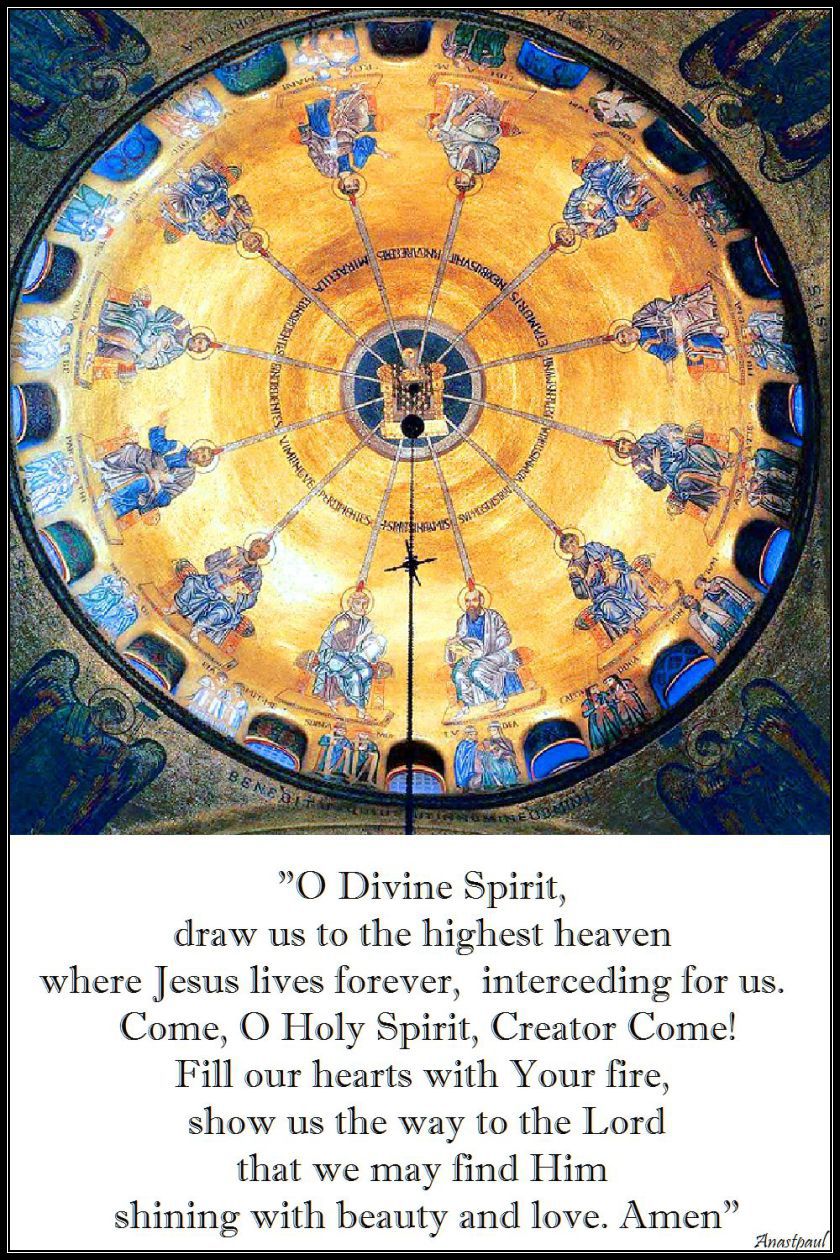
“O Divine Spirit, draw us to the highest heaven where Jesus lives forever, interceding for us. Come, fill our hearts with Your fire, show us the way to the Lord that we may find Him shining with beauty and love. Amen”
My most Holy Lord and Sanctifier, If I differ at all from the world, it is because You have chosen me out of the world and have lit up the love of God, in my heart. If I differ from Your Saints, it is because I do not ask earnestly enough for Your grace and for enough of it and because I do not diligently improve what You have given me. Increase in me this grace of love, in spite of all my unworthiness. It is more precious than anything else in the world. I accept it in place of all the world can give me. O give it to me! It is my life. Come Holy Spirit, Come! Amen
Quote/s of the Day – 20 May – The Solemnity of Pentecost, Alleluia!
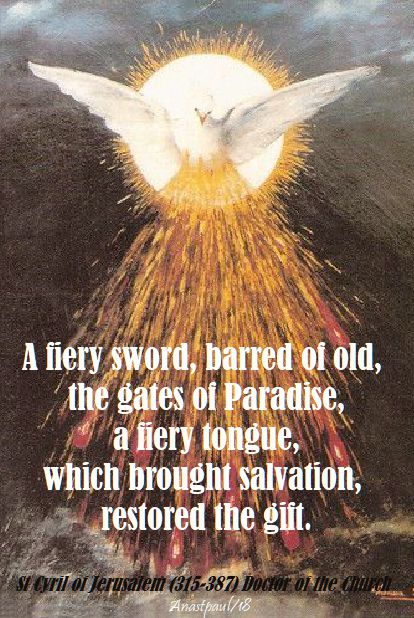
“A fiery sword, barred of old, the gates of Paradise, a fiery tongue, which brought salvation, restored the gift.”
St Cyril of Jerusalem (315-387) Doctor of the Church (Catechetical Lectures: Lecture 17 no. 15)
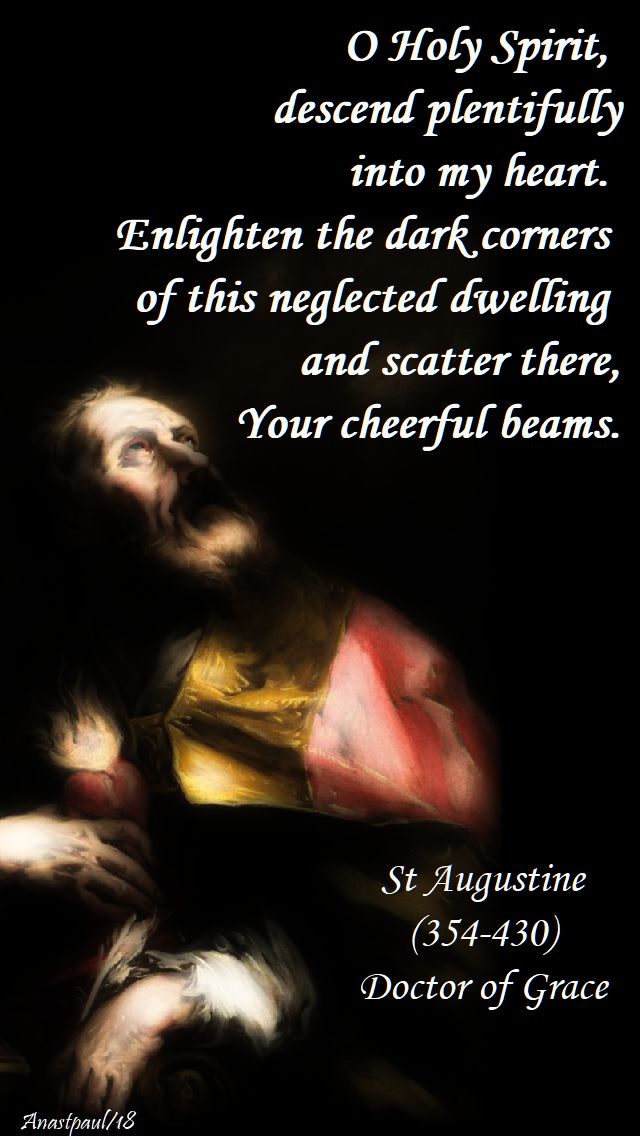
“O Holy Spirit, descend plentifully into my heart. Enlighten the dark corners of this neglected dwelling and scatter there, Your cheerful beams.”
St Augustine (354-430) Doctor of Grace
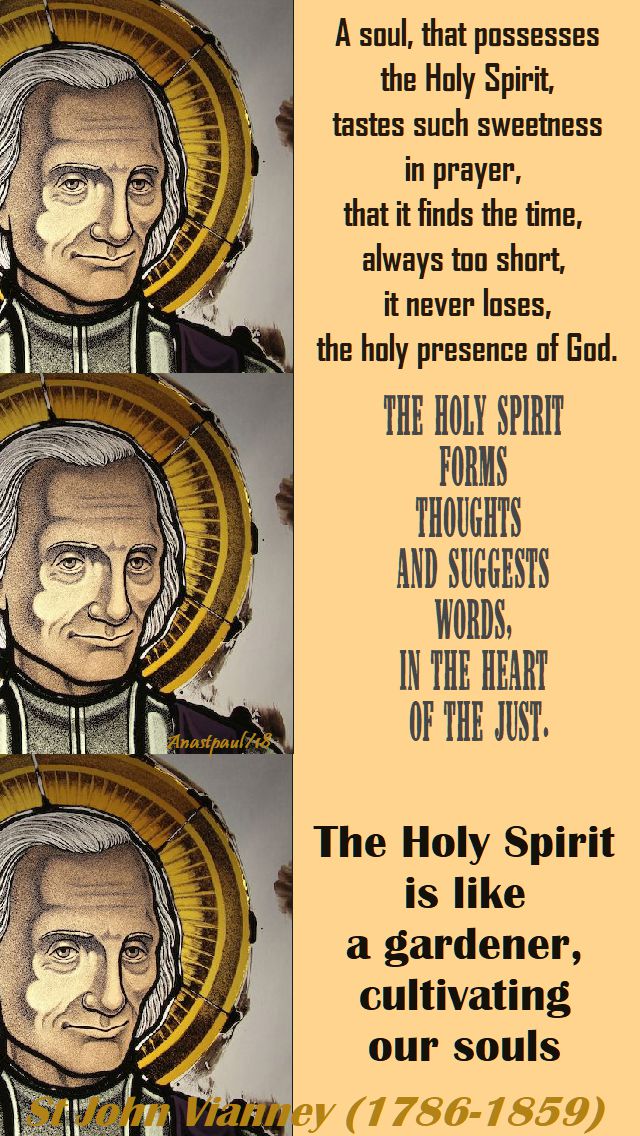
“A soul, that possesses the Holy Spirit, tastes such sweetness, in prayer, that it finds the time, always too short, it never loses, the holy presence of God.”
“The Holy Spirit forms thoughts and suggests words, in the hearts of the just.”
“The Holy Spirit is like a gardener, cultivating our souls.”
St John Vianney (1786-1859)
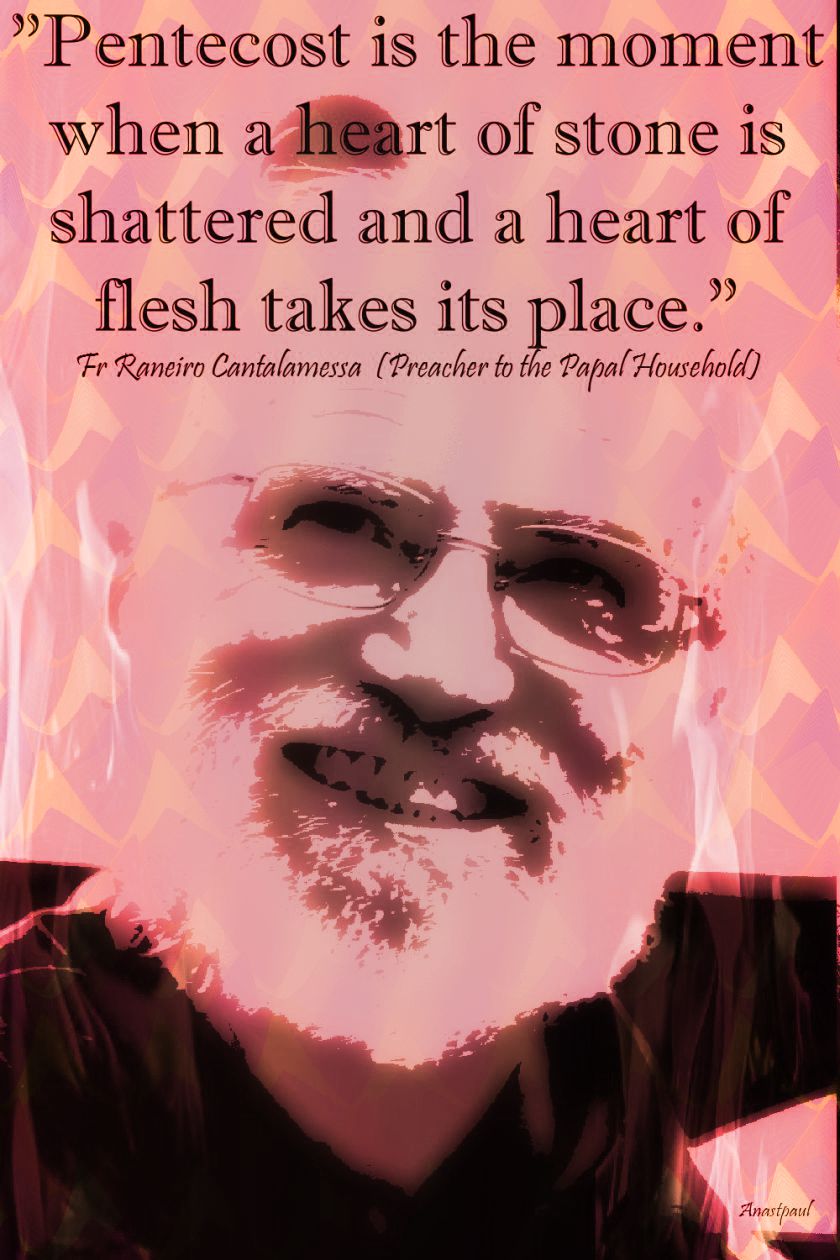
“Pentecost is the moment when a heart of stone is shattered and a heart of flesh takes its place.”
Fr Raneiro Cantalamessa (Preacher to the Papal Household)
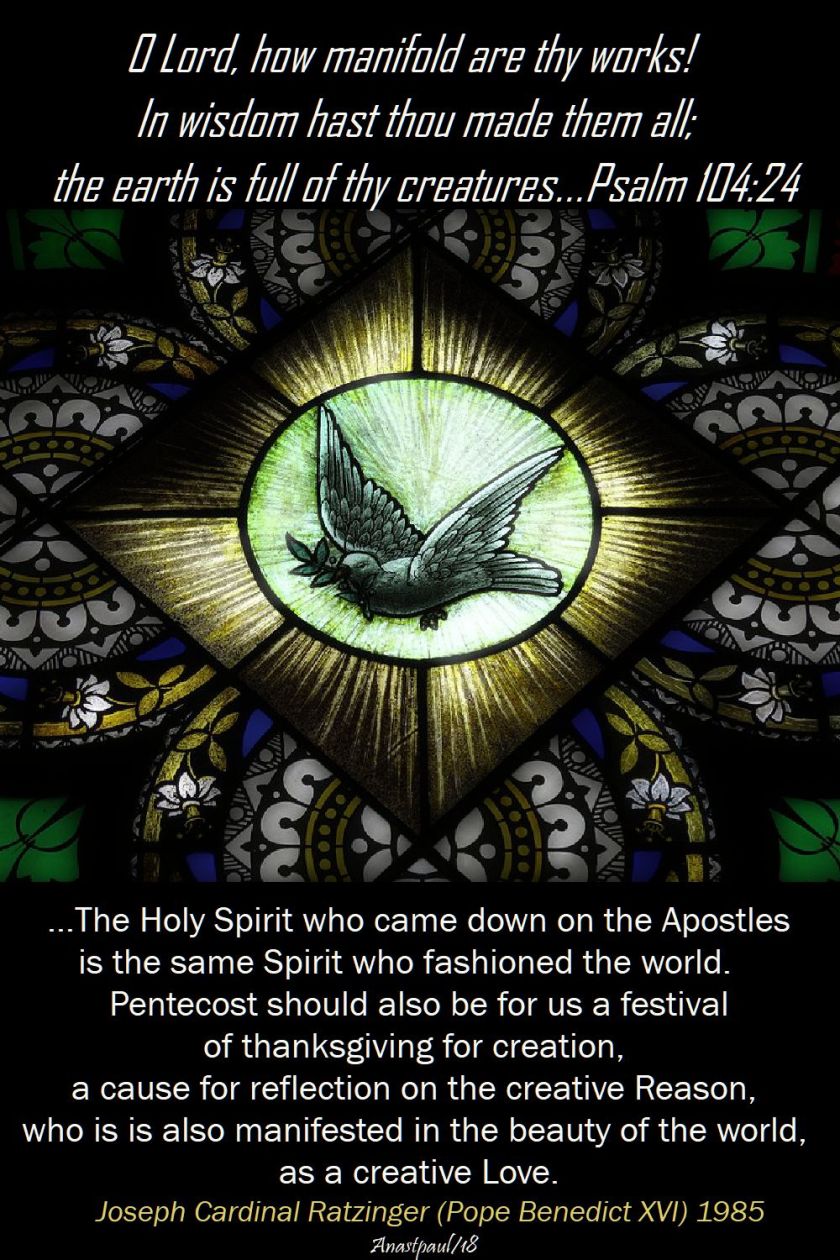
O Lord, how manifold are thy works! In wisdom hast thou made them all; the earth is full of thy creatures…Psalm 104:24
REFLECTION – “…the Holy Spirit who came down on the Apostles is the same Spirit who fashioned the world. Pentecost should also be for us a festival of thanksgiving for creation, a cause for reflection on the creative Reason, who is is also manifested in the beauty of the world, as a creative Love.”…Joseph Cardinal Ratzinger (Pope Benedict XVI) 1985
PRAYER – Lord God, pour out the gifts of the Holy Spirit on all mankind and fulfil now, in the hearts of Your faithful, what You accomplished at the beginning of the world, every second of every day and when the Gospel was first preached on earth. Come, O Holy Spirit, come! We make our prayer through our Lord Jesus Christ, Your Son, in the unity of the Holy Spirit, one God forever, amen.
Our Morning Offering – 20 May – Pentecost Sunday, Alleluia!
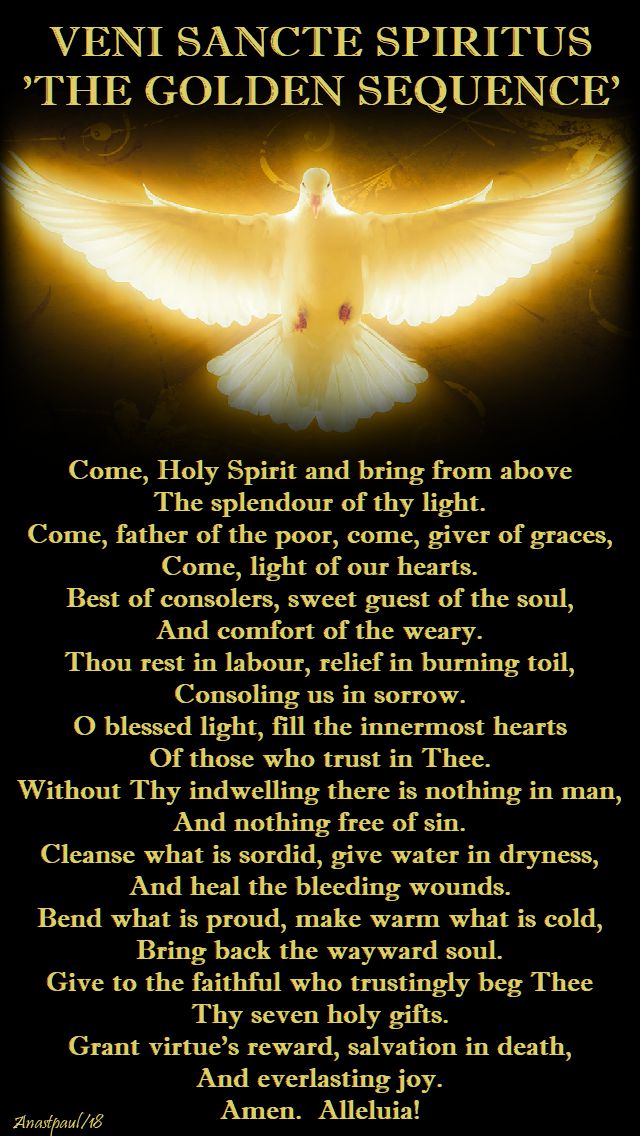
Veni Sancte Spiritus – The Golden Sequence
Before the Alleluia, proclamation of the Gospel, the ancient sequence Veni Sancte Spiritus (Come, Holy Spirit) is recited or sung on each day of Pentecost week. This hymn appeared first in liturgical books around the year 1200. It has been variously ascribed to Pope Innocent III (1216), to King Robert of France (1031) and even to Saint Gregory the Great (604). Most probably, however, its author was Cardinal Stephen Langton (1128), Archbishop of Canterbury. The poem has been known from medieval times as the “Golden Sequence” because of its richness in thought and expression. Each one of the short stanzas is a sentence in itself, thus facilitating meditation. Below is one of the many translations used today.
Prayer:
Come, Holy Spirit and bring from above
The splendour of Thy light.
Come, father of the poor, come, giver of graces,
Come, light of our hearts.
Best of Consolers, sweet guest of the soul,
And comfort of the weary.
Thou rest in labour, relief in burning toil,
Consoling us in sorrow.
O blessed light, fill the innermost hearts
Of those who trust in Thee.
Without Thy indwelling there is nothing in man,
And nothing free of sin.
Cleanse what is sordid, give water in dryness,
And heal the bleeding wounds.
Bend what is proud, make warm what is cold,
Bring back the wayward soul.
Give to the faithful who trustingly beg Thee
Thy seven holy gifts.
Grant virtue’s reward, salvation in death,
And everlasting joy. Amen. Alleluia.
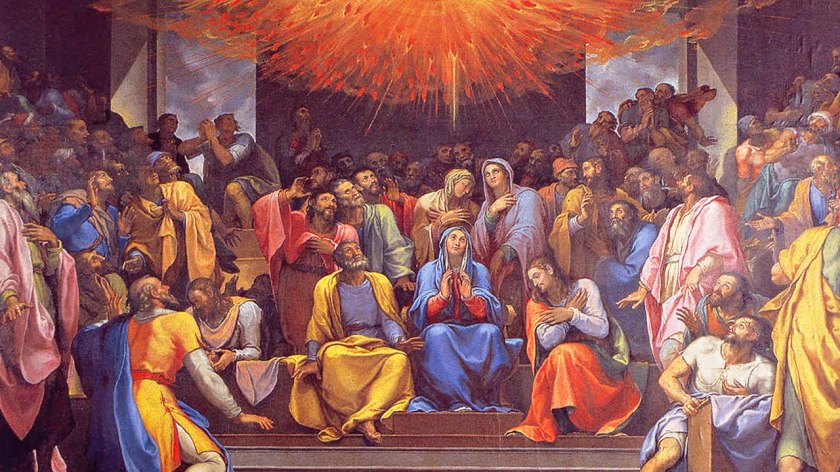
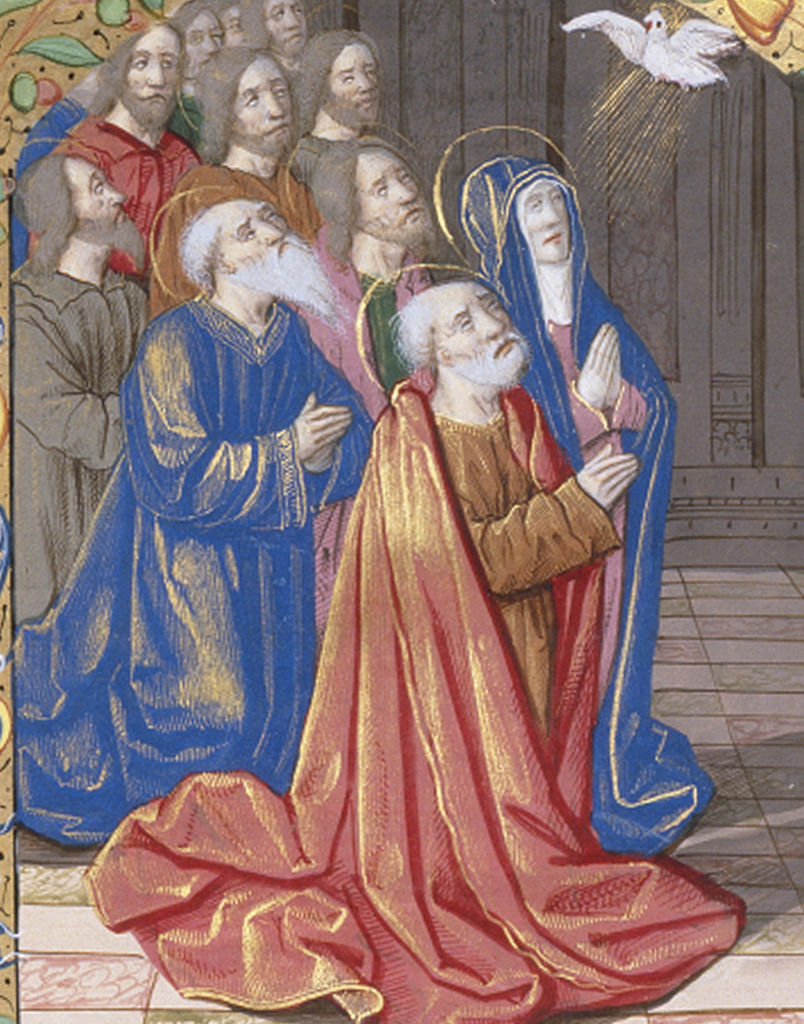
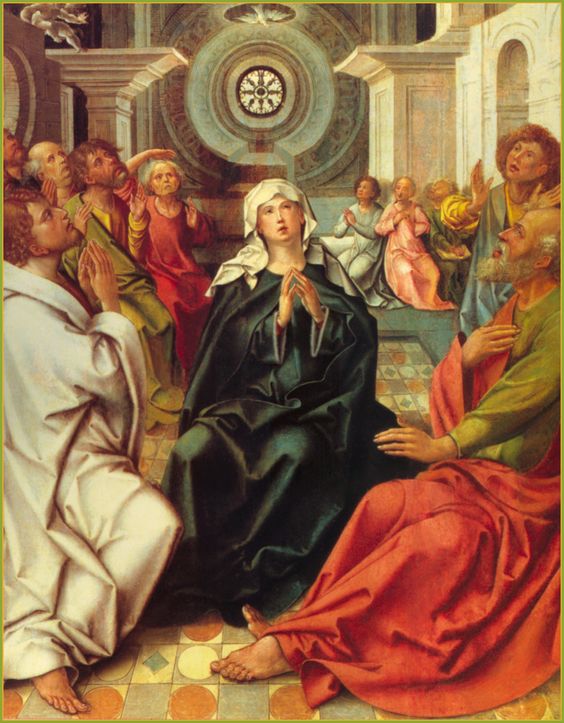
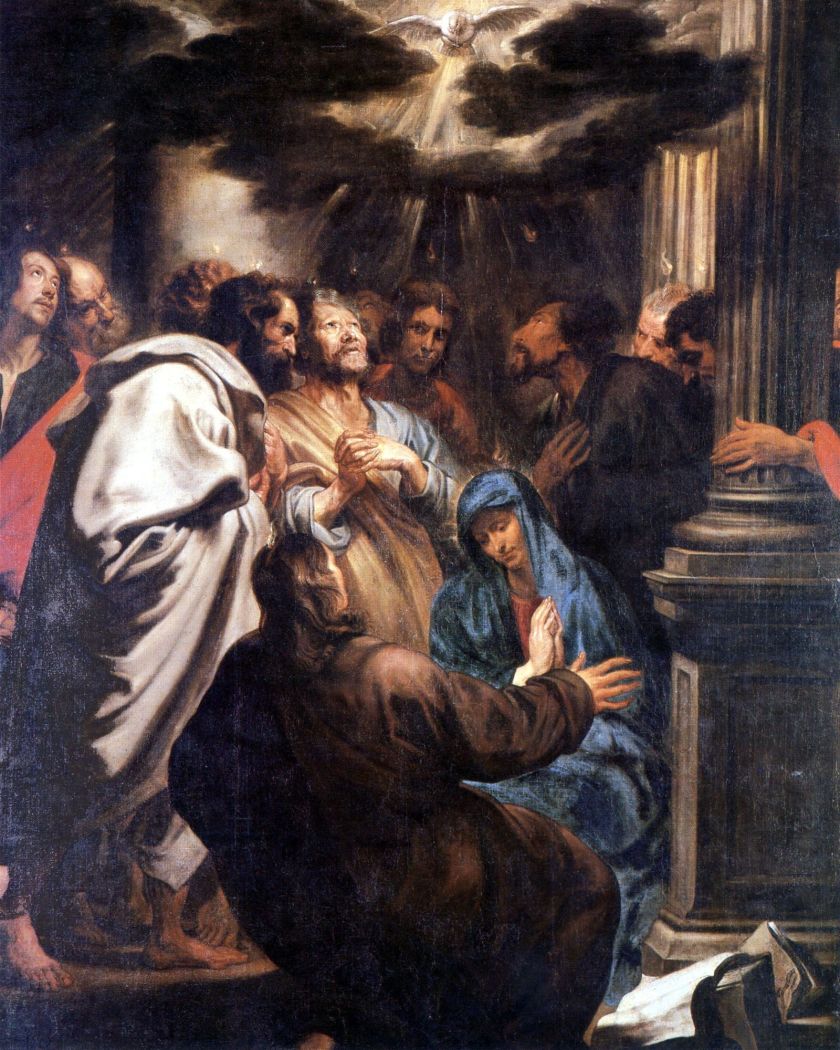
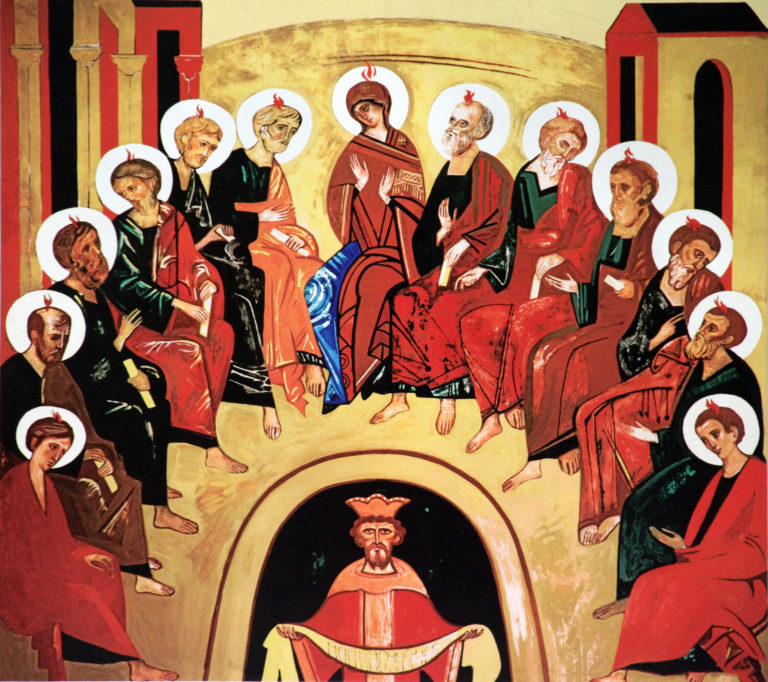
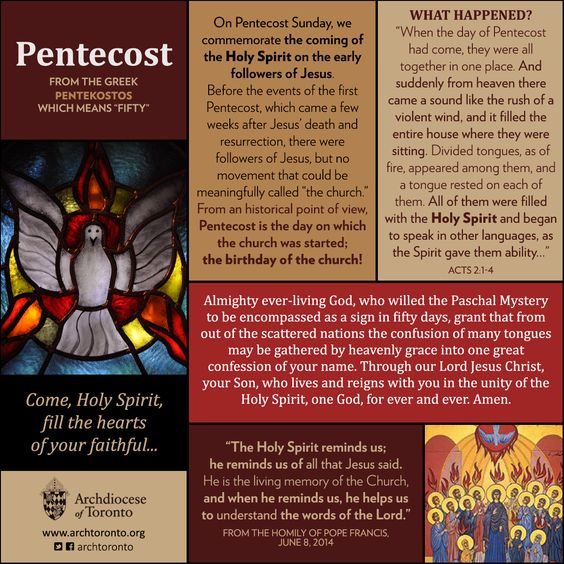
And when the days of Pentecost were drawing to a close, they were all together in one place. And suddenly there came a sound from heaven, as of a violent wind coming and it filled the whole house where they were sitting. And there appeared to them parted tongues as of fire, which settled upon each of them. And they were all filled with the Holy Spirit and began to speak in foreign tongues, even as the Holy Spirit prompted them to speak... (Acts 2, 1-4).
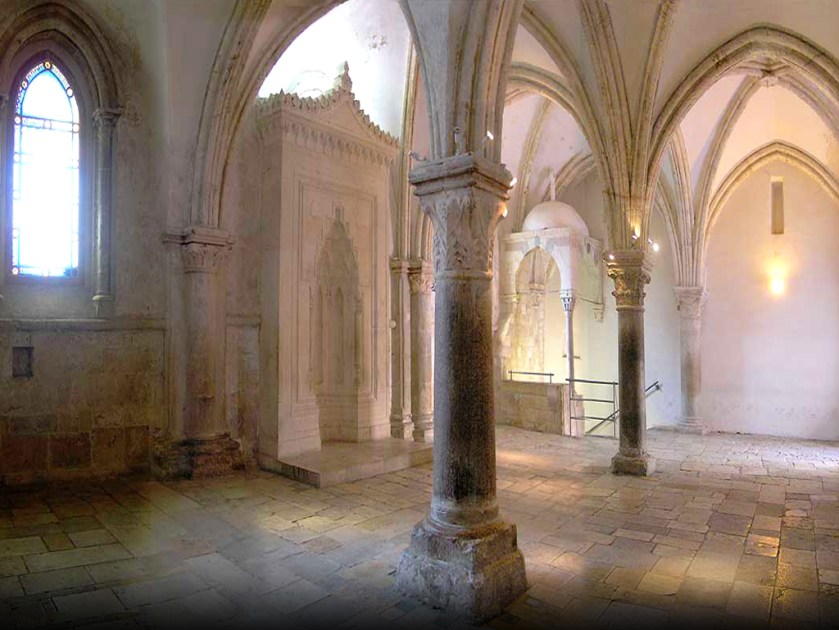
After Jesus had ascended to heaven, the apostles and disciples returned to the Holy City. They remained together in the Upper Room or Cenacle, the place where Jesus had appeared to them and which may well be called, the first Christian church. About a hundred and twenty persons were assembled there. They chose Matthias as an apostle in place of the unhappy Judas; they prayed and waited for the Paraclete.
The Cenacle
Ten days had passed, it was Sunday, the seventh Sunday after the resurrection. At about nine o’clock in the morning, as they were together praying fervently, the Holy Spirit descended upon them. Note how all the great theophanies in Christ’s life occurred during the course of prayer. After His baptism, for instance, when Jesus was praying the heavens opened and the Holy Spirit descended in the form of a dove; likewise, it was during prayer at night, that the transfiguration took place on Tabor. Surely too, it was while Mary was praying, that Gabriel delivered his message and the Holy Spirit overshadowed her. Pentecost followed precedent. The small community of Christians had prepared themselves through prayer for the coming of the Paraclete. The same is true at Mass today, every day; through prayer we ready our souls for the advent of the Spirit.
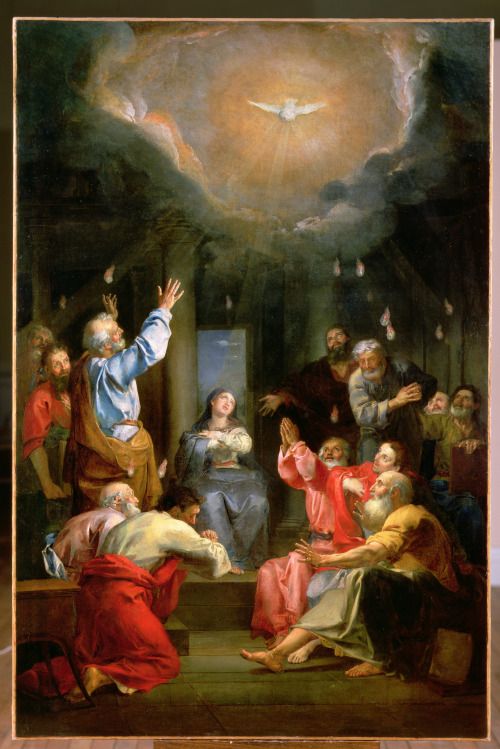
The descent upon the apostles was internal and invisible in nature although accompanied by certain visible phenomena. There came a mighty roar, like the onrush of a violent wind. It came suddenly, from heaven but unlike storms that strike a structure from without, this one penetrated and filled the room where the disciples were gathered. Therefore it was not a natural wind, it was a miracle peculiar to the occasion. A second visible sign consisted in tongues of fire, that descended upon each one present. These fiery tongues gave visible evidence that the Holy Spirit had descended upon them.
Louis Galloche – The Descent of the Holy Spirit
Today at Mass, particularly at holy Communion, the power of the Holy Spirit will come down upon us, fiery tongues will not be seen but invisible tongues of fire will not be absent. There was still another external manifestation of the Holy Spirit, the apostles and disciples were enabled to speak various languages.
After the roar of the wind many of Jerusalem’s pilgrims hurried to the Cenacle. Pentecost was one of the three festivals which obliged all Jews to be present in Jerusalem. Jews from distant lands and Jewish converts from paganism too, attended these feasts. As a result, a colourful crowd, speaking a variety of languages, surrounded the house. Now the apostles, who so shortly before had hid in fear behind locked doors, came forth and courageously walked among the multitude, speaking to each in his native tongue. It was indeed amazing! Galileans, and multilingual?
But the malicious too were present, they had the answer. Nothing marvellous at all! Those Galileans were simply drunk and their drunken babble sounded like a foreign language! Peter showed no hesitation in answering the charge. None of their number, he said, were intoxicated, it was but nine o’clock in the morning and at that hour men usually are sober. What the multitude saw was, in fact, the fulfilment of Joel’s prophecy: In those days (of the Messiah), God will pour forth His Spirit upon men and they will prophesy. . . . Then the apostle pointed his words more directly against the accusers, they had killed Jesus, had nailed Him to the Cros; but God had awakened Him and after His departure to heaven, He sent the Holy Spirit.
BEN63198 St. Peter Preaching in Jerusalem (detail of 63197) c.1427 (fresco) by Masolino da Panicale, Tommaso (1383-c.1447) Brancacci Chapel, Santa Maria del Carmine, Florence, Italy Italian, out of copyright
The pilgrims who had heard Peter give this first Pentecostal sermon “were pierced to the heart and said, Brethren, what shall we do? But Peter said to them, Repent and be baptised and you will receive the gift of the Holy Spirit.” Three thousand responded.
One final question, why the miracle of tongues? In answer, recall the story regarding the tower of Babel. Puffed up by pride, men attempted to build a tower that would touch the heavens. To punish their sin, God confused their speech. Sin causes confusion and division. Now Christ came to gather all men into His Church and thereby to unite them to Himself. This should result in creating but one family of nations again. To this blessed state the miracle of tongues points.
Yes, even we as individuals have a gift of tongues which all men can understand. It is the gift of love infused into us by the Holy Spirit. Love unites, love is a common language, by means of love we can speak to all nations…Excerpted from The Church’s Year of Grace, Pius Parsch
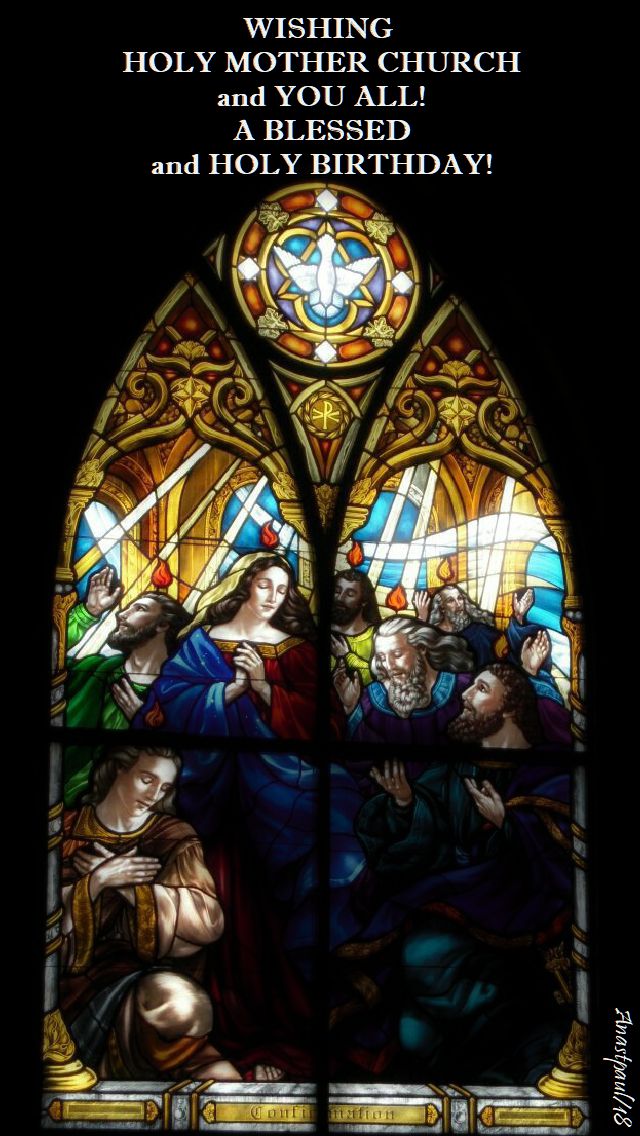
Wishing Holy Mother Church and
you all a Blessed, Holy and love-filled Pentecost! Alleluia!
St Bernadine of Siena O.F.M. (1380-1444) (Optional Memorial)
St Abercius
Bl Albert of Bologna
St Alexander of Edessa
St Althryda
St Anastasius of Brescia
St Aquila of Egypt
St Arcangelo Tadini
Bl Arnaldo Serra and Companions
St Asterius of Edessa
St Austregisilus of Bourges
St Basilla of Rome
St Baudelius of Nîmes
St Codrato
Bl Columba of Rieti
St Ethelbert of East Anglia
Bl Guy de Gherardesca
St Helena
St Hilary of Toulouse
St José Pérez Fernández
St Lucifer of Caglieri
St Marcello
Bl Maria Angelica Perez
St Plautilla of Rome
St Protasius Chong Kuk-bo
St Rafaél García Torres
St Talaleo of Egea
St Thalalaeus of Edessa
St Theodore of Pavia
St Tomás Valera González
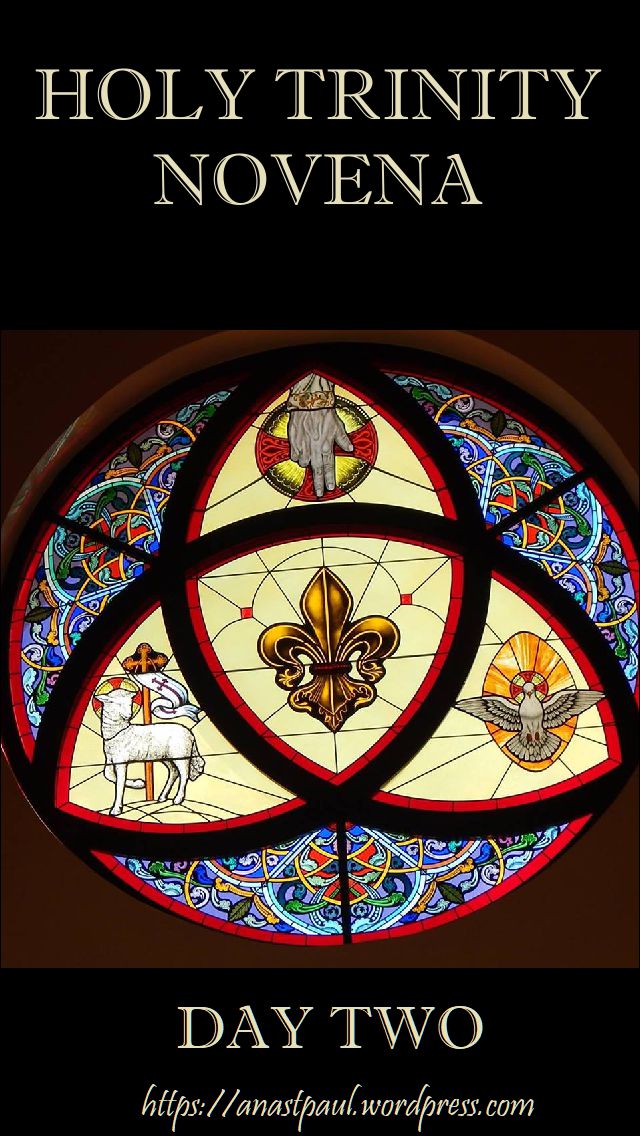
DAY TWO GOD THE SON “This is my beloved Son in whom I am well pleased.”
SCRIPTURAL READING
In the beginning was the Word and the Word was with God and the Word was God. He was in the beginning with God. All things came to be through Him and without Him nothing came to be. What came to be through Him was life and this life was the light of the human race; the light shines in the darkness and the darkness has not overcome it…John 1:1-5
MEDITATION
At the Baptism of Jesus and at the Transfiguration, the Father’s words were heard: “This is My beloved Son in whom I am well-pleased, listen to Him”: “For God so loved the world that He gave His only Son, so that everyone who believes in Him may not die but have eternal life.”; “So that all who will honour the Son, in the same way as they honour the Father. Who does not honour the Son, does not honour the Father, who sent Him.” (Jn. 5,23)
PRAYER
I believe in Jesus Christ, His only Son, our Lord.
Who was conceived by the Holy Spirit and born of the Virgin Mary.
He suffered under Pontius Pilate, was crucified, died and was buried.
He descended into hell.
On the third day, He rose again.
He ascended into Heaven
and is seated at the right hand of the Father.
From thence He shall come, to judge the living and the dead.
Bless me through the marvelous goodness
of Your Sacred Heart, which chose death to bring us life.
Bless me through the love with which You plead for us
before the throne of God,
bless me in the Blessed Sacrament
with which You give Yourself to us in Holy Communion.
Grant that all this love and bitter pain,
may not be lost on me.
Eternal Son, in Your mercy, grant my petition:
…………………….(mention your petition)
Most Holy Trinity, Godhead indivisible,
Father, Son and Holy Spirit,
our first beginning and our last end,
You have made us after Your own image and likeness.
Grant that all the thoughts of my mind,
all the words of my mouth,
all the affections of my heart
and all my actions be always conformed to Your holy Will.
After having seen You here below, in Your manifestations and by faith,
may I come at last to see You face to face,
in the perfect possession of You, forever in heaven.
Amen
“None of us lives for himself only, none of us dies for himself only; if we live, it is for the Lord that we live and if we die, it is for the Lord we die. Whether we live or die, then, we belong to the Lord. For Christ died and rose to life in order to be the Lord of the living and the dead.”…(Romans 14:7-9)
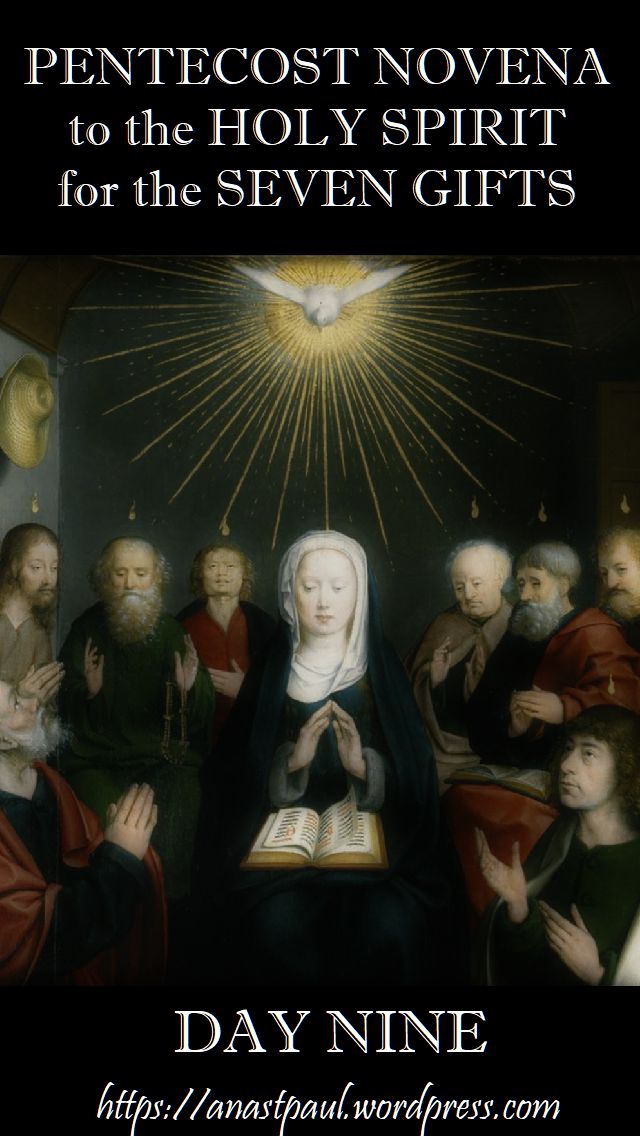
Pentecost Novena to the Holy Spirit for the Seven Gifts Day Nine – 19 May 2018
DAY NINE Thou, on those who evermore Thee confess and Thee adore In Thy sevenfold gifts, descend. Give them comfort when they die, Give the life with Thee on high, Give them joys which never end. Amen
THE FRUITS of the HOLY SPIRIT
The gifts of the Holy Spirit perfect the supernatural virtues, by enabling us to
practice them with greater docility to divine inspiration. As we grow in the
knowledge and love of God, under the direction of the Holy Spirit, our service becomes
more sincere and generous, the practice of virtue becomes more perfect. Such acts of
virtue leave the heart filled with joy and consolation and are known as Fruits of the
Holy Spirit. These Fruits in turn render the practice of virtue more attractive and
become a powerful incentive for still greater efforts, in the service of God, to serve
Whom is to reign.
Prayer
Come, O Divine Spirit, fill my heart with Your heavenly fruits, Your charity, joy,
peace, patience, benignity, goodness, faith, mildness and temperance, that I may
never weary of the service of God but by continued faithful submission, to Your
inspiration, may merit to be united eternally with You, in the love of the Father and
the Son. Amen.
Our Father
Hail Mary
Glory be to the Father (seven times)
Act of Consecration
Prayer for the Seven Gifts
Marian Thought for the Day – 19 May “Mary’s Month” – Saturday of the Seventh Week of Eastertide
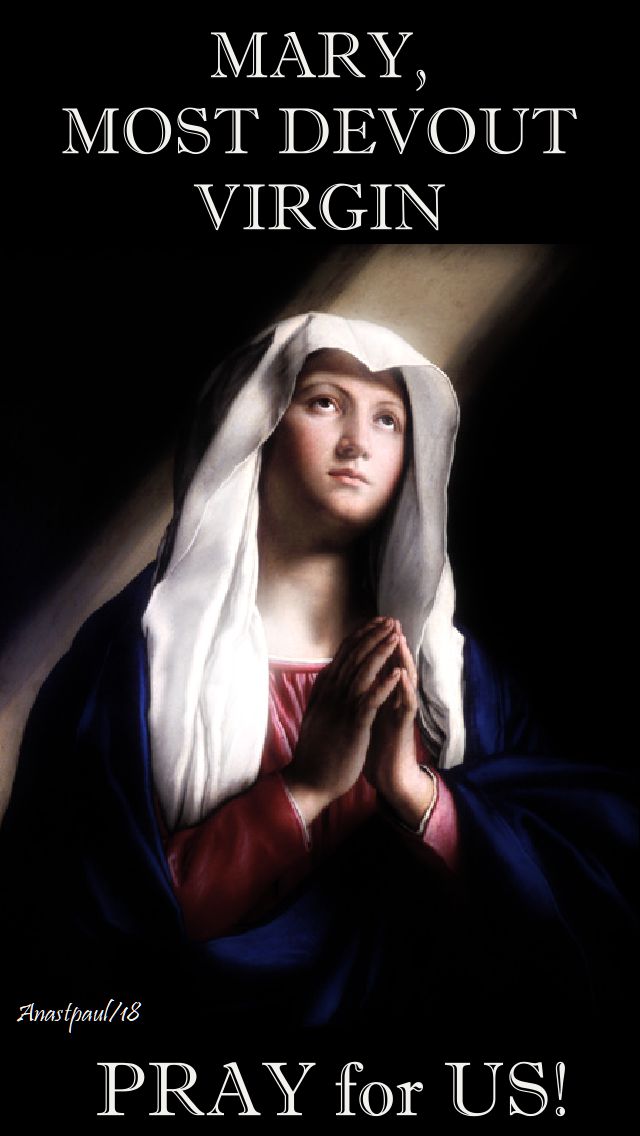
Mary is the “Vas Insigne Devotionis,” The Most Devout Virgin
Blessed John Henry Newman (1801-1890)
TO be devout is to be devoted. We know what is meant by a devoted wife or daughter. It is one, whose thoughts centre in the person so deeply loved, so tenderly cherished.,, She follows Him about with her eyes; she is ever seeking some means of serving Him and, if her services are very small in their character, that only shows, how intimate they are and how incessant. And especially if the object of her love be weak, or in pain, or near to die, still more intensely does she live in His life and know nothing but Him.
This intense devotion towards our Lord, forgetting self in love for Him, is instanced in St Paul, who says. “I know nothing but Jesus Christ and Him crucified.” And again, “I live, [yet] now not I, but Christ lives in me; and [the life] that I now live in the flesh, I live in the faith of the Son of God, who loved me and delivered Himself for me.”
But great as was St Paul’s devotion to our Lord, much greater was that of the Blessed Virgin, because she was His Mother and because she had Him and all His sufferings actually before her eyes and because she had the long intimacy, of thirty years with Him and because she was from her special sanctity, so ineffably near to Him in spirit. When, then, He was mocked, bruised, scourged and nailed to the Cross, she felt as keenly as if every indignity and torture inflicted on Him, was struck at herself. She could have cried out in agony at every pang of His.
This is called her compassion, or her suffering with her Son and it arose from this that she was the “Vas insigne devotionis.”
Mary, “Vas Insigne Devotionis,” The Most Devout Virgin
One Minute Marian Reflection – 19 May “Mary’s Month” – Saturday of the Seventh Week of Eastertide
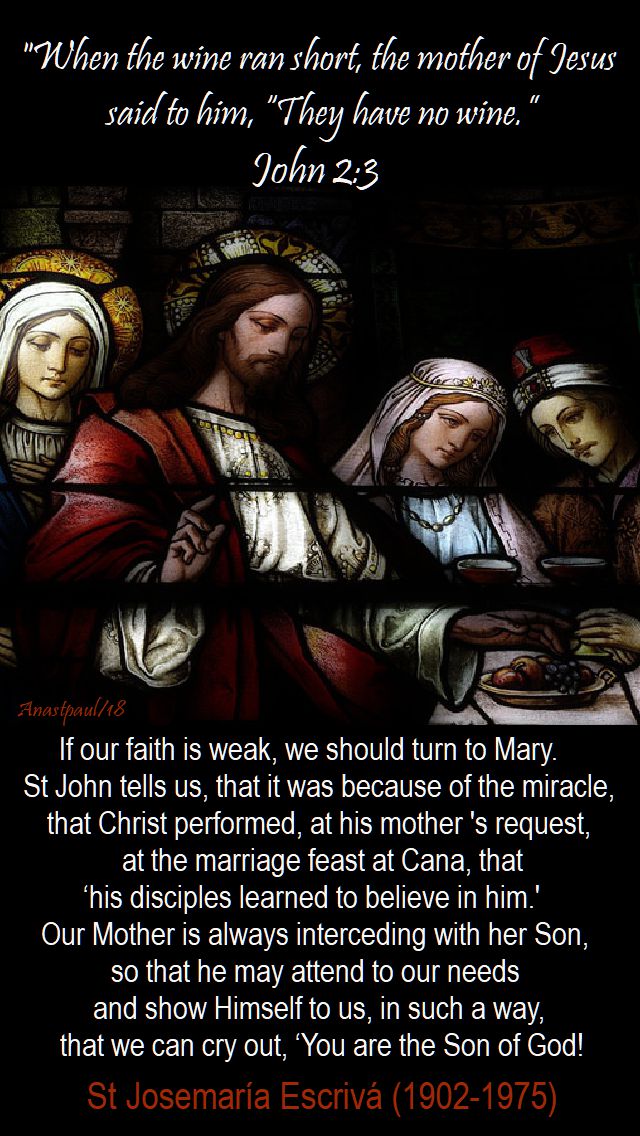
When the wine ran short, the mother of Jesus said to him, “They have no wine.”…John 2:3
REFLECTION – “MARY: HER FAITH – “If our faith is weak, we should turn to Mary. St John tells us, that it was because of the miracle that Christ performed, at his mother ‘s request, at the marriage feast at Cana, that ‘his disciples learned to believe in him.’ Our Mother is always interceding with her Son, so that he may attend to our needs and show Himself to us, in such a way, that we can cry out, ‘You are the Son of God!'”...St Josemaría Escrivá (1902-1975) “Mother of God and Our Mother,” Friends of God, 285 Let us offer to our Mother today: The “Memorare” for the person in our family who most needs the help of our Lady.
PRAYER – Almighty God and Father, Your ways are not our ways, teach us to willingly agree to them, for You know which way we should go. Help us to say “yes” always to Your plan and to render ourselves, as a sacrament of Your divine love to all we meet. Fill us with the grace to be your tools, to bring glory to Your kingdom. Our Father, who art in heaven, may Your Will be done on earth, as it is in heaven. Mary Mother of God, pray for us! Through our Our Lord Jesus Christ with You, in the union of the Holy Spirit, one God forever, amen.
Our Morning Offering – 19 May “Mary’s Month” – Saturday of the Seventh Week of Eastertide
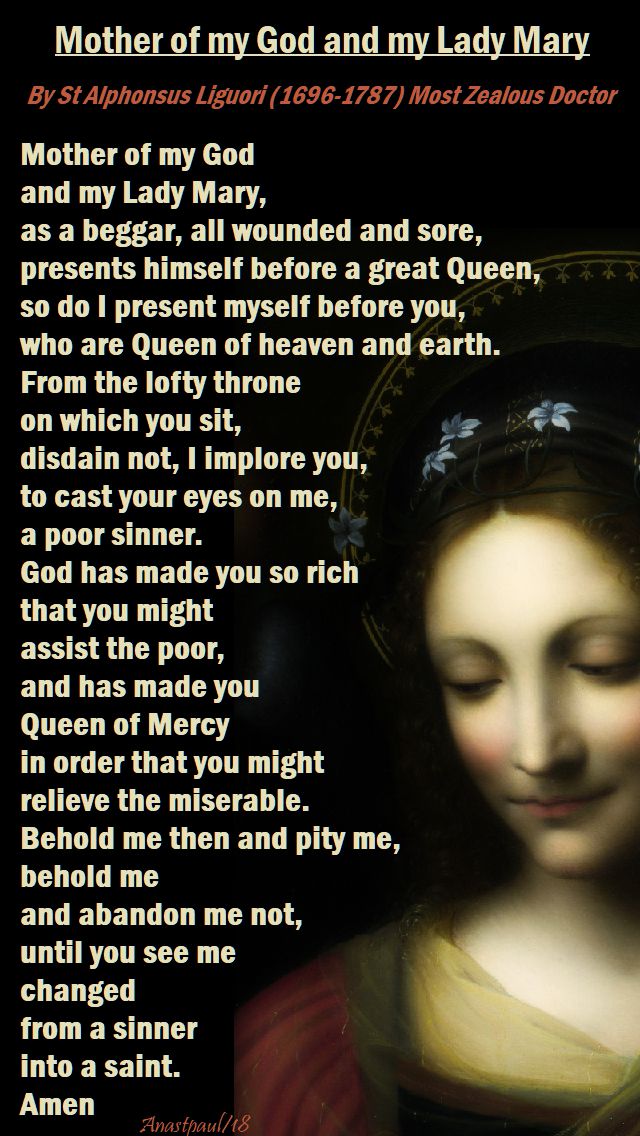
Mother of my God and my Lady Mary By St Alphonsus Liguori (1696-1787) Most Zealous Doctor
Mother of my God and my Lady Mary,
as a beggar, all wounded and sore,
presents himself before a great Queen,
so do I present myself before you,
who are Queen of heaven and earth.
From the lofty throne on which you sit,
disdain not, I implore you,
to cast your eyes on me,
a poor sinner.
God has made you so rich
that you might assist the poor,
and has made you Queen of Mercy
in order that you might relieve the miserable.
Behold me then and pity me,
behold me and abandon me not,
until you see me changed
from a sinner into a saint.
Amen
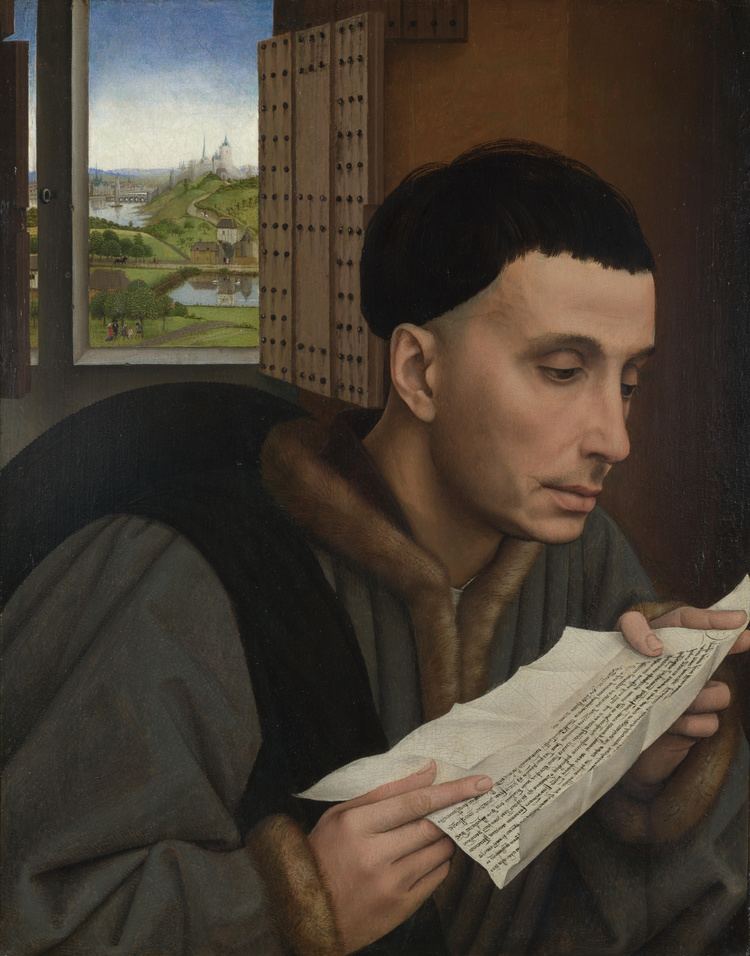
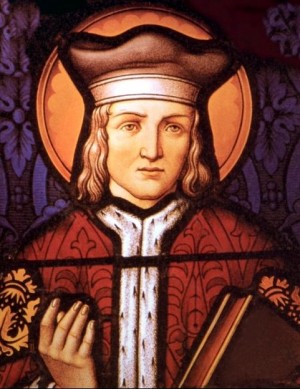
Saint of the Day – 19 May – St Ivo of Kermartin T.O.S.F. (1253-1303) also known Yvo or Ives – Priest, Franciscan Tertiary, known as the “Advocate of the Poor”, Civil Lawyer – born on 17 October 1253 at Kermartin near Treguier, Brittany and died on 19 May 1303 at Louannec, Brittany of natural causes following a sermon on Ascension Eve. Patronages – abandoned people, advocates, attorneys, barristers, lawyers, bailiffs, Brittany, canon lawyers, canonists, judges, jurists, notaries, orphans, children. Attributes – lawyer enthroned between rich and poor litigants, lawyer holding a book, with an angel near his head and a lion at his feet, lawyer surrounded by suppliants, holding a parchment and pointing upwards, lawyer surrounded by symbols of the Holy Spirit such as doves.
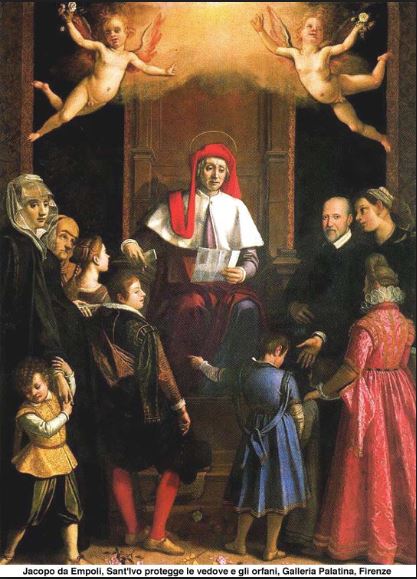
Born at Kermartin, a manor near Tréguier in Brittany, on 17 October 1253, Ivo was the son of Helori, lord of Kermartin and Azo du Kenquis. In 1267 Ivo was sent to the University of Paris, where he graduated in civil law. While other students partied, Ivo studied, prayed and visited the sick. He also refused to eat meat or drink wine. Among his fellow-students were the scholars Blessed Duns Scotus (1266-1308 – Doctor Subtilis -Subtle Doctor) and Roger Bacon OFM (1219-1292 – Doctor Mirabilis – Miraculous Doctor). He went to Orléans in 1277 to study canon law under Peter de la Chapelle, a famous jurist who later became bishop of Toulouse and a cardinal. On his return to Brittany, having received minor orders he was appointed an “official”, the title given to an ecclesiastical judge, of the archdeanery of Rennes (1280). He protected orphans and widows, defended the poor and rendered fair and impartial verdicts. It’s said that even those on the losing side, respected his decisions. Ivo also represented the helpless in other courts, paid their expenses and visited them in prison. He earned the title “Advocate of the Poor.” Although it was common to give judges “gifts,” Ivo refused bribes. He often helped disputing parties settle out of court so they could save money.
Meanwhile, he studied Scripture and there are strong reasons for believing the tradition held among Franciscans, that he joined the Third Order of St Francis sometime later at Guingamp. Ivo was ordained to the priesthood in 1284. He continued to practice law and once, when a mother and son couldn’t resolve their differences, he offered a Mass for them. They immediately reached a settlement.
The Widow of Tours
Tours was near Orleans, the bishop held his court there and Ivo, while visiting the court, lodged with a certain widow. One day he found his widow-landlady in tears. Her tale was that next day she must go to court to answer to the suit of a travelling merchant who had tricked her. It seemed that two of them, Doe and Roe, lodging with her, had left in her charge a casket of valuables, while they went off on their business but with the strict injunction, that she was to deliver it up again, only to the two of them jointly demanding it. That day, Doe had come back and called for the casket, saying that his partner Roe was detained elsewhere and she in good faith in his story, had delivered the casket to Doe. But then later came Roe demanding it, charging his partner with wronging him, and holding the widow responsible for delivering up the casket to Doe, contrary to the terms of their directions. And if she had to pay for those valuables it would ruin her. “Have no fear,” said young Ivo, “I will go to court tomorrow, for you.”
When the case was called before the Judge and the merchant Roe charged the widow with breach of faith, “Not so,” pleaded Ivo, “My client need not yet make answer to this claim. The plaintiff has not proved his case. The terms of the bailment were that the casket should be demanded by the two merchants coming together. But here is only one of them making the demand. Where is the other? Let the plaintiff produce his partner.” The judge promptly approved his plea. Whereupon the merchant, required to produce his fellow, turned pale and would have retired. But the judge, suspecting something from his plight, ordered him to be arrested and questioned; the other merchant was also traced and brought in and the casket was recovered, which, when opened, was found to contain nothing but old junk. In short, they had conspired to plant the casket with the widow and then to coerce her to pay the value of the alleged contents. Thus the young advocate saved the widow from ruin and the fame of his clever defence of the widow soon went far and wide.
Legacy
On the occasion of the 700th anniversary of the birth of St Ivo, St Pope John Paul II said, “The values proposed by St Ivo retain an astonishing timeliness. His concern to promote impartial justice and to defend the rights of the poorest persons invites the builders of Europe today to make every effort to ensure that the rights of all, especially the weakest, are recognised and defended.”
Saint Ivo is the patron of lawyers. As a result, many law schools and association of catholic lawyers have taken his names. For instance, the Society of St. Yves in Jerusalem (a Catholic Centre for Human Rights and Legal Aid, Resources and Development), the Conférence Saint Yves in Luxembourg (the Luxembourg Catholic Lawyers Association), or the Association de la Saint Yves Lyonnais.
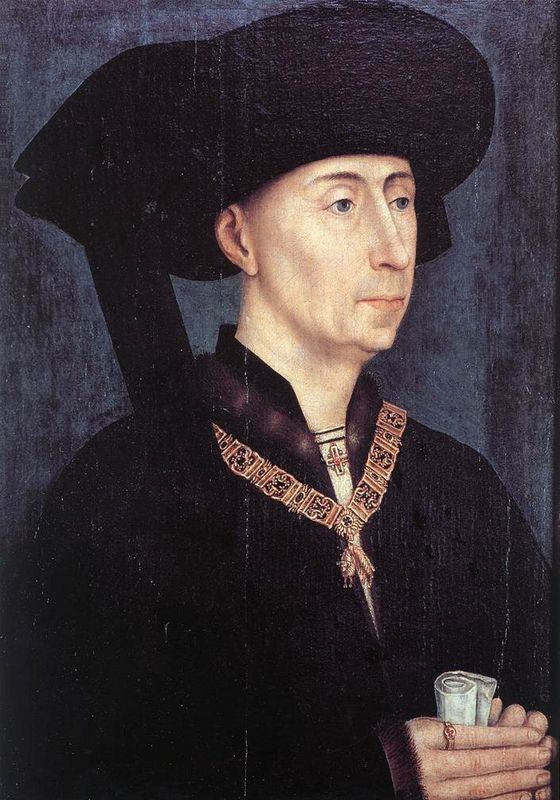
Ivo was Canonised in June 1347 by Clement VI at the urging of Philip I, Duke of Burgundy. At the inquest into his sanctity in 1331, many of his parishioners testified as to his goodness, that he preached regularly in both chapel and field and that under him “the people of the land became twice as good as they had been before”. The connection between religion and good behaviour was especially stressed in his sermons and he is reported to have “chased immorality and sin from the village of Louannec”.
Shortly after 1362, the future saint Jeanne-Marie de Maillé reported a vision of St Ivo, during which he told her, “If you are willing to abandon the world, you will taste here on earth the joys of heaven.”
Ivo is often represented with a purse in his right hand (for all the money he gave to the poor during his life) and a rolled paper in the other hand (for his charge as a judge). Another popular representation of Ivo is between a rich man and a poor one. The churches of Sant’Ivo alla Sapienza and Sant’Ivo dei Bretoni in Rome are dedicated to him.
A 14th century engraving on St Ivo’s Shrine:
Sanctus Ivo erat Brito, Advocatus, et non latro Res miranda populo.
Saint Yvo was a Breton and a lawyer but not dishonest – An astonishing thing in people’s eyes.
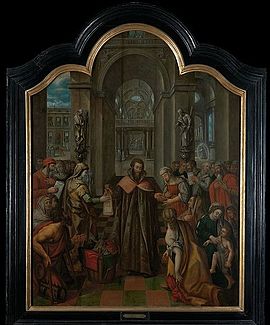
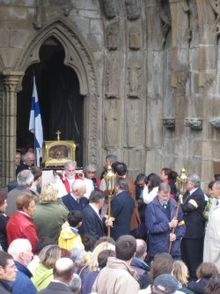
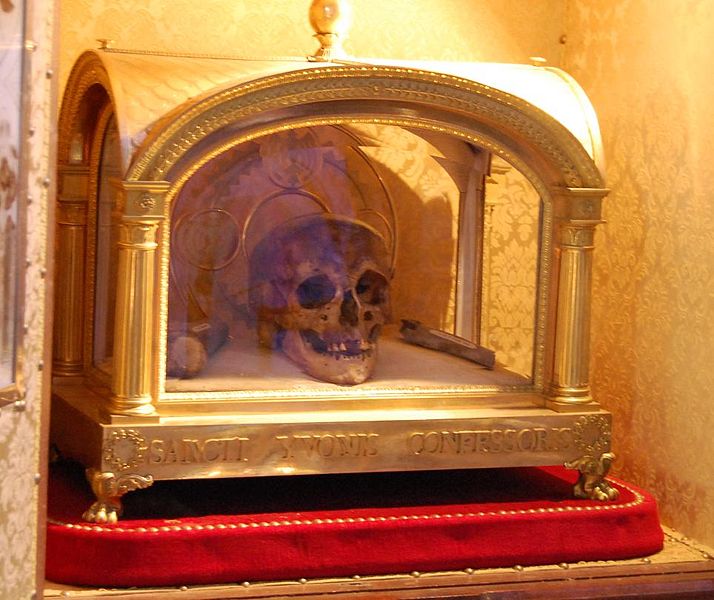
St Ivo giving alms to the poor by Josse van der BarenThe relics of Saints Ivo and Tugdual in a procession at the gate of Tréguier’s cathedral in 2005. In the reliquary is the skull of Saint IvoRelic skull and reliquary of St Ivo in Tréguier, Brittany, France
St Alcuin of York
Bl Augustine Novello
St Calocerus of Rome
St Pope Celestine V
St Crispin of Viterbo
St Cyriaca of Nicomedia and Companions
St Cyril of Trèves
St Dunstan of Canterbury
St Evonio of Auvergne
St Hadulph of Saint-Vaast
Bl Humiliana de’ Cerchi
St Ivo Hélory of Kermartin (1253-1303)
Bl Jean-Baptiste-Xavier Loir
Bl Józef Czempiel
Bl Juan of Cetina
Bl Louis Rafiringa
Bl Lucinio Fontanil Medina
St Parthenius of Rome
Bl Peter de Duenas
Bl Peter Wright
St Philoterus of Nicomedia
St Pudens of Rome
St Pudentiana of Rome
St Theophilus of Corte
Bl Verena Bütler
Our Morning Prayer – 18 May “Mary’s Month” Friday of the Seventh Week of Eastertide
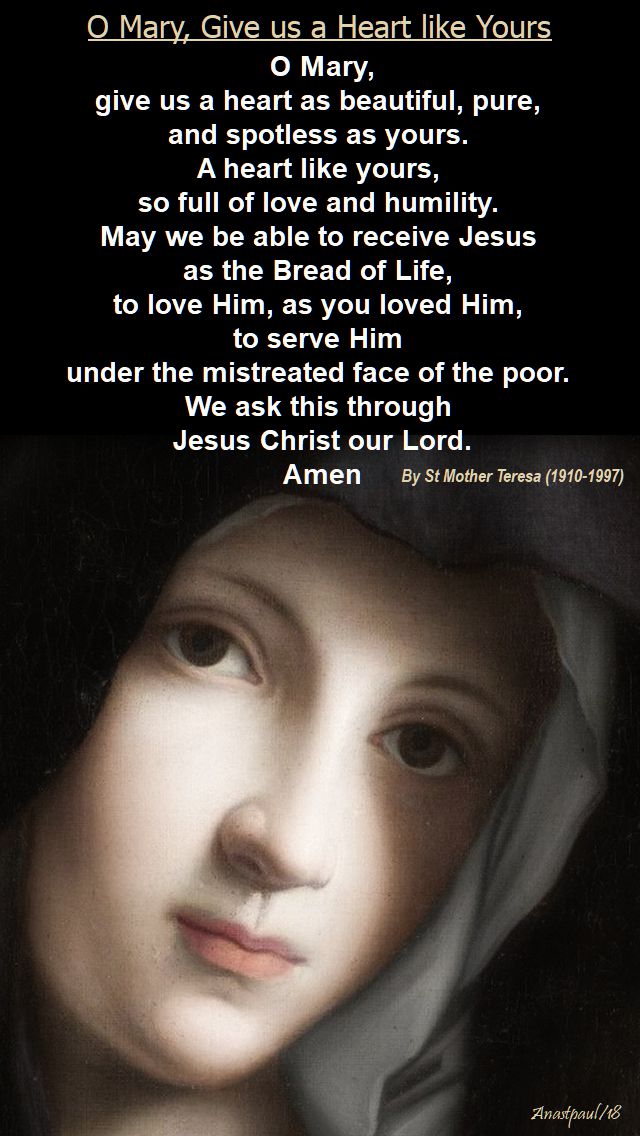
O Mary, Give us a Heart like Yours By St Mother Teresa (1910-1997)
O Mary, give us a heart as beautiful, pure,
and spotless as yours.
A heart like yours,
so full of love and humility.
May we be able to receive Jesus
as the Bread of Life,
to love Him as you loved Him,
to serve Him
under the mistreated face of the poor.
We ask this through
Jesus Christ our Lord.
Amen
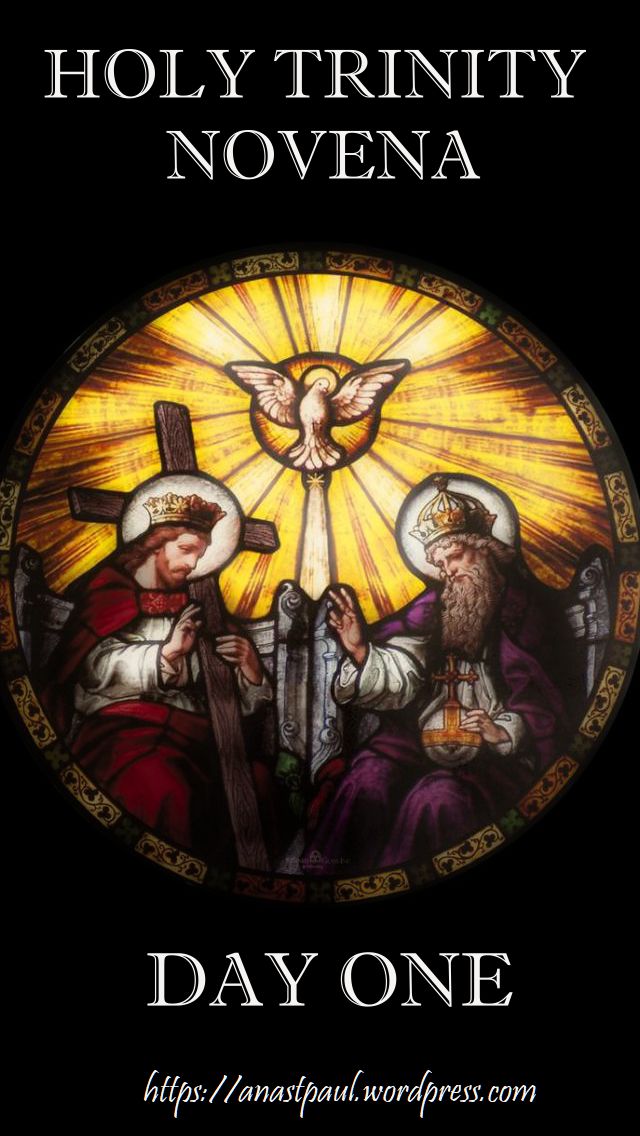
DAY ONE GOD THE FATHER “Our Father who art in heaven”
SCRIPTURAL READING
“This is how you are to pray: Our Father in heaven, hallowed be thy name, thy kingdom come, thy will be done, on earth as in heaven. Give us this day our daily bread and forgive us our trespasses as we forgive those who trespass against us and lead us not into temptation but deliver us from the evil one. If you forgive others their transgressions, your heavenly Father will forgive you. But if you do not forgive others, neither will your Father forgive your transgressions.”...Matthew 6:9-15
MEDITATION
In the New Testament, Jesus spoke about the Father and to the Father 170 times. From the beginning of His ministry, Jesus would say: “I was sent by the Father,” “Your God and my God,” “the Father and I are one.” “I do only the things told by my Father,” “Father, not my will but Yours be done,” etc.
PRAYER
God Eternal Father, bless me, through the love,
with which, You have begotten Your only Son, from all eternity
and shared with Him, the fullness of Your Divinity.
Bless me, through the love, which has adopted us as children
and made us partakers of the treasures of Your Divinity.
Bless me, through the love, which sent us Your Son
and the Holy Spirit to work the miracles of Your power and mercy in us.
Grant that I may always revere and honour You as my great God
and love You with my whole heart, as the best of fathers.
Eternal Father, grant my petition:
…………………….(mention your petition)
Most Holy Trinity, Godhead indivisible,
Father, Son, and Holy Spirit,
our first beginning and our last end,
You have made us after Your own image and likeness.
Grant that all the thoughts of my mind,
all the words of my mouth,
all the affections of my heart
and all my actions be always conformed to Your holy Will.
After having seen You here below in Your manifestations and by faith,
may I come at last to see You face to face,
in the perfect possession of You forever in heaven.
Amen
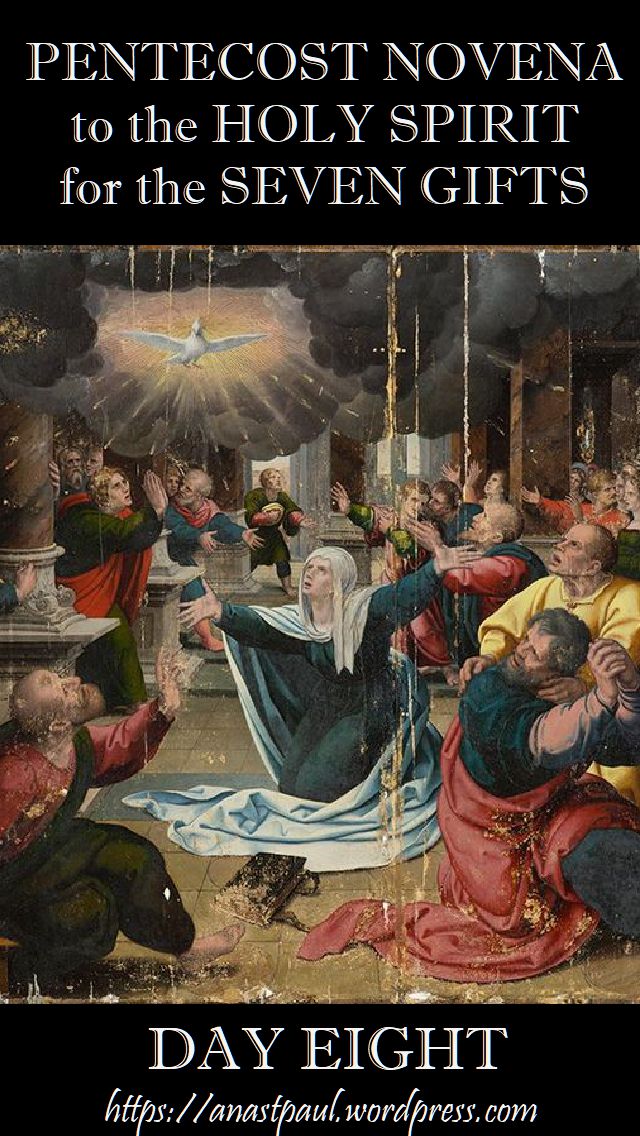
Pentecost Novena to the Holy Spirit for the Seven Gifts Day Eight – 18 May 2018
DAY EIGHT Bend the stubborn heart and will; Melt the frozen, warm the chill; Guide the steps that go astray!
THE GIFT OF WISDOM
Embodying all the other gifts, as charity embraces all the other virtues, Wisdom is
the most perfect of the gifts. Of Wisdom it is written “all good things come to me with her, and innumerable riches through her hands.” It is the gift of Wisdom that
strengthens our faith, fortifies hope, perfects charity and promotes the practice of
virtue in the highest degree. Wisdom enlightens the mind to discern and relish things
divine, in the appreciation of which earthly joys lose their savour, whilst the Cross
of Christ yields a divine sweetness according to the words of the Saviour: “Take up thy cross and follow me, for my yoke is sweet and my burden light.”
Prayer
Come, O Spirit of Wisdom and reveal to my soul the mysteries of heavenly things,
their exceeding greatness, power and beauty. Teach me to love them above and beyond
all the passing joys and satisfactions of earth. Help me to attain them and possess
them for ever. Amen.
Our Father
Hail Mary
Glory be to the Father (seven times)
Act of Consecration
Prayer for the Seven Gifts
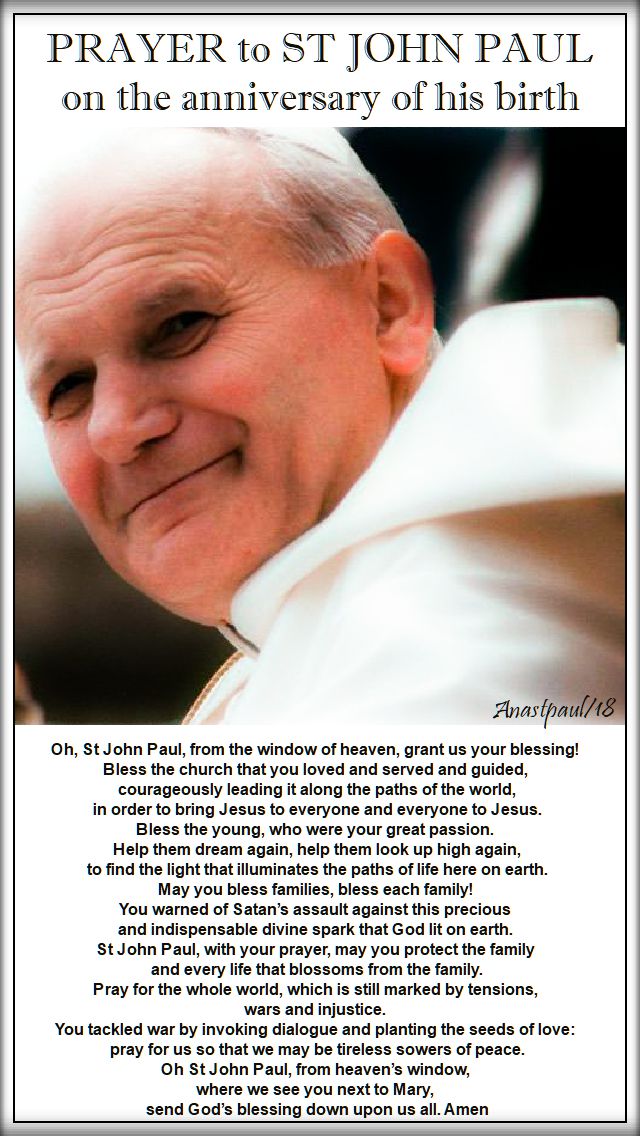
On the Anniversary of the Birth of St John Paul, Karol Wojtyla, we send him our love and ask for his intercession.
Vatican Official Prayer to St John Paul II
Oh, St John Paul, from the window of heaven, grant us your blessing! Bless the church that you loved and served and guided, courageously leading it along the paths of the world, in order to bring Jesus to everyone and everyone to Jesus. Bless the young, who were your great passion. Help them dream again, help them look up high again, to find the light that illuminates the paths of life here on earth. May you bless families, bless each family! You warned of Satan’s assault against this precious and indispensable divine spark that God lit on earth. St John Paul, with your prayer, may you protect the family and every life that blossoms from the family. Pray for the whole world, which is still marked by tensions, wars and injustice. You tackled war by invoking dialogue and planting the seeds of love: pray for us so that we may be tireless sowers of peace. Oh St John Paul, from heaven’s window, where we see you next to Mary, send God’s blessing down upon us all. Amen

















 AnaStpaul
You must be logged in to post a comment.