One Minute Reflection – 5 October – “Month of the Holy Rosary” – Readings: Ps 77:1, Eph 4:23-28, Matt 22:1-14
And he said to him, “Friend, how did you come in here without a wedding garment?” But he was speechless.
Matt 22:1-14
REFLECTION – What is the wedding garment that the Gospel talks about? Most certainly, that garment is something that only the good have, those who are to participate in the feast. Could it be the sacraments? Baptism? Without baptism, no one comes to God, but some people receive baptism and do not come to God. Perhaps it is the altar or what a person receives at the altar? But in receiving the Lord’s body, some people eat and drink their own condemnation. So what is it? Fasting? The wicked also fast. Going to church often? The wicked go to church like the others.
So what is this wedding garment? The apostle Paul tells us: “What we are aiming at is the love that springs from a pure heart, a good conscience, and sincere faith.” That is the wedding garment. Paul is not talking about just any kind of love, for one can often see dishonest people loving others, but one does not see among them this love “that springs from a pure heart, a good conscience, and sincere faith.” Now that is the love that is the wedding garment.
The apostle Paul said: “If I speak with human tongues and angelic as well, but do not have love, I am a noisy gong, a clanging cymbal. If I have the gift of prophecy and, with full knowledge, comprehend all mysteries, if I have faith great enough to move mountains, but have not love, I am nothing.” He said that even if he had all that, without Christ “I am nothing.” How many good things are worthless because one good alone is lacking! If I am without love I may well give away all that I have, confess the name of Christ to the point of shedding my blood, it would be to no purpose, because I can act in that way for love of glory. “If I have not love, it is of no use.” That is the wedding garment. Examine yourselves: if you have it, then come to the Lord’s banquet with confidence.
St Augustine
PRAYER – Stay With Me, O Lord by Padre Pio (1887-1968) Stay with me, Lord, for You are my life and without You I am without fervour. Stay with me, Lord, for You are my light and without You I am in darkness. Stay with me, Lord, so that I hear Your voice and follow You. Stay with me, Lord, for I desire to love You very much and always be in Your company. Stay with me, Lord, if You wish me to be faithful to You. Stay with me, Lord, as poor as my soul is, I want it to be a place of consolation for You, a nest of Love. Stay with me, Jesus, for it is getting late and the day is coming to a close and life passes, death, judgement and eternity approach. It is necessary to renew my strength, so that I will not stop along the way and for that, I need You. It is getting late and death approaches, I fear the darkness, the temptations, the dryness, the cross, the sorrows. O how I need You, my Jesus, in this night of exile! Stay with me tonight, Jesus, in life with all its dangers, I need You. Let me recognise You as Your disciples did, at the breaking of the bread, so that the Eucharistic Communion be the Light which disperses the darkness, the force which sustains me, the unique joy of my heart. Stay with me, Lord, because at the hour of my death, I want to remain united to You, if not by Communion, at least by grace and love. Stay with me, Lord, for it is You alone I look for, Your Love, Your Grace, Your Will, Your Heart, Your Spirit, because I love You and ask no other reward but to love You more and more. With a firm love, I will love You with all my heart while on earth and continue to love You perfectly during all eternity. Amen
But they made light of it, and went off, one to his farm, and another to his business; and the rest laid hold of his servants, treated them shamefully, and killed them.
Matt 22:1-14
See then care utterable. He had planted a vineyard; He had done all things, and finished; when His servants had been put to death, He sent other servants; when those had been slain, He sent the son; and when He was put to death, He bids them to the marriage. They would not come. After this He sends other servants, and they slew these also. Then upon this He slays them, as being incurably diseased.
St John Chrysostom
We are hypocrites who serve God just as long as everything is going according to our wishes. Alas, my dear brethren, all of these virtues which we observe in a great many apparent Christians are but like the flowers of spring, which one gust of hot wind can wither.
St John Vianney
From our mutual love and your reverence for me you have thought that I should be consulted, dearest brother, as to my opinion concerning a certain actor, who, being settled among you, still persists in the discredit of the same art of his; and as a master and teacher, not for the instruction, but for the destruction of boys, that which he has unfortunately learned he also imparts to others: you ask whether such a one ought to communicate with us. This, I think, neither befits the divine majesty nor the discipline of the Gospel, that the modesty and credit of the Church should be polluted by so disgraceful and infamous a contagion.
St Cyprian
For what is more truly the beginning for a Christian than to believe in Christ? What end is better than to suffer for Christ?
St Augustine
We must certainly be extraordinarily blind because when all is said and done, there is not a single person who could say that he is ready to appear before Jesus Christ. Yet in spite of the fact that we are quite aware of this, there is still not one among us who will take a single step nearer to God. Dear Lord, how blind the sinner is! How pitiable is his lot! My dear children, let us not live like fools any longer, for at the moment when we least expect it, Jesus Christ will knock at our door. How happy then will be the person who has not been waiting until that very moment to prepare himself for Him. That is what I wish you to be.
St John Vianney
Wherefore also great is the punishment appointed for them that have been remiss. For as they did despite by not coming, so also thou by thus sitting down with a corrupt life. For to come in with filthy garments is this namely, to depart hence having one’s life impure; wherefore also he was speechless.
You are just, O Lord, and Your ordinance is right. Deal with Your servant according to Your kindness.
Ps 118:137; 118:124
Can we have any conception of a greater love for men than that of our Saviour, since, however wicked or ungrateful we may have been, He does not cease to love us? He forgives us our trespasses so readily that one would say that He was under an obligation to us. He rewards us for our good works liberally, never revealing how much He has contributed towards their performance. Although, in fact, we have done next to nothing for Him, He does not cease to be grateful, and showers down graces with profusion, just as if we had rendered Him some important service.
Fr Juan Eusebio Nieremberg SJ(17th century)
We should love our neighbour with a genuine affection, and not in the same way as we love things necessary or useful, such as bread, a house, and other things which are for our use or for our amusement, these we not love as ourselves, but for ourselves.
St Bernadine of Siena
When the Son of God gave us the best of prayers, He did not intend that we should say ‘My Father’ but Our Father, inasmuch as we have a common Father in heaven we should consider all men as our brethren, and that in this way we should love each other with a mutual love, with a love stronger on grace than in nature, as we have all an equal right to a vocation to a supernatural life, the same hope of a heavenly reward,
St John Chrysostom
How sweet is this command! Does it not appear worthy of the goodness and wisdom of God? Is it not reasonable that men who are endowed with one and the same nature, who have one and the same Father in heaven, who are obliged to live in society, who are all fellow-travellers, and who ought to meet again in heaven, is it not reasonable that we should love one another here below, and should help one another in the same degree as we would wish to be helped ourselves?
Pere de la Colombiere
The love of our neighbour may be placed in the same category as the love we owe to God. All who say ‘Lord, Lord’ (that is to say, all who say that they love God) shall not enter the kingdom of heaven. Good works and proof of that love requisite. He alone will enter the kingdom of heaven who does the will of My Father. The same may be said of the love of our neighbour. We must show it by solid proofs.
St Augustine
He who does not believe that he has aught to pay to his neighbour, as if he had discharged the debt, ought rather to weep for himself as being without charity.
One Minute Reflection – 16 September – “Month of the Seven Sorrows of the Blessed Virgin Mary ” – Readings: Ps 78:11; 78:12; 78:10, Ps 78:1, Wis 3:1-8, Luke 21:9-19
The souls of the just are in the hands of God, and no torment of death shall touch them. They seemed, in the view of the foolish, to be dead; and their passing away was judged an affliction, and their going forth from us, utter destruction. But they are in peace.
Wis 3:1-8
REFLECTION – Do you want to come to that life where you will be sheltered from error forever? Who does not want this? We all desire life and truth but how are we to attain it? What path are we to follow? Certainly, we have not reached the end of the journey yet we can already see it, we yearn for life and truth. Christ is both one and the other. What is the way to it? “I am the way,” he says. To what will we come? “I am the truth and the life”.
This is what the martyrs loved; this is why they looked beyond the love of present goods that pass away. Don’t be astonished at their bravery: in them love overcame suffering.Let us walk in their footsteps, our eyes fixed on him who is both their Leader and ours. If we would come to so great a happiness, let us not be afraid of treading difficult paths. He who has promised is true; he is faithful; he could not deceive us. Why fear the hard road of suffering and tribulation? Our Saviour in person has trodden it.
You answer: “But that was him, the Saviour!” Know that the apostles passed that way too. Now you’re going to say: “But they were apostles!” Yes, I know. But don’t forget that a great many people like yourself have trodden it in their turn, women have trodden it, too children, even young girls have gone that way. How could the road that so many passers-by have levelled still be too hard?
Saint Augustine
PRAYER – Look upon us Lord, Creator and Ruler of the whole world, give us the grace to serve You with all our hearts, to take up our cross and follow You, that we may come to know the power of Your love and the forgiveness which You give and You teach. Grant that by the intercession of Sts Cornelius and Cyprian, we may attain the glory of Your kingdom and see You face to face. We make our prayer through Christ our Lord with the Holy Spirit, one God forever, amen.
For if anyone thinks himself to be something, whereas he is nothing, he deceives himself.
Gal 5:25-26; 6:1-10
God alone can satisfy a soul, calm its anxieties, its suspicions, its fears, and every trouble that stirs within our hearts. Whenever I tried to fill up the aching void in my heart, said St Augustine, I found that nothing equalled the happiness I felt, in trying to do my duty in serving God.
Pere Croiset S.J
The world, it is that raging sea, on which are tossed to and fro vessels containing a crowd of sinners, whose cares and projects depend on the fortunes or misfortunes of life, whose aim seems to be to build palaces on sand, whose hopes are fixed on the fleeting enjoyments of this life, who seek for joys and pleasures which are a thousand times more fatiguing than they are worth.
Massillon
Ah! who can walk with a firm unshaken step in the midst of the passions of the world, amidst its seductive charms? Let us then think and meditate on the words of Job, ‘The life of man on earth is a continual warfare,’.
St Ambrose
The world is a monstrous assemblage of party spirits who revile each other, and regard each other with contempt, envy, and jealousy, void of honour and fair dealing.
Massillon
The world is more dangerous when it flatters us, than when it ill-treats us, we should be more careful of trusting it, when it invites us to love it, than when it admonishes us and compels us to despise it. They who follow the maxims of the world, experience nothing but misery, and the flattering expectation of happiness is delusive and vain. Would you wish not to be an enemy of God? Do not be a friend of the world.
One Minute Reflection – 7 September – “Month of the Seven Sorrows of the Blessed Virgin Mary” – Readings: Ps 85:1-3, Ps 85:4, Gal 5:25-26; 6:1-10, Luke 7:11-16
And He said, Young man, I say to you, arise. And he who was dead, sat up, and began to speak. And He gave him to his mother. But fear seized upon all, and they began to glorify God, saying, A great prophet has risen among us, and God has visited His people.
Luke 7:11-16
REFLECTION – “Awake, you sleeper, rise from the dead and Christ will give you light!” We often say of those who are manifestly dead that they are sleeping; and indeed they are all sleeping for the One who is able to awaken them. For you a dead person is truly dead: you may well slap and shake him, he will not wake up. But for Christ, the man he commanded to “Rise up!” was merely sleeping and he rose up immediately. It is easy enough to waken a sleeper from his bed but Christ awakens a dead man from his tomb with even greater ease.
“By now there will be a stench; he has been dead for four days” But the Lord, for whom all things are done with ease, is coming. No bonds hold secure before the Savior's voice. The powers over the dwellings of the dead tremble and Lazarus is restored to life. For Christ's life-giving will even this death of four days is merely a sleep.

But reflect over the nature of this resurrection. Lazarus, coming alive out of the tomb, was as yet unable to walk. So the Lord commanded his disciples: “Untie him and let him go”. Christ raised him up; they set him free from his bonds. The true majesty of the God who brings the dead back to life emerges in this narrative. The Word of life exhorts those who are bound by their evil habits. Having been strongly admonished these sinners return to themselves, begin to reconsider their lives and feel the weight of the chains of their evil habits. Ashamed, they make up their minds to change their lives. From then on they are raised from death and brought back to life since they condemn their former way of living. However, even though they are alive once more, they cannot walk as yet; their bonds have to be untied. This is the ministry our Lord entrusted to his disciples when he said: “Whatever you loose on earth shall be loosed in heaven”
.
St Augustine
PRAYER – Our Father who art in heaven, almighty and eternal God, teach us to pause often during our active lives and recollect ourselves. Let us put away the problems of life and commune with You in prayer and meditation. Mary, Holy and Sorrowful Mother of our Lord Jesus Christ, teach us the how to pray and how to imitate your courage and strength in silence. Pray for us that we may be inspired to turn to our God for strength, in this vale of tears. Through Jesus Christ our Lord and Advocate, with the Holy Spirit, one God now and for all eternity, amen.
Brethren: If we live by the Spirit, by the Spirit let us also walk. Let us not become desirous of vainglory, provoking one another, envying one another.
Gal 5:25-26; 6:1-10
The yearning after glory is a strange passion. It displays itself in a hundred different ways. Some wish to be honoured, some wish to be in regal power, some aspire to be rich, and others sigh to be strong and robust. This tyrannic passion, passing still further on, induces some to seek for glory by their alms-deeds, others by their fasts and mortifications, some by their ostentatious prayers, others by their learning and science, so various are the forms of this monster vice.
St John Chrysostom
Men soon find that there is no one more importunate than he who, filled with vainglory, praises himself, gives himself airs, and places on his head a wreath of incense. He is laughed at for his vanity, and the more they notice that he boasts of himself, the more they endeavour to humiliate him. In fact, the more you try to attract the praise of the world by your own vanity and vainglory, the more will people either avoid you or laugh at you.
St John Chrysostom
Public approbation has but little effect on a man who has acted from good and conscientious motives, such a man merits as much again as he seems to have disregarded before. Those who seek with too much eagerness for the esteem and applause of the world, receive during this life the reward of their good works, but merit nothing for eternity. The reward which men can give us is frivolous and transient, but God reserves for us an infinite reward, an eternal recompense.
St Ambrose
All the saints admonish us to be on our guard against vainglory, because, say they, it is a cunning thief, which often steals from us our best actions, and which insinuates itself so secretly that it has struck its blow even before we have perceived it.
Alphonse Rodriguez SJ
Would you wish to know how to save yourself from this tempestuous sea? Love God, and you will walk upon its waters, you will tread under foot the pride of the world, and you will be saved.
St Augustine
He sees a crowd of frivolous desires, hopes ill-founded, unjust hatreds, irregulated loves, he sees the wanton extravagance of our pleasures, the inutility of our occupations, the instability of our fortunes, the emptiness of our wishes, the littleness of our interests. Ah! how mean and contemptible did the world appear to him! No wonder he despised it, and retired from it for evermore.
Letter to the Friends of the Cross by St Louis de Montfort
[1. Nothing is so necessary]
Dear Friends of the Cross, we are all sinners; there is not one of us who has not deserved hell, and I more than anyone. Our offences have to be punished either in this world or in the next. If we suffer for them now, we shall not suffer for them after death. If we willingly accept punishment for them, this punishment will be an act of God’s love; for it is mercy which holds sway and chastises in this world, and not strict justice. This punishment will be light and temporary, accompanied by consolation and merit, and followed by rewards both here and in eternity.
But if the punishment due for our sins is put off till the next world, then it will be God’s avenging justice, which puts everything to fire and sword, which will inflict the punishment, a dreadful, indescribable punishment: “Who understands the power of your anger?” Judgement without mercy, without relief, without merit, without limit and without end. Yes, without end. That serious sin you committed in a few brief moments, that deliberate evil thought which now escapes your memory, that word carried away by the wind, that brief action against the law of God – they shall all be punished for eternity, in the company of the devils in hell, so long as God is God. And this avenging God will have no pity on your torments, on your cries and tears, violent enough to cleave the rocks. To suffer forever, without merit, without mercy, and without end.
Do we think of this, my dear brothers and sisters, when we have to suffer some trial in this world? How fortunate we are to be able to exchange a never-ending and unprofitable punishment for a temporary and rewarding one just by bearing our cross with patience! How many of our debts are still unpaid! How many sins have we committed which, despite a sincere confession and heartfelt contrition, will have to be atoned for in purgatory for many years, simply because in this world we contented ourselves with a few slight penances!
Ah, let us settle our debts with good grace in this life by cheerfully carrying our cross. In the next, a strict account is demanded down to the last penny, to the last idle word. If we were able to snatch from the devil the book of death in which he has entered all our sins and the punishment due to them, what a heavy debt we should find, and how delighted we should be to suffer for long years on earth rather than a single day in the world to come!
Friends of the Cross, do you not flatter yourselves that you are, or desire to become, the friends of God? Well then, resolve to drink the cup that you must drink in order to become his friends: “They drank the cup of the Lord and became the friends of God.” Benjamin, the beloved son of Jacob, was given the cup, while his other brothers received nothing but wheat. The beloved disciple of Christ, so dear to his Master’s heart, went up to Calvary and drank of his cup. “Can you drink the cup that I am going to drink?” To desire God’s glory is excellent, but to desire and pray for it without resolving to suffer all things is both foolish and extravagant: “You do not know what you are asking…” “We must experience many hardships before we enter the kingdom of heaven.” To enter this kingdom you must suffer many crosses and tribulations.
Rightly you glory in being God’s children. You should glory, then, in the correction your heavenly Father has given you and will give you in the future, for he chastises all his children. If you are not included among his beloved children, you are, alas, included among those who are lost, as St. Augustine points out. He also tells us, “The one who does not mourn in this world like a stranger and a pilgrim will not rejoice in the world to come as a citizen of heaven.” If your heavenly Father does not send you some worthwhile crosses from time to time, it is because he no longer cares about you and is angry with you; he is treating you as an outsider, no longer belonging to his family and deserving his protection, or as an illegitimate child, who, having no claim to a share of the inheritance, deserves neither care nor correction.
Friends of the Cross, disciples of a crucified God, the mystery of the Cross is a mystery unknown to the Gentiles, rejected by the Jews, and despised by heretics and bad Catholics. But it is the great mystery you must learn to practice in the school of Christ, and which can only be learnt from him. You will look in vain in all the schools of ancient times for a philosopher who taught it; in vain you will appeal to the senses or to reason to throw some light on it. It is only Jesus, through his all-powerful grace, who can teach you this mystery and give you the ability to appreciate it. Strive then to become proficient in this all-important science under your great Master, and you will understand all other sciences, for it contains them all in an eminent degree. It is our natural and supernatural philosophy, our divine and mystic theology, our philosopher’s stone, which by patience transforms the basest metals into precious ones, the bitterest pains into delight, poverty into riches, the most profound humiliations into glory. The one among you who knows best how to carry his cross, even though in other things he does not know A from B, is the most learned of all.
You are the members of Christ, a wonderful honour indeed, but one which entails suffering. If the Head is crowned with thorns, can the members expect to be crowned with roses? If the Head is jeered at and covered with dust on the road to Calvary, can the members expect to be sprinkled with perfumes on a throne? If the Head has no pillow on which to rest, can the members expect to recline on feathers and down? That would be unthinkable! No, no, my dear Companions of the Cross, do not deceive yourselves. Those Christians you see everywhere, fashionably dressed, fastidious in manner, full of importance and dignity, are not real disciples, real members of Christ crucified. To think they are would be an insult to our thorn-crowned Head and to the truth of the Gospel. How many so-called Christians imagine they are members of our Saviour when in reality they are his treacherous persecutors, for while they make the sign of the cross with their hand, in their hearts they are its enemies!
You know that you are living temples of the Holy Spirit and that, like living stones, you are to be set by the God of love into the building of the heavenly Jerusalem. And so you must expect to be shaped, cut and chiselled under the hammer of the cross; otherwise, you would remain rough stones, good for nothing but to be cast aside. Be careful that you do not cause the hammer to recoil when it strikes you; respect the chisel that is carving you and the hand that is shaping you.It may be that this skilful and loving craftsman wants you to have an important place in his eternal edifice, or to be one of the most beautiful works of art in his heavenly kingdom. So let him do what he pleases; he loves you, he knows what he is doing, he has had experience. His strokes are skilful and directed by love; not one will miscarry unless your impatience makes it do so.
Who, then, would dare claim to be exempt from the cross? Which of us would not hasten to the place where he knows the cross awaits him? Who would refuse to say with St. Ignatius of Antioch, “Come, fire and gibbet, wild beast and all the torments of hell, that I may delight in the possession of Christ.”
No, this accursed earth on which we live is not destined to make us happy; in this land of darkness we cannot expect to see clearly; there is no perfect calm on this stormy sea; we can never avoid conflicts on this field of trial and battle; we cannot escape being scratched on this thorn-covered earth. Willingly or unwillingly, all must carry their cross, both those who serve God and those who do not. Keep in mind the words of the hymn:
Three crosses stand on Calvary’s height; One must be chosen, so choose aright; You must suffer like a saint or repentant thief, Or like a reprobate, in endless grief.
That is to say, if you are not willing to suffer gladly like Jesus, or patiently like the penitent thief, then you will have to suffer like the unrepentant thief. You will have to drink the cup of bitterness to the dregs without the consoling help of grace, and you will have to bear the whole weight of your cross, deprived of the powerful support of Christ. You will even have to carry the deadly weight which the devil will add to it by means of the impatience it will cause you. And after sharing the unhappiness of the impenitent thief on earth, you will share his misery in eternity.
There is nothing so bold, nothing more secure, than the fear of God. He who fears God, fears naught else, and he who has a dread of displeasing Him, or a fear of forfeiting His love, does not shrink from suffering – cares not if he lose all, provided he be in a state of grace.
Pere Nouet, SJ(17th century)
The continued prosperity of sinners, is the greatest of all misfortunes for them. The less our Lord disturbs their torpor, the more He punishes them after. It is at that time that vicious habits increase in power day by day, it is then that they indulge themselves the more, that they delude themselves, that they are blinded more and more, to the important interests of their salvation. But the mad multitude do not reason thus.
St Augustine
It is now that sinners try, as far as they can, to drive away the memory and the thought of death, and thus to find peace, although they never will do so, by leading a life of sin; but when in the agonies of death, they must enter into eternity when “destruction cometh and they shall seek peace, and there shall be none” then they will try to fly from the stings of their troubled consciences; they will seek peace, but what peace can a soul find which is laden with sin, which bites it like so many vipers ? What peace, knowing that in so short a time it will have to appear before Jesus Christ the Judge, whose law and friendship, until that moment, it has esteemed of so little worth?
St Alphonsus Liguori
Alas, my brethren, how many seem to be good Christians in the eyes of the world who are really tepid souls in the eyes of God, Who knows our inmost hearts….
St John Vianney
Do not fall into the fatal error of believing that worldly prosperity may be a favour which God grants to His favoured ones. God often, in His anger, gives riches and honours which are prayed for, and He grants them by punishing. He would have destined you to live a retired life in humility and lowliness, in order to lead you, by those means, to the height of glory, but you have obstinately rejected His merciful intentions, you have mapped your own way of life, and, intoxicated with success, you have tried to subject His will to your own, you have made your own choice, He grants what you ask for, and He hears you in His anger. Riches, honours, dignities, fortune, grandeur, success, and robust health are yours for a time…all these, however, are given to you as a punishment.
One Minute Reflection – 3 September – “Month of the Seven Sorrows of Mary” – Readings: Ps 88:20-22, Ps 88:2, 1 Thess. 2:2-8, John 21:15-17
At that time, Jesus said to Simon Peter, Simon, son of John, do you love Me more than these do? He said to Him, Yes, Lord, You know that I love You. He said to him, Feed My lambs.
John 21:15-17
REFLECTION – The Lord asks Peter what he already knew, and that not just once but a second and a third time, whether Peter loved him. And each time he has the same answer, that he is loved, while just as often he gives Peter the same charge to feed His sheep. To the threefold denial there is now appended a threefold confession of love. His tongue is not to yield a feebler service to love than it did to fear, and the testimony of his word must be just as open in the presence of life as it was before the threat of death. If it was the sign of fear to deny the Shepherd then let it be the office of love to feed the Lord’s flock.
Those who have this as their purpose in feeding the flock of Christ, that they may have them as their own and not as Christ's, are convicted of loving themselves and not Christ. They are motivated either by the desire of boasting, or of wielding power, or of acquiring gain, and not from the love of obeying, serving, and pleasing God. The thrice repeated saying of Christ condemns those, therefore, of whom the apostle complains that they seek their own interests, not the things that are Jesus Christ's. For what do the words mean: "Do you love me? Feed my sheep"? It is as though he said, “If you love me, do not think of feeding yourself but feed my sheep as mine, and not as your own; seek my glory in them, and not your own; my dominion, and not yours; my gain, and not yours… So let us not love ourselves, but him; and in feeding his sheep, let us be seeking the things which are his, not the things which are our own.
St Augustine
PRAYER – God our Father, Your rule is a rule of love, Your providence is full of mercy for Your people. Through the intercession of Your |Angels and Saints and the Most Sorrowful Mother of Your Son, that we may be granted the spirit of wisdom and understanding in Your Word. Grant that by the light of the Your Word made flesh, we may know our eternal home and strive to attain eternal joy there with You. Through Jesus Christ our Lord, with the Holy Spirit, one God forever, amen.
And as for clothing, why are you anxious? Consider how the lilies of the field grow; they neither toil nor spin, yet I say to you that not even Solomon in all his glory was arrayed like one of those. But if God so clothes the grass of the field, which flourishes today but tomorrow is thrown into the oven, how much more you, O you of little faith!
Matt 6:24-33
Let us place our trust in the Providence of God. Let us cut off all those anxieties which serve only to torture our minds uselessly, since, whether we make ourselves uneasy or not, it is God alone who sends us all these things, and who may increase them until He sees they disturb us less.
St John Chrysostom
Why fear? says St Augustine: you have a GOD for a protector and His Providence for a guide. What! says the holy doctor, you fear to perish under the guidance of God, and under the protection of His Providence? Times ergo ne pereas? Is it that you know not that a single hair can fall off without His approval? Cujus capillus non peribit. Ah! if He takes so much care of things that are of little or no consequence, how safe ought we not to feel when we know with what care He watches a soul which is so precious to Him?
La Pere Croiset (17th century)
He not only is their guide and protector, but He showers down His graces and even makes use of His angels to help them. He warns them, by secret inspirations, what they should do and what they should not do, so that one would say that God is solely occupied in caring for His creatures.
La Pere Croiset
Happy, indeed, is she to whom it is given to share this sacred banquet, to cling with all her heart to Him whose beauty all the heavenly hosts admire unceasingly, whose love inflames our love, whose contemplation is our refreshment, whose graciousness is our joy, whose gentleness fills us to overflowing, whose remembrance brings a gentle light, whose fragrance will revive the dead, whose glorious vision will be the happiness of all the citizens of the heavenly Jerusalem;
St Clare of Assisi
I determined to do the little that was in me – namely, to follow the evangelical counsels as perfectly as I could, and to see that these few nuns who are here shod do the same, confiding in the great goodness of God, Who never fails to help those who resolve to forsake everything for His sake.
St Teresa of Avila
He who has given us life will give us wherewith to sustain it. He who feeds the thief, will He not feed the innocent? And if He takes care of His enemies, what will He not do for His friends? You cannot place yourself into better hands than He who made you what you are. He who has been so good to you before you were what you are, can He leave you uncared for, now that you are what He would wish you to be?
At that time, Jesus said to His disciples, Let your loins be girt about and your lamps burning, and you yourselves like men waiting for their master’s return from the wedding.
Luke 12:35-40
So, then, all these things, care of funeral, bestowal in sepulture, pomp of obsequies, are more for comfort of the living, than for help to the dead. If it at all profit the ungodly to have costly sepulture, it shall harm the godly to have vile sepulture or none. Right handsome obsequies in sight of men did that rich man who was clad in purple receive of the crowd of his housefolk; but far more handsome did that poor man who was full of sores obtain of the ministry of Angels; who bore him not out into a marble tomb, but into Abraham’s bosom on high.
St Augustine
Learn, beloved, the wickedness of the men of that time, how they spoil houses and fields, and take even justice from the just; for when these things come to pass, you may know that it is the end. For this reason are you instructed in the wisdom of the prophet, and the revelation that is to be in those days. And all the prophets, as we have already said, have clearly signified the things that are to come to pass in the last times, just as they also have declared things of old.
Psuedo-Hippolytus
But we who hope for the Son of God are persecuted and trodden down by those unbelievers. For the wings of the vessels are the churches; and the sea is the world, in which the Church is set, like a ship tossed in the deep, but not destroyed; for she has with her the skilled Pilot, Christ. And she bears in her midst also the trophy (which is erected) over death; for she carries with her the cross of the Lord. For her prow is the east, and her stern is the west, and her hold is the south, and her tillers are the two Testaments; and the ropes that stretch around her are the love of Christ, which binds the Church; and the net which she bears with her is the layer of the regeneration which renews the believing, whence too are these glories.
Hippolytus
The first event that will follow upon the end of the world is the general resurrection of the dead. All men, whoever they may be, and whenever and wherever they have lived, not excepting infants whose existence has been but one brief moment, will rise again. However long ago the body of a man may have crumbled into dust, whatever changes it may have passed through, every portion and every particle will unite to form again the same body which was his during his lifetime.
Fr Martin von Cochem
Consider this solemn truth, O Christian, for it concerns thee closely. As certainly as thou now livest, so certainly wilt thou one day rise again from the grave.
Further Divine Perfections Mirrored in the Admirable Heart of Mary
Divine Mercy is a perfection directed towards the miseries of creatures, tending to alleviate them and even to free them from created things when such a liberation enters into the designs of Divine Providence, which does all things with measure, number and weight. This adorable mercy extends, like goodness itself, to all God’s works: “His tender mercies are over all His works.” God’s mercy overshadows the works of nature, the works of grace and the works of glory.
Among the effects of divine Mercy, we must enumerate three principal realities, which in turn embody numberless effects. The first is the Incarnation of the God-Man; the second, His Mystical Body, namely Holy Church; the third is the Mother of the God-Man, namely the Most Blessed Virgin Mary. These constitute three admirable masterpieces of divine mercy.
Beyond this, God not only willed to become man that men might become partakers of the divine nature, but He willed that His only Son should become the Son of Man that men might become sons of God. God willed that His Son come into this world by being born of the seed of Adam and of a daughter of Adam that we might have the God-Man for our brother and the Mother of God for our mother. Thus we have the same father and the same mother as the Son of God Himself.We are His brothers, and as He is our mediator with His Father, so His heavenly Mother is a mediatrix between Himself and us.
In order to render His admirable Mother paramountly able to exercise her double office of Mother and Mediatrix, so that she might protect, favor and assist us with greater efficacy in all our needs, Divine Mercy constituted her, first of all, most agreeable and holy. Secondly, Mercy gave her dominion over everything in heaven and on earth. Thirdly, it gave her the mildest, sweetest and most loving heart save that of the God- Man. To the Heart of Mary God communicated in great abundance His merciful inclinations and established in it the throne and reign of His Mercy more gloriously than in the heart of any other creature, save the sacred humanity of Christ. Divine Mercy reigns so perfectly in Mary’s Heart that she bears the name of Queen and Mother of Mercy. And this most loving Mary has so completely won the heart of God’s mercy that He has given her the key to all His treasures and made her absolute mistress of them.
St. Bernard says: “She is called the Queen of Mercy because she opens the abyss and treasure of divine mercy to whom she chooses, when she chooses and as she chooses.” Divine Mercy holds such complete sway over Mary’s Heart and fills it with so much compassion for sinners and for all persons in need that St. Augustine addresses her thus: “Thou art the sinner’s only hope,” after God. “My dearest children,” says St. Bernard, “her heart is the ladder by which sinners go up to heaven; this is my reliance, this the only reason of my hope.” Euthymius, one of the ancient Fathers who lived over seven centuries ago, adds: “O most merciful Virgin, deign to cast thy pitiful eyes on thy poor servants, for, after God, we have placed all our hope in thee who are our life, our glory, and, as it were, our substance and our being.” St. John Damascene tells us that Our Lady is the only relief of the afflicted, the sovereign comforter of anguished hearts; and St. John Chrysostom declares her to be a boundless ocean of mercy.
Would you know in what further manner divine mercy lives and reigns in the Heart of the Mother of Mercy? Listen to St. Bonaventure: “Great was Mary’s mercy towards the wretched while she was living in exile here below; but immeasurably greater still now that she is happily reigning in heaven. She manifests this greater mercy through innumerable benefits, now that she possesses a clearer insight into the numberless woes of mankind. She does not require past merits, but grants the petitions of all men, out of charity, and opens the bosom of her clemency to everyone. She relieves every need and necessity with an incomparable affection and tenderness of heart.”
Her gentle Heart is so filled with mercy that it overflows on all sides and spreads itself in heaven, on earth and even in hell. Let us again listen to St. Bernard proclaiming this truth: “Who can comprehend, O Blessed – Virgin, the length, the width, the height and the depth of thy mercy? Its length extends to the last day in the life of those who invoke thee; its width encompasses the whole world; its height reaches to heaven, there to repair the losses of the heavenly Jerusalem; its depth has penetrated hell to obtain the deliverance of them that sit in the darkness and shadow of death.”
The virginal Heart of the Mother of Grace is filled with such exceeding mercy that she exercises it not only in favor of sinners who wish to be converted, but also towards many persons who never think of their eternal salvation. She implores her Blessed Son to inspire them, to excite in their hearts sentiments of fear of God and terror at the thought of His judgments. She asks Him to chastise them in divers ways, to raise in their midst persons leading holy and exemplary lives, whose example will draw them to Himself, and to use all other means of obtaining their conversion, or at least, if they will not mend their ways, to prevent them from multiplying their sins, that their damnation may be less terrible.
But what is even more, the Heart of Mary is so full of mercy that, using the extraordinary privileges God has granted to her alone, and out of her incomparable goodness, she often saves from eternal perdition souls who in the ordinary course of divine Justice would have been cast into hell. Such is the mind of that ancient and excellent author, Raymund Jourdain, who succeeded in hiding his name, but not the extent of his learning and holiness: “The Mother’s mercy often saves many whom the justice of the Son would have otherwise condemned.”
Hence St. Germanus, Patriarch of Constantinople, addresses these beautiful words to Mary: “O purest, best and most merciful Lady, help and relief of the faithful, powerful comforter of the afflicted and assured refuge of sinners, forsake us not, but keep us ever under thy protection. If thou forsake us, to whom shall we have recourse? What would become of us without thee, most holy Mother of God, who are the spirit and life of Christians. Even as respiration is an infallible sign of life in our bodies, so is thy holy name, when it is constantly on the lips of thy servants, on all occasions, at every time and in all places, not only a sign, but a veritable cause of life, happiness and protection.”
Our Morning Offering – 28 August – St Augustine (354-430) – Bishop, Confessor, Doctor of Grace and Father
O God, the House of My Soul is Narrow By St Augustine (354-430) Father & Doctor of Grace
O God, the Light of the heart, which sees Thee, The Life of the soul, which loves Thee, The Strength of the mind, which seeks Thee, May I ever continue to be steadfast in Thy love. Be the Joy of my heart, Take all of me to Thyself and abide therein. The house of my soul is, I confess, too narrow for Thee. Enlarge it, that Thou may enter. It is ruinous but do repair it. It has within it what must offend Thine Eyes, I confess and know it, But whose help shall I seek in cleansing it but Thine alone? To Thee, O God, I cry urgently. Cleanse me from secret faults. Keep me from false pride and sensuality, that they may not get dominion over me. Amen
One Minute Reflection – 28 August – St Augustine (354-430) – Bishop, Confessor, Doctor of Grace and Father – Readings: Sir 15:5, Ps 91:2, 2 Tim 4:1-8, Matt 5:13-19
You are the light of the world. A city seated on a mountain cannot be hid.
Matt 5:13-19
REFLECTION – This “day which the Lord has made” penetrates all things, contains all things and simultaneously embraces heaven, earth and the underworld! The light which is Christ is neither hindered by walls nor broken by the elements nor darkened by shadow. Yes, I say, the light of Christ is a day without night, a day without end, shining everywhere, extending everywhere, remaining everywhere. Christ is day, says the apostle Paul: “The night is advanced, the day is near”. The night is advanced, he says, it precedes the day. Understand by this that, as soon as the light of Christ appears, the darkness of the devil is dispersed and the night of sin does not follow, eternal splendor casts out the shadows of yesterday and halts the insinuating advance of evil.
Scripture attests that the day of Christ illumines heaven, earth and hell. It shines on the earth: "He was the true light" says saint John, "who enlightens everyone, coming into the world". It gives light in the underworld: "The people who walked in darkness have seen a great light;" says the prophet, "upon those who lived in a land of gloom a light has shone". And in heaven this day remains, as David said: "His dynasty will continue forever, his throne like the sun before me".
Saint Maximus of Turin
PRAYER – Give heed to our humble prayers, Almighty God and through the intercession of blessed Augustine, Thy Confessor and Bishop, kindly grant Thy oft-given mercy to those upon whom Thou bestows great hope in Thy forgiveness. Through Jesus Christ, Thy Son our Lord, Who lives and reigns with Thee, in the unity of the Holy Ghost, God, world without end. Amen
Quote/s of the Day – 28 August – St Augustine (354-430) Bishop, Confessor, Doctor of Grace and Father–
St Jerome wrote to Augustine in 418: “You are known throughout the world; Catholics honour and esteem you as the one who has established anew the ancient Faith.”
“The sky and the earth and the waters and the things that are in them, the fishes and the birds and the trees are not evil. All these are good; it is evil men who make this evil world.”
“What is reprehensible, is that while leading good lives themselves and abhorring those of wicked men, some, fearing to offend, shut their eyes to evil deeds instead of condemning them and pointing out their malice.”
“Give of your earthly goods and receive eternal ones; give earth and receive heaven!”
Every man is not justified in sacrificing his son to God, because Abraham was commendable in so doing.
I occupied some considerable space, partly that I might relieve the anxieties which disturb many when they observe that the blessings of God, and the common and daily human casualties, fall to the lot of bad men and good without distinction; but mainly that I might minister some consolation to those holy and chaste women who were outraged by the enemy, in such a way as to shock their modesty, though not to sully their purity, and that I might preserve them from being ashamed of life, though they have no guilt to be ashamed of.
In truth, Rome, which was founded and increased by the labors of these ancient heroes, was more shamefully ruined by their descendants, while its walls were still standing, than it is now by the razing of them. For in this ruin there fell stones and timbers; but in the ruin those profligates effected, there fell, not the mural, but the moral bulwarks and ornaments of the city, and their hearts burned with passions more destructive than the flames which consumed their houses.
One Minute Reflection – 24 August – St Bartholomew the Apostle and Martyr – Readings: Ps 138:17, Ps 138:1-2, 1 Cor. 12:27-31, Luke 6:12-19
At that time, Jesus went out to the mountain to pray, and continued all night in prayer to God. And when day broke, He summoned His disciples; and from these He chose twelve – whom He also named Apostles- Simon, whom He named Peter, and his brother Andrew; James and John; Philip and Bartholomew; Matthew and Thomas; James the son of Alpheus, and Simon called the Zealot; Jude the brother of James, and Judas Iscariot, who turned traitor.
Luke 6:12-19
REFLECTION – “Her foundations are upon the holy hills; the Lord loves the gates of Zion.” “You are fellow citizens with the holy ones and members of the household of God, built upon the foundation of the apostles and prophets, with Christ Jesus himself as the capstone”. Christ, the cornerstone, and the apostles and mighty prophets, the hills that bear the fabric of the city, constitute a sort of living structure. This living building now makes its voice resound in your hearts. God himself, a master builder, is working in you through my tongue so that you may be built up into its structure, like so many squared stones.
Note the shape of a stone that has been perfectly squared off: Christians should have similar qualities. In all their trials they never fall; though pushed and, after a fashion, knocked over, they do not fall; for whatever way a square stone is turned, it still stands erect. Be similar to those squared stones, and be thus prepared for every shock; whatever the force which may push you, it cannot make you lose balance.

You will rise to take your place in this building by a sincere Christian life, by faith, hope and love. The holy city is constructed of its own citizens; they are themselves the blocks that form this city, for these stones are living: "You also," says Scripture, "like living stones, let yourselves be built into a spiritual house,"
Why are the apostles and prophets the foundations? Because their authority is the support of our weakness. Through them we enter the kingdom of God: they proclaim it to us; and while we enter by their means, we enter also through Christ, who is himself its gate.
Saint Augustine
PRAYER – Almighty, eternal God, Who bestowed on us the devout and holy joy of this day to celebrate the Feast of Thy blessed Apostle Bartholomew, grant unto Thy Church, we beseech Thee, both to love what he believed and to preach what he taught. Through Jesus Christ, Thy Son our Lord, Who lives and reigns with Thee, in the unity of the Holy Ghost, God, world without end. Amen
One Minute Reflection – 21 August – The 11th Sunday after Pentecost and the Memorial of St Jane Frances de Chantal VHM (1572-1641) – Readings: Ps 118:75; 118:120, Ps 118:1, Prov 31:10-31, Matt 13:44-52
I know, O Lord, that Your ordinances are just, and in Your faithfulness You have afflicted me. Pierce my flesh with Your fear; I fear Your ordinances.
Ps 118:75; 118:120
REFLECTION – “He shall rule the world with justice and the peoples with his truth.” Which justice and which truth? He will gather to him his chosen ones; the others he will separate, for he will place the former at his right and the latter at his left. What will be more just, more true than that? Those who did not want to practice mercy before the judge came, will not expect mercy from the judge. Those who wanted to practice mercy, will be judged with mercy. For he will say to those whom he has placed at his right: “Come. You have my Father’s blessing! Inherit the kingdom prepared for you from the creation of the world.” And he will attribute acts of mercy to them: “For I was hungry and you gave me food, I was thirsty and you gave me drink” and all that follows.
Because you are unjust, will the Judge not be just? Because you sometimes lie, will Truth not be truthful? If you want to meet a merciful judge, be merciful before he comes. Forgive if someone has offended you; give away the possessions of which you have an abundance. Give what you have received from him: “Name something you have that you have not received.”These are the sacrifices that are very pleasing to God: mercy, humility, gratitude, peace, charity. If that is what we bring in sacrifice, we will await with assurance the coming of the Judge, of him who “shall rule the world with justice and the peoples with his truth.”
Saint Augustine
PRAYER – Almighty and merciful God, Who endowed St Jane Frances, burning with love of Thee, with a wondrous strength of spirit through all the paths of life, in the way of perfection and willed through her, to ennoble Thy Church, by a new religious family, grant by her merits and prayers, that we who are aware of our weakness, may trust firmly in Thy power and, by the assistance of divine grace, overcome all obstacles in our way. Through Jesus Christ, Thy Son our Lord, Who lives and reigns with Thee, in the unity of the Holy Ghost, God, world without end. Amen
The Garden of Eden described in the second and third chapters of Genesis is one of the most expressive figures drawn by the omnipotent and all-wise hand of God to represent the Heart of His beloved Daughter, the Blessed Virgin Mary. His infinite goodness has given us an excellent picture of her immaculate Heart. The earthly paradise of Scripture is the perfect representation of another paradise; it is the paradise of the first man, Adam, excellently portraying the paradise of the second man, Jesus Christ, Our Redeemer.
To view this picture in its true light, we must consider many aspects of it. Let us begin with the name. If we consult Sacred Scripture, we shall learn that the first paradise was called “a paradise of pleasure,” “a place of pleasure.” The name of the garden of delights can very properly be applied to the admirable Heart of the Mother of God, true paradise of the new man, Jesus Christ. It is a garden of the Beloved, a garden sealed and doubly barred, a garden of delights. The Divine Spirit gives three names to the Heart of His holy bride, and they contain many profound meanings.
In the first place Mary’s Heart is the Garden of the Beloved. Do we not hear the Holy Ghost inspiring her to say: “Let my beloved come into his garden.” Who is the beloved of whom she speaks? Is it not her Son Jesus, the single and only object of her love? Into what garden does she invite Him to come, if it be not her virginal Heart, into which He was attracted, as we have said, by her humility and her love? Such is the explanation of the learned Balingham. The Garden of the Beloved, therefore, is the Heart of the Beloved Bride; the Heart of Mary is the Garden of Jesus.
In the second place, the Admirable Heart of the Mother of God is a sealed garden. Her heavenly Spouse says of her: “My sister, my spouse, is a garden enclosed, a garden enclosed, a fountain sealed up.” But why does He twice repeat that it is an enclosed garden? He thereby means to teach us that the Heart of His Beloved Bride is absolutely shut against two things: it is shut against sin, which together with the serpent, the author of sin, never entered there: and it is shut against the world and all things of the world, against everything that is not God. He alone has always occupied this garden entirely, and there never existed place in it for anything else.
The third name given by the Holy Ghost has reference to the prophetic figure, the first Paradise, and He calls it a garden of delights, locus voluptatis, paradisus voluptatis.” Mary’s spotless heart is indeed a garden of rapture for the Son of God a garden where He experienced joys which were His greatest delights after those enjoyed from all eternity in the heart and bosom of His Eternal Father.
If Thou dost assure us, O Jesus, that Thy delight is to be with the children of men, even though they are full of sin, ingratitude and infidelities, what must not have been Thy delight in the most amiable Heart of Thy Blessed Mother, where Thou didst never meet anything displeasing to Thee, but found Thyself always praised, glorified and loved more perfectly than in the Paradise of the Cherubim and Seraphim? One can easily say that, after the adorable Bosom of the Eternal Father, no place ever was or will be so holy, so worthy of Thy majesty, so filled with glory and contentment for Thy delectation as the virginal Heart of Thy most amiable Mother.
I see three principal objects in the garden of the First Adam. I see the Tree of Life and the Tree of Knowledge of Good and Evil, planted in the centre of Paradise. I see also many other trees bearing all kinds of fruit, agreeable to look upon and delightful to taste. In the second Garden, I behold incomparably better trees, of which the first are but shadows. I see the real Tree of Life, Jesus Christ, the only Son of God, Whom the Father planted in the midst of this divine paradise of the virginal Heart of His most Holy Mother, when the Angel said to her: “The Lord is with thee.” St. Augustine thus explains this passage: “The Lord is with thee, to abide first in thy Heart and then in thy virginal womb, to fill thy soul before descending into thy chaste bosom.”
Was it not the fruit of this Tree of Life that restored to us the eternal life which we had lost by eating another fruit given to us by a woman whose name was Eve? Was not the fruit of everlasting life given to us by the hands of a celestial woman whose name was Mary? “What didst thou say, O Adam?” exclaims St. Bernard. “ “The woman whom Thou didst give to me gave me of the fruit, and I did eat” These words tend to increase thy guilt, rather than diminish it. Change this unjust excuse into words of gratitude, and say: ‘Lord, the woman thou gavest me, gave me of the fruit of the Tree of Life, and I did eat, and my mouth found it sweeter than honey, because by this precious fruit Thou hast restored me to life.’ ” Then the Saint adds: “O Marvellous Virgin, worthy of every honor! O woman to whom the highest veneration is due, who are admirable above all others, who hast repaired thy parents’ fault and hast imparted life to those who will come after thee!”
Such is the first tree I behold in the second Paradise, the Virginal Heart of Mary, which is more of Heaven than of earth. But I also see there the Tree of Knowledge of Good and Evil, because the luminous and most enlightened Heart of the Mother of God has been filled with the science of the Saints, with the wisdom and science of Jesus Christ, the Saint of Saints. Her Heart is the dwelling-place of the Sun, ever united to Him in Whom all the treasures of God’s wisdom and knowledge are hidden. Mary’s heart has therefore perfectly known the sovereign good, which is God, and the supreme evil, which is sin. She did not know sin, however, as Adam and Eve knew it, by transgressing the commands of God; she knows sin in the light of God and as God knows it, hating it as God hates it.
“Whoever serves me must follow me,and where I am, there also will my servant be. The Father will honour whoever serves me.”
John 12:26
REFLECTION – Grace hid itself under a veil in the Old Testament, but it has been revealed in the New Testament according to the most perfectly ordered dispensation of the ages. Now, amidst this admirable correspondence, there is at least this very considerable diversity in the cases: the people in the earlier instance were deterred by a horrible dread from approaching the place in which the law was given; whereas, in the other case, the Holy Spirit came upon those who were gathered together in expectation of His promised gift. There, it was on tablets of stone that the finger of God operated; here, on human hearts.
“Love is the fulfillment of the Law.” Now this law of love was not written on tablets of stone but is shed abroad in our hearts by the Holy Spirit who has been given to us. God’s law, therefore, is love. “To this the carnal mind is not subject, neither indeed can be”; but when these works of love are written down on tablets in order to caution the carnal mind, there arises the law of works and “the letter which kills” the transgressor. But when love itself is shed abroad in the hearts of believers, then we have the law of faith, and “the Spirit which gives life” to the one who loves.
Now, observe how consonant is this diversity with these words of the apostle Paul: “You are shown to be a letter of Christ, administered by us, written not with ink, but with the Spirit of the living God; not in tablets of stone, but on tablets that are hearts of flesh.” Observe the same thing also in the testimony given by the prophet Jeremiah on this subject in the clearest way: “Behold, the days are coming, says the Lord, when I will make a new covenant with the house of Israel and the house of Judah. It will not be like the covenant I made with their fathers. I will place my law within them, and write it in their hearts.”
St Augustine (The Spirit and the Letter)
PRAYER – Lord God, You inspired St Lawrence with so ardent a love that his life was renowned for the service of Your people and his death for the splendour of his Martyrdom. Help us to love what he loved and to live as he showed us. St Lawrence, Martyr for Christ and His Church, pray for us. Through our Lord, Jesus Christ, in union with the Holy Spirit, one God forever and ever amen.
Quote/s of the Day – 5 August – “Month of the Immaculate Heart of Mary” – Readings: Sedulius, Ps 44:2, Ecclus 24:14-16, Luke 11:27-28
I have struck root among the glorious people, in the portion of my God, His heritage, and my abode is in the full assembly of Saints.
Ecclus 24:14-16
Whoever has no desire to be praised is unable to be altered. The one on whom flattery does not have a hold, constancy does. The one on whom pompous ostentation has no hold, virtue does not forsake.
St Peter Chrysologus
They deem themselves favored because I wish to punish them in this life, and in this finite time; they drive away sin with contrition of heart, and with perfect patience do they merit, and their labors are rewarded with infinite good. Hereafter they learn that all suffering in this life is small, on account of the shortness of time. Time is no more than the point of a needle; and, when time is over, so is suffering – so you see how small it is. Therefore they endure it patiently, and the thorns they pass through do not touch their heart, because their heart is drawn out of them and united to Me by the affection of love. It is indeed the truth that these souls have a foretaste and guarantee of eternal life, even in this life and that, though they walk on thorns, they are not pricked.
God to St Catherine of Siena
As, therefore, we speak justly when we say concerning any teacher of literature who is alone in a city, He teaches literature here to everybody — not that all men learn, but that there is none who learns literature there who does not learn from him — so we justly say, God teaches all men to come to Christ, not because all come, but because none comes in any other way.
St Augustine (On the Predestination of the Saints)
Hades and the devil have been despoiled, and stripped of their ancient armour, and cast out of their peculiar power. And even as Goliath had his head cut off with his own sword, so also is the devil, who has been the father of death, put to rout through death; and he finds that the selfsame thing which he was wont to use as the ready weapon of his deceit, has become the mighty instrument of his own destruction. Yea, if we may so speak, casting his hook at the Godhead, and seizing the wonted enjoyment of the baited pleasure, he is himself manifestly caught while he deems himself the captor, and discovers that in place of the man he has touched the God. By reason thereof do the martyrs leap upon the head of the dragon, and despise every species of torment.
St. Gregory Thaumaturgus (On All the Saints)
There are things which, in your extreme ignorance, you had never read, and therefore you neglected the whole range of Scripture and employed your madness in outraging the Virgin, like the man in the story who being unknown to everybody and finding that he could devise no good deed by which to gain renown, burned the temple of Diana: and when no one revealed the sacrilegious act, it is said that he himself went up and down proclaiming that he was the man who had applied the fire. The rulers of Ephesus were curious to know what made him do this thing, whereupon he replied that if he could not have fame for good deeds, all men should give him credit for bad ones. Grecian history relates the incident. But you do worse. You have set on fire the temple of the Lord’s body, you have defiled the sanctuary of the Holy Spirit from which you are determined to make a team of four brethren and a heap of sisters come forth.
One Minute Reflection 31 July – “Month of the Precious Blood” and the Memorial of Saint Ignatius Loyola (1491-1556) – Readings: Phil. 2:10-11, Ps 5:12-13, 2 Tim. 2:8-10; 3:10-12, Luke 10:1-9
And He said to them, The harvest indeed is great, but the laborers are few. Pray therefore the Lord of the harvest to send forth laborers into His harvest.
Luke 10:1-9
REFLECTION – Christ, filled with enthusiasm for his work, prepared to send out laborers. And so he has sent out reapers. “For here the saying is verified that ‘One sows and another reaps’. I sent you to reap what you have not worked for; others have done the work and you are sharing the fruits of their work”. Now what is this? Has he sent reapers without sending sowers? Where has he sent the reapers? Where others had already labored… Where the prophets had already preached since they themselves were the sowers.
Who were the ones who thus labored? Abraham, Isaac, Jacob. Read the account of their labors: in all their works a prophecy of Christ is to be found; in this sense, then, they were sowers. As for Moses, the other patriarchs and all the prophets, how much they had to put up with in the cold while they were sowing! It follows that the harvest was already ready in Judah.And we understand that the harvest was ripe at the moment when so many thousands of people brought along the value of their possessions, placed it at the feet of the apostles and, setting down the burdens of this world, began to follow Christ the Lord. The harvest had indeed come to maturity.
What was the outcome? Out of this harvest a few seeds were set aside; these sowed the whole world and now see how another harvest rises up that is to be harvested at the end of the ages. It will not be the apostles but the angels who will be sent to gather this harvest.
Saint Augustine (Sermons on Saint John’s Gospel, no.15)
PRAYER – Almighty God, grant that the example of Your saints may spur us on to perfection, so that we, who are celebrating the feast of St Ignatius, may follow him step-by-step in his way of life to reach You in heaven. Grant us the grace, by his intercession, to find our treasure in Your divine Son, through Christ our Lord, with the Holy Spirit, God for always and forever, amen.
One Minute Reflection – 30 July – “Month of the Most Precious Blood”– Readings: Ps 53:6-7, Ps 53:3, 1 Cor. 10:6-13, Luke 19:41-47
If you had known, in this your day, even you, the things that are for your peace!
Luke 19:41-47
REFLECTION – “May peace reign in your walls”. O Jerusalem, built as a city with compact unity”, peace in your strength, peace in your love! For your strength is your love. Listen to the Song of Songs: “Love is strong as death”. What wonderful words, brethren !… Who can resist death ? People resist flames, floods, steel; they resist tyrants and kings; let death come and who can resist it? There is nothing stronger. Love alone can match up to its strength.It can be said that love is strong as death. Because love kills what we used to be to make us become what as yet we were not, it carries out in us a work of death. Saint Paul died this death. He said: “The world is crucified to me and I to the world”, and those to whom he said: “You have died and your life is hidden with Christ in God” died this death.
Love is strong as death… let peace, therefore, be in your strength, Jerusalem; let peace be in your love. And by this strength, love, peace “may prosperity be in your towers”, that is to say, on your heights. Profusion of delights, countless riches, this is the God who is one, this is he with whom all this city’s inhabitants hold communion. This is he who will be our abundance in the city of Jerusalem.
St Augustine (Discourse on the Psalms, Ps 121[122])
PRAYER – Lord God, You hold out the light of Your Word to those who do not know You. Strengthen in our hearts the faith You have given us, so that no trials may quench the fire Your Spirit kindled within us. Grant that the prayers of Your faithful St Peter Chrysologus, may assist us to grow in love. Through Jesus Christ, our Lord, with the Holy Spirit, one God forever, amen.
Quote/s of the Day – 26 July – “Month of the Most Precious Blood” – Readings: Ps 53:6-7, Ps 53:3, 1 Cor. 10:6-13, Luke 19:41-47
For days will come upon you when your enemies will throw up a rampart about you, and surround you and shut you in on every side, and will dash you to the ground and your children within you, and will not leave in you one stone upon another, because you have not known the time of your visitation.
Luke 19:41-47
As therefore with regard to the prisoner, when you see him with irons on his back, on his hands, and often on his feet too, you therefore most of all account him miserable; so also as to the rich man, when you see him encompassed with innumerable affairs, let him not be therefore rich, but rather for these very things wretched, in your account. For together with these bonds, he has a cruel jailor too, the wicked love of riches; which suffers him not to pass out of this prison, but provides for him thousands of fetters, and guards, and doors, and bolts; and when he has cast him into the inner prison, persuades him even to feel pleasure in these bonds; that he may not find so much as any hope of deliverance from the evils which press on him.
St John Chrysostom (Homily 14 on Matthew)
On account then of all these things let us entreat the Redeemer of our souls, that He would both burst asunder our bands, and remove this our cruel jailor, and having set us free from the burden of those iron chains, He would make our spirits lighter than any wing. And as we entreat Him, so let us contribute our own part, earnestness, and consideration, and an excellent zeal. For thus we shall be able both in a short time to be freed from the evils which now oppress us, and to learn in what condition we were before, and to lay hold on the liberty which belongs to us.
St John Chrysostom (Homily 14 on Matthew)
And He entered the temple, and began to cast out those who were selling and buying in it, saying to them, It is written, ‘My house is a house of prayer,’ but you have made it a den of thieves.
Luke 19:41-47
It is great honour, great glory to serve Thee, and to despise all for Thy sake. For they shall have great grace who of their own will shall submit themselves to Thy most holy service. They who for Thy love have cast away every carnal delight shall find the sweetest consolation of the Holy Ghost. They who enter the narrow way of life for Thy Name’s sake, and have put away all worldly cares, shall attain great liberty of spirit.
Thomas a Kempis (Third Book: Chapter X)
Therefore all religion is for the sake of the soul; for howsoever the nature of the body may be, it causes no care or anxiety, especially after death, to him, whose soul possesses that whereby it is blessed.
One Minute Reflection – 21 July – “Month of the Most Precious Blood” – Readings: Sir 15:5, Ps 91:2, 2 Tim 4:1-8, Matt 5:13-19
Do not think that I am come to destroy the law, or the prophets. I am not come to destroy, but to fulfill. For amen I say unto you, till heaven and earth pass, one jot, or one tittle shall not pass of the law, till all be fulfilled.
Matt 5:13-19
REFLECTION – Brethren, let us “sing to the Lord a new song.” To the old man, the old song; to the new man, a new song. The Old Testament is an old song, the New Testament a new song. The first covenant concerns mostly temporal and earthly promises. People who remain attached to the things of the earth still sing an old song. In order to sing the new song, a person must love eternal things. That love is both new and eternal; it is always new, because it never grows old.
But if we think about it, this love is very old. How could it be new? My brethren, was eternal life born yesterday? Eternal life is Christ and, as God, he was not born yesterday. For “In the beginning was the Word and the Word was God. He was present to God in the beginning. Through him all things came into being, and apart from him nothing came to be.” If he made what is old, what is he other than eternal, co-eternal with the Father? It is we who, by sin, have fallen into senescence. Human beings have become old as a consequence of sin. It is by God’s grace that we are renewed. All who are thus renewed in Christ sing a new song for they are beginning to be established in eternal life.
PRAYER – Holy, almighty God, You sent Your prophets and then Your only Son to teach us and lead us to eternal life. Remember Lord, Your solemn covenant, renewed and consecrated by the blood of the Lamb, so that Your people may obtain forgiveness for their sins and a continued growth in grace. Send us Your Spirit, to enlighten our hearts and minds and grow in love for You and the Word made flesh. Guide us in our understanding and living, by the Words of the Word. Holy Mother Mary intercede for us, that we may merit to be co-heirs of His Kingdom. Who lives and reigns with You in the unity of the Holy Spirit, one God, forever, amen.
“By their fruits you will know them. Do men gather grapes from thorns, or figs from thistles?”- Matthew 7:16
REFLECTION – We should inquire as to the kind of fruit the Lord wishes us to recognize, so that we may be able to distinguish the tree. Many persons reckon as fruits certain things which are indeed the suitable clothing of sheep, for instance, fastings, prayers, and almsgivings. Such people are deceived by wolves, for, if these things could not be done also by hypocrites, the Lord would not have previously said: “Take heed not to practice your righteousness before men, in order to be seen by them.” Many persons bestow much upon the poor, not through mercy, but for the sake of display; many persons pray-or, rather, they seem to pray-without directing their attention toward God, but seeking to please men; and many persons fast and display a wonderful degree of self-denial before those who think such things difficult and praiseworthy. These are not the fruits by which a tree can be recognized in accordance with the Lord’s admonition. When these things are truly done with a good intention, they are rightly called the clothing of sheep.
The Apostle Paul tells us what are the known fruits by which we may recognize a bad tree. He says: “Now the works of the flesh are manifest: they are immorality, uncleanness, licentiousness, idolatry, witchcraft, enmity, contention, jealousy, animosity, quarrels, heresies, faction, envy, drunkenness, carousings, and such like things”. And the same Apostle goes on to tell us also what are the fruits by which we may recognize a good tree, for he says: “But the fruit of the spirit is: charity, joy, peace, patience, kindness, goodness, faith, modesty, continence.”
So, also, the word ‘joy’ is likewise used in its proper sense here, for evil men are not said to rejoice, but to enjoy pleasure. It is in this proper sense that the good use the word when they say: “Rejoicing is not for the wicked, says the Lord”. The same applies to the true faith. In wicked and deceitful men there are also certain semblances of the other virtues that may thoroughly deceive anyone who does not keep clear and single the eye through which one is able to recognize those virtues.
Saint Augustine
PRAYER – We humbly supplicate and beseech thee, O thrice blessed Augustine, that thou wouldst be mindful of us poor sinners this day, daily, and at the hour of our death, that by thy merits and prayers we may be delivered from all evils, as well of soul as body, and daily increase in virtue and good works; obtain for us that we may know our God and know ourselves, that in His mercy He may cause us to love Him above all things in life and death; impart to us, we beseech thee, some share of that love with which thou so ardently glow, that our hearts being all inflamed with this divine love, happily depart- ing out of this mortal pilgrimage, we may deserve to praise with thee the loving heart of Jesus for a never ending eternity. Amen.
Quote/s of the Day – 11 July – “Month of the Most Precious Blood” – Readings: Ps 44:2, Ecclus 24:14-16, Luke 11:27-28
“Blessed are they who hear the word of God and keep it.”
Luke 11:27-28
Hail, holy Mother, who in childbirth brought forth the King Who rules heaven and earth world without end.
Sedulius
“Blessed is the womb that bore you ’”
Luke 11:27
“Do not delude yourselves, my brothers, if you hasten to hear the Word without meaning to put into practice that which you hear … consider carefully – if it is good to hear the Word, it is even better to put it into practice. If you do not listen to it, if you do not do what you have heard, then you are not building anything. If you listen to it and do not put it into practice, then you are building a ruin! “
St Augustine (354-430)
“Everyone should be quick to hear, slow to speak” (Jas 1;19). Yes, brethren, I tell you frankly… I, who frequently address you at your own request, it is undiluted joy for me, when I take my place in the audience; my happiness is unalloyed, when I listen, rather than speak. Then, it is that I savour the Word in all confidence; my satisfaction is unthreatened by vainglory. When you sit on the solid rock of Truth, how can you fear the precipice of pride? “I will give ear,” says the psalmist, “and you will fill me with joy and gladness” (cf Ps 50:10). So, I am never more delighted, than when I am listening – our position as hearers, is that which keeps us in an attitude of humility.
O blessed Virgin Mary, who can worthily repay thee thy just dues of praise and thanksgiving, thou who by the wondrous assent of thy will didst rescue a fallen world? What songs of praise can our weak human nature recite in thy honor, since it is by thy intervention alone that it has found the way to restoration? Accept, then, such poor thanks as we have here to offer, though they be unequal to thy merits; and, receiving our vows, obtain by thy prayers the remission of our offenses.
Carry thou our prayers within the sanctuary of the heavenly audience, and bring forth from it the antidote of our reconciliation. May the sins we bring before Almighty God through thee, become pardonable through thee; may what we ask for with sure confidence, through thee be granted. Take our offering, grant us our requests, obtain pardon for what we fear, for thou art the sole hope of sinners. Through thee we hope for the remission of our sins, and in thee, O blessed Lady, is our hope of reward. Holy Mary, succour the miserable, help the fainthearted, comfort the sorrowful, pray for thy people, plead for the clergy, intercede for all women consecrated to God; may all who keep thy holy commemoration feel now thy help and protection. Be thou ever ready to assist us when we pray, and bring back to us the answers to our prayers. Make it thy continual care to pray for the people of God, thou who, blessed by God, didst merit to bear the Redeemer of the world, who liveth and reigneth, world without end. Amen..
When one finds a worthy wife, her value is far beyond pearls. Her husband, entrusting his heart to her, has an unfailing prize. She brings him good, and not evil, all the days of her life.
– Prov 31:10-31
REFLECTION – Forasmuch as each man is a part of the human race, and human nature is something social, and has for a great and natural good, the power also of friendship; on this account God willed to create all men out of one, in order that they might be held in their society not only by likeness of kind, but also by bond of kindred. Therefore the first natural bond of human society is man and wife.Nor did God create these each by himself, and join them together as alien by birth: but He created the one out of the other,setting a sign also of the power of the union in the side, whence she was drawn, was formed. For they are joined one to another side by side, who walk together, and look together whither they walk. Then follows the connection of fellowship in children, which is the one alone worthy fruit, not of the union of male and female, but of the sexual intercourse. For it were possible that there should exist in either sex, even without such intercourse, a certain friendly and true union of the one ruling, and the other obeying.
This we now say, that, according to this condition of being born and dying, which we know, and in which we have been created, the marriage of male and female is some good; the compact whereof divine Scripture so commends, as that neither is it allowed one put away by her husband to marry, so long as her husband lives: nor is it allowed one put away by his wife to marry another, unless she who have separated from him be dead.
Therefore, concerning the good of marriage, which the Lord also confirmed in the Gospel, not only in that He forbade to put away a wife, save because of fornication, but also in that He came by invitation to a marriage, there is good ground to inquire for what reason it be a good. And this seems not to me to be merely on account of the begetting of children, but also on account of the natural society itself in a difference of sex. Otherwise it would not any longer be called marriage in the case of old persons, especially if either they had lost sons, or had given birth to none. But now in good, although aged, marriage, albeit there has withered away the glow of full age between male and female, yet there lives in full vigor the order of charity between husband and wife: because, the better they are, the earlier they have begun by mutual consent to contain from sexual intercourse with each other: not that it should be matter of necessity afterwards not to have power to do what they would, but that it should be matter of praise to have been unwilling at the first, to do what they had power to do. If therefore there be kept good faith of honor, and of services mutually due from either sex, although the members of either be languishing and almost corpse-like, yet of souls duly joined together, the chastity continues, the purer by how much it is the more proved, the safer, by how much it is the calmer. Marriages have this good also, that carnal or youthful incontinence, although it be faulty, is brought unto an honest use in the begetting of children, in order that out of the evil of lust the marriage union may bring to pass some good. Next, in that the lust of the flesh is repressed, and rages in a way more modestly, being tempered by parental affection. For there is interposed a certain gravity of glowing pleasure, when in that wherein husband and wife cleave to one another,they have in mind that they be father and mother.
Of the Good of Marriage (St Augustine)
PRAYER –
Dearest Lord, teach me to be generous; teach me to serve You as You deserve; to give and not to count the cost, to fight and not to heed the wounds, to toil and not to seek for rest, to labour and not to ask for reward save that of knowing I am doing Your Will.
One Minute Reflection – 11 May – “The Month of the Blessed Virgin Mary” –Rogation Day – Ferial Day – Jasme 5:16-20 – Luke 11:5-13 – Scripture search here: https://www.drbo.org/
“Ask and it shall be given you: seek and you shall find: knock and it shall be opened to you. ” – Luke 11:9
REFLECTION – “Whatever you shall ask.” Then why do we often see believers asking and not receiving? Perhaps it is that they do not ask correctly. When a person would make a bad use of what he asks for, God in His Mercy, does not grant him it. It is even more the case, that if someone asks what would, if answered, only tend to his injury, there is surely greater cause to fear, in case what God could not withhold with kindness, He should give in His anger. Still, if God even in kindness, often refuses the requests of believers, how are we to understand “Whatever you shall ask in My Name, I will do?” Was this said to the Apostles only? No. He says …, “He who believes in Me, the works that I do he shall do also.” And if we go to the lives of the Apostles themselves, we shall find that he who laboured more than them all, prayed that the messenger of Satan might depart from him but was not granted his request.
Wake up then, believer and note what is stated here: “In My Name.” That [Name] is Christ Jesus. Christ signifies King, Jesus signifies Saviour. Therefore, whatever we ask for that would hinder our salvation, we do not ask in our Saviour’s Name and yet, He is our Saviour, not only when He does what we ask but also, when He does not. When He sees us ask anything to the disadvantage of our salvation, He shows Himself our Saviour by not doing it. The physician knows whether what the sick person asks for, is to the advantage or disadvantage of his health. And [the physician] does not allow what would be harmful to him, although the sick person himself, desires it. But the physician looks to his final cure.
And some things we may even ask in His Name and He will not grant them to us, at the time, although He will sometime. What we ask for is deferred, not denied. He adds, “that the Father may be glorified in the Son.” The Son does not do anything without the Father, inasmuch as He does it, in order that the Father may be glorified in the Son, for the Father and Son are One.” – St Augustine (354-430) Great Western Father and Doctor of Grace of the Church (Tractates on the Gospel of John, 73)
PRAYER – Grant, we beseech Thee, O Almighty God, that we, who in our tribulation are yet of good cheer because of Thy loving-kindness, may find Thee mighty to save from all dangers. Through Jesus Christ, Thy Son our Lord, Who lives and reigns with Thee, in the unity of the Holy Ghost, God, world without end. Amen (Collect).

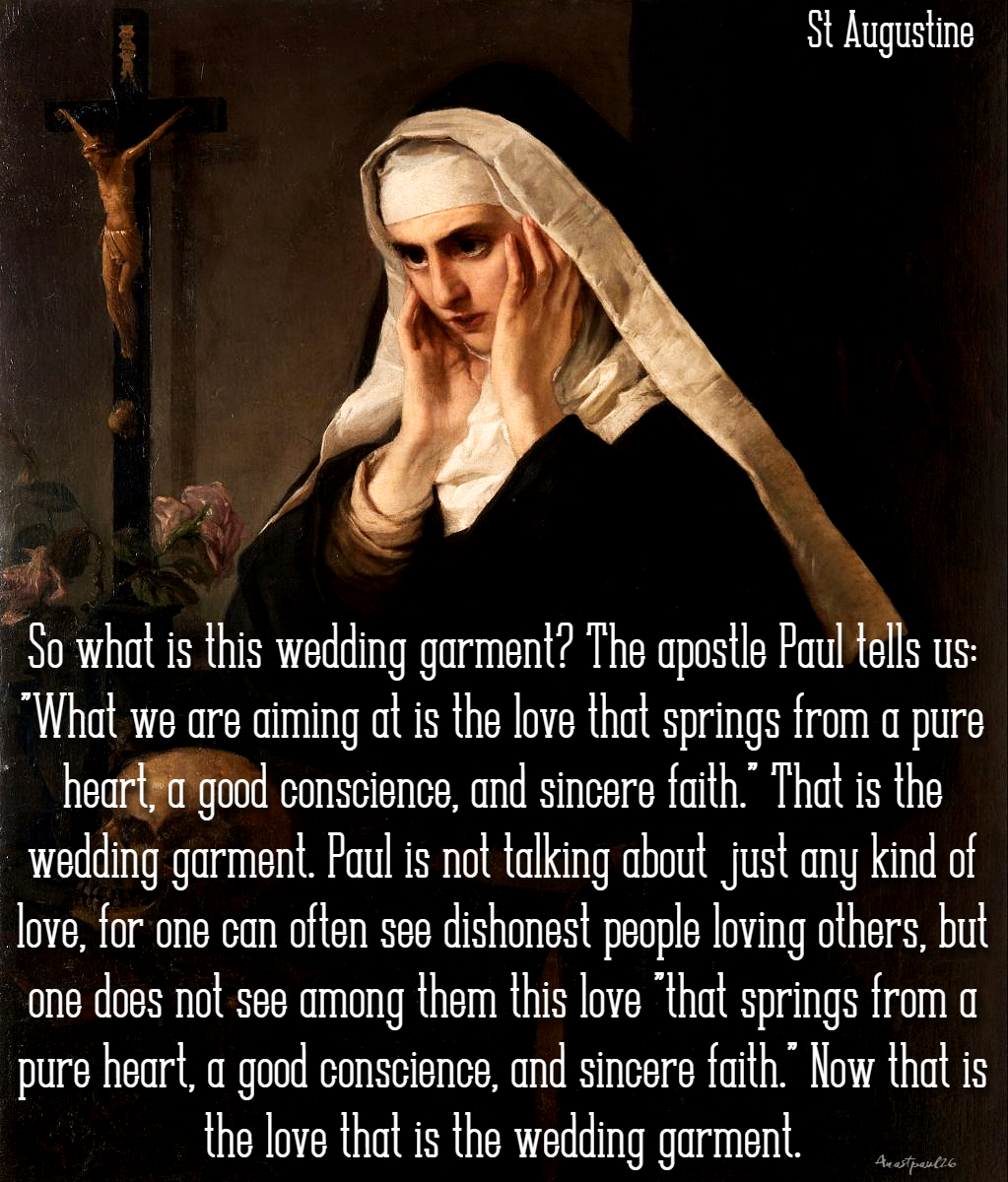
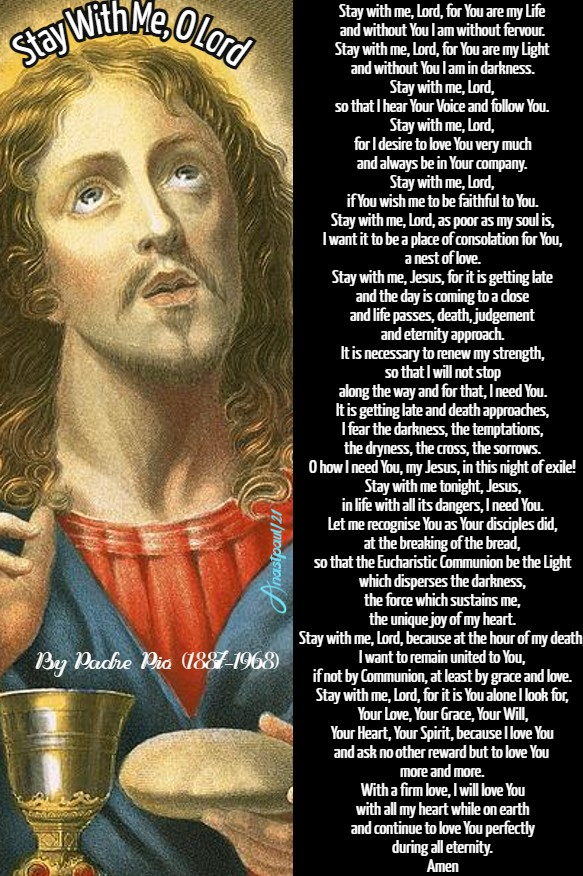
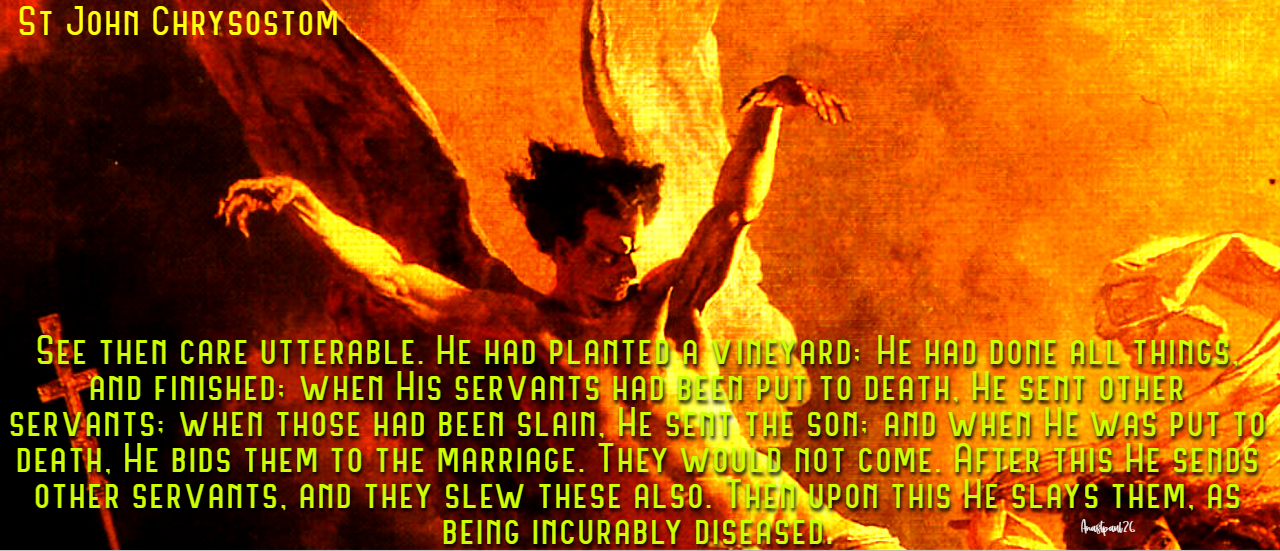
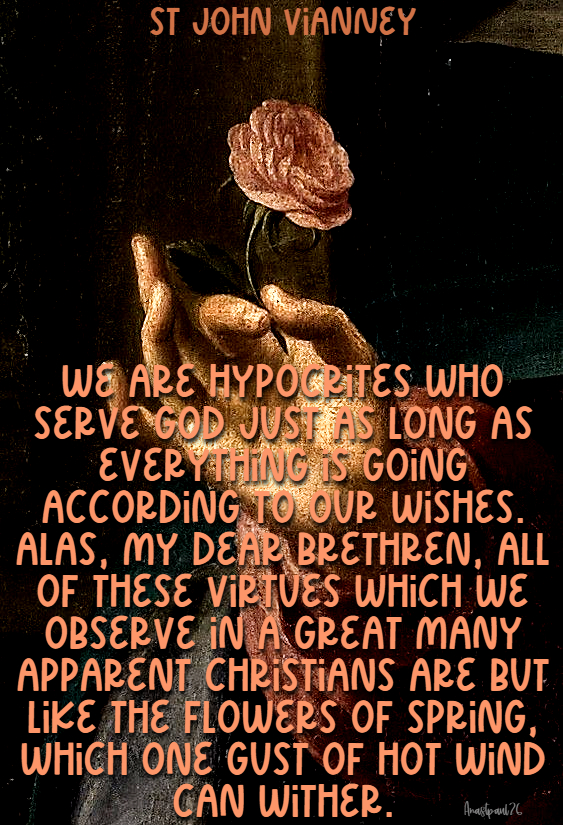

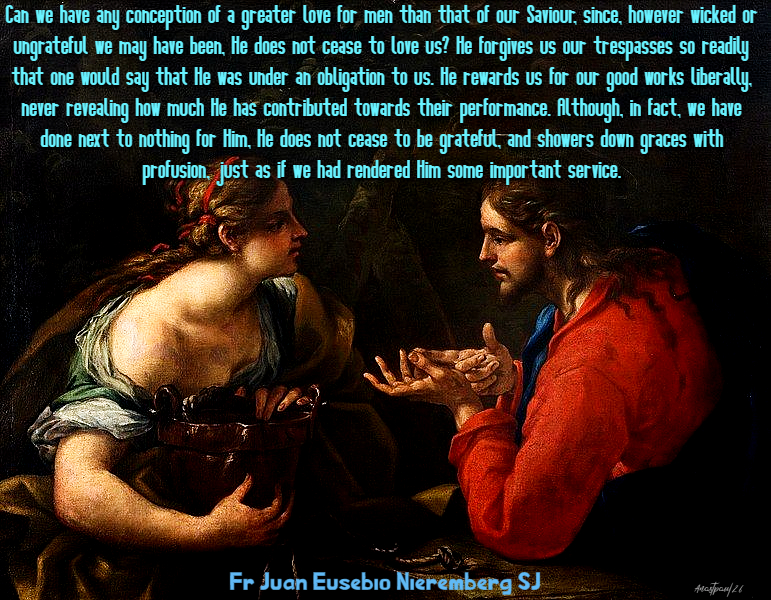
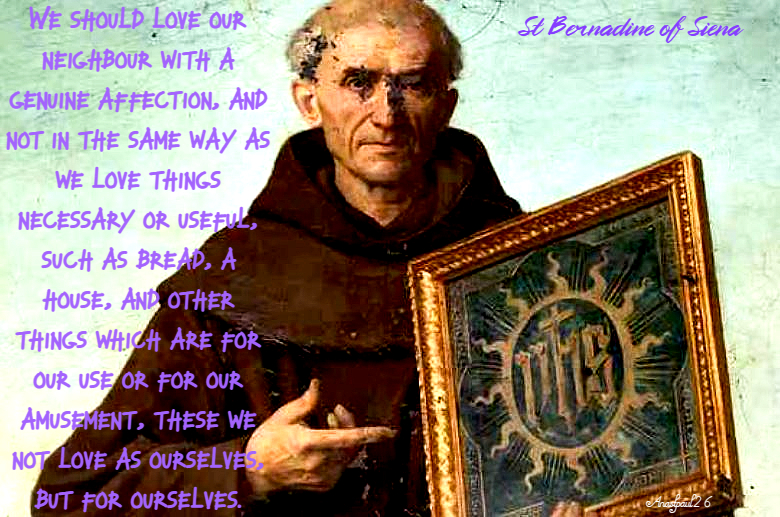
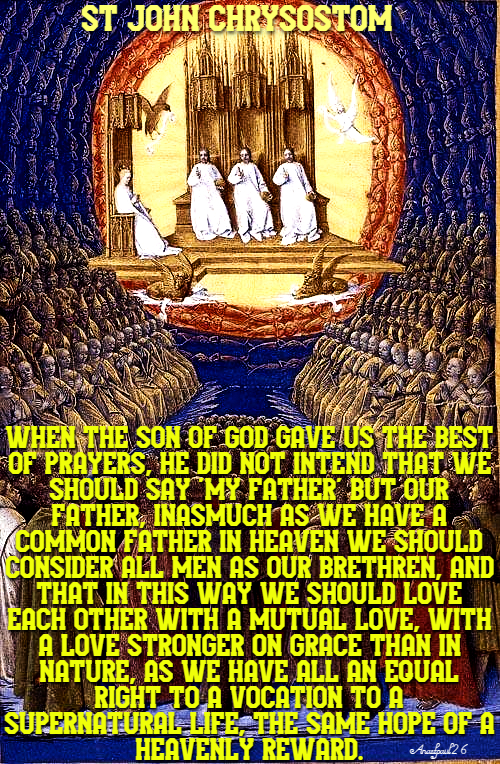
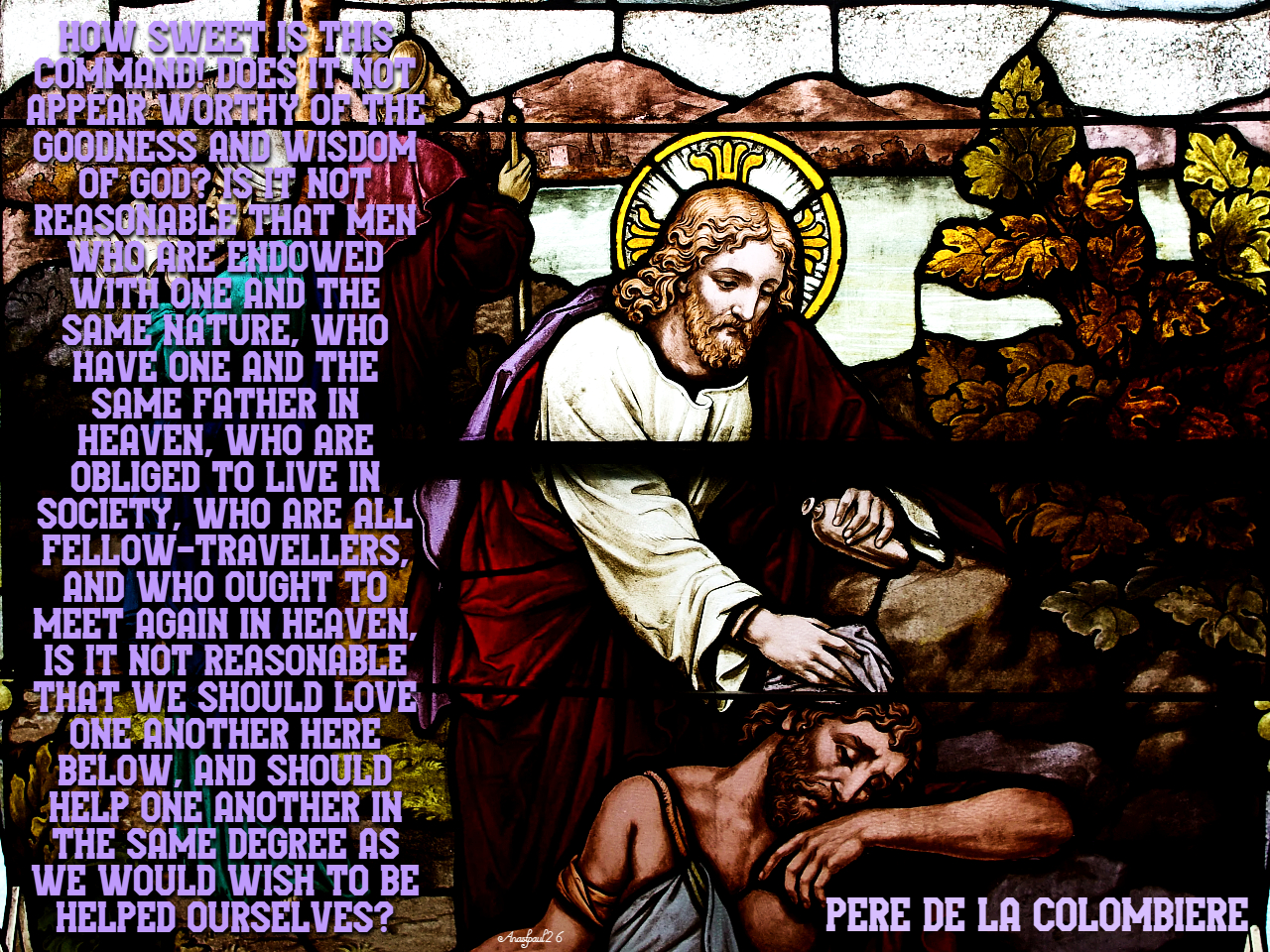
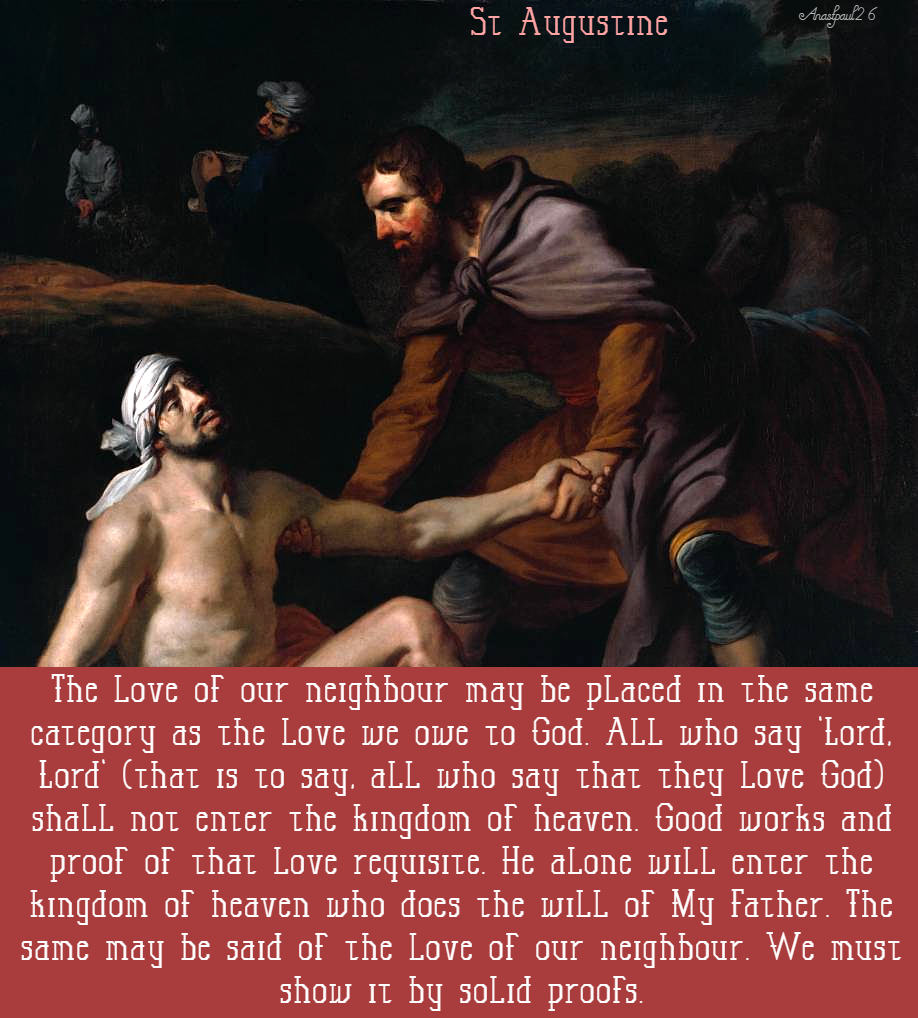
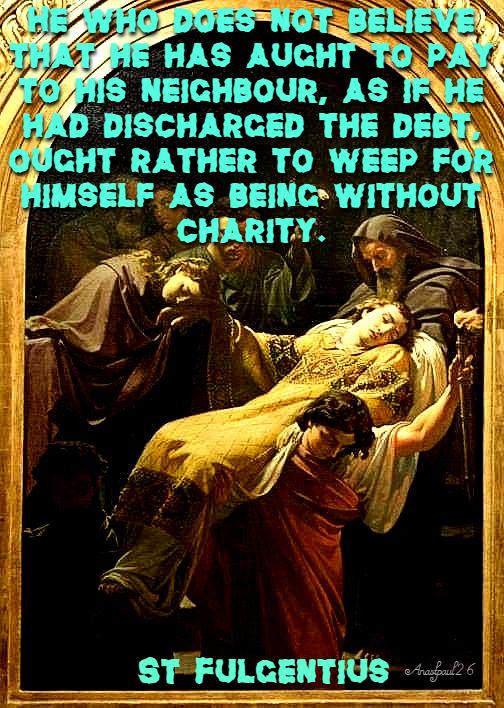
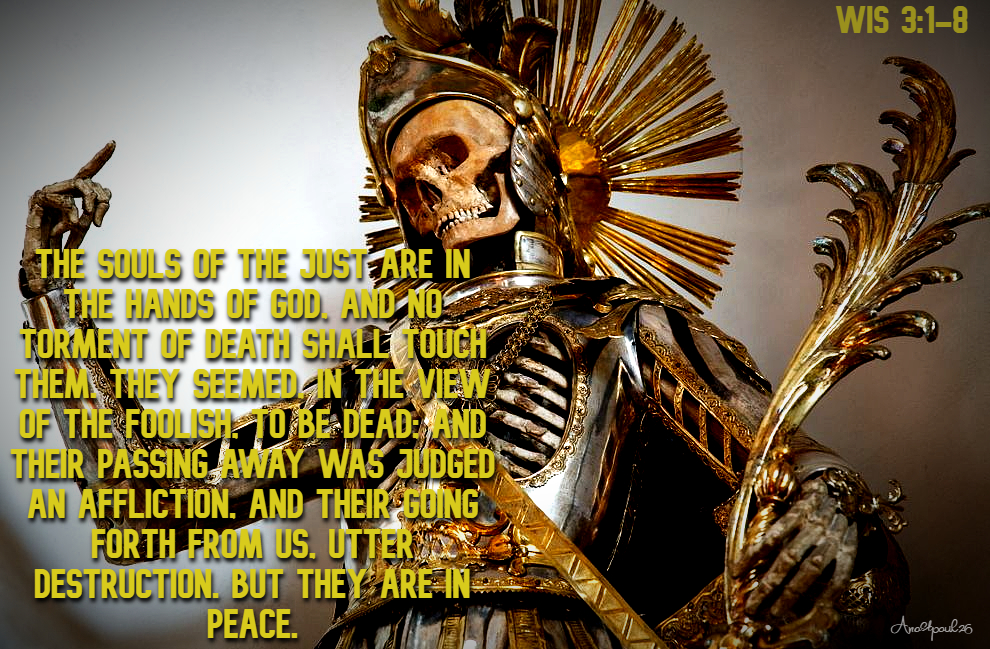
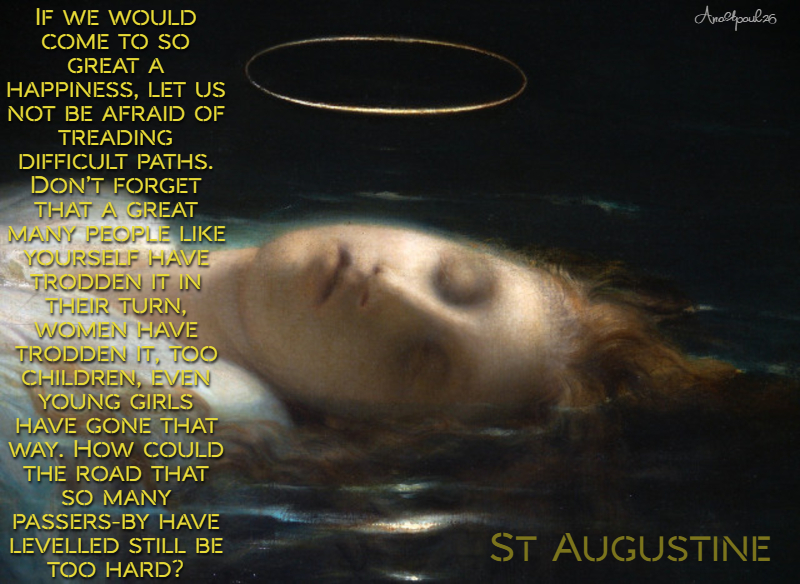
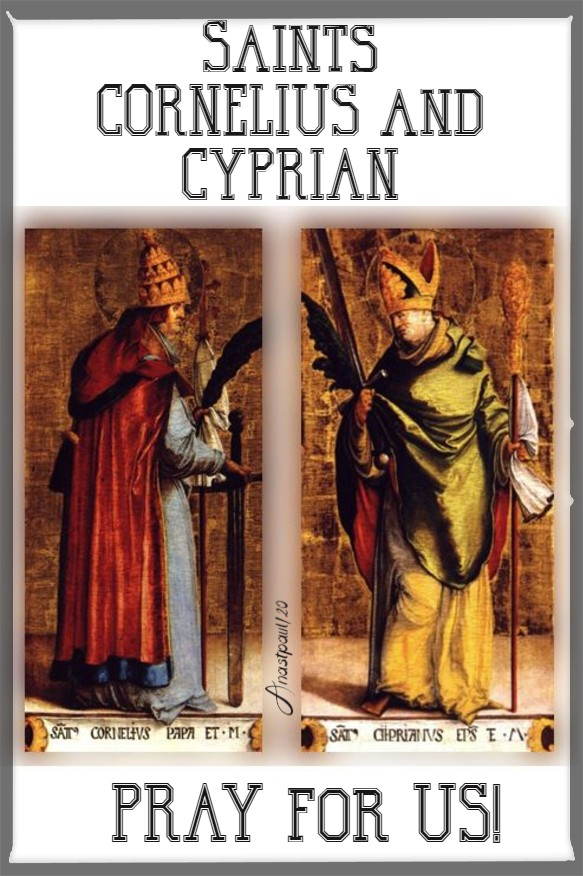


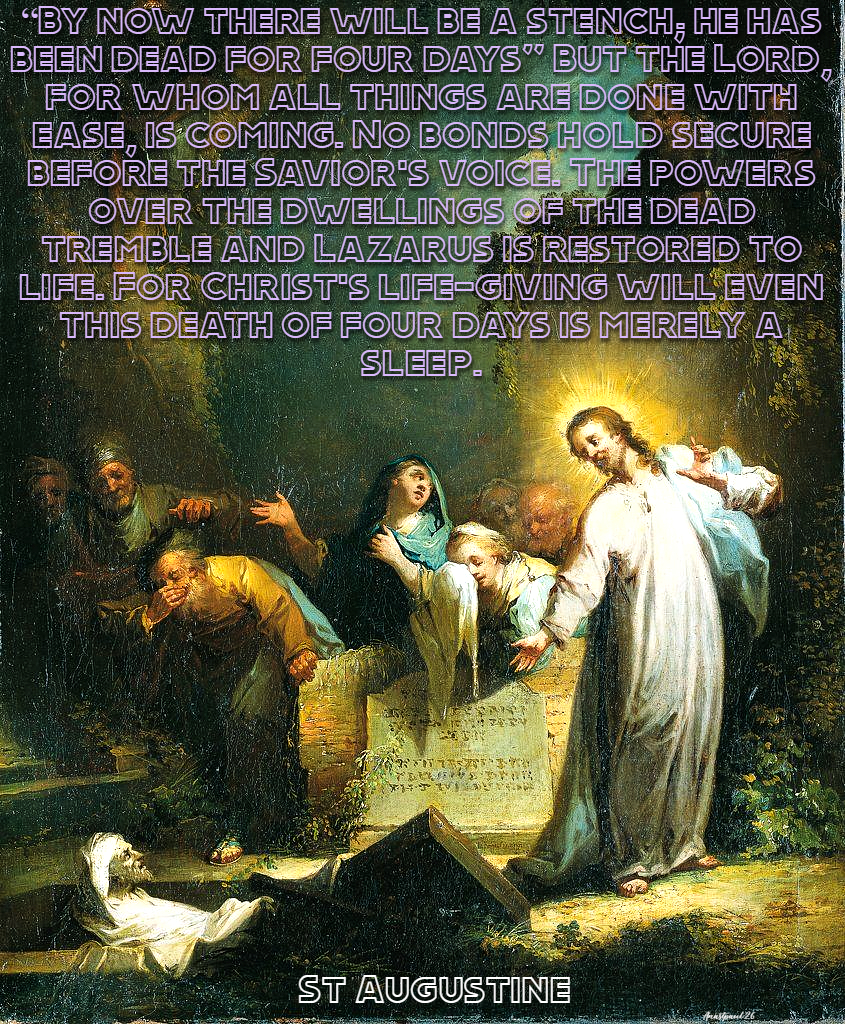
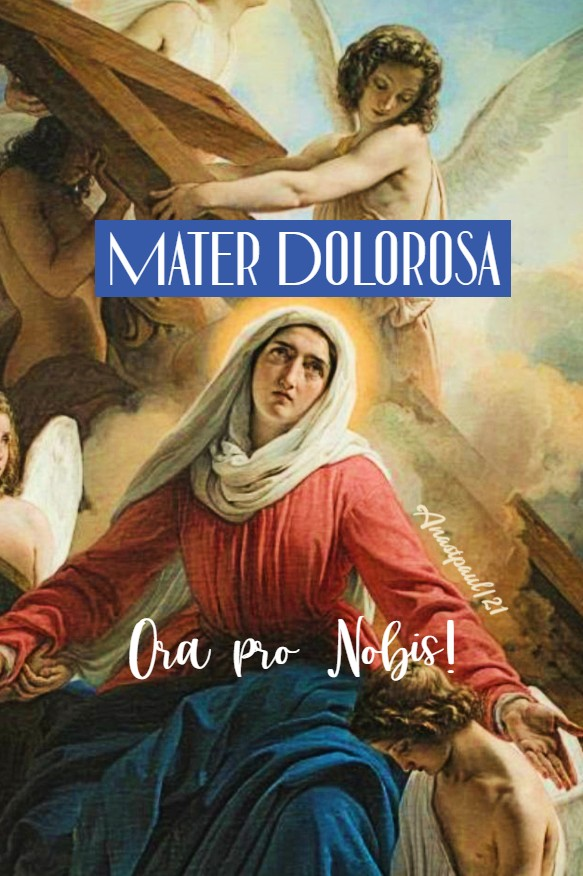

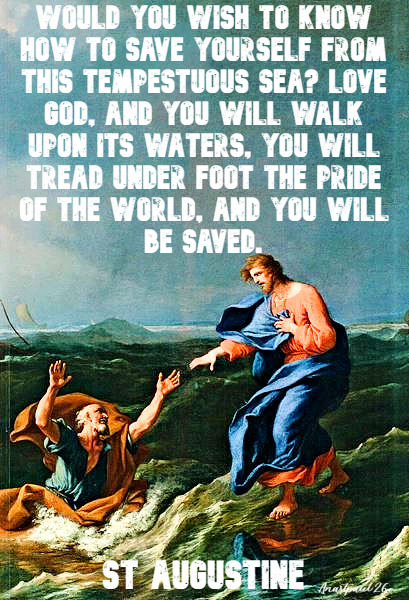
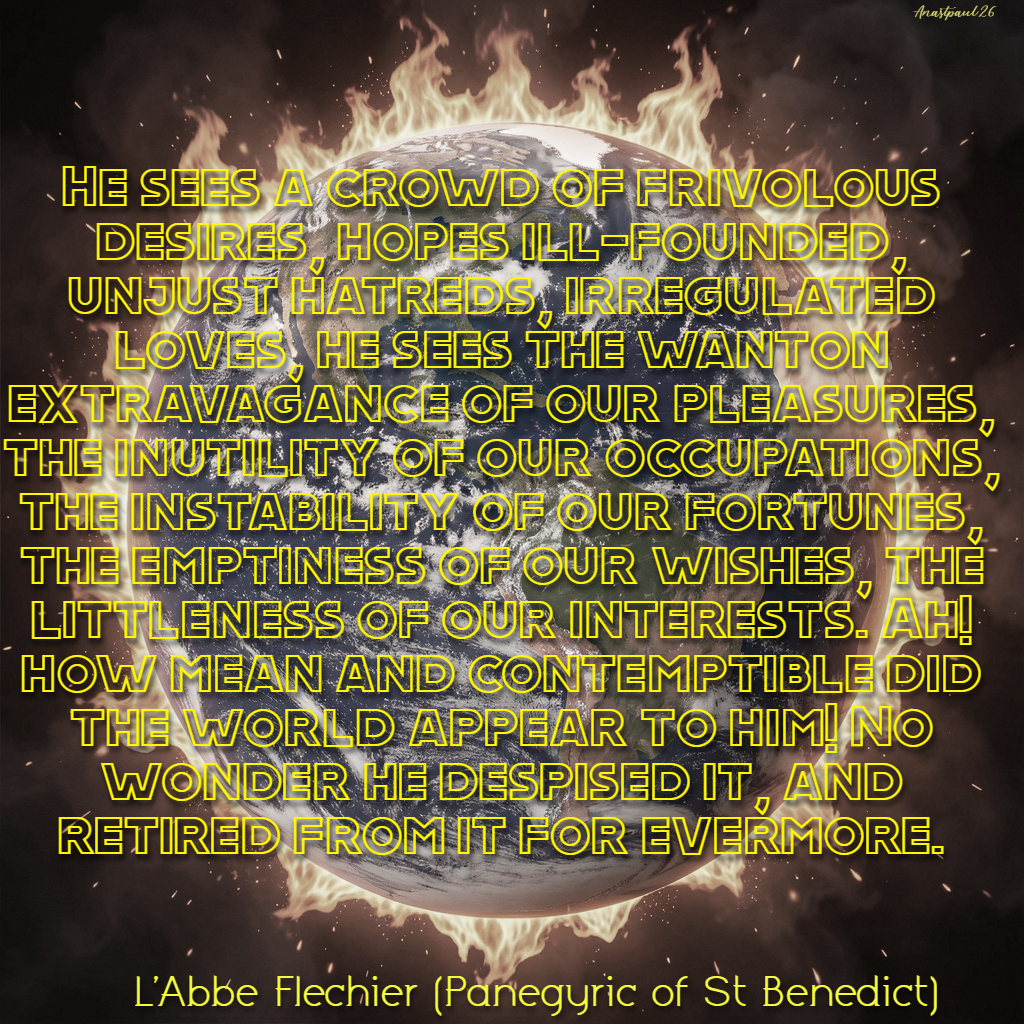
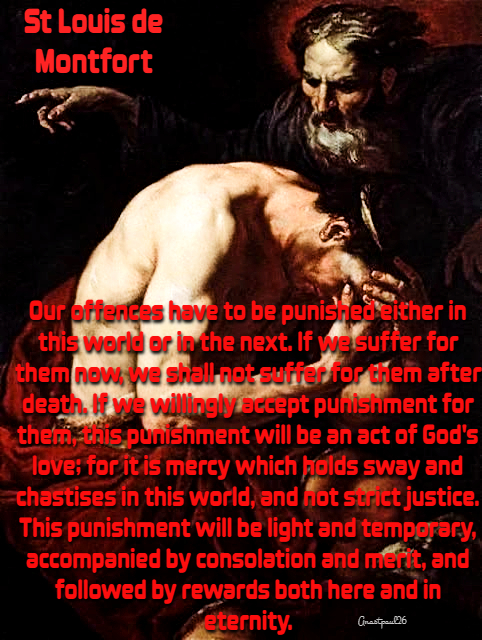
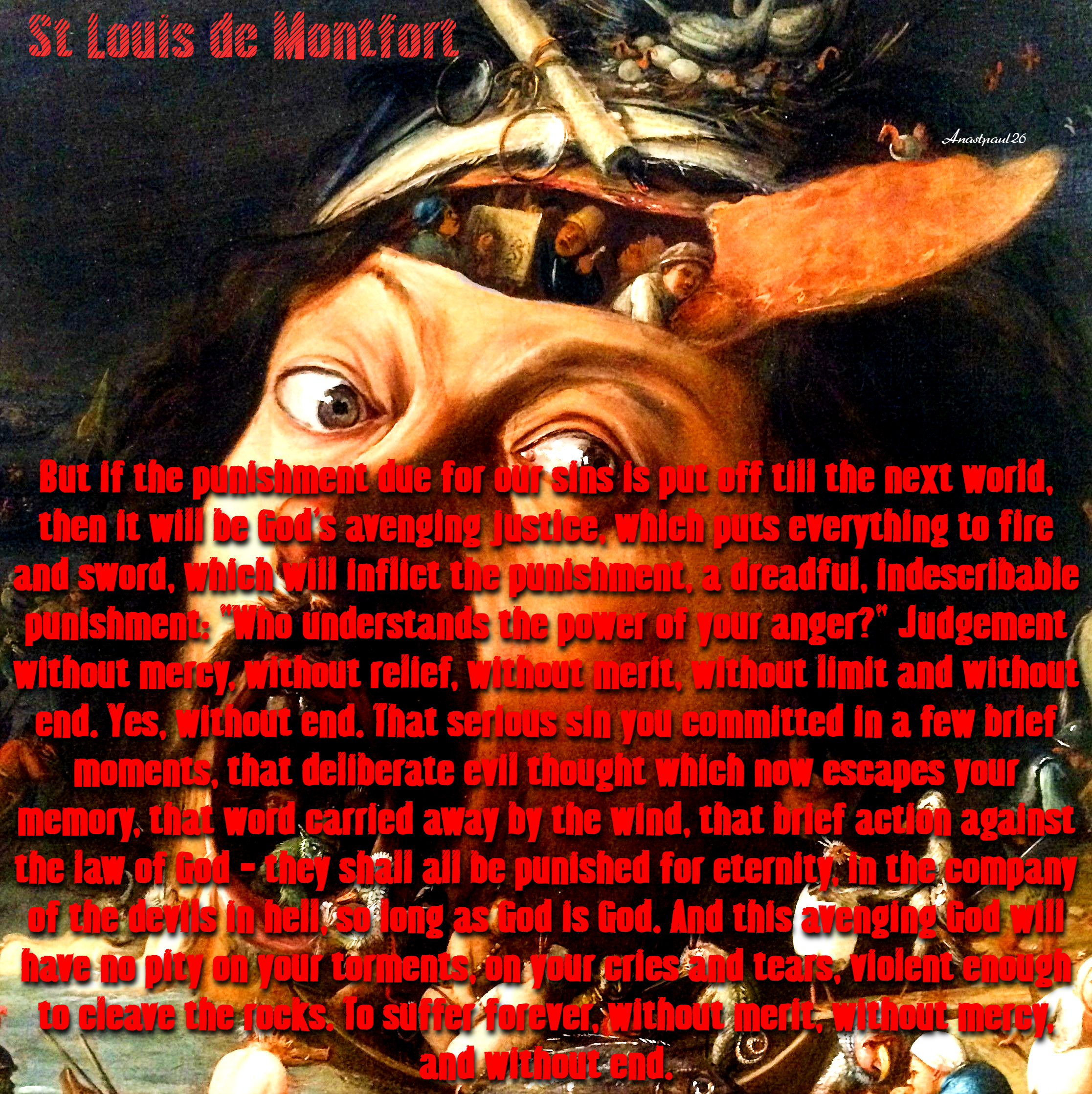
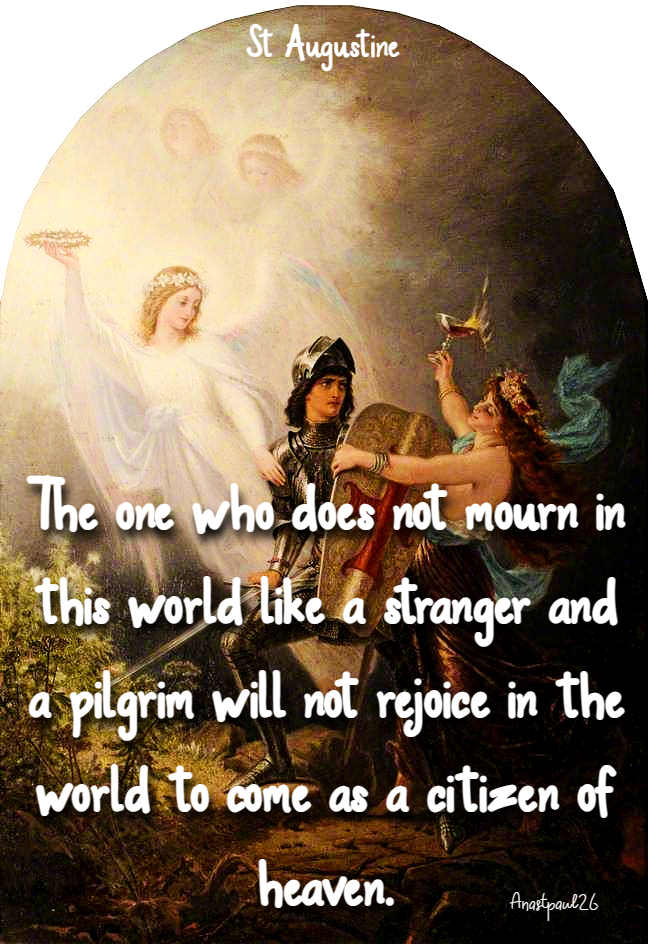
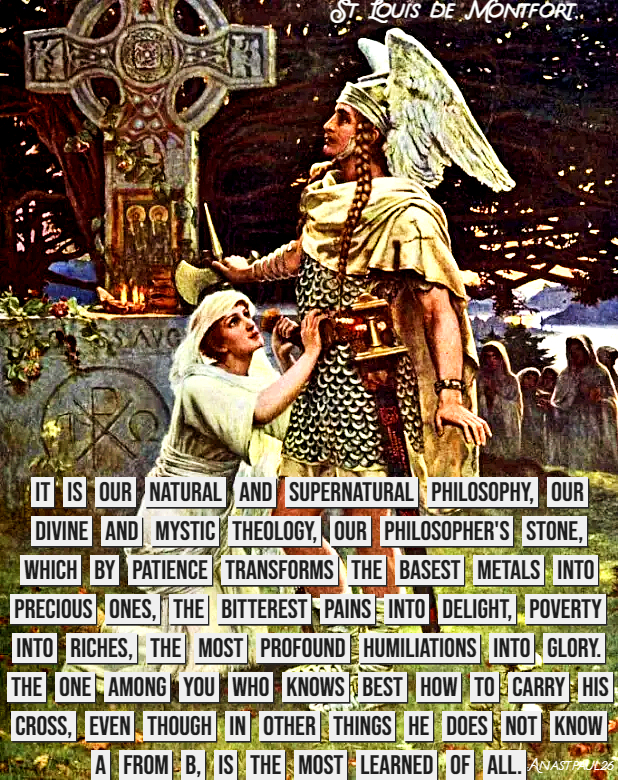
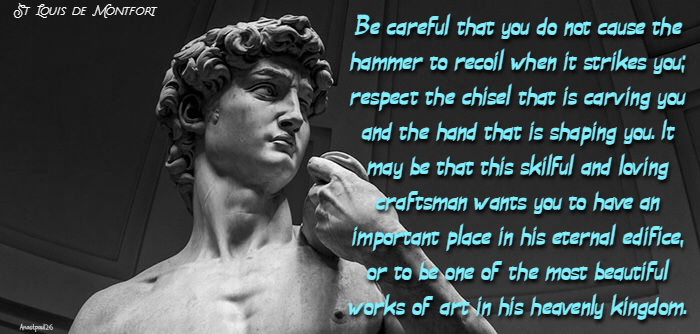
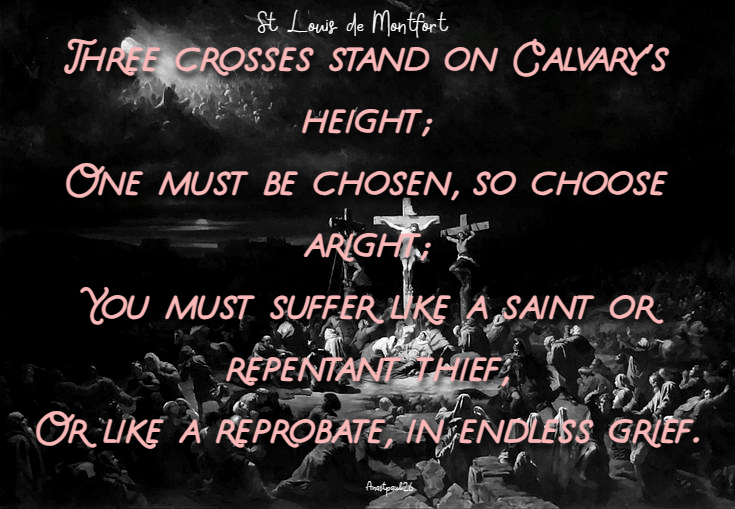

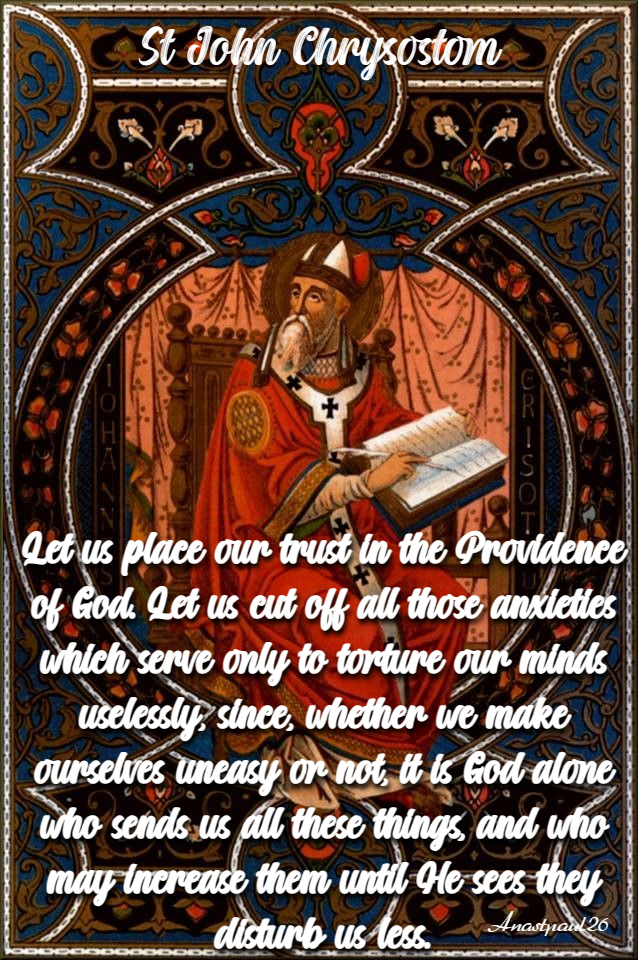
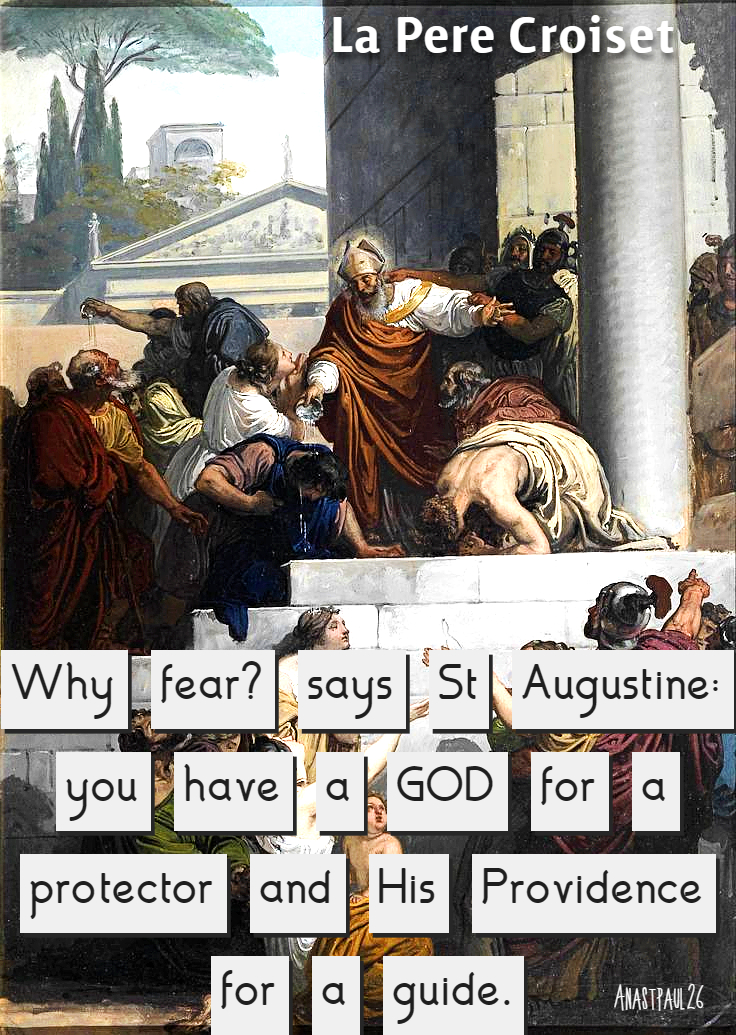
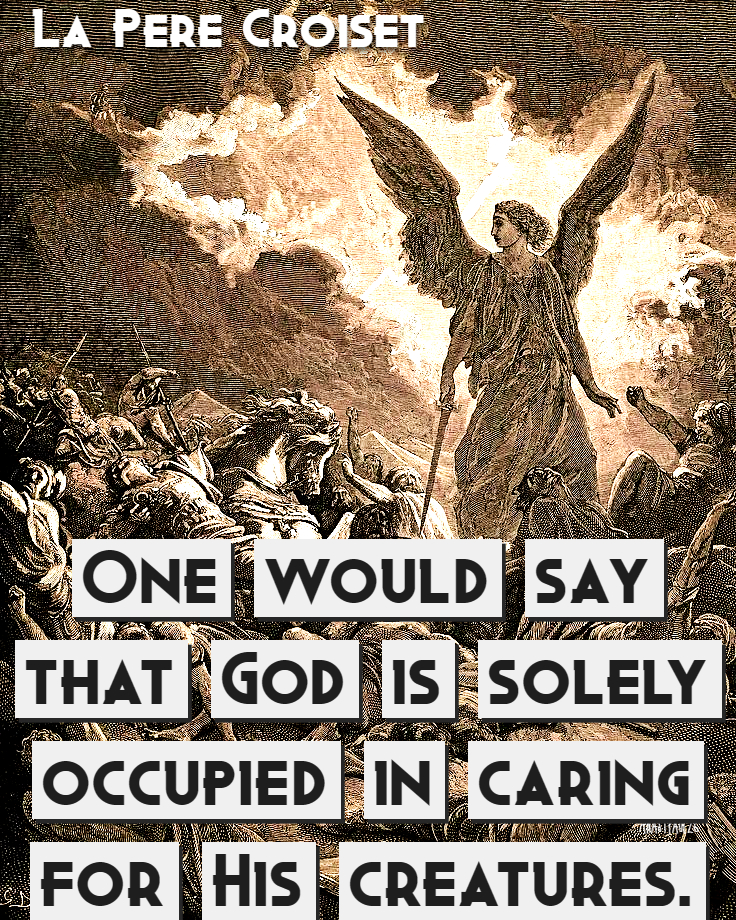
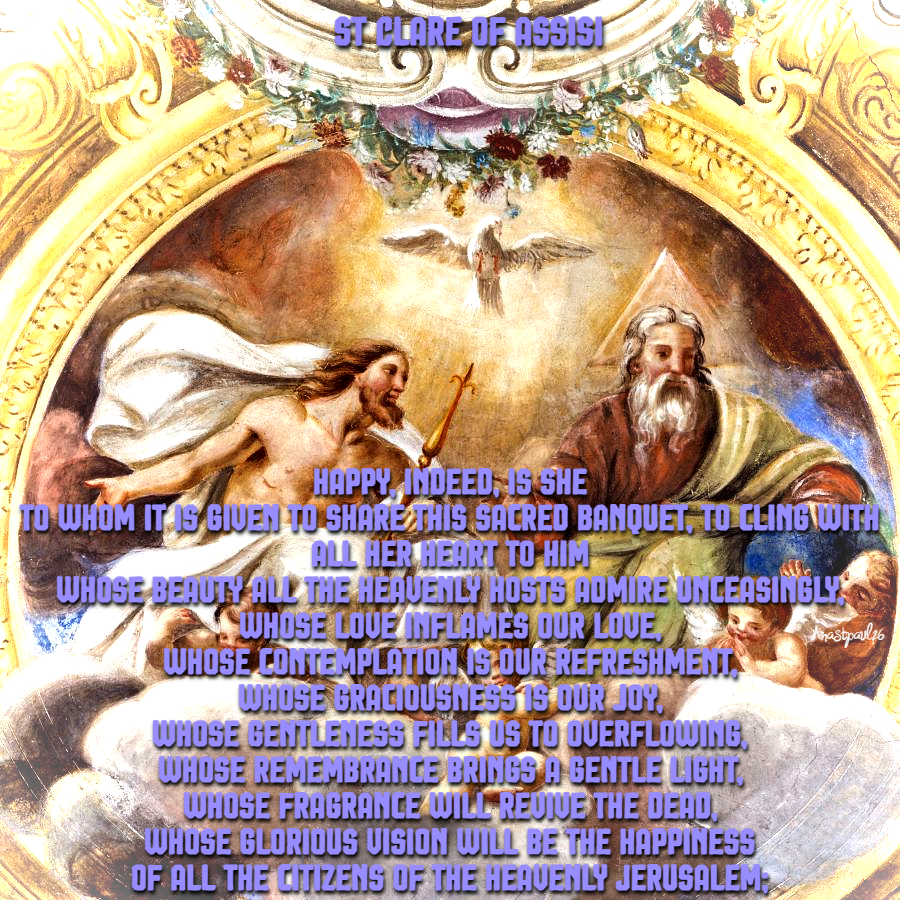
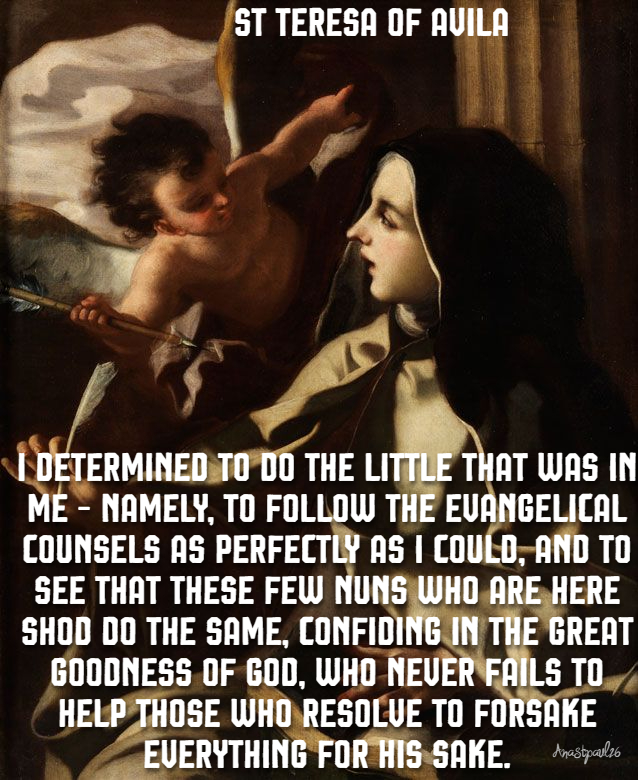
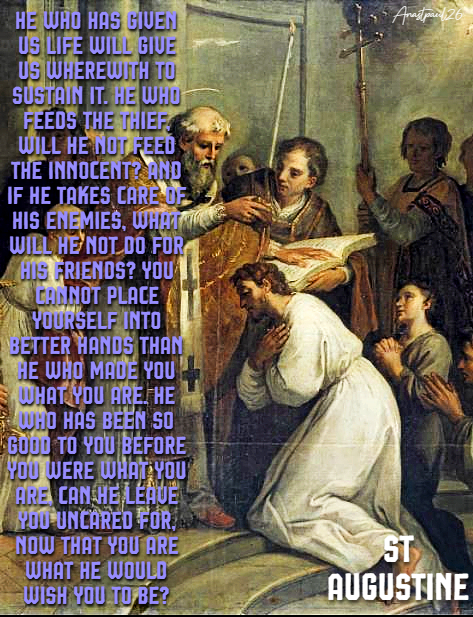
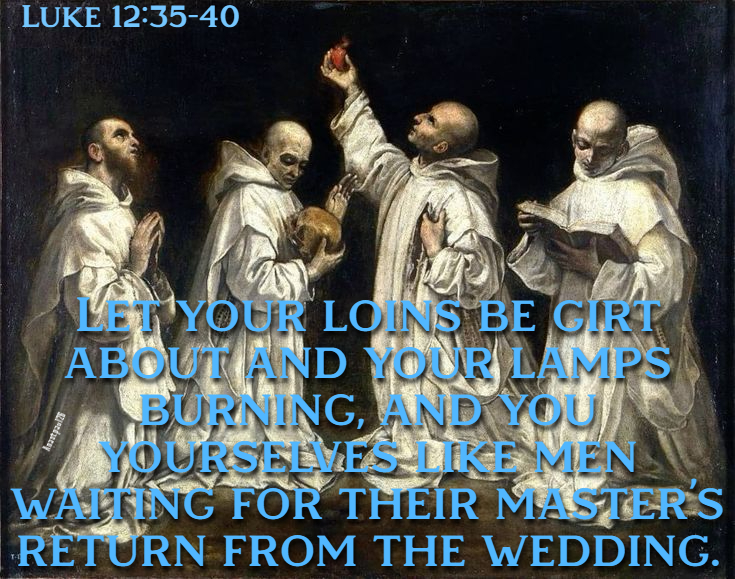
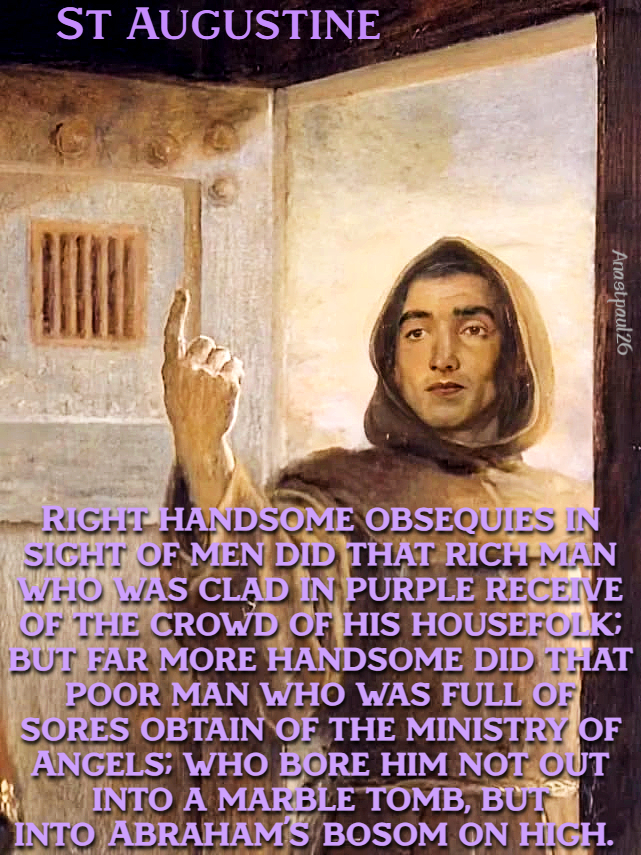
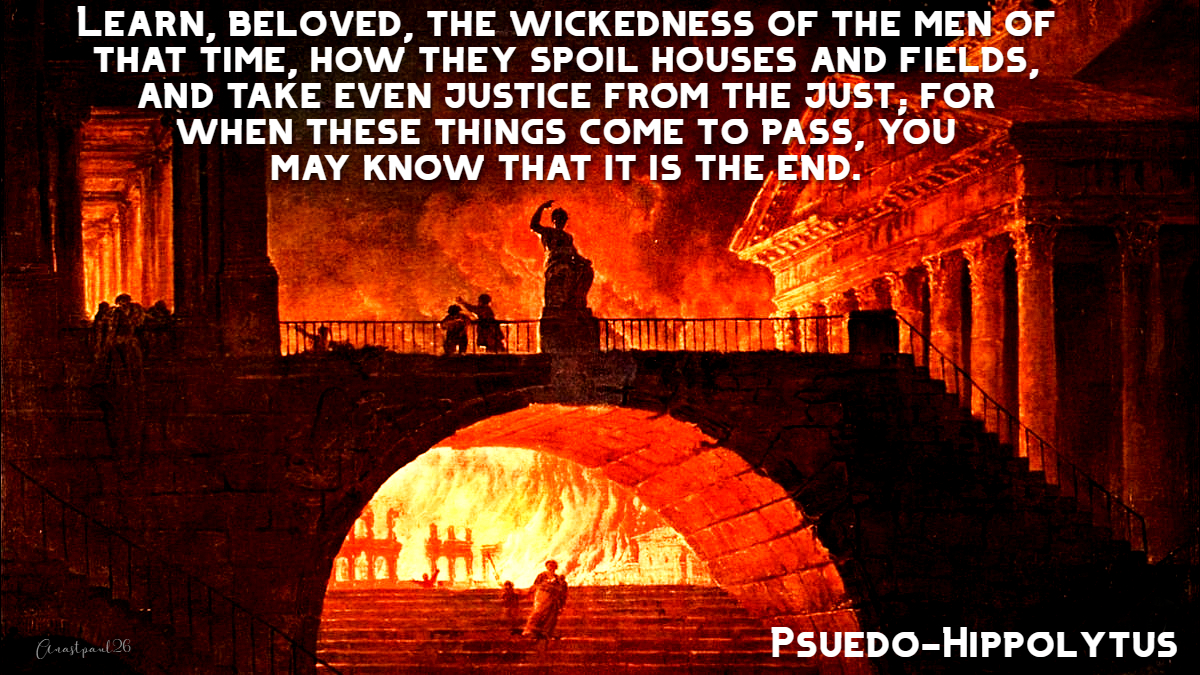
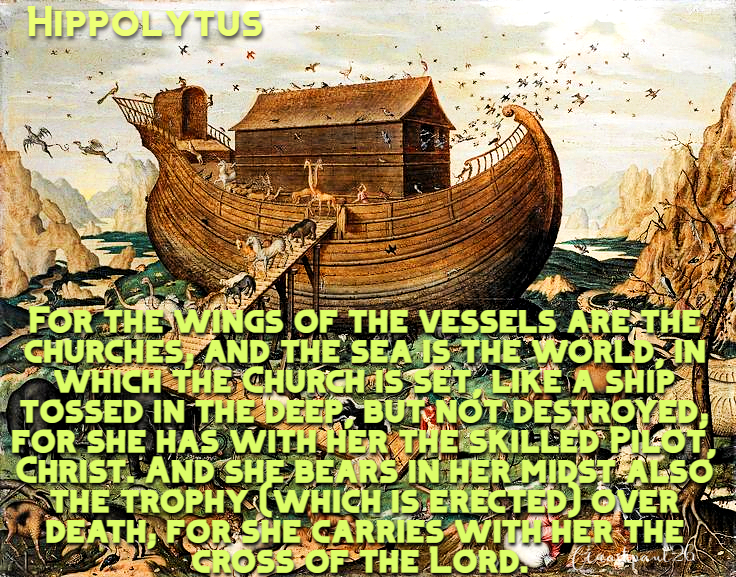
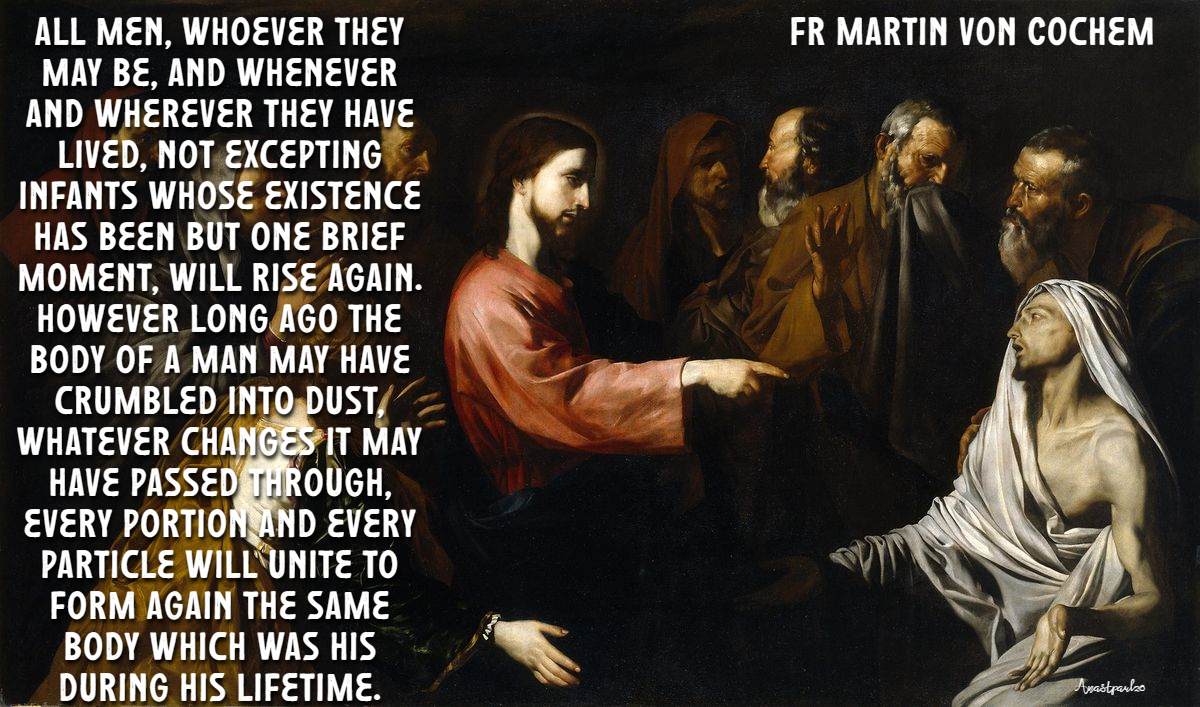
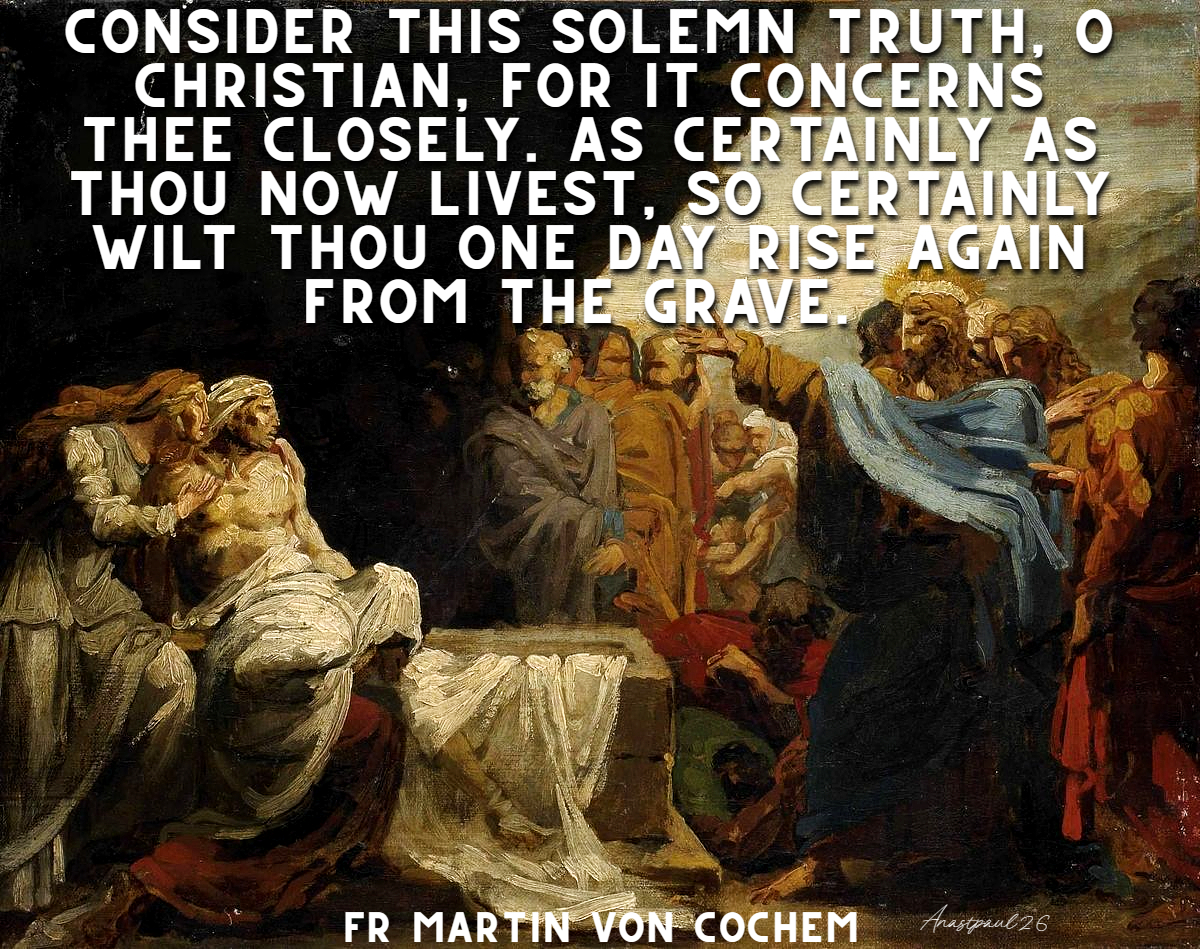
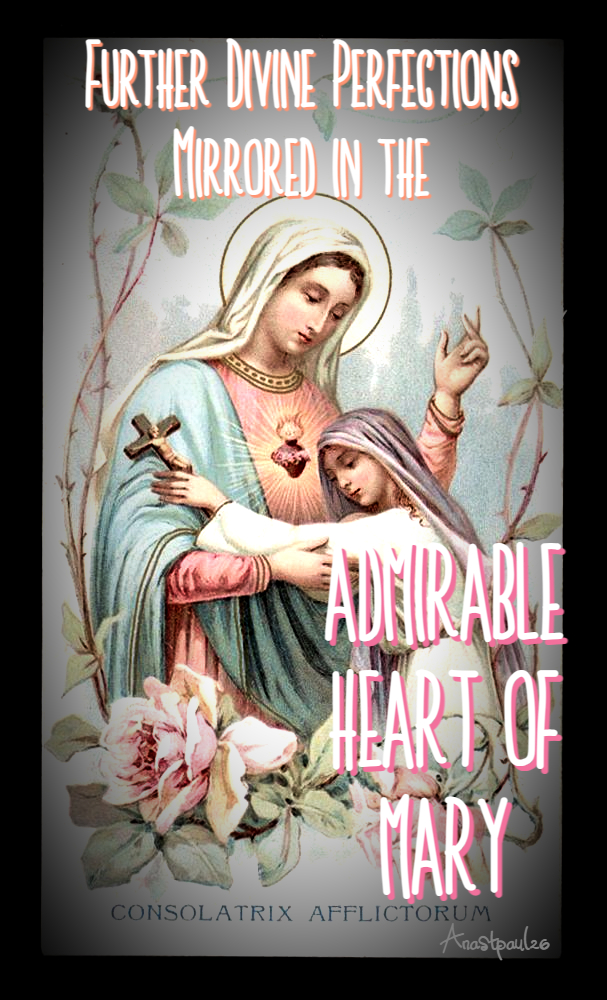
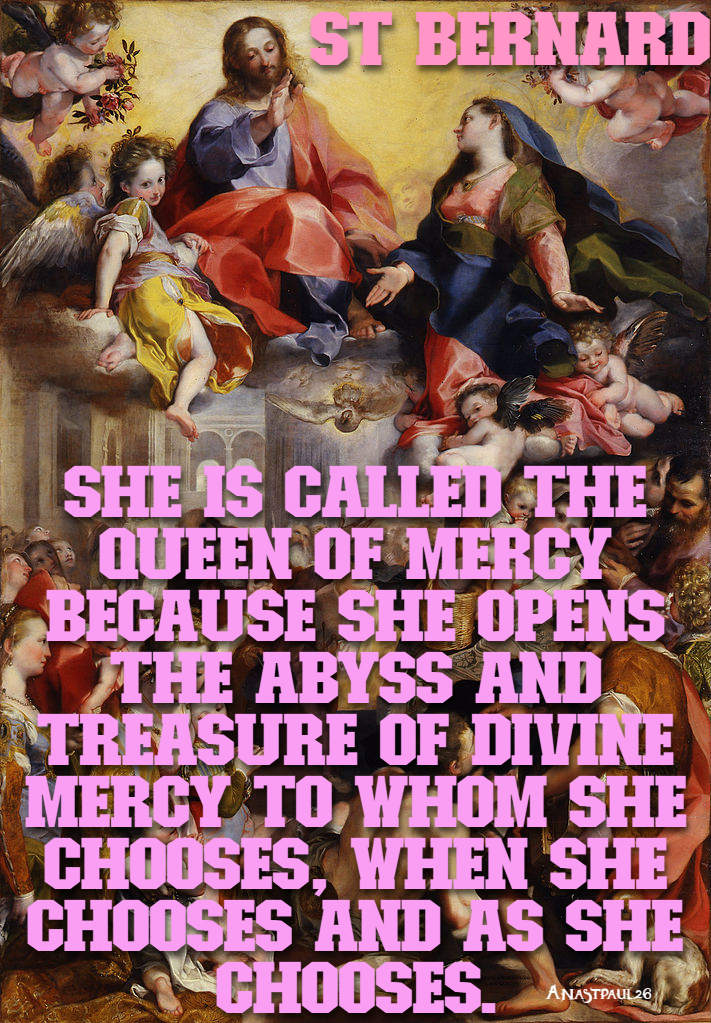
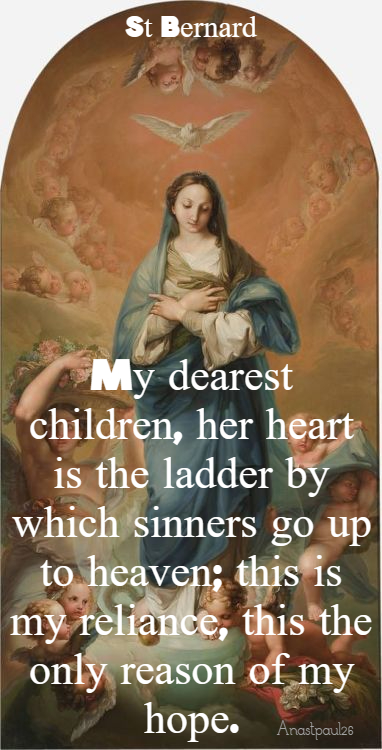
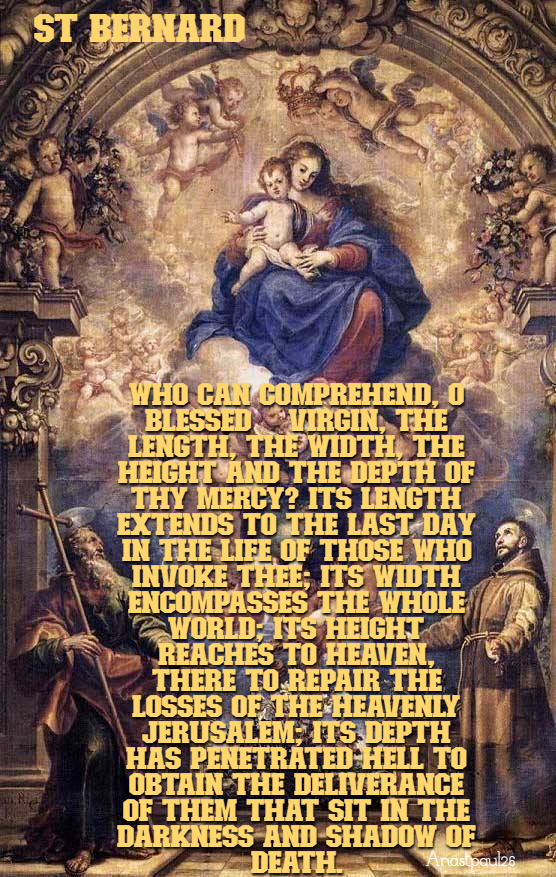
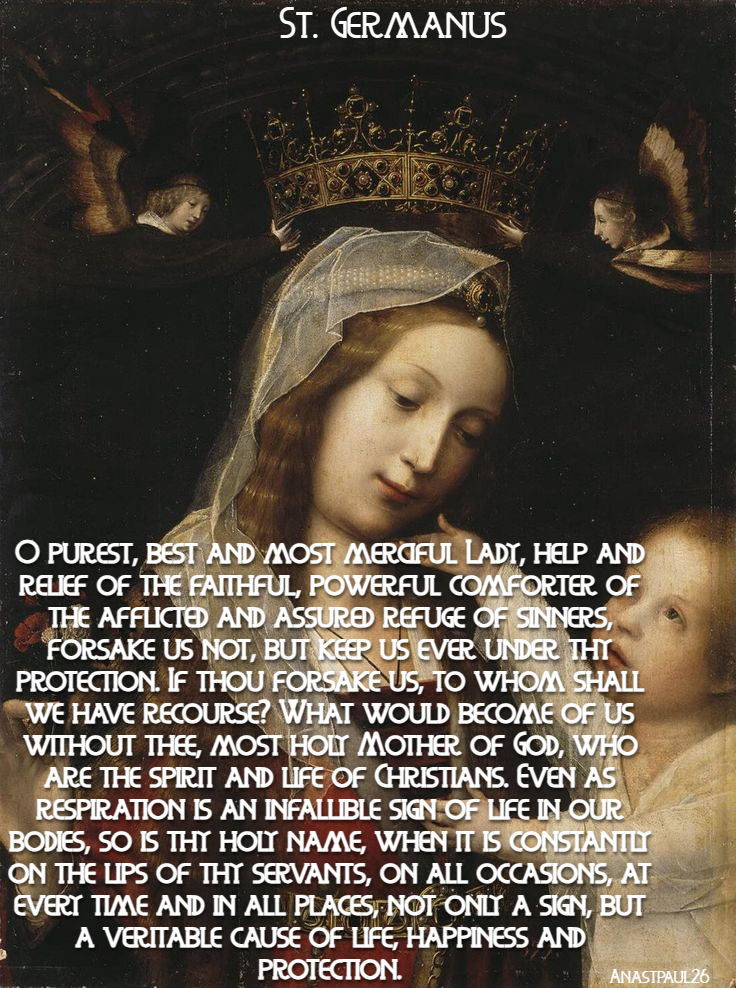
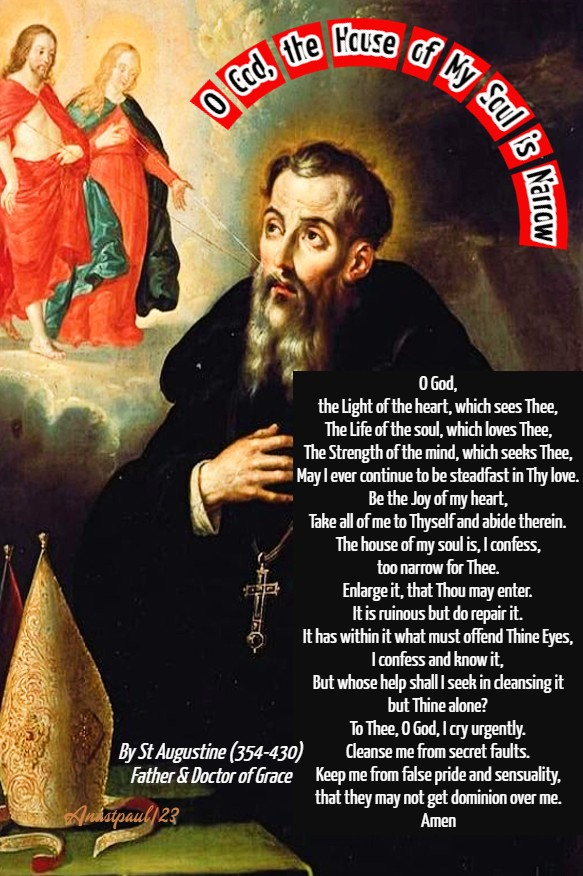
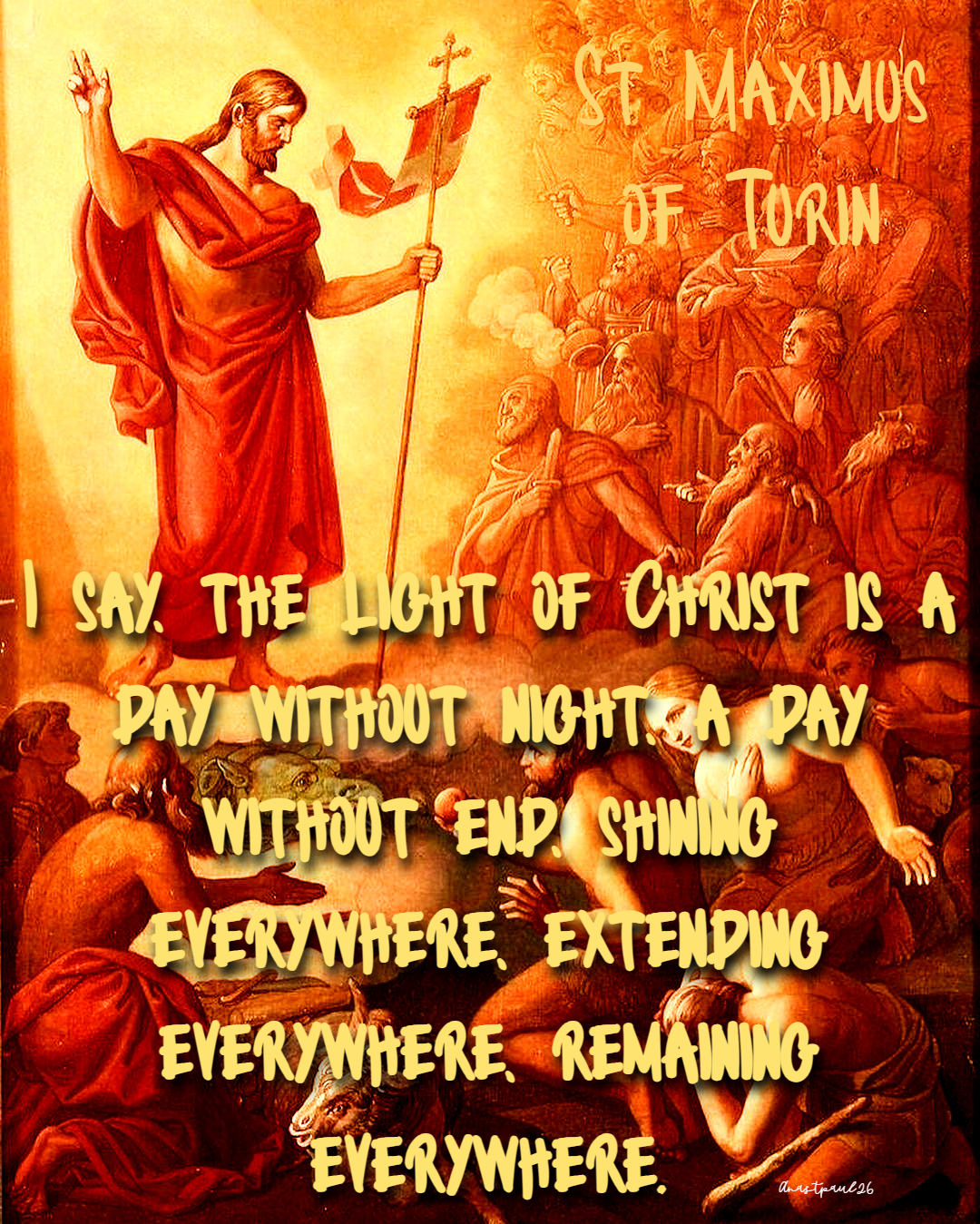
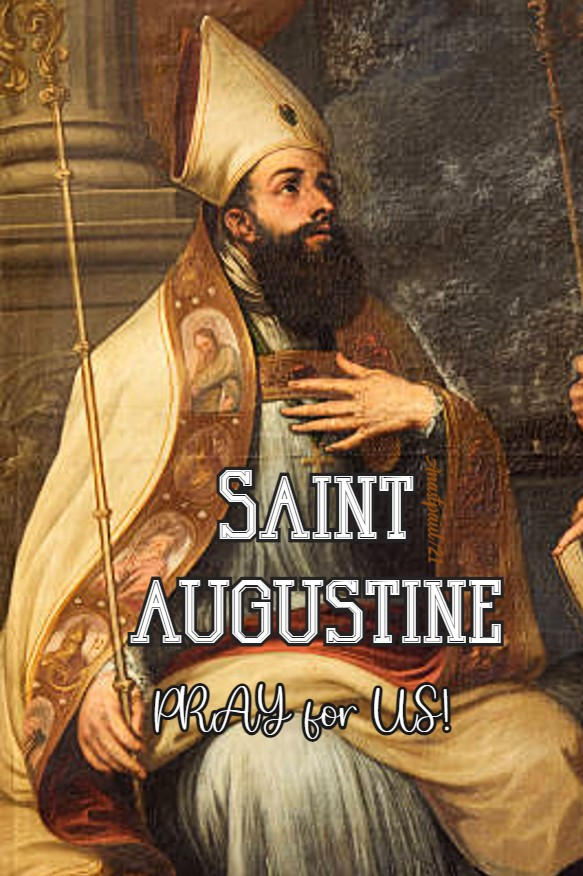
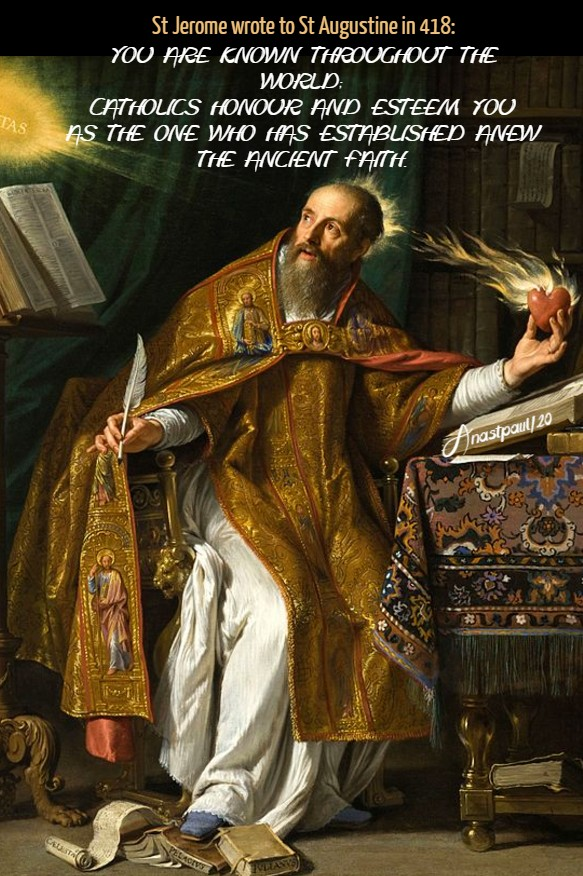
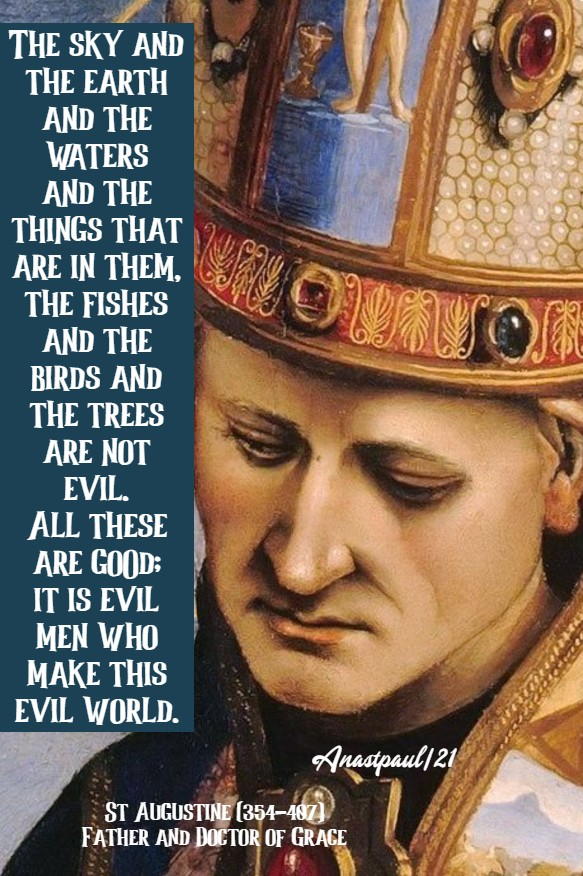


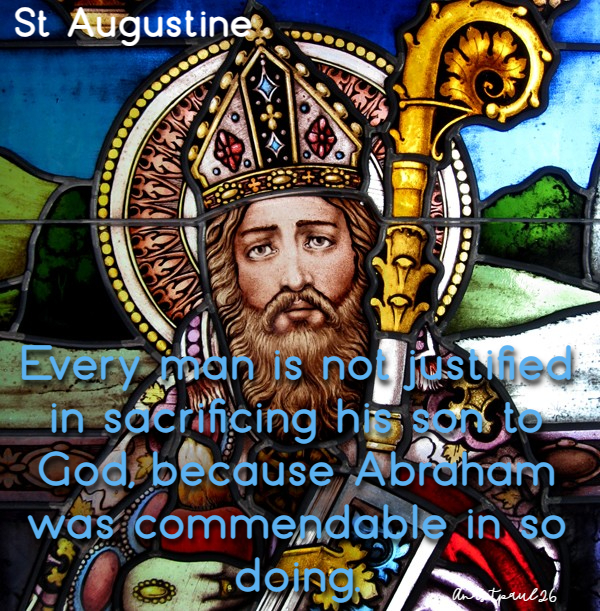
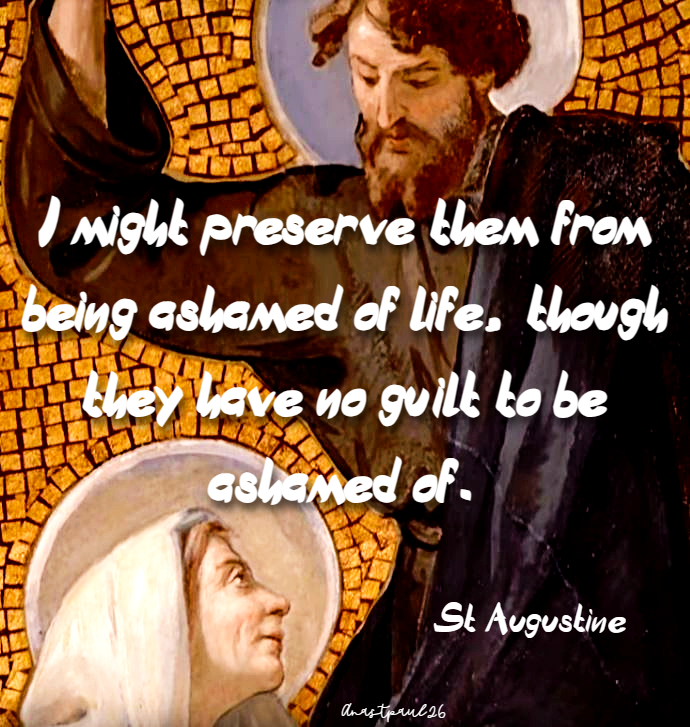
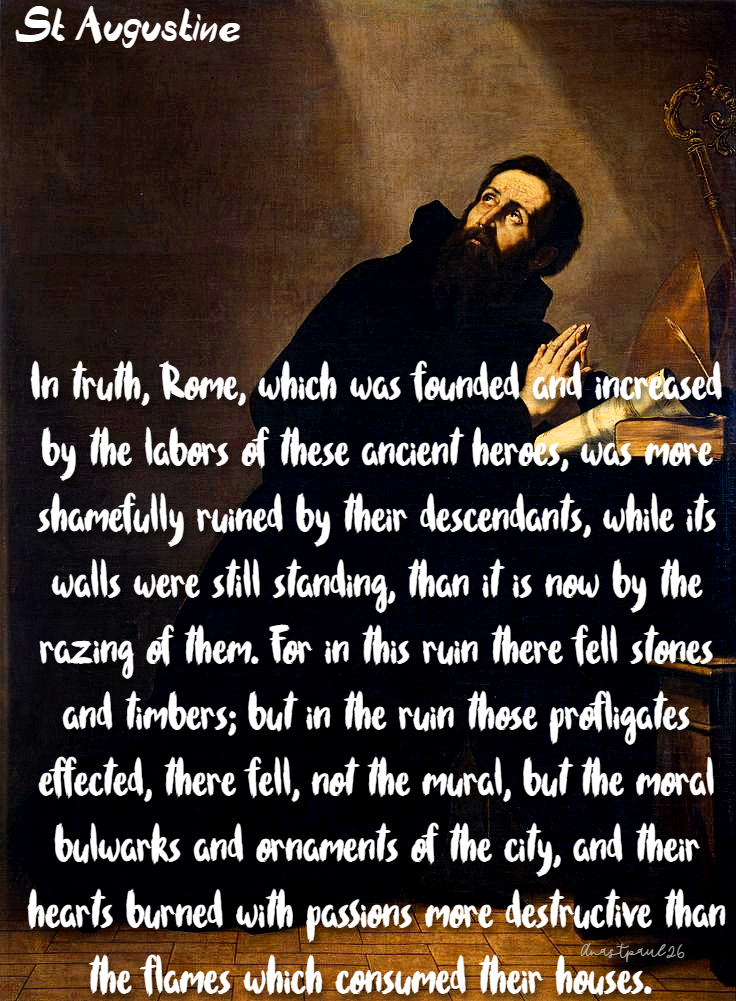


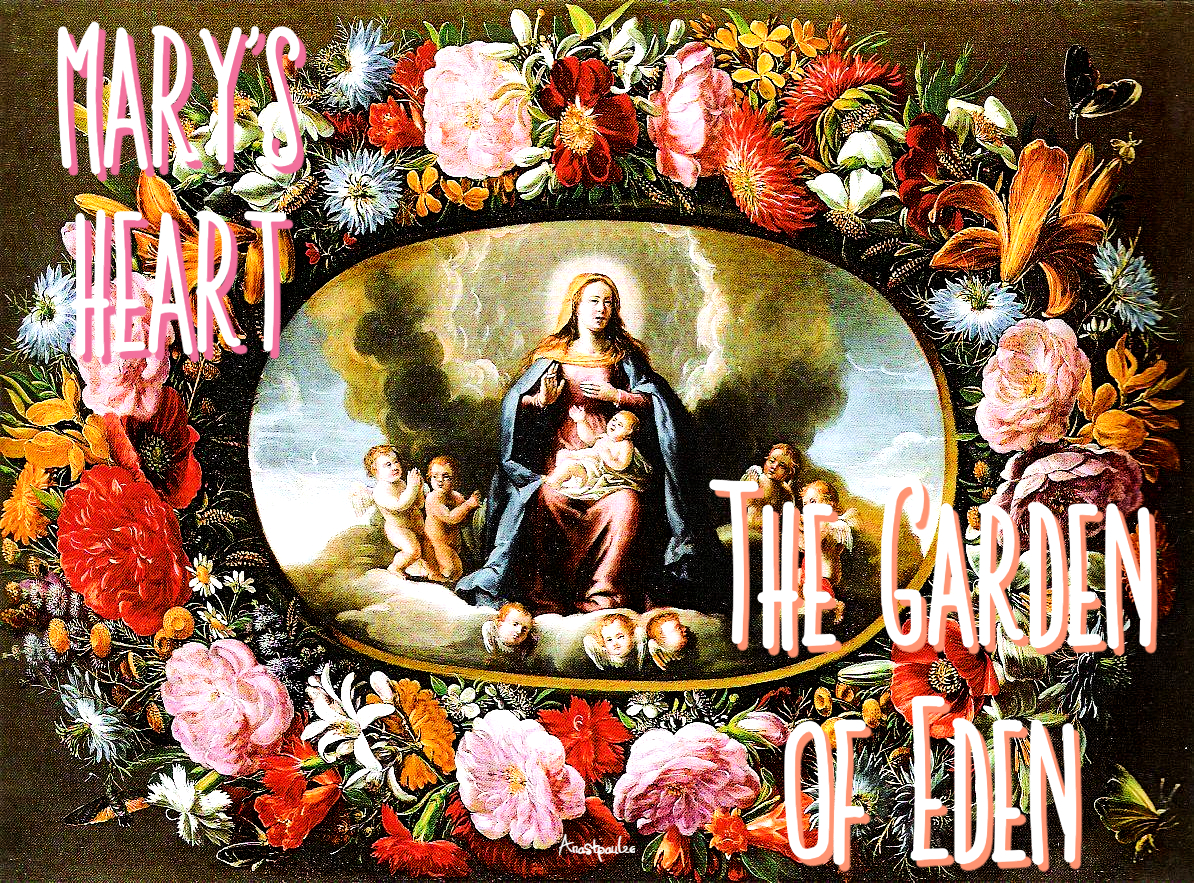
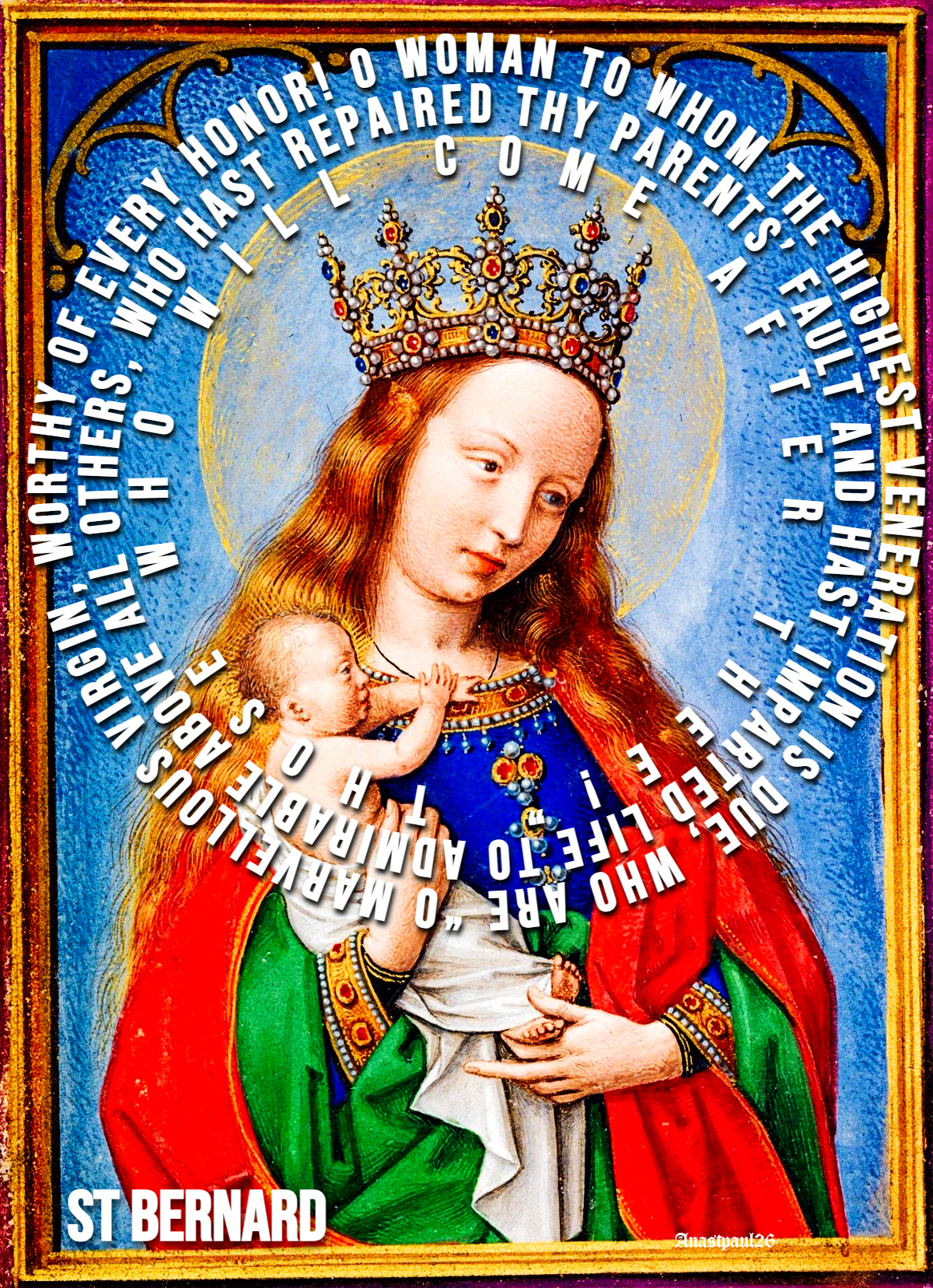
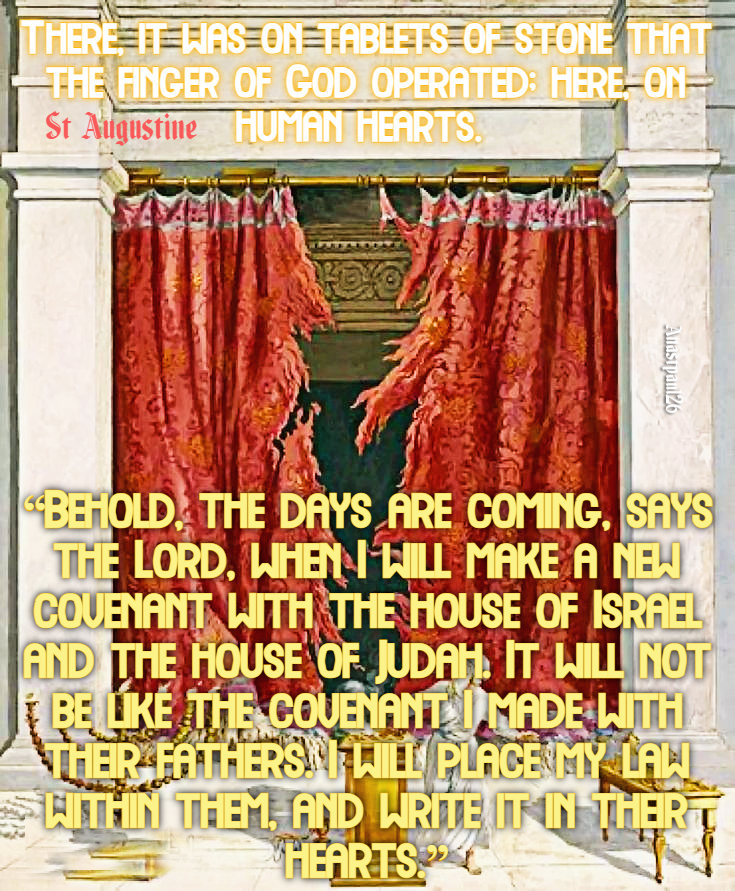
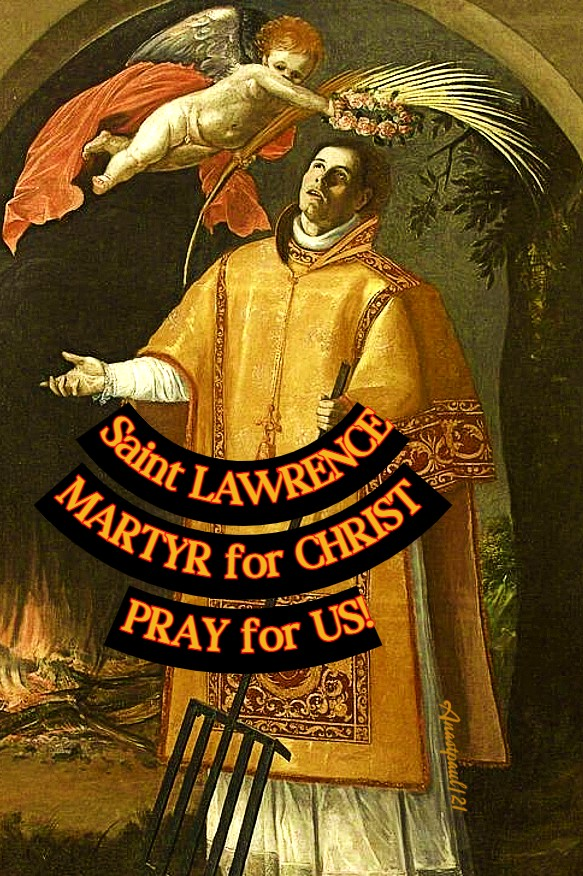
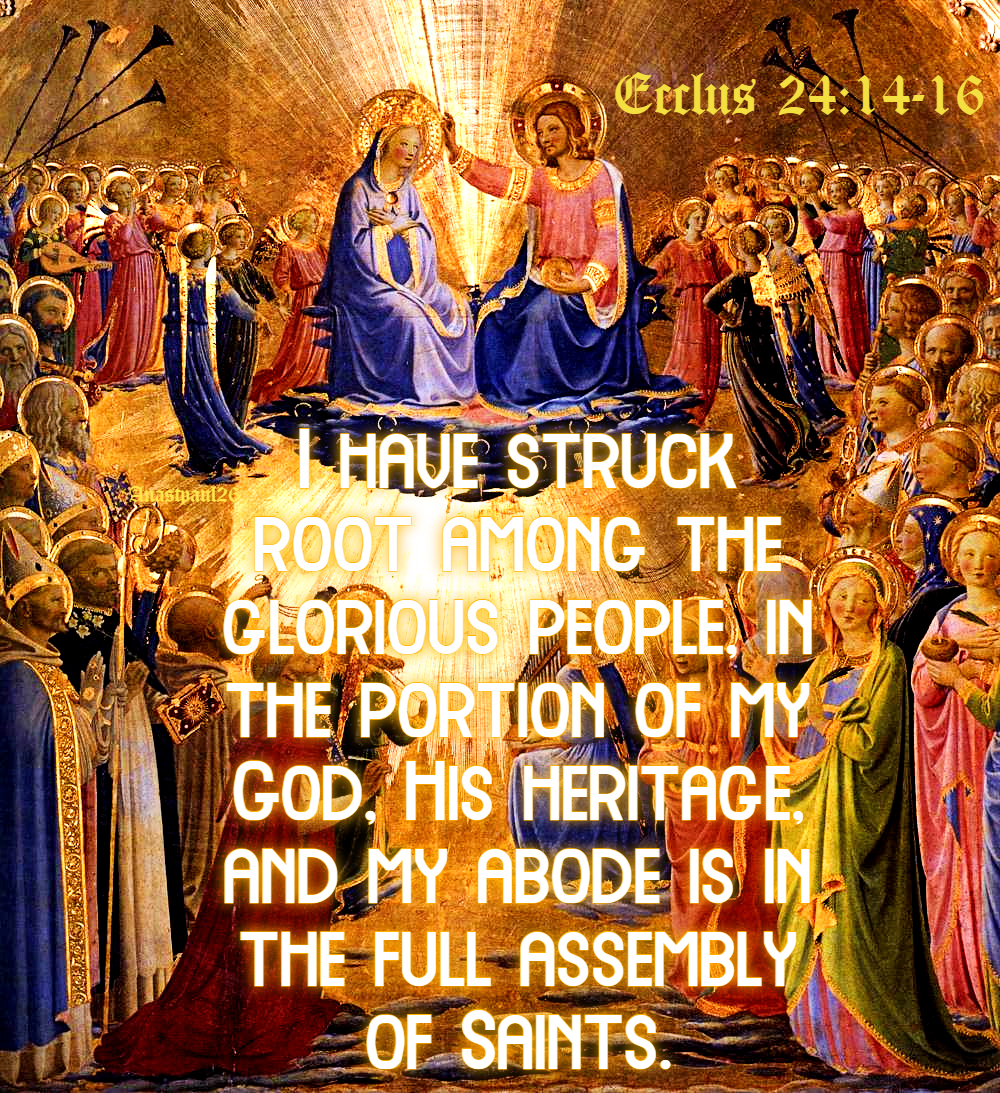
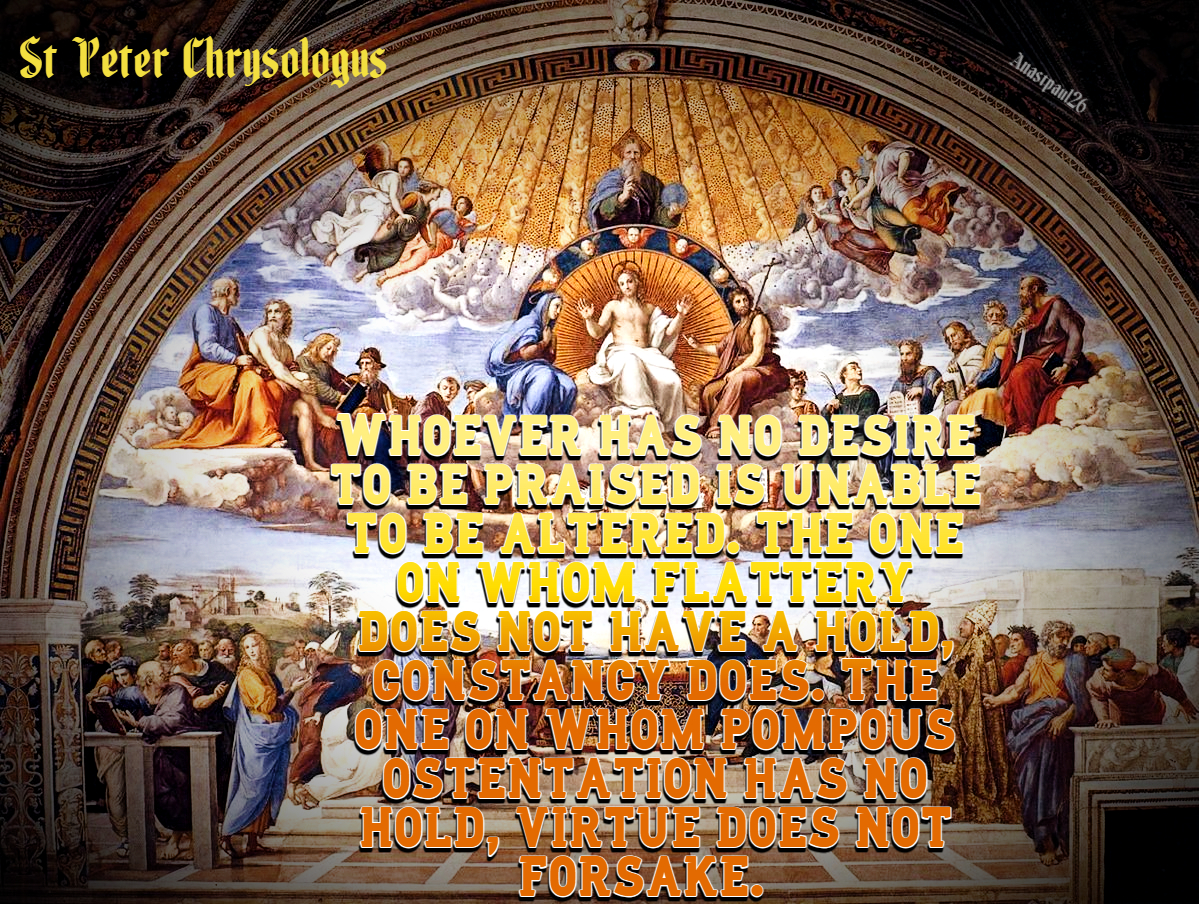
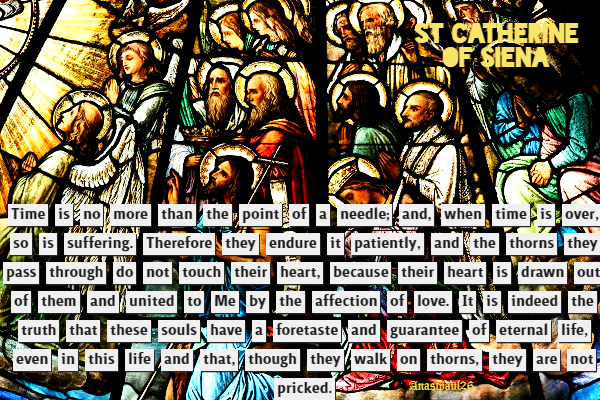
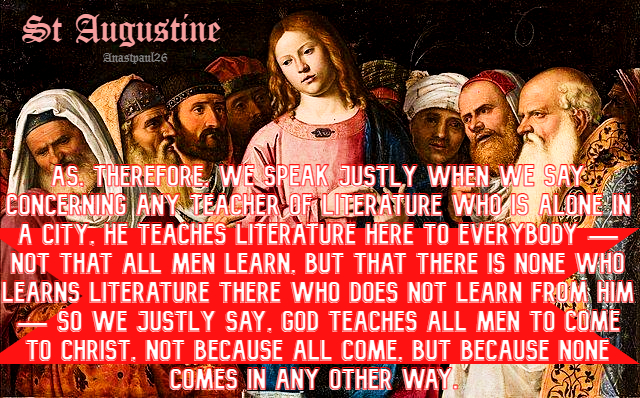

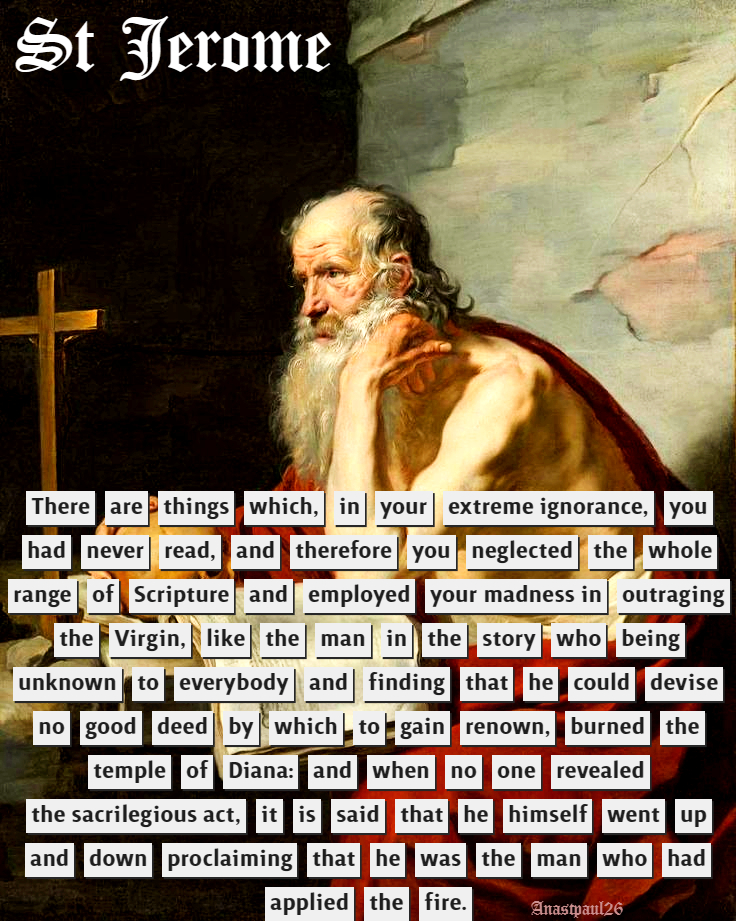
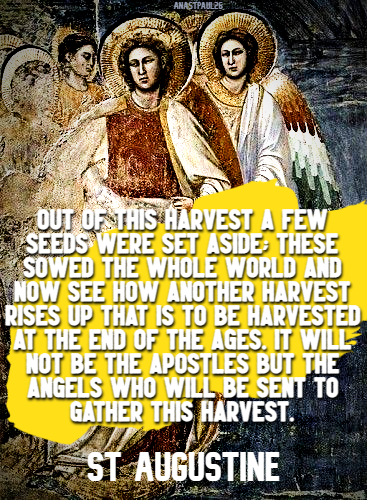
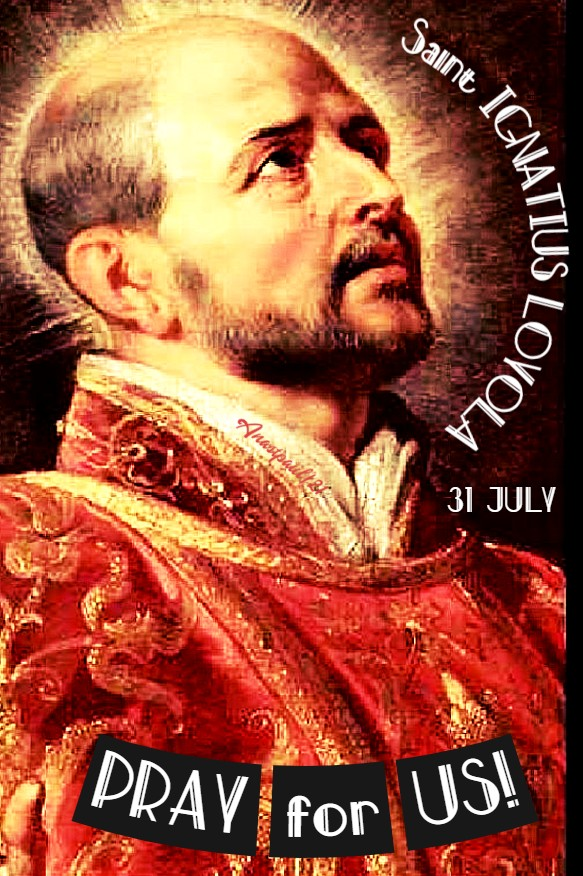


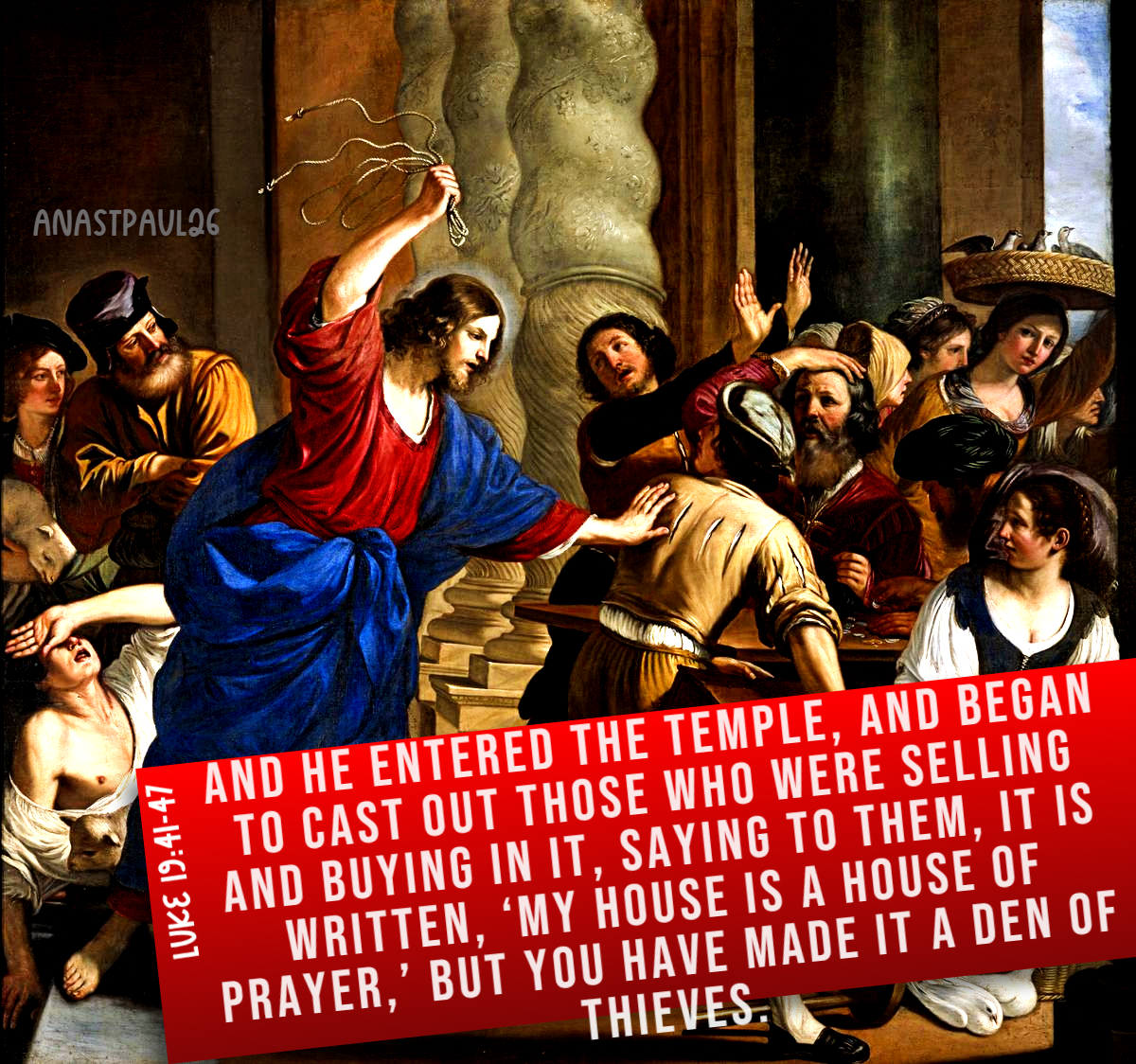
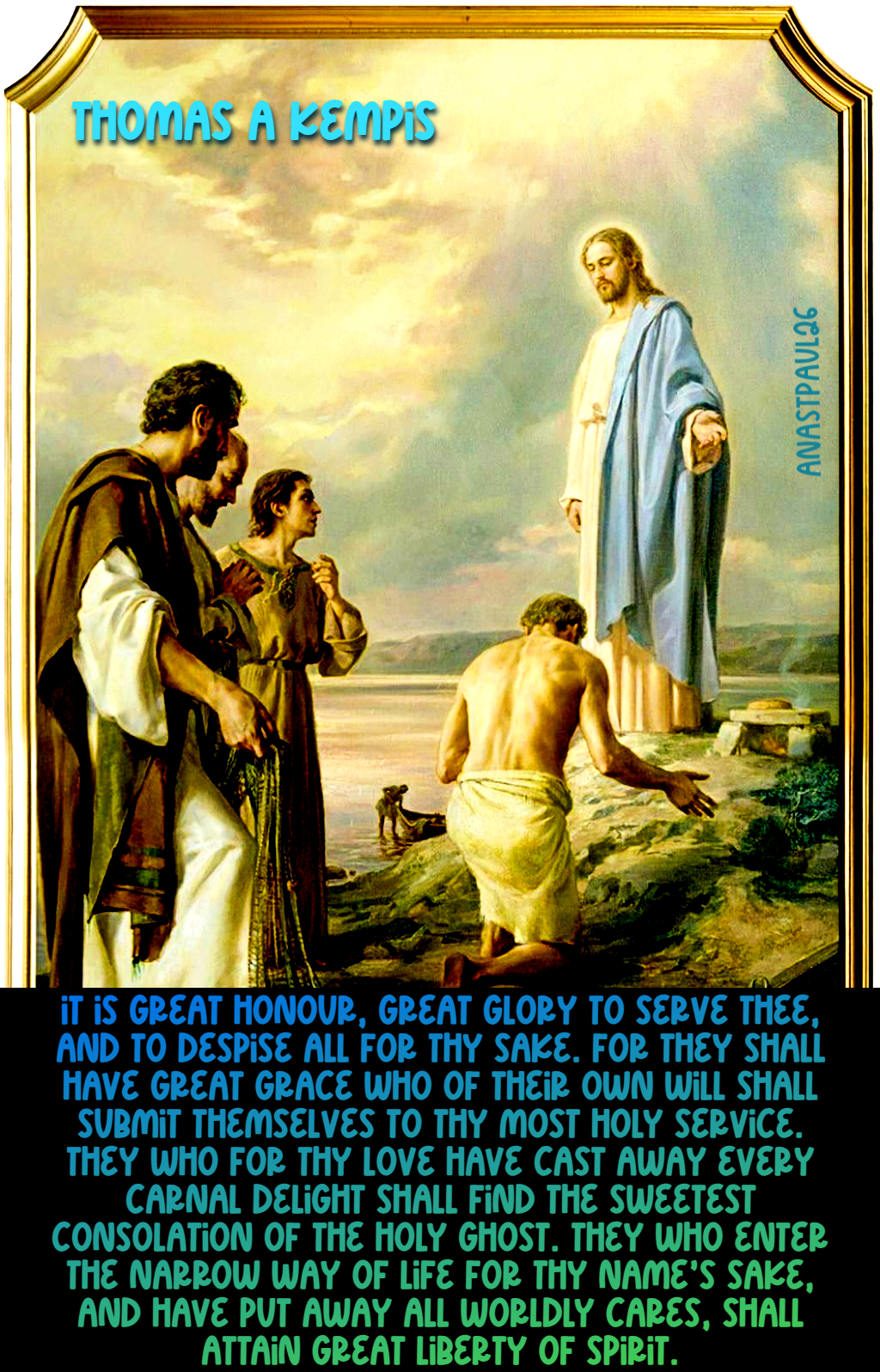
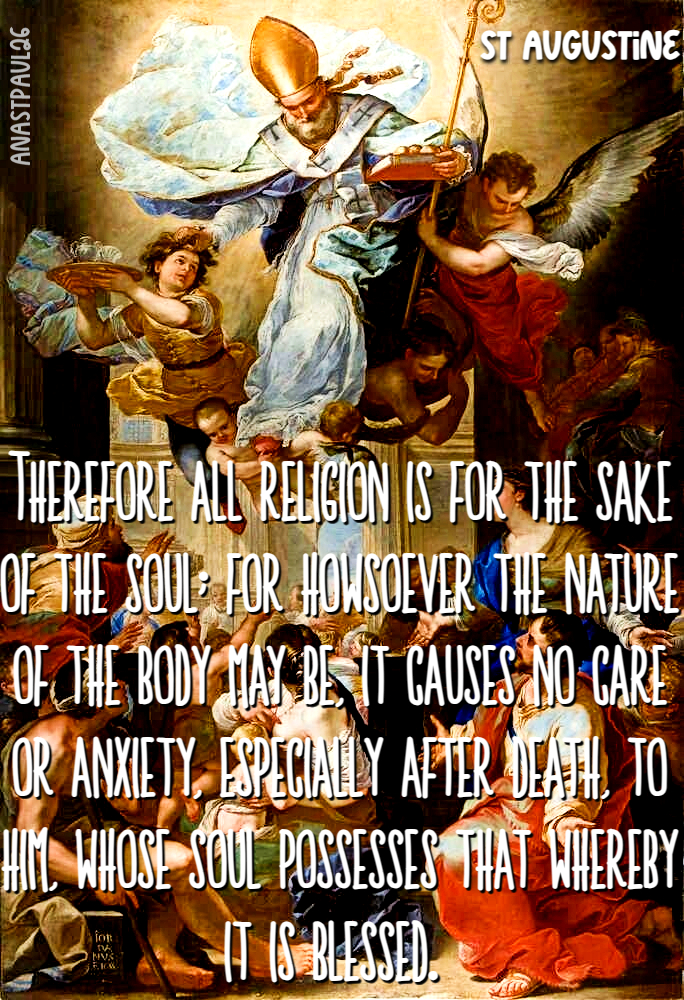
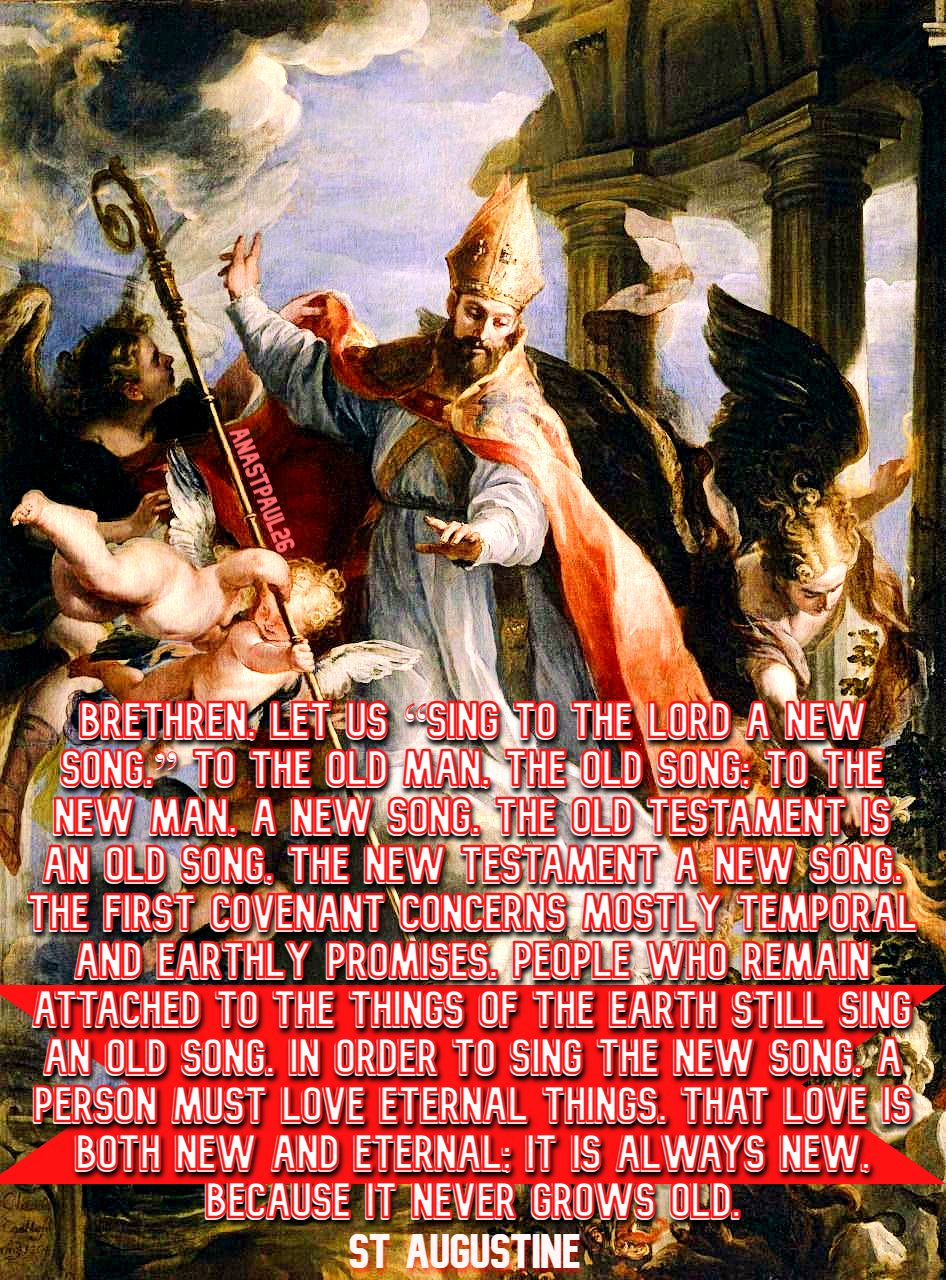
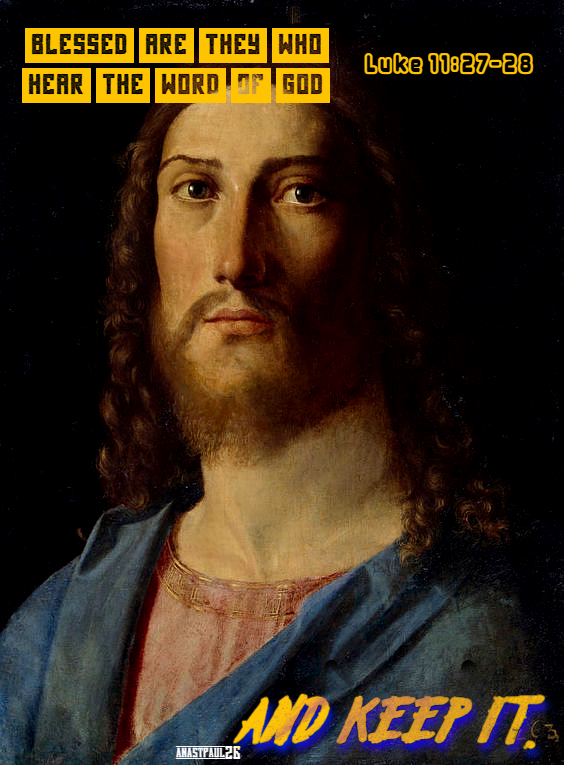

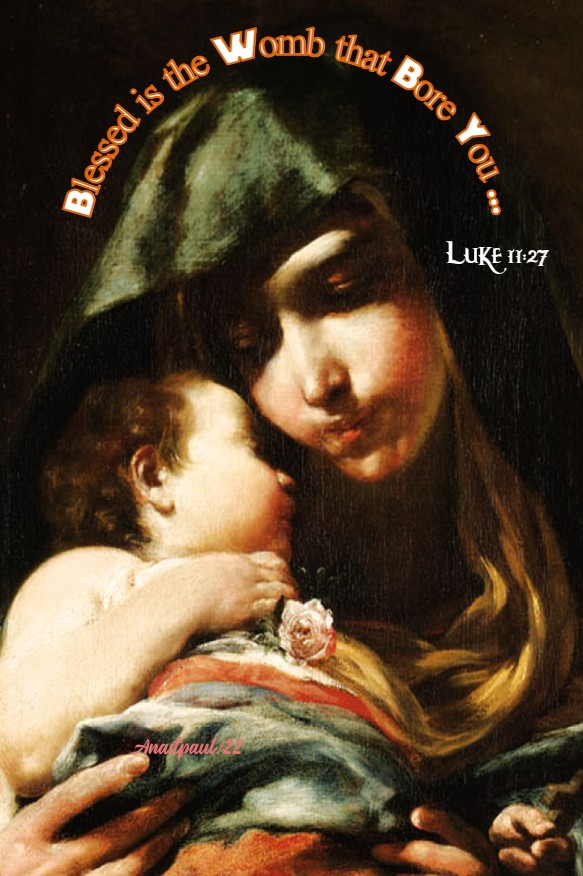
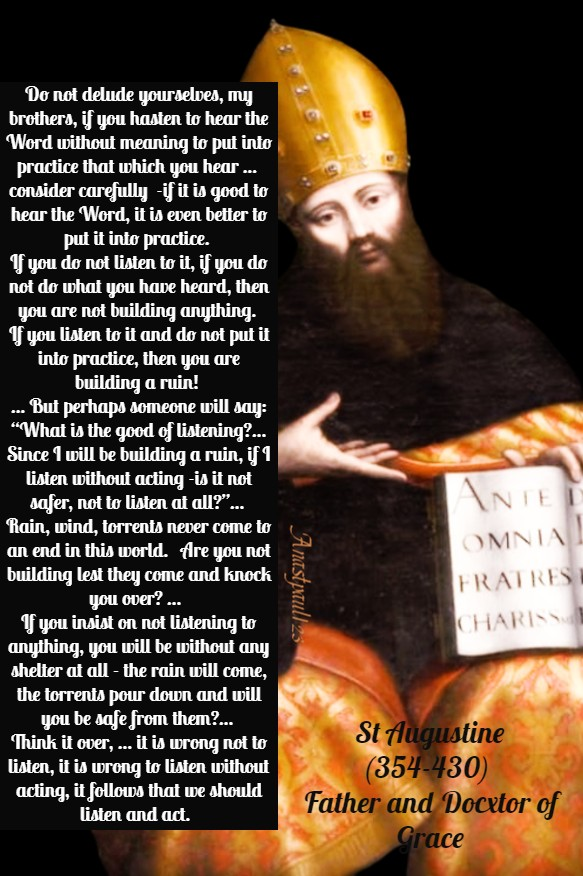
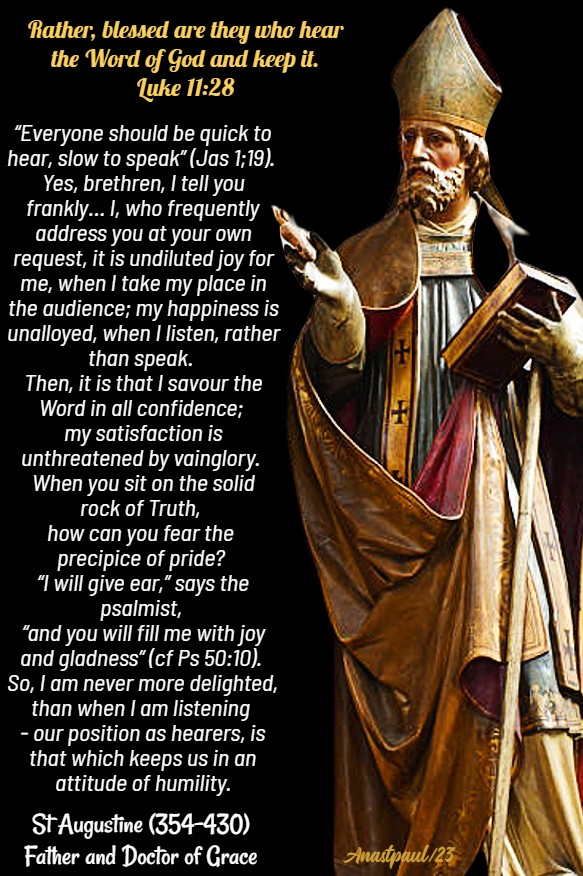
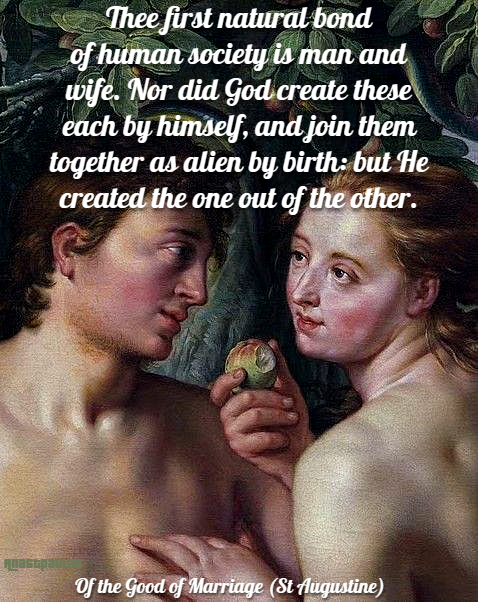
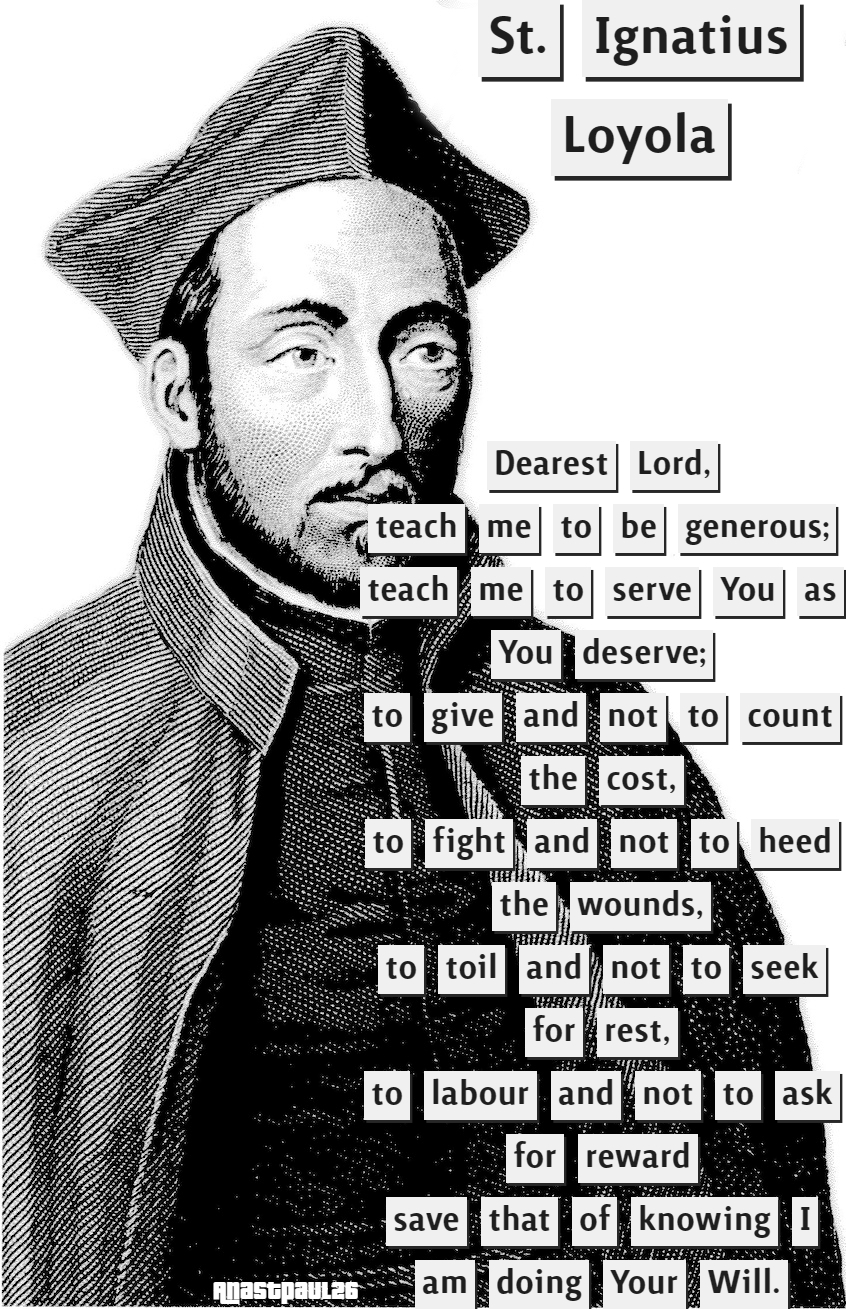




You must be logged in to post a comment.