One Minute Marian Reflection – 2 May “Mary’s Month!” – Wednesday of the Fifth Week of Easter
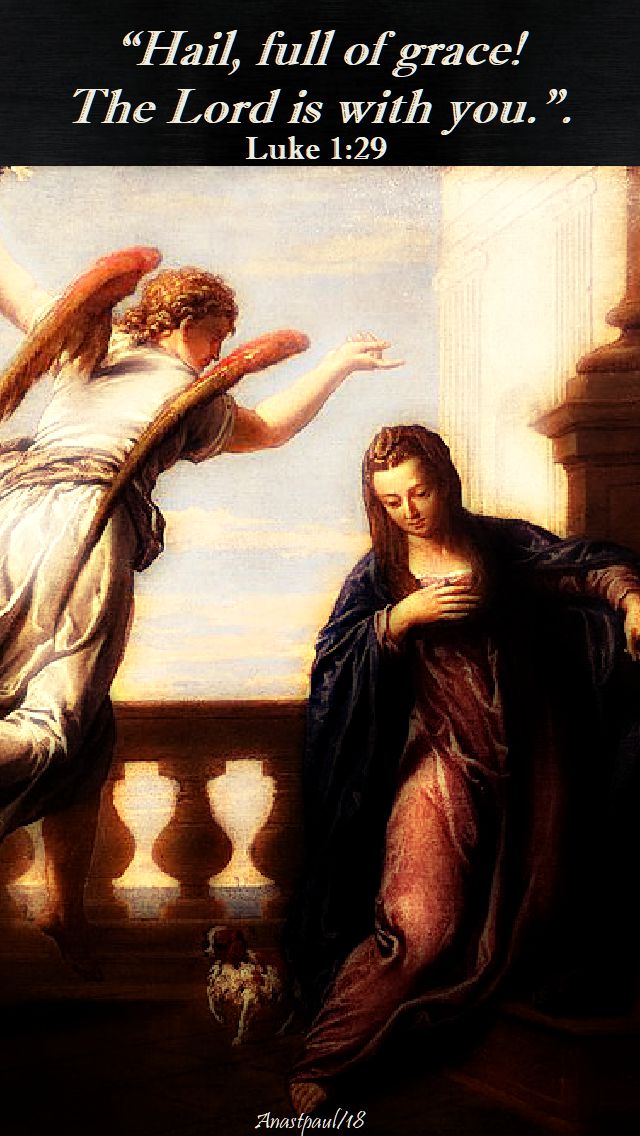
And coming to her, he said, “Hail, full of grace! The Lord is with you.”…Luke 1:29
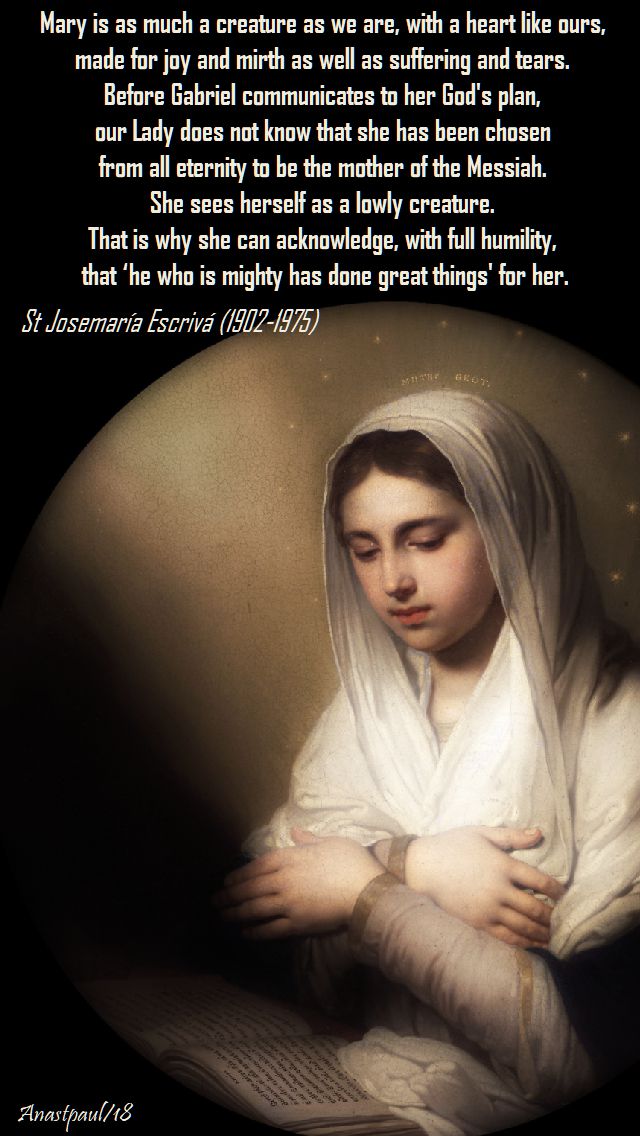
REFLECTION – “MARY: THE MOST PERFECT CREATURE: “She who is full of grace, the object of God’s pleasure, exalted above all the angels and the saints, lived an ordinary life. Mary is as much a creature as we are, with a heart like ours, made for joy and mirth as well as suffering and tears. Before Gabriel communicates to her God’s plan, our Lady does not know that she has been chosen from all eternity to be the mother of the Messiah. She sees herself as a lowly creature. That is why she can acknowledge, with full humility, that ‘he who is mighty has done great things for her.”
Let us offer to our Mother today:
Many glances of affection and many words of love,
when we see her image or picture in our home, in the church, or anywhere.”…… St Josemaría Escrivá (1902-1975) – “Cause of our Joy” – Christ is Passing By 172
PRAYER – Let us praise God the Father, who chose Mary as the Mother of His Son and wanted all generations to hail her, O full of grace! With all confidence we pray, may our Holy Mother, the Blessed Virgin intercede for us today and every day of our lives. We make our prayer through her son, our divine Saviour, Jesus Christ, in unity with You and the Holy Spirit, one God, forever, amen.
Our Morning Offering – 2 May “Mary’s Month!” – Wednesday of the Fifth Week of Easter and the Memorial of St Athanasius (c295-373) Father and Doctor of the Church
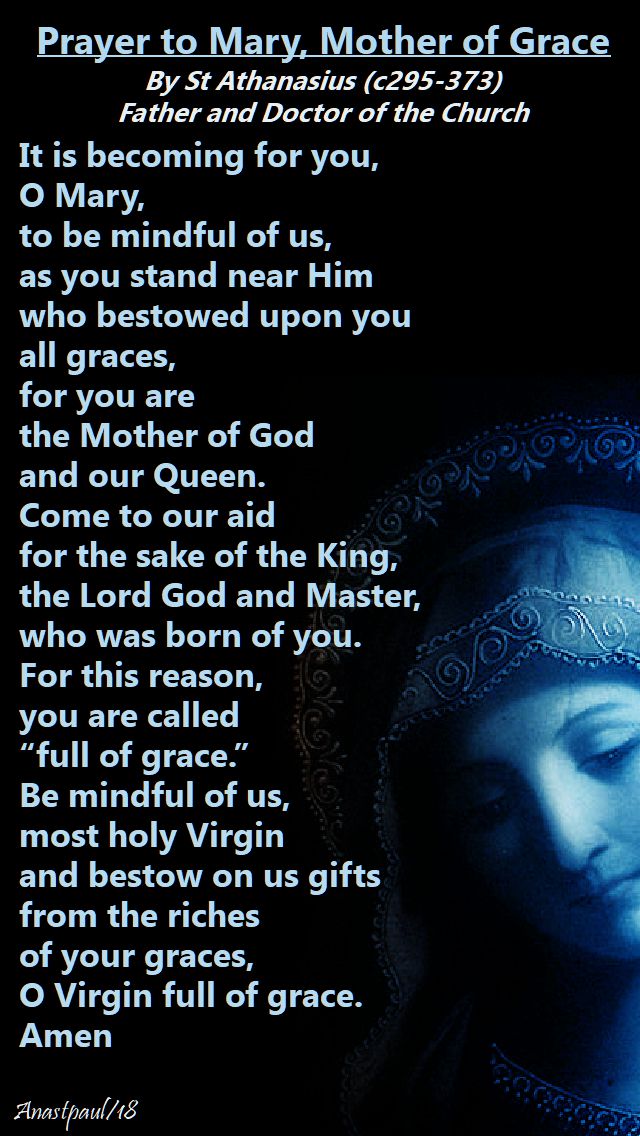
Prayer to Mary, Mother of Grace By St Athanasius (297-373) Father and Doctor of the Church
It is becoming for you, O Mary,
to be mindful of us,
as you stand near Him
who bestowed upon you all graces,
for you are the Mother of God and our Queen.
Come to our aid for the sake of the King,
the Lord God and Master,
who was born of you.
For this reason,
you are called “full of grace.”
Be mindful of us,
most holy Virgin and bestow on us gifts
from the riches of your graces,
O Virgin full of grace.
Amen
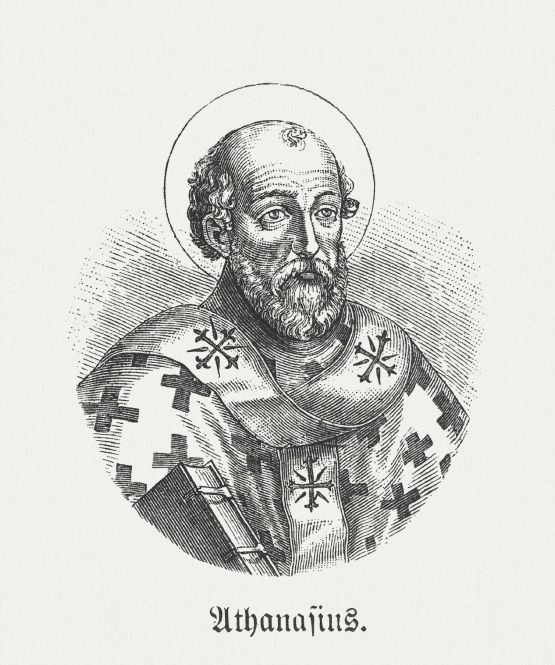
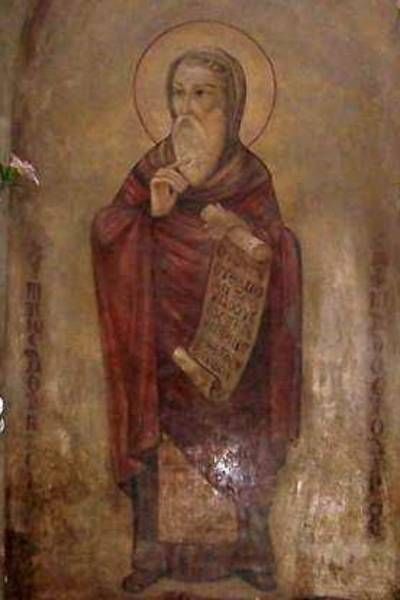
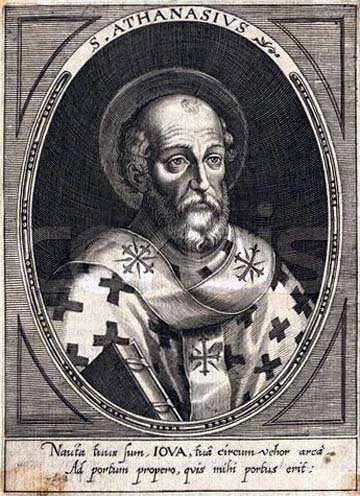
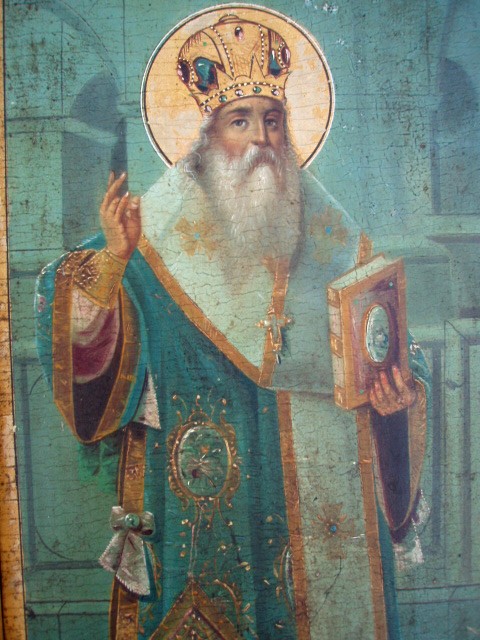
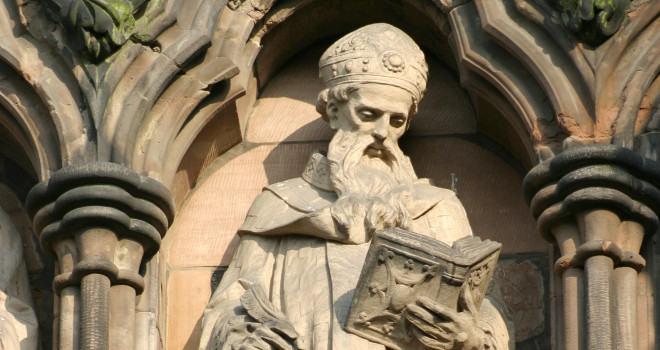
Saint of the Day – 2 May – St Athanasius (c295-373) –Confessor, Bishop of Alexandria, Father and Doctor of the Church – “Father of Orthodoxy”. St Athanasius, Great Defender of the orthodox faith, throughout his life opposed the Arian heresy. By denying the Godhead of the Word, the Arians turned Christ into a mere man, only higher in grace than others in the eyes of God. St Athanasius took part in the Council of Nicea in 325 and until the end remained a champion of the faith, as it was defined by the Council. In him, the Church venerates one of her Great Fathers and Doctors. He was subjected to persecutions for upholding the true teaching concerning the person of Christ and was sent into exile from his See no less than five times. He died at Alexandria in 373 after an Episcopate of forty-six years.
St Athanasius atrue champion of orthodoxy! He did not die a martyr but his life was martyrdom in the truest sense. Athanasius was the Church’s greatest hero in the battle against Arianism. Even as a young deacon at the Council of Nicea (325), he was recognised as “Arius’ ablest enemy” and the foremost defender of the Church’s faith. After the death of his Bishop (328), “the entire Catholic congregation with one accord, as one soul and body, voiced the wish of the dying Bishop Alexander, that Athanasius should succeed him. Everyone esteemed him as a virtuous, holy man, an ascetic, a true bishop.“
There followed fifty years of constant conflict. Under five Emperors and by exile on five different occasions, he gave testimony to the truth of the Catholic position. His allegiance to the Church never wavered, his courage never weakened. As consolation in the face of horrendous calumnies and cruel persecution, Athanasius looked to the unwavering love of his Catholic people. Even time brought no mitigation in Arian hatred. For five years he hid in a deep, dry cistern to be safe from their raging wrath and their attempts to assassinate him. The place was known only to one trusted friend who secretly supplied necessary food.
That Athanasius enjoyed God’s special protection should have been obvious to all. On one occasion when the Emperor’s assassins were pursuing him, Athanasius ordered the ship on which he was fleeing to double-back and sail upstream so that he might meet and by-pass his persecutors. Not recognising the boat upon meeting in semi-darkness, they naively asked whether the ship carrying Athanasius was still far ahead. Calmly and truthfully Athanasius himself called back, “He is not far from here.” So his persecutors kept sailing on in the same direction, allowing the Saint to complete his escape.
Preserved by Divine Providence through a lifetime of trial and danger, he finally died in his own quarters at Alexandria during the reign of the Emperor Valens (373). Athanasius enriched Christian literature with many important works, some pointed toward piety and edification, others polemical and dogmatic in nature. He ruled the Church of Alexandria for forty-six years…..Excerpted from The Church’s Year of Grace, Pius Parsch
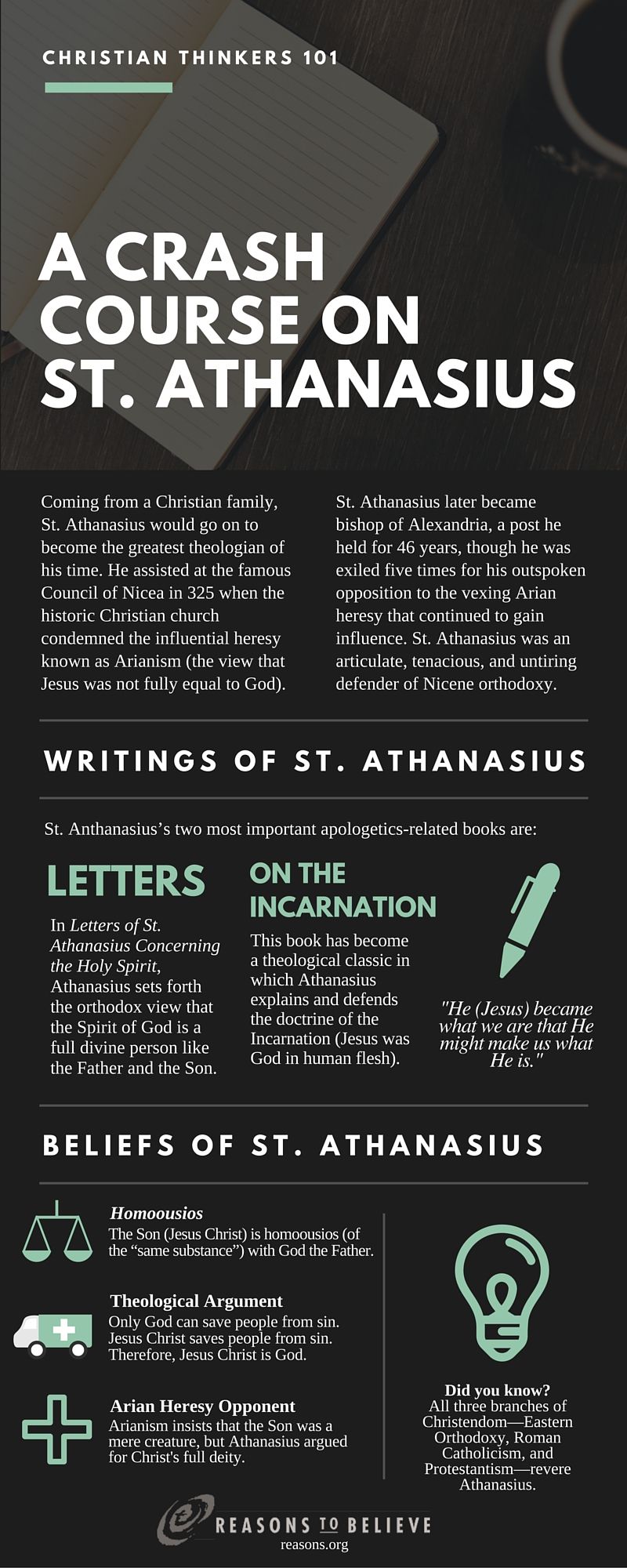
What Did St. Athanasius Write? – Among several works, St Athanasius’ two most important apologetics-related books are On the Incarnation and Letters of St Athanasius Concerning the Holy Spirit. The first book has become a theological classic in which Athanasius explains and defends the doctrine of the Incarnation (Jesus was God in human flesh). In the second work, he both critiques the heretical view that the Holy Spirit is a mere creature and sets forth the orthodox view that the Spirit of God is a full divine person like the Father and the Son.
What Did St. Athanasius Believe? – Athanasius’ three most important ideas or arguments for historic Christianity are the following: St Athanasius affirmed Nicene orthodoxy and argued that the Son (Jesus Christ) is homoousios (of the “same substance”) with God the Father. St. Athanasius tied the Incarnation and atonement together in his theological reasoning. He is known for formulating the following theological argument: Only God can save people from sin. Jesus Christ saves people from sin. Therefore, Jesus Christ is God. At a time when the Arian heresy was at its most influential, the Bishops who sided with Arianism taunted Athanasius with the words “The world is against you Athanasius.” But Athanasius defiantly responded: “Athanasius contra mundum.” (“No. It’s Athanasius against the world.”)While Arianism insisted that the Son was a mere creature, Athanasius argued for Christ’s full deity.
Bl John Henry Newman described him as a “principal instrument, after the Apostles, by which the sacred truths of Christianity have been conveyed and secured to the world”.[Letters..]
St Athanasius (c295-373) – Father and Doctor of the Church (Memorial)
—
St Alpin de Châlons
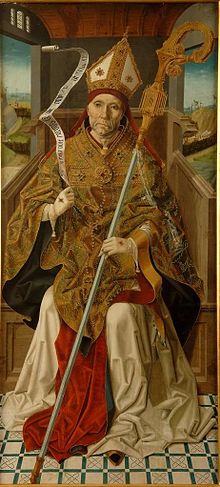
Bl Bernard of Seville
St Bertinus the Younger
Bl Boleslas Strzelecki
Bl Conrad of Seldenbüren
St Cyriacus of Pamphylia
St Eugenius of Africa
St Exsuperius of Pamphylia
St Felix of Seville
St Fiorenzo of Algeria
St Gennys of Cornwall
St Germanus of Normandy
St Gluvias
St Guistano of Sardinia
St José María Rubio y Peralta
St Joseph Luu
Bl Juan de Verdegallo
St Longinus of Africa
St Neachtain of Cill-Uinche
St Theodulus of Pamphylia
St Ultan of Péronne
St Vindemialis of Africa
St Waldebert of Luxeuil
St Wiborada of Saint Gall
Bl William Tirry
St Zoe of Pamphylia
—
Martyrs of Alexandria – 4 saints: A group of Christians marytred together in the persecutions of Diocletian. We know little more than their names – Celestine, Germanus, Neopolus and Saturninus. 304 in Alexandria, Egypt
Thought for the Day – 1 May – Tuesday of the Fifth Week of Eastertide, the Memorial of St Joseph the Worker and the 1st day of the Month of Mary
May, The Month of Promise
Why is May chosen as the month in which we exercise a special devotion to the Blessed Virgin?
The first reason, is because, it is the time when the earth bursts forth into its fresh foliage and its green grass, after the stern frost and snow of winter and the raw atmosphere and the wild wind and rain, of the early spring. It is because the blossoms are upon the trees and the flowers are in the gardens. It is because the days have got long and the sun rises early and sets late. For such gladness and joyousness of external Nature is a fit attendant on our devotion to her, who is the Mystical Rose and the House of Gold.
A man may say, “True but in this climate, we have sometimes a bleak, inclement May.” This cannot be denied; but still, so much is true that at least it is the month of promise and of hope. Even though the weather happen to be bad, it is the month that begins and heralds in the summer. We know, for all that may be unpleasant in it, that fine weather is coming, sooner or later. “Brightness and beauty shall,” in the Prophet’s words, “appear at the end and shall not lie: if it make delay, wait for it, for it shall surely come and shall not be slack.”
May then is the month, if not of fulfillment, at least of promise and is not this the very aspect, in which we most suitably regard the Blessed Virgin, Holy Mary, to whom this month is dedicated?
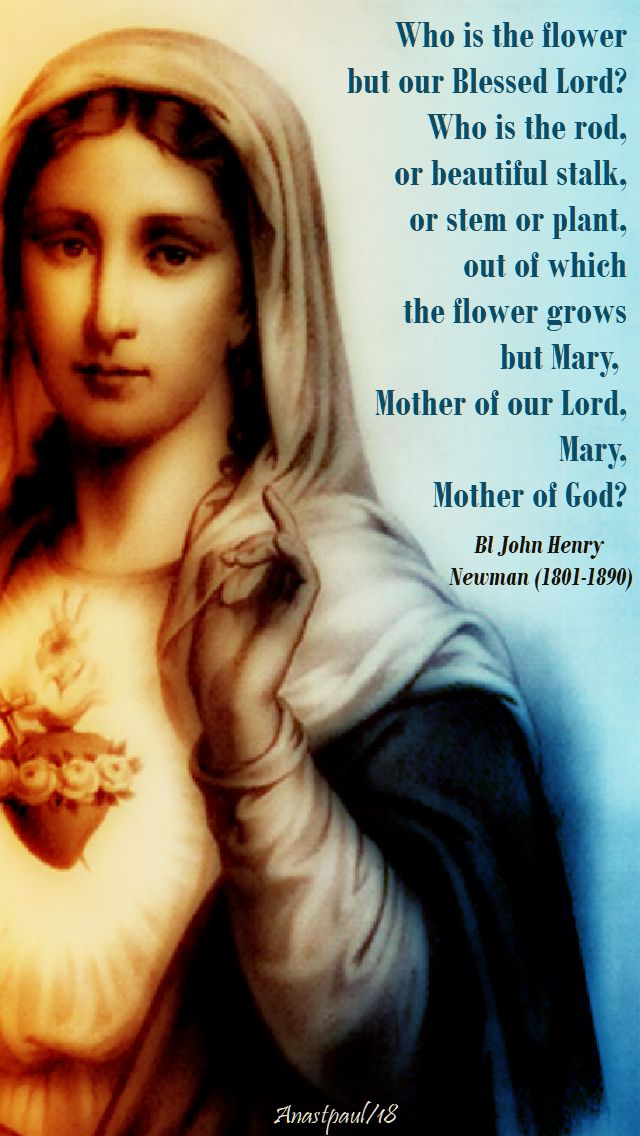
The Prophet says, “There shall come forth a rod out of the root of Jesse and a flower shall rise out of his root.” Who is the flower but our Blessed Lord? Who is the rod, or beautiful stalk or stem or plant out of which the flower grows but Mary, Mother of our Lord, Mary, Mother of God?
It was prophesied that God should come upon earth. When the time was now full, how was it announced? It was announced by the Angel coming to Mary. “Hail, full of grace,”said Gabriel, “the Lord is with thee; blessed art thou among women.” She then was the sure promise of the coming Saviour and, therefore, May is, by a special title her month…. taken from Meditations for the Month of May, by Blessed John Henry Newman (1801-1890)
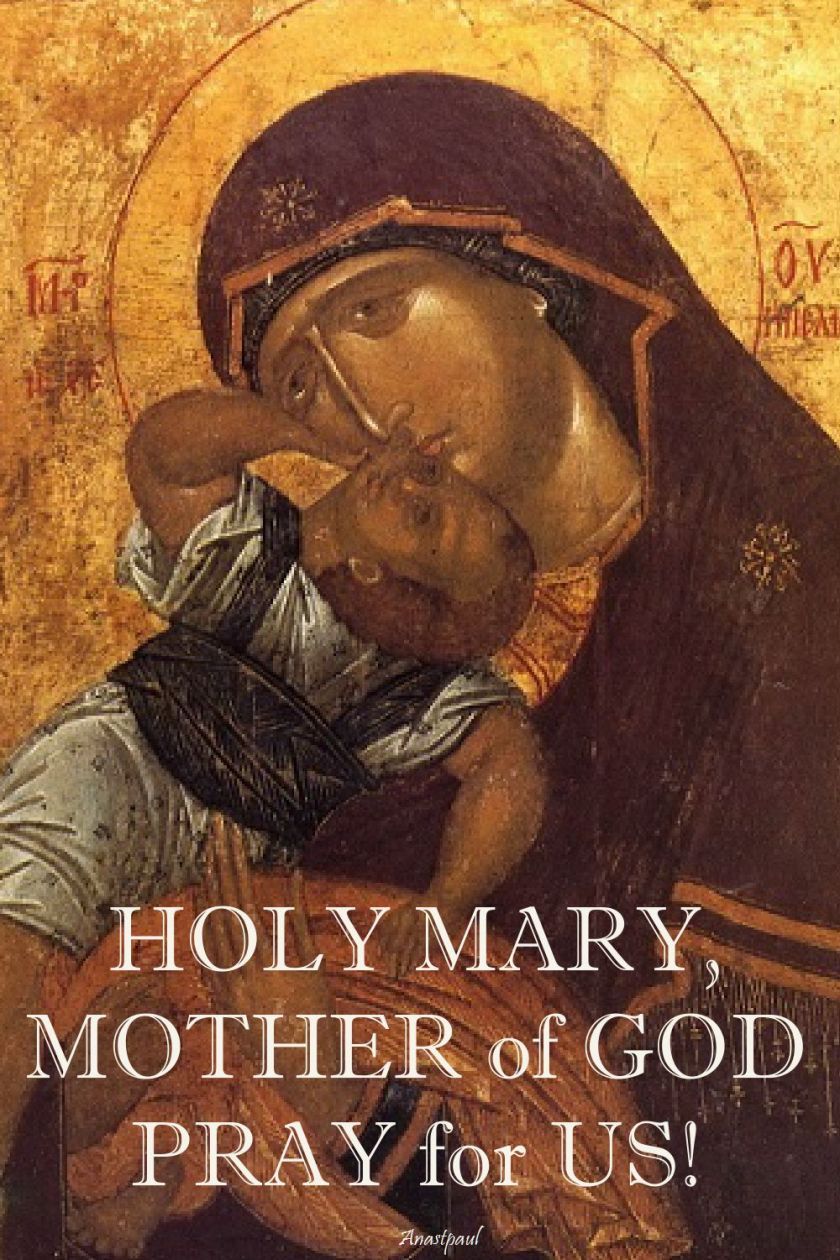
Holy Mary, Mother of God and our Mother, Pray for us!
One Minute Reflection – 1 May – Tuesday of the Fifth Week of Eastertide, the Memorial of St Joseph the Worker and the 1st day of the Month of Mary
In the sixth month, the angel Gabriel was sent from God to a town of Galilee called Nazareth, to a virgin betrothed to a man named Joseph, of the house of David and the virgin’s name was Mary...Luke 1:26-27
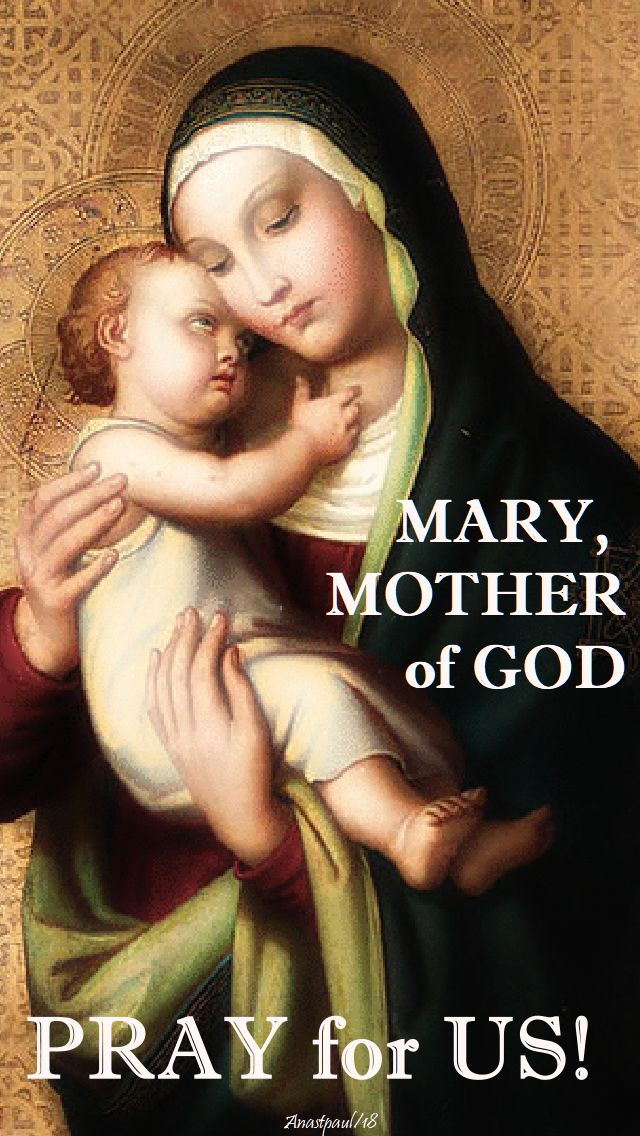
REFLECTION – “MARY, THE MOTHER OF GOD: “When the Blessed Virgin said yes, freely, to the plans revealed to her by the Creator, the divine Word assumed a human nature — a rational soul and a body – which was formed in the most pure womb of Mary. The divine nature and the human were united in a single Person: Jesus Christ, true God and, thenceforth, true man; the only begotten and eternal son of the Father and from that moment on, as man, the true son of Mary. This is why our Lady is the mother of the Incarnate Word, of the second person of the Blessed Trinity, who has united our human nature to Himself for ever, without any confusion of the two natures. The greatest praise we can give to the Blessed Virgin is to address her loudly and clearly by the name that expresses her very highest dignity: ‘Mother of God’.”
Let us offer to our Mother today:
Brief but frequent prayers of love, such as – “Mother of God, your petitions are most powerful.”… St Josemaría Escrivá (1902-1975) – “Mother of God and Our Mother,” – Friends of God 274
PRAYER – Almighty God and Father, Your ways are not our ways, teach us to willingly agree to them, for You know which way we should go. Help us to say “yes” always to Your plan and to render ourselves as a sacrament of Your divine love to all we meet. Fill us with the grace to be your tools to bring glory to Your kingdom. Our Father, who art in heaven, may Your Will be done on earth as it is in heaven. Mary Mother of God, pray for us! Through our Our Lord Jesus Christ with You, in the union of the Holy Spirit, one God forever, amen.
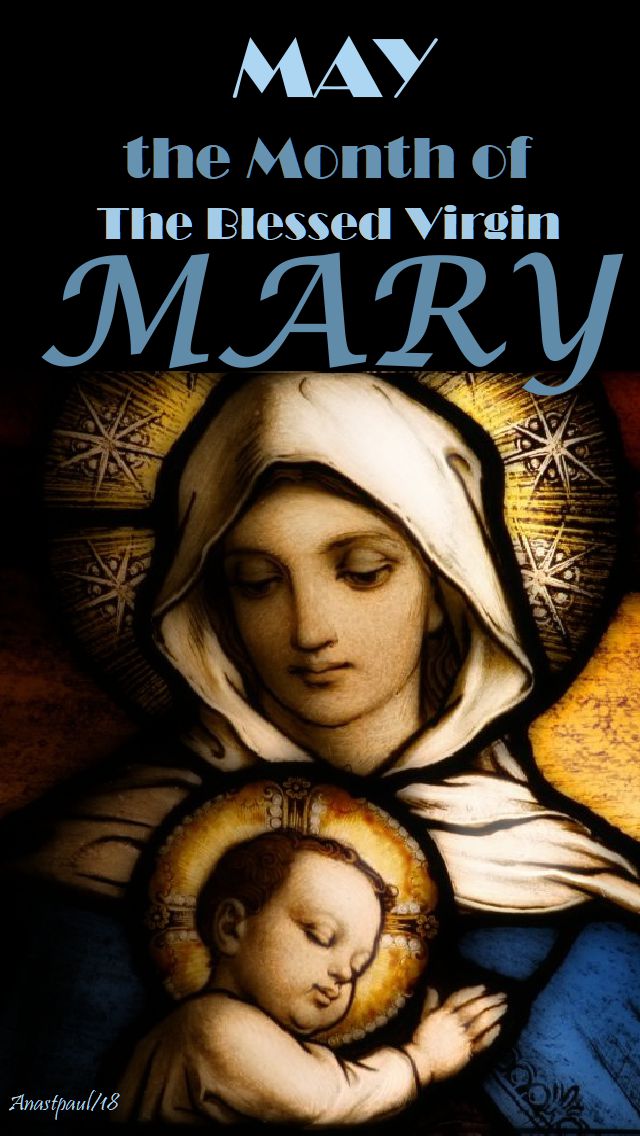
Rejoice! It’s 1 May and the beginning of the Month of the Blessed Virgin Mary
“God wills that all his gifts should come to us through Mary”
St Bernard of Clairvaux (1090-1153) Mellifluous Doctor
It was in Rome, towards the end of the eighteenth century, one fine evening in May. A child of the poor gathered his companions around him and led them to a statue of Mary, before which a lamp was burning, as is the custom in that holy city. There, these fresh young voices sang the Litany of our Lady. The next day, the little group, followed by other children, again gathered at the feet of the Mother of God. Next came their mothers, to join the little assembly. Soon, other groups were formed and the devotion rapidly became popular. Holy souls, troubled by the disorderly conduct which always increases and becomes graver at the return of the pleasant springtime, saw in these growing practices the hand of God and they co-operated with the designs of Providence by approving and promoting this new devotion, as a public and solemn act of reparation. The Month of Mary was founded! … A Carthusian, A Month with Mary, London: Burns and Oates, 1950.
“This is the month in which, in the churches and individual homes, the most affectionate and fervent homage of prayers and devotions from the hearts of Christians are raised to Mary. It is also the month in which from His throne, descend upon us, the most generous and abundant gifts of the Divine Mercy.” … Blessed Pope Paul VI, The Month of Mary,1967
In our own times, we Catholics, wanting to be close to her always, offer her special presents in May: pilgrimages, visits to churches dedicated to her, little sacrifices in her honour, extra Devotions in her honour, floral ‘Crownings’, periods of study and well-finished work offered up to her and a more attentive recitation of the Marian Litanies and the Holy Rosary.
Opening Hymn from the Little Office of Mary
O Mary of all women, You are the chosen one, Who, ancient prophets promised, Would bear God’s only Son; All Hebrew generations Prepared the way to thee, That in your womb the God-man, Might come to set us free.
O Mary, you embody all God taught to our race, For you are first and foremost In fullness of His grace; We praise this wondrous honour That you gave birth to Him, Who from you took humanity And saved us from our sin.
Our Morning Offering- 1 May – Tuesday of the Fifth Week of Eastertide, the Memorial of St Joseph the Worker and the 1st day of the Month of Mary
An Act of Consecration to the Blessed Virgin Mary By St John Berchmans S.J. (1599-1621)
Holy Mary, Mother of God and Virgin,
I choose you this day for my queen,
patron and advocate
and firmly resolve and purpose,
never to abandon you,
never to say or do anything,
against you,
nor to permit that aught be done by others,
to dishonour you.
Receive me, then, I beg you,
as your perpetual servant,
assist me in all my actions
and do not abandon me
at the hour of my death.
Amen
“May Day” has long been dedicated as a special day for labour and working people. The feast of St. Joseph the Worker was established by Pope Pius XII in 1955 to Christianise labour and give all workers a model and a protector.
By the daily labour in his shop, St. Joseph provided for the necessities of his holy spouse and of the Incarnate Son of God and thus became a role model for labourers. The liturgy for this feast celebrates the right to work and this is a message that needs to be heard and heeded in our modern society. How did this connection with St Joseph the Worker, which is nearly as old as Christianity, get made?
In an effort to keep Jesus from being removed from ordinary life, the Church has from the beginning proudly emphasised that Jesus was a carpenter, obviously trained by Joseph in the satisfaction and the drudgery of that vocation.
Humanity is like God, not only in thinking and loving but also in creating. Whether we make a table or a cathedral, we are called to bear fruit with our hands and mind, ultimately for the building up of the Body of Christ. In addition to this, there is a special dignity and value to the work of caring for the family.
An excerpt from the Vatican II document on the modern world said, “Where men and women, in the course of gaining a livelihood for themselves and their families, offer appropriate service to society, they can be confident that their personal efforts promote the work of the Creator, confer benefits on their fellowmen, and help to realise God’s plan in history.”
St Pope Pius X (1835-1914) composed this prayer to St Joseph, patron of working people, that expresses concisely the Christian attitude toward labour. It summarises also for us the lessons of the Holy Family’s work at Nazareth.
Let us Pray:
Glorious St Joseph,
model of all who devote their lives to labour,
obtain for me the grace to work,
in the spirit of penance, in order thereby,
to atone for my many sins;
to work conscientiously,
setting devotion to duty in preference to my own whims;
to work with thankfulness and joy,
deeming it an honour to employ
and to develop, by my labour,
the gifts I have received from God;
to work with order, peace, moderation and patience,
without ever shrinking from weariness and difficulties;
to work above all with a pure intention
and with detachment from self,
having always before my eyes,
the hour of death and the accounting
which I must then render of time ill spent,
of talents wasted, of good omitted
and of vain complacency in success,
which is so fatal to the work of God.
All for Jesus, all through Mary,
all in imitation of you, O Patriarch Joseph!
This shall be my motto in life and in death,
Amen.
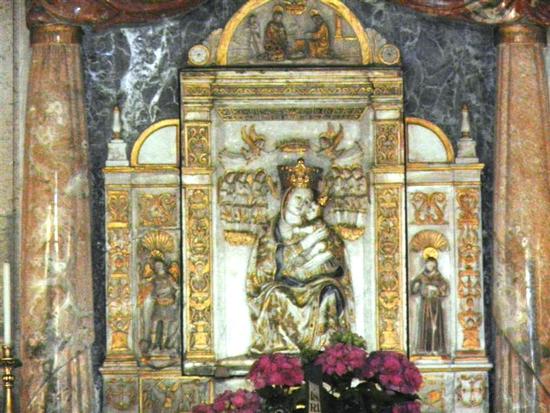
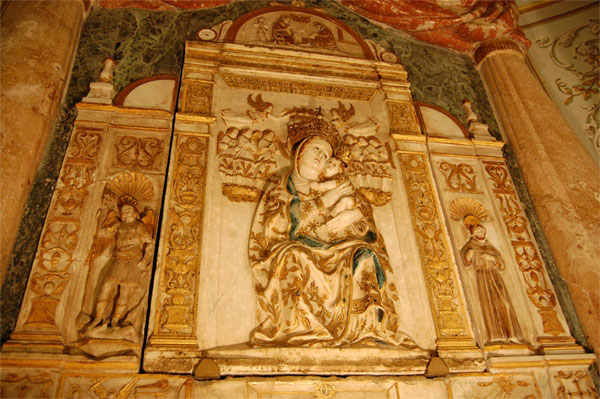
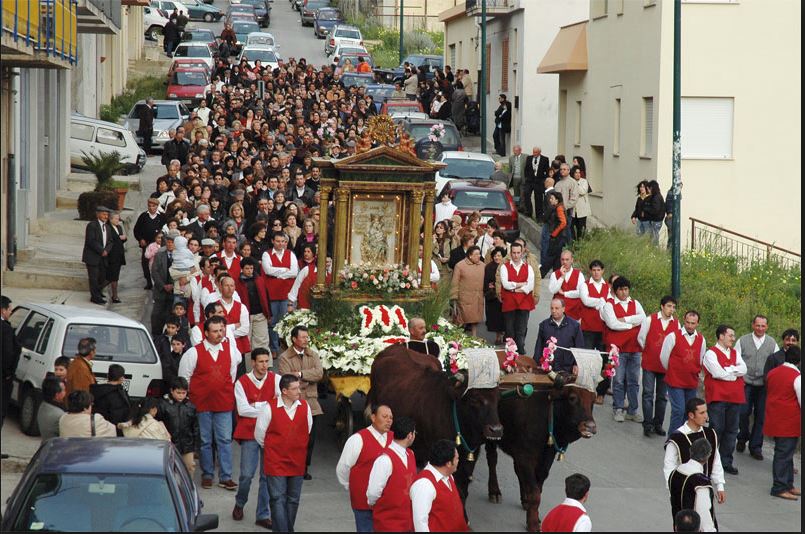
The Church of the Madonna of Giubino was built in 1721 to house a miraculous marble-relief icon of the Madonna, which is brought to a country chapel during the summer. (A copy of the relief is housed in the Church of St Joseph in Brooklyn, New York, giving testimony to the large emigrant community of Calatafimesi who lived in Brooklyn in the early 20th century). The Church of Maria Santissima di Giubino is dedicated to the patroness of the town. It has a single nave, with an elegant barrel vault decorated with frescoes and ornamental motifs. Inside it there are some important works: the painting with the Assumption, Our Lady with Angels and Saints dated 1617, the altar-piece of All Saints, an 18th-century wooden organ and a 15th-century marble alto-rilievo representing Madonna of Giubino with the Infant Jesus. In 1655 an invasion of grasshoppers was destroying all the crops in the countryside of Calatafimi: the people, assembled in a Church, decided that, after putting all the names of the saints who had an altar in town inside a ballot box, they would choose as a patron that one whose name had been drawn. After they invoked the Holy Ghost, it was chosen the name of Maria Santissima di Giubino by lots. The central part of the triptych with the image of the Virgin was soon taken out from the wall in the country church of Giubino and taken in procession: Calatafimi was free from grasshoppers. Maria Santissima di Giubino was elected patroness of the town (25 April 1655) and the bas-relief of the Virgin of Giubino was then placed on the high altar of the new Church, designed by Giovanni Biagio Amico (the same planner of the Church of Santissimo Crocifisso) in 1721. In 1931 the triptych was recomposed in the town sanctuary and restored. There was a new restoration of the Church in 1978.
—
St Aceolus of Amiens
St Acius of Amiens
St Aldebrandus of Fossombrone
St Amator of Auxerre
St Ambrose of Ferentino
St Andeolus of Smyrna
Bl Arigius of Gap
St Arnold of Hiltensweiler
St Asaph of Llanelwy
St Augustine Schöffler
St Benedict of Szkalka
St Bertha of Avenay
St Bertha of Kent
St Brieuc of Brittany
St Ceallach of Killala
St Cominus of Catania
Evermarus of Rousson
Bl Felim O’Hara
St Grata of Bergamo
St Isidora of Egypt
St Jeremiah the Prophet
St John-Louis Bonnard
Bl Klymentii Sheptytskyi
St Marculf
St Orentius of Auch
St Orentius of Loret
St Patientia of Loret
St Peregrine Laziosi (1260-1345) Incorrupt
Bl Petronilla of Moncel
St Richard Pampuri
St Romanus of Baghdad
St Sigismund of Burgundy
St Theodard of Narbonne
St Thorette
St Torquatus of Guadix
Bl Vivald of Gimignano





 AnaStpaul
You must be logged in to post a comment.