Thought for the Day – 26 July – Meditations with Antonio Cardinal Bacci (1881-1971)
The Eucharistic Life
The Eucharistic life, which is the life of union with Jesus, especially by means of daily Communion, transforms us and makes us holy. It preserves and increases in us, the grace which is the supernatural life of the soul. The Eucharist, of itself, does not bestow grace because it is a Sacrament of the living. It is our food and food is not given to the dead but to the living. For this reason, we should receive Holy Communionb free from the stain of sin. The Eucharist, moreover, remits venial sins, strengthens us in our resolutions and increases our charity. Venial sin is a sickness of the soul. Just as natural food banishes listlessness and vulnerability to disease, our Eucharistic nourishment has the same effect on our spiritual life.
It is because the Blessed Eucharist increases our love for Jesus, that it weakens our evil inclinations. The Eucharist and sin are mutually exclusive of one another because, the Eucharist is Jesus and sin is the devil. Our Eucharistic food, moreover, produces in our souls, a spiritual consolation which is a foretaste of the happiness of Heaven.
Let us listen to Jesus living within us. He will enable us to forget our worldly cares and will raise us to a higher plane where, by God’s infinite goodness, we shall continue to grow in virtue.
May the Most Blessed Sacrament be forever praised and adored!
Quote/s of the Day – 26 July – “Month of the Most Precious Blood” – Readings: Exodus 32: 15-24, 30-34; Psalms 106: 19-20, 21-22, 23; Matthew 13: 31-3
The Leaven of Life
“Just as the Father who has life sent me and I have life because of the Father, so the man who feeds on me will have life because of me.”
John 6:57
“An inborn imperfection in our human dough was removed, thanks to the leaven that comes from His perfect body… To complete what was missing, in these human bodies of ours, He gave something of Himself, just as He gives Himself to be eaten …”
St Ephrem (306-373) Father and Doctor of the Church
“Those who have been tricked into taking poison, offset its harmful effect, by another drug. The remedy, moreover, just like the poison, has to enter the system, so that its remedial effect may thereby spread through the whole body. Similarly, having tasted the poison, that is the fruit, that dissolved our nature, we were necessarily, in need of something, to reunite it. Such a remedy had to enter into us, so that it might, by its counteraction, undo the harm the body had already encountered from the poison. And what is this remedy? Nothing else than the body that proved itself superior to death and became the source of our life.”
St Greogory of Nyssa (c 335– c 395) Father of the Church
“The doctrine of Christ is fittingly called leaven because, the bread is Christ.”
St Anbrose (340-397) Father and Doctor of the Church
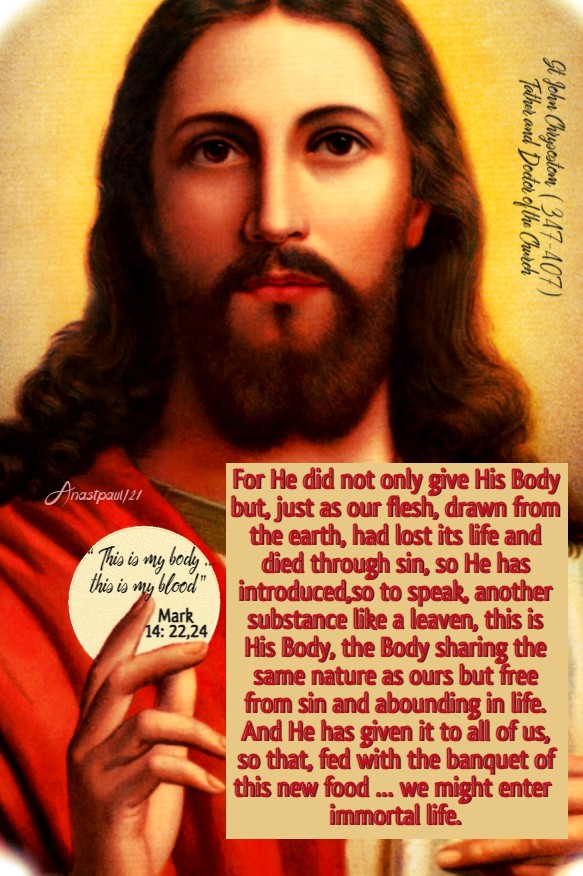
“ … For He did not only give His Body but, just as our flesh, drawn from the earth, had lost its life and died through sin, so He has introduced, so to speak, another substance like a leaven, this is His Body, the Body sharing the same nature as ours but free from sin and abounding in life. And He has given it to all of us, so that, fed with the banquet of this new food … we might enter immortal life.”
St John Chrysostom (347-407) Father ad Doctor of the Church
“Dust, so to speak, had forcibly entered humanity’s eye; earth had entered it, had injured the eye and it could not see the light. … That physician made a salve for you. And because He came, in such a way, that by His flesh, He might extinguish the faults of the flesh and by His death He might kill death … ”
St Augustine (354-430) Father and Doctor of the Church
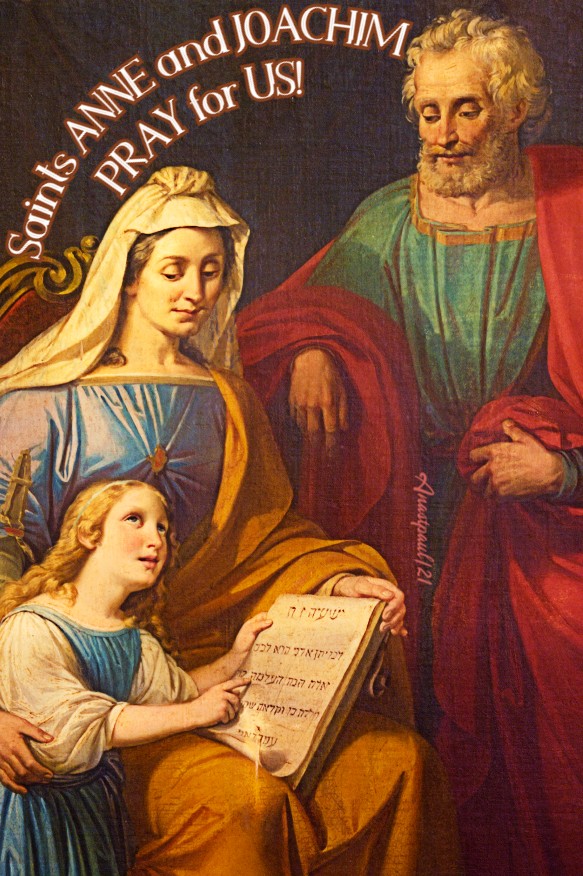
One Minute Reflection – 26 July – “Month of the Most Precious Blood” – Readings: Exodus 32: 15-24, 30-34; Psalms 106: 19-20, 21-22, 23; Matthew 13: 31-35 and the Memorial of Saints Anne and Joachim – Parents of the Blessed Virgin Mary, Grandparents of Jesus
“Until the whole was leavened” – Matthew 13:33
REFLECTION – “If someone kneads bread without mixing leaven into it, they may well apply themselves to the task, knead and work at it, the dough will not rise and cannot be used as food. But when leaven has been mixed in, it draws all the dough to itself and makes it all rise, as in the parable the Lord applied to the Kingdom… It is the same with meat – no matter how much care you take, if you neglect to put in salt to preserve it,… it will smell badly and become inedible In the same sort of way, imagine the whole of humanity as meat or dough and that the divine nature of the Holy Spirit is salt and leaven from another world. If the heavenly leaven of the Spirit and good salt of the divine nature… are not added to our lowly human nature and mixed into it, the soul will never lose its bad odour of sin and will not rise by losing the heaviness and impurities of the “leaven of wickedness” (1Cor 5,7)…
If a soul only relies on its own strength and thinks itself able to achieve complete success of itself, without the help of the Holy Spirit, it is greatly deceived. It is not made for the dwelling places of Heaven nor made for the Kingdom… If sinful man does not draw near to God, does not renounce the world, does not await in hope and patience a good that is foreign to its own nature, namely, the strength of the Holy Spirit; if the Lord does not instil His own divine life from on high into that soul, that person will never taste the true life… On the other hand, if he has received the Spirit’s grace, if he does not turn away from it, if he does not offend Him by his negligence and wrongdoing, if, after persevering a long time like this in the fight, he does not “grieve the Spirit” (Eph 4,30), he will have the happiness of winning eternal life.” – Attri to St Macarius of Egypt (c 300-390) Monk
PRAYER – True light of the world, Lord Jesus Christ, as You enlighten all men for their salvation, give us grace, we pray, to herald Your coming by preparing the ways of justice and of peace. Help us Lord, that we may sprout and bear fruit, fitting to grow and be a home of comfort to our neighbour. By the prayers of Sts Anne and Joachim, may we too be beacons of Your Light and of the glory of Your Kingdom. Through Jesus our Lord, Who lives and reigns with the Father and the Holy Spirit, God forever, amen.
Our Morning Offering – 26 July – “Month of the Most Precious Blood – Reminding you and myself, that in Catholic Time, Monday is the day of the Holy Ghost and/or the Holy Angels.
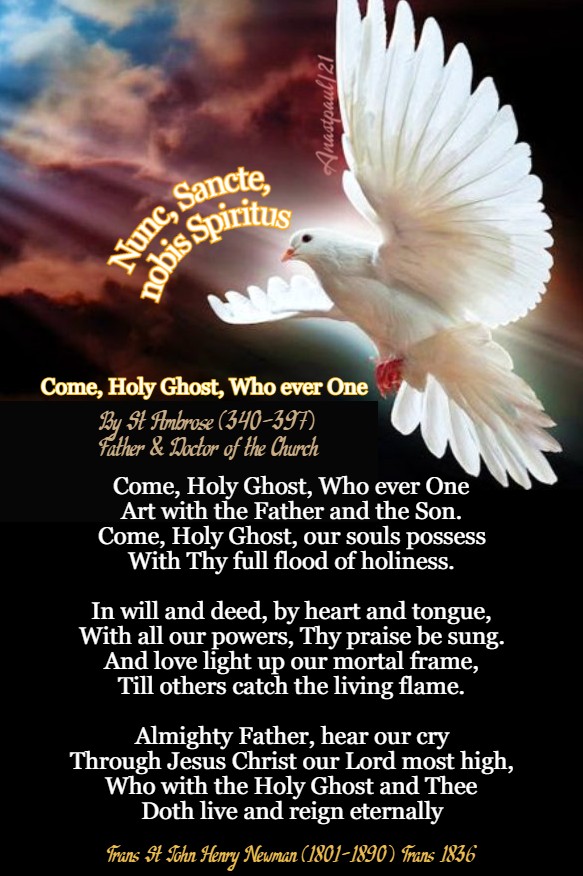
Nunc, Sancte, nobis Spiritus By St Ambrose (340-397) Come, Holy Ghost, Who ever One Trans St John Henry Newman (1801-1890) Trans 1836
Come, Holy Ghost, Who ever One Art with the Father and the Son. Come, Holy Ghost, our souls possess With Thy full flood of holiness.
In will and deed, by heart and tongue, With all our powers, Thy praise be sung. And love light up our mortal frame, Till others catch the living flame.
Almighty Father, hear our cry Through Jesus Christ our Lord most high, Who with the Holy Ghost and Thee Doth live and reign eternally.
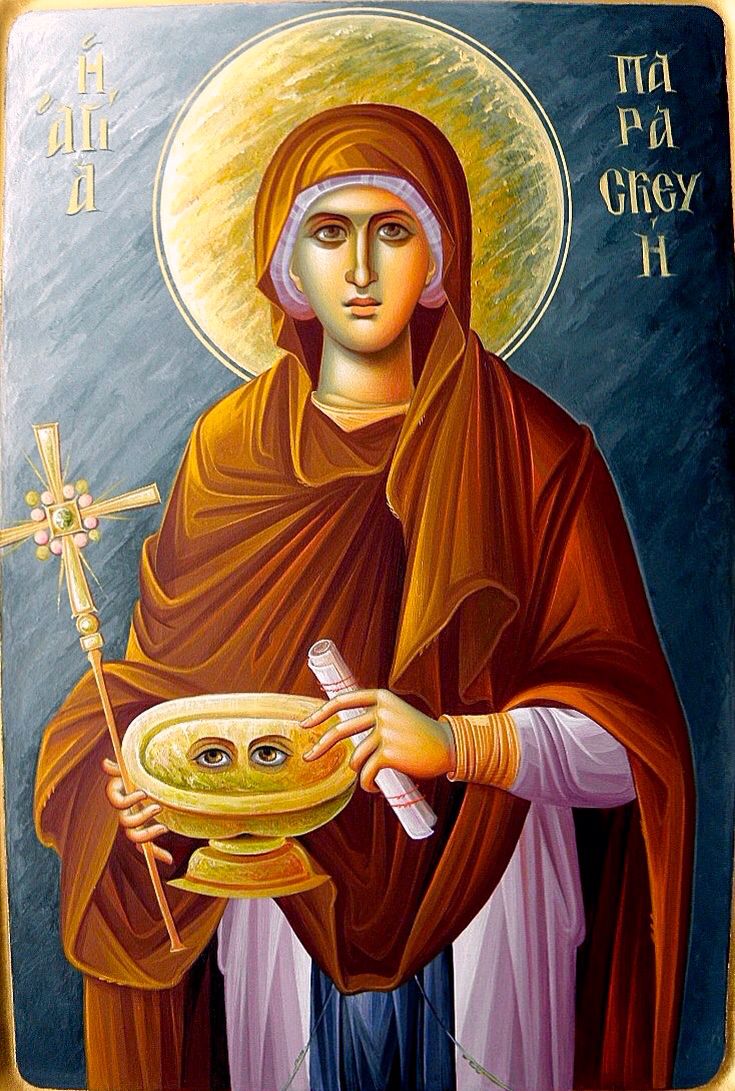
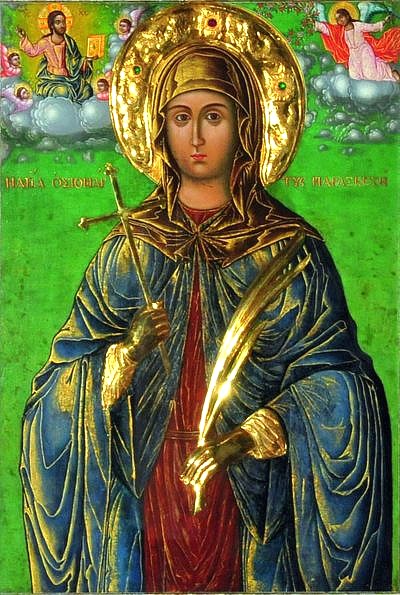
Saint of the Day – 26 July – St Parasceva of Rome (Died c 180) Virgin Martyr, Confessor. Born near Rome in the 2nd Century and died by beheading in c 180. Patronage – invoked against blindness, healer of the blind.
Parasceva was born in a village near Rome, likely during the reign of the Roman Emperor Hadrian (117-138). Her parents, Agathon and Politia, were Christians of Greek origin and had prayed for many years to have a child. When Politia finally bore a child, she was born on a Friday, the day of Our Lord’s suffering. They, therefore, named the baby girl Parasceva, meaning “Friday” in Greek (literally “preparation (day)” for the sabbath – cf. Mark 15:42). Parasceva grew up to be a devout and well-read woman, who rejected many suitors.
After the death of her parents, she gave away all of her possession and became the head of a Christian community of young virgins and widows. She also began to preach the Christian faith and at the age of 30, left Rome and ministered in many Towns and Villages.
In the Village of Therapia, Constantinople, she was arrested by soldiers of the Emperor Antoninus Pius and brought to trial. The charge was blasphemy and they charged her with inciting resistance to authorities. Antoninus Pius attempted to convince her to denounce her faith and even offered to marry her. Parasceva refused and was beaten and tortured by having a steel helmet lined with nails placed on her head and tightened with a vice. No pain seemed to affect her and her endurance caused many to convert to Christianity. Eventually, at his wit’s end, Antoninus Pius demanded that Parasceva be immersed into a large kettle of oil and tar. However, she emerged from even this unscathed. When she was accused of using magic, she responded by throwing the liquid into the Emperor’s face. He was blinded, and desperately asked for her help. Antoninus Pius regained his sight. This miracle moved him to convert to Christianity and set Parasceva free. Neither die he persecute Christians thereafter.
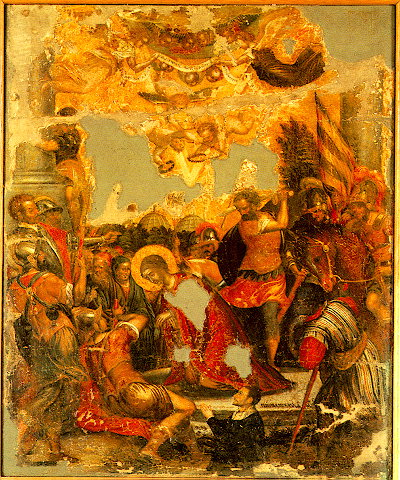
The Martyrdom of St Parasceva
However, after the death of Antoninus Pius, the laws changed once again under the Emperor Marcus Aurelius. A plague struck the Roman people and many, including Marcus Aurelius, considered Christians responsible for angering the gods. Parasceva was again arrested amongst many other Christians in a City governed by a man named Asclepius, who threw her into a pit with a large snake. She, however, made a Sign of the Cross and the snake fell asleep or dead. Just as with Antoninus Pius, Parasceva ‘s miracle converted Asclepius to Christianity and he released her. She continued to travel from Town to Town, preaching the Faith.
Finally, Parasceva was arrested for the last time by a Roman official named Tarasius and taken to the Temple of Apollo. Upon entering the Temple, Parasceva made a Sign of the Cross and all the idols in the Temple were instantly destroyed. Instead of converting the onlookers to Christianity, however, they became enraged, and beat her. Taracius then had her beheaded.
Her remains were eventually taken to Constantinople. Although it is not certain when or how her relics reached Constantinople, it seems that they were exhibited there in around 1200 to pilgrims.
Madonna del Faggio (Our Lady of the Beech Tree), Castelluccio, Bologna, Emilia Romagna, Italy (1672) – 26 July, Ascension Thursday:
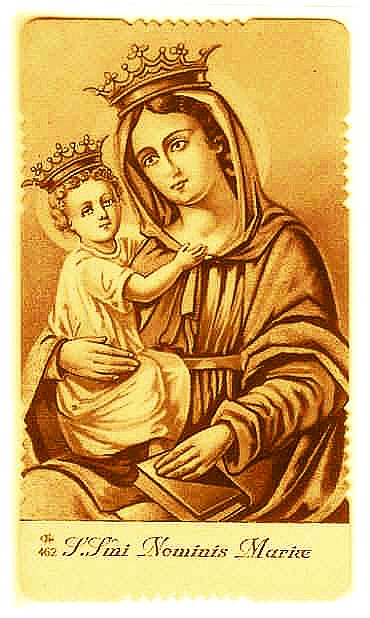
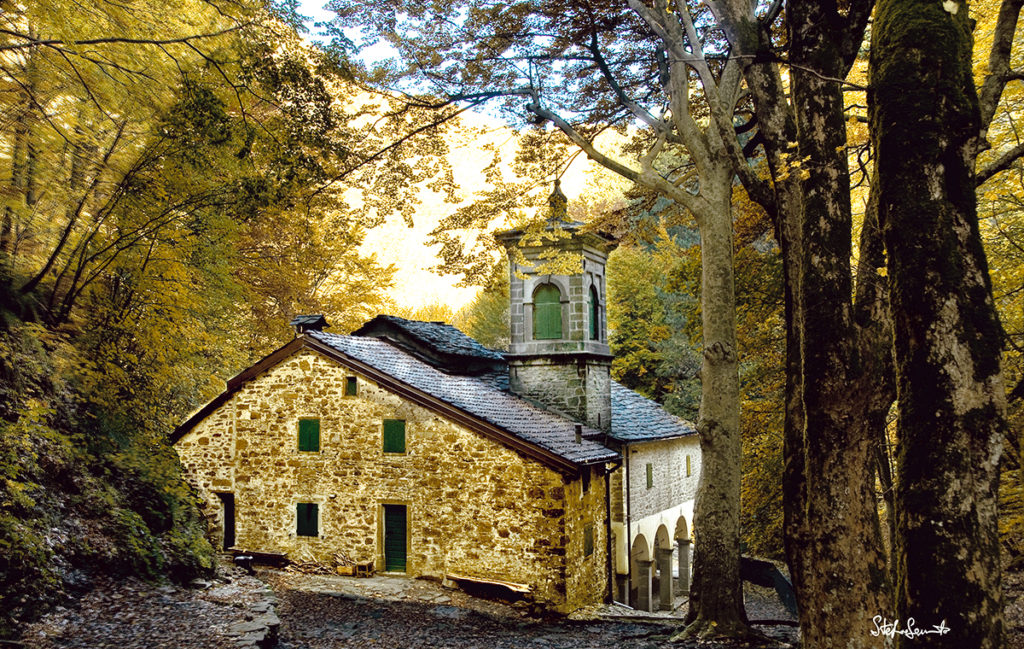
In 1672 the Blessed Virgin appeared to a shepherd boy and told him that she wished to be venerated at a certain place in the beech woods near Castelluccio in central Italy. Tthe child , following the directions to the site, discovered a terracotta Madonna affixed to one of the trees. The tiny Statue, barely 18 centimetres tall (7 inches) was moved to a wayside Shrine and then, in 1722, to its own mountain Sanctuary. Until 1964 a caretaker lived in the hermitage there. Since then a volunteer opens the Chapel only in summer on Sundays. In 1975 the sacred image was stolen and a copy was made to replace it. Since 1756, an annual pilgrimage on Ascension Day brings the image to the Town and back again, and on St Anne’s day, 26 July, a procession goes to the site of the beech tree where the Statue had been originally found, although the tree itself is no longer there as it fell during a storm. The Sanctuary’s holy card, shown above, does not seem to depict the terracotta image. It may represent one of the paintings of Lorenzo Pranzini, who decorated the interior of the Chapel in the 1800s.
St Benigno of Malcestine Bl Camilla Gentili St Charus of Malcestine Bl Edward Thwing Bl Élisabeth-Thérèse de Consolin St Erastus Bl Évangéliste of Verona St Exuperia the Martyr Bl George Swallowell St Gérontios Bl Giuseppina Maria de Micheli St Gothalm St Hyacinth Bl Jacques Netsetov Bl John Ingram St Joris Bl Marcel-Gaucher Labiche de Reignefort Bl Marie-Claire du Bac Bl Marie-Madeleine Justamond Bl Marie-Marguerite Bonnet St Olympius the Tribune St Parasceva of Rome (Died c 180) Virgin Martyr, Confessor St Pastor of Rome Bl Pérégrin of Verona Bl Pierre-Joseph le Groing de la Romagère






 AnaStpaul
You must be logged in to post a comment.