Thought for the Day – 18 October – Meditations with Antonio Cardinal Bacci (1881-1971)
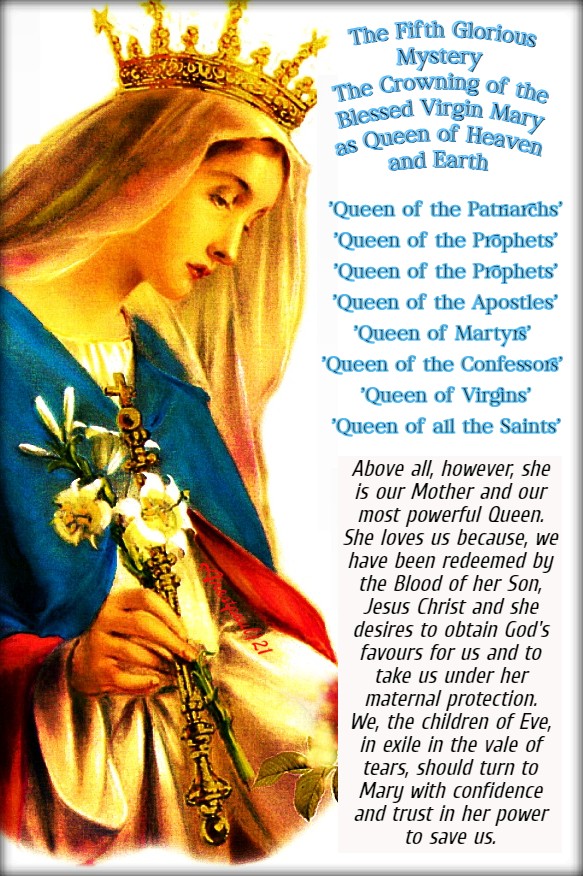
“Month of the Holy Rosary” The Fifth Glorious Mystery The Crowning of the Blessed Virgin Mary as Queen of Heaven and Earth
“Mary is also styled, ‘Queen of the Patriarchs‘ because, it was through her, that they came to possess the object of their desires, the divine Redeemer, Who released them from Limbo and brought them to Heaven. She is ‘Queen of the Prophets‘ because, their prophecies were realised through her. She is ‘Queen of the Apostles‘ whom she assisted and encouraged after the departure of her divine Son. She is the ‘Queen of Martyrs‘ because, her maternal heart was pierced by a sword of sorrow. She is ‘Queen of the Confessors‘ because, nobody else was capable of so deep and lively a profession of the Faith. She is ‘Queen of Virgins‘ because, her virginal purity was crowned by the supreme dignity of Mother of God. She is ‘Queen, moreover, of all the Saints‘, for no other human creature could ever surpass, or even dream of the summit of holiness, to which she attained. Above all, however, she is our Mother and our most powerful Queen. She loves us because, we have been redeemed by the Blood of her Son, Jesus Christ and she desires to obtain God’s favours for us and to take us under her maternal protection.
We, the children of Eve, in exile in the vale of tears, should turn to Mary with confidence and trust in her power to save us.”
Quote/s of the Day – 18 October – The Feast of St Luke the Evangelist
“Luke, the beloved physician, sends greetings … ”
Colossians 4:14
“He spent the night in prayer to God.”
Luke 6:12
“And why do you call me, ‘Lord, Lord’ and not do what I say?”
Luke 6:46
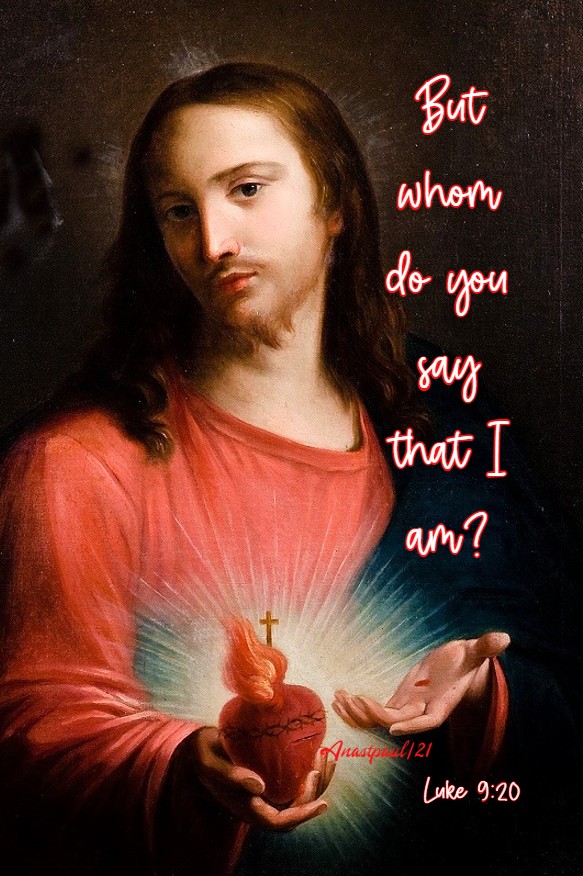
“But whom do you say that I am?”
Luke 9:20
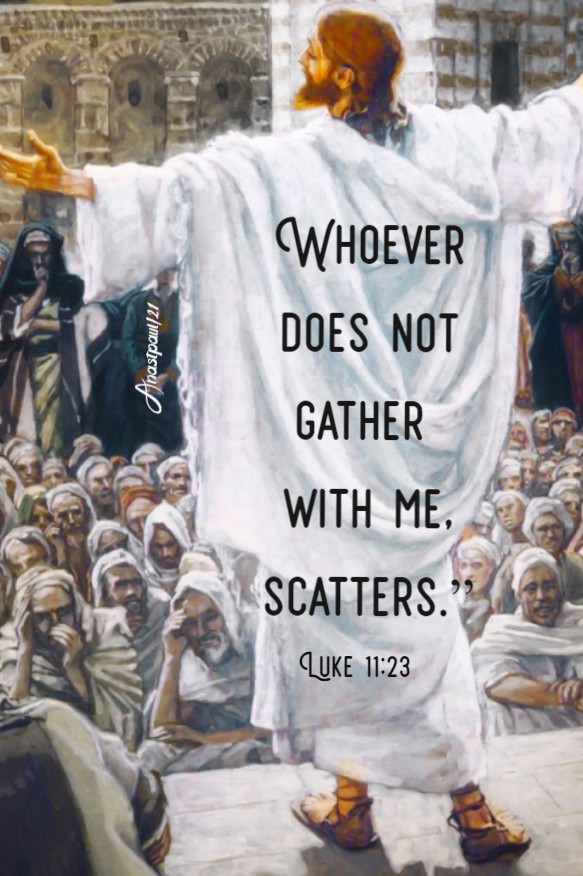
“Whoever does not gather with me, scatters.”
Luke 11:23
“Can any of you by worrying, add a moment to your lifespan?”
Luke 12:25
“Open the door to him at once, when he comes and knocks.”
Luke 12:36
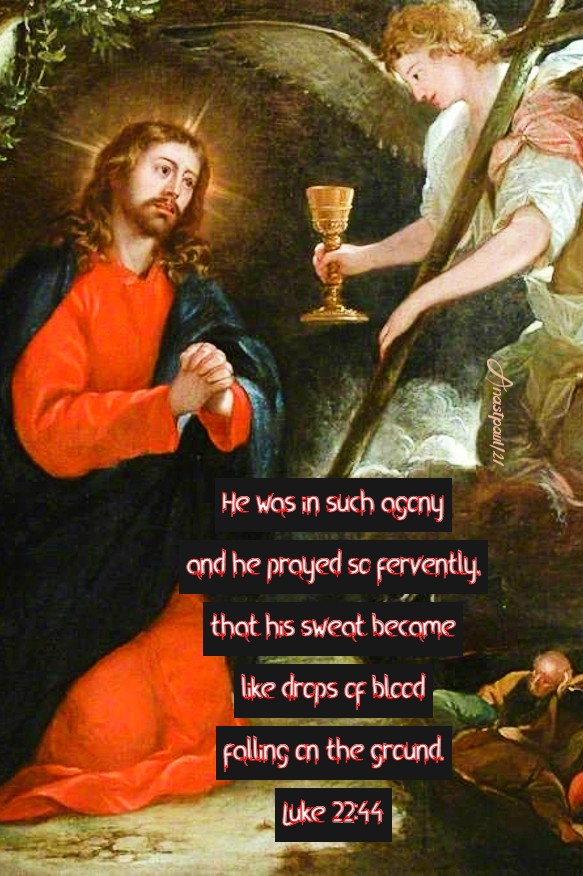
“He was in such agony and he prayed so fervently, that his sweat became like drops of blood falling on the ground.”
Luke 22:44
(St Luke, as a Medical Doctor is the only Evangelist who describes Jesus sweating blood. This video mentions the medical explanation for this occurrence).
One Minute Reflection – 18 October – The Feast of St Luke the Evangelist, Gospel: Luke 10:1-9
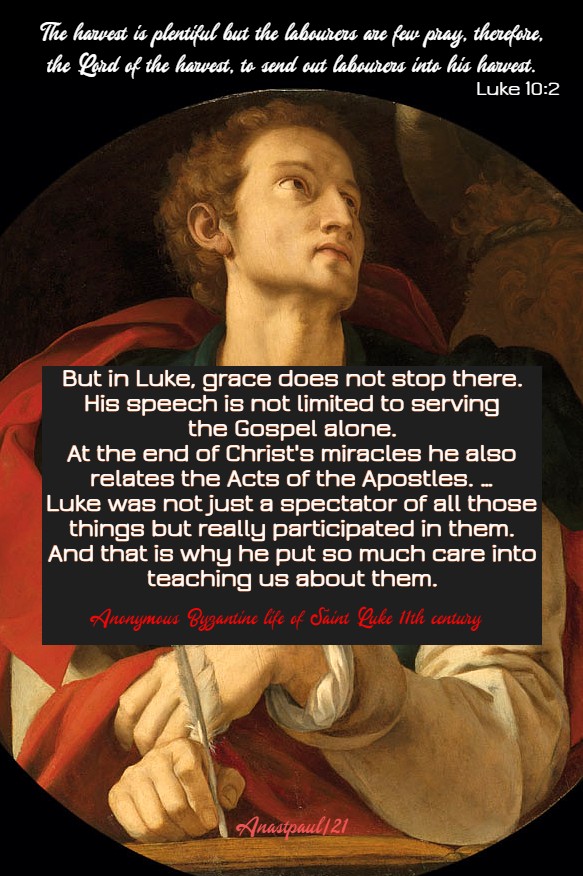
“And he said to them, “The harvest is plentiful but the labourers are few, pray therefore, the Lord of the harvest, to send out labourers into his harvest.” – Luke 10:2
REFLECTION – “When, after abandoning the darkness of error to bind himself to God’s love, Paul was joined to the number of the disciples, Luke went with him everywhere and became his travelling companion (Acts 16:10 f.). … He got on with him so well, was so close to him and shared all his graces so nearly, that Paul, in writing to the faithful, called Luke his “beloved” (Col 4:14). From Jerusalem and the country round about, as far as Dalmatia, (Rom 15:19) he preached the Gospel with him. From Judea to Rome he shared the same chains with him, the same work, the same difficulties, the same shipwrecks. He desired to receive the same prize with him since he had shared the same labours.
Having acquired the gift of preaching along with Paul and won over and led so many peoples to the love of God, Luke truly seemed like the Saviour’s loving and beloved disciple, in addition to being the Evangelist who wrote his sacred history. For formerly he had followed the Lord (cf. Lk 10:1), gathered together the testimonies of his first servants (Lk 1:1) and received inspiration from on high. It was this Evangelist who related the mystery of Gabriel, the messenger sent to the Virgin to announce joy to the whole world. It was he who told in full, the birth of Christ, showing us the newborn child lying in a manger and describing shepherds and Angels shouting for joy. … He reports the parabolic teachings in greater number than the other Evangelists. And just as he makes known to us the descent of the Word of God to earth, so too, he describes his Ascension to heaven and return to the Father’s throne (24:51). …
But in Luke, grace does not stop there. His speech is not limited to serving the Gospel alone. At the end of Christ’s miracles he also relates the Acts of the Apostles. … Luke was not just a spectator of all those things but really participated in them. And that is why he put so much care into teaching us about them.” – Anonymous Byzantine life of Saint Luke – 11th century (Saint Luke, Evangelist and companion of Paul – 6-7; PG 115, 1134-1135).
PRAYER – O Lord, we beseech Thee, that Luke, Thy holy Evangelist, who for the honour of Thy Name bore continuously in his body the suffering of the Cross, may intercede on our behalf. Through the same Jesus Christ, Thy Son our Lord, Who lives and reigns with Thee, in the unity of the Holy Ghost, God, world without end. Amen (Collect).
Our Morning Offering – 18 October – The Feast of St Luke, the Evangelist
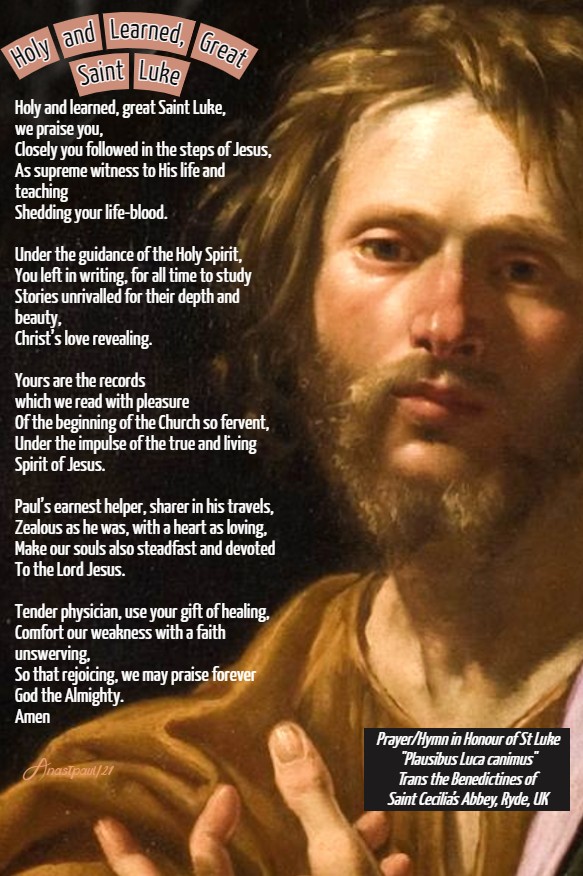
Holy and Learned, Great Saint Luke Prayer/Hymn in Honour of St Luke “Plausibus Luca canimus” Trans the Benedictines of Saint Cecilia’s Abbey, Ryde, UK
Holy and learned, great Saint Luke, we praise you, Closely you followed in the steps of Jesus, As supreme witness to His life and teaching Shedding your life-blood.
Under the guidance of the Holy Spirit, You left in writing, for all time to study Stories unrivalled for their depth and beauty, Christ’s love revealing.
Yours are the records which we read with pleasure Of the beginning of the Church so fervent, Under the impulse of the true and living Spirit of Jesus.
Paul’s earnest helper, sharer in his travels, Zealous as he was, with a heart as loving, Make our souls also steadfast and devoted To the Lord Jesus.
Tender physician, use your gift of healing, Comfort our weakness with a faith unswerving, So that rejoicing, we may praise forever God the Almighty. Amen
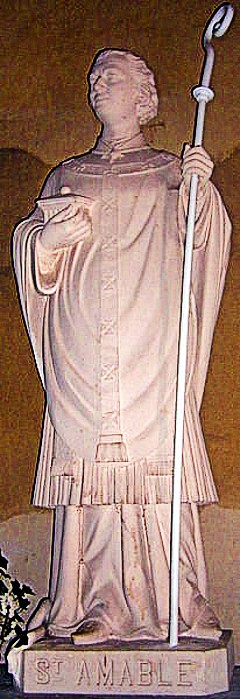
Saint of the Day – 18 October – St Amabilis of Auvergne (c 397- c 475) Priest, Confessor, Miracle-worker. Tradition tells that snakes and demons fled from his voice, often the images and medals depicting him bear the words “The demons flee as well as snakes and fire.” Born probably in Rimo, France in c 397 and died in Auvergne in c 475 of natural causes. Patronages – against demonic possession, against fire, against mental illness, against poison, against snake bite, against wild beasts, of Auvergne, France, of Riom, France. Also known as – Amabilis of Riom, Amabilis the Cantor. Additional Memorial – 1 November.
In the sixth century, St Gregory of Tours in his ‘De gloria confessorum,’ described the popular belief in this Saint’s power over demons and serpents as well as the veneration at his tomb. Gregory reports that he, himself witnessed two miracles there.
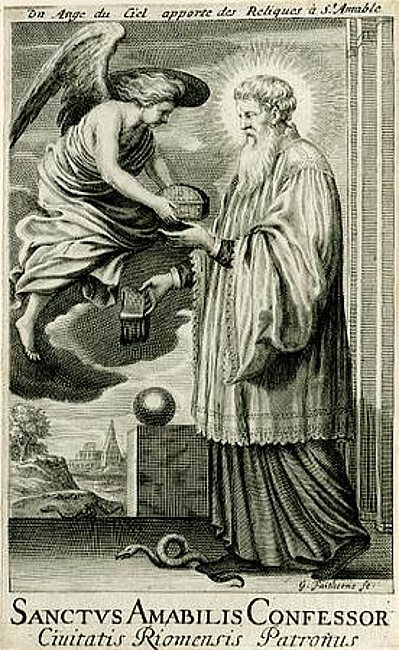
Notice the snake at his feet
Amabilis served as a Cantor in the Church of Saint Mary at Clermont and then as the Precentor at Clermont Cathedral . Later as Parish Priest at Riom, where, in 1120, a Church was dedicated to him. He acquired a reputation for holiness in his lifetime.
In the seventh century his relics were transferred to Riom from Clermont. Riom grew up around the collegiate Church of Saint Amable, which was the object of pilgrimages. In the eighteenth century a dispute occurred over these relics between neighbouring Clermont and Riom, where Amabilis is Patron.
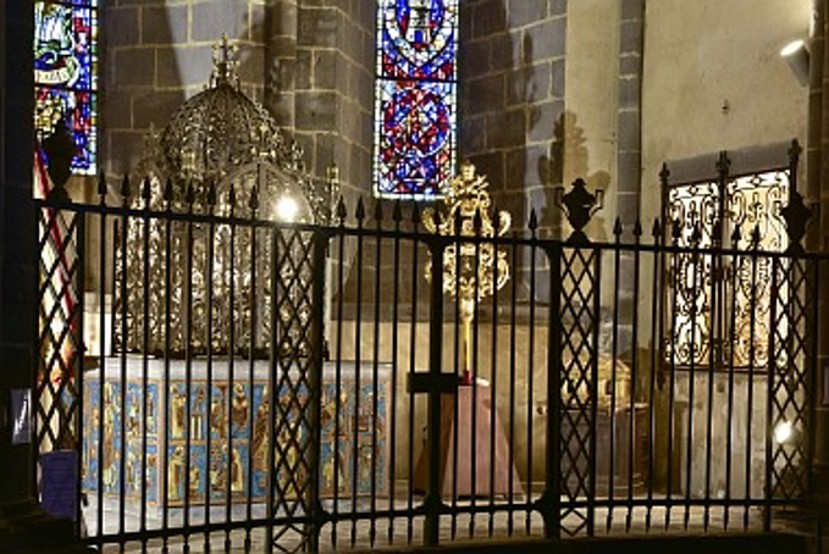
Chapel of St Amabilis in the Church dedicated to him at Riom
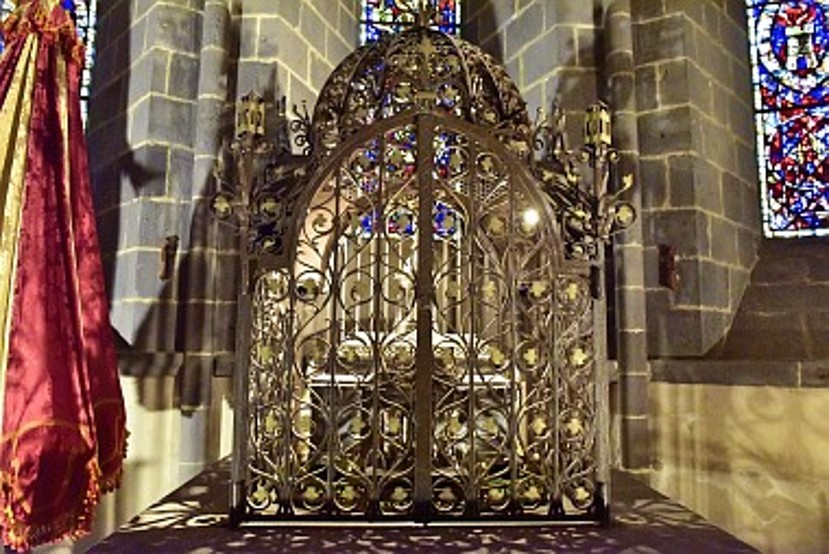
Relics
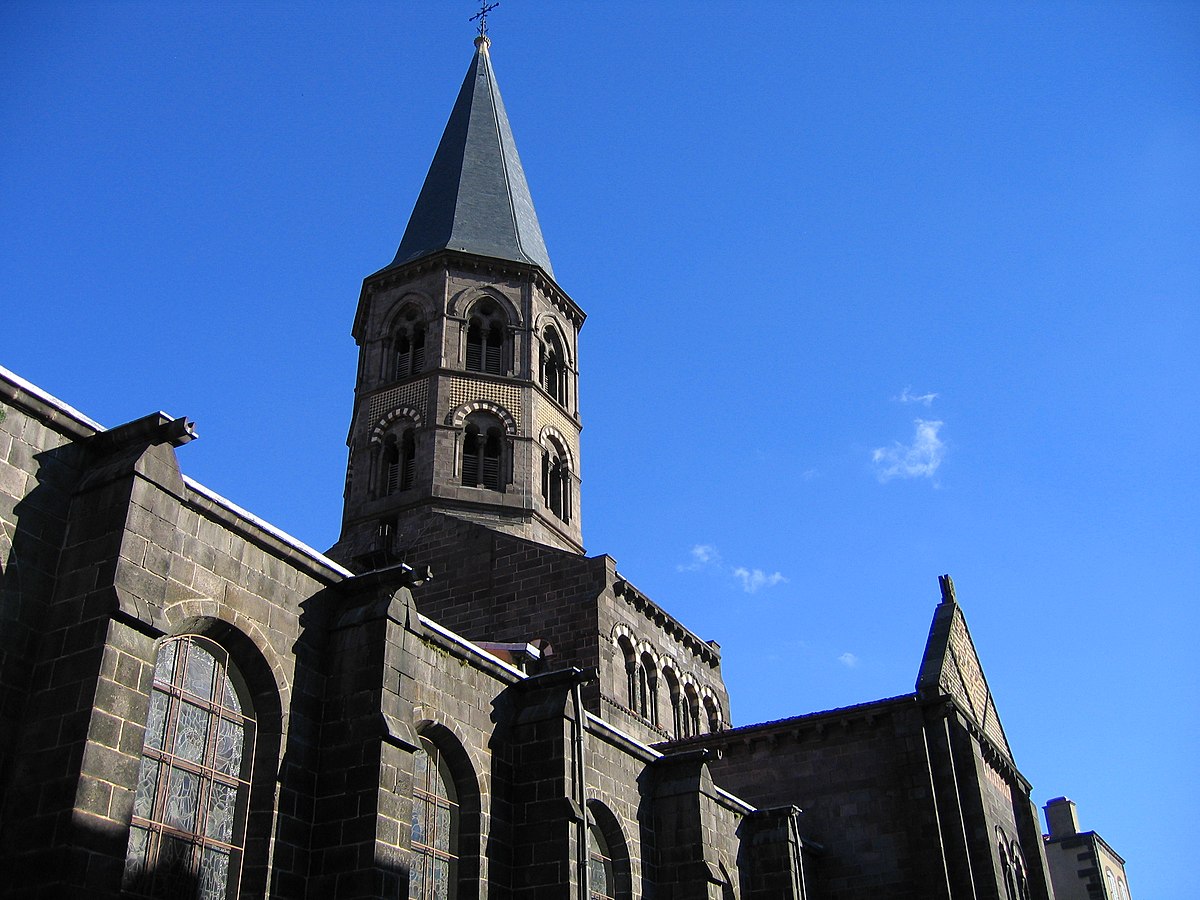
St Amabilis Church
Public processions in his honour have been traditional in Riom for more than 1500 years, where he is invoked against fire and snakes. Father Antoine Déat, a Missionary in Canada , introduced his cult to North America, where he is also still venerated today. A chapel is dedicated to him in the Notre-Dame Basilica in Montreal.
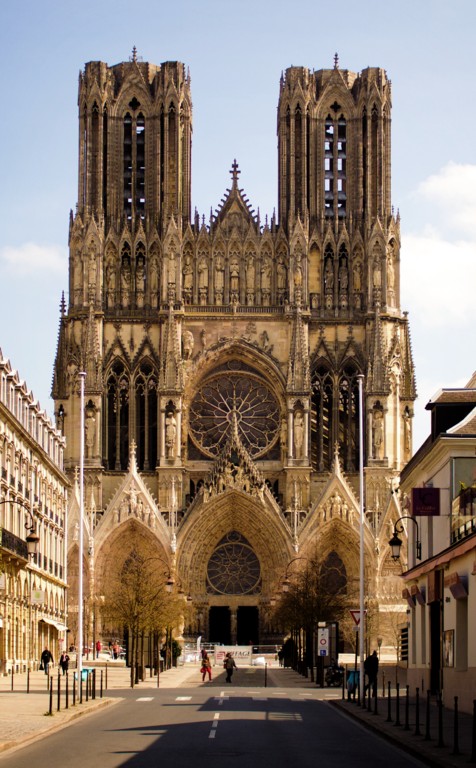
Notre-Dame de Reims / Our Lady of Rheims – Dedication of the Church of Our Lady of Rheims (405) built by St Nicasius – 18 October:
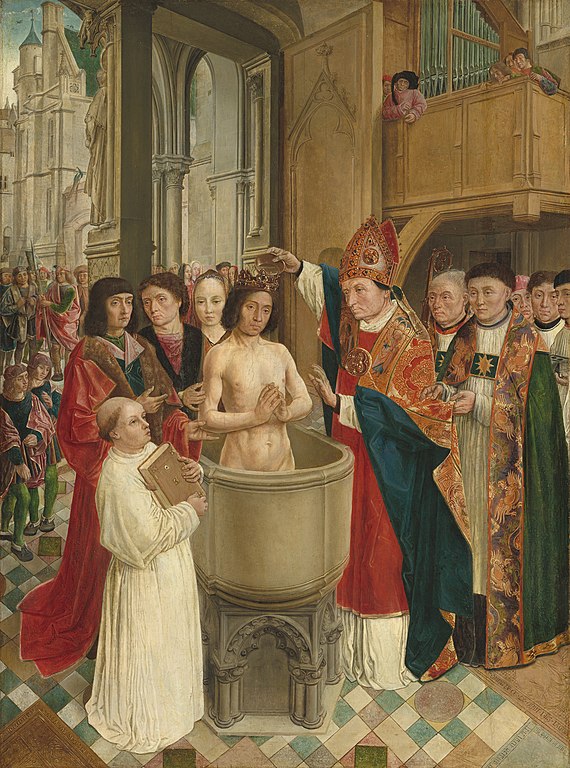
Dedication of Our Lady of Rheims, built by St Nicasius (died c 407), Archbishop of that City period in the year 405. It was Saint Nicasius who prophesised that France would be invaded by the Vandals, telling the people of Rheims to prepare themselves. When the Vandals finally arrived at the City gates, St Nicasius went out to meet them with his sister, a faithful deaconess. All were killed but their sacrifice gave time for more of the people of Rheims to flee to safety. It is interesting to note, that when St Nicasius was beheaded he was praying Psalm 119. He was slain at the moment when he reached the phrase “Adhaesit pavimento anima mea,” which means, “my soul is attached to dust.” After he was decapitated, his head struck the ground and he miraculously continued the psalm, saying: “Vivifica me, Domine, secundum verbum tuum,” which means, “revive me, Lord, with your words.” This was the Church where King Clovis humbly confessed his belief in the Triune God and was baptised by St Regimius in 496 and where, all of the subsequent French Kings were crowned. In the Gallery of the Kings there is a magnificent painting of the baptism of King Clovis surrounded by images of all of his successors.
The Baptism of King Clovis by the Master of Saint Giles (16th cent)
This Church, having fallen to ruins, was later rebuilt by Ebo and Hincmar. It was finished in the year 845 and still remains a place of pilgrimage to the Mother of God. At one time enemies of the Cathedral chapter set fire to a monastery of Rheims. Among the relics which the sacristan tried to save was an ivory statue of the Virgin, containing some of her hair. The sacristan prayed fervently to the Virgin that she would preserve this relic. The Abbot, entering the ruins of the Church, found the Statue upright and unharmed as if placed there reverently. From thence forward, the image was believed to be miraculous. The present Cathedral takes the place of the older churches, the previous one having been damaged by fire in 1210. It was not completed until the 14th century, and is the beautiful Gothic Cathedral that can still be seen today, after much restoration work after the bombardments of WWI and II.
St Acutius of Pozzuoli St Amabilis of Auvergne (c 397- c 475) Priest, Confessor St Asclepiades of Antioch St Athenodorus St Brothen Bl Burchard I St Cadwaladr of Brittany Bl Domenico of Perpignano St Eutychius of Pozzuoli St Gwen St Gwen of Tagarth St Gwendoline
Bl Margherita Tornielli St Monon of Nassogne St Proculus of Pozzuoli Bl Theobald of Narbonna St Tryphonia of Rome — Martyrs of Africa – 9 saints: A group of Christians martryed together in Africa. The only details that have survived are the names – Beresus, Dasius, Faustinus, Leucius, Lucius, Martialis, Victoricus, Victrix and Viktor. They were martyred in c.300 in Africa.
Martyred in the Spanish Civil War: • Blessed Alfredo Almunia López-Teruel • Blessed Francisco Roselló Hernández • Blessed Isidro Juan Martínez








 AnaStpaul
You must be logged in to post a comment.