Thought for the Day – 2 October – Meditations with Antonio Cardinal Bacci (1881-1971)
Our Guardian Angels
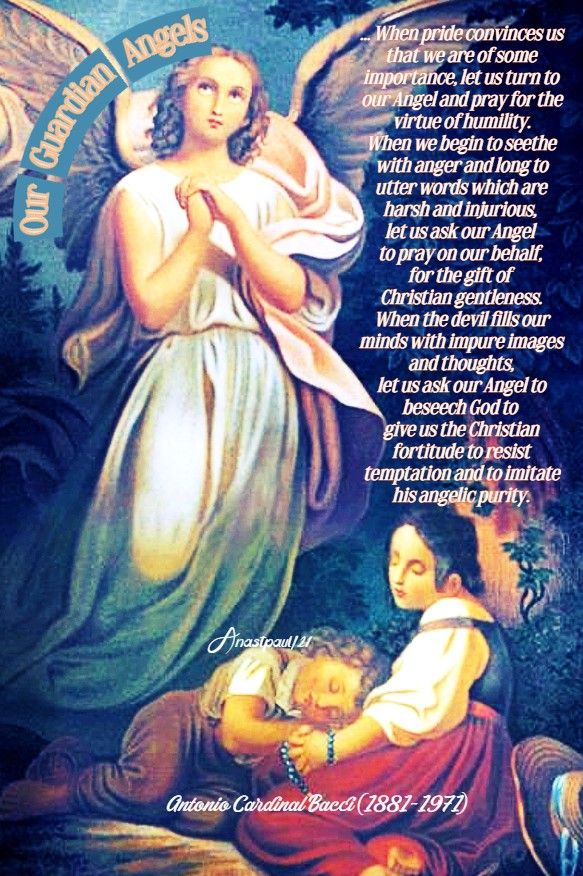
“The realisation that our Guardian Angel is always close at hand, should be a warning to us. It should prevent us from doing anything displeasing to God. Would we venture to do anything unbecoming in the presence of our Father or Mother, or of anyone for whom we have any regard? Definitely not and still less, should we dare to perform an evil action in the presence of our Angel, to whom we owe such gratitude and in the presence of God, our Creator, Lord and Redeemer, Who could, at any moment, snap the thread which binds us to life and plunge us into eternity.
Furthermore, when pride convinces us that we are of some importance, let us turn to our Angel and pray for the virtue of humility. When we begin to seethe with anger and long to utter words which are harsh and injurious, let us ask our Angel to pray on our behalf, for the gift of Christian gentleness. When the devil fills our minds with impure images and thoughts, let us ask our Angel to beseech God to give us the Christian fortitude to resist temptation and to imitate his angelic purity.
Finally, when tepidity is sapping the vigour of our interior life, let us pray to our Guardian Angel in the hope of obtaining a share in his intimate union with God.
Let us pray the Guardian Angel prayer or at least say: “My Guardian Angel enlighten me. My Guardian Angel help me. My Guardian Angel, protect me.” Amen.”
Quotes of the Day – 2 October – The Memorial of the Holy Guardian Angels
“In every lodging, at every corner, have reverence for thy Angel. Do not dare to do in his presence what you would not dare to do, if I were there. Or do you doubt that he is present whom you do not behold? What if you should hear him? What if you should touch him? What if you should scent him? Remember, that the presence of something is not proved only by the sight of things.”
“We should show our affection for the Angels, for one day they will be our coheirs, just as here below, they are our Guardians and Trustees, appointed and set over us, by the Father.”
St Bernard (1090-1153) Mellifluous Doctor
“God is humanity’s universal Teacher and Guardian but His Teaching to humanity is mediated by Angels.”
St Thomas Aquinas (1225-1274) Angelic Doctor
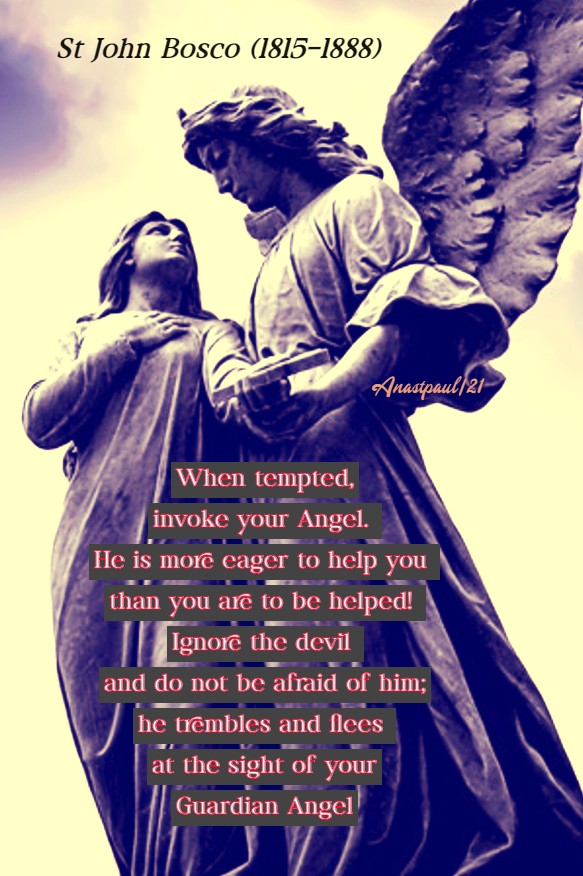
“When tempted, invoke your Angel. He is more eager to help you than you are to be helped! Ignore the devil and do not be afraid of him; he trembles and flees at the sight of your Guardian Angel.”
One Minute Reflection – 2 October – The Memorial of the Holy Guardian Angels, Readings: Baruch 4: 5-12, 27-29; Psalm 69: 33-37; Matthew 18: 1-5, 10
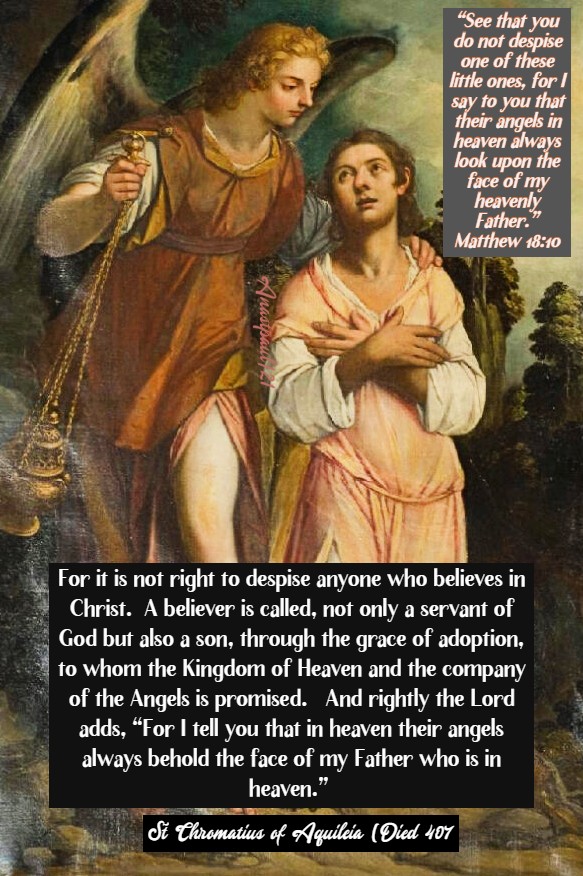
“See that you do not despise one of these little ones, for I say to you that their angels in heaven always look upon the face of my heavenly Father.” – Matthew 18:10
REFLECTION – “For just as the Lord commands that unbelieving and treacherous persons who are a stumbling block to the body of the church should be cut off or plucked out, so He also warns us, not to despise any of the little children, that is, humble people in the faithful who simply and faithfully believe in the Son of God. For it is not right to despise anyone who believes in Christ. A believer is called, not only a servant of God but also a son, though the grace of adoption, to whom the Kingdom of Heaven and the company of the Angels is promised. And rightly the Lord adds, “For I tell you that in heaven their angels always behold the face of my Father who is in heaven.”
How much grace the Lord has toward each one believing in Him, He Himself declares when He shows their Angels always beholding the face of the Father who is in Heaven. Great is the grace of the Angels toward all who believe in Christ. Finally, the Angels carry their prayers to heaven. Hence the word of Raphael to Tobias: “When you prayed along with your daughter-in-law Sara, I offered the memory of your prayer in the sight of God.” Around them there is also the strong guard of the Angels; they help each of us to be free from the traps of the enemy. For a human in his weakness could not be safe amid so many forceful attacks of that enemy, if he were not strengthened by the help of the Angels.” – St Chromatius of Aquileia (Died 407) Bishop of Aquileia, Contemporary of St Jerome, St John Chrysostom (Tractate on Matthew, 57)
PRAYER – Angel of God, my guardian dear, to whom God’s love commits thee here. Ever this day, be at my side, to light, to guard, to rule, to guide. Amen.
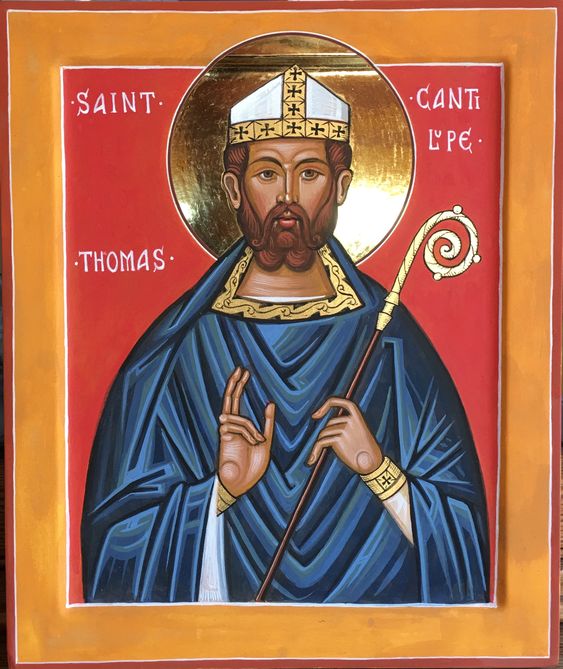
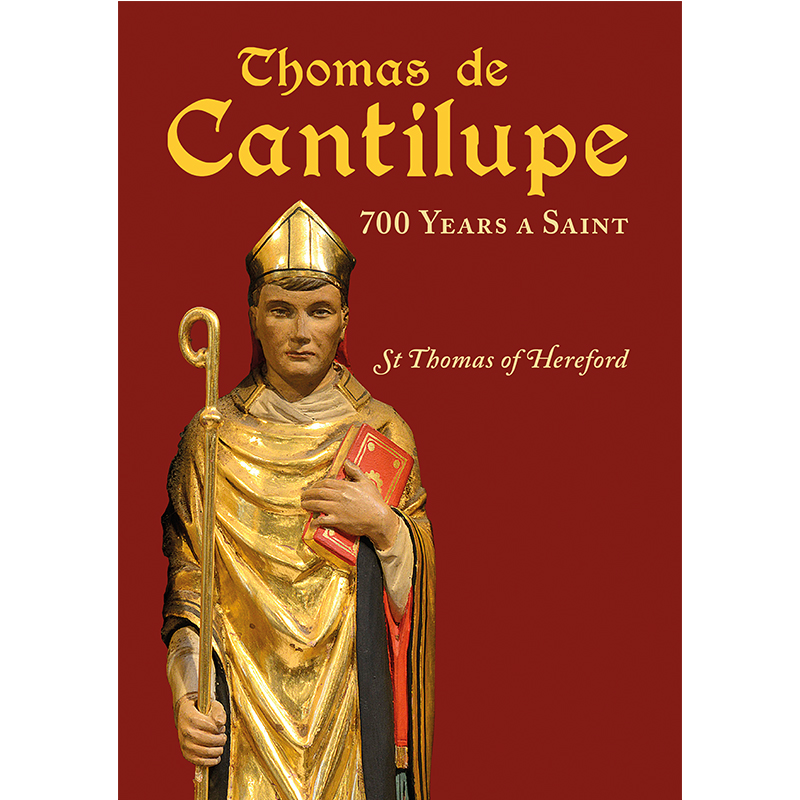
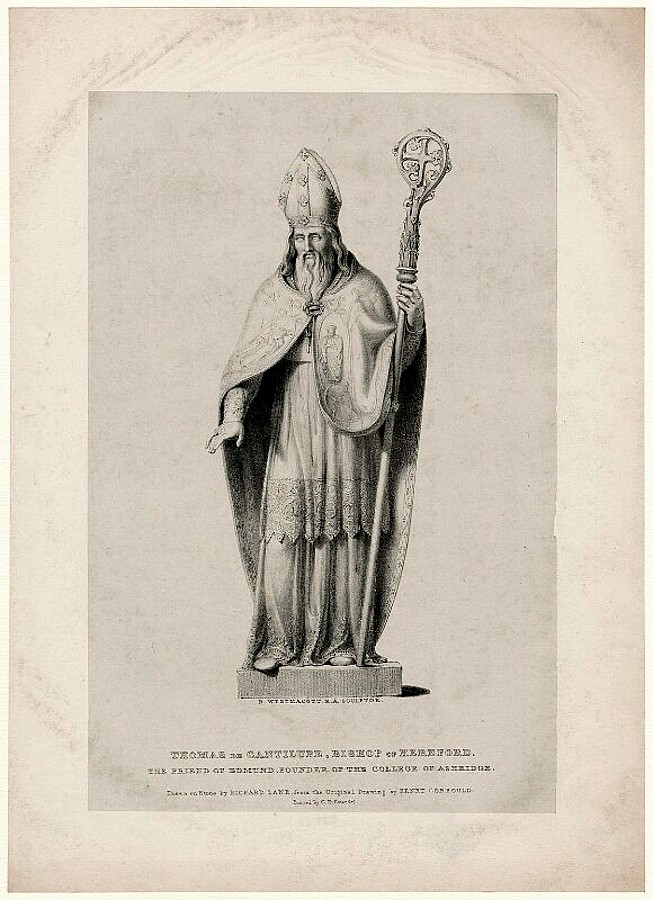
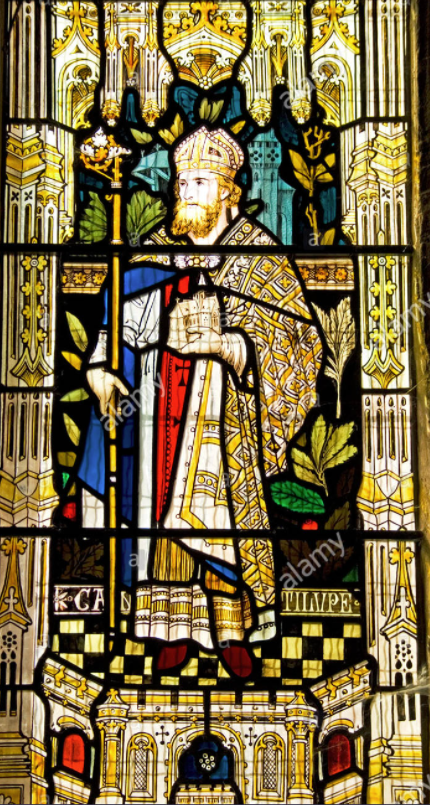
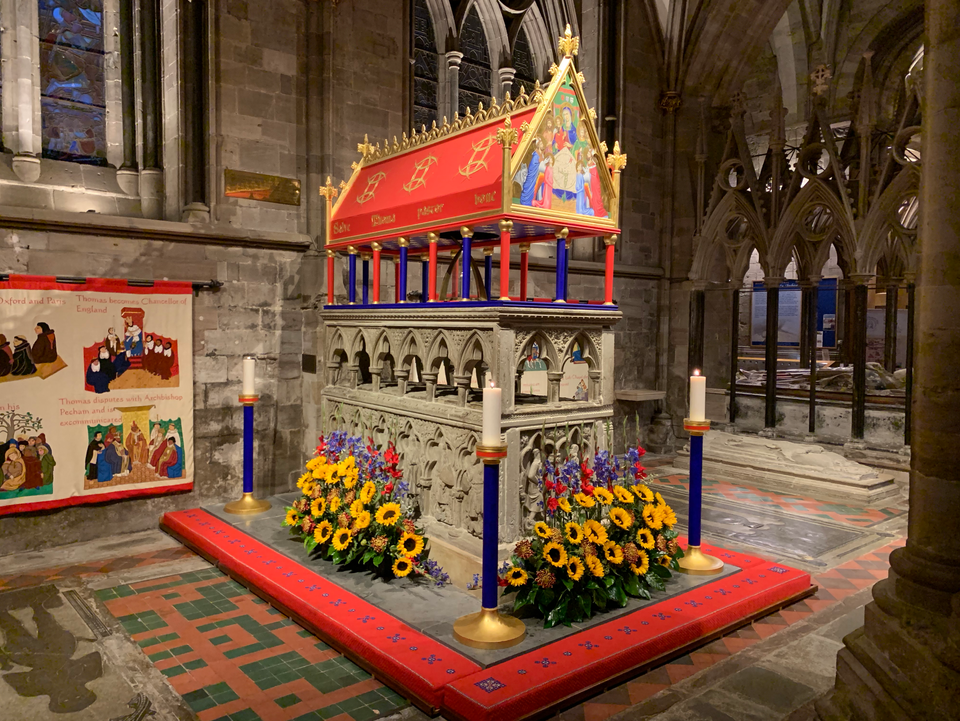
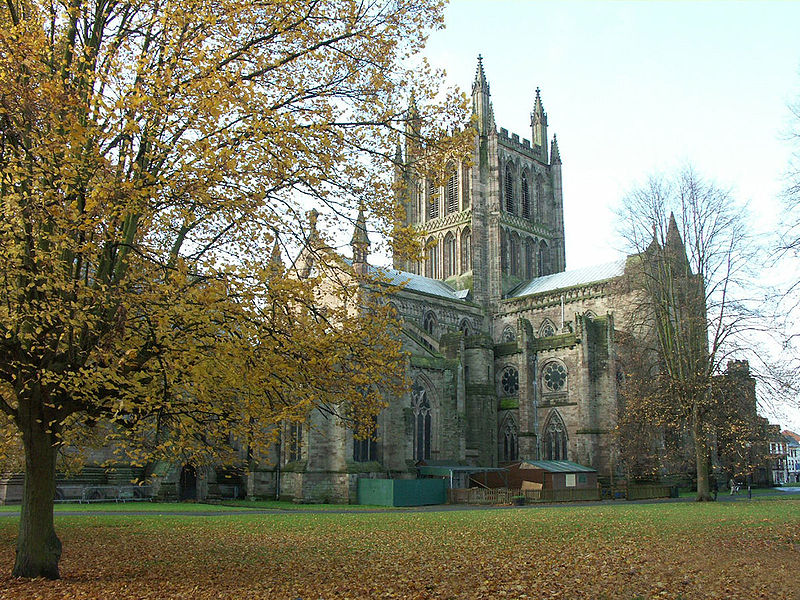
Saint of the Day – 2 October – Saint Thomas de Cantilupe of Hereford (c 1218-1282) Bishop of Hereford, Confessor, learned Scholar, known for his care of the poor and his protection of them against feaudal landlords, miracle-worker, Chancellor of Oxford University, Lord Chancellor of England. Born in c 1218 at Hambleden, Buckinghamshire and died on 25 August 1282 at Ferento, Montefiascone, Italy. Thomas de Cantilupe was the last Englishman Canonised before the Reformation. Also known as – St Thomas of Cantelow, Cantelou, Canteloupe, Cantelupo. Additional memorial – 25 August. Patronages – Hereford, Hambledon.
The Roman Martyrology states: “At Montefiascone in Tuscia, the passing of Saint Thomas Cantelupe, Bishop of Hereford in England, who, resplendent with learning, severe toward himself, to the poor however showed himself a generous benefactor.“
Publication issued in 2020
He was of noble and politically prominent Anglo-Norman family, the son of William, 2nd Baron Cantilupe and his wife Millicent de Gournay, widow of Amaury de Montfort, Count of Evreux. His father’s brother, Walter, was Bishop of Worcester and, by him, young Thomas was educated. The future bishop and saint also studied in Oxford and Paris and, before he had passed middle age, he was known everywhere as one of the most remarkable of scholar-ecclesiastics who did so much to redeem the name of the Church in the 13th century.
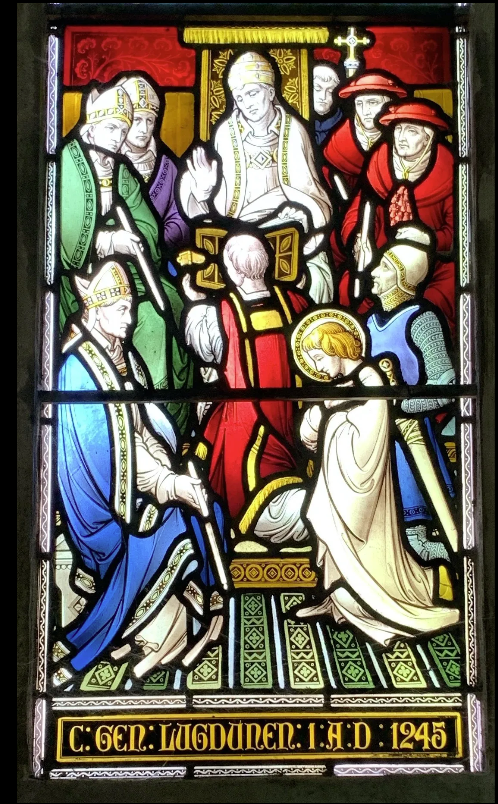
He was Ordained in c 1245 and made a career in Canon Law, lecturing at the Universities of Paris and Oxford. His lawyer’s training and innate Christian hatred of injustice, led to an involvement in politics. He was the Barons’ spokesman in their rebellion against Henry III and was named Chancellor of England by Simon de Montfort, Earl of Leicester and main opponent to Henry III. . When de Montfort was killed at the Battle of Evesham, Thomas was dismissed from the Chancellor’s post and went into exile
The Ordination of St Thomas
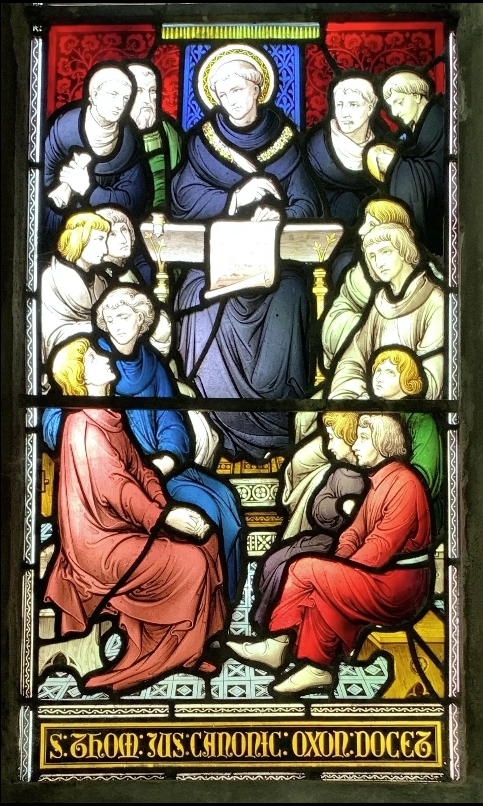
In 1273, he returned to England and was appointed Doctor of Divinity and, for the second time, elected Chancellor of Oxford University.
Chancellor of Oxford
In 1275, Thomas was appointed Bishop of Hereford and set about defending the rights of the Diocese against the encroachments of, both fellow Bishops and lay lords. His combative approach made him many enemies. He insisted on a high standard of discipline and pastoral care from his Priests but was loved by the lay faithful for his large , gentle and kindly heart and holy life and their affection was not diminished by his hospitality and boundless charity. to those in any kind of need.
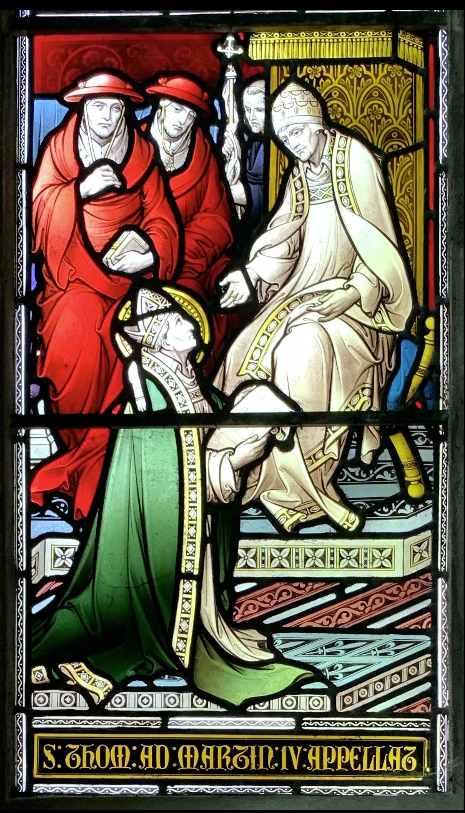
Thomas also fell foul of John Peckham, Archbishop of Canterbury, for his defence of the rights of individual Bishops against their Archbishop and Peckham excommunicated him. Thomas set off for Rome in 1282 to put his case before Pope Martin IV and it is believed that he obtained absolution;. Thomas, however, died near Orvieto (in Umbria, just north of Rome).
St Thomas de Cantelupe Appeals to Pope Martin IV
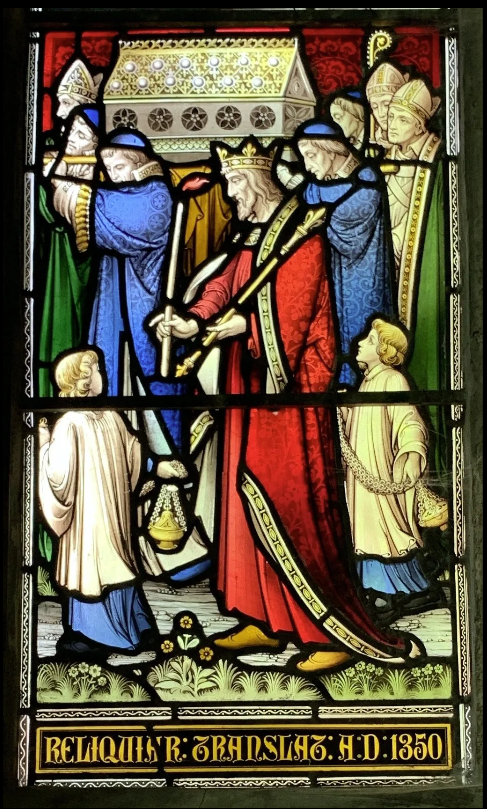
Richard Swinfield, his Successor in the See of Hereford, who had accompanied Bishop Cantilupe to Italy as his Chaplain, arranged that part of his relics were interred in the Church of Santo Severo, near Orvieto; the heart was conveyed to the Monastic Church of Ashridge in Buckinghamshire and the bones were brought to his own Cathedral at Hereford. As they were being conveyed into the Church, says the compiler of the Bishop’s ‘Life and Miracles,’ Gilbert Earl of Gloucester approached and touched the casket which contained them, whereupon they ‘bled-a-fresh’. The Earl was struck with compunction and made full restitution to the Church of all the lands which Bishop Cantilupe had rightly claimed from him.
St Thomas’ Death with King Edward I
Bishop Swinfield, who had been the constant companion of Thomas and many of the contemporary chroniclers, bear witness to the purity and excellence of the Bishop’s life and his tomb soon became distinguished by miracles. The first of these, occurred in April 1287. At the time, of the removal of his remains from the tomb in the Lady Chapel to the Shrine which had been provided for them in the north transept. The number of marvels increased daily and, in 1289, Bishop Swinfield, wrote to the Pope requesting his Canonisation. Many difficulties, however, were interposed and in spite of numerous letters from King Edward I and his son, Edward II, it was not until May 1320 that Rome eventually found in his favour and the Bull of Canonisation was issued by Pope John XXII. Our Saint holds the dubious honour of being the only Canonised Saint to have been excommunicate at the time of his death.
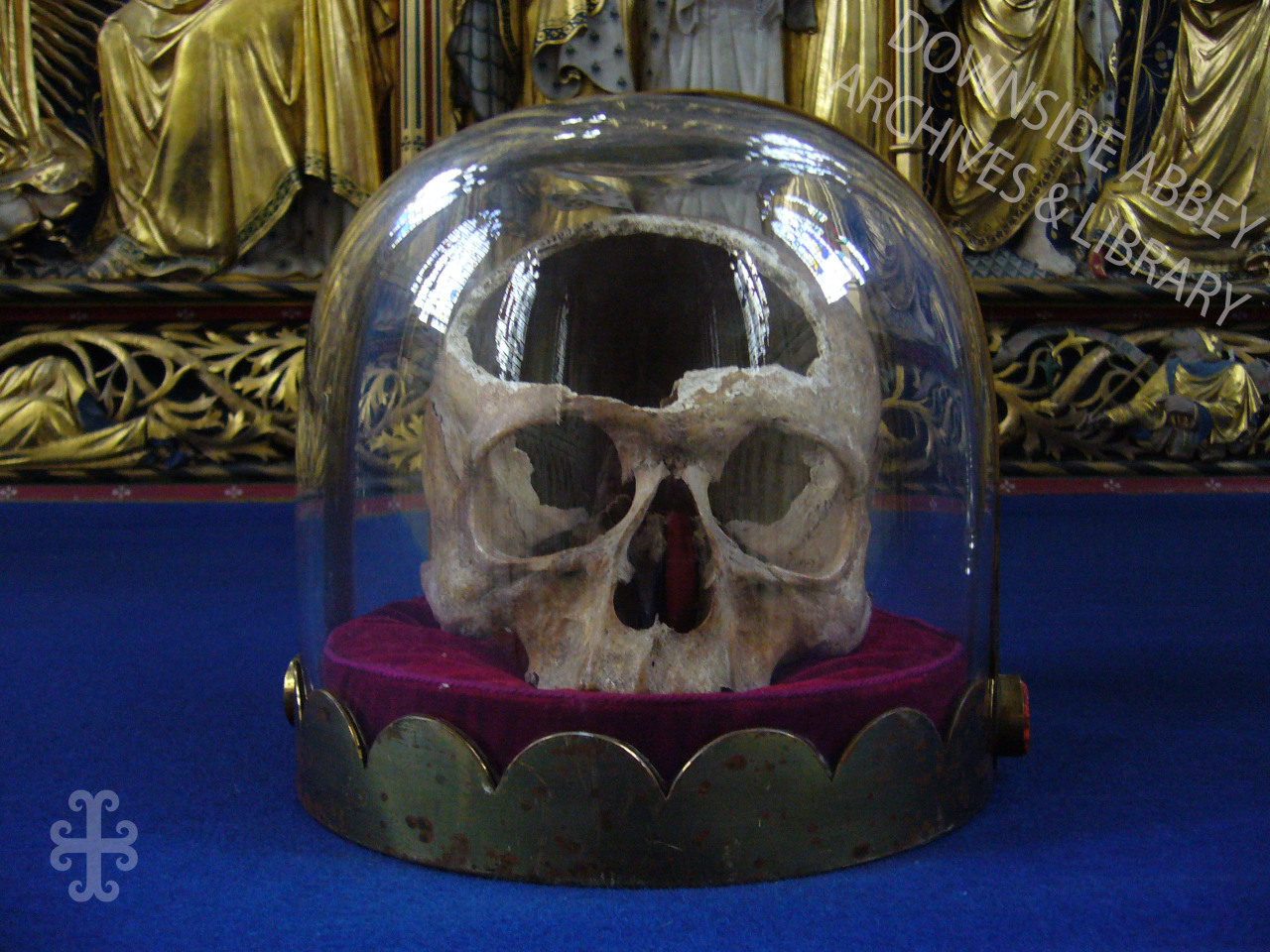
At the Reformation all the Shrines in Hereford Cathedral were swept away. St Thomas’ Shrine was wholly demolished but the faithful managed to rescue some of his relics, including his head. These bones were preserved until the seventeenth century by local Catholics but were dispersed thereafter, some of St Thomas’ relics are still honoured in England at Belmont Abbey in Herefordshire, Stonyhurst College in Lancashire and since 1881, St Thomas’ skull has be preserved at Downside Abbey.
St Thomas was an exemplary Bishop in both spiritual and secular affairs. His charities were large and his private life blameless. He was constantly visiting his Diocese, correcting offenders and discharging other episcopal duties and he compelled neighbouring landholders to restore estates which rightly belonged to the See of Hereford. St Thomas has been lauded as the “Father of Modern Charity” and is cited as an inspiration by Mother Teresa of Calcutta and other charitable people, apostolates and organisations.
A book entitled ‘The Life and Miracles of Saint Thomas Cantelupe,‘ said to be compiled from evidences at Rome, collected before his Canonisation, was published at Ghent in 1674. “No fewer than four hundred and twenty-five miracles are registered, reported to be wrought at his tomb. . . . Yea, it is recorded in his legend, that by his prayers were raised from death to life, three-score several persons, one-and-twenty lepers healed and three-and-twenty blind and dumb men to have received their sight and speech.”
Hail Thomas, good shepherd, patron of the flock of Christ and teacher of the Church, lend your help to the sick, I beg you, and confer on devout minds by your intercession, the light of grace, through Christ our Lord. Amen
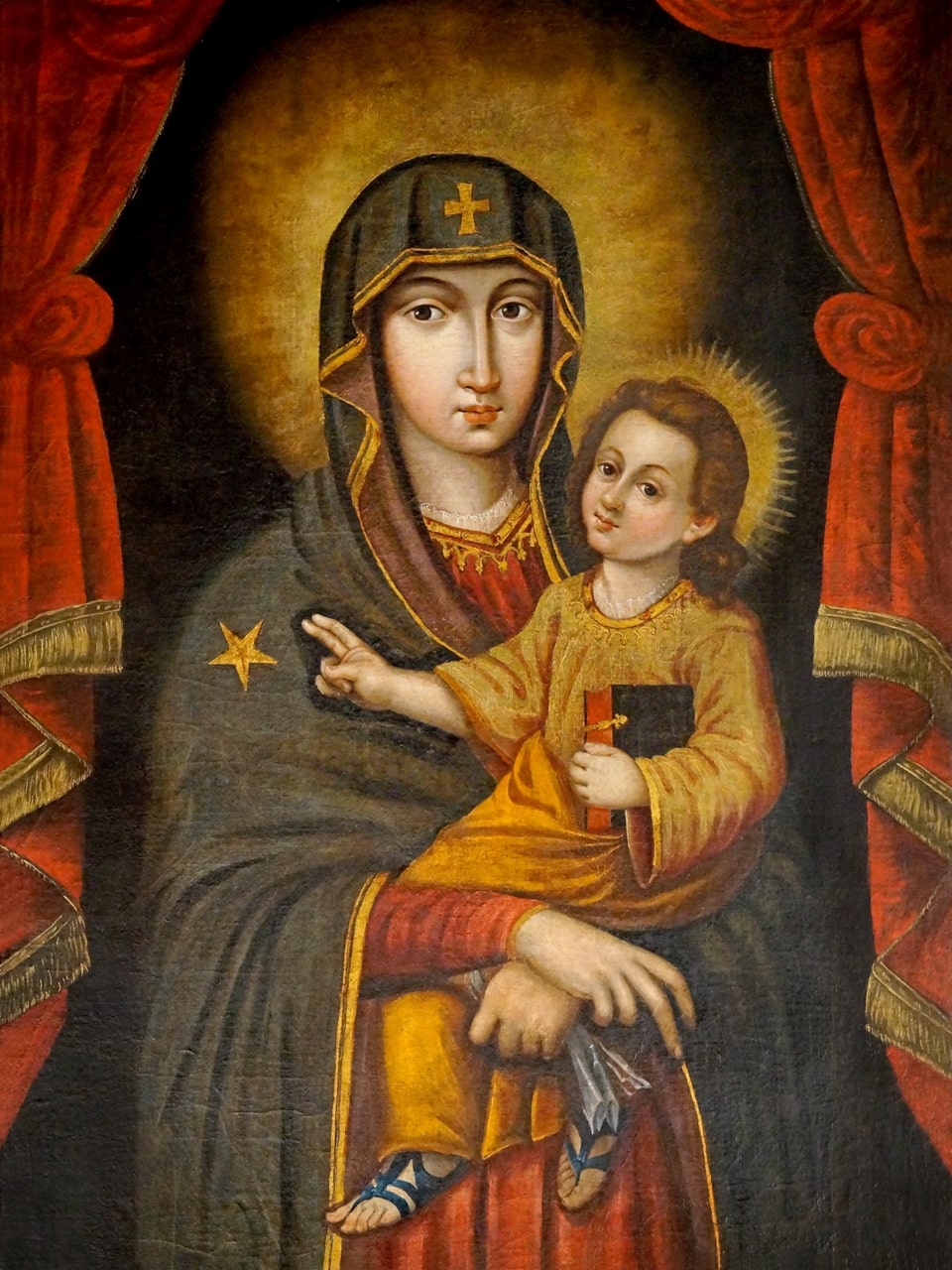
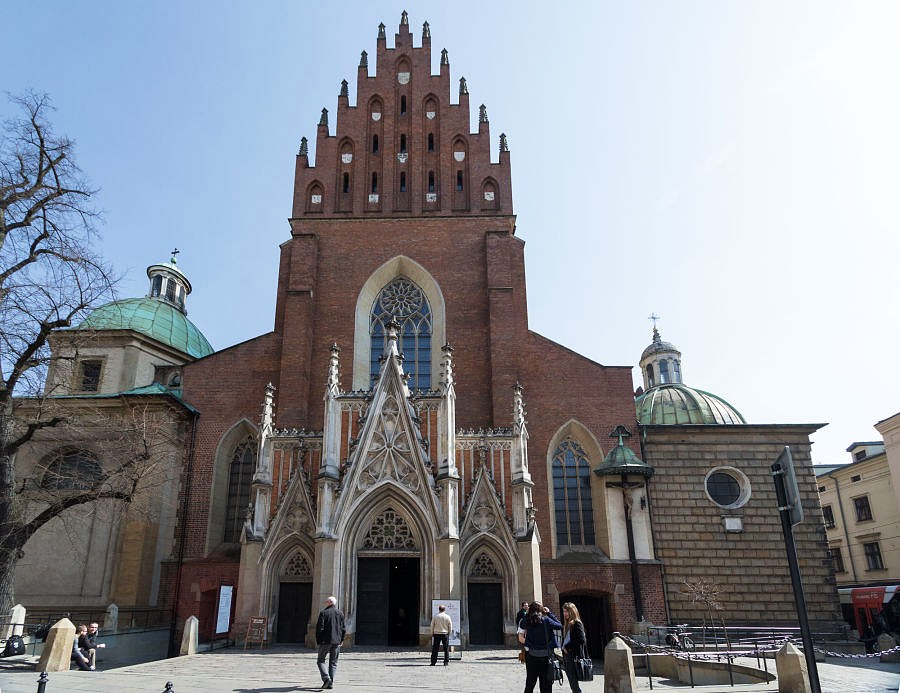
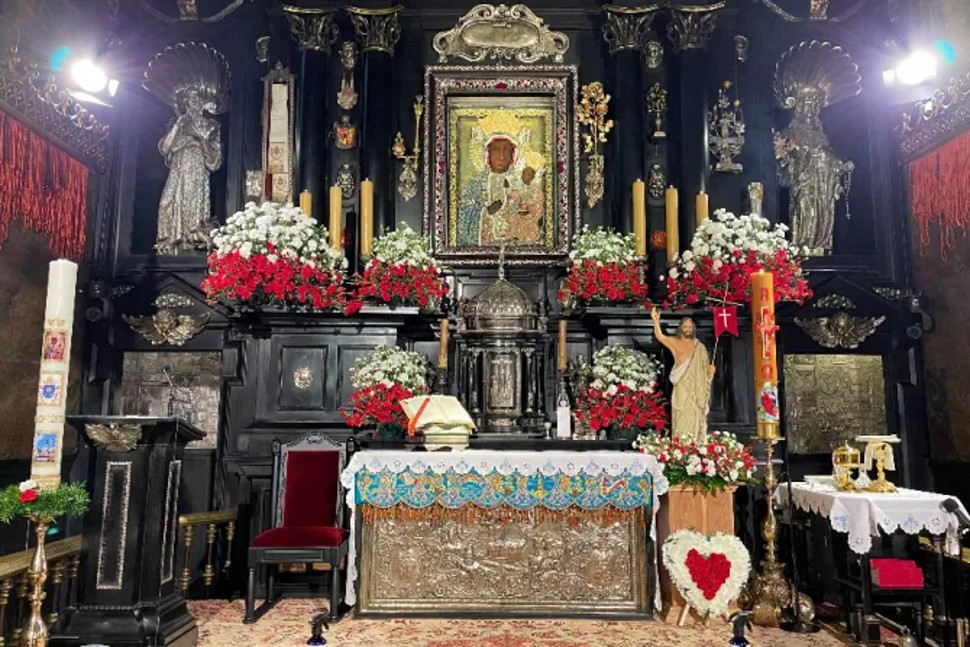
Matka Boża Różańcowa / Our Lady of the Rosary, Krakow, Poland (1600s) – First Sunday of October, 2 October:
In the Dominican Basilica of the Trinity in Cracow is a large Chapel dedicated to the Mother of God of the Rosary. The icon on its main Altar, crowned on 2 October 1921, is a copy of the ancient Salus Populi Romani (Health of the Roman People) image in the Basilica of St Mary Major of the Snows in Rome — the icon Pope Gregory the Great carried in procession to end the plague of 597. During the Battle of Lepanto (7 October 571), when ships of a coalition of Christian countries routed the Turkish navy off Greece, Pope Pius V prayed the Rosary with a large group of faithful before the Roman icon. The old image thus became associated with the newer devotion of the Rosary and with saving Europe from Ottoman rule.
Churches throughout Catholic Europe were dedicated to Our Lady of the Rosary and copies of the Salus Populi Romani proliferated. Cardinal Maciejowski brought such a copy from Rome to Cracow in 1600. The image played a part in the “Polish Lepanto” in 1621, when at Khotyn, Ukraine (then Chocim, Poland) an allied force of Poles, Lithuanians and Ukrainians faced a Turkish army twice its size. On 3 October, the Bishop of Krakow led an hours-long Rosary procession with the holy icon. The entire population joined in. When the Turks gave up their attack and signed a treaty, Our Lady of the Rosary gained another victory. Her feast is celebrated in Krakow on the first Sunday of October.
The Swedish deluge contributed to the destruction of the original image of the Mother of God. T he cult, however, was so strong that a copy of the previous painting was quickly funded. The present one comes from the 50s and 60s of the 17th century. Numerous votive offerings made on the occasion of receiving favours have also survived from that time. The oldest exhibited in the Church are dated to 1703, the older ones are in the Archdiocese Museum. The love for the Blessed Mother is also evidenced by the silver dress donated in the 1770s by the Działyński family,and the sceptre of Our Lady of the “Pious Gregory of Pierzchno” foundation at the turn of the 17th and 18th centuries.
St Leudomer St Maria Antonina Kratochwil St Modesto of Sardinia St Saturius of Soria St Theophilus of Bulgaria St Thomas de Cantilupe of Hereford (c 1218-1282) Bishop St Ursicinus II — Martyred in Antioch, Syria: Martyred in one of the early persecutions, date unknown. St Cyril of Antioch St Primus of Antioch St Secundarius of Antioch
Martyred in Nagasaki, Japan: A husband, wife and two sons, who were all martyred together in the persecutions in Japan. They were beheaded on 2 October 1622 in Nagasaki, Japan and Beatified by Pope Pius IX on 7 May 1867. • Blessed Andreas Yakichi • Blessed Franciscus Yakichi • Blessed Lucia Yakichi • Blessed Ludovicus Yakichi
Martyred in the Spanish Civil War: • Blessed Elías Carbonell Molla • Blessed Enrique Sáiz-Aparicio • Blesssed Felipe González de Heredia Barahona • Blessed Francisco Carceller Galindo • Blessed Isidoro Bover Oliver • Blessed Juan Carbonell Molla • Blessed Juan Iñiguez de Ciriano Abechuco • Blessed Manuel Borrajo Míguez • Blessed María Francisca Ricart Olmos • Blessed Mateu Garrolera Masferrer • Blessed Pedro Artolozaga Mellique • Blessed Pedro Salcedo Puchades
Accept, mighty Maid, we beseech thee, This prayer with its fragrance of flowers; With one soul we seek thus to reach thee And hail thee, God’s Mother and ours.
Thy heart is made glad by our praying; Thy bounty is generous and wise; Thy hands are enriched for conveying What God’s tender Mercy supplies.
We kneel at thy Shrines in the Churches; Oh, gently look down from above, And welcome the heart that then searches For worthy expressions of love.
Let others present precious caskets Of gems, or heap Altars with gold; Slight prayer-beads shall serve us for baskets To bring thee the garland they hold.
With violets lowly we fashion This wreath and with these combined Red roses–our faith in the Passion With Chastity’s lilies entwined.
Our minds, as the Mysteries vary, Are active, our hands play their part; And always thy name, Holy Mary, Oft-uttered, rejoices the heart.
Be with us, we trust thee to guide us Through life and when labouring breath At the last, seeks thine aid, be beside us To help at the hour of our death.
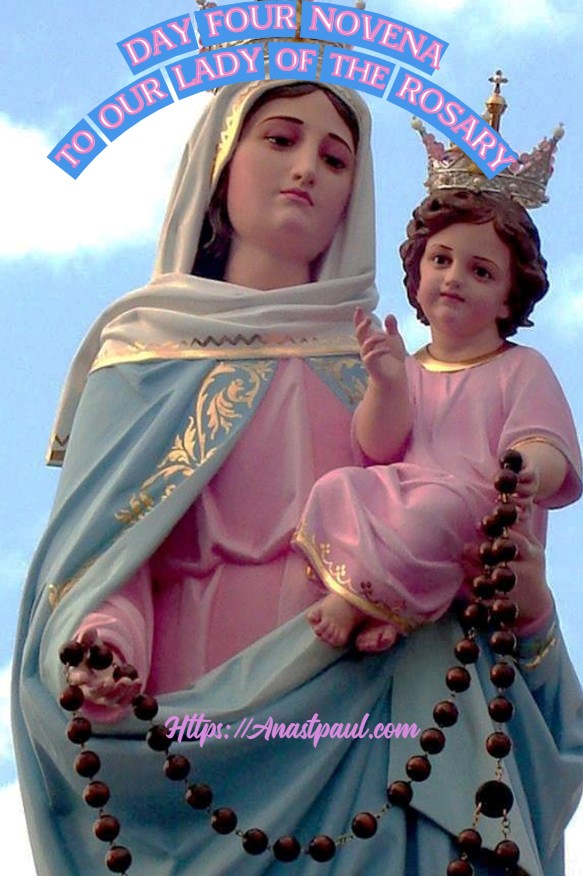
Novena to Our Lady of the Rosary – Day Four – 1 October
Day Four – We Pray for the Virtue of Humility and our personal intention:
May Almighty God give us compassion and humility in our hearts. Let us be kind, gentle, generous, loving, giving and forgiving wherever we may go. Allow pride to never get the best of us as You fulfill our dreams. Help us not to have a boastful tongue against our brothers. Let humility invade our souls… Amen
Daily Prayer along with our Daily Rosary:
My dearest Mother Mary, behold me, your child, in prayer at your feet. Accept this Holy Rosary, which I offer you in accordance with your requests at Fatima, as a proof of my tender love for you, for the intentions of the Sacred Heart of Jesus, in atonement for the offenses committed against your Immaculate Heart and for this special favour which I earnestly request in my Rosary Novena: ………………………….. (Mention your request).
I beg you to present my petition to your Divine Son. If you will pray for me, I cannot be refused. I know, dearest Mother, that you want me to seek God’s holy Will concerning my request. If what I ask for should not be granted, pray that I may receive that which will be of greater benefit to my soul.
I offer you this spiritual Bouquet of Roses because I love you. I put all my confidence in you, since your prayers before God are most powerful. For the greater glory of God and for the sake of Jesus, your loving Son, hear and grant my prayer. Sweet Heart of Mary, be my salvation.
Our Lady of the Rosary, pray for our Holy Mother Church and for our country.
Sweet Heart of Jesus, be my love.
Sweet Heart of Mary, at the hour of my death, lead me home.
“One of the main advantages of the Rosary is that it enables us to unite with our vocal prayer, meditation on the principal Mysteries of our faith. During each decade we should meditate briefly on one of these Mysteries. In this way, our faith will be enlivened and we shall be roused to imitate, in our lives, the example of Jesus and Mary.
The Rosary is composed of the Church’s most beautiful prayers – the Our Father, which Jesus Himself taught us to say when addressiug our heavenly Father and the Hail Mary, which consists of the Angel’s greeting to the Blessed Virgin when he came to announce to her, that she was to be the Mother of God, of the inspired words of St Elizabeth on the occasion of the Visitation and of the moving plea for mercy, both now and at the hour of our death, which the Church places upon the lips of her sinful children (composed and proposed by St Peter Canisius 1521-1597) Doctor of the Church). Each decade concludes with the short hymn of praise in honour of the Blessed Trinity: Glory be to the Father and to the Son and to the Holy Ghost, as it was in the beginning, is now and ever shall be, world without end, amen. This prayer, expresses the two principal Mysteries of our faith, namely, the Unity and Trinity of God and, in an indirect fashion, the Incarnation of the Second Divine Person.
If we think of all this when we are fervently reciting the Holy Rosary, it will prove to be a treasury of grace.”
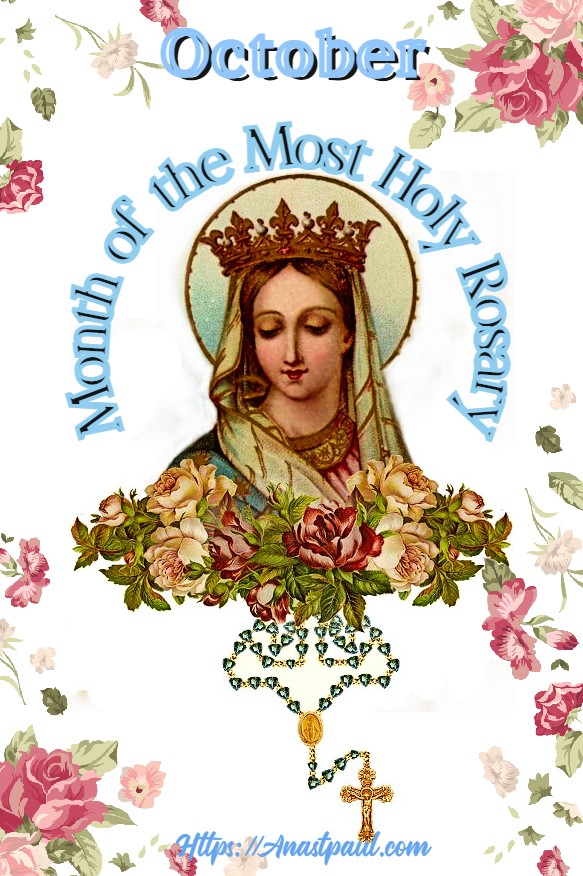
Quote/s of the Day – 1 October – “Month of the Most Holy Rosary”
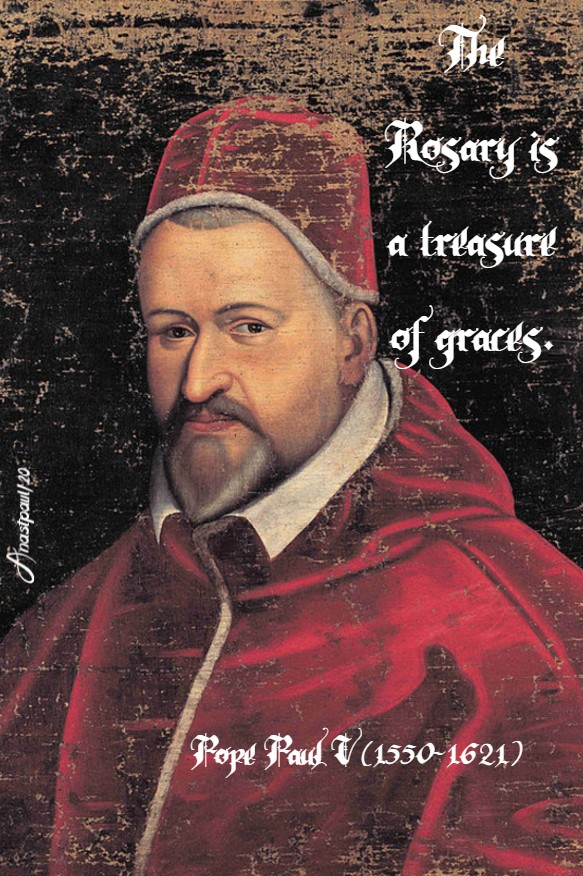
“The Rosary is a treasure of graces.”
Pope Paul V (1550-1621)
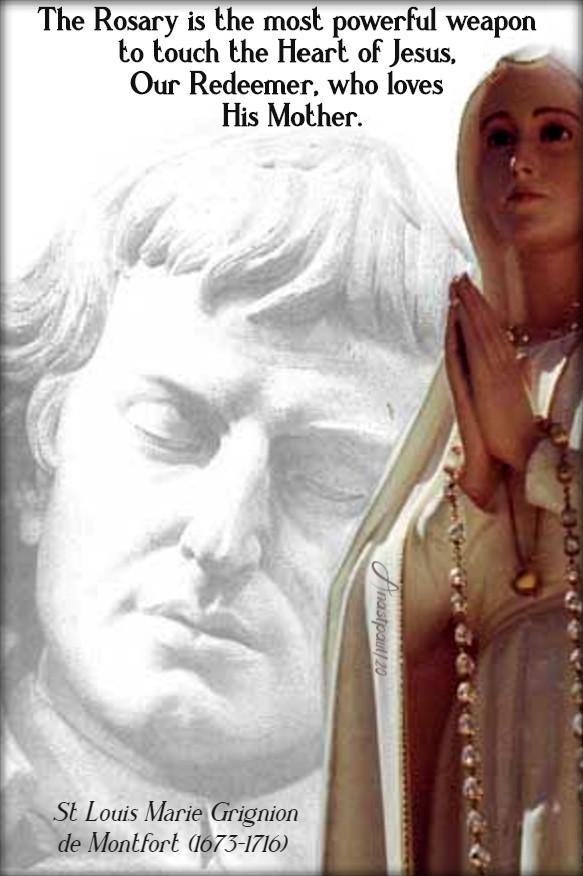
“The Rosary is the most powerful weapon to touch the Heart of Jesus, Our Redeemer, who loves His Mother.”
St Louis Marie Grignion de Montfort (1673-1716)
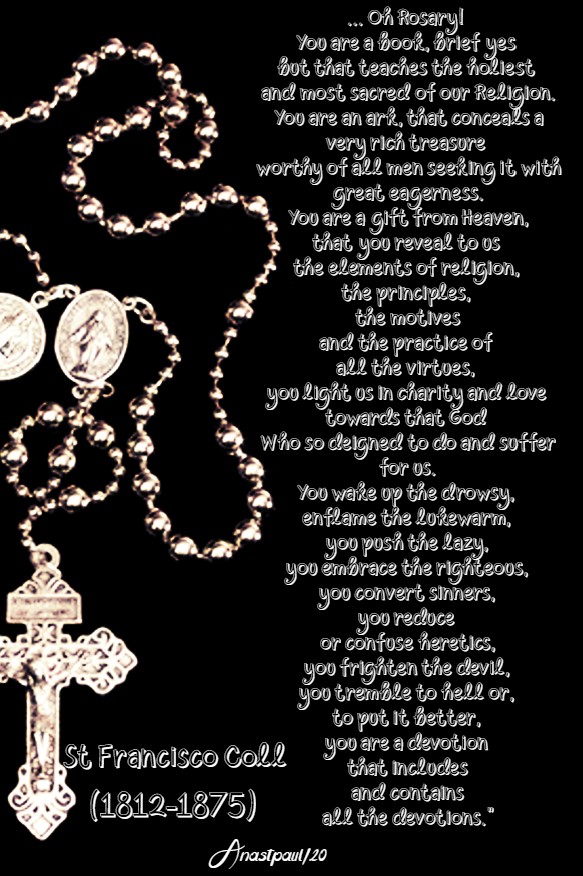
Praise of the Rosary From a sermon of St Francisco Coll
“… Oh Rosary! You are a book, brief yes but that teaches the holiest and most sacred of our Religion. You are an ark, that conceals a very rich treasure worthy of all men seeking it with great eagerness. You are a gift from Heaven, that you reveal to us the elements of religion, the principles, the motives and the practice of all the virtues, you light us in charity and love towards that God Who so deigned to do and suffer for us. You wake up the drowsy, enflame the lukewarm, you push the lazy, you embrace the righteous, you convert sinners, you reduce or confuse heretics, you frighten the devil, you tremble to hell or, to put it better, you are a devotion that includes and contains all the devotions.”
St Francisco Coll y Guitart OP (1812-1875) “The Apostle of Modern Times”
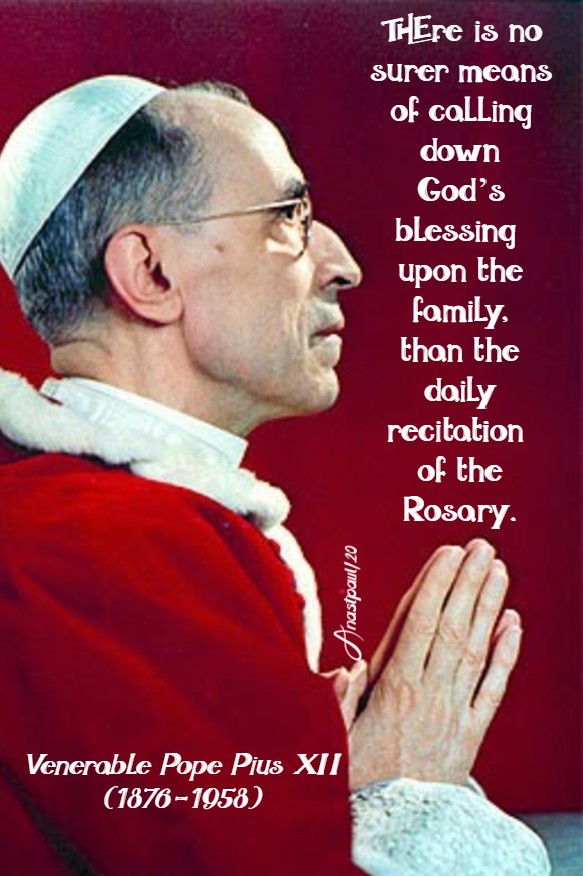
“There is no surer means of calling down God’s blessing upon the family, than the daily recitation of the Rosary.”
Ven Servant of God Pope Pius XII (1876-1958)
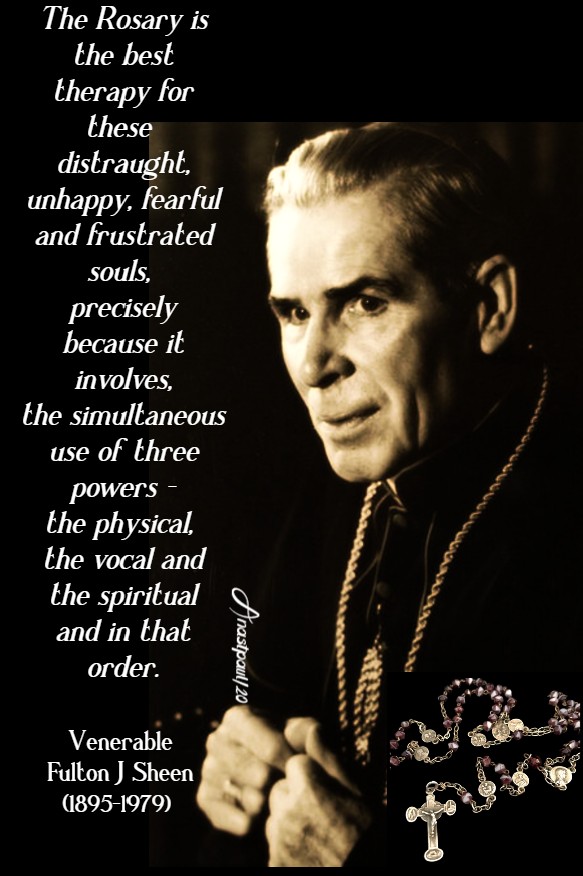
“The Rosary is the best therapy for these distraught, unhappy, fearful and frustrated souls, precisely because it involves, the simultaneous use of three powers – the physical, the vocal and the spiritual and in that order.”
One Minute Reflection – 1 October – “Month of the Most Holy Rosary” – Readings: Baruch 1: 15-22; Psalms79: 1b-5, 8-9; Luke 10: 13-16 and the Memorial of St Bavo of Ghent (c 589–654
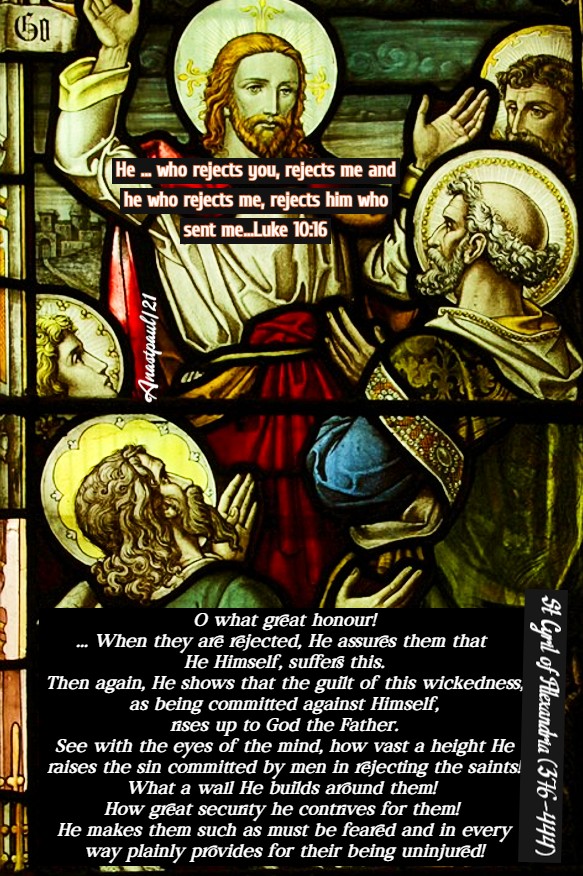
“He who hears you, hears me and he who rejects you, rejects me and he who rejects me, rejects him who sent me” – Luke 10:16
REFLECTION – “Consider the great authority He gave the holy Apostles, how He declared them praiseworthy,and how He decorated them with the highest honours. “He who hears you,” He says, “hears me and he that rejects you, rejects me and he who rejects me, rejects him who sent me.” O what great honour! What incomparable dignities! O what a gift worthy of God! Although men, the children of earth, He clothes them with a godlike glory. He entrusts His Words to them, that they, who resist anything, or venture to reject them, may be condemned. When they are rejected, He assures them that He Himself suffers this. Then again, He shows that the guilt of this wickedness, as being committed against Himself, rises up to God the Father. See with the eyes of the mind, how vast a height He raises the sin committed by men in rejecting the saints! What a wall He builds around them! How great security he contrives for them! He makes them such as must be feared and in every way plainly provides for their being uninjured!” – St Cyril of Alexandria (376-444)Known as ‘The Pillar o Faith,” Archbishop of Alexandria, Father and Doctor of the Incarnation)(Commentary on Luke, Homily 63)
PRAYER – God, our Father, Your promised Your Kingdom to the little ones and the humble of heart. Give us grace to walk confidently in the way of St Bavo of Ghent, so that helped by their prayers, we may see Your eternal glory. Through Christ our Lord, in the unity of the Holy Spirit, one God forever, amen.
Our Morning Offering – 1 October – The Memorial of St Romanos the Melodist (c 490-c 556) Deacon, Hymnographer, Poet, Writer.
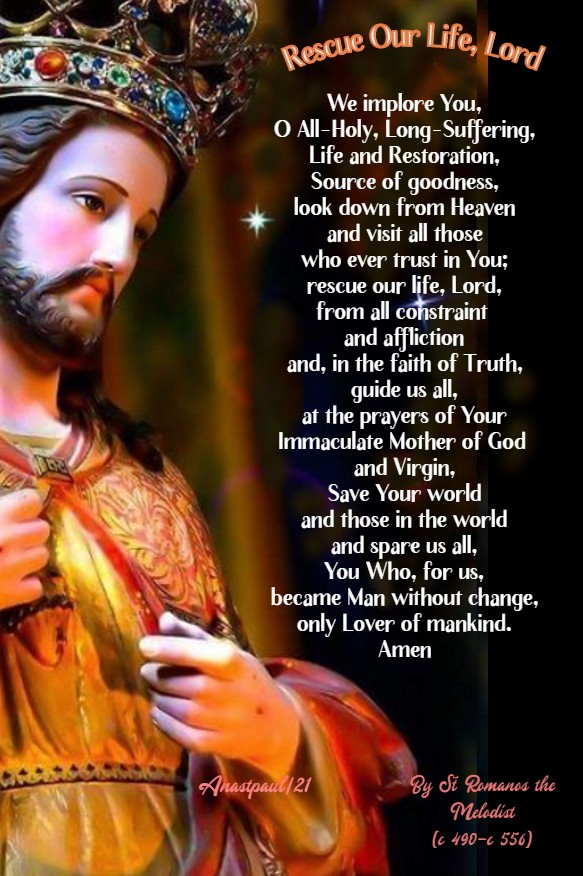
Rescue Our Life, Lord By St Romanos the Melodist (c 490-c 556)
We implore You, O All-Holy, Long-Suffering, Life and Restoration, Source of goodness, look down from Heaven and visit all those who ever trust in You; rescue our life, Lord, from all constraint and affliction and, in the faith of Truth, guide us all, at the prayers of Your Immaculate Mother of God and Virgin, Save Your world and those in the world and spare us all, You Who, for us, became Man without change, only Lover of mankind. Amen
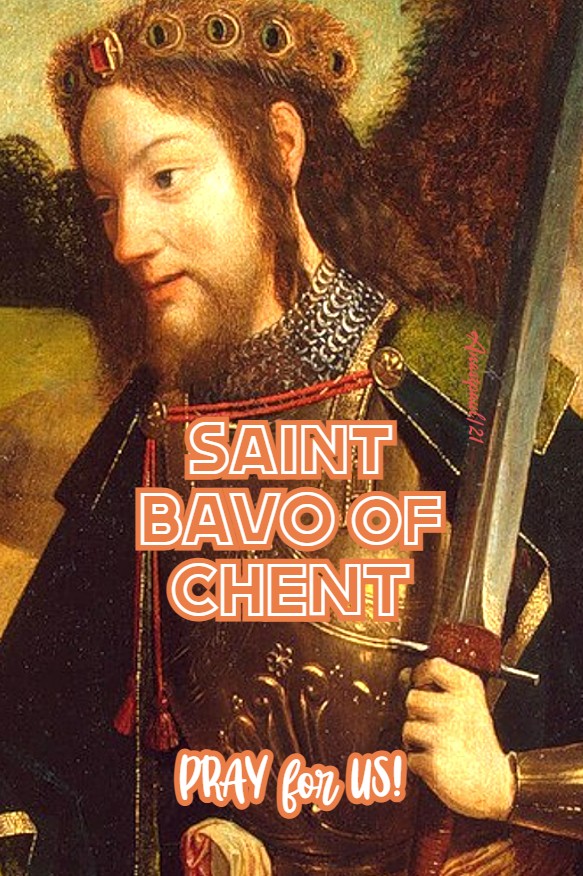
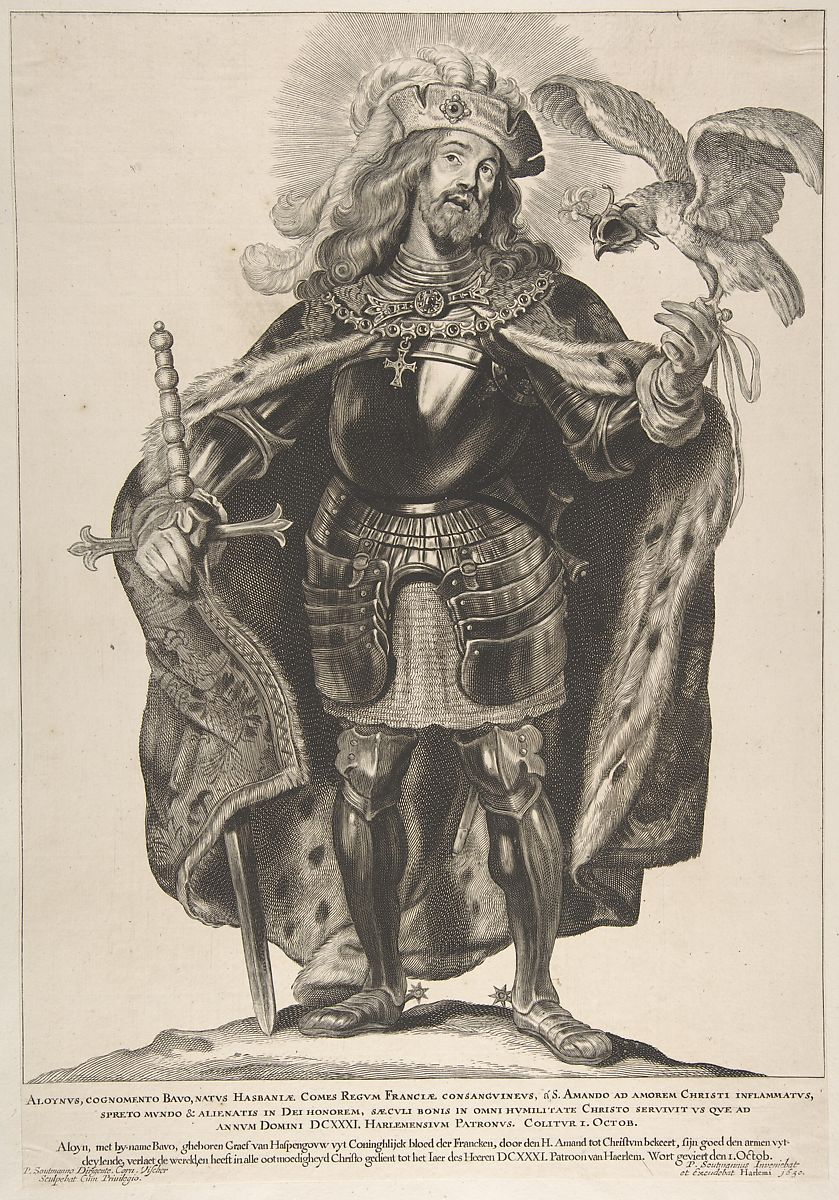
Saint of the Day – 1 October – Saint Bavo of Ghent (c 589–654) Married. Widower, Soldier, Monk and Hermit, Penitent. Born in c 589 at Brabant, Liege, Belgium as Allowin and died on 1 October 654 at Saint Bavo’s Abbey of natural causes. Patronages – the Cities of Ghent, Zellik and Lauwe in Belgium, City of Haarlem, Netherlands, Diocese of Amsterdam, Netherlands, the Netherlands, of falcons and falconry. Also known as – Allowin, Bavone of Ghent.
The Roman Martyrology states of him today: “In Ghent in Flanders, in present-day Belgium, Saint Bavo, a Monk, who was a disciple of Saint Amand. He abandoned the world, distributed his goods to the poor and retired to the Monastery he founded in this place.“
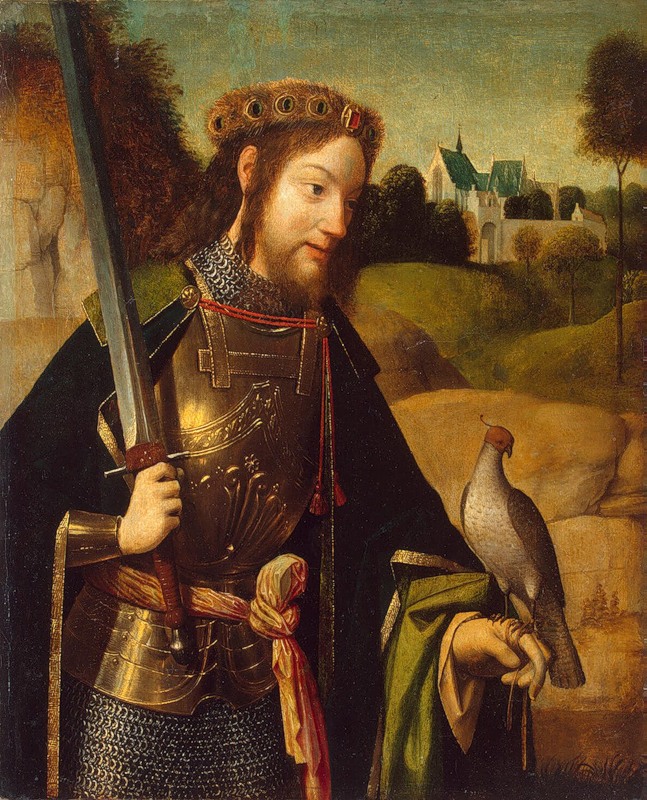
Saint Bavo with falcon and sword, by Geertgen tot Sint Jans, late 15th century
Bavo was born into a family of high social rank. His father was Pippin of Landen, the Mayor of the Palace and his mother, Itta of Metz.
A wild, young aristocrat of Brabant, he contracted a beneficial marriage to the daughter of the Merovingian Count Adilone and had a daughter named Agletrude. At that time, he was a soldier who led an undisciplined and disorderly life.
The young wife died, it is not known how and Bavo, deeply struck by the misfortune, interrupted his dissolute life and suffered a moral crisis, which was the starting point of his conversion.
He went to St Amand who was preaching to the still pagan populations of the Ghent region. On returning to his house he distributed his wealth to the poor, and then received the tonsure from Amand. He entered the Monastery of Ganda as a Monk., This Monastery had been founded by St Amando and was later renamed in Bavo’s honour.
He became a disciple of the missionary St Amand and followed him on his apostolic wanderings in Flanders and France. On one occasion, Bavo met a man whom he had sold into slavery years before. Wishing to atone for his earlier deed, Bavo had the man lead him by a chain to the town jail as penance and reparation for the sins of his past life.
After some time he returned to Ganda, where he had a small cell built in the hollow of a large tree and led a reclusive and ascetic life for three years.
But privations and sacrifices quickly weakened him, dying around 654. His body was buried in the Monastery of Ganda.
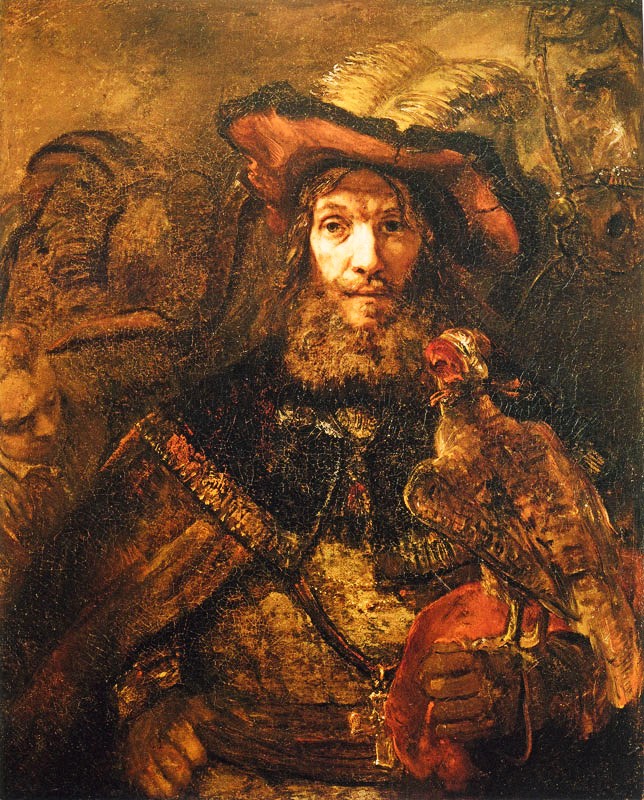
St Bavo by Rembrandt
At present, his relics rest partly in the Cathedral of Ghent, which too is dedicated to St Bavo and partly in the Benedictine Abbey of Nesle-la-Reposte, the place where the Monks who fled from Ganda had taken refuge, to escape the Norman invasions, around 882- 883.
St Bavo saves Haarlem
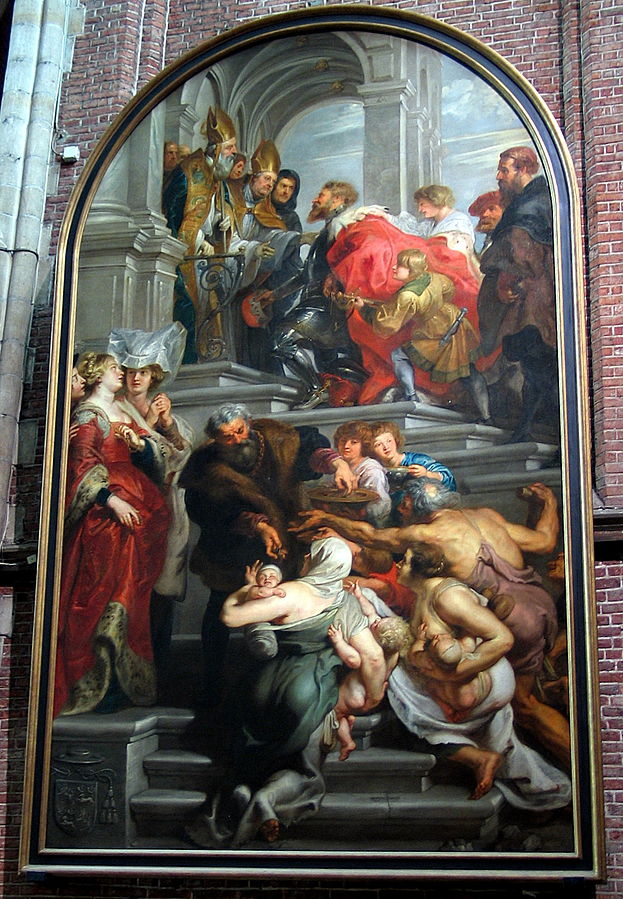
The most popular scene is the moment of his conversion, which has many legends attached to it. Because he is so often shown with a falcon, he came to be considered the patron saint of falconry. In medieval Ghent, taxes were paid on Bavo’s feast day, and it is for this reason, that he is often shown holding a purse or money bag.
The Conversion of St Bavo by Peter Paul Rubens
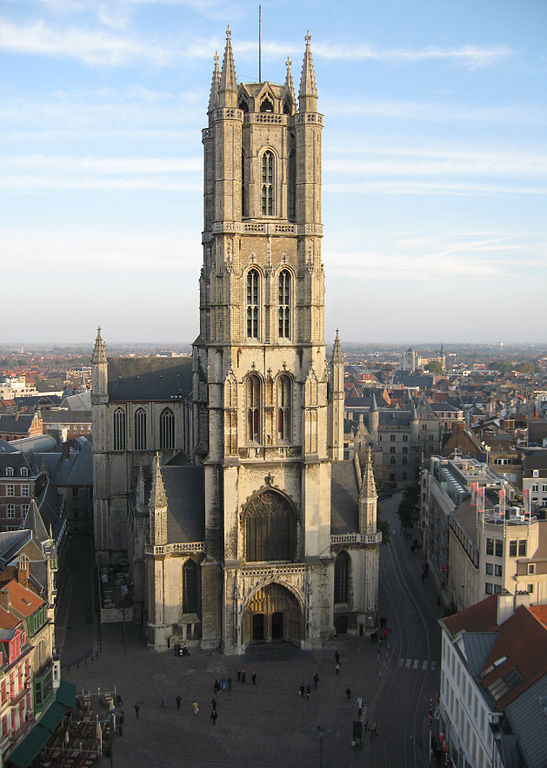
The City of Bamberg in Belgium is named after him, with Bamberg meaning “Mount of Bavo.” Several Churches are dedicated to him, including: Saint Bavo Cathedral, in Ghent which is most famous for housing the breath-taking Ghent Altarpiece by Jan van Eyck completed in 1432, see video below; Sint-Bavokerk and Cathedral of Saint Bavo, both in Haarlem; Sint-Bavokerk in Heemstede, Lauwe, and Zellik; Saint Bavo Church and School, in Mishawaka, Indiana; Sint-Bavokerk in Wilrijk.. His picture is also part of the Coat of Arms of the Antwerp Suburb Wilrijk.
Madonna di Valverde, / Our Lady of Valverde di Rezzato, Italy (1399 and 1711) – 1 October:
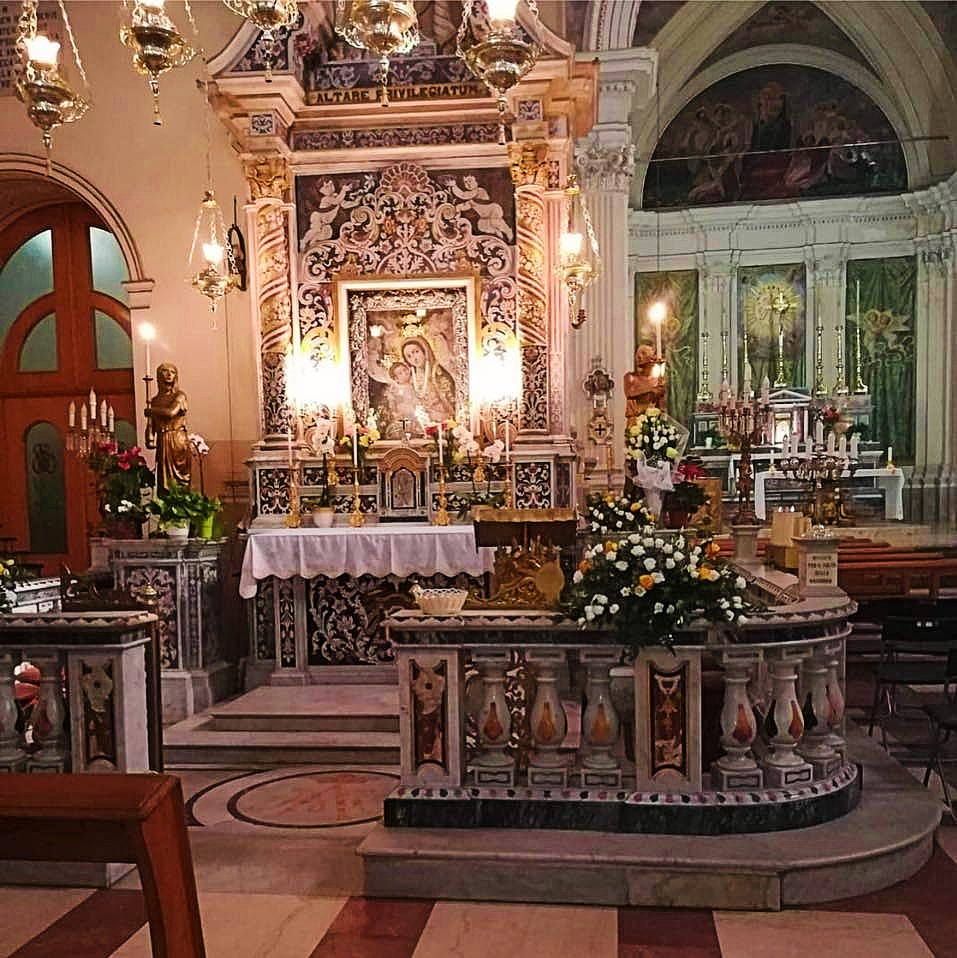
The Sanctuary of the Madonna di Valverde, belonging to the Parish of San Giovanni Battista di Rezzato Diocese of Brescia, is located in Valverde, at the foot of the Botticino and Serle hills. The Sanctuary was born in the places of the apparitions of 1399, the only one in history where both the Madonna and her Divine Son, Jesus Christ, the Saviour aooeared with His Mother and the second Marian Apparition of 1711.
For over six centuries the Sanctuary of the Madonna di Valverde has been a destination of pilgrimages from all over the north of Italy and is, above al,l in the heart of the community of Rezzato – Virle, which every year, on the Feast of St Anna on 26 July, recalls, with a solemn historical procession, the miracle of the apparitions.
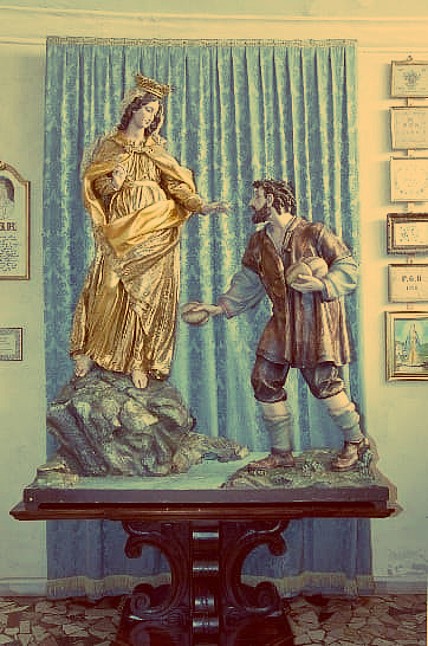
In 1399, more than six hundred years ago, during the ploughing work in a field near Valverde, the oxen pulling the plough stopped and bent their knees. A man in a red robe and a blue mantle (Christ) appeared to the worker who guided them and ordered him to throw the three loaves that he kept in his saddlebag into the nearby pond. The peasant got ready to obey the order but was held back by the Apparition of the Madonna who advised him to return to beg the Lord, to revoke the order just given. If the three loaves had touched the waters of the lake, three scourges would have been unleashed (famine, plague and war) with which Christ intended to punish men for their impiety. Jesus, by the insistence of tHis Holy Mother, consented to the peasant’s plea and agreed that only one of the loaves need be thrown into the water and, therefore, only the scourge of the epidemic would spread throughout the area. Our Lady recommended to the peasant to announce to everyone, what he had seen with his own eyes, exhorting men to repent and to approach faith and the Sacraments again.
A Chapel was first built near the lake, then, in the early seventeenth century, a large and beautifully decorated Sanctuary followed.
St Thérèse of Lisieux/St Thérèse of the Child Jesus and the Holy Face/The Little Flower OCD (1873 – 1897) Virgin, Carmelite Nun, Doctor of the Church (Memorial) She was Canonised by Pope Pius XI on 17 May 1925. The same Pope proclaimed her Universal Patron of the Missions, alongside Saint Francis Xavier, on 14 December 1927. Up until 1969 her Memorial was celebrated on 3 October. Biography: https://anastpaul.com/2018/10/01/saint-of-the-day-st-therese-of-lisieux-o-c-d-1873-1897-doctor-of-the-church/
St Aizan of Abyssinia St Albaud of Toul Bl Andrew Sushinda Bl Antoni Rewera St Aretas of Rome St Bavo of Ghent (c 589–654) Married. Widower, Monk and Hermit. Bl Cecilia Eusepi Bl Christopher Buxton St Crescens of Tomi St Dodo Bl Dominic of Villanova Bl Edward James St Evagrius of Tomi St Fidharleus Bl Gaspar Fisogiro St Gregory the Illuminator St John Kukuzelis Bl John Robinson
St Maxima of Lisbon Bl Nikita Budka St Piaton of Tournai St Priscus of Tomi Bl Ralph Crockett Bl Robert Widmerpool Bl Robert Wilcox
St Romanos the Melodist (c 490-c 556) Deacon, Hymnographer, Poet, Writer. He is said to have composed more than 1,000 hymns celebrating various festivals of the ecclesiastical year, the lives of the saints and other sacred subjects, some 60 to 80 of which survive. Wonderful Saint Romanos! https://anastpaul.com/2020/10/01/saint-of-the-day-1-october-st-romanos-the-melodios-c-490-c-556/
St Sazan of Abyssinia St Verissimus of Lisbon St Virila St Wasnulf — Martyred in the Spanish Civil War: • Blessed Carmelo Juan Pérez Rodríguez • Blessed Higinio Mata Díez • Blessed Juan Mata Díez • Blessed Álvaro Sanjuán Canet • Blessed Florencia Caerols Martínez

























 AnaStpaul
You must be logged in to post a comment.