Thought for the Day – 26 January – Meditations with Antonio Cardinal Bacci (1881-1971)
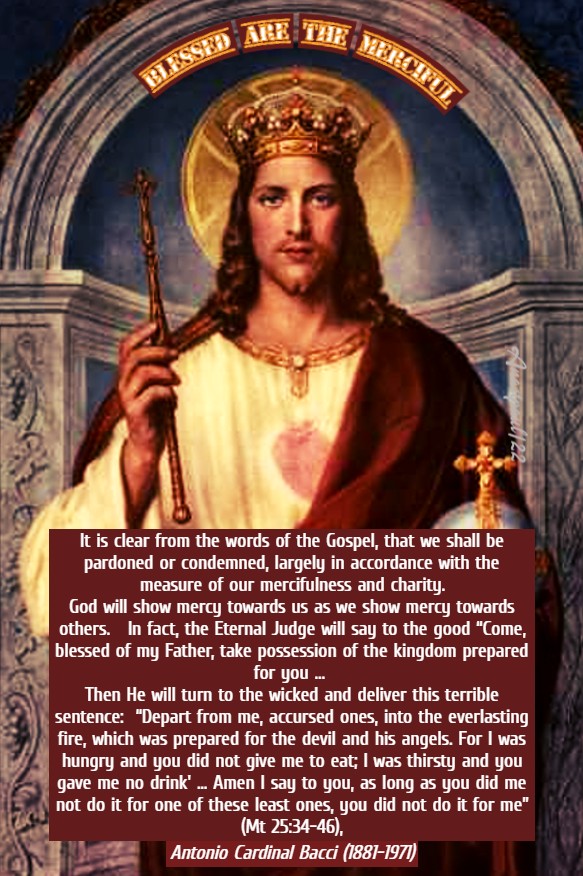
Blessed are the Merciful
“Some day, each one of us will stand before the Judgement Seat of God and will have to render an account of all our actions. Are we anxious that God will be merciful to us at that crucial moment? Let us be forgiving and charitable towards others now. It is clear from the words of the Gospel, that we shall be pardoned or condemned, largely in accordance with the measure of our mercifulness and charity. God will show mercy towards us as we show mercy towards others. In fact, the Eternal Judge will say to the good “Come, blessed of my Father, take possession of the kingdom prepared for you from the foundation of the world; for I was hungry and you gave me to eat; I was thirst and you gave me to drink; I was a stranger and you took me in; naked and you covered me; sick and you visited me; I was in prison and you came to me.” ThenHe will turn to the wicked and deliver this terrible sentence: “Depart from me, accursed ones, into the everlasting fire, which was prepared for the devil and his angels. For I was hungry and you did not give me to eat; I was thirsty and you gave me no drink’ I was a stranger and you did not take me in; naked and you did not clothe me; sick and in prison and you did not visit me … Amen I say to you, as long as you did me not do it for one of these least ones, you did not do it for me” (Mt 25:34-46),
These are terrifying words. They should persuade us to express charity towards all who are suffering in any way whatsoever!”
Quote/s of the Day – 26 January – The Memorial of St Polycarp (c 69 – c 155) Martyr and Apostolic Father of the Church,
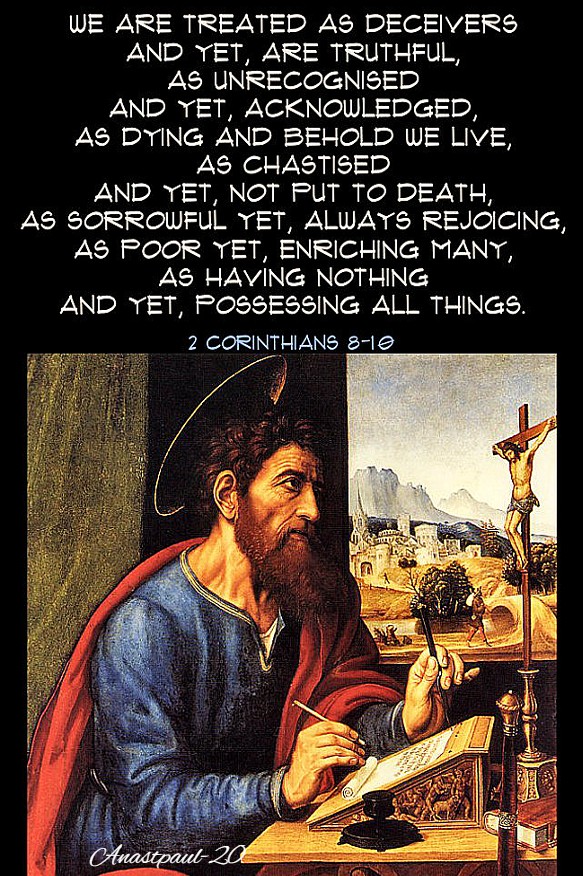
“We are treated as deceivers and yet, are truthful, as unrecognised and yet, acknowledged, as dying and behold we live, as chastised and yet, not put to death, as sorrowful yet, always rejoicing, as poor yet, enriching many, as having nothing and yet, possessing all things.”
2 Corinthians 8-10
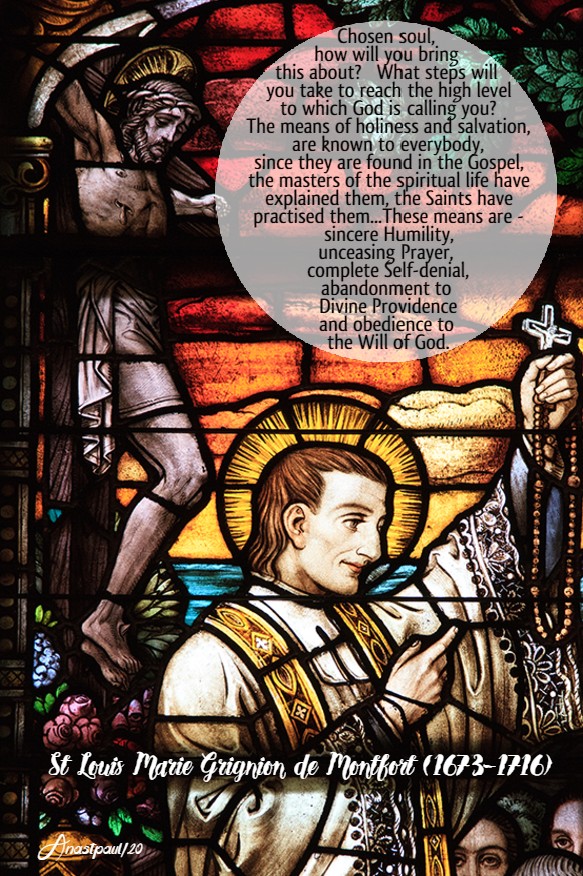
“Chosen soul, how will you bring this about? What steps will you take to reach the high level to which God is calling you? The means of holiness and salvation, are known to everybody, since they are found in the Gospel, the masters of the spiritual life have explained them, the Saints have practised them… These means are – sincere Humility, unceasing Prayer, complete Self-denial, abandonment to Divine Providence and obedience to the Will of God.”
St Louis Marie Grignion de Montfort (1673-1716)
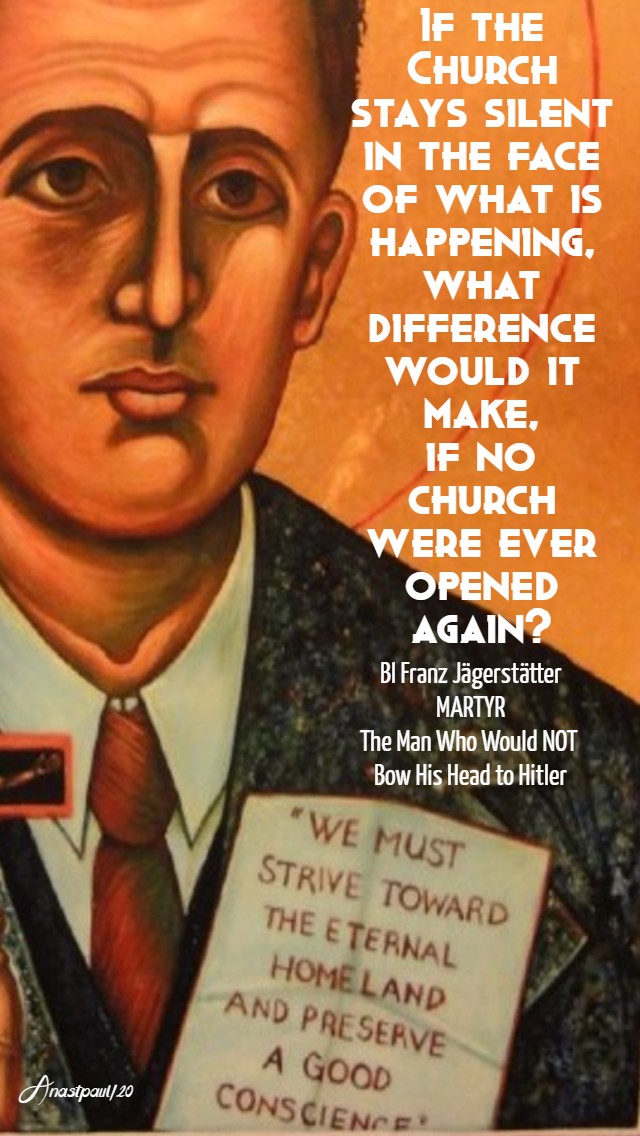
“If the Church stays silent in the face of what is happening, what difference would it make, if no church were ever opened again?”
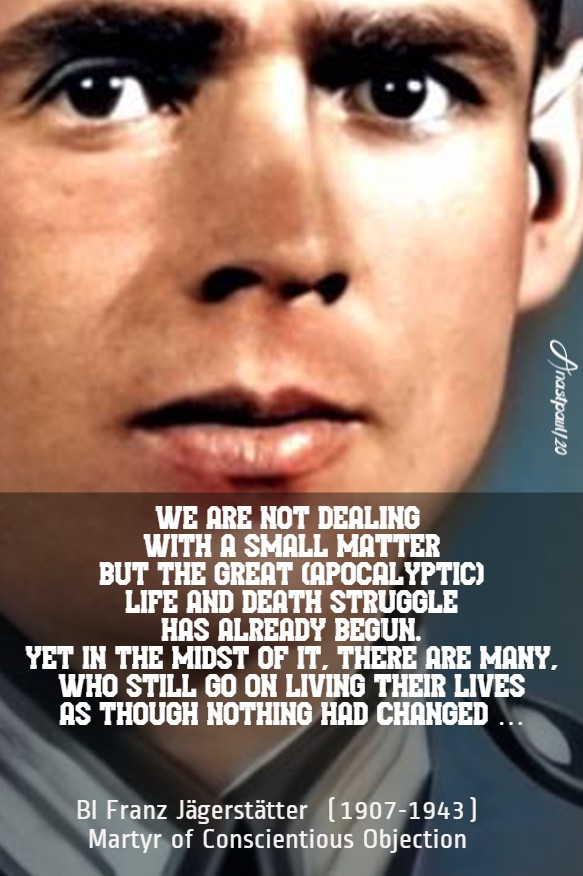
“We are not dealing with a small matter but the great (apocalyptic) life and death struggle has already begun. Yet in the midst of it, there are many, who still go on living their lives as though nothing had changed … “
One Minute Reflection – 26 January – The Memorial of St Polycarp (c 69 – c 155) Martyr and Apostolic Father of the Church, 1 John 3:10-16; Matthew 10:26-32
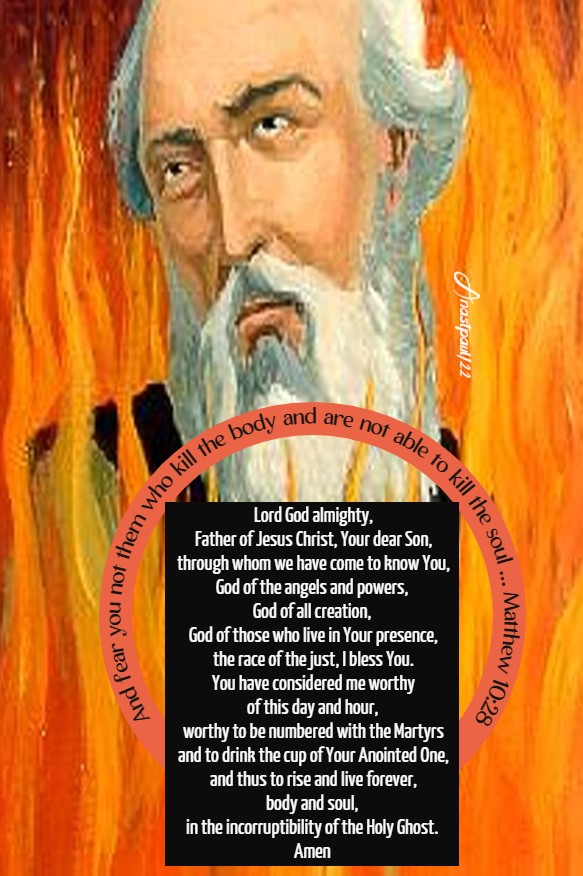
“And fear you not them who kill the body and are not able to kill the soul …” – Matthew 10:28
REFLECTION – “They did not nail Polycarp but only tied him up. And so, he was bound, putting his arms behind his back, like a noble ram taken from a large flock for sacrifice, a burnt offering acceptable to and made ready for God. Then he gazed up to Heaven and said: “O Lord God Almighty, Father of Your beloved and blessed Son Jesus Christ, through Whom we have received knowledge of You, God of the angels and the powers and of all creation, God of the whole race of the righteous who live in Your sight: I bless You, for You have thought me worthy of this day and hour, to share the cup of Your Christ, as one of Your Martyrs, to rise again to eternal life in body and soul in the immortality of the Holy Ghost. May I be taken up today into Your Presence among Your Martyrs, as a rich and acceptable sacrifice, in the manner You have prepared and have revealed and have now brought to fulfillment, for You are the God of truth… And so also I praise You for all things; I bless and glorify you through our Eternal High Priest in Heaven (Heb 4,14), in Your beloved Child, Jesus Christ, through Whom be glory to You and to Him and to the Holy Ghost, now and for the ages to come. Amen.” – Letter of the Church of Smyrna concerning the Martyrdom of Saint Polycarp (69-155)
PRAYER – Lord of all creation, You gave St Polycarp, a place in the company of the Martyrs. Grant that, through his intercession, we may, like him, drink from that cup which Christ drank and so rise to eternal life. Through Christ our Lord, in unity with the Holy Spirit, one God forever, amen.
Our Morning Offering – 26 January – The Memorial of St Polycarp (c 69 – c 155) Martyr and Father of the Church
Great and Glorious God By St Francis of Assisi (c 1181-1226)
Great and glorious God, my Lord Jesus Christ! I implore Thee to enlighten me and to disperse the darkness of my soul. Give me true faith, firm hope and perfect charity. Grant me, O Lord, to know Thee so well that in all things I may act by Thy Light and in accordance with Thy holy Will. Amen
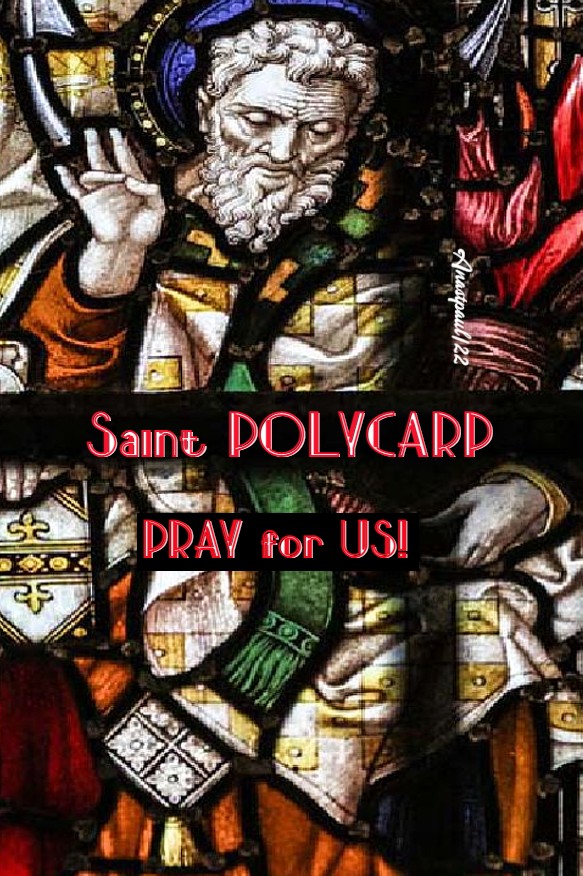
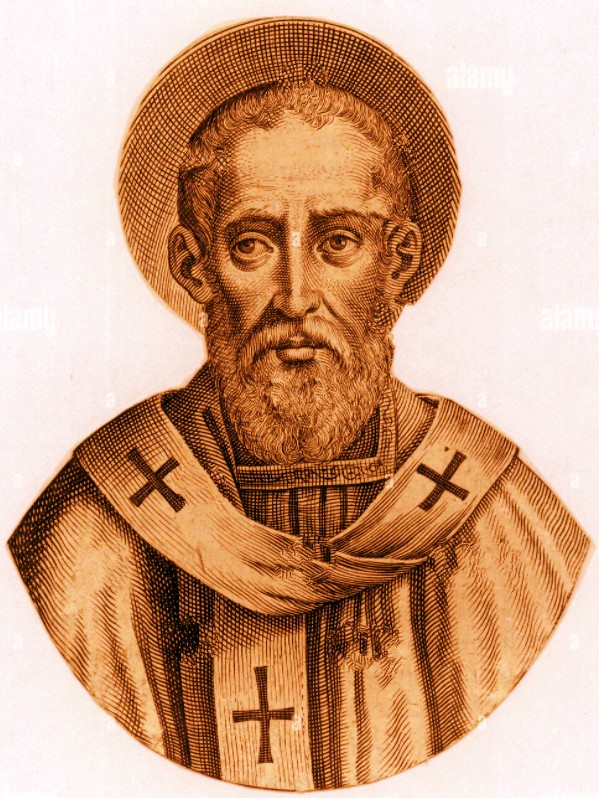
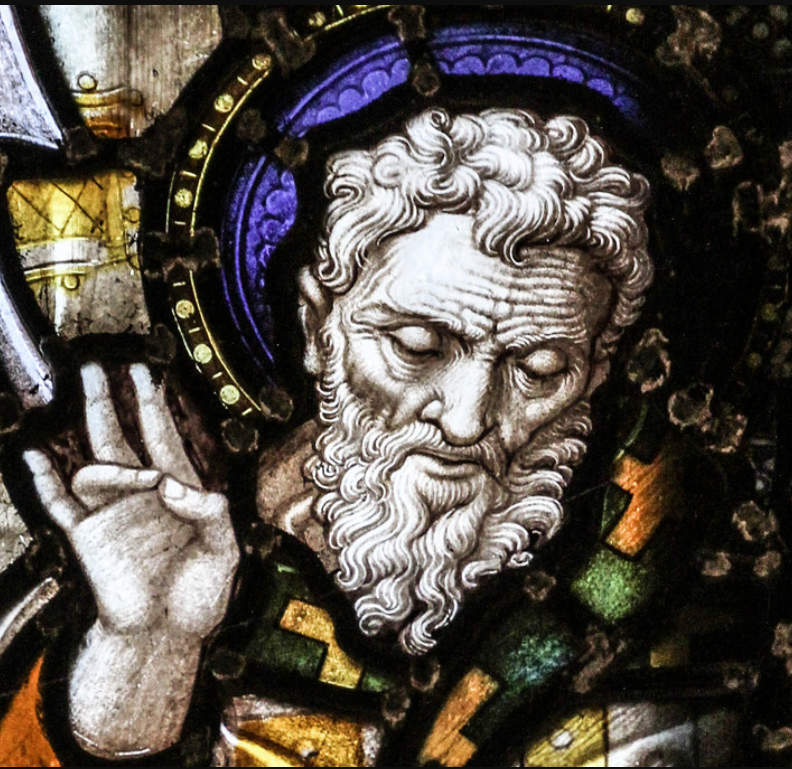
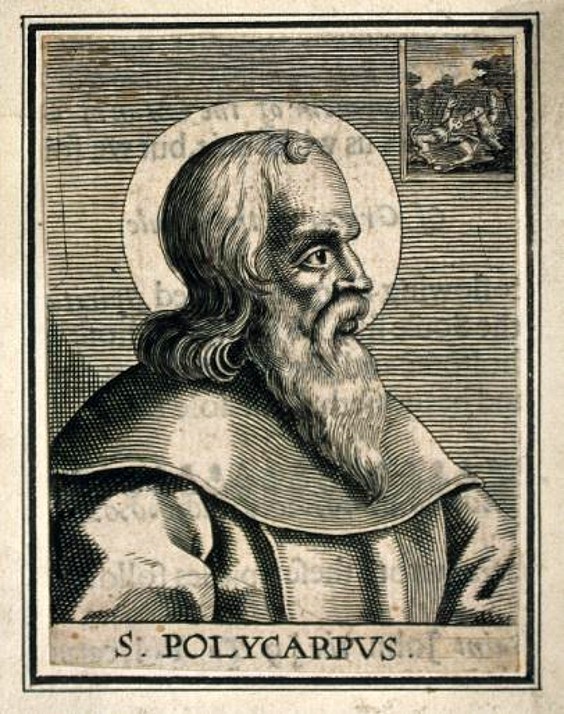
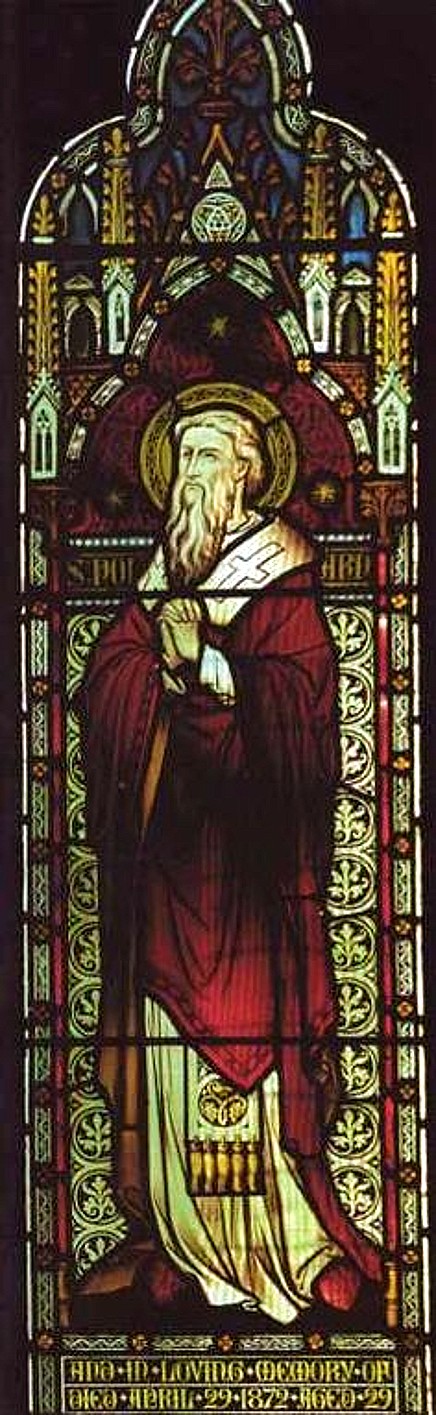
Saint of the Day – 26 January – Saint Polycarp (69-155) Bishop of Smyrna (Asia Minor), Martyr, Apostolic Church Father. Polycarp was a disciple of Saint John the Apostle Consecrated by St John, as the Bishop of Smyrna. Polycarp is regarded as one of three chief Apostolic Fathers, along with Saint Clement of Rome and Saint Ignatius of Antioch.
The Roman Martyrology reads today: “At Smyrna, the birthday of St Polycarp, a disciple of the Apostle, the beloved St John, who Consecrated him Bishop of that City and Primate of all Asia. Afterwards under Marcus Antoninus and Lucius Aurelius Commodus, whilst the Proconsul was sitting in judgement and all the people in the amphitheatre were clamouring against him, he was condemned to the flames. But, as he received no injury from them, he was transpierced with a sword and thus received the Crown of Martyrdom.”
Amidst the sweetness he is enjoying from the contemplation of the Word made Flesh, St John, the Beloved Disciple beholds, coming towards him his dear Polycarp, the Angel of the Church of Smyrna (Apoc. 2: 8), all resplendent with the glory of Martyrdom (he is the only bishop mentioned in the Apocalypse without any reproach). This venerable Saint was a disciple of St John the Evangelist, whom he imitated by zealously opposing the heretics, who were then striving to corrupt the Faith. In obedience to the command of his holy Master (2 John, 1: 10), he refused to have anything to do with Marcion, the heresiarch, whom he called the first-born of Satan. This energetic adversary of the proud sect that denied the mystery of the Incarnation, wrote an admirable Epistle to the Philippians, in which we find these words: “Whosoever confesses not, that Jesus Christ came in the flesh, is an Antichrist.” St Polycarp, then, had a right to the honour of standing near the Crib, in which the Son of God shows Himself to us in all His loveliness and clothed in flesh like unto our own. Let us honour this disciple of St John, this friend of St Ignatius of Antioch, this Bishop of the Apostolic Age, whose praise was pronounced by Jesus Christ Himself in the Revelations of Patmos. Our Saviour said to him by the mouth of St John: “Be thou faithful unto death and I will give thee the crown of life” (Apoc. 2: 10). St Polycarp was faithful unto death, and has received his crown.
In the sixth year of Marcus Aurelius and Lucius Verus, Statius Quadratus being proconsul of Asia, a violent persecution broke out in that country, in which the faithful gave heroic proofs of their courage and love of God, to the astonishment of the infidels. When they were torn to pieces with scourges till their very bowels were laid bare, amidst the moans and tears of the spectators, who were moved with pity at the sight of their torments, not one of them gave so much as a single groan: so little regard had they for their own flesh in the cause of God. No kind of torture, no inventions of cruelty, were forborne to force them to a conformity to the pagan worship of the times. The authors of these Acts observe, that the Martyrs, by their patience and constancy, demonstrated to all men, that, while their bodies were tormented, they were in spirit estranged from the flesh and already in Heaven; or rather, that Our Lord was present with them and assisted them; for the fire of the barbarous executioners seems, as if it had been a cooling refreshment to them.
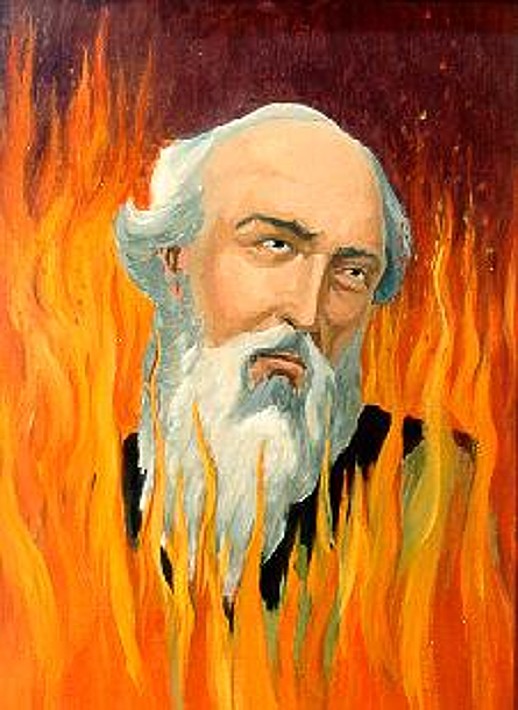
On one occasion, seeing the courage of one Germanicus and his companions and being fond of their impious bloody diversions, the spectators cried out: “Away with the impious; let Polycarp be sought for.” The holy man, though fearless, had been prevailed upon by his friends to withdraw and conceal himself in a neighbouring village during the persecution, spending most of his time in prayer. Three days before his Martyrdom, he, in a vision, saw his pillow on fire – from which he understood by revelation and foretold to his companions, that he should be burned alive. When the persecutors were in quest of him, he changed his hiding-place but was betrayed by a boy, who was threatened with the rack unless he disclosed him. Herod the Irenarch, or keeper of the peace, whose office it was to prevent misdemeanours and apprehend malefactors, sent horsemen by night to beset his lodgings. The Saint was upstairs in bed but refused to make his escape, saying, “God’s will be done.” He went down, met them at the door, ordered them a good supper and desired only some time for prayer before he went with them. This granted, he began his prayer standing, which he continued in that posture for two hours, recommending to God his own flock and the whole Church with so much earnestness and devotion, that several of those who were come to seize him, repented they had undertaken the commission.
They set him on an ass,and were conducting him towards the City, when he was met on the road by Herod and his father Nicetes, who took him into their chariot and endeavoured to persuade him to a little compliance, saying: “What harm is there in saying ‘Lord Caesar,’ or even in sacrificing, to escape death?” By the word ‘Lord’ was meant nothing less than a kind of deity or godhead. The Bishop at first was silent, in imitation of our Saviour but being pressed, he gave them this resolute answer: “ I shall never do what you desire of me.” At these words, taking off the mask of friendship and compassion, they treated him with scorn and reproaches and thrust him out of the chariot with such violence, that his leg was bruised by the fall.
The holy man went cheerfully to the place where the people were assembled. Upon his entering it, a voice from Heaven was heard by many, saying: “Polycarp, be courageous and act manfully.” He was led directly to the tribunal of the proconsul, who exhorted him to respect his own age (probably more than 100 years), to swear by the genius of Caesar and to say: “Take away the impious” meaning the Christians. The Saint, turning towards the people, said with a stern countenance: “Exterminate the wicked,” meaning by this expression either a wish that they might cease to be wicked by their conversion to the Faith of Christ; or this was a prediction of the calamity which befell their City in 177, when Smyrna was overturned by an earthquake. The proconsul repeated: “Swear by the genius of Caesar and I will discharge you“ blaspheme Christ! Polycarp replied: “I have served Him these 86 years (probably the time since his Baptism) and He never did me any harm but much good and how can I blaspheme my King and my Saviour? If you require of me to swear by the genius of Caesar, as you call it, hear my free confession – I am a Christian but if you desire to learn the Christian religion, appoint a time and hear me.” The proconsul said: “Persuade the people.” The Martyr replied: “I address my discourse to you; for we are taught to give due honour to princes, as far as is consistent with religion. But the populace is an incompetent judge to justify myself before.” Indeed rage rendered them incapable of hearing him.
The proconsul then assuming a tone of severity, said: “I have wild beasts!” “Call for them, replied the Saint, for we are unalterably resolved not to change from good to evil. It is only good to pass from evil to good.” The proconsul said: “If you contempt the beasts, I will cause you to be burnt to ashes.” Polycarp answered: “You threaten me with a fire, which burns for a short time and then goes out but are yourself ignorant of the judgement to come and of the fire of everlasting torments, which is prepared for the wicked. Why do you delay? Bring against me what you please.” While he said this and many other things, he appeared in a transport of joy and confidence and his countenance shone with a certain heavenly grace and pleasant cheerfulness, insomuch, that the Proconsul himself, was struck with admiration.
However, he ordered a crier to make public proclamation, three times in the middle of the Stadium (as was the Roman custom in capital cases) – Polycarp has confessed himself a Christian! At this proclamation, the whole multitude of Jews and Gentiles gave a great shout, the latter crying out: “This is the great teacher of Asia; the father of the Christians; the destroyer of our gods, who preaches to men not to sacrifice to or adore them.” They applied to Philip the Asiarch (president of the public games) to let loose a lion upon Polycarp. He told them that it was not in his power because those games had been closed. Then they unanimously demanded that he should be burned alive. Their request was no sooner granted but everyone ran with all speed to fetch wood from the baths and shops.
The pile being prepared, Polycarp put off his garments, untied his girdle and began to take off his shoes; an office he had not been accustomed to, the Christians having always striven who should do these things for him, regarding it as a happiness to be permitted even to touch him. The wood and other combustibles were heaped all round him. The executioners would have nailed him to the stake but he said to them: “Suffer me to be as I am. He who gives me grace to undergo this fire, will enable me to stand still without that precaution.” They, therefore, contented themselves with tying his hands behind his back and in this posture, looking up towards Heaven, he prayed: “O Almighty Lord God, Father of Thy beloved and blessed Son Jesus Christ, by Whom we have received the knowledge of Thee, God of Angels, powers and every creature and of all the race of the just that live in Thy presence! I bless Thee for having been pleased in Thy goodness to bring me to this hour, that I may receive my portion in the number of Thy Martyrs and partake of the chalice of Thy Christ, for the resurrection to eternal life, in the incorruptibleness of the Holy Ghost. Amongst whom grant me to be received this day as a pleasing sacrifice, such as one as Thou Thyself hast prepared, that so Thou mayest accomplish what Thou, O true and faithful God, hast foreshown. Wherefore, for all things I praise, bless and glorify Thee, through the eternal High Priest, Jesus Christ Thy beloved Son, with Whom, to Thee and the Holy Ghost be glory now and forever. Amen.”
He had scarcely finished when fire was set to the pile, which increased to a mighty flame. But behold a wonder, say the authors of these Acts, seen by us reserved to attest it to others, the flames forming themselves into an arch, like the sails of a ship swelled with the wind, gently encircled the body of the Martyr, which stood in the middle, resembling not roasted flesh but purified gold or silver, appearing bright through the flames and his body sending forth such a fragrance, that we seemed to smell precious spices. The blind infidels were only exasperated to see, that his body could not be consumed and ordered a spearman to pierce him through, which he did, and such a quantity of blood issued out of his left side as to quench the fire!
The malice of the devil ended not here: he endeavoured to obstruct the relics of the Martyr being carried off by the Christians, for many desired to do it, to show their respect to his body. Therefore, by the suggestion of Satan, Nicetes advised the proconsul not to bestow it on the Christians, lest, said he, abandoning the Crucified Man, they should adore Polycarp. The Jews suggested this, Not knowing, say the authors of the Acts, that we can never forsake Christ, nor adore any other, though we love the Martyrs, as His disciples and imitators, for the great love they bore their King and Master. The centurion, seeing a contest raised by the Jews, placed the body in the middle and burned it to ashes. We afterwards took up the bones, say they, more precious than the richest jewels or gold, and deposited them decently in a place at which may God grant us to assemble with joy, to celebrate the natal day of the Martyr. Thus said these disciples and eye-witnesses. It was at two in the afternoon, which the authors of the Acts call the eighth hour, in the year 155, that St Polycarp received his crown. His tomb is still shown with great veneration at Smyrna in a small Chapel.
The Church gives us a passage from St Jerome’s book, On Ecclesiastical Writers, in which there is contained a short notice of our Holy Martyr:
“Polycarp, a disciple of the Apostle John, who ordained him Bishop of Smyrna, was looked up to by all the Churches of Asia, inasmuch as he had not only known some of the Apostles, and those who had seen Our Lord, but had been trained by them. He went to Rome, during the reign of the Emperor Antoninus Pius, and under the Pontificate of Anicetus, in order to have an answer to certain questions regarding Easter day. Whilst there, he brought back to the Faith several Christians who had been misled by the teaching of Marcion and Valentine. Having on a certain occasion casually met Marcion, who said to him: Dost thou know us? Polycarp replied: Yes, I know thee as the first-born of Satan. Some time after, under the reign of Marcus Antoninus and Lucius Aurelius Commodus, in the fourth persecution after that under Nero, he was cited before the Proconsul of Smyrna, who condemned him to be burnt alive; which sentence was carried into effect in the amphitheater, amidst the clamors of the whole people. He wrote an important Letter to the Philippians, which is still read in the Churches of Asia.
How well didst thou bear out the full meaning of the name, O Polycarp! For thou didst produce many fruits for thy Saviour, during the eighty-six years spent in His service. The numerous souls won over to Christ, the virtues which adorned thy life, and thy life itself, which thou didst present to thy Lord in its full maturity—these were thy fruits. And what happiness was thine to have received instruction from the Disciple that leaned upon Jesus’ Breast! After being separated from him for more than sixty years, thou art united with him on this day of thy Martyrdom and thy venerable master receives thee in a transport of joy. Thou dost adore with him that Divine Babe, Whose simplicity thou hadst imitated during life and Who was the single object of thy love. Ask of Him for us, that we too may be faithful unto death.
By thy prayers, now that thou art enthroned in Heaven, make fruitful the vineyard of the Church, which when on earth thou didst cultivate by thy labours and water with the blood of thy glorious Martyrdom. Re-establish faith and unity in the Churches of Asia, which were founded by thy venerable hand. Hasten, by thy prayers, the destruction of that degrading slavery of Islam, which has kept the East in bondage so long because her once faithful children severed themselves from Rome, by the great schism of Byzantium. Pray for the Church of Lyons, which regards thee as its founder, through the ministry of thy disciple Pothinus and took itself so glorious a share in the apostolate of the Gentiles, by the Work of the Propagation of the Faith.
Watch over the purity of our holy Faith and preserve us from being deceived by false teachers. The error which thou didst combat and which teaches, that all the mysteries of the Incarnation are but empty symbols, has risen up again in these our days. There are Marcions, even now, who would reduce all religion to myths and they find followers. May thy powerful prayers rid the world of this remnant of so impious a doctrine. Thou didst pay homage to the Apostolic Chair, for thou, too, wanted to see Peter and didst journey to Rome, in order to consult its Pontiff on questions regarding the interests of thy Church in Smyrna. Pray for the restoration of this august See, whence are derived the jurisdiction of our Pastors and the authoritative teachings of the Faith. Pray for us, that we may spend the remaining days of this holy Christmas Season in the contemplation and the love of our new-born King. May this love, accompanied with purity of heart, draw down upon us, the merciful blessings of God and at length,, after our course is run, obtain for us the Crown of Life. Amen!” (The Passio of St Polycarp).
St Alphonsus of Astorga St Ansurius of Orense St Athanasius of Sorrento St Conan of Iona Bl Eystein Erlandsön Bl José Gabriel del Rosario Brochero Bl Marie de la Dive veuve du Verdier de la Sorinière Bl Michaël Kozal
St Theofrid of Corbie St Theogenes of Hippo St Tortgith of Barking
Martyred Family of Constantinople: Saint Mary and Saint Xenophon were married and the parents of Saint John and Saint Arcadius. Theirs was a wealthy family of Senatorial rank in 5th century imperial Constantinople, but were known as a Christians who lived simple lives. To give their sons a good education, Xenophon and Mary sent them to university in Beirut, Phoenicia. However, their ship wrecked, there was no communication from them, and the couple assumed, naturally, that the young men had died at sea. In reality, John and Arcadius had survived and decided that instead of continuing to Beirut, they were going to follow a calling to religious life and became monks, eventually living in a monastery in Jerusalem. Years later, Mary and Xenophon made a pilgrimage to Jerusalem – where they encountered their sons. Grateful to have their family re-united and taking it as a sign, Xenophon and Mary gave up their positions in society in Constantinople, and lived the rest of their lives as a monk and anchoress in Jerusalem. A few years later, the entire family was martyred together. They were martyred in 5th century Jerusalem.
Thought for the Day – 25 January – Meditations with Antonio Cardinal Bacci (1881-1971)
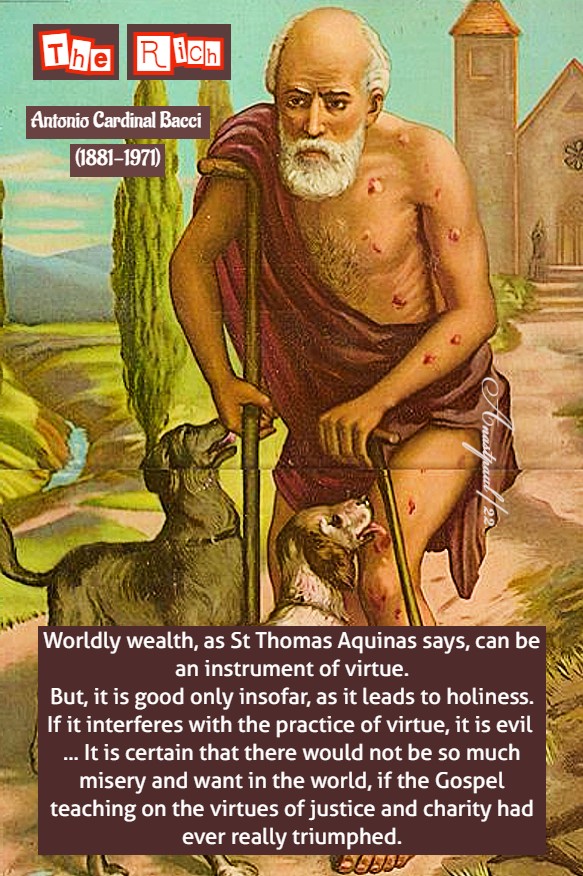
The Rich
“Wealth is a gift from God. Therefore, it is good, like everything else which comes from God. Worldly wealth, as St Thomas Aquinas says, can be an instrument of virtue. But, it is good only insofar, as it leads to holiness. If it interferes with the practice of virtue, it is evil (Summa Contra Gentiles, Bk III, 134).
God created the wealth of the earth, not for a few but, for all mankind. All men have the right, therefore, to draw their means of subsistence from the earth. If any individual with large private possessions, however lawfully acquired, battles against this right to live, he commits a grave sin. This could happen either because a man is lacking in justice or in charity. Both justice and charity are commanded by God, however and, it matters very little, whether a man goes to Hell because he has offended against justice or because he has offended against charity. Hell is Hell, in either case!
Let us examine ourselves and see if we are lacking in either of the virtues. It is certain that there would not be so much misery and want in the world, if the Gospel teaching on the virtues of justice and charity had ever really triumphed.”
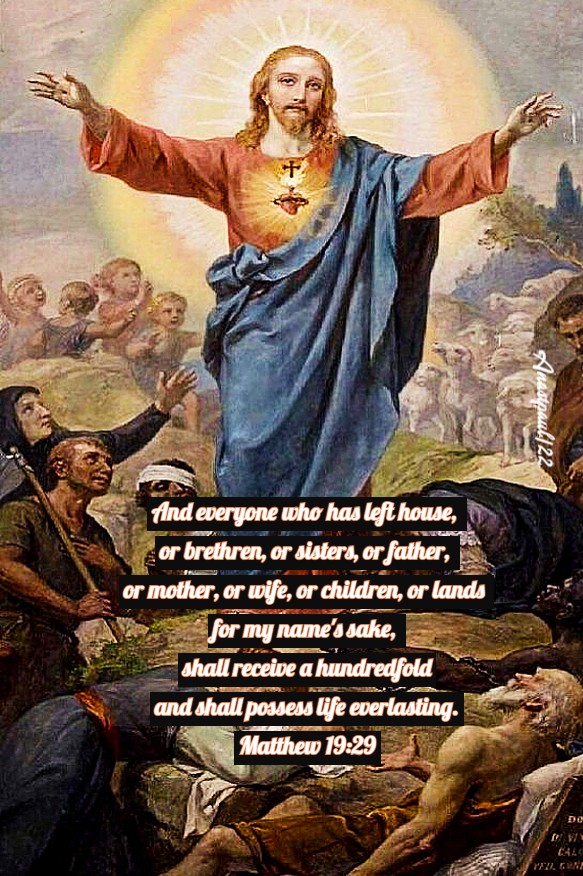
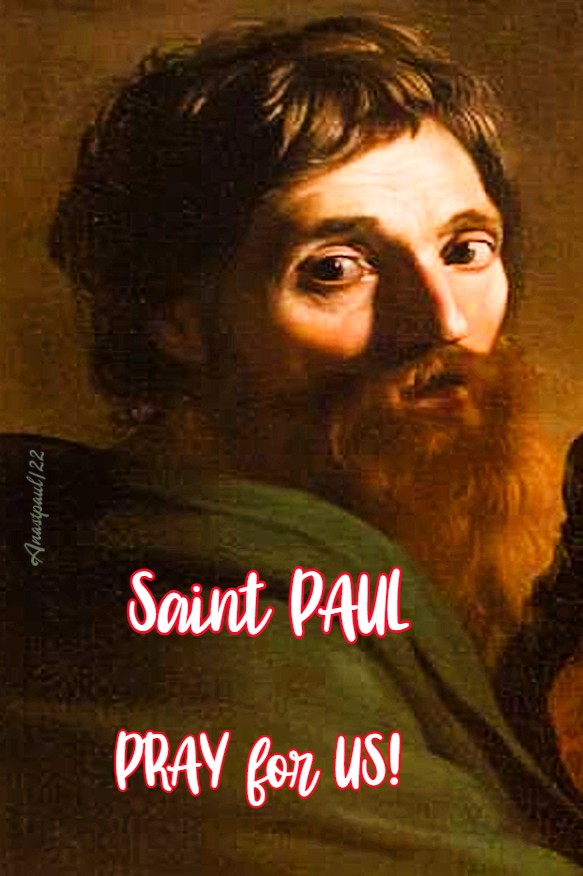
Quote/s of the Day – 25 January – Feast of the Conversion of St Paul , Apostle, Acts 9:1-22, Matthew 19,27-29.
“And everyone who has left house, or brethren, or sisters, or father, or mother, or wife, or children, or lands for my name’s sake, shall receive a hundredfold and shall possess life everlasting.”
Matthew 19:29
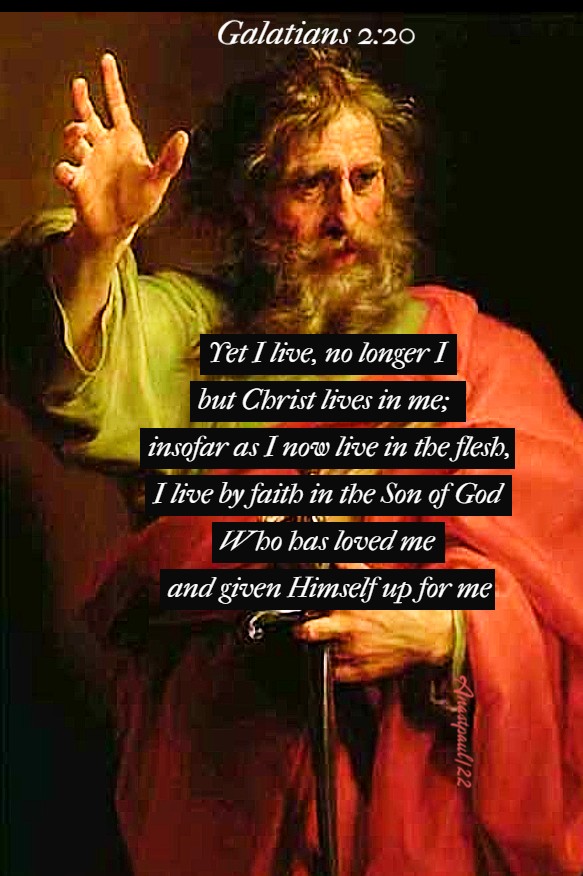
“Yet I live, no longer I but Christ lives in me; insofar as I now live in the flesh, I live by faith in the Son of God, Who has loved me and given himself up for me.”
Galatians 2:20
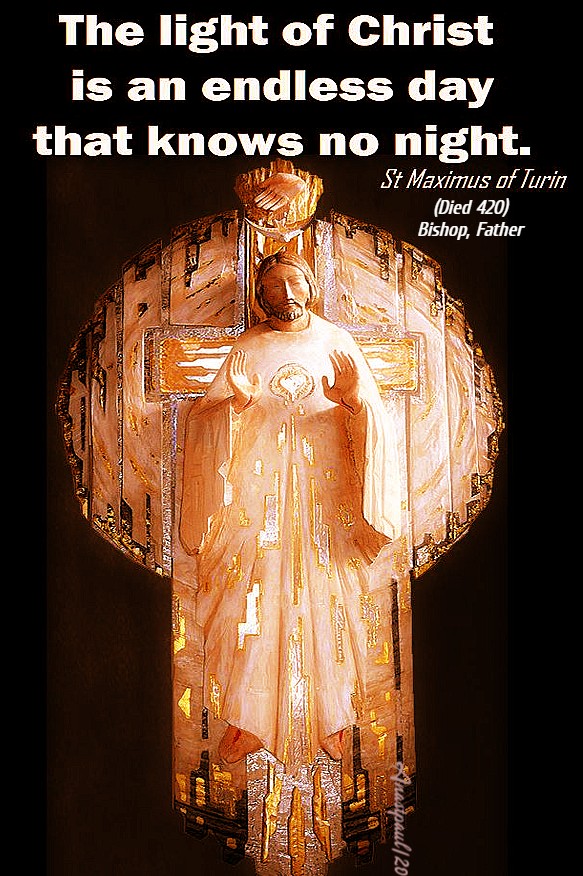
“The Light of Christ is an endless day that knows no night.”
St Maximus of Truin (Died 420) Bishop, Father
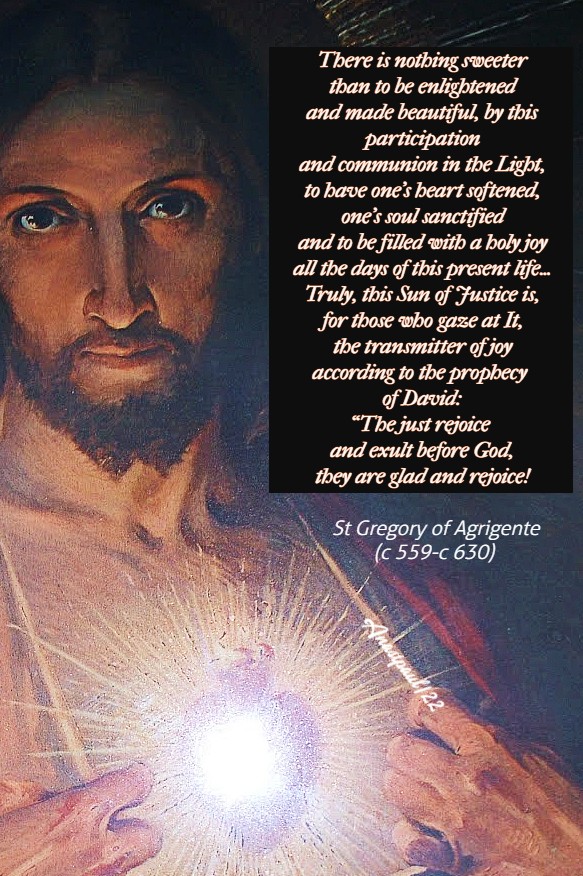
“There is nothing sweeter than to be enlightened and made beautiful, by this participation and communion in the Light, to have one’s heart softened, one’s soul sanctified and to be filled with a holy joy all the days of this present life… Truly, this Sun of Justice is, for those who gaze at It, the transmitter of joy according to the prophecy of David: “The just rejoice and exult before God, they are glad and rejoice!”
St Gregory of Agrigente (c 559-c 630) Bishop
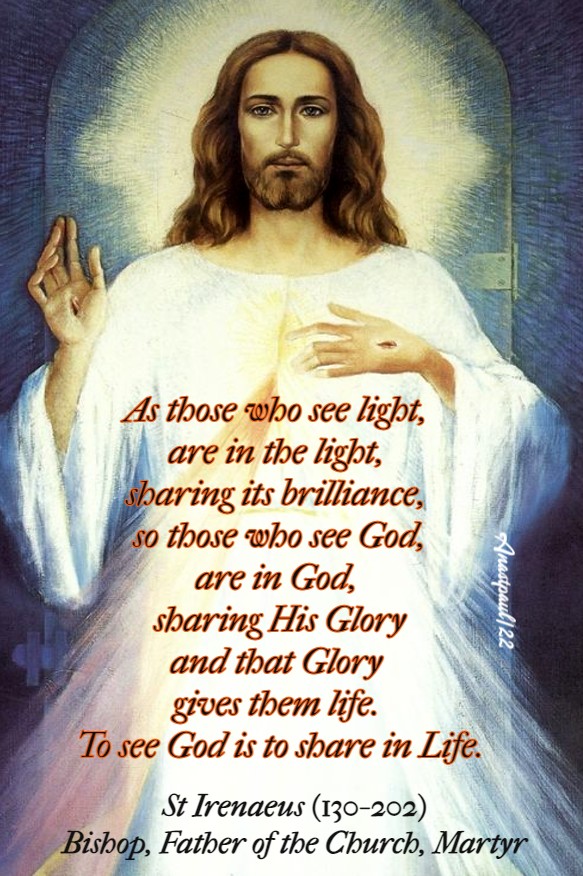
“As those who see light, are in the light, sharing its brilliance, so those who see God, are in God, sharing His Glory and that Glory gives them life. To see God is to share in Life.”
St Irenaeus (130-202) Bishop, Father of the Church, Martyr
One Minute Reflection – 25 January – Feast of the Conversion of St Paul , Apostle, Acts 9:1-22, Matthew 19,27-29.
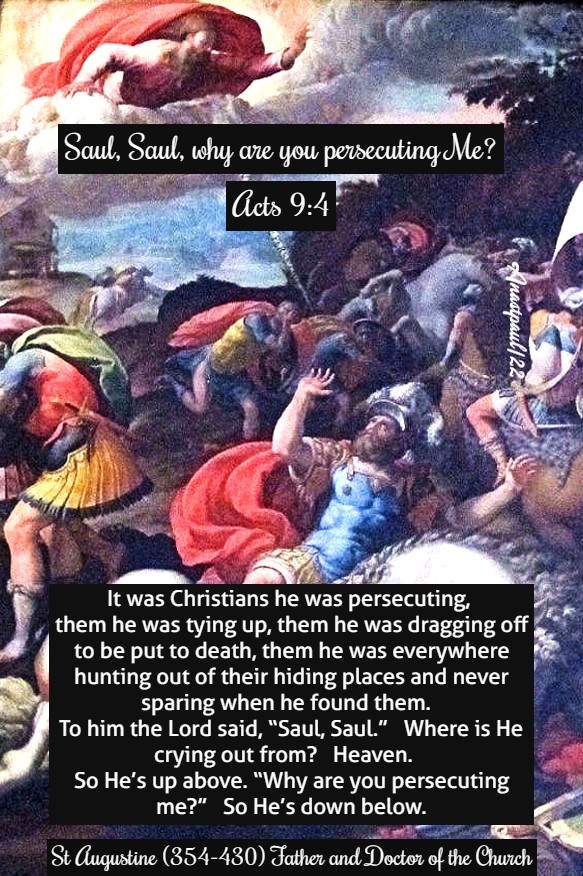
“He fell to the ground and heard a voice saying to him, “Saul, Saul, why are you persecuting Me?” – Acts 9:4.
REFLECTION – “How can we show that He is there and that He is also here? Let Paul answer for us, who was previously Saul. First of all, the Lord’s own Voice from Heaven shows this: “Saul, Saul, why are you persecuting me?” Had Paul climbed up to Heaven then? Had Paul even thrown a stone at Heaven? It was Christians he was persecuting, them he was tying up, them he was dragging off to be put to death, them he was everywhere hunting out of their hiding places and never sparing when he found them. To him the Lord said, “Saul, Saul.” Where is He crying out from? Heaven. So He’s up above. “Why are you persecuting Me?” So He’s down below.” – St Augustine (354-430) Bishop of Hippo, Father and Doctor of the Church (Sermon 122).
PRAYER – Today Lord, we celebrate the conversion of St Paul, Your chosen vessel for carrying Your Name to the whole world. Help us to make our way towards You by following in his footsteps and by being Your disciples before the men and women of our day. Grant that by the prayers of St Paul, we too may say, “Yet I live, no longer I but Christ lives in me; insofar as I now live in the flesh, I live by faith in the Son of God Who has loved me and given himself up for me.” (Galatians 2:20) Through Jesus Christ, our Lord, in union with the Holy Spirit, one God forever and ever, amen.
Our Morning Offering – 25 January – Feast of the Conversion of Saint Paul
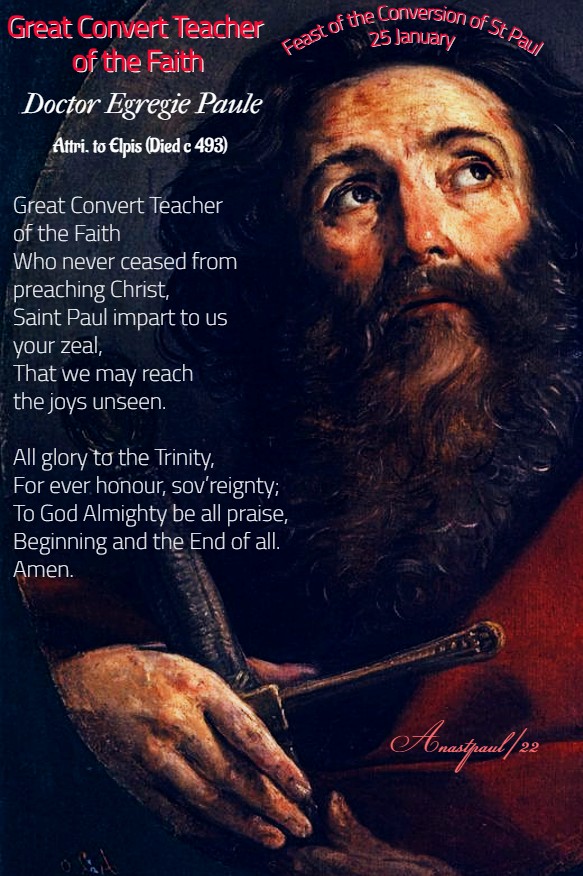
Great Convert Teacher of the Faith Doctor Egregie Paule Attri. to Elpis (Died c 493) Trans. The Benedictines of Saint Cecilia’s Abbey, Ryde, UK
Great Convert Teacher of the Faith Who never ceased from preaching Christ, Saint Paul impart to us your zeal, That we may reach the joys unseen.
All glory to the Trinity, For ever honour, sov’reignty; To God Almighty be all praise, Beginning and the End of all. Amen.
Elpis, first wife of the celebrated Philosopher Boethius, was the daughter of Festus, Consul at Rome, 472 and aunt of St Placidus, a disciple of St.Benedict. The above hymn, as well as, “Aurea luce et decore roseo” are attributed to her. Others also bear her name. She died at an early age, at Padua.
Saint of the Day – 25 January – Saint Praejectus (625–676) Bishop of Clermont, Martyr. Although he was considered a Martyr immediately after his death his murder does not seem to have been related to the hatred of the Faith. Born in 625 in Auvergne, France and died by being stabbed to death on 25 January 676 at Volvic, France. Patronage – Randazzo, Sicily. Also known as – Preietto, Preils, Prejectus, Prest, Prie, Priest, Prix, Proietto, Projectus, Pry.
The Roman Martyrology reads: “In Clermont-Ferrand in the Aquitaine region, in France, Saints Preietto, Bishop and Amarino, man of God, both killed by the notables of the City.”
Praejectus was born in the Auvergne to the nobility. He studied under St Genesius of Clermont and was Ordained a Priest and, with the approval of King Childeric II, became the Bishop of Clermont in 666.
As Bishop, Prajejectus in his 10 years as the shepherd, worked zealously founding Monasteries, hospitals and Churches. He worked with Saint Reol of Rheims, Saint Agilbert of Paris, Saint Amarinus of Clermon and Saint Ouen of Rouen to reform and calm the sometimes violent political situation in their Sees.
During the political struggles of the time, Hector, Lord of Marseilles, had been accused of various crimes and at the order of Childeric, had been arrested and executed. Agritius, the man who killed Praejectus, believed that the Bishop had been responsible for Hector’s death. At Volvic, the assassin thus stabbed Praejectus and Amarinus, the Abbot of a Monastery in the area.
An account of Praejectus’ life was written shortly after his death and he was immediately venerated as a Martyr. The author may have been a nun from the Monastery of Chamalières, which had been founded through Praejectus’ efforts and it was presided over by an Abbess who was probably a member of Praejectus’ family.
Most of St Praejectus’ relics are enshrined in Flavigny Abbey, Flavigny-sur-Ozerain, France., where there is also a miraculous fountain at which cures are granted through the intercession of St Praejectus. In 760 his cultus spread to English monastic calendars. The Church at Volvic, where Praejectus was killed, is dedicated to “St Priest” (Projectus) and where some relics reside.
Bl Antoni Swiadek St Apollo of Heliopolis St Artemas of Pozzuoli St Auxentius of Epirus St Bretannion of Tomi St Donatus the Martyr St Dwynwen (Died c 460) Virgin Princess, Nun. St Emilia Fernández Rodríguez de Cortés St Eochod of Galloway St Joel of Pulsano St Juventinus of Antioch Bl Manuel Domingo y Sol St Maximinus of Antioch St Palaemon
Thought for the Day – 24 January – Meditations with Antonio Cardinal Bacci (1881-1971)
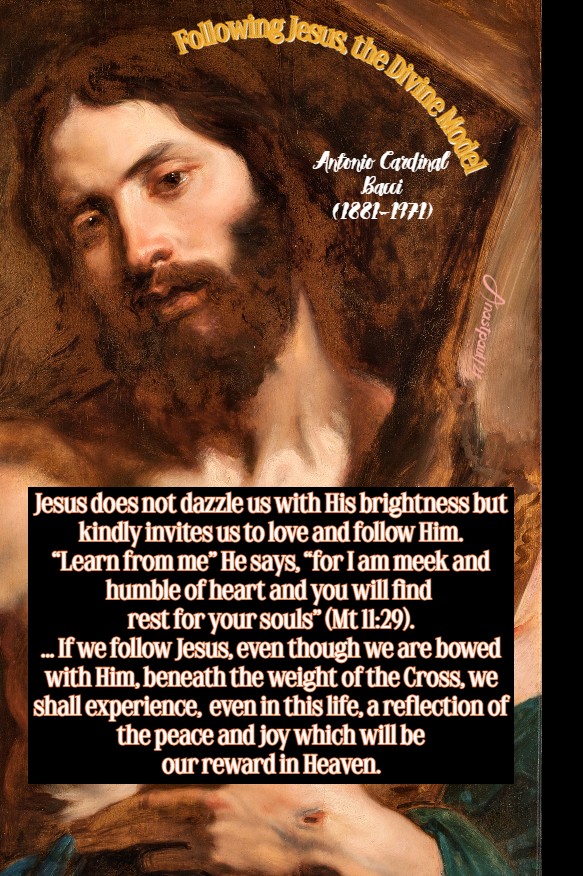
Following Jesus, the Divine Model
“Jesus is the Divine Model, Whom we ought to follow and imitate. In Him, the virtues possess both the infinite splendour of the Divinity and the gentle appeal of glorified Humanity. Jesus does not dazzle us with His brightness but kindly invites us to love and follow Him. “Learn from me” He says, “for I am meek and humble of heart and you will find rest for your souls” (Mt 11:29). After He has indicated humility, meekness and interior peace, as the foundations of the spiritual life, He invites us to take up the yoke of His law and assures us, that we shall find it light (Mt 11).
If we follow Jesus, even though we are bowed with Him, beneath the weight of the Cross, we shall experience, even in this life, a reflection of the peace and joy which will be our reward in Heaven.”
Quote/s of the Day – 24 January – Saint Timothy, Bishop and Martyr, 1 Timothy 6:11-16, Luke 14:26-33.
“If anyone comes to me without hating his father and mother, wife and children, brothers and sisters and even his own life, he cannot be my disciple.”
Luke 14:26
“Pursue justice, godliness, faith, charity, patience, mildness. Fight the good fight of the faith, lay hold on the life eternal, to which you have been called …”
1 Timothy 6:11-12
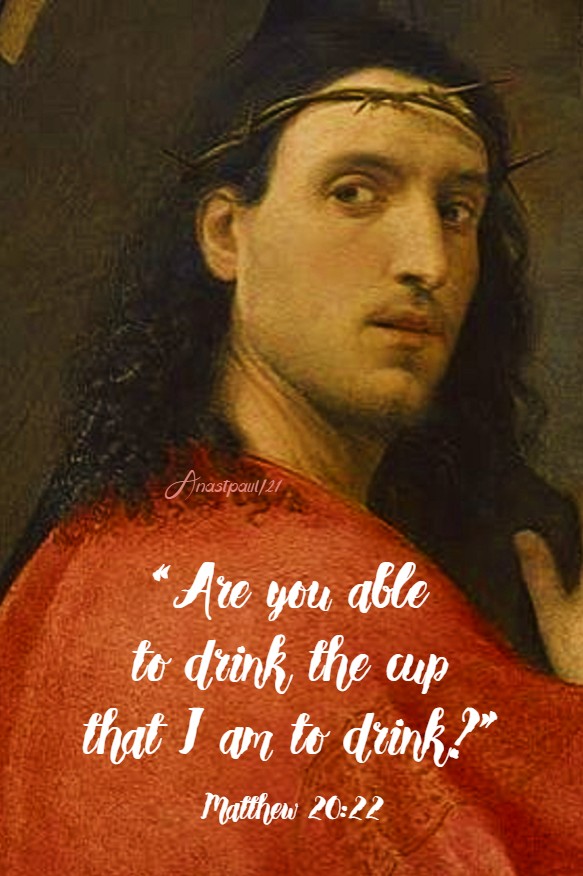
“Are you able to drink the cup that I am to drink?”
Matthew 20:22
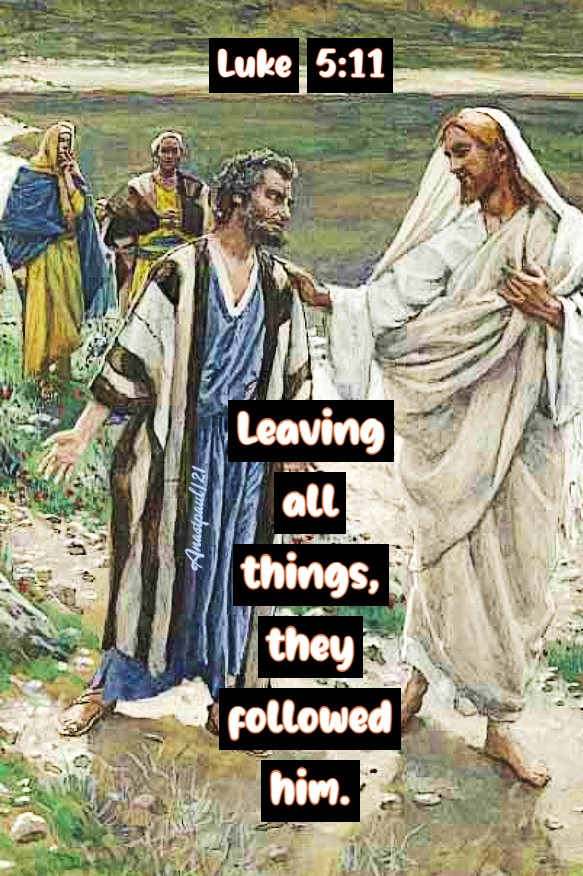
“Leaving all things, they followed him.”
Luke 5:11
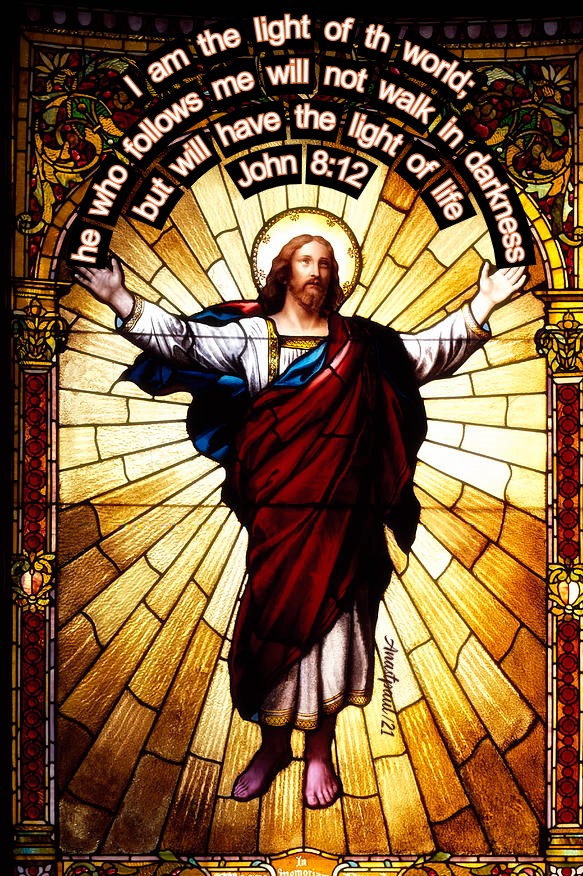
“I am the light of the world; he who follows me will not walk in darkness but will have the light of life.”
John 8:12
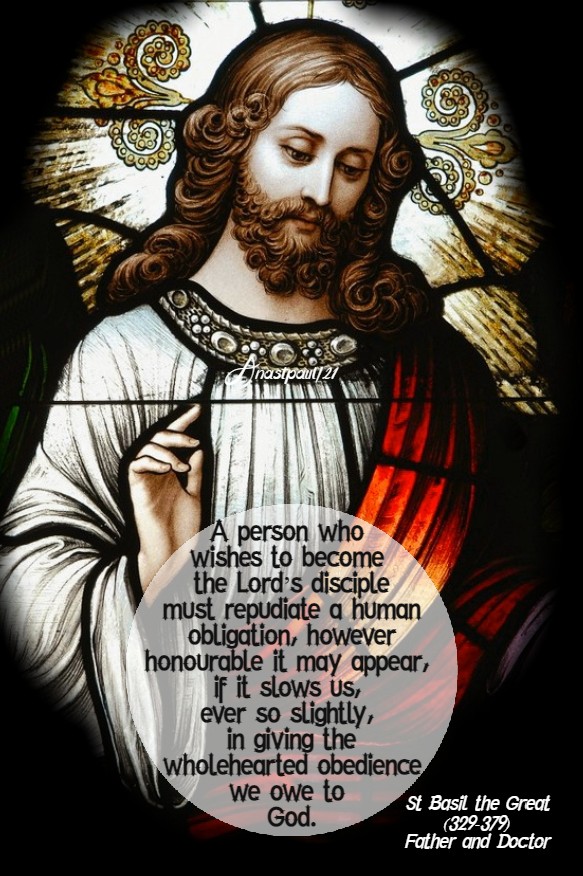
“A person who wishes to become the Lord’s disciple must repudiate a human obligation, however honourable it may appear, if it slows us, ever so slightly, in giving the wholehearted obedience we owe to God.”
St Basil the Great (329-379) Father and Doctor of the Church
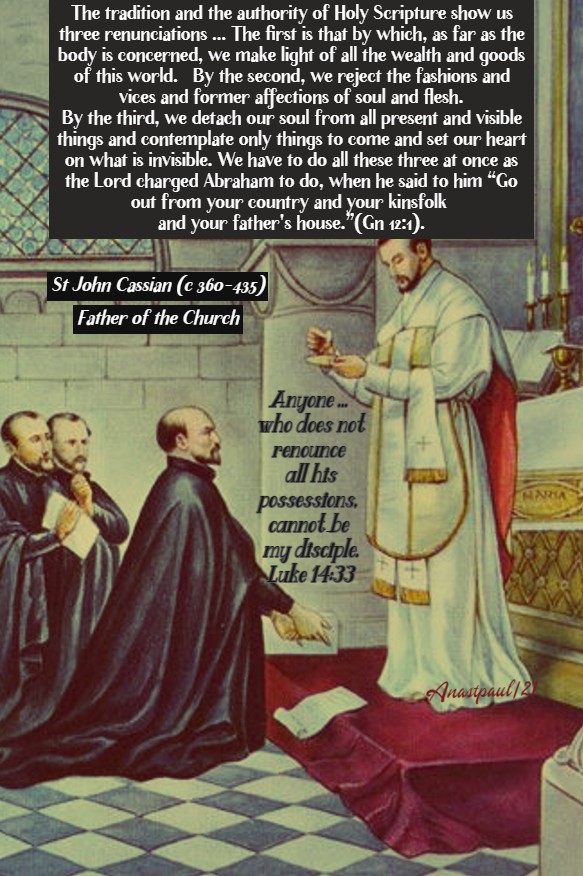
“… Anyone of you who does not renounce all his possessions, cannot be my disciple.”
Luke 14:33
“The tradition and the authority of Holy Scripture, show us three renunciations … The first is that, by which, as far as the body is concerned, we make light of all the wealth and goods of this world. By the second, we reject the fashions and vices and former affections of soul and flesh. By the third, we detach our soul from all present and visible things and contemplate only things to come and set our heart on what is invisible. We have to do all these three at once, as the Lord charged Abraham to do, when he said to him “Go out from your country and your kinsfolk and your father’s house.”(Gn 12:1).”
St John Cassian (c 360-435) Monk, Founder of Monasteries, Father of the Church (Conference 3, 6-7)
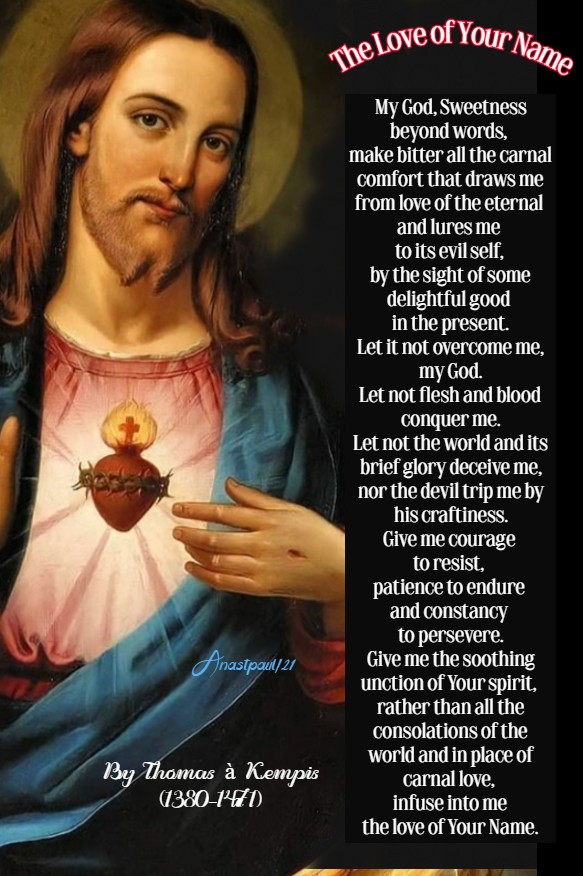
The Love of Your Name
“My God, Sweetness beyond words, make bitter all the carnal comfort that draws me from love of the eternal and lures me to its evil self, by the sight of some delightful good in the present. Let it not overcome me, my God. Let not flesh and blood conquer me. Let not the world and its brief glory deceive me, nor the devil trip me by his craftiness. Give me courage to resist, patience to endure and constancy to persevere. Give me the soothing unction of Your spirit, rather than all the consolations of the world and in place of carnal love, infuse into me the love of Your Name.”
Thomas à Kempis CRSA (1380-1471) The Imitation of Christ (Book 3 Ch 26:1-4)
One Minute Reflection – 24 January – Saint Timothy, Bishop and Martyr, 1 Timothy 6:11-16, Luke 14:26-33.
“If anyone comes to me without hating his father and mother, wife and children, brothers and sisters and even his own life, he cannot be my disciple.” – Luke 14:26
REFLECTION – “On another occasion, the Lord says, “Whoever comes to me and does not hate his father and mother, and wife and children, and brothers and sisters and even his own soul, cannot be my disciple.” As a rule, this is more upsetting to the mind of new Christians, who are eager to begin at once to live in accordance with the precepts of Christ. To those who do not fully grasp its meaning, it would seem contradictory…. He has condescended to call His disciples to the eternal Kingdom. He also called them brothers. In the Kingdom these relationships are transcended because, “there is neither Jew nor Greek, neither male nor female, neither slave nor freeman but Christ, is all things and in all.” The Lord says, “For in the resurrection, they will neither be married nor marry but will be as the angels of God in heaven.” Whoever wishes to prepare himself now, for the life of that Kingdom, must not hate people but those earthly relationships, through which the present life is sustained, the temporary life that begins at birth and ends with death. Whoever does not hate this necessity, does not yet love that other life, in which there will be no condition of birth and death, the condition that makes marriages natural on earth.” – St Augustine (354-430) Bishop, Father, Doctor of Grace (Sermon on the Mount,15).
PRAYER – Almighty God, You endowed Saint Timothy with power to preach Your Word. Grant that, living a life of integrity and holiness in this world, reaching out to teach the Gospel both by our lives and our words, we may, through their prayers, come to our true home in heaven. Through our Lord Jesus Christ, in union with the Holy Spirit, one God forever, amen.
Our Morning Offering – 24 January – Feast of Saint Timothy, Bishop and Martyr
O Fathers of Our Ancient Faith
O Fathers of our ancient faith, With all the heav’n, we sing your fame Whose sound went forth in all the earth To tell of Christ and bless His Name.
You took the Gospel to the poor, The Word of God alight in you, Which in our day is told again, That timeless Word, forever new.
You told of God, Who died for us And out of death triumphant rose, Who gave the Truth which made us free and changeless through the ages goes.
Praise Father, Son and Holy Spirit, Whose gift is faith that never dies, A light in darkness now, until The Day-Star in our hearts arise.
O Fathers of Our Ancient Faith is written by the Benedictine Nuns of Stanbrook Abbey. In the Divine Office it is sung at Morning Prayer in the Common of Apostles. It is set to the anonymous tune associated with the 7th century Latin hymn, Creator Alme Siderum.
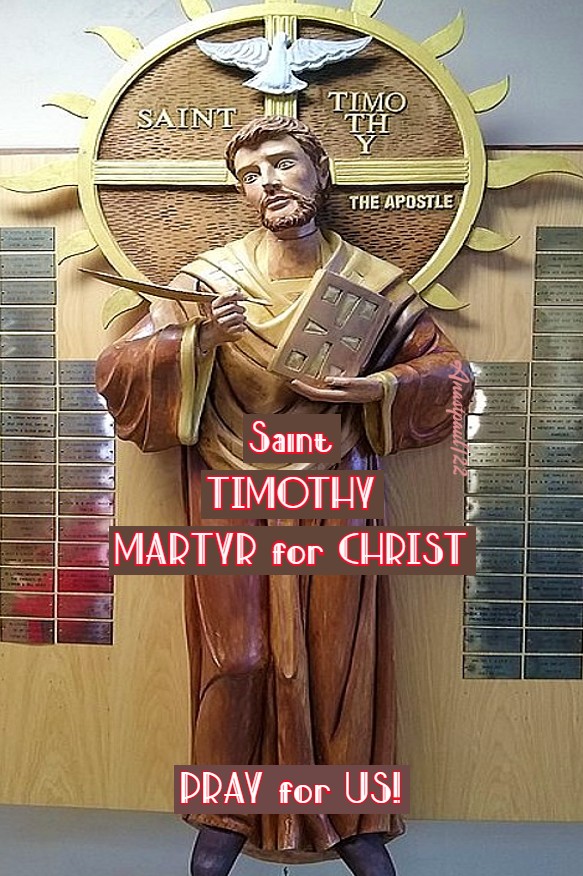
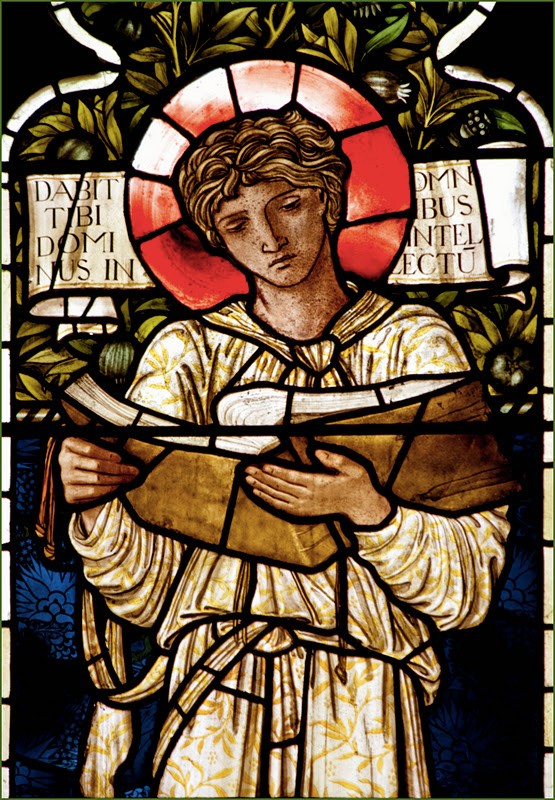
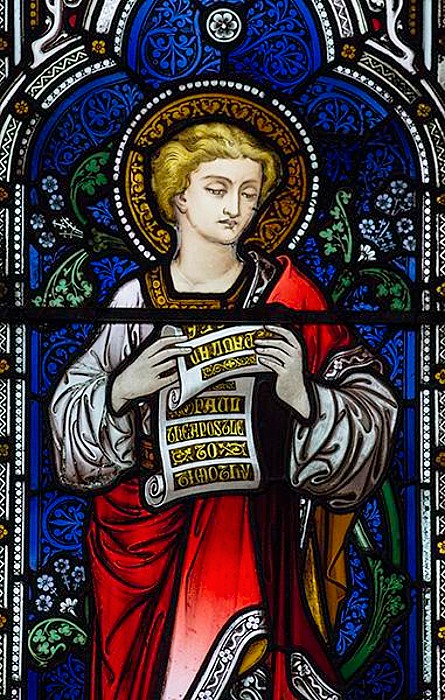
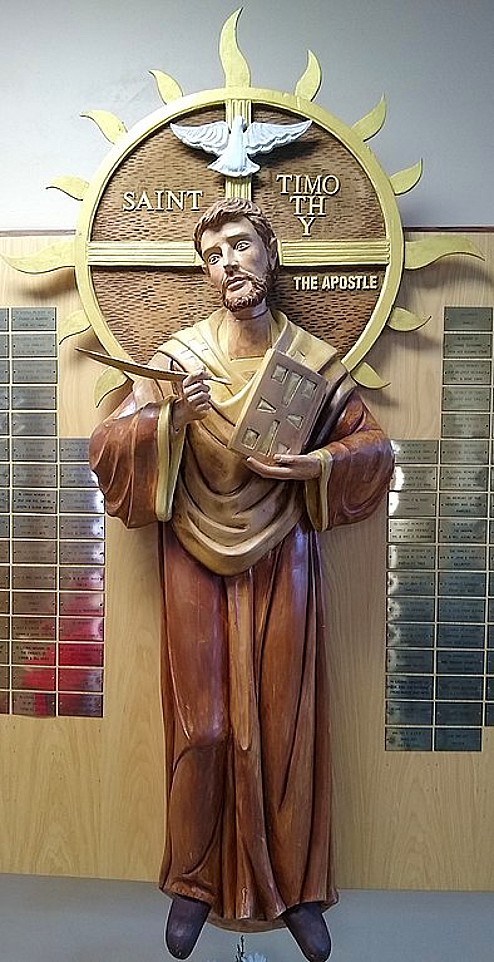
Saint of the Day – 24 January – Saint Timothy (Died c 97) Disciple of St Paul, Bishop of Ephesus and Martyr, Confessor, Missionary. Died by being stoned to death in c 97. Patronages – against intestinal disorders; of Termoli, Italy. Also known as – Timotheus. Additional Memorials – 26 January (Novus Ordo), 23 January (Australia), 27 January (Norway).
The Roman Martyrology states of St Timothy today: “The birthday of St Timothy, disciple of the Apostle, St Paul, who consecrated him Bishop of Ephesus. After many combats for Christ, he was stoned for reprehending those who offered sacrifices to Diana and shortly after, went peacefully to rest in the Lord.”
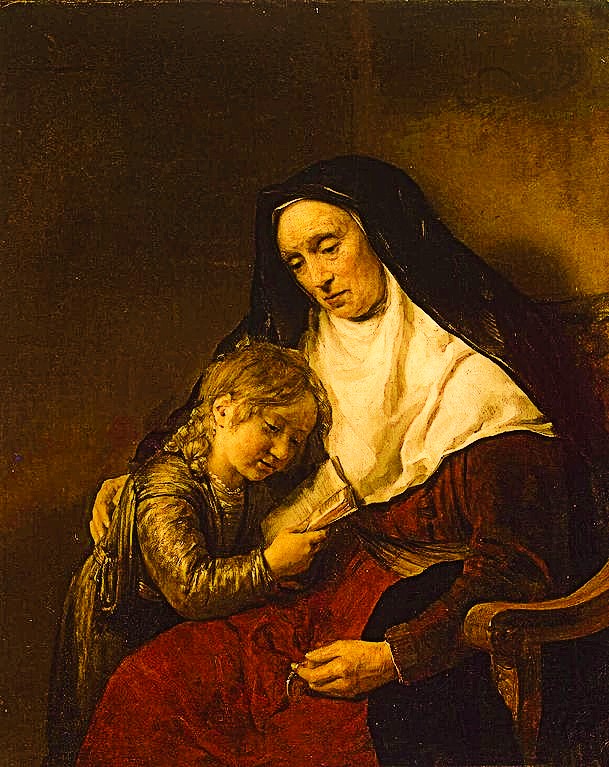
St Timothy, the beloved disciple of St Paul, was of Lycaonia and probably of the City of Lystra. His father was a Gentile but his mother, Eunice, was a Jewess. When Paul and Barnabas first visited Lystra, Paul healed a person crippled from birth, leading many of the inhabitants to accept his teaching. When he returned a few years later with Silas, Timothy was already a respected member of the Christian community as were his mother and grandmother Lois and St Paul commends their faith. Timothy had made the holy scriptures his study from his childhood. In 1 Corinthians 16:10, there is a suggestion that he was by nature reserved and quiet: “When Timothy comes, see that you put him at ease among you, for he is doing the work of the Lord.”
Rembrandt’s Timothy and his grandmother, 1648.
Timothy’s father was a Greek Gentile. Thus Timothy had not been circumcised and Paul now ensured that this was done, according to Acts 16:1-3, to enable Timothy’s acceptability to the Jews, who they would be evangelising. St Chrysostom here admires the prudence, steadiness and charity of St Paul and we may add, the voluntary obedience of our disciple, Timothy.
After he was circumcised, St Paul, by the imposition of hands, committed to him the ministry of preaching, his rare virtue making ample amends for his want of age. From that time the Apostle regarded him not only as his disciple and most dear son but as his brother and the companion of his labours. He calls him a man of God and tells the Philippians, that he found no-one so truly united to him in heart and sentiments, as Timothy.
Timothy became St Paul’s disciple and later his constant companion and co-worker in preaching.[18] In the year 52, Paul and Silas took Timothy along with them on their journey to Macedonia. Augustine extols his zeal and disinterestedness in immediately forsaking his country, his house, and his parents, to follow the apostle, to share in his poverty and sufferings.
Timothy may have been subject to ill health or “frequent ailments” and Paul encouraged him to “use a little wine for your stomach’s sake,” hence his patronage of stomach ailments,”
When Paul went on to Athens, Silas and Timothy stayed for some time at Beroea and Thessalonica before joining Paul at Corinth.
Timothy’s bond with Paul was close. Timothy’s name appears as the co-author on 2 Corinthians, Philippians, Colossians, 1 Thessalonians, 2 Thessalonians and Philemon. Paul wrote to the Philippians about Timothy, “I have no-one like him.”
When Paul was in prison and awaiting martyrdom, he summoned his faithful friend Timothy for a last farewell.
That Timothy was jailed at least once during the period of the writing of the New Testament is implied by St Paul in Hebrews when he mentions Timothy’s release at the end of the epistle.
Although not stated in the Scriptures other sources have records of the Apostle’s death. The apocryphal Acts of Timothy (5th Century) states that in the year 97, the 80-year-old Bishop tried to halt a procession in honour of the goddess Diana by preaching the Gospel. The angry pagans beat him, dragged him through the streets and stoned him to death.
From the 13th century until 1969 the feast of Timothy (alone, that is without St Titus whose feast day is 6 February) is today, 24 January, the day before that of the Conversion of Saint Paul.
In the 4th century, the relics of Timothy were transferred from Ephesus to Constantinople and placed in the Church of the Holy Apostles near the tombs of Saints Andrew and Luke. In the 13th century, the relics seem to have been taken to Italy by a count returning from the crusades and buried, around 1239, in the Termoli Cathedral. The remains were re-discovered in 1945, during restoration works.
St Filip Geryluk Bl Francesc de Paula Colomer Prísas St Guasacht St Ignacy Franczuk Bl John Grove St Julian Sabas the Elder St Luigj Prendushi St Macedonius Kritophagos Blessed Marcolino Amanni of Forli OP (1317-1397) Bl Marie Poussepin
St Projectus St Sabinian of Troyes St Suranus of Sora St Thyrsus Bl William Ireland
Martyrs of Asia Minor – 4 Saints: A group of Christians martyred together for their faith. The only details to survive are four of their names – Eugene, Mardonius, Metellus and Musonius. They were burned at the stake in Asia Minor.
Martyrs of Podlasie – 13 Beati: Podlasie is an area in modern eastern Poland that, in the 18th-century, was governed by the Russian Empire. Russian sovereigns sought to bring all Eastern-rite Catholics into the Orthodox Church. Catherine II suppressed the Greek Catholic Church in Ukraine in 1784. Nicholas I did the same in Belarus and Lithuania in 1839. Alexander II did the same in the Byzantine-rite Eparchy of Chelm in 1874 and officially suppressed the Eparchy in 1875. The Bishop and the Priests who refused to join the Orthodox Church were deported to Siberia or imprisoned. The laity, left on their own, had to defend their Church, their liturgy and their union with Rome. On 24 January 1874 soldiers entered the village of Pratulin to transfer the parish to Orthodox control. Many of the faithful gathered to defend their parish and Church. The soldiers tried to disperse the people but failed. Their commander tried to bribe the parishioners to abandon Rome but failed. He threatened them with assorted punishments but this failed to move them. Deciding that a show of force was needed, the commander ordered his troops to fire on the unarmed, hymn-singing laymen. Thirteen of the faithful died, most married men with families, ordinary men with great faith. We know almost nothing about their lives outside of this incident. Their families were not allowed to honour them or participate in the funerals and the authorities hoped they would be forgotten. Their names are: • Anicet Hryciuk • Bartlomiej Osypiuk • Daniel Karmasz • Filip Geryluk • Ignacy Franczuk • Jan Andrzejuk • Konstanty Bojko • Konstanty Lukaszuk • Lukasz Bojko • Maksym Hawryluk • Michal Wawryszuk • Onufry Wasyluk • Wincenty Lewoniuk Martyrdom: • shot on 14 January 1874 by Russian soldiers in Podlasie, Poland • buried nearby without rites by those soldiers Beatified – 6 October 1996.
Martyrs of Antioch: Babylas Epolonius Prilidian Urban
Thought for the Day – 23 January – Meditations with Antonio Cardinal Bacci (1881-1971)
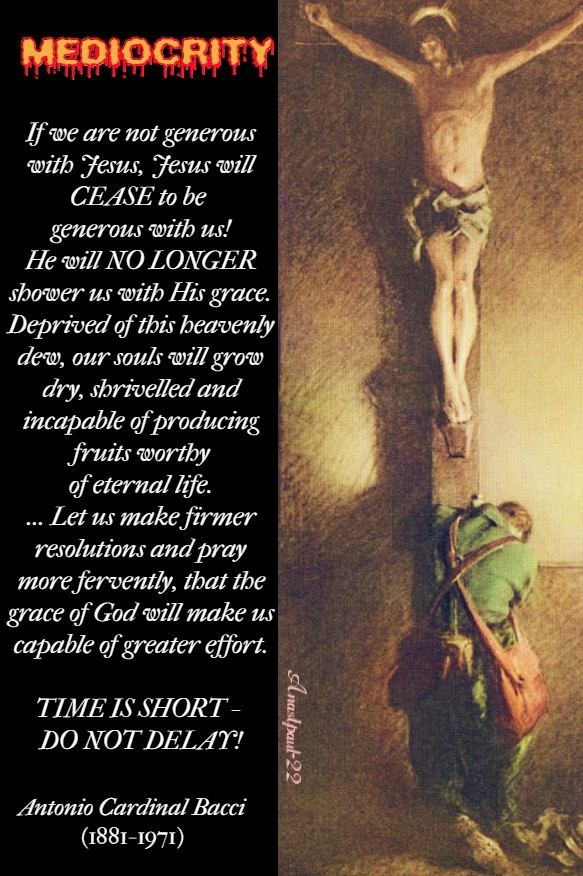
Mediocrity
“Mediocrity in the spiritual life, inevitably paves the way for sin. Indifference at prayer, listlessness in practising charity and habitual neglect of our duties in life, lead firstly, to deliberate venial sin and finally, to mortal sin. If we are not generous with Jesus, Jesus will CEASE to be generous with us! He will NO LONGER shower us with His grace. Deprived of this heavenly dew, our souls will grow dry, shrivelled and incapable of producing fruits worthy of eternal life.
Let us get rid of any tendency towards lassitude. Let us revive the divine charity in ourselves. Let us make firmer resolutions and pray more fervently, that the grace of God will make us capable of greater effort. TIME IS SHORT – DO NOT DELAY!”
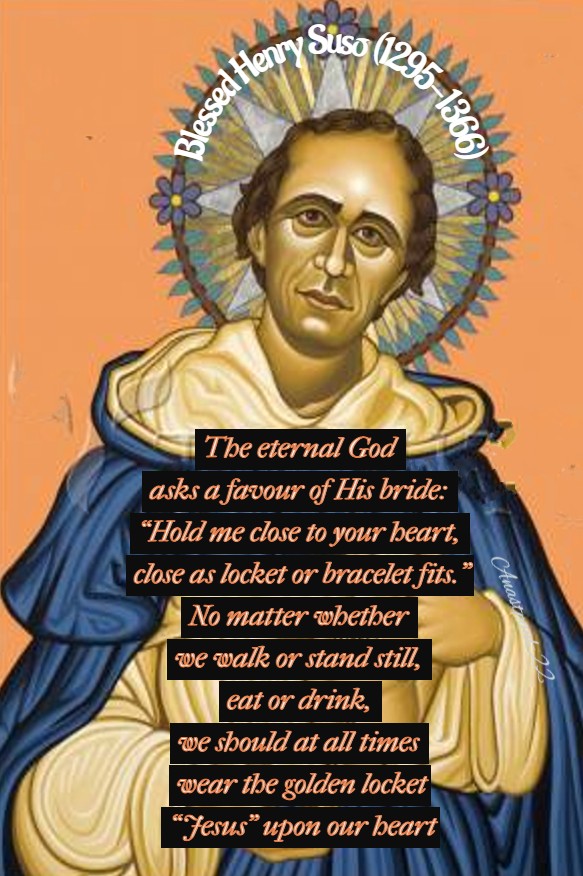
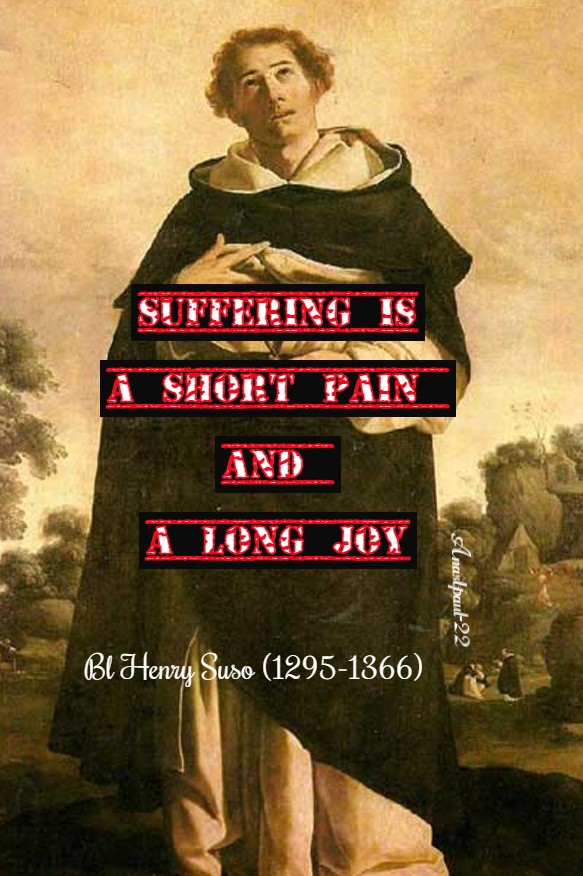
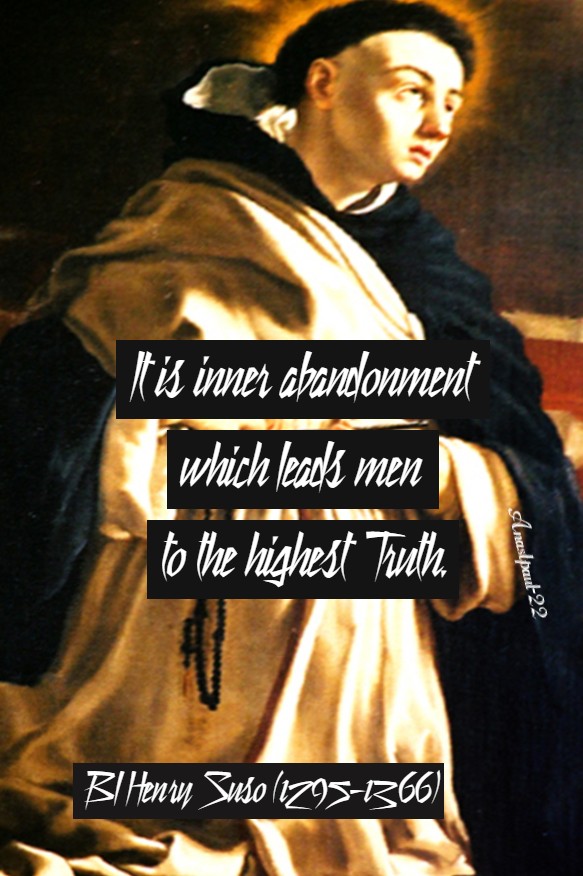
Quote/s of the Day – 23 January – “Month of the Most Holy Name of Jesus” – The Memorial of Blessed Henry Suso OP (1295-1366)
“The eternal God asks a favour of His bride: “Hold me close to your heart, close as locket or bracelet fits.” No matter whether we walk or stand still, eat or drink, we should at all times wear the golden locket “Jesus” upon our heart.”
“Suffering is a short pain and a long joy.”
“Nowhere does Jesus hear our prayers more readily, than in the Blessed Sacrament.”
“It is inner abandonment which leads men to the highest Truth.”
One Minute Reflection – 23 January – The Third Sunday after the Epiphany, Romans 12:16-21, Matthew 8:1-13
“Many will come from the east and the west and will recline… at the banquet in the kingdom of heaven” – Matthew 8:11
REFLECTION – “I have seen our Lord in the Gospel accomplish many miracles and, reassured by them, have strengthened my fearful words. I have seen the centurion throw himself at the Lord’s feet, nations send their firstfruits to Christ. The Cross has not yet been erected and already, pagans hasten towards their Master. The words “Go, teach all nations” have not yet been heard (Mt 28,19) but the nations are already hastening. Their race precedes their call, they are burning with desire for the Lord. The sound of preaching has not yet been heard but they are hurrying towards the One Who preaches. Peter… has now been instructed and they gather around the One Who is teaching him; the light of Paul has not yet blazed beneath Christ’s standard and nations are coming with incense to adore the King (Mt 2,11).
And now, see how a centurion begs Him and says to him: “Lord, my servant is lying at home paralysed, suffering dreadfully.” Here is a new miracle indeed! The servant, whose limbs are paralysed leads his master to the Lord; the slaves’ sickness gives health to his owner. Seeking his servant’s healing, he finds our Lord and while he is seeking for his slave’s cure, he becomes Christ’s conquest!” – Basil of Seleucia (Died c 468) Archbishop (Homily 19 on the centurion, PG 85, 235f).
PRAYER – Grant Almighty Father, that when Christ comes again, we may go out to meet Him, bearing the harvest of good works, achieved by Your grace. We pray that He will receive us into the company of the Saints and call us into the Kingdom of Heaven. And may His Mother and ours, the most pure Virgin Mary be our intercessor and advocate. We make our prayer through Christ our Lord, in the unity of the Holy Spirit, God forever, amen.
Our Morning Offering – 23 January – The Third Sunday after the Epiphany
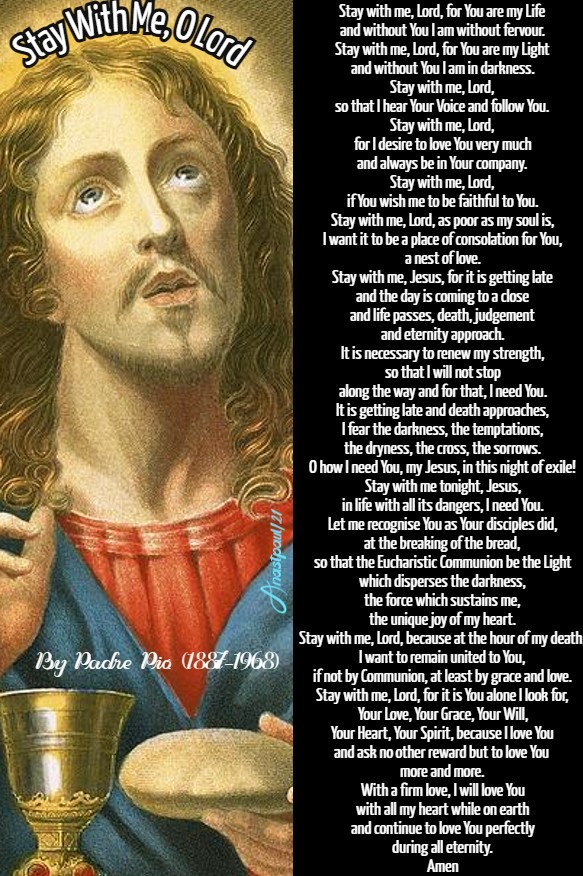
Stay With Me, O Lord By Padre Pio (1887-1968)
Stay with me, Lord, for You are my Life and without You, I am without fervour. Stay with me, Lord, for You are my Light and without You, I am in darkness. Stay with me, Lord, so that I hear Your Voice and follow You. Stay with me, Lord, for I desire to love You very much and always be in Your company. Stay with me, Lord, if You wish me to be faithful to You. Stay with me, Lord, as poor as my soul is, I want it to be a place of consolation for You, a nest of Love. Stay with me, Jesus, for it is getting late and the day is coming to a close and life passes, death, judgement and eternity approach. It is necessary to renew my strength, so that I will not stop along the way and for that, I need You. It is getting late and death approaches, I fear the darkness, the temptations, the dryness, the cross, the sorrows. O how I need You, my Jesus, in this night of exile! Stay with me tonight, Jesus, in life with all its dangers, I need You. Let me recognise You as Your disciples did, at the breaking of the bread, so that the Eucharistic Communion be the Light which disperses the darkness, the force which sustains me, the unique joy of my heart. Stay with me, Lord, because at the hour of my death, I want to remain united to You, if not by Communion, at least by grace and love. Stay with me, Lord, for it is You alone I look for, Your Love, Your Grace, Your Will, Your Heart, Your Spirit, because I love You and ask no other reward but to love You more and more. With a firm love, I will love You with all my heart while on earth and continue to love You perfectly, during all eternity. Amen.
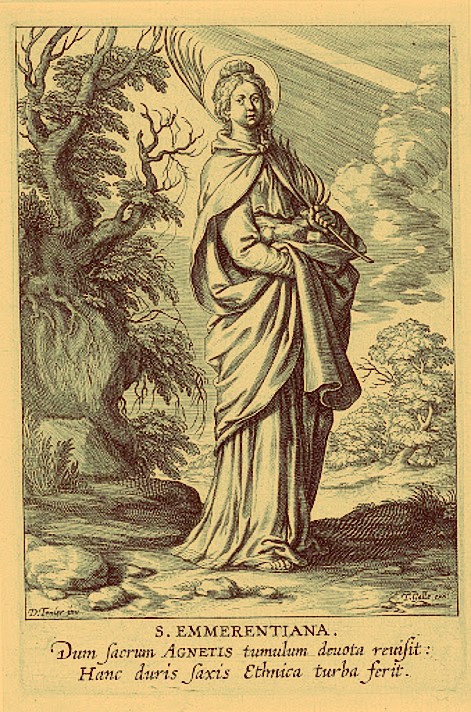
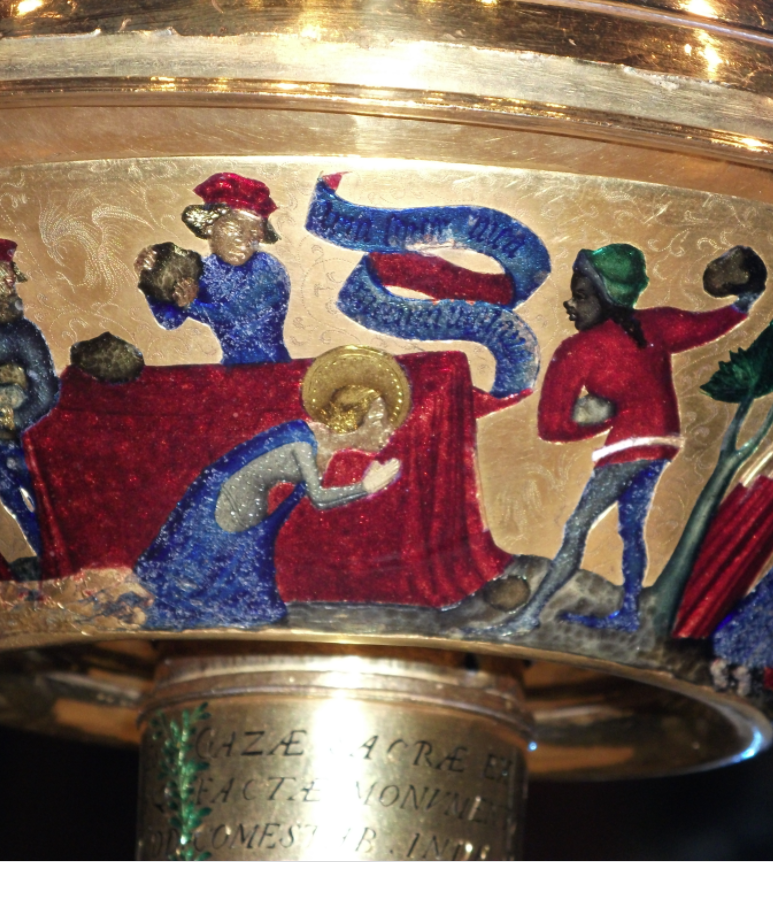
Saint of the Day – 23 January – St Emerentiana (Died c 301) Virgin, Martyr, Foster Sister pf St Agnes, Catechumen. Also known as – Emerentia. Died by being stoned to death in c 304 at Rome, Italy. Patronages – against abdominal pains, stomach ailments, against colic.
The Roman Martyrology states: “At Rome, the holy Virgin and Martyr, Emerentiana. Being only a Catechumen, she was stoned to death by the pagans, whilst praying t the tomb of St Agnes, her Foster Sister.”
An unknown author of the 5th century. added to the Latin Passio of St Agnes, a third chapter that dwells on the funeral of the Saint, on her appearance to her parents, eight days after her death and on the foundation of the Basilica built in her honour by St Costanza, daughter of Constantine.
Among the faithful who flocked to St Agnes’ funeral is also remembered “Emerentiana.”
A sudden attack by fanatical pagans scattered the Christians. Emerenziana, instead of fleeing, courageously addressed the assailants but ended up being stoned to death. The parents of St Agnes buried her body nearby on the limits of their property. There is no doubt, the author concludes, enunciating the doctrine on the Baptism of blood, that Emerenziana was Baptised in her blood, having died for the defence of justice, confessing the Lord.
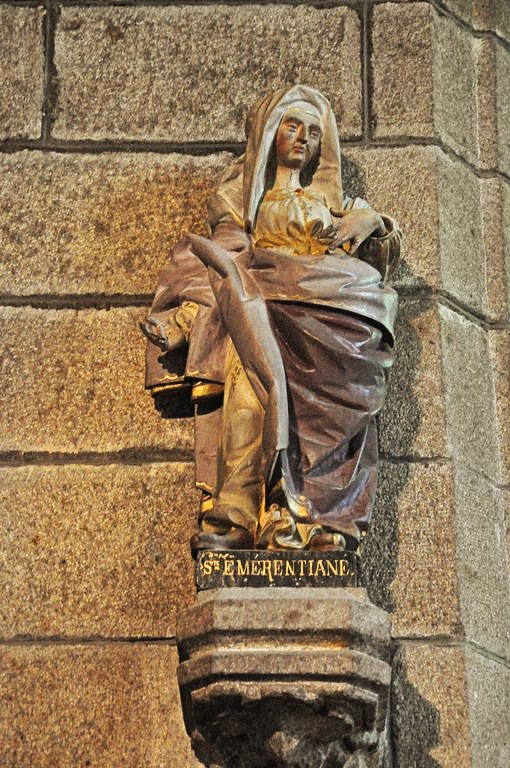
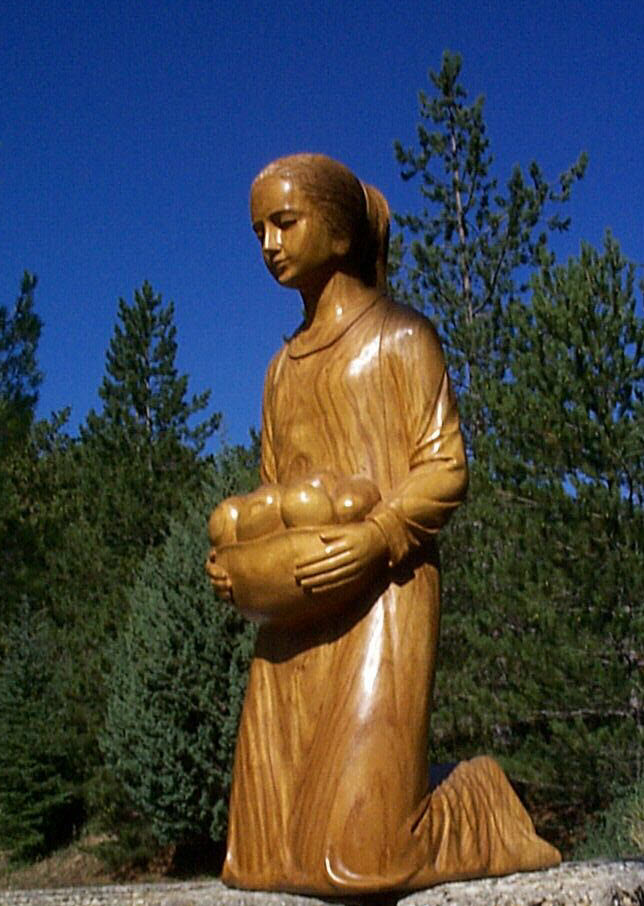
Emerentiana is represented as a young girl who either has stones in her lap and lilies in her hand, or as being stoned to death by a mob. Her tomb is inow n the Church of St Agnes outside the walls, in Rome. An Altar dedicated to her with a marble relief by Ercole Ferrata depicting her Martyrdom is in St Agnes in Agone.
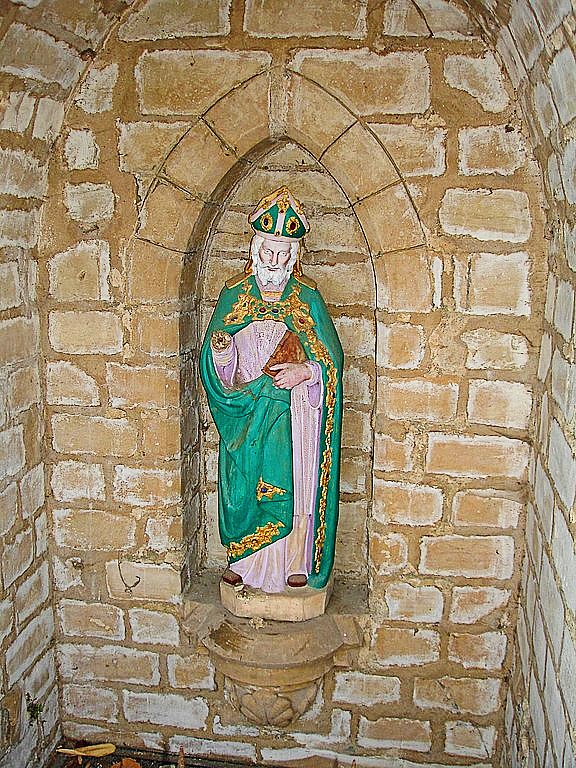
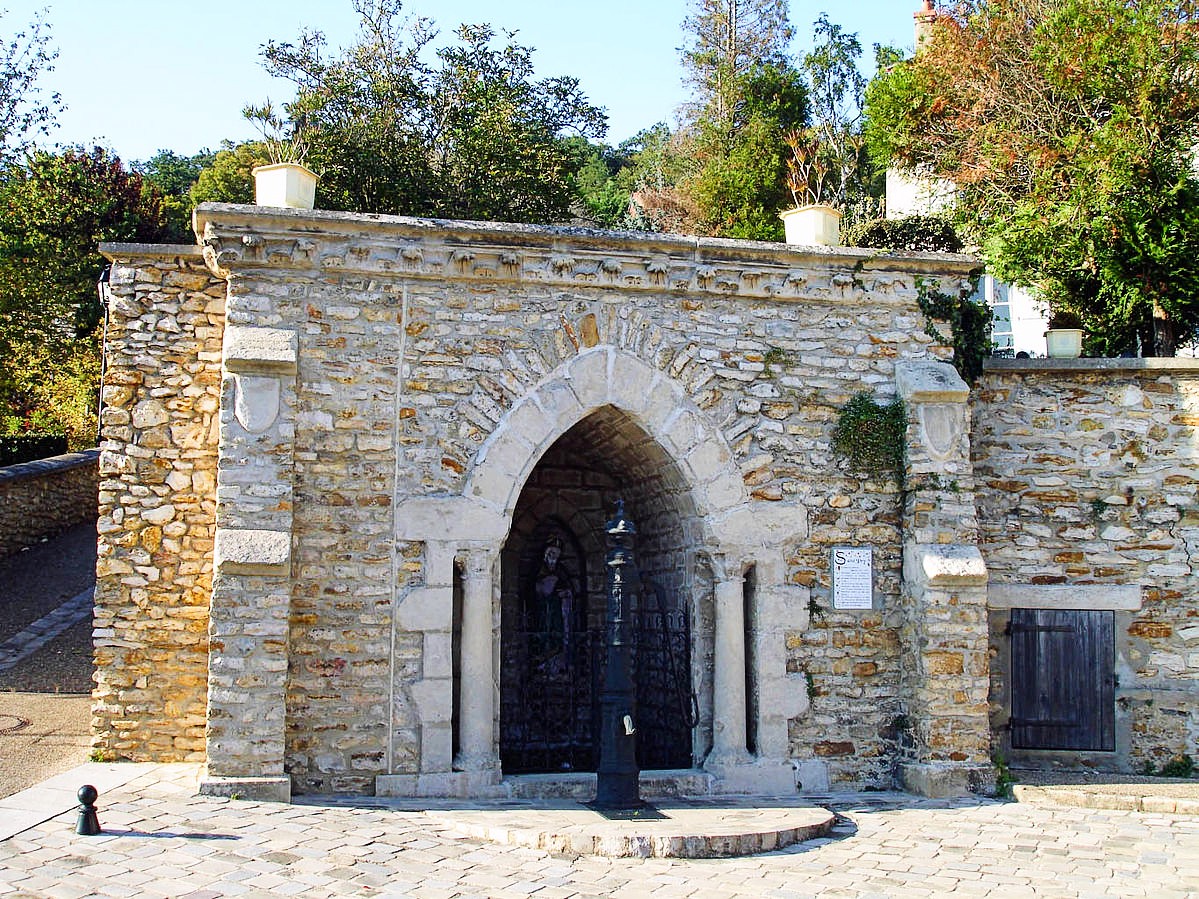
There is another Chapel dedicated to St Emerentiana at the Marian Shrine of Notre Dame de Vie. Venasque, France, as a special Patron of the Secular Institute of Our Lady of Life. The Statue below resides in this Chapel.
St Raymond of Peñafort OP (1175-1275) “Father of Canon Law” Dominican Priest, Doctor of Canon Law, the Third Master of the Order of Preachers, Founder of the Mercedarian friars, Writer, Teacher, Miracle-Worker. St Raymond of Peñafort’s Feast day was inserted in the General Roman Calendar in 1671 for celebration on 23 January. In 1969 it was moved to 7 January, the day after that of his death. He is the Patron Saint of canon lawyers, specifically and lawyers, in general. Biography: https://anastpaul.com/?s=st+raymond+penafort
St Ildephonsus (506-667) Archbishop of Toledo. Theologian, Scholar, Marian devotee, Writer, Evangeliser. Abbot Dom Guéranger calls him the Doctor of the Virginity of Mary. Saint Ildephonsus established the feast of the Expectation of the Blessed Virgin Mary, which is still kept in some places on 18 December. Biography: https://anastpaul.wordpress.com/2018/01/23/saint-of-the-day-23-january-st-ildephonsus-607-667/
Bl Juan Infante St Jurmin St Lufthild St Maimbod Bl Margaret of Ravenna Martyrius of Valeria St Messalina of Foligno St Ormond of Mairé St Parmenas the Deacon St Severian the Martyr
Thought for the Day – 22 January – Meditations with Antonio Cardinal Bacci (1881-1971)
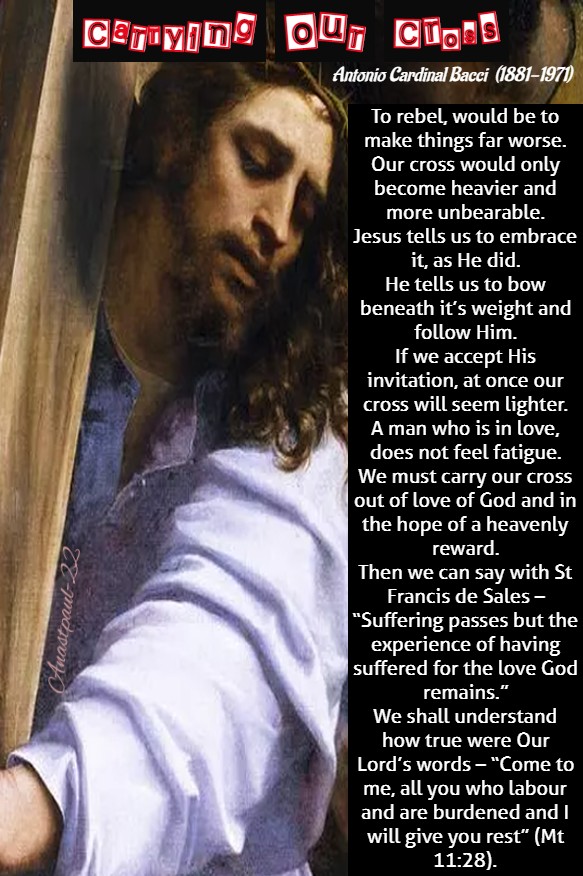
Carrying our Cross
“When we have renounced ourselves in order to do the will of God in every detail, we must embrace our cross everyday. We must carry it with resignation and love, in the footsteps of Jesus. Each of us has his cross. It might be, ill health or financial distress. It might be, some person whom we feel to be intolerable and with whom we hve to live. It might be, humiliation or calumny. It might be, some temptation, which we find hard to fight and which is continually causing us to fall. It might be, all of these things together. Whatever it is, it is our cross.
To rebel, would be to make things far worse. Our cross would only become heavier and more unbearable. Jesus tells us to embrace it, as He did. He tells us to bow beneath it’s weight and follow Him. If we accept His invitation, at once our cross will seem lighter. A man who is in love, does not feel fatigue. We must carry our cross out of love of God and in the hope of a heavenly reward. Then we can say with St Francis de Sales – “Suffering passes but the experience of having suffered for the love God remains.” We shall understand how true were Our Lord’s words – “Come to me, all you who labour and are burdened and I will give you rest” (Mt 11:28).
The cross, which we accept, from the hands of Jesus and out of love for Him, is a sweet burden.”
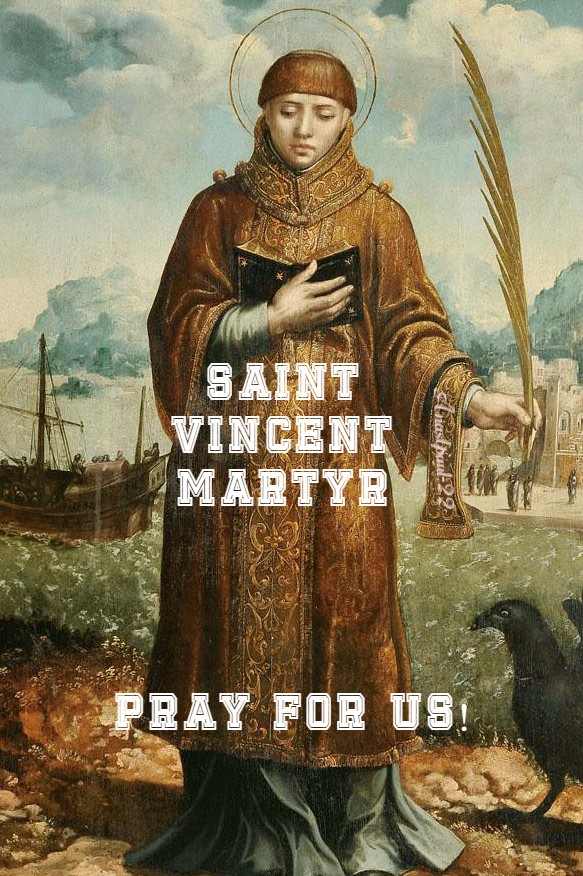
Quote/s of the Day – 22 January – “Month of the Most Holy Name of Jesus” – The Memorial of Saints Vincent of Saragossa (Died 304) Martyr – Wisdom 3:1-8, Luke 21:9-19
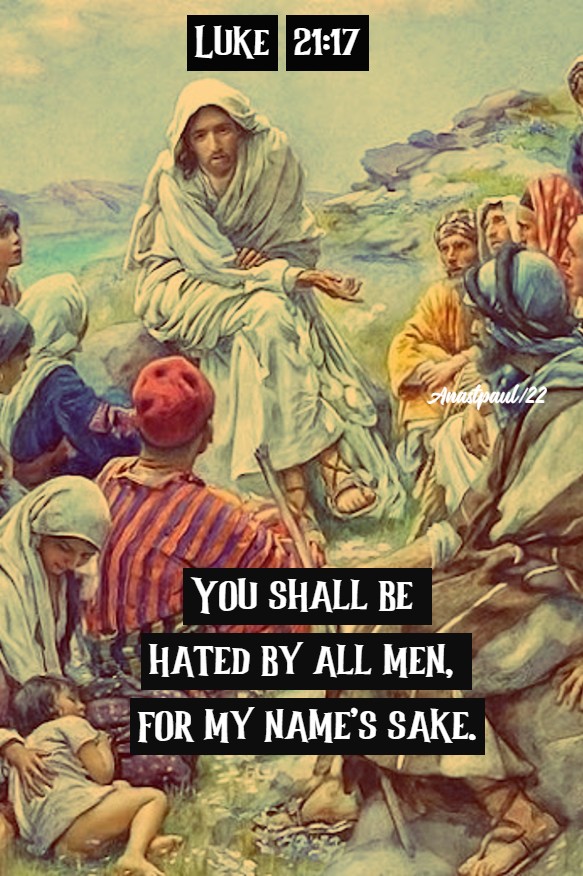
“And you shall be hated by all men, for my name’s sake.”
Luke 21:17
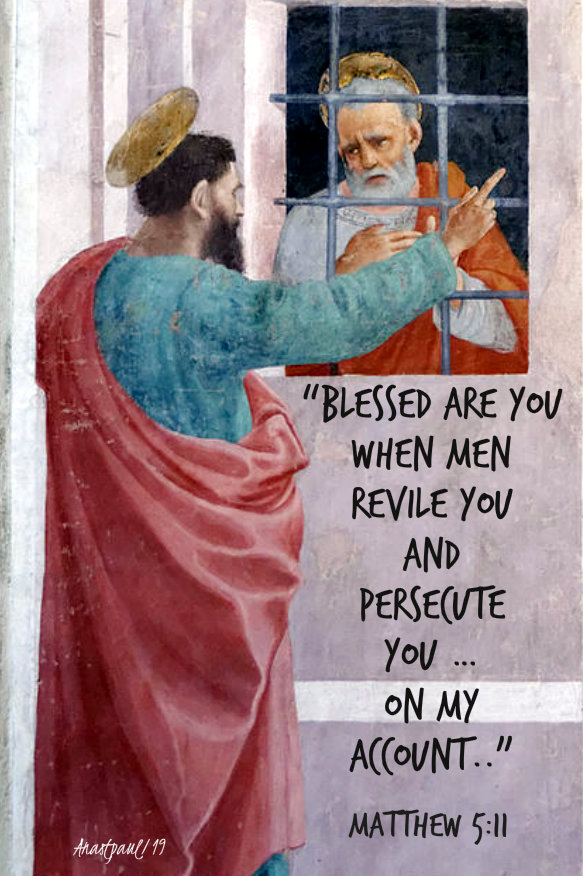
“Blessed are you when men revile you and persecute you … on my account”
Matthew 5:11
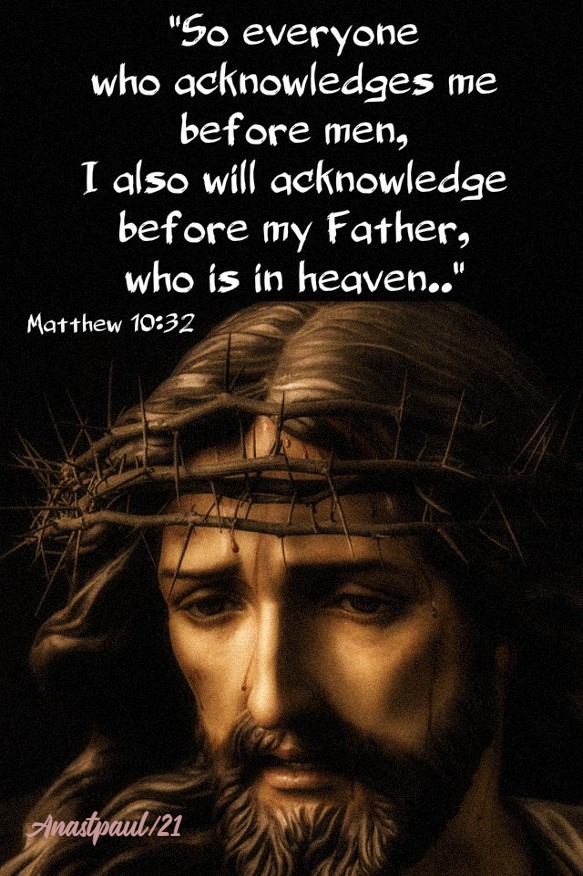
“So everyone who acknowledges me before men, I also will acknowledge before my Father, who is in heaven…”
Matthew 10:32
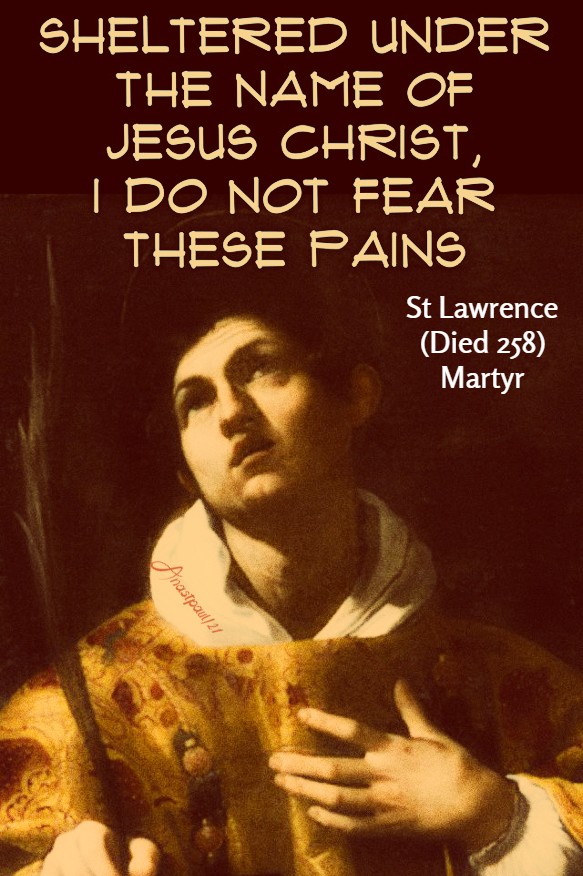
“Sheltered under the name of Jesus Christ, I do not fear these pains ….”
St Lawrence (Died 258) Deacon and Martyr
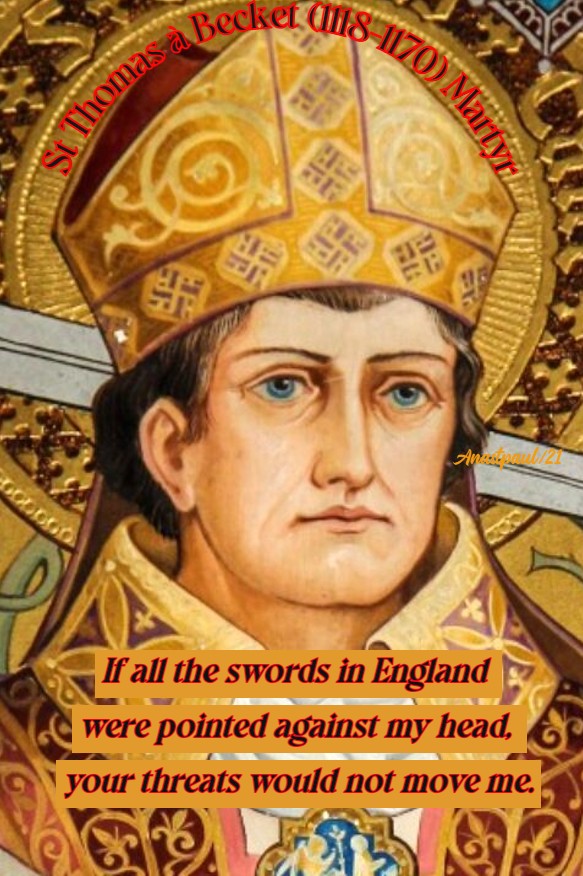
“If all the swords in England were pointed against my head, your threats would not move me.”
St Thomas à Becket (1118-1170) Martyr, Archbishop of Canterbury
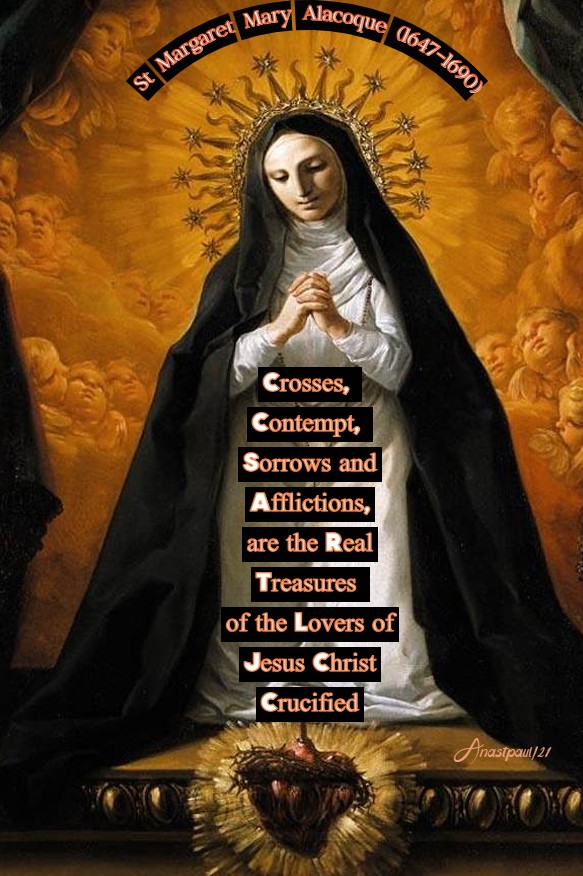
“Crosses, contempt, sorrows and afflictions, are the real treasures of the lovers of Jesus Christ Crucified.”
St Margaret Mary Alacoque (1647-1690)
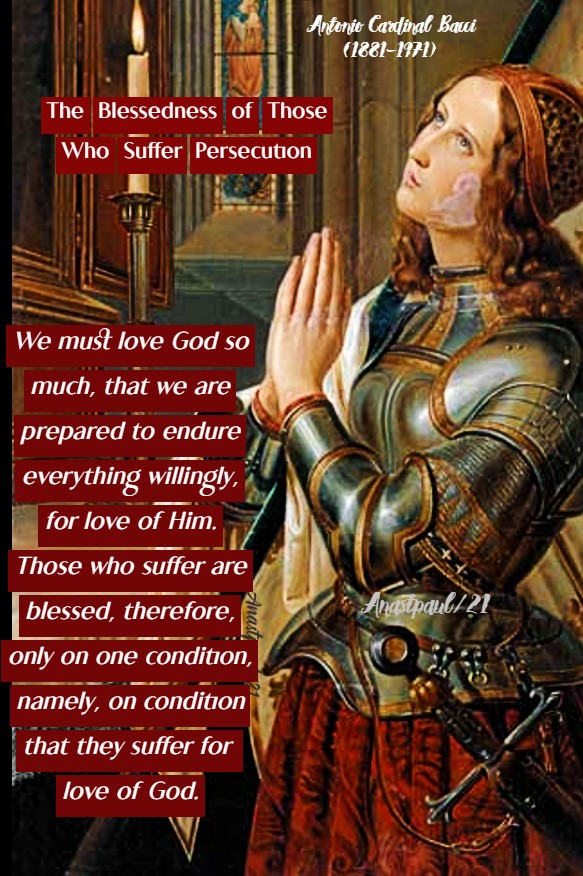
“We must love God so much, that we are prepared to endure everything willingly, for love of Him. Those who suffer are blessed, therefore, only on one condition, namely, on condition that they suffer for love of God.”
One Minute Reflection – 22 January – The Memorial of Saints Vincent of Saragossa (Died 304) Martyr – Wisdom 3:1-8, Luke 21:9-19
“Before all this happens, however, they will seize and persecute you, they will hand you over to the synagogues and to prisons and they will have you led, before kings and governors because of my name …” – Luke 21:12
REFLECTION – “Jesus gives them clear and evident signs of the time when the consummation of the world draws near. He says that there will be wars, turmoil, famines and epidemics everywhere. There will be terrors from heaven and great signs. As another Evangelist says, “All the stars shall fall and the heaven be rolled up like a scroll and its powers will be shaken.”
In the middle of this, the Saviour places what refers to the capture of Jerusalem. He mixes the accounts together in both parts of the narrative. Before all these things, He says, “They will lay their hands on you and persecute you, delivering you up to synagogues and to prisons and bringing you before kings and rulers for my name’s sake. This will be a witness to you.” Before the times of consummation, the land of the Jews was taken captive and the Roman armies overran it. They burned the temple, overthrew their national government and stopped the means for legal worship. They no longer had sacrifices, now that the temple was destroyed. The country of the Jews together with Jerusalem itself was totally laid waste. Before these things happened, they persecuted the blessed disciples. They imprisoned them and had a part in unendurable trials. They brought the disciples before judges and sent them to kings. Paul was sent to Rome to Caesar.
Christ promises, however, that He will deliver them certainly and completely. He says that a hair of your head will not perish!” – St Cyril of Alexandria (376-444) Bishop of Alexandria, Father and Doctor of the Incarnation the Church (Commentary on Luke, Homily 139)
PRAYER – True Light of the world, Lord Jesus Christ, as You enlighten all men for their salvation, give us the grace, we pray, to herald Your coming by preparing the ways of justice and of peace. We walk in faith and by Your Light as St Vincent, fearless of men to the end and trusting only in Your grace, inspires us to follow. Grant that his prayers may assist us on our path. Who live and reign with the Father and the Holy Spirit, God forever, amen.
Our Morning Offering – 22 January – Mary’s Saturday
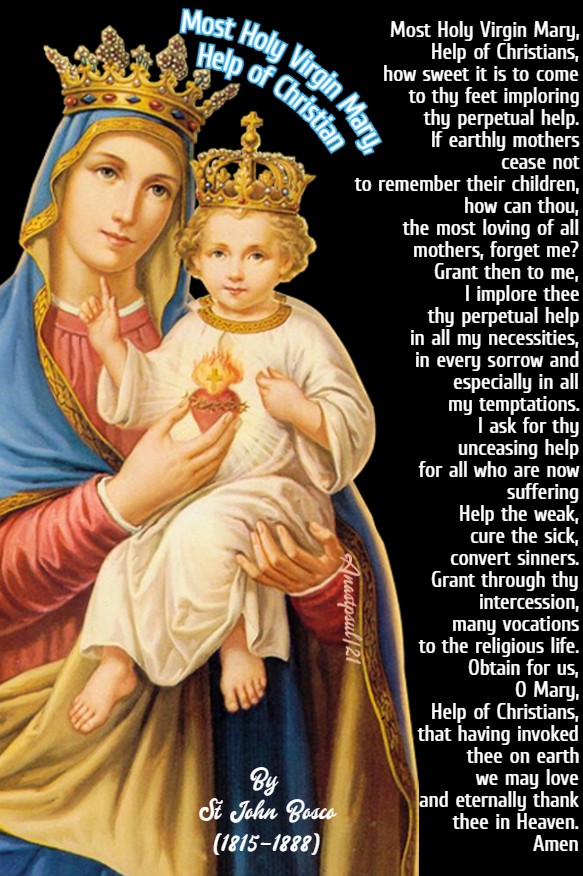
Most Holy Virgin Mary, Help of Christian By St John Bosco (1815-1888)
Most Holy Virgin Mary, Help of Christians, how sweet it is to come to thy feet imploring thy perpetual help. If earthly mothers cease not to remember their children, how can thou, the most loving of all mothers, forget me? Grant then to me, I implore thee thy perpetual help in all my necessities, in every sorrow and especially in all my temptations. I ask for thy unceasing help for all who are now suffering. Help the weak, cure the sick, convert sinners. Grant through thy intercession, many vocations to the religious life. Obtain for us, O Mary, Help of Christians, that having invoked thee on earth we may love and eternally thank thee in Heaven. Amen
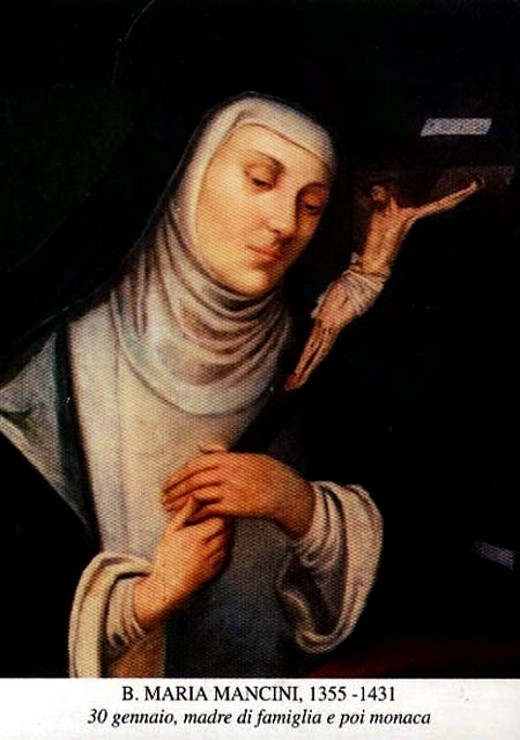
Saint of the Day – 22 January – Blessed Maria Mancini of Pisa OP (1356-1431) Widow, Second Order Nun of the Order of Preachers, spiritual disciple of St Catherine of Siena, Prioress, Mystic, Reformer, Apostle of the poor and the sick. Born as Caterina Mancini in 1356 in Pisa, Italy and died on 22 January 1431 in Pisa, Italy of natural causes. Additional Memorial – 30 January (Dominicans). Twice widowed, she saw all her seven children die. On the advice of St Catherine of Siena, Caterina first took the habit of the Third Order before entering the Monastery founded by the Blessed Chiara Gambacorti (1362-1420) in Pisa. Here she lived as a Nun, completely devoted to contemplation and penance.
The Roman Martyrology states: “In Pisa, Blessed Maria Mancini, who, twice widowed and all her children lost, under the exhortation of St Catherine of Siena, began community life in the Monastery of St Domenic, which she led for ten years.”
Caterina was born in Pisa, of noble parentage and almost in babyhood began enjoying the miraculous favours with which her life was filled. At the age of three, she was warned by some heavenly agency ,that the porch on which she had been placed by a nurse,was unsafe. Her cries attracted the nurse’s attention and they had barely left the porch, when it collapsed. When she was five, she beheld, in an ecstasy, the dungeon of a place in Pisa, in which Peter Gambacorti, one of the leading citizens, was being tortured. At Caterina’s prayer, the rope broke and the man was released. Our Lady told the little girl to say prayers everyday for this man because he would one day be her benefactor.
Caterina would have much preferred the religious life to marriage but she obeyed her parents and was married at the age of twelve. Widowed at sixteen, she was compelled to marry again. Of her seven children, only one survived the death of her second husband and Caterina learned, through a vision, that this child, too, was soon to be taken from her. Thus she found herself, at the age of twenty five, twice widowed and bereft of all her children. Refusing a third marriage, she devoted herself to prayers and works of charity.
She soon worked out for herself a severe schedule of prayers and good works, fasting and mortifications. She tended the sick and the poor, bringing them into her own home and regarding them as Our Lord Himself. She gave her goods to the poor and laboured for them, with her own hands. Our Lord was pleased to show her that He approved of her works by appearing to her in the guise of a poor young man, sick and in need of both food and medicine. She carefully dressed His wounds and she was rewarded by the revelation that He was, in reality her Redeemer ,Whom she had served.
St Catherine of Siena visited Pisa at about this time and the two saintly women were drawn together into a holy friendship. As they prayed together in the Dominican Church one day, they were surrounded by a bright cloud, out of which flew a white dove. They conversed joyfully on spiritual matters and were mutually strengthened by the meeting.
On the advice of St Catherine of Siena, Caterina retired to an enclosed Convent of the Second Order. In religion, she was given the name Maria by which she is usually known. She embraced the religious life in all its austerity and, with Blessed Clare GambarcotI and a few other members of the Convent, she founded a new and much more austere house, which had been built by Peter GambacortI. Our Lady’s prophecy of his benefactions was thus fulfilled.
Blessed Maria was favoured with many visions and was in almost constant prayer. She became Prioress of the house on the death of her friend Blessed Clare Gambacorti and ruled it with justice and holiness, until her death.
O God, who didst enrich Blessed Maria, with the abundance of the gift of contemplation and of singular charity towards her neighbour, grant us that, in imitation of her, by meditation on heavenly things and showing mercy to others, we may merit to attain, with her, everlasting glory. Through Christ our Lord. Amen.
St Anastasius the Persian St Antonio della Chiesa St Blaesilla of Rome St Brithwald of Ramsbury St Caterina Volpicelli St Dominic of Sora Bl Esteve Santacana Armengol St Francis Gil de Frederich de Sans
Blessed Giuseppe Giaccardo SSP (1896-1948) Bl Giuseppe Nascimbeni St Guadentius of Novara Bl Ladislao Batthyany-Strattmann Bl Laura Vicuna Blessed Maria Mancini of Pisa OP (1356-1431) Widow, Thjrd Order Sister of the Order of Preachers St Mateo Alonso de Leciñana





























 AnaStpaul
You must be logged in to post a comment.