Thought for the Day – 21 January – Meditations with Antonio Cardinal Bacci (1881-1971)
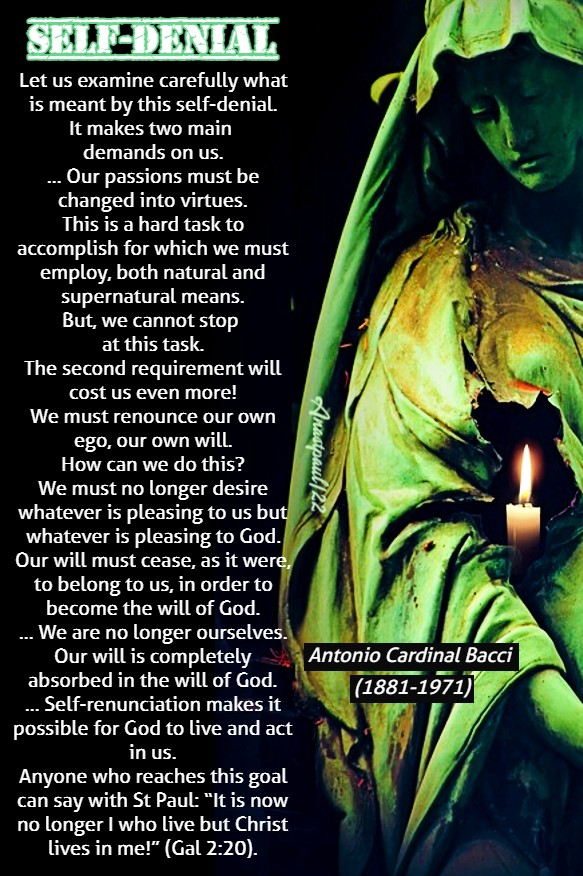
Self-Denial
“Let us examine carefully what is meant by this self-denial. It makes two main demands on us. Firstly, we must renounce all those lower impulses and desires, which besiege the soul (1 Peter 2:11). This means, that we have to control and discipline our passions. Since original sin has corrupted our nature, these passions must be restrained and conquered and then, directed towards good objects. Our passions must be changed into virtues. This is a hard task to accomplish for which we must employ, both natural and supernatural means.
But, we cannot stop at this task. The second requirement will cost us even more! We must renounce our own ego, our own will. How can we do this? We must no longer desire whatever is pleasing to us but whatever is pleasing to God. Our will must cease, as it were, to belong to us, in order to become the will of God. Is it the will of God, that we should be sick, or poor, or humiliated? Thank God for it. Does He desire to give us consolations or honours or success? Thank Him for this too. Desire nothing else but what He desires. We are no longer ourselves. Our will is completely absorbed in the will of God. This is not a degradation of human nature – it is a sublimation. Self-renunciation makes it possible for God to live and act in us. Anyone who reaches this goal can say with St Paul: “It is now no longer I who live but Christ lives in me!” (Gal 2:20).”
Quote/s of the Day – 21 January – The Memorial of St Agnes (c 291- c 304) Virgin and Martyr – Ecclus 51:1-8, 12; Matthew 25:1-13
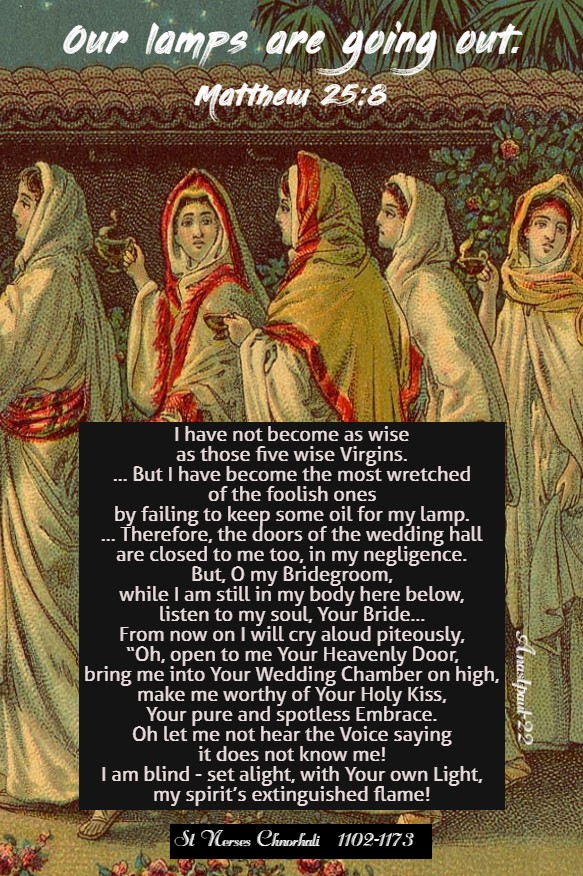
“Our lamps are going out.”
Matthew 25:8
“I have not become as wise as those five wise Virgins. … But I have become the most wretched of the foolish ones by failing to keep some oil for my lamp, namely, mercy together with virginity or, still more, the anointing from Baptism’s Sacred fount…
Therefore, the doors of the wedding hall are closed to me too, in my negligence. But, O my Bridegroom, while I am still in my body here below, listen to my soul, Your Bride… From now on, I will cry aloud piteously, “Oh, open to me Your Heavenly Door, bring me into Your Wedding Chamber on high, make me worthy of Your Holy Kiss, Your pure and spotless Embrace. Oh let me not hear the Voice saying it does not know me! I am blind; set alight with Your own Light my spirit’s extinguished flame!”
St Nerses Chnorhali (1102-1173) Armenian Bishop
(Jesus, the Father’s beloved Son 688-693, SC 203)
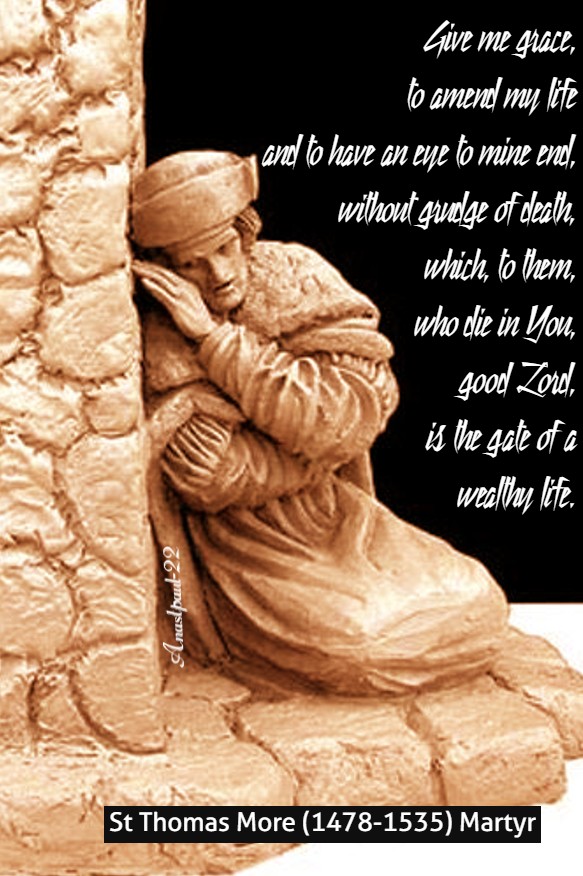
“Give me grace, to amend my life and to have an eye to mine end, without grudge of death, which, to them, who die in You, good Lord, is the gate of a wealthy life.”
St Thomas More (1478-1535) Martyr
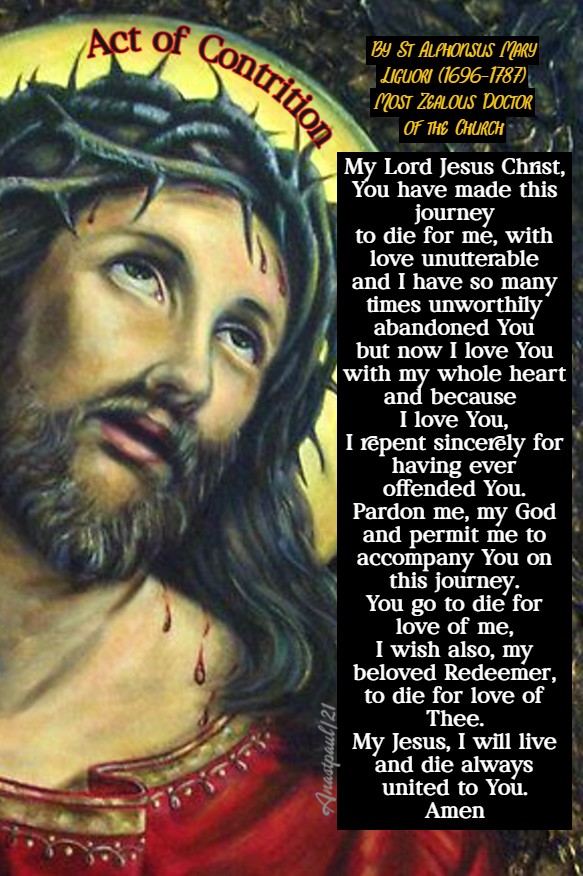
My Lord Jesus Christ, You have made this journey to die for me, with love unutterable and I have so many times unworthily abandoned You but now I love You with my whole heart and because I love You, I repent sincerely for having ever offended You. Pardon me, my God and permit me to accompany You on this journey. You go to die for love of me, I wish also, my beloved Redeemer, to die for love of Thee. My Jesus, I will live and die always united to You.” Amen
St Alphonsus Mary Liguori (1696-1787) Most Zealous Doctor of the Church
One Minute Reflection – 21 January – The Memorial of St Agnes (c 291- c 304) Virgin and Martyr – Ecclus 51:1-8, 12; Matthew 25:1-13
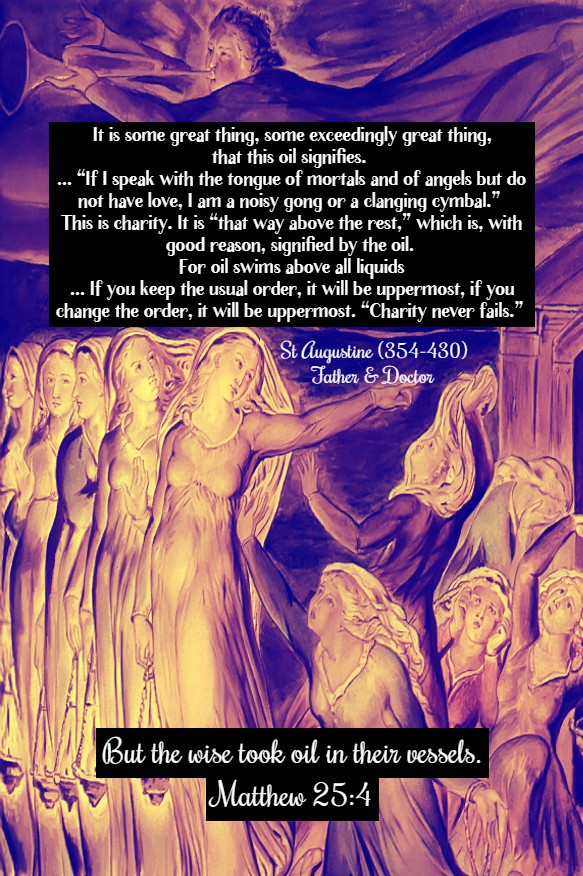
“But the wise took oil in their vessels” – Matthew 25:4
REFLECTION – “It is some great thing, some exceedingly great thing, that this oil signifies. Do you think it might be charity? If we try out this hypothesis, we hazard no precipitate judgement. I will tell you why charity seems to be signified by the oil. The Apostle says, “I will show you a still more excellent way.” “If I speak with the tongue of mortals and of angels but do not have love, I am a noisy gong or a clanging cymbal.” This is charity. It is “that way above the rest,” which is, with good reason, signified by the oil. For oil swims above all liquids. Pour in water and pour in oil upon it, the oil will swim above. If you keep the usual order, it will be uppermost, if you change the order, it will be uppermost. “Charity never fails!” … St Augustine (354-430) Father & Doctor (Sermon 93).
PRAYER – Almighty, ever-living God, You choose what is weak in the world to shame what is strong. Grant that, as we celebrate the Martyrdom of St Agnes, we may follow her example of steadfast love for You and trust in faith. We pray that through her intercession, we may grow in holiness. Through our Lord Jesus Christ, with the Holy Spirit, one God forever, amen.
Our Morning Offering – 21 January – “Month of the Most Holy Name of Jesus”
Complete Us, O Lord Jesus Christ By St Anselm (1033-1109) Magnificent and Marian Doctor of the Church
O Lord Jesus Christ, our Redemption and our Salvation, we praise You and give You thanks. Although we are unworthy of Your benefits and cannot offer to You, the devotion You deserve, let Your loving-kindness complete whatever our weakness tries to do. Before You, O Lord, we lay all our desires and whatever our heart rightly wishes, it is because of Your gifts. Help us to love You as You command. Do not let Your gifts be unfruitful in us. Complete what You have begun, give what You have made us desire, convert our lukewarmness into fervent love of You, for the glory of Your Holy Name. Amen.
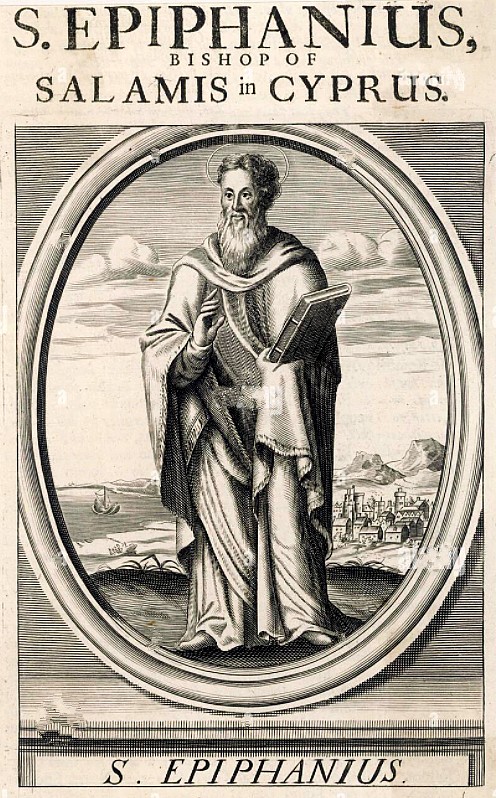
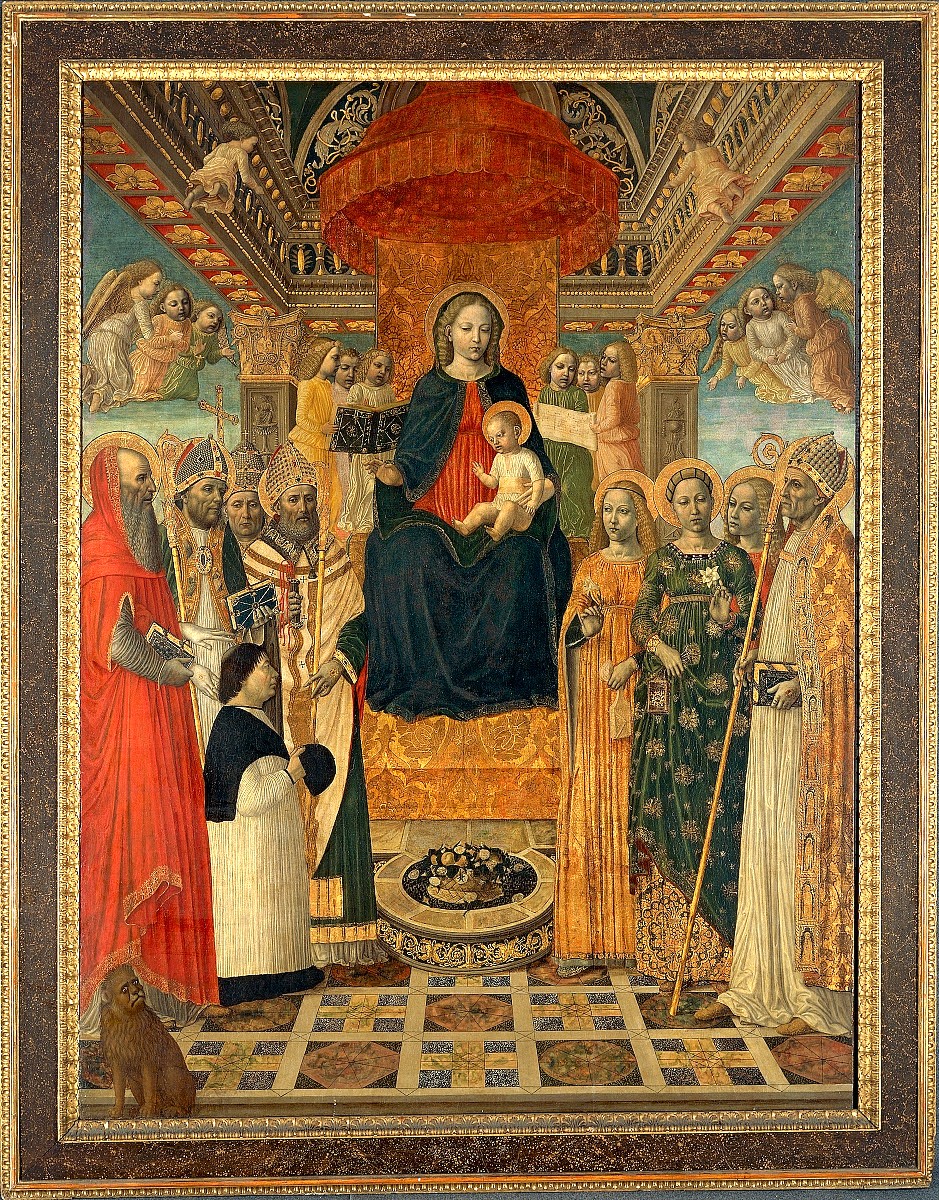
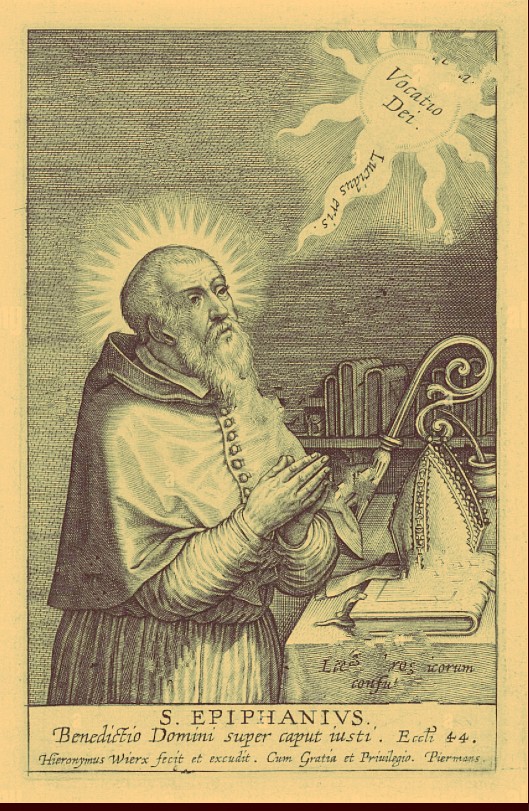
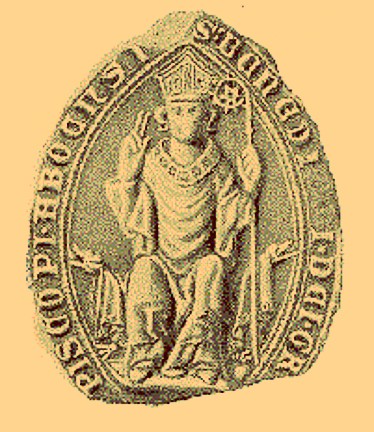
Saint of the Day – 21 January – Saint Epiphanius of Pavia (439–496) Bishop of Pavia, Italy from from 466 until his death. Papal and Secular Mediator and Peacemaker, Known as – “Epiphanius the Peacemaker,” “The Glory of Italy,” “The Light of Bishops.” Born in c 439 at Pavia, Italy and died in 496 at Burgundy, France of a fever.
The Roman Martyrology for 21 January reads : “In Pavia, Saint Epifanio, Bishop , who, at the time of the barbarian invasions, worked zealously for the reconciliation of the peoples, for the liberation of prisoners and for the reconstruction of the destroyed City.”
Our primary source for Epiphanius’ life is the Vita Epifanius written by St Magnus Felix Ennodius (c 473-521) , who knew him personally, travelling with the Bishop on his mission to King Gundobad of the Burgundians in 494–6. According to St Ennodius, Epiphanius’ father was Maurus and his mother Focaria, who was related to Mirocle, Bishop of Milan (304-326). Epiphanius was the brother of Saint Honorata and Saint Liberata.
He joined the household of Bishop Crispinus at the age of eight for his education and became a lector, learning to read and write, as well as stenography. At the age of 18 he was Ordained Subdeacon and Deacon at 20. Bishop Crispinus, as he lay dying, appointed Epiphanius as his successor in the presence of the ex-consul Flavius Rusticus. Although he resisted the appointment, Epiphanius was made Bishop in Milan in his 28th year.
Shortly after becoming Bishop, Epiphanius was asked to intervene between Anthemius and the barbarian leader Ricimer, appealing to both parties for peace. More peacemaking and diplomatic missions followed and most of these to high-ranking figures proved to be successful endeavours. Religious dignitaries such as Epiphanius had wide-ranging influence on the rulers and aristocrats during this period. In the eighth year of his episcopate (spring 475), the Emperor Julius Nepos, sent him on a diplomatic mission to Euric about Visigothic incursions.
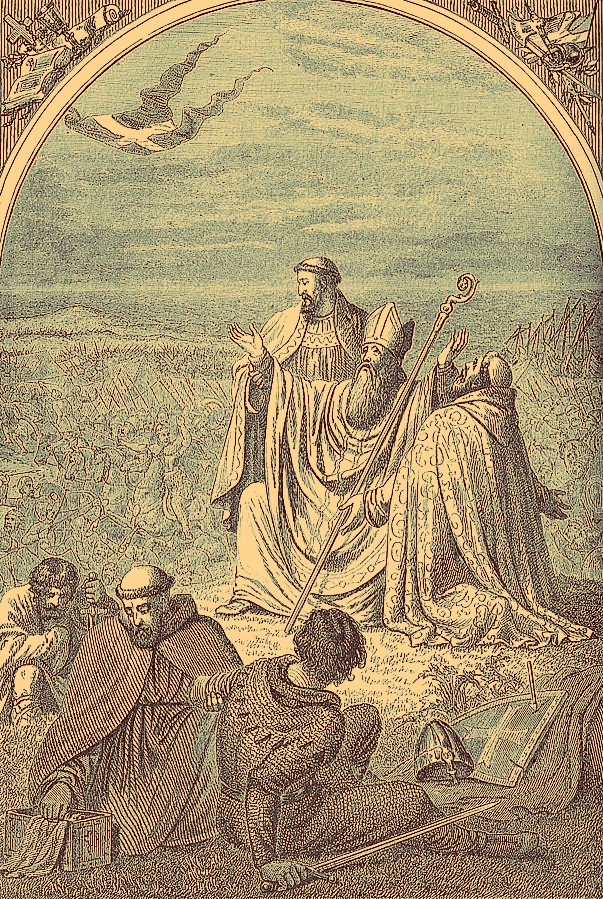
I presume St Epiphanius is the Bishop on the right
Another success was Epiphanius’ negotiations over the ransom of his sister, St Honorata, who had been abducted from the Monastery of St Vincent in Pavia, during the war between Theodoric the Great and Odoacer.
Epiphanius actively worked on the reconstruction of Pavia which, in 476, had been sacked and destroyed by rival armies. Epiphanius visited the victors several times, to implore clemency for the vanquished. In particular, he successfully implored the clemency of Odoacer, of Theodoric and of the King of Burgundians, Gundobaldo, from whom he obtained the release of six thousand prisoners.
In 496 , returning from Ravenna , where he had gone for yet another legation to King Theodoric in favour of Pavia and the entire Province, he fell ill in Parma with pneumonia, was transported to his home in Pavia, where he died at the age of fifty-eight years, after thirty years as Bishop.
Shortly after his death , Epiphanius was revered as a saint and numerous miracles were attributed to him . In 962 most of his relics were moved to Hildesheim to give this region more prestige and heavenly help. The relics of Epiphanius are still contained in a golden casket placed under the central Altar of the Cathedral of Hildesheim.
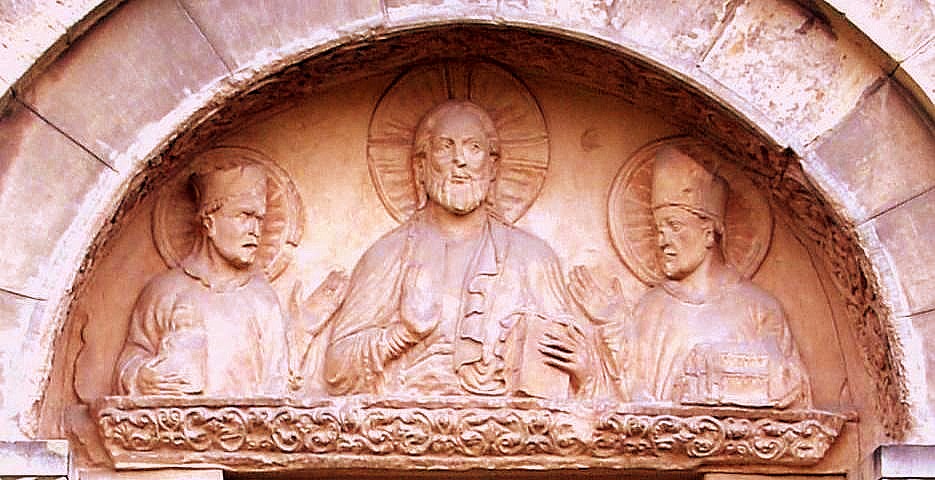
Tympanon depicting Christ, Saint Godehard and Saint Epiphanius, on the StGodehard Basilica in Hildesheim, Germany.
St Agnes of Aislinger St Alban Bartholomew Roe St Anastasius of Constantinople St Aquila of Trebizond St Brigid of Kilbride St Candidus of Trebizond Bl Edward Stransham St Epiphanius of Pavia (c 439–496) Bishop St Eugenius of Trebizond Bl Franciscus Bang St Gunthildis of Biblisheim
Blessed Josefa María Inés de Benigánim OAD (1625–1696) Nun of the Discalced Augustinian Nuns with the religious name of “Josefa María of Saint Agnes,” Virgin, Mystic, gifted with the charism of prophecy and counsel. She became known for her profound spiritual and theological insight as well as for her severe austerities she practised during her life. Her body is incorrupt. Biography: https://anastpaul.com/2020/01/21/saint-of-the-day-21-january-blessed-josefa-maria-ines-de-beniganim-oad-1625-1696/
St John Yi Yun-on St Lawdog St Maccallin of Waulsort
St Nicholas Woodfen St Patroclus of Troyes St Publius of Malta Bl Thomas Reynolds St Valerian of Trebizond St Vimin of Holywood St Zacharias the Angelic
Blessed Martyrs of Laval – 19 Beati: Fifteen men and four women who were martyred in Laval, France by anti-Catholic French Revolutionaries. • Blessed André Duliou • Blessed Augustin-Emmanuel Philippot • Blessed François Duchesne • Blessed François Migoret-Lamberdière • Blessed Françoise Mézière • Blessed Françoise Tréhet • Blessed Jacques André • Blessed Jacques Burin • Blessed Jean-Baptiste Triquerie • Blessed Jean-Marie Gallot • Blessed Jeanne Veron • Blessed John Baptist Turpin du Cormier • Blessed Joseph Pellé • Blessed Julien Moulé • Blessed Julien-François Morin • Blessed Louis Gastineau • Blessed Marie Lhuilier • Blessed Pierre Thomas • Blessed René-Louis Ambroise The were born in France and they were martyred on several dates in 1794 in Laval, Mayenne, France. They were Beatified on 19 June 1955 by Pope Pius XII at Rome, Italy.
Martyrs of Rome – 30 Saints: Thirty Christian soldiers executed together in the persecutions of Diocletian. They were martyred in 304 in Rome, Italy.
Martyrs of Tarragona: Augurius, Eulogius, Fructuosus.
Thought for the Day – 20 January – Meditations with Antonio Cardinal Bacci (1881-1971)
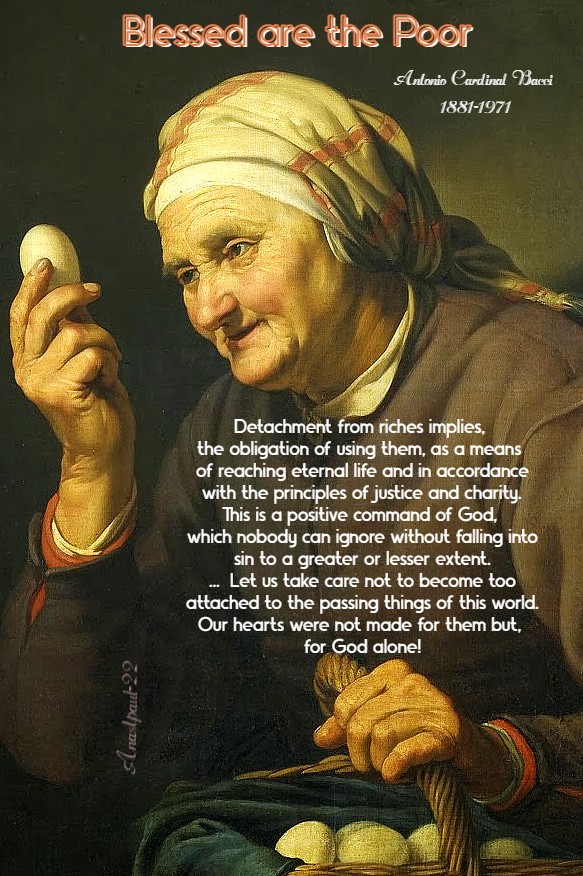
Blessed are the Poor
“Detachment from riches implies, the obligation of using them, as a means of reaching eternal life and in accordance with the principles of justice and charity. This is a positive command of God, which nobody can ignore without falling into sin to a greater or lesser extent. But over and beyond this general rule, there is an evangelical counsel to which only the privileged few are called in their search for perfection. This evangelical counsel says to us: “If thou wilt be perfect, go, sell what thou hast and give to the poor and thou shalt have treasure in heaven and come, follow me” (N 19:21; Mk 10:21; Lk 12:33, 18:22).
If we have received this great call to evangelical perfection, we must listen to it and follow Jesus promptly and generously. But even if our vocation does not lie in that direction, let us take care not to become too attached to the passing things of this world. Our hearts were not made for them but, for God alone!
Remember the striking words of St Paul: “Brethren, the time is short; it remains that those who have wives, be as if they had none and, those who weep, as though not weeping and those who rejoice, as though not rejoicing and those who buy, as though not possessing and those who use the world, as though not using it, for this world, as we see it, is passing away” (1 Cor 7:29-31).”
Quote/s of the Day – 20 January – Hebrews 11:33-39; Luke 6:17-23
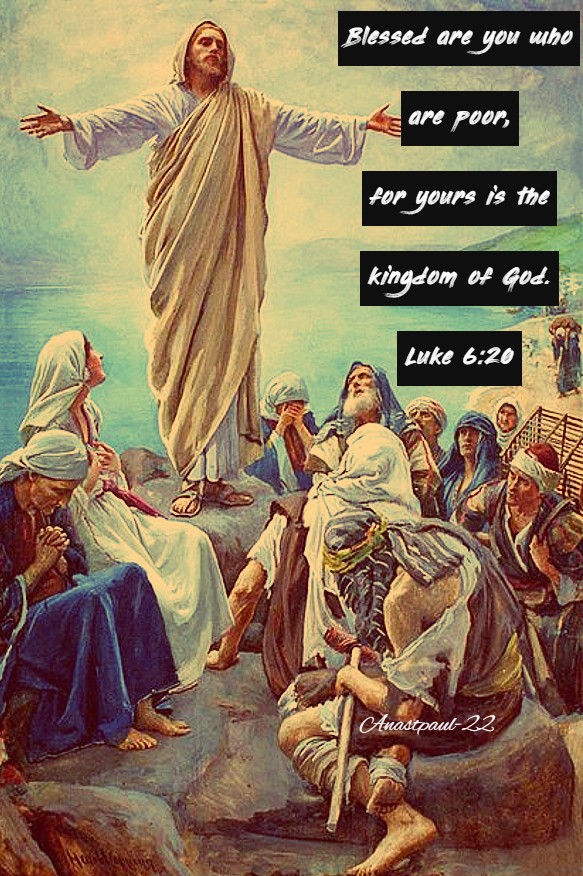
“Blessed are you who are poor, for yours is the kingdom of God.”
Luke 6:20
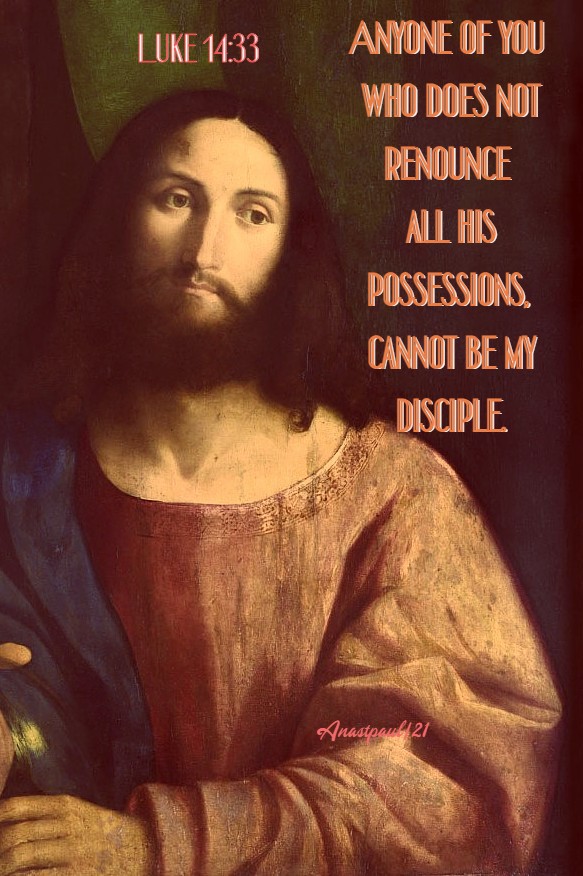
“… Anyone of you who does not renounce all his possessions, cannot be my disciple.”
Luke 14:33
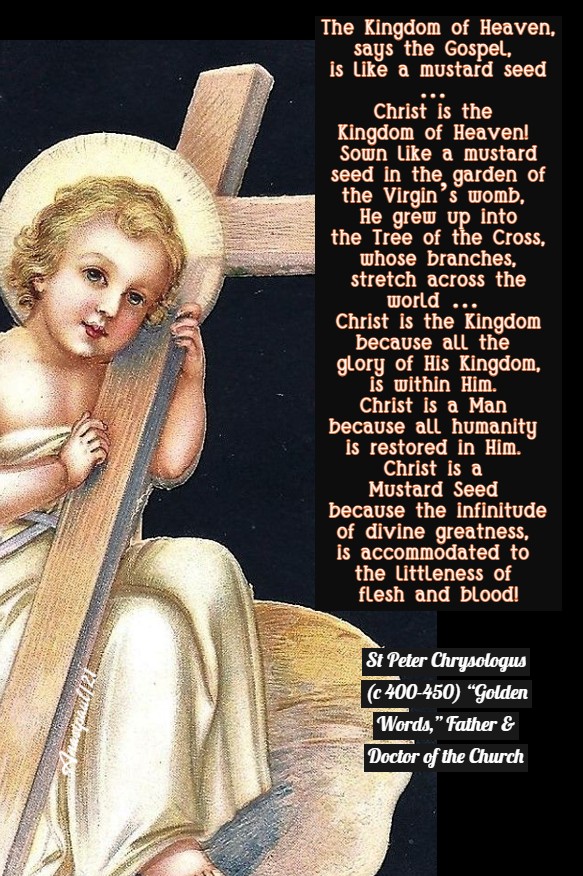
“The Kingdom of Heaven, says the gospel, is like a mustard seed … Christ is the Kingdom of Heaven! Sown like a mustard seed in the garden of the Virgin’s womb, He grew up into the Tree of the Cross, whose branches, stretch across the world … Christ is the Kingdom because all the glory of His Kingdom, is within Him. Christ is a Man because all humanity is restored in Him. Christ is a Mustard Seed because the infinitude of divine greatness, is accommodated to the littleness of flesh and blood!”
St Peter Chrysologus (c 400-450) “Golden Words” Father & Doctor of the Church
“Keep a clear eye toward life’s end. Do not forget your purpose and destiny as God’s creature. What you are in His sight, is what you are and nothing more. Remember that when you leave this earth, you can take nothing that you have received… but only what you have given – a full heart enriched by honest service, love, sacrifice and courage.”
St Francis of Assisi (c 1181-1226)
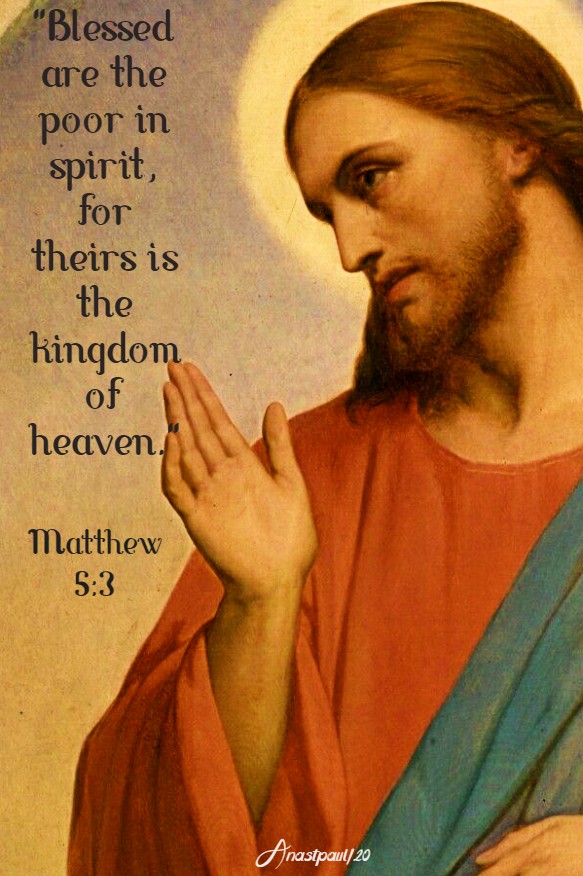
“Blessed are the poor in spirit, for theirs is the kingdom of heaven.”
Matthew 5:3
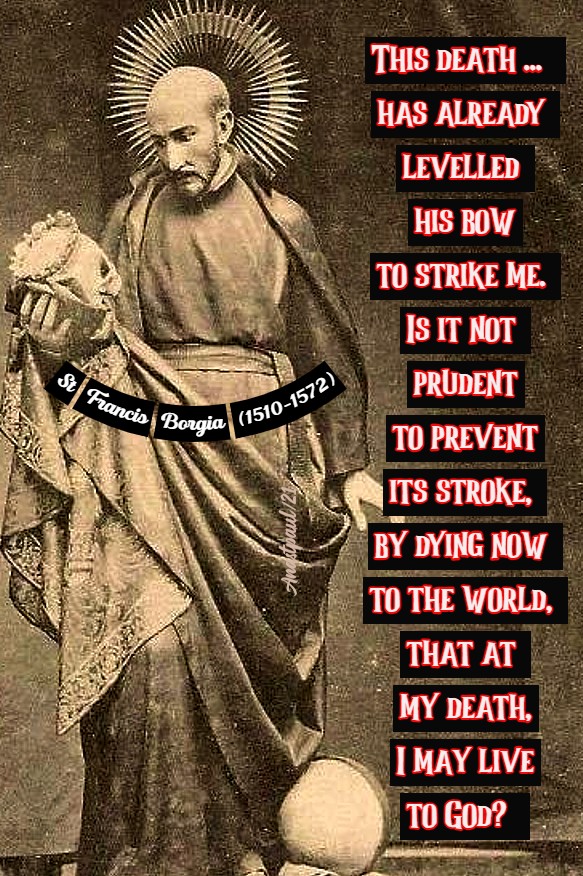
“This death … has already levelled his bow to strike me. Is it not prudent to prevent its stroke, by dying now to the world, that at my death, I may live to God?”
St Francis Borgia (1510-1572)
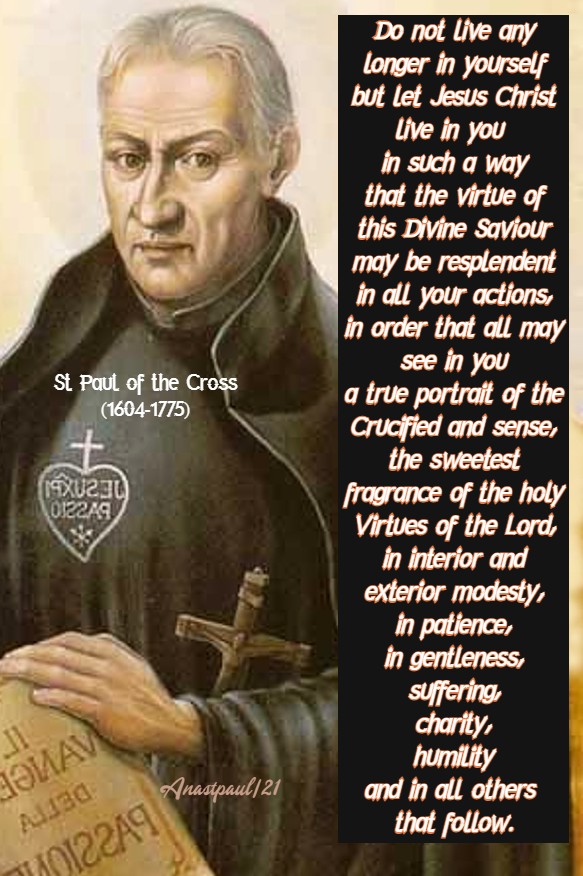
“Do not live any longer in yourself but let Jesus Christ live in you in such a way that the virtue of this Divine Saviour may be resplendent in all your actions, in order that all may see in you a true portrait of the Crucified and sense, the sweetest fragrance of the holy virtues of the Lord, in interior and exterior modesty, in patience, in gentleness, suffering, charity, humility and in all others that follow.”
St Paul of the Cross (1604-1775)
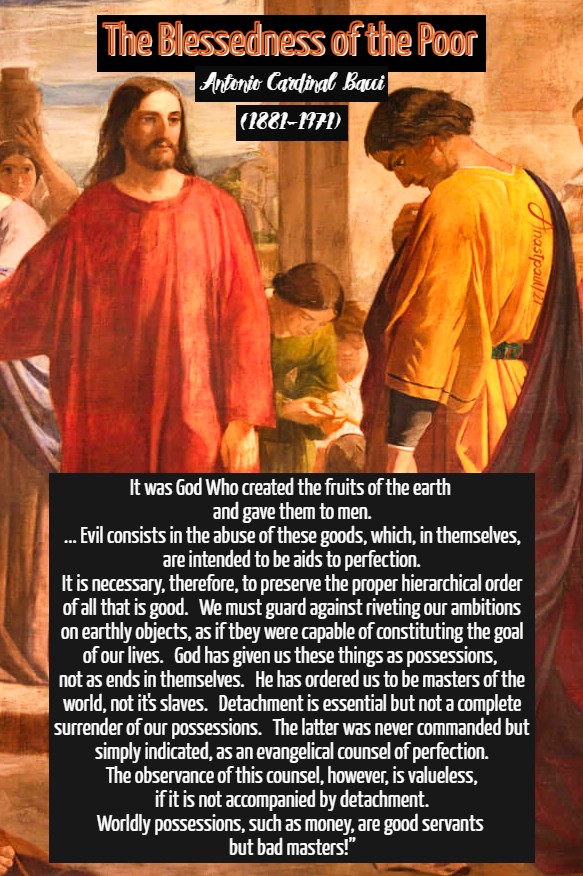
“It was God Who created the fruits of the earth and gave them to men. … Evil consists in the abuse of these goods, which, in themselves, are intended to be aids to perfection. It is necessary, therefore, to preserve the proper hierarchical order of all that is good. We must guard against riveting our ambitions on earthly objects, as if tbey were capable of constituting the goal of our lives. God has given us these things as possessions, not as ends in themselves. He has ordered us to be masters of the world, not it’s slaves. Detachment is essential but not a complete surrender of our possessions. The latter was never commanded but simply indicated, as an evangelical counsel of perfection. The observance of this counsel, however, is valueless, if it is not accompanied by detachment. Worldly possessions, such as money, are good servants but bad masters!”
One Minute Reflection – 20 January – Hebrews 11:33-39; Luke 6:17-23 and – The Memorial of St Pope Fabian (c 200 – c 250) Martyr and St Sebastian (Died c 288) Martyr
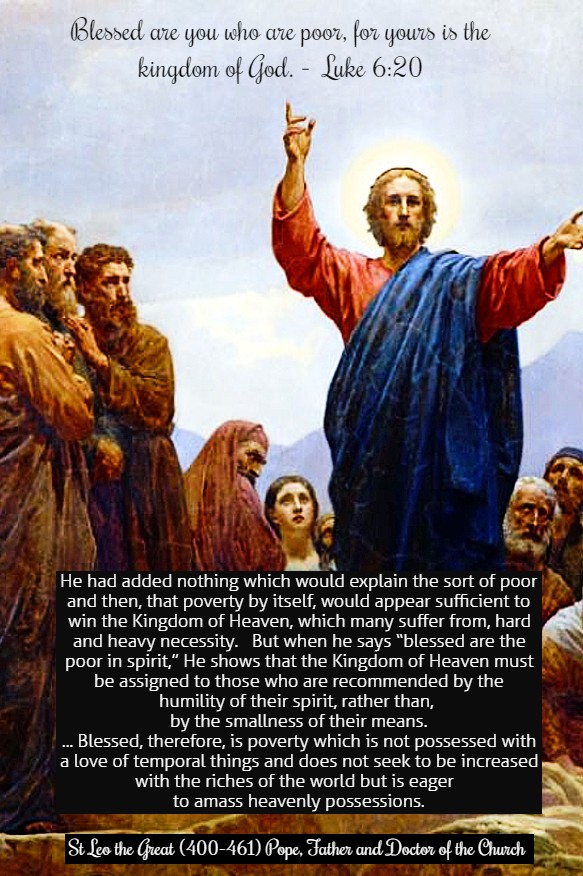
“Blessed are you who are poor, for yours is the kingdom of God.” – Luke 6:20
REFLECTION – “Blessed,” He says, “are the poor in spirit, for theirs is the kingdom of heaven” (Mt 5:3). It would perhaps be doubtful what poor He was speaking of, if in saying “blessed are the poor ” He had added nothing which would explain the sort of poor and then, that poverty by itself, would appear sufficient to win the Kingdom of Heaven, which many suffer from, hard and heavy necessity. But when he says “blessed are the poor in spirit,” He shows that the Kingdom of Heaven must be assigned to those who are recommended by the humility of their spirit, rather than, by the smallness of their means.
Yet it cannot be doubted, that this possession of humility is more easily acquired by the poor than the rich: for submissiveness is the companion of those, who want, while loftiness of mind dwells with riches. Notwithstanding, even in many of the rich, is found that spirit which uses its abundance, not for the increasing of its pride but on works of kindness and counts that for the greatest gain, which it expends in the relief of others’ hardships. It is given to every kind and rank of men, to share in this virtue, because men may be equal in will, though unequal in fortune and it does not matter, how different they are in earthly means, who are found equal in spiritual possessions. Blessed, therefore, is poverty which is not possessed with a love of temporal things and does not seek to be increased with the riches of the world but is eager to amass heavenly possessions.” – St Leo the Great (400-461) Pope, Father and Doctor of the Church (Sermon 95, PL 54, 461).
PRAYER – Shed Your clear light on our hearts, Lord, keep us in Your Way, that we too may stretch out our hands and love to those who come our way. May Your law be our light and Your love our only way. Hear the prayers of the Your Angels and Saints and the Blessed Virgin Mary, Mother of Our Lord and our mother and lead us to eternal life. We make our prayer through Christ, our Lord with the Holy Spirit, God now and forever, amen.
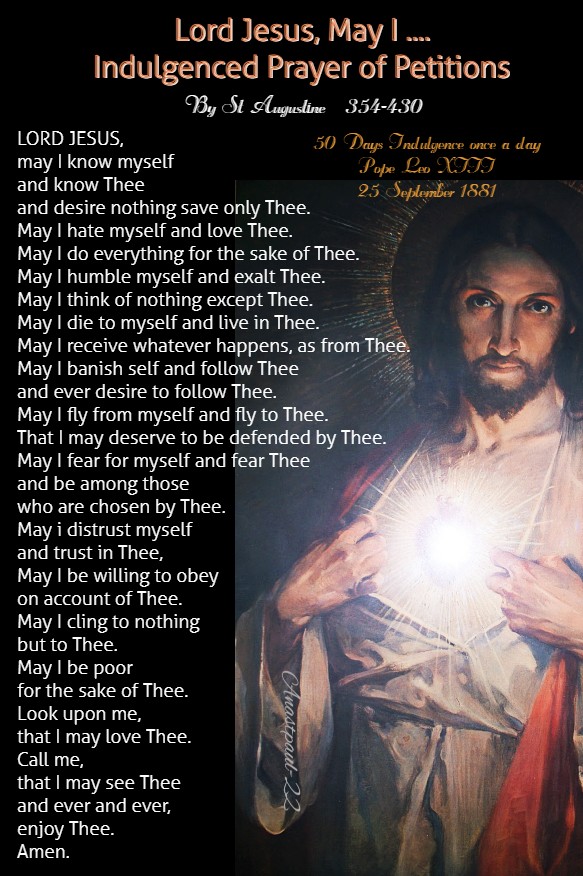
Lord Jesus, May I …. Indulgenced Prayer of Petitions By St Augustine (354-430) Father and Doctor of Grace
LORD JESUS, may I know myself and know Thee and desire nothing save only Thee. May I hate myself and love Thee. May I do everything for the sake of Thee. May I humble myself and exalt Thee. May I think of nothing except Thee. May I die to myself and live in Thee. May I receive whatever happens, as from Thee. May I banish self and follow Thee and ever desire to follow Thee. May I fly from myself and fly to Thee. That I may deserve to be defended by Thee. May I fear for myself and fear Thee and be among those who are chosen by Thee. May i distrust myself and trust in Thee, May I be willing to obey on account of Thee. May I cling to nothing but to Thee. May I be poor for the sake of Thee. Look upon me, that I may love Thee. Call me, that I may see Thee and ever and ever, enjoy Thee. Amen.
50 Days Indulgence once a day Pope Leo XIII 25 September 1881
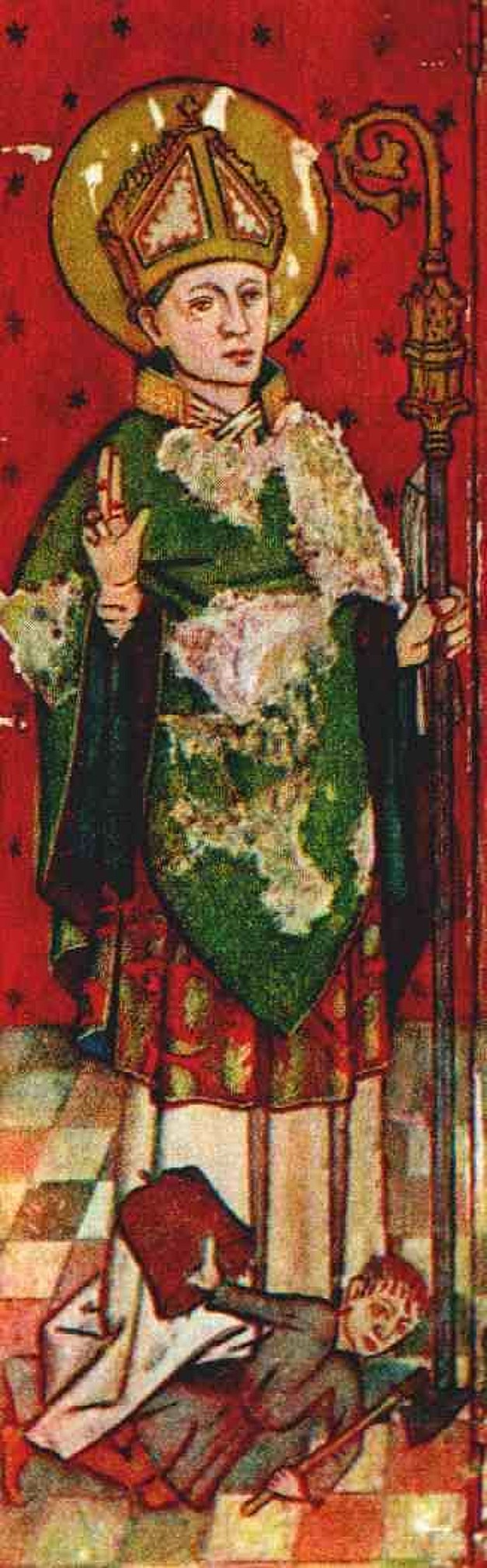
Saint of the Day – 20 January – Saint Henry of Uppsala (Died c 1156) Martyr, Bishop of Uppsala, (then in eastern Sweden), Missionary. Born in England and died struck with an axe in c 1156 at Nousis, Finland. Patronages – against storms, of Finland. Also known as – Henry of Finland. Henry of Sweden, Heikki, Henrik. Additional Memorial – 18 June (translation of his relics).
According to his Vita (the legend of his life), which was written nearly one hundred years after his death, Henry was born in the early twelfth century and reigned in the See of Uppsala during the time when King Saint Eric of Sweden (also a Martyr) ruled the country. Apparently, Bishop, Henry and the Monarch were good friends and brothers in the Faith and Henry’s biographer blissfully describes this period in Sweden, as Christendom at its finest.
Turning his attention eastward, King Eric, decided to do battle with the pagan Finns, who were separated from Uppsala by the Gulf of Bothnia. Some legends attribute Eric’s campaign against the Finns as retaliatory measures for their plundering activities in Sweden. Other sources say that Eric and Henry worked in tandem and their motivations were largely evangelical. By conquering the Finns, the Bishop and the King hoped to win them over the Christianity.
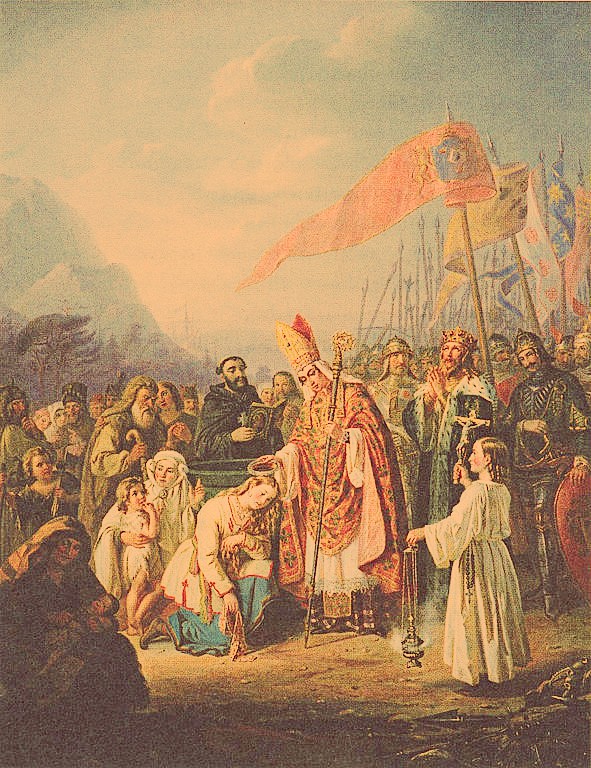
Whatever their true motivations, King Eric and Bishop Henry conquered Finland and subsequently baptiSed the locals and built Churches. The Catholic Cathedral in Helsinki, Finland’s Capital City, is named in Henry’s honour, to recognise the credit that Finnish Christians give to this saintly Bishop for giving them their faith.
Bishop Henry Baptises the Finns at the spring of Kuppis.
King Eric returned to his home in Swede, but Henry stayed in Finland, as he loved serving as a Missionary in Finland, evangelising and converting numerous numbers.
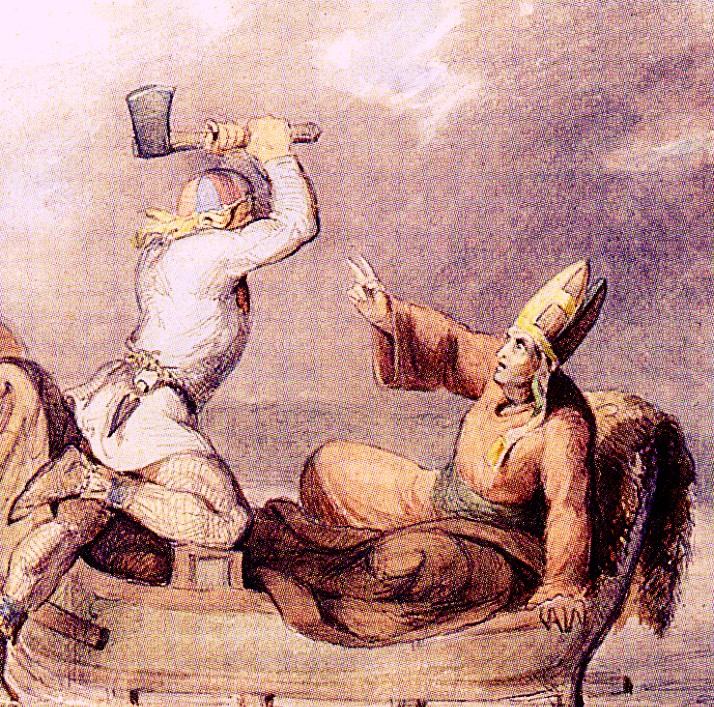
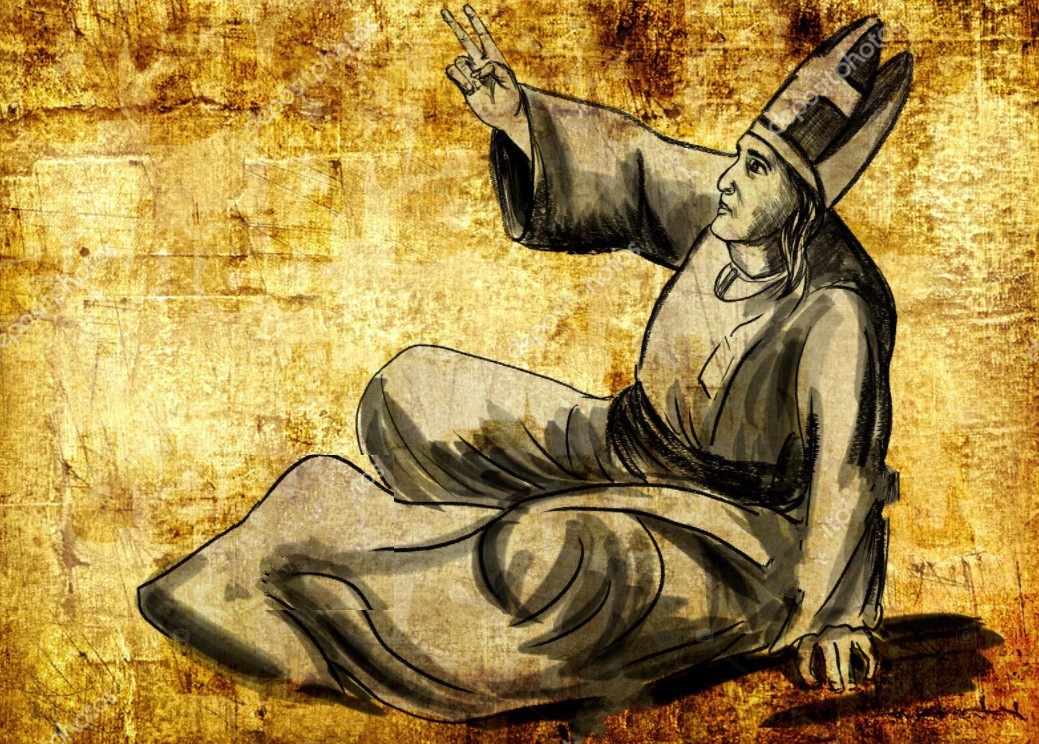
Henry was murdered by a soldier named Lalli. Lalli was a Baptised Christian who had murdered another soldier. After examining the case, Henry excommunicated Lalli, who flew into a rage and struck Henry with an axe. The murder of Henry is believed to have occurred in the year 1156. Immediately after Henry’s death, his legend records, many miracles began to occur around his tomb and in the surrounding towns – children were raised from the dead, a blind woman’s eyesight was restored, fishermen survived terrible storms at sea.
St Henry is an important figure in the medieval history of Finland and there are a plethora of colourful poems and legends written about his life.
Devotion to St Henry, which spread throughout Finland over subsequent centuries, is a beautiful testament to the pride that countries throughout the globe have taken in their origin stories of the brave men and women who have brought the Good News of Christ to their homeland.
Henry was buried at buried at Nousis in Finland and on 18 June 1300 his relics were translated to Totku but they were stolen by the Russian troops in 1720.
He was Canonised and declared Patron of Finland in 1158 by Pope Adrian IV, who had also been a Missionary in the area.
St Ascla of Antinoe Bl Basil Anthony Marie Moreau St Basilides the Senator St Bassus the Senator Bl Benedict Ricasoli Bl Bernardo of Poncelli Bl Cyprian Michael Iwene Tansi St Daniel of Cambron Bl Didier of Thérouanne St Eusebius the Senator St Eustochia Calafato
St Eutyches the Senator St Fechin of Fobhar Bl Francesco Paoli Saint Henry of Uppsala (Died c 1156) Bishop, Martyr Bl Jeroni Fábregas Camí St Maria Cristina dell’Immacolata Concezione St Molagga of Fermoy St Neophytus of Nicaea St Stephen Min Kuk-ka St Wulfsin
Thought for the Day – 19 January – Meditations with Antonio Cardinal Bacci (1881-1971)
Humility
“Humility is the most difficult of all the virtues because, it requires us to deny ourselves. Jesus warns us, that anyone who wishes to follow Him, must deny himself. “If anyone wishes to come after me, let him deny himself” (Mt 16:24).
Humility is necessary if we wish to go straight to Jesus, Who was the first to humble Himself by becoming obedient unto death, even to the death of the Cross (Phil 2:8). The Imitation of Christ contains some profound remarks upon this subject. “Seldom do we find anyone, so spiritual, as to be stripped of all things… If a man gives his whole substance, still it is nothing. And if he do great penance, it is but little. And if he attain to all knowledge, he is far off still. And if he have great virtue and very fervent devotions, there is still much wanting to him, namely, the one thing which is supremely necessary for him. What is that? That having left all things else, he leave also himself and wholly go out of himself and retain nothing of self-love.” (Bk II, c.2:4).
When he has done all this, remember, he has only given God all that he received from Him. He has given nothing which was really his. He has only fulfilled an obligation of restitution. When he has arrived at this stage of humility, therefore, he should repeat the words of Jesus. “When you have done everything that was commanded you, say, ‘We are unprofitable servants, we have done what it was our duty to do’” (Lk 17:10).
This is genuine humility, as preached in the Gospel.”
blackout sign. yellow triangle with a light bulb on a city background. flat vector illustration.
Apologies dear Friends the usual problems have marked me off the Internet for 24 hours. Only our dear Cardinal Bacci, which was scheduled before the black-out, appears for 19 January.
Thought for the Day – 18 January – Meditations with Antonio Cardinal Bacci (1881-1971)
The Veneration and Imitation of the Saints
“The worship of the Saints, is an act of veneration (dulia), not of adoration (latria), which can be given only to God. It is wrong to imagine, as many Protestants do, that by praying to and venerating the Saints, we subtract something from the homage we owe to God. The veneration of the Saints and the adoration of God are entirely distinct activities. Moreover, the Saints are the faithful servants of God and intercede with Him on our behalf. By venerating and invoking them. we honour the Giver of all holiness.
If anyone, on the other hand, were to disregard the worship of God, in favour of devotion to the Saints, he would be making a serious mistake. A person who goes into a Church and rushes over to a Statue of the Blessed Virgin or of one of the Saints, without giving a thought to the Living and Eeal Presence of Jesus in the Blessed Eucharist, is developing false and sentimental piety!”
Quote/s of the Day – 18 January – Feast of the Chair of St Peter, Readings: 1 Peter 5:1-4, Matthew 16:13-19
“You are the Messiah, the Son of the living God.”
Matthew 16:16
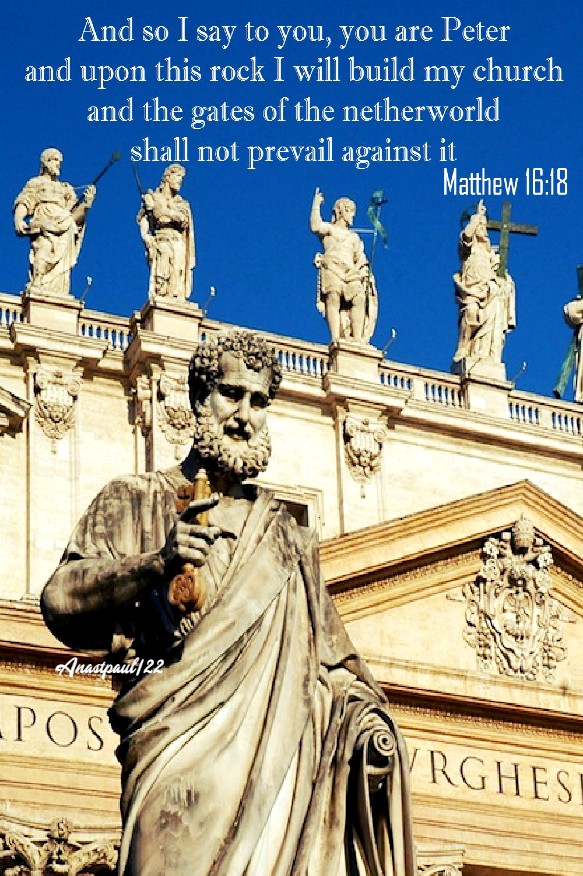
“And so I say to you, you are Pter and upon this rock I will build my church and the gates of the netherworld shall not prevail against it.”
Matthew 16:18
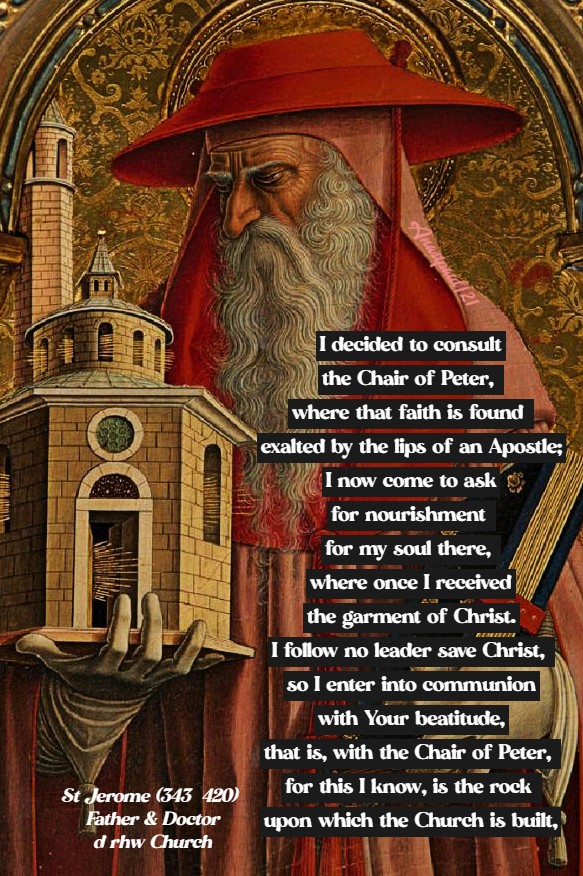
“I decided to consult the Chair of Peter, where that faith is found exalted by the lips of an Apostle; I now come to ask for nourishment for my soul there, where once I received the garment of Christ. I follow no leader save Christ, so I enter into communion with Your beatitude, that is, with the Chair of Peter, for this I know, is the rock upon which the Church is built.” (cf Le lettere I, 15, 1-2)
St Jerome (343-420) Father & Doctor od rhw Church
“Yes, the Apostle chosen to be His co-worker, merited to share, the same Name as Christ. They built the same Building together – Peter does the planting, the Lord gives the increase and it is the Lord, too, Who sends those, who will do the watering (cf 1 Cor 3:6f).”
St Augustine (354-430) Father & Doctor of the Church
One Minute Reflection – 18 January – Feast of the Chair of St Peter, Readings: 1 Peter 5:1-4, Matthew 16:13-19
“Upon this rock I will build my church” … Matthew 16:18
REFLECTION – “Nothing escaped the Wisdom and Power of Christ, the elements of nature lay at His service, spirits obeyed Him, Angels served Him. … And yet, out of all the world, Peter alone was chosen to stand at the head, for the calling of all the peoples and the oversight of all the Apostles and Fathers of the Church. Thus, even though there are many Priests and shepherds among the People of God, Peter governed them all in person, while Christ also governs them in the capacity of Head. …
The Lord asks all the Apostles what people think of Him and they all say the same thing, so long as they are making known the doubts deriving from human ignorance. But when the Lord demands to know, what the disciples themselves think, the first to confess the Lord is he, who is the first in dignity of the Apostles. As he had said: “You are the Christ, the Son of the Living God,” Jesus answers him: “Blessed are you, Simon son of Jonah. For flesh and blood has not revealed this to you, but my heavenly Father.” That is to say, blessed are you because my Father taught this to you. Earthly opinion has not led you astray but it is heavenly inspiration that has instructed you. It is not flesh and blood that enabled you to discover Me but He, Whose only Son I am.
“And so I say to you,” that is to say- just as my Father has manifested My Divinity to you, so I Am making known your superiority to you. “You are Peter” namely, I am the unshakeable Rock, the Cornerstone who makes two peoples one (Eph 2:14), the foundation other than which, no-one can lay any other (1 Cor 3:11). But you also, you are rock, since you are impregnable by My Strength and, what I have by virtue of My Power, you have in common with Me, by the fact,, that you participate in it. “On this rock I will build my Church” … On the firmness of this foundation, He says, will I build an everlasting temple and my Church, whose summit is to reach to Heaven, will be raised on the strength of that faith.” … Saint Pope Leo the Great (400-461) Father and Doctor of the Church ( 4th sermon for the Anniversary of his Consecration).
PRAYER – Holy Father, send Your Divine Enlightener into the hearts of all Your faithful, filling us with the strength to fulfil our mission as the followers of the Chair of St Peter. And most of all, we pray Lord Holy God, to inspire and light the way of our Holy Father, Francis. Sustain and guide him, keep him in health and strength, to lead Your people by the Light of the Way and the Truth. Holy Father, have mercy on us, Holy Spirit guide and lead us, Lord Jesus Christ be our intercessor and teacher, amen.
Our Morning Offering – 18 January – Feast of the Chair of the Apostle, St Peter at Rome
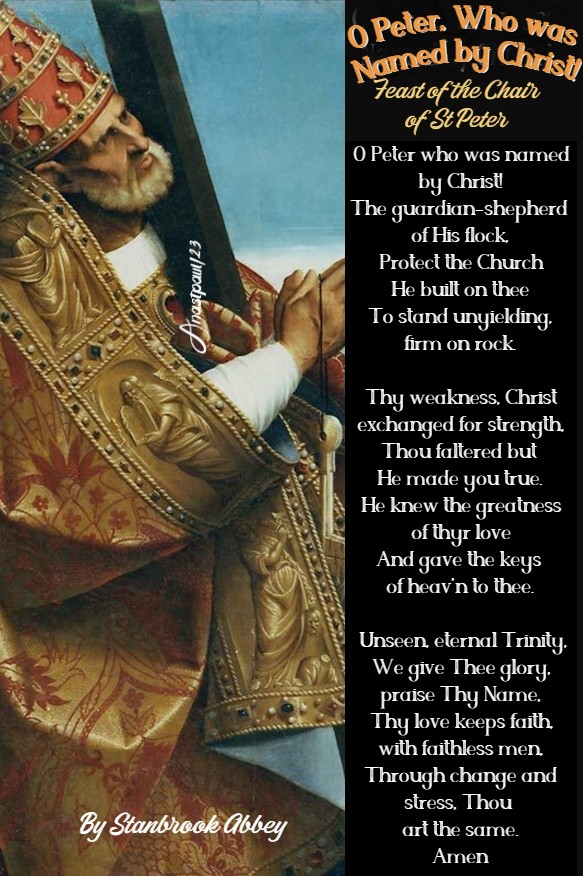
O Peter, Who was Named by Christ! By Stanbrook Abbey For the Feast of the Chair of St Peter
O Peter who was named by Christ! The guardian-shepherd of His flock, Protect the Church He built on thee To stand unyielding, firm on rock.
Thy weakness, Christ exchanged for strength, Thou faltered but He made thee true. He knew the greatness of thy love And gave the keys of heav’n to thee.
Unseen, eternal Trinity, We give Thee glory, praise Thy Name, Thy love keeps faith, with faithless men, Through change and stress, Thou art the same. Amen
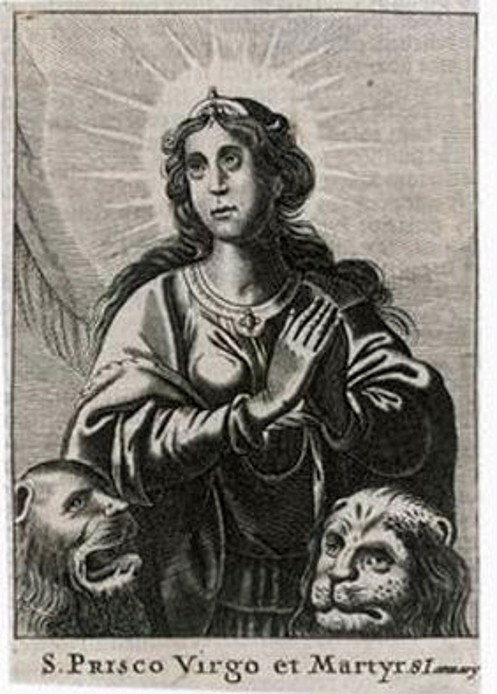
Saint of the Day – 18 January – Saint Prisca (1st Century) Child Virgin Martyr. Born to the imperial Roman hristian nobility and died by being stabbed with a sword in 275 in Rome, Italy. Also known as – Priscilla, Prisque.
The Roman Martyrology reads: “In the City of Rome, the holy Virgin and Martyr Prisca; after many tortures she gained the Crown of Martyrdom under Emperor Claudius II (about 270).”
Born to Christian parents of a noble family, Prisca was raised during the reign of the Roman Emperor Claudius II. While Claudius did not persecute Christians with the same fervour as other Roman Emperors, Christians still did not practice their faith openly. In fact, Prisca’s parents went to great lengths to conceal their faith and thus they were not suspected of being Christians.
Prisca, however, did not feel the need to take precaution. The young girl openly professed her dedication to Christ and eventually, she was reported to the Emperor. Claudius had her arrested and commanded her to make a sacrifice to Apollo, the pagan god of the sun.
According to the legend, Prisca refused and was tortured for disobeying. Then, suddenly, a bright, yellow light shone about her and she appeared to be a little star.
Claudius ordered that Prisca be taken away to prison, in the hopes that she would abandon Christ. When all efforts to change her mind were unsuccessful, she was taken to an amphitheatre and thrown in with a lion.
As the crowd watched, Prisca stood fearless. According to legend, the lion walked toward the barefoot girl and then gently licked her feet. Disgusted by his thwarted efforts to dissuade Prisca, Claudius had her stabbed to death with a sword.
Seventh-century accounts of the grave sites of Roman Martyrs refer to the discovery of an epitaph of a Roman Christian named Priscilla in a large catacomb and identifies her place of interment on the Via Salaria as the Catacomb of Priscilla.
Feast of the Chair of St Peter: In 1960, Pope John XXIII removed from the General Roman Calendar, the 18 January Feast of the Chair of Peter, Two Liturgical Feasts were celebrated in Rome, in Honour of Chairs of Saint Peter, one of which was kept in the Baptismal Chapel of St Peter’s Basilica, the other at the Catacomb of Priscilla. The dates of these celebrations are 18 January and 22 February. The two Feasts were included in the Tridentine Calendar with the rank of Double, which, in 1604, Pope Clement VIII raised to the rank of Greater Double. Those traditional Catholics. who do not accept the changes made by Pope John XXIII, continue to celebrate both Feast days: “Saint Peter’s Chair at Rome” on 18 January and the “Chair of Saint Peter at Antioch” on 22 February. https://anastpaul.com/2017/02/22/feast-of-the-chair-of-st-peter-22-february/
St Archelais the Martyr Bl Beatrix of Este the Younger Bl Charlotte Lucas St Catus
Blessed Cristina Ciccarelli OSA (1481–1543) Religious of the Order of Saint Augustine, Mystic, Stigmatist, Apostle of the poor, Reformer, she had a had a particular devotion to the Eucharist and to the Passion and Death of Christ, she was granted the gift of Prophecy, visions and levitation. About Bl Cristina: https://anastpaul.com/2020/01/18/saint-of-the-day-18-january-blessed-cristina-ciccarelli-osa-1481-1543/
St Day/Dye St Deicola of Lure Bl Fazzio of Verona Bl Félicité Pricet St Leobard of Tours
Bl Monique Pichery St Moseus of Astas St Prisca of Rome (1st Century) Child Virgin Martyr St Susanna the Martyr St Thecla the Martyr St Ulfrid of Sverige Bl Victoire Gusteau St Volusian of Tours
Martyrs of Carthage – 3 saints Martyrs of Egypt -37 saints Martyrs of Nicaea – 3 saints
Thought for the Day – 17 January – Meditations with Antonio Cardinal Bacci (1881-1971)
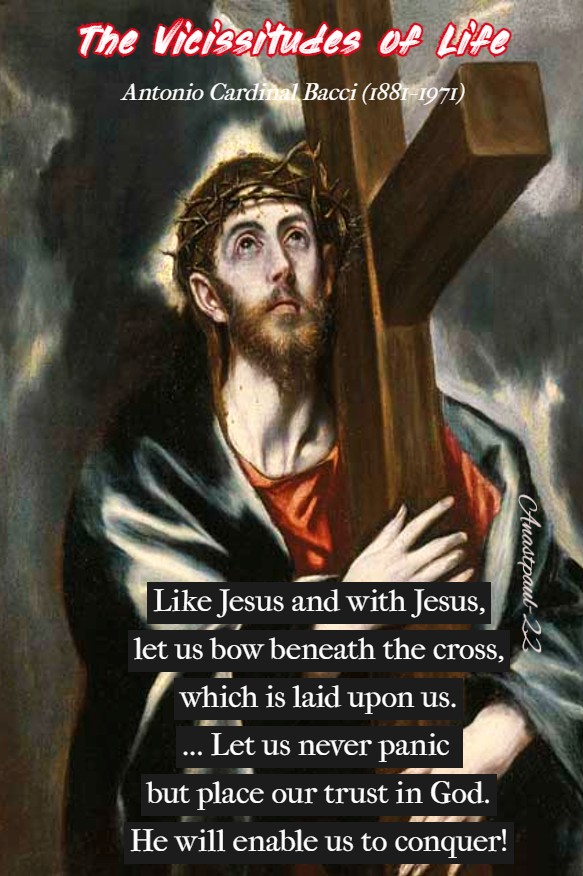
The Vicissitudes of Life
“There are three kinds of trials which we have to expect:
(a) Suffering in the guise of illness or accidents.
(b) The insults, lack of understanding and ingratitude of our fellowmen.
(c) Temptations and allurements of sin.
We must make a spiritual preparation at the beginning of everyday and surrender ourselves with filial confidence into the hands of God. Sorrows, illness and misfortune may come. Let us offer ourselves to God in our morning prayer. Like Jesus and with Jesus, let us bow beneath the cross, which is laid upon us.
Perhaps men will insult us and misunderstand us. Let us accept all this with resignation and love for God and our neighbour, whoever he may be. In this, we shall be like our Divine Redeemer, Who, when He was nailed to the Cross, not only forgave but prayed to His Eternal Father, for those who had Crucified Him.
The enchantment of sin may disturb the peace and purity of our soul. In this matter especially, we must prepare to resist, from the very beginning of the day. We must intercede with God, fervently renew our resolutions and turn our attention, when necessary, to other worthwhile thoughts and activities. Let us never panic but place our trust in God. He will enable us to conquer!”
Quote/s of the Day – 17 January – The Memorial of St Anthony Abbot (251-356)
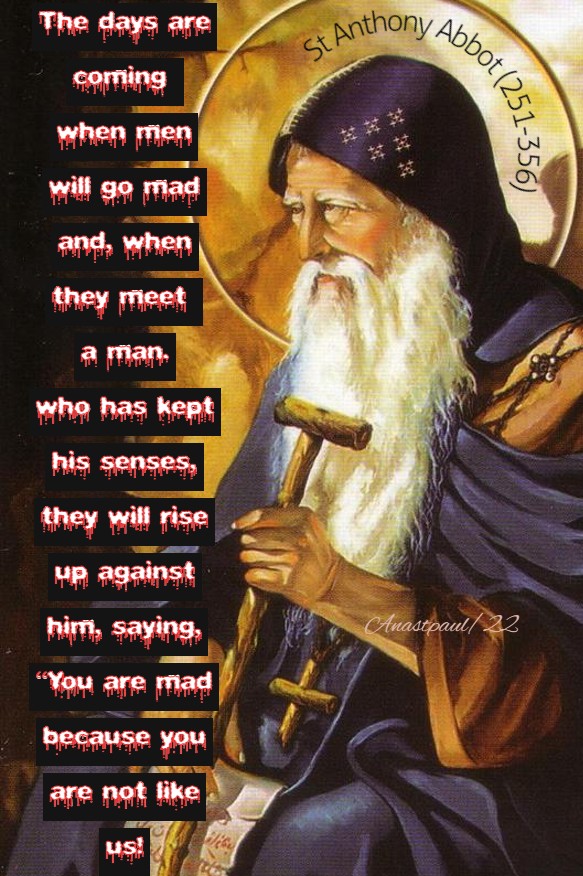
“The days are coming when men will go mad and, when they meet a man. who has kept his senses, they will rise up against him, saying, “You are mad because you are not like us!”
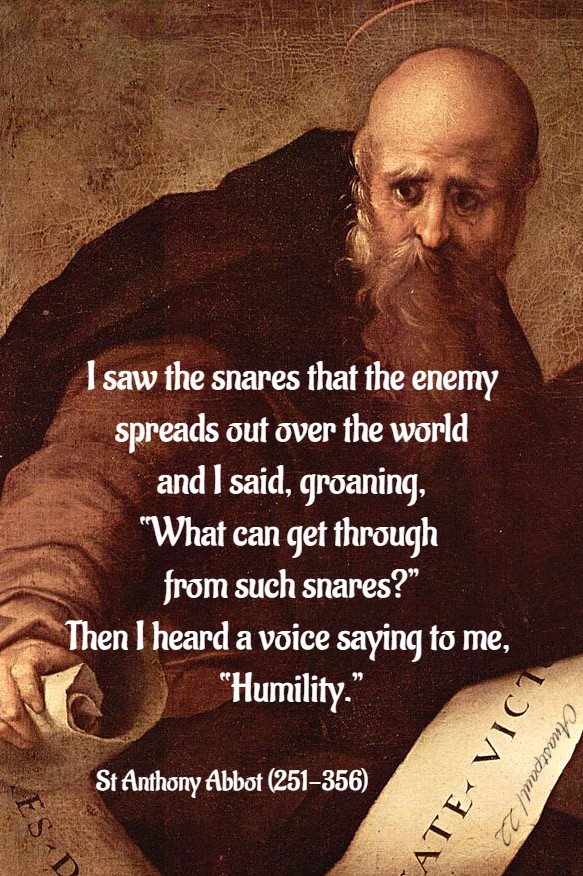
“I saw the snares that the enemy spreads out over the world and I said, groaning, “What can get through from such snares?” Then I heard a voice saying to me, “Humility.”
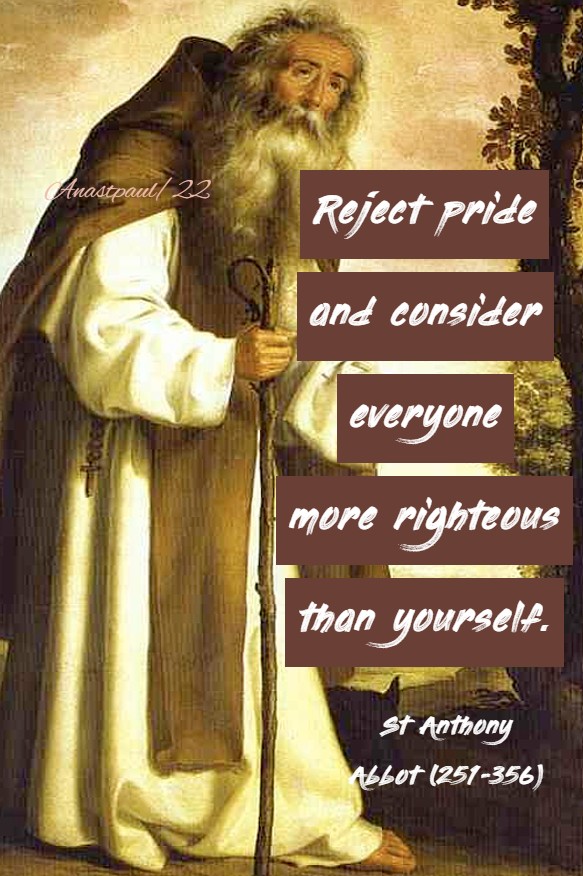
“Reject pride and consider everyone more righteous than yourself.”
One Minute Reflection – 17 January – Readings: Ecclus 45:1-6, Luke 12:35-40 and the Memorial of St Anthony Abbot (251-356)
“Stay dressed for action and keep your lamps burning and be like men who are waiting for their master to come home from the wedding feast, so that they may open the door to him at once when he comes and knocks.” – Luke 12:35-36
REFLECTION – “God, the Word, stirs up the lazy and arouses the sleeper. For indeed, someone who comes knocking at the door is always wanting to come in. But it depends on us, if He does not always enter or always remain.,, May your door be open to Him who comes; open your soul, enlarge your spiritual capacities, that you may discover the riches of simplicity, the treasures of peace and sweetness of grace. Expand your heart; run to meet the Sun of that Eternal Light that “enlightens everyone” (Jn 1,9). It is certain, that this true Light shines for all but, if anyone shuts their windows, then they themselves, shut themselves off from this Eternal Light.
So even Christ remains outside, if you shut the door of your soul. It is true, that He could enter but He does not want to use force, He doesn’t put those who refuse under pressure. Descended from the Virgin, born from her womb, He shines throughout the universe to give light to all. Those who long to receive the light, that shines with an everlasting brightness, open up to Him. No night comes to intervene. Indeed, the sun we see each day, gives way to night’s darkness but the Sun of Justice (Mal 3,20) knows no setting, for Wisdom is not overcome by evil.” – St Ambrose (340-397) Bishop of Milan and Father and Doctor of the Church – 12th Sermon on Psalm 118
PRAYER – All-powerful, eternal God and Father, grant us the grace of Your Spirit and fill us with the light of understanding and love. May we learn to truly pray and by our prayers to entreat You to bless us in Your goodness and lead us to true faith in Your Eternal Light and Word sent to redeem us. May we always be waiting and prepared to open the door of our hearts to Jesus Christ our Lord, Who comes in light, love and peace. Grant that by the prayers of St Anthony Abbot, we may be strengthened. Holy Mother, be our protection and our guide. We make our prayer through Jesus Christ, our Lord with the Holy Spirit, God now and forever, amen.
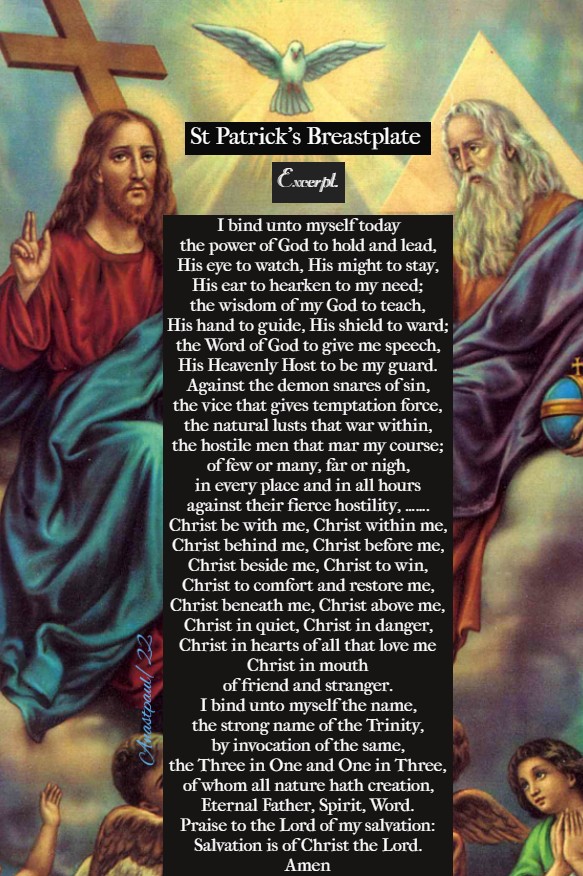
Excerpt from St Patrick’s Breastplate (also known as The Deer Cry)
I bind unto myself today the power of God to hold and lead, His eye to watch, His might to stay, His ear to hearken to my need; the wisdom of my God to teach, His hand to guide, His shield to ward; the Word of God to give me speech, His Heavenly Host to be my guard. Against the demon snares of sin, the vice that gives temptation force, the natural lusts that war within, the hostile men that mar my course; of few or many, far or nigh, in every place and in all hours against their fierce hostility, ……. Christ be with me, Christ within me, Christ behind me, Christ before me, Christ beside me, Christ to win, Christ to comfort and restore me, Christ beneath me, Christ above me, Christ in quiet, Christ in danger, Christ in hearts of all that love me, Christ in mouth of friend and stranger. I bind unto myself the name, the strong name of the Trinity, by invocation of the same, the Three in One and One in Three, of whom all nature hath creation, Eternal Father, Spirit, Word. Praise to the Lord of my salvation: Salvation is of Christ the Lord. Amen
Saint of the Day – 17 January – Blessed Gamelbert of Michaelsbuch (c 720-c 802) Priest, Monk, Hermit. Born in c 720 in Bavaria (in modern Germany) and died in c 802 of natural causes.
“Such was his kindness of heart, that he used to buy the little birds caught by the peasants, in order to set them free. He never allowed his servants to work in the fields or woods, if bad weather threatened. He valued, above everything, peace and concord and kept the peace among his parishioners, as far as he possibly could.” – from “The Little Bollandists” by Monsignor Paul Guérin, 1882
Gamelbert was of noble descent and a Lord of Michaelsbuch. After a pilgrimage to Rome, Gamelbert became a Priest and then the Parish Priest in Michaelsbuch, Germany for over 50 years.
In the mid-8th Century he acquired from Duke Tassilo III a piece of woodland on the opposite bank of the Danube between Mariaposching and Deggendorf, for which he had to pay a tax known as the Medema. From this was derived the name of Metten both for the place itself and for the Monastery which he established there, Metten Abbey..
The first Abbot was Gamelbert’s Godson Blessed Utto (Feast day 3 October), who directed the construction of the Monastery from his hermitage (the present Uttobrunn). In 766 twelve monks arrived from Reichenau Abbey as the first official occupants, although the place was well settled by then
In art, Gamelbert is represented as a Priest or as a pilgrim surrounded by birds.
Blessed Gamelbert was Beatified on 25 August 1909 by Pope Saint Pius X (cultus confirmed).
St Achillas of Sketis St Amoes of Sketis St Antony of Rome Bl Euphemia Domitilla Blessed Gamelbert of Michaelsbuch (c 720-c 802) Priest St Genitus St Genulfus St Jenaro Sánchez Delgadillo St John of Rome Bl Joseph of Freising St Julian Sabas the Elder St Marcellus of Die St Merulus of Rome St Mildgytha St Nennius St Neosnadia St Pior St Richimir
Thought for the Day – 16 January – Meditations with Antonio Cardinal Bacci (1881-1971)
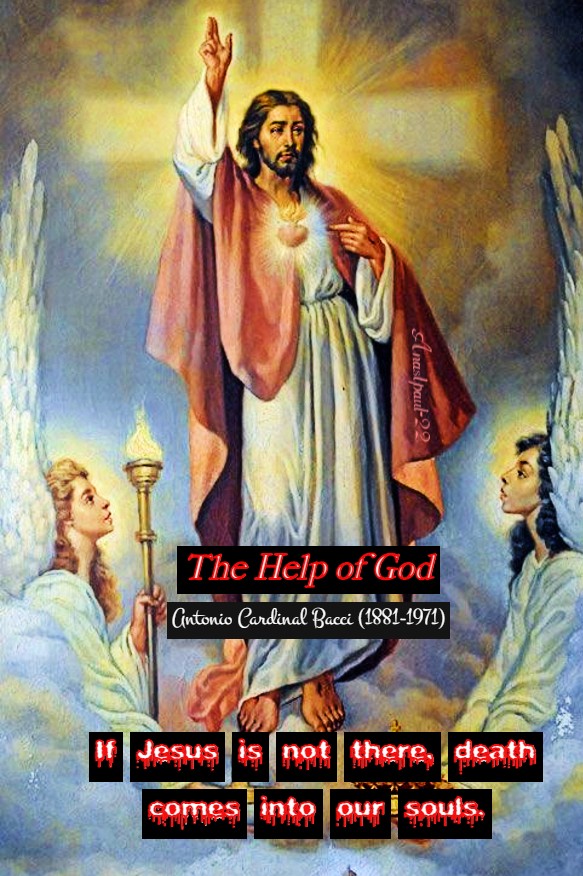
The Help of God
“There are several passages in Sacred Scripture which emphasise clearly and effectively, our utter weakness and dependence on God. “Not that we are sufficient of ourselves,” says St Paul, “to think anything, as from ourselves but our sufficiency is from God” (2 Cor 3:5).
Jesus warns us, that without Him, we can do nothing: “Without me, you can do nothing” (Jn 15:5). He uses the allegory of the vine and the branches as an illustration of this. I am the vine, He says and you are the branches. So it is necessary for you to remain united to me and I to you. In the same way as a branch that does not live on, in the vine, can yield no fruit of itself, so you can do nothing, if you do not live on in Me. If anyone does not remain united to Me, he will be like a withered branch which is thrown into the fire to be burned (Jn 15),
We must remain united to Jesus, therefore, if we wish to do anything good and to merit everlasting life. Otherwise, the supernatural life of grace will not be transmitted to us. If Jesus is not there, death comes into our souls. Let us remain close to our Divine Redeemer. If we continue to live in Him, He will give us everything we ask, as He has promised: “If you abide in me and, if my words abide in you, ask whatever you will and it shall be done to you” (Jn 15:7).
Quote/s of the Day – 16 January – Second Sunday after Epiphany, Readings: John 2:1-11.
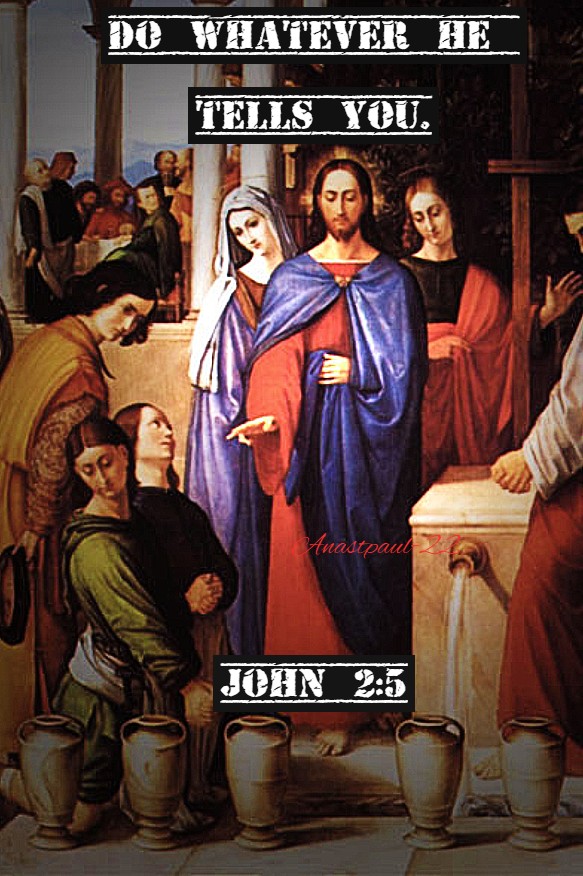
“Do whatever he tells you.”
John 2:5
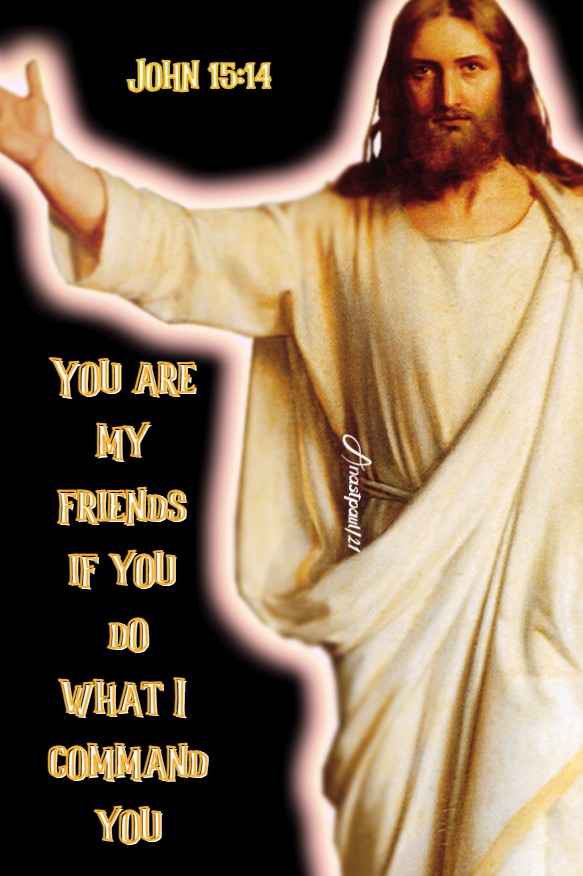
“You are my friends, if you do the things that I command you.”
John 15:14
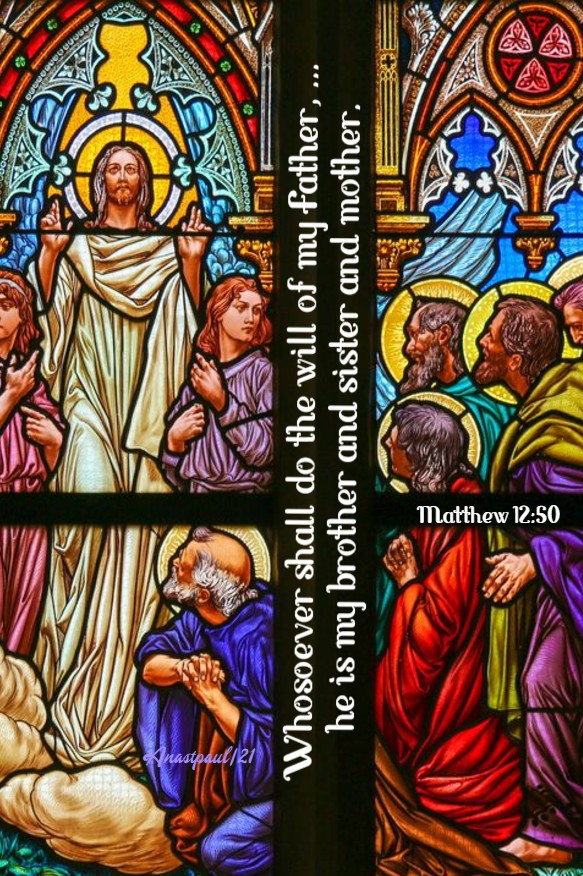
“Whosoever shall do the will of my Father, … he is my brother and sister and mother.”
Matthew 12:50
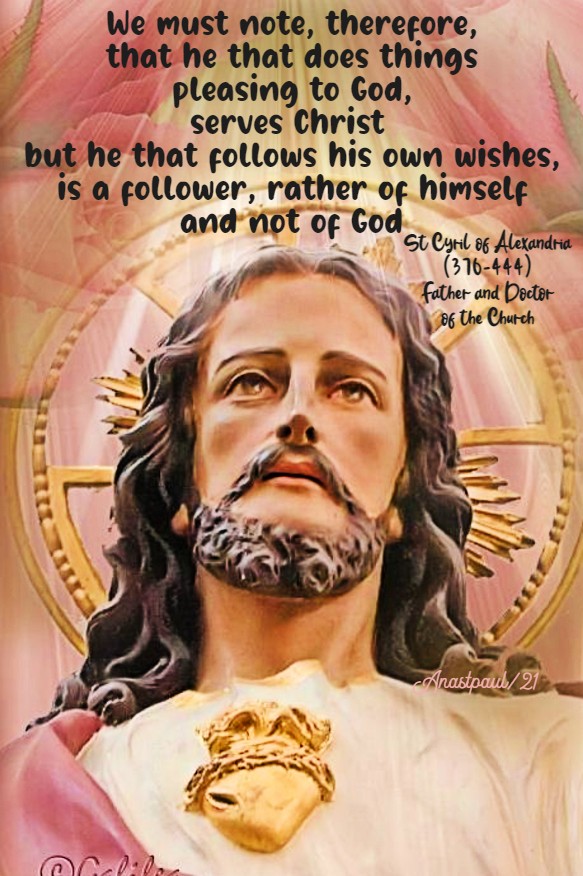
“We must note, therefore, that he that does things pleasing to God, serves Christ but he that follows his own wishes, is a follower, rather of himself and not of God.”
St Cyril of Alexandria (376-444) Father & Doctor
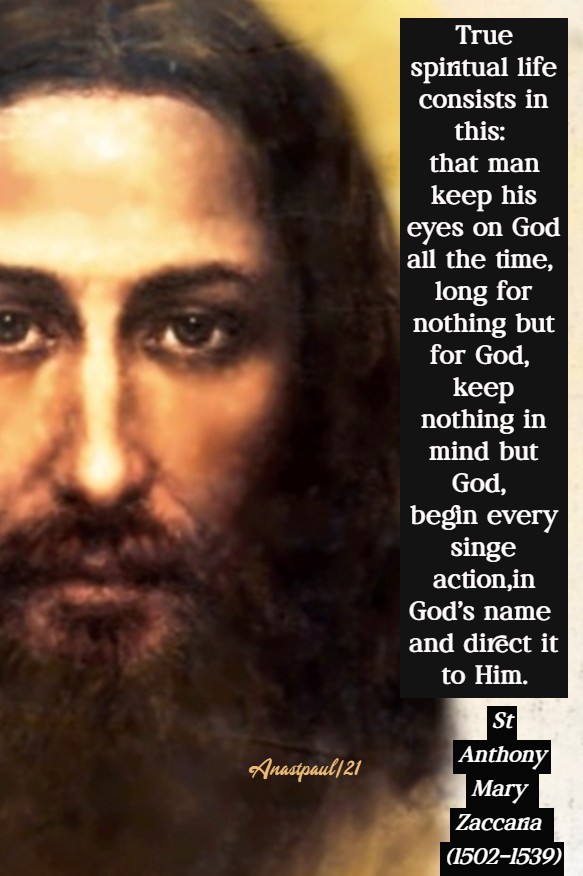
“ True spiritual life consists in this: that man keep his eyes on God all the time, long for nothing but for God, keep nothing in mind but God, begin every single action,in God’s name and direct it to Him.”
St Anthony Mary Zaccaria (1502-1539)
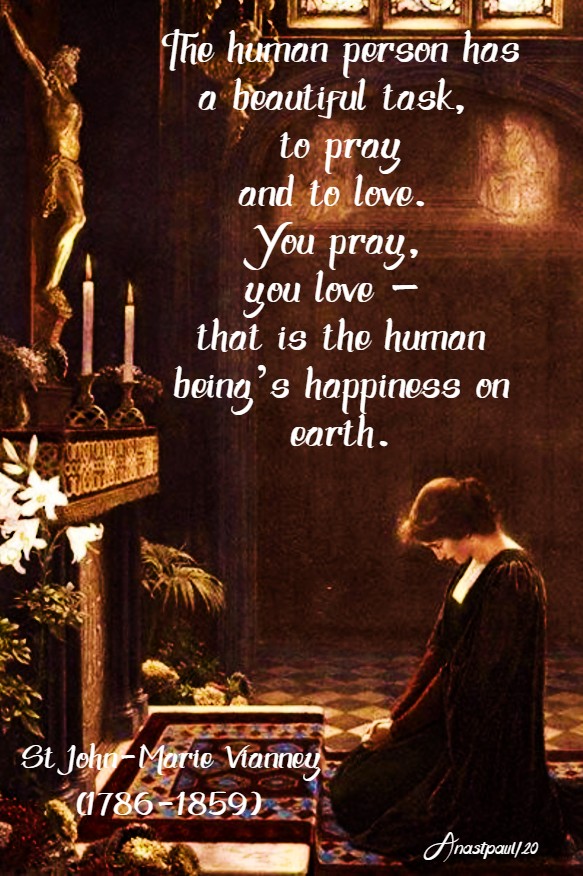
“You see, my children, the Christian’s treasure is not on earth, it is in heaven (Mt 6:20). So our thinking must go to where our treasure is. The human person has a beautiful task, to pray and to love. You pray, you love – that is the human being’s happiness on earth.”
One Minute Reflection – 16 Januaryr – Second Sunday after Epiphany, Readings: Romans 12:6-16, John 2:1-11.
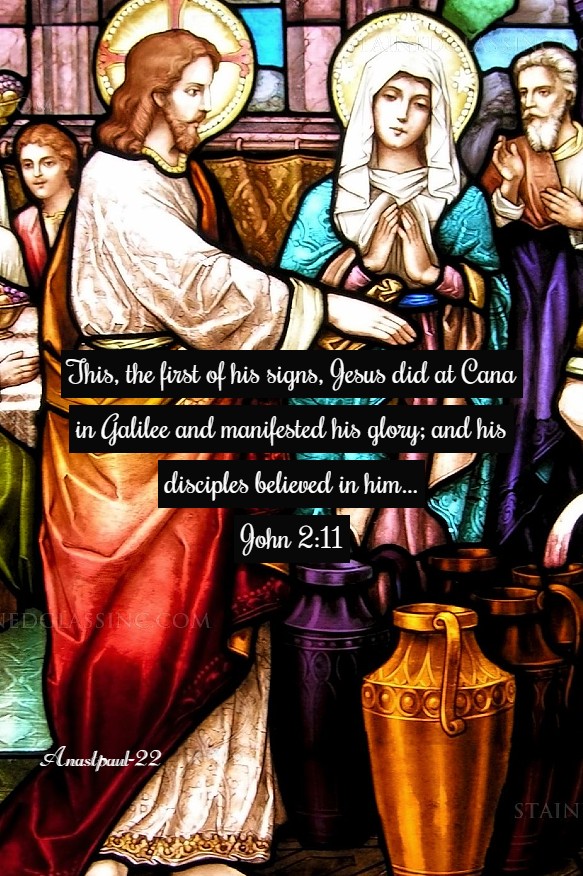
“This, the first of his signs, Jesus did at Cana in Galilee and manifested his glory; and his disciples believed in him…” – John 2:11
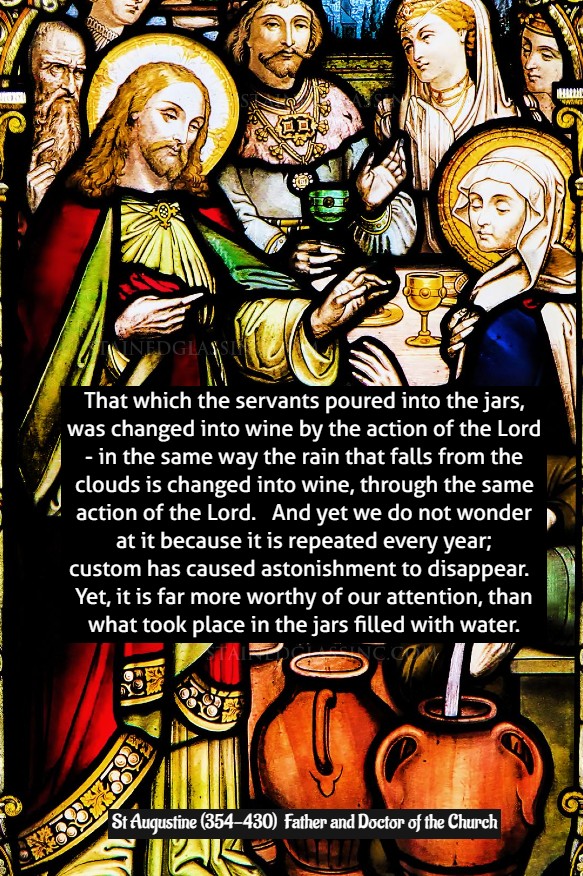
REFLECTION – “The miracle by which our Lord Jesus Christ changed water into wine is not at all astonishing, to those who know, that God is its Author. Indeed, it is exactly the same thing which produced wine in those six jars on that wedding day … and which renews this transformation in the vines each year. That which the servants poured into the jars, was changed into wine by the action of the Lord – in the same way the rain that falls from the clouds is changed into wine, through the same action of the Lord. And yet, we do not wonder at it because it is repeated every year; custom has caused astonishment to disappear. Yet, it is far more worthy of our attention, than what took place in the jars filled with water. Indeed, who is there who dreams of considering the work of God, Who directs and governs the whole world? Isn’t that person then seized with astonishment and, as it were crushed beneath the weight of these miracles? If they consider the power enclosed within a single seed of the first species to come, they will discover a great reality there, that astounds the observer. But people, otherwise occupied, have become insensible to the works of God, which would daily provide motives for praising the Creator. This is why God reserves to Himself, the work of certain unusual wonders, so as to awaken them from their sleepiness and lead them to praise Him.”…St Augustine (354-430) Bishop of Hippo, Father and Doctor of the Church
PRAYER – Almighty God, ruler and creator of all things in heaven and on earth, listen favourably to the prayer of Your people. Open our eyes that we may see, open our ears that we may hear, open our hearts that we may love Your glory, manifest around us in all the great deeds of Your Word. Grant us love and peace in our day and may the prayers of The Holy Mother of Jesus, our Lord and Saviour and all Your Saints and Martyrs, lead us home to You. We make our prayer through Your Son Jesus Christ with the Holy Spirit, one God forever, amen.
Our Morning Offering – 16 January– Second Sunday after Epiphany
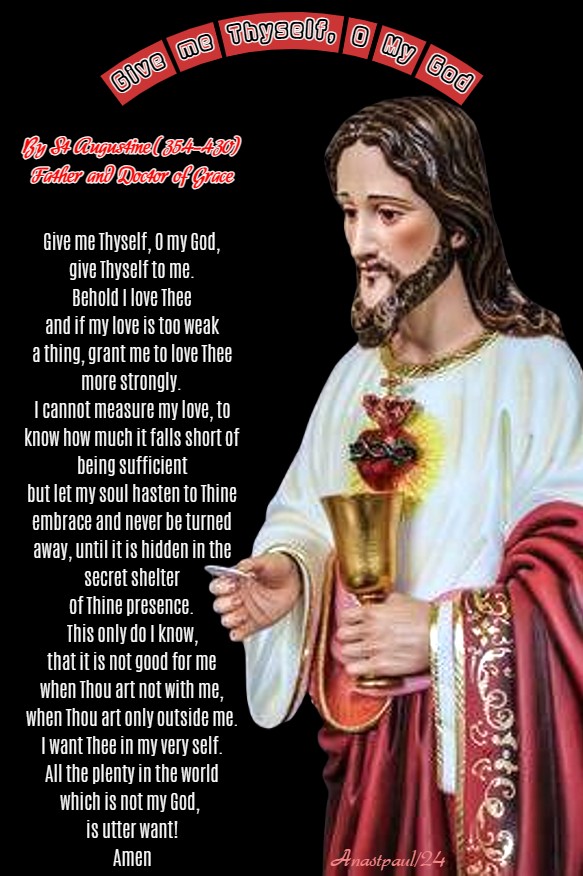
Give me Thyself, O My God By St Augustine (354-430) Father and Doctor of Grace
Give me Thyself, O my God, give Thyself to me. Behold I love Thee and if my love is too weak a thing, grant me to love Thee more strongly. I cannot measure my love, to know how much it falls short of being sufficient but let my soul hasten to Thine embrace and never be turned away, until it is hidden in the secret shelter of Thine presence. This only do I know, that it is not good for me when Thou art not with me, when Thou art only outside me. I want Thee in my very self. All the plenty in the world which is not my God, is utter want! Amen


























 AnaStpaul
You must be logged in to post a comment.