Thought for the Day – 11 October – Feast of the Divine Maternity –Meditations with Antonio Cardinal Bacci (1881-1971)
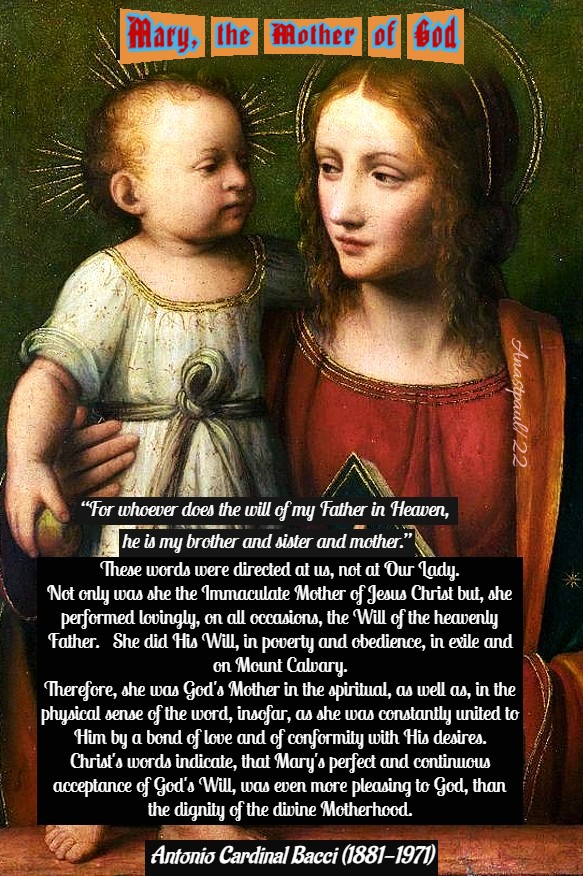
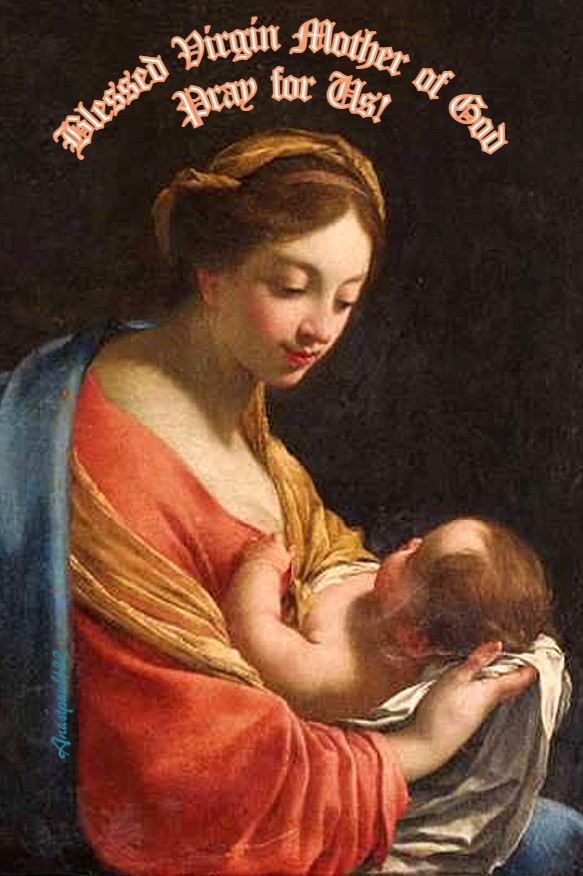
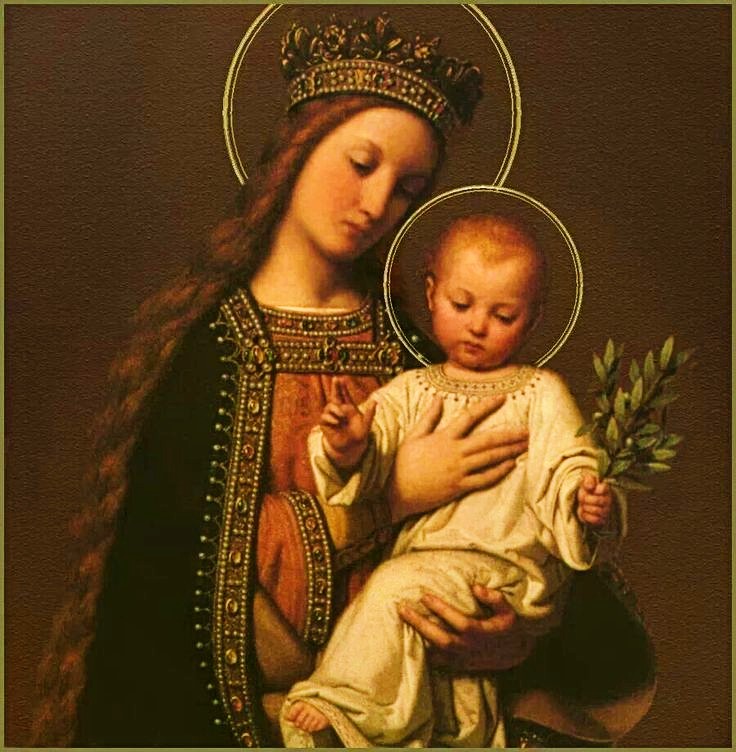
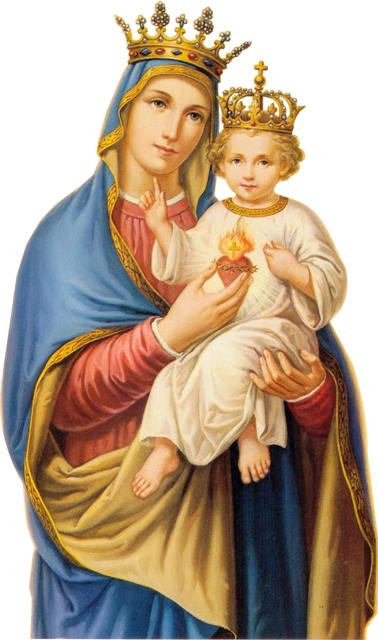
Mary, the Mother of God
“St Matthew (Cf Mt 12:46-50) and St Mark (Cf Mk 3:31-35), relate how Jesus was preaching one day in Galilee, surrounded by His Apostles and by a large crowd, when a man approached and said: “Behold, thy mother and thy brethren are standing outside, seeking thee.” “Who is my mother,” He answered, “and who are my brethren?” Then He extended His hand towards His disciples and said: “Behold, my mother and my brethren! For whoever does the will of my Father in Heaven, he is my brother and sister and mother.”
These words were directed at us, not at Our Lady. Not only was she the Immaculate Mother of Jesus Christ but, she performed lovingly, on all occasions, the Will of the heavenly Father. She did His Will, in poverty and obedience, in exile and on Mount Calvary. Therefore, she was God’s Mother in the spiritual, as well as, in the physical sense of the word, insofar, as she was constantly united to Him by a bond of love and of conformity with His desires.
Christ’s words indicate, that Mary’s perfect and continuous acceptance of God’s Will, was even more pleasing to God, than the dignity of the divine Motherhood.
We cannot equal her in dignity but, we can imitate her in this other respect. Jesus will look on us as His brothers and as worthy sons of Mary, if we carry out His Will in all things. It is not always easy to do this. It is not easy, when we are strongly tempted to commit sins of pride, anger or impurity. It is not easy, when we are overcome by sorrow or by sickness, when we are let down or misunderstood by others, when we are in want and, when we feel that we are collapsing beneath the weight of our cross. At times like these, we should pray for Mary’s spirit of complete acceptance of the Will of God.”
Quote/s of the Day – 11 October – Feast of the Divine Maternity
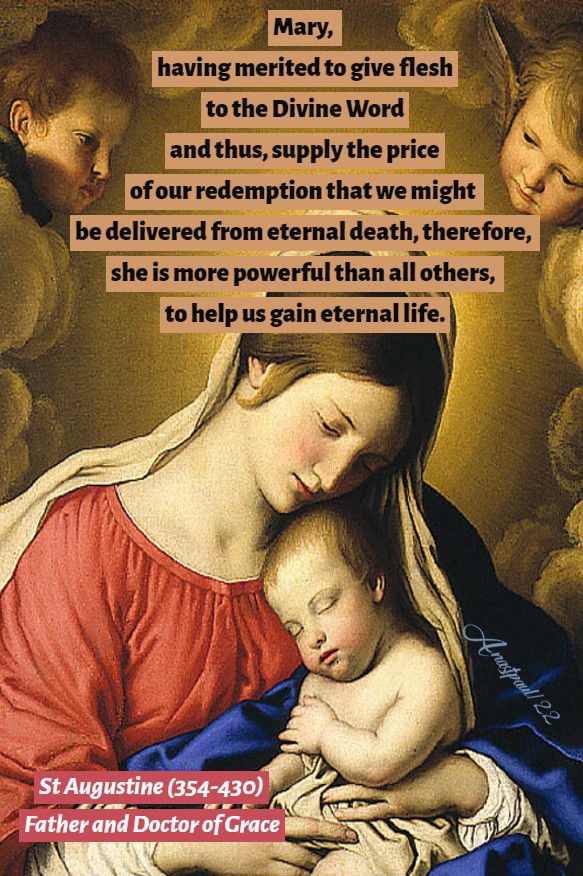
“Mary, having merited to give flesh to the Divine Word and thus, supply the price of our redemption that we might be delivered from eternal death, therefore, she is more powerful than all others, to help us gain eternal life.”
St Augustine (354-430) Father and Doctor of Grace
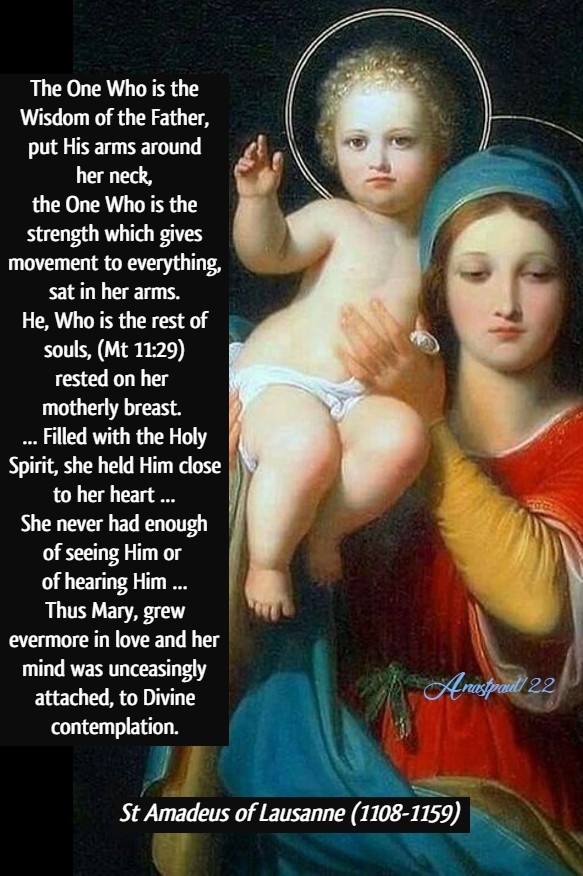
“The One Who is the Wisdom of the Father, put His arms around her neck, the One Who is the strength, which gives movement to everything, sat in her arms. He, Who is the rest of souls, (Mt 11:29) rested on her motherly breast. … Filled with the Holy Spirit, she held Him close to her heart … She never had enough of seeing Him or of hearing Him … Thus Mary, grew evermore in love and her mind was unceasingly attached , to Divine contemplation.”
St Amadeus of Lausanne (1108-1159) Bishop (Homily on the Motherhood of Mary, 4).
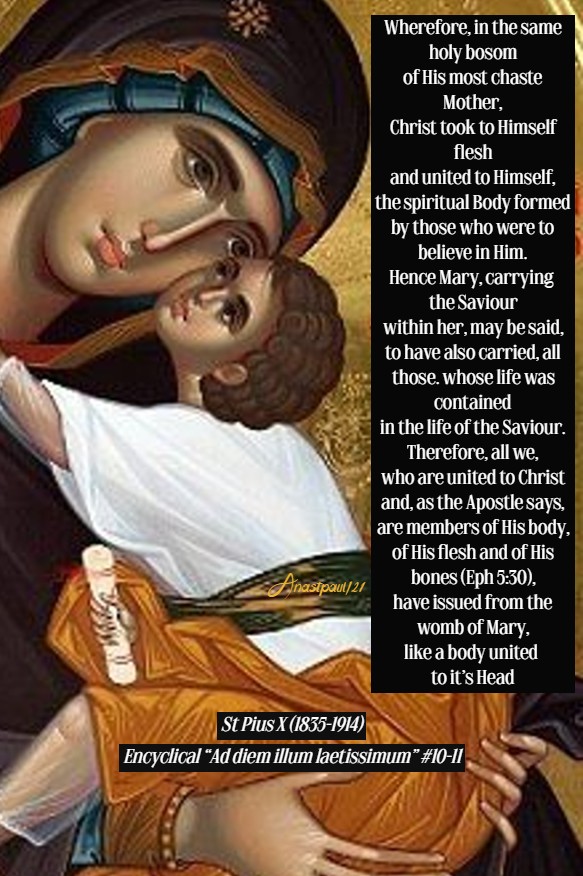
“Wherefore, in the same holy bosom of His most chaste Mother, Christ took to Himself flesh and united to Himself, the spiritual Body formed by those who were to believe in Him. Hence Mary, carrying the Saviour within her, may be said, to have also carried, all those. whose life was contained in the life of the Saviour. Therefore, all we who are united to Christ and, as the Apostle says, are members of His body, of His flesh and of His bones (Eph 5:30), have issued from the womb of Mary, like a body united to it’s head.”
St Pius X (1835-1914) Pope from 1903 to 1914 Encyclical “Ad diem illum laetissimum” #10-11
Alma Redemptoris Mater Loving Mother of the Redeemer By Bl Herman of Reichenau (1013–1054)
Loving Mother of the Redeemer! Hear thou thy people’s cry, Star of the deep and portal of the sky! Mother of Him Who thee from nothing made, Sinking we strive and call to thee for aid; Oh, by that joy which Gabriel brought to thee, Thou Virgin first and last, let us thy mercy see.
One Minute Reflection – 11 October – Feast of the Divine Maternity – Ecclesiasticus 24:23-31, Luke 2:43-51 – Scripture search here: https://www.drbo.org/
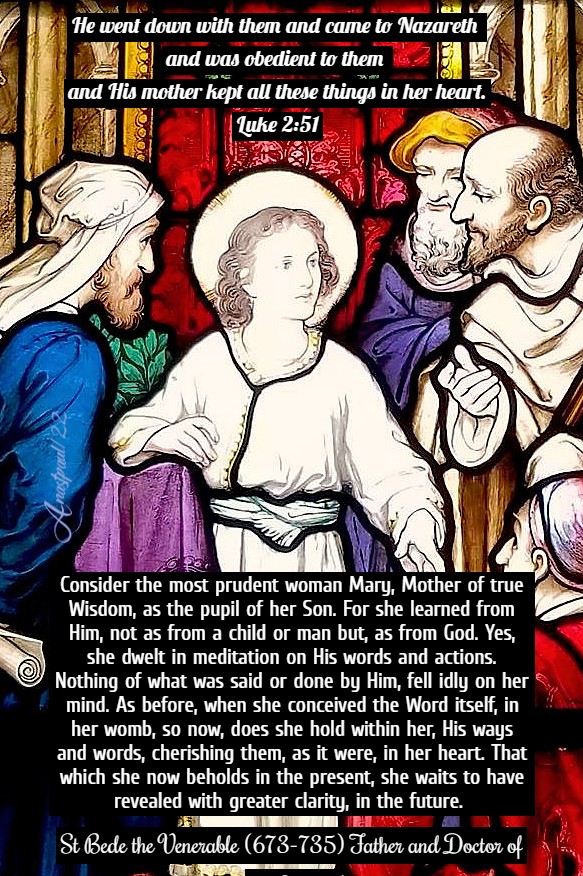
“He went down with them and came to Nazareth and was obedient to them and His mother kept all these things in her heart.” – Luke 2:51
REFLECTION – “Consider the most prudent woman Mary, Mother of true Wisdom, as the pupil of her Son. For she learned from Him, not as from a child or man but, as from God. Yes, she dwelt in meditation on His words and actions. Nothing of what was said or done by Him, fell idly on her mind. As before, when she conceived the Word itself, in her womb, so now, does she hold within her, His ways and words, cherishing them, as it were, in her heart. That which she now beholds in the present, she waits to have revealed with greater clarity, in the future. This practice she followed as a rule and law through all her life.” – St Bede the Venerable(673-735) Father and Doctor of the Church (Exposition of the Gospel of Luke).
PRAYER – O God, Who, by the message of an Angel, willed to take flesh in the womb of the Blessed Virgin Mary, grant that we, Thy suppliants, who believe her to be truly the Mother of God, maybe assisted by her intercession with Thee.Through the same Jesus Christ, Thy Son our Lord, Who lives and reigns with Thee, in the unity of the Holy Ghost, God, world without end. Amen (Collect).
Our Morning Offering – 11 October – Feast of the Divine Maternity
Mother of Salvation, Blessed Lady By Anselm (1033-1109) Magnificent Doctor Marian Doctor
Mother of Salvation, Blessed Lady, you are the Mother of Justification and those who are justified; the Mother of Reconciliation and those who are reconciled; the Mother of Salvation and those who are saved. What a blessed trust and what a secure refuge! The Mother of God is our Mother. The Mother of the One in Whom alone, we hope and Whom alone, we fear, is our Mother! … The One Who partook of our nature and by restoring us to life, made us children of His Mother, invites us by this grace, to proclaim that we are His brothers and sisters. Therefore, our Judge, is also our Brother. The Saviour of the world, is our Brother. Our God has become – through Mary – our Brother! Anen
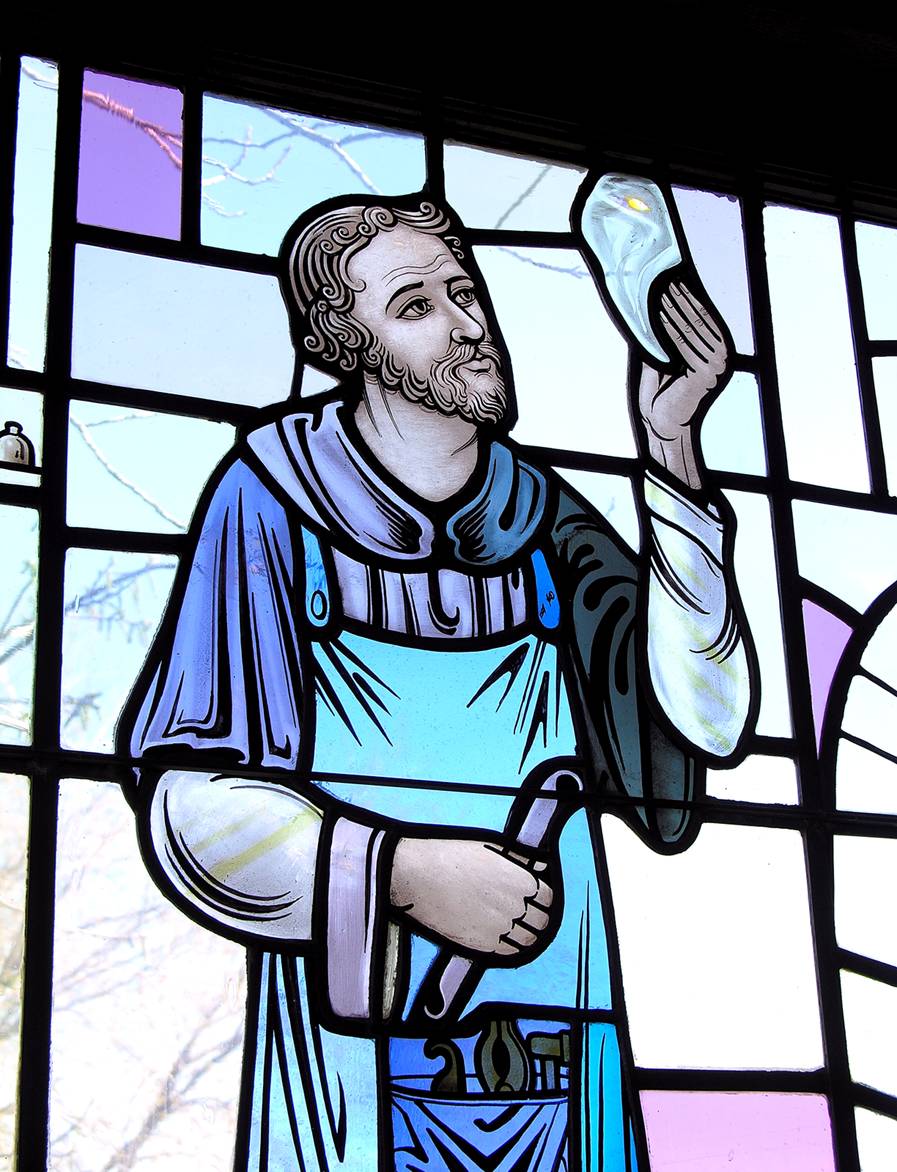
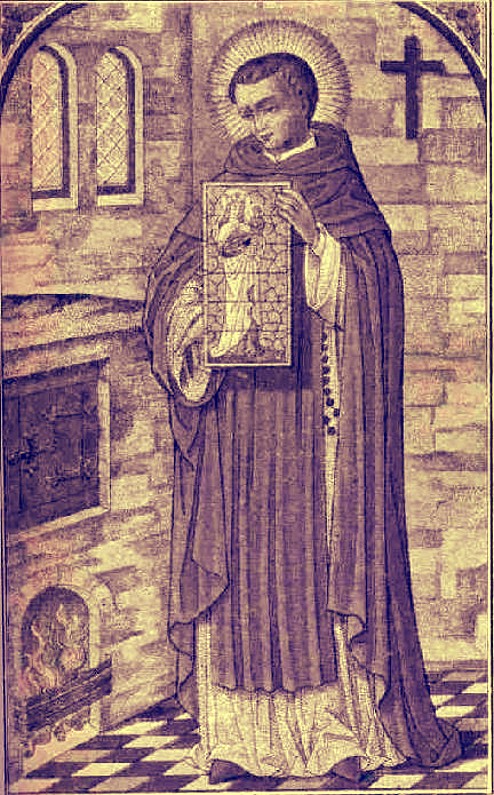
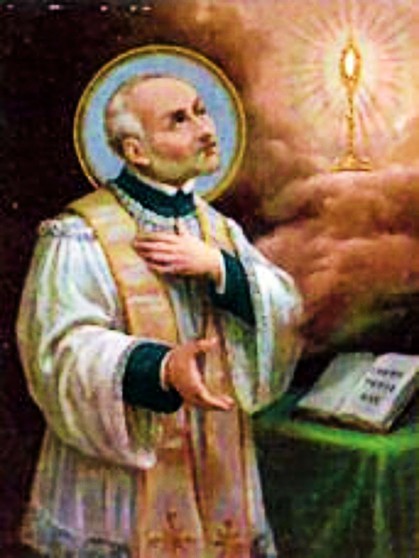
Saint of the Day – 11 October – Blessed James Grissinger OP (c 1407-1491) “The Innocent,” Lay Brother of the Order of Preachers, Artist of Religous imagery, especially stained glass, former Soldier. Born in 1407 at Ulm, Swabia (modern Germany) and died on 11 October 1491, aged 84, in Bologna, Italy of natural causes. Also known as – James Griesinger, James of Ulm.
The Roman Martyrology reads: “In Bologna, blessed Giacomo da Ulm Grissinger, a religious of the Order of Preachers, who, although unlearned, he was a skilled decorator of stained glass windows and for fifty years, offered everyone an example of dedication to work and prayer.”
James, born in Ulm in 1407, had since childhood in his family, the Grissingers, the most precious examples of Christian piety. After a period as a Soldier, being unhappy in that life, at 25 years of age, with the blessing of his parents, from the banks of the Danube, he set out as a pilgrim to Rome to venerate the tombs of the Holy Apostles.
After various wanderings, he passed through Bologna, where he stopped for some time. His favourite destination was the tomb of St Domenic and here, during his devoted visits, he felt a strong inspiration to embrace the Order.
Although he was not completely uneducated, he asked and obtained, in 1441, to be admitted among the lay brothers. Candid and sensitive soul, he understood and knew how to fully implement his holy vocation.
His prayer touched ecstasy and he was often seen surrounded by light But although his heart was foreign to the earth, his hands were always ready to work and to render any humble service with that amiable smile that opens hearts. He was skilled in the art of painting glass, so much so that excellent works remain in remembrance of him. for the benefit of souls.
It is said that one day, while he supervised the firing of some painted glass, the Prior commanded him to go in search of alms. The Blessed one, without opening his mouth, went to fulfill the task in holy obedience. On his return, instead of finding the glass incinerated, as was to be expected, he found them cooked to the right point, by the Divine intercession at which he marvelled in thanksgiving.
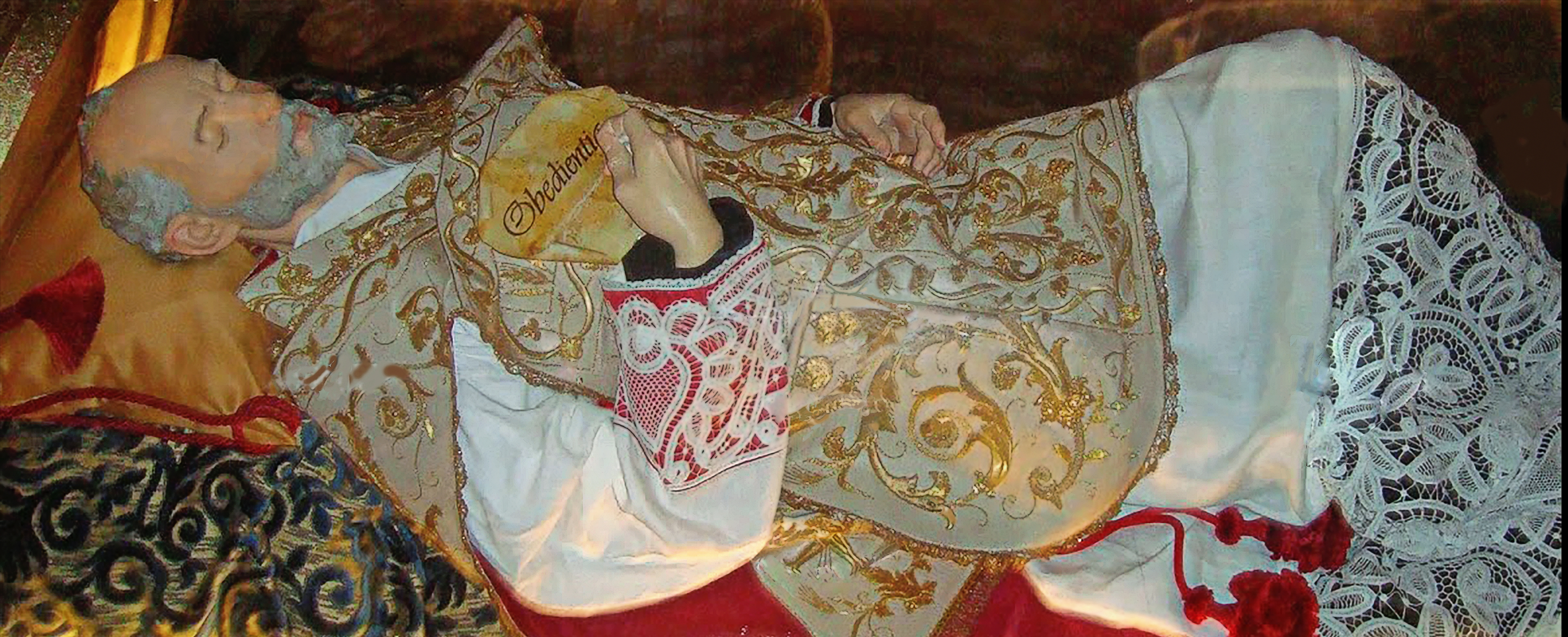
He always kept his Baptismal innocence and, having expired his blessed soul, on 11 October 1491, his candour seemed to be communicated also to his body, which shone with celestial light.
On 3 August 1825, Pope Leo XII confirmed his cult. His relics, are preserved in St Domeni’s Basilica in Bologna,
Feast of the Divine Maternity – Second Sunday in October or 11 October:
The object of this feast is to commemorate the dignity of the Mary as Mother of God. Mary is truly the Mother of Christ, who in One Person unites the Human and Divine Nature. This title was solemnly ratified by the Council of Ephesus on 22 June, 431. It was long celebrated in Portugal, where the Maternity of Our Lady was declared a feast on 22 January in 1751, at the request of King Joseph Manuel. The feast, granted to the Dioceses of Portugal, Brazil, and Algeria, was assigned to the first Sunday in May. In the following year it was extended to the Province of Venice; in 1778, to the Kingdom of Naples; in 1807, to Tuscany. It was finally instituted in 1931 by Pope Pius XI in view of the fifteenth Centenary of the Council of Ephesus. At the same time the Pope ordered, at his own cost, the restoration of the Marian mosaics in Saint Mary Major, much decayed through age. He issued an encyclical letter, “Lux veritatis.”In this, among the objects of the new festival, is named one truth that was particularly close to the heart of Pius XI, “…that Mary, who is loved and revered so warmly by the separated Christians of the East, would not suffer them to wander and be unhappily led further away from the unity of the Church and, therefore, from her Son, whose Vicar on earth we are.” At present the feast is not found in the Universal Calendar of the Church but nearly all Diocesan calendars have adopted it.
St Agilbert of Paris
St Alexander Sauli CRSP (1534-1592) Bishop “The Apostle of Corsica,” Clerk Regular of the Congregation of Saint Paul (The Barnabites) – St Alexander is referred to as “The Second Founder,” Missionary, Writer, Teacher of philosophy and theology at the University of Pavia, Reformer, Evangeliser, Confessor, Superior-General of the Barnabites in 1565. In addition, St Alexander Sauli was both friend, advisor and spiritual comfort to St Charles Borromeo, who held him in very high esteem. His Life: https://anastpaul.com/2020/10/11/saint-of-the-day-11-october-saint-alexander-sauli-crsp-1534-1592/
St Anastasius V St Anastasius the Apocrisarius St Andronicus of Ephesus St Andronicus the Soldier St Ansilio St Bruno the Great St Canice St Digna of Sicily St Dionisio de Santarem St Emilian of Rennes St Ethelburgh of Barking St Eufridus St Firminus of Uzes St Germanus of Besancon St Gratus of Oloron St Guiadenzio of Gniezno
Blessed James Grissinger OP (c 1407-1491) Lay brother of the Order of Preachers, Artist of Religous imagery. St Juliana of Pavilly St Nectarius of Constantinople St Philip the Deacon St Philonilla St Placid St Placidia St Probus of Side St Santino of Verdun St Sarmata St Taracus of Cladiopolis St Zenaides
Martyrs of Vilcassin – 4 Saints: Four Christians who were Martyred together. We know little more than the names – Nicasius, Pienza, Quirinus and Scubicolus. Their martyrdom occurred in Vexin Lugdunense territory of Gaul (modern Vilcassin, France), date unknown.
Martyrs of Sicily: A group of eight Christians who were Martyred together. We know little more than the names – • Ampodus, • Anastasius, • Faustus, • Januarius, • Jovinian, • Marcellus, • Martialis and • Placidus. They died in Sicily, Italy,
Martyrs of Vilcassin: Four Christians who were Martyred together. We know little more than the names – Nicasius, Pienza, Quirinus and Scubicolus. They died in the Vexin Lugdunense territory of Gaul (modern Vilcassin, France).
Thought for the Day – 10 October – Meditations with Antonio Cardinal Bacci (1881-1971)
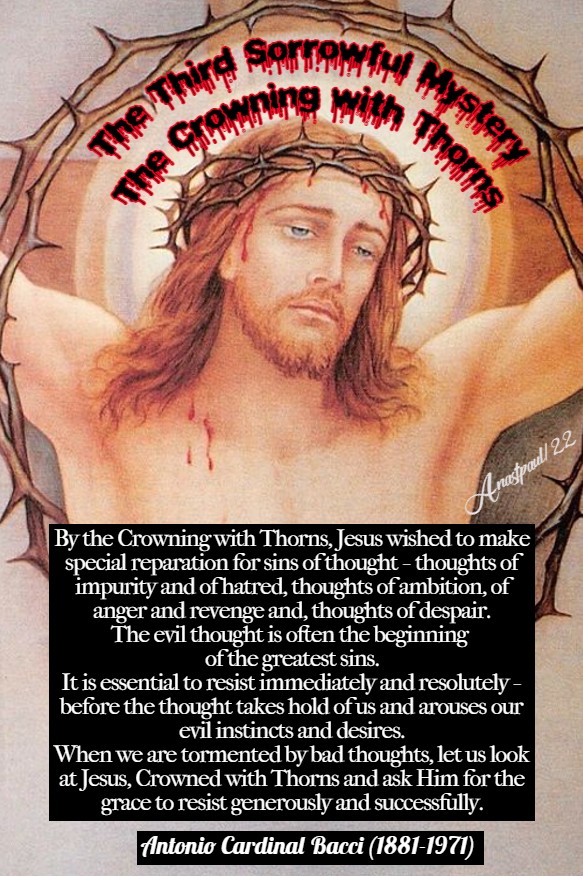
“Month of the Holy Rosary” The Third Sorrowful Mystery The Crowning with Thorns
“By the Crowning with Thorns, Jesus wished to make special reparation for sins of thought – thoughts of impurity and of hatred, thoughts of ambition, of anger and revenge and, thoughts of despair. The evil thought is often the beginning of the greatest sins. It is essential to resist immediately and resolutely – before the thought takes hold of us and arouses our evil instincts and desires. When we are tormented by bad thoughts, let us look at Jesus, Crowned with Thorns and ask Him for the grace to resist generously and successfully.”
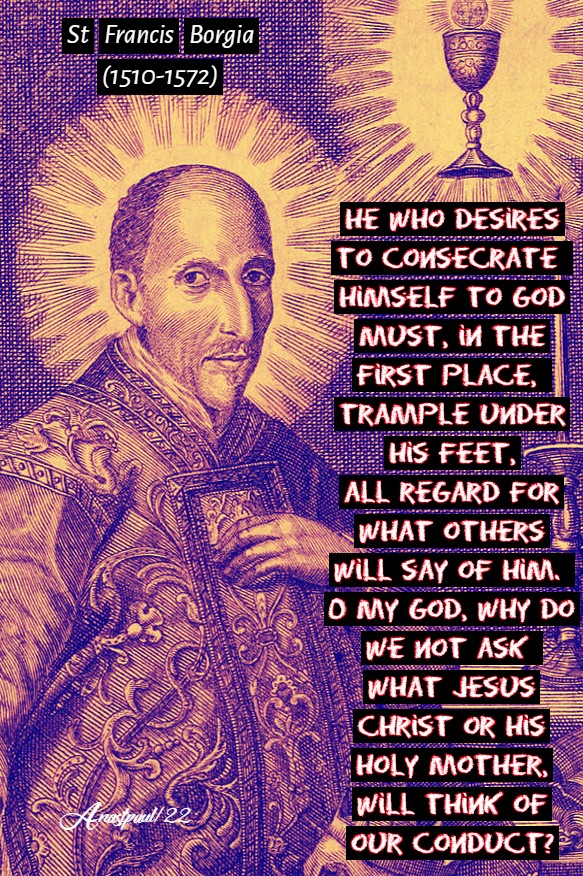
Quote/s of the Day – 10 October – St Francis Borgia SJ (1510-1572) Confessor
“He who desires to consecrate himself to God must, in the first place, trample under his feet, all regard for what others will say of him. O my God, why do we not ask what Jesus Christ or His holy Mother, will think of our conduct?”
“Wherever our brethren may be, let their first care be, for those already converted. Their first aim must be, to strengthen these in the faith and to help them save their souls. After this, they may convert others not yet Baptised.”
(Excerpt from his correspondence, as Master General of the Order, to the Jesuit Missionaries he had sent to the Spanish colonies in Florida, Mexico and Peru.)
“This beast, (so he often called his body) “must suffer ,to expiate the delight it formerly took, in immoderately flattering its palate and can I forget, that Christ drank gall for me on His Cross!”
One Minute Reflection – 10 October – St Francis Borgia SJ (1510-1572) Confessor, Priest of the Society of Jesus, – Ecclesiasticus 45:1-6, Matthew 19:27-29 – Scripture search here: https://www.drbo.org/
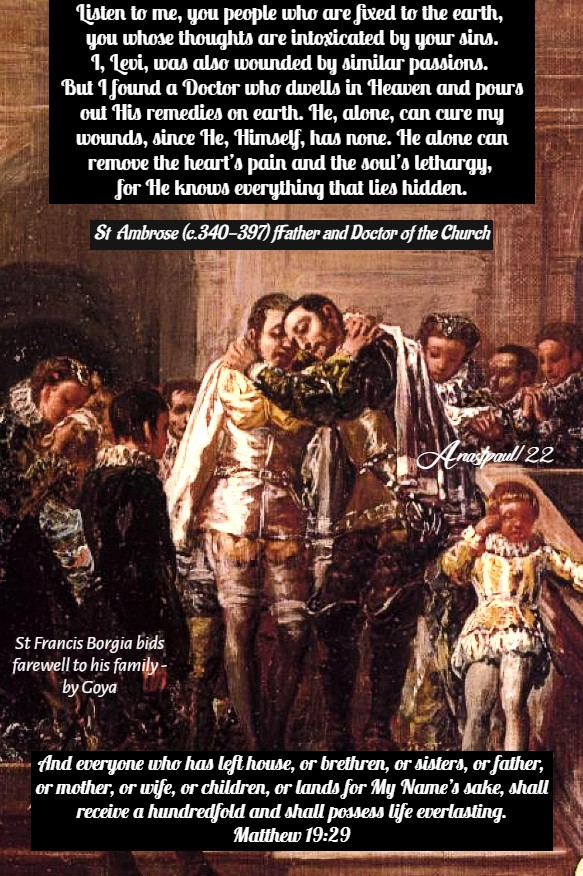
“And everyone who has left house, or brethren, or sisters, or father, or mother, or wife, or children, or lands for My Name’s sake, shall receive a hundredfold and shall possess life everlasting.” – Matthew 19:29
REFLECTION – “The Apostle Paul said: “Take off the old self with its practices and put on the new self” (Col 3,9-10)… This was the work Christ accomplished when He called Levi; He refashioned him into a new man. Similarly, it is as a new person that the former publican prepares a banquet for Christ, since Christ takes pleasure in him and he ,himself merits, to have a share in happiness, with Christ… He followed Him now, happy, lighthearted and overflowing with joy.
“I have the aspect of a publican no more,” he said, “I do not carry around the old Levi, any longer, I put off Levi when I put on Christ. I flee from my earlier life, my Lord Jesus, Thou alone, Who heals my wounds, I desire to follow. Who shall separate me from the love of God within Thee? tribulation? anguish? hunger? (Rom 8,35). I am bound to Thee by faith as by nails, I am held fast by the worthy bonds of love. All Thy commandments will be like a cautery which I will apply firmly to my wound – the remedy stings but it takes away the ulcerous infection. Lord Jesus, with Thy powerful sword, cut away the corruption of my sins, come quickly, lance my hidden and varied passions. Purge away all infection in the new bath.
Listen to me, you people who are fixed to the earth, you whose thoughts are intoxicated by your sins. I, Levi, was also wounded by similar passions. But I found a Doctor Who dwells in Heaven and pours out His remedies on earth. He, alone, can cure my wounds, since He, Himself, has none. He alone can remove the heart’s pain and the soul’s lethargy, for He knows everything that lies hidden.” – St Ambrose (c.340-397) Bishop of Milan and Father and Doctor of the Church (Commentary on Saint Luke’s Gospel, 5, 23.27).
PRAYER – O Lord Jesus Christ, model of true humility and its reward, we beseech Thee, that as Thou made blessed Francis one of Thy glorious imitators, by his contempt for earthly honours, grant us to follow his example and to share in his glory. Through the same Jesus Christ, Thy Son our Lord, Who lives and reigns with Thee, in the unity of the Holy Ghost, God, world without end. Amen (Collect).
Our Morning Offering – 10 October – St Francis Borgia SJ (1510-1572) Confessor
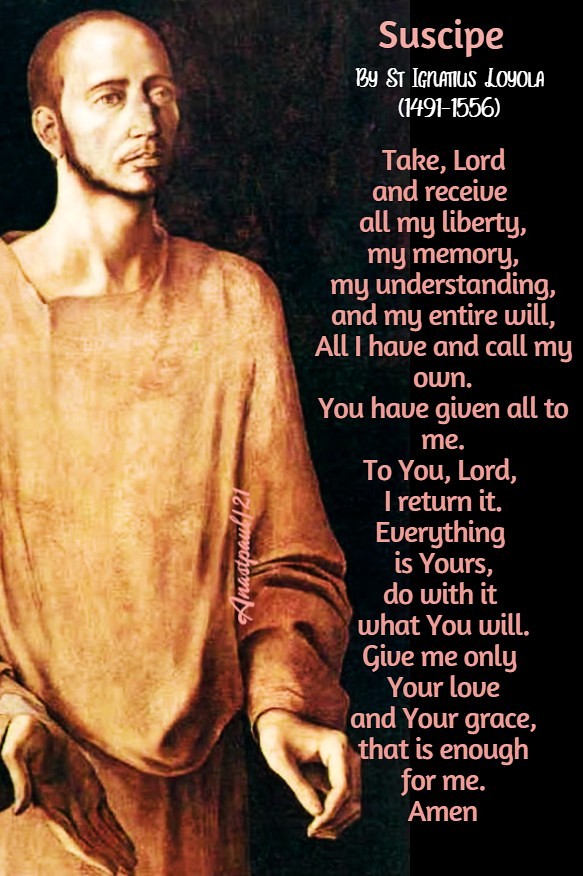
Suscipe By St Ignatius Loyola (1491-1556)
Take, Lord and receive all my liberty, my memory, my understanding, and my entire will, All I have and call my own. You have given all to me. To You, Lord, I return it. Everything is Yours, do with it what You will. Give me only Your love and Your grace, that is enough for me. Amen
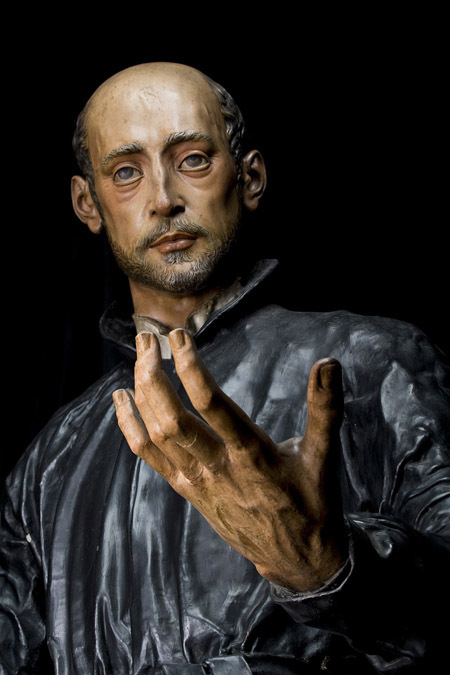
Saint of the Day – 10 October – St Francis Borgia SJ (1510-1572) Confessor, Priest of the Society of Jesus, Advisor, Missionary, Evangelist, Administrator par excelleance. Francisco de Borja y Aragon was the 4th Duke of Gandía, was a Grandee of Spain, a Spanish Jesuit and third Superior General of the Society of Jesus
“St Francis instituted at his Court, before he entered the religious life, the veneration of the Saints of the Month. Every Catholic, besides worshipping the Almighty, ought to honour the Saints. We should especially honour the Divine Mother, as the Queen of all the Saints, then, the foster-father of Christ, St Joseph and further,, our Guardian Angel and Patron Saint. Besides this, we ought to select some special Patrons, for whom we feel particular esteem and love. It is also very beneficial, to adopt the practice of the “Monthly Patrons.” This consists in selecting, on the last day of every month, a Saint whose festival will be celebrated during the following month. Daily should he be invoked and honoured. If possible his life should be read and something from it, be selected for imitation. We may also approach the Sacraments on his festival, or on the Sunday after it and employ a little more time than usual, in good works. It is known, that several great servants of God, at the end of their days, called upon the Saints whom they had honoured as their Monthly Patrons during life and it cannot be doubted, that they received benefit and comfort. “Everyone,” says St Bonaventure, “ought to venerate an especial Saint with great devotion. To him, he ought daily, to commend himself and practise some good work, in his honoru.” By Fr Francis Xavier Weninger SJ (1805-1888)
Because the life of St Francis Borgia is rather long for one post, I post below, a part of it on his childhood and youth. Hopefully, we do not have to wait a year before I add to it. It is excerpted from the Lives of the Saints by Fr Alban Butler (1711-1773.)
St Francis Borgia, Fourth Duke of Gandia and Third General of the Jesuits, was son to John Borgia, Duke of Gandia and Grandee of Spain and of Joanna of Arragon, daughter of Alphonso, natural son to Ferdinand V King of Arragon … who was the great-grandfather to our Saint. The family of Borgia or Borja, had long flourished in Spain but in 1455, received a new lustre, by the exaltation of Cardinal Alphonso Borgia to the Pontificate, under the name of Calixtus III.
St Francis was born in 1510, at Gandia, a town which was the chief seat of the family, in the Kingdom of Valencia. His pious mother had a great devotion to St Francis of Assisi and, in the pangs of a dangerous labour, made a vow that if she brought forth a son, he should be called Francis.
As soon as he began to speak, his parents taught him to pronounce the Holy Names of Jesus and Mary, which he used often to repeat with wonderful seriousness. At five years of age he recited, everyday on his knees, the chief parts of the Catechism. All his diversion was to set up pious pictures, make little altars, imitate the ceremonies of the Church and teach them to the little boys, who were his pages. From the cradle he was mild, modest, patient and affable to all. The noble sentiments of gratitude and generosity, which he then began to discover, were certain presages of an innate greatness of soul – the former being inseparable from a goodness of heart and the latter, when regulated by prudence and charity, being the greatest virtue of a Prince, who is raised above others, only that he may govern and do good to mankind.
Francis, at seven years of age, could read his mother tongue and the Latin Office of the Blessed Virgin very distinctly. His father, therefore, thought it time for him to learn writing and grammar, for which purpose he appointed him a preceptor of known prudence, learning and piety, who was called Dr.Ferdinand. At the same time, he was furnished with a governor, whose business it was, at different hours, to fashion the young Prince to the exercises that were suitable to his birth, in proportion as his age was capable of them. It was the first care of the parents, in the choice of the masters whom they placed about their son, that they were persons of uncommon piety, whose example might be a continual lesson of virtue and whose instructions, should all ultimately tend to the grafting, in his mind, true sentiments of morality and religion, without which all other accomplishments, lose their value.
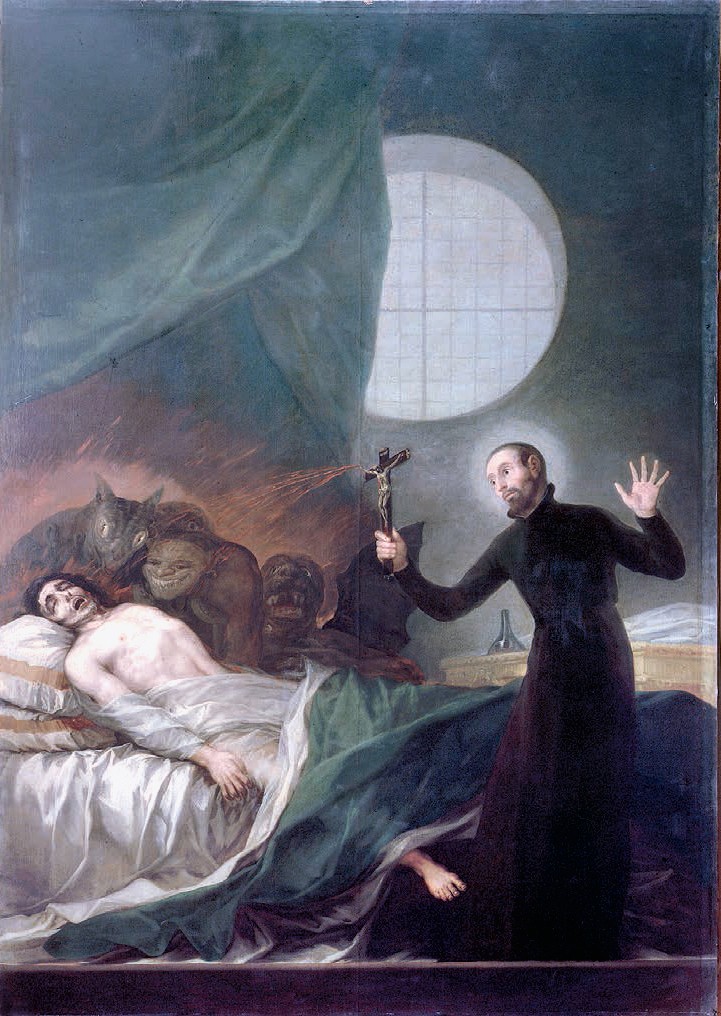
St Francis Borgia assists at the death of a impenitent by Goya
Before he was ten years old , Francis began to take wonderful delight in hearing sermons and spent much time in practising devotions, being tenderly affected to the Passion of our Divine Redeemer, which he honoured with certain daily exercises. In his tenth year, his pious mother fell dangerously ill; on which occasion, Francis, shutting himself up in his chamber, prayed for her with abundance of tears. This was the first time he used that practice of mortification, which he afterwards frequently made a part of his penance. It pleased God that the Duchess died of that distemper in 1520. This loss cost Francis many tears, though he moderated his grief by his entire resignation to the Divine will. Her pious counsels had always been to him a great spur to virtue and he took care never to forget them.
At that time, Spain was filled with tumults and insurrections of the common people, against the regency. The rebels, taking advantage of the absence of the young King, Charles V.(who was then in Germany, where he had been chosen Emperor,) plundered the houses of the nobility in the Kingdom of Valencia and made themselves masters of the town of Gandia. The Duke fled with his whole family. Going to Saragossa, he left his son Francis, then twelve years old, under the care of the Archbishop, John of Arragon, who was his uncle, being brother to his deceased mother. The Archbishop made up a household for his nephew and provided him with masters in grammar, music,and fencing, which he had begun to learn. The young nobleman laboured at the same time, to improve daily in grace and in every virtue.
At the age of fifteen, Francis was sent to Tordesillas, to be taken into the family and service of the Infanta Catharine, sister to Charles V. who was soon after to be married to John III. King of Portugal. The marriage was accomplished in 1525 but when the Infanta went into Portugal, the Duke of Gandia, who had greater plans for his son in Spain, recalled him, and engaged the Archbishop of Saragossa to re-assume the care of his education. When he had finished rhetoric, Francis studied philosophy for two years under an excellent master, with extraordinary diligence and applause. …
By the eighteenth year of his age, Francis had strong inclinations to entera religious state. … But in 1528, his father and uncle, to divert his thoughts from a religious life, removed him from Saragossa to the Court of Charles V. , where they hoped his thoughts would take a different turn. He considered his duty to his Prince, as his duty to God and although he willingly accepted, every mark of his Prince’s regard for him, he was very solicitous in all things to refer himself, his actions,and whatever he received from God, purely to the Divine honour. … (TO BE CONTINUED …)
St Aldericus St Cassius St Cerbonius of Populonia St Cerbonius of Verona St Clarus of Nantes Bl Demestrius of Albania Bl Edward Detkens St Eulampia St Eulampius St Florentius the Martyr St Fulk of Fontenelle St Gereon St Gundisalvus Bl Hugh of Macon
Bl Pedro de Alcantara de Forton de Cascajares St Pinytus of Crete Bl Pontius de Barellis St Tanca St Teodechilde St Victor of Xanten
Martyrs of Ceuta – 7 Beati: A group of seven Franciscan Friars Minor missionaries to Muslims in the Ceuta area of modern Morocco. Initially treated as madmen, within three weeks they were ordered to convert to Islam and when they would not they were first abused in the streets, then arrested, tortured and executed. • Angelo • Daniele di Calabria • Donnolo • Hugolinus • Leone • Nicola • Samuele They were beheaded in 1227 in Mauritania Tingitana (Ceuta, Morocco). Local Christians secreted the bodies away and gave them proper burial in Ceuta. They were Beatified in 1516 by Pope Leo X.
Thought for the Day – 9 October – Meditations with Antonio Cardinal Bacci (1881-1971)
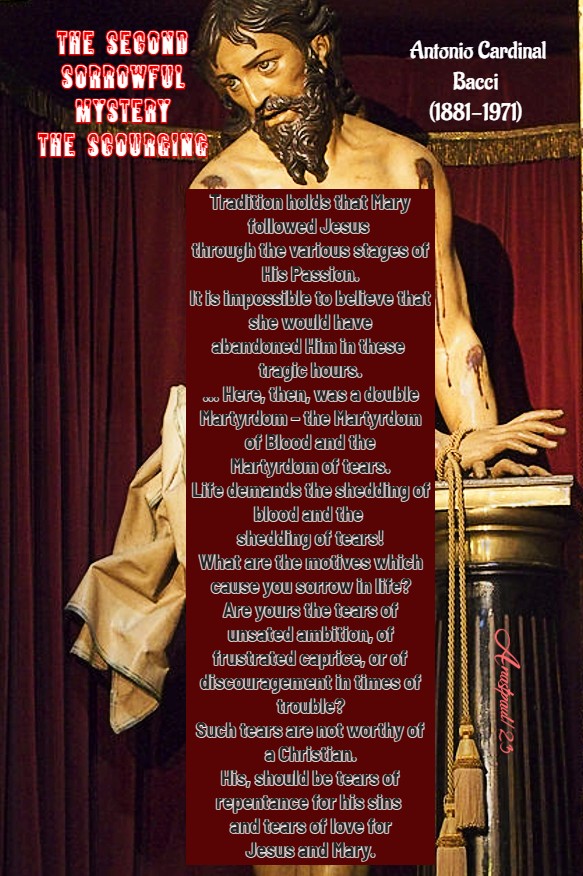
“Month of the Holy Rosary” The Second Sorrowful Mystery The Scourging
“Tradition holds that Mary followed Jesus through the various stages of His Passion. It is impossible to believe that she would have abandoned Him in these tragic hours. She must, at least, have known of the cruel flogging which He endured and, while His body was being torn by lashes, she was most probably not far away, participating, by her maternal sorrow in her Son’s torment. Here, then, was a double Martyrdom – the Martyrdom of Blood and the Martyrdom of tears.
Life demands the shedding of blood and the shedding of tears! What are the motives which cause you sorrow in life? Are yours the tears of unsated ambition, of frustrated caprice, or of discouragement in times of trouble? Such tears are not worthy of a Christian. His, should be tears of repentance for his sins and tears of love for Jesus and Mary.”
Quote/s of the Day – 9 October – St John Leonardi (1541-1609) Confessor, Priest, Founder
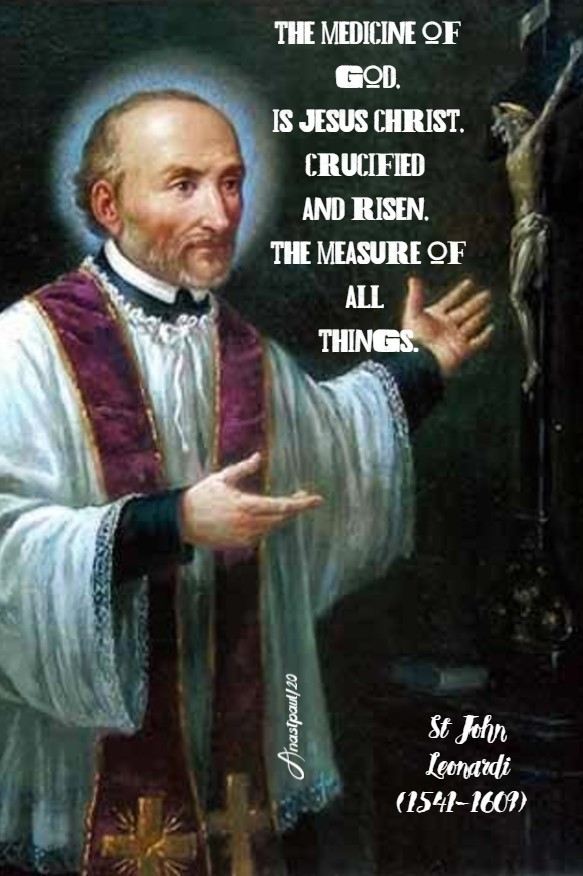
“The medicine of God, is Jesus Christ, Crucified and Risen, the measure of all things.”
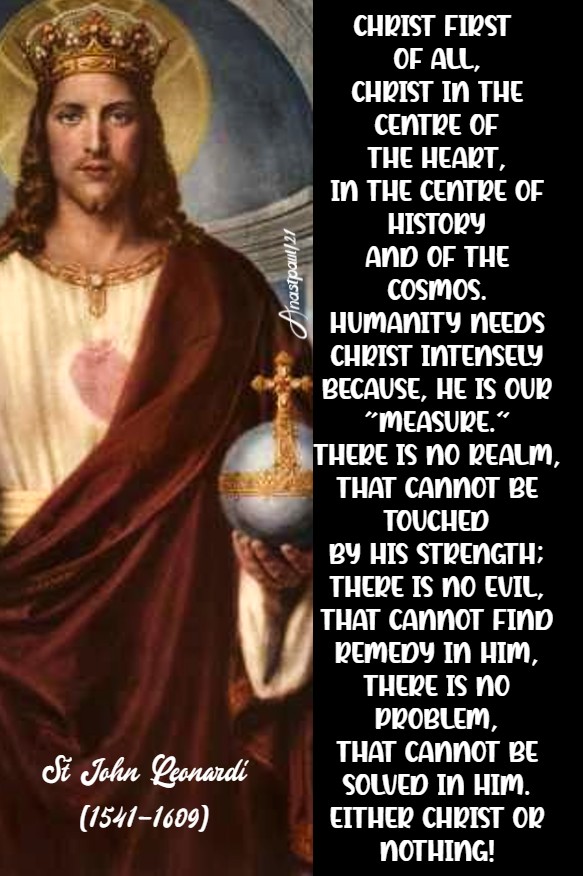
“Christ first of all, Christ in the centre of the heart, in the centre of history and of the cosmos. Humanity needs Christ intensely because, He is our “measure.” There is no realm, that cannot be touched by His strength; there is no evil, that cannot find remedy in Him, there is no problem, that cannot be solved in Him. Either Christ or nothing!”
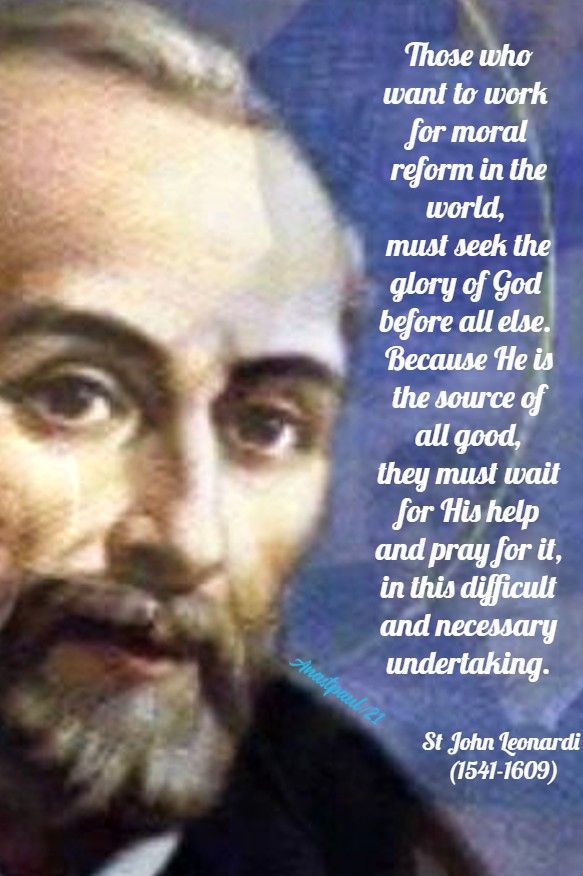
“Those who want to work for moral reform in the world, must seek the glory of God before all else. Because He is the source of all good, they must wait for His help and pray for it, in this difficult and necessary undertaking.”
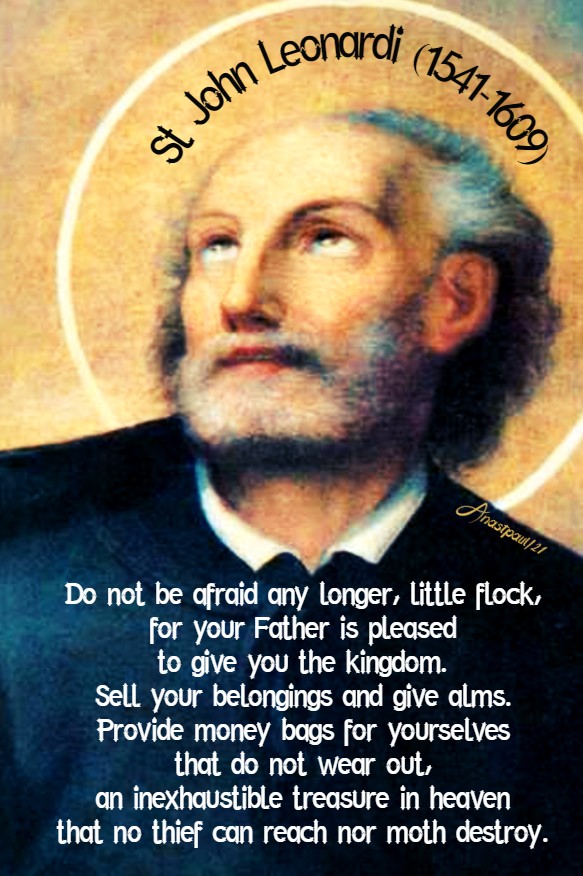
“Do not be afraid any longer, little flock, for your Father is pleased to give you the kingdom. Sell your belongings and give alms. Provide money bags for yourselves that do not wear out, an inexhaustible treasure in heaven that no thief can reach nor moth destroy.”
One Minute Reflection – 9 October – St John Leonardi (1541-1609) Confessor, Priest, Founder – 1 Corinthians 1:4-8, Matthew9:1-8 – Scripture search here: https://www.drbo.org/
“Which is easier to say: Thy sins are forgiven thee, or to say: Arise, and walk?” – Matthew 9:5
REFLECTION – “And people there brought to him a paralytic.” Saint Matthew merely says that this paralytic was carried to Jesus. Other Evangelists describe, how he was let down through an opening in the roof and placed before the Lord, without expressing any particular request, leaving it to Him to assess the needs …
“When Jesus saw their faith,” the Gospel says, that is to say, the faith of those who had brought the man to Him. Consider how sometimes Christ pays no attention to the faith of the sick person – perhaps because, the latter is incapable of it, being unconscious or possessed with an evil spirit. However, in this case, this paralytic had great trust in Jesus, otherwise, would he have allowed them to let him down in front of Him? Christ responds to this trust with an extraordinary miracle. With the power of God, He forgives this man’s sins. Thus He showed, that He is equal to the Father, a truth He had already shown, when He said to the leper: “I will do it – be made clean” (Mt 8:3) … and when, with a word, He stilled the tempestuous sea (Mt 8:26), or when, as God, He had cast out the demons who recognised in Him their ruler and their judge (Mt 8:32). So here, He shows His adversaries, to their great astonishment, that He is equal to the Father
And once more, the Saviour shows here, how He turns away from anything spectacular or a source of vainglory. On all sides the crowd is pressing Him, yet, He is in no hurry to work a visible miracle by healing the external paralysis of this man …. He begins with an invisible miracle – by healing the man’s soul. This kind of healing, is far more beneficial for him and, outwardly speaking, less glorious for Christ.” – St John Chrysostom (345-407) Priest at Antioch then Bishop of Constantinople, Father and Doctor of the Church – homilies on Saint Matthew’s Gospel, no. 29, 1.
PRAYER – O God, Who in a wondrous way graciously urged blessed John, Thy Confessor, to propagate Thy faith among the pagans and through him brought together a new religious family in Thy Church for the education of the faithful, grant Thy servants, so to profit by his teaching that we may reach everlasting rewards. Through Jesus Christ, Thy Son our Lord, Who lives and reigns with Thee, in the unity of the Holy Ghost, God, world without end. Amen (Collect).
Our Morning Offering – 9 October – The Eighteenth Sunday after Pentecost
O Jesus, Sweetest Love, Come Thou to Me (1940) By Fr Francis Xavier Lasance (1860–1946)
O JESUS, sweetest Love, come Thou to me. Come down in all Thy beauty unto me. Thou Who didst die for longing of me And never, never more depart from me. Free me, O beauteous God, from all but Thee; Sever the chain that holds me back from Thee; Call me, O tender Love, I cry to Thee; Thou art my all! O bind me close to Thee. O suffering Love, Who hast so loved me; O patient Love, Who wearies not of me. Thou alone O Love! Thou weary not of me! Ah! Weary not till I am lost in Thee, Nay, weary not, till I am found in Thee. Amen
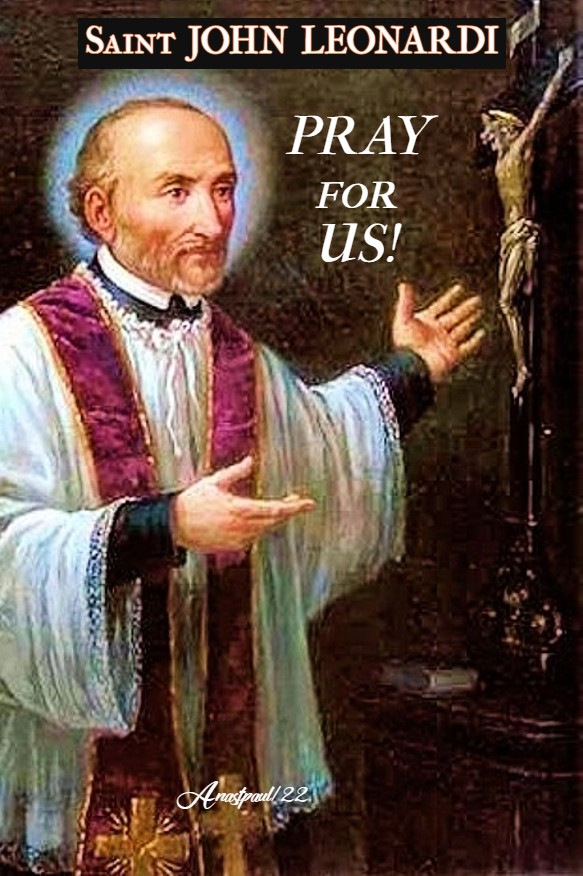
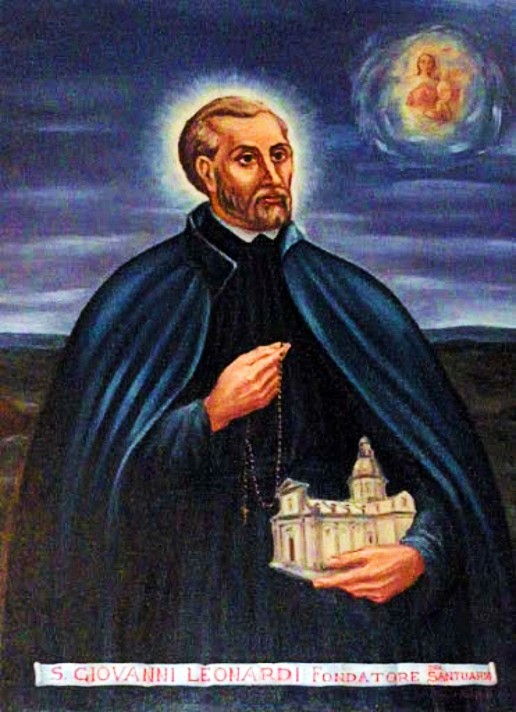
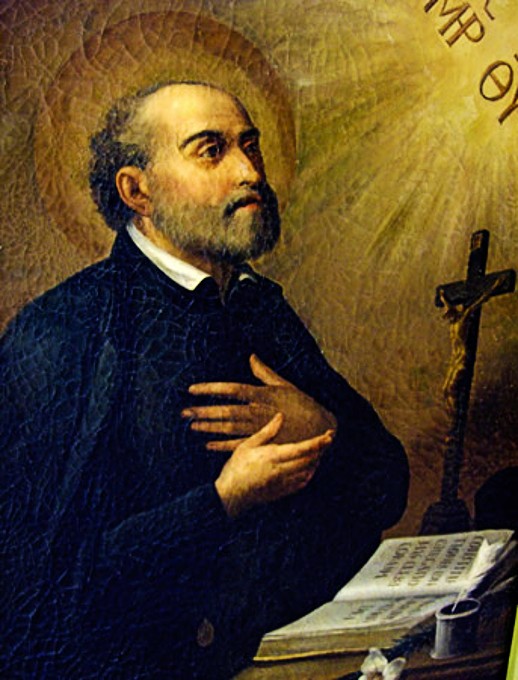
Saint of the Day – 9 October – St John Leonardi (1541-1609) Confessor, Priest, Founder. Patron of Pharmacists.
Saint John Leonardi was born in 1541 in Diecimo, in the Province of Lucca, Italy. He was the youngest of seven children and was raised in his Catholic faith. His family was industrious and John was the same. Throughout his adolescence, John spent a lot of time working hard in a shop of herbs and medicines that was located in his home town. When he was seventeen years old, his father had enrolled him in a regular course in Pharmacy training in Lucca, with plans for him to be a future Pharmacist. John agreed to follow this path and worked very diligently to achieve his goals.
After studying for more than a decade, John was able to open his own Pharmacy shop, however, he did not think the moment had arrived for him to fulfil a plan that he always had in his heart. After a mature reflection and much prayer, he decided to enter the Priesthood. He left his career as a Pharmacist and began taking theological formation courses.
On the Feast of the Epiphany in 1572, John was Ordained a Priest and celebrated his first Mass. As a Priest, John realised how his passion for Pharmaceutics had helped him in his vocation. With his Pharmacist background, he was able to help people discover “the medicine of God,” which is Jesus Christ Crucified and Risen, “measure of all things.” He firmly believed that all people needed this medicine and he desired to “start anew from Christ,” as he often said. He spent a lot of time working in hospitals and prisons and spreading “the medicine of God” to these people.
John knew that the fundamental reason for his existence, was his personal relationship with Jesus Christ in order to save his own soul and because of this conviction, he knew that Christ took primacy over everything in his life. This conviction helped him live out his Priestly vocation. John decided to dedicate himself with enthusiasm to the apostolate among the youth, through the Company of Christian Doctrine. On 1 September 1574, he founded the Congregation of Reformed Priests of the Blessed Virgin, later known as the Order of Clerks Regular of the Mother of God. He encouraged his disciples to have “before the mind’s eye only the honour, service and glory of Christ Jesus Crucified” and, like a good Pharmacist, accustomed to giving out medicines, according to careful measurements, he would add: “Raise your hearts to God a bit more and measure things with him.” He chose the Blessed Mother to be the Patroness of his Order because he had a strong devotion to her. He always kept his gaze on our Lady and she was his teacher, sister and mother, who protected him and led him closer to Jesus Christ.
During his Priestly life, the Church was under spiritual renewal and many new religious institutes were forming. In May 1605, John sent Pope Paul V a report, in which he suggested the criteria for a genuine renewal of the Church. He explained that “whoever wishes to carry out a serious moral and religious reform, must make first of all, like a good doctor, a careful diagnosis of the evils that beset the Church, so as to be able to prescribe, for each of them, the most appropriate remedy.” He knew what the real medicine was for these spiritual evils and he explained it by saying, “Christ first of all, Christ in the centre of the heart, in the centre of history and of the cosmos. Humanity needs Christ intensely because, He is our ‘measure.’ There is no realm that cannot be touched by His strength; there is no evil that cannot find remedy in Him, there is no problem that cannot be solved in Him. Either Christ or nothing!” This was John’s prescription for every type of spiritual and social reform.
John was also very much concerned with the Christian formation of the people, especially the young. He educated them in the purity of the Christian faith and in holy practices. John spent his entire life working hard to purify the Church and to evangelisie the world. His apostolic zeal and all of his evangelical efforts, led him to be one of the Founders of the College for the Propagation of the Faith.
On 9 October 1609, he passed away from influenza, which he contracted while he was giving himself to the care of all those, who had been stricken by the epidemic,in the Roman quarter of Campitelli. He was venerated for his miracles and religious fervour and was Canonised in 1938 by Pope Pius XI.
Bl Aaron of Cracow St Abraham the Patriarch St Alfanus of Salerno St Andronicus of Antioch St Athanasia of Antioch Bl Bernard of Rodez St Demetrius of Alexandria St Deusdedit of Montecassino St Domninus St Dorotheus of Alexandria
St Eleutherius St Geminus St Gislenus St Goswin Bl Gunther St Lambert St Publia St Rusticus St Sabinus of the Lavedan St Valerius
Martyrs of Laodicea – Three Christians Martyred together in Laodicea but no other information about them has survived but their names – Didymus, Diodorus and Diomedes. They Died in Laodicea, Syria.
Thought for the Day – 8 October – Meditations with Antonio Cardinal Bacci (1881-1971)
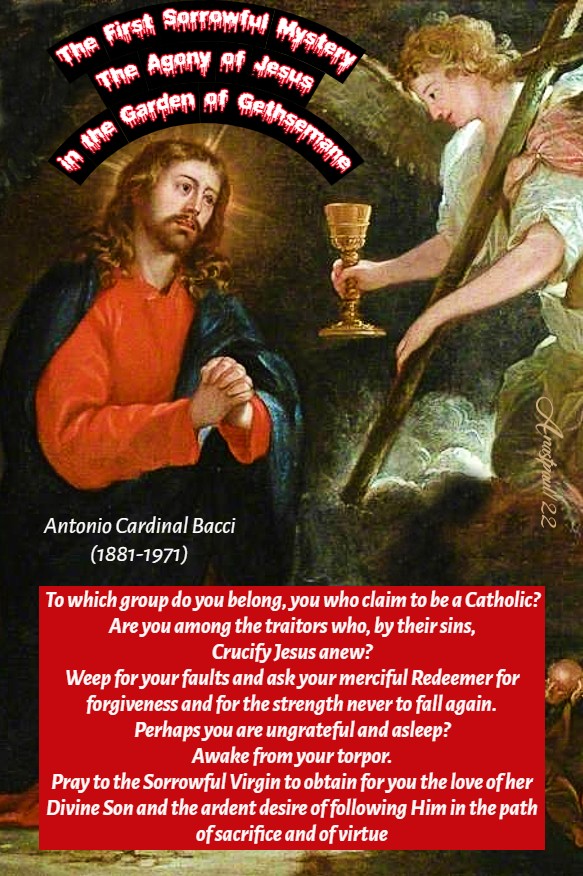
“Month of the Holy Rosary” The First Sorrowful Mystery The Agony of Jesus in the Garden of Gethsemane
“To which group do you belong, you who claim to be a Catholic? Are you among the traitors who, by their sins, Crucify Jesus anew? Weep for your faults and ask your merciful Redeemer for forgiveness and for the strength never to fall again.
Perhaps you are ungrateful and asleep? Awake from your torpor! Pray to the Sorrowful Virgin to obtain for you the love of her Divine Son and the ardent desire of following Him in the path of sacrifice and of virtue.”
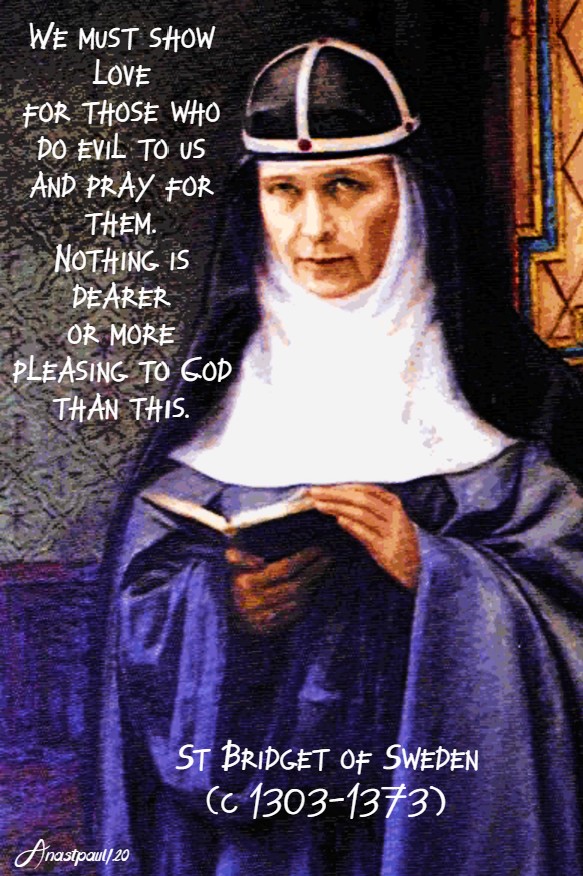
Quote/s of the Day – 8 October – St Bridget of Sweden (c 1303-1373) Widow
“We must show love for those who do evil to us and pray for them. Nothing is dearer or more pleasing to God than this.”
“There is no sinner in the world, however much at enmity with God, who cannot recover God’s grace by recourse to Mary and by asking her assistance.”
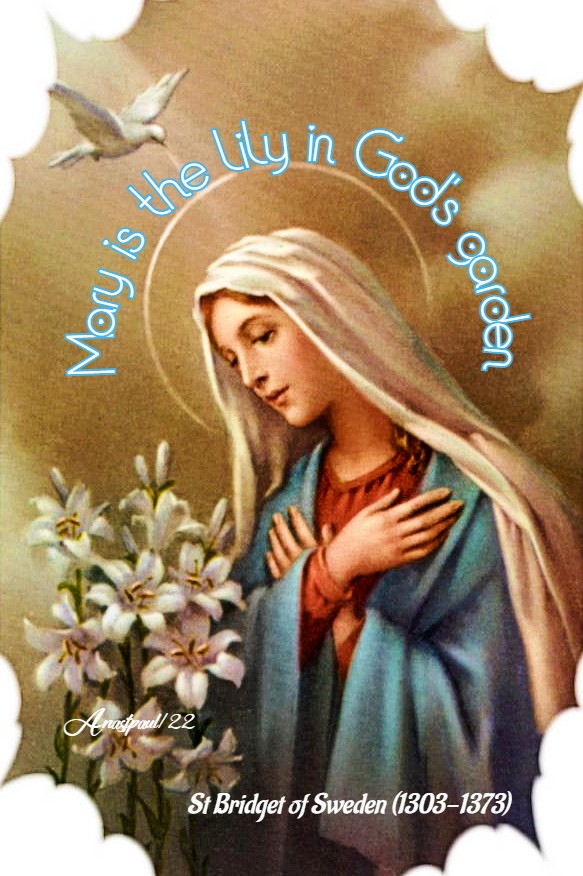
“Mary is the lily in God’s garden.”
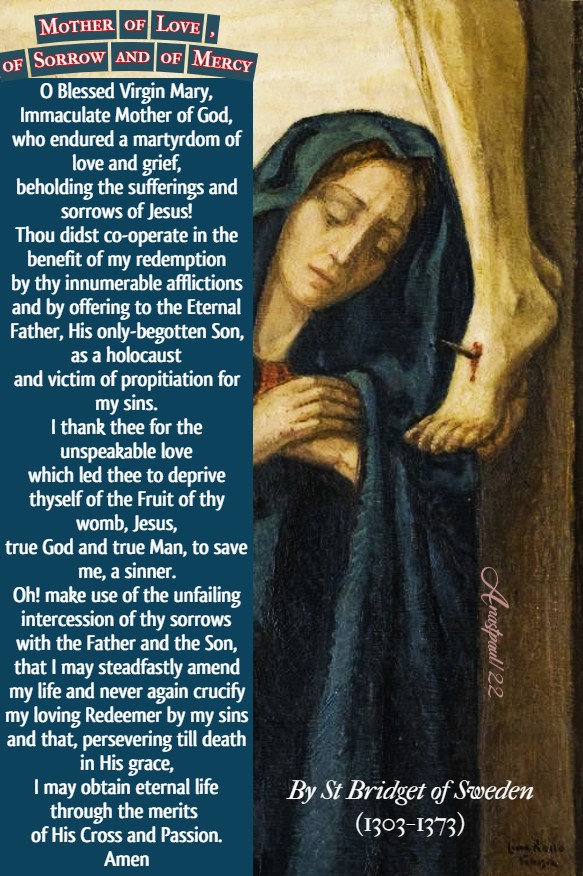
Mother of Love, of Sorrow and of Mercy By St Bridget of Sweden (1303-1373)
O Blessed Virgin Mary, Immaculate Mother of God, who endured a Martyrdom of love and grief, beholding the sufferings and sorrows of Jesus! Thou didst co-operate in the benefit of my redemption by thy innumerable afflictions and by offering to the Eternal Father, His only-begotten Son, as a holocaust and victim of propitiation for my sins. I thank thee for the unspeakable love which led thee to deprive thyself of the Fruit of thy womb, Jesus, true God and true Man, to save me, a sinner. Oh! make use of the unfailing intercession of thy sorrows with the Father and the Son, that I may steadfastly amend my life and never again crucify my loving Redeemer by my sins and that, persevering till death in His grace, I may obtain eternal life through the merits of His Cross and Passion. Amen
One Minute Reflection – 8 October – St Bridget of Sweden (c 1303-1373) Widow – Timothy 5:3-10, Matthew 13:44-52 – Scripture search here: https://www.drbo.org/
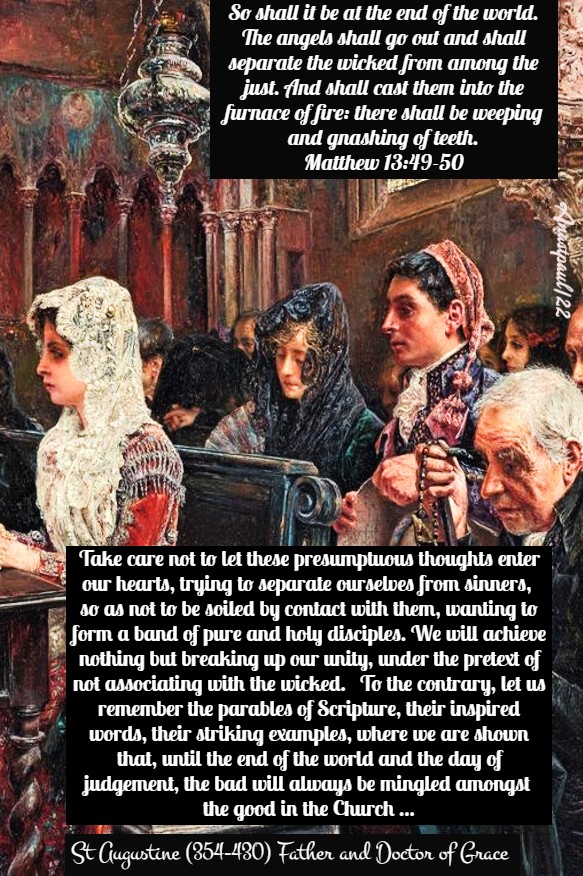
“So shall it be at the end of the world. The angels shall go out and shall separate the wicked from among the just. And shall cast them into the furnace of fire: there shall be weeping and gnashing of teeth.” – Matthew 13:49-50
REFLECTION – “Our Lord was an example of incomparable patience. He bore with a “devil” among His disciples even to His Passion (Jn 6,70). He said: “Let them grow together until the harvest lest you uproot the wheat when you pull out the weeds” (cf. Mt 13,29f.). As a symbol of the Church, He preached that the net would bring back to shore, namely the end of the world, every kind of fish, both good and bad. And He made it known, in various other ways, whether openly or in parables, that there would always be a mixture of good and bad. But, nevertheless, He stresses, that we have to protect the Church’s discipline when He says: “If your brother sins against you, go and tell him his fault between you and him alone. If he listens to you, you have won over your brother” (Mt 18,15)…
Yet today, we see people who think of nothing but stern commandments, who order that troublemakers be reproved, ‘not giving what is holy to the dogs,’ treating, like the publicans, ‘anyone who despises the Church, cutting off the scandalous member from the body‘ (Mt 7,6 ; 18,17 ; 5,30). Their stormy zeal so troubles the Church, that they pull out the weeds before their time and their blindness makes of them enemies, of the unity of Jesus Christ…
Take care not to let these presumptuous thoughts enter our hearts, trying to separate ourselves from sinners, so as not to be soiled by contact with them, wanting to form a band of pure and holy disciples. We will achieve nothing but breaking up our unity, under the pretext of not associating with the wicked. To the contrary, let us remember the parables of Scripture, their inspired words, their striking examples, where we are shown that, until the end of the world and the day of judgement, the bad will always be mingled amongst the good in the Church, without their participation in the Sacraments being harmful to the good, so long as these latter, have not played a part in their sins.” – St Augustine (354-430) Father and Doctor of Grace (On Faith and Works – Excerpt ch 3-5)
PRAYER – O Lord, our God, Who through Thy Only-begotten Son revealed secrets to blessed Bridget, grant that through her kind intercession, we, Thy servants, may rejoice and be glad in the revelation of Thy eternal glory.Through Jesus Christ, Thy Son our Lord, Who lives and reigns with Thee, in the unity of the Holy Ghost, God, world without end. Amen (Collect).
Our Morning Offering – 8 October – “The Month of the Most Holy Rosary and of the Angels” and Mary’s Day
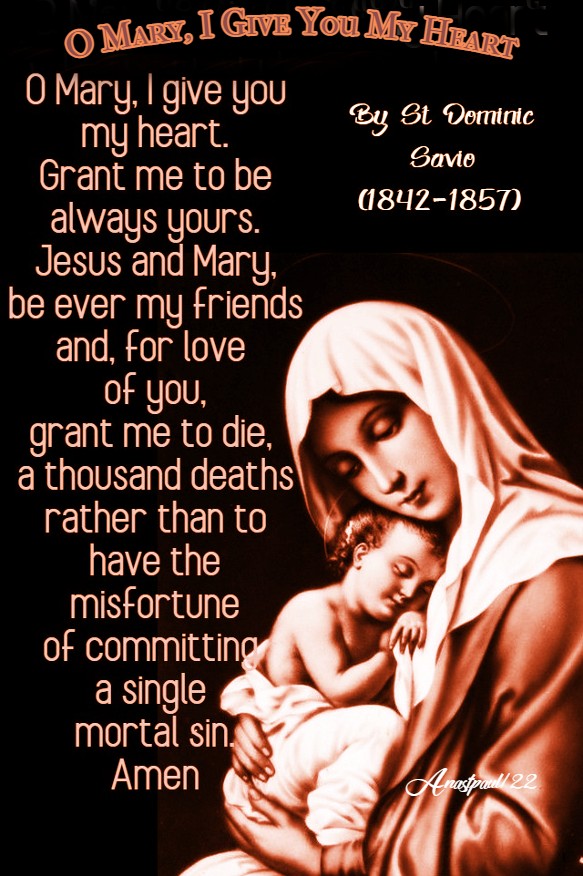
O Mary, I Give You My Heart By St Dominic Savio (1842-1857)
O Mary, I give you my heart. Grant me to be always yours. Jesus and Mary, be ever my friends and, for love of you, grant me to die, a thousand deaths rather than to have the misfortune of committing a single mortal sin. Amen
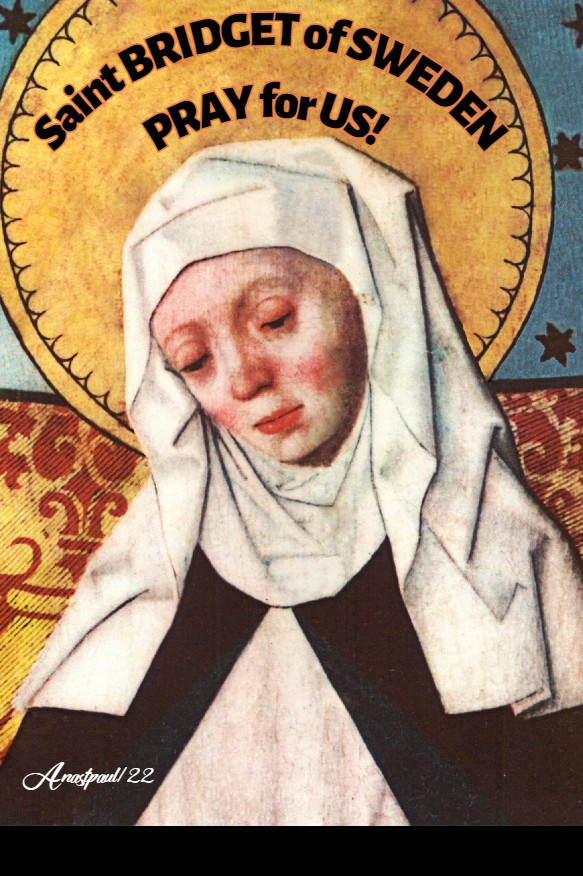
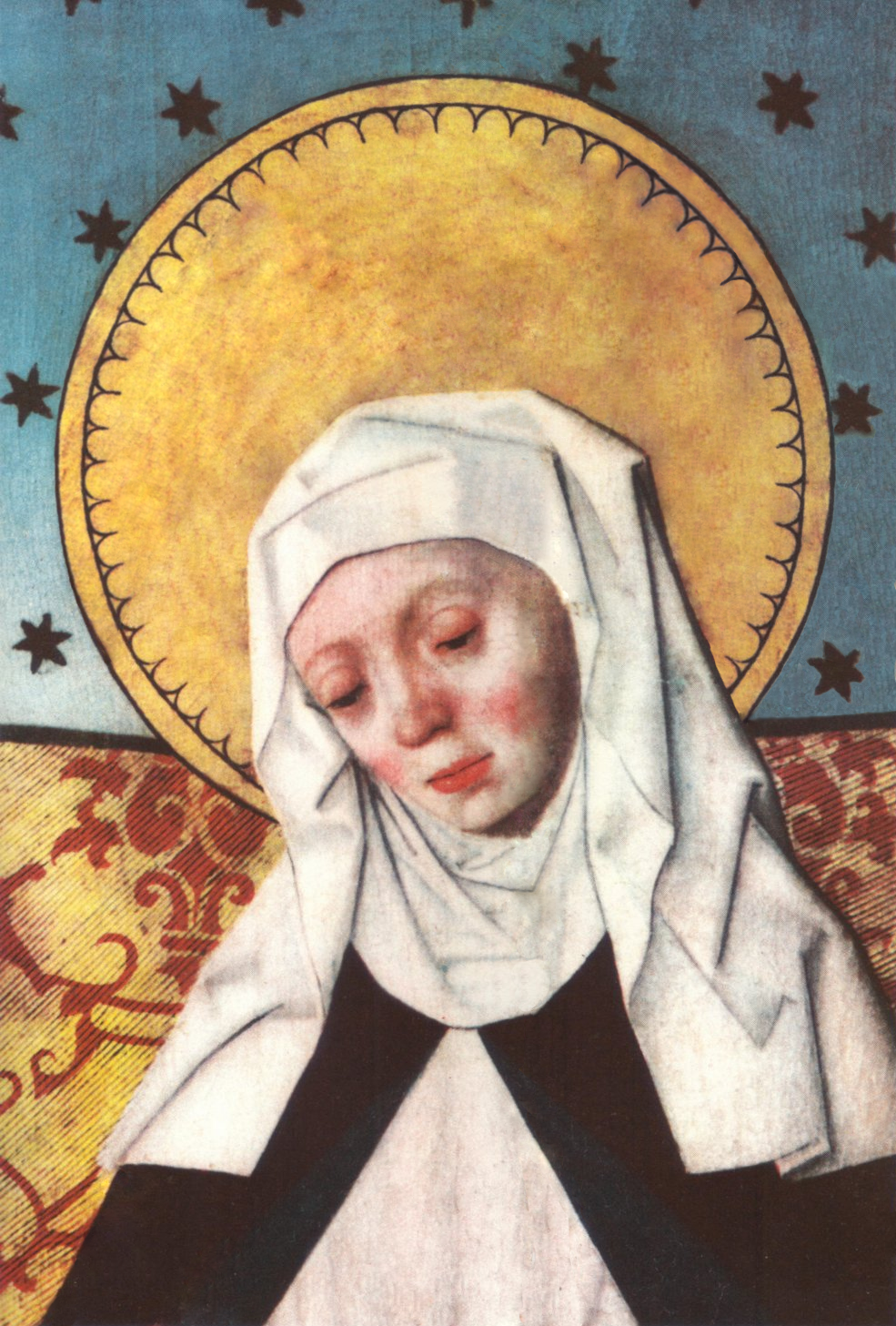
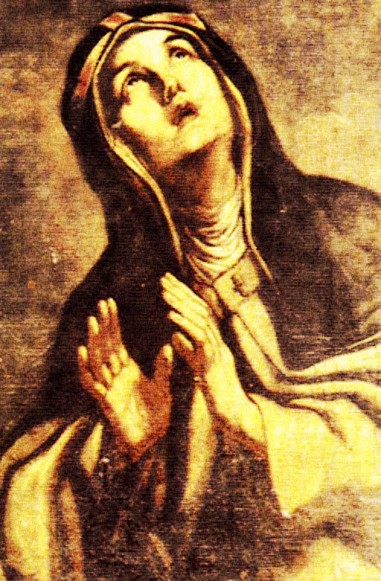
Saint of the Day – 8 October – St Bridget of Sweden (c 1303-1373) Widow – Patronages – Europe, Sweden, widows.
St Bridget, Widow By Fr Francis Xavier Lasance (1860-1946
St Bridget, known in the entire Church of God, on account of the many divine revelations with which she was graced, was born in Sweden, of noble and pious parents. Shortly before the birth of Bridget, her mother was in great danger of shipwreck but was miraculously saved. In the following night, a venerable old man appeared to her, who said: “God has saved your life on account of the child to whom you will give birth. Educate it carefully, for it will arrive at great holiness.” This command was faithfully followed by the pious mother as long as she lived. After her death, Bridget, then only seven years old, was given into the charge of a very devout aunt, who brought her up most piously.
When ten years of age, she heard a sermon on the bitter passion and death of our Lord, which made a deep impression on her young and tender heart. In the following night, Christ appeared to her, hanging on the Cross, while streams of blood flowed from His wounds. Bridget, deeply moved, cried out: “O, Lord, who has so maltreated thee?” “Those who despise My love,” answered Christ, that is, those who transgress My laws and are ungrateful for My immeasurable love for them. This vision remained in Bridget’s memory and caused her, from that hour, to manifest the most tender devotion to the Passion and Death of the Saviour, of which she could never think without shedding tears.
This vision was followed by many others, especially during her prayers, which the Saint loved so well that it seemed as if no other occupation could give her joy or contentment. She often rose quietly during the night and passed hours in pious meditation. She also used many ways and means, to mortify her delicate body, so as to resemble, in silently enduring pain, Him Who had suffered so infinitely more for her.
In obedience to her father, she, at the age of thirteen, gave her hand to Ulpho, Prince of Nericia, whose heart she won so entirely by her amiability and sweetness of manners, that she weaned him, in a short time, from gaming, immoderate luxury in dress and other similar faults and induced him to lead a life pleasing to God, by his assiduity in prayer and in going to Confession. She lived with him in undisturbed love and harmony. She was also very solicitous for her domestics and allowed nothing that might offend the Almighty or prevent His blessing from coming upon her house.
She became the mother of four sons and as many daughters. Two of her sons died in their innocence; two while travelling in the Holy Land. Two of her daughters lived at Court, and became models of all virtues. The third became a Nun and led a holy life and the fourth, Catherine, was numbered among the Saints; which is evidence of the pious care with which St. Bridget educated her children. She herself instructed them in religion and in the way of living piously and led them, from their most tender years, to practise works of charity and mortification, being an example to them in all virtuous deeds.
With the consent of Ulpho, she founded a hospital and waited daily, at certain hours, like a servant, on the poor and sick resident there. She often washed their feet, kissing them most reverentially.
Her husband became dangerously ill on his return from Compostella, whither he had gone with St Bridget, to visit the tomb of the holy Apostle St James. But St Dionysius, who appeared to Bridget, announced to her, besides other future events, that Ulpho would soon recover. She soon saw this prophecy fulfilled and had atoo, the joy of perceiving that Ulpho was disgusted with the world and desired to end his life in retirement. With the permission of his pious spouse, he went into a Cistercian Monastery, where he ended his life most devoutly.
Bridget lived thirty years after her husband had entered a Monastery and, being free from many former cares and anxieties, she devoted herself with great zeal, to a most perfect and penitential life. Her temporal possessions she gave to her children, clothed herself in a penitential robe, and unweariedly practised acts of devotion, charity and penane. She fasted four times in the week and on Friday, took only water and bread. She gave the greater part of the night to prayer, spending whole hours prostrate before the Crucifix or the Blessed Sacrament. Every Friday she let fall a few drops of boiling wax into a wound which she had, to remember, by the pain this gave her, the suffering of our Lord. She daily fed twelve poor persons and served them at table. She founded a Convent for sixty Nuns and gave them a Rule, which she had received from Christ Himself. These regulations were afterwards adopted by many houses of Religious men. This was the origin of the celebrated Brigittine Order. St Bridget herself, entered a Convent which she had founded and was a shining light to all in the practice of virtue.
Having lived there for two years, she was commanded, in a vision, to make a pilgrimage to Rome, with her daughter Catherine and thence to the Holy Land. On her return, a malignant fever seized her, which greatly increased when she had arrived at Rome and lasted a whole year. The great pains she suffered were made easy to her, by the thought of the bitter passion of our Saviour and for love of Him, she was willing to endure much more. She derived the greatest comfort from a vision in which God appeared to her and assured her of her salvation. The hour of her death was also made known to her by Divine revelation. She prepared herself most carefully for her end and after receiving the holy Sacraments, she breathed her last in the arms of her holy daughter and, rich in merits and virtues, went to receive her reward in Heaven, in the 71st. year of her age, in the year 1373. Before and after her death, God wrought many and great miracles by her intercession. Her body was taken to Sweden on the 7th of this month.
St Felix of Como (Died 390) the first Bishop of Como. Felix was a friend of Saint Ambrose, who praised him for his missionary activity and Ordained him a Priest in 379 and Consecrated him as Bishop in 386. St Ambrose sent him to evangelise the City of Como, as a testimony to the great missionary drive of the Church of Milan. St Felix is honoured as a zealous shepherd of souls. More about St Felix: https://anastpaul.com/2021/10/08/saint-of-the-day-8-october-saint-felix-of-como-died-390/
Thought for the Day – 7 October – Meditations with Antonio Cardinal Bacci (1881-1971)
“Month of the Holy Rosary” The Fifth Joyful Mystery The Finding of Jesus in the Temple
“By mortal sins, we lose Jesus and we lose our peace of soul. By venial sin, we put Jesus farther away from us. For this reason, we should not only avoid mortal sin, which leads to spiritual misery and death but also, venial sin, which diminishes our charity and weakens our spiritual life.
We should, moreover, have compassion for poor sinners, who are out own brothers and sisters and are supremely unhappy, even if they may not realise it. We should pray a great deal for them, so that they may soon return to Jesus, Whom they have lost. We should ask the Blessed Virgin and St Joseph to intercede for sinners, so that they may return forever to the merciful embrace of their Divine Redeemer.”
Quote/s of the Day – 7 October – The Month and Feast of the Most Holy Rosary
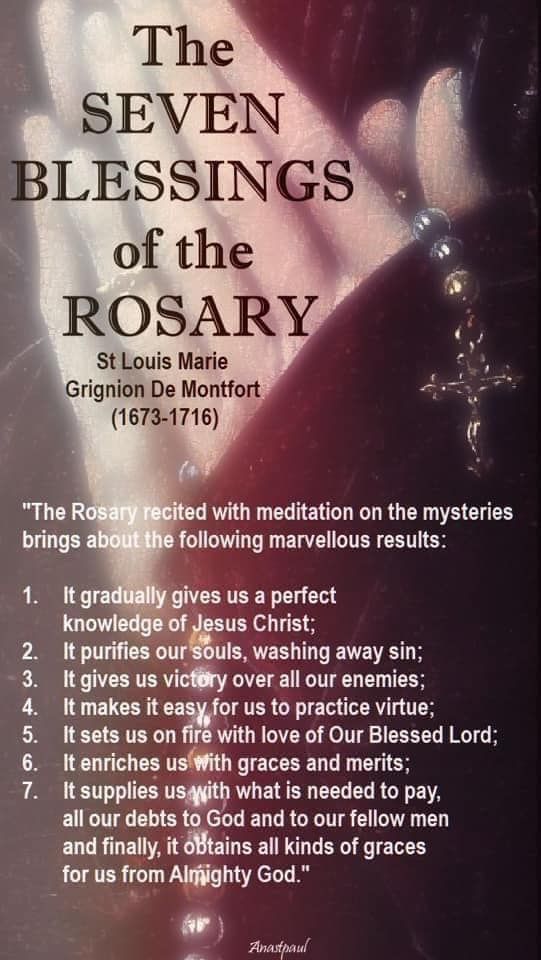
THE SEVEN BLESSINGS OF THE HOLY ROSARY
“The Rosary, recited with meditation on the mysteries, brings about the following marvellous results:
It gradually gives us a perfect knowledge of Jesus Christ;
It purifies our souls, washing away sin;
It gives us victory over all our enemies;
It makes it easy for us to practice virtue;
It sets us on fire with love of Our Blessed Lord;
It enriches us with graces and merits;
It supplies us with what is needed to pay, all our debts to God and to our fellow men and finally, it obtains all kinds of graces for us from Almighty God.”
St Louis Marie Grignion De Montfort (1673-1716)
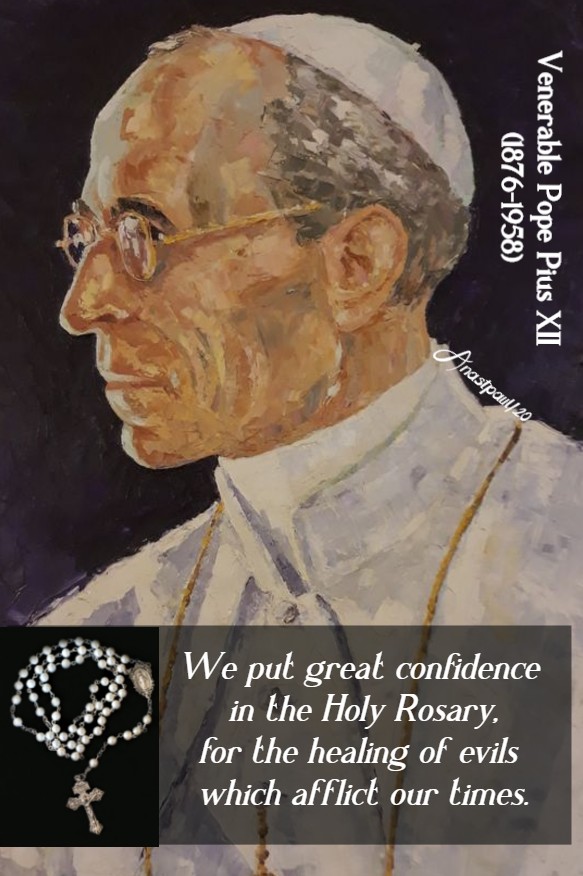
“We put great confidence in the Holy Rosary, for the healing of evils which afflict our times.”
One Minute Reflection – 7 October – The Month and Feast of the Most Holy Rosary of the Blessed Virgin Mary – Proverbs 8:22-24, 32-35, Luke 1:26-38 Scripture search here: https://www.drbo.org/
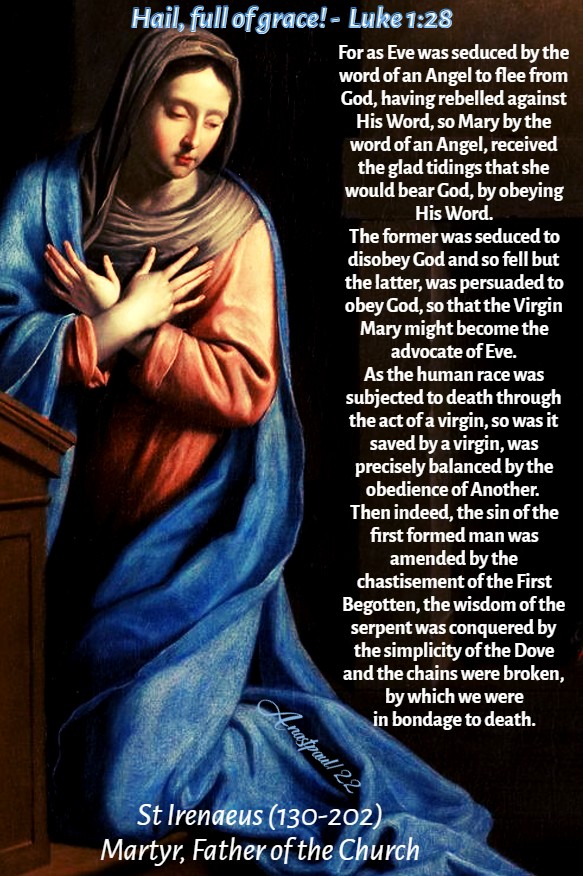
“Hail, full of grace!” – Luke 1:28
REFLECTION – “So the Lord now manifestly came to His own. Born by His own created order that He Himself bears, He by His obedience on the tree, renewed and reversed what was done by disobedience, in connection with a tree.
The power of that seduction, by which the virgin Eve, already betrothed to a man, had been wickedly seduced, was broken when the Angel in truth brought good tidings to the Virgin Mary, who already, by her betrothal belonged to a man. For as Eve was seduced by the word of an Angel to flee from God, having rebelled against His Word, so Mary by the word of an Angel, received the glad tidings that she would bear God, by obeying His Word.
The former was seduced to disobey God and so fell but the latter, was persuaded to obey God, so that the Virgin Mary might become the advocate of Eve.
As the human race was subjected to death through the act of a Virgin, so was it saved by a Virgin, was precisely balanced by the obedience of Another. Then indeed, the sin of the first formed man was amended by the chastisement of the First Begotten, the wisdom of the serpent was conquered by the simplicity of the Dove and the chains were broken, by which we were in bondage to death.” – St Irenaeus (130-202) Bishop of Lyons, Martyr, Father of the Church (Against Heresies, 5)
PRAYER – O God, Whose Only-begotten Son, by His life, death and resurrection, has merited for us the grace of eternal salvation, grant, we beseech Thee, that, meditating on these Mysteries in the Most Holy Rosary of the Blessed Virgin Mary, we may both imitate what they contain and obtain what they promise. Through the same Jesus Christ, Thy Son our Lord, Who lives and reigns with Thee, in the unity of the Holy Ghost, God, world without end. Amen (Collect).
Our Morning Offering – 7 October – “The Month and Feast of the Most Holy Rosary”
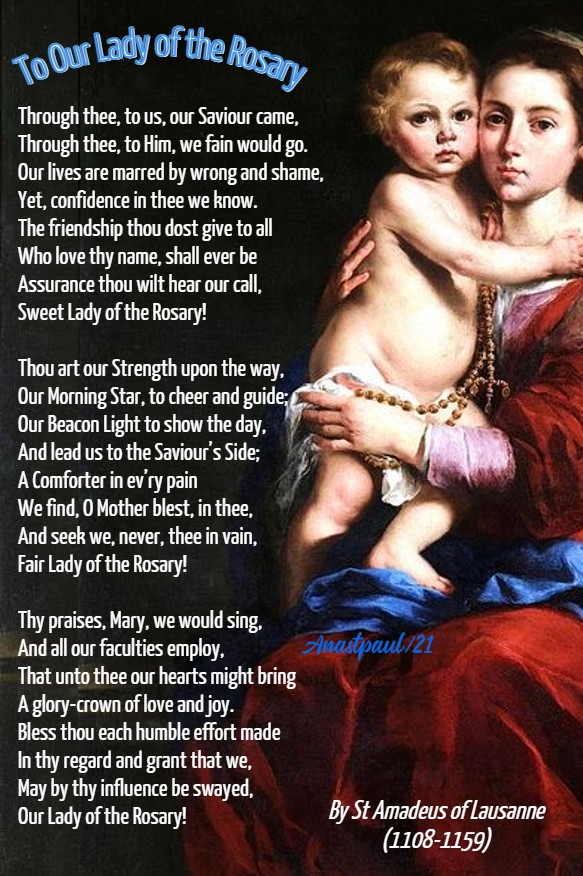
Through Thee, to Us,Our Saviour Came To Our Lady of the Rosary By St Amadeus of Lausanne O.Cist (1108-1159)
Through thee, to us, our Saviour came, Through thee, to Him, we fain would go. Our lives are marred by wrong and shame, Yet, confidence in thee we know. The friendship thou dost give to all Who love thy name, shall ever be Assurance thou wilt hear our call, Sweet Lady of the Rosary!
Thou art our Strength upon the way, Our Morning Star, to cheer and guide; Our Beacon Light to show the day, And lead us to the Saviour’s Side; A Comforter in ev’ry pain We find, O Mother blest, in thee, And seek we, never, thee in vain, Fair Lady of the Rosary!
Thy praises, Mary, we would sing, And all our faculties employ, That unto thee our hearts might bring A glory-crown of love and joy. Bless thou each humble effort made In thy regard and grant that we, May by thy influence be swayed, Our Lady of the Rosary!
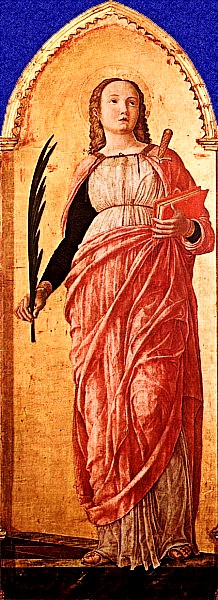
Saint of the Day – 7 October – Saint Justina of Padua (Died c 304) Virgin and Martyr. Born in Padua she was Martyred in c 304 in Padua. Patronages – Padua, Venic and Santa Giustina, Italy. Also known as Giustinadi Padova.
The Roman Martyrology states today: “At Padua, Saint Justina, Virgin and Martyr, who was Baptised by blessed Prosdocimus, disciple of St Peter. As she remained firm in the faith of Christ, she was put to the sword by order of the Governor Maximus and thus went to God.”
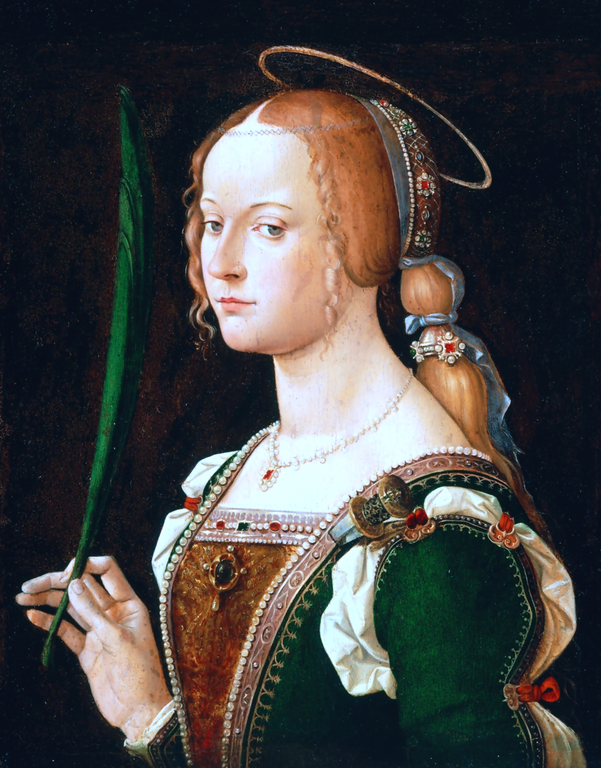
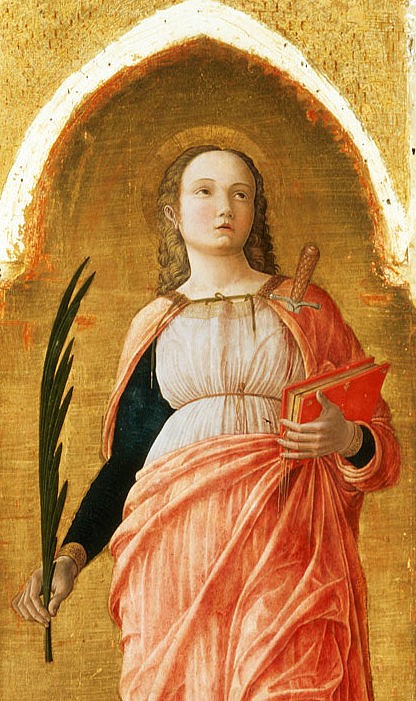
Saint Justina by Bartolomeo Montagna
Justina of Padua was a Virgin of noble birth in the City which claims her Patronage. her father, Vitalian, was a rich nobleman and Prefect of Padua. Her parents were converted to Christianity by the preaching of Saint Prosdocimo, also a Patron of Padua, and not having been blessed with children up to that time, they received Justina in answer to their prayer.
She was devoted to her religion from her earliest years and ultimately she took the vow of perpetual virginity. At this time arose the persecutions of the Christians by Nero and Maximian the Prefect who had succeeded Vitalian, proved himself particularly brutal.
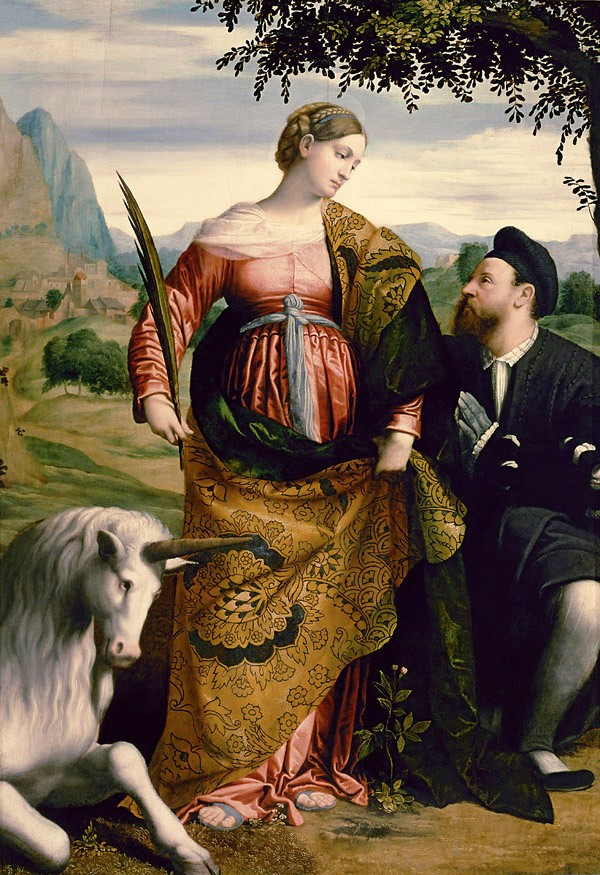
Saint Justina with the Donor circa 1530, by Moretto da Brescia
As Justina would visit the prisons to comfort and encourage the Christians there, Maximian ordered her arrest. While she was passing by the Pont Marin near Padua, she was seized by the soldiers. When she was brought before Maximian he was struck by her beauty and endeavoured, by every means, to shake her constancy. However, she remained firm against all attacks and the Prefect caused her to be slain with the sword.
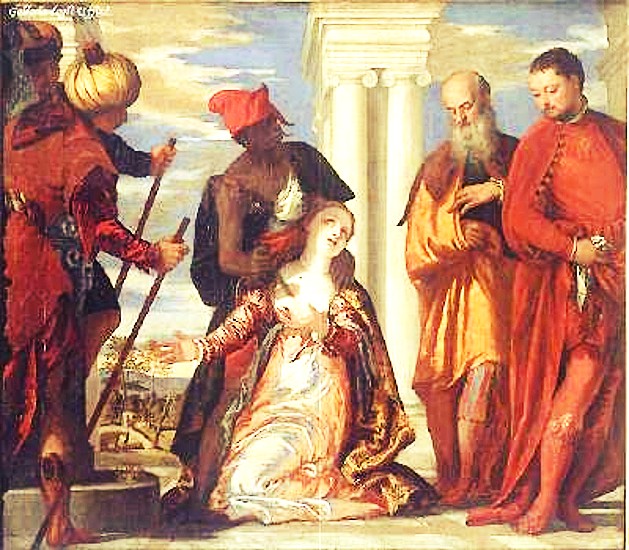
Paolo Veronese, The Martyrdom of Saint Justina
Medieval texts describe her as a disciple of Saint Peter the Apostle since Saint Prosdocimus, the first Bishop of Padua, is said to have been Justina’s teacher and his hagiography states that he was sent from Antioch by Peter. This, however is chronologically impossible as Justina, being a young woman in 304 could not have known Prosdocimus as he died in approximately 100.
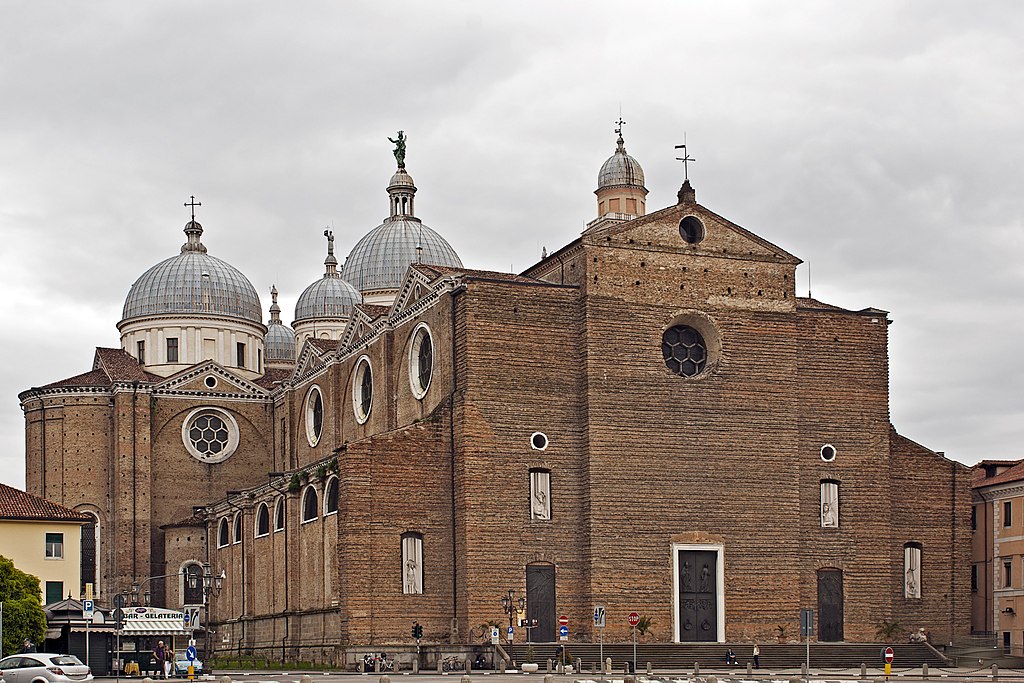
St Justina is a Patron Saint of Padua. After St Mark, she is also a second Patroness of Venice. The Paduan Basilica and Abbey of Santa Giustina, house the Martyrdom of St Justine by Paolo Veronese. The Abbey complex was founded in the 5th century on Justine’s tomb and in the 15th century became one of the most important Monasteries in the region.
St Venantius Fortunatus ranks her among the most illustrious holy Virgins, whose sanctity and triumph have adorned and edified the Church, saying that her name makes Padua illustrious, And in his poem on the life of St Martin, he bids those who visit Padua, there to kiss the Sacred Sepulchre of the blessed Justina, on the walls of which, they will see the actions of St Martin represented in figures or paintings.
St Adalgis of Novara (Died c 850) Bishop St Apuleius of Capua
St Augustus of Bourges (Died c 560) Priest and Abbot. The Roman Martyrolog states of him today: “Near Bourges in Aquitaine, France, Saint Augustus, Priest and Abbot, who had his hands and feet so contracted that he could not support himself except with his knees and elbows. He was healed through the intercession of St Martin of Tours. He gathered around himself some Monks and waited intently on prayer.” His Life: https://anastpaul.com/2021/10/07/saint-of-the-day-7-october-saint-augustus-of-bourges-died-c-560/
St Canog ap Brychan St Dubtach of Armagh St Gerold of Cologne St Helanus
St Julia the Martyr St Justina of Padua (Died c 304) Virgin and Martyr St Marcellus of Capua (Died Third or Fourth Century) Martyr St Martin Cid St Osith St Palladius of Saintes St Quarto of Capua St Rigaldo
Mercedarian Nuns of Seville: Five Mercedarian Nuns at the Monastery of the Assumption in Seville, Spain noted for their piety – Sisters Agnese, Bianca, Caterina, Maddalena and Marianna.






















 AnaStpaul
You must be logged in to post a comment.