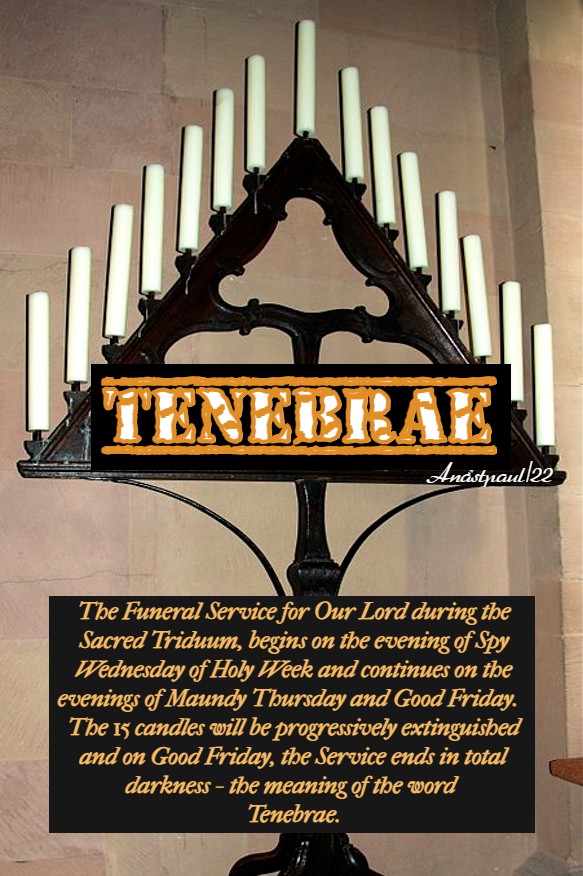
The Office of Tenebrae (Darkness from the Latin) The Funeral Service of the Lord on Spy Wednesday, Maundy Thursday and Good Friday
The public singing of part of the Divine Office, on Wednesday, Thursday and Friday evenings of Holy Week, anticipating Matins and Lauds of Holy Thursday, Good Friday, and Holy Saturday. A custom that went back centuries, it acquired the name because of the mourning ritual surrounding the ceremony, which included a triangular stand with fifteen candles. These were put out one by one until, after the last candle was extinguished, a prayer was said in darkness, one candle was lighted, and the assembly dispersed in silence. — Fr John Hardon, Modern Catholic Dictionary
The Matins and Lauds of the Divine Office sung during the Triduum (Holy Thursday, Good Friday and Holy Saturday) are known as the Tenebrae services (“tenebrae” meaning “darkness or shadows”), which is basically a funeral service for Our Lord.
During the Matins on Good Friday, one by one, the candles are extinguished in the Church, leaving the congregation in total darkness and in a silence that is punctuated by the “strepitus” (a loud clang intended to evoke the earthquake that occurred at the moment of Our Saviour’s Death) meant to evoke the convulsion of nature at the Death of Christ. It has also been described as the sound of the tomb door closing.
Thought for the Day – 5 April – Meditations with Antonio Cardinal Bacci (1881-1971)
The Agony of Jesus
“While Jesus was praying and suffering in the Garden of Gethsemane and the Apostles were unconcernedly sleeping, a group of hired ruffians approached, led by the traitor, Judas. Jesus went to meet them and quietly allowed Himself to be fettered by these rascals. He could have struck them to the ground in an instant or, as He said Himself, called more than twelve legions of Angels to His defence (Cf Mt 16:33). But this was the hour of the power of darkness. “This is your hour and the power of darkness” (Lk 22:53). When the Apostles saw Him being bound and led away, like an evil-doer, they deserted Him and ran away. “Then, all the disciples left him and fled” (Mt 26:56).
We also, may have been guilty of such shameful conduct on many occasions! Whenever God granted us the experience of His consoling presence by means of His grace or favours, we formed the most generous resolutions. But, in the presence of difficulties or of bad example from others, we may have shamefully deserted Jesus! Let us reflect whether this is so and reinforce our good resolutions.”
Our Lenten Journey with St Francis de Sales – 5 April – “Spy” Wednesday in Holy Week – Scripture search here: https://www.drbo.org/
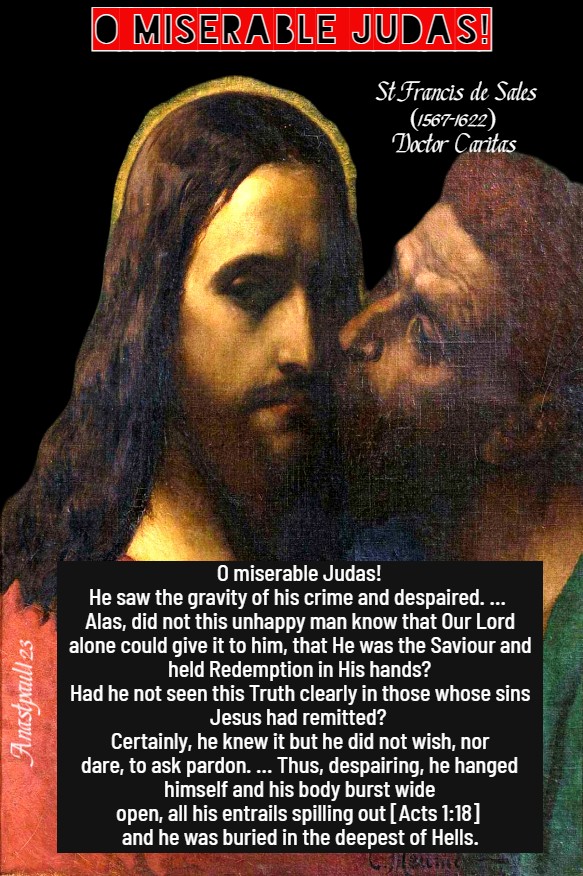
“O miserable Judas! He saw the gravity of his crime and despaired.” St Francis de Sales
“SPY” WEDNESDAY Judas St Francis de Sales (1567-1622) Doctor Caritas
“O MISERABLE JUDAS! He saw the gravity of his crime and despaired. Truly, he confessed his sin, for in returning to the chief priests the thirty pieces of silver ,for which he had sold his good Master, he acknowledged aloud that he had sold innocent blood. [Matt. 27:3-5.] But these priests would give him no absolution. Alas, did not this unhappy man know that Our Lord alone could give it to him, that He was the Saviour and held Redemption in His hands? Had he not seen this Truth clearly in those whose sins Jesus had remitted? Certainly, he knew it but he did not wish, nor dare, to ask pardon.
To make him despair, the devil showed him the enormity and hideousness of his crime and, perhaps, made him fear that if he asked his Master’s pardon, He might impose too great a penance. Perhaps for fear of such penance, he was unwilling to ask for forgiveness. Thus, despairing, he hanged himself and his body burst wide open, all his entrails spilling out [Acts 1:18] and he was buried in the deepest of Hells.” – (Sermons of St Francis de Sales for Lent).
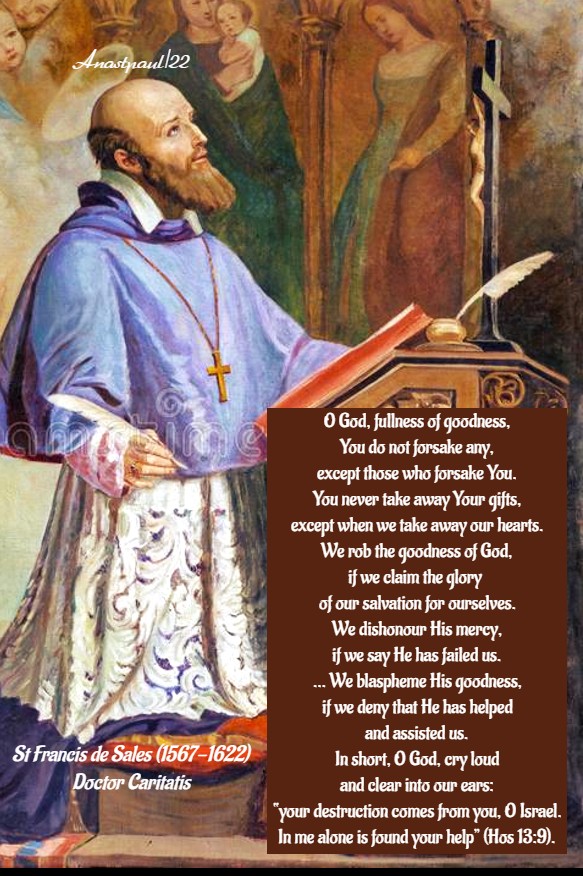
“O God, fullness of goodness, You do not forsake any, except those who forsake You. You never take away Your gifts, except when we take away our hearts. We rob the goodness of God, if we claim the glory of our salvation for ourselves. We dishonour His mercy, if we say He has failed us. … We blaspheme His goodness, if we deny that He has helped and assisted us. In short, O God, cry loud and clear into our ears: “your destruction comes from you, O Israel. In me alone is found your help” (Hos 13:9).
St Francis de Sales (1567-1622) Doctor Caritatis Treatise on the Love of God, Ch 9
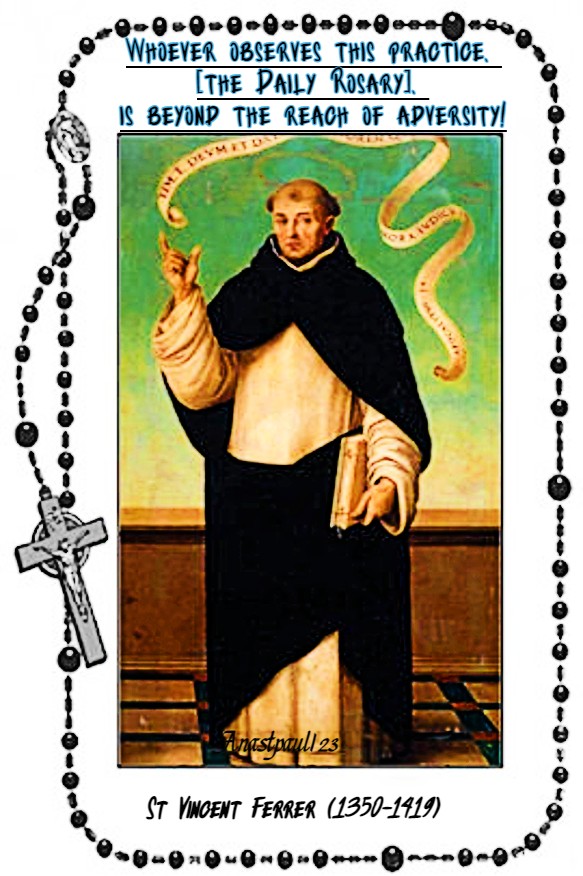
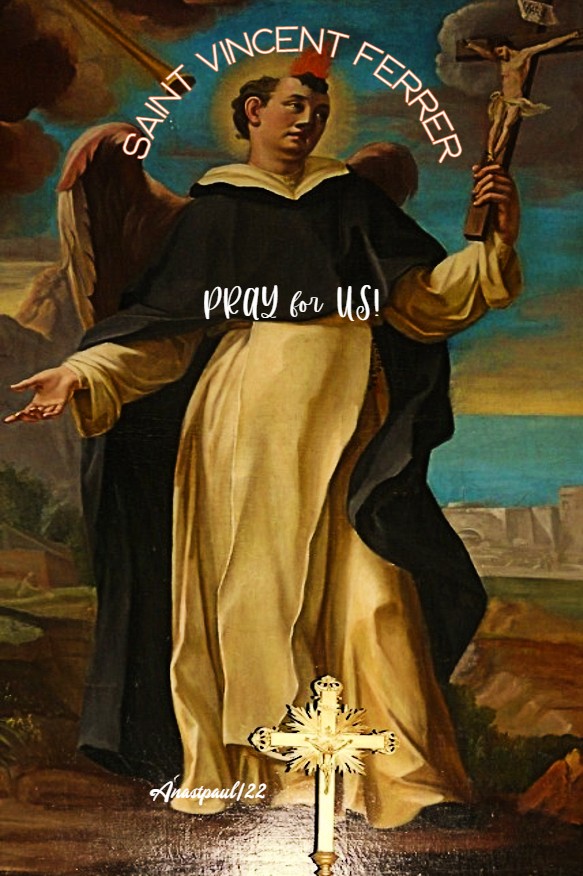
Quote/s of the Day – 5 April – St Vincent Ferrer OP (1350-1419) Confessor, called “The Angel of the Apocalypse” and of “The Last Judgement” and the “Mouthpiece of God.”
“Whoever observes this practice, [the Daily Rosary], is beyond the reach of adversity!”
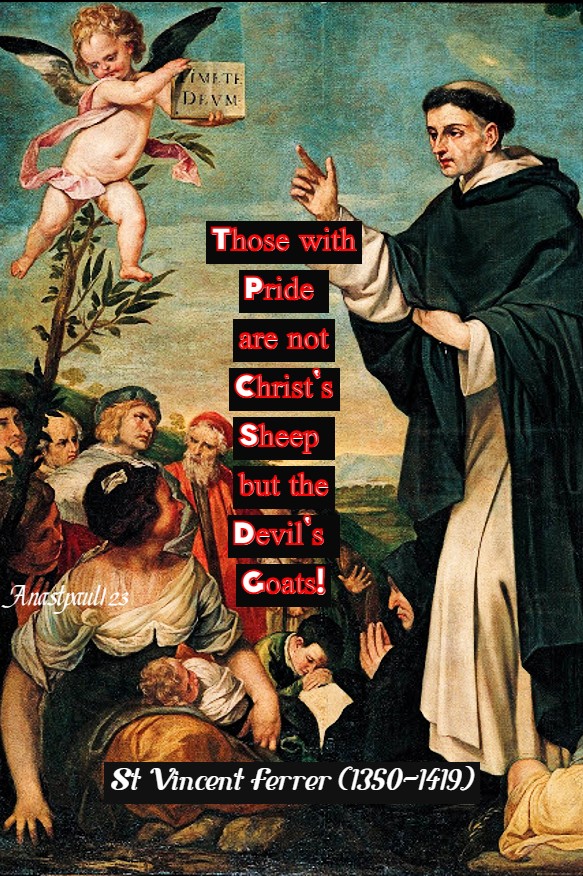
“Those with pride are not Christ’s sheep but the devil’s goats!”
Grant me, O my God By St Vincent Ferrer (1350-1419)
Good Jesus, let me be penetrated with love to the very marrow of my bones, with fear and respect toward You. Let me burn with zeal for Your honour, so that I may resent terribly, all the outrages committed against You, especially those of which I myself have been guilty. Grant further, O my God, that I may adore and acknowledge You humbly, as my Creator and that, penetrated with gratitude for all Your benefits, I may never cease to render You thanks. Grant that I may bless You in all things, praise and glorify You with a heart full of joy and gladness and that, obeying You with docility in every respect, I may one day, despite my ingratitude and unworthiness, be seated at Your table together with Your Holy Angels and Apostles, to enjoy ineffable delights. Amen
One Minute Reflection – 5 April – St Vincent Ferrer (1350-1419) Confessor called the “Angel of the Apocalypse” and of “The Last Judgement” and the “Mouthpiece of God.”– “Spy” Wednesday in Holy Week – Isaias 53:1-12, Luke 22:1-71 and 23:1-53 – Scripture search here: https://www.drbo.org/
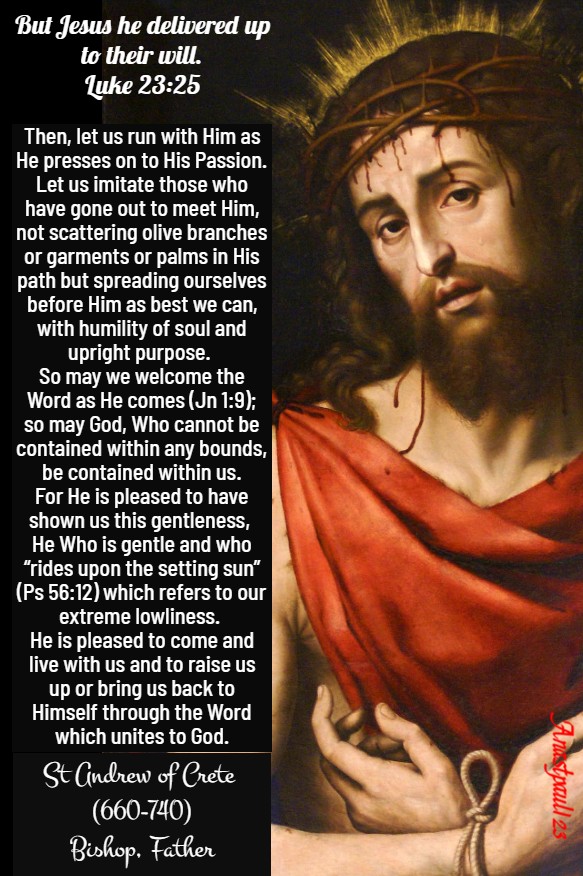
“But Jesus he delivered up to their will.” – Luke 23:25
REFLECTION – “Come, come, let us go up together to the Mount of Olives. Together let us meet Christ, Who is returning today from Bethany and going of His own accord to that Holy and Blessed Passion, to complete the Mystery of our Salvation. And so He comes, willingly taking the road to Jerusalem, He Who came down from the heights for us, to raise us who lie in the depths, to exaltation with Him, as the revealing Word says: “above all authority and rule and power and above every Name that is named” (Eph 1:21). He comes without display, without boast. For, as the prophet says, “He will not contend or shout out and no-one will hear His Voice” (Is 42:2). He is gentle and lowly and His entrance is humble…
Then, let us run with Him as He presses on, to His Passion. Let us imitate those who have gone out to meet Him, not scattering olive branches or garments or palms in His path but spreading ourselves before Him as best we can, with humility of soul and upright purpose. So may we welcome the Word as He comes (Jn 1:9); so may God, Who cannot be contained within any bounds, be contained within us.
For He is pleased to have shown us this gentleness, He Who is gentle and who “rides upon the setting sun” (Ps 56:12) which refers to our extreme lowliness. He is pleased to come and live with us and to raise us up or bring us back to Himself through the Word which unites to God.” – St Andrew of Crete (660-740) Bishop and Father (Homily for Palm Sunday).
PRAYER – O God, Who graciously enlightened Thy Church by the virtues and preaching of blessed Vincent, Thy Confessor, grant that we, Thy servants, may be taught by his example and delivered from all harm by his intercession. Through Jesus Christ, Thy Son our Lord, Who lives and reigns with Thee, in the unity of the Holy Ghost, God, world without end. Amen (Collect).
Our Morning Offering – 5 April – ‘Spy’ Wednesday in Holy Week
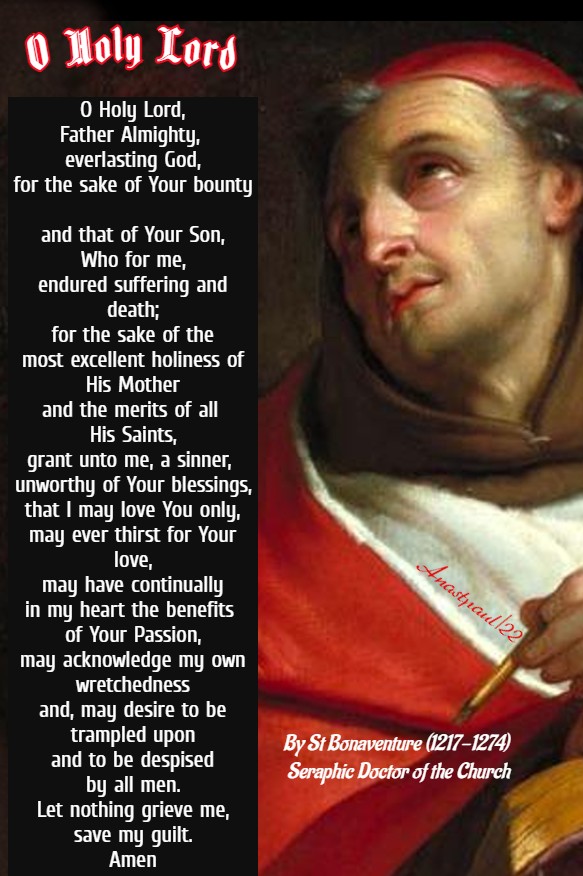
O Holy Lord By St Bonaventure (1217-1274) Seraphic Doctor of the Church
O Holy Lord, Father Almighty, everlasting God, for the sake of Your bounty and that of Your Son, Who for me, endured suffering and death; for the sake of the most excellent holiness of His Mother and the merits of all His Saints, grant unto me, a sinner, unworthy of Your blessings, that I may love You only, may ever thirst for Your love, may have continually in my heart the benefits of Your Passion, may acknowledge my own wretchedness and, may desire to be trampled upon and to be despised by all men. Let nothing grieve me, save my guilt. Amen
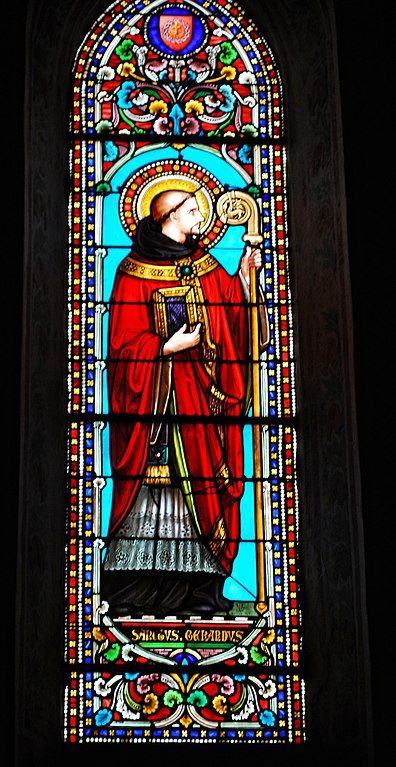
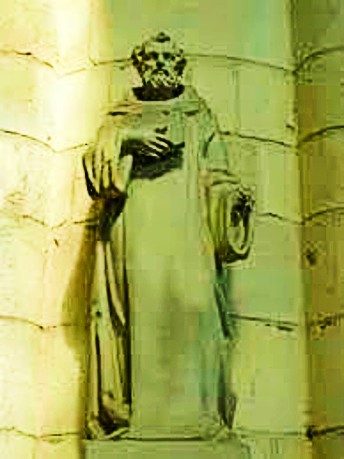
Saint of the Day – 5 April – Saint Gerald of Sauve-Majeure OSB (c1025-1095) Priest, Abbot, Reformer, Founder of the great Monastery of Sauve-Majeure, also known as Grande-Sauve. Born at Corbie, Picardy, France and died 1095 of natural causes. Also known as – Gerald of Corbie, Gerard, Geraud. St Gerald was Canonised in 1197 by Pope Celestine III.
Stained glass of St Gerald at the Parish Church at Sauve-Majeure
Gerald was born in Corbie, Picardy and was entrusted, by his parents, to the Abbey of Corbie for his studies under the Abbot Richard where he later became a Monk and where he was appointed as the Cellarer.
Gerald suffered greatly from violent headaches and optical problems with which the doctors were unable to assist. These severed afflictions prevented him from carrying out his devotions. as he wished.
In an effort to cure this affliction, he accompanied Abbé de Corbie Foulques to Rome where they were both Ordained Priests by Pope Leo IX . From there they went onto Monte Gargano and then to Monte Cassino, seeking the intercession of St Benedict and St Michael.
After his cure, Gerald made a pilgrimage to the Holy Land in thanks giving for the miraculous cure. He stayed until 1974 when he returned to Corbie. He was then elected as the Abbot of St Vincent’s Abbey, Laon but the Monks did not accept his authority or the imposition of reforms in the form of proper discipline. After some years, Gerald resigned from Laon in order to become the Abbot of St Medard’s Abbey, Soissons but wasfaced with opposition and was driven out by an usurper.
He then sought instead to found a new Benedictine Monastery. Duke William VIII of Aquitaine gave him a huge tract of forest in the Gironde near Bordeaux, where Gerald founded the Abbey of Grande-Sauve, of which he was also the first Abbot. Here, at this Monastery, Gerald developed a powerful community steeped in the advancement of the Benedictine Rule and a disciplined mode of life, with significant influence from the customs of Cluny.
Here, Gerald initiated the practice of celebrating Mass and the Office for the Dead for 30 days after the death of a community member. His constant advice to his Monks for as long as he lived was – that they should shun all idle conversation and discussion.
Near the end of his life, he wrote the Vita and Miracles of St Adelard . He died at the Abbey of -Majeure in 1095.
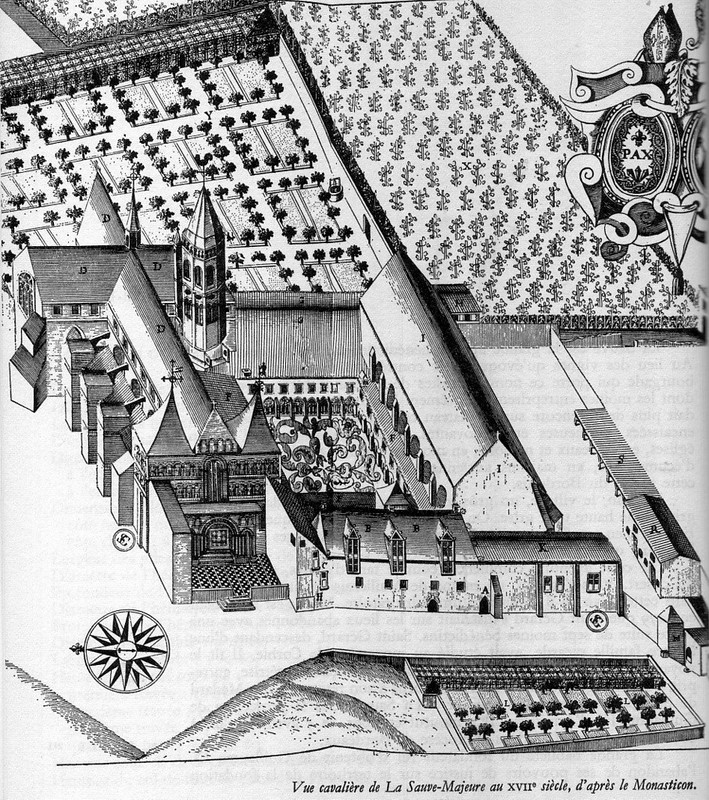
A Note on St Gerald’s great work of Founding the Monastery of Sauve-Majeure:
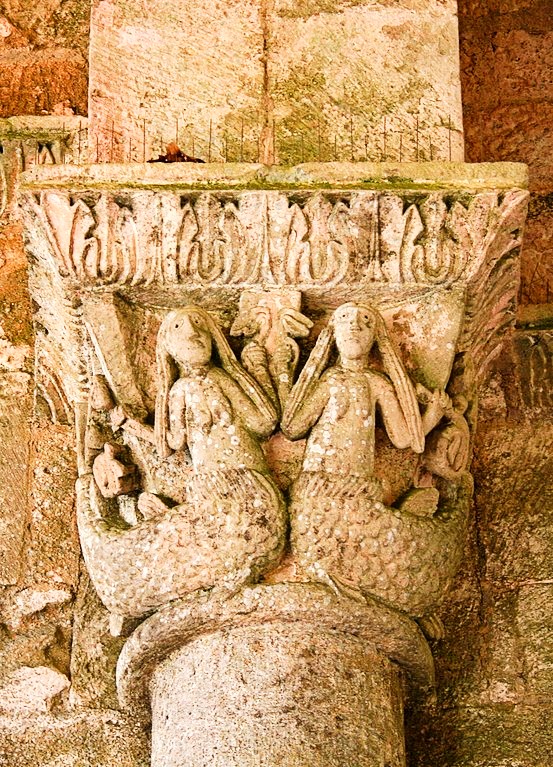
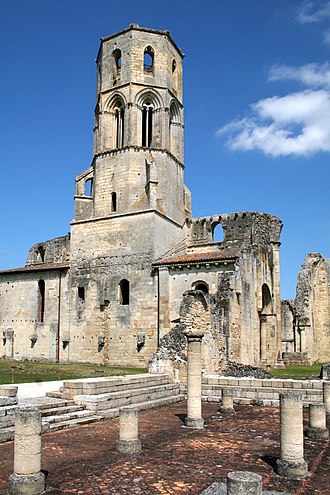
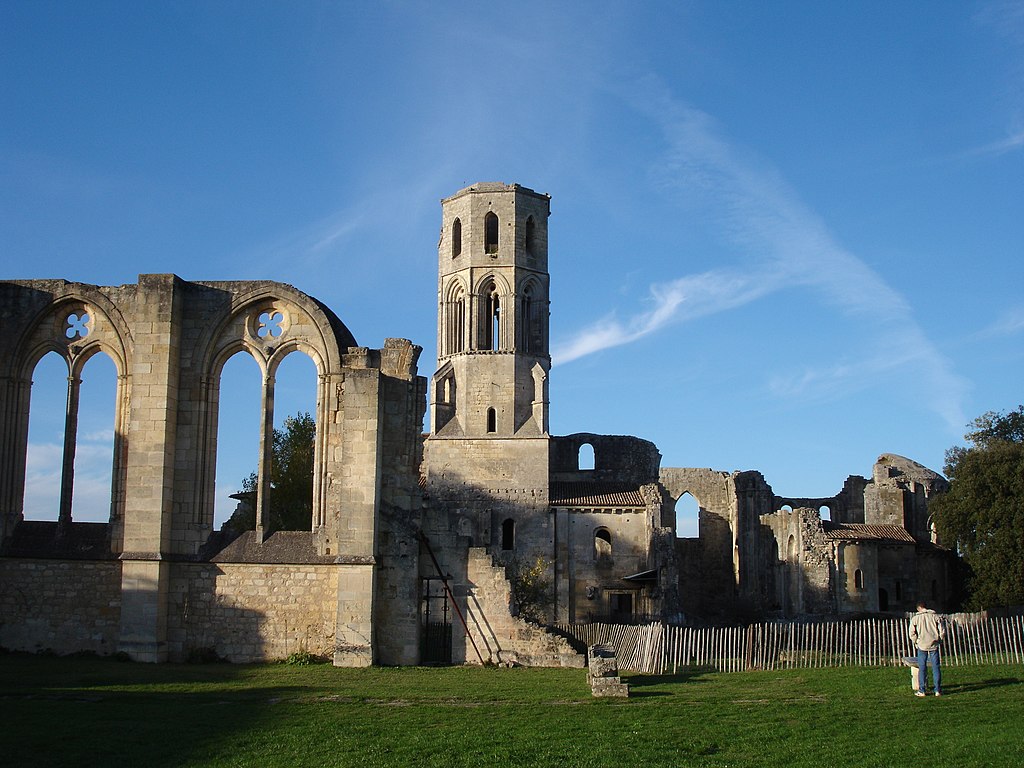
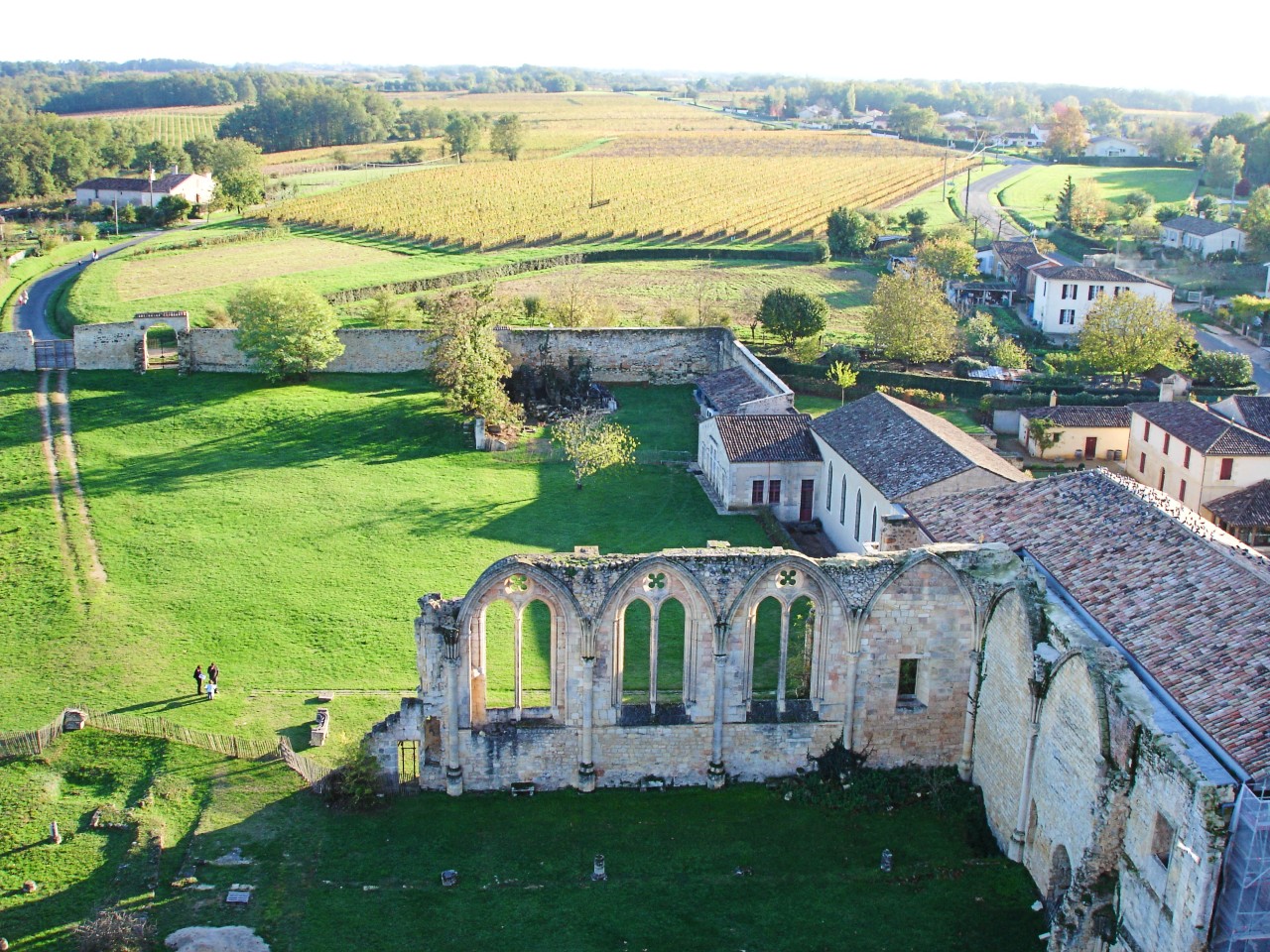
“Sauve-Majeure Abbey is a former Benedictine Monastery near the present village of La Sauve in the department of the Gironde, in a region once heavily forested. Although now in ruins, the remains of the Abbey are still of great interest in terms of Romanesque architecture, especially because of the many sculpted capitals still surviving.
In 1998 the Abbey ruins were included as part of the UNESCO world heritage site of the pilgrimage route to St James of Compostela.
On the spot known as Hauteville, halfway between the Garonne and the Dordogne, St Gerald of Sauve-Majeure founded the Abbey of Grande-Sauve in 1079, of which he was also the first Abbot. Its name refers to the Silva Major, the great forest that then occupied the whole region known as the Vignoble de l’Entre-Deux-Mers (“vineyard between two seas”) which was a gift to St Gerald from Duke William VIII of Aquitaine.
With the support of the Duke, the Pope and a large number of generous benefactors and protectors, including the Kings of England and France, its Patrons, the Abbey prospered and grew rapidly. It is sited on the route to Santiago de Compostela and served as a local point of departure for pilgrims.
During the French Revolution the Abbey’s assets were confiscated and dispersed. The surviving buildings were used from 1793 as a prison. The Church roofcollapsed in 1809 and for the next forty years, the remains were used as a quarry for the village of La Sauve.
In 1837 the Archbishop bought up the site and had a Jesuit college built there, which was later converted into a teachers’ training college. But in 1910 the school was destroyed in a fire and the site was again abandoned. Between 1914 and 1918 the remaining buildings were used as a small military hospital.
In 1960 the site was acquired by the French government and the ruins made stable. The site is now open to the public under the management of the Centre des Monuments Historiques.”
St Gerald of Sauve-Majeure (c1025-1095) Abbot St Irene of Thessalonica St Maria Crescentia Hoss St Pausilippus Bl Peter Cerdan St Theodore the Martyr
Martyrs of Lesbos: 5 Saints: Five young Christian women Martyred together for their faith. We don’t even know their names. island of Lesbos, Greece.
Martyrs of North-West Africa: Large group of Christians murdered while celebrating Easter Mass during the persecutions of Genseric, the Arian king of the Vandals. They were Martyred in 459 at Arbal (in modern Algeria).
Martyrs of Seleucia: 120 Saints :One-hundred and eleven (111) men and nine (9) women who, because they were Christians, were dragged to Seleucia and Martyred for refusing to worship the sun or fire or other pagan idols during the persecutions of King Shapur II. They were burned alive in 344 in Seleucia, Persia.










 AnaStpaul
You must be logged in to post a comment.