
Saint of the Day – 21 July – St Praxedes (Died c165) Virgin Laywoman
Born and died in Rome, (whose name means ‘one who does well’), Patronage – single laywoman. Also known as – Prassede, Praxedes, Praxidis.
The Roman Martyrology reads: “At Rome, the holy virgin, Praxedes, who was brought up in all chastity and in the knowledge of the Divine law. Assiduously attending to watching, prayer and fasting, she rest in Christ and was buried near her sister St Pudentiana and family, on the Salarian Road.”
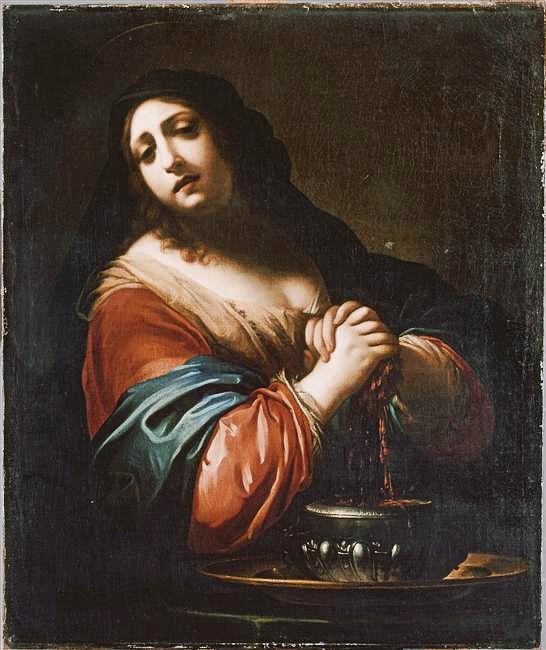
Praxedes was the daughter of St Pudens, a Roman Senator who was a disciple of St Paul and sister to Saint Pudentiana. In the days of Pope Pius I and the Emperor Antoninus, Praxedes edified the Church of Rome by the bright lustre of her virtues.

All her great wealth and riches she employed in relieving the poor and the necessities of the Church. By the comfort and succours which she afforded the Martyrs, she endeavoured to make herself partaker of their crowns and she lived in the assiduous exercise of prayer, watching and fasting.

Saints Praxedes and Pudentiana Burying the Martyrs
Late 16th or early 17th Century Oil
Caetani Chapel – Basilica of St Pudentiana, Rome
Praxedes died in peace and was buried near her sister on the Salarian Road. St Bede and other Hagiographers on the lives of the Saints, style her as a Virgin. An old title of St Praxedes of a Parish Church, now a Basilica, in Rome bearing her name is mentioned in the life of Pope Symmachus. It was repaired by Pope Adrian I and Paschal I and lastly by Saint Charles Borromeo, who took from it his title of Cardinal.
“The Basilica includes splendid Mosaics behind the simple and very Roman facade. However, the very simple exterior is augmented by an interior which is extraordinary – in particular for its mosaics, commissioned by Pope Paschal (817-824) as well as a beautiful ciborium magnum. (Pope Paschal himself maybe found in the mosaics, bearing a square halo — a sign given to someone who was yet living.) ”


The ancient Christians [and so it should be for ourselves too], lived only for Heaven and in every step looked up to God, regardless of all lower pursuits or meaner advantages which could interfere with their great design of knowing and loving Him alone. This constant attention to God awed them in their leisure; this gave life and wings to their devotions and animated them to fervour in all their actions; this carried them through the greatest difficulties and temptations and supported them under all troubles and afflictions. (Essentially from Lives of the Saints, by Father Alban Butler (1710–1773) English Priest and Hagiographer.)


 AnaStpaul