
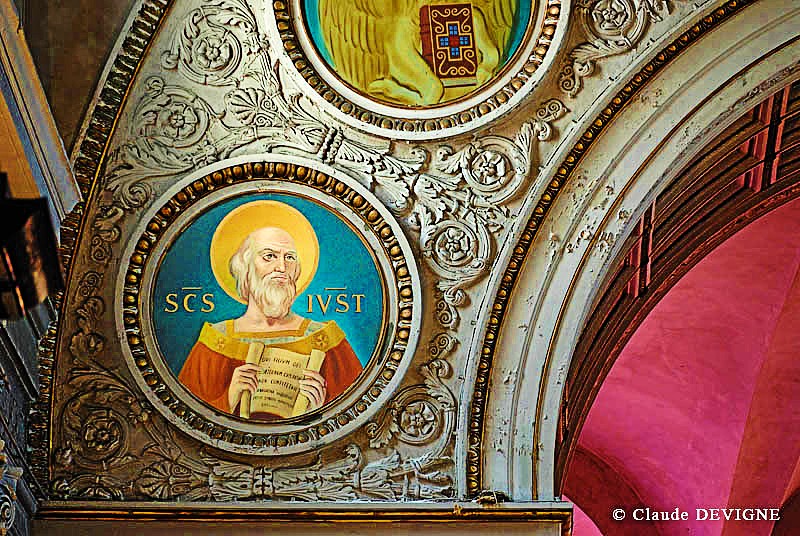
Saint of the Day – 2 September – St Justus of Lyons (Died c390) the 13th Bishop of Lyons, Confessor, Monk, Hermit, a man of learning, of meek, gentle and kind nature. Born in Tournon-sur-Rhône, Gaul (in modern France) and died in 390 in the Egyptian desert of natural causes. Also known as – Just, Justo, Giusto. The Latin name Justus means “one who helps.”
The Roman Martyrology states of him today: “At Lyons in France, St Justus, Bishop and Confessor, who was endowed with extraordinary sanctity and, a prophetic spirit, He resigned his Bishopric and retired into a desert of Egypt with his Lector, Viator, When he had, for some years, led an almost angelic life and the end of his meritorious labours had come, he went to our Lord to receive the crown of justice, on the 14th day of October, His holy body together with the Relics of his blessed Lector Viator, was afterwards taken to Lyons on this day, 2 September, becoming the remembrance of his birthday into Heaven.”
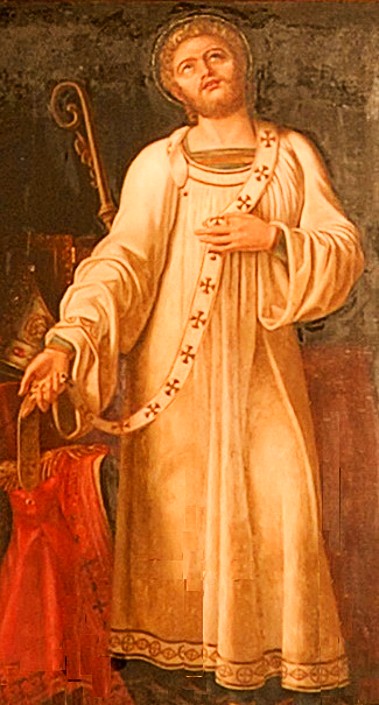
Justus was born in the first half of the 4th Century in Tournon-sur-Rhône and came from an aristocratic family. He followed the religious teaching of Saint Paschasius, the Archbishop of Vienne at the time, and became a Deacon of the Church of Vienne. A contemporary biographer describes him as being a meek and merciful man.
Around 350, Justus was Consecrated as the Bishop of Lyons. As the Bishop of the Capital City of Gaul, he was among the participants of the Council of Valencia in 374, regarding religious discipline of the Clergy and the faithful.
In 381, He assisted at the Council of Aquileia, organised by St Ambrose of Milan. A general Council had been requested by Arian bishops Palladius and Secundianus, supported by the Empress Justina, to review the Church’s position on Arianism. St Ambrose refused to hold a General Council, agreeing only to a Provincial Council but the Emperor Gratian allowed other Bishops to attend. The Bishops of Gaul sent delegates including Justus, who was one of 32 Bishops at the Council which rejected Arianism and condemned Palladius and Secundianus. (They must have regretted have requested the Council!)
At that time, Justus maintained a correspondence with St Ambrose of which there remain only two letters from St Ambrose discussing sections of Scripture. The two letters suggest that Justus was a man respected for his learning.
Some time after the Council of Aquileia, an incident took place where an insane individual in a violent fit, had attacked and killed several people in the streets of the City with a sword. Although eventually restrained, he managed to escape and take refuge in the Church, at that time located on the side of the present Church of St Nizier. Despite threats, the Bishop maintained the right of sanctuary. At length a City Magistrate arrived and persuaded Bishop Justus to hand the accused over to him, giving his word that the matter would be handled according to law. Relying on the Magistrate’s assurances, Justus delivered the man over; but scarcely had the man left the Church when the mob overpowered the guard and seizing the prisoner, put him to death.
The Bishop came to believe that his failure to adequately protect the murderer had made him unworthy to continue to lead the Christian community and he resolved to devote the remainder of his life to doing penance. Disillusioned, Justus resigned his See and retired to his house at Tournon. His friends could neither convince him that he was not responsible for the unfortunate man’s death, nor to reconsider his decision of being unworthy to be Bishop. One night, he secretly left to take up the ascetical life of a Hermit. He travelled to Arles and then on to Marseilles where he planned to embark for Alexandria. The Cathedral Lector, Viator suspected the Bishop’s intentions and decided to follow his master. He caught up with Justus at Marseilles and together they boarded ship for Egypt.
Once there, they joined the community of Monks in the desert of Scetes, about 40 or 50 miles south of Alexandria, beyond the mountains of Nitria, in the Libyan Desert. At that time the leader or Abbot of this community was St Macarius of Egypt († 390), a disciple of St Anthony († 356). St Macarius had a reputation for great holiness and a fierce asceticism. Most of the Monks lived in cells, either dug in the ground or built of stones and each out of sight of others. They came together only on Sundays to celebrate the liturgy. They supported themselves by manual labour and ate only the poorest of foods. Fasting, prayer, silence and the keeping of night vigils, characterised their lives.
The story is told then of a pilgrim in North Africa who some years later recognised Justus and reported this on his return to Lyons. The City folk being eager to regain their Bishop, sent a delegation led by Antiochus, a Priest of Lyons, to find him and bring him back to his Diocese. Antiochus found but could not convince the Hermit Bishop to return, so Antiochus returned to Gaul and was later himself appointed Bishop of Lyons.
Justus died at a Monastery of Scetes in c390. Upon his death, Antiochus, now himself Bishop of Lyons, made arrangements to repatriate the body of the Bishop and that of his companion Viator, who died shortly after and interred them in the Basilica of the Maccabees which Antiochus renamed the Saint-Just Basilica.

At the end of the 4th Century, a Vita Sancti Justi, Lugdunensis Episcopi, retracing in a hagiographic style the life of Justus, was written by a Priest of Lyons.
The Lyons Church celebrates a Mass for Saint Justus one to four times a year – on the date of his Ordination on 14 July (also Bastille Day); the translation of his Relics to Lyons on 4 August; his death on 2 September and his visit to Egypt on 14 October. The Feast of the translation of his Relics is still celebrated in the Diocese of Lyons, in addition to the regular September Feast.

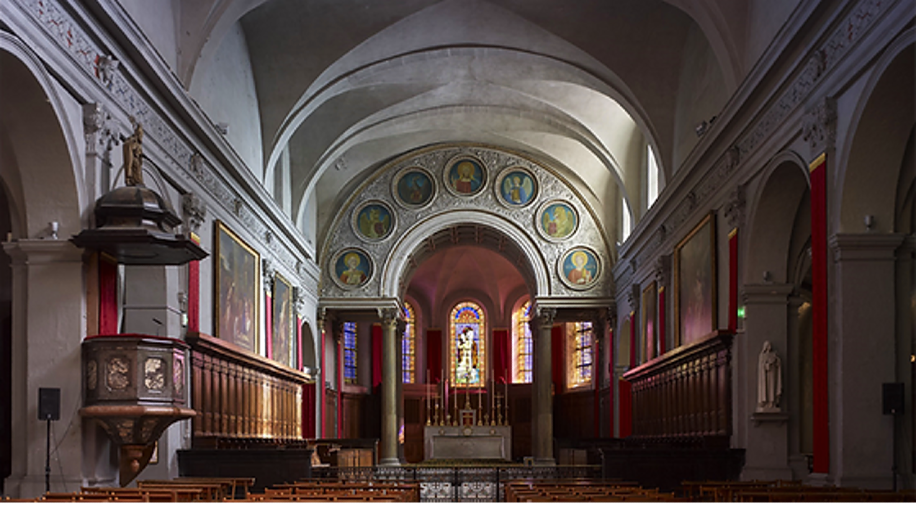
In Lyons, the Basilica of Saint Justus, now destroyed, was replaced by the Church of Saint-Just. Around the Basilica developed a village of the same name which, in the 19th Century, became a suburb of Lyons.
The Chapel of the School of Tournon, St Justus’ birth Town, also bears his name.


 AnaStpaul
One thought on “Saint of the Day – 2 September – St Justus of Lyons (Died c390) Bishop, Confessor”