Thought for the Day – 3 September – Meditations with Antonio Cardinal Bacci (1881-1971)
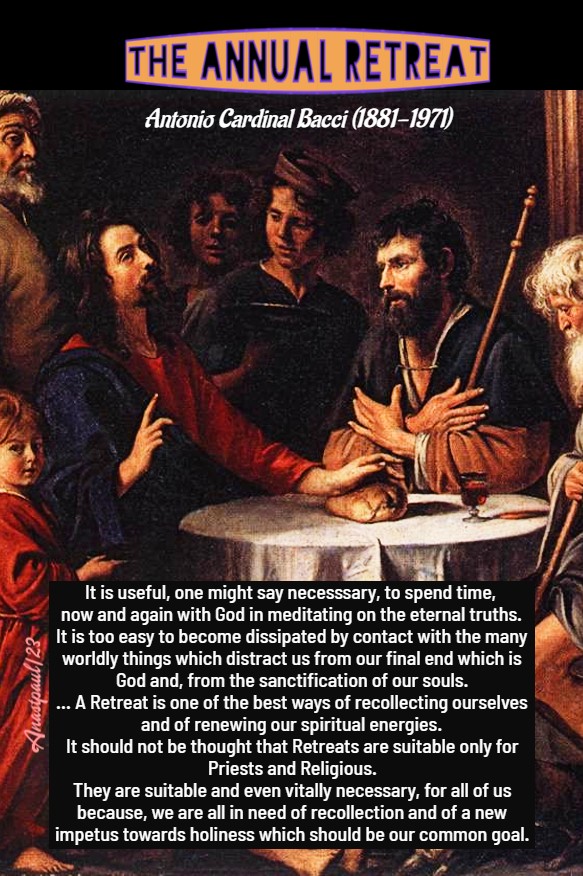
The Annual Retreat
“It is useful, one might say necesssary, to spend time, now and again with God in meditating on the eternal truths. It is too easy to become dissipated by contact with the many worldly things which distract us from our final end which is God and, from the sanctification of our souls. With dissipation comes carelessness, spiritual lethargy and tepidity and, we know that tepidity eventually leads us to commit sin.
A Retreat is one of the best ways of recollecting ourselves and of renewing our spiritual energies. It should not be thought that Retreats are suitable only for Priests and Religious. They are suitable and even vitally necessary for all of us because, we are all in need of recollection and of a new impetus towards holiness which should be our common goal.
An annual Retreat, therefore, should be the aim of all the faithful, even of the laity. Sometimes, we are disgusted and frightened by the desolate spectacle which the world presents us with! Faith has grown weak; religious indifference is invading all sections of society; the forces of evil and of progress have achieved an almost universal and soul-destroying corruption of morals. How has this happened? We get the answer from the Prophet Jeremias, who laments that in the supreme moment of trial, the chosen people abandoned God! “With desolation is all the land made desolate because, there is none who considereth in the heart” (Jer 12:1).
Let us resolve not to neglect this great means of sanctification. If possible, let us make a Retreat every year.”
Quote/s of the Day – 3 September – St Pius X (1835-1914) Pope, Confessor
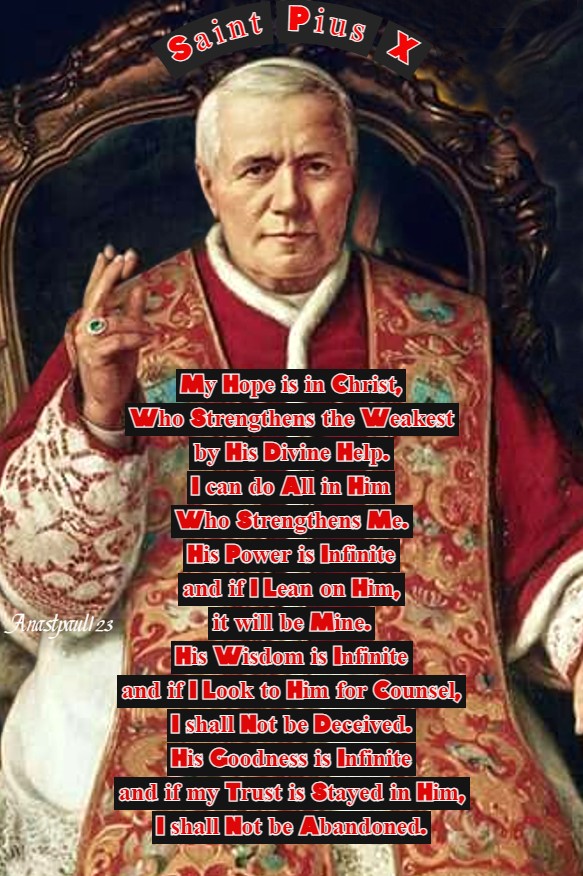
“My hope is in Christ, Who strengthens the weakest by His Divine help. I can do all in Him Who strengthens me. His Power is Infinite and if I lean on Him, it will be mine. His Wisdom is Infinite and if I look to Him for counsel, I shall not be deceived. His Goodness is Infinite and if my trust is stayed in Him, I shall not be abandoned.”
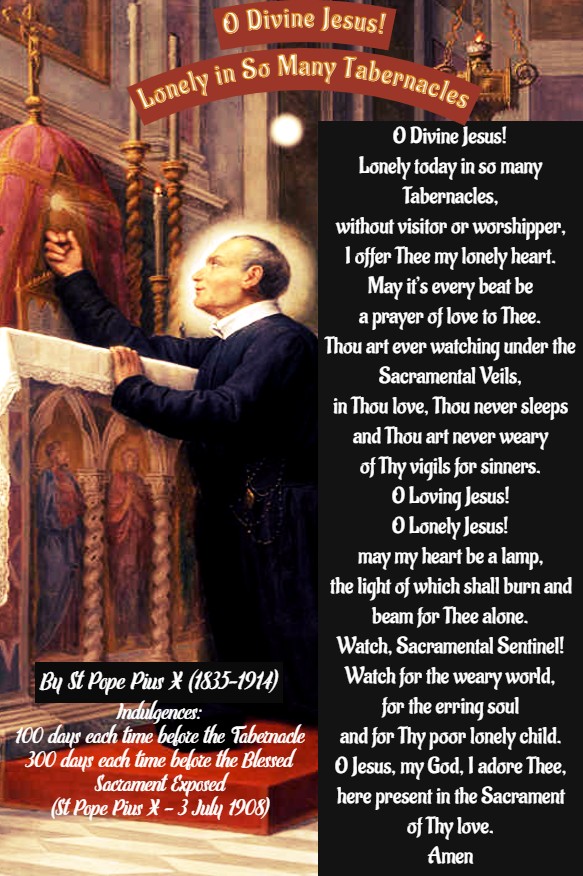
O Divine Jesus! Lonely in So Many Tabernacles By St Pope Pius X (1835-1914) “Pope of the Blessed Sacrament”
O Divine Jesus! Lonely today in so many Tabernacles, without visitor or worshipper, I offer Thee my lonely heart. May it’s every beat be a prayer of love to Thee. Thou are ever watching under the Sacramental Veils, in Thou love, Thou never sleeps and Thou are never weary of Thy vigils for sinners. O Loving Jesus! O Lonely Jesus! may my heart be a lamp, the light of which shall burn and beam for Thee alone. Watch, Sacramental Sentinel! Watch for the weary world, for the erring soul and for Thy poor lonely child.
O Jesus, my God, I adore Thee, here present in the Sacrament of Thy love. Amen
Indulgences: 100 days each time before the Tabernacle 300 days each time before the Blessed Sacrament Exposed (St Pope Pius X – 3 July 1908) Prayers to the Sacred Heart 15th Ed 1936
One Minute Reflection – 3 September – “Month of The Seven Sorrows of the Blessed Virgin Mary and The Holy Cross” – St Pius X (1835-1914) Pope, Confessor – Galatians 5:16-24, Matthew 6:24-33 – Scripture search here: https://www.drbo.org/
“Is not the life a greater thing than the food and the body, than the clothing? ” – Matthew 6:25
REFLECTION – “If spiritual things hold first place in our lives, material needs will cause us no concern, for God, in His goodness, will give them to us in abundance. On the other hand, if we devote ourselves entirely to earthly pursuits and neglect our spiritual life, concern for what this life has to offer will lead us to neglect our souls… I urge you, therefore, let us not overturn the established order. We know that our Master is good, so let us commit everything to Him and not be taken up with the cares of this life… “Your heavenly Father knows that you need all these things even before you ask him” (Mt 6:32).
Jesus wishes us, then, to be free from every anxiety regarding temporal affairs and to have all possible leisure for the things of the Spirit. He says: “Your part is to seek spiritual blessings and I myself, will provide amply for your material needs. Look at the birds in the sky. They neither sow nor reap nor gather crops into barns and yet, your Father feeds them. ” In other words, “If I take such care of irrational birds, as to supply them with all they need without plowing or sowing, I will take much greater care of you, who are endowed with reason, if only you make up your minds to put spiritual things before temporal ones. If I made these creatures for your sake and the whole of creation too and, if I take such care of them, of what great care will I not deem you worthy – you, for whom I created all of this?” – St John Chrysostom (345-407) Bishop of Constantinople, Father and Doctor of the Church (Baptismal catechesis, no 8, 19-25).
PRAYER – O God Who, for the defence of the Catholic faith and the restoration of all things in Christ, filled St Pius, the Supreme Pontiff, with heavenly wisdom and apostolic fearlessness, mercifully grant that, by following his teachings and examples, we may receive Thy eternal rewards. Through Jesus Christ, Thy Son our Lord, Who lives and reigns with Thee, in the unity of the Holy Ghost, God, world without end. Amen (Collect).
Our Morning Offering – 3 September – “Month of The Seven Sorrows of the Blessed Virgin Mary and The Holy Cross” – The 14th Sunday after Pentecost
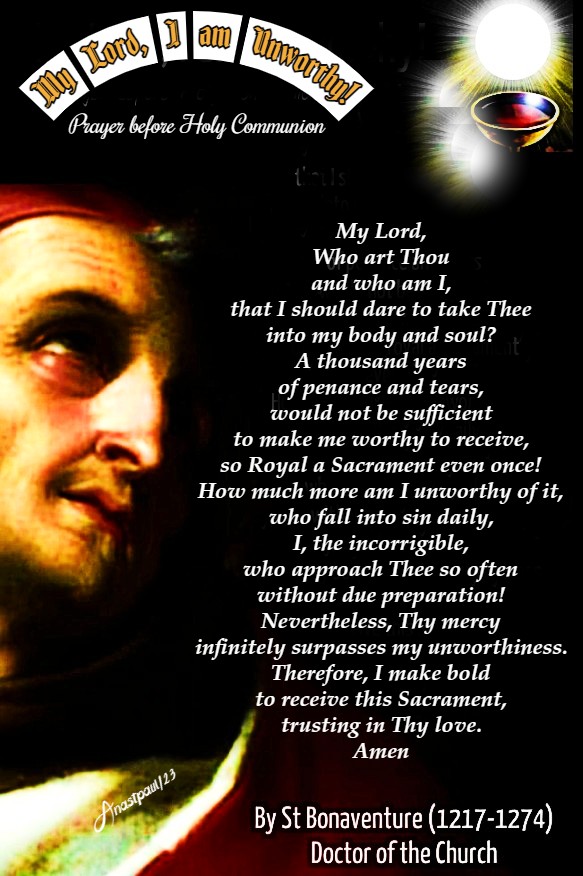
My Lord, I am Unworthy! Prayer before Holy Communion By St Bonaventure (1217-1274) Seraphic Doctor of the Church
My Lord, Who art Thou and who am I, that I should dare to take Thee into my body and soul? A thousand years of penance and tears, would not be sufficient to make me worthy to receive, so Royal a Sacrament even once! How much more am I unworthy of it, who fall into sin daily, I, the incorrigible, who approach Thee so often without due preparation! Nevertheless, Thy mercy infinitely surpasses my unworthiness. Therefore, I make bold to receive this Sacrament, trusting in Thy love. Amen
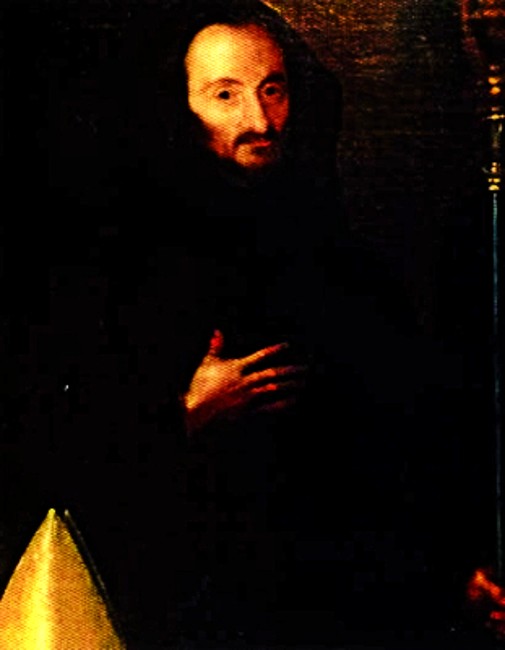
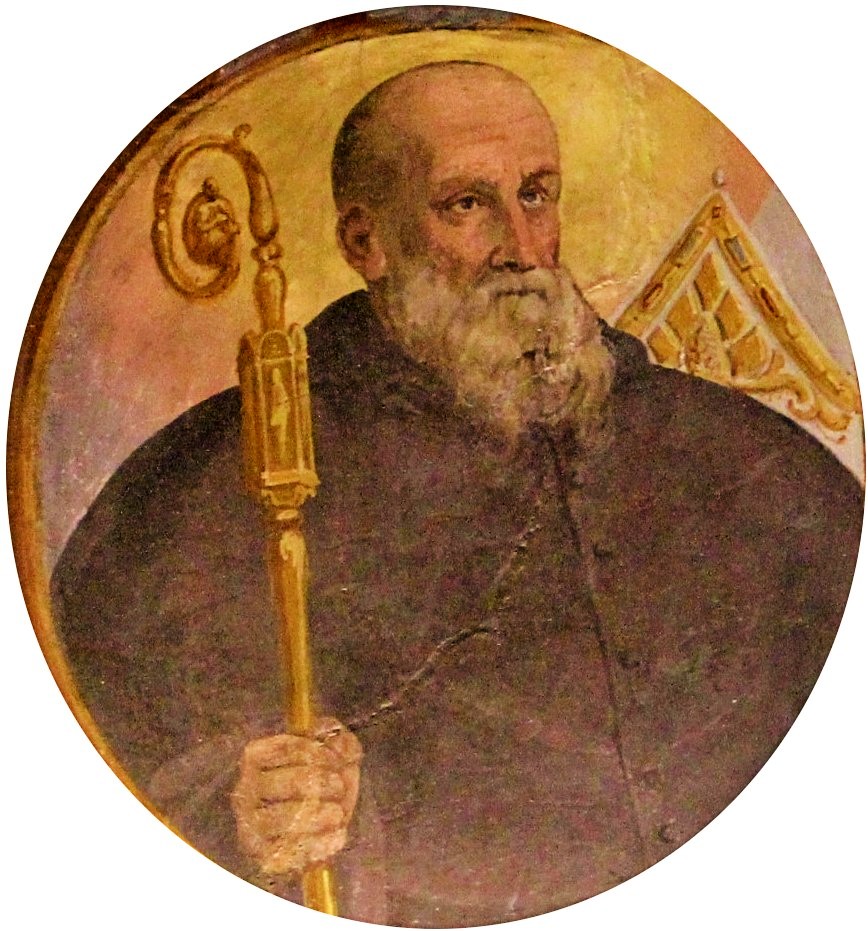
Saint of the Day – 3 September – Blessed Guala de Ronii of Brescia OP ( 1180-1244) Bishop, Priest and Friar of the Order of Preachers, being one of the earliest disciples of St Dominic, Papal Envoy, Peace-maker. Also known as – Guala of Roniis, Guala Romanoni, Guala of Bergamo, Walter… Wilhelm… Guala was Beatified on 1 October 1868 by Pope Pius IX. Additional Memorials – 2 September (Diocese of Brescia), 20 April as one of the Saints of the Diocese of Brescia and 4 September on some calendars.
Guala de Ronii was born in 1180 in the Bergamo Province and belonged to a famed noble Roman house. His parents oversaw his initial education and his excellent progress caused his parents to entertain great hopes for his future, while neglecting to entertain the thought that perhaps God had a surprise in store for their son and the course of his life.
Guala heard St Dominic preach in 1219 and – like others – was so enchanted by St Dominic’s character that he was one of the first to seek him out for enrollment into his new Order of Preachers. Guala soon received the habit from St Dominic himself and later received Ordination as a Priest. St Dominic soon called the Priest to Bologna in order to appoint him as one of four entrusted with the building of Saint Agnes’ convent for Dominican nuns.
He served as one of the Saint’s first disciples and received the latter’s appointment as the first Prior of the Order in Brescia where Dominic founded a Monastery. Both Theoderic of Apolda, the Hagiographer and Blessed Jordan of Saxony were his Dominican contemporaries.
When Guala learned of St Dominic’s death ,which he received in Brescia, with tremendous grief. Prior to this news, he had fallen asleep with his head against a Church bell tower and saw a Friar ascending a ladder into Heaven where Angels surrounded him – that Friar was Dominic, unbeknownst to him at the time. He was about to depart for Bologna when he learned that Dominic had died at the time of his vision!
The Priorship of Saint Nicholas in Bologna – now titled as Saint Dominic – became vacant and the people there elected him to the position in 1226. But his tenure became difficult with tensions between Bologna and rival Mantua which prompted Pope Honorius III to appoint him as the Papal Envoy to the two Cities, n order that he might secure reconciliation between the warring towns – he managed to negotiate peace terms sto remain in place and to be abided by, for a decade. The new Pope Gregory IX then appointed him as the Papal Legate to Frederick II in order to induce him to keep his often broken promise, to march on a crusade for the relief of the faithful in Jerusalem. On 20 July 1225 he oversaw the successful Treaty of San Germano in Cassino.
Brescia longed for his return and when the Bishop of the Diocese died the people pleaded with intense supplications for the Fr Guala’s appointment to replace the deceased. Guala reluctanly accepted his appointment in 1229 as the Bishop of Brescia from Pope Gregory IX and he received his Episcopal Consecration soon after.
His Episcopate intended as a particular objective to make provision for the temporal care of poor children of the Diocese. But ,the Pontiff also made him an Apostolic Delegate to both Treviso and Paduaas peacemaker, when the two were at odds with each other – despite putting the new Bishop far from his flock – and it was he who conducted successful peace negotiations.
Guala’s contemporaries described him as “a man of great prudence, well acquainted with the world, and of accomplished manners” and said that “he governed the Diocese entrusted to his care with such holiness that, both during his life and after his death, he wrought many wonders through God.”
The years of labour and civil strife wore him down. He resigned his See in 1242 in order to enter complete seclusion and pray without interruption, in preparation for death. Therefore, he retired to the Vallumbrosan Monastery of San Sepolcro d’Astino in Bergamo, his hometown, where he lived as a Hermit – despite his retreat into peaceful solitude – many still flocked to seek his wise counsel. Guala died on 3 September 1244. He was buried in the Benedictine Church,and after many miracles at his tomb, his cause was promoted.
St Aigulphus of Lérins St Ambrose of Sens St Ammon of Heraclea Bl Andrew Dotti St Auxanus St Balin St Basilissa of Nicomedia
St Chariton St Chrodegang of Séez St Frugentius the Martyr Blessed Guala de Ronii of Brescia OP ( 1180-1244) Bishop St Hereswitha Bl Herman of Heidelberg St Macanisius St Mansuetus of Toul St Marinus (Died c 366) St Martiniano of Como St Natalis of Casale
St Regulus of Rheims St Remaclus St Sandila of Cordoba St Vitalian of Capua (Died 699) Bishop
Martyrs of Aquileia – 4 Saints: Four young women, variously sisters and cousins, who were born to the nobility, the daughters of the pagans Valentinianus of Aquileia and Valentius of Aquileia. Each woman converted and made private vows, dedicating themselves to God. They were arrested, tortured and martyred by order of Valentius for becoming a Christian. We know little else but their names – Dorothy, Erasma, Euphemia and Thecla. They were martyred by beheaded in the 1st century in Aquileia, Italy and their bodies were thrown into a nearby river.
Martyrs of Nagasaki – 6 Beati: A group of Priests and Clerics, native and foreign, murdered together in the anti-Christian persecutions in Japan. They were scalded in boiling water and then burned alive on 3 September 1632 in Nishizaka, Nagasaki, Japan and Beatified on 7 May 1867 by Pope Pius IX. They are: Anthony Ishida, Bartolomé Gutiérrez Rodríguez, Francisco Terrero de Ortega Pérez, Gabriel Tarazona Rodríguez, Jerome of the Cross de Torres, Vicente Simões de Carvalho







 AnaStpaul
You must be logged in to post a comment.