Thought for the Day – 16 September – Meditations with Antonio Cardinal Bacci (1881-1971)
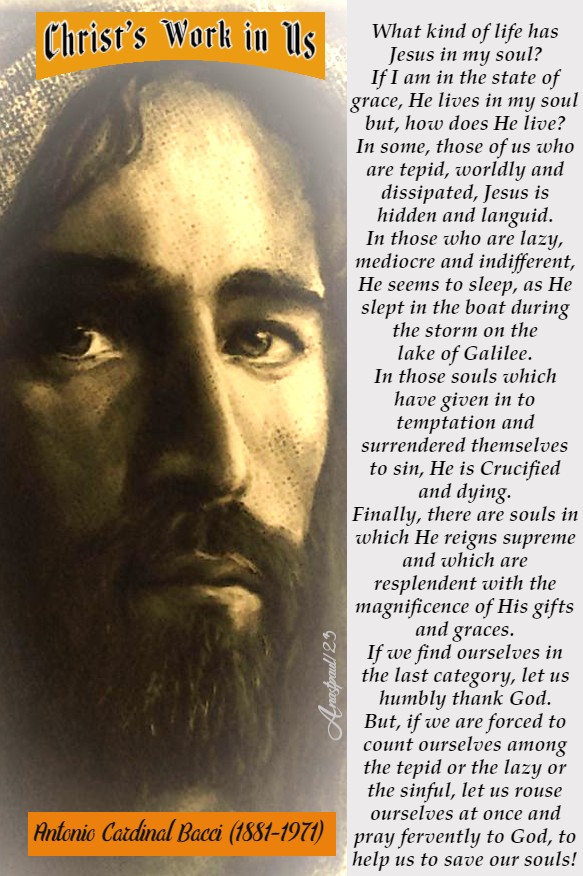
Christ’s Work in Us
“It is not enough that Jesus live in us – He must increase and act in us continually. The Spiritual life is like natural life. It cannot stop, for to halt would mean death! If Jesus is our life, He should live in us with ever-increasing intensity. Life is like a stairway, we are either going up or coming down.
If we continue to climb energetically towards Jesus, we shall be coming nearer to Christian perfection. If, on the other hand, we halt, the supernatural life of Jesus in us, will begin to weaken. Tepedity will replace fervour and sin will succeed tepidity. It is difficult to remain unchanged because, life involves movement. ‘Jesus Christ,” writes St Augustine, “was born a baby but, He did not remain one. He grew to boyhood, to adolescence and then, to maturity.”
It is necessary for us to grow also. More precisely, it is necessary that Jesus grow continuously in us through faith, charity and good works. “Court the good,” admonishes St Paul, “from a good motive always … until Christ is formed in you” (Gal 4:18-19).
It is not enough that Christ be born in us, it is necessary that He increase to the fullness of perfection (Cf Eph 4:13-16). “Jesus increases daily,” writes Origen, “in the soul of the holy and just man, which mirror His grace, His wisdom and His sanctity. In the soul of the unfortunate sinner, however, Christ decreases and dies.”
What kind of life has Jesus in my soul? If I am in the state of grace, He lives in my soul but, how does He live? In some, those of us who are tepid, worldly and dissipated, Jesus is hidden and languid. In those who are lazy, mediocre and indifferent, He seems to sleep, as He slept in the boat during the storm on the lake of Galilee. In those souls which have given in to temptation and surrendered themselves to sin, He is Crucified and dying.
Finally, there are souls in which He reigns supreme and which are resplendent with the magnificence of His gifts and graces. If we find ourselves in the last category, let us humbly thank God. But, if we are forced to count ourselves among the tepid or the lazy or the sinful, let us rouse ourselves at once and pray fervently to God, to help us to save our souls!”
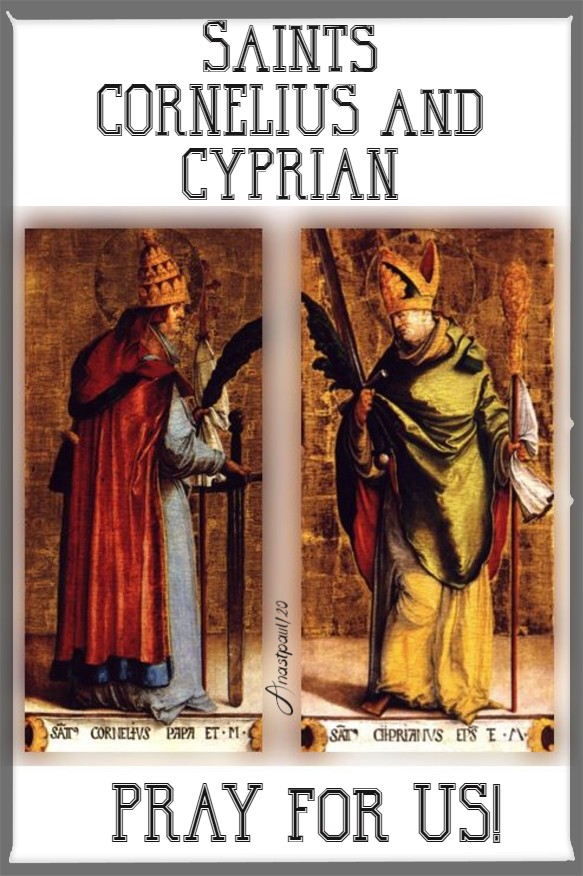
Quote/s of the Day – 16 September – Saints Cornelius and Cyprian – Wisdom 3:1-8, Luke 21:9-19 – Scripture search here: https://www.drbo.org/
“And you shall be hated by all men, for My Name’s sake. But, not a hair of your head shall perish.”
Luke 21:17-18
“So, my brothers, let us pray as God our master has taught us. To ask the Father in words His Son has given us, to let Him hear the prayer of Christ ringing in His ears, is to make our prayer one of friendship, a family prayer. Let the Father recognise the words of His Son. Let the Son who lives in our hearts, be also on our lips. We have Him as an Advocate for sinners, before the Father, when we ask for forgiveness for ours sins, let us use the words given by our Advocate. He tells us – Whatever you ask the Father in my name, He will give you. What more effective prayer could we then make, in the name of Christ, than in the words of His own prayer?”
“He [Christ], protects their faith and gives strength to believers, in proportion to the TRUST, that each man, who receives that strength, is willing to place in Him.”
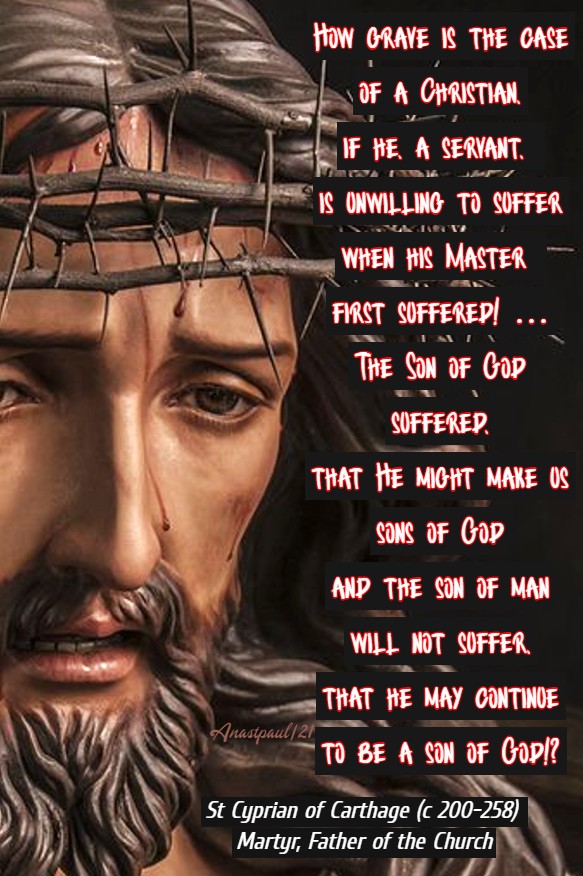
“ How grave is the case of a Christian, if he, a servant, is unwilling to suffer when his Master first suffered! … The Son of God suffered that He might make us sons of God and the son of man will not suffer that he may continue to be a son of God!? … The Maker and Lord of the world also warns us, saying: “If the world hates you, remember that it hated Me before you. If you were of the world, the world would love its own but because you are not of the world but I have chosen you out of the world ” … remember the word that I said to you: “The servant is not greater than his Lord” (Jn 15:18-20).”
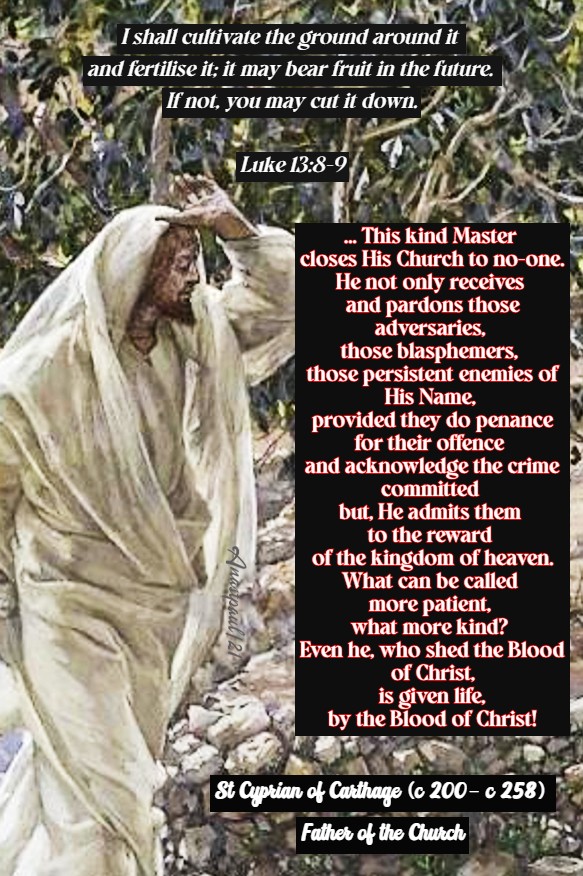
“I shall cultivate the ground around it and fertilise it; it may bear fruit in the future. If not, you may cut it down.” Luke 13:8-9
“… This kind Master closes His Church to no-one. He not only receives and pardons those adversaries, those blasphemers, those persistent enemies of His Name, provided they do penance for their offence and acknowledge the crime committed but, He admits them to the reward of the Kingdom of Heaven. What can be called more patient, what more kind? Even he, who shed the Blood of Christ, is given life, by the Blood of Christ.”
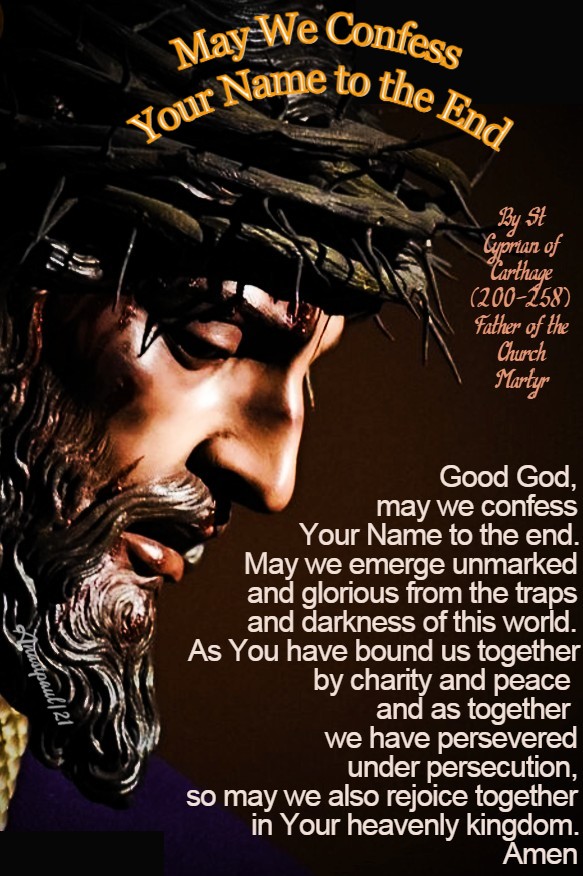
May We Confess Your Name to the End By St Cyprian of Carthage (200-258)
Good God, may we confess Your Name to the end. May we emerge unmarked and glorious from the traps and darkness of this world. As You have bound us together by charity and peace and as together we have persevered under persecution, so may we also rejoice together in Your heavenly kingdom. Amen
St Cyprian of Carthage (c 200-258) Martyr, Bishop of Carthage, Father of the Church
One Minute Reflection – 16 September – “Month of The Seven Sorrows of the Blessed Virgin Mary and The Holy Cross” – Saints Cornelius and Cyprian – Wisdom 3:1-8, Luke 21:9-19 – Scripture search here: https://www.drbo.org/
“Resolve, therefore, in your hearts, not to meditate beforehand, how you are to make your defence. For I Myself, will give you utterance and wisdom …” – Luke 21:14-15
REFLECTION – “O strong love of God! I really think, nothing seems impossible, to one who loves. O happy soul which has obtained this peace, from its God! For it has become mistress over all the trials and perils of the world. If only it can serve its good Spouse and Lord, it fears none of them – and, with good reason… Think of something which occurs to me now and which, is applicable to those who are naturally pusillanimous and have little courage… Although, in actual fact, their soul has been raised up to this state, the weakness of their nature makes them afraid. We must be on the watch, or this natural weakness, will deprive us of a great crown. When you find yourselves as pusillanimous as this, my daughters, have recourse to faith and humility and do not fail to go forward with faith, for nothing is impossible to God (Lk 1:37). He has thus been able to give many holy Saints, the courage to endure all the cruel tortures which they had resolved to suffer for His sake!
It is of this resolution and this free-will that the soul wishes to make Him Master, though He has no need of our efforts. Indeed, His Majesty is pleased that His works should shine forth in those who are weak, since in these, there is more scope for His power and, for the fulfilment of His desire, to grant us favours…
Pay no heed to the arguments adduced by your mind and your own weakness – this weakness will only grow, if you begin to imagine, what will and what will not happen…This is no time to think about your sins, leave them alone, humility is out of place now, it comes at the wrong time… Be assured that the Lord never forsakes those who love Him and risk everything for His sake!” – St Teresa of Jesus of Avila (1515-1582) Carmelite, Doctor of the Church (Conceptions of the Love of God Ch 3:4-6).
PRAYER – May the feast of the blessed Martyrs and Bishops, Cornelius and Cyprian, protect us, O Lord, we beseech Thee and may their holy prayer recommend us to Thee.Through Jesus Christ, Thy Son our Lord, Who lives and reigns with Thee, in the unity of the Holy Ghost, God, world without end. Amen (Collect).
Our Morning Offering – 16 September – “Month of The Seven Sorrows of the Blessed Virgin Mary and The Holy Cross”
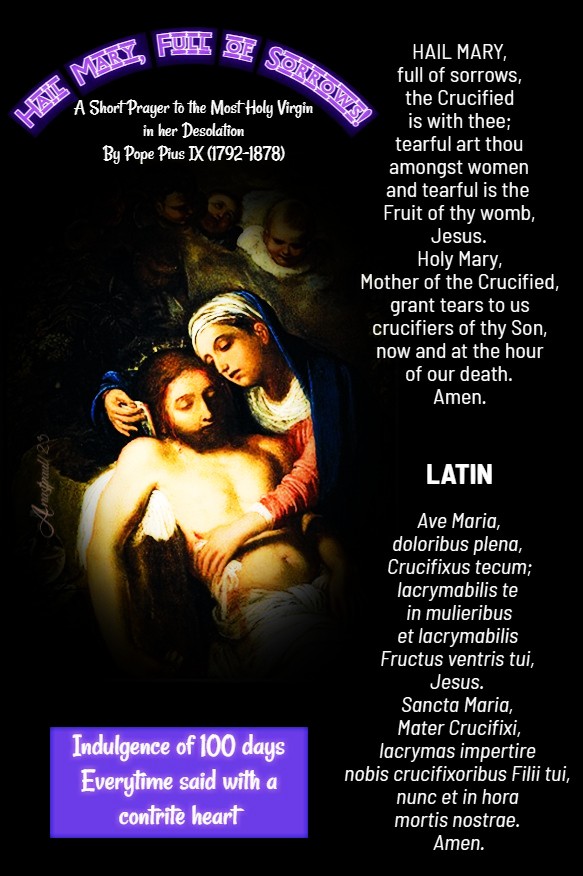
Hail Mary, Full of Sorrows! A Short Prayer to the Most Holy Virgin in her Desolation By Pope Pius IX (1792-1878) Papal Reign 1846-1878 (+102 Raccolta)
His Holiness Pope Pius IX, by a Decree of the Sacred Congregation of Indulgences, of 23 December 1847, deigned to grant:
An Indulgence of 100 days to all the faithful, everytime they say, with contrite heart, the following prayer in honour of the most Holy Virgin in her desolation.
HAIL MARY, full of sorrows! the Crucified is with thee; tearful art thou amongst women and tearful is the Fruit of thy womb, Jesus. Holy Mary, Mother of the Crucified, grant tears to us crucifiers of thy Son, now and at the hour of our death. Amen.
LATIN
Ave Maria, doloribus plena, Crucifixus tecum; lacrymabilis te in mulieribus et lacrymabilis Fructus ventris tui, Jesus. Sancta Maria, Mater Crucifixi, lacrymas impertire nobis crucifixoribus Filii tui, nunc et in hora mortis nostrae. Amen.
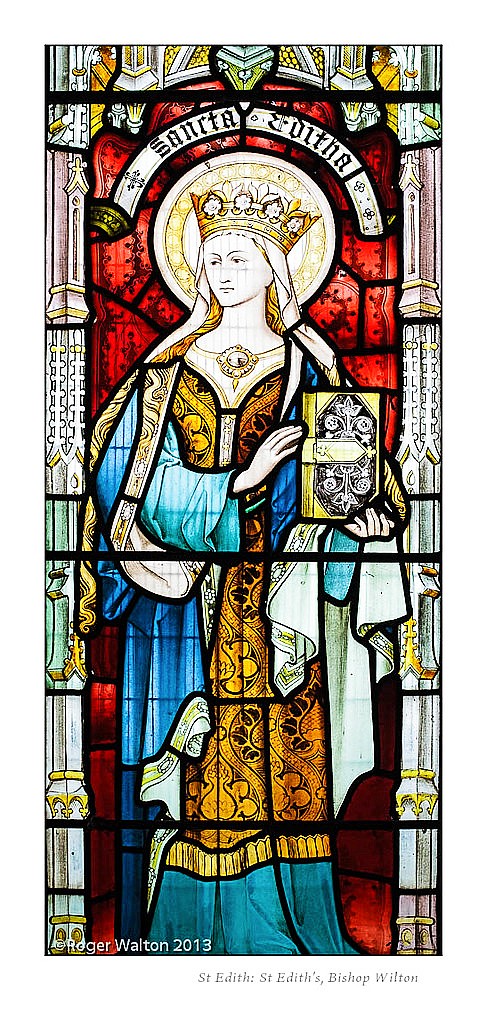
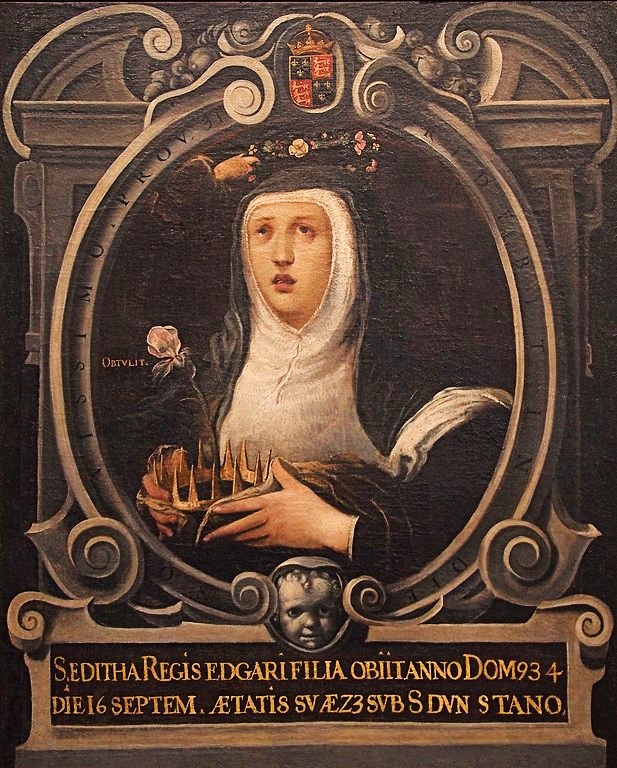
Saint of the Day – 16 September – Saint Edith of Wilton (961-984) Virgin, Nun, Princess, Founder of a Church and a Hospital for the poor. Born in 961 at Kensing, Kent, England and died on 15 September 984 aged just 23 years, a date foretold by Saint Dunstan of Canterbury, of natural causes. Edith also had a gift for communicating with wild animals as so many Saints have had. Edith is one of the most venerated female Saints of England. Her extensive legacy continues to this day – there is a Pilgrimage route, “St Edith’s Way” and annual devotions take place on her Feast day. Also known as – Edith of Barking, Eadgyth…. Eadgith…. Editha…. Ediva…. Patronage – against blindness and eye diseases, of sailors, against storms at sea, Wilton Abbey.
Edith was the only daughter of King Edgar the Peaceful (959-975) and St Wulfthryth, who later became Abbess of Wilton Abbey. Edith is an interesting Saint because she seemed to be able to combine her Royal status and its concerns, with the asceticism of a Benedictine Monastery. There seems to be some doubt about the relationship of her parents. Apparently Edgar took the noblewoman Wulfthryth, from the Convent at Wilton and either kept her as a concubine or else married her. However, the union was dissolved and Wulfthryth returned to her Convent with Edith. Edgar, nonetheless, continued to take an interest in his daughter, arranging her education with two foreign Chaplains, Fr Radbod of Rheims and Fr Benno of Trier.
There is a indecision over whether Edith was actually a Nun or a lay member of the community – whether she took Vows or not. Her main biographer, writing about a hundred years after her death, was a Flemish Benedictine Monk, who came to England and wrote lives of the Saints. He relates that her father, Edgar, came to the Convent and placed before her the finest clothes and jewels, while her mother placed religious objects before her eyes. Edith, opted for the religious life, although she always wore fine clothes – the Bishop of Winchester admonished her for this but she replied: “My father, the mind maybe modest and God-fearing under fine clothes, as under a serge habit. The God I love looks to the heart and not to the dress.” According to legend, she was vindicated when a chest caught fire as a candle was accidentally dropped on it – the clothes remained untouched inside! The chest was preserved in the Convent. She also maintained the custom, suited to a Princess but not expected of a Nun in a cloistered community, of heating her bath water with a special metal casket.
In spite of her fine clothes, she observed strict fasting and abstinence and wore a hair shirt under those clothes – a lesson in not juding a book by its cover, I would think. She had a care for the poor and sick and asked that a hospital be built to care for the poor and destitute patients. It was said of her that at night she would wash the stockings of her fellow sisters.
Her education was one that befitted a Royal lady. She seems to have been a talented needlewoman and designed and embroidered a sumptuous Alb and other Ecclesiastical Vestments. She was versed in literary languages and the arts. She had a fine singing voice, painted, wrote and composed. She had a library and wrote out a book of prayers. She was also very well read. Edith also seemed to have been free to indulge her interest in animals, as she kept a menagerie of native and exotic creatures.
Although she had chosen a Convent life, she seems to have had influence at her father’s Court and that of her half-brothers Edward the Martyr and Ethelred. She was highly regarded by the nobility of England; foreign Kings and Ambassadors sought her favour through letters and gifts and high-ranking Clergy, her intercession. Her father tried to make her Abbess of three Convents but she refused the honour. When Edward the Martyr was murdered, she was offered the throne,but again declined.
St Dunstan, Archbishop of Canterbury, predicted her death and that the thumb on her right hand – which made the Sign of the Cross in an unusual way – would remain incorrupt. Edith died three weeks after his prediction, on 16 September 984. Dunstan presided when her body was removed to the Chapel of St Denys, which our Saint had built and the thumb had not decomposed.
Edith’s cult seemed to have developed slowly. The Abbess, Aelfgifu was cured of an eye disease during a dream vision. There are stories of her intervention, when either her surroundings or Relics were interfered with. King Canute did not believe she was a Saint and demanded that her Tomb be opened so he could decide for himself. The body of Edith rose up and struck him! He got the message and generously endowed the Convent. He claimed also that later, Edith had rescued him from a storm at sea.
She was Canonised thirteen years after her death through the offices of her half-brother King Ethelred II and with the support of St Dunstan and other Ecclesiastics. Her body was removed to the Church of St Denys, which she had founded.
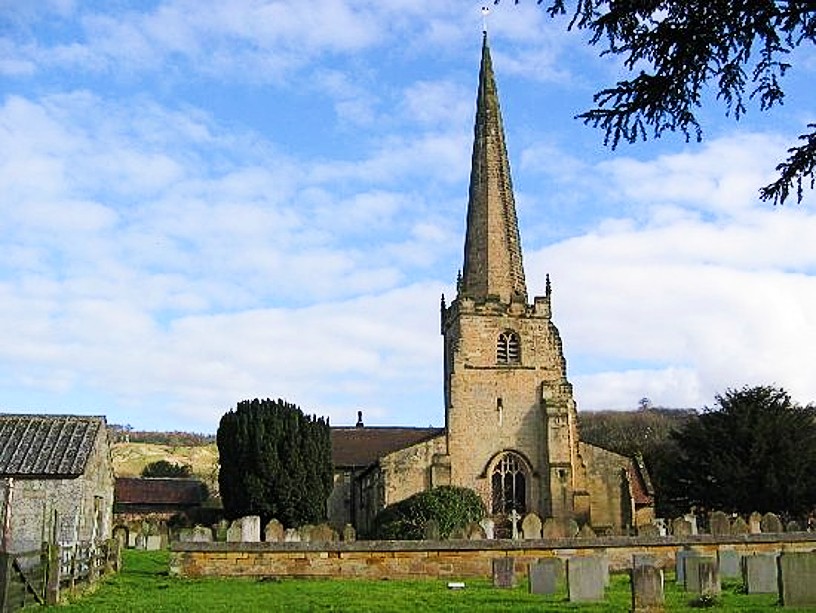
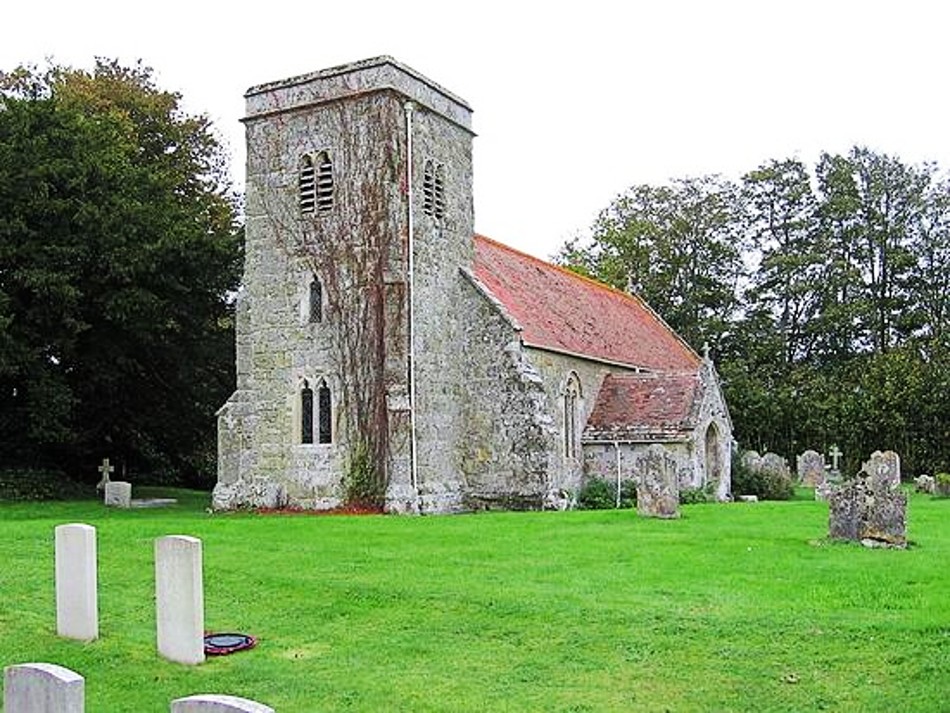
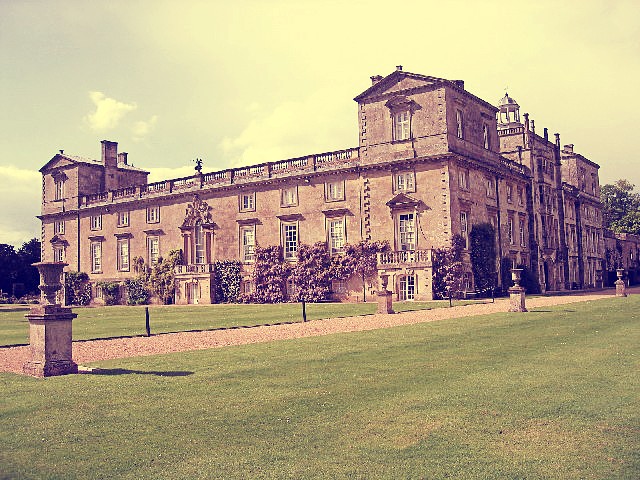
She became a very popular Saint in medieval Britain with the help of Royal patronage. The Convent at Wilton became a place where Royal and noble ladies could receive a good education. The Abbey continued to function until the Reformation when it was dissolved. St Edith, however, has not been forgotten. She is venerated at her birth-place in Kemsing. The Holy Well in the centre of the Village bears her name and, it is said, to have healing properties. Well dressing has been revived recently. There is also a Pilgrimage entitled “St Edith’s Way.”
St Abundantius of Rome St Abundius of Rome St Andrew Kim Taegon St Cunibert of Maroilles St Curcodomus St Dulcissima of Sutri St Edith of Wilton (961-984) Virgin, Nun, Princess St Eugenia of Hohenburg
Blessed Luigi Ludovico Allemandi (c 1390-1450) Bishop and Cardinal, called “The Cardinal of Arles.” Blessed Luigi was a Priest driven by immense love for the Holy Mother of God and for the Church. His involvement in various Councils and Papal dissentions, were the result of his great desire to maintain the purity of the Chair of Peter. He was Beatified in 1527 by Pope Clement VII. His Life; https://anastpaul.com/2020/09/16/saint-of-the-day-blessed-luigi-ludovico-allemandi-c-1390-1450/
St Lucia and St Geminianus of Rome + St Ludmila St Marcian the Senator Bl Martin of Huerta Bl Michael Himonaya
Bl Paul Fimonaya St Priscus of Nocera St Rogellus of Cordoba St Sebastiana St Servus Dei St Stephen of Perugia
Martyrs of the Via Nomentana: Four Saints: Christian men Martyred together, date unknown – Alexander, Felix, Papias and Victor. They were Martyred on the Via Nomentana outside Rome, Italy.








 AnaStpaul
You must be logged in to post a comment.