Thought for the Day – 22 September – Meditations with Antonio Cardinal Bacci (1881-1971)
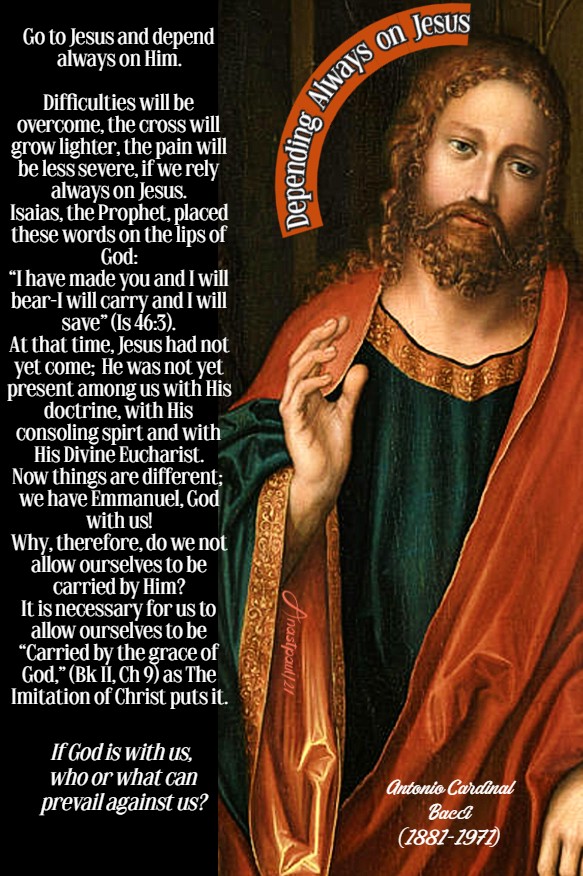
Depending Always on Jesus
“Virtue is difficult and life holds more trials than consolations. Sometimes, we feel discouraged because virtue seems impossible and we fall so often, in spite of our best resolutions or because, our cross seems too heavy and we feel that we are overburdened.
Where will we find comfort in our sufferings and strength in our weakness? “Come to me, all you who labour and are burdened and I will give you rest” (Mt 11:28). Go to Jesus and depend always on Him.
Difficulties will be overcome, the cross will grow lighter, the pain will be less severe, if we rely always on Jesus. Isaias, the Prophet, placed these words on the lips of God: “I have made you and I will bear-I will carry and I will save” (Is 46:3). At that time, Jesus had not yet come; He was not yet present among us with His doctrine, with His consoling spirt and with His Divine Eucharist. Now things are different; we have Emmanuel, God with us! Why, therefore, do we not allow ourselves to be carried by Him? It is necessary for us to allow ourselves to be “Carried by the grace of God,” (Bk II, Ch 9) as The Imitation of Christ puts it.
If God is with us, who or what can prevail against us?
We must, as St Francis de Sales writes, lean on the arm of Jesus, as the child leans securely on the arm of it’s mother. “It matters little,” he adds, “where she walks, on a grassy plain or on a steep path surrounded by precipices.” She, is his mother and she carries him; that is enough to make him happy and content. We must trust Jesus in this way, relying always on His support in joy and in sorrow, in moments of trial and in moments of satisfaction, in life and in death. Let us not be afraid; Jesus is better and stronger than our earthly mother. If He guides and supports us, we can be sure of Heaven, no matter what happens!”
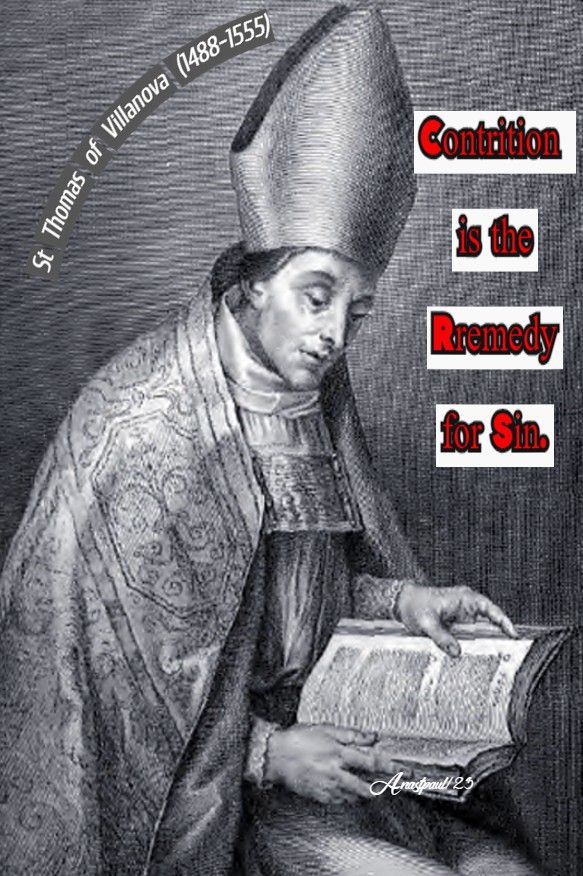
Quote/s of the Day – 22 September – St Thomas of Villanova OSA (1488-1555) Archbishop, Confessor.
“Contrition is the remedy for sin.”
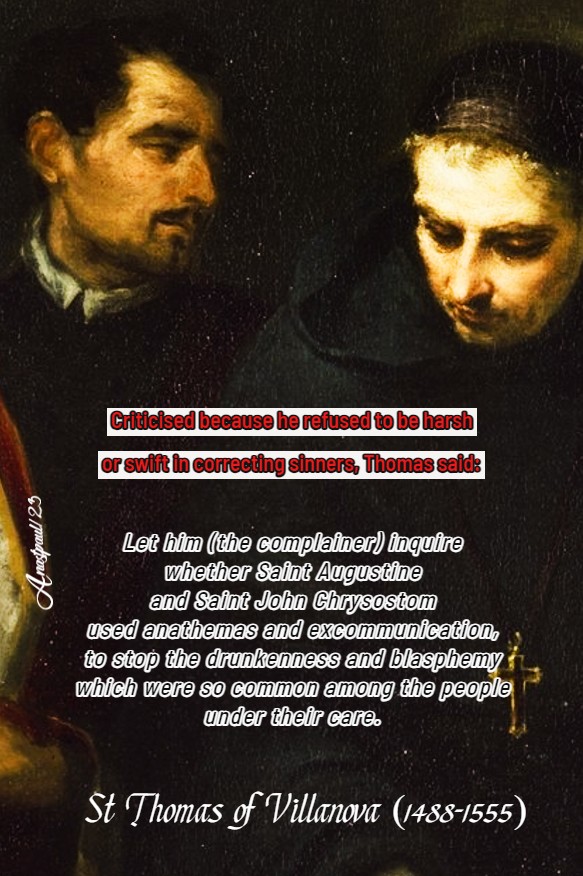
Criticised because he refused to be harsh or swift in correcting sinners, Thomas said: “Let him (the complainer) inquire whether Saint Augustine and Saint John Chrysostom used anathemas and excommunication, to stop the drunkenness and blasphemy which were so common among the people under their care.”
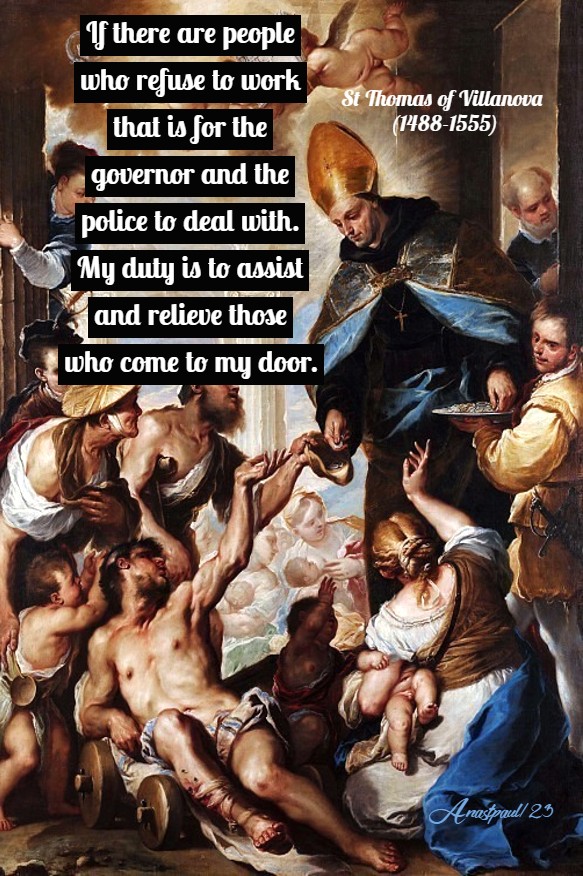
“If there are people who refuse to work that is for the governor and the police to deal with. My duty is to assist and relieve those who come to my door.”
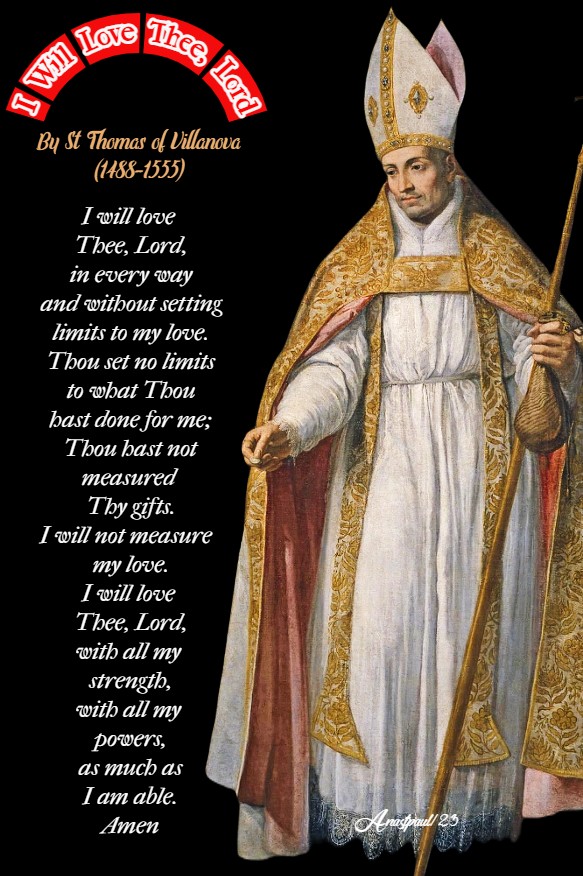
I Will Love Thee, Lord By St Thomas of Villanova (1488-1555)
I will love Thee, Lord, in every way and without setting limits to my love. Thou set no limits to what Thou hast done for me; Thou hast not measured Thy gifts. I will not measure my love. I will love Thee, Lord, with all my strength, with all my powers, as much as I am able. Amen
One Minute Reflection – 22 September – “Month of The Seven Sorrows of the Blessed Virgin Mary and The Holy Cross” – St Thomas of Villanova OSA (1488-1555) Archbishop, Confessor – Ecclesiasticus Sirach44:16-27; 45:3-20, Matthew 25:14-23 – Scripture search here: https://www.drbo.org/
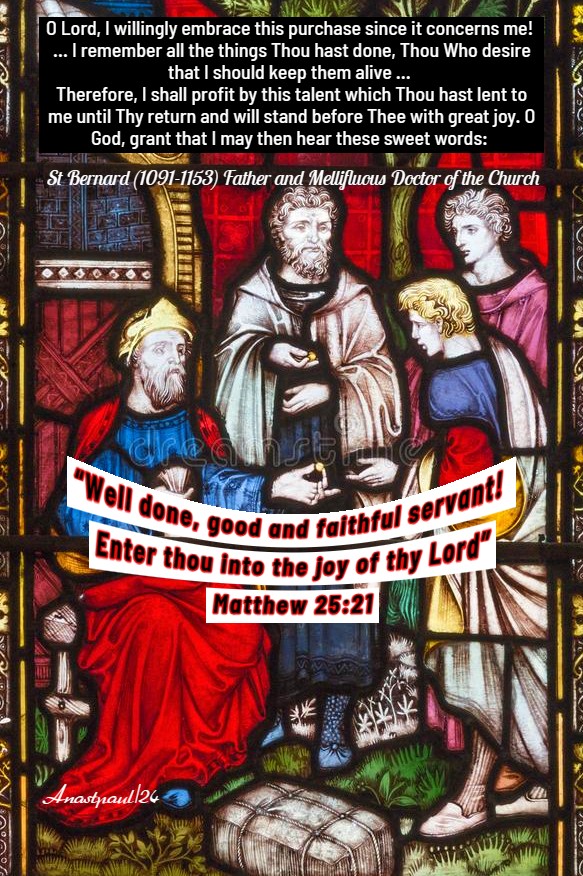
“Well done, good and faithful servant … Enter thou into the joy of thy Lord.”- Matthew 25:21
REFLECTION – “The Word of the Father, Only-begotten Son of God, Sun of Justice (Mal 3:20), is the great Merchant Who has brought us the price of our redemption. It is a truly precious exchange which we can never value sufficiently, when a King, Son of the King Most High, has become the Coin, the Gold has paid our dues, the Just Man is given for the sinner. Truly unmerited mercy, perfectly disinterested love, astonishing goodness…, it is a completely disproportionate purchase, in which the Son of God is delivered up for the servant, the Creator is put to death for the one He has created, the Lord is condemned for His slave.
O Christ, these are Thine Works, Thou Who descended from Heaven’s brightness into our hellish darkness, to bring light to our gloomy prison. Thou came down from the Right Hand of the Divine Majesty, into our human misery, to redeem the human race, Thou Who descended from the Father’s glory to death on the Cross, to triumph over death and its author. Thou art the only One and there is no other but Thee Who could have been drawn to redeem us through Thine Own Goodness…
Let all the merchants of Teman (Bar 3:23) withdraw from this place … it is not they but Israel [Thy] beloved whom [Thou hast] chosen, Thou Who hide these mysteries from the wise and prudent and have revealed them to those babes and humble servants of Thine (Lk 10:21) … O Lord, I willingly embrace this purchase since it concerns me!… I remember all the things Thou hast done, Thou Who desire that I should keep them alive … Therefore, I shall profit by this talent which Thou hast lent to me until Thy return and will stand before Thee with great joy. O God, grant that I may then hear these sweet words: “Well done, good and faithful servant! Enter thou into the joy of thy Lord” (Mt 25:21).” – St Bernard O.Cist. (1091-1153) Cistercian Monk, known as the Last Father and the Mellifluous Doctor of the Church (Selected sermons, no 42: The Five Purchases).
PRAYER – O God, Who endowed blessed Bishop Thomas with the virtue of special pity for the poor, we beseech Thee, through his intercession, generously to pour forth the riches of Thy mercy upon all those who pray to Thee.ThroughJesus Christ, Thy Son our Lord, Who lives and reigns with Thee, in the unity of the Holy Ghost, God, world without end. Amen (Collect).
Our Morning Offering – 22 September – “Month of The Seven Sorrows of the Blessed Virgin Mary and The Holy Cross” and Friday, the Day of the Passion of Our Lord Jesus Christ
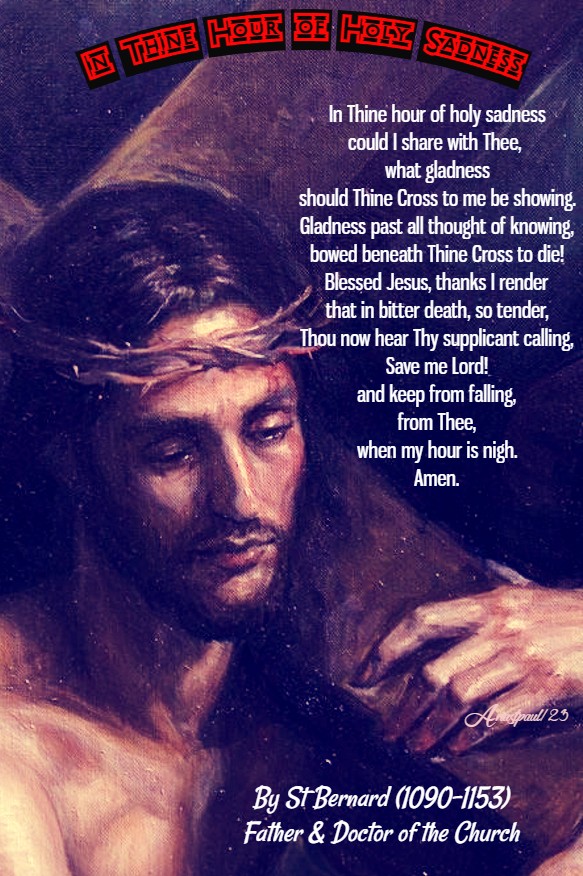
In Thine Hour of Holy Sadness By St Bernard (1090-1153) Father & Doctor of the Church
In Thine hour of holy sadness could I share with Thee, what gladness should Thine Cross to me be showing. Gladness past all thought of knowing, bowed beneath Thine Cross to die! Blessed Jesus, thanks I render that in bitter death, so tender, Thou now hear Thy supplicant calling, Save me Lord! and keep from falling, from Thee, when my hour is nigh. Amen.
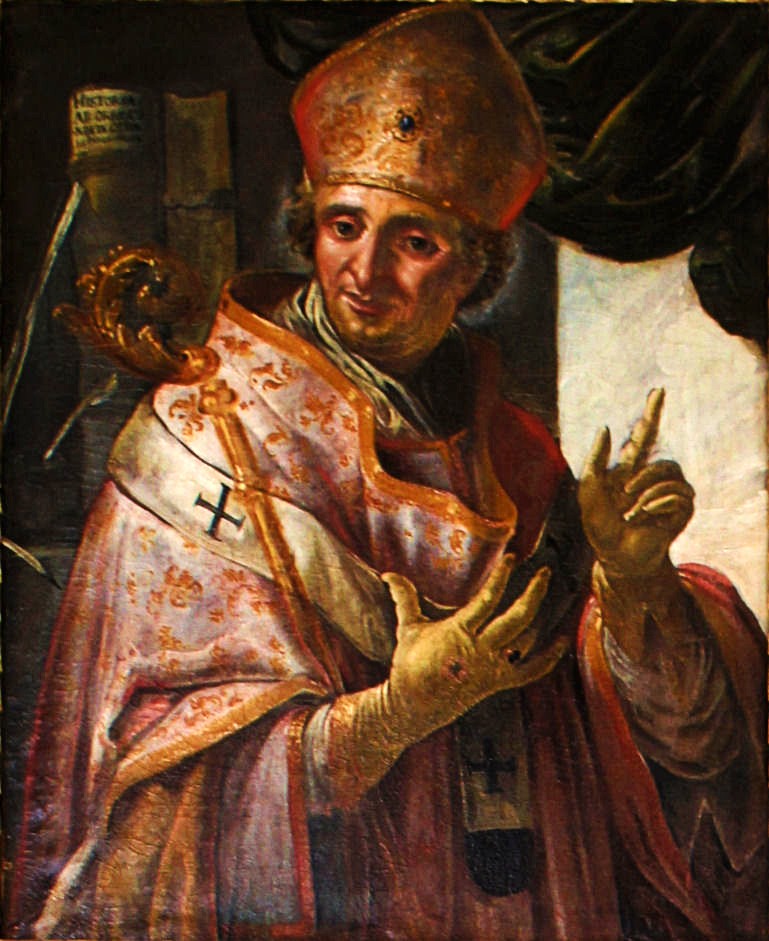
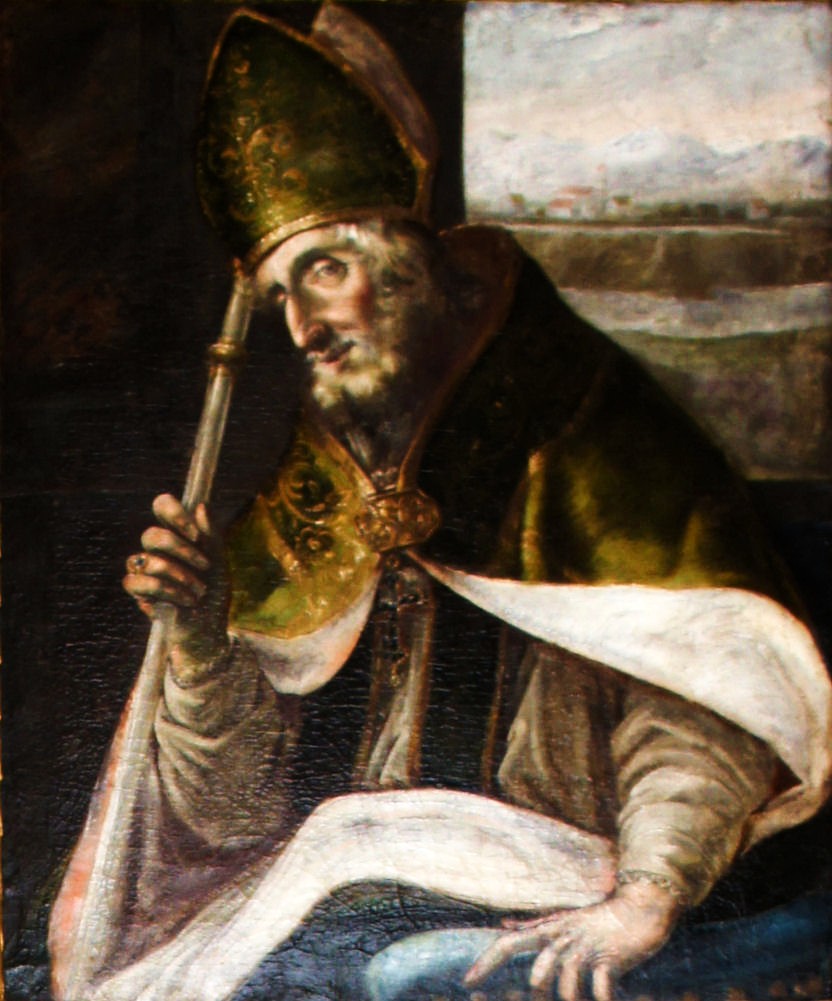
Saint of the Day – 22 September – Blessed Otto of Freising O.Cist. (c1111-1158) Bishop of Freising, Cistercian Priest and Abbot Historian, Reformer, Diplomatic Peace-maker, Defender of the Church, Crusader. Born between 1111 and 1114 in Klosterneuburg near Vienna, Austria and died at Morimond, Champagne, France, on 22 September, 1158 at the young age of 47 at the most. Also known as – Ottone. Additional Memorial – 7 September (Freising and Vienna).
Otto was as the fifth son of Leopold III, Margrave of Austria, by his wife Agnes, daughter of the Emperor Henry IV. By her first husband, Frederick I of Hohenstaufen, Duke of Swabia, by whom she was widowed, Agnes was the mother of the German King, Conrad III and grandmother of the Emperor, Frederick I. Otto’s sister, Judith, was married to Marquess William V of Montferrat. Otto was thus related to the most powerful families in Germany and northern Italy.
Like his younger brothers, he was destined for the Priesthood and when a very young adult, he was made Provost of the Chapter of Canons at Klosterneuberg. For his education, he was sent to the University of Paris, the centre of learning, philosophical, theological and classical.
Whilst travelling towards his homeland after completing his studies, he together with fifteen colleagues, all noblemen, entered the Cistercian Order at Morimond. It is not known what led him to take this step but it seems, by the attendance of his friends that they had contemplated, discussed and spent time in prayer before making this decision. Within three years Otto was elected Abbot of the Monastery. In 1133, Otto now convinced his father to found Heiligenkreuz Abbey, thus bringing literacy and sophisticated agriculture (including wine making) to the region that would become Vienna.
Probably in 1137 or 1138, Otto was called to Freising as Bishop, although he did not lay aside the Habit of his Order.
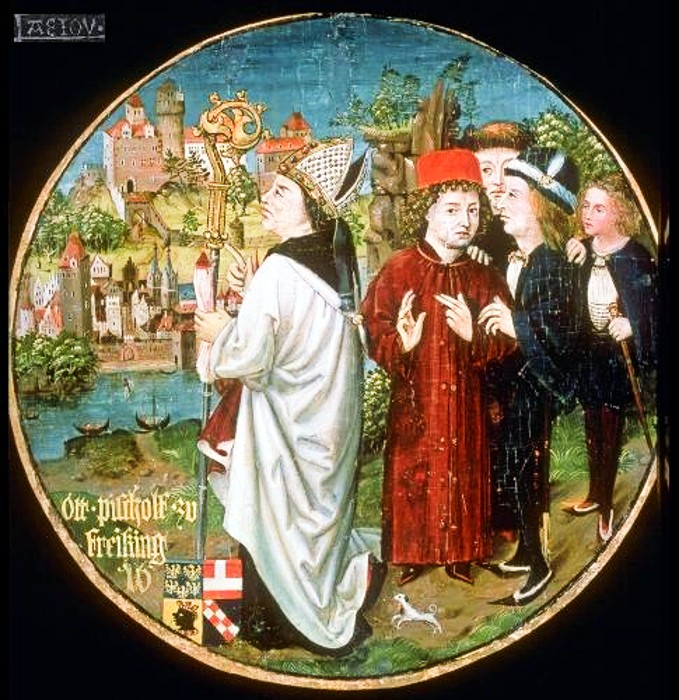
Painting of Blessed Otto of Freising by Hans Part in the Babenberger Stammbaum, ca. 1490, Stift Klosterneuburg. The Bishop is looking at the Cathedral and the City of Freising from the east bank of the Isar river.
As Bishop, Otto displayed a highly beneficent activity by founding and reforming Monasteries and zealously furthering studies by introducing Aristotelian philosophy and scholastic disputations on the model of the University of Paris. As a result, the school at Freising flourished anew.
He removed many of the abuses which had slowly infiltrated the Church and the secular institutions, in consequence of the investiture strife and demanded the return of the properties of which the Church had been robbed. In every way, Ottoe raised the prestige of the Church in Freising as against the nobility and after bitter struggles, freed it from the burdensome jurisdiction of certain Count. As Prince of the German Empire and closely connected with the Hohenstaufen family, he possessed great influence and used his high standing to obtain relief for the Church.
He was especially active in bringing about a reconciliation between Frederick and Henry and in restoring peace between the Emperor and the Pope.
In 1147 he accompanied King Conrad III on his unsuccessful Crusade to the Holy Land. The military division entrusted to Otto was completely routed and he, himself returned home after undergoing the severest privations and facing the greatest dangers. In 1158, due to ill health, Otto was forced to abandon his preposed accompaniment of Emperor Frederick on his march into Italy.
Otto is considered one of the most important historions of the High Middle Ages. Thanks to his excellent education and his noble position, he had access to numerous documents and information on history and politics. His works do not aim to be mere records but above all, to proclaim theological, philosophical and political messages. His “Chronica sive Historia de duabus civitatibus” (The Chronicle or History of the Two States) contains the history of the world in seven books and a vision of the Last Judgment in the eighth book. Otto writes this work as a theological continuation of St Augustine’s “De civitate Dei.” In contrast to St Augustine, Otto sees the Civitas Dei already realised on earth: it consists in the harmony of spiritual and secular power.
From 1156 onwards, Otto wrote the first two books of the “Gesta Friderici Imperatoris” (The Deeds of Emperor Frederick). In them he reproduces several imperial documents in their wording. Above all, he highlights the work of Emperor Friedrich Barbarossa. But this latter work is not confined to Germanic affairs, as tOtto digresses to tell of the preaching of St Bernard of Clairvaux and of his zeal against the heretics. Before his death, Otto commissioned his loyal secretary and Chaplain, Fr Rahewin (Died c1177) to complete this work.
On the way to the General Chapter in 1158 in Cîteaux, Bishop Otto reached his Monastery, Morimond, already ill. He died there surrounded by his monastic brothers. Otto’s body was buried in the Abbey Church of Morimond. Under the Sacramental Altar of the Cistercian Abbey Church of Heiligenkreuz, the bones, which were discovered in 1954 in the ruins of the Morimond Abbey Church and examined from 1966 to 1969 by the Anthropological Department of the Natural History Museum in Vienna, are venerated as Relics of Blessed Otto.
Otto is named as a Blessed with a Memorial day of 7 September in the Archdioceses of Vienna and Munich-Freising and in some Cistercian Monasteries, his memorial day is also celebrated on 7 September.
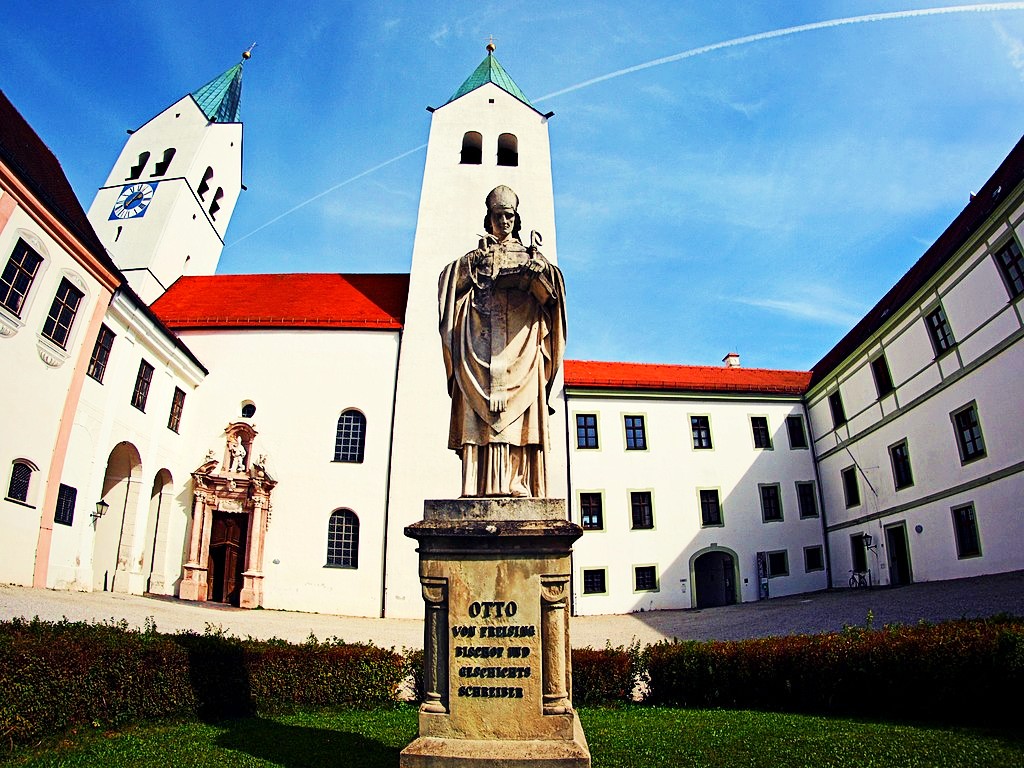
The Statue below is situate at Weihenstephan Abbey which was founded by Bl Otto’s father at Otto’s request. Sadly, it is no longer a working Monastery but it still produces beer and is the oldest brewery in the world.
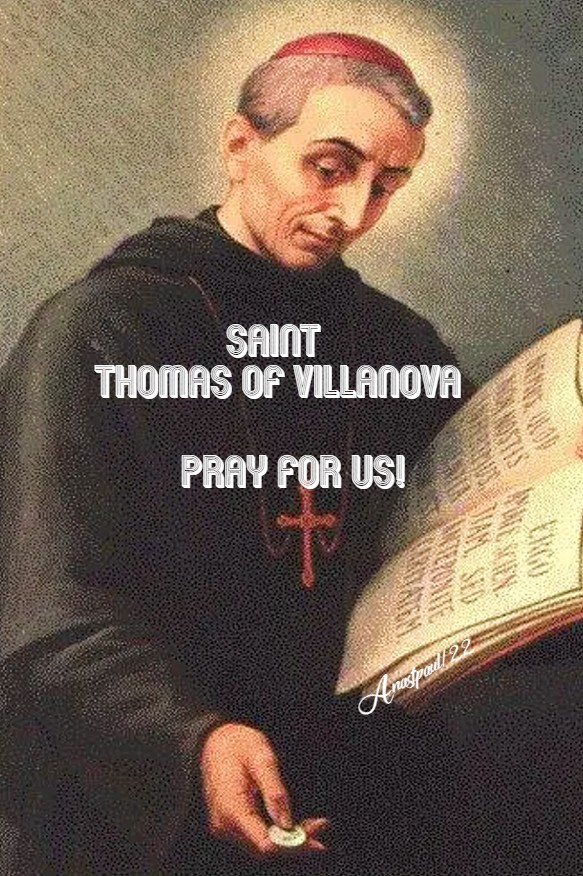
St Thomas of Villanueva/Villanova OSA (1488-1555) Archbishop, Confessor, Religious Priest of the Order of St Augustine,Writer, Preacher, Teacher, Apostle of Charity, Mystic, Miracle-Worker often called “the Almsgiver” and “the Father of the Poor“, Reformer. Canonised on 1 November 1658 by Pope Alexander VII. About St Thomas here: https://anastpaul.com/2017/09/22/saint-of-the-day-22-september-st-thomas-of-villanova-o-s-a/
St Maurice & Companions: Martyrs of the Theban Legion: + Martyrs (c 287) A Roman imperial legion of 6,600 soldiers, all of whom were Christians; they had been recruited from the area around Thebes in Upper Egypt, were led by Saint Maurice and served under Emperor Maximian Herculeus. Around the year 287, Maximian led the army across the Alps to Agaunum, an area in modern Switzerland, in order to suppress a revolt by the Bagandre in Gaul. In connection with battle, the army offered public sacrifices to the Roman gods; the Theban Legion refused to participate. For refusing orders, the Legion was decimated – one tenth of them were executed. When the remainder refused to sacrifice to the gods, they were decimated again. When the survivors still refused to sacrifice, Maximinian ordered them all killed. Martyrs. https://anastpaul.com/2018/09/22/saints-of-the-day-22-september-st-maurice-and-the-martyrs-of-the-theban-legion-martyrs-c-287/
Bl Alfonso da Cusco St Basilia St Digna of Rome St Emerita of Rome St Emmeramus St Florentius the Venerable









 AnaStpaul
You must be logged in to post a comment.