
Saint of the Day – 22 September – Blessed Otto of Freising O.Cist. (c1111-1158) Bishop of Freising, Cistercian Priest and Abbot Historian, Reformer, Diplomatic Peace-maker, Defender of the Church, Crusader. Born between 1111 and 1114 in Klosterneuburg near Vienna, Austria and died at Morimond, Champagne, France, on 22 September, 1158 at the young age of 47 at the most. Also known as – Ottone. Additional Memorial – 7 September (Freising and Vienna).
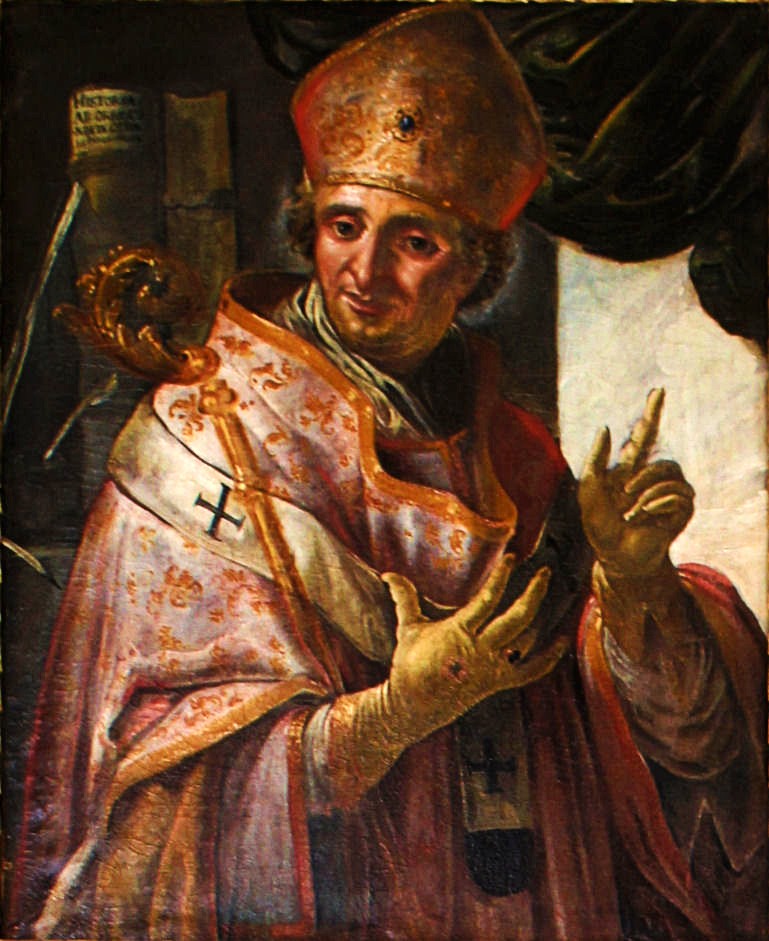
Otto was as the fifth son of Leopold III, Margrave of Austria, by his wife Agnes, daughter of the Emperor Henry IV. By her first husband, Frederick I of Hohenstaufen, Duke of Swabia, by whom she was widowed, Agnes was the mother of the German King, Conrad III and grandmother of the Emperor, Frederick I. Otto’s sister, Judith, was married to Marquess William V of Montferrat. Otto was thus related to the most powerful families in Germany and northern Italy.
Like his younger brothers, he was destined for the Priesthood and when a very young adult, he was made Provost of the Chapter of Canons at Klosterneuberg. For his education, he was sent to the University of Paris, the centre of learning, philosophical, theological and classical.
Whilst travelling towards his homeland after completing his studies, he together with fifteen colleagues, all noblemen, entered the Cistercian Order at Morimond. It is not known what led him to take this step but it seems, by the attendance of his friends that they had contemplated, discussed and spent time in prayer before making this decision. Within three years Otto was elected Abbot of the Monastery. In 1133, Otto now convinced his father to found Heiligenkreuz Abbey, thus bringing literacy and sophisticated agriculture (including wine making) to the region that would become Vienna.
Probably in 1137 or 1138, Otto was called to Freising as Bishop, although he did not lay aside the Habit of his Order.
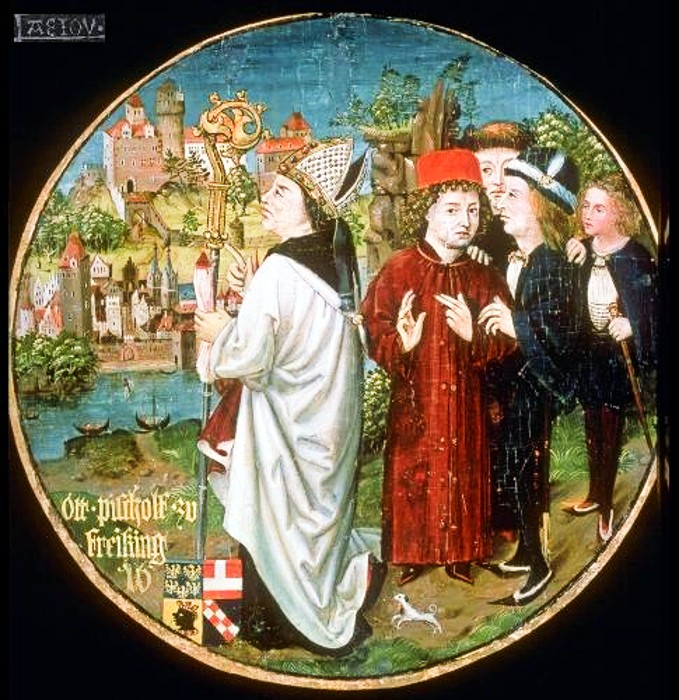
As Bishop, Otto displayed a highly beneficent activity by founding and reforming Monasteries and zealously furthering studies by introducing Aristotelian philosophy and scholastic disputations on the model of the University of Paris. As a result, the school at Freising flourished anew.
He removed many of the abuses which had slowly infiltrated the Church and the secular institutions, in consequence of the investiture strife and demanded the return of the properties of which the Church had been robbed. In every way, Ottoe raised the prestige of the Church in Freising as against the nobility and after bitter struggles, freed it from the burdensome jurisdiction of certain Count. As Prince of the German Empire and closely connected with the Hohenstaufen family, he possessed great influence and used his high standing to obtain relief for the Church.
He was especially active in bringing about a reconciliation between Frederick and Henry and in restoring peace between the Emperor and the Pope.

In 1147 he accompanied King Conrad III on his unsuccessful Crusade to the Holy Land. The military division entrusted to Otto was completely routed and he, himself returned home after undergoing the severest privations and facing the greatest dangers. In 1158, due to ill health, Otto was forced to abandon his preposed accompaniment of Emperor Frederick on his march into Italy.
Otto is considered one of the most important historions of the High Middle Ages. Thanks to his excellent education and his noble position, he had access to numerous documents and information on history and politics. His works do not aim to be mere records but above all, to proclaim theological, philosophical and political messages. His “Chronica sive Historia de duabus civitatibus” (The Chronicle or History of the Two States) contains the history of the world in seven books and a vision of the Last Judgment in the eighth book. Otto writes this work as a theological continuation of St Augustine’s “De civitate Dei.” In contrast to St Augustine, Otto sees the Civitas Dei already realised on earth: it consists in the harmony of spiritual and secular power.
From 1156 onwards, Otto wrote the first two books of the “Gesta Friderici Imperatoris” (The Deeds of Emperor Frederick). In them he reproduces several imperial documents in their wording. Above all, he highlights the work of Emperor Friedrich Barbarossa. But this latter work is not confined to Germanic affairs, as tOtto digresses to tell of the preaching of St Bernard of Clairvaux and of his zeal against the heretics. Before his death, Otto commissioned his loyal secretary and Chaplain, Fr Rahewin (Died c1177) to complete this work.
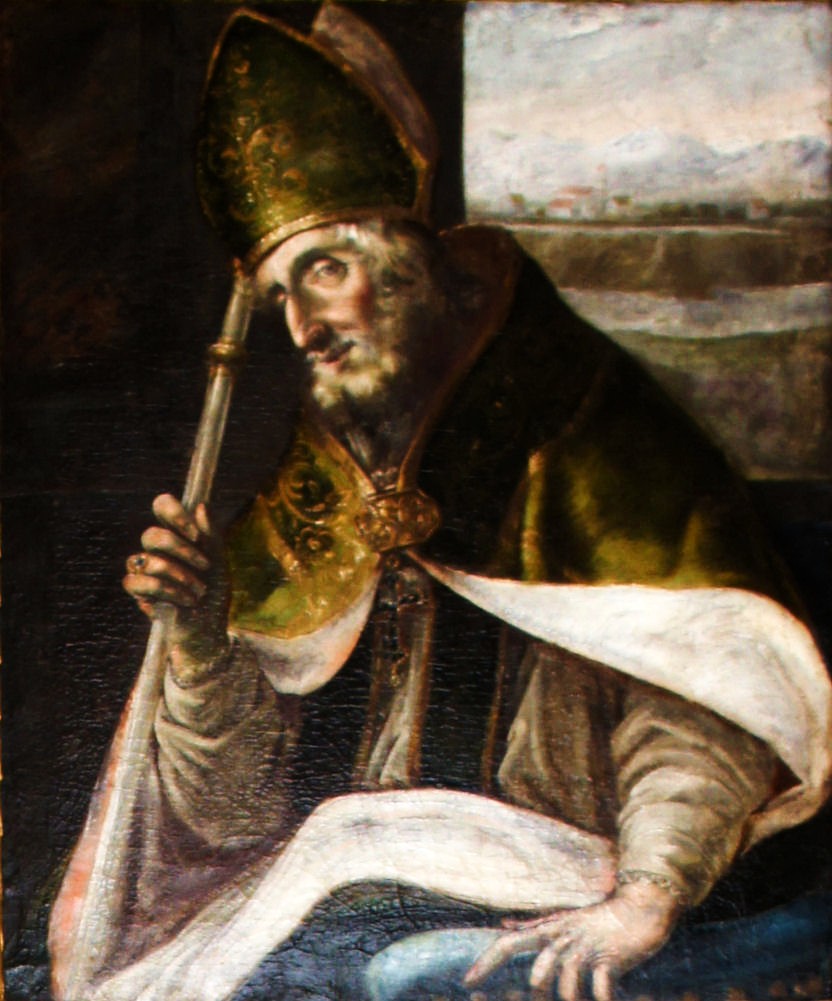
On the way to the General Chapter in 1158 in Cîteaux, Bishop Otto reached his Monastery, Morimond, already ill. He died there surrounded by his monastic brothers. Otto’s body was buried in the Abbey Church of Morimond. Under the Sacramental Altar of the Cistercian Abbey Church of Heiligenkreuz, the bones, which were discovered in 1954 in the ruins of the Morimond Abbey Church and examined from 1966 to 1969 by the Anthropological Department of the Natural History Museum in Vienna, are venerated as Relics of Blessed Otto.
Otto is named as a Blessed with a Memorial day of 7 September in the Archdioceses of Vienna and Munich-Freising and in some Cistercian Monasteries, his memorial day is also celebrated on 7 September.
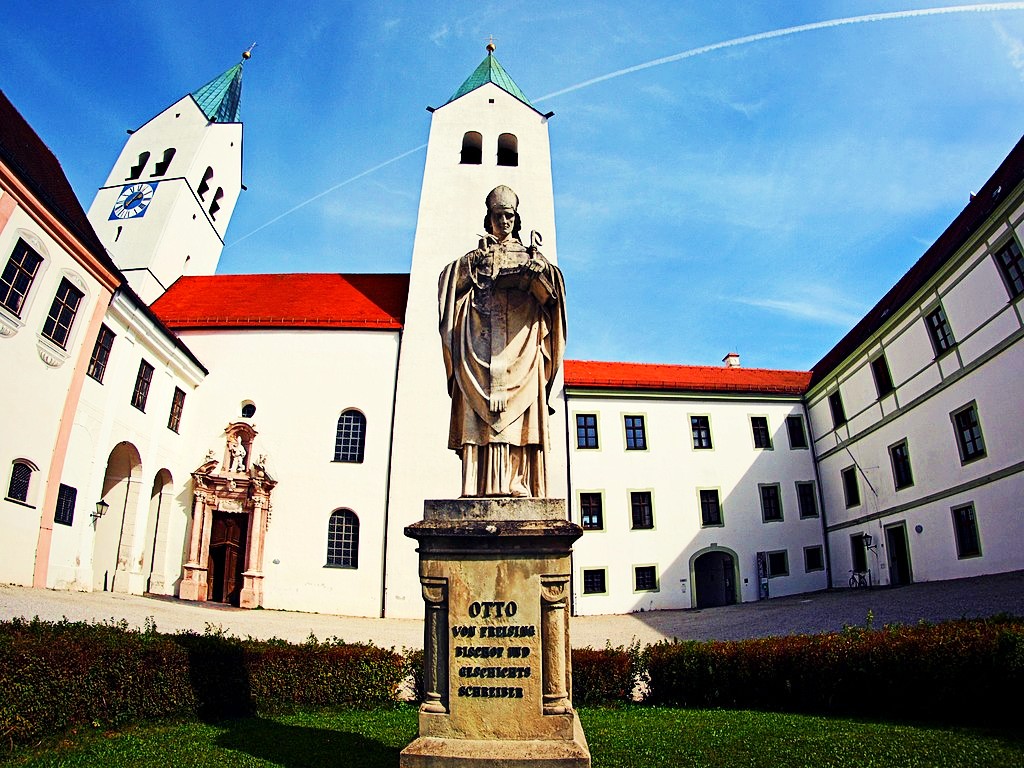
The Statue below is situate at Weihenstephan Abbey which was founded by Bl Otto’s father at Otto’s request. Sadly, it is no longer a working Monastery but it still produces beer and is the oldest brewery in the world.



 AnaStpaul
One thought on “Saint of the Day – 22 September – Blessed Otto of Freising O.Cist. (c1111-1158) Bishop”