Thought for the Day – 10 November – Meditations with Antonio Cardinal Bacci (1881-1971)
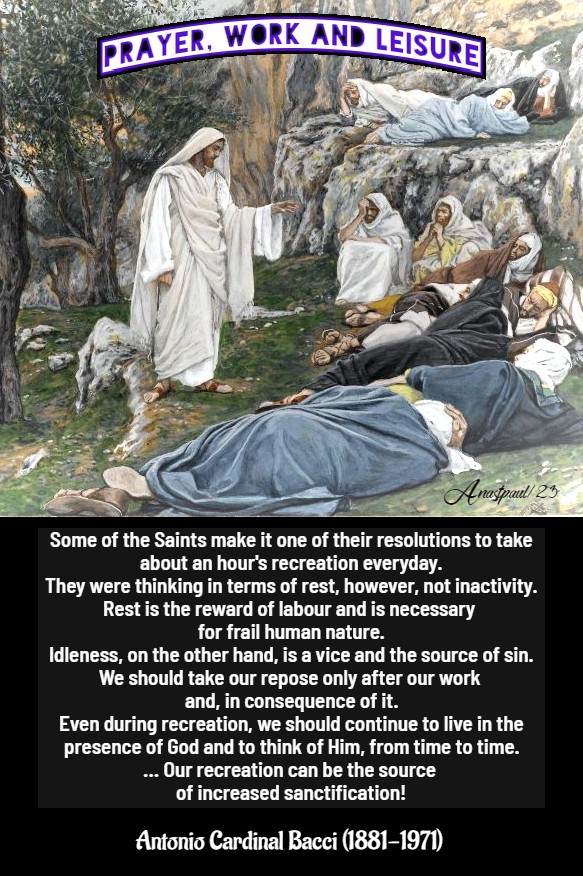
Prayer, Work and Leisure
“LEISURE: Some of the Saints make it one of their resolutions to take about an hour’s recreation everyday. They were thinking in terms of rest, however, not inactivity. Rest is the reward of labour and is necessary for frail human nature. Idleness, on the other hand, is a vice and the source of sin. We should take our repose only after our work and, in consequence of it.
Even during recreation, we should continue to live in the presence of God and to think of Him, from time to time. If we enjoy our leisure in the open air, everything speaks to us of God, for we are surrounded by the flowers and the birds. When St Thérèse of the Child Jesus was going for a walk one day, she stopped to admire a tiny flower. Enraptured by its beauty she exclaimed aloud: “How good Thou art, O God.” Our recreation can be the source of increased sanctification!”
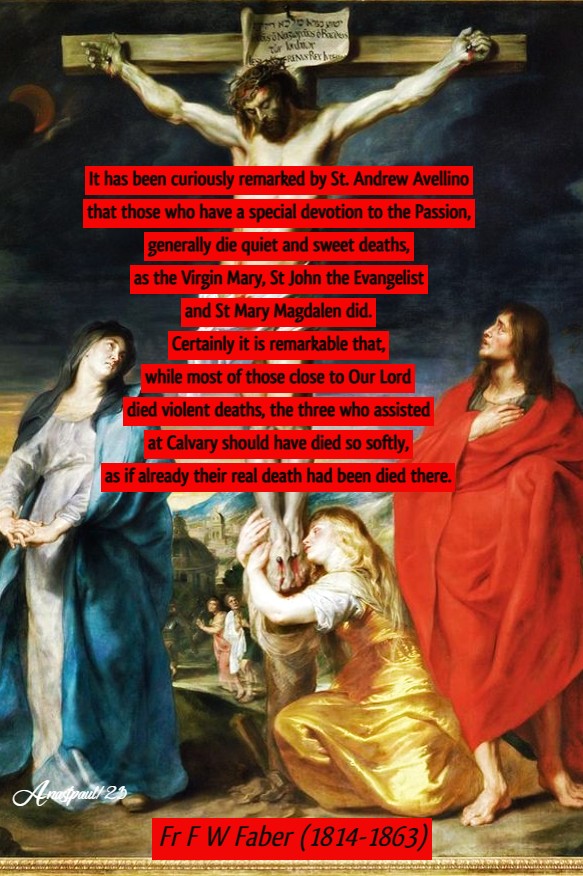
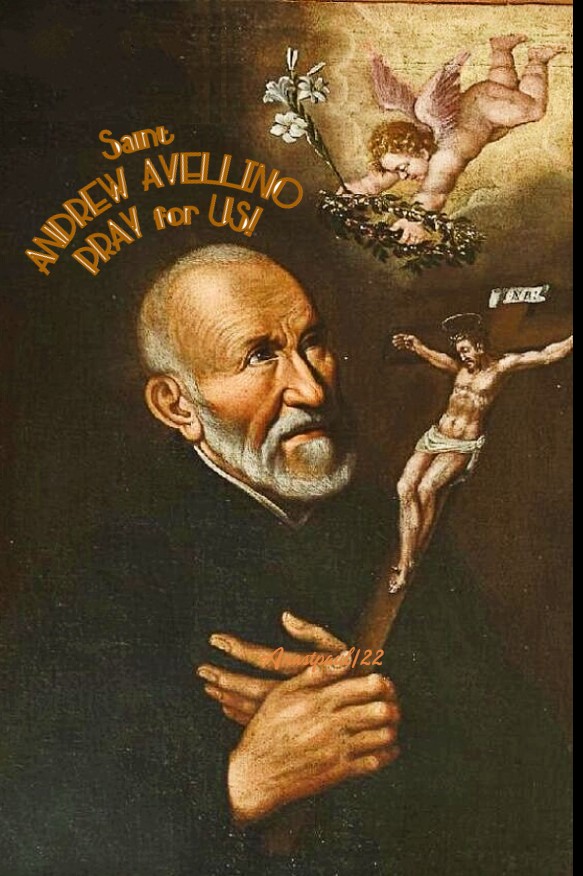
Quote/s of the Day – 10 November – St Andrew Avellino CR (1521–1608) Confessor
“It has been curiously remarked by St. Andrew Avellino that those who have a special devotion to the Passion, generally die quiet and sweet deaths, as the Virgin Mary, St John the Evangelist and St Mary Magdalen did. Certainly it is remarkable that, while most of those close to Our Lord died violent deaths, the three who assisted at Calvary should have died so softly, as if already their real death had been died there.”
One Minute Reflection – 10 November – “The Month of the Holy Souls in Purgatory”– St Andrew Avellino CR (1521–1608) Confessor – Sirach 31:8-11, Luke 12:35-40 – Scripture search here: https://www.drbo.org/
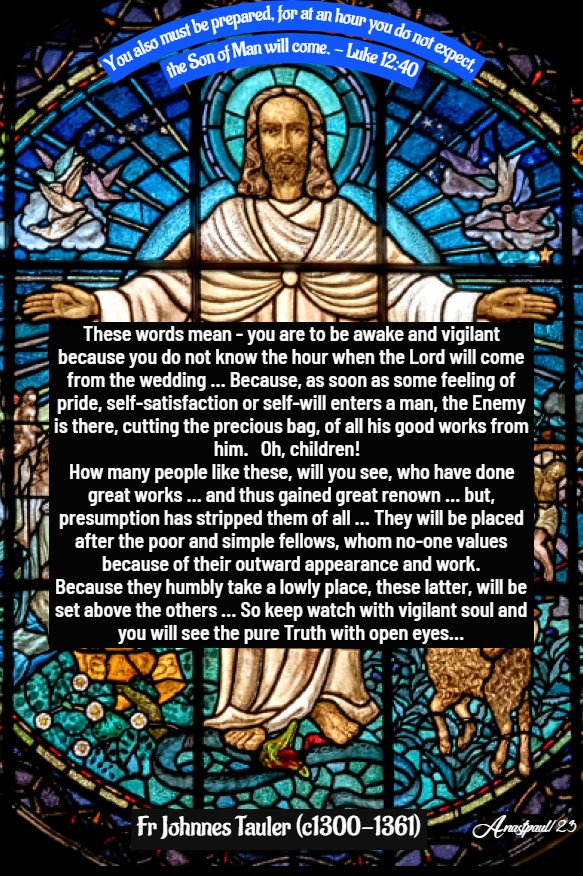
“You also must be prepared, for at an hour you do not expect, the Son of Man will come.” – Luke 12:40
REFLECTION – “These words mean – you are to be awake and vigilant because you do not know the hour when the Lord will come from the wedding … Because, as soon as some feeling of pride, self-satisfaction or self-will enters a man, the Enemy is there, cutting the precious bag, of all his good works from him. Oh, children! How many people like these, will you see, who have done great works … and thus gained great renown … but, presumption has stripped them of all … They will be placed after the poor and simple fellows, whom no-one values because of their outward appearance and work. Because they humbly take a lowly place, these latter, will be set above the others … So keep watch with vigilant soul and you will see the pure Truth with open eyes …
“Let your loins be girt about and your lamps alight.” Here there are three points to notice. First – the loins are to be girded like someone firmly bound with a rope, so as to be led, against his will … Second – you are to carry lighted lamps in your hands which is to say, works of love. Your hands should never stop doing the true, ardent work of charity … Third – you should wait for the Lord when He returns from the wedding … “The Lord will set them over all His goods; He will gird Himself and will serve them.” This wedding from which the Lord comes, takes place in the most interior part of the soul, in its depths, where the noble image is found. O what intimate contact the soul has with God and God with it, in this depth and what a marvellous work God does there! What rejoicing and joy He finds there! It surpasses all feeling and thought and yet, man knows nothing and feels nothing of it.” – Fr Johannes Tauler OP (c1300-1361) Dominican Priest and Friar, renowned Preacher and Theologian (Sermon 77 for the Feast of a Confessor).
PRAYER – O God, by his difficult vow to make daily progress in holiness, Thou placed in the heart of blessed Andrew, Thy Confessor, a wondrous longing to ascend unto Thee, grant us, by his merits and intercession, so to become sharers of that same grace that, ever pursuing the more perfect things, we may be happily brought unto the height of Thy glory. Through Jesus Christ, Thy Son our Lord, Who lives and reigns with Thee, in the unity of the Holy Ghost, God, world without end. Amen (Collect).
Our Morning Offering – 10 November – “The Month of the Holy Souls in Purgatory” and Friday of the Passion
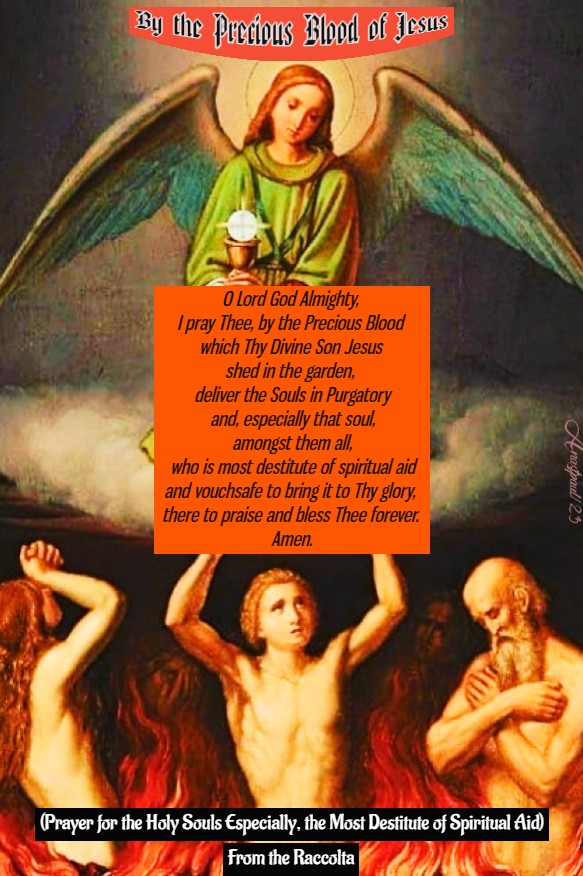
By the Precious Blood of Jesus (Prayer for the Holy Souls Especially, the Most Destitute of Spiritual Aid) From the Raccolta
O Lord God Almighty, I pray Thee, by the Precious Blood which Thy Divine Son Jesus shed in the garden, deliver the Souls in Purgatory and, especially that soul, amongst them all, who is most destitute of spiritual aid and vouchsafe to bring it to Thy glory, there to praise and bless Thee forever. Amen.
Saint of the Day – 10 November – Saint Baudolino (c700–c740) Hermit, Pilgrim. Mystic, Miracle-worker. Born in c700 and died in c740 of natural causes. Patronages -Alessandria, Italy, City of (proclaimed in 1786), Diocese of Alessandria, Italy, (proclaimed in 1786). Also known – Baudilio.
Baudolino lived at the time of the Lombard King Liutprand (712-744) and the oldest testimony which speaks of him is given to us by the historian Paolo Diacono, a Lombard Benedictine Monk (c720-799) practically a contemporary of the Saint.
Baudolino is called “man of wonderful sanctity,” he was a Hermit, gifted with the gift of miracles and prophecies and lived in Foro (now Villa del Foro, a Town on the bank of the Tanaro, near Alessandria). Legend has it that geese, deer and other animals would gather around him to listen to him in his hermitage, therefore, he is sometimes depicted surrounded by these animals.
Paolo Diacono, in his “Historia Langobardorum” reports, among other things, an episode as testimony to the supernatural gifts which Baudolino prossessed. During a hunting trip, an Earl, while trying to shoot a deer with his bow, missed the shot and instead hit Anfuso, the nephew of King Liutprand. The wound was serious and the King sent a messenger to Baudolino to ask the Lord for the healing of his young nephew.
In the meantime, Anfuso died and when the messenger reached Baudolino in his hermitage, before he spoke, the latter told him that he knew everything he wanted and he was sorry because he could not do anything, as the young man was already dead but he would pray for his soul.
The holy hermit died around 740 and was buried in Villa del Foro. When Alessandria was founded in 1168, the inhabitants of Villa del Foro moved there, also bringing the Relics of the Saint, who became their Patron. His patronage continued, according to tradition, when in 1174 he appeared on the City’s defence bastions, putting the Ghibelline besiegers to flight.
In 1189 a Church was built in his honour which was entrusted to the Humiliati and upon their suppression, in 1571, it passed to the Dominicans. Over time, the scant information about him, grew and increased, so that the legend of his life were gradually mixed with other decidedly fantastical information.
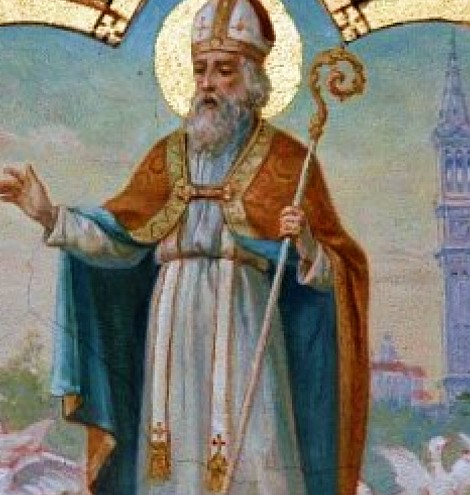
Furthermore, it was said that the Bishops of Tortona and Acqui, given the great popularity enjoyed by the Hermit Saint, considered him a Bishop, there was no shortage of those who defined him as bishop of Alessandria, which is why he is also depicted in bishop’s clothes.
In 1803 when the Dominican Church was closed, the Relics of the Saint were taken to the Church of St Alessandro and then, in 1810, transferred to the Cathedral and placed in a Chapel dedicated to our Saint Baudolino. There has been devotion and a vow in his honour since 1189, a vow renewed in 1599 and ratified by the Diocesan Synod of 1602. St Baudolino was proclaimed the main Patron of the City and the Diocese of Alessandria with his Feast being celebrated on 10 November.
St Baudolino’s Sarcophagus in the Cathedral of Alessandria
St Aedh Mac Bricc St Anianus the Deacon St Baudolino (c700–c740) Hermit St Demetrius of Antioch St Elaeth the King St Eustosius of Antioch St Grellen St Guerembaldus St Hadelin of Sees St John of Ratzenburg St Joseph the Martyr
St Leo of Melun St Monitor of Orleans St Narses of Subagord St Nonnus of Heliopolis St Orestes of Cappadocia St Probus of Ravenna Bishop St Theoctiste St Tryphaena of Iconium St Tryphosa of Iconium
Martyrs of Agde – 3 Saints: A group of Christians who were tortured and Martyred together in the persecutions of Diocletian. The only about them to survive are the names – Florentia, Modestus and Tiberius. Martyred c 303 in Agde, France.







 AnaStpaul
You must be logged in to post a comment.