
Just a reminder of this beautiful Catholic tradition
Prepare for the arrival of our King!

Thought for the Day – 28 November – Meditations with Antonio Cardinal Bacci (1881-1971)
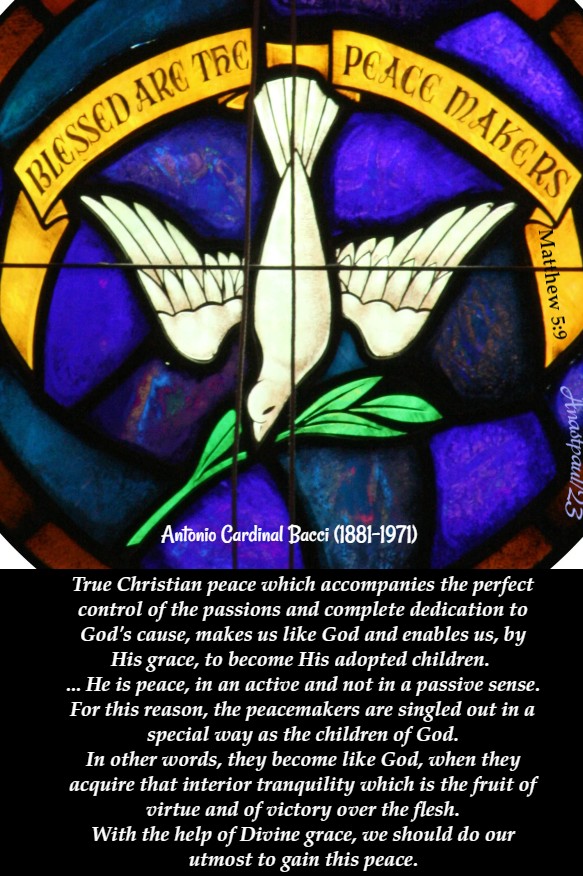
“Blessed are the peacemakers,” said Jesus in the Sermon on the Mount, “for they shall be called children of God” (Mt 5:9).
True Christian peace which accompanies the perfect control of the passions and complete dedication to God’s cause, makes us like God and enables us, by His grace, to become His adopted children.
He is the God of peace, in Whom there is no conflict but only perfect order and harmony.
Since He is pure act, He understands Himself fully in all His beauty and perfection and, knowing Himself, He loves Himself.
He is peace, in an active and not in a passive sense.
For this reason, the peacemakers are singled out in a special way as the children of God.
In other words, they become like God, when they acquire that interior tranquility which is the fruit of virtue and of victory over the flesh.
With the help of Divine grace, we should do our utmost to gain this peace.”
PART ONE:
https://anastpaul.com/2021/12/05/thought-for-the-day-5-december-the-blessedness-of-the-peracemakers/
PART TWO:
https://anastpaul.com/2022/11/28/thought-for-the-day-28-november-the-blessedness-of-the-peracemakers/

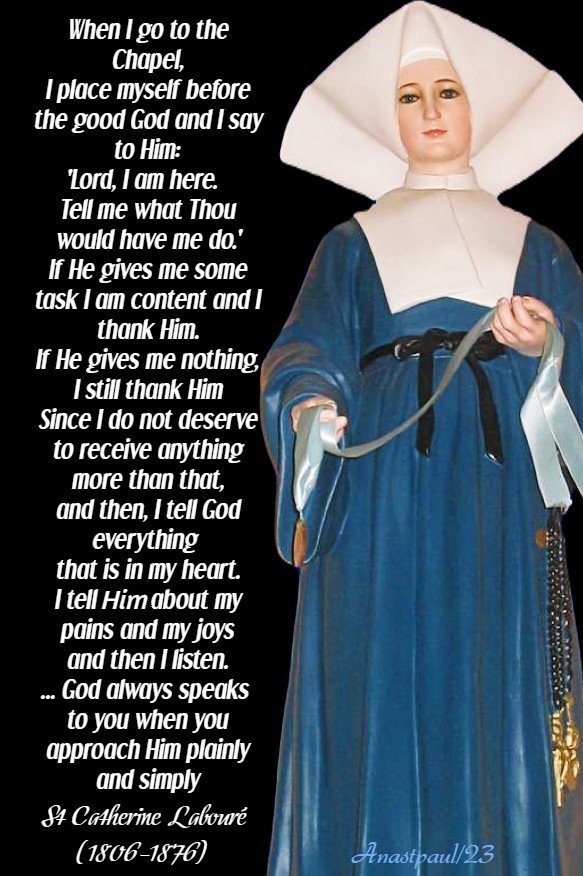
Quote/s of the Day – 28 November – St Catherine Labouré DC (1806-1876) Visionary of the Miraculous Medal
“When I go to the Chapel,
I place myself before the good God and I say to Him:
‘Lord, I am here.
Tell me what Thou would have me do.’
If He gives me some task I am content and I thank Him.
If He gives me nothing, I still thank Him
Since I do not deserve to receive anything more than that,
and then, I tell God everything that is in my heart.
I tell hHm about my pains and my joys and then I listen.
… God always speaks to you
when you approach Him plainly and simply.”
More:
HERE:
https://anastpaul.com/2022/11/28/quote-s-of-the-day-28-november-st-catherine-laboure-and-our-lady/

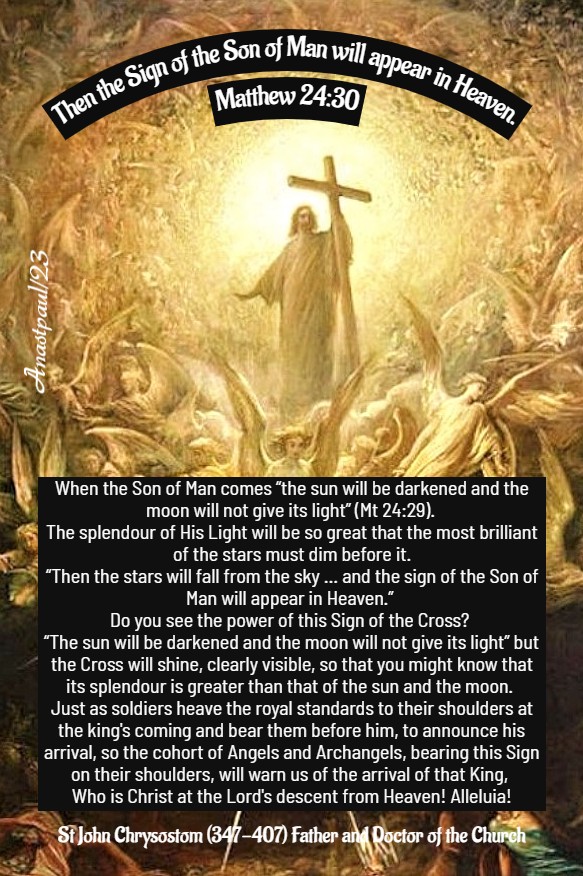
One Minute Reflection – 28 November – St Catherine Labouré DC (1806-1876) Virgin, Religious Sister of the Daughters of Charity of Saint Vincent de Paul and the Marian Visionary of the Miraculous Medal. – Feria Day of the Last Sunday after Pentecost – Colossians 1:9-14; Matthew 24:15-35 – Scripture search here: https://www.drbo.org/
“Then the Sign of the Son of Man will appear in Heaven” – Matthew 24:30
REFLECTION – “Would you like to learn that the Cross can be a Sign of the Kingdom? This is the Sign with which the Lord is to come at His second, glorious coming! That you might learn just how worthy of veneration the Cross is, He has made it His Title of Glory …
As we know, His first coming was effected secretly and, that discretion was justified, for He came to seek out what was dead. But this second coming is not to happen like that … He will appear suddenly to all and no-one will need to ask if Christ is here or there (Mt 24:26) … we shall not need to investigate, whether Christ is indeed present. What we shall need to discover, is whether He comes with His Cross!
When the Son of Man comes “the sun will be darkened and the moon will not give its light” (Mt 24:29). The splendour of His Light will be so great that the most brilliant of the stars must dim before it. “Then the stars will fall from the sky … and the sign of the Son of Man will appear in Heaven.” Do you see the power of this Sign of the Cross? “The sun will be darkened and the moon will not give its light” but the Cross will shine, clearly visible, so that you might know that its splendour is greater than that of the sun and the moon. Just as soldiers heave the royal standards to their shoulders at the king’s coming and bear them before him, to announce his arrival, so the cohort of Angels and Archangels, bearing this Sign on their shoulders, will warn us of the arrival of that King, Who is Christ at the Lord’s descent from Heaven! Alleluia!” – St John Chrysostom (347-407) Bishop of Constantinople, Great Father and Doctor of the Church (Sermon on the Cross and the thief).
PRAYER – From all perils of soul and body, defend us, O Lord, we beseech Thee and by the intercession of blessed and glorious ever Virgin Mary, Mother of God, of blessed Joseph, of thy blessed Apostles Peter and Paul and of blessed Catherine Labouré and all the Saints, graciously grant us safety and peace that all adversities and errors, being overcome, Thy Church may serve Thee in security and freedom. Through Jesus Christ, Thy Son our Lord, Who lives and reigns with Thee, in the unity of the Holy Ghost, God, world without end. Amen (Collect).

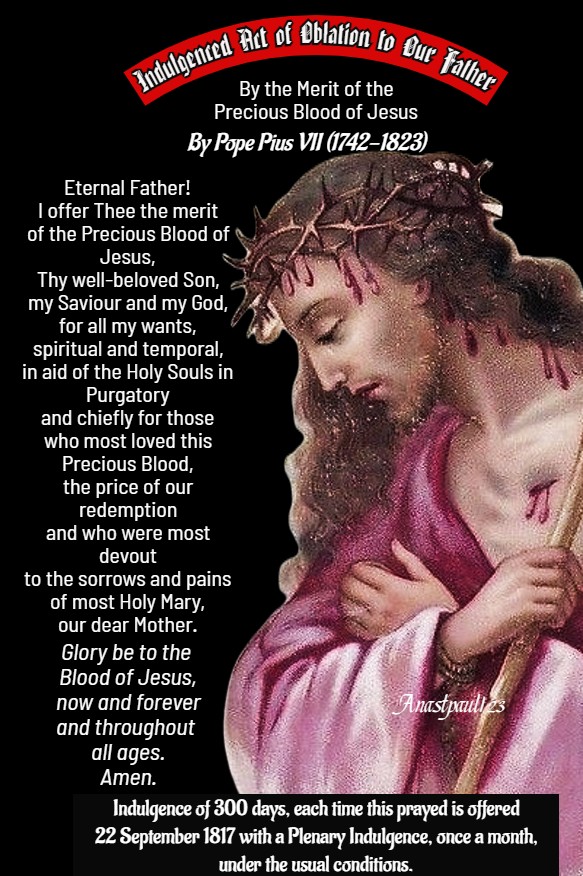
Our Morning Offering – 28 November – “The Month of the Holy Souls in Purgatory”
By the Merit of the
Precious Blood of Jesus
By Pope Pius VII (1742-1823)
Papacy from 1800 to 1823
Indulgenced Act of Oblation to Our Father
Eternal Father!
I offer Thee the merit
of the Precious Blood of Jesus,
Thy well-beloved Son,
my Saviour and my God,
for all my wants,
spiritual and temporal,
in aid of the Holy Souls in Purgatory
and chiefly for those
who most loved this Precious Blood,
the price of our redemption
and who were most devout
to the sorrows and pains
of most Holy Mary,
our dear Mother.
Glory be to the Blood of Jesus,
now and forever
and throughout all ages.
Amen.
Saint of the Day – 28 November – St Sosthenes (1st Century) the first Bishop of Colophon, Asia Minor, probably a Martyr, Jewish Ruler in Corinth, converted by St Paul and became his disciple, who is mentioned by him in his First Epistle to the Corinthians (1 Corinthians 1:1–2) and by St Luke in Acts 18:12–17. Also known as –
Sosthenes of Corinth, Sosthenes of Colophon, Sostene…
The Roman Martyrology reads: “At Corinth, the birthday of St Sosthenes, fisciple of the blessed Apostle Paul, who is mentioned by that Apostle in his first Epistle to the Corinthians. He was chief of the synagogue when converted to Christ and, as a glorious beginning, consecrated the first fruits of his faith by being scourged in the presence of the Proconsul, Gallio.”
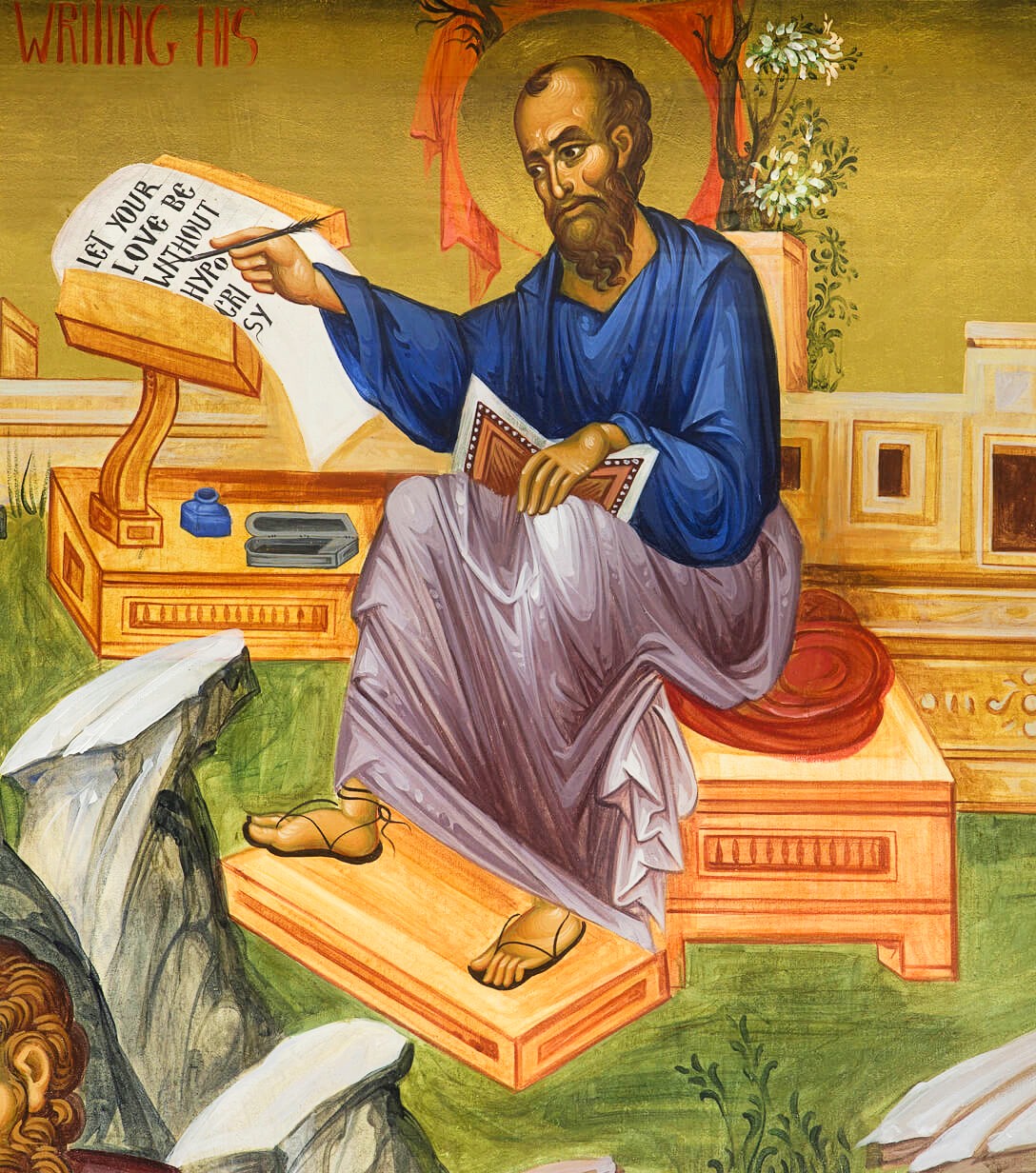
During the long stay of the Apostle St Paul in Corinth, an event occurred which was not only sensational but, at least for us, difficult to explain, although reported with the usual clarity by St Luke, the Chronicler of the Acts of the Apostles:
“Gallio, being then Proconsul of Achaia (i.e. of the region in which Corinth was located) – we read – “the Jews, all in agreement, rose up against Paul and took him to the Tribunal, saying:
‘This man persuades the people to give God a cult, contrary to the law.’
And as Paul was there ready to speak, Gallio said to the Jews:
‘If it were a question of some crime, of some serious misdeed, I, Jews, would listen to you as reason dictates but, since it is a question of questions of words and names and they belong to your law, think about it – I do not want to be judge of these things!’ And he sent them away from the court.
They all then took Sosthenes, the Ruler of the Synagogue and beat him before the tribunal and Gallio did not care at all. ”

The first part of the episode is quite clear – the Roman Proconsul, in a City which, after all, was in Greece and not in Palestine, cleverly refuses to be the judge of a doctrinal question which interests and concerns, only a minority of his subjects.
It is, again, the tactic of washing one’s hands, adopted by Pilate towards Jesus, with the difference that Corinth was not Jerusalem and, therefore, the “abstaining, so to speak, of the Roman Governor, saves Paul from accusations and threats of his enemies, without the Apostle even opening his mouth.
Except, here’s the unexpected fact – instead of Paul, his accusers, in that same Court, take and beat our Saint Sosthenes, who had nothing to do with Paul and who was, indeed, the Ruler of the local Synagogue.
Why did this happen? Why was Sosthenes beaten instead of Paul? Scholars have failed to give a convincing answer to this question. Probably, the head of the Synagogue was the one who had incited his fellow Jews to demonstrate against Pau, and the Jews released their fury upon him when they saw that their entire design to attach St Paul had been destroyed by the Governor.
According to some, however, the resentment of the Jews related to the fact that Sosthenes’ converssion by St Paul had alreay taken place and was known by his fellow Jews.
But the Acts do not mention the conversion of Sosthenes, Ruler of the Synagogue of Corinth. Shortly afterwards, however, his name appears again in the address of the letter twhich St Paul wrote from Ephesus to the restless Christians of Corinth and, of which, Sosthenes seems to have been the bearer.
“Paul, called to be an Apostle of Jesus Christ by the will of God and Sosthenes, a brother, To the Church of God which is at Corinth, to them that are sanctified in Christ Jesus, called to be saints, with all that invoke the name of our Lord Jesus Christ, in every place of theirs and ours.” – 1 Corinthians 1:1-2
It was so natural to think that the ancient leader of the Synagogue, beaten by his fellow believers, was actually converted by Saint Paul, becoming his disciple, responsible for maintaining contacts between the Apostle and the community of Corinth, where he was well known and respected.
This hypothesis, is probable but not certain, was accepted by the compilers of the Martyrologies, who today remember Sosthenes among the Saints, as a disciple of Saint Paul and former Ruler of the Synagogue of Corinth. With the beatings before the tribunal, he would have “consecrated the first fruits of his faith with a glorious beginning”, and then matured that faith as Bishop of Colophonia, in Asia Minor. But this is traditional understanding which no historical testimony is completely able to confirm.

St Catherine Labouré DC (1806-1876) Virgin, Religious Sister of the Daughters of Charity of Saint Vincent de Paul and the Marian visionary of the Miraculous Medal. St Catherine was Canonised on 27 July 1947 by Pope Pius XII. Her body is Incorrupt
St Catherine’s Story:
https://anastpaul.com/2018/11/28/saint-of-the-day-28-november-st-catherine-laboure-dc-1806-1876/
Bl Calimerius of Montechiaro
St Fionnchu of Bangor
St Pope Gregory III (Died 741) Bishop of Rome 11 February 731 until his death on 28 November 741. (His Feast was moved to 10 December in 1969), The Roman Martyrology states: “St Rome, the blessed Pope Gregory III, who departed for Heaven with a reputation for great sanctity and miracles.“
His Life:
https://anastpaul.com/2021/11/28/saint-of-the-day-28-november-saint-pope-gregory-iii-died-741/
St Hilary of Dijon
St Hippolytus of Saint Claude
St Honestus of Nimes
St Irenarcus
St James of the Marches OFM Conv. (1391-1476) Priest of the Friars Minor Conventional, Confessor, brilliant Preacher, Penitent, Reformer, Writer, Papal legate, Inquisitor, founder of several monasteries in Bohemia, Hungary and Austria. St James was Canonised on 10 December 1726 by Pope Benedict XIII. His body is Incorrupt.
About St James:
https://anastpaul.com/2019/11/28/saint-of-the-day-28-november-saint-james-of-the-marches-ofm-1391-1476/
Blessed James Thompson (Died 1582) Priest Martyr.
He was Beatified on 29 December 1886 by Pope Leo XIII. Additional Memorial – 29 October as one of the Martyrs of Douai.
His Life and Death:
https://anastpaul.com/2022/11/28/saint-of-the-day-28-november-blessed-james-thompson-died-1582-priest-martyr/
St Papius
St Quieta of Dijon
St Rufus
St Simeon the Logothete
St Sosthenes (1st Century) Bishop, Martyr, Jewish Ruler in Corinth, Converted by St Paul.
St Stephen the Younger
Bl Theodora of Rossano
Martyrs of Constantinople – 8 Saints: A group of over 300 Christians Martyred during the persecutions of the Iconoclast Emperors. We have a lot of information on Saint Stephen the Younger, but for the others we have nothing but seven of their names – Andrew, Auxentius, Basil, Gregor, John, Peter and Stefan. They were
scourged, stoned and/or dragged to death through the streets of Constantinople in 764.
Martyrs of North Africa – 13 Saints: A group of thirteen Clerics killed or exiled in the persecutions of Arian Vandals in North Africa – Crescens, Crescentian, Cresconius, Eustace, Felix, Florentian, Habetdeum, Hortulanus, Mansuetus, Papinianus, Quodvultdeus, Urban and Valerian.
Martyrs of Tiberiopolis – 14 Saints: A group of fourteen Christian Laymen, Deacons, Priests and Bishops who were Martyred together in the persecutions of Julian the Apostate – Basil, Chariton, Comasios, Daniel, Etymasius, Hierotheos, John, Nicephorus, Peter, Sergius, Socrates, Theodore, Thomas and Timothy.
361 at Tiberiopolis, Phyrgia (in modern Turkey)

 AnaStpaul
You must be logged in to post a comment.