Our Morning Offering – 4 December – “The Month of the Divine Infancy and the Immaculate Conception of the Blessed Virgin Mary” – The First Week of Advent
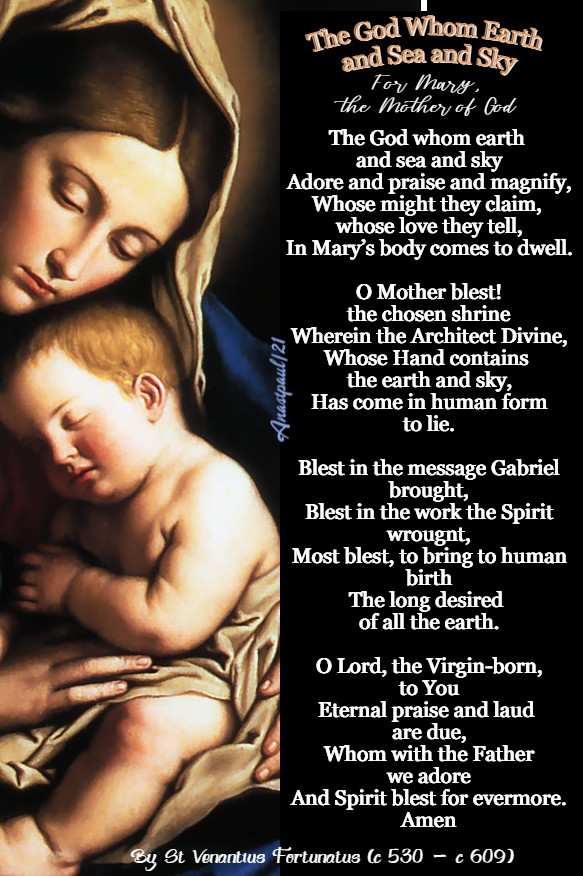
The God Whom Earth and Sea and Sky By St Venantius Fortunatus (c 530 – c 609)
The God whom earth and sea and sky Adore and praise and magnify, Whose might they claim, whose love they tell, In Mary’s body comes to dwell.
O Mother blest! the chosen shrine Wherein the architect Divine, Whose hand contains the earth and sky, Has come in human form to lie.
Blest in the message Gabriel brought, Blest in the work the Spirit wrought, Most blest, to bring to human birth The long desired of all the earth.
O Lord, the Virgin-born, to You Eternal praise and laud are due, Whom with the Father we adore And Spirit blest for evermore.
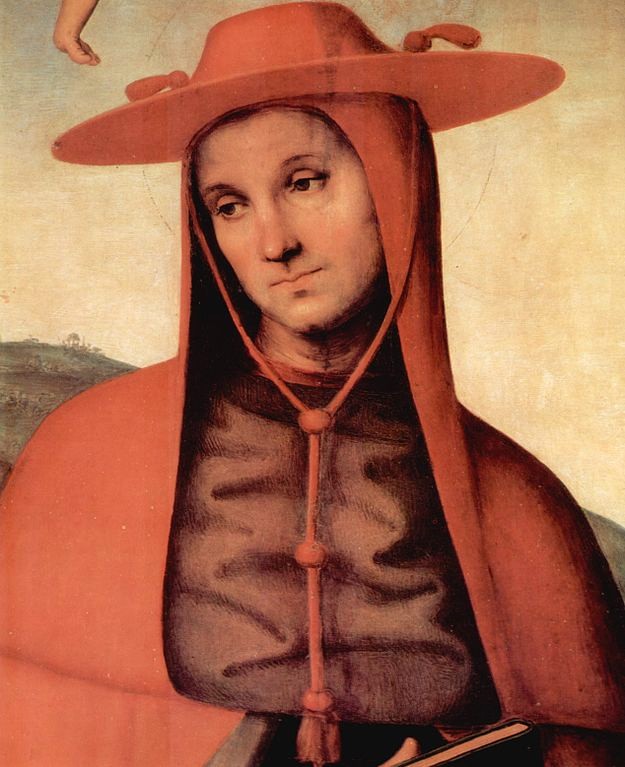
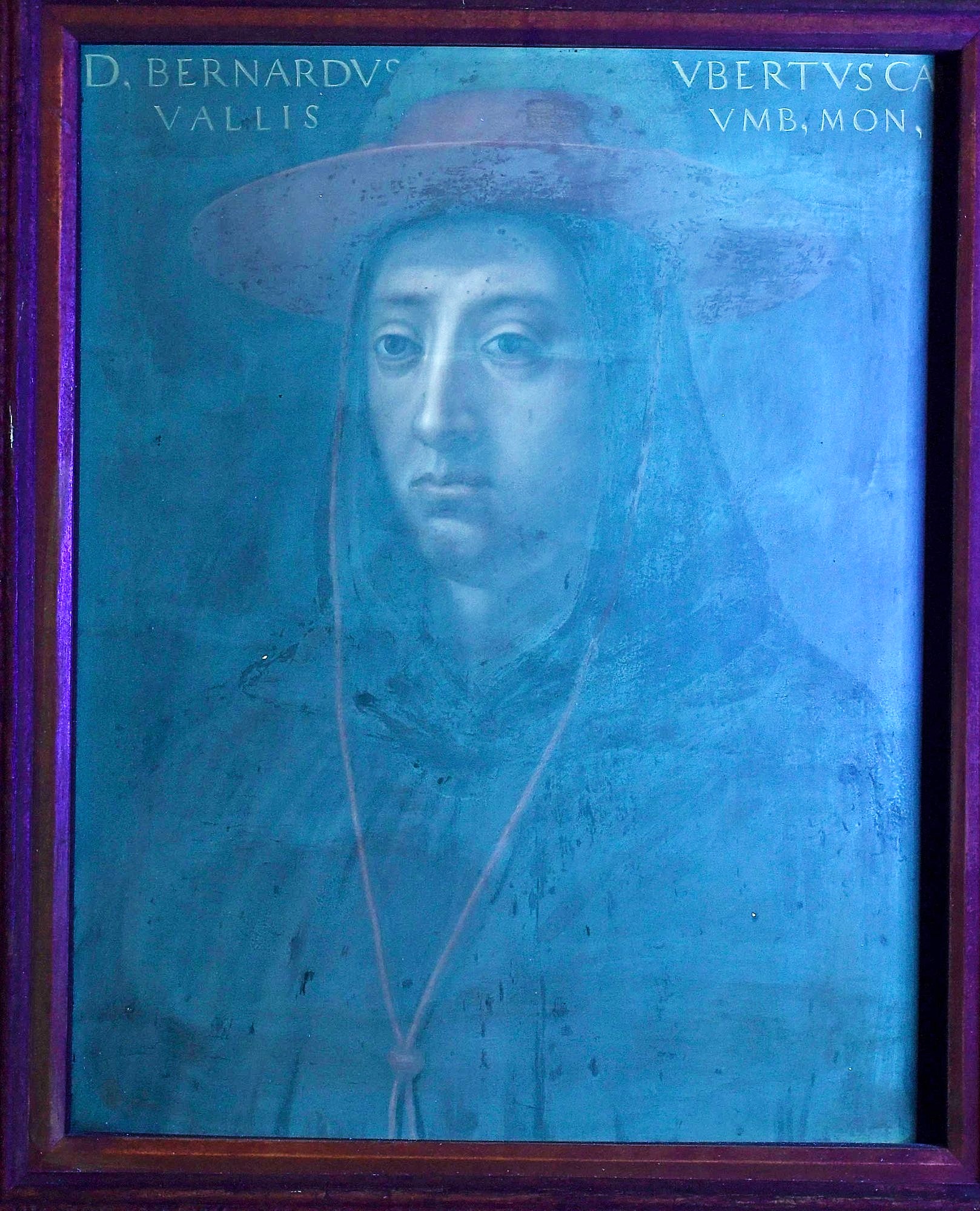
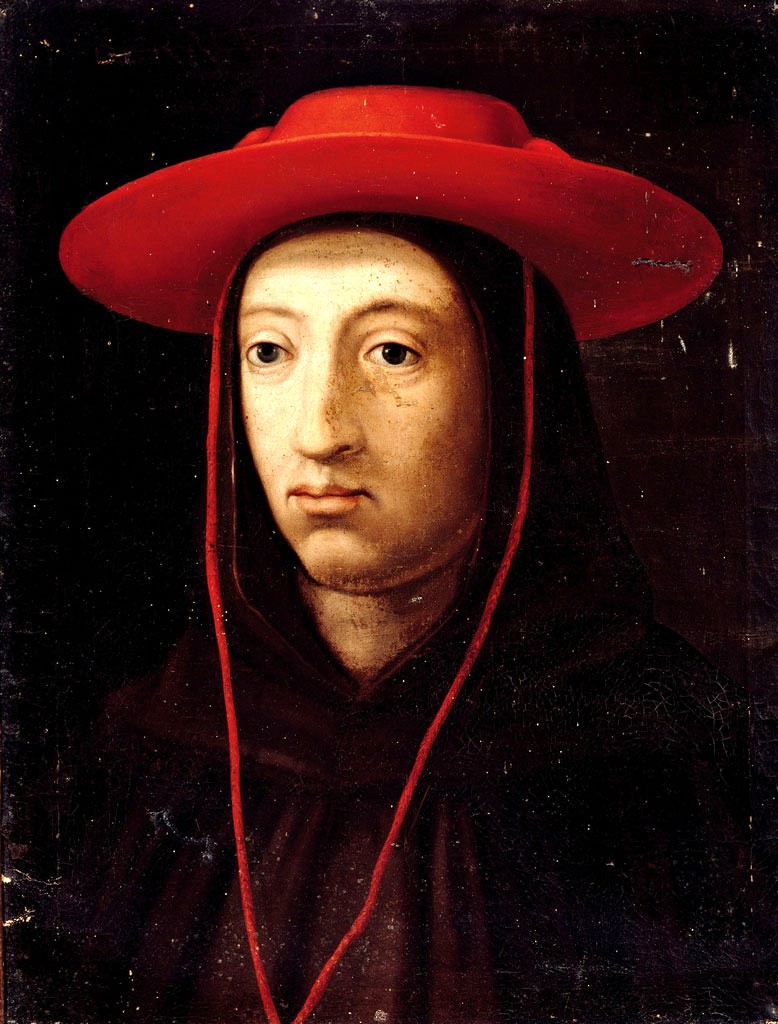
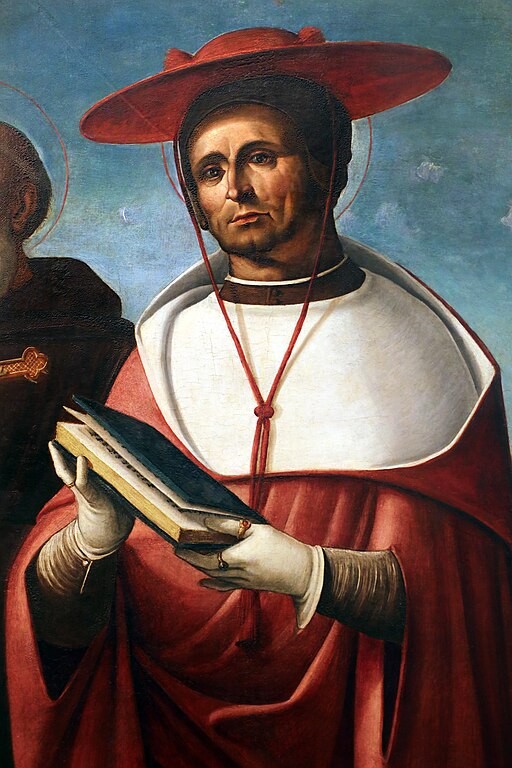
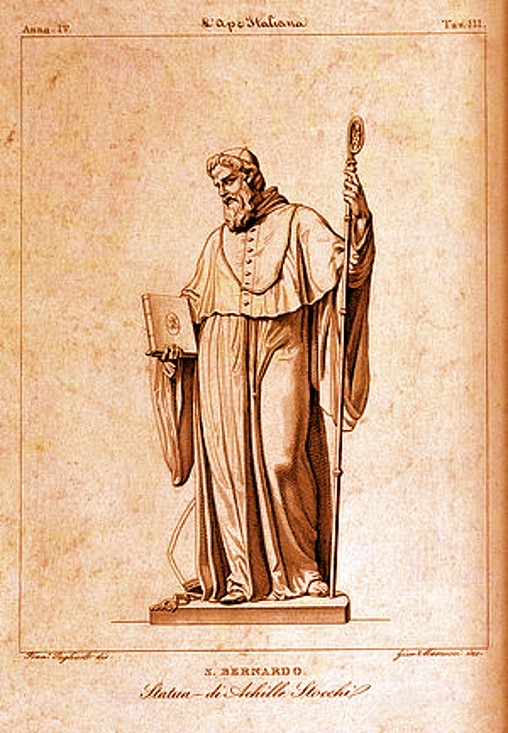
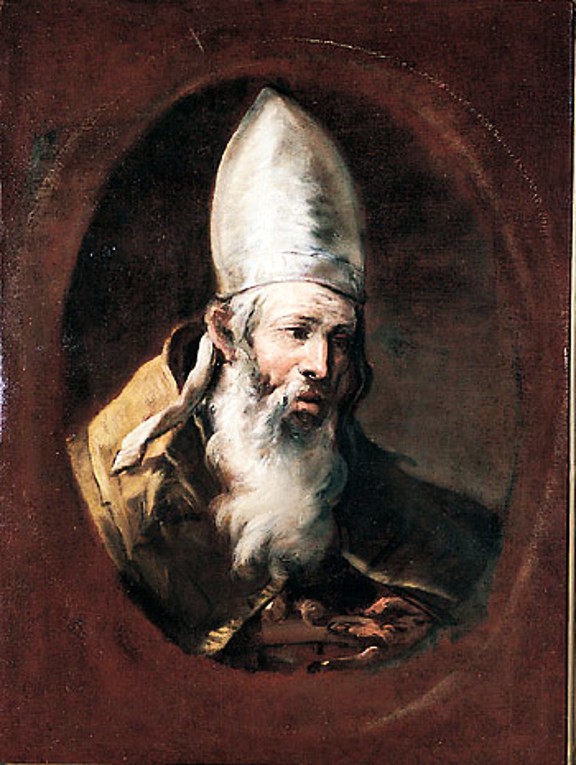
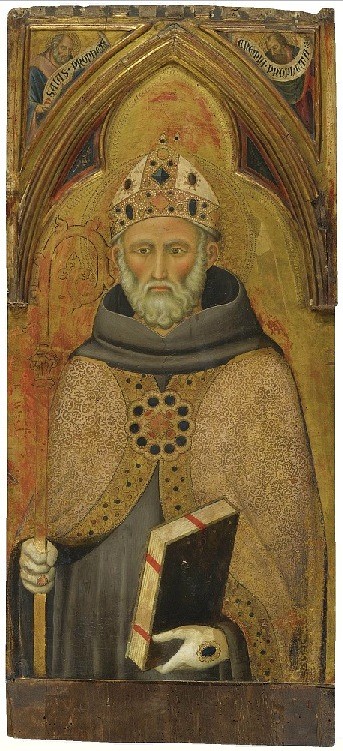
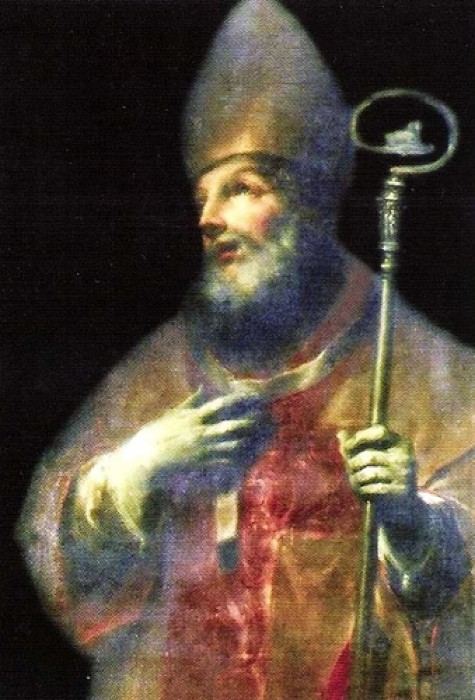
Saint of the Day – 4 December – St Bernardo degli Uberti OSB Vall. (c1060-1133) Cardinal Bishop, Benedictine Vallombrosan Monk, Abbot of San Salvi Monastery, Abbot-General of the Vallombrosans. Created a Cardinal by Pope Urban II in 1097. Papal legate, Bishop of Parma, Italy in 1106. Exiled twice during disputes with Anti–Papal forces opposing Pope Saint Gregory VII. Born in c1060 in Florence, Italy and died on 4 December 1133 in Parma, Italy of natural causes. Patronage – of Pavia. – A fascinating Saint who even Pablo Picasso could not resist painting (2nd image below – maybe Senor Picasso’s ‘Blue Period?’
Bernardo was born around 1060 in Florence in the region of Tuscany in central Italy. His father’s name was Bruno and he came from a noble family which, in the following Century, took the name Uberti. But Bernardo gave up a life of power and luxury and, in July 1085, gave his inheritance to relatives, friends and the Town’s Monastery of San Salvi. He himself became a Monk in the Vallombrosan Order in the Mother house Monastery in Vallombrosa. It was an ascetic community, founded not long before, by Saint John Gualbertus .
In time, Bernardo was elected Abbot of San Salvio and then the 4th or 5th Abbot-General of the Vallombrosan Order. Under his leadership, the Order spread from Tuscany into Emilia Romagna and Lombardy. In 1097, while holding Office as Abbot-General, he was appointed Cardinal by the Blessed Pope Urban II (1088-1099) and he was entrusted with various assignments as Papal Vicar in northern Italy and Legate of Canossa. On behalf of Pope Paschalis II (1099-1118), he promoted the Ecclesiastical reform in many Cities in northern Italy. In 1106, on the occasion of the Consecration of the new Cathedral, Pope Paschalis II appointed Bernardo as the Bishop of Parma. Pope Paschalis himself, Consecrated Bernardo and under his guidance and governance, Parma became a centre of the reform movement.
At a time when many Bishops, not only accepted but sought secular power, Bernardo renounced all the secular power which his predecessors in the Episcopate had received. He never forgot and did not let others forget that he had been trained as a Monk in a very ascetic school and, so far as was compatible with his duties, he maintained his monastic observances.
Parma was, at this time, seriously affected by several schisms. First, on 28 October 1061, Bishop Peter Cadalus of Parma had established himself as antipope Honorius II (1061-1072) and then there were other Bishops who supported Archbishop Guibert (Wibert) of Ravenna, who, on 25 June 1080, also established himself as antipope Clement III (1080-1100). Bernardo was a zealous supporter of the true Pope, Saint Gregory VII (1073-1085) and his reforms. He was a particular opponent of simony which was widespread in his Diocese. He proved a very successful Bishop but was twice banished from Parma. The first time was in 1104 by the followers of the antipope Maginulf or Sylvester IV (1105-1111), who arrested him at the Altar, on 15 August 1104. He was in exile for two years.
In 1124, for the Vallombrosan Order, Bernardo obtained protection from Emperor Henry V (1106-1125) Emperor from 1111. In the investiture dispute, Bernardo took an intermediate position but nevertheless, he was arrested, together with the Pope, by Emperor Henry V.
In 1127 there was a civil war in Germany and the Hohenstaufen elevated Duke Frederick II of Swabia’s brother, Konrad of Staufen (Henry V’s nephew), to counter-king (1127-35) against Lothar III (1125-1137). Pope Honorius II (1124-1130) Excommunicated Konrad in 1128, along with Archbishop Anselm of Milan, who had crowned him King of Lombardy. Bernardo also protested against the elevation of Konrad and he was, therefore, then again driven into exile. In 1133, Lothar came to Rome to be crowned Emperor . Bernardo continued to attempt a mediatation and while he was already suffering in his last illness, he received Lothar in Verona, on his way to Rome.
Bernardo had returned to his See, when, on 4 December 1133, he died in Parma. The Vallombrosans immediately began to venerate him as a Saint and his Relics were already elevated, on 3 December 1139 by his successor as Bishop, Lanfranc. At the time, this was equivalent to a Canonisation. His Memorial day is the day of his death on 4 December and his name appears in the Martyrologium Romanum. His tomb is in the Chancel of the Cathedral in Parma and Relics are found in Vallombrosa, Florence and Parma.
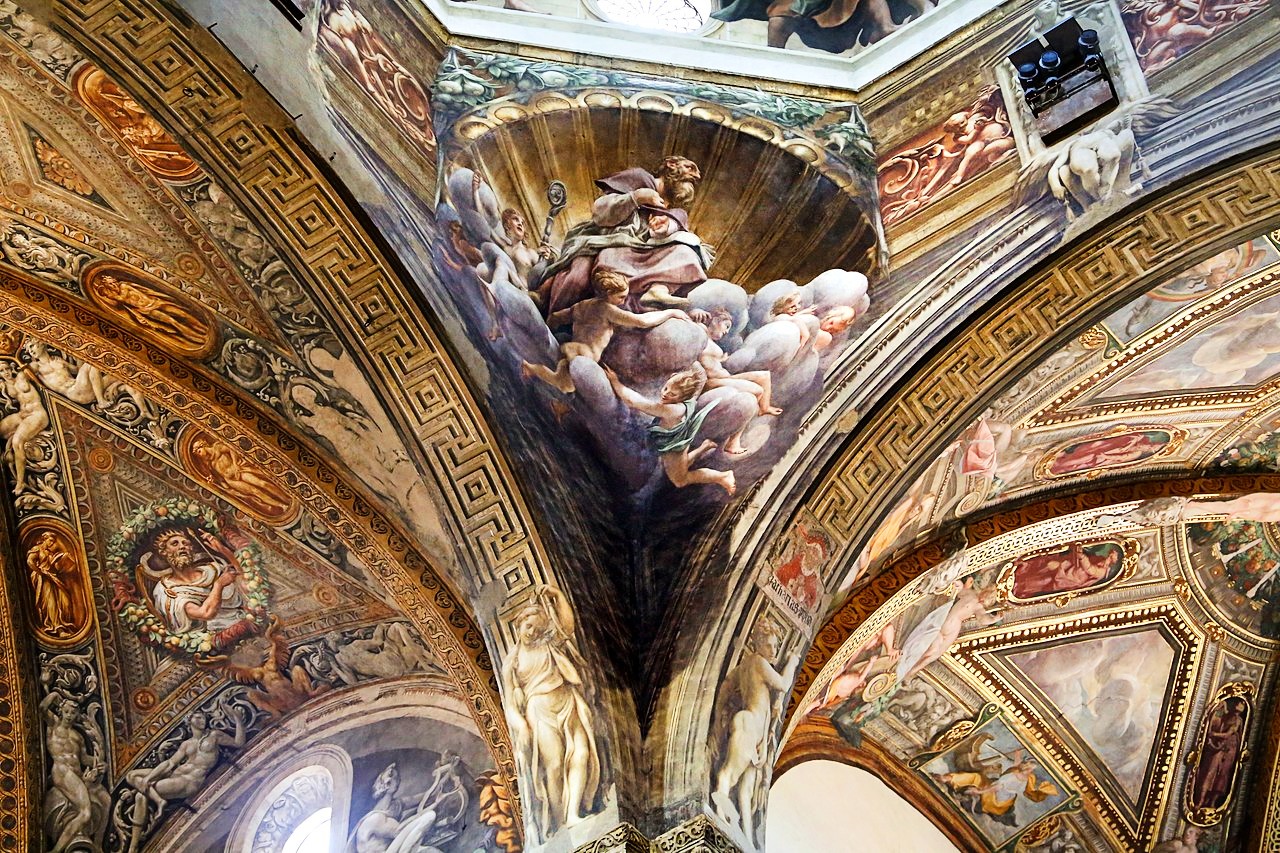
The Vallombrosans consider St Bernardo as their “third father” after Saints Benedict of Nursia and John Gualbertus. In art, he is most often portrayed as a Cardinal, sometimes being carried to Heaven by Angels. He is sometimes depicted preaching, giving alms, blessing, casting out demons, or appearing to devoted followers after his death.
St Bernardo being carried to Heaven by Angels – the ceiling of Pavia Cathedral
St Peter Chrysologus (c 400-450) “Golden Words” Confessor,, Father & Doctor of the Church – Bishop of Ravenna, Italy. Today we celebrate the Memorial of Saint Peter Chrysologus, a fifth-century Italian Bishop known for testifying courageously to Christ’s full humanity and divinity during a period of the heresy called “Monophysite.” The saint’s title, Chrysologus, signifies “golden speech” in Greek. Named as a Doctor of the Church in 1729 by Pope Benedict XIII., he is distinguished as the “Doctor of Homilies” for the concise but theologically rich reflections he delivered during his time as the Bishop of Ravenna. 176 of his sermons have survived – it is the strength of these beautiful explanations of the Incarnation, the Creed, the place of Mary and John the Baptist in the great plan of salvation, Mary’s perpetual Virginity, the penitential value of Lent, Christ’s Eucharistic presence and the Primacy of St Peter and his successors in the Church. FEAST DAY: 4 December (General Roman Calendar 1729-1969) https://anastpaul.com/2018/07/30/saint-of-the-day-30-july-st-peter-chrysologus-c-400-450-golden-words/
St Apro St Bernardo degli Uberti OSB Vall. (c1060-1133) Cardinal Bishop St Bertoara of Bourges St Christianus St Clement of Alexandria St Cyran of Brenne St Eraclius St Ezequiel Álvaro de La Fuente St Felix of Bologna Bl Francis Galvez St Heraclas of Alexandria Bl Jerome de Angelis St John the Wonder Worker St Maruthas St Melitus of Pontus
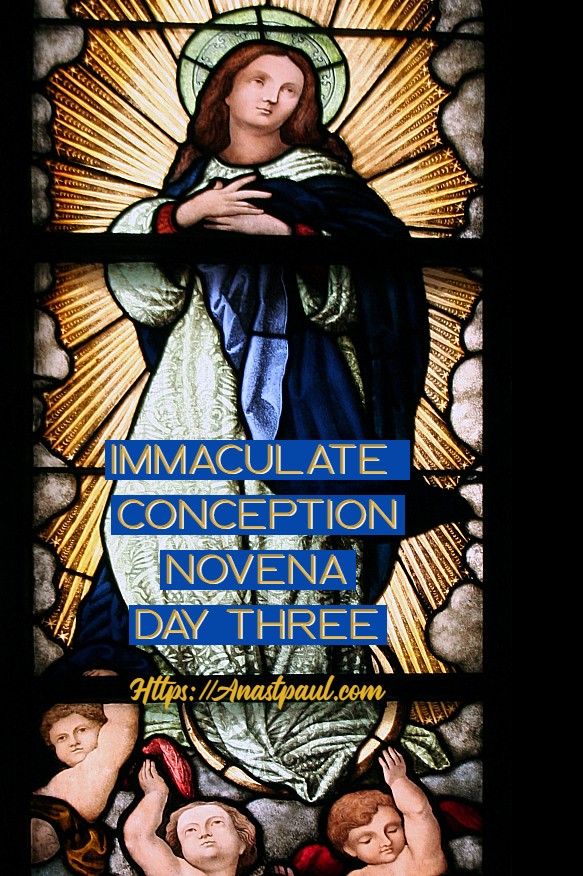
PREPARATORY PRAYER: In thy conception, O Virgin Mary, thou wast immaculate; pray for us to the Father, Whose Son Jesus, conceived in thy womb by the Holy Ghost, thou didst bring forth.
Indulgence. 200 days, every time. (Pius VI, 21 November
MEDITATION: Man’s relationship to God, as His child, was severed by sin. The beautiful image of God imprinted on man’s soul, was disfigured by it. But with the Immaculate Conception of the Blessed Virgin Mary, a being full of grace, an object of God’s supreme complacency, entered this world. After the lapse of four thousand years God, in His wisdom, power, and love, for the first time again created a human being, in that state, in which He had originally created our first parents. Mary, from the first moment of her existence was, in virtue of the sanctifying grace, infused into her soul, most intimately united with God and endowed with the most precious gifts of Heaven. Because she was predestined to become the Mother of the Redeemer of mankind, it was fitting that she should unite in herself all the gifts becoming to such an ineffable dignity. Hence, she surpassed in grace and holiness, all other created beings and was Consecrated a worthy temple of the Incarnate Word. Therefore, she was saluted by the Angel as “full of grace” and the Church, in our behalf, addresses the Almighty: “O God, Who through the Immaculate Conception of the Virgin, didst prepare a worthy dwelling-place for Thy Divine Son; grant that, as in view of the death of that Son ,Thou didst preserve her from all taint, so Thou wouldst vouchsafe unto us that, cleansed from all sin by her intercession, we too may arrive at Thine eternal glory.”
PRACTICE: The world considers men according to their rank and station, their wealth and knowledge. God recognises in them but one difference, that caused by the presence or absence of sanctifying grace in their soul. A soul in the state of sanctifying grace is God’s friend; without it, His enemy. A man dying in the state of sanctifying grace is sure of eternal bliss. Therefore, we ought to prize this grace, above all else and do everything in our power, to preserve it. St Leo exhorts us, “Recognise, O man, thy dignity! As thou hast received Divine grace, beware of returning to your former sinful condition by a wicked life!”
PRAYER OF THE CHURCH: O God, Who through the Immaculate Conception of the Virgin didst prepare a worthy dwelling-place for Thy Divine Son; grant that, as in view of Thy Son, Thou didst preserve her from all taint, so Thou wouldst vouchsafe unto us that cleansed from all sin by her intercession, we too may arrive at Thine eternal glory. Through the same Christ our Lord. Amen.
PRAYER: Mary, bright moon of purity, I rejoice with thee because, the mystery of thy Immaculate Conception was the beginning of salvation for the race of man and the joy of the whole world. I thank and bless the ever-blessed Trinity, Who thus did magnify and glorify thee and I beg of thee, to obtain for me the grace, so to profit by thy dear Son’s Passion and Death, that His Most Precious Blood may not have been shed upon the Cross in vain but that, after a holy life, I may reach Heaven in safety.
Thought for the Day – 3 December – Meditations with Antonio Cardinal Bacci (1881-1971)
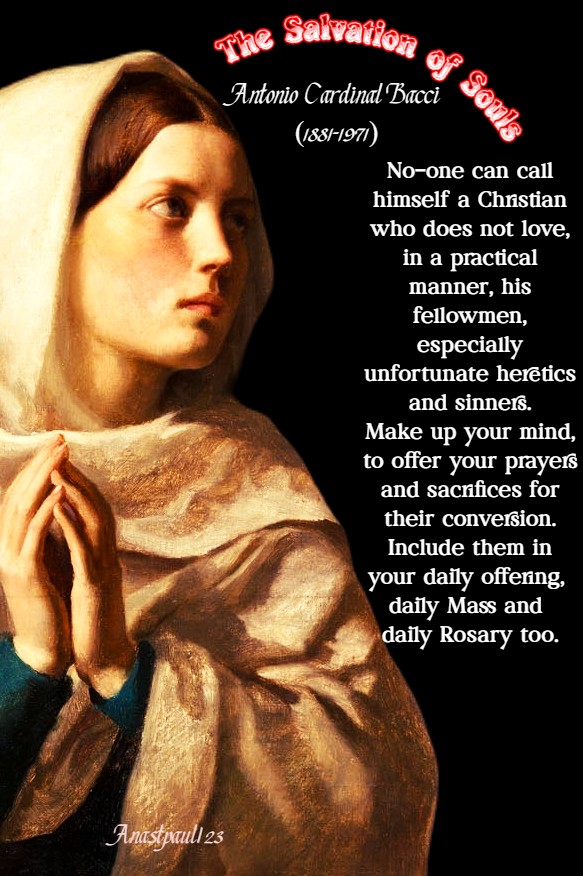
The Salvation of Souls
“Remember the countless conversions effected by the Saints as a result of their prayers, mortifications and heroic sacrifices. No-one can call himself a Christian who does not love, in a practical manner, his fellowmen, especially unfortunate heretics and sinners.
Make up your mind, to offer your prayers and sacrifices for their conversion. Include them in your daily offering, daily Mass and daily Rosary too.”
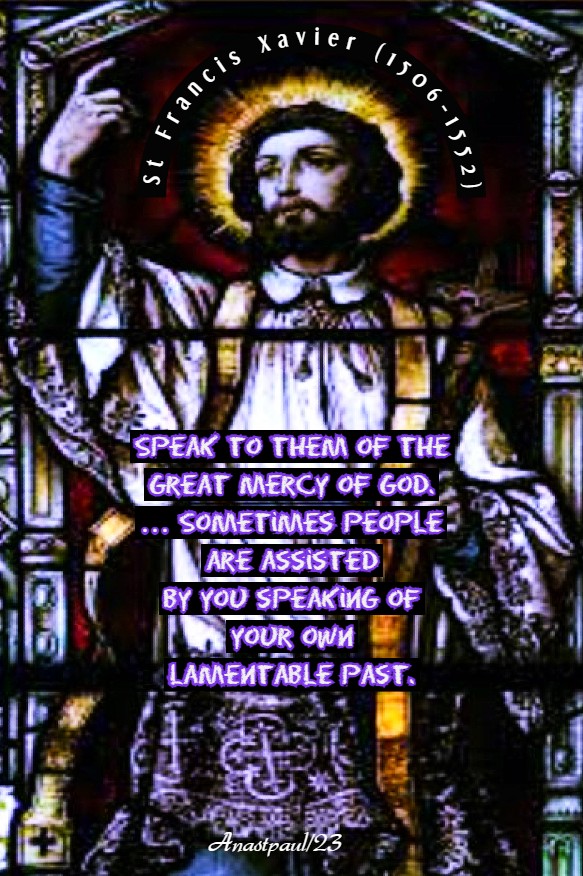
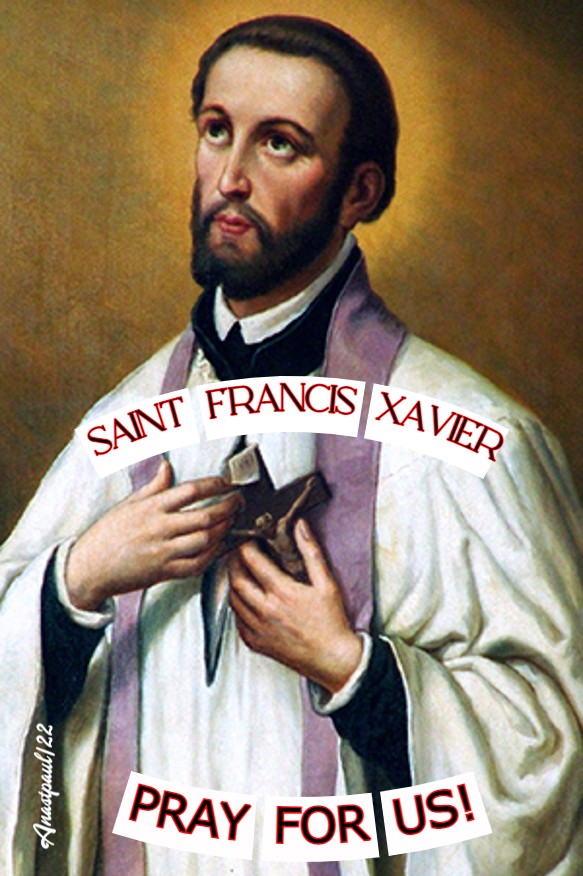
Quote/s of the Day – 3 December – St Francis Xavier SJ (1506-1552) Confessor
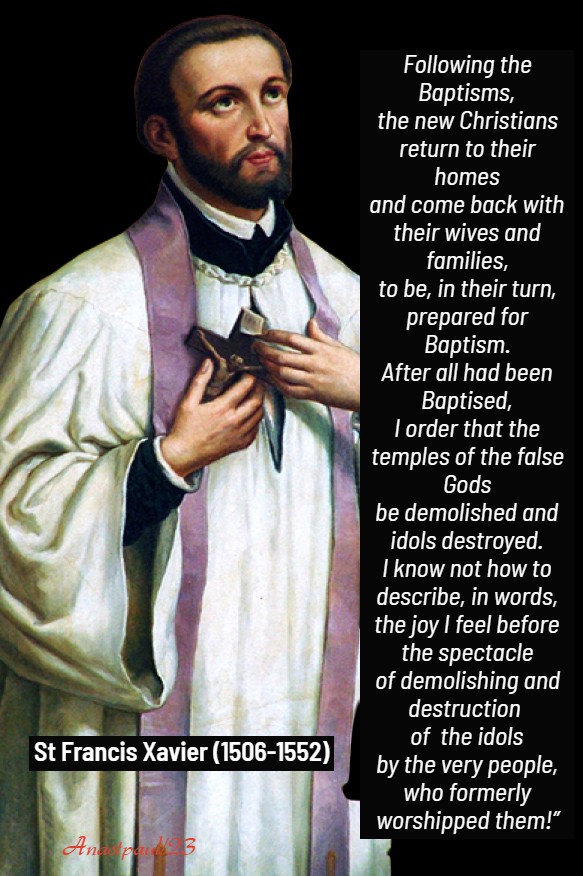
“Following the Baptisms, the new Christians return to their homes and come back with their wives and families, to be, in their turn, prepared for Baptism. After all had been Baptised, I order that the temples of the false Gods be demolished and idols destroyed. I know not how to describe, in words, the joy I feel before the spectacle of demolishing and destruction of the idols by the very people, who formerly worshipped them!”
(Letter dated 8 February 1545)
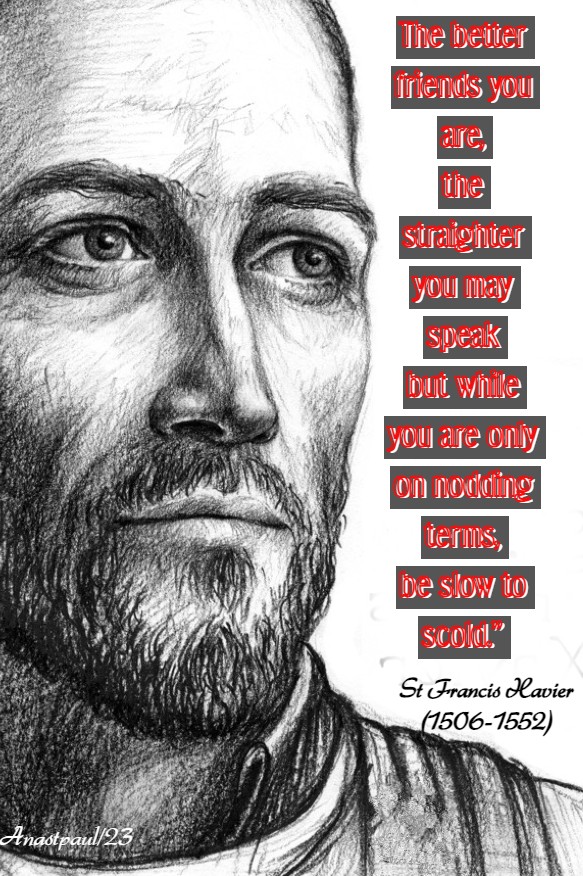
“The better friends you are, the straighter you may speak but while you are only on nodding terms, be slow to scold.”
“Speak to them of the great mercy of God. … Sometimes people are assisted by you speaking of your own lamentable past.”
One Minute Reflection – 3 December –The First Sunday of Advent – St Francis Xavier SJ (1506-1552) Confessor – Romans 13:11-14; Luke 21:25-33 – Scripture search here: https://www.drbo.org/
“Look at the fig tree and all the trees, when they produce their fruit you know that summer is near. So too, when you see these things happening, know that the Kingdom of God is near.” – Luke 21:29-31
REFLECTION – “Look at the fig tree and all the trees, when they produce their fruit you know that summer is near. So too, when you see these things happening, know that the Kingdom of God is near.” He means that just as the coming of summer is recognised by the fruit on the trees, so is the nearness of the Kingdom of God recognised by the destruction of the world. These words show that the fruit of the world is destruction – it increases only to fall, it produces, only to destroy by its disasters whatever it produces. The Kingdom of God is aptly compared to summer, because it is then that the clouds of our sorrow pass away and the days of life shine with the brightness of the Eternal Sun. …
“Heaven and earth will pass away but My words will not pass away.” Nothing among material realities is more lasting than the heavens and the earth and nothing among realities, passes away, as quickly as an utterance. … Therefore, the Lord declares: “Heaven and earth will pass away but My words will not pass away.” He means: “Nothing that is lasting in your world lasts for eternity without change and everything that in Me, is perceived as passing away, is kept firm, without passing away. My utterance, which passes away, expresses thoughts that endure without change.” …
Therefore, my friends, do not love what you see cannot long exist. Keep in mind the Apostle John’s precept, in which he counsels us not “to love the world or the things in the world because, if anyone loves the world, the love of the Father is not in him” (1 Jn 2:15). – St Gregory the Great (540-604) Pope, Father and Doctor of the Church (Sermons on the Gospels No 1 )
PRAYER – O God, Thou Who were pleased to gather into Thy Church the peoples of the Indies by the preaching and miracles of blessed Francis, mercifully grant that we, who honour his glorious merits, may also imitate the example of his virtues. Through Jesus Christ, Thy Son our Lord, Who lives and reigns with Thee, in the unity of the Holy Ghost, God, world without end. Amen (Collect).
Our Morning Offering – 3 December – The Memorial of St Francis Xavier SJ (1506-1552) Confessor
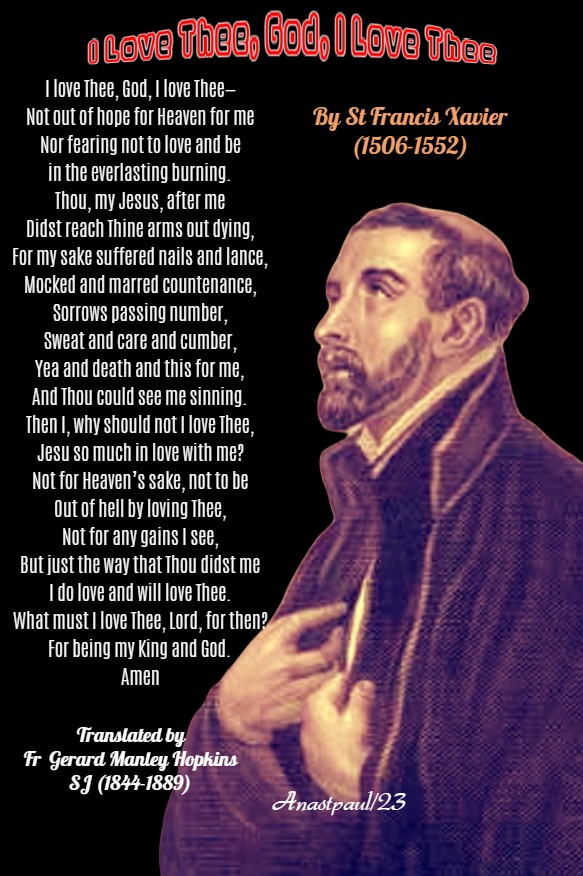
I Love Thee, God, I Love Thee By St Francis Xavier (1506-1552) Translated by Gerard Manley Hopkins SJ (1844-1889)
I love Thee, God, I love Thee— Not out of hope for Heaven for me Nor fearing not to love and be in the everlasting burning. Thou, my Jesus, after me Didst reach Thine arms out dying, For my sake suffered nails and lance, Mocked and marred countenance, Sorrows passing number, Sweat and care and cumber, Yea and death and this for me, And Thou could see me sinning. Then I, why should not I love Thee, Jesu so much in love with me? Not for Heaven’s sake, not to be Out of hell by loving Thee, Not for any gains I see, But just the way that Thou didst me I do love and will love Thee. What must I love Thee, Lord, for then? For being my King and God. Amen
Saint of the Day – 3 December – Saint Mirocles (Died c316) Confessor, the 6th Bishop of Milan from before 313 to c316.. Mirocles was one of the originators of the Ambrosian Liturgy and Chant. His life and works were praised by Saint Ambrose. Unknown birth date butit is thought he was born in Pavia, Italy – he died in Milan on 30 November c316 of natural causes. Also known as – Merocles, Mirocle, Mirocleto.
The Roman Martyrology reads: “At Milan, St Mirocles, Confessor and Bishop, sometimes mentioned by St Ambrose.”
Almost nothing is known about the life of Mirocles. He was elected as the Bishop of Milan before 313 and he reigned until his death in c316. He perhaps was born to a family of Pavia, of which family St Epiphanius would be born over 100 years later as his relative on his mother’s side.
Mirocles was the Bishop of Milan when, in 313, the Emperors Constantine I and Licinius, issued the Edict of Milan which proclaimed the religious toleration in the Roman Empire. After the Edict of Milan, Mirocles started the erection of the Basilica, which was the first Cathedral of the City and, was built on the same site as that occupied today, by the present Cathedral of Milan.
Sources record, the presence of Mirocles at the Lateran Council held in October 313 in Rome, under Pope Miltiades, which took a stand in the Donatism heresy, condemning Donatus Magnus charged to re-baptising those who had lapsed and which sided with Caecilianus, the Bishop of Carthage. Mirocles participated also in the following Council of all the Western Bishops held in Arles on 1 August 314, which confirmed the condemnation of Donatus and ruled in matters regarding Canon Law.
Mirocles possibly also founded the Church of San Vittore al Corpo in Milan (rebuilt many times during the next Centuries) in honour of Saint Victor Maurus, who was Martyred during the terrors of the reign of Emperor Diocletian in c303.
Mirocles died on the 30 November of about 316 but his Feast day was set on 3 December. His body was buried in Milan in the Church of San Vittore al Corpo.
St Ethernan St Hilaria the Martyr St Jason the Martyr St John of Africa St Lucius, King St Lucy the Chaste St Magina of Africa St Mamas St Marcos García Rodríguez St Maurus the Martyr St Mirocles (Died c316) Confessor, Bishop of Milan from before 313 to c316. St Seleucus St Stephen of Africa St Theodore of Alexandria St Theodulus of Edessa St Veranus Zephaniah the Prophet
Martyrs of Nicomedia: Christians Martyred together in the persecutions of Diocletian – Ambicus, Julius and Victor. c 303 in Nicomedia, Bithynia (modern Izmit, Turkey).
PREPARATORY PRAYER: In thy conception, O Virgin Mary, thou wast immaculate; pray for us to the Father, Whose Son Jesus, conceived in thy womb by the Holy Ghost, thou didst bring forth.
Indulgence. 200 days, every time. (Pius VI, 21 November
MEDITATION: The Blessed Virgin Mary, conceived without sin, is the most blessed daughter of the eternal Father, the real and true Mother of the Divine Son, the elect spouse of the Holy Ghost. But in the world, in what condition do we behold her? She dwells not in a splendid palace; she is not surrounded by a retinue of servants, ready at every moment to do her bidding; she is not exempt from trials and suffering. On the contrary, she is poor; she lives in obscurity and suffered so much on earth that, without shedding her blood, she merits to be styled – the Queen of Martyrs. Her heart was transfixed with the sword of sorrow. Mary is not exempt from tribulations and adversity but one thing God does not permit to touch her, – SIN. Hence Holy Church applies to her the words, “Thou art all fair, O my love and there is not a spot in thee” (Cant iv 7).
PRACTICE: Although we were not preserved from sin like Mary, yet God, in His ineffable goodness and mercy, granted us the grace to be cleansed from sin and to be clothed with the garment of sanctifying grace in Baptism. No treasure of the world can be compared with this prerogative. But as we bear this grace in a fragile vase, we must be most careful to protect and preserve it in ourselves and others, from all danger. Let the Blessed Virgin Mary be our example. Well knowing the inestimable value of the grace conferred upon her, she guarded it with the greatest care. Although exempt from concupiscence and “full of grace,” she was so distrustful of herself, as if she were in continual danger. How much more, then, must we use precaution, to preserve in ourselves and in others, this treasure of grace, since we feel in ourselves constantly, the law of the flesh which resists the law of the spirit and urges us onto evil, whilst the world and the devil, never weary in placing snares for us, in order to accomplish our ruin. Therefore, let us have recourse to Mary and invoking her aid, bravely resist all temptations!
PRAYER OF THE CHURCH: O God, Who through the Immaculate Conception of the Virgin didst prepare a worthy dwelling-place for Thy Divine Son; grant that, as in view of Thy Son, Thou didst preserve her from all taint, so Thou wouldst vouchsafe unto us that cleansed from all sin by her intercession, we too may arrive at Thine eternal glory. Through the same Christ our Lord. Amen.
PRAYER: Mirror of holy purity, Blesed Mary, Virgin Immaculate, great is my joy while I consider that, from thy Immaculate Conception, the most sublime and perfect virtues were infused into thy soul and, with them all, the gifts of the Holy Ghost. I thank and praise the Most Holy Trinity, Who bestowed on thee these high privileges. I pray thee, gentle Mother, obtain for me grace to practise virtue and to make me worthy to become partaker of the gifts and graces of the Holy Ghost.
Thought for the Day – 2 December – Meditations with Antonio Cardinal Bacci (1881-1971)
Recollection
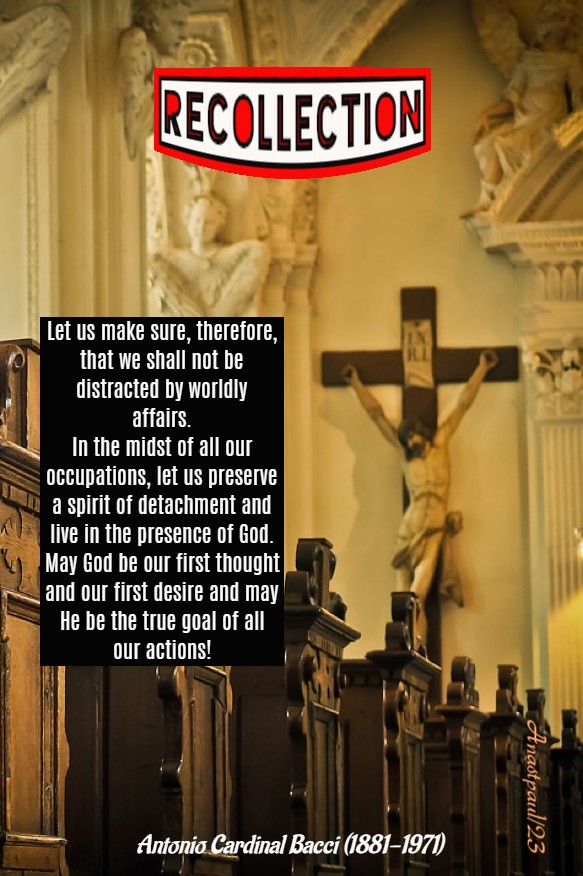
“We may imagine that all this applies only to Monks but that is not so. We all need interior recollection and we can find it even during our work and in the midst of turmoil and confusion. If we fail to find it, moreover, it is too bad for us, as The Imitation of Christ warns us. “Peace is not in the heart of the carnal man, nor in the man who is devoted to outward things but, in the fervent and spiritual man” (Bk 1 Ch 6:2).
Let us make sure, therefore, that we shall not be distracted by worldly affairs. In the midst of all our occupations, let us preserve a spirit of detachment and live in the presence of God. May God be our first thought and our first desire and may He be the true goal of all our actions!”
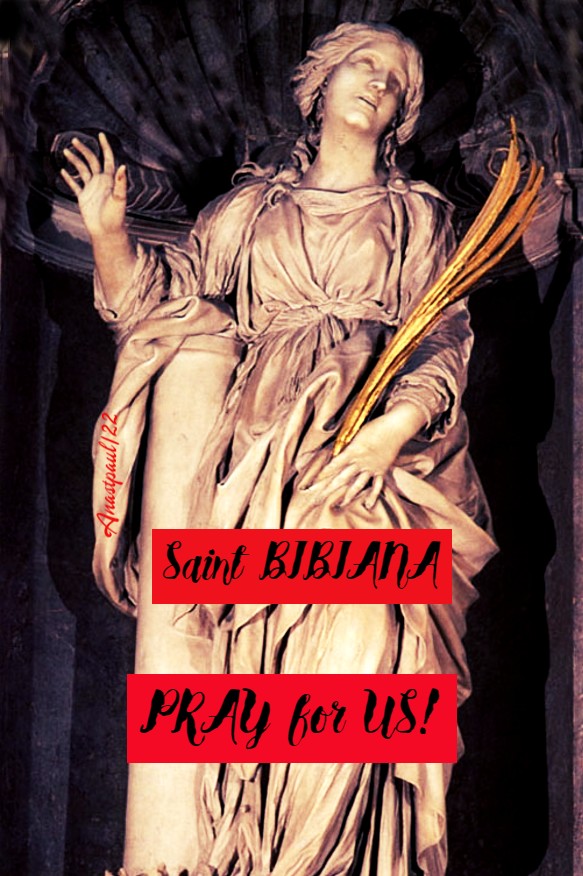
Quote/s of the Day – 2 December – St Bibiana (Died c 361) Virgin Martyr – Sirach 51:13-17; Matthew 13:44-52 – Scripture search here: https://www.drbo.org/
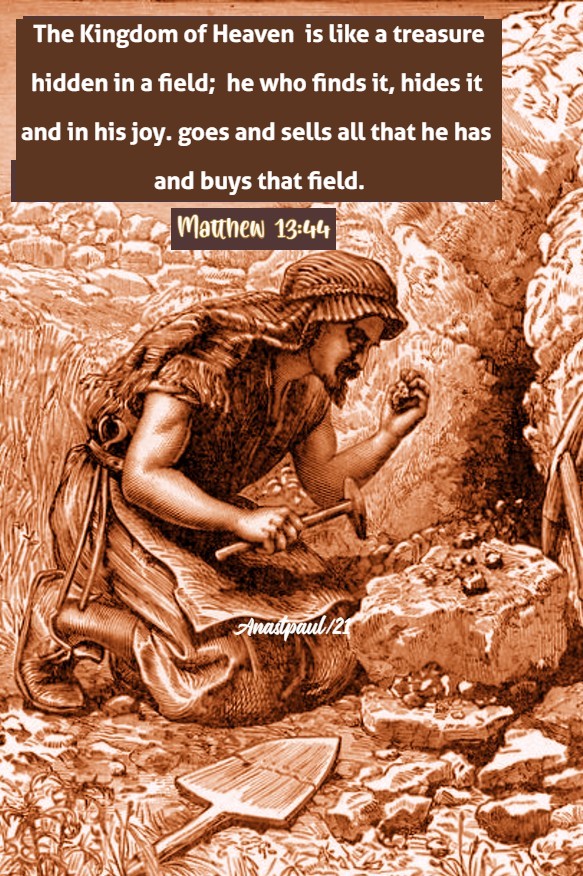
“The Kingdom of Heaven is like unto a treasure, hidden in a field.”
Matthew 13:44
“I press on, hoping that I may lay hold of that, for which Christ Jesus, has laid hold of me.”
Philippians 3:12
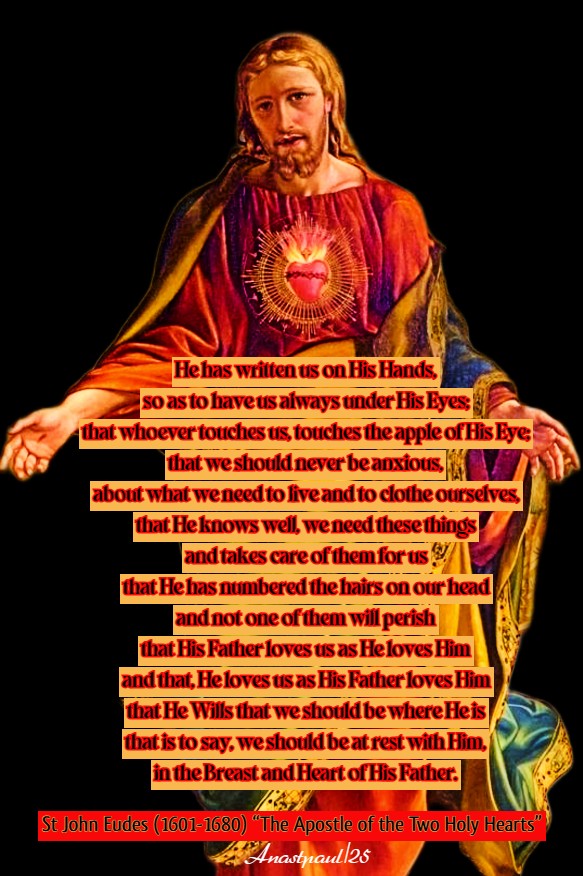
“He has written us on His Hands, so as to have us always under His Eyes; that whoever touches us, touches the apple of His Eye; that we should never be anxious, about what we need to live and to clothe ourselves, that He knows well, we need these things and takes care of them for us that He has numbered the hairs on our head and not one of them will perish that His Father loves us as He loves Him and that, He loves us as His Father loves Him that He Wills that we should be where He is that is to say, we should be at rest with Him, in the Breast and Heart of His Father.”
St John Eudes (1601-1680) The Apostle of the Two Holy Hearts
“Where is the heart which loves? On the thing it loves. Therefore, where our love is, there our heart is held captive. It cannot leave it; it cannot be lifted higher, it cannot go either to the right or the left; see, it is fixed. Where the miser’s treasure is, there is his heart and where our heart is, there is our treasure. And what is so deplorable is that the things which hold us in servitude, are, for the most part, such unworthy things!”
One Minute Reflection – 2 December – “The Month of the Divine Infancy and the Immaculate Conception of the Blessed Virgin Mary” – St Bibiana (Died c 361) Virgin Martyr – Sirach 51:13-17; Matthew 13:44-52 – Scripture search here: https://www.drbo.org/
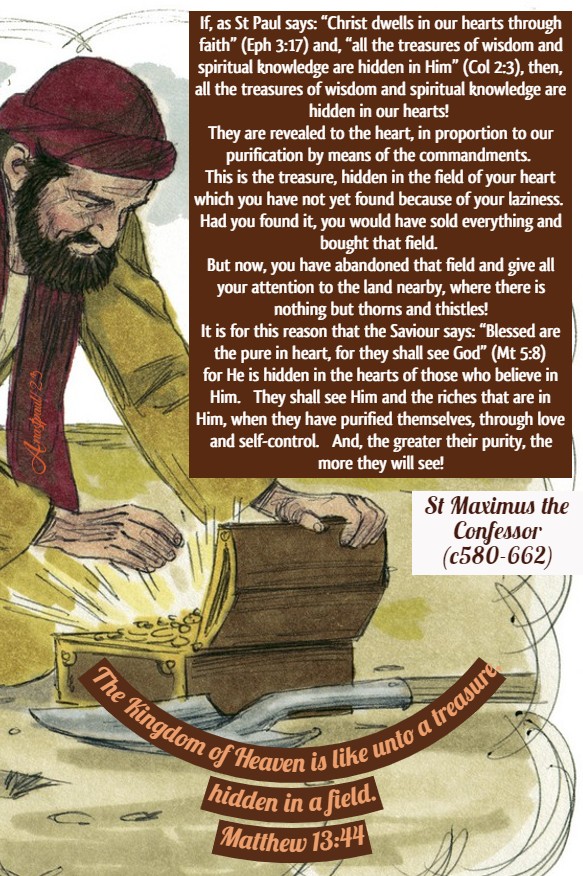
“The Kingdom of Heaven is like unto a treasure, hidden in a field.” – Matthew 13:44
REFLECTION – “Some of the brethren think that they are excluded from the Holy Ghost’s gifts of grace. Because they neglect to practise the commandments, they do not know that he who has an unadulterated faith in Christ, has within himself, the sum total of all the Divine gifts. Since, through our laziness, we are far from having an active love for Him — a love which shows us the Divine Treasures within us — we naturally think that we are excluded from these gifts.
If, as St Paul says: “Christ dwells in our hearts through faith” (Eph 3:17) and, “all the treasures of wisdom and spiritual knowledge are hidden in Him” (Col 2:3), then, all the treasures of wisdom and spiritual knowledge are hidden in our hearts! They are revealed to the heart, in proportion to our purification by means of the commandments. This is the treasure, hidden in the field of your heart which you have not yet found because of your laziness. Had you found it, you would have sold everything and bought that field. But now, you have abandoned that field and give all your attention to the land nearby, where there is nothing but thorns and thistles! It is for this reason that the Saviour says: “Blessed are the pure in heart, for they shall see God” (Mt 5:8) for He is hidden in the hearts of those who believe in Him.They shall see Him and the riches that are in Him, when they have purified themselves, through love and self-control. And, the greater their purity, the more they will see!” – St Maximus the Confessor (c580-662) Abbot and Theologian (Centuries of love 4:69).
PRAYER – O God, giver of all good gifts, Thou Who in Thy servant, Bibiana, joined the flower of virginity with the palm of Martyrdom, by her intercession unite our hearts to Thee in charity, so that, saved from all dangers, we may obtain the rewards of eternal life. Through the same Jesus Christ, Thy Son our Lord, Who lives and reigns with Thee, in the unity of the Holy Ghost, God, world without end. Amen (Collect).
Our Morning Offering – 2 December – “The Month of the Divine Infancy and the Immaculate Conception of the Blessed Virgin Mary” – First Saturday of the Month
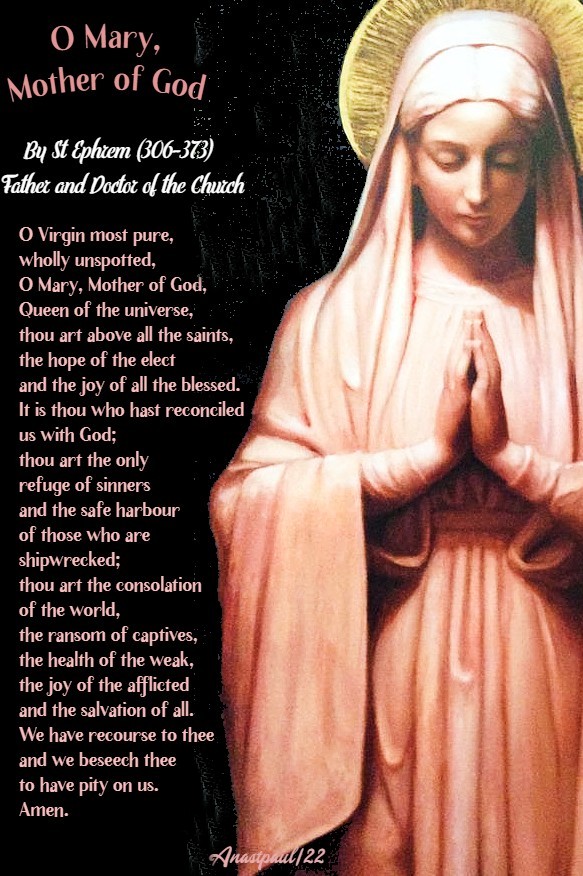
O Mary, Mother of God (O Virgin Most Pure, Wholly Unspotted) By St Ephrem of Syria (306-373) Father and Doctor of the Church
O Virgin most pure, wholly unspotted, O Mary, Mother of God, Queen of the universe, thou art above all the saints, the hope of the elect and the joy of all the blessed. It is thou who hast reconciled us with God; thou art the only refuge of sinners and the safe harbour of those who are shipwrecked; thou art the consolation of the world, the ransom of captives, the health of the weak, the joy of the afflicted and the salvation of all. We have recourse to thee and we beseech thee to have pity on us. Amen.
Saint of the Day – 2 December – Saint Oderisius de Marsi OSB (Died 1105) Italian Deacon and Cardinal, Abbot of Montecassino, Count of the great noble family of the Marsi. Born at Marsi, Italy and died in 1105 of natural causes at Montecassino. Also known as – Oderisius I, Oderisius of Montecassino, Oderisius of Monte Cassino, Odorisio, Odorisius.
In the ancient and historic centre of Naples, is an area of great artistic and archaeological interest and, therefore, declared a world heritage site, in a narrow alley, behind the large Basilica complex, there is the Sansevero Chapel. Initially, in 1500, it was a Votive Chapel, (a Chapel built in thanksgiving) then, in 1750, it became the burial Chapel of the Princes of Sansevero dei Marsi and Sangro. , by the munificent, wise, scientist and mysterious Raimondo de Sangro, prince of Sansevero.
In this Chapel, resides a concentration of sculptural and architectural works which are famous throughout Europe. The six Saints descended from this ancient Princely House are depicted in the vault: St Randisio – Cardinal, St Berardo (Died 1123) Bishop, Rosalia (Died 1166), Bl Philippa (c1190-1236), St Pietro and our Saint Odorisius.
For Odorisius there is also a magnificent Altar dedicated to him, with a Statue created by the sculptor Francesco Queirolo which depicts him in a mystical attitude, kneeling on a ushion, with the Cardinal’s hat next to him.
Odorisius, was the Count of the Marsi and was created Cardinal Deacon by Pope Alexander II. In 1087 he became the 39th Abbot of the Benedictine Monastery of Montecassino. Emulating the great Abbot Desiderius, his predecessor, he continued his artistic works for the Abbey, demonstrated zeal and favour for the Crusaders whom he welcomed in Montecassino, supporting them with letters sent to the Emperor Alexius of Constantinople.
He had great pity for the deceased, he established a devout and charitable tradition in the Monastery whereby, after the death of each Monk, a poor person would be fed in his place, for thirty days, a custom still in force, as recounted in a 1977 text. There is also, a whole series of prayers and singing of psalms, in suffrage of the deceased which he established for the Cassino community, to be recited everyday. Every Friday he established the custom of the celebration of a Holy Mass for the specific intention of the Faithful Departed.
During his government, the 11th Century ended which had seen the maximum splendour of Montecassino, while continuing the terrible fight against the Muslim invasion.
He died on 2 December 1105 and was buried in Montecassino.
St Lupus of Verona St Nonnus of Edessa (Died late 4th Century) Bishop St Oderisius de Marsi OSB (Died 1105) Italian Deacon Cardinal, Abbot of Montecassino. St Pimenio in Rome St Pontian
Blessed Robert of Matallana O.Cist. (Died 1185) Abbot St Silvanus
Greek Martyrs of Rome – 9 Saints: Several Greek Christians Martyred in the persecutions of Valerian – Adria, Aurelia, Eusebius, Hippolytus, Marcellus, Mary Martana, Maximus, Neon and Paulina. They were martyred by various means between 254 and 259 in Rome, Italy and are buried in the Callistus catacombs, Rome.
Martyrs of Africa – 4 Saints: Four Christians Martyred in Africa in the persecutions of Arian Vandals – Januarius, Securus, Severus and Victorinus.
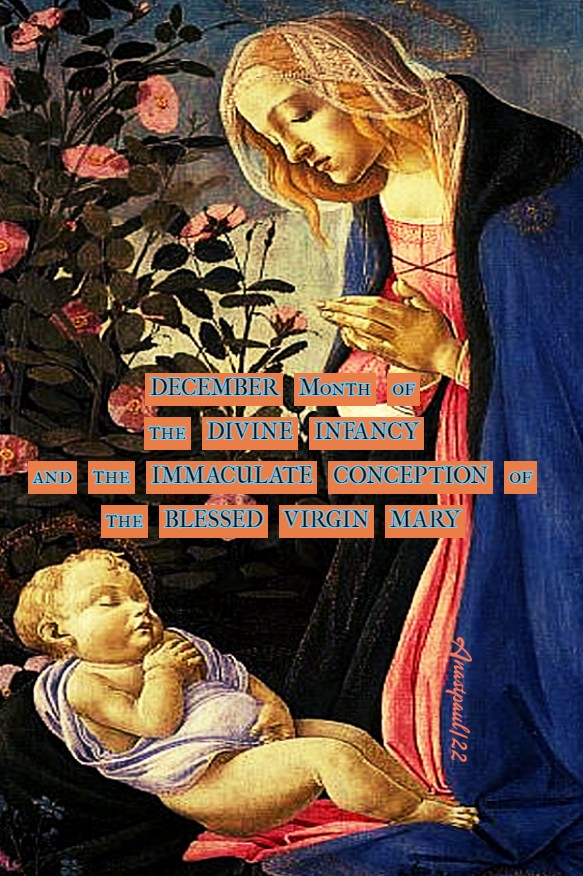
DECEMBER: Month of Devotion to The DIVINE INFANCY and The IMMACULATE CONCEPTION of the BLESSED VIRGIN MARY
The observance of Divine Infancy Month recalls the first Christmas more than 2,000 years ago when Jesus humbled Himself and became Completely Human, while remaining Completely Divine. The Blessed Virgin Mary was chosen to be the glorious Tabernacle of the Son of God. Therefore, in the first moment of her existence, God, called her into being that she might assume the exalted dignity of the Mother of His Son and, therefore, granted her the singular privilege of exemption from Original Sin.
Look to Our Lady – she is already waiting at the crib, desiring to teach us to make our hearts a pleasant crib for the Christ Child to dwell in.
Cultivate a spirit of prayer and attentiveness to His Presence as the Divine Infant by adopting Aspirations suitable to the season, such as:
Divine Infant King Jesus, come down into our hearts! Lord Jesus, through Thy Infant cries in the manger, when Thou was born for me; through Thy tears, when Thou died for me on the Cross; throughThy love, as You live for me in the Tabernacle, have mercy on me and save me. Amen!
PREPARATORY PRAYER: In thy conception, O Virgin Mary, thou wast immaculate; pray for us to the Father, Whose Son Jesus, conceived in thy womb by the Holy Ghost, thou didst bring forth.
Indulgence. 200 days, every time. (Pius VI, 21 November
MEDITATION: The Immaculate Conception of the Blessed Ever-Virgin Mary inaugurated the fulfilment of the Divine promise made to our first parents in Paradise, in the words addressed to the serpent: “I shall put enmities’ between thee and the woman and thy seed and her seed; she shall crush thy head” (Gen. iii. 15). Mary is the woman in whom Satan never had a part. Her intimate connection with God was announced by the Angel: “Hail, full of grace, the Lord is with thee!” Now was fulfilled the saying of the Psalmist, “The Most High hath sanctified His own tabernacle. God is in the midst, thereof, it shall not be moved: God will help it in the morning early” (Ps. xlv. 5-6). Mary was chosen to be the glorious tabernacle of the Son of God “in the morning early,” that is, in the first moment of her existence. God, called her into being that she might assume the exalted dignity of the Mother of His Son and, therefore, granted her the singular privilege of exemption from Original Sin. In her were fulfilled Solomon’s prophetic words of praise, “Thou art all fair, O my love and there is not a spot in thee” (Cant. iv. 7). It was in view of her Son’s merits, applied to her beforehand that God thus produced in her, the image of the new man regenerated in the Holy Ghost.
PRACTICE: The spirit of darkness holds mankind enslaved but one human being escapes him. A destructive fire lays waste the whole earth but one tree remains unscathed. A terrible tyrant conquers the whole world but one fortified city repels his assaults. This human being retaining liberty, this tree escaping destruction, this city repelling the enemy’s attack is the Blessed Virgin Mary.
Will the Almighty and Merciful God, Who has accomplished such great things in Mary, Who has selected her for His Mother, not to listen to her prayers, when she intercedes for us? St William of Paris exclaims: “No other created being can obtain for us, so many and so great graces from God, as His Mother. By the all-powerful might of her intercession, He honours her – not only as His handmaid but also, as His Mother.” Therefor,e we ought not be surprised when the holy Fathers maintain that a single sigh of Mary, is more effective with God, than the combined intercession of all the Angels and Saints. If, then, Mary’s power is so great, she will surely hear us when we invoke her help, in our combat with Satan. Having conquered him herself, she will also help us to conquer him!
PRAYER OF THE CHURCH: O God, Who through the Immaculate Conception of the Virgin didst prepare a worthy dwelling-place for Thy Divine Son; grant that, as in view of Thy Son, Thou didst preserve her from all taint, so Thou wouldst vouchsafe unto us that cleansed from all sin by her intercession, we too may arrive at Thine eternal glory. Through the same Christ our Lord. Amen.
PRAYER: Mary, thou mystical rose of purity, my heart rejoices with thine at the glorious triumph which thou didst gain over the infernal serpent by thy Immaculate Conception and because thou wast conceived without stain of Original Sin. I thank and praise, with my whole heart, the ever-blessed Trinity, Who granted thee this glorious privilege and I pray thee, to obtain for me strength to overcome all the wiles of the infernal foe, and never to stain my soul with sin. Be thou mine aid; make me, by thy protection, victorious over the common foe of our eternal welfare.
Thought for the Day – 1 December – Meditations with Antonio Cardinal Bacci (1881-1971)
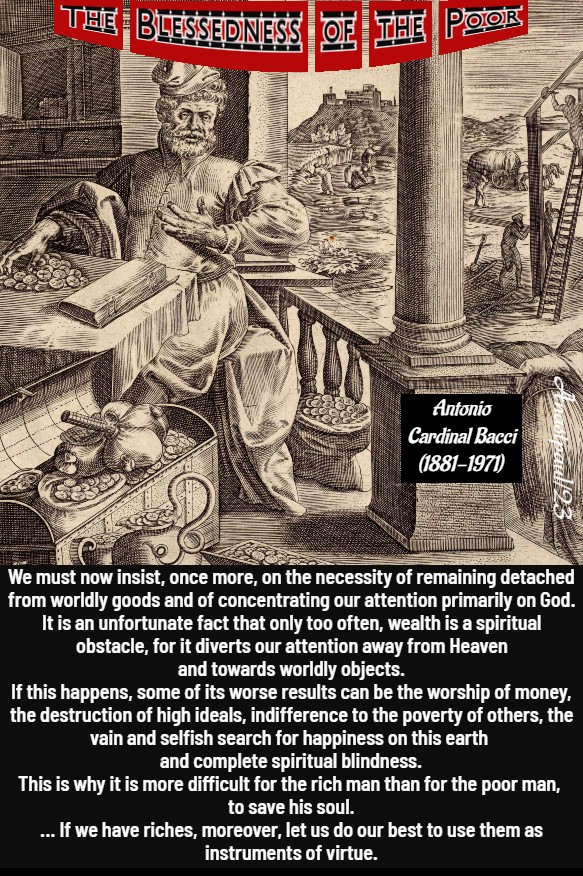
The Blessedness of the Poor
“We have established the principle that wealth is, in itself, good and is a gift from God but that, “it is good, insofar, as it leads us towards virtue and evil, insofar, as it leads us towards vice” (Summa Contra Gentiles III 134). We must now insist, once more, on the necessity of remaining detached from worldly goods and of concentrating our attention primarily on God. It is an unfortunate fact that only too often, wealth is a spiritual obstacle, for it diverts our attention away from Heaven and towards worldly objects. If this happens, some of its worse results can be the worship of money, the destruction of high ideals, indifference to the poverty of others, the vain and selfish search for happiness on this earth and complete spiritual blindness. This is why it is more difficult for the rich man than for the poor man, to save his soul.
“If thou wilt be perfect, go, sell what thou hast and give to the poor” (Mt 19:21). This is an evangelical counsel which we may have neither the courage, nor the vocation to pursue. At least, however, let us seek to purify ourselves of all attachments to wealth. If we have riches, moreover, let us do our best to use them as instruments of virtue.”
One Minute Reflection – 1 December – “The Month of the Divine Infancy and the Immaculate Conception of the Blessed Virgin Mary” – Ferial Day – Colossians 1:9-14; Matthew 24:15-35 – Scripture search here: https://www.drbo.org/
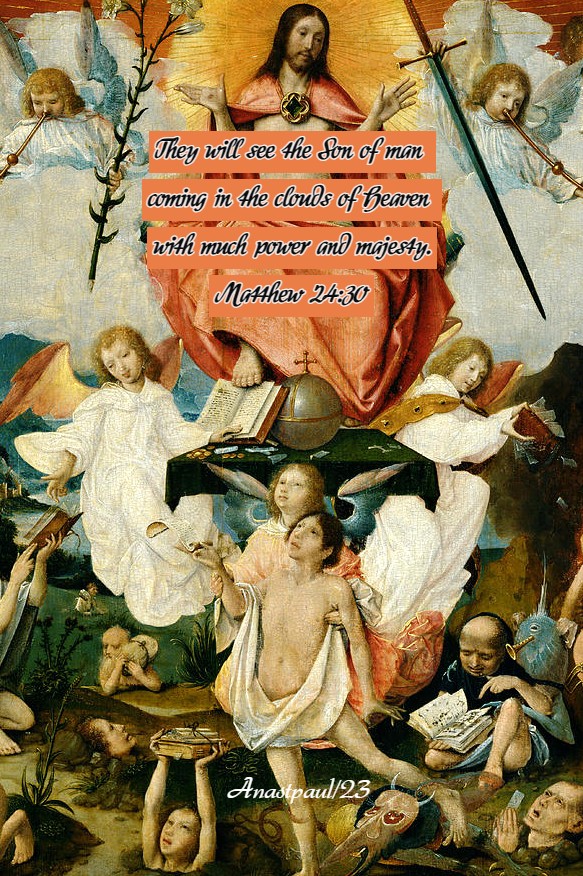
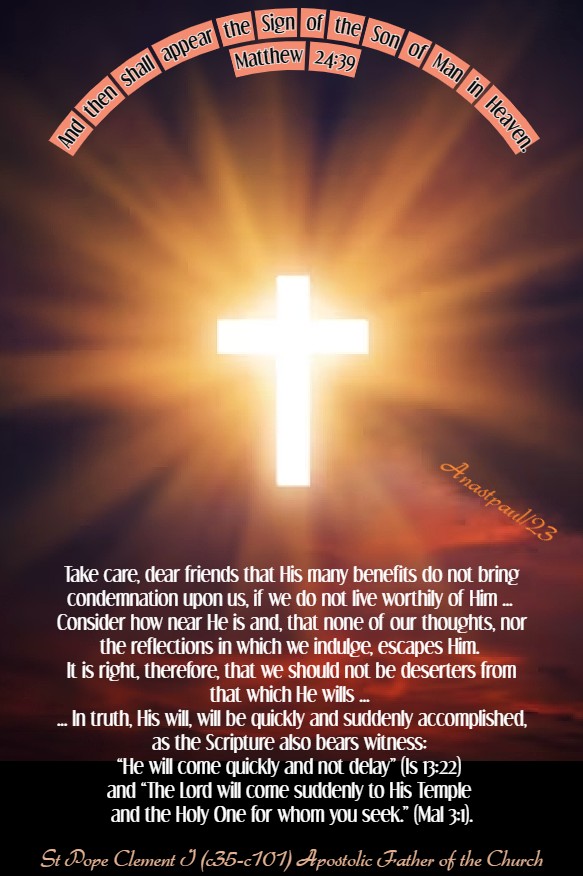
“And then shall appear the Sign of the Son of Man in Heaven. ” – Matthew 24:30
REFLECTION – “Let us fix our eyes on the Father and Creator of the world and cling to His splendid and surpassing gifts of peace and His benefits. Let us see Him with our mind and look with the eyes of the soul at His patient purpose. Let us consider how free from anger He is toward all His creation … For He ordered the universe to be in peace and harmony, in His kindness to all things but especially, to ourselves, who have taken refuge in His mercy …
Take care, dear friends that His many benefits do not bring condemnation upon us, if we do not live worthily of Him … Consider how near He is and, that none of our thoughts, nor the reflections in which we indulge, escapes Him. It is right, therefore, that we should not be deserters from that which He wills … . Far be it from us that Scripture, where it says: “How wretched are those who waver, who are of a doubting heart and say: “We heard those things even in our forefather’s time and here, we have grown old and none of them has happened to us.” You senseless people! Compare yourselves to a tree – take a vine. First it sheds its leaves, then a shoot appears, then a leaf, then a flower and afterward, a sour grape, then a ripe grape. You see in that, in a short time the fruit of the tree comes to maturity. In truth, His will, will be quickly and suddenly accomplished, as the Scripture also bears witness: “He will come quickly and not delay” (Is 13:22) and “The Lord will come suddenly to His Temple and the Holy One for Whom you seek.” (Mal 3:1).” – St Pope Clement I (c35-c101) Apostolic Father of the Church (Letter to the Corinthians 19-23)
PRAYER – From all perils of soul and body defend us, O Lord, we beseech Thee and by the intercession of the Blessed and glorious ever Virgin Mary, Mother of God, of blessed Joseph, of thy blessed Apostles Peter and Paul and all the Saints, graciously grant us safety and peace that all adversities and errors being overcome, Thy Church may serve Thee in security and freedom. Through the same Jesus Christ, Thy Son our Lord, Who lives and reigns with Thee, in the unity of the Holy Ghost, God, world without end. Amen (Collect).
Our Morning Offering – 1 December – The First Friday of December
Consecration and Reparation to the Sacred Heart By Pope Leo XIII (1810-1903) Pope from 1878-1903
Most sweet Jesus, Redeemer of the human race, look down upon us humbly prostrate before Thine altar. We are Thine and Thine we wish to be but, to be more surely united with Thee, behold each one of us, freely consecrates himself today to Thy most Sacred Heart. Many indeed have never known Thee, many too, despising Thy precepts, have rejected Thee. Have mercy on them all, most merciful Jesus and draw them to Thy Sacred Heart. Be Thou King, O Lord, not only of the faithful, who have never forsaken Thee but also of the prodigal children, who have abandoned Thee, grant that they may quickly return to Thy Father’s house lest they die of wretchedness and hunger. Be Thou King of those who are deceived by erroneous opinions, or whom discord keeps aloof and call them back to the harbour of truth and unity of faith, so that there may be but one flock and one Shepherd. Be Thou, King of all those. who are still involved in the darkness of idolatry or of Islamism and refuse not, to draw them into the light and kingdom of God. Turn Thine eyes of mercy towards the children of the race, once Thy chosen people – of old they called down upon themselves the Blood of the Saviour; may it now descend upon them, a laver of redemption and of life. Grant, O Lord, to Thy Church, assurance of freedom and immunity from harm; give peace and order to all nations and make the earth resound from pole to pole, with one cry: “Praise be to the Divine Heart that wrought our salvation; to It be glory and honour forever.” Amen
The above prayer, composed by Pope Leo XIII was included in the 1899 Encyclical, Annum Sacrum, issued by Leo XIII as he Consecrated the entire world to the Sacred Heart of Jesus. The Consecration was influenced by two letters written to the Holy Father by Blessed Sister Mary of the Divine Heart, who stated that in visions of Jesus Christ, she had been told to request the Consecration.
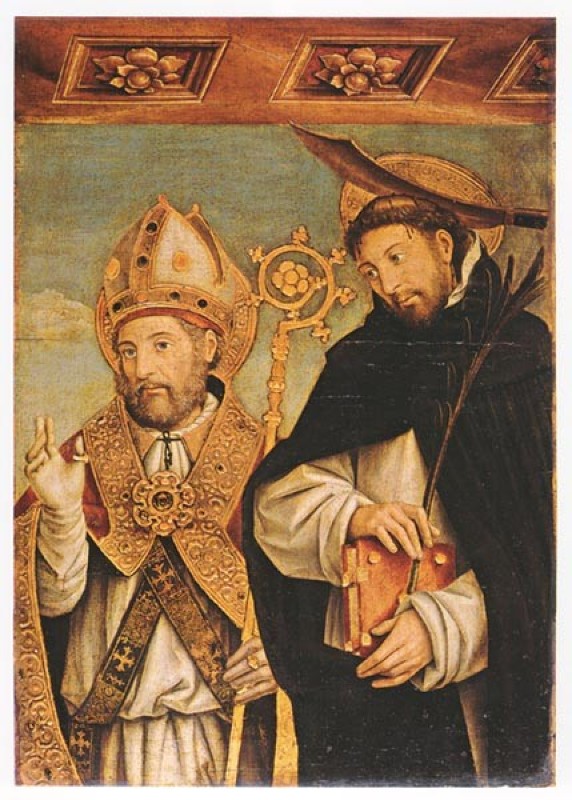
Saint of the Day – 1 December – Saint Evasius of Asti (Died c362) the First Bishop of Asti in Piedmont, Italy, Martyr, Missionary., Miracle-worker Born at Benevento, Italy and died in c362 at Casale Monferrato, Italy probably by beheading. Patronages of the following in Italy – Bizzarone, Casale Monferrato, City of Casale Monferrato, Diocese of Pedrengo, Rocchetta Palafea. Additional Memorial – 12 November in Casale Monferrato, Italy (translation of relics).
The Saints Evasius and Peter Martyr. Artist – Giovanni Martino Spanzotti, Oil on wood, c1595–1600.
Evasius is considered in tradition, to be the first Bishop of Asti, Consecrated around 330 – the earlier Cathedral was the current Church of San Secondo. Evasius, converted the main temple of Asti, dedicated to the goddess Minerva, into a Church, brought Monks to the – now abandoned – Monastery of the Santi Apostoli and converted many people. But the powerful supporters of Arianism, enraged by this, forced him and his companions – Saint Projectus of Casale and St Natalis ,to flee the City.
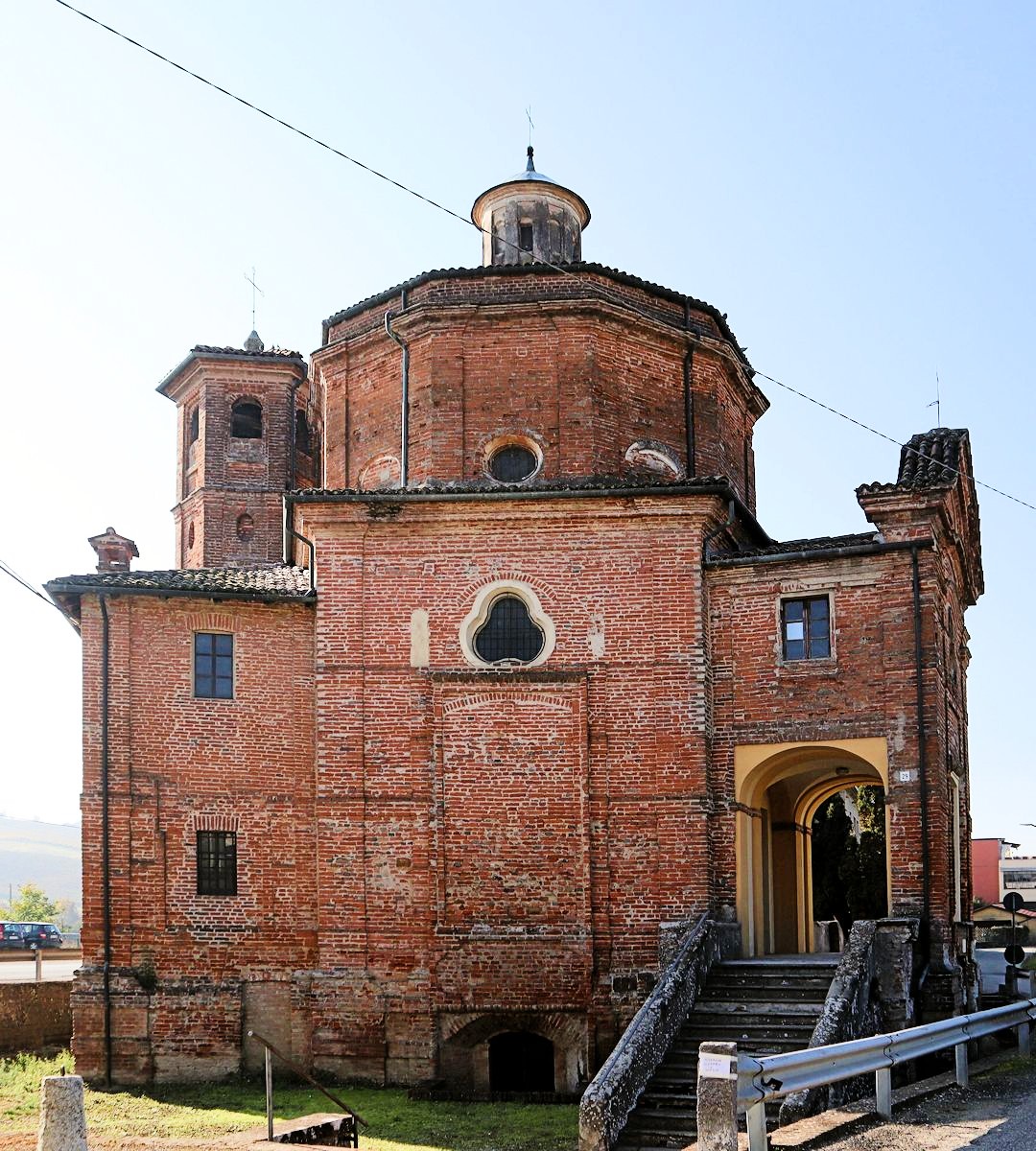
Church dedicated to Evasius in Pozzo Sant’Evasio
The three Saints found refuge in the Cornea forest – on the site of the Church in today’s Pozzo Sant’Evasio district near Casale Monferrato, where Evasius caused a spring to rise which is considered to have miraculous powers of curing sickness.
St Evasius Altarpiece in the Parish Church in Borgo Vercelli
There, according to legend, Atubalo, the Prefect of the City of Sedula, incited by the Arians, had them arrested along with another 145 of the lay faithful and then beheaded.
Fresco in the Cathedral at Asti
According to tradition, the Martyrs were buried in the Church of San Lorenzo – today’s Cathedral – in Casale Monferrato. In the Middle Ages the City was called Casale Sant’Evasio in honour of their Patron Saint Evasius . Today’s Cathedral was first mentioned in a document in 974 as a Church dedicated to him.
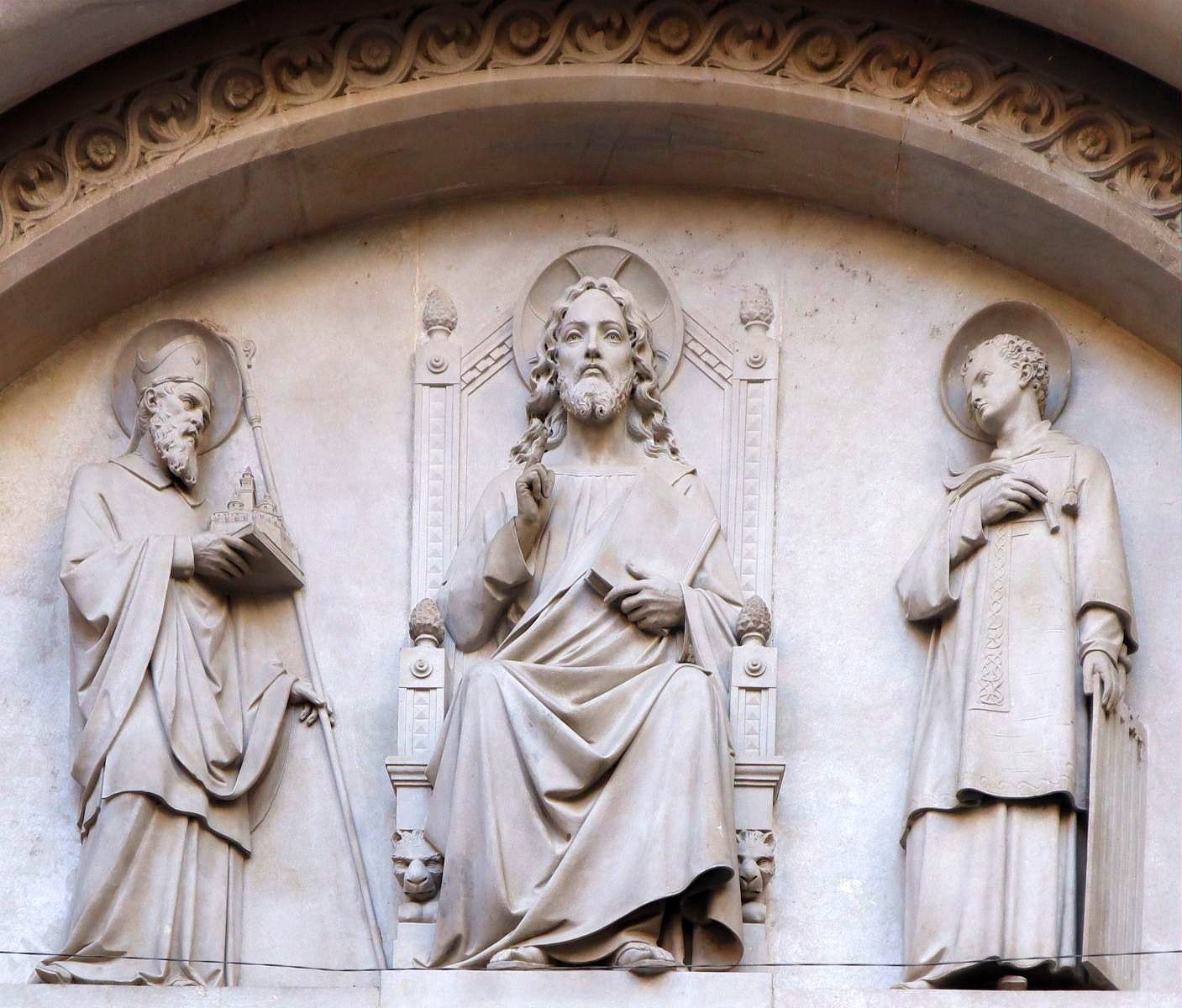
St Evasius (left), Christ and St Lawrence of Rome, Relief at the Cathedral in Casale Monferrato
There is much doubt about our Saint’s period of life and Episcopal governance. In fact, it is believed that Anianus, who reigned around 400, was the First Bishop in Asti, according to studies by Guglielmo Visconti in 2006 and by Fr S Dacquino in 1979. According to the list of Bishops of Asti, Evasius was the Bishop of the City from 685 to 713.
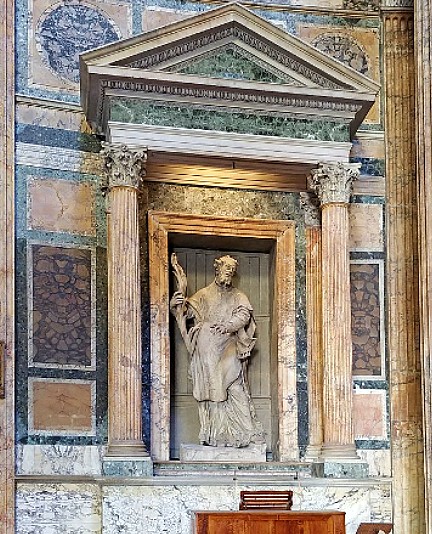
Statue of St Evasius at the Pantheon in Rome
Evasius’ remains were transferred to the Cathedral in Casale Monferrato. The Diocese of Casale Monferrato was only established in 1474 by Pope Sixtus IV. Relics also came to Borgo Vercelli, where Evasius’ intercession saved the inhabitants from an epidemic.
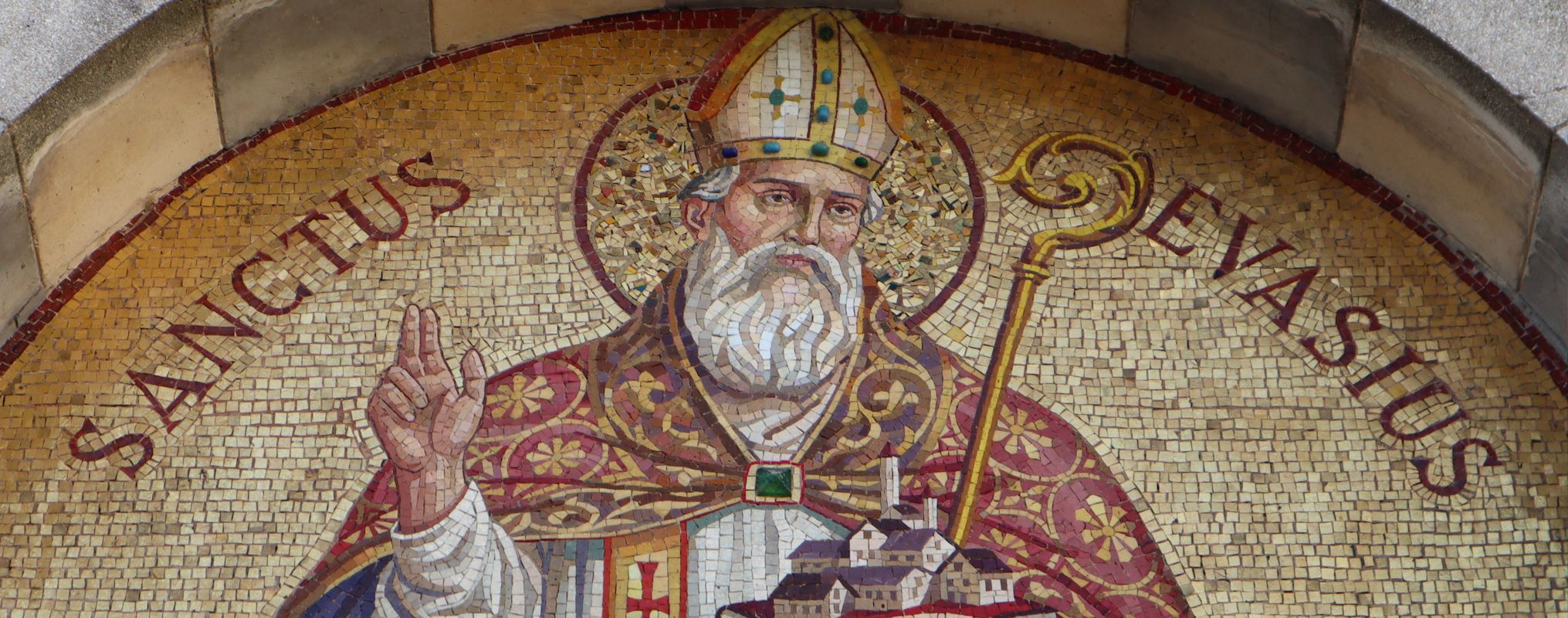
Mosaic of St Evasius, above the door of the Parish Church in Borgo
St Evasius’ Sarcophagus in the Cathedral in Casale Monferrato
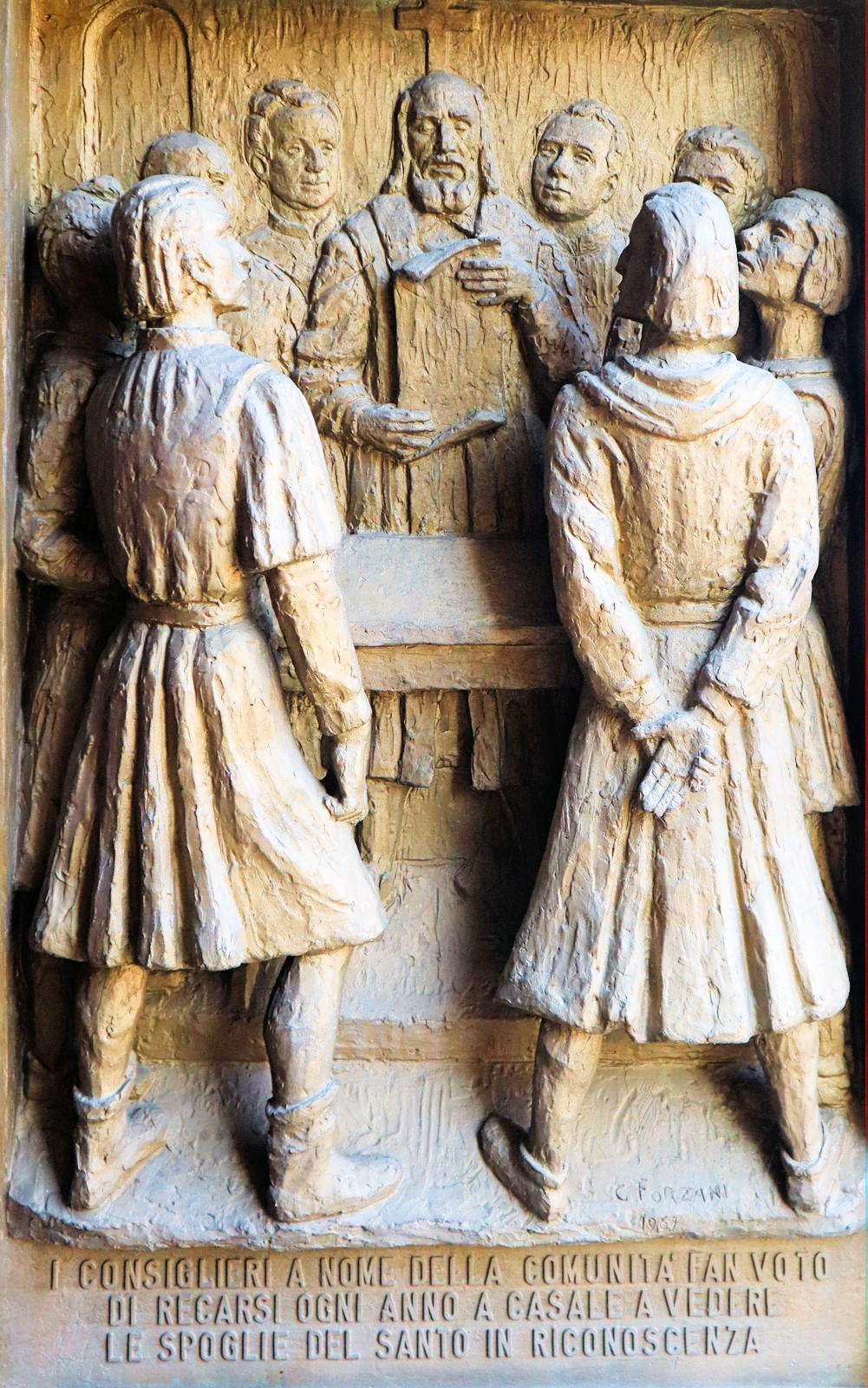
The elevation of the Relics of Evasius in Casale Monferrato, Bronze Relief on the door of the Parish Church in Borgo Vercelli
DECEMBER: Month of Devotion to The DIVINE INFANCY and The IMMACULATE CONCEPTION of the BLESSED VIRGIN MARY
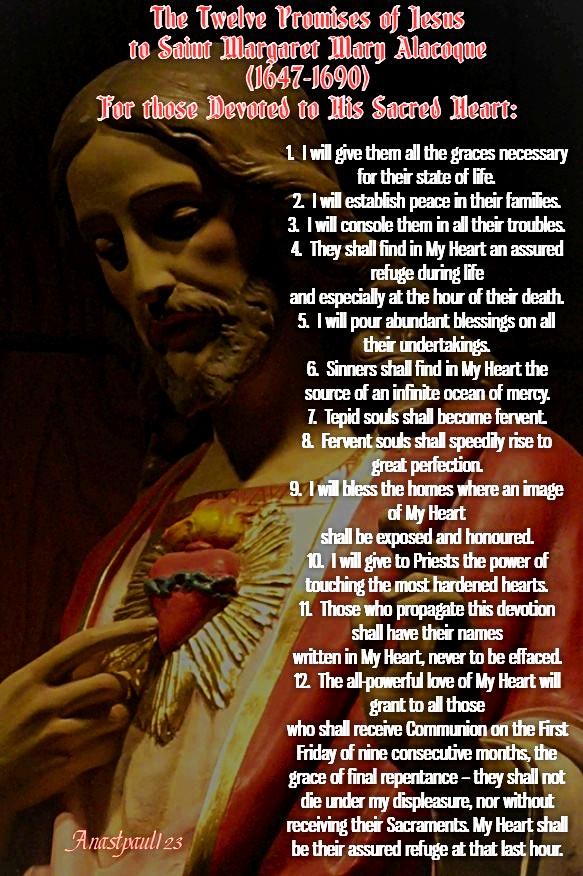
First Friday of the Month: “I promise you, in the excessive mercy of my Heart that my all powerful love, will grant to all those who receive Holy Communion on the First Friday, for Nine Consecutive Months, the grace of final repentance; they shall not die in my disgrace, nor without receiving the Sacraments; my Divine Heart shall be their safe refuge, in that last moment.” — Our Lord to St Margaret Mary
How to complete the First Friday’s Devotion:
Receive Holy Communion on each First Friday;
The Nine Fridays must be consecutive;
They must be made in honour and in reparation to His Sacred Heart.
St Agericus of Verdun St Agnofleta St Alexander Briant St Ambon of Rome St Ananias of Arbela St Ansanus the Baptizer Bl Antony Bonfadini St Candida of Rome St Candres of Maestricht St Cassian of Rome St Castritian of Milan Bl Christian of Perugia St Constantine of Javron St Declan St Didorus St Domnolus of Le Mans
St Latinus of Rome St Leontius of Fréjus St Lucius of Rome St Marianus St Marina of Rome St Martinus St Nahum the Prophet St Natalia of Nicomedia St Olympiades St Proculus of Narni St Resignatus of Maastricht Bl Richard Langley St Rogatus of Rome St Simon of Cyrene St Superatus of Rome St Ursicinus of Brescia
Martyrs of Oxford University: A joint commemoration of all the men who studied at one of the colleges of Oxford University and who were later Martyred for their loyalty to the Catholic Church during the official persecutions in the Protestant Reformation in England under Elizabeth I. They are: Blessed Edward James • Blessed Edward Powell • Blessed Edward Stransham • Blessed George Napper • Blessed George Nichols • Blessed Hugh More • Blessed Humphrey Pritchard • Blessed James Bell • Blessed James Fenn • Blessed John Bodey • Blessed John Cornelius • Blessed John Forest • Blessed John Ingram • Blessed John Mason • Blessed John Munden • Blessed John Shert • Blessed John Slade • Blessed John Storey • Blessed Lawrence Richardson • Blessed Mark Barkworth • Blessed Richard Bere • Blessed Richard Rolle de Hampole • Blessed Richard Sergeant • Blessed Richard Thirkeld • Blessed Richard Yaxley • Blessed Robert Anderton • Blessed Robert Nutter • Blessed Robert Widmerpool • Blessed Stephen Rowsham • Blessed Thomas Belson • Blessed Thomas Cottam • Blessed Thomas Pilcher • Blessed Thomas Plumtree • Blessed Thomas Reynolds • Blessed William Filby • Blessed William Hart • Blessed William Hartley • Saint Alexander Briant • Saint Cuthbert Mayne • Saint Edmund Campion • Saint John Boste • Saint John of Bridlington • Saint John Roberts • Saint Ralph Sherwin • Saint Thomas Garnet • Saint Thomas More.





















 AnaStpaul
You must be logged in to post a comment.