Thought for the Day – 15 January – The Spiritual Combat (1589) – Dom Lorenzo Scupoli OSM (c1530-1610)
“None shall be crowned who has not fought well.” 2 Tim 2: 5
The Third Weapon of the Spiritual Combat
VII: … Of Spiritual Exercises (and the first of the Exercise of the Understanding (Reason) — which must be kept guarded against ignorance and curiosity).
“If in this warfare, we are provided with no weapons except self-distrust and trust in God, needful as both these are, we shall not only fail to gain the victory over ourselves but, shall fall into many evils. To these, therefore, we must add the use of Spiritual Exercises, the Third Weapon named above. And these relate chiefly to the Understanding (Reason) and the Will.
As regards the Understanding, we must guard against two things which are apt to obscure it. One is ignorance which darkens it and impedes it in acquiring the knowledge of truth, the proper object of the understanding. Therefore, it must be made clear and bright, by exercise that so it may be able to see and discern plainly, all that is needful to purify the soul from disorderly passions and to adorn it with saintly virtues.
This light may be obtained in two ways: The first and most important is prayer, imploring the Holy Ghost to pour it into our hearts. This He will not fail to do, if we, in truth seek God alone and the fullment of His holy will and, if in all things, we submit our judgement to that of our spiritual father. The other is, to exercise ourselves continually in a true and deep consideration of all things, to discover whether they be good or evil, according to the teaching of the Holy Ghost and not, according to their outward appearance, as they impress the senses or are judged of by the world.
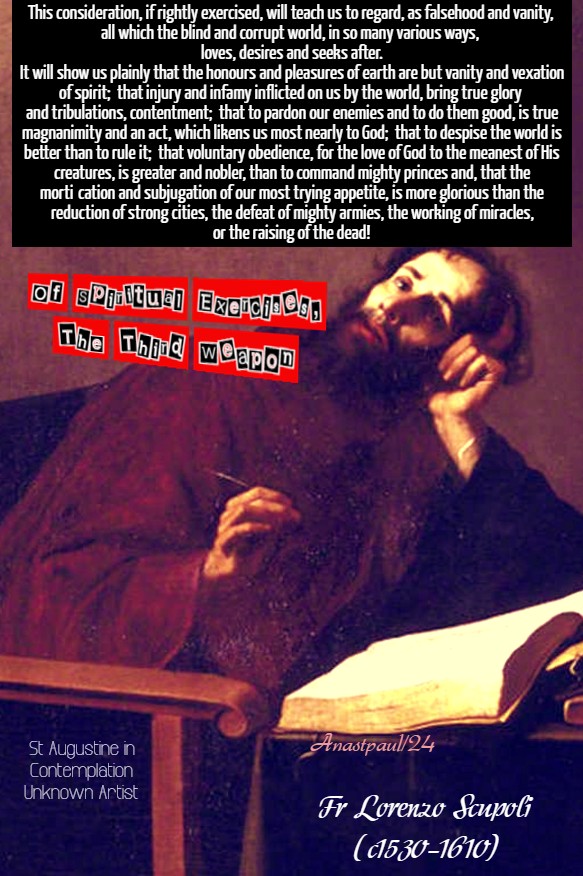
This consideration, if rightly exercised, will teach us to regard, as falsehood and vanity, all which the blind and corrupt world, in so many various ways, loves, desires and seeks after. It will show us plainly that the honours and pleasures of earth are but vanity and vexation of spirit; that injury and infamy inflicted on us by the world, bring true glory and tribulations, contentment; that to pardon our enemies and to do them good, is true magnanimity and an act, which likens us most nearly to God; that to despise the world is better than to rule it; that voluntary obedience, for the love of God to the meanest of His creatures, is greater and nobler, than to command mighty princes and, that the mortication and subjugation of our most trying appetite, is more glorious than the reduction of strong cities, the defeat of mighty armies, the working of miracles, or the raising of the dead!”
Quote/s of the Day – 15 January – The Feast of St Macarius of Egypt (c300-390) Priest, Abbot, Hermit, Desert Father of the Church, Spiritual student of Saint Anthony Abbot, Ascetic, Miracle-worker , known as “The Glowing Lantern.”
“Just as the blessings of God are unutterably great, so their acquisition, requires much hardship and toil, undertaken with hope and faith.”
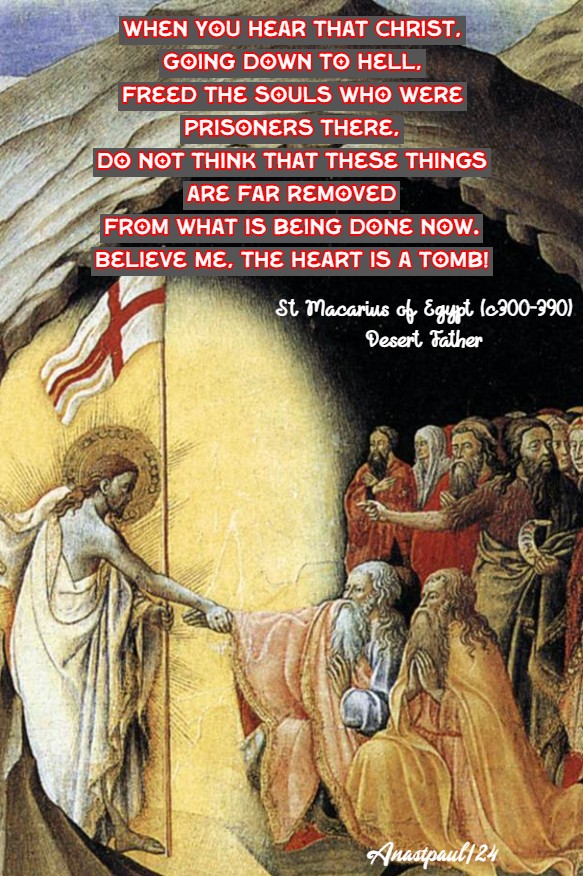
“When you hear that Christ, going down to hell, freed the souls who were prisoners there, do not think that these things are far removed from what is being done now. Believe me, the heart is a tomb!”
“If you rebuke someone and do it with anger, you have allowed a passion to control you. You have not saved anyone and have destroyed yourself!”
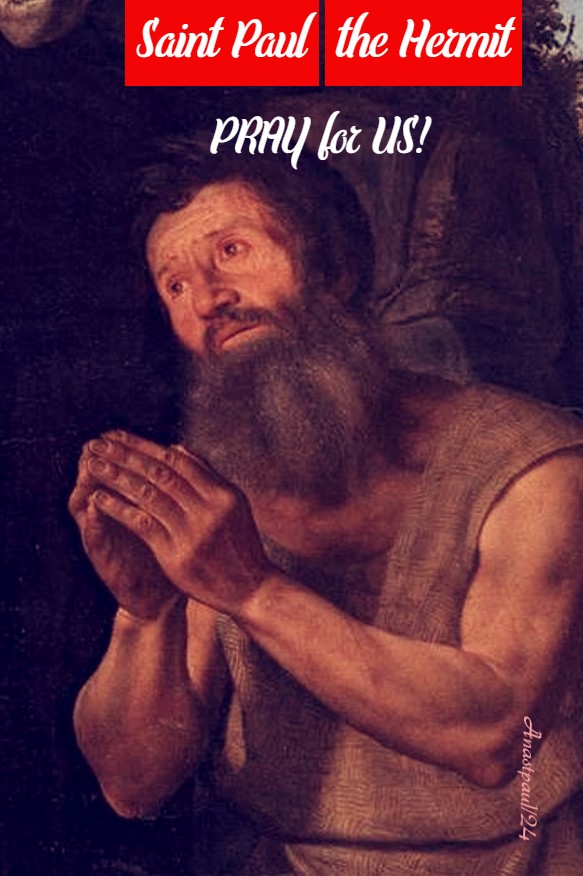
One Minute Reflection – 15 January – St Paul the Hermit (c227-c342) The First Hermit – in the Thebaid region of Egypt, is regarded as the first Christian hermit, who lived alone in the desert from his sixteenth to the one hundred and thirteenth year of his life. – Philippians 3:7-12; Matthew 11:25-30 – Scripture search here: https://www.drbo.org/
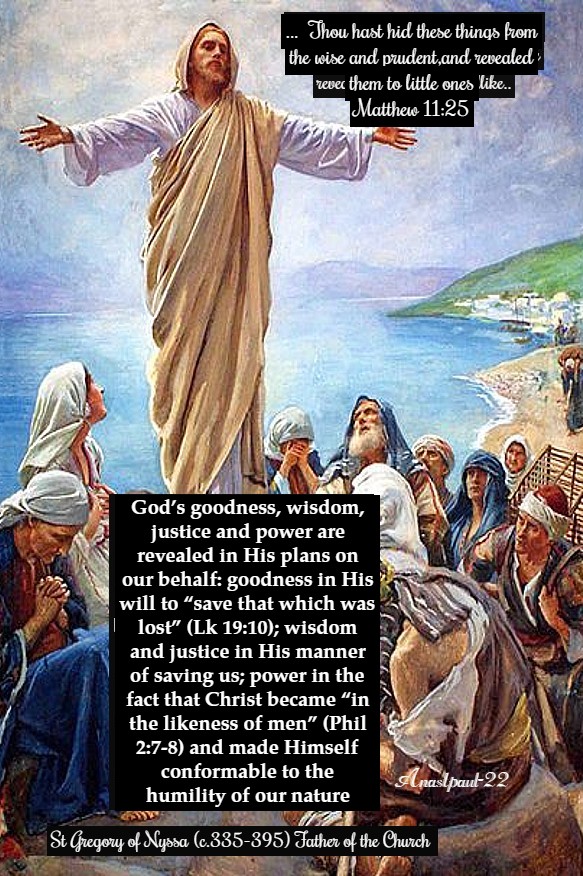
“…Thou hast hid these things from the wise and prudent,and revealed them to little ones.”– Matthew 11:25
REFLECTION – “The fact ,that the All-Powerful God has been able to humble Himself even to the humility of the human condition, constitutes a greater proof than the impact and supernatural character of miracles. Indeed, when divine power effects something of great sublimity, this is, after a fashion, in conformity with and appropriate to, God’s nature … On the other hand, that God descended even to our lowliness is, in a certain way, the expression of an overwhelming power which is not in the least restrained, by what is contrary to its nature …
Neither the expanse of the heavens, the brightness of the stars, the governing of the universe, nor the harmony of created things, reveal the splendid power of God, as much as His indulgence, which leads Him to lower Himself to the weakness of our nature … God’s goodness, wisdom, justice and power are revealed in His plans on our behalf:goodness in His will to “save that which was lost” (Lk 19:10);wisdom and justice in His manner of saving us;power in the fact that Christ became “in the likeness of men” (Phil 2:7-8) and made Himself conformable to the humility of our nature.” – St Gregory of Nyssa (c.335-395) Bishop, Father of the Church (Catechetical Discourse 23-26 ; SC 453).
PRAYER – O God, Who each year give us the joyful feast of blessed Paul, Thy Confessor, mercifully grant that we may imitate the deeds of him, whose anniversary we celebrate. Through Jesus Christ, Thy Son our Lord, Who lives and reigns with Thee, in the unity of the Holy Ghost, God, world without end. Amen (Collect).
Our Morning Offering – 15 January – “The Month of the Most Holy Name of Jesus and of the Holy Family” – The Feast of St Macarius of Egypt (c300-390) Priest, Abbot, Hermit, Desert Father of the Church, Spiritual student of Saint Anthony Abbot, Ascetic, Miracle-worker , known as “The Glowing Lantern.”
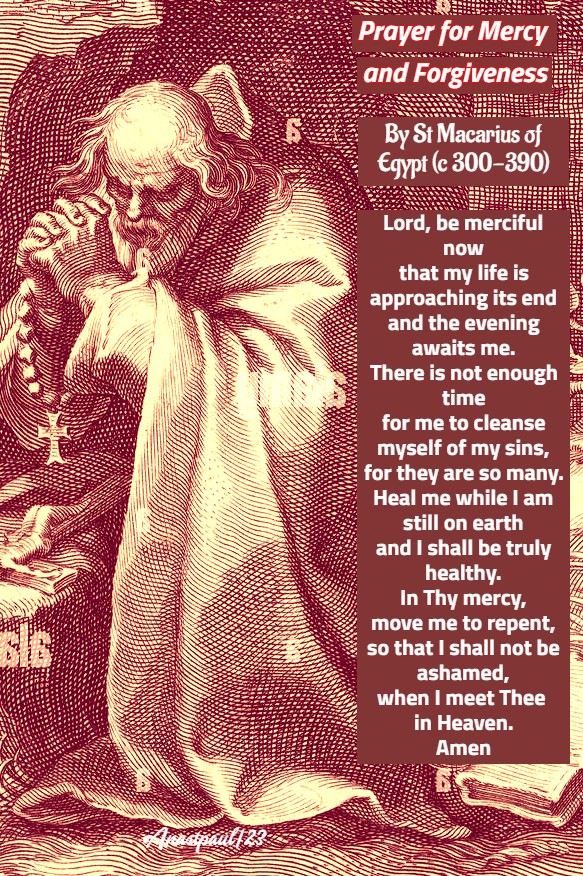
Prayer for Mercyand Forgiveness By St Macarius of Egypt (c300-390)
Lord, be merciful now that my life is approaching its end and the evening awaits me. There is not enough time for me to cleanse myself of my sins, for they are so many. Heal me while I am still on earth and I shall be truly healthy. In Thy mercy, move me to repent, so that I shall not be ashamed, when I meet Thee in Heaven. Amen
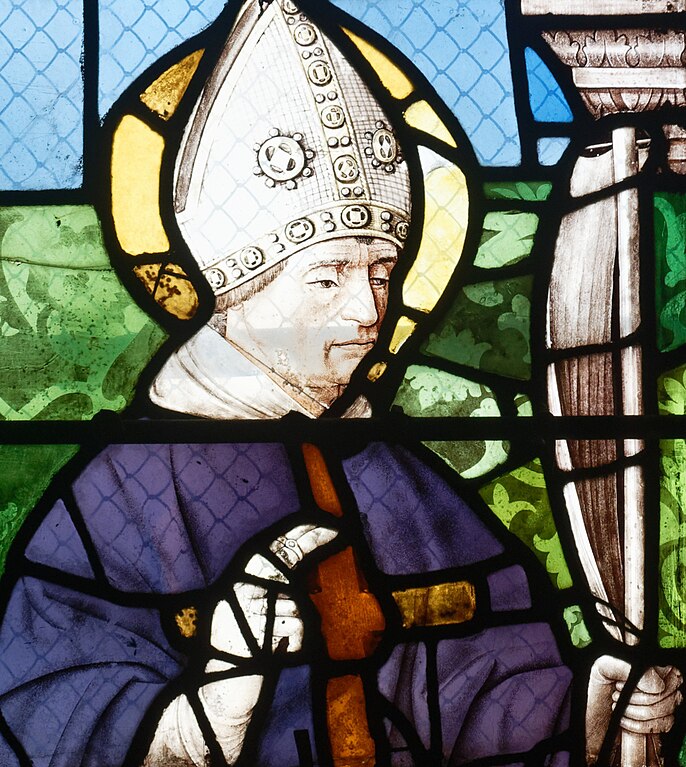
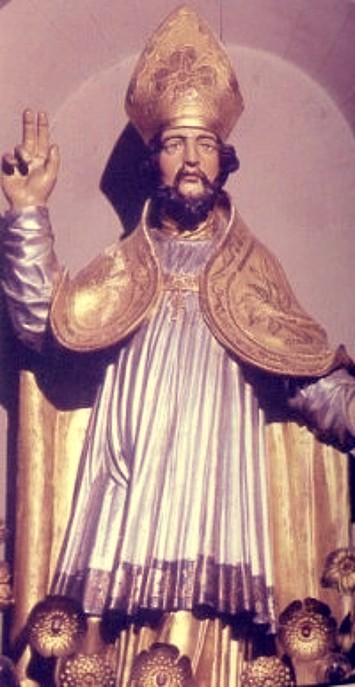
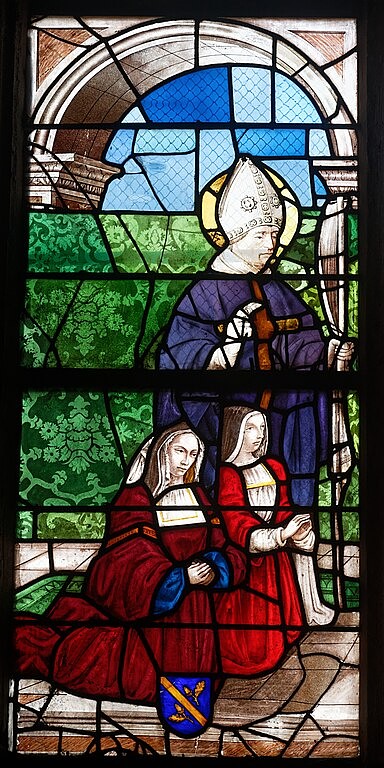
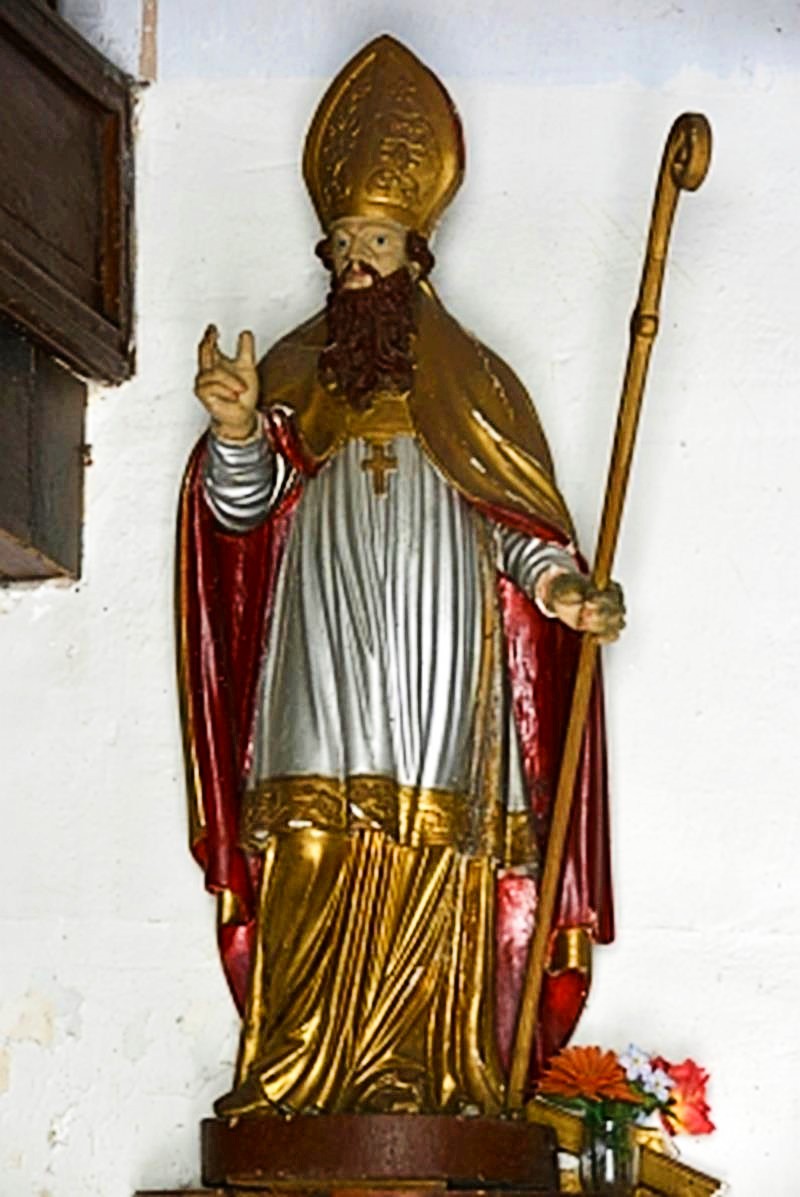
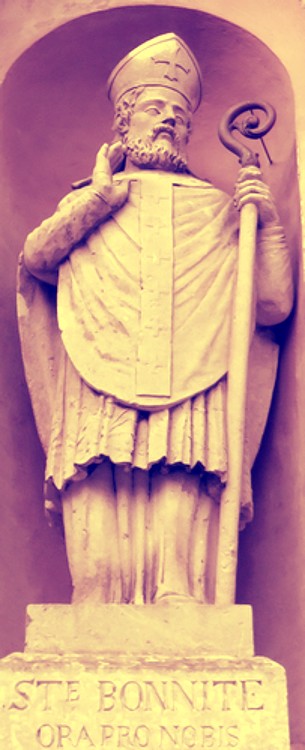
Saint of the Day – 15 January – Saint Bonitus of Clermont (c623-706) Bishop, Confessor, Chancellor of the Kingdom, Governor of Provence, Diplomatic peacemaker, Protector of Slaves and active advocate for its abolition, a man of deep devotion and Asceticism, Promoter of monasticism, builder of Churches and Monasteries., Miracle-worker. Heir to a rich heritage, he used his resources not only to beautify Churches and Monasteries but also, to relieve the miseries of the poor. Bonitus is a much loved and endearing Saint in France and, in some ways, a very modern figure. Born in c623 in Auvergne, France and died in 706 in Lyon, France of natural causes. Patronages – against leg ailments (gout), of Clermont and Lyons, France, of Bonito, Italy. Also known as – Bonet, Bonito, Bonnet, Bont, Bunìto, Bunìtë, Bonnite.
The Roman Martyrology reads: “At Clermont, in Auvergne, St Bonitus, Bishop and Confessor.”
Bonitus was born in Auvergne around 623–630 (but the place is unknown, probably Clermont). He came from a large aristocratic family from Auvergne, who held important positions in France (like many Bishops at that time). He made, perhaps in Clermont, very careful studies in law, grammar and literature, in order to prepare himself for a political career. He was thus noticed by King Sigebert II who entrusted him with high functions at Court. After the death of his father, he became the Chancellor of King Sigebert III, then, in around 677, he was sent to Marseille as the Governor of Provence.
He exercised this function with great gentleness (while the time was particularly marked by violence). He strongly opposed the sale of slaves and bought back those he could reach, to free them. Despite his responsibilities, he practiced severe asceticism and demonstrated great piety. This is how the cult of Saint Sidoine Apollinaire (former Bishop of Clermont) would have developed early in Provence, and this thanks to the action of Bonitus (he indeed had great admiration for this Bishop who courageously defended the Province of Auvergne against the Visigoths).
Bonitus’elder brother, St Avitus, was then the Bishop of Clermont. Feeling his death approaching, he persuaded his entourage and the faithful of Clermont, to elect Bonitus in his place. This was done around 689 or 690, with the consent of the clergy and the approval of the King (according to the tradition of the time).
His Episcopate in Clermont extended over approximately ten years, illustrated by his piety and charity. He gave new impetus to the famous Episcopal school (founded at the beginning of the 6th Century) responsible for training young clerics. He also took care of the training of his clergy and organised missions in regions which were still poorly Christianised — these missions seemed a novelty for the time.
He favoured the monastic expansion then underway, either by encouraging the restoration of ruined Monasteries (for example the Abbey of Menat by a young Monk Ménélée), or by establishing new Monasteries (perhaps Royat, Chamalières, Beaumont…) , or by favouring founders (for example Calmin who built Mozac). In his undertakings, Bonitus benefited from the friendly assistance of the pious Count Genèsius who then Governed Auvergne.
Inhabited by profound piety, Bonitus was also concerned with liturgical celebrations — instituting a solemn fast and then a famous and miraculous procession of prayer which he ordered in Clermont, to pray for the cessation of the long drought which was desolating Auvergne and, an abundant rain poured down and alloweda beneficial and a succesful and long-awaited harvests!.
However, after ten years of Episcopate, he was assailed by scruples. Bonitus resigned his Seat and retired, as a penance, as a simple Monk at the Benedictine Abbey of Manglieu. In fact, he thought that his designation as Bishop had not been valid and that it was hardly reconcilable with Canonical rules because he had been chosen by his brother. Feeling remorseful, when he was the Bishop, he sought advice from several Monks, including the renowned Monk Tillo, of the Abbey of Solignac, near Limoges, who suggested he resign. What motivated his decision. (We can also assume that his appointment had perhaps caused resentment among high-ranking Priests, including the one who would be his successor, Nordebert…).
After having practiced monastic life for some time in Manglieu, he decided to undertake, despite his great age, a pilgrimage to Rome via Lyon, where he stayed for a time in the Monastery of Isle-Barbe. In reality,, he was sought out in Manglieu, in order to settle various disciplinary or doctrinal disputes which had arisen in the Lyon region and in the north of Italy. This is how, among other things, he resolved a conflict between the Bishop of Lyon and the Duke of Burgundy and, as a wise advisor, he succeeded in appeasing the revolt between the King of Lombard and his subjects. We can sense here the experience of the politician he once was.
Then, arriving in Rome, he made his devotions at the Tombs of the Apostles Peter and Paul and then he started his journey his way back home. During this period, he returned with captives, whose freedom he had purchased in Rome and, according to reports, he performed miracles with the oil brought from the Tomb of Saint Peter.
Finally, he returned to Lyon where he lived for four years in a Monastery and took care to re-establish good relations with his successor in Clermont. In 706, therefore, very old, he died in Lyon of an attack of gout. His body, believed to be miraculous, was then placed in the Saint-Pierre Monastery of this City.
The Bishop of Clermont requested the transfer of his remains to Auvergne. It was not without many difficulties — Clermont and Lyon fought over the Relics! Finally, after six years of negotiations, he sent the Abbot of Manglieu (the same one who had welcomed Bonitus into his Monastery) to Lyon to settle this long dispute. And the Relics were brought back triumphantly to Clermont. The translation would have taken place around 712(?) and the remains deposited in the Saint-Maurice Church, a very old Church which was restored for the occasion. It was located below the Poterne, near the current Rue Sidoine Apollinaire and this cCurch then became a place of pilgrimage, it also took the name of Saint Bonitus (later, it woulf be destroyed under the Revolution).
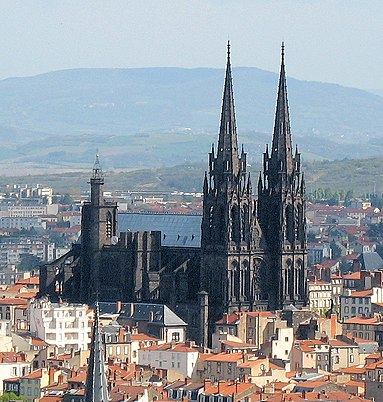
In 1095, the Relics were transferred to the recently built cathedral and placed in a chapel in the apse which will bear his name. In the 13th century, in the new Gothic cathedral, the chapel dedicated to Saint Bonnet was decorated with a set of stained glass windows which tell the story of his life in a slightly legendary way! A beautiful reliquary of gilded silver was made to enclose his relics. But it was destroyed during the Revolution and its relics disappeared.
Bonifus’ fame was significant and numerous Relics of the Saint were scattered in various places (as was often the custom, especially during the Middle Ages). This is why a certain number of places and Churches bear his name in France, particularly in the Diocese of Lyon, Marseille, Autun and, especially in Auvergne in the vast territory of the former Diocese of Clermont. Today, in the area of Puy-de -Dôme (therefore, the current Diocese of Clermont), he is the Patron of 17 Churches.
In order to establish his biography, historians were able to rely on a reliable source, being the “Vita Sancti Boniti = The Life of Saint Bonitus” written shortly after his death by a Monk from Manglieu. He wrote down what he had learned, often from direct witnesses (including the Abbot of Manglieu). Subsequently, much later legends were written which took pleasure in embellishing his life but, they at least testify to the popularity of the Saint and the fervour of his cult (he was invoked particularly for leg ailments). He was the 28th Bishop and he closes (to this day!) the list of holy Bishops of Clermont. Currently his Feast is celebrated in the Diocese on 16 January (supposed day of his death) but the 1914 Roman Martyrology which is used for the Traditional Calendar, shows his day and festival as 15 January.
The above graceful and factual rendition of our Saint Bonitus’ life, is from the Diocese of Clermont.
St Maurus OSB (c512-584) Benedictine Monk, Abbot and Deacon, Miracle-worker. Maurus was the first disciple of Saint Benedict of Nursia (512–584). He is mentioned in Saint Gregory the Great’s biography of the latter as the first oblate, offered to the Monastery by his noble Roman parents as a young boy, to be brought up in the monastic life. The formula and blessing of St Maurus were universally adopted and approved for use in the Blessing of the Sick. His Life and Miracles: https://anastpaul.com/2021/01/15/saint-of-the-day-15-january-saint-maurus-osb-c-512-584/
St Blaithmaic of Iona St Bonitus of Clermont (c623-706) Bishop, Confessor St Britta St Ceolwulf of Northumbria St Emebert of Cambrai St Ephysius of Sardinia St Eugyppius Bl Geoffrey of Peronne Bl Giacomo Villa St Gwrnerth St Habakkuk the Prophet St Isidore of Scété St Isidore the Egyptian St Ita of Killeedy St John Calabytes St Liewellyn St Lleudadd of Bardsey St Malard of Chartres St Maximus of Nola St Michaeas + Bl Peter of Castelnau St Placidus








 AnaStpaul
You must be logged in to post a comment.