Posted in OUR Cross, QUOTES on GRACE, QUOTES on MORTIFICATION, QUOTES on PERSEVERANCE, QUOTES on SANCTITY, QUOTES on SELF-DENIAL, QUOTES on SIN, QUOTES on TEMPTATION, QUOTES on the CROSS of CHRIST, QUOTES on UNITY/with GOD, QUOTES on VICE, QUOTES on VIRTUE, QUOTES on WILL (Reasonable or Superior), QUOTES on Will (Sensual or Inferior), The HOLY CROSS, THE SPIRITUAL COMBAT - Fr Lorenzo Scupoli, The WILL of GOD

Thought for the Day – 4 February – Of the Acts to be Performed in order to Acquire Habits of Virtue (Part FOUR)

Thought for the Day – 4 February – The Spiritual Combat (1589) – Dom Lorenzo Scupoli OSM (c1530-1610)

None shall be crowned who has not fought well.” 2 Tim 2: 5

The Third Weapon
of the Spiritual Combat

XIII: … Of the Way to Resist the Impulses of Sense
and of the Acts to be Performed by the Will,
in order to Acquire Habits of Virtue (Part Four)
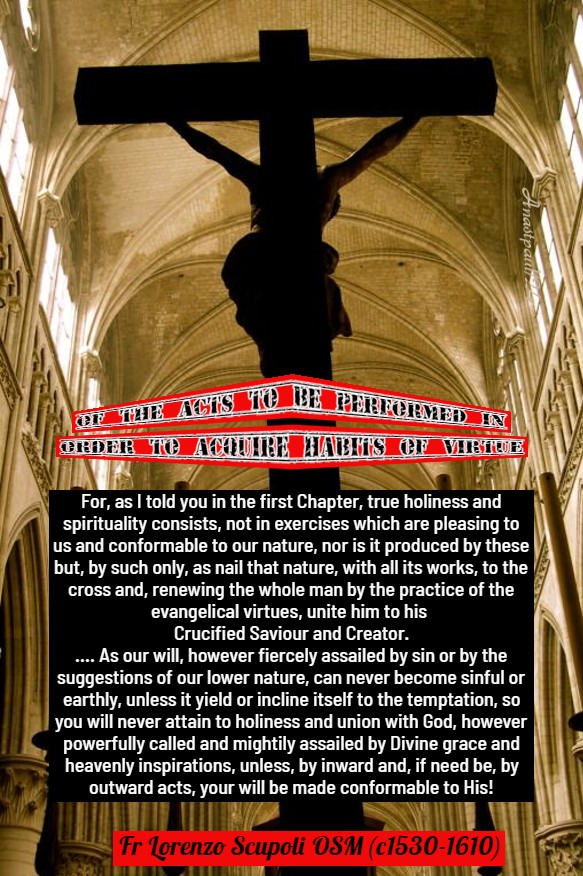
“Remember, again, to mortify and thwart your own wishes, from time to time, in lawful but not necessary things; for many benefits follow such discipline; it will prepare and dispose you, more and more, for self-mastery in other things; you will thus become expert and strong, in the struggle with temptation; you will escape many a snare of the devil and accomplish a work well pleasing to the
Lord.

I speak plainly to you; if, in the way I have taught you, you will persevere faithfully, in these holy exercises for self-reformation and self-mastery, I promise you that in a short time, you will make great progress and will become spiritual, not in name only but in truth!
But in no other manner do I bid you hope to attain to true holiness and spirituality, nor by any other exercises, however excellent in your estimation, although you should seem to be wholly absorbed in them and to hold sweet colloquies with our Lord.

For, as I told you in the first Chapter, true holiness and spirituality consists, not in exercises which are pleasing to us and conformable to our nature, nor is it produced by these but, by such only, as nail that nature, with all its works, to the cross and, renewing the whole man by the practice of the evangelical virtues, unite him to his Crucified Saviour and Creator.

There can be no question that, as habits of vice are formed by many and frequent acts of the Superior Will yielding itself to the sway of the Sensual appetites, so, on the contrary, habits of evangelical virtue are acquired, by the performance of frequent and repeated acts of conformity to the Divine Will, Which calls upon us to exercise ourselves now, in one virtue, now, in another.

For as our will, however fiercely assailed by sin or by the suggestions of our lower nature, can never become sinful or earthly, unless it yield or incline itself to the temptation, so you will never attain to holiness and union with God, however powerfully called and mightily assailed by Divine grace and heavenly inspirations, unless, by inward and, if need be, by outward acts, your will be made conformable to His!

Dom Lorenzo Scupoli

PART ONE:
https://anastpaul.com/2024/01/25/thought-for-the-day-25-january-of-the-way-to-resist-the-impulses-of-sense-part-one/
PART TWO:
https://anastpaul.com/2024/02/02/thought-for-the-day-2-february-of-the-way-to-resist-the-impulses-of-sense-part-two/
PART THREE:
https://anastpaul.com/2024/02/03/thought-for-the-day-3-february-of-the-acts-to-be-performed-in-order-to-acquire-habits-of-virtue-part-three/

Posted in "Follow Me", AUGUSTINIANS OSA, CHRIST the LIGHT, CHRIST the WORD and WISDOM, CHRIST, the WAY,TRUTH,LIFE, DOCTORS of the Church, FATHERS of the Church, franciscan OFM, GOD ALONE!, QUOTES for CHRIST, QUOTES on SACRED SCRIPTURE, QUOTES on THE VOICE OF GOD, QUOTES on VIRTUE, The GOOD SHEPHERD, The WORD

Quote/s of the Day – 4 February – ‘ … Let us too build a dwelling in our hearts …’

Quote/s of the Day – 4 February – Sexagesima Sunday – 2 Corinthians 11:19-33; 12:1-9, Luke 8:4-15 – Scripture search here: https://www.drbo.org/

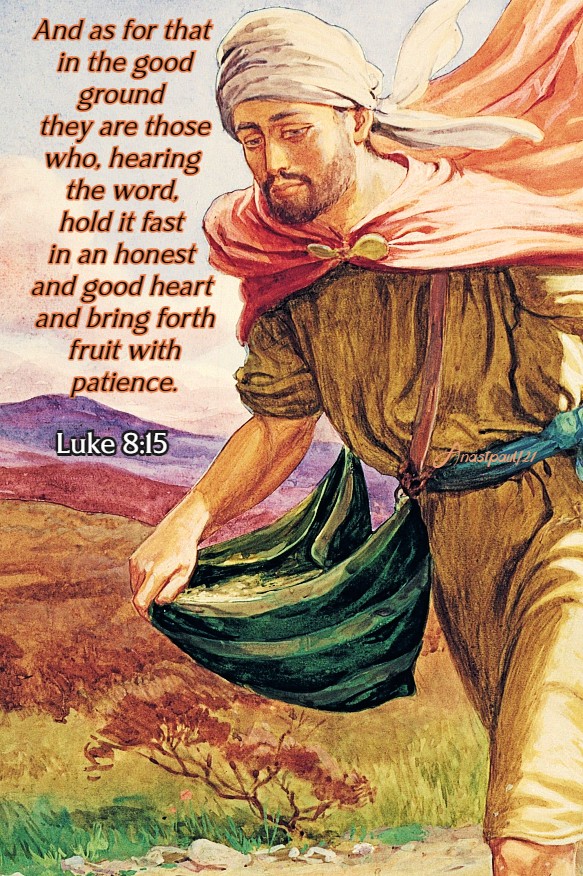
And as for that in the good ground
they are those who, hearing the word,
hold it fast in an honest and good heart
and bring forth fruit with patience.

Luke 8:15

Those who are My sheep
hear My Voice
and follow Me

John 10:27

What a happy day they spent!
What a blessed night!
Who can say what it was they heard
from the Lord’s mouth?
Let us, too, build a dwelling in our hearts,
construct a house
where Christ can come
to teach and converse with us.

St Augustine (354-430)
Father & Doctor of the Church

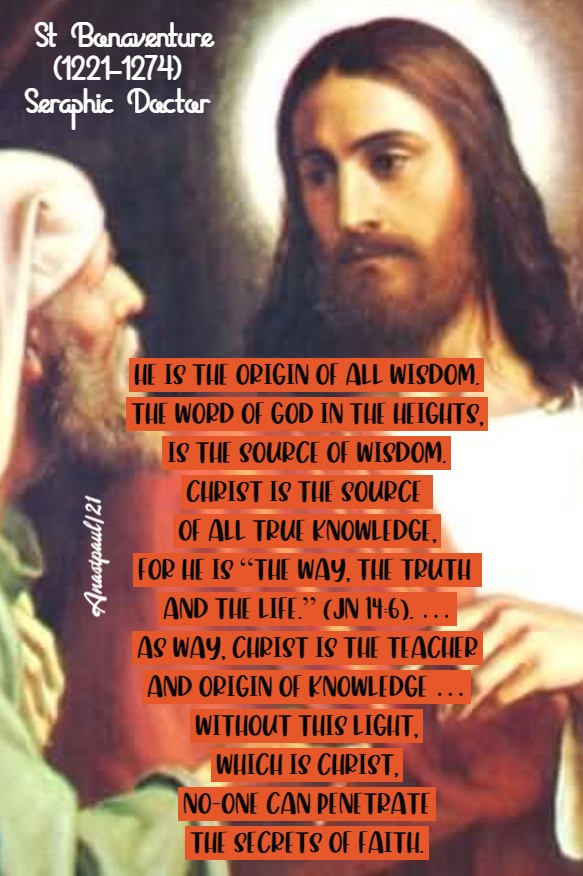
He is the origin of all wisdom.
The Word of God in the heights,
is the source of wisdom.
Christ is the source of all true knowledge,
for He is “the way, the truth and the life.” (Jn 14:6). …
As way, Christ is the teacher
and origin of knowledge …
Without this Light,
which is Christ,
no-one can penetrate
the secrets of faith.

St Bonaventure (1221-1274)
Seraphic Doctor

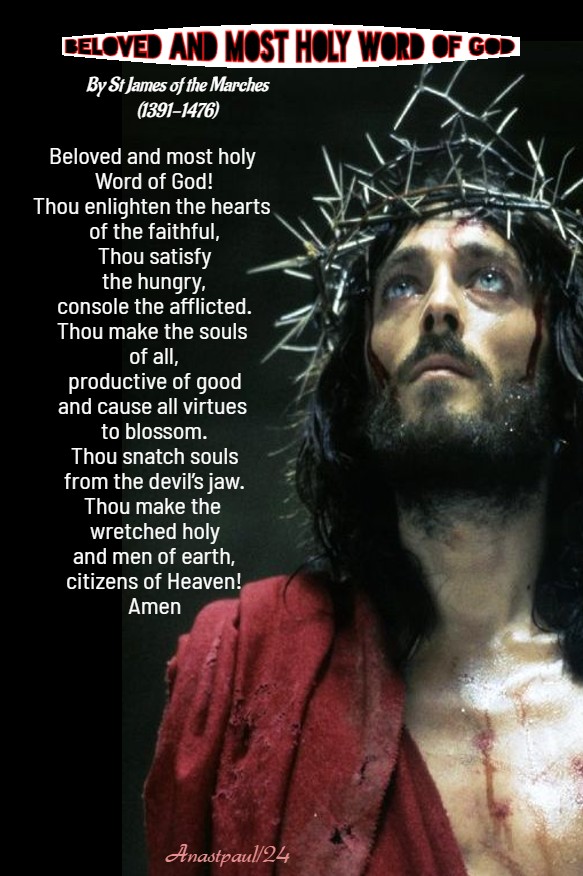
Beloved and Most Holy Word of God
By St James of the Marches (1391-1476)

Beloved and most holy Word of God!
Thou enlighten the hearts of the faithful,
Thou satisfy the hungry,
console the afflicted.
Thou make the souls of all,
productive of good
and cause all virtues to blossom.
Thou snatch souls
from the devil’s jaw.
Thou make the wretched holy
and men of earth,
citizens of Heaven!
Amen

Posted in CHRIST the WORD and WISDOM, CHRIST, the WAY,TRUTH,LIFE, QUOTES on LOVE of GOD, Quotes on SALVATION, The WORD

One Minute Reflection – 4 February – ‘… Do you know what a person is like, who is not fed by this holy Word? …’

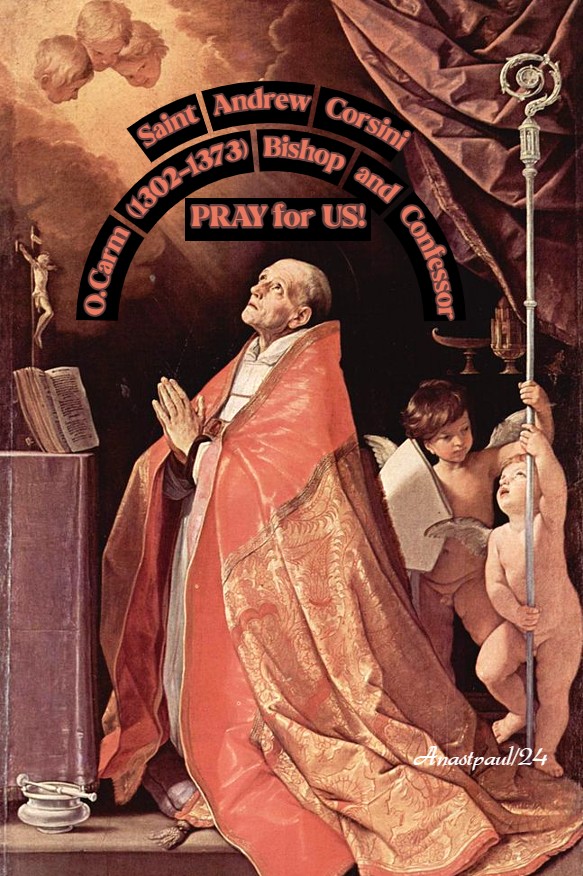
One Minute Reflection – 4 February – “The Month of the Most Holy and Blessed Trinity” – St Andrew Corsini O.Carm (1302-1373) Bishop of Fiesole from 1349 until his death,Confessor, known as the “Apostle of Florence,” Carmelite Friar – Sexagesima Sunday – 2 Corinthians 11:19-33; 12:1-9, Luke 8:4-15 – Scripture search here: https://www.drbo.org/

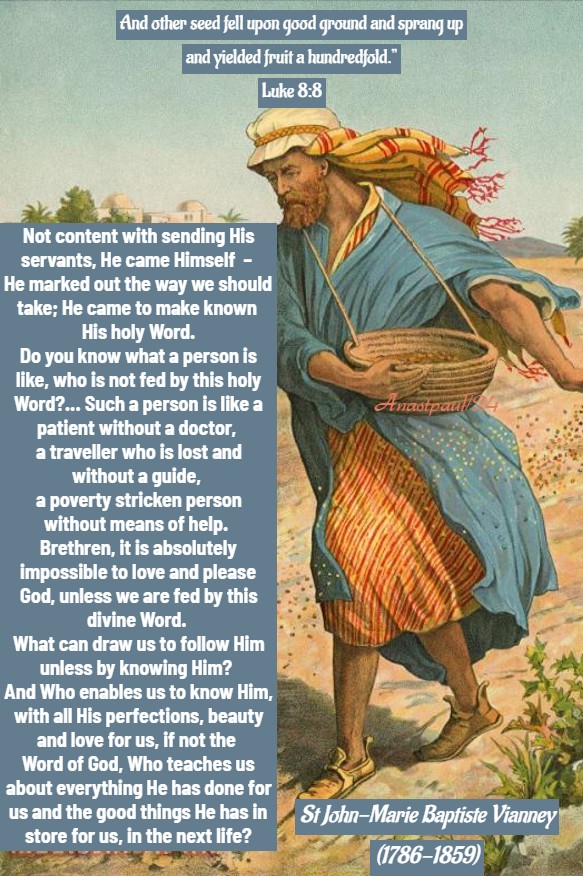
And other seed fell upon good ground and sprang up and yielded fruit a hundredfold.” – Luke 8:8

REFLECTION – “If you ask me what Jesus Christ means by this Sower Who goes out early to cast his seed over his field then, my brethren, that Sower is the good God Himself, Who began the work of our salvation, from the beginning of the world, by sending us His Prophets, before the coming of Christ, to teach us what was needed, if we would be saved. Not content with sending His servants, He came Himself – He marked out the way we should take; He came to make known His holy Word.

Do you know what a person is like, who is not fed by this holy Word?… Such a person is like a patient without a doctor, a traveller who is lost and without a guide, a poverty stricken person without means of help. Brethren, it is absolutely impossible to love and please God, unless we are fed by this divine Word. What can draw us to follow Him unless by knowing Him? And Who enables us to know Him, with all His perfections, beauty and love for us, if not the Word of God, Who teaches us about everything He has done for us and the good things He has in store for us, in the next life?” – St John-Marie Baptiste Vianney (1786-1859) The Curé of Ars (Sermons)

PRAYER – O God, Who establishes ever new examples of virtue in Thy Church, grant that Thy people may follow the footsteps of blessed Andrew, Thy Confessor and Bishop, so that they may also obtain his reward. Through Jesus Christ, Thy Son our Lord, Who lives and reigns with Thee, in the unity of the Holy Ghost, God, world without end. Amen (Collect).

Posted in BLESSED TRINITY PRAYERS, CONSECRATION Prayers, FEBRUARY - THE BLESSED TRINITY (Traditional), LENT, Our MORNING Offering, PRAYERS of the SAINTS, St Francis de Sales, The MOST HOLY & BLESSED TRINITY

Our Morning Offering – 4 February – An Act of Consecration to the Holy Trinity

Our Morning Offering – 4 February – “The Month of the Most Holy and Blessed Trinity” – Sexagesima Sunday

An Act of Consecration to the Holy Trinity
By St Francis de Sales (1567-1622)
Doctor of Charity

I vow and consecrate to God
all that is in me:
my memory and my actions
to God the Father;
my understanding
and my words
to God the Son;
my will and my thoughts
to God the Holy Ghost;
my heart, my body,
my tongue, my senses
and all my sorrows
to the Sacred Humanity of Jesus Christ,
“who was content to be betrayed
into the hands of wicked men
and to suffer the torment of the Cross..”
Amen

Posted in SAINT of the DAY

Saint of the Day – 4 February – Saint Gilbert of Limerick (c1070–1145) Bishop

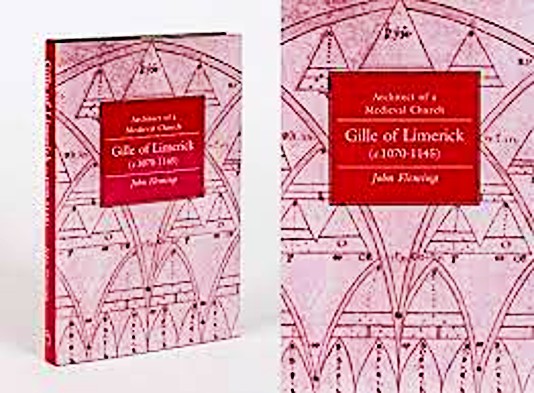
Saint of the Day – 4 February – Saint Gilbert of Limerick (c1070–1145) Bishop, Canon Lawyer, Papal Legate to Ireland appointed by the Papacy of Pope Paschal II in c1106 and also then appointed as the Bishop of Limerick, Scholar and Philsopher, Church Reformer, Unknown date or place of birth and died in Bangor, Ireland in 1145 of natural causes. Also known as – Gille, Gillebertus, Gilla, Gilli.

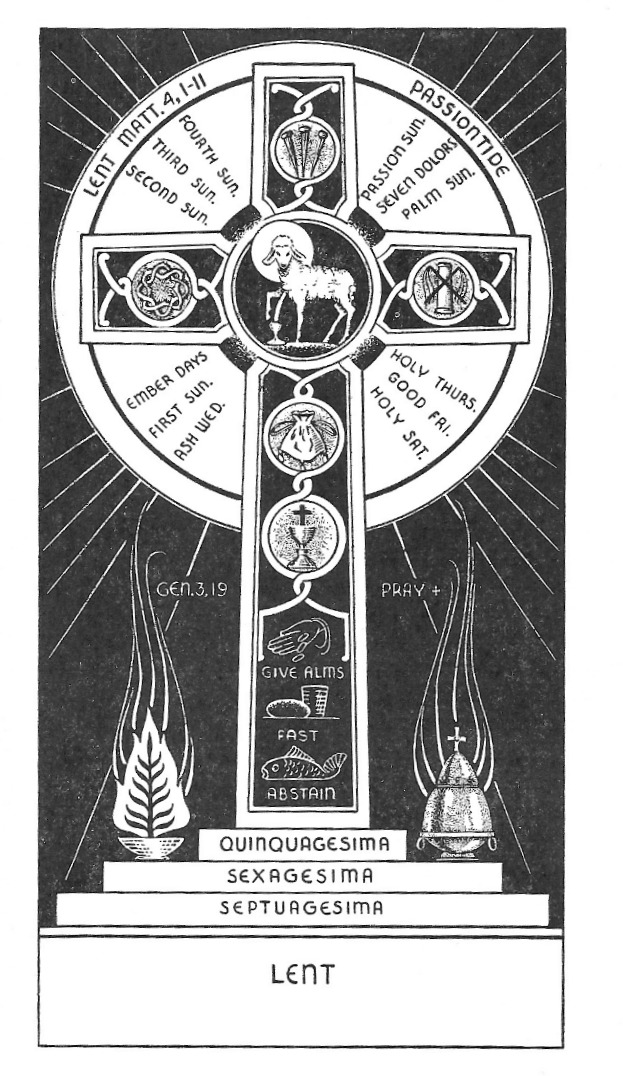
For the early Irish Lent began on the Sunday after Ash Wednesday. Gilbert of Limerick (†1145) insisted on Ash Wednesday.” This injunction was part of the programme of Church Reform which took place in the 12th Century, reform in which St Gilbert of Limerick was deeply involved.

We know very little about Gilbert’s private history and personal life. He refers to himself both as Gille and Gillebertus. It is not even clear whether he was of Irish or Norse extraction. Is is suggests that his family roots are almost certainly in the Hibero-Norse City of Limerick, Ireland but his choice to retire to Bangor, Co. Down where he died may refer to Bangor as his birthplace.

The first record we have of Gilbert is a letter which he sent in 1106, as the Bishop of Limerick, to St Anselm, at that time the Archbishop of Canterbury, sending a gift of pearls and congratulating him on “the victory of your labours in subduing the indomitable minds of the Normans.” St Anselm’s reply states that the two “have known each other and delighted in friendship, since our time in Normandy.”` This may suggest our Gilbert had been a pupil of St Anselm in north-eastern France.

The balance of evidence suggests that Gilbert was a Papal Legate for almost all his time as the Bishop of Limerick and that he headed the Synod of Raith Bressail in 1111. According to St Bernard of Clairvaux, he was the first to be a Legate “per universam Hiberniam — throughout all Ireland.

The Synod of Raith Bressail , in 1111,was the second aimed at reforming the Irish Church and the first to include the whole country. The first, held in Cashel in 1101, legislated against the purchase of Church positions and regulated the relationship of Church and State, of marriage laws and, of clerical celibacy.

The Synod of Raith Bressail went further, instituting for the first time, a full system of Diocese in Ireland in a hierarchy subject to a Primate of all Ireland and, through him, to the See of St Peter in Rome and the Sovereign Pontiff. This was the greatest change in the Irish Church since the 5th Century. A document, the Acta, from this Synod, gives further circumstantial evidence for Gilbert’s own origin in Limerick – Limerick is given as a model Diocese (with “St Mary’s Churchas its Cathedral Church) in a level of detail, suggesting local knowledge.
Gilbert records in his treatise ‘De Statu Ecclesiae’ that many Irish Bishops and Priests requested he explain the hierarchy he advocated.

St Mary’s Caythedral Church of Limerick

With Saint Malchus of Waterford and Ceallach of Armagh, he helped reorganise the Church in Ireland, replacing monastic rule with that by the Bishops and Diocesan structure and advocating for a uniform Liturgy.

As a Canon Lawyer, Gilbert was working in the Paris tradition which was founded on law based on custom, rather than the compilation and reconciliation of texts as practised by the (later) Gratian. As such his style is very different, “exhortatory rather than prescriptive, encouraging rather than demanding” – very different from what we would regard as a legal text today. The law was based on a common vision of life; an inportant aspect of it was the rights and duties owed to a lord.

The Treatise itself is a commentary on a diagram (the image below) in which the hierarchical structure of the Church is shown as a pyramid, made up of further interlocking pyramids. The Pope is at the apex, balanced by the Emperor and Noah at the other two points. The pyramids below balance the Archbishop with the Duke, then the Bishop, with the Count and finally the Priest with the soldier. 15

In 1115, Gilbert is recorded as being present at the Consecration of a new Bishop of St David’s in Westminster. In 1129, St Bernard of Clairvaux records that Gilbert, along with Maek Isu of Lismore prevailed on St Malachy to accept the vacant See of Armagh and that, in 1140, Malachy became the Papal Legate due to the retirement of St Gilbert having become unwell in his old age.

Gille’s death, his only mention in the Irish annals, is recorded in 1145 in Bangor Co. Down. The ‘De Statu Ecclesiae‘ survived in two manuscripts and a prologue to it, ‘De Uso Ecclesiastico’ in three. The two parts were published by Archbishop James Ussher in 1632.

Posted in CARMELITES, franciscan OFM, JESUIT SJ, MARIAN TITLES, SAINT of the DAY

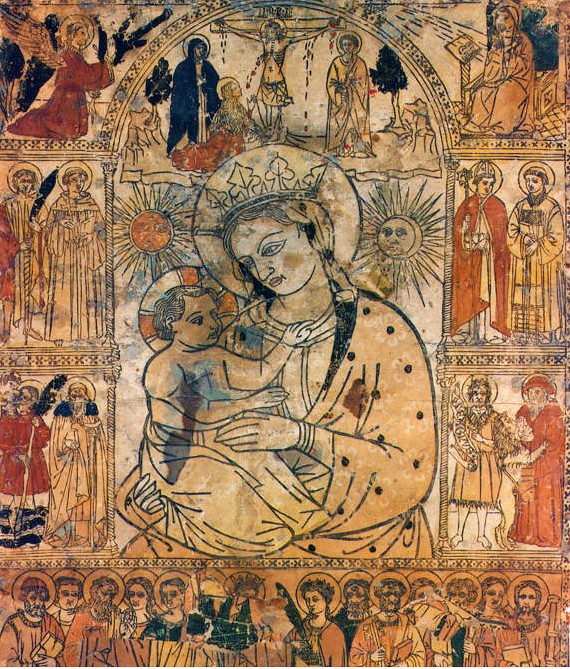
SEXAGESIMA SUNDAY, St Scholastica Novena – The FOURTH DAY, Nostra Signora del Fuoco / Our Lady of the Fire, Forli, Italy (1428), St Andrew Corsini and the Saints for 4 February

SEXAGESIMA SUNDAY: (Latin – Sexagesima, sixtieth) is the eighth Sunday before Easter and the second before Lent. The Ordo Romanus, St Alcuin and others, count the Sexagesima from this day to Wednesday after Easter. The name was already known to the Fourth Council of Orléans in 541. To the Latins it is also known as “Exsurge” from the beginning of the Introit. The station was at Saint Paul’s Outside the Walls of Rome and hence, the oratio calls upon the Doctor of the Gentiles. The Epistle is from Paul, 2 Corinthians 11 and 12, describing his suffering and labours for the Church. The Gospel (Luke 8) relates the falling of the seed on good and on bad ground, while the Lessons of the first Nocturn continue the history of man’s iniquity and speak of Noah and of the Deluge.

EPSON MFP image

St Scholastica Novena – The FOURTH DAY:
CLICK LINK BELOW
St Scholastica Noven
a

Bl Dionisio de Vilaregut
St Donatus of Fossombrone
St Eutychius of Rome
St Filoromus of Alexandria
St Firmus of Genoa
Bl Frederick of Hallum
St Gelasius of Fossombrone
St Geminus of Fossombrone
St Gilbert of Limerick (c1070–1145) Bishop

St Isidore of Pelusium

St John of Irenopolis
Bl John Speed

St Liephard of Cambrai
St Magnus of Fossombrone
St Modan
St Nicholas Studites
St Nithard
St Obitius
St Phileas of Alexandria

St Themoius
St Theophilus the Penitent
St Vincent of Troyes
St Vulgis of Lobbes