
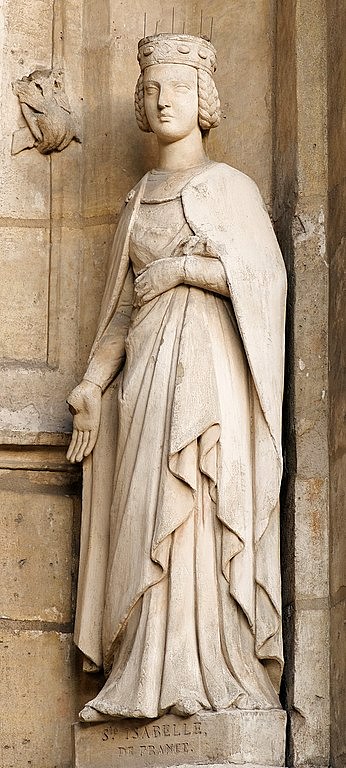
Saint of the Day – 22 February – Saint Isabella of France (1225-1270) Virgin, Apostle of the poor, the sick and needy, Founder Nun of a Convent based on the Poor Clares Order, known as the Sisters Minor and forming part of the Franciscan family. Sister of Saint Louis IX, Aunt of Saint Louis of Toulouse, Princess. Born in March 1225 in Paris and died on 23 February 1270 (aged 45) at the Convent in Longchamp, Pays de France. Patronages – of the ill and infirm, of the Royal Abbey of Longchamp. Also known as – Isabel, Isabelle. Additional Memorial 8 June (Franciscans), 8 November – as one of the Saints of the Diocese of Evry, 23, 24 and 26 February – on some calendars.
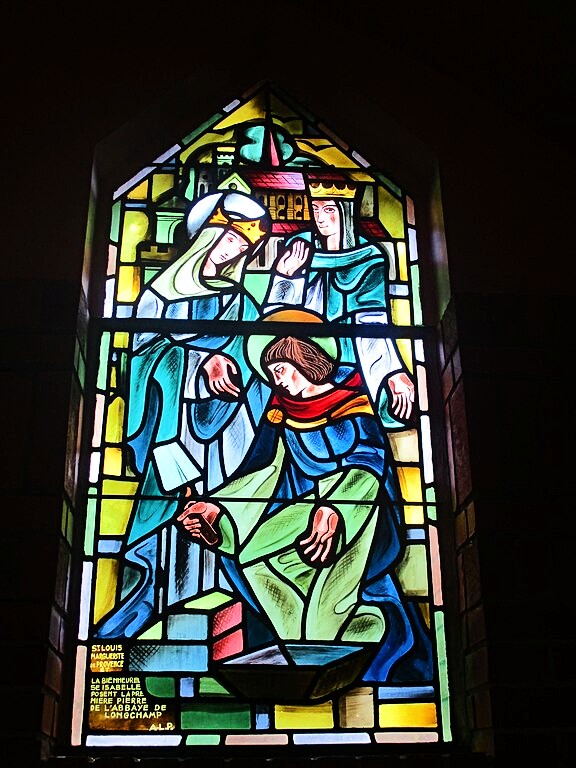
In Pays de France, just outside the City of Paris, along the Seine, lived King Louis VIII and Blanche of Castile, the Queen of France. The Royal couple were a holy example of Christian love and they had alreadybeen blessed with several children when their daughter, Isabella, came into the world in March 1225.
When Isabella was less than two years old, King Louis VIII died, leaving her older brother to reign as King. King St Louis IX was installed in 1226 and he reigned until 1270. His mother supervised the education of the young children, ensuring that Isabella not only learned the feminine arts butm also learned Latinm in order to study the Fathers of the Church.
Isabella demonstrated great piety from a very early age and, it must be noted, she received much support in practising her faith from her mother, her brother the King and other members of the Royal Court. Isabella dedicated her sewing skills to providing clothing for the poor and preparing Vestments for liturgical celebrations. On one occasion, as she was embroidering a new hat, King Louis IX asked her to give the hat to him. She refused, explaining, “No, this is the first of its kind and I must make it for my Saviour Jesus Christ.” When she finished it, she gave it to a poor and sick person. Then, she made another cap of similar design for her Royal brother.
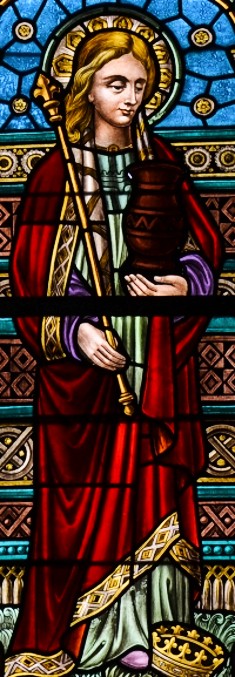
Arranged marriages, common at the time, were a part of Isabella’s life from the age of two. The Treaty of Vendome, created in March 1227 and signed in June 1230, betrothed Isabella to Hugh, the eldest son and heir of Hugh X of Lusignan which was an area on the western coast of France. However, Isabella refused to celebrate this marriage. Some years later, she also refused to marry another Royal personage, Conrad, the son of the Holy Roman Emperor Frederick II. Her mother and brother both urged her to marry Conrad. Even Pope Innocent IV tried to persuade her to marry the son of the Emperor but, again she refused. When she learned of the Pope’s hope that she would marry Conrad, Isabella wrote to him explaining that she had consecrated her virginity to Christ and would never marry. The Pope, witnessing her steadfast faithfulness to Christ, admired her for her perseverance and agreed with her position. Her brother finally acquiesced and no longer tried to persuade her to marry Conrad or anyone else.
Not long after this episode, their mother died.
In 1255, Isabella requested her brother’s permission to leave the Court and to establish a home for a group of devout women. . Thus, King St Louis IX undertook the purchase of some land in the Forest of Rouvray, just west of Paris, for this purpose. The cornerstone was placed on 10 June 1256 and four years later, the building was completed. On 2 February 1259, Pope Alexander IV gave his approval to the new Rule prepared by Princess Isabella. This Rule had been compiled by Fr Mansuetus, a Franciscan, who based it on the Rule of the Order of St Clare, also referred to as the Poor Clares. The Rule was approved by St Bonaventure, who was then the Minister General of the Franciscan Order. The new Monastery was called the Monastery of the Humility of the Blessed Virgin. The Nuns of this Monastery were called Sisters Minor.
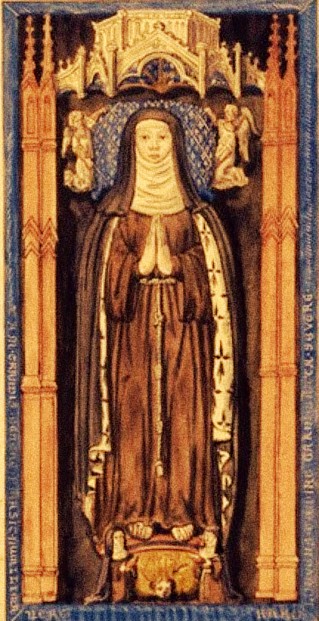
The Rules were unique and specific to this group of women, being somewhat simpler than the Rules of the Poor Clares, in that the fasting was not as rigid and the community was allowed to hold property. But like the Poor Clares, these women also helped Tthe poor and needy of the neighbourhood.
.
The first Nuns to join this new Monastery were from the Convent of the Poor Clares at Rheims, nearly 100 miles east of Paris. Although Isabella never resided at the Monastery herself, she observed the Rules in the privacy of her home.
After a few years, Isabella adjusted the Rule and King St Louis submitted and obtained confirmation of the revised Rule. Pope Urban IV approved the new Rule on 27 July 1263, giving the Nuns of Longchamp, the official title of Sisters Minor. This title emphasised the close relationship with the Order of Friars Minor.
Isabella had refused to become the Abbess but continued to observe the Rule, as well as additional mortifications. She practiSed nearly total silence, fasted three days a week and lived a life of heroic virtue.
In 1270 Isabella died at the new house in Longchamp. The Nuns declared that when she died, the singing of Angels could be heard. She was buried in the Convent Church. After only nine days, her body was exhumed and it was still supple, suffering no decay. Not surprisingly, many miracles occurred at her gravesite. In 1521 Pope Leo X Beatified Isabella, permitting the Abbey of Longchamp to celebrate her Feast with a special office. On 4 June 1637 Isabella’s body was exhumed again and it was still incorrupt. 50 years later, on 25 January 1688, the Nuns received permission to celebrate Isabella’s Feast with an Octave observance. In 1696, on her Canonisation, Pope Innocent XII extended the permission to the entire Franciscan Order.

 AnaStpaul
One thought on “Saint of the Day – 22 February – Saint Isabella of France (1225-1270) Virgin”