Thought for the Day – 17 July – Meditations with Fr Richard Frederick Clarke SJ (1839-1900)
HUMILITY Meditations for a Month
Humility under Correction
To be forced to recognise defects in ourselves, is always painful to human nature. We should like to think ourselves perfect, or at any rate, free from any very serious faults. In spite of all our efforts, the knowledge of our many imperfections and blemishes, thrusts itself upon us and the difference between the man of goodwill and the lover of self is, that one turns himself with all his energy to cure his defects and, the other, seeks to palliate them, excuse them and hide them, as best he can from himself and others.
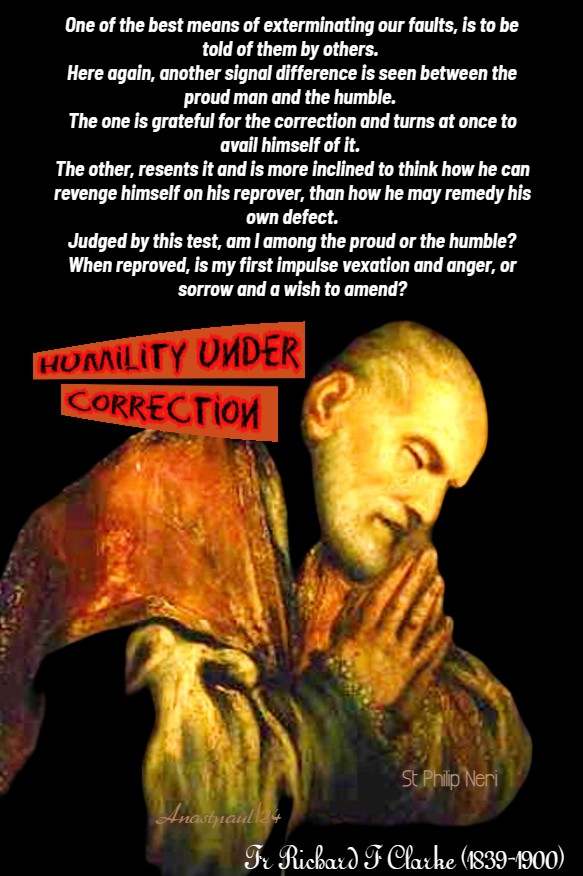
One of the best means of exterminating our faults, is to be told of them by others. Here again, another signal difference is seen between the proud man and the humble. The one is grateful for the correction and turns at once to avail himself of it. The other, resents it and is more inclined to think how he can revenge himself on his reprover, than how he may remedy his own defect. Judged by this test, am I among the proud or the humble? When reproved, is my first impulse vexation and anger, or sorrow and a wish to amend?
There is still another test. The proud sometimes avail themselves of a reproof and correct their faults because of that reproof. Yet, they seek to conceal from their reprover, the fact that they are following his counsel. They will not acknowledge, that they are being guided by the reprover. Those who are truly humble, rejoice in letting others see that they are adopting their advice in submitting themselves to reproof, with gratitude, as coming from God and as a favour bestowed on them. Can I stand this test?
Quote/s of the Day – 17 July – The Feast of the Humility of the Blessed Virgin Mary
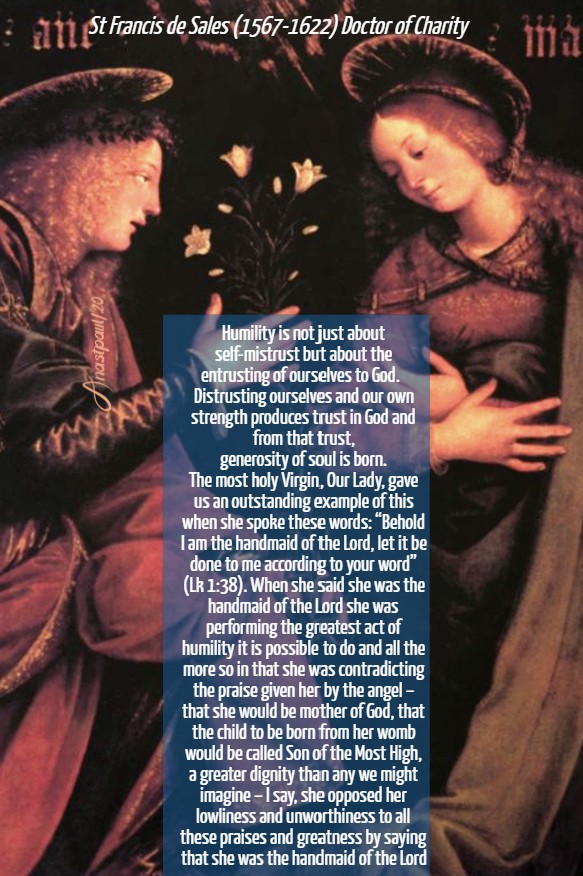
“The most holy Virgin, Our Lady, gave us an outstanding example of this when she spoke these words: “Behold I am the handmaid of the Lord, let it be done to me according to your word” (Lk 1:38). When she said she was the handmaid of the Lord, she was performing the greatest act of humility it is possible to do and, all the more so, in that she was contradicting the praise given her by the Angel – that she would be Mother of God, that the child to be born from her womb would be called Son of the Most High, a greater dignity than any we might imagine – I say, she opposed her lowliness and unworthiness to all these praises and greatness, by saying that she was the handmaid of the Lord.”
“True humility scarecly ever utters words of jumility.”
“Humility, makes our lives acceptable to God, meekness, makes us acceptable to men.”
“Humility is not just about self-mistrust but about the entrusting of ourselves to God. Distrusting ourselves and our own strength produces trust in God and from that trust, generosity of soul is born.”
One Minute Reflection – 17 July– “The Month of the Most Precious Blood” – Feast of The Humility of the Blessed Virgin Mary – St Alexius –1 Timothy 6:6-12, Matthew 19:27-29 – Scripture search here: https://www.drbo.org/
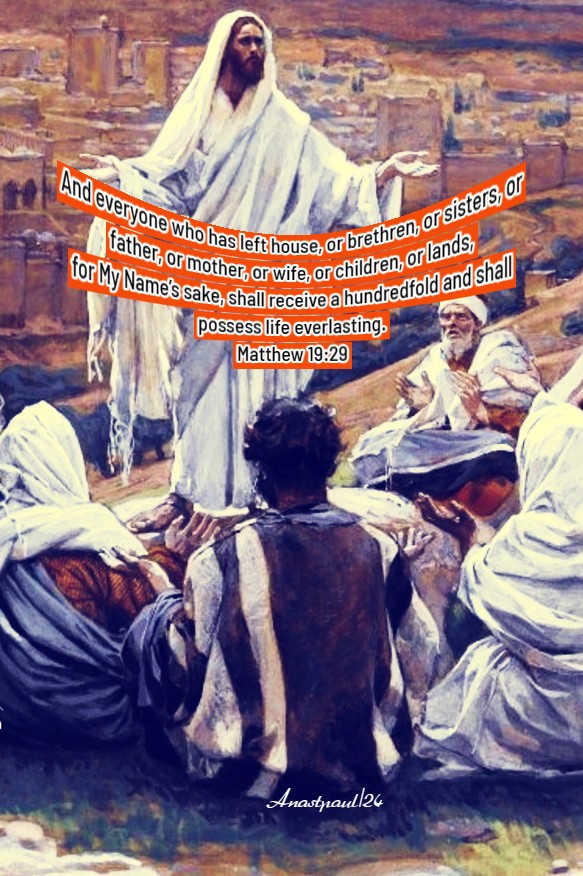
“And everyone who has left house, or brethren, or sisters, or father, or mother, or wife, or children, or lands, for My Name’s sake, shall receive a hundredfold and shall possess life everlasting.” – Matthew 19:29
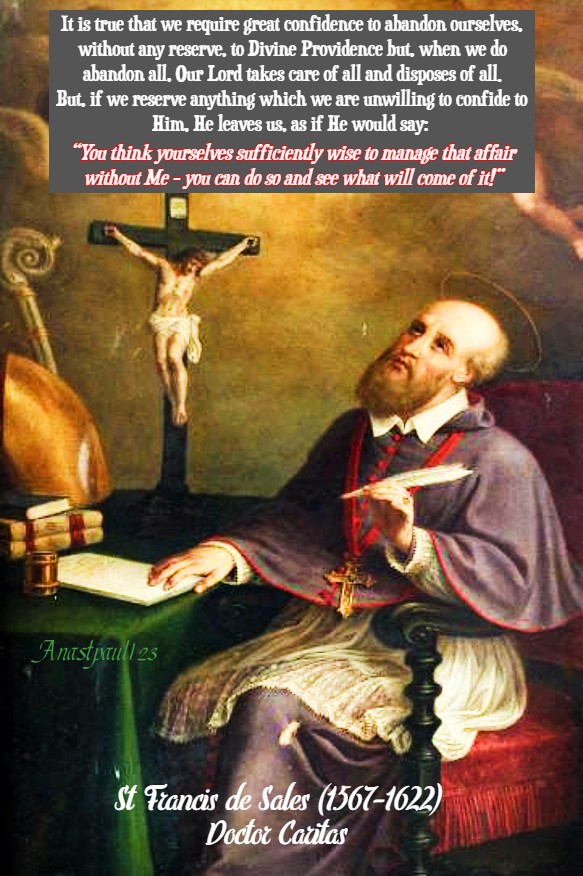
REFLECTION – “WE MUST POSSESS a continual and imperturbable equanimity, amid the great variety of human occurrences and although, all things change around us, remain immovable, with our eyes fixed on God alone. And, although, all things, I will not merely say around us but even within us, should turn topsy-turvy; whether our souls be joyful or sorrowful, in peace or in trouble, in light or in darkness, in temptation or in repose, in happiness or in disgust, although the sun scorch, or the dew refresh – we should always keep our will fixed on the good pleasure of God, as its sole and supreme object.
It is true that we require great confidence to abandon ourselves, without any reserve, to Divine Providence but, when we do abandon all, Our Lord takes care of all and disposes of all. But, if we reserve anything which we are unwilling to confide to Him, He leaves us, as if He would say: “You think yourselves sufficiently wise to manage that affair without Me – you can do so and see what will come of it!” – St Francis de Sales (1567-1622) Doctor Caritatis( Consoling Thoughts on God and Providence).
PRAYER – Grant, we beseech Thee, O Lord God, unto all Thy servants, that they may remain continually in the enjoyment of soundness both of mind and body and, by the glorious intercession of the Blessed Mary, always a Virgin, maybe delivered from present sadness and enter into the joy of Thine eternal gladness.ThroughJesus Christ, Thy Son our Lord, Who lives and reigns with Thee, in the unity of the Holy Ghost, God, world without end. Amen (Collect).
Our Morning Offering – 17 July – The – The Humility of Mary
Make Me Like Thineself, Mary My Mother By St Louis-Marie de Montfort (1673-1716)
My powerful Queen, thou art all mine, through thy mercy and I am all thine. Take away from me, all which may displease God and cultivate in me, all which is pleasing to Him. May the light of thy faith, dispel the darkness of my mind, thy deep humility, take the place of my pride, thy continual sight of God, fill my memory, with His Presence. May the love of thine heart inflame the lukewarmness, of mine. May thy virtues, take the place of my sins. May thy merits, be my enrichment and reconcile all which is wanting in me, before God. My beloved Mother, grant that I may have, no other spirit but thine, to know Jesus Christ and His Divine Will and to praise and glorify the Lord, that I may love God, with burning love like thine. Amen
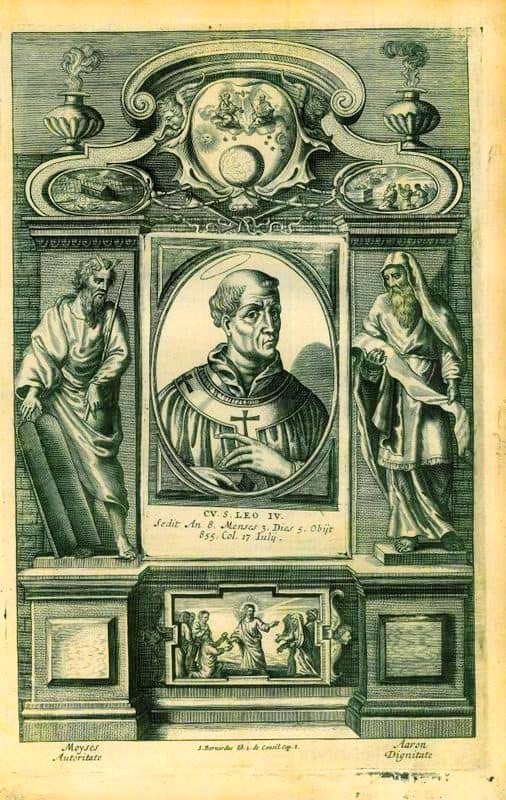
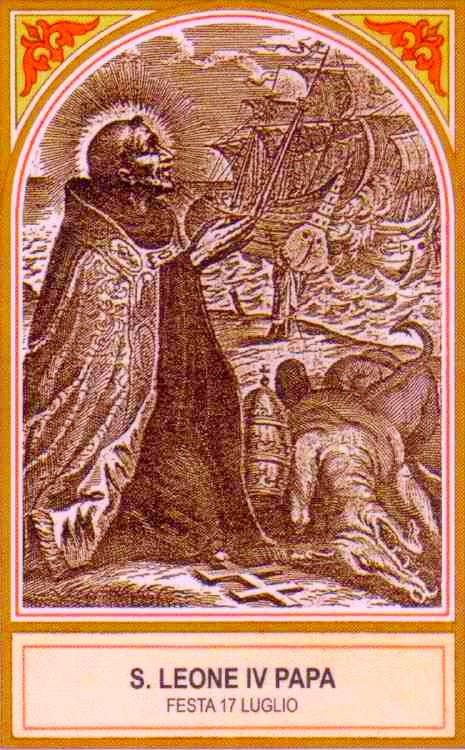
Saint of the Day – 17 July – St Pope Leo IV (c790- 855) The 103rd Bishop of Rome. Papal Ascension: 847. Died: 855 at Rome. St Leo is particularly remembered for repairing Roman Churches which had been damaged during the Arab raid and for building the Leonine Wall around Vatican Hill to protect the City. Pope Leo organised a league of Italian Cities who fought and won ,the sea Battle of Ostia, against the Saracens.
He was the son of a Roman nobleman amd had been educated in the Monastery of “Saint Martin Without the Walls.” He attracted the notice of Pope Gregory IV, who made him a Subdeacon and was created Cardinal-priest of “The Four Crowned Martyrs – Santi Quattro Coronati” by Pope Sergius II.
He was chosen as the new Pope after the death of Sergius II in 847 and governed the Church for eight years, three months. The Saracens from Calabria had lately plundered Saint Peter’s Basilica on the Vatican Hill and were still hovering about Rome. Leo made it his first care to repair the ornamental parts of this beautiful Basilica, especially the Tomb of Saint Peter with the Altar which stood upon it. By Leo’s work, the Altar again received its gold covering (after being stolen) which weighed 94 kg (206 lb) and was studded with precious gems. He also restored and embellished the damaged Basilica of Saint Paul Outside the Walls.
To prevent a second plundering of that holy place, he, with the approbation and liberal contributions of the Emperor Lothaire, enclosed the Basilica and the whole Vatican Hill with a wall and ordered a new line of walls encompassing the suburb on the right bank of the Tiber to be built, including St Peter’s Basilica which had been undefended until this time. The district enclosed by the walls is still known as the Leonine City.
He rebuilt or repaired the walls of the City, fortified with fifteen towers. Whilst he was putting Rome in a posture of defence, In 849, when a Saracen fleet from Sardinia approached Portus, Leo IV summoned the maritime republics – Naples, Gaeta and Amalfi – to form a league. The command of the unified fleet was given to Cesarius, son of Duke Sergius I of Naples. Aided by a fierce storm, the league destroyed the Saracen fleet off Ostia. The Battle of Ostia was one of the most famous in the history of the Papacy and is celebrated in a famous fresco by Raphael and his pupils in the ‘Raphael Rooms’ dedicated to his works in the Vatican Palace. Raphael’s work, ‘The Fire’ in the Borgo, celebrates the incident in which, our Saint Leo stopped a fire in the pilgrims’ district by making the Sign of the Cross.
Leo IV held three Synods – the one in 850 distinguished by the presence of Emperor Louis. Before his death in 855, the Pope welcomed Aethelwulf, King of Wessex and his sons, including the seven year old St Alfred the Great, who at the age of 5 years, had already met Pope Leo as pilgrims to Rome.
Pope Leo directed to all Bishops a Homily on the Pastoral Care, published from the Vatican manuscripts. In it, Leo regulates all the chief functions of the pastoral charge and every duty enforced with no less learning than piety.
Among other miracles performed by this holy Pope, it is recorded that by the Sign of the Cross he extinguished a great fire in the City which threatened the Church of the Prince of the Apostles – this is mentioned above as having been immortalised by the art of Raphael and his School.
He died on the 17 July, 855 and Benedict III, Priest of the Church of Saint Calixtus, was immediately chosen Pope. He with many tears begged that so formidable a burden might not be laid on his shoulders but his protests could not prevail. Anastasius the deposed priest set up for pope and procured the protection of the Emperor Louid II but, the steady unanimity of the people in the election of Benedict III overcame this opposition and he was Consecrated on the 1 September in the same year, 855.
Leo IV was originally buried in his own monument in St Peter’s Basilica. Some years after his death, his remains were put into a Tomb which contained the first four Popes named Leo. In the 18th Century, the Relics of Leo the Great were separated from his namesakes and given their own Chapel.
Leo IV had the figure of a Rooster placed on the Old St. Peter’s Basilica which has served as a religious icon and reminder of St Peter’s denial of Christ since that time, with some Churches still having the cockerel on the steeple today. It is reputed that Pope Gregory I had previously said that the cock “was the most suitable emblem of Christianity” being “the emblem of St Peter”. After Leo IV, Pope Nicholas I, who had been made a Deacon by St Leo IV, decreed that the figure of the cock should be placed on every Church throughout the world.
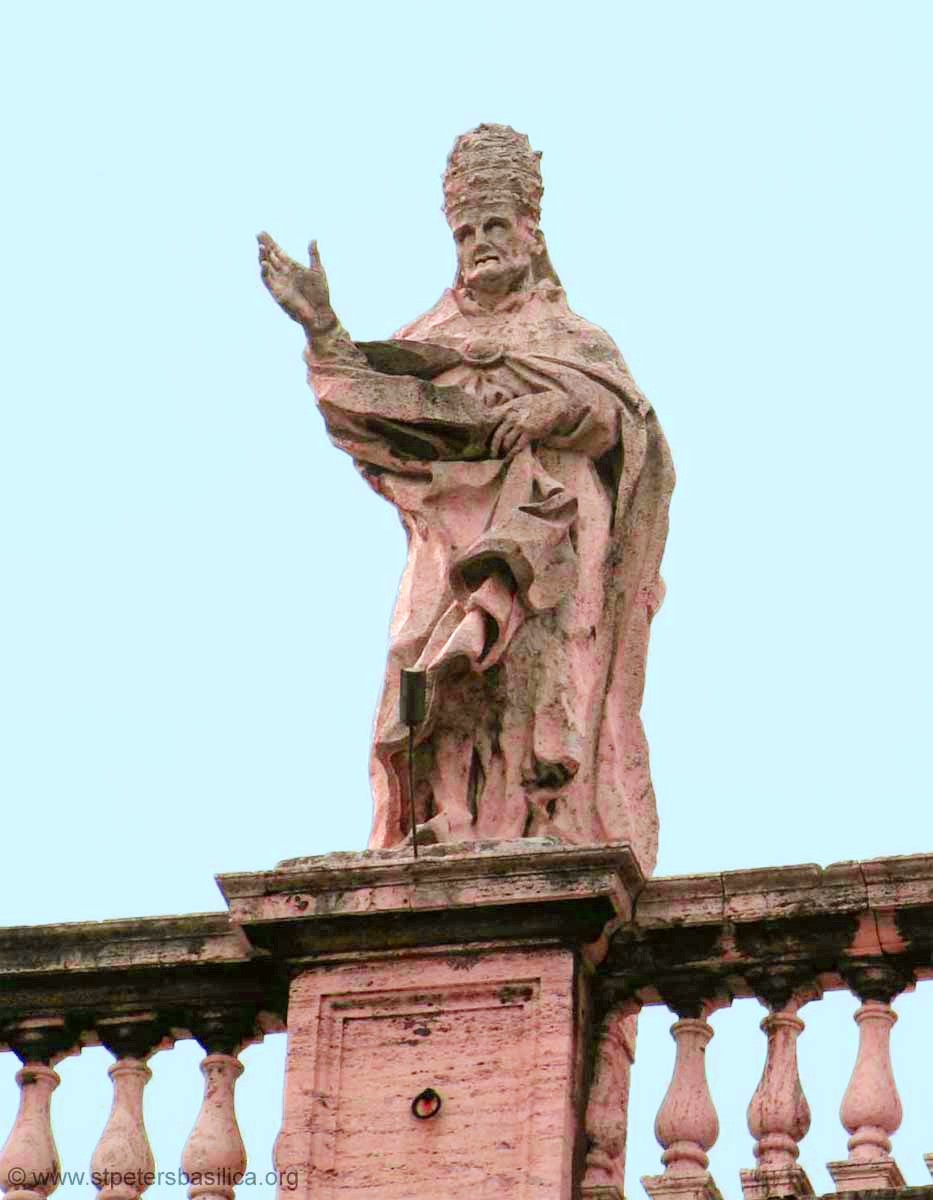
The Statue of St Leo is situate on the South Colonnade’s Curved Arm next to St Pope Clement I. St. Leo IV – Pope Born – 790 Died – 17 July 855 in Rome Feastday – 17 July Sculptor – unknown Based on the documents and stylistic features perhaps the work could be attributed, but it has been very damaged by time. However, it seem closest to the school of Algardi. Statue created – c.1669-1670 The statue is part of a group of 16 installed between 1 May 1669 and 5 August 1670.
The Statue of St Leo is situate on the South Colonnade’s Curved Arm next to St Pope Clement I.
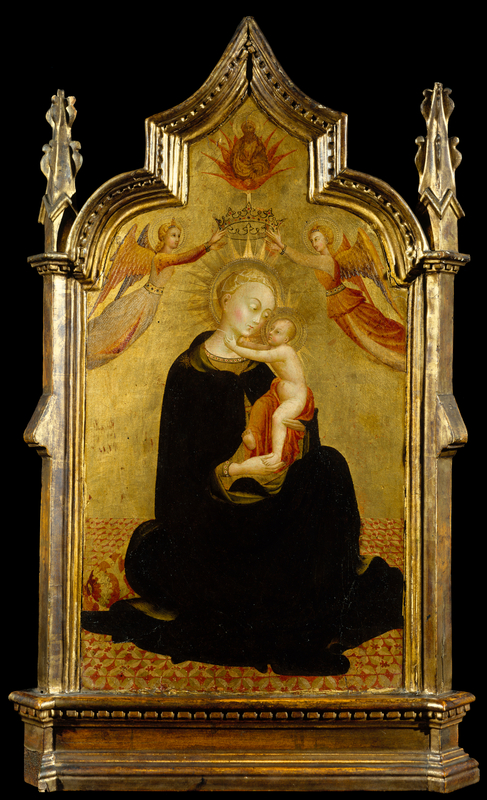
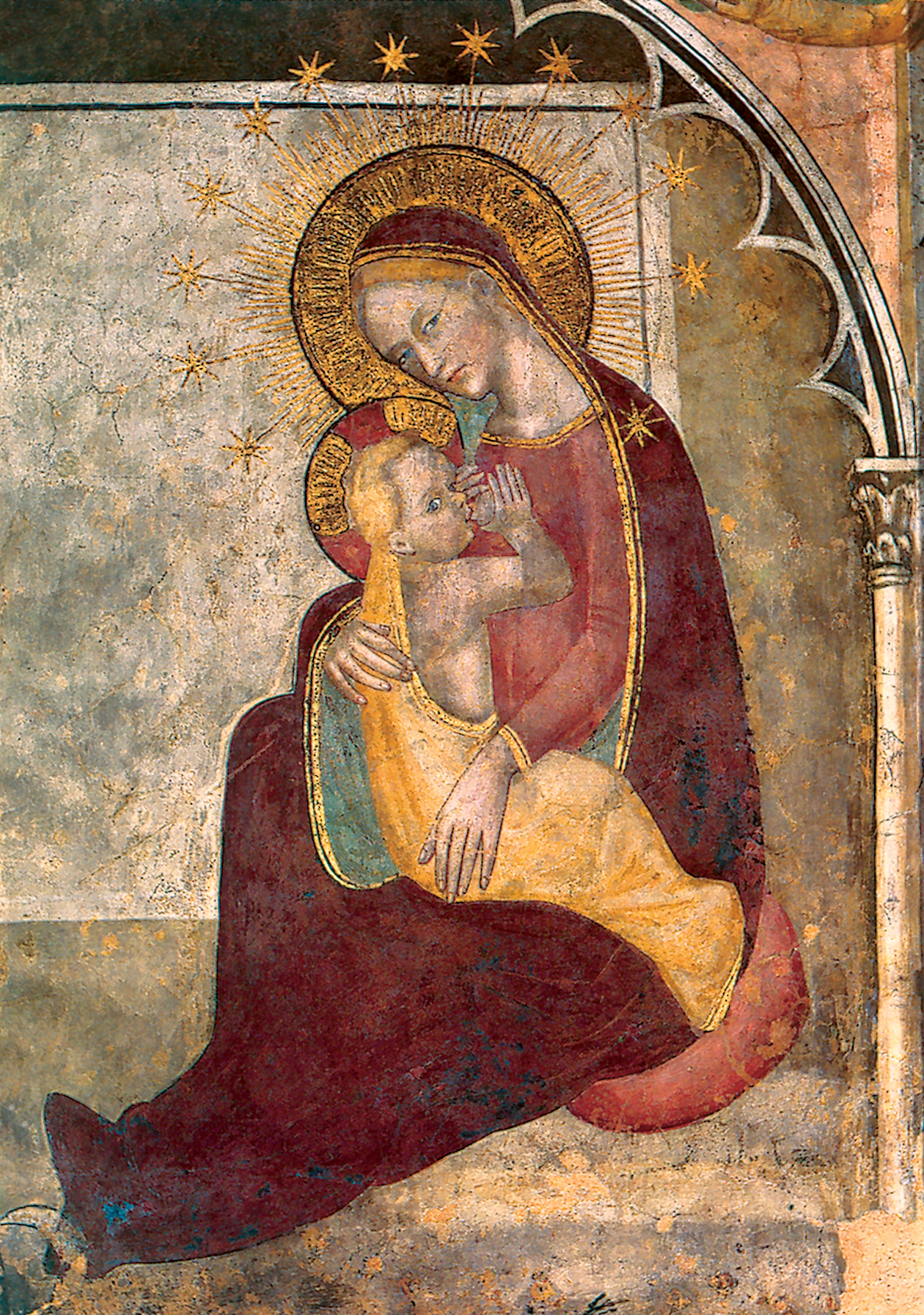
The Feast of The Humility of the Blessed Virgin Mary or the Madonna of Humility: The Feast of the Humility of the Blessed Virgin Mary was included in the General Roman Calendar of 1954 among the feasts ‘pro aliquibus locis’ (in some places) but was removed from the General Roman Calendar of 1960. However, many Diocese worldwide still celebrate this beautiful Feast as do all Traditional Catholics. https://anastpaul.com/2022/07/17/saint-of-the-day-17-july-the-humility-of-mary-by-st-alphonsus/
Martyrs of Compiegne (16 Carmelite Beati): Sixteen Blessed Teresian Martyrs of Compiègne. Eleven Discalced Carmelite nuns, three lay sisters and two lay women servants who were Martyred together in the French Revolution. They were the earliest Martyrs of the French Revolution that have been recognised. They were: Angelique Roussel • Anne Pelras • Anne-Marie-Madeleine Thouret • Catherine Soiron • élisabeth-Julitte Vérolot • Marie Dufour • Marie Hanniset • Marie-Anne Piedcourt • Marie-Anne-Françoise Brideau • Marie-Claude-Cyprienne Brard • Marie-Françoise de Croissy • Marie-Gabrielle Trezel • Marie-Geneviève Meunier • Marie-Madeleine-Claudine Lidoine • Rose-Chretien de Neuville • Thérèse Soiron. They were guillotined on 17 July 1794 at the Place du Trône Renversé (modern Place de la Nation) in Paris, France. The 16 Martyrs Story: https://anastpaul.com/2017/07/17/saints-of-the-day-17-july-the-carmelite-martyrs-of-compiegne-o-c-d/
Bl Arnold of Himmerod Bl Bénigne Bl Biagio of the Incarnation
Bl Carlos de Dios Murias OFM Conv (1945-1976) Priest Martyr St Clement of Ohrid St Cynllo St Ennodius of Pavia St Fredegand of Kerkelodor St Generosus St Gorazd St Hyacinth of Amastris St Kenelm St Pope Leo IV (c790-855) The 103rd Bishop of Rome
St Marcellina (c330-c398) Consecrated Virgin, sister of St Ambroseand St Satyrus. The Roman Martyrology reads: “At Milan, the Virgin St Marcellina, sister of the blessed Archbishop Ambrose, who received the religious veil from Pope Liberius, in the Basilica of St Peter at Rome. Her sanctity is attested by St Ambrse in his writings.” Lovely Marcellina: https://anastpaul.com/2023/07/17/saint-of-the-day-17-july-st-marcellina-c330-c398-virgin/
St Nerses Lambronazi Bl Sebastian of the Holy Spirit Bl Tarsykia Matskiv St Theodosius of Auxerre St Theodota of Constantinople St Turninus
Martyrs of Scillium (12 Saints): A group of twelve Christians Martyred together, the final deaths in the persecutions of Emperor Marcus Aurelius. Upon their conviction for the crime of being Christians, the group was offered 30 days to reconsider their allegiance to the faith; they all declined. Their official Acta still exist. Their names : • Acyllinus • Cythinus • Donata • Felix • Generosa • Januaria • Laetantius • Narzales • Secunda • Speratus • Vestina • Veturius They were beheaded on 17 July 180 in Scillium, Numidia (in North Africa).











 AnaStpaul
You must be logged in to post a comment.