
Saint of the Day – 25 July – St Cugat del Valles (Died c304) Lay Martyr, Preacher, Evangeliser, Miracle-worker. Born in North Africa and died by beheading in 304 near Barcelona, Spain. Pstronages – of hunchbacks, petty thieves, of the City of St Cugat del Valles in Spain. Also known as – Cobad, Cocoba, Cocobas, Cophan, Cougat, Covade, Cucao, Cucufa, Cucufas, Cucufat, Cucufate, Cucuphas, Cucuphat, Culgat, Guinefort, Gulnefort, Qaqophas, Qoqofas, Quiquefat, Quiquenfat. At Barcelona he is called Saint Cugat, at Ruel, near Paris, Saint Quiquenfat, in some other parts of France, Saint Guinefort. Additional Memorials – 27 July – in Barcelona to avoid a clash with today’s Feast of St James, 16 February (translation of relics to Léberan), 25 August (translation of relics to Saint-Denis).
The Roman Martyrology reads: “At Barcelona in Spain, during the persecution of Diocletian and under the Governor Darian, the birthday of the holy Martyr Cucuphas. After overcoming many torments, he was struck with the sword and thus went triumphantly to Heaven.”
Saint Cugat is one of the most venerated Saints in Spain but all that history has preserved of him is contained in a poem by the renowned Aurelius Prudentius (a Latin Christian poet of Spanish origin, (c348 – c413) ) who dedicates this short expression to him:
“Barcelona will rise from the famous Cucufate.”
There is no certainty about the time of his Martyrdom, which. however. occurred during the persecution of Diocletian (243-313) and is placed at the beginning of the 4th Century. An anonymous author compiled the ‘Acts’ of the Martyrdom in the 8th Century but does not present historical elements.
Cugat and Felix, originally from Scillium in Africa, both noble and rich, having learned of the persecutions which had begun in the eastern provinces, fled to the West.
But when they landed in Barcelona, they realised that persecution was imminent there too, so as Christians they offered their goods to the poor, dedicating themselves to works of mercy and the spread of the Christian Gospel.
Felix moved to Gerona in Catalonia, while Cugat remained in Barcelona, dedicating himself openly to preaching, which was accompanied by numerous miracles. He was arrested by order of the Proconsul Galerius and was tortured so savagely that his intestines were exposed, while he invoked the Lord God. The ‘Passio’ continues, saying that the twelve soldiers who tortured him were blinded by a flash of fire, while Galerius was burned together with the idols. Cugat.however, suddenly found himself completely unharmed.
In place of Galerius, Maximian, inflicting various and unheard of torments but again, miraculously he was Cugat suffered no injury. Then an Officer of the Prefect Dacianus, a certain Rufinus, intervened and had him beheaded.
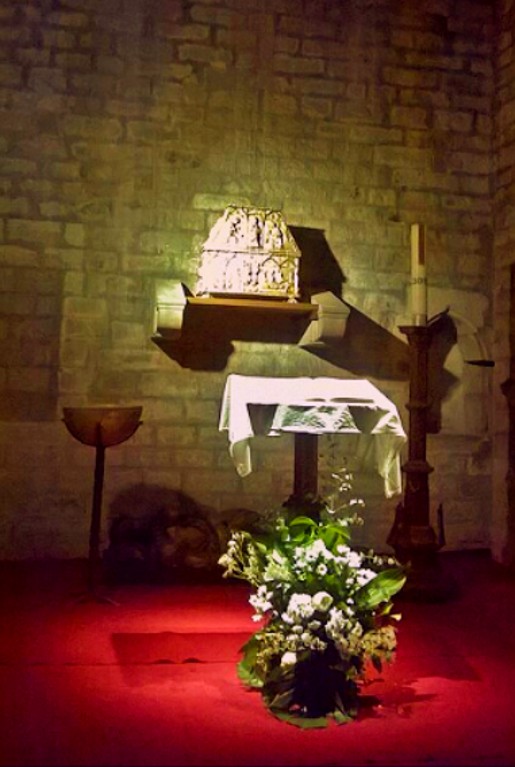
His body was collected by the Christians and buried on 25 July of an unspecified year and place. But, in the middle of the 8th Century, the Abbot of St Denis near Paris, St Fulrad (Died784), managed to obtain the Relics of St Cugat, taking them to the Priory of Lièvre in Alsace (France) where they were placed, in the cell of St Fulrad. In 835 the Relics or a part thereof, were brought to St Denis by order of the Abbot Ilduinus and placed in the crypt of the Abbey Church.
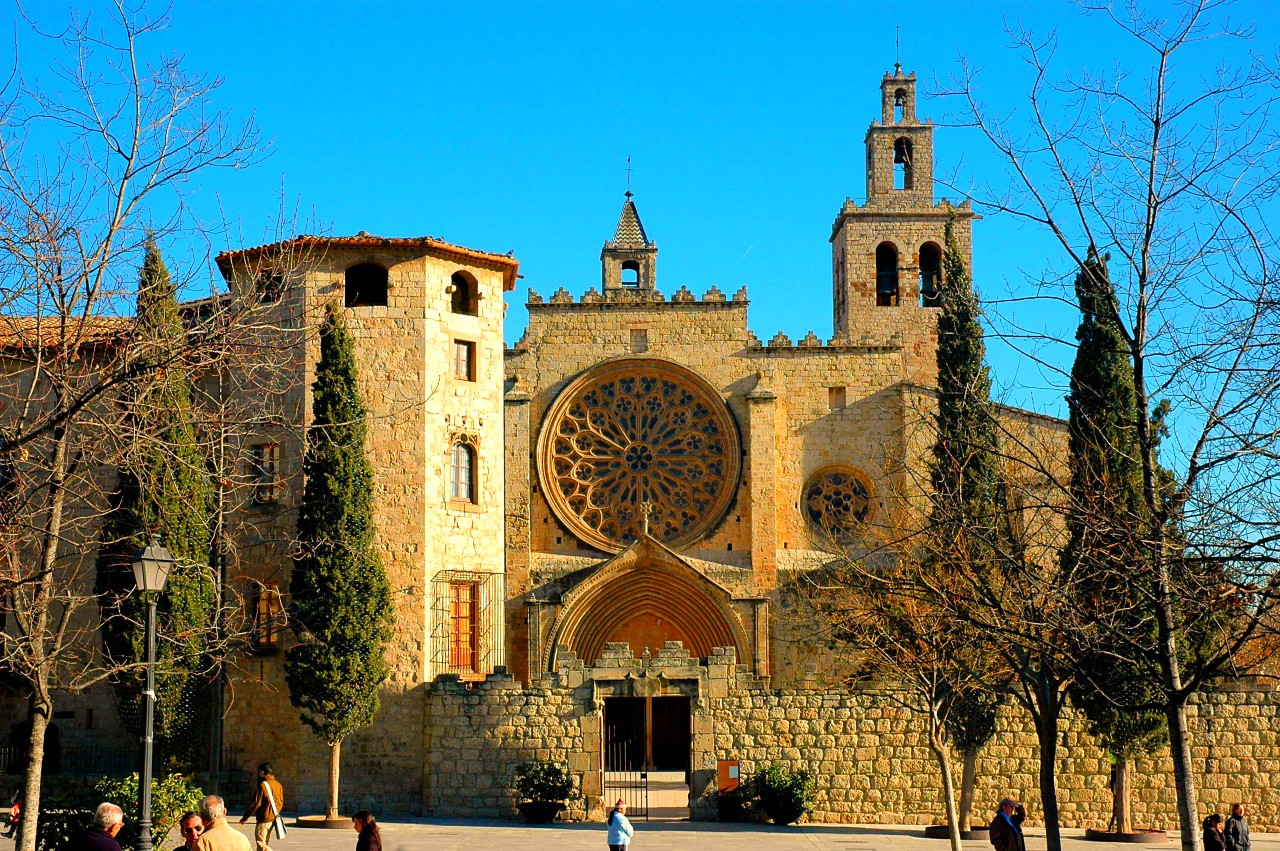
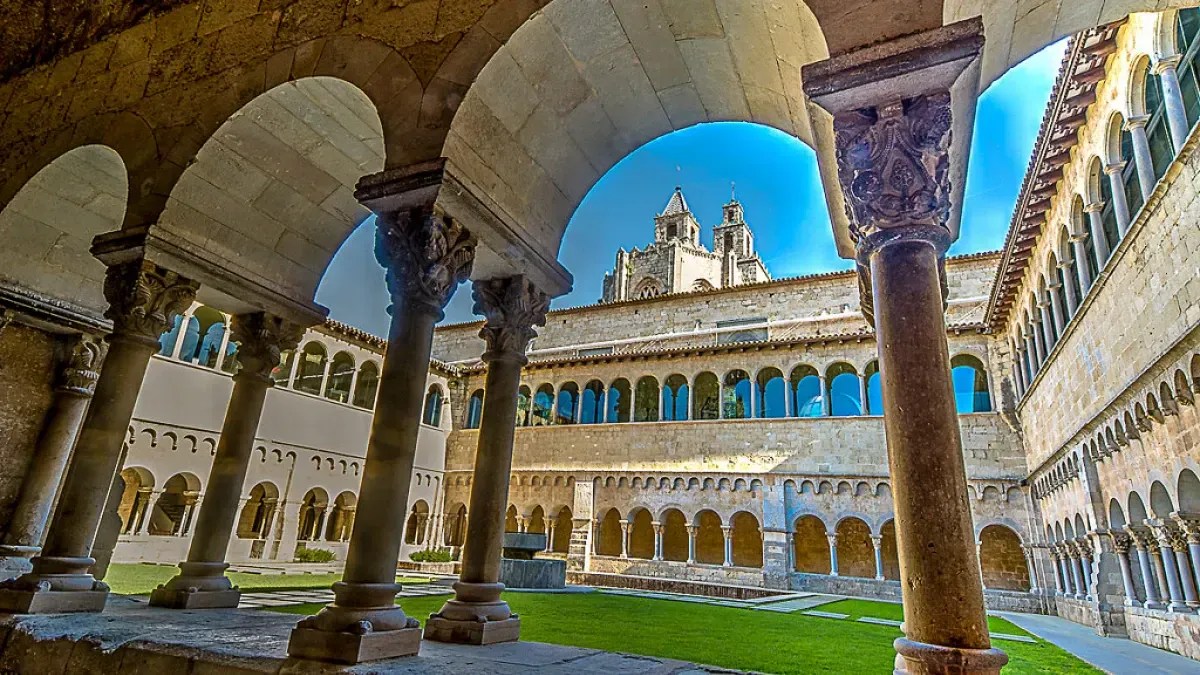
In the early years of the 9th Century, the famous Benedictine Abbey of St Cugat del Vallés arose near Barcelona in a place called Octavian. In 1079, the Relics of an unknown Martyr were recognised as those of St Cugat, as only the head of the Martyr killed in Barcelona had been taken to France.
Several Churches are dedicated to him both in Spain and in France The various Martyrologies including the Roman celebrate him on 25 July. But, in Barcelona, St Cugat is celebrated on 27 July to avoide the ovvious clash with the celebration of St James the Apostle.
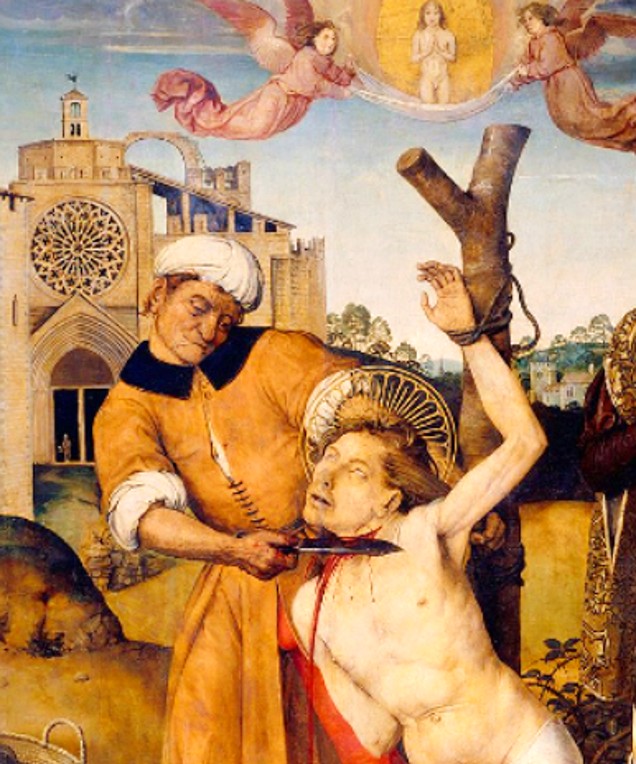
In the Museum of Catalanese Art in Barcelona, there is a painting by the Artist Ajna Brù, which depicts the very dramatic and violent scene of the beheading of St Cugat, with a large knife, giving particular emphasis to the perfidious and evil expression of the executioner – see the image above.


 AnaStpaul