
Saint of the Day – 31 July – Revisiting St Ignatius Loyola (1491-1556) Priest, Confessor, Founder, Theologian, Spiritual Writer, Mystic. Born in 1491 at Loyola, Guipuzcoa, Spain as Inigo Lopez de Loyola and died on 31 July 1556 at Rome, Italy of fever. Also known as- Inigo Lopez de Loyola. The name Ignatius = of fire, igneous, from the Latin
The Roman Martyrology reads: “At Rome, the birthday of St Ignatius Loyola, Confessor and Founder of the Society of Jesus, renowned for sanctity and miracles and most zealous in propagating the Catholic Religion in all parts of the world.”
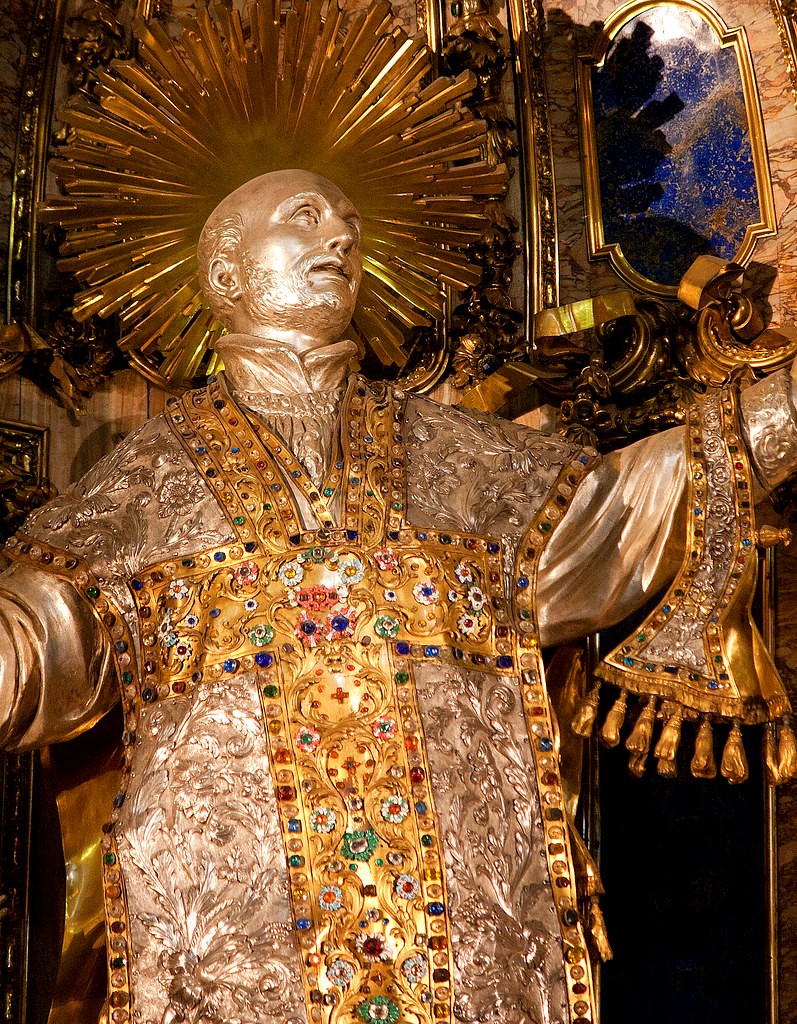
The founder of the Jesuits was on his way to military fame and fortune, when a cannon ball shattered his leg. Because there were no books of romance on hand to assist in passing the time, during his convalescence, Ignatius spent the time reading The Golden Legend, a collection of biographies of the Saints and the Life of Christ by Ludolph the Carthusian. His conscience was deeply touched and a long, painful turning to Christ began.
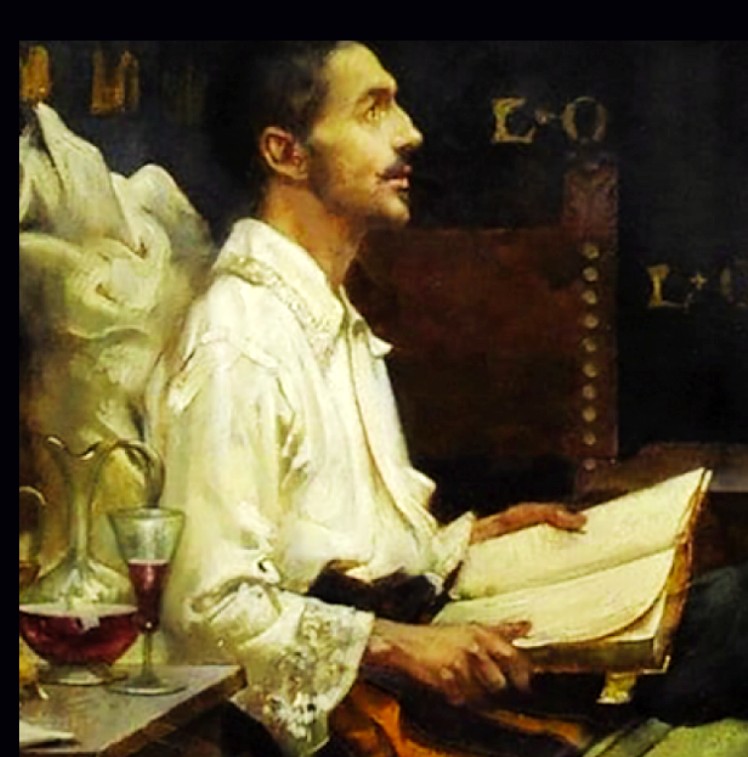
Having seen the Mother of God in a vision, on his recovery he took a vow of chastity, hung his sword before the Altar of the Virgin of Montserrat and donned a pilgrim‘s robes. He remained for almost a year at nearby Manresa, sometimes with the Dominicans, sometimes in a pauper’s Hospice, often in a cave in the hills, praying. After a period of great peace of mind, he went through a harrowing trial of scruples. There was no comfort in anything—prayer, fasting, the Sacraments, penance. At length, his peace of mind returned by the grace of Gpd.
It was during this year of conversion that Ignatius began to write the material which would later become his greatest work, “The Spiritual Exercises.” In 1523, he finally achieved his desire of visiting the Holy Land but could not remain, as he planned because of the hostility of the Turks.
In 1528 he began studying Theology in Barcelona and Alcala in Spain, and Paris, France receiving his degree on 14 March 1534. Ignatius spent the next 11 years in various European Universities, studying with great difficulty, beginning almost as a child. Like many others, his orthodoxy was questioned; Ignatius was twice jailed for brief periods.
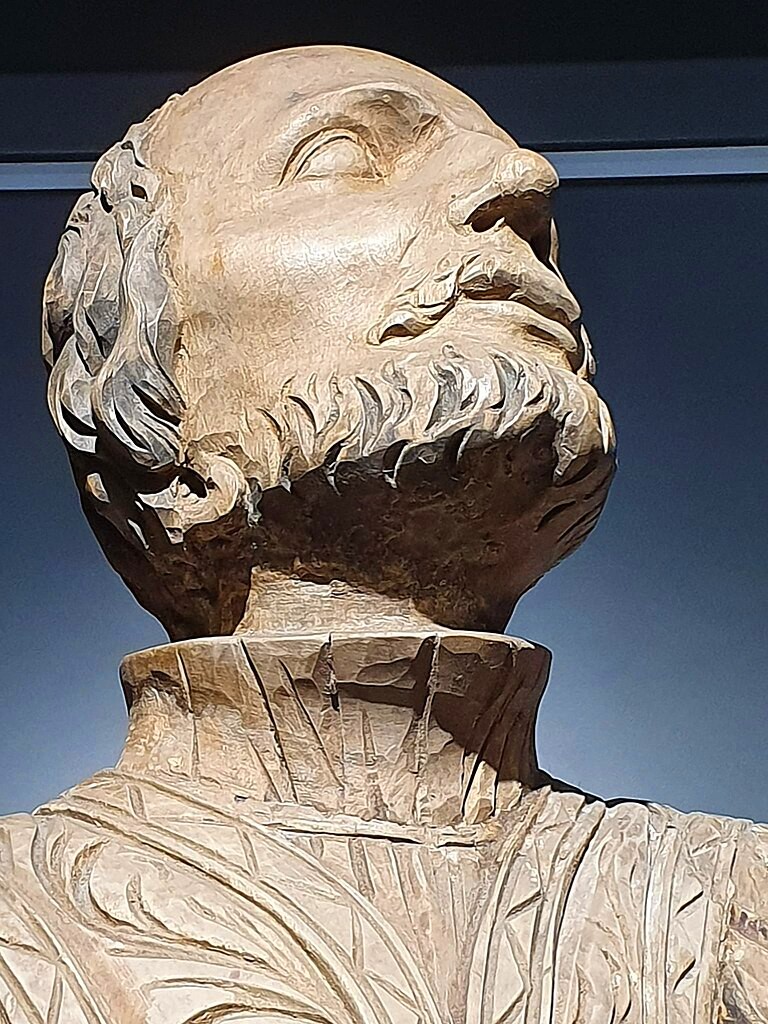
In 1534, at the age of 43, he and six others—one of whom was Saint Francis Xavier—vowed to live in poverty and chastity and to go to the Holy Land. If this became impossible, they vowed to offer themselves to the apostolic service of the Pope. The latter became the only choice. During this time he was also Ordained to the Priesthood. In 1537, Ignatius had one of the decisive experiences of his life. He related to his companions that on a certain day, while in prayer, he seemed to see Christ with the Cross on His shoulder and beside Him, the Eternal Father, Who said, “I wish Thee to take this man for Thy servant,” and Jesus took him and said, “My will is that you should serve Us.” On Christmas Day 1538 Ignatius said his first Holy Mass at the Church of St Mary Major in Rome.
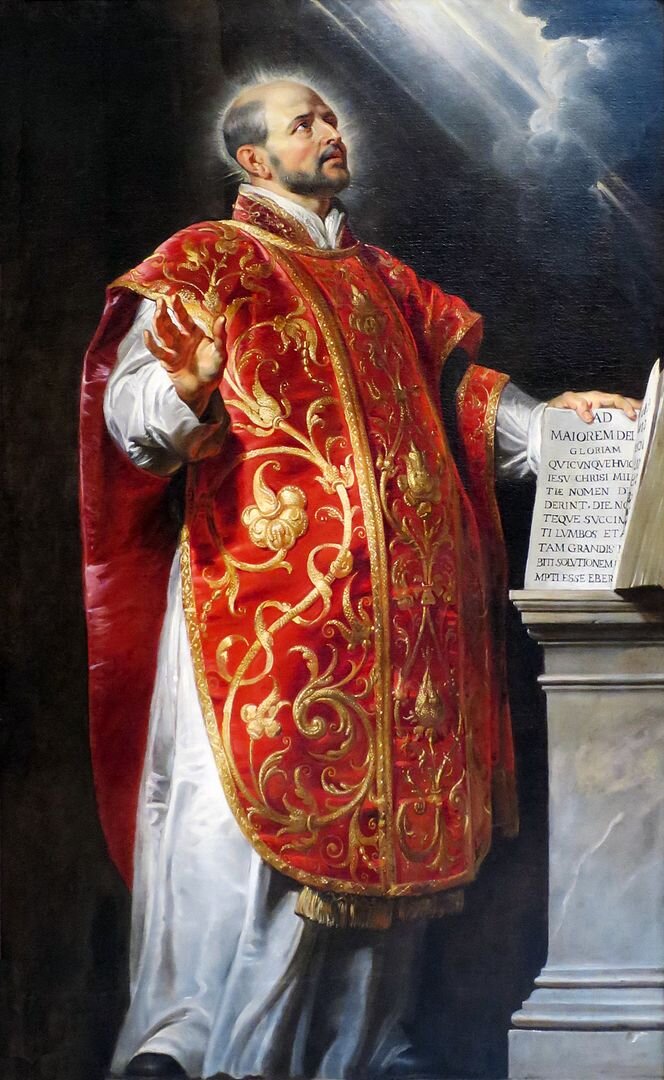
Four years later Ignatius made the association permanent. The new Society of Jesus was approved by Pope Paul III and Ignatius was elected to serve as the first General. Ignatius himself, never used the term ‘Jesuit’ which was coined as an insult by his opponents. The Society today uses the term with pride.

When companions were sent on various missions by the Pope, Ignatius remained in Rome, consolidating the new Order, instructing new members but still finding time to found homes for orphans, catechumens and penitents. He founded the Roman College, intended to be the model of all other colleges of the Society.
While General of the Order, Ignatius was frequently ill. In January 1551 he became so ill that he begged his associates, though to no purpose, to accept his resignation as Superior. Despite his condition, he continued to direct the Order until his death in July 1556. Since his days at Manresa, Ignatius had practiced a form of prayer which was later published in The Spiritual Exercises and appears to have rivaled that of the greatest Mystics. Before his death, aged 65, Saint Ignatius was nearly blind.
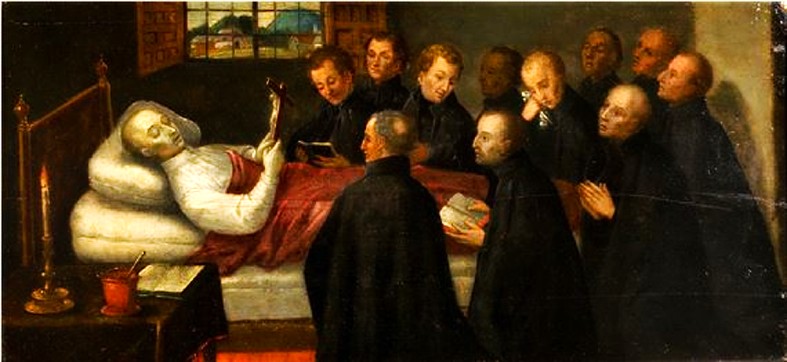
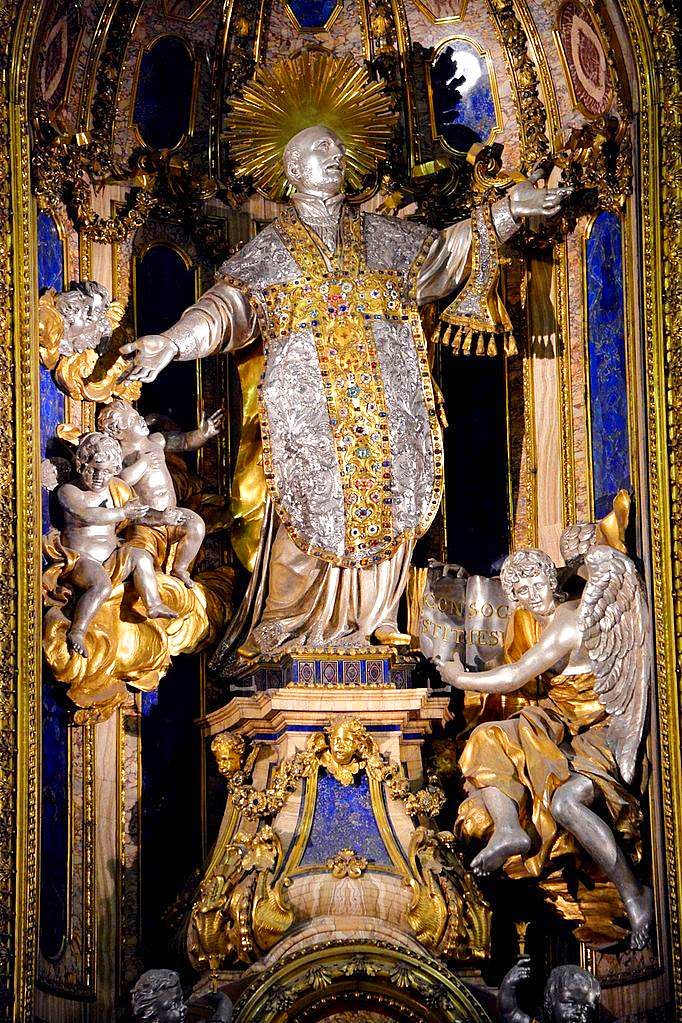
Ignatius Loyola was Beatified by Pope Paul V on 27 July 1609 and Canonised by Pope Gregory XV on 12 March 1622. His achievements and those of his followers form a Chapter in the history of the Roman Catholic Church that cannot be neglected by those who desire to understand this glorious Church of Christ..


 AnaStpaul