
Saint of the Day – 8 August – Saint Famianus O.Cist. (1090-1150) Cistercian Monk, Hermit, Pilgrim, Miracle-worker. Born in 1090 in Cologne, Germany as Gerhard Quardus and died on 8 Augustn 1150, aged 59 or 60, in Gallese, Umbria, Italy of natural causes. St Famianus bears the great honour of being the first Cistercian to be Canonised which took place in 1154 by Pope Adrian IV. Patronage – of Gallese, Italy. Also known as – Gerhard, Wardo, Famian, Famiano, Famianus of Compostela, Famianus of Gallese. The name Famianud comes from Latin and means “who has acquired fame.”In Germany he is known as St Wardo Famianus.
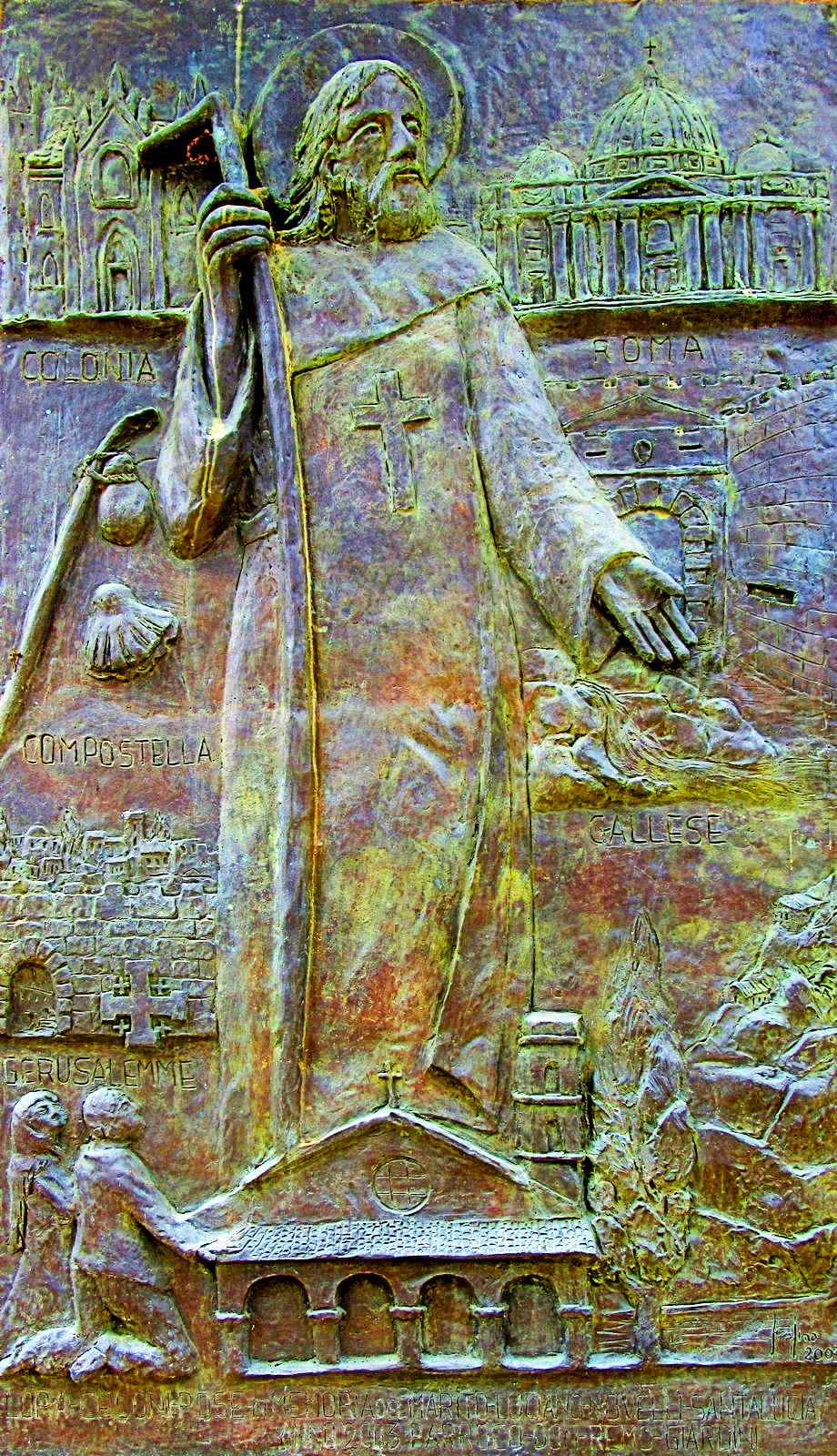
Gerhard (called Ward – the name Wardo is derived from ‘the fourth’ probably being the fourth child) Quadrus, son of a prominent family, gave away his inheritance and in 1108 travelled as a pilgrim to the seven pilgrimage Churches in Rome , where he stayed for six years.
In 1114 he made a pilgrimage to Santiago de Compostela and then lived in a Monastery dedicated to the Sts Cosmas and Damian near Tui in Galicia. When the Cistercian Abbey of Osera was built nearby, he joined the Order. But after some time he went on a second pilgrimage to the Holy Land and on his return, via Italy, he visted the Town of Gallese, where he later died.
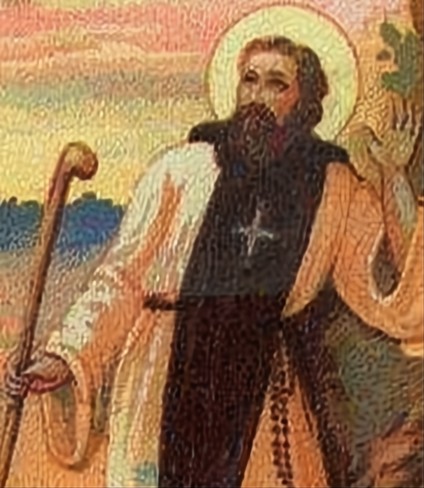
He is highly venerated in Gallese. This Town in the Viterbo area was the birthplace of 2 Popes Marinus I (Pope from 882 until his death in 884) and Romanus I (Pope from August to November 89).. The prestige which the Town acquired thanks to its religiosity called several pilgrims to Gallese, including out Saint Famianud. This Monk, known as “di Gallese – of Gallese” died in the Town in question on 8 August 1150.
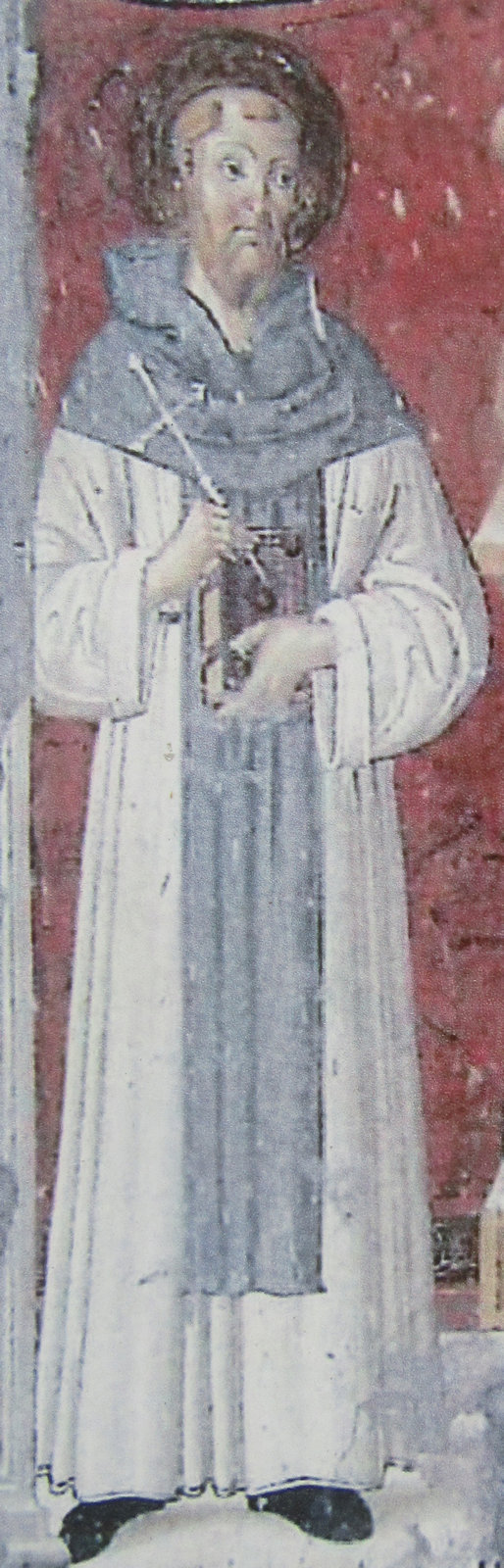
(School of Antonio del Massaro)
Famianus ws Canonised by Pope Adrian IV with the name of St Famianus in 1154 and his remains were placed in a cave, where in 1155, the Basilica which bears his name, was erected. Many miracles occurred at Wardo’s grave in Gallese which is why he was given the name Famianus. In 1244, a Basilica dedicated to him was built over his grave which included a pilgrims’ hostel and a small Monastery. Wardo’s body is still incorrupt to this day.
In the place of worship, the Incorrupt Body of St Famianus, the Patron Saint of Gallese, is preserved, guarded in a precious Sarcophagus placed in the crypt. The Church, located outside the urban perimeter, incorporates the cave, transformed into a crypt, where the Saint wanted to be buried. About three kilometers from the historic centre of Gallese, in the countryside, is another Church dedicated to St Famianus, the Chapel of St Famianus at Lungo.
In this Chapel, is preserved the spring which on 17 July 1150, the Saint, made flow by striking the ground with his walking stick. This had occurred at the end of his pilgrimage, which had taken him to Spain (where he is still highly venerated), to the Holy Land and to Rome Even today, on 17 July of each year, the place is the destination of a pilgrimage which travels from very early in the morning to reach the Chapel in time for Holy Mass.
The cult of the Saint and the custody of the two Churches are entrusted to the ancient Confraternity of St Famianus, reconstituted in 1990.


 AnaStpaul