
Saint of the Day – 20 August – St Maximus of Chinon (5th Century) Priest, Abbot, Confessor, Founder of a Monastery on the river Vienne, later dedicated to him, today the Collegiate Church of Saint-Mexme , Miracle-worker. He was buried in this Monastery.Maximus had been a disciple of Saint Martin of Tours (315-397), he would, therefore, have died in the first half of the 5th Century. Also known as – Massimo, Mexme.
The Roman Martyrology reads today: “At Chinon, St Maximus, Confessor, disciple of the the blessed Bishop, Martin.”
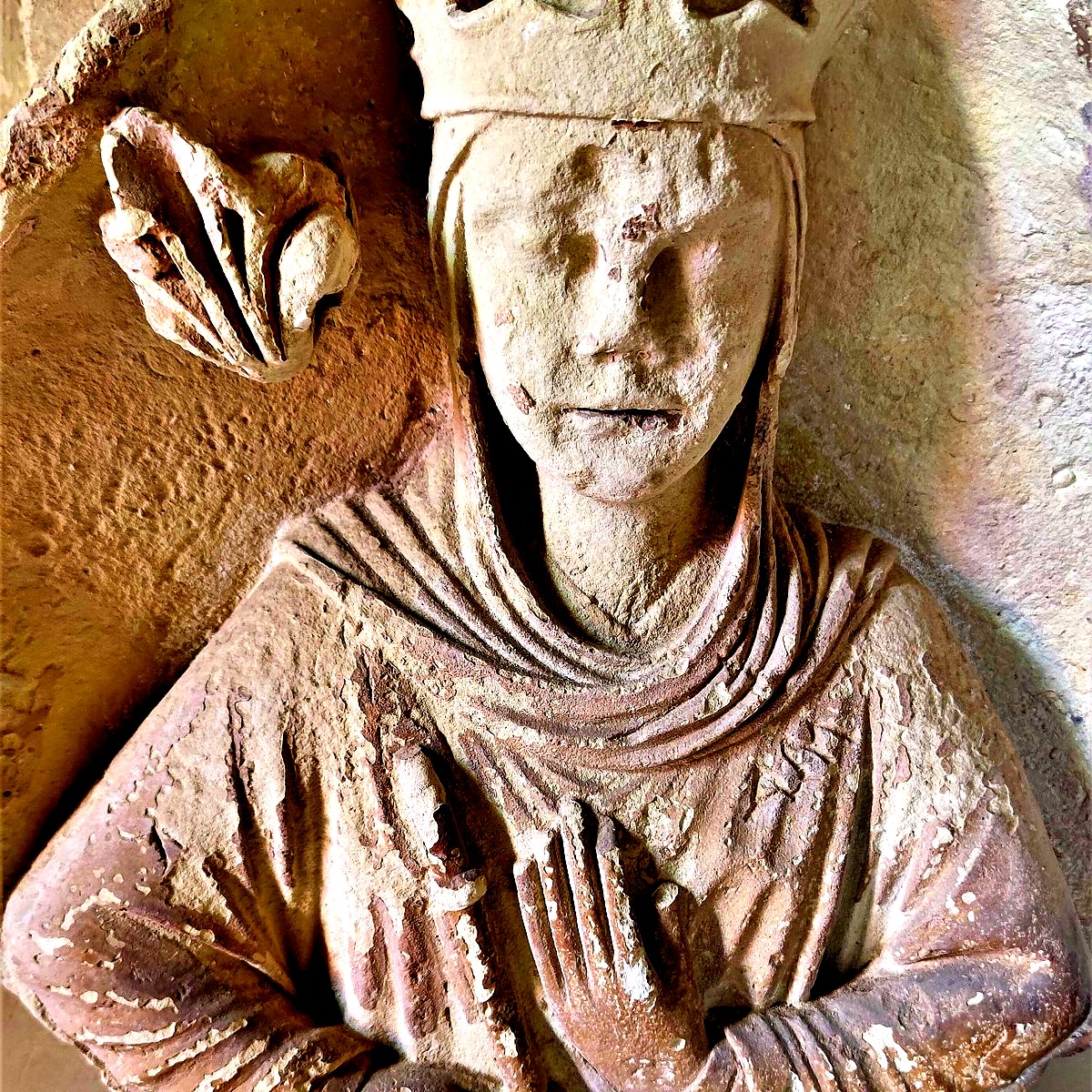
The little we know of our Saint today comes from St Gregory of Tours(538-594) who, in his “De Gloria Confessorum” dedicated a Chapter to this disciple of St Martin of Tours, who, in order to keep his sanctity hidden, left Touraine, where he was born and lived, to go as a simple Monk to the Monastery of Ile-Barbe in Lyons.
But even here the sanctity and wisdom of his person attracted the attention of the inhabitants of the area, who did not leave him alone in his prayers and deliberately hidden and contemplative life, therefore, he decided to return to his own region.
Crossing the river his boat sank but Maximus was able to reach the shore without difficulty, also saving the book of the Gospels, the Chalice and the Paten which he had with him.
Returning to Touraine in Aquitaine (a historical region of central France, largely in the Loire basin), he founded a Monastery in Chinon on the Vienne which later took his name. It was destroyed by the Normans and rebuilt in the 10th Century.
St Gregory of Tours tells us that while the Castle of Chinon was besieged by the Visigoth enemies, around 446, the holy Abbot obtained, with his intense prayers, torrents of rain to fall, thus aiding the population of Chinon, who had been isolated from the main water supplies. The rain allowed cisterns and containers to be filled. Thus the siege of Chinon was lifted.
This episode is illustrated in the Saint-Etienne Church in Chinon by a stained glass window by master glassmaker Lobin, see below.
Saint Maximus, in this window, is covered with the famous Cope – the Cope called “of Saint Mexme ” – which was offered to the head of the Canons of the Collegiate Church of Saint-Maximus in the 12th Century by Queen Eleanor of Aquitaine, who is said to have brought it back from the second Crusade.
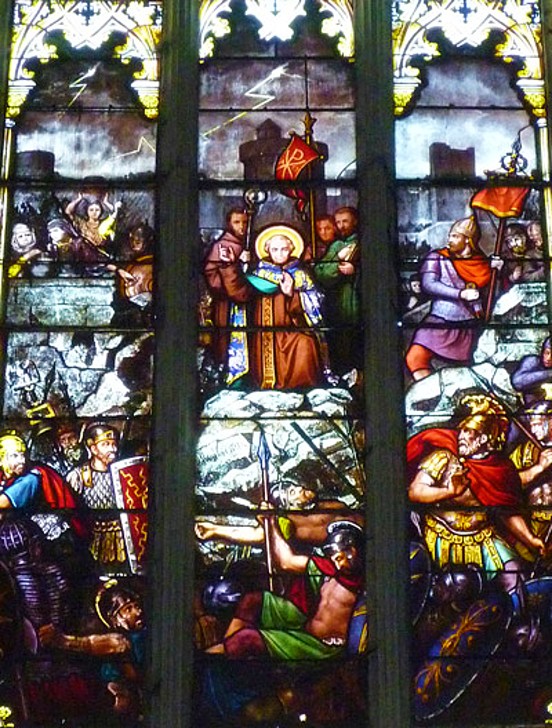
Church of St. Stephen of Chinon
Kept at the Musée des Amis du Vieux Chinon, this Cope is made of silk and gold and dates from the end of the 11th Cr beginning of the 12th.
Chained cheetahs, trees of life stylised according to a Byzantine motif, falcons, jackals, representation of the sacred fire, it is surmounted by an inscription woven in the Kufic language indicating: “Happiness to its owner.”

Maximus is believed to have died shortly after the siege of Chinon at the age of over 85. His liturgical celebration on 20 August in the Roman Martyrology. In Chinon, where he was a tireless Abbot and shepherd he is especially venerated. He died in an unspecified year.
Maximus is also mentioned in the ‘Vita’ and the ‘Miracula’ written in the 9th Century but they add nothing historical to the that which St Gregory of Tours has given us.

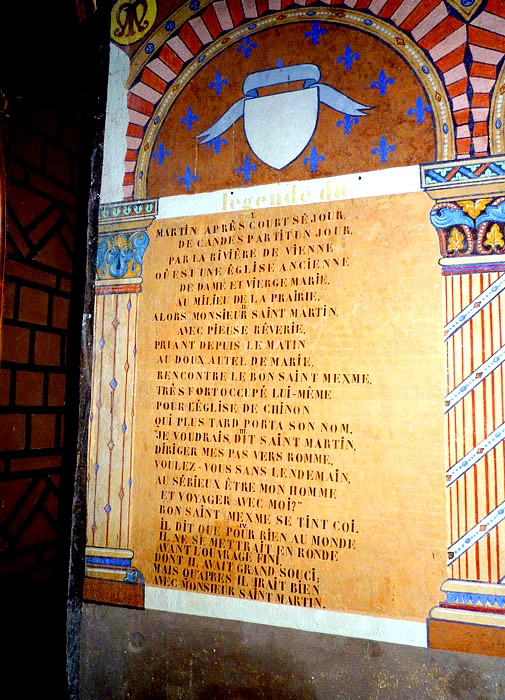
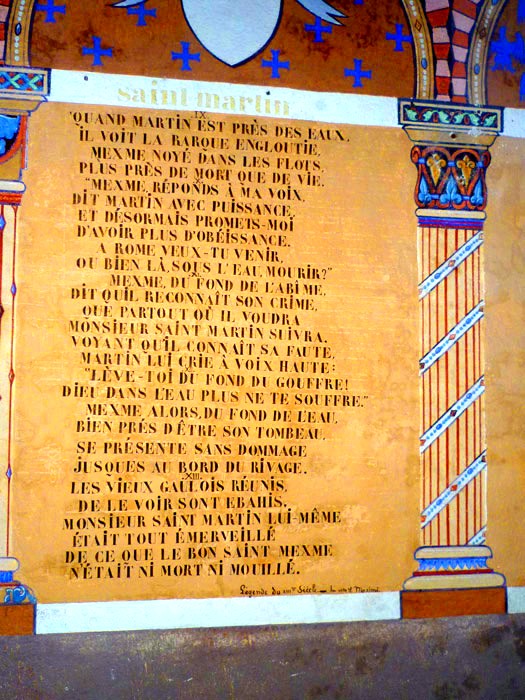
In the Church of Rivière, the legend of Saint Maximus is transcribed on three panels which are located at the Entrance to the Church, on the wall of the Pulpit, near the Confessional.
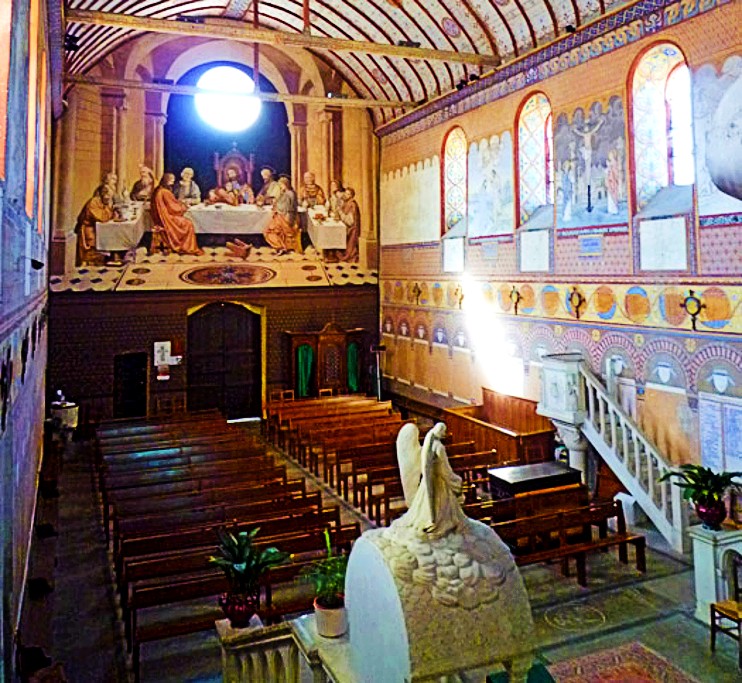
A legend dating from the 13th Century tells of an conversation between the great St Martin of Tours and our St Maximus which took place here in this “ancient Church of the Lady and Virgin Mary, in the middle of the meadow.” A site which the ‘old Gauls’ called the ‘Rives‘ (Rivière).


 AnaStpaul