
Saint of the Day – 1 September – St Constantius (Died c570) Bishop of Aquino, Italy. Gifted with the charism of Prophecy, St Gregory the Great himself says, in particular, that our Saint shone through the gift of prophecy and miracles. Patronage -Co-Patron with St Thomas Aquinas of the City of Aquino and the Diocese of Sora-Cassino-Aquino-Pontecorvo, Italy, Also known as – Constance, Costantino… Constanzo…
The Roman Martyrology reads today: “At Aquino, Saint Constantius, a Bishop renowned for the gift of prophecy and many virtues.”
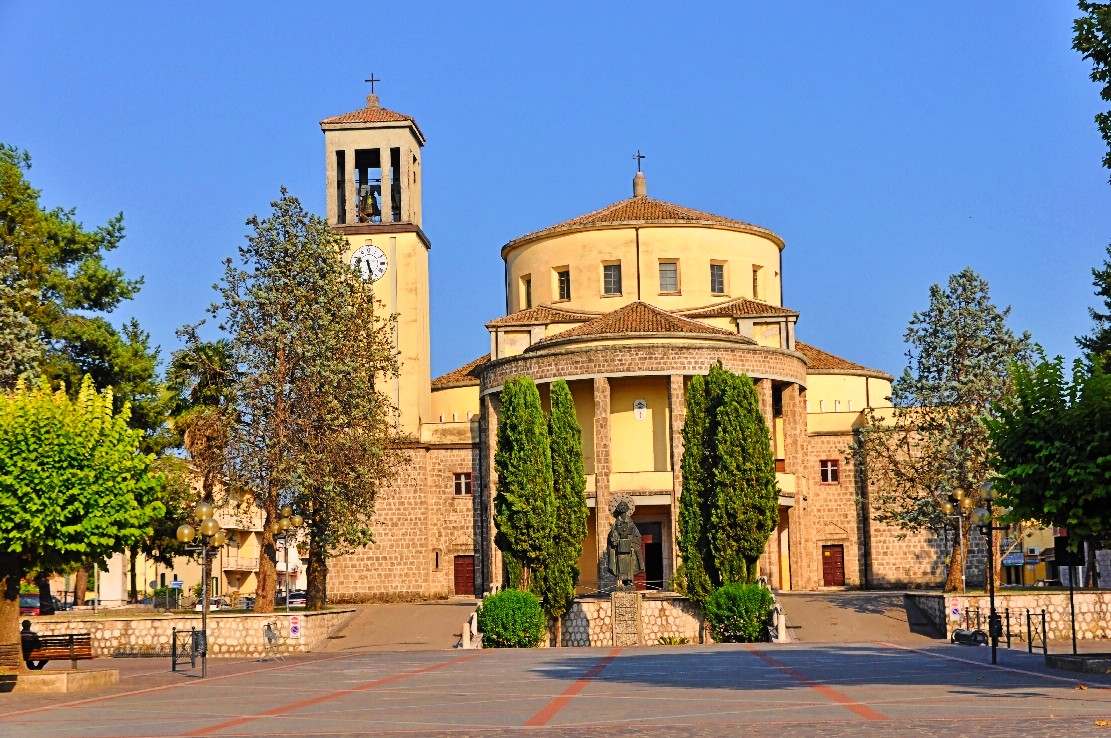
What we know about Constantius comes from two passages of St Gregory the Great, who reports that this holy Bishop of Aquino had died not long before, during the Pontificate of Pope John. Gifted with a prophetic spirit, when he was at the end of his life, his neighbours, who, mourning his imminent loss, anxiously asked him who they would have after him, Constantius replied: “After Constantius a muleteer and after the muleteer, a clothes washer, alas, miserable you, Aquino and let that be enough for you!”
Having said this, he died. His Deacon Andrew, who had previously governed mules and horses, succeeded him in the pastoral care and when he died, Giovinius, who had been a clothes washer in the same City, was elevated to the Episcopal dignity. He was still alive when Aquino was devastated by the Lombards, some of the inhabitants were killed by the invaders, some perished by a fierce pestilence, so that after his death, it was no longer known who the Bishop was bishop, nor for whom anyone should be the Bishop. Thus was fulfilled what the man of God had announced – after the death of his two successors, his Church would no longer have any Shepherd.
Already in narrating the deeds of Saint Benedict, St Gregory had recalled that a cleric of Aquino, tormented by the devil, had been directed by Bishop Costantius to many sanctuaries of Martyrs. These, however, did not want to restore his health, to demonstrate how much grace there was in Benedict, who, in fact, having had the cleric before him, with his prayers immediately freed him from the enemy.
We,, therefore, have from St Gregory the Great himself two certain data for the chronology of the life of St Constantius – he was already the Bishop of Aquino while Saint Benedict (Died 547) was still alive and he died during the Pontificate of John III (561-573). But although St Gregory does not expressly declare the identity of the person, this appears evident from the expressions he uses.
After the long period of abandonment following the Lombard devastation, the Episcopal See of Aquinas was reconstituted and sought the memories of its Patron Saint. Even if the legend, written by the Cassinese Deacon several centuries after the life of the Saint it deals with, could not have been very reliable, it is, nevertheless, for us evidence of the cult paid to Constantius in the reborn Diocese.
On 10 December 1742, Bishop Spadea proceeded to examine the Relics of the Patron Saint, found under the Altar of the ancient Cathedral dedicated to Saint Peter. After having honoUrably placed them in a new wooden urn, he had them translated to the new Cathedral dedicated to St Constantius, where they were placed under the High Altar. The same Bishop also informs us that, until 1644, the body of the Saint had been preserved in a Church dedicated to him, far from the City walls and no longer existing. The Cathedral of St Constantius, destroyed in May 1944, was rebuilt by Bishop Biagio Musto and dedicated, in October 1963, to Saints Constantius and St Thomas Aquinas, Co-Patron.


 AnaStpaul