
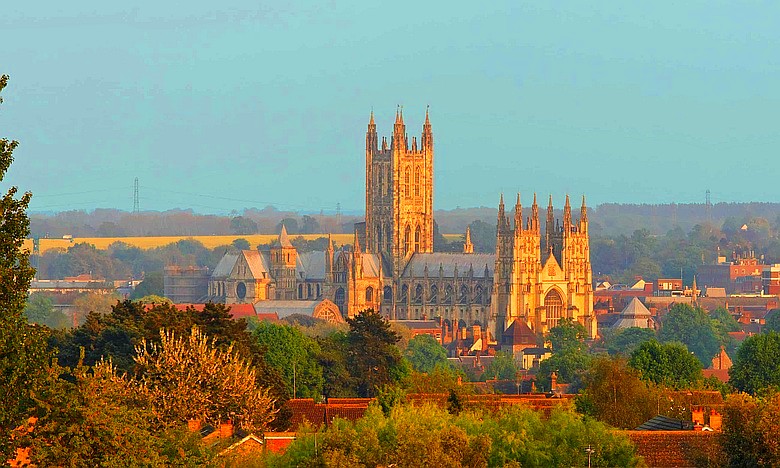
Saint of the Day – 19 September – St Theodore of Canterbury (c602-690) the 7th Archbishop of Canterbury, England and the first archbishop to rule the whole English Church. Theodore was an important and memorable figure in the English Church. Born inc 602 in the City of St Paul’s birth, Tarsus in Cilici, Greece, now in modern Turkey and died on 19 September 690 in Canterbury, Kent, England of natural causes. Also known as – Theodore of Tarsus. His body is Incorrupt.
The Roman Martyrology reads today: “At Canterbury, the holy Bishop, Theodore, who was sent to England by Pope Vitalian and was renowned for learning and holiness.”
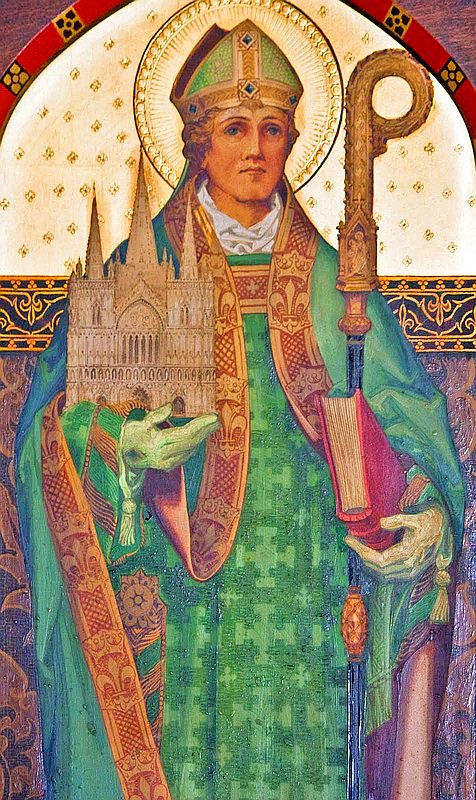
After the death of St Deusdedit, the Archbishop of Canterbury, King Oswi of Northumberland and King Egbert of Kent, sent a virtuous and learned Priest – named Wighard – to Rome that he might be Consecrated as the new Bishop and duly confirmed to that important See by the Pope himself. However, sadly, Wighard and most of those who attended him, died in Italy of the Plague and Pope Vitalian chose instead, Adrian, Abbot of Niridian, near Naples, to be raised to that dignity. This Abbot was by birth an African. He understood Greek and Latin perfectly and was thoroughly versed in theology, as well as in monastic and Ecclesiastical discipline. But so great were his fears of the dignity to which he was called that the Pope was compelled, by his entreaties and tears, to yield to his excuses. He insisted, however, that Adrian should find a person equal to that charge and should, himself, attend upon and assist him in instructing the inhabitants of this remote island in the perfect discipline of the Church.
Adrian first named to the Pope a Monk called Andrew but he was judged incapable of the necessary physical strength on account of his bodily infirmities, although otherwise a person extremely well qualified. There was then at Rome, a Greek Monk named Theodore, aged sixty-six, a native of Tarsus in Cilicia, a man of exemplary life and well skilled in divine and human learning and in the Greek and Latin languages. Adrian presented him to the Pope and procured that he should be made a Bishop, promising to bear him company into England.
Theodore was duly Consecrated in 668 and then set out from Rome with St Adrian and St Benedict Biscop, later the Bishop and Abbot of Wearmouth and Jarrow, Durham. In 669 they reached Canterbury, where Theodore appointed Adrian the Abbot of Sts Peter and Paul Monastery, afterward named St Augustine’s.
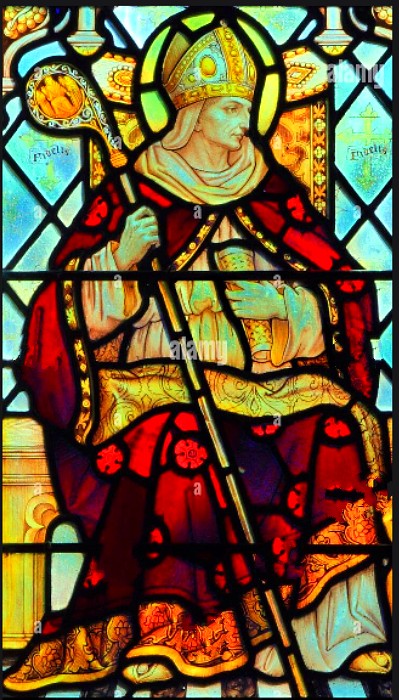
There they created a famous school influential in the lives of such brilliant scholars as the celebrated historian St Bede the Venerable and the skilled Church architect St Aldhelm.
Theodore organised the English Church, many Sees which were vacant on his arrival and others which needed to be divided. In 672 he called the first General Synod of the English Church at Hertford, to end certain Celtic practices and to divide Diocese. The division issue was postponed, but the Synod imposed the date of the Roman Easter, established obedience for Clerics and Monks, forbade Bishops to interfere in matters relating to and of other diocese and reaffirmed the Church teaching on Marriage and Divorce.

During this period Theodore came into sharp conflict with St Wilfrid, whom he had appointed as the Bishop of York but whom he soon deposed. In 677/678, St Wilfrid went to Rome to protest. Meanwhile, in 678, Theodore helped settle relations between King Aethelred of the Anglo-Saxon Kingdom of Mercia and King Ecgfrith of Northumbria, whom Aethelred had defeated in battle.
Theodore’s Synod at Hatfield in 679, his 2nd Genral Synod, cleared the English Church from associations with the heresy of the Monothelites. Few things have rendered the name of St Theodore more famous than his Penitential or Code of Canons, prescribing the term of public penance for penitents, according to the quality and enormity of their sins. In this Penitential it is stated that when a Monk died, Holy Mass was offered for him on the day of his burial, on the third day after and as often again, as the Abbot thought proper. Also, the Holy Sacrifice was offered for the laity and accompanied by fasting. This Penitential which had been colated and published by his disciples, became highly influential in England and on the Continent.
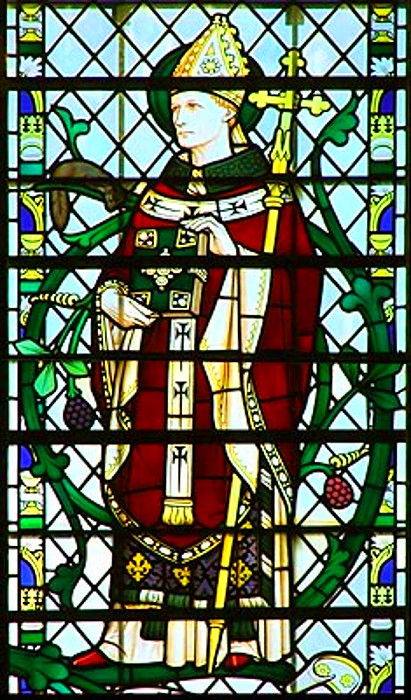
Theodore, being more than eighty years old and seized with frequent bouts of illness, was desirous of being reconnciled with St Wilfrid. He, therefore, requested the exiled holy Prelate to come to him at London, begged his pardon for having consented with the Kings to his deprivation, without any fault on his side, did all he could to make amends and restored him to his See of York. For this purpose he wrote strong letters to Alfrid, King of Northumberland – who had succeeded his brother Egfrid, to Ethelred, King of the Mercians and to others who were opposed to St Wilfrid or were interested in this affair. Theodore had the comfort of seeing his endeavours everywhere successful.
One of Theodore’s greatest achievement was to adapt the Roman ideal of a centralised Church to English conditions. His establishment of a centralised Church under the Archbishopric of Canterbury in close alliance with secular rulers, was maintained by his successors. No biography of Theodore has survived.
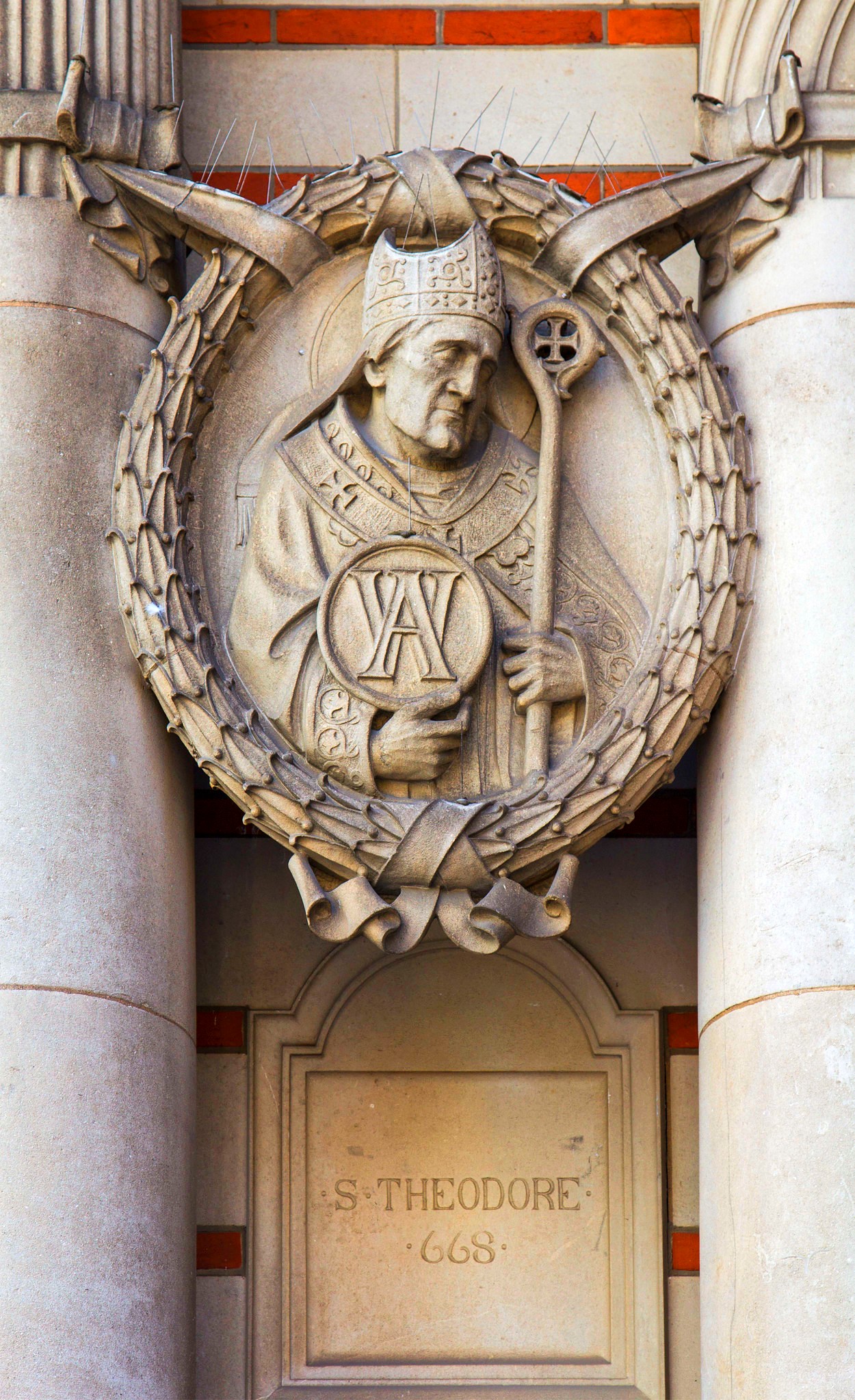
St Theodore was the Archbishop of Canterbury for twenty two years and died in 690, at the age of eighty-eight years. His memory is honoured on 19 September the date of his death. He was buried in the Monastery of St.Peter, which afterwards took the name of St Augustine. In 1091 his body was found Incorrupt when it was re-interred in the Cathedral.
The Lives of:
St Adrian of Canterbury:
https://anastpaul.com/2018/01/09/saint-of-the-day-9-january-st-adrian-of-canterbury-c-635-710/
St Benedict Biscop:
https://anastpaul.com/2021/01/12/saint-of-the-day-12-january-st-benedict-biscop-osb-c-628-690/
St Wildrid:
https://anastpaul.com/2018/10/12/saint-of-the-day-12-october-st-wilfrid-c-633-709/


 AnaStpaul