
Saint of the Day – 23 September – Blessed Peter Acotanto (1108-1187) Hermit, Apostle of the poor, the most deprived and desparate peoples of Venice. Born in 1108 in Venice, Italy and died there in on 23 September1187 of natural causes. Patronage – of Venice, Italy. His Body is Incorrupt.
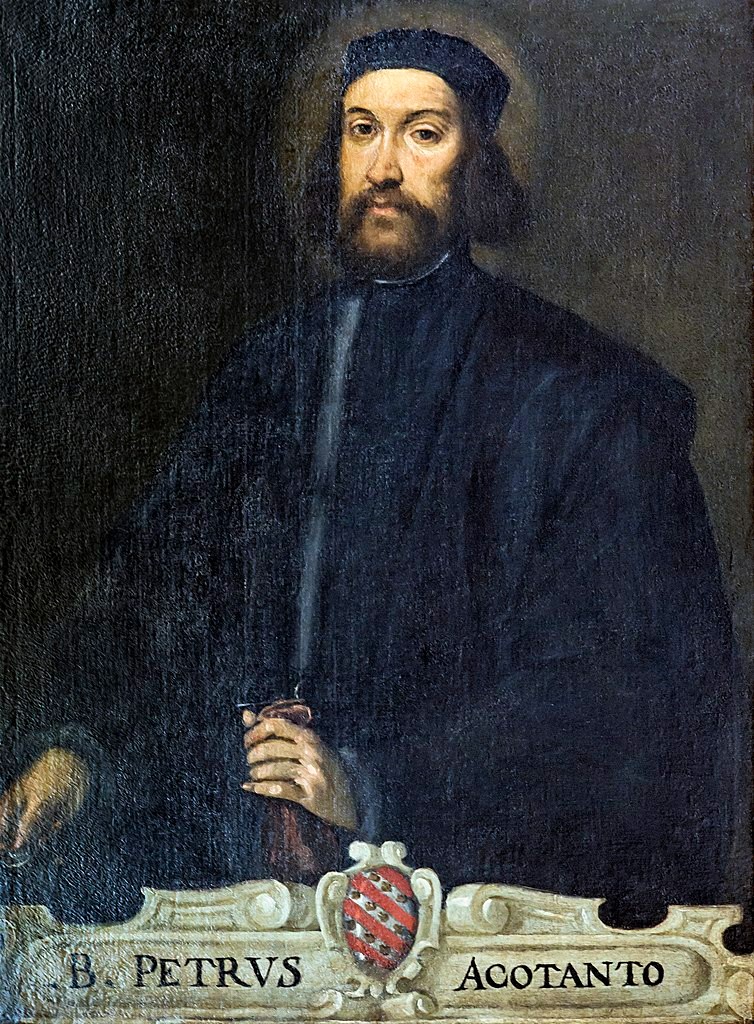
According to the Venetian tradition based on a manuscript preserved in the Church of St Basil Peter Acotanto was born in 1108 to the noble Acotanto family, a family which could boast very ancient origins. The same Church of the district where the Acotanto family lived, St Basil, had been built by their family in the 10th Century.
Peter practiced charity in an eminent way – in the poor he saw Christ and in almsgiving – a manifestation of faith, even if many times the poor people took advantage of it. They besieged his house before he went out, they guarded the door when he had to return, they interrupted his walk on the street with importunate requests but Peter patient and generously, welcomed everyone and did not let anyone leave disconsolate or in tears.
In the darkest night, to hide from the sight and applause of men and known only to God, Who assisted him, with his own hands, Peter loaded his little domestic boat with bread, wood, oil, clothes and other necessary items for the poor, the miserable and the deprived. Peter pushed his boat alone through the troubled and angry waters and in the midst of raging winds and with continuous danger to his health and his life, he went here and there, to various distant districts of the City, in search of the most derelict poor and made a generous distribution to them of the abundant load, saving them in this way from the imminent misfortune of having to die from cold or hunger.

For the poor Peter became poor himself. He sold everything he had and did not even keep enough for himself to live on. Peter then retired to San Giorgio Monastery among the Benedictines who had been his life teachers. He wore very poor clothes and wished to do the humblest services for the Monks, such as cultivating the vegetable garden and carrying water to the Monastery kitchen after drawing it with difficulty from the well. He was content with very little food and often fasted completely. The example of virtue which he displayed to the Monks was such that, on the death of Abbot Pasquale, they wished to appoint him as their Superior but Peter instead obtains permission to live as a Hermit next to the Monastery. With his own hands he builds a small hut and between fasting and mortification he spent the last years of his life alone in his little hut.
He died on 23 September 1187, the date he had predicted for his death, surrounded by his brothers. He was buried in the Church of San Basilio (commonly known as San Basegio) in Venice where he enjoyed a reputation for sanctity for the miracles performed through his intercession and the incorruption of his body, found in 1250.
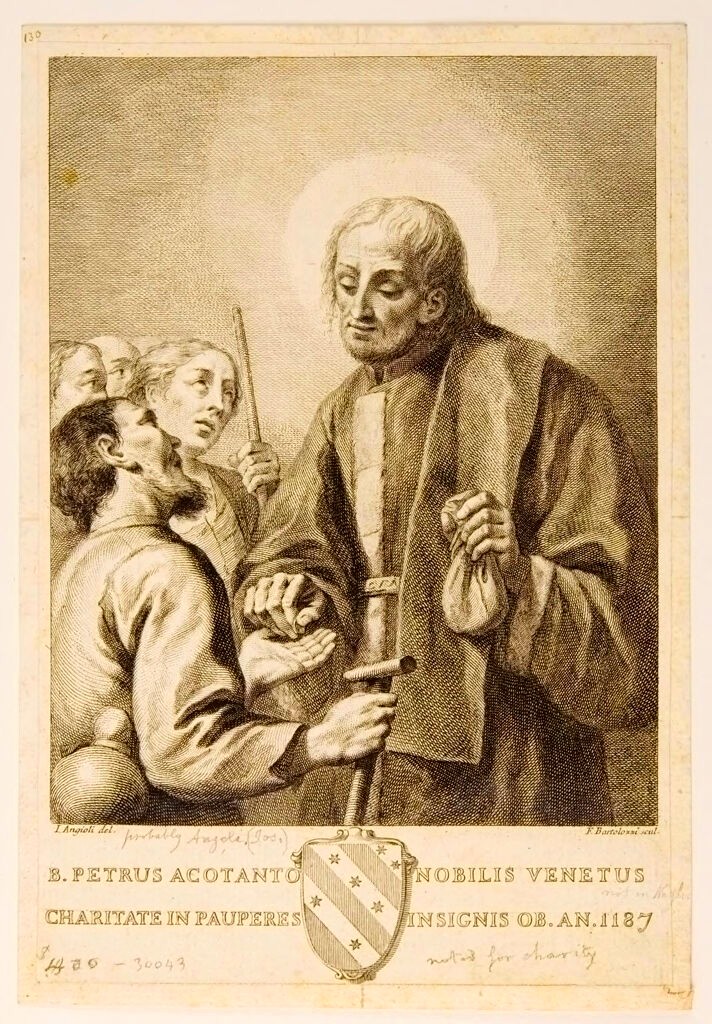
In 1305 the body was transferred to another tomb in the nearby cemetery and, in 1340, it was finally transferred inside theChurch, above the Altar of the Crucifix. Recognised as a miracle worker, Pope Clement XIII declared Peter Blessed in 1759.
In 1810, following the Napoleonic suppression of the Church of San Basiio , his relics were transferred to the nearby Church of San Sebastiano and then, in 1821, to the Church of Saints Gervasio and Protasio where they are still venerated today.
In 1946, Prof. Peter Leonardi founded the Blessed Peter Acotanto Charity to assist the evicted from Giudecca and Terese. About 500 of the most needy families were assisted. He worked for human promotion, especially for young people, by opening recreation centers, schools and refectories, where children from the assisted neighbourhoods were welcomed and entertained with games, songs, readings, and food. He set up professional courses and carpentry workshops to teach a trade to abandoned children. The Peter Acotanto Charity ceased its activities in 1964.


 AnaStpaul