
Saint of the Day – 17 December – St Briarch (Died 627) Abbot, Priest, Missionary, Founder of the Monastery of Bourbriac from which a village grew (Briarch Village), Hermit Born in Ireland and died in 627 in Bourbiac, France of natural causes. Patronages – against epilepsy, against mental illness, against headaches. Also known as – Briarch of Brittany, Briach…Briac…Briachus…Briag…Briagenn…Briarch of Bourbriac.

In the 6th Century, the Benedictines spread throughout Europe, Monks who lived according to the Rule of Saint Benedict, based on prayer and work. Even in Ireland, the ideas of the Italian Monk captured the interest of many young men.
This is the case of the Saint celebrated today – the nobleman Briarch. He abandoned luxury, wealth and a brilliant career and left his native Island home, to go to Wales. Here, his monastic life began under the guidance and direction of St Tual (Died c560) The young nobleman, who had become a Priest, decided to cross the sea once again and reached Brittany in North-west France, which at that time was called Armorica.
Briaco was not alone; he was accompanied by seventy fellow Monks. In this area, the Priest built a Monastery around which a village was born, the current French City of Bourbriac (Briarch Village).
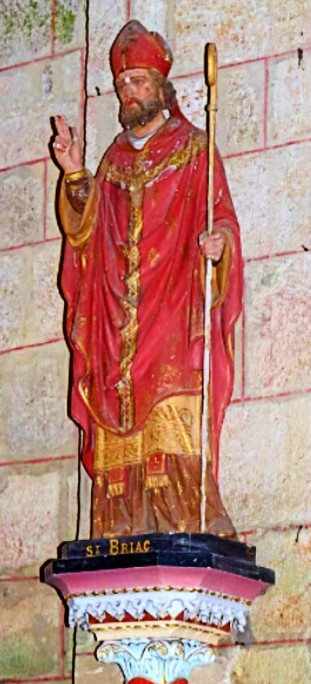
In the Monastery, the Monks prayed, cultivated the land, copied the Sacred Scriptures and other Latin and Greek spiritual works by hand and welcomed the many in need of food, care and protection. The Monks also taught the locals how to cultivate the fields and how to read and write. Monasteries thus become places of peace and work for many desperate people fleeing from invasions.
After some time, Briarch wished to embrace solitude in order to grow in sanctity and to unite himself to God. He took refuge in the forest and lived as a Hermit. He prayed, fasted and immersed himself in mediationon. His isolation did not mean, however, running away from people, towards whom Briarch was always kind.
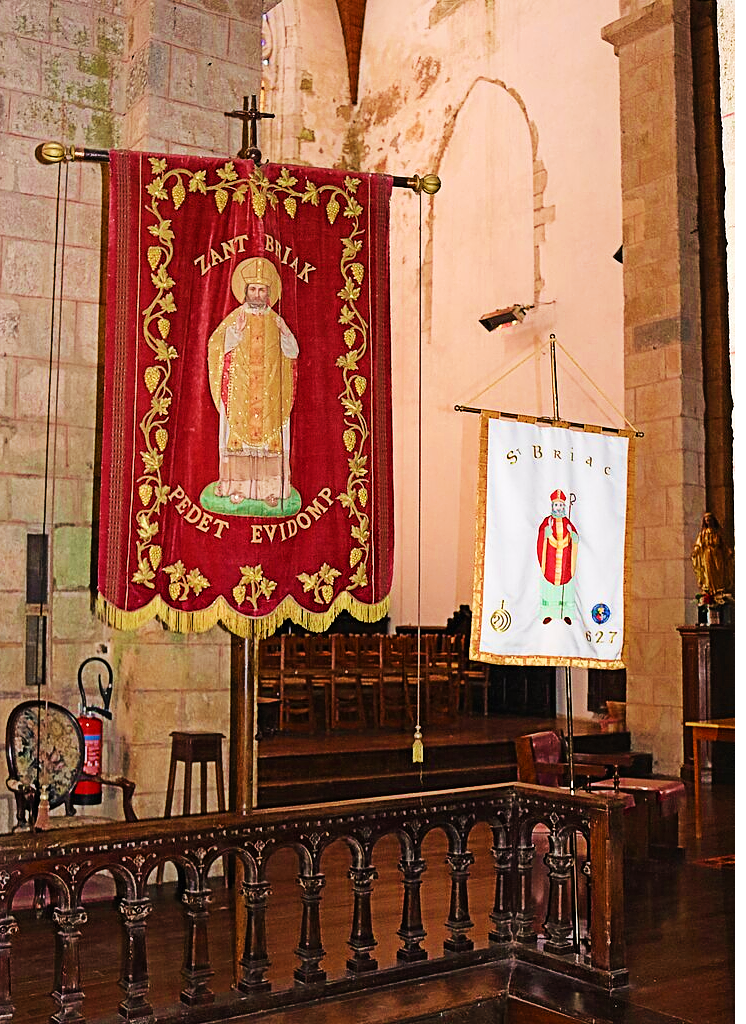
In fact, during his stay in the forest, many miracles occurred due to his intercession. He made a sick person wear his habit and immediately a miraculous cure occurred. Another individual, suffering from obsessive thoughts which caused him to suffer great anxiety, was healed by the prayers of the Irish Hermit. On another occasion, a man, bitten by a poisonous snake, was immediately saved from death by the intervention of Briarch.
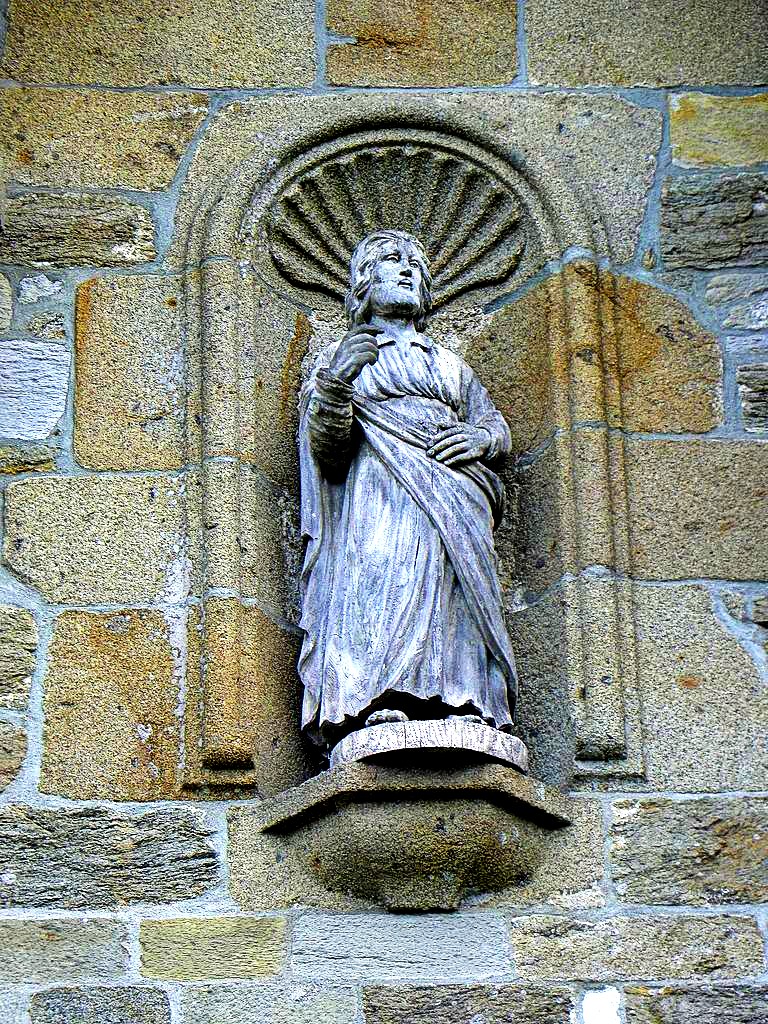
Briarch then undertook another journey, this time as a Pilgrim to Rome to meet Pope Pelagius II and to visit the holy places. On his return however in 627, he stopped in the South of France, in Arles, some sources say he died here and others that he did reach his beloved Monastery in Brittany, where he died.
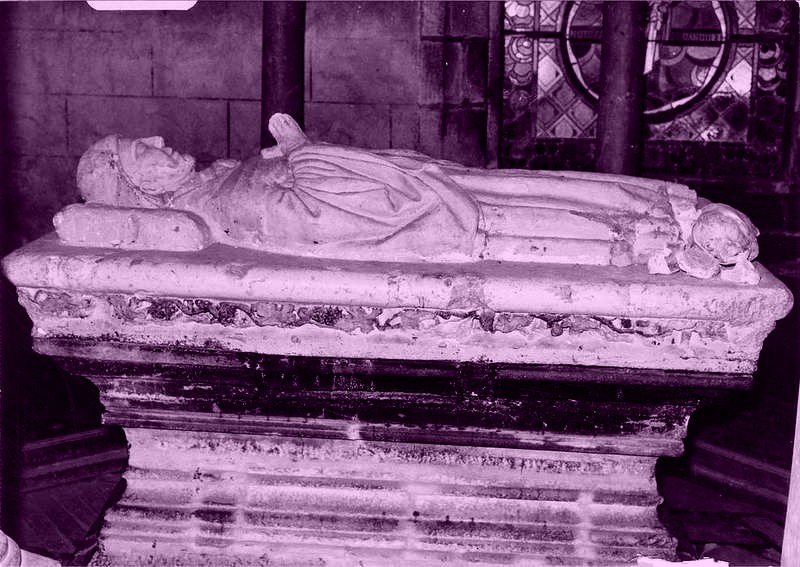
Briarch is buried in the Church of Bourbriac. There is still a Sarcophagus from the Merovingian period, probably the stone coffin in which he was laid to rest. Under the Church is the Crypt from the 11th Century, probably built as Briarcc’s final resting place, where believers could venerate him without disturbing the service in the Church above. A spring can still be seen near the Church.
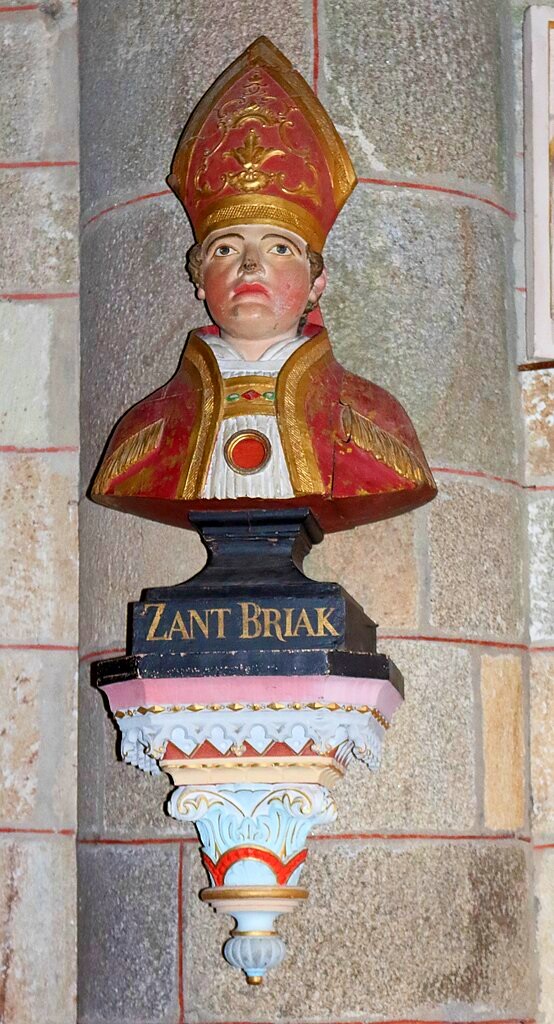
A pardon (penitential procession) is held on Ascension Day. On that occasion, the Reliquary of St Briarch, in the form of a bust is carried around the former Monastery grounds. There are numerous Churches, Towns, Villaes, regions named after St Briarch in France.


 AnaStpaul