Thought for the Day – 8 January – Meditations with Fr Richard Frederick Clarke SJ (1839-1900)
Meditations for Christmastide “The Holy Infancy” From “The Devout Year” By Fr Richard Frederick Clarke SJ (1839-1900)
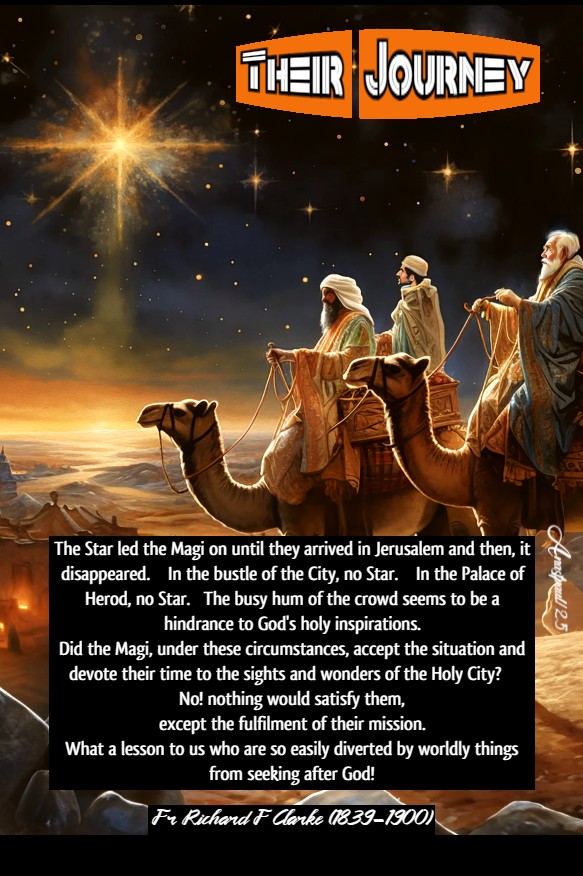
“Their Journey”
+1. The journey of the Magi from their own Country to Palestine, just because a Star appeared in a certain quarter of the heavens, was very like a fool’s errand. Was a mere floating tradition a sufficient ground for undertaking a long, arduous and costly journey? Were not their duties at home of more importance and had they not a greater claim than this strange apparition which tempted them away? What is folly to man is often wisdom to God. How often have similar arguments been used to deter Protestants from making their submission to the Church and, to dissuade Catholics, from Consecrating themselves to God! Perhaps I may sometimes have followed the dictates of mere worldly wisdom, neglecting supernatural grace?
+2. The Star led the Magi on until they arrived in Jerusalem and then, it disappeared. In the bustle of the City, no Star. In the Palace of Herod, no Star. The busy hum of the crowd seems to be a hindrance to God’s holy inspirations.
+3. Did the Magi , under these circumstances, accept the situation and devote their time to the sights and wonders of the Holy City? No! nothing would satisfy them, except the fulfilment of their mission. What a lesson to us who are so easily diverted by worldly things from seeking after God!
Quote/s of the Day – 8 January – Within the Octave of the Epiphany
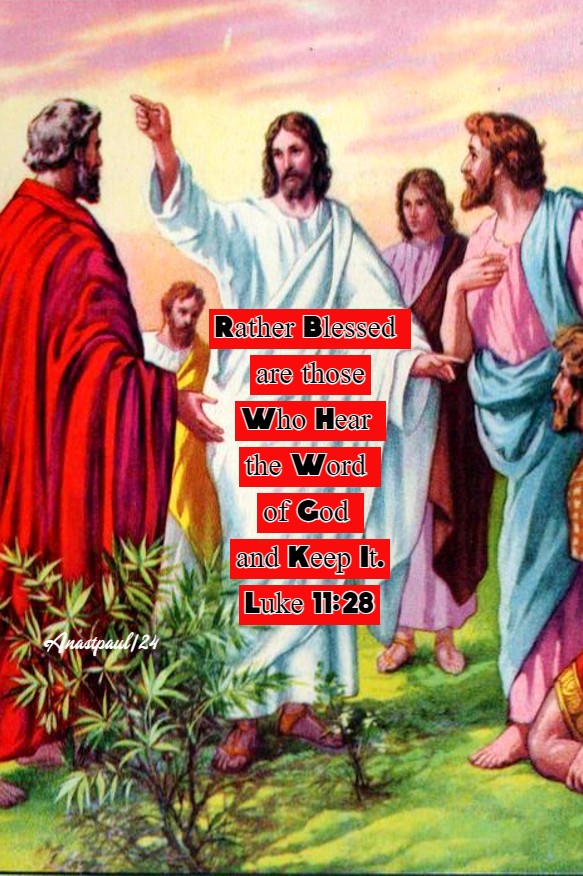
“Rather blessed are those who hear the Word of God and keep it.’”
Luke 11:28
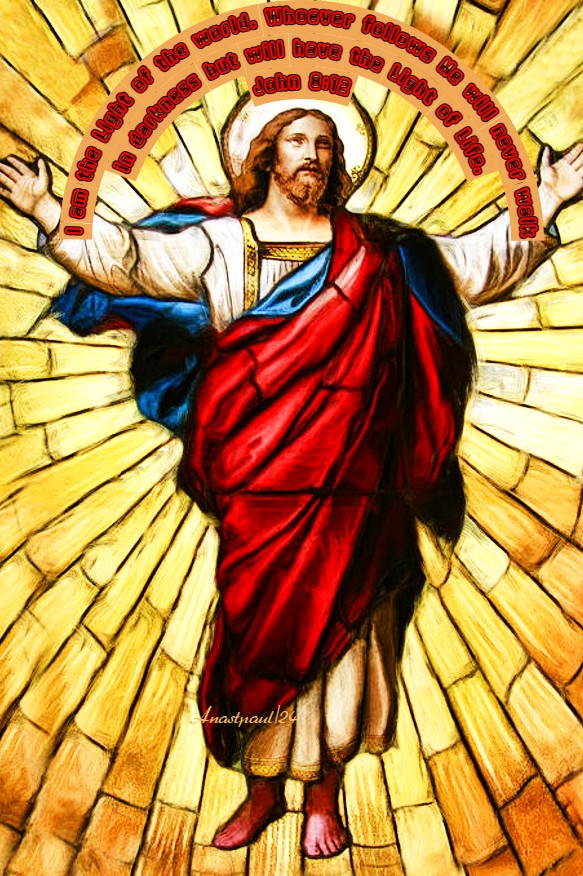
“I Am the Light of the world. Whoever follows Me will never walk in darkness but will have the Light of Life.”
John 8:12
“Our hearts were made for Thee, O God And restless must they be Until, O God, this grace accord, Until they rest in Thee!”
St Augustine (354-430) Father and Doctor of the Church
“The obedience of the Star calls us to imitate its humble service: to be servants, as best we can, of the grace which invites all men to find Christ.”
St Pope Leo the Great (400-461) Father and Doctor of the Church
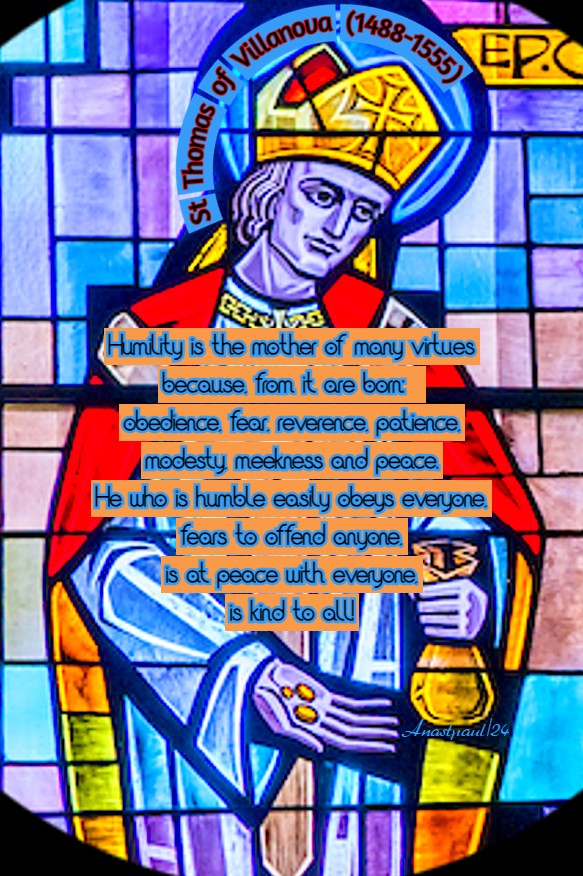
“Humility is the mother of many virtues because, from it are born: obedience, fear, reverence, patience, modesty, meekness and peace. He who is humble easily obeys everyone, fears to offend anyone, is at peace with everyone, is kind to all!”
St Thomas of Villanova OSA (1488-1555)
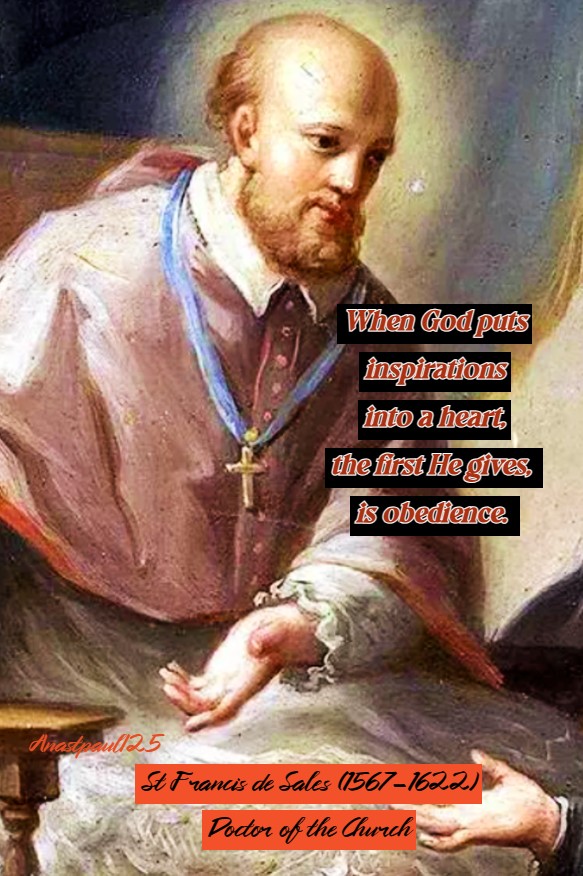
“When God puts inspirations into a heart, the first He gives, is obedience. ”
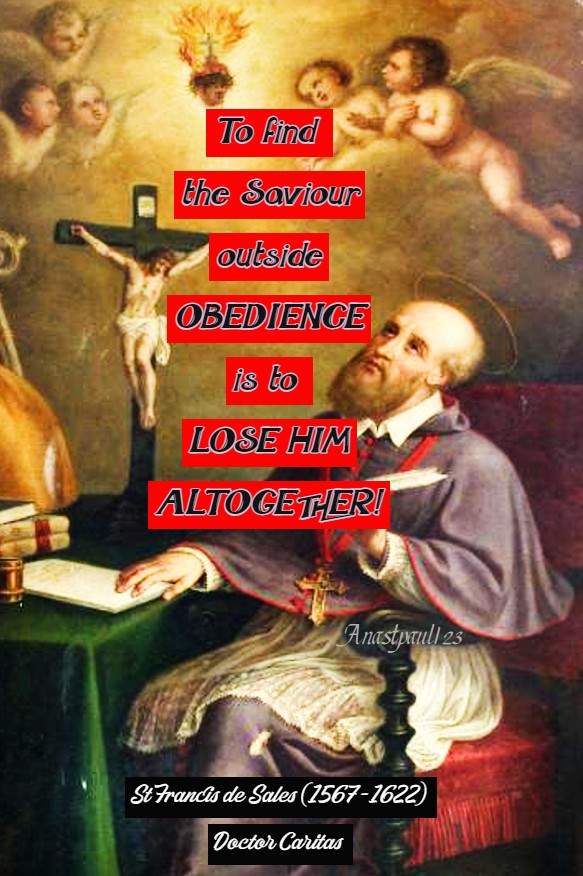
“To find the Saviour outside obedience, is to lose Him altogether.”
St Francis de Sales (1567-1622) Doctor of the Church
One Minute Reflection – 8 January – “The Month of the Holy Name of Jesus and the Holy Family” – Within the Octave of The Epiphany –Isaias 60:1-6; Matthew 2:1-12 – Scripture search here: https://www.drbo.org/
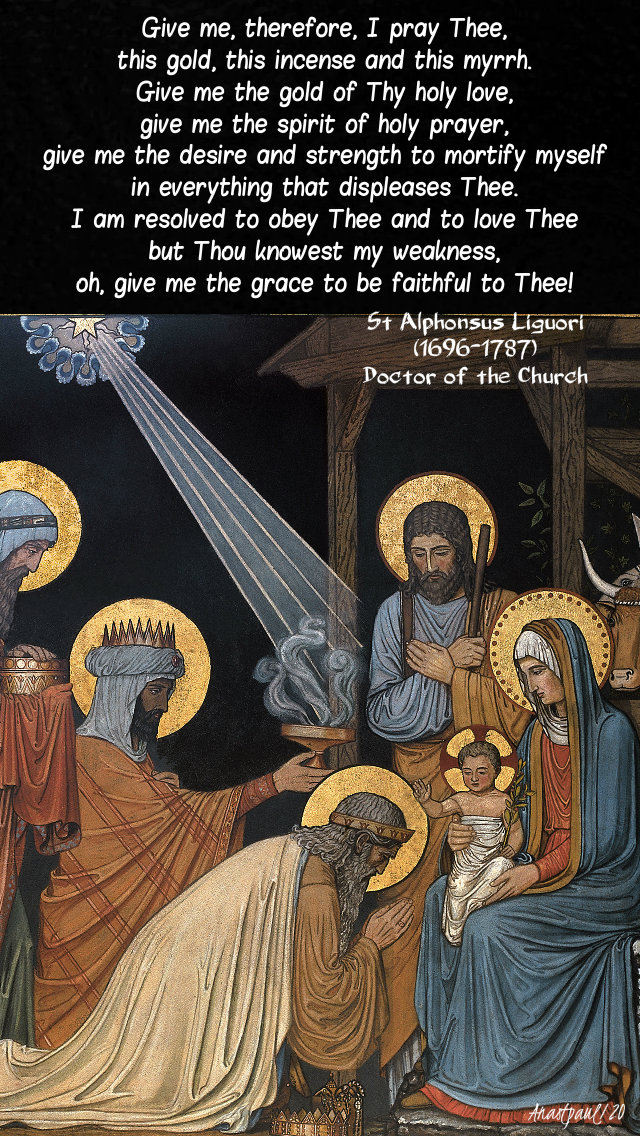
“… They fell down and worshipped him. Then, opening their treasures, they offered him gifts, gold and frankincense and myrrh.” … Matthew 2:11
REFLECTION – “But if, with careful thought, we wish to see how their threefold kind of gift, is also offered by all who come to Christ, with the foot of faith — is not the same offering repeated in the hearts of true believers? For he who acknowledges ,Christ the King of the universe brings Gold from the treasure of his heart, he who believes the Only-begotten of God to have united man’s true nature to Himself, offers Myrrh and he who confesses Him, in no wise, inferior to the Father’s Majesty, worships Him in a manner, with Incense.” … St Pope Leo the Great (400-461) Father and Doctor of the Church
PRAYER – “Give me, therefore, I pray Thee, this gold, this incense and this myrrh. Give me the gold of Thy holy love, give me the spirit of holy prayer, give me the desire and strength to mortify myself in everything that displeases Thee. I am resolved to obey Thee and to love Thee but Thou knowest my weakness, oh, give me the grace to be faithful to Thee!” … St Alphonsus Liguori (1696-1787) Doctor of the Church
Our Morning Offering – 8 January – “The Month of the Most Holy Name of Jesus and of the Holy Family” – Within the Octave of The Epiphany
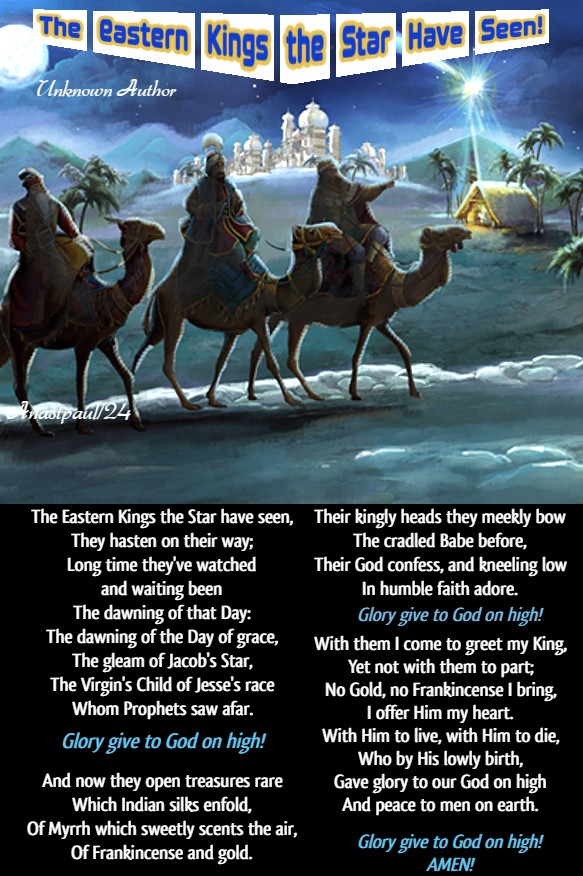
The Eastern Kings the Star Have Seen! Unknown Author
The Eastern Kings the Star have seen, They hasten on their way; Long time they’ve watched and waiting been The dawning of that Day: The dawning of the Day of grace, The gleam of Jacob’s Star, The Virgin’s Child of Jesse’s race Whom Prophets saw afar.
Glory give to God on high!
And now they open treasures rare Which Indian silks enfold, Of Myrrh which sweetly scents the air, Of Frankincense and gold. Their kingly heads they meekly bow The cradled Babe before, Their God confess, and kneeling low In humble faith adore.
Glory give to God on high!
With them I come to greet my King, Yet not with them to part; No Gold, no Frankincense I bring, I offer Him my heart. With Him to live, with Him to die, Who by His lowly birth, Gave glory to our God on high And peace to men on earth.
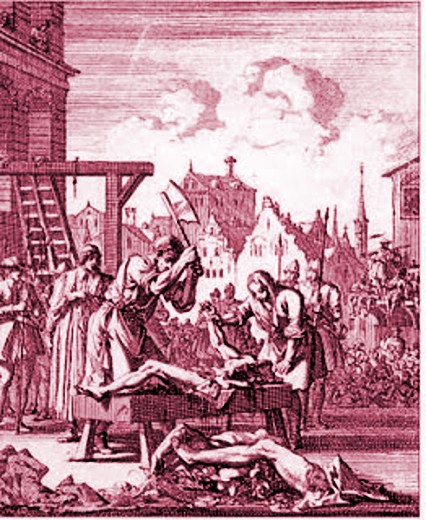
Saint of the Day – 8 January – Blessed Edward Waterson (Died 1593) Priest and Martyr, Missionary to his own beleagured English Catholic people under the horrors set in motion by Henry VIII and now being perpetuated by his daughter Elizabeth I. Edward was born in London, England and died by being hanged, drawn and quartered on 8 January 1593 at Newcastle-on-Tyne, England. The prison horses refused to drag Edward to the scaffold and when the guards finally got him there, the ladder for climbing to the scaffold platform, of its own volition jerked to and fro to keep them from climbing it, until Edward himself, made the Sign of the Cross over it and it settled into its position. Additional Memorial – 29 October as one of the Martyrs of Douai.
Hung, drawn and quartered
Little is known of the English Martyr, Blessed Edward Waterson, before 1588. In that year, this young English Protestant, apparently a man of some status, stopped off at Rome on the way back from a trip he had made to Turkey in the company of some British merchants. He had an unusual story to tell about the Turkish visit. There he had met a wealthy Turk who had taken such a liking to him that he offered him the hand of his daughter in marriage. With one proviso. If he chose the girl, he must first convert to Islam.
Whether the young lady appealed to Edward, the proviso did not. Sorry, he answered, he would not abandon his faith in Christ. Travelling home Edward stopped in Rome and there he must have told the tale of his refusal at the English College in Rome. This college was an ancient hospice for British pilgrims which, in 1579 had also been turned into a Seminary for the training of English Catholic young men for the secular Priesthood and the dangerous Apostolate of the English mission. Even though now a Seminary, the college still had accommodations for pilgrims and visitors to Rome. Edward’s name is entered in its Pilgrims’ Book from 29 November to 11 December 1588.
For the young Englishman who had refused to convert to Islam, that was a momentous fortnight. While at the College, he asked to be instructed in the Catholic beliefs. He received the instructions and converted to the Catholic faith of his English forefathers. Whether this decision was impromptu or long-maturing is not known.
One of the Martyrs of Douai
Edward was not even content to remain a layman. In December he left Rome for the English College at Reims, France, to enroll as a student for the Priesthood. On completing his training, he was Ordained a Priest on 11 March 1592. He had not shown himself to be a brilliant student but he was acknowledged to be a model of humility and self-denial.
In June 1592, the Church authorities at Reims sent the new Priest back to England to begin his work. He knew, of course, that he was courting death. Particularly over the past seven years, many English Douai Seminary Priests had been executed for treason as a result of a law enacted against Priests in 1585. But so great was Edward’s zeal that he declared that if given the choice between owning all France for a year or going to England on the mission, he would choose the latter.
Father Waterson’s Apostolate as a Missionary was very creditable. It was also very brief., around a year. In the summer of 1593 he was arrested and put in harsh confinement at Newcastle-upon-Tyne. At Newcastle, too, he was tried and condemned to death for functioning as a Priest. Execution was set for 7 January 1594.
Those who attended his execution at Newcastle reported some unusual happenings. Catholic Archdeacon Trollope said that when the young Priest was tied down to the hurdle (the wicker sledge used to drag traitors to the place of execution), the horses refused to pull it, so he had to be walked to the scaffold. At the gallows, too, the ladder by which he had to mount the platform began to jerk free and twist about on its own. Only when Father Waterson made the Sign of the Cross over it did it come to rest against the platform. According to the law of execution in treasonable cases, his body was cut down from the hangman’s rope before he was dead, disemboweled and cut into four quarters.
Edward Waterson was Beatified by Pope Pius XI in 1929. Twice tested for his Faith in the Lord Jesus Christ, he had passed the test. He is an interesting illustration of how varied in background were the men and women who were Martyred during the English Reformation. Their witness to the Faith is a many-splendoured memorial!
St Apollinaris the Apologist (Died 2nd Century) Confessor, Defender of the True Faith against heretics, Writer, renowned Scholar. Bishop, Apologist. The Roman Martyrology states: “In Hierapolis in Phrygia, in today’s Turkey, Saint Apollinaris, Bishop, who shone under the Emperor Marcus Aurelius for doctrine and holiness.” A Courageous and Zealous Life: https://anastpaul.com/2022/01/08/saint-of-the-day-8-january-saint-apollinaris-the-apologist-died-2nd-century/
St Athelm of Canterbury St Atticus of Constantinople St Carterius of Caesarea
Blessed Edward Waterson (Died 1593) Priest and Martyr
St Ergnad of Ulster St Erhard of Regensburg St Eugenian of Autun St Garibaldus of Regensburg St Gudule of Brussels St Helladius St Julian of Beauvais St Lucian of Beauvais St Maximian of Beauvais St Maximus of Pavia Bl Nathalan of Aberdeen St Patiens of Metz St Pega of Peakirk
St Severinus of Noricum (c410-482) Abbot, Hermit, Missionary, the “Apostle to Noricum” (Noricum is the Latin name for the Celtic Kingdom or Federation of Tribes which included most of modern Austria and part of Slovenia). He established Monasteries and refuge centres for those stricken by war. Severinus was graced with the gifts of prophecy and miracles. Biography: https://anastpaul.com/2023/01/08/saint-of-the-day-8-january-saint-severinus-of-noricum-c-410-482-the-apostle-to-noricum/
St Theophilus the Martyr St Thorfinn St Wulsin of Sherborne
Martyrs of Greece – 9 Saints: A group of Christians honoured in Greece as Martyrs, but we have no details about their lives or deaths – Euctus, Flix, Januarius, Lucius, Palladius, Piscus, Rusticus, Secundus and Timotheus
Martyrs of Terni – 4 Saints: A group of Christian soldiers in the imperial Roman army. Executed during the persecutions of Emperor Claudius. Martyrs. – Carbonanus, Claudius, Planus and Tibudianus. They were martyred in 270 in Terni, Italy.








 AnaStpaul
You must be logged in to post a comment.