Thought for the Day – 22 January – Meditations with Fr Richard Frederick Clarke SJ (1839-1900)
Meditations for AChristmastide “The Holy Infancy” From “The Devout Year” By Fr Richard Frederick Clarke SJ (1839-1900)
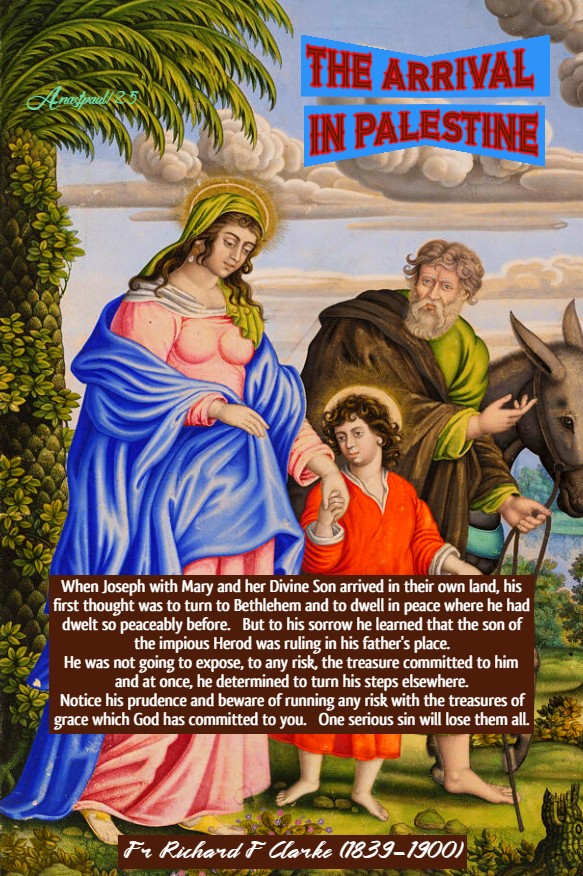
“The Arrival in Palestine”
+1. When Joseph with Mary and her Divine Son arrived in their own land, his first thought was to turn to Bethlehem and to dwell in peace where he had dwelt so peaceably before. But to his sorrow he learned that the son of the impious Herod was ruling in his father’s place. He was not going to expose, to any risk, the treasure committed to him and at once, he determined to turn his steps elsewhere. Notice his prudence and beware of running any risk with the treasures of grace which God has committed to you. One serious sin will lose them all.
+2. Whither should he go? It was all one to St Joseph, as long as he went where God sent him. He was quite as ready to go to Nazareth as anywhere else, if God directed his steps . This should be my disposition, to be ready to go anywhere and live in any place, where God may send me.
+3. How did St Joseph decide where he was to dwell? By prayer and by good counsel. He asked of God to turn his steps whither He Willed and he also did not neglect the rules of human prudence. This is St. Ignatius’ advice: (1) Act with prudence but never forget to consult God. (2) While you trust all to God, do not lose sight of the importance of using natural means.
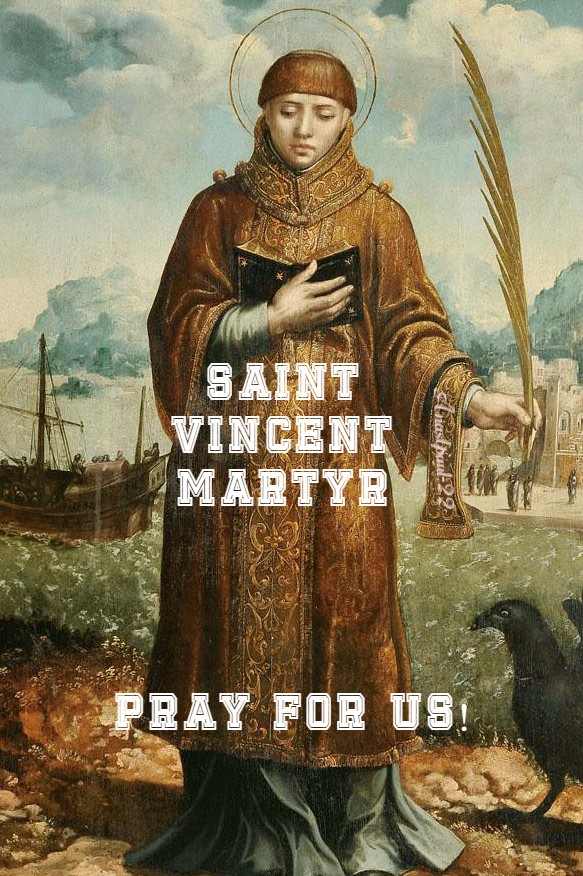
Quote/s of the Day – 22 January – “The Month of the Holy Name of Jesus and the Holy Family” – St Vincent of Saragossa (Died 304) Protomartyr of Spain and St Anastasius the Persian (Died 628) Martyr – Wisdom 3:1-8; Luke 21:9-19
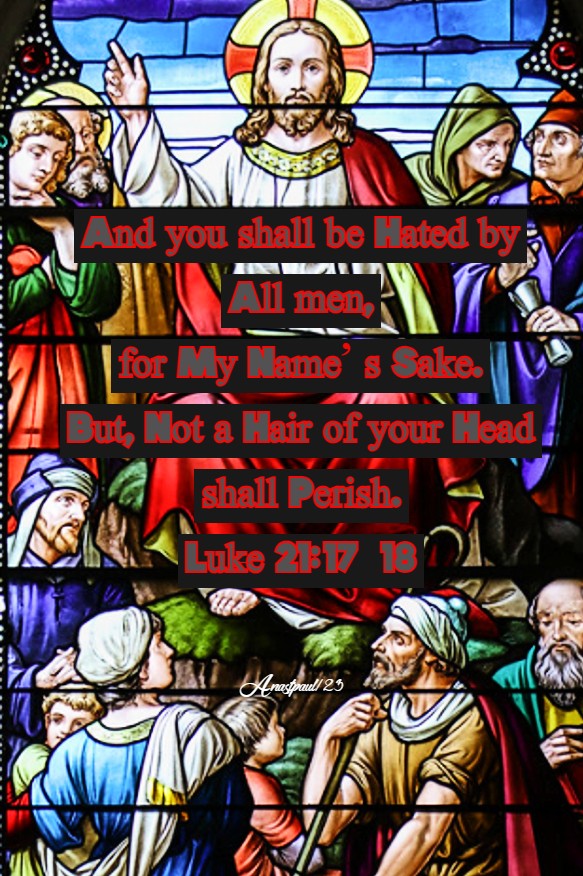
“And you shall be hated by all men, for My Name’s sake. But, not a hair of your head shall perish.”
Luke 21:17-18
“Pray in the spirit and sentiment of love, in which the royal Prophet said to Him, ‘Thou, O Lord, art my portion.’ Let others choose to themselves, portions among creatures, for my part, Thou art my portion, Thou alone I have chosen for my whole inheritance.”
St Augustine of Canterbury (Died c605) “The Apostle to the English”
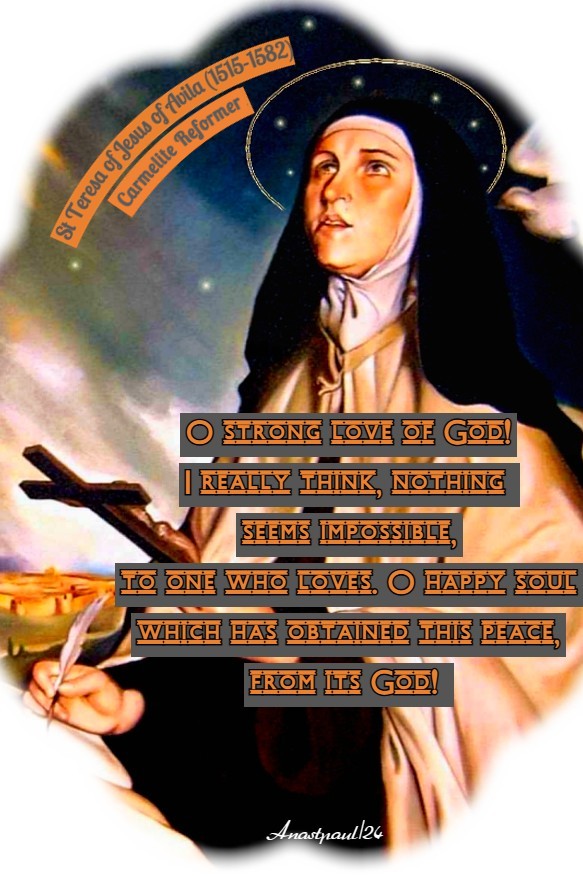
“O strong love of God! I really think, nothing seems impossible, to one who loves. O happy soul which has obtained this peace, from its God! ”
St Teresa of Jesus of Avila (1515-1582) Carmelite Reformer
“You must choose – is it better that there should be thorns in your garden, in order to have roses, or that there should be no roses in your garden, in order to have no thorns?”
St Francis de Sales (1567-1622) Doctor Caritatis
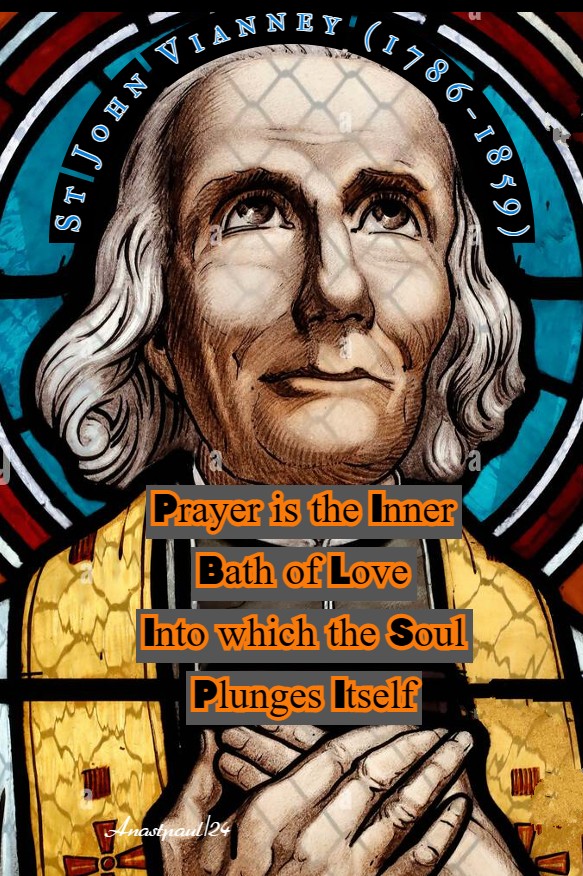
“Prayer is the inner bath of love into which the soul plunges itself.”
One Minute Reflection – 22 January – “The Month of the Holy Name of Jesus and the Holy Family” – St Vincent of Saragossa (Died 304) Protomartyr of Spain and St Anastasius the Persian (Died 628) Martyr – Wisdom 3:1-8; Luke 21:9-19 – Scripture search here: https://www.drbo.org/
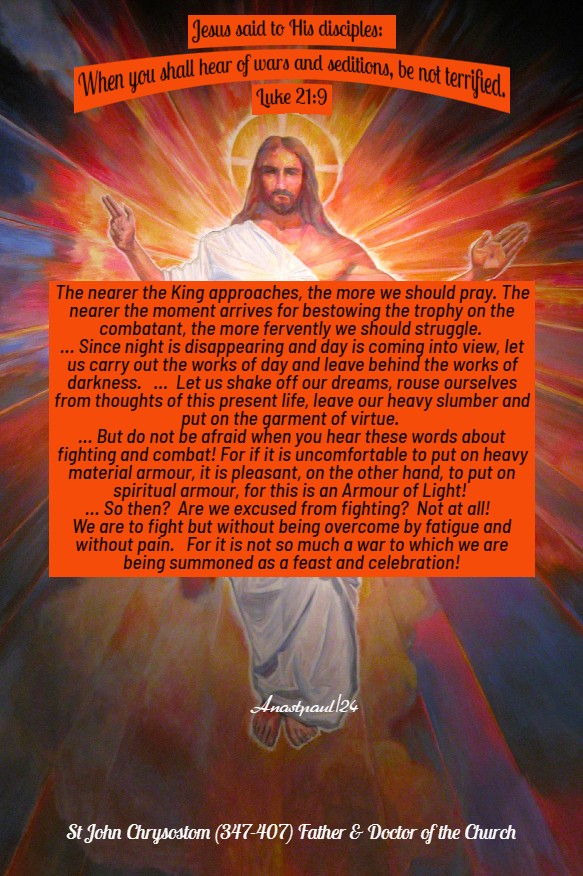
Jesus said to His disciples: When you shall hear of wars and seditions, be not terrified.” – Luke 21:9
REFLECTION – “The nearer the King approaches, the more we should pray. The nearer the moment arrives for bestowing the trophy on the combatant, the more fervently we should struggle. This is what they do at the races – as the end of the course nears and they are reaching the goal, they stir up the horses’ enthusiasm even more. In the same way, Saint Paul says: “Now is salvation nearer to us than when first we believed. The night is far gone, the day is at hand” (Rm 13:11-12).
Since night is disappearing and day is coming into view, let us carry out the works of day and leave behind the works of darkness. This is what we do in the course of life – when we see night giving way to dawn and hear the swallows singing, then we rouse one another even though it is still dark … We hurry to our daily tasks, we clothe ourselves after being snatched from sleep, so that the sun will find us ready. What we do then, let us do now. Let us shake off our dreams, rouse ourselves from thoughts of this present life, leave our heavy slumber and put on the garment of virtue. This is what the Apostle clearly says to us: “Cast off the works of darkness and put on the Armour of Light” (v.12). For day is calling us to the battle, to the fight!
But do not be afraid when you hear these words about fighting and combat! For if it is uncomfortable to put on heavy material armour, it is pleasant, on the other hand, to put on spiritual armour, for this is an Armour of Light! In this way you will shine more brightly than the sun and, even as you sparkle brightly, you will be safe because these are weapons … weapons of Light. So then? Are we excused from fighting? Not at all! We are to fight but without being overcome by fatigue and without pain. For it is not so much a war to which we are being summoned as a feast and celebration!” – St John Chrysostom (347-407) Bishop of Constantinople, Father & Doctor of the Church (Homilies on the Epistle to the Romans, 24).
PRAYER – Give heed to our humble prayers, O Lord, that we who know we are guilty of our own sin, may be saved by the intercession of Thy blessed Martyrs Vincent and Anastasius.Through Jesus Christ, Thy Son our Lord, Who lives and reigns with Thee, in the unity of the Holy Ghost, God, world without end. Amen (Collect).
Our Morning Offering – 22 January – “The Month of the Holy Name of Jesus and the Holy Family”
Prayer in Praise of God By St Francis of Assisi (c1181-1226)
Thou art Holy, Lord, the only God and Thine Deeds art wonderful. Thou art Strong. Thou art Great. Thou art the Most High. Thou art Almighty. Thou, Holy Father art King of Heaven and earth. Thou art Three and One, Lord God, all Good. Thou art Good, all Good, Supreme Good, Lord God, Living and True. Thou art Love. Thou art Wisdom. Thou art Humility. Thou art Endurance. Thou art Rest. Thou art Peace. Thou art Joy and Gladness. Thou art Justice and Moderation. Thou art all our Riches and Thou art Suffice for us. Thou art Beauty. Thou art Gentleness. Thou art our Protector. Thou art our Guardian and Defender. Thou art our Courage. Thou art our Haven and our Hope. Thou art our Faith, our great Consolation. Thou art our Eternal Life, Great and Wonderful Lord, God Almighty, Merciful Saviour. Amen
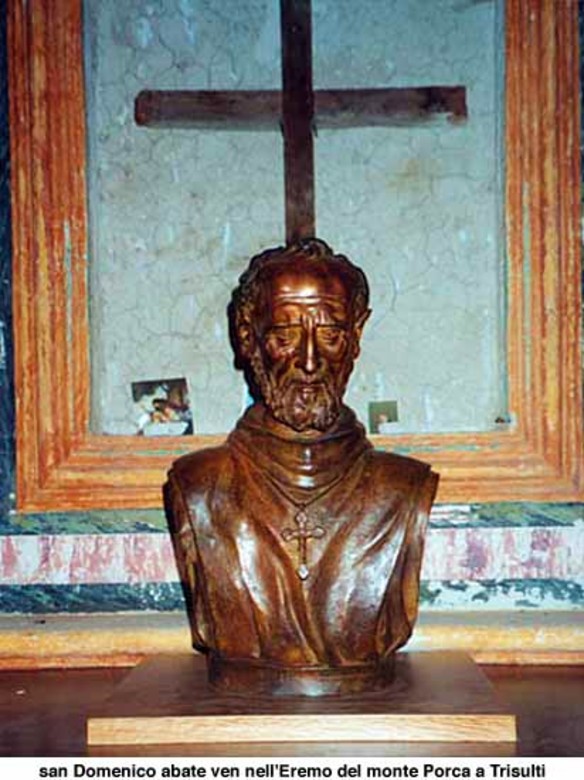
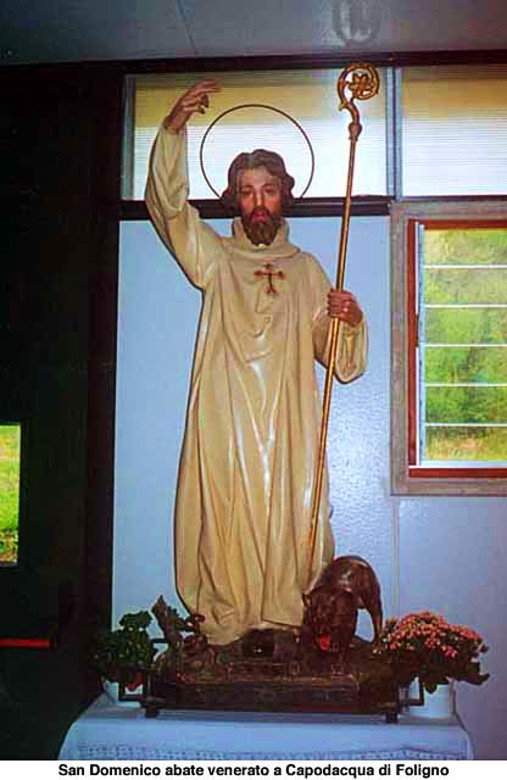
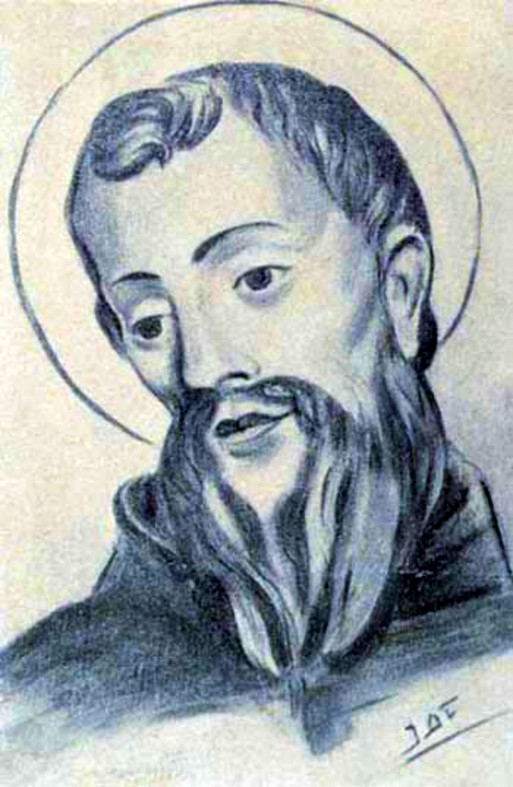
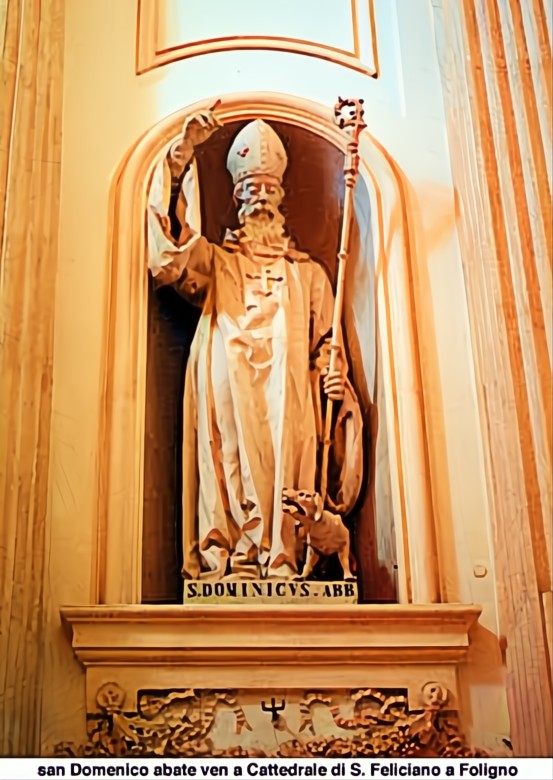
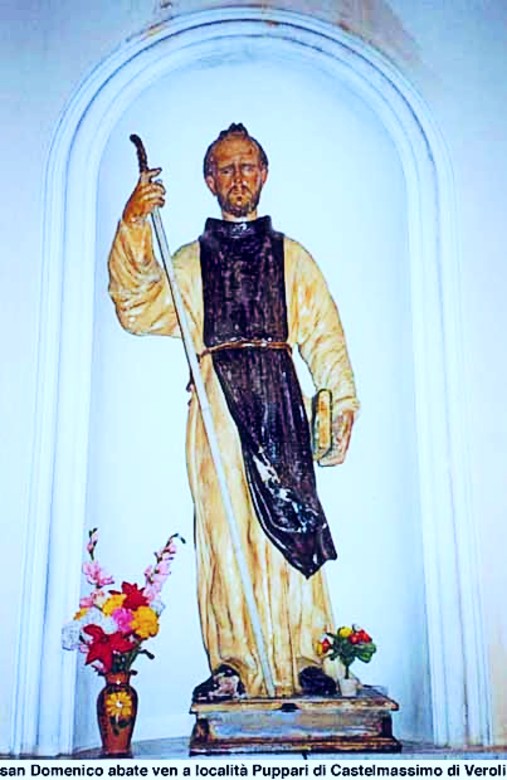
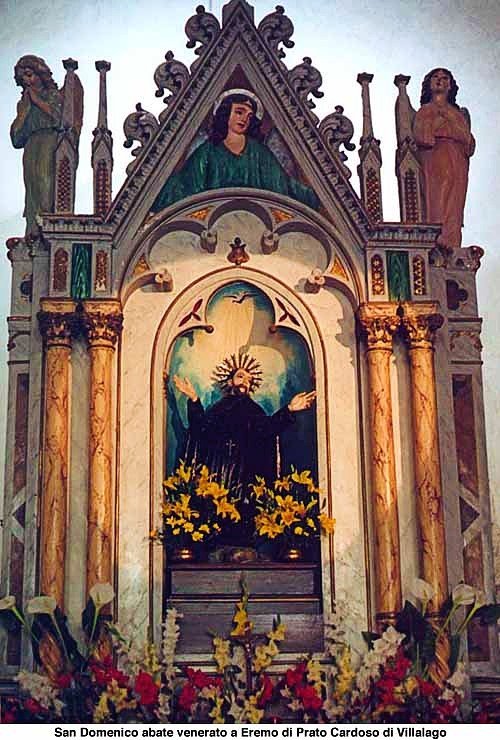
Saint of the Day – 22 January – Saint Dominic of Sora (951-1031) Abbot, Priest, Founder of many Monasteries, Miracle-worker. Born in 951 at Foligno, Etruria (Tuscany district of modern Italy) and died on 22 January 1031 in his Monastery in Sora, Campania, Italy of natural causes. Patronage – against fever, against toothache, against poisonous snakes and snake bites, against rabid dogs, protection from storms and hail, of the Italian Towns of Sora and Cocullo. Also known as – Dominico.
The Roman Martyrology reads today: “At Sora, the holy Abbot Dominic, renowned for miracles.”
The Monk Giovanni, who was Dominic’s companion on all his travels, wrote his ‘Life’ which is, therefore, very accurate and truthful.
Domenic was born in Foligno in 951. He was entrusted as a child by his parents, to the Monks of St Silvester of Foligno, to carry out the necessary studies. When he became a young man, Dominic left everyone and went to the Monastery of St Maria di Pietrademone, where he was Ordained a Priest and vowed his profession as a Monk. But Dominic desired a Hermit’s life, so he began to alternate solitude with the community life – he retired to a mountain in the Province of Rieti. But he was immediately followed by disciples from the surrounding area, for them he founded the Monastery of St Salvatore, becoming its Abbot.
Since his fame of sanctity attracted many people, to hide he moved towards L’Aquila, where he founded the Monastery of St Pietro del Lago, in the same way he founded the Monastery of St Pietro di Avellana in the Sangro region. During his journeys he arrived in Campania, where he remained unknown, for three years, until the population recognised him through some hunters, surrounded him with devotion and there was a rush of sick people. The reports of his miracles consisted above all, in curing the illness and death caused by snake bites, hence his Patronage.
In Trisulti he founded the Monastery of St Bartolomew which achieved much fame, it was richly endowed by the inhabitants of the nearby municipalities which Domenic then visited, urging them to a life woven with charity, penance and good works.
Dominic met with Pope John XVIII, from whom he asked for Papal protection for his foundations. Thanks to a donation of land, made by Count Pietro Rainerio, the Lord of Sora, he was able to build another Monastery, which remained, due to its importance, linked to his name, permanently.
Dominic fell ill while undertaking yet another journey to Tusculum but he returned back to Sora and died there on 22 January 1031 and was buried in the Monastery Church, where he is still preserved.
Dominic of Sora, like other great Founders of that era, remains a reformer of the life of the medieval Church, all intent on expanding monastic life with its great flowering, also a precursor of the great Orders which, a few centuries later, would appear in the Church, starting with his great namesake St Dominic of Guzman.
In Sora, as in the whole Liri Valley, he is invoked against the bites of poisonous snakes and rabid dogs, from storms and hail but also against fever and toothache.
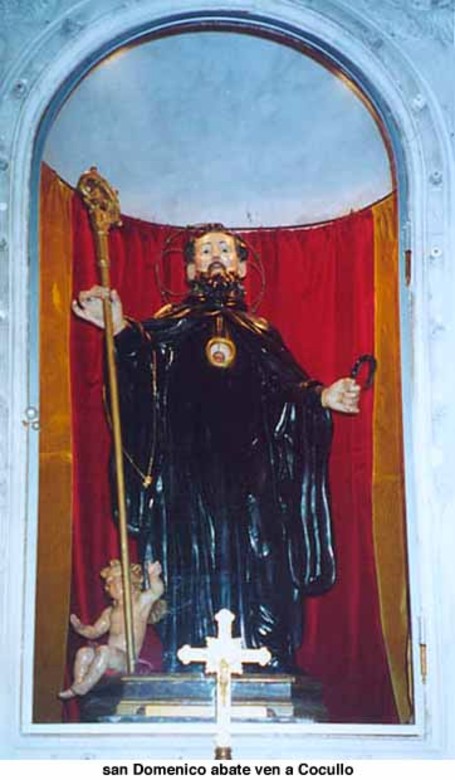
His Feast is celebrated with solemnity, both in Sora, of which he is the Patron and where there is a Sanctuary containing his body and in Arpino and nearby Towns but above all, for his particularity in Cocullo, where his Statue is carried in procession covered in real live snakes! Once, after the Mass, the snakes were killed or sold to tourists, today with a different environmentalist culture, they are set free. The ‘snake catchers’ are very careful to capture the harmless snakes, while they leave the poisonous vipers alone, the population participating in the celebrations has an almost sacred respect for reptiles, a legacy of a pagan cult of pre-Christian times which the Church had to make its own and this union, between pagan use and Christian celebration, in this case occurred through St Domenic of Sora, the great miracle- worker, who from the Middle Ages until today, attracts a multitude of imploring faithful ever venerating and imploring his aid in all their needs.
A Processional Statue of St Dominic I believe the one used in Cocullo and covered with live snakes
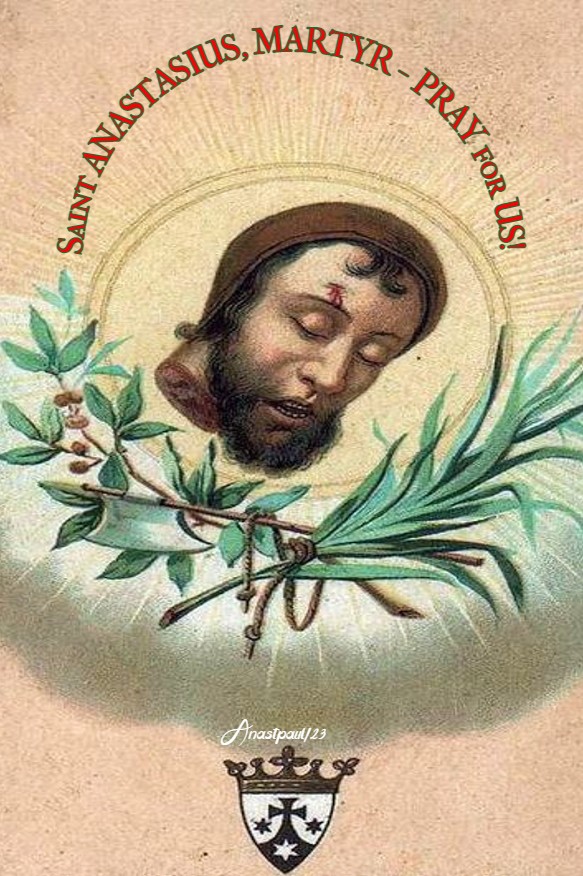
St Anastasius the Persian (Died 628) Martyr, Monk. The Roman Martyrology reads: “At Rome, at Aquiae, Salviae, St Anastasius, a Persian Monk, who, after suffering much at Caesarea in Palestine, from imprisonment, stripes and fetters, had to bear many afflictions from Chosroes, King of Persia, who caused him to be beheaded. He had sent before him, to Martyrdom, seventy of his companions, who were precipitated into rivers. His head was brought to Rome, together with his venerable likeness, by the sight of which, the demons are expelled and diseases cured, as is attested by the Acts of the Second Council of Nicacea.” His Life and Death: https://anastpaul.com/2023/01/22/saint-of-the-day-21-january-st-anastasius-the-persian-died-628-martyr-monk/
Blessed Antonio della Chiesa OP (1394-1459) Priest and Friar of the Order of Preachers, Prior, Reformer. Antonio was a known Miracle worker and was able to read the consciences of all which gifts made him a sought-after Spiritual Counsellor. Antonio was a Mystic and had a special devotion to the Blessed Virgin Mary and he was known to have conversed with her several times, in ecstasy. Beatified on 15 May 1819 by Pope Pius VII. Blessed Antonio: https://anastpaul.com/2024/01/22/saint-of-the-day-22-january-blessed-antonio-della-chiesa-op-1394-1459-priest/
St Blaesilla of Rome St Brithwald of Ramsbury St Caterina Volpicelli St Dominic of Sora (951-1031) Abbot St Guadentius of Novara
Blessed Maria Mancini of Pisa OP (1356-1431) Widow, Second Order Sister of the Order of Preachers, spiritual disciple of St Catherine of Siena, Prioress, Mystic, Reformer, Apostle of the poor and the sick. The Roman Martyrology states: “In Pisa, Blessed Maria Mancini, who, twice widowed and all her children lost, under the exhortation of St Catherine of Siena, began community life in the Monastery of St Domenic, which she led for ten years.” Her Life: https://anastpaul.com/2022/01/22/saint-of-the-day-22-january-blessed-maria-mancini-of-pisa-op-1356-1431/
Bl Walter of Himmerode Bl William Patenson
Martyrs of Puigcerda: St Orontius St Victor St Vincent










 AnaStpaul
You must be logged in to post a comment.