Thought for the Day – 16 February – Meditations with Fr Richard Frederick Clarke SJ (1839-1900)
Meditations on “The Great Truths” From “The Devout Year” By Fr Richard Frederick Clarke SJ (1839-1900)
16th Day – The Aggravations of Hell
Here will I dwell, for I have chosen it. (Ps cxxxi:14)
Every thought of the lost will aggravate, not alleviate, their sufferings. Let us review one or two of the thoughts which will be ever present to their minds.
+1. They might so easily have been saved! One act of contrition at the last, one grace accepted out of the countless graces which were deliberately set at naught and they might have been with the Angels in Heaven, instead of with the devils in hell. To know that we have just missed some advantage which we might, with a little trouble, have secured for ourselves, is always a tormenting thought. How much more when it is Heaven which is lost!
+2. If the advantage is lost, purely through our own fault, this greatly increases our misery. We fools! We had so many chances, we knew so well we were forfeiting our eternal inheritance! It is this which changes sorrow into remorse and adds to suffering, the horror and blackness of despair! All through our own fault! What a thought to dwell with me through all eternity!
+3. What is it that we have lost? This will be the bitterest thought of all. We have lost the sweet music of Heaven, we have lost the company of the Saints and Angels, we have lost the enchanting happiness of gazing on the Sacred Humanity of Jesus in all its glory and, above all, we have lost the unspeakable joy of the Beatific Vision. We fools! Pray God that the dread of this thought hereafter, may keep you from sin.
Quote/s of the Day – 16 February – Septuagesima Sunday
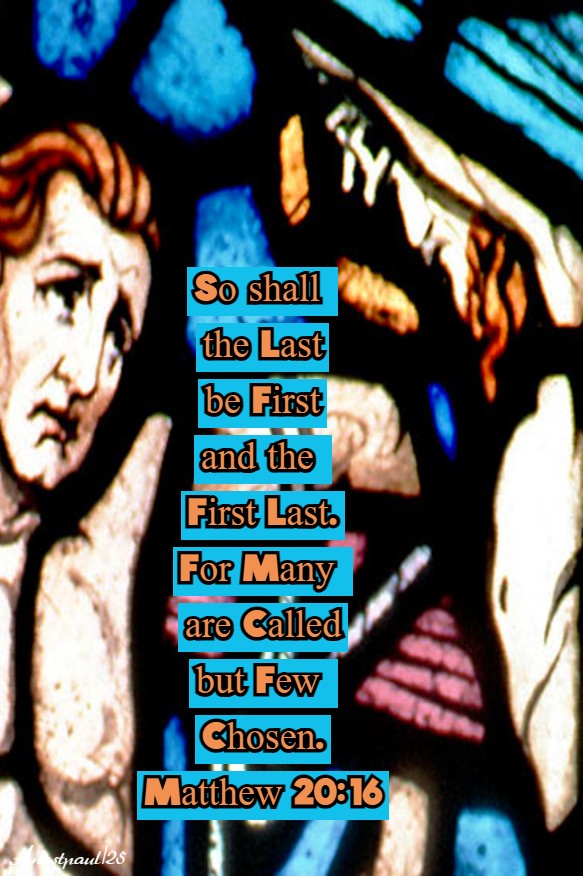
“So shall the last be first and the first last. For many are called but few chosen.”
Matthew 20:16
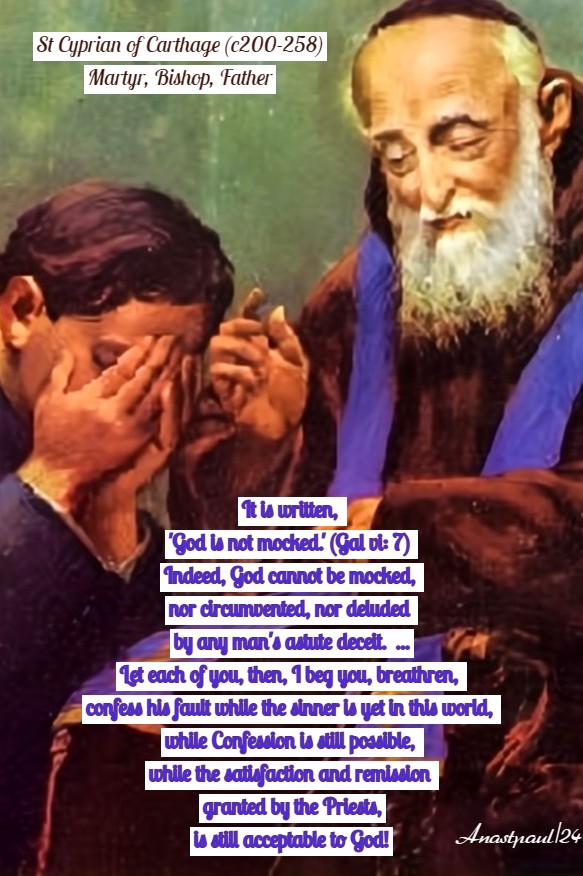
“It is written, ‘God is not mocked.’ (Gal 6: 7) Indeed, God cannot be mocked, nor circumvented, nor deluded by any man’s astute deceit. … Let each of you, then, I beg you, brethren, confess his fault while the sinner is yet in this world, while Confession is still possible, while the satisfaction and remission granted by the Priests, is still acceptable to God!”
St Cyprian of Carthage (c200-258) Martyr, Bishop of Carthage, Father of the Church
“Let us then, my brethren, endure in hope. Let us devote ourselves, side-by-side with our hoping, so that the God of all the universe, as He beholds our intention, may cleanse us from all sins, fill us with high hopes from what we have in hand and grant us the change of heart which saves. God has called you and you have your calling!”
St Cyril of Jerusalem (315-387) Father and Doctor of the Church
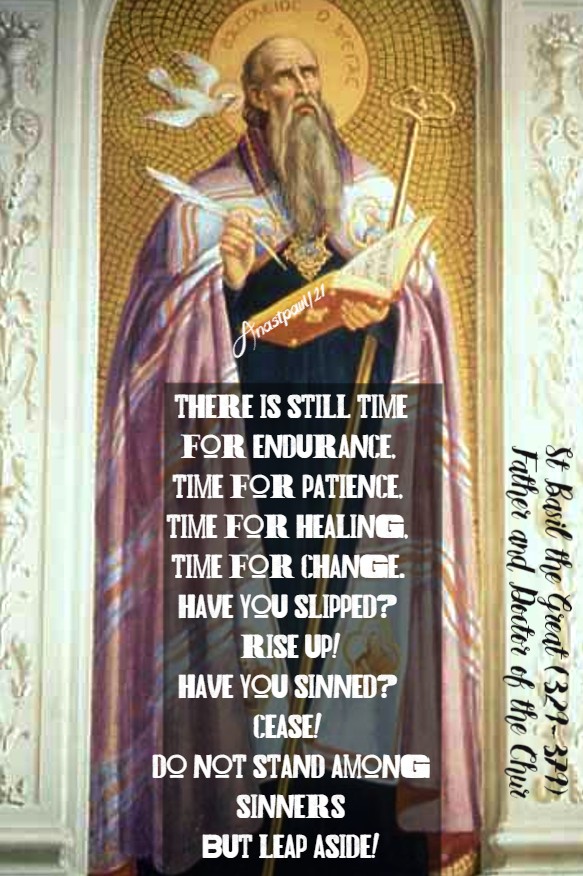
“There is still time for endurance, time for patience, time for healing, time for change. Have you slipped? Rise up! Have you sinned? Cease! Do not stand among sinners but leap aside!”
St Basil the Great (329-379) Father and Doctor of the Church
“Listen to the Lord’s appeal: ‘Come, then, return to Me and learn to know Me as your Father, Who repays good for evil, love for injury and boundless charity for piercing wounds!”
St Peter Chrysologus (c400-450) “Golden Words” Father & Doctor of the Church
One Minute Reflection – 16 February – “The Month of the Blessed Trinity” – Septuagesima Sunday – 1 Corinthians 9:24-27; 10:1-5 – Matthew 20:1-16. – Scripture search here: https://www.drbo.org/
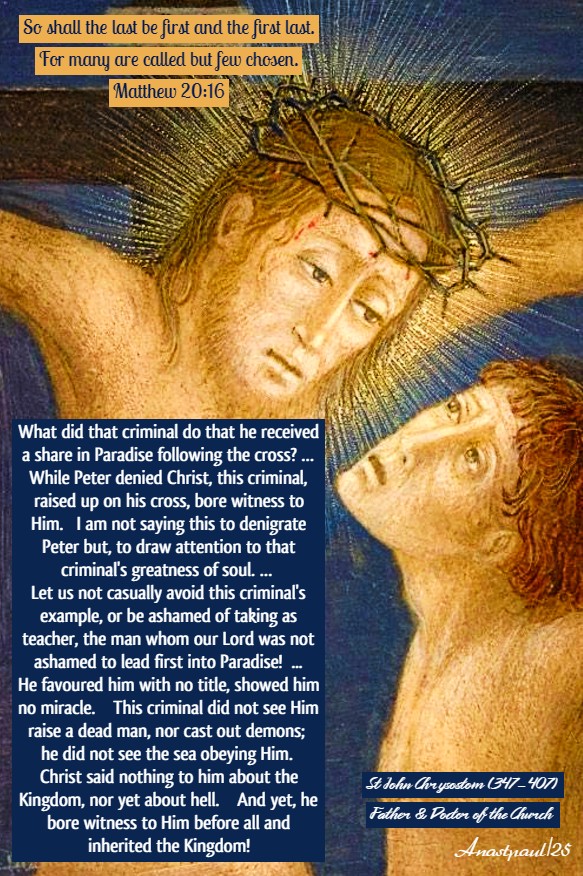
“So shall the last be first and the first last. For many are called but few chosen.” – Matthew 20:16
REFLECTION – “What did that criminal do that he received a share in Paradise following the cross? … While Peter denied Christ, this criminal, raised up on his cross, bore witness to Him. I am not saying this to denigrate Peter but, to draw attention to that criminal’s greatness of soul. … While a whole rabble were standing around Him, murmuring, yelling and heaping oaths and abuse on them both, this criminal paid no attention. He did not even consider the wretched condition of the Crucifixion right before his eyes. All this, he passed over, with a glance full of faith …. He turned towards our heavenly Lord and entrusted himself to Him and said: “Lord, remember me when Thou comes into Thy Kingdom” (Lk 23:42). Let us not casually avoid this criminal’s example, or be ashamed of taking as teacher, the man whom our Lord was not ashamed to lead first into Paradise! …
He did not say to him, as He said to Peter: “Come after me, and I will make you a fisher of men” (Mt 4:19). Nor did he say to him as to the Twelve: “You will sit on twelve thrones, judging the twelve tribes of Israel” (Mt 19:28). He favoured him with no title, showed him no miracle. This criminal did not see Him raise a dead man, nor cast out demons; he did not see the sea obeying Him. Christ said nothing to him about the Kingdom, nor yet about hell. And yet, he bore witness to Him before all and inherited the Kingdom!” – St John Chrysostom (347-407) Bishop of Constantinople, Father & Doctor of the Church (Sermon for Good Friday “The Cross and the criminal” ).
PRAYER – O Lord, we beseech You, graciously hear the prayers of Your people, that we who are justly punished for our sins may be mercifully delivered for the glory of Your name. Through Jesus Christ, Thy Son our Lord, Who lives and reigns with Thee, in the unity of the Holy Ghost, God, world without end. Amen (Collect).
Our Morning Offering – 16 February – Septuagesima Sunday
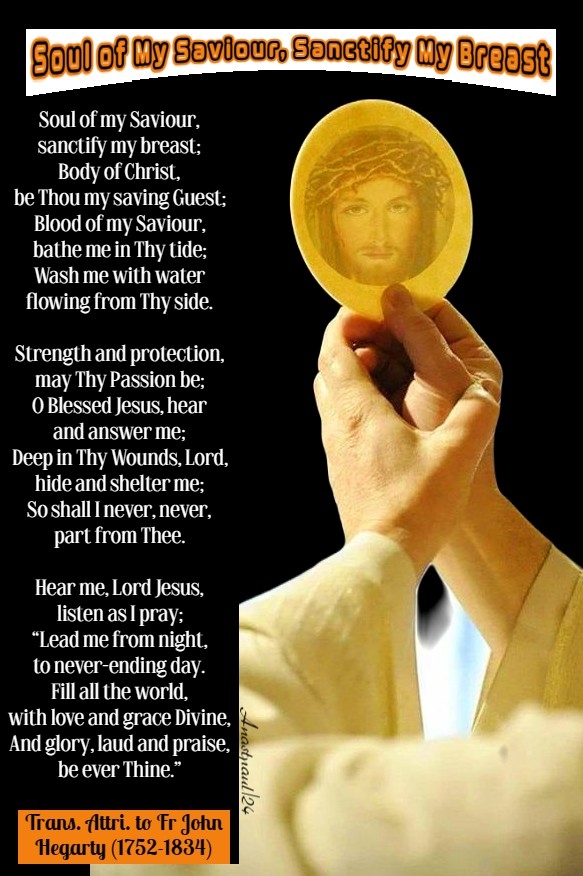
Soul of My Saviour, Sanctify My Breast Trans. Attri. to Fr John Hegarty (1752-1834)
Soul of my Saviour, sanctify my breast; Body of Christ, be Thou my saving Guest; Blood of my Saviour, bathe me in Thy tide; Wash me with water flowing from Thy side.
Strength and protection, may Thy Passion be; O Blessed Jesus, hear and answer me; Deep in Thy Wounds, Lord, hide and shelter me; So shall I never, never, part from Thee.
Hear me, Lord Jesus, listen as I pray; “Lead me from night, to never-ending day. Fill all the world, with love and grace Divine, And glory, laud and praise, be ever Thine.”
This Hymn is based on the original Latin text of the Anima Christi. Fr Hegarty is attributed with its translation and/or arrangement. He was born in County Derry, Ireland, educated at Dublin University and was Ordained in June 1890 and spent most of active apostolic years in Brisbane, Australia. He died aged 82 years.
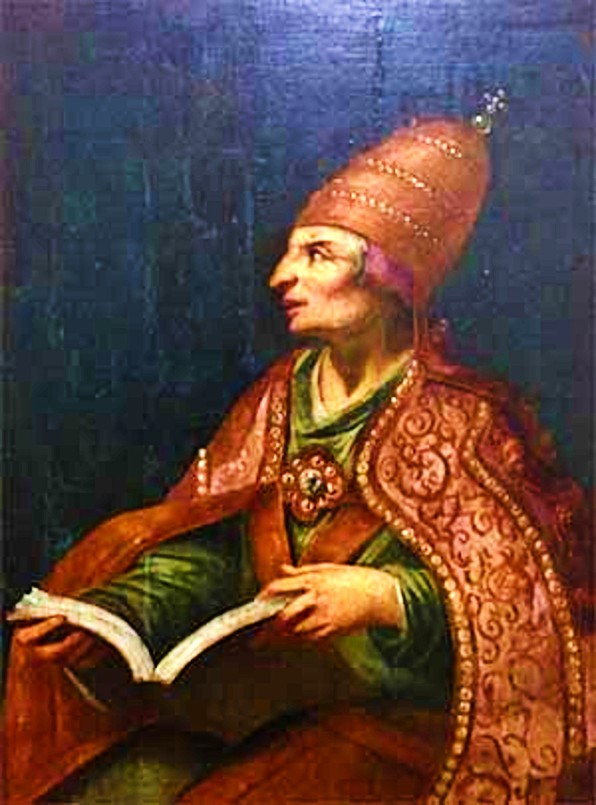
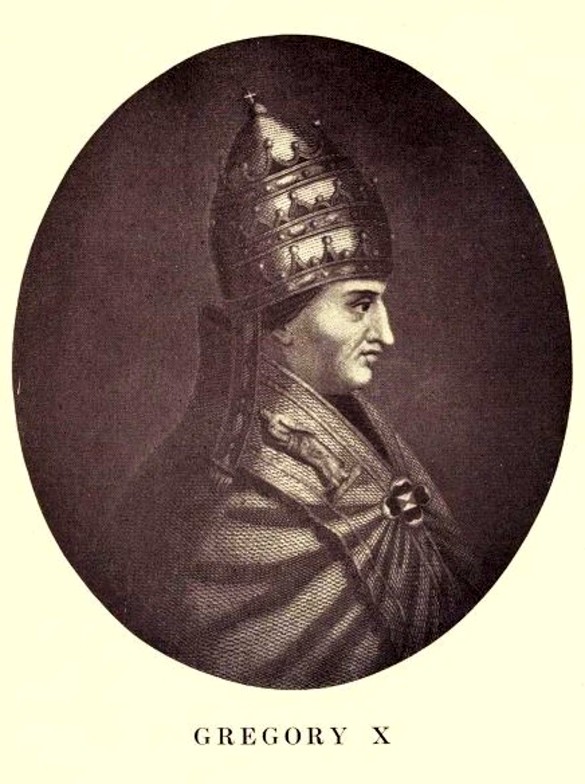
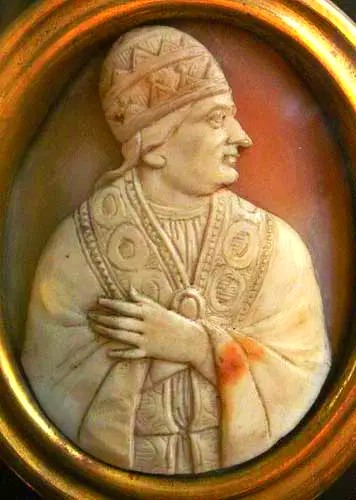
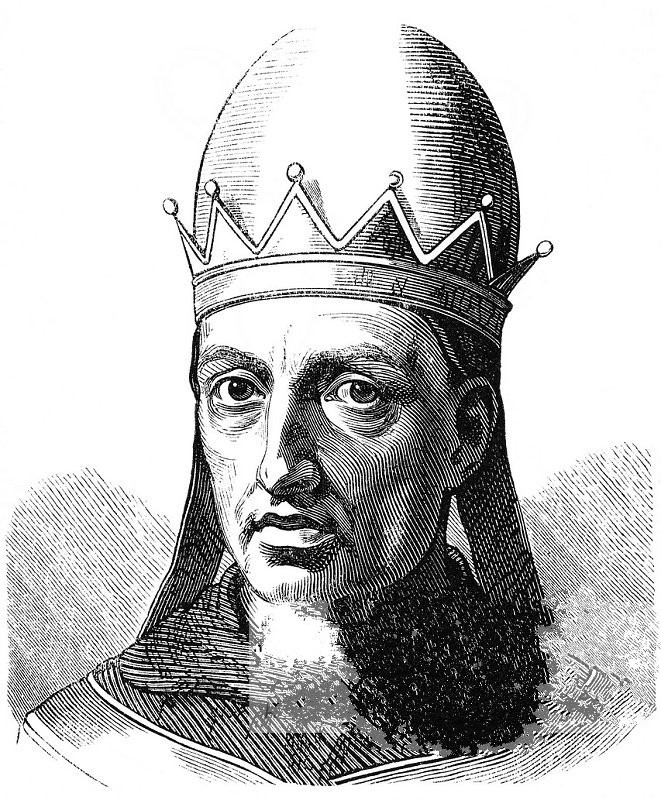
Saint of the Day – 16 February – Blessed Gregory X OFM (or TOSF) (1210-1276) Pope Papacy began 1 September 1271 until his death on 10 January 1276, Diplomat and Peacemaker, Reformer of Papal Elections, Third Order Franciscan. This Tertiary Pope, a friend of St. Bonaventure, was a true son of St Francis, known for his love for the holy places in Palestine and his efforts to promote peace. Born as Theobald Visconti in Piacenza, Italy, in 1210 and died at Rezzo, Italy, on 10 January 1276 of natural causes. Patronages – of Third Order Franciscans, of the Diocese of Aresso, Italy. He wwas Beatified on 8 July 1713 bvbPope Clement XI and addedd to the Martyrology by Pope Benedict XIV (reigned 1740-1758). A miracle is awaited for his Canonisation which remains an open Cause.
The Roman Martyrology reads today: “At Arezzo, in Tuscany, Blessed Gregory X, a native of Piacenza, who was elected Sovereign Pontiff while he was Archdeacon of Liege. He held the 2nd Council of Lyons, received the Greeks into the unity of the Church, appeaseddiscords among Christians, made generous efforts for the recovery of the Holy Land and governed the Church in the most holy manner.”
Gregory X, is remembered for his extraordinary journey from an Archdeacon to the Papacy, despite not being a Priest at the time of his election. His story reflects the influence of Saints and the shaping of Church history.
Theobald Visconti was born into a very distinguished family, studied Canon Law at Paris and Liege and became the Archdeacon of Liége. In this position he was entrusted with preaching the last Crusade. In Paris, where he engaged with intellectual circles for over twenty years, his closest friends were the Franciscans, particularly St Bonaventure.
He accompanied Cardinal Ottoboni on a mission to England. Theobald was at Acre in the Holy Land on pilgrimage, when he was informed that, although he was not yet Ordained, he had been chosen as the Supreme Pontiff. This had been enacted by a committee of six Cardinals who had been charged with selecting a new Pope, when the rest of the Cardinals failed to agree on a candidate to fill the Pontifical throne, which had been vacant for three years.
He returned to Rome, was Ordained a Priest on 19 March and then consecrated as Pope on 27 March 1272, taking the name Gregory X. Perhaps Gregory X’s most enduring legacy is the establishment of the Papal Conclave system. After the prolonged election process which led to his own Papacy, Gregory instituted reforms to expedite future Papal Elections. The Second Council of Lyons decreed that Cardinals should convene in isolation after a Pope’s death, with strict measures to encourage a swift decision. This marked the beginning of the Conclave process, isolating the Cardinals from external influences and streamlining the election process. The Conclave’s name, meaning “with a key”symbolises this seclusion.
He laboured to end the warfare between the Guelphs and the Ghibellines factions, placed Florence under interdict for refusing efforts at reconciliation with its neighbours and approved Rudulph of Hapsburg, as the German Emperor.
Gregory also convoked the 14th General Council at Lyons in 1274 which effected a short-lived reconciliation with the Eastern Churches but was unsuccessful in launching the Crusade (which was the general reason the Eastern Churches were willing to negotiate a reunion).
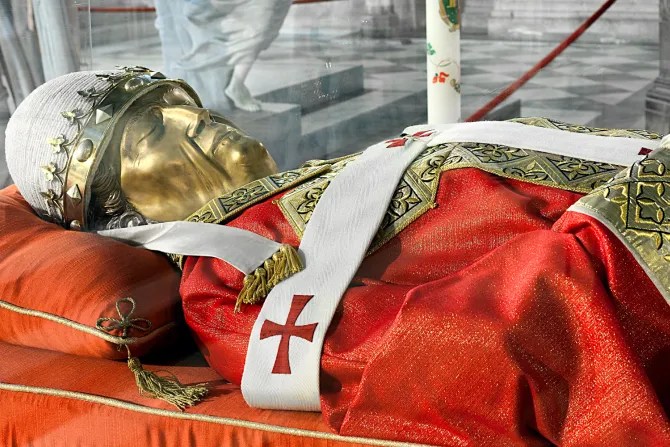
Gregory died on his way back from the Council in Lyons. He is buried inside the Cathedral Church of Arezzo. He was succeeded by the Dominican Peter of Tarantaise of Savoy (Pope Innocent V)Gregory’s close collaborator throughout his Pontificate.
he effigy of Blessed Pope Gregory X can be found in the Cathedral of Arezzo.
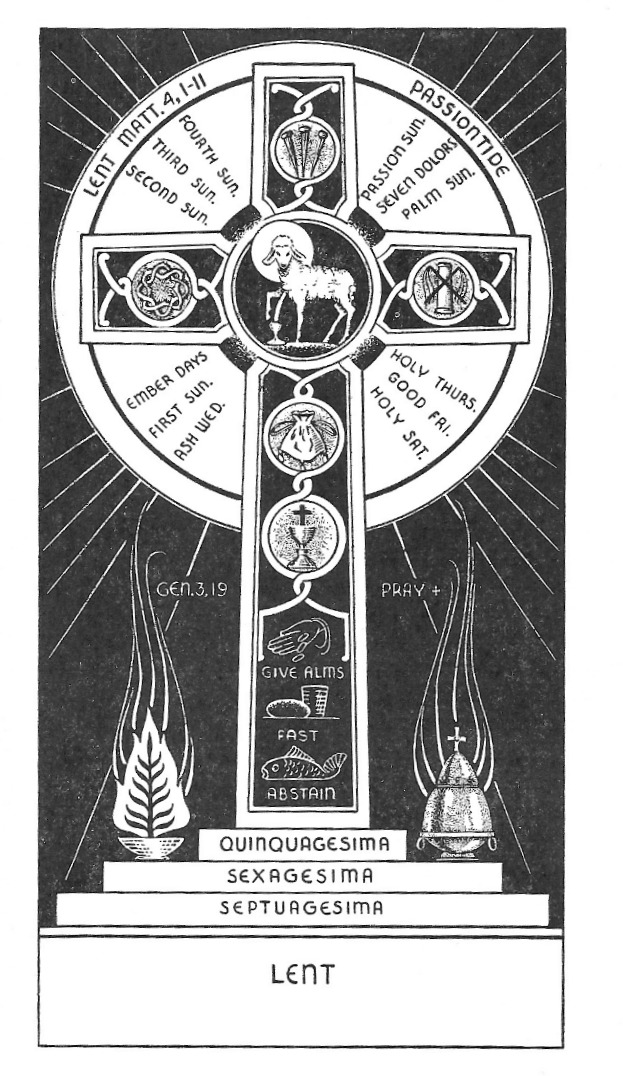
Septuagesima Sunday: The word “Septuagesima” is Latin for “Seventeenth.” It is both the name of the Liturgical Season and the name of the Sunday. Septuagesima Sunday marks the beginning of the shortest Liturgical Season. This Season is seventeen (17) days long and includes the three Sundays before Ash Wednesday. The length of the Season never changes but the start date is dependent on the movable date of Easter, which can fall between 22 March-25 April. Septuagesima Sunday can be as early as 18 January.
Dom Prosper Guéranger OSB (1805-1875) Abbot of Solesmes from 1837-1875, devoted a whole volume of his great work – The Liturgical Year, to Septuagesima. In his Preface, Dom Guéranger referred to Septuagesima as a Season of “transition, inasmuch as it includes the period between two important Seasons – Christmas and Lent.… The Church, therefore, has instituted a preparation for the holy time of Lent. She gives us the three weeks of Septuagesima, during which she withdraws us, as much as may be, from the noisy distractions of the world, in order that our hearts may be the more readily impressed by the solemn warning she is to give us, at the commencement of Lent, by marking our foreheads with ashes.” The Septuagesima Season helps the faithful ease into Lent. I t is a gradual preparation for the serious time of penance and sorrow; to remind the sinner of the grievousness of his errors and to exhort him to penance. Liturgically it looks very much like Lent. The Gloria and Alleluia are omitted, the tone becomes penitential with the Priest wearing Purple Vestments. The main difference is that there are no fasting requirements.
St Faustinus of Brescia (not the St Faustinus brother of St Jovinus – 15 February). Blessed Gregory X (1210-1276) Pope Papacy began 1 September 1271 until his death on 10 January 1276. His Feast was one of those moved in 1969. Today is the date of his celebration. A Very Interesting Pope: https://anastpaul.com/2022/01/10/saint-of-the-day-10-january-blessed-pope-gregory-x-1210-1276/
St Honestus of Nimes St John III of Constantinople
St Julian of Egypt St Juliana of Campania St Juliana of Nicomedia Blessed Mariano Arciero
Martyrs of Cilicia – 12 Saints: A group of Christians who ministered to other Christians who were condemned to work the mines of Cilicia in the persecutions of Maximus. They were arrested, tortured and martryed by order of the governor Firmilian. They were Daniel, Elias, Isaias, Jeremy, Samuel. The group also includes the three known have been sentenced to the mines – Pamphilus, Paul of Jamnia, Valens of Jerusalem and those who were exposed as Christians as a result of these murders – Julian of Cappadocia, Porphyrius of Caesarea, Seleucius of Caesarea, Theodule the Servant. They were Martyred in 309 in Cilicia, Asia Minor (in modern Turkey).










 AnaStpaul
You must be logged in to post a comment.