
Saint of the Day – 16 February – Blessed Gregory X OFM (or TOSF) (1210-1276) Pope Papacy began 1 September 1271 until his death on 10 January 1276, Diplomat and Peacemaker, Reformer of Papal Elections, Third Order Franciscan. This Tertiary Pope, a friend of St. Bonaventure, was a true son of St Francis, known for his love for the holy places in Palestine and his efforts to promote peace. Born as Theobald Visconti in Piacenza, Italy, in 1210 and died at Rezzo, Italy, on 10 January 1276 of natural causes. Patronages – of Third Order Franciscans, of the Diocese of Aresso, Italy. He wwas Beatified on 8 July 1713 bvbPope Clement XI and addedd to the Martyrology by Pope Benedict XIV (reigned 1740-1758). A miracle is awaited for his Canonisation which remains an open Cause.
The Roman Martyrology reads today: “At Arezzo, in Tuscany, Blessed Gregory X, a native of Piacenza, who was elected Sovereign Pontiff while he was Archdeacon of Liege. He held the 2nd Council of Lyons, received the Greeks into the unity of the Church, appeaseddiscords among Christians, made generous efforts for the recovery of the Holy Land and governed the Church in the most holy manner.”
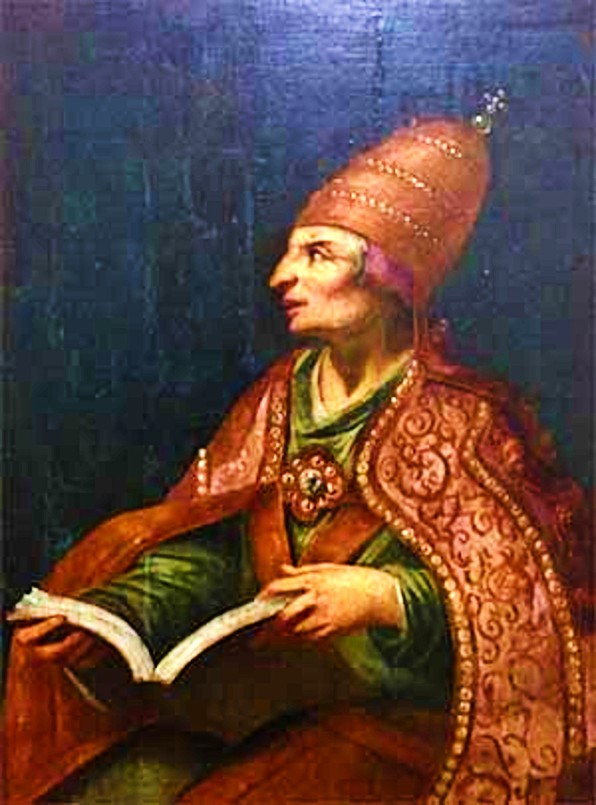
Gregory X, is remembered for his extraordinary journey from an Archdeacon to the Papacy, despite not being a Priest at the time of his election. His story reflects the influence of Saints and the shaping of Church history.
Theobald Visconti was born into a very distinguished family, studied Canon Law at Paris and Liege and became the Archdeacon of Liége. In this position he was entrusted with preaching the last Crusade. In Paris, where he engaged with intellectual circles for over twenty years, his closest friends were the Franciscans, particularly St Bonaventure.
He accompanied Cardinal Ottoboni on a mission to England. Theobald was at Acre in the Holy Land on pilgrimage, when he was informed that, although he was not yet Ordained, he had been chosen as the Supreme Pontiff. This had been enacted by a committee of six Cardinals who had been charged with selecting a new Pope, when the rest of the Cardinals failed to agree on a candidate to fill the Pontifical throne, which had been vacant for three years.
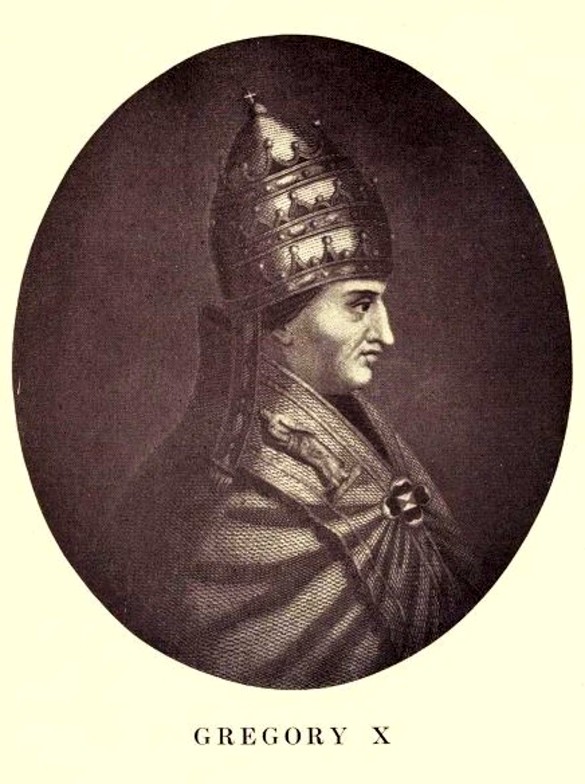
He returned to Rome, was Ordained a Priest on 19 March and then consecrated as Pope on 27 March 1272, taking the name Gregory X. Perhaps Gregory X’s most enduring legacy is the establishment of the Papal Conclave system. After the prolonged election process which led to his own Papacy, Gregory instituted reforms to expedite future Papal Elections. The Second Council of Lyons decreed that Cardinals should convene in isolation after a Pope’s death, with strict measures to encourage a swift decision. This marked the beginning of the Conclave process, isolating the Cardinals from external influences and streamlining the election process. The Conclave’s name, meaning “with a key”symbolises this seclusion.
He laboured to end the warfare between the Guelphs and the Ghibellines factions, placed Florence under interdict for refusing efforts at reconciliation with its neighbours and approved Rudulph of Hapsburg, as the German Emperor.
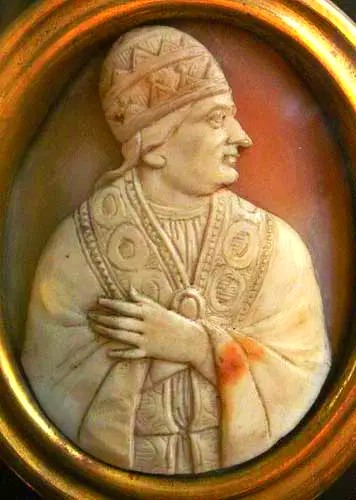
Gregory also convoked the 14th General Council at Lyons in 1274 which effected a short-lived reconciliation with the Eastern Churches but was unsuccessful in launching the Crusade (which was the general reason the Eastern Churches were willing to negotiate a reunion).
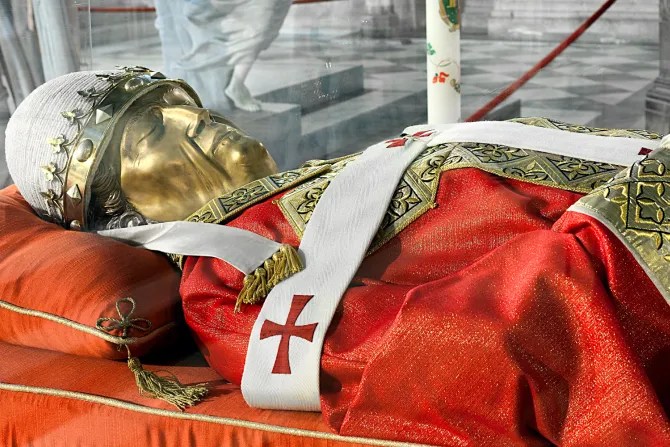
Gregory died on his way back from the Council in Lyons. He is buried inside the Cathedral Church of Arezzo. He was succeeded by the Dominican Peter of Tarantaise of Savoy (Pope Innocent V)Gregory’s close collaborator throughout his Pontificate.


 AnaStpaul