Thought for the Day – 23 February – Meditations with Fr Richard Frederick Clarke SJ (1839-1900)
Meditations on “The Great Truths” From “The Devout Year” By Fr Richard Frederick Clarke SJ (1839-1900)
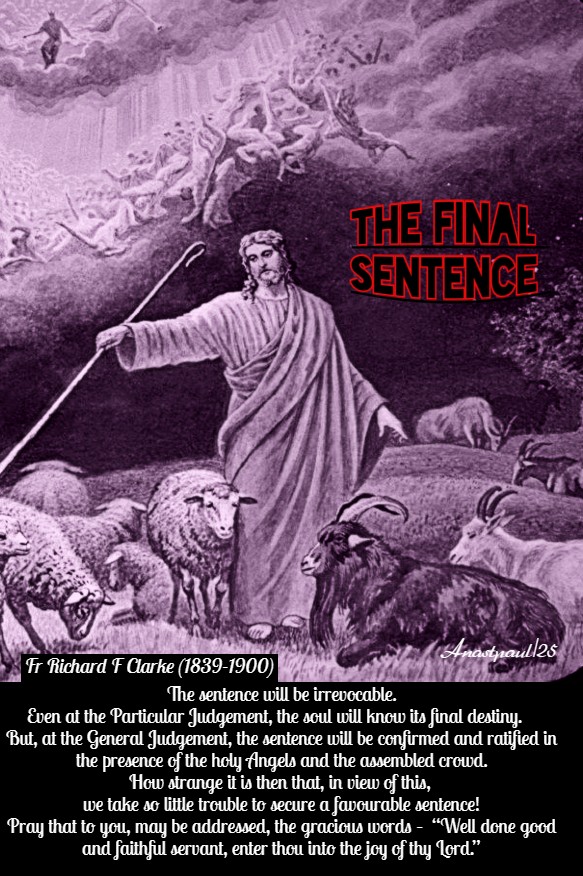
23d Day – The Final Sentence
The wicked shall go into everlasting punishment but the just into life everlasting, (St Matt xxv:46)
+1. The sentence pronounced at the Last Judgement, will be one of perfect justice. Every little circumstance will be taken into account – inherited character, natural disposition, fierce passions, favourable or unfavourable circumstances, early training, opportunities of grace sacraments, temptations, everything! All who are lost will confess that they have been treated with perfect justice that, it was their own fault that, it was they, who condemned themselves to eternal separation from God.
+2. The sentence will be, not only just but, merciful. All the lost will acknowledge that, their punishment is less than they deserved. They will recognise an element of mercy and will be forced amid their despair and hatred of God, amid their curses and blasphemies , to confess that they have been leniently dealt with in comparison with their sins!
+3. The sentence will be irrevocable. Even at the Particular Judgement, the soul will know its final destiny. But, at the General Judgement, the sentence will be confirmed and ratified in the presence of the holy Angels and the assembled crowd. How strange it is then that, in view of this, we take so little trouble to secure a favourable sentence! Pray that to you, may be addressed, the gracious words – “Well done good and faithful servant, enter thou into the joy of thy Lord.”
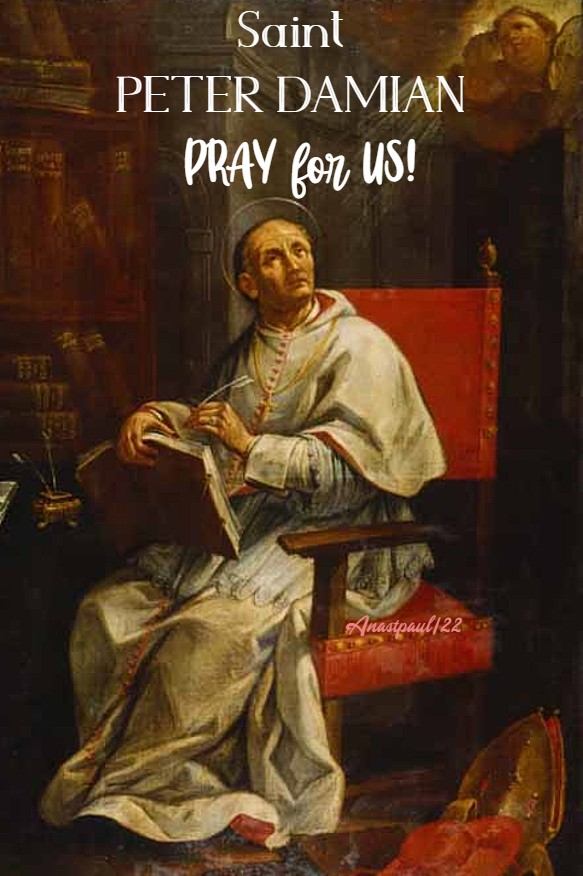
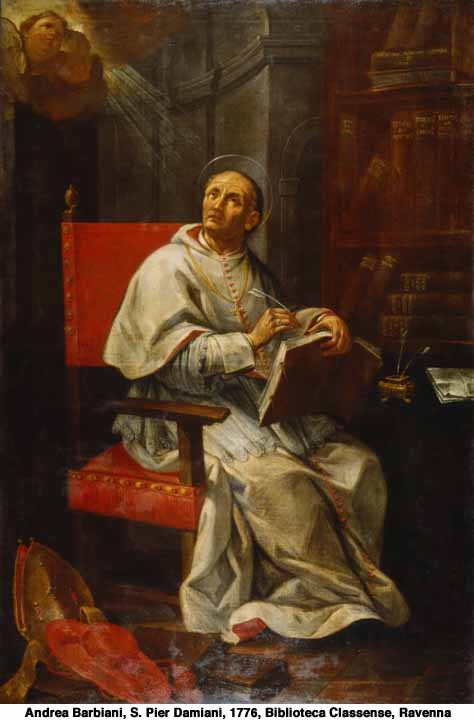
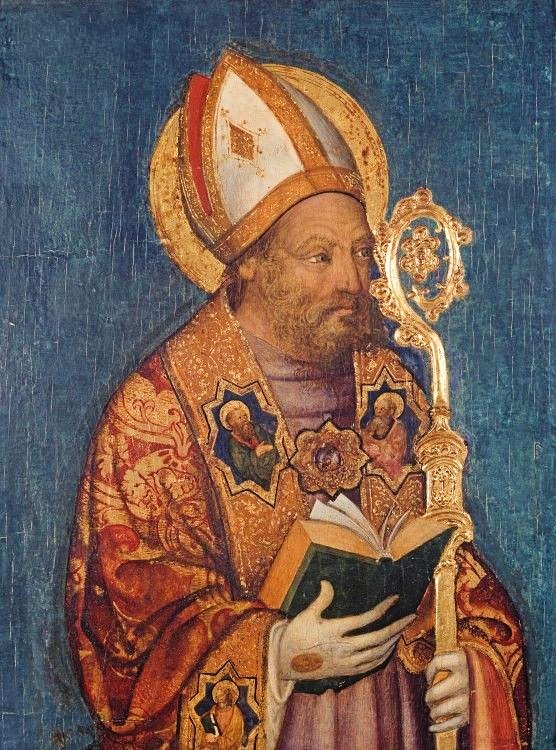
Quote/s of the Day – 23 February – St Peter Damian (1007-1072) Cardinal Bishop, Confessor, Father and Doctor of the Church
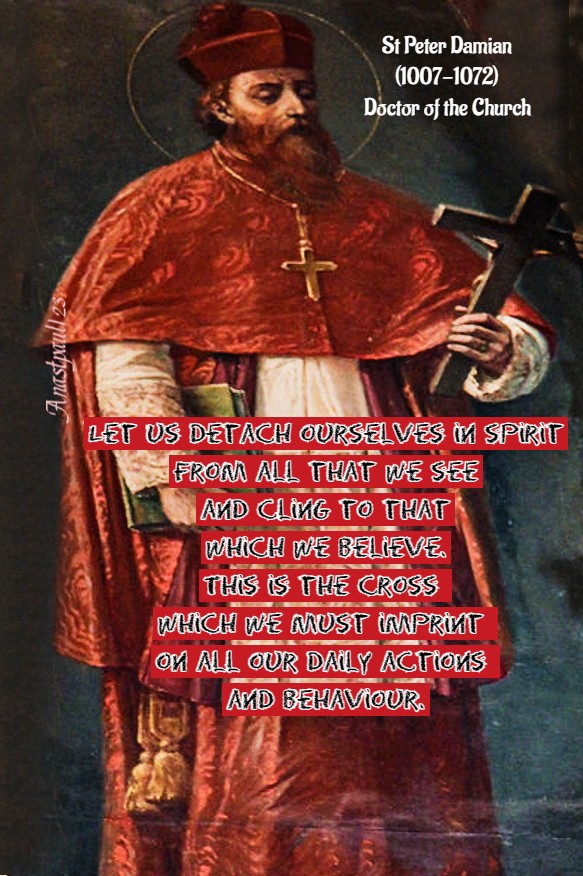
“Let us detach ourselves in spirit from all that we see and cling to that which we believe. This is the Cross which we must imprint on all our daily actions and behaviour.”
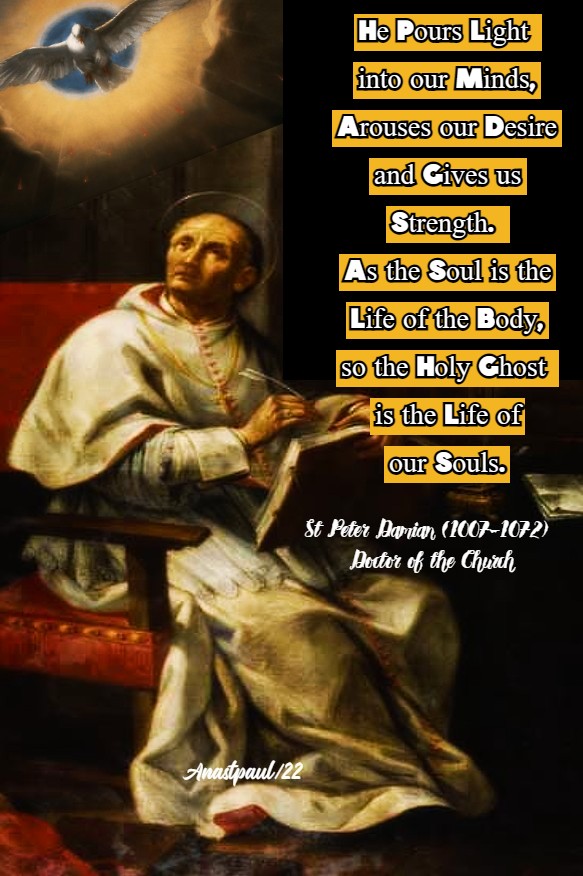
“He pours light into our minds, arouses our desire and gives us strength… As the soul is the life of the body, so the Holy Ghost is the life of our souls.”
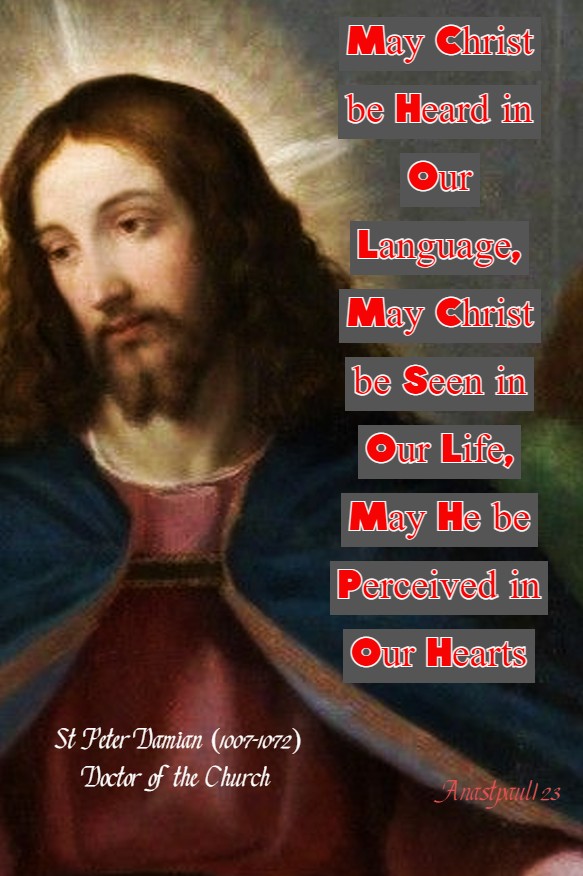
“May Christ be heard in our language, may Christ be seen in our life, may He be perceived in our hearts”
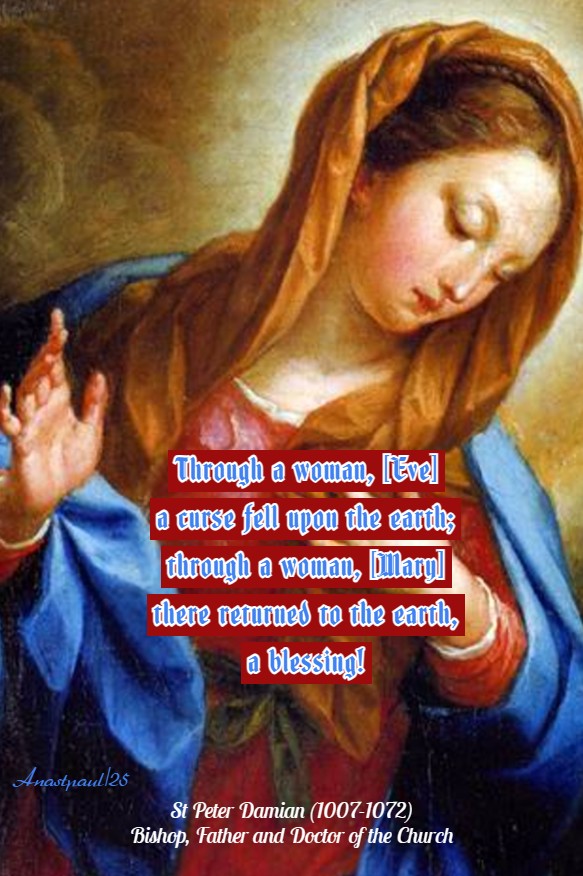
“Through a woman, [Eve] a curse fell upon the earth; through a woman, [Mary] there returned to the earth, a blessing!”
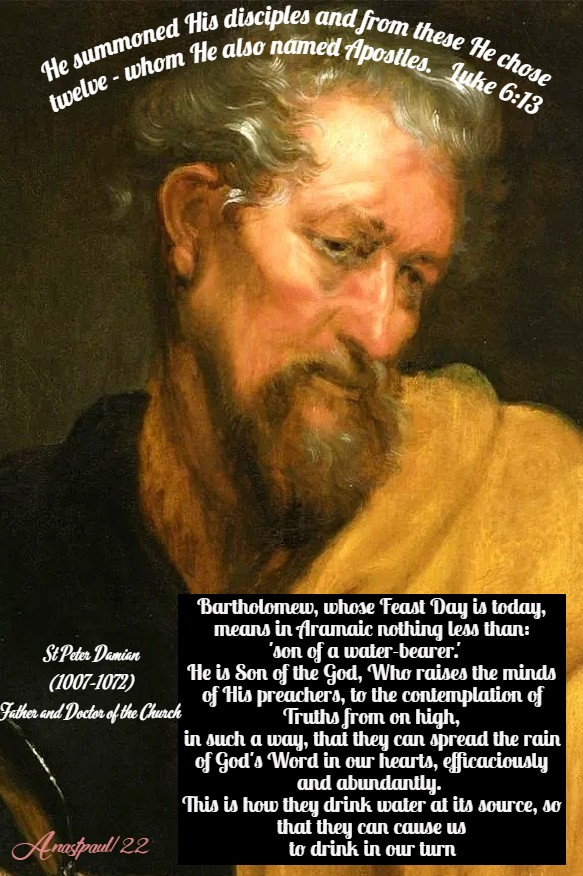
“And when day broke, He summoned His disciples and from these He chose twelve – whom He also named Apostles.” Luke 6:13
“Bartholomew, whose Feast Day is today, means in Aramaic, nothing less than: ‘son of a water-bearer.‘ He is Son of the God, Who raises the minds of His preachers, to the contemplation of Truths from on high, in such a way, that they can spread the rain of God’s Word in our hearts, efficaciously and abundantly . This is how they drink water at its source, so that they can cause us to drink in our turn.”
One Minute Reflection – 23 February – “The Month of the Blessed Trinity” – St Peter Damian (1007-1072) Cardinal Bishop, Confessor, Father and Doctor of the Church – 2 Corinthians 11,19-33; 12,1-9; – Luke 8:4-15 – Scripture search here: https://www.drbo.org/
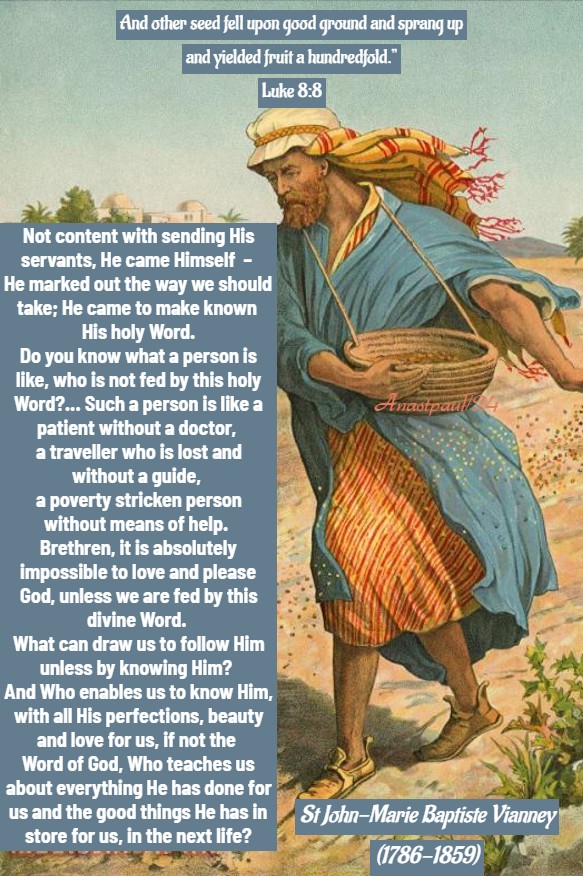
“And other seed fell upon good ground and sprang up and yielded fruit a hundredfold.” – Luke 8:8
REFLECTION – “If you ask me what Jesus Christ means by this Sower Who goes out early to cast his seed over his field then, my brethren, that Sower is the good God Himself, Who began the work of our salvation, from the beginning of the world, by sending us His Prophets, before the coming of Christ, to teach us what was needed, if we would be saved. Not content with sending His servants, He came Himself – He marked out the way we should take; He came to make known His holy Word.
Do you know what a person is like, who is not fed by this holy Word?… Such a person is like a patient without a doctor, a traveller who is lost and without a guide, a poverty stricken person without means of help. Brethren, it is absolutely impossible to love and please God, unless we are fed by this Divine Word. What can draw us to follow Him unless by knowing Him? And Who enables us to know Him, with all His perfections, beauty and love for us, if not the Word of God, Who teaches us about everything He has done for us and the good things He has in store for us, in the next life?” – St John-Marie Baptiste Vianney (1786-1859) The Curé of Ars (Sermons)
PRAYER – Grant us, we beseech Thee, Almighty God, to follow the counsel and examples of St Peter, Thy Confessor and Bishop, so that by setting earthly goods at naught we may attain everlasting happiness. Through Jesus Christ, Thy Son our Lord, Who lives and reigns with Thee, in the unity of the Holy Ghost, God, world without end. Amen (Collect).
Our Morning Offering – 23 February – Sexagesima Sunday and the Feast of St Peter Damian (1007-1072) Cardinal Bishop, Confessor, Father and Doctor of the Church
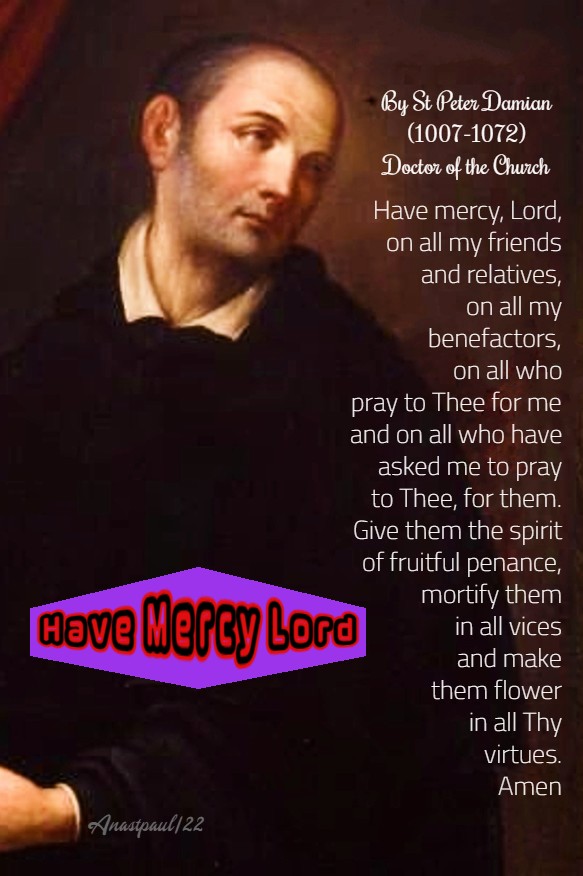
Have Mercy, Lord By St Peter Damian (1007-1072) Father & Doctor of the Church
Have mercy, Lord, on all my friends and relatives, on all my benefactors, on all who pray to Thee for me and on all who have asked me to pray to Thee, for them. Give them the spirit of fruitful penance, mortify them in all vices and make them flower in all Thy virtues. Amen
Saint of the Day – 23 February – Saint Romana (Died c324) Virgin, Recluse, Miracle-worker. Born in c308 and died in c324 in her cave in Todi, Umbria, Italy of natural causes.
The Roman Martyrology reads today: “At Todi, St Romana, Viurgin, who was Baptised by Pope St Sylvester. She led a heavenly life in caves and dens and wrought glorious miracles.”
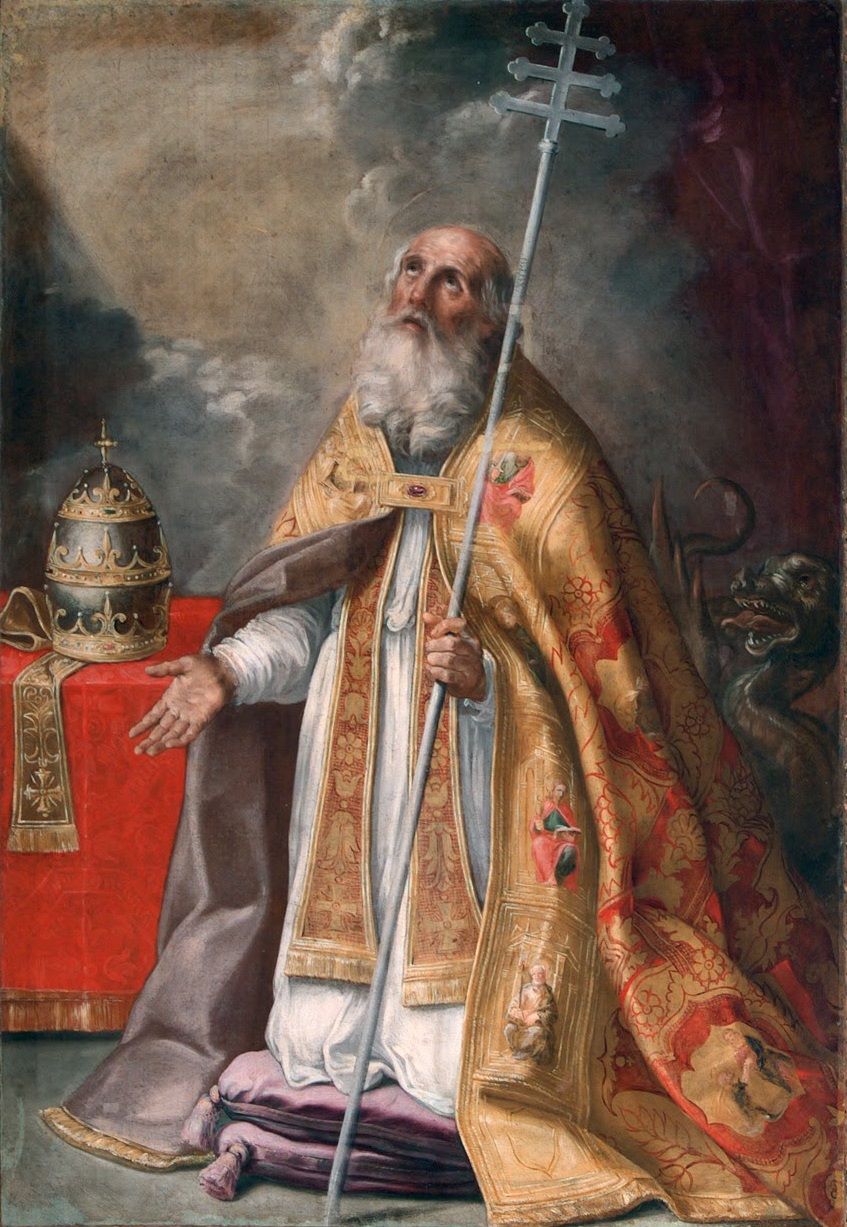
St Pope Sylvester
Romana was the daughter of Calfurnius, the Prefect of Rome. Having embraced the Christian Faith, she renounced all the comforts and conveniences which her rank would have allowed her.
Following her religious vocation, she ran away from home and, at the age of 10, she reached St Silvester on Mount Soratte, to be Baptised.
Inside the church of Santa Romana on Soratte (a mountain in Sabina) there is the following inscription: “23 FEBEUARII ^ TUDERTI ^ St ROMANE VIRGINIS QUE A S. SILVESTRO BAPTIZATA IN HANC ANTRI ET SPELUCIS CELESTE VITA DUXIT ET MIRACULORV.GLORIS CLARUIT.” (23 FEBRUARY ^ TUDERTI ^ ST ROMAN VIRGIN WHO WAS BAPTISED BY ST SILVESTER IN THIS CAVE. SHE LIVED A CELESTIAL LIFE AND WAS REPLETE WITH MIRACULOUS GLORY). Nowadays it is almost illegible.
Romana on Mount Soratte. lived in a hermitage, She wanted to live in that very cave, perhaps because she felt close to Pope Sylvester, whose sanctity she admired. And it is in these places that a legendary relationship was born, between the Saint and his devotee, who reached him at the top of the mountain, perhaps using some secret passage, wedging herself into the bowels of the mountain.
Silvester warned her each time and once said to her: “now you will return when the roses have bloomed.” It was the middle of winter which had often stained the steep climbs of the mountain with white, when one morning Romana returned to Silvester with a rose; it had bloomed.
The Saint then set out alone towards the City of Todi. In the gorges of Forello, she established her home inside a cave. Although she lived alone, her constant prayer and her faith, were such that many Christians approached her, praising her sanctity.
Romana died in prayer surrounded by the faithful, in the year c324. The body of the Saint was buried in the cave where she lived and in which an Altar was built, where masses were continuously celebrated.
In 1301 her body was transferred to St Fortunatus Church in Todi.
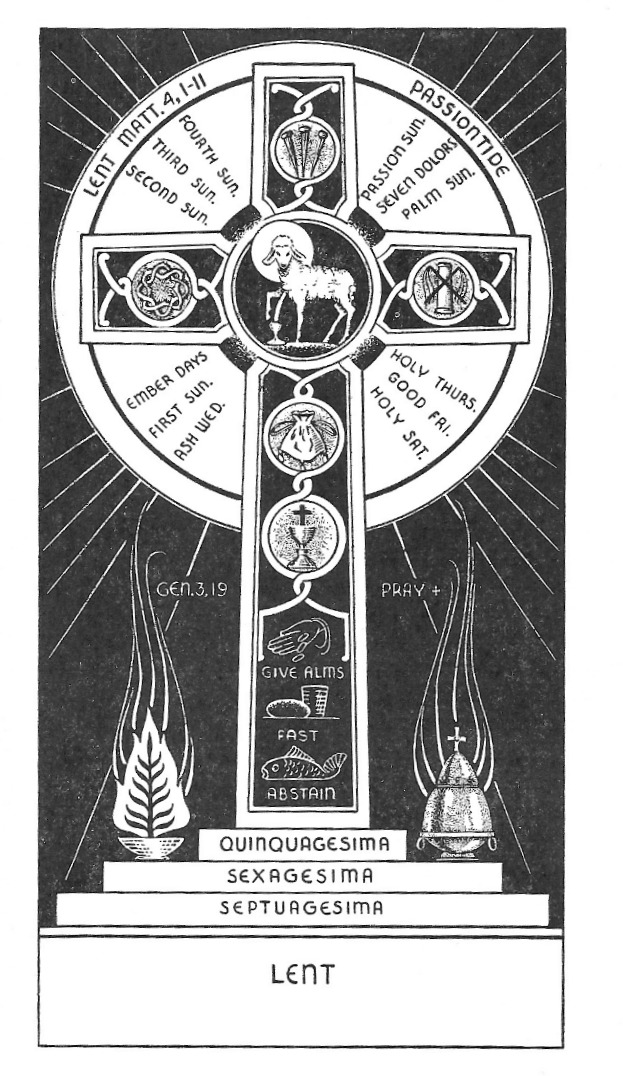
SEXAGESIMASUNDAY: (Latin – Sexagesima, sixieth) The name means “sixtieth” as it falls within the 50-60 day ranges before Easter and the second before Lent. The Ordo Romanus, St Alcuin and others, count the Sexagesima from this day to Wednesday after Easter. The name was already known to the Fourth Council of Orléans in 541. To the Latins it is also known as “Exsurge” from the beginning of the Introit. The Station was at Saint Paul’s Outside the Walls of Rome and hence, the oratio calls upon the Doctor of the Gentiles. The Epistle is from Paul, 2 Corinthians 11 and 12, describing his suffering and labours for the Church. The Gospel (Luke 8) relates the falling of the seed on good and on bad ground, while the Lessons of the first Nocturn continue the history of man’s iniquity and speak of Noah and of the Deluge.
St Alexander Akimetes St Boswell St Dositheus of Egypt St Felix of Brescia St Florentius of Seville St Giovanni Theristi (1049–1129) Monk Bl John of Hungary
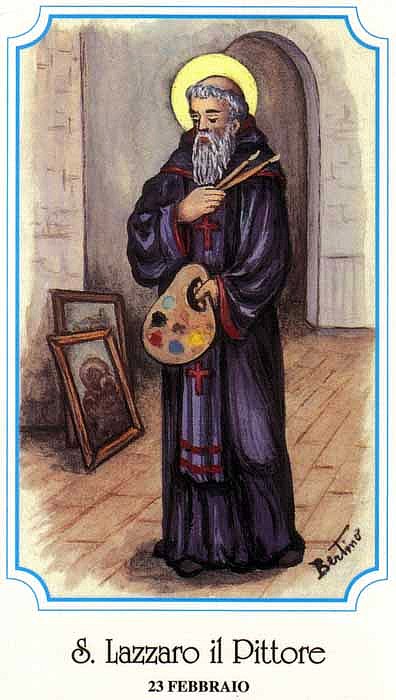
St Lazarus Zographos (c810-c 867) Priest, Monk known as “the Painter and the Iconographer.” Lazarus lived before and during the second period of Byzantine Iconoclasm. The Roman Martyrology states of him today: “St Lazarus, a Monk, whom the Iconoclast Emperor Theophilus ordered to be put to torture for having painted holy images. His hand was burned with a hot iron but, being healed by the power of God, he painted anew the holy images which had been defaced and finally rested in peace.” The Painter Saint: https://anastpaul.com/2022/02/23/saint-of-the-day-23-february-st-lazarus-zographos-810-865/
St Ordonius St Polycarp of Rome St Romana (Died c324) Virgin
St Serenus the Gardener (Died 307) Martyr. Serenus was by birth a Grecian. He left his family estate, friends and country to serve God in celibacy, penance and prayer. With this design he bought a garden in Sirmium in Pannonia, which he cultivated with his own hands and lived on the fruits and herbs it produced. His Life and Death: https://anastpaul.com/2019/02/23/saint-of-the-day-23-february-st-serenus-the-gardener-died-307-martyr/
Martyrs of Syrmium – 73 Christians who were Martyred together in the persecutions of Diocletian. We know no details about them, and only six of their names – Antigonus, Libius, Rogatianus, Rutilus, Senerotas and Syncrotas.






 AnaStpaul
You must be logged in to post a comment.