
Saint of the Day – 25 February – Saint Tharasius (c730-806) Bishop of Constantinople from 25 December 784 until his death on 25 February 806, Defender of Sacred images and of the sanctity of marriage against the imperial powers. Born in c730 in Constantinople and died there in 806. Also known as – Tarasius, Tarasius of Constantinople.
The Roman Martyrology reads today: “At Constantinople, St Tharasius, the Bishop, a man of great erudition and piety, to whom is addressed an epistle of Pope Adrian I, in defence of holy images.”
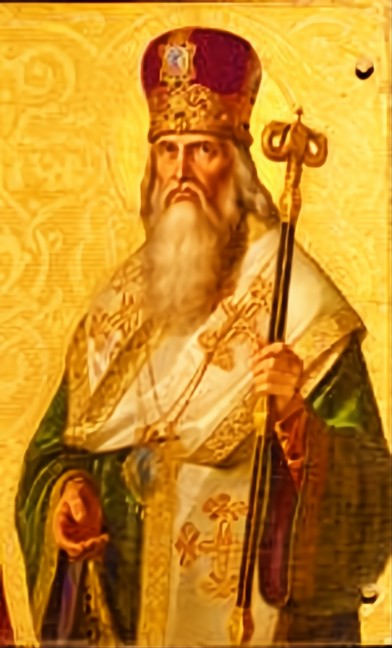
Tharasius was was born and raised in the City of Constantinople. A son of a high-ranking Judge, Tharasius was related to important families, including that of St Photios. Tharasius was surrounded by earthly wealth and possessions, but lived a most austere and holy life. His virtue gained the esteem of the empire and he was made Bishop of Constantinople.
When, being elected as the Bishop of Constantinople, he consented to accept the dignity offered to him, only on condition that a General Council should be summoned, in particular to resolve the disputes concerning the veneration of Sacred images. Constantinople had been separated from the Holy See on account of the war between the Emperors. In 786, the Council was held in the Church of the Holy Apostles, in Constantinople. It met again the following year in Nice and its decrees were approved by the Pope.
The Emperor of the time, Constantine VI, became enamoured of Theodotah, a his wife’s maid and sought to divorce his wife and marry her maid. Wishing to convince Tharasius to marry him to Theodota, the Emperor sent a message to the holy man. Tharasius adamantly refused, replying to the Emperor’s Ambassador, “I would rather suffer death and all manner of torments, than consent to his design.” He continued to reject the Emperor’s requests resulting in great enmity and adversity.
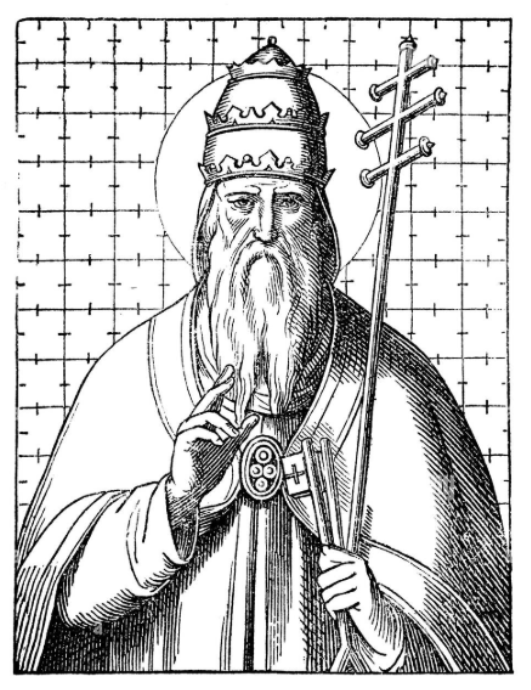
Tharasius’ whole life in the Episcopacy was one of penance and prayer and of hard labour to reform his clergy and people. He occupied the See of Constantinople for 21 years and 2 months. His charity toward the poor was one of the characteristic virtues of his life. He visited in person, all the houses and hospitals in Constantinople, so that no indigent person might be overlooked in the distribution of alms.
Just before his death, Tharasius fell into a trance. As his biographer, who was an eyewitness, relates, he was heard arguing with a number of unseen accusers. Tharasius defended himself against the accusers and answered everything laid to his charge. Later, a great peacefulness came over him and Tharasius gave up his soul to God in 806.


 AnaStpaul