Thought for the Day – 2 March – Meditations with Fr Richard Frederick Clarke SJ (1839-1900)
“Short Meditations for March, St Joseph” From “The Devout Year” By Fr Richard Frederick Clarke SJ (1839-1900)
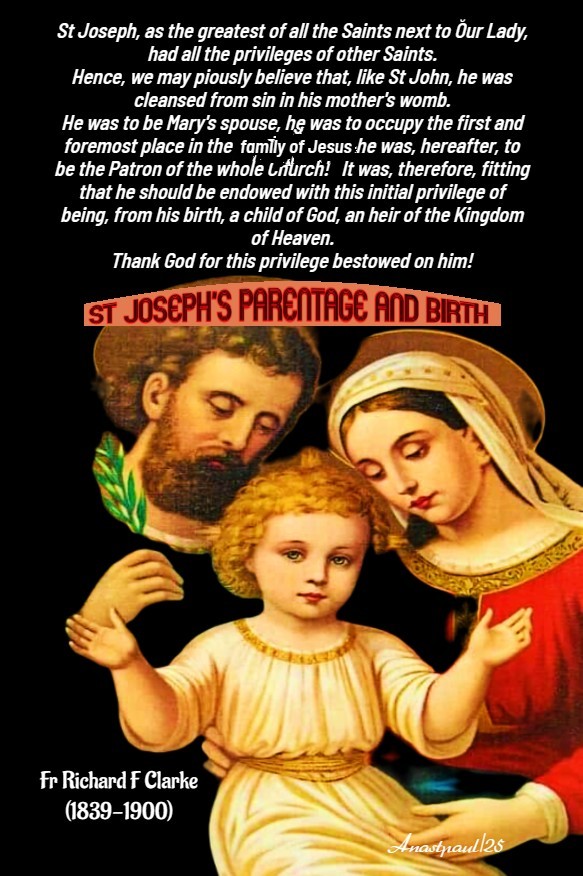
2nd Day – St Joseph’s Parentage and Birth
+1. Although St Joseph lived in poverty and contempt, he came of a noble ancestry. The blood of Kings and Saints ran in his veins and, what is more, he inherited, from them, the virtues of each but in a far higher degree, than that which their original possessor had enjoyed. How much the good in me is an inheritance from my parents and forefathers!? Yet how ill I have employed the virtues I received from them! Instead of being better than they, like St Joseph, I am the degenerate child of parents far better than myself.
+2. St Joseph, as the greatest of all the Saints next to Our Lady, had all the privileges of other Saints. Hence, we may piously believe that, like St John, he was cleansed from sin in his mother’s womb. He was to be Mary’s spouse, he was to occupy the first and foremost place in the family of Jesus, he was, hereafter, to be the Patron of the whole Church! It was, therefore, fitting that he should be endowed with this initial privilege of being, from his birth, a child of God, an heir of the Kingdom of Heaven. Thank God for this privilege bestowed on him!
+3. St Joseph was the connecting link between the Old and the New Dispensation, the first dawn which announces the coming day. In his youth, he belonged to the Old Law, in his later life, to the New. As the dawn brightens into the glorious day, so St Joseph’s life, beautiful from the first, advanced in splendour continually. Is this the history of my life? Have I made steady progress in the love of God?
Quote/s of the Day – 2 March – Quinquagesima Sunday
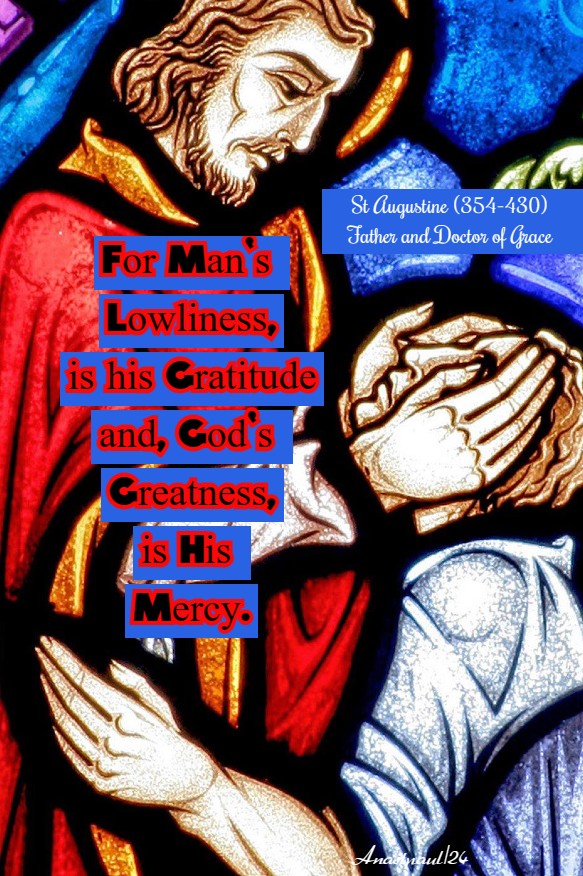
“ For man’s lowliness, is his gratitude and, God’s greatness, is His Mercy.”
St Augustine (354-430) Father and Doctor of Grace
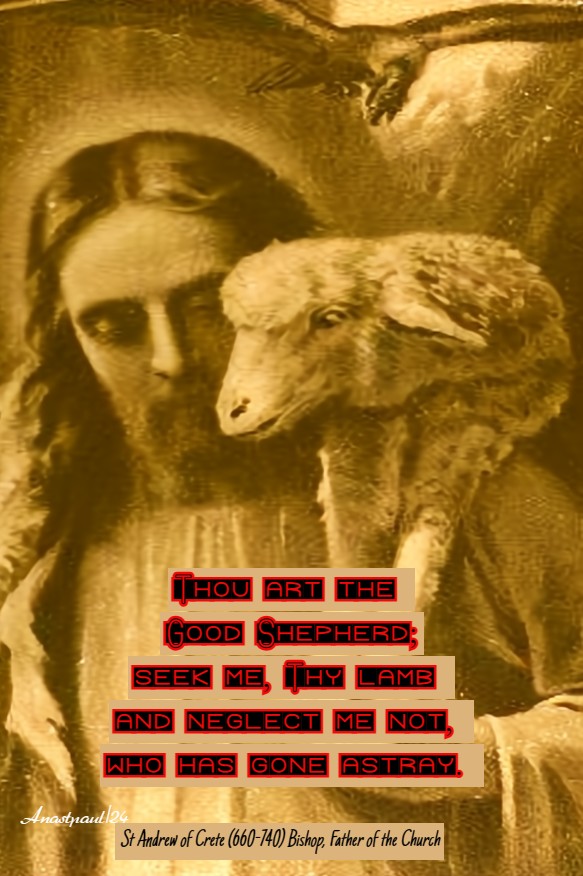
“Thou art the Good Shepherd; seek me, Thy lamb and neglect me not, who has gone astray. [John 10:11-14]”
St Andrew of Crete (660-740) Bishop, Father of the Church
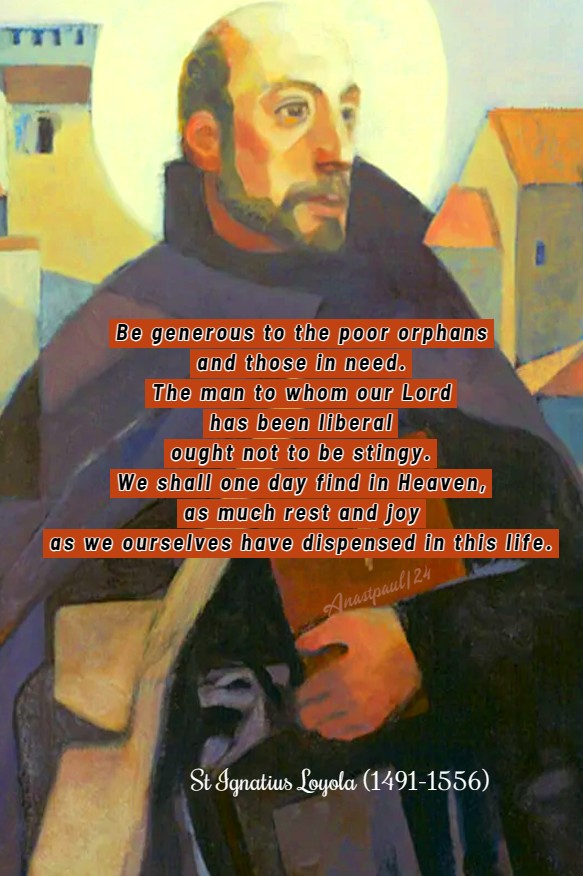
“Be generous to the poor orphans and those in need. The man to whom our Lord has been liberal ought not to be stingy. We shall one day find in Heaven, as much rest and joy as we ourselves have dispensed in this life.”
St Ignatius Loyola (1491-1556)
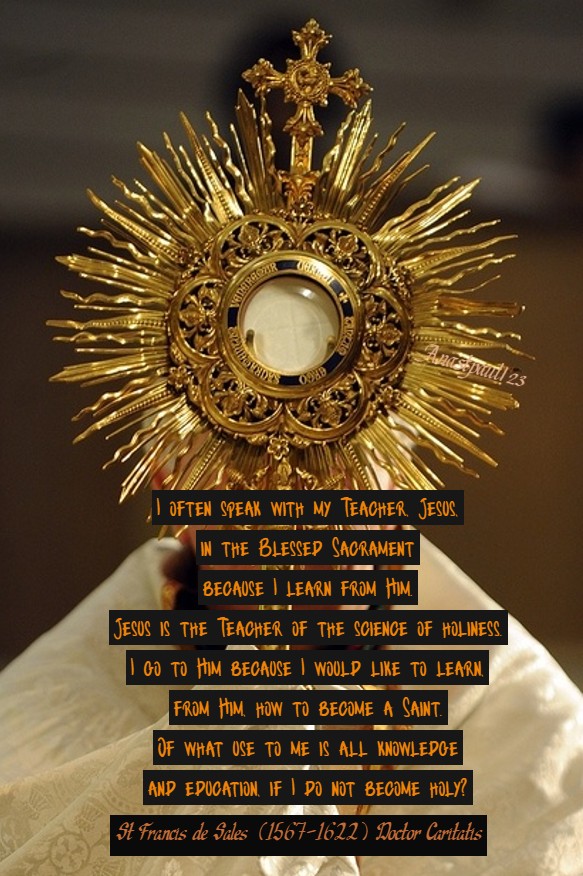
“I often speak with my Teacher, Jesus, in the Blessed Sacrament because I learn from Him. Jesus is the Teacher of the science of holiness. I go to Him because I would like to learn, from Him, how to become a Saint. Of what use to me is all knowledge and education, if I do not become holy?”
One Minute Reflection – 2 March – “The Month of Saint Joseph” – Quinquagesima Sunday –1 Corinthians 13:1-13 – Luke 18:31-43. – Scripture search here: https://www.drbo.org/
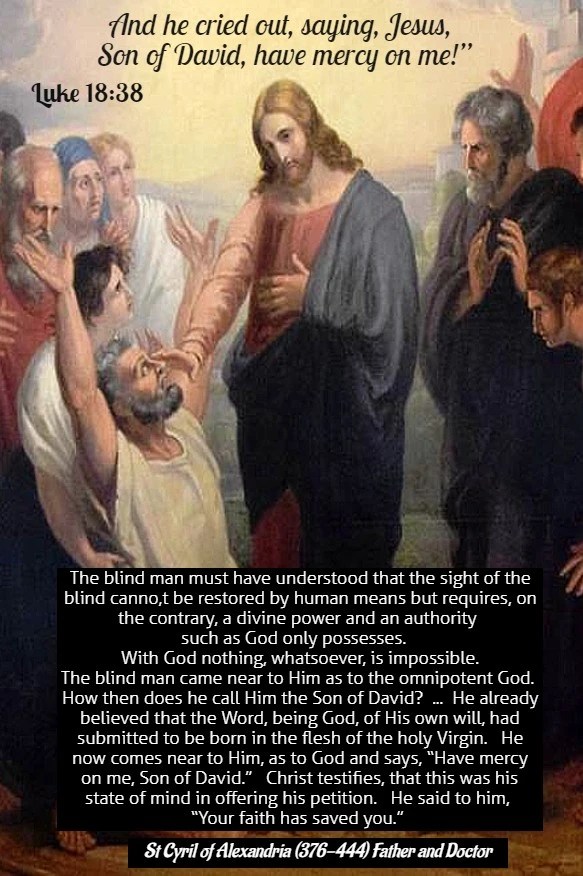
“And he cried out, saying, Jesus, Son of David, have mercy on me!” – Luke 18:38
REFLECTION – The blind man must have understood, that the sight of the blind cannot be restored by human means but requires, on the contrary, a divine power and an authority such as God only possesses. With God nothing, whatsoever, is impossible. The blind man came near to Him, as to the omnipotent God. How then does he call Him, the Son of David? What can one answer to this? The following is perhaps the explanation. Since He was born and raised in Judaism, of course, the predictions contained in the law and the holy Prophets, concerning Christ, had not escaped his knowledge. He heard them chant that passage in the book of the Psalms, “The Lord has sworn in truth to David and will not annul it, saying: ‘of the fruit of your loins I will set a king upon your throne.’” The blind man also knew that the blessed Prophet Isaiah said, “There will spring up a shoot from the root of Jesse and from his root a flower will grow up.” Isaiah also said, “Behold, a virgin will conceive and bring forth a son,and they will call his name Emmanuel, which, being interpreted is, God with us.” He already believed that the Word, being God, of His own will, had submitted to be born in the flesh of the holy Virgin. He now comes near to Him, as to God and says, “Have mercy on me, Son of David.” Christ testifies, that this was his state of mind in offering his petition. He said to him, “Your faith has saved you.” – St Cyril of Alexandria (376-444) Archbishop of Alexandria, Father and Doctor of the Incarnation (Commentary on Luke, Homily 126)
PRAYER – O Lord, we beseech Thee, mercifully hear our prayers; loose us from the chains of our sins and keep us from all adversity. Through Jesus Christ, Thy Son our Lord, Who lives and reigns with Thee, in the unity of the Holy Ghost, God, world without end. Amen (Collect).
Our Morning Offering – 2 March – Quinquagesima Sunday
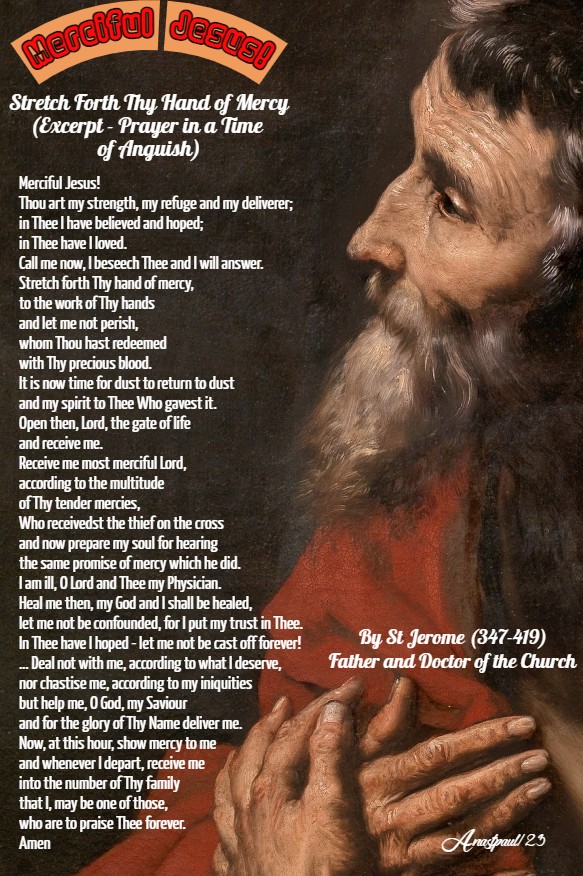
Merciful Jesus! Stretch Forth Thy Hand of Mercy (Excerpt – Prayer in a Time of Anguish) By St Jerome (347-419) Father and Doctor of the Church
Merciful Jesus! Thou art my strength, my refuge and my deliverer; in Thee I have believed and hoped; in Thee have I loved. Call me now, I beseech Thee and I will answer. Stretch forth Thy Hand of mercy, to the work of Thy Hands and let me not perish, whom Thou hast redeemed with Thy Precious Blood. It is now time for dust to return to dust and my spirit to Thee Who gavest it. Open then, Lord, the Gate of Life and receive me. Receive me most merciful Lord, according to the multitude of Thy tender mercies, Who receivedst the thief on the cross and now prepare my soul for hearing the same promise of mercy which he did. I am ill, O Lord and Thee my Physician. Heal me then, my God and I shall be healed, let me not be confounded, for I put my trust in Thee. In Thee have I hoped – let me not be cast off forever! … Deal not with me, according to what I deserve, nor chastise me, according to my iniquities but help me, O God, my Saviour and for the glory of Thy Name deliver me. Now, at this hour, show mercy to me and whenever I depart, receive me into the number of Thy family that I, may be one of those, who are to praise Thee forever. Amen
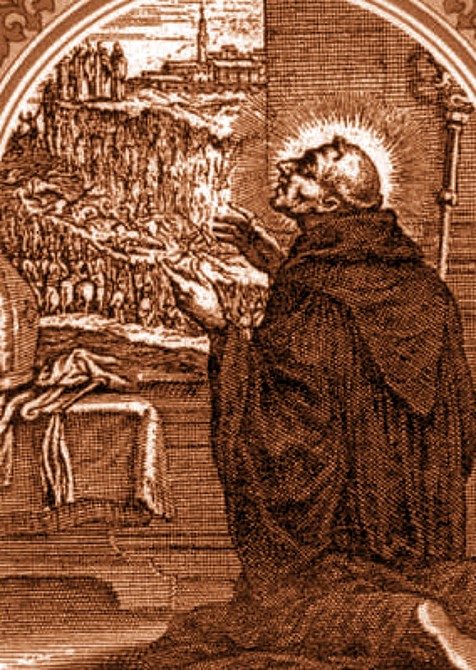
Saint of the Day – 2 March – Blessed Fulk of Neuilly (Died 1201) Priest of the Parish of Neuilly-sur-Marne, renowned Preacher which encouraged the 4th Crusade, Founder of a Monastery in Paris which encouraged fallen women to seek refuge and repentance in the religious life. Fulk died on 2 March 1201 of natural causes. Also known as – Folco, Foulques, Fulke, Foulque.
In 1191, Fulk was appointed as the Parish Priest of Neuilly-sur-Marne, after attended the lectures of Peter the Chantor (Died 1197) in Paris.
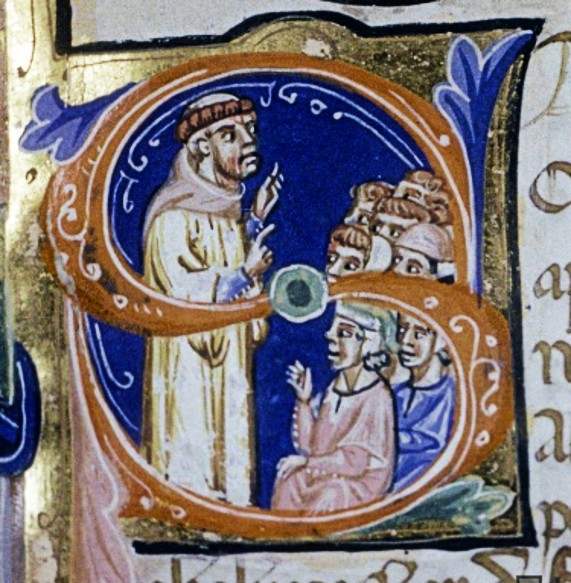
Beginning in 1195, Fulk began to preach gaining a reputation for piety and eloquence. His preaching focused on reforming the morals of the lay faithful and many of his denunciations were upon the sins of usury and lustfulness. But, even more than the laity, Fulk preached most particularly on reforming the morals and lives of the Clergy who, at that time living dissipated lives. Clerical concubinage was a common target of his sermons and he would often indicate and name Priests and concubines, who were guilty of this sin in the crowd, listening to him.
It was reported that he rebuked King Richard I of England by advising him to marry off his three evil daughters, being – his Pride, Greed and Lechery! The King replied that he would marry them appropriately to the Templars, the Cistercians and to the Bishops and Abbots of the Church!
In 1199, Fulk was invited to preach the 4th Crusade by Pope Innocent III. His preaching influenced both Simon de Montfort, 5th Earl of Leicester, the French Lord Alix de Montmorency, the wealthy noble woman and others.
Fulk’s assiduous enthusiasm in carrying out this mission led to much success and large donations flowed in. Inevitably, some murmured and denounced the manner in which these donations were used.
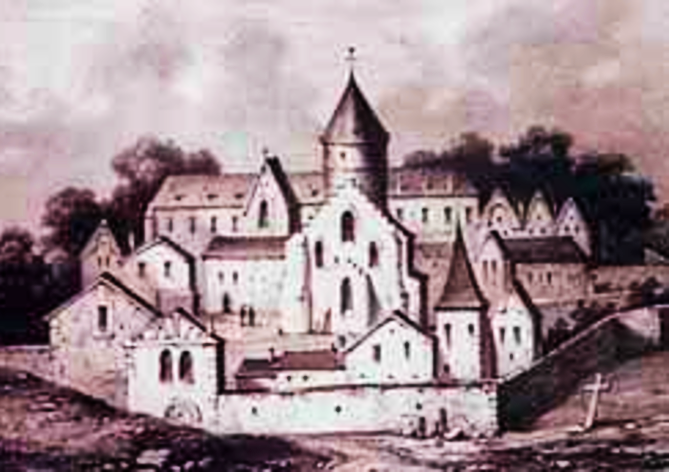
Fulk then went on to found the Abbey of Saint-Antoine-des-Champs in the Faubourg in Paris, charged with taking in women of ill repute. He soon died of his great fatigue in 1201. Blessed Fulk was interred in his own Parish Church where he had spent the majority of his life, at ther Church of Saint-Baudile in Neuilly-sur-Marne.
Quinquagesima Sunday: This Season is seventeen (17) days long and includes the three Sundays before Ash Wednesday. The length of the Season never changes but the start date is dependent on the movable date of Easter, which can fall between 22 March-25 April. For many early Christians Quinquagesima marked the time after which meat was forbidden. In many places, this Sunday and the next two days, were used to prepare for Lent by a good Confession; hence in England, we find the names Shrove Sunday and Shrovetide. Shrove is a form of the English word “shrive,” which means – to obtain absolution for one’s sins by way of Confession and doing penance.. As the days before Lent were frequently spent in merry-making, Pope Benedict XIV by the Constitution “Inter Cetera” (1 January 1748) introduced a Forty Hours’ Devotion to keep the faithful from dangerous amusements and to make some reparation for sins committed. Quinquagesima also means, the time between Easter and Pentecost, or from the Saturday after Easter to the Sunday after Pentecost; it is then called Quinquagesima Paschae paschalis, or laetitae.
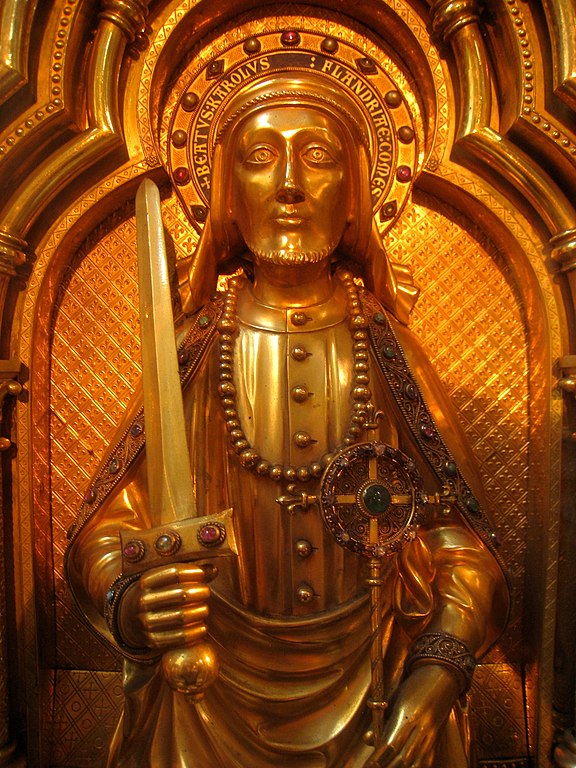
Blessed Charles the Good (c1083-1127) Martyr, Duke, Apostle, protector and defender of the poor, selling his and his kingdom’s riches to help those in need, wherever he could, a fair and just Ruler who made laws to accommodate the poor rather than the rich (the eventual cause of his Martyrdom), Knight who assisted in Secomd Crusade. Blessed Charles cultus was officially confirmed by his Beatification in 1883 by Pope Leo XIII. His Life and Death: https://anastpaul.com/2023/03/02/saint-of-the-day-2-march-blessed-charles-the-good-c1083-1127-martyr/
St Cynibild of Laestingaeu St Felix of Treves St Fergna the White Blessed Fulk of Neuilly (Died 1201) Priest
Martyrs of Campania – Approximately 400 northern Italian Christians Martyred for their faith by pagan Lombards. Their story was recorded by Pope Saint Gregory the Great, who reports that they people spent their final days supporting each other with prayer. c 579 in Camnpania, Italy.
Martyrs of Porto Romano – 4 Saints – Group of Christians Martyred in the persecution of Diocletian. The only other information that survives are the names of four of them – Heraclius, Januaria, Paul and Secondilla. c305 at Porto Romano at the mouth of the River Tiber, Rome.








 AnaStpaul
You must be logged in to post a comment.