Thought for the Day – 12 March – Meditations with Fr Richard Frederick Clarke SJ (1839-1900)
“Short Meditations for March, St Joseph” From “The Devout Year” By Fr Richard Frederick Clarke SJ (1839-1900)
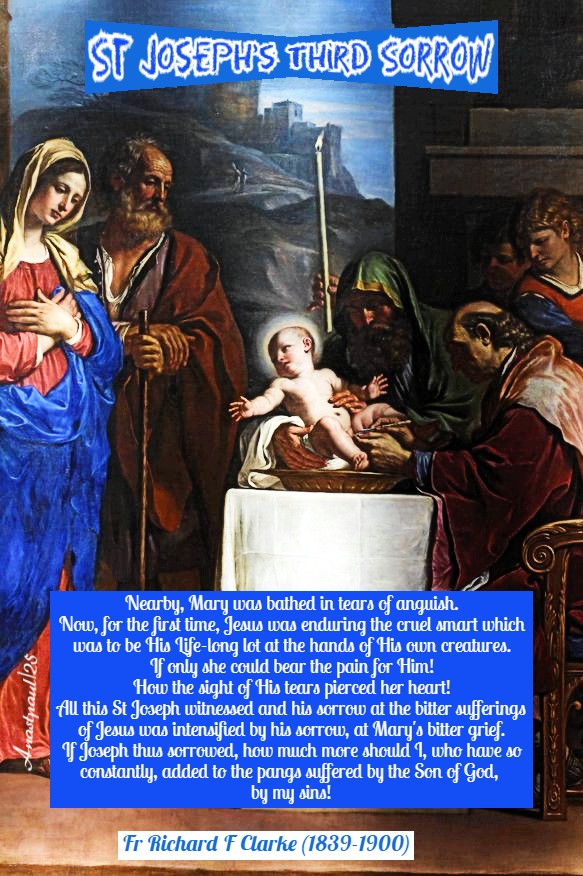
12th Day – St Joseph’s Third Sorrow The Shedding of Jesus ‘ Blood at His Circumcision
+I. On the eighth day after the birth of a Jewish boy-child, the ceremony of circumcision took place, according to God’s Covenant with Abraham. Was this cleansing rite to be performed in the case of the Son of God? Yes, He had come to suffer and to shed His Precious Blood for us and, on the very octave of His Birth, Mary and Joseph had to recognise that God, laid on Him, the iniquity of us all.
+2. It was St Joseph who had to be the minister of the Sacred rite. He had to be the reluctant and sorrowful cause of those tears of the Infant Jesus. What was St Joseph thinking of? We may at least conjecture that he was lamenting over the evil of sin that he was recognising,in the pain which he was inflicting, one of the most terrible consequences of sin that, he was praying to his foster-Son and his God, to forgive those sinners for whom He was shedding His Precious Blood.
+3. Nearby, Mary was bathed in tears of anguish. Now, for the first time, Jesus was enduring the cruel smart which was to be His Life-long lot at the hands of His own creatures. If only she could bear the pain for Him! How the sight of His tears pierced her heart! All this St Joseph witnessed and his sorrow at the bitter sufferings of Jesus was intensified by his sorrow, at Mary’s bitter grief. If Joseph thus sorrowed, how much more should I, who have so constantly, added to the pangs suffered by the Son of God, by my sins!
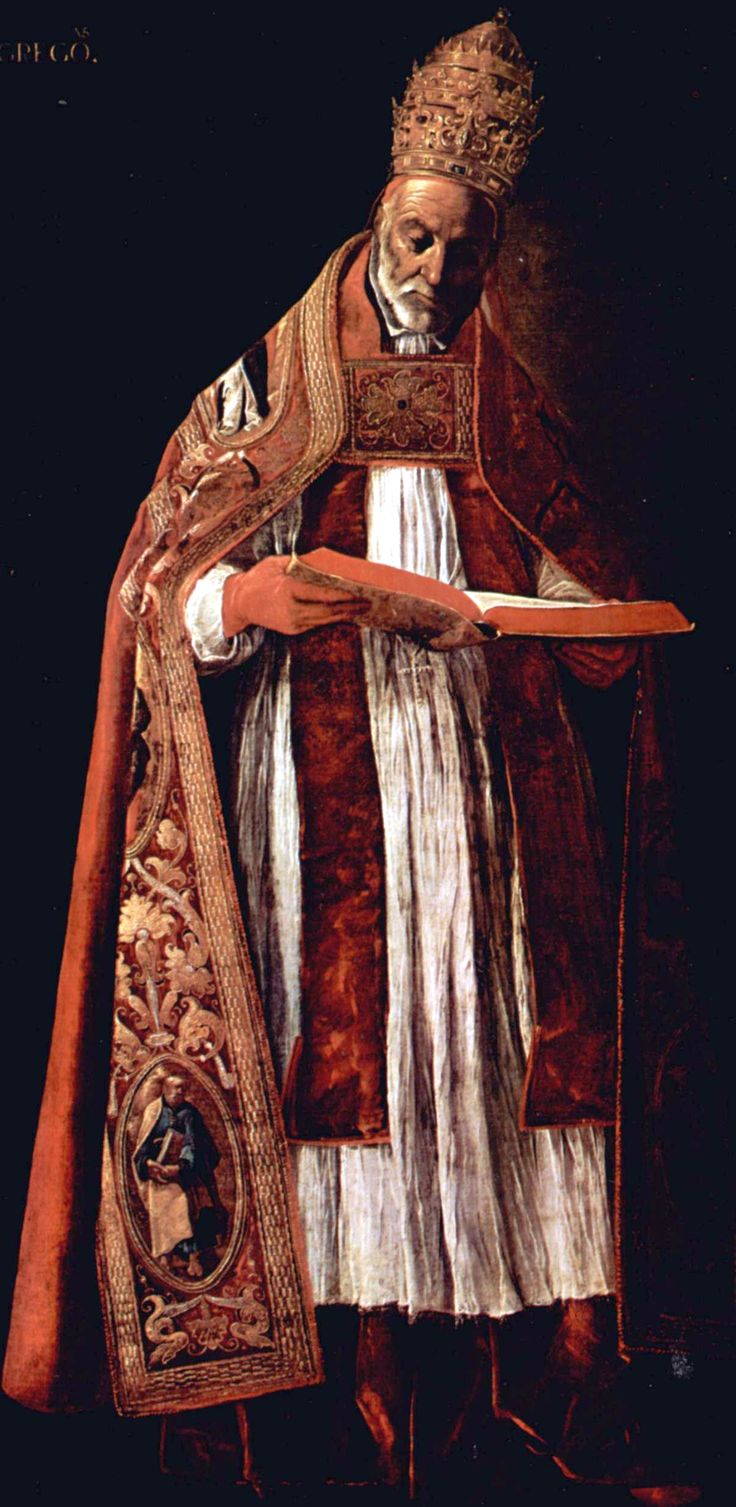
Quote/s of the Day – 12 March – St Gregory the Great (540-604), Pope, Confessor, Father & Doctor of the Church, “Father of the Fathers”
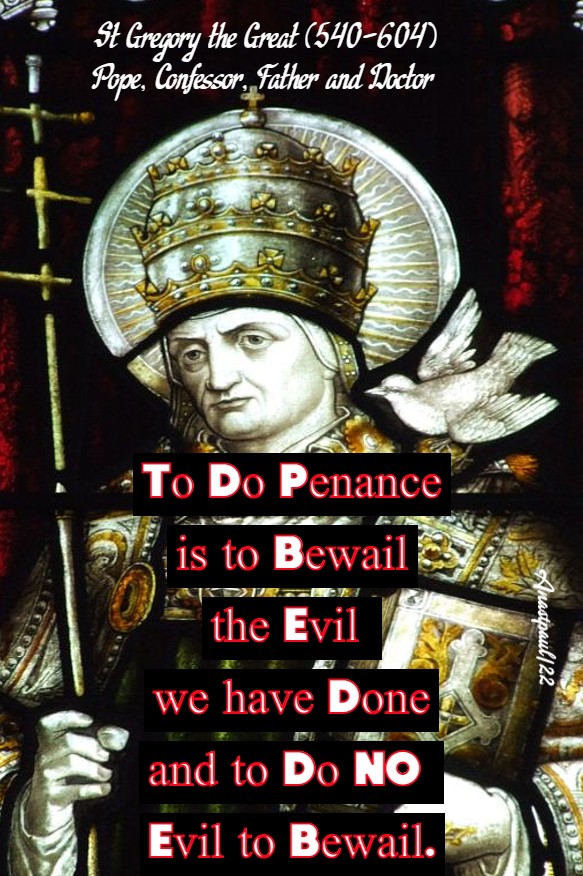
“To do penance is to bewail the evil we have done and to do no evil to bewail.”
“Learn of the Heart of God in the Words of God, so that you may ardently long for eternal things.”
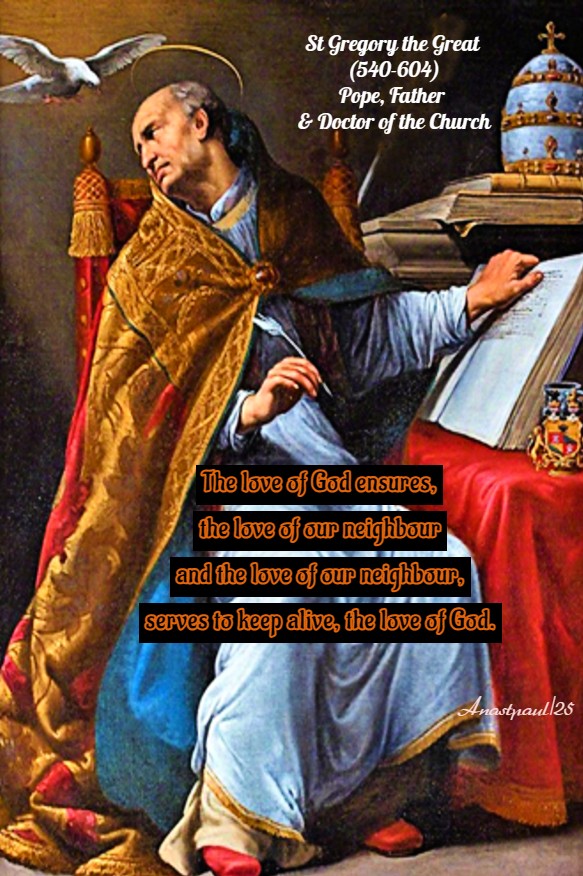
“The love of God ensures, the love of our neighbour and the love of our neighbour, serves to keep alive, the love of God.”
“Look at the fig tree and all the trees, when they produce their fruit you know that summer is near. So too, when you see these things happening, know that the Kingdom of God is near.” Luke 21:29-31
“He means that just as the coming of summer is recognised by the fruit on the trees, so is the nearness of the Kingdom of God recognised by the destruction of the world. These words show that the fruit of the world is destruction – it increases only to fall, it produces, only to destroy by its disasters whatever it produces. The Kingdom of God is aptly compared to summer, because it is then that the clouds of our sorrow pass away and the days of life shine with the brightness of the Eternal Sun. … Therefore, my friends, do not love what you see cannot long exist. Keep in mind the Apostle John’s precept, in which he counsels us not “to love the world or the things in the world because, if anyone loves the world, the love of the Father is not in him!” (1 Jn 2:15).”
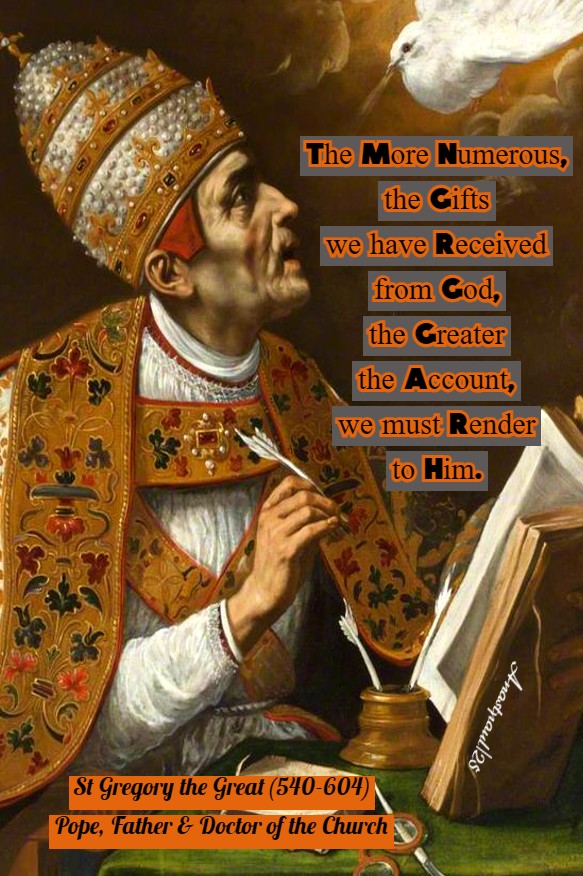
“The more numerous, the gifts we have received from God, the greater the account, we must render to Him.”
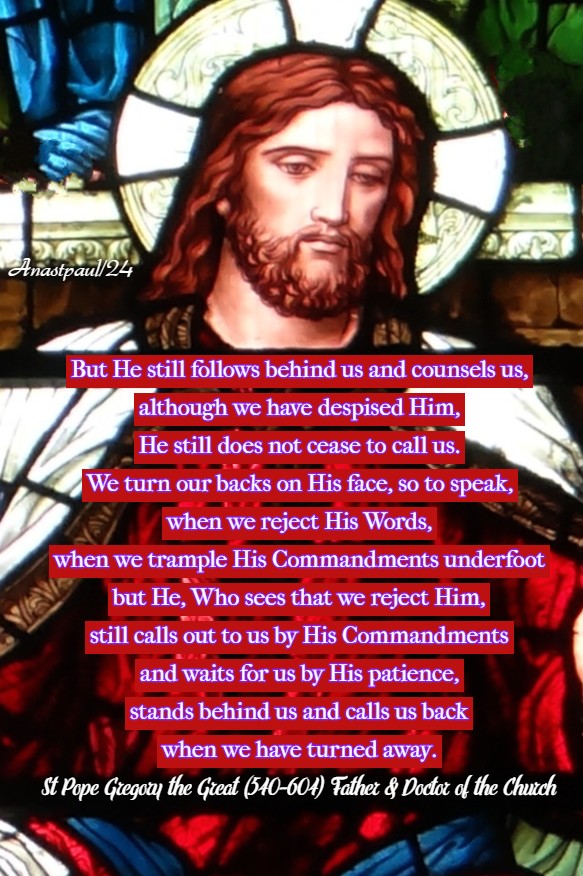
“But He still follows behind us and counsels us, although we have despised Him, He still does not cease to call us. We turn our backs on His Face, so to speak, when we reject His Words, when we trample His Commandments underfoot but He, Who sees that we reject Him, still calls out to us by His Commandments and waits for us by His patience, stands behind us and calls us back when we have turned away.”
Lenten Meditations – 12 March – With Fr Richard Frederick Clarke SJ (1839-1900) Scripture search here: https://www.drbo.org/
“The Sacred Passion of Our Lord Jesus Christ” “Short Meditations for Lent” From “The Devout Year” By Fr Richard Frederick Clarke SJ (1839-1900)
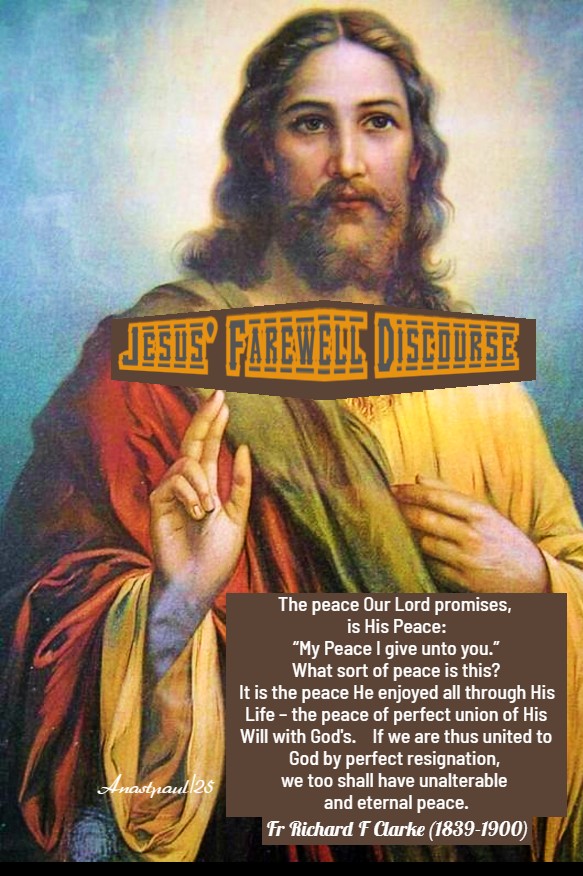
Wednesday of the First Week in Lent Jesus’ Farewell Discourse
Read St John xiv:1-3, 27-31 (Posted at the end)
+1. Our Lord’s farewell to His Apostles begins and ends with words of encouragement. He knew the importance of courage and confidence and, without these, they would never do great things for God. He knew too, how liable all men are to be discouraged and cast down when troubles and trials arise; how difficult it is to struggle on, when all seems dark around one. To us too, as to the Twelve, He says – “Let not your heart be troubled, you believe in God, believe also in Me.” Why do not we believe more in Christ, trust Him more, appeal more to Him in times of darkness? He will always have a word of comfort for us. “Let not your heart be troubled. I go to prepare a place for you.”
+2. Amid all the troubles Our Lord foretells to His Apostles, He promises them one gift which will enable them to rise above all their difficulties and all their sorrows. He promises to leave His Peace with them. What gift is there which is like this in the world? If we are at peace, we can bid defiance to all our foes; if we are not at peace, we might be lords of the universe, yet, we should be miserable. No wonder we pray in Holy Mass, “Dona nobis pacem – Give us peace.”
+3. The peace Our Lord promises, is His Peace : “My Peace I give unto you.” What sort of peace is this? It is the peace He enjoyed all through His Life – the peace of perfect union of His Will with God’s. If we are thus united to God by perfect resignation, we too shall have unalterable and eternal peace
1] Let not your heart be troubled. You believe in God, believe also in Me. [2] In My Father’s House there are many mansions. If not, I would have told you because, I go to prepare a place for you. [3] And if I shall go and prepare a place for you, I will come again and will take you to Myself that where I Am, you also may be. [John 14:1-3]
[27] Peace I leave with you, My Peace I give unto you, not as the world giveth, do I give unto you. Let not your heart be troubled, nor let it be afraid. [28] You have heard that I said to you: I go away and I come unto you. If you loved Me, you would indeed be glad because I go to the Father, for the Father is greater than I. [29] And now I have told you before it comes to pass, that when it shall come to pass, you may believe. [30] I will not now speak many things with you. For the prince of this world cometh and in Me he hath not any thing. [31] But that the world may know that I love the Father and as the Father hath given me commandment, so do I: Arise, let us go hence. [John 14:27-31]
One Minute Reflection – 12 March – “The Month of Saint Joseph” – St Gregory the Great (540-604), Pope, Confessor, Father & Doctor of the Church, “Father of the Fathers” – 1 Peter 5:1-4; 5:10-11; – Matthew 16:13-19 – Scripture search here: https://www.drbo.org/
“Upon this rock I will build My Church” – Matthew 16:18
REFLECTION – “Brothers, when it comes to fulfilling my duties as Bishop, I discover that I am weak and slack, weighed down by the weakness of my own condition, while at the same time, I want to act generously and courageously. However, I draw my strength from the untiring intercession of the Almighty and Eternal Priest, Who, like us but equal to the Father, lowered His Divinity to the level of man and raised humankind to the level of God. The decisions He made, give me a just and holy joy. For, when He delegated many shepherds to care for His flock, He did not abandon watching over His beloved sheep. Thanks to that fundamental and eternal assistance, I in turn, have received the protection and support of the Apostle Peter, who also does not abandon his function. This solid foundation, on which the whole of the Church is built, never grows tired of carrying the whole weight, of the building which rests on it.
The firmness of faith, for which the first of the Apostles was praised, never fails. Just as everything which Peter professed in Christ remains, so that which Christ established in Peter, remains … The order willed by God’s Truth remains. Saint Peter perseveres in the solidity which he received; he has not abandoned the governance of the Church which was placed in his hands. That, my brothers, is what that profession of faith, inspired by God the Father, obtained in the heart of the Apostle. He received the solidity of a rock which no assault can shake. In the entire Church, Peter says everyday: “Thou art the Messiah, the Son of the living God.” – St Leo the Great (400-461) Pope, Father and Doctor of the Church (Sermon on the anniversary of his Consecration as Bishop).
PRAYER – O God, Who granted the rewards of everlasting happiness to the soul of Thy servant Gregory, mercifully grant that we, who are weighed down with the burden of our sins, may be raised up by his prayers to Thee. Through Jesus Christ, Thy Son our Lord, Who lives and reigns with Thee, in the unity of the Holy Ghost, God, world without end. Amen (Collect).
Our Morning Offering – 12 March – St Pope Gregory the Great (540-604) – Father & Doctor
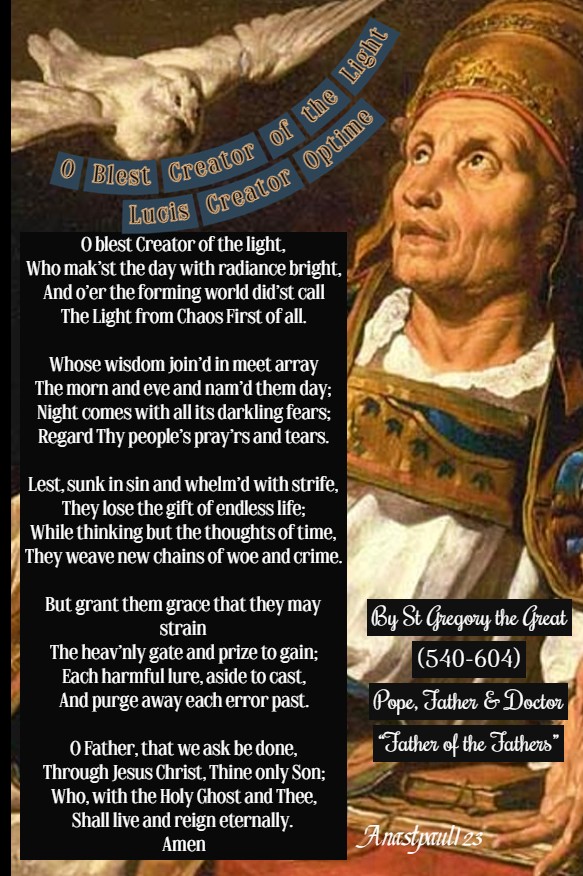
Lucis Creator Optime O Blest Creator of the Light By St Gregory the Great (540-604) Pope, Father & Doctor “Father of the Fathers”
O blest Creator of the light, Who mak’st the day with radiance bright, And o’er the forming world did’st call The Light from Chaos First of all.
Whose wisdom join’d in meet array The morn and eve and nam’d them day; Night comes with all its darkling fears; Regard Thy people’s pray’rs and tears.
Lest, sunk in sin and whelm’d with strife, They lose the gift of endless life; While thinking but the thoughts of time, They weave new chains of woe and crime.
But grant them grace that they may strain The heav’nly gate and prize to gain; Each harmful lure, aside to cast, And purge away each error past.
O Father, that we ask be done, Through Jesus Christ, Thine only Son; Who, with the Holy Ghost and Thee, Shall live and reign eternally. Amen
This Hymn is used for Vespers (II) on Sundays throughout the year in the Extraordinary Form of the Roman Breviary. Trans John M Neale (1818-1866), 1851. Tune: “Lucis Creator Optime” Gregorian Chant, Mode VIII, traditional.
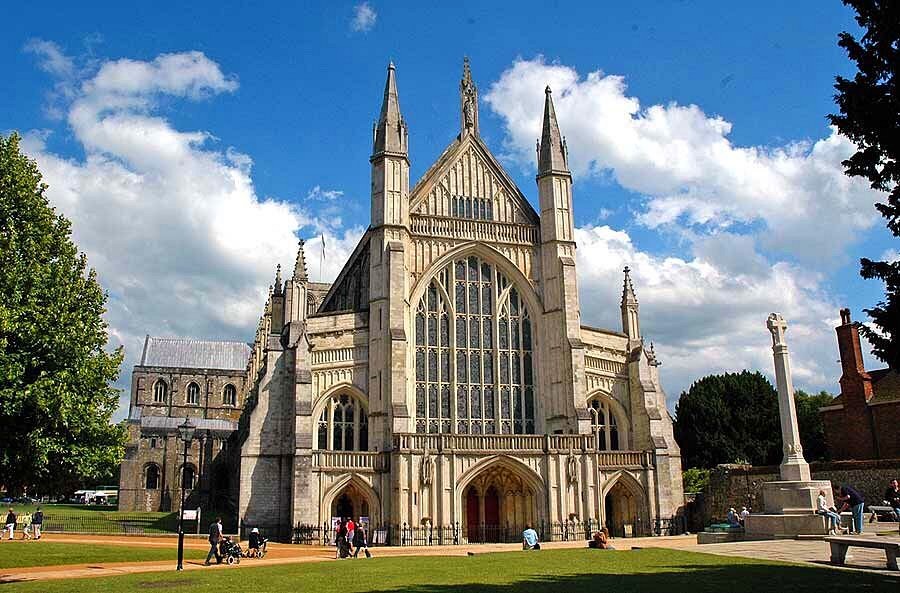
Saint of the Day – 12 March – St Alphege [the Elder] (Died 951) Bishop of Winchester, monastic reformer, protector and supporter. Born in England and died in Winchester of natural causes. Also known as – Alphege of Winchester, Ælfheah… Elphege… Elfego… Elpigio… (Not to be confused with St Alphege [the Younger] also the Bishop of Winchester before becoming the Archbishop of Canterbury) https://anastpaul.com/2017/04/19/saint-of-the-day-19-april-st-alphege/
Despite Alphege’s important role in the 10th Century monastic revival, little is known of St Alphege’s life.
He began his career as a Monk and was appointed as the Bishop of Winchester in 934 or 935. He was a relative of the great St Dunstan, the Archbishop of Canterbury (Died 988) and who had taken Alphege as a young man into his service. St Dunstan later Ordained Alphege as a Priest.
Alphege was an instigater of the monastic reforms and was the tutor of St Aethelwold, who became his successor in the See of Winchester and a most zealous monaster reformer.
Alphege died on 12 March 951 and was buried in Old Minster in Winchester. He was immediately revered as a Saint. Following the Norman conquest, Archbishop Lanfranc downgraded a number of Anglo-Saxon Saints, including our St Alphege to bring the Liturgical calendar into line with that of existing elsewhere in the country. However, under St Anselm’s influence, he was subsequently re-instated.
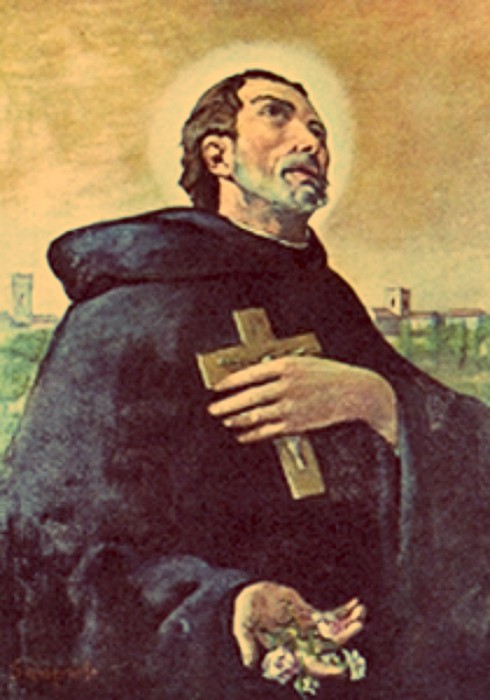
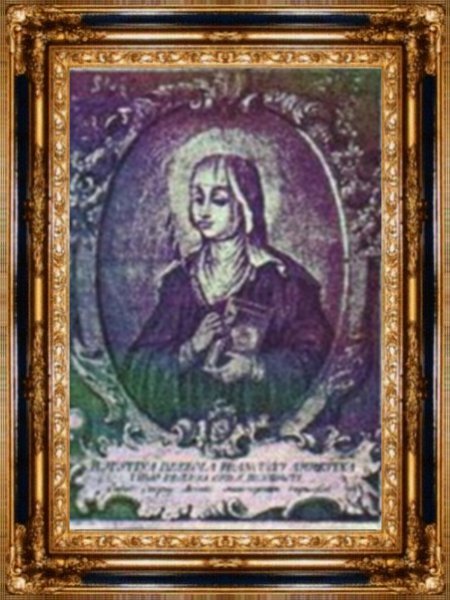
Blessed Jerome of Recanati OSA (Died 1350) Priest, Friar of the Hermits of Saint Augustine, Peacemaker. He was Beatified in 1804 by Pope Pius VII. The Roman Martyrology reads : “In Recanati in the Marche, Blessed Girolamo Gherarducci, Priest of the Order of the Hermits of St Agustine, who worked for peace and harmony between peoples.” essed l Jerome the Peacemaker: https://anastpaul.com/2022/03/12/saint-of-the-day-12-march-blessed-jerome-of-recanati-osa-died-1350/
St Theophanes (c758-817) Abbot, Confessor, Founder of Monasteries, Defender of Sacred images, Writer and Historian. The Roman Martyrology reads today: “At Constantinople, St Theophanes, who gave up great wealth to embrace poverty in the monastic state. By Leo the Armenian, he was kept in prison for two years for the worship of holy images, then, being exiled in Samothracia, where, overwhelmed with afflictions, he breathed his last and wrought many miracles.” Courageous and Brilliant St Theophanes: https://anastpaul.com/2024/03/12/saint-of-the-day-12-march-saint-theophanes-c758-817-abbot-confessor-defender-of-icons/
Martyrs of Nicomedia – 8 Beati: Christians who were Martyred in succession in a single incident during the persecutions of Diocletian. First there were the eight imprisoned Christians, Domna, Esmaragdus, Eugene, Hilary, Mardonius, Maximus, Mígdonus and Peter, about whom we know little more than their names. Each day for eight days one of them would be strangled to death in view of the others so that they would spend the night in dread, not knowing if they were next. Peter was the Chamberlain or Butler in the Palace of Diocletian. When he was overheard complaining about this cruelty, he was exposed as a Christian, arrested, tortured and executed by having the flesh torn from his bones, salt and vinegar poured on the wounds and then being roasted to death over a slow fire. Gorgonio was an army officer and member of the staff in the house of emperor Diocletian, Doroteo was a staff clerk. They were each exposed as Christians when they were overhead objecting to the torture and murder of Peter. This led to their own arrest, torture and executions. Died in 303 in Nicomedia, Bithynia (in modern Turkey) Additional Memorial – 28 December as part of the 20,000 Martyrs of Nicomedia. Beatified on 14 January 1891 by Pope Leo XIII (cultus confirmation).









 AnaStpaul
You must be logged in to post a comment.