
Saint of the Day – 25 March – St Hermelandus (Died c720) Priest, Founder-Abbot of the Monastery of Aindre, Miracle-worker. Born in Noyon, France and died on 25 March in c720 of natural causes in his Monastery at Aindre. Also known as – Erblon, Ermelando, Herbland, Hermeland, Hermiland. Additional Memorials – 18 October in Rouen, Bagneux and Treguier. 20 November (translation of Relics), 25 November in Nantes, today 25 March (the anniversary of his death) universaly and solemnly celebrated at the Monastery of Fontenelle.
The Roman Martyrology reads today: “In Aindre, an Island of the Loire, the Abbot St Hermelandus, whose glorious life is attested by many miracles.”
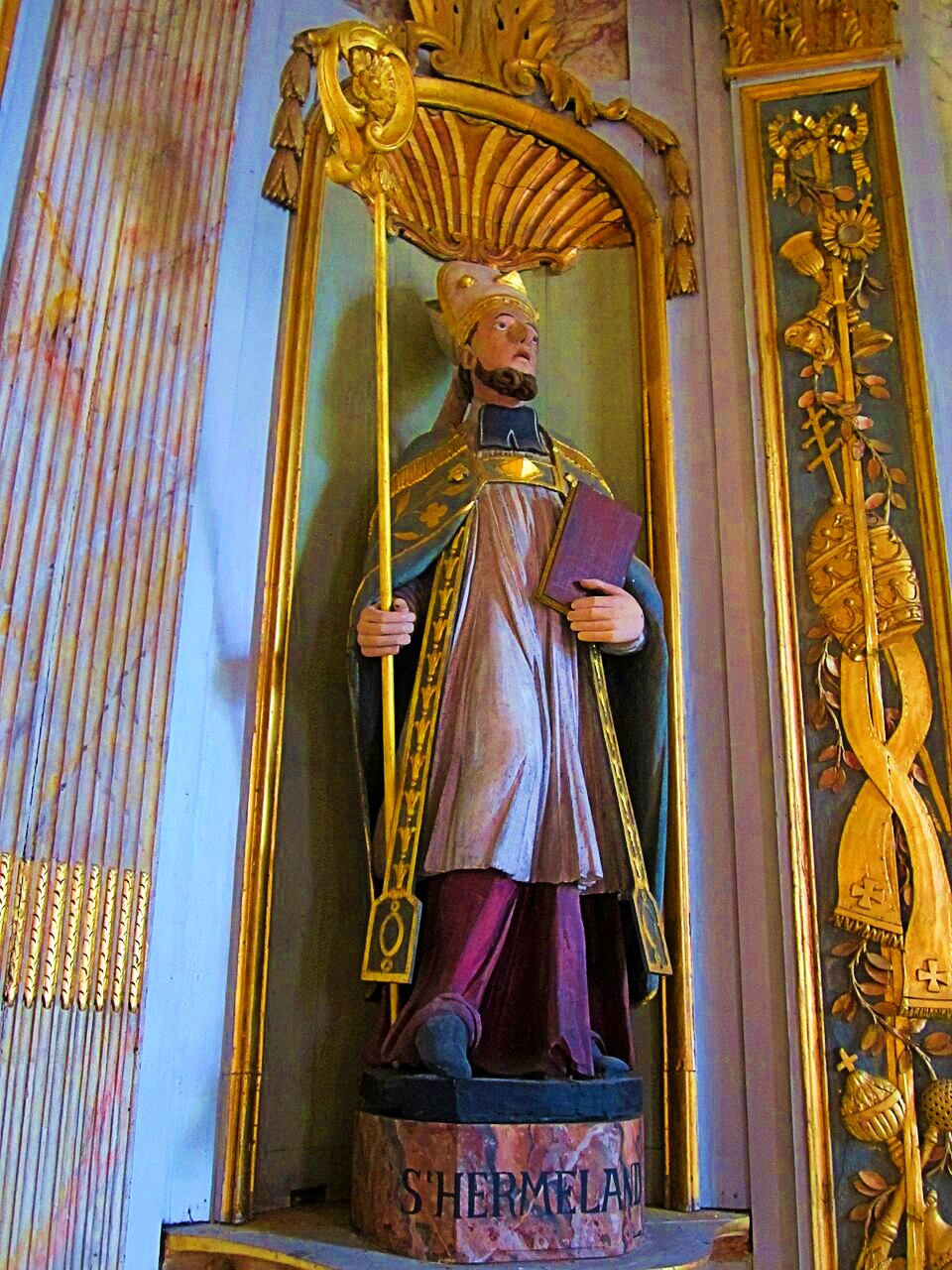
The Life of Saint Hermelandus, Abbot of Aindre, written almost contemporaneously with his death in 767 and preserved in a manuscript, offers us a fascinating glimpse into the life of a Frankish nobleman of the 7th Century.
Born in Noyon to an illustrious family, Hermelandus began a brilliant career at the Court of Clotaire III, obtaining the position of Cupbearer. However, refusing an arranged marriage and desiring a life consecrated to God, he asked the King for permission to enter a Monastery.
Welcomed to Fontenelle, under the guidance of the Abbot Saint Lambert, Hermelandus distinguished himself for his devotion and his ascetic rigour. It was the Bishop of Nantes, Pascarius, who asked Abbot Lambert to send Monks to found an Abbey in his Diocese.
Hermelandus was chosen to lead the community of twelve brothers, identified an Island in the Loire, called Aindre because of its woods, as an ideal site for the new Monastery. With the support of Pascarius, he obtained the Monastery’s exemption from the authority of the future Bishops of Nantes and the confirmation of its freedom by King Childebert III.
The number of years Hermelandus spent as the Abbot remains uncertain; we know only that he abdicated power late in life, dying under his second successor between 710 and 730.
In 843, the Abbey of Aindre, unfortunately, was destroyed by the Normans and was never rebuilt.
Devotion to Saint Hermelandus spread over the centuries, as evidenced by the miracle which occurred in the 12th Century in a Church dedicated to him in Rouen. His Relics, twere ransferred to Bagneux and Loches, to escape the Norman invasions, continue to attract the veneration of the faithful.
At the time of the Revolution , the silver Reliquary was removed but the Relics were saved. Then placed in the Collegiate Church of Saint-Ours in Loches , they were returned in 1848, to the Church which bears his name of Saint-Herblain.


 AnaStpaul