The Month of April is dedicated both to devotion to the Resurrection of Our Lord Jesus Christ and to the Holy Eucharist – the proof of the promise of the Love of God and of ETERNAL LIFE.
“My brethren, when was it that the Lord made Himself recognised? — When He broke the bread. — So, we ourselves are convinced too, that when we break the bread, we recognise the Lord. — If He had not wanted to be recognised until that moment, it was for our sakes, we, who were not to see Him in the flesh but who were yet to eat Him in the flesh. ” – St Augustine (354-430) Father, Doctor of Grace
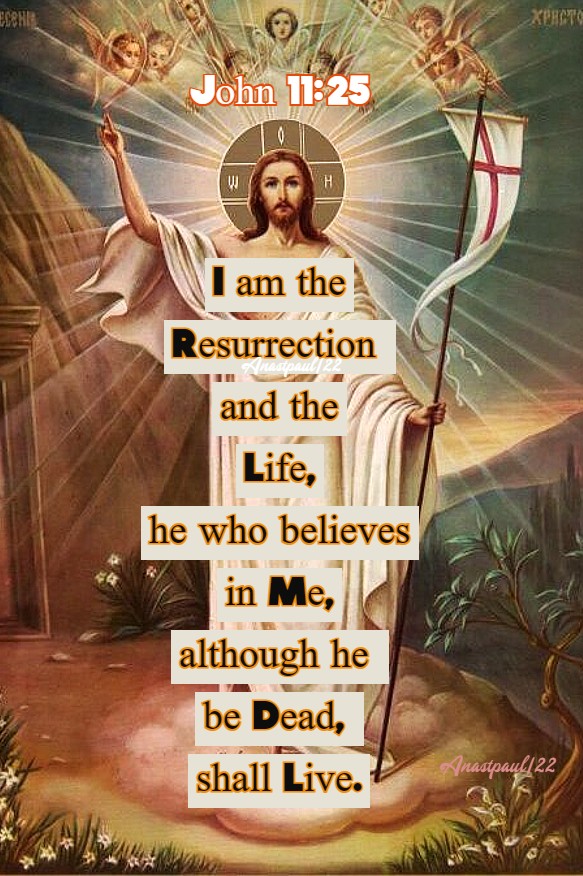
“I am the Resurrection and the Life, he who believes in Me, although he be dead, shall live.”
John 11:25
“I am the Living Bread Who came down from Heaven. If any man eat of this Bread, he shall live forever and the Bread that I will give, is My Flesh, for the Life of the world.”
John 6:51-52
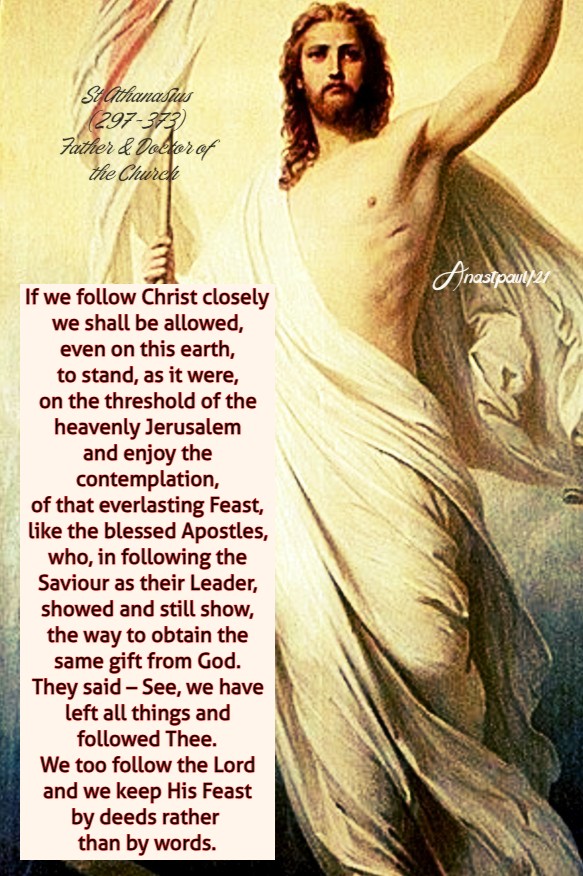
“If we follow Christ closely we shall be allowed, even on this earth, to stand, as it were, on the threshold of the heavenly Jerusalem and enjoy the contemplation, of that everlasting Feast, like the blessed Apostles, who, in following the Saviour as their leader, showed and still show, the way to obtain the same gift from God. They said – See, we have left all things and followed Thee. We too follow the Lord and we keep His Feast by deeds rather than by words.”
St Athanasius (297-373) Father & Doctor of the Church
Thought for the Day – 1 April – Meditations with Antonio Cardinal Bacci (1881-1971)
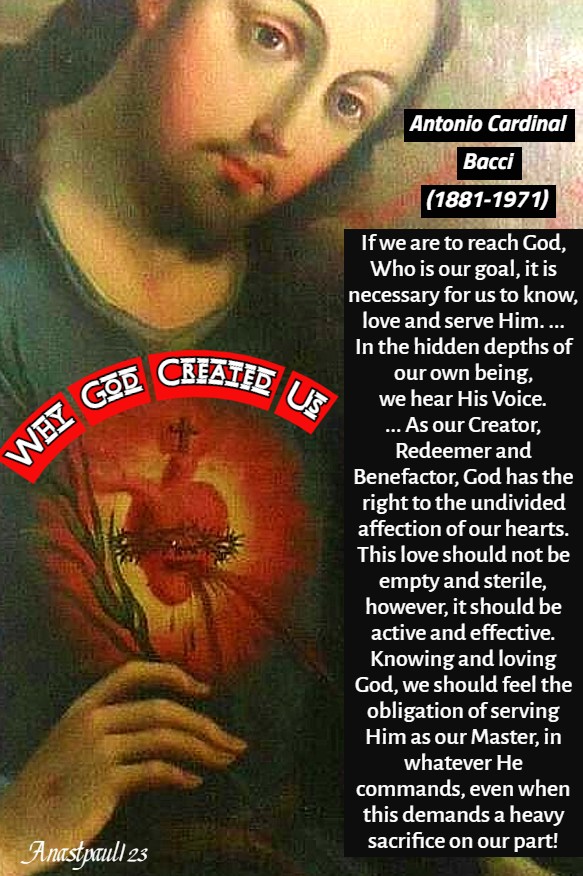
Why God Created Us
“If we are to reach God, Who is our goal, it is necessary for us to know, love and serve Him. Everything speaks to us of God, from the blade of grass, to the cedar of Lebanon, from the insect which glows in the darkness of the night, to the highest stars of the firmanent. In the hidden depths of our own being, we hear His Voice. The more we grow in the knowledge of God, the more we feel the need to love Him. We see how so much beauty, goodness and power is alone worthy of all our love.
As our Creator, Redeemer and Benefactor, God has the right to the undivided affection of our hearts. This love should not be empty and sterile, however, it should be active and effective. Knowing and loving God, we should feel the obligation of serving Him as our Master, in whatever He commands, even when this demands a heavy sacrifice on our part!”
Quote/s of the Day – 1 April – Tuesday of the Fourth Week in Lent
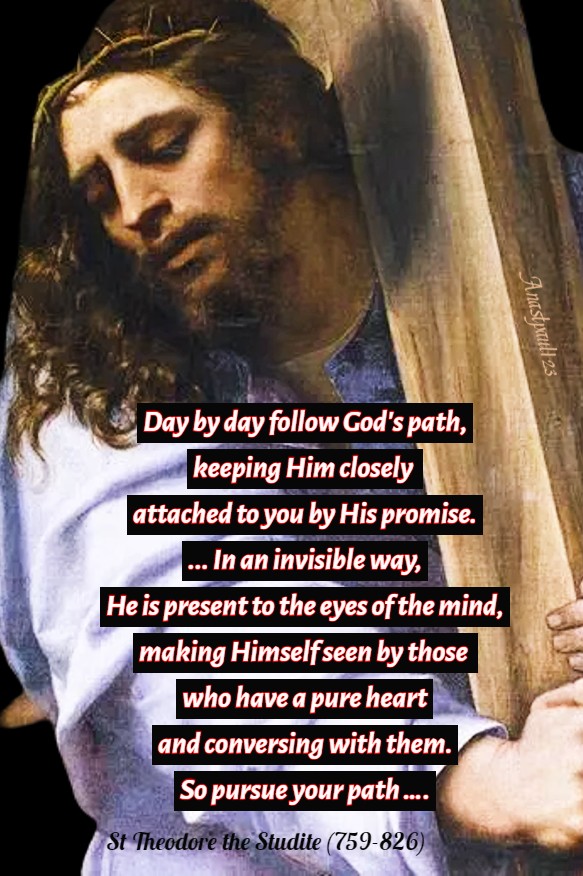
“Day by day follow God’s path, keeping Him closely attached to you by His promise. In fact, He Himself said, through the mediation of His Apostles, to all those who seek His will and His testimonies that He would be with them until the end of the world (Mt 28:20) where paths and footsteps will be unknown (cf Ps 76:20), as the divine David said in his songs. Yet, in an invisible way, He is present to the eyes of the mind, making Himself seen by those who have a pure heart and conversing with them. So pursue your path …. ”
St Theodore the Studite (759-826) Abbot, Confessor, Father of the Church
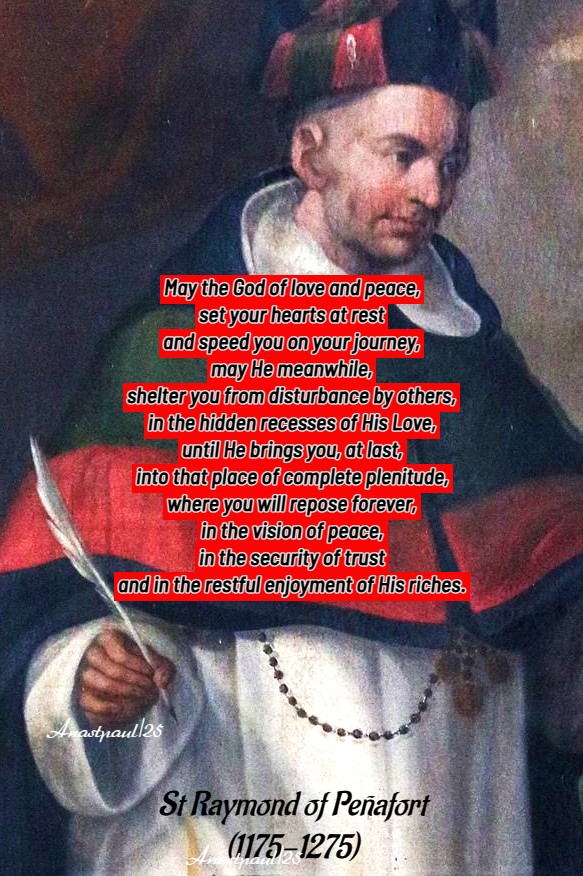
“May the God of love and peace, set your hearts at rest and speed you on your journey, may He meanwhile, shelter you from disturbance by others, in the hidden recesses of His Love, until He brings you, at last, into that place of complete plenitude, where you will repose forever, in the vision of peace, in the security of trust and in the restful enjoyment of His riches.”
St Raymond of Peñafort (1175-1275)
“If, then, you looking for the way by which you should go, take Christ for He, Himself is the Way.”
St Thomas Aquinas (1225-1274) Doctor of the Church
Lenten Meditations – 1 April – With Fr Richard Frederick Clarke SJ (1839-1900) Scripture search here: https://www.drbo.org/
“The Sacred Passion of Our Lord Jesus Christ” “Short Meditations for Lent” From “The Devout Year” By Fr Richard Frederick Clarke SJ (1839-1900)
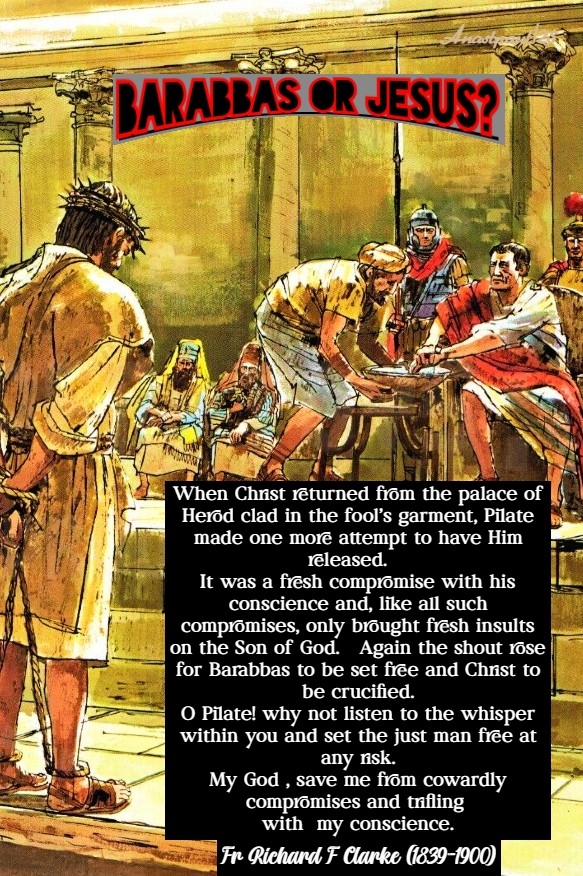
Tuesday after the Fourth Sunday in Lent- Barabbas or Jesus?
Read St.Matthew xxvii:15-22
[15] Now, upon the solemn day, the governor was accustomed to release, to the people, one prisoner, whom they would selecct. [16] And he had then a notorious prisoner who was called Barabbas. [17] They, therefore, being gathered together, Pilate said: Whom will you, whom I release to you, Barabbas, or Jesus Who is called Christ? [18] For he knew that for envy, they had delivered Him. [19] And as he was sitting in the place of judgement, his wife sent to him, saying: Have thou nothing to do with that just man; for I have suffered many things this day in a dream because of Him. [20] But the chief priests and ancients persuaded the people, that they should ask for Barabbas and take Jesus away. [21] And the governor answering, said to them: Whom of the two, will you, to be released unto you? But they said, Barabbas. [22] Pilate saith to them: What shall I do then with Jesus that is called Christ? They say all: Let him be crucified. [Matthew 27:15-22]
+1. Before Pilate sent Our Lord to Herod, he had already sought to take occasion to release Him, using the custom, of setting free at the Pasch, some notable prisoner. In order to secure success in this regard, he had proposed, as an alternative, a noted murderer named Barabbas. To his astonishment, the name of Barabbas had at once been taken up by the multitude. It was not that they loved Barabbas but, they hated Christ. So wretched men now choose that which they know to be evil, simply because they hate God! They cannot bear the idea of submission. They long to get God out of the way, as the Jews desired to be rid of Christ.
+2. The multitude shouted for Barabbas because the chief priests urged them to it. It was the rulers, the ancients, who were the real murderers of Christ; the ignorant mob did but follow their leaders. What a responsibility it is to be in a position of authority! What an account those who rule will have to give of those subject to them!
+3. When Christ returned from the palace of Herod clad in the fool’s garment, Pilate made one more attempt to have Him released. It was a fresh compromise with his conscience and, like all such compromises, only brought fresh insults on the Son of God. Again the shout rose for Barabbas to be set free and Christ to be crucified. O Pilate! why not listen to the whisper within you and set the just man free at any risk. My God , save me from cowardly compromises and trifling with my conscience.
One Minute Reflection – 1 April – “The Month of the Resurrection and the Blessed Sacrament” – Tuesday of the Fourth Week in Lent – Ferial Day – Exodus 32:7-14 – John 7:14-31– Scripture search here: https://www.drbo.org/
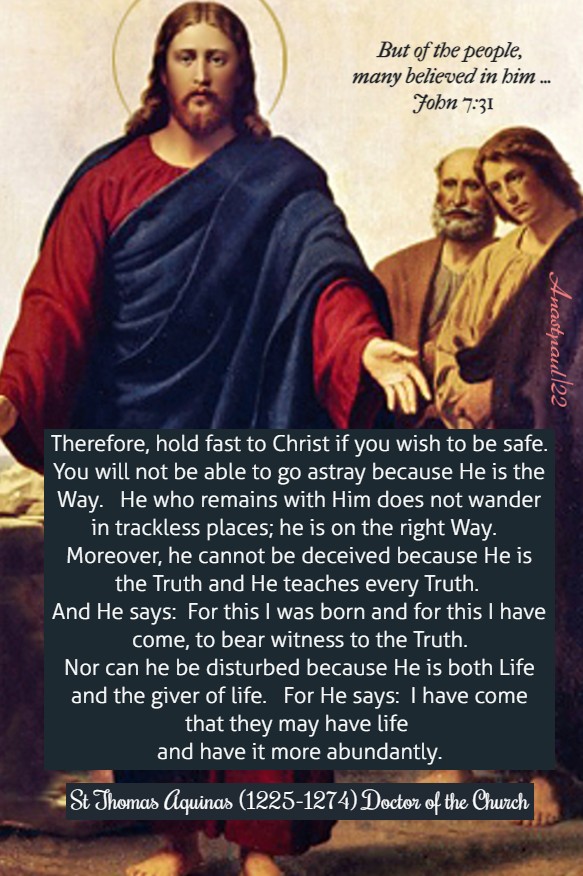
“But of the people, many believed in him …” – John 7:31
REFLECTION – “If, then, you are looking for the way by which you should go, take Christ because He Himself is the Way: This is the Way; walk in it. And Augustine says: Make man your way and you shall arrive at God. It is better to limp along the Way, than stride along off the Way. For a man who limps along the Way, even if he only makes slow progress, comes to the end of the Way but one who is off the Way, the more quickly he runs, the further away is he from his goal.
If you are looking for a goal, hold fast to Christ because He Himself is the Truth, where we desire to be. My mouth shall reflect on the Truth. If you are looking for a resting place, hold fast to Christ because He Himself is the Life. Whoever finds Me finds life and receives salvation from the Lord.
Therefore, hold fast to Christ if you wish to be safe. You will not be able to go astray because He is the Way. He who remains with Him does not wander in trackless places; he is on the right Way. Moreover, he cannot be deceived because He is the Truth and He teaches every Truth. And He says: For this I was born and for this I have come, to bear witness to the Truth. Nor can he be disturbed because He is both lLfe and the giver of life. For He says: I have come that they may have life and have it more abundantly.” – St Thomas Aquinas (1225-1274) Priest, Doctor of the Church (An excerpt from: Exposition on John – Chapter 14).
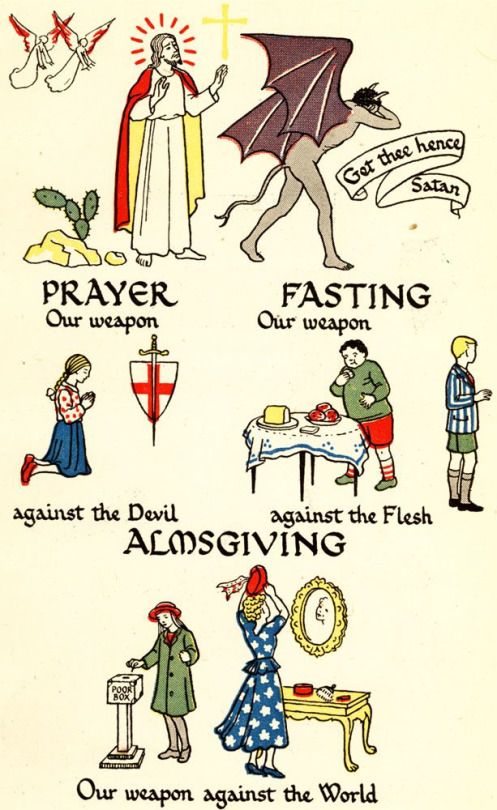
PRAYER – May the sacred practice of fasting, we beseech You, O Lord, win for us increased holiness of life and the continuing help of Your mercy. Through Jesus Christ, Thy Son our Lord, Who lives and reigns with Thee, in the unity of the Holy Ghost, God, world without end. Amen (Collect).
Our Morning Offering – 1 April – Tuesday of the Fourth Week in Lent
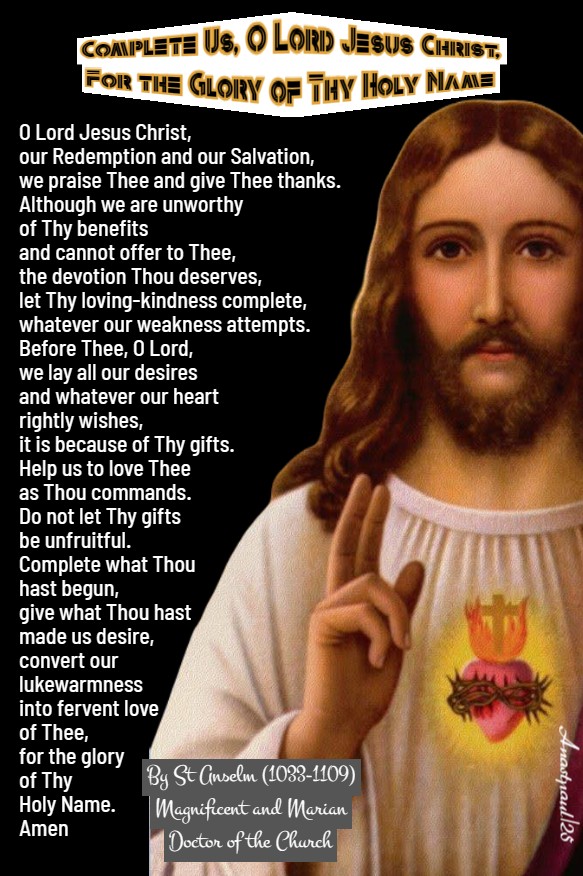
Complete Us, O Lord Jesus Christ, For the Glory of Thy Holy Name. By St Anselm (1033-1109) Magnificent and Marian Doctor of the Church
O Lord Jesus Christ, our Redemption and our Salvation, we praise Thee and give Thee thanks. Although we are unworthy of Thy benefits and cannot offer to Thee, the devotion Thou deserves, let Thy loving-kindness complete, whatever our weakness attempts. Before Thee, O Lord, we lay all our desires and whatever our heart rightly wishes, it is because of Thy gifts. Help us to love Thee as Thou commands. Do not let Thy gifts be unfruitful. Complete what Thou hast begun, give what Thou hast made us desire, convert our lukewarmness into fervent love of Thee, for the glory of Thy Holy Name. Amen
Saint of the Day – 1 April – Saint Tewdrig (5th-6th Century) Hermit, Martyr, King of Gwent and Glywysing. Born in Cardiff in Wales and died in the 6th Century in Mathern, Wales from the wounds received in battle against the pagan Saxons. Also known as – Tewdrig ap LLywarch, Tewdrig of Tintern, Tewdrig of Glamorgan, Theodoricus, Theodoric, Theoderick, Teudrig, Tewdric, Tudric.
Tewdrig was a Prince of Glywysing roughly corresponding to the present-day County of Glamorganshire in Wales – and married to Gowan. He initially defeated the invading Saxons at the Battle of Llandaff, now a district in Cardiff and later became Patron of this Church there.
He abdicated in favour of his son, Meurig (Maurice) and withdrew to live as a Hermit on a rocky spot by the river, on the site of the Monastery founded in 1131 in Tintern.
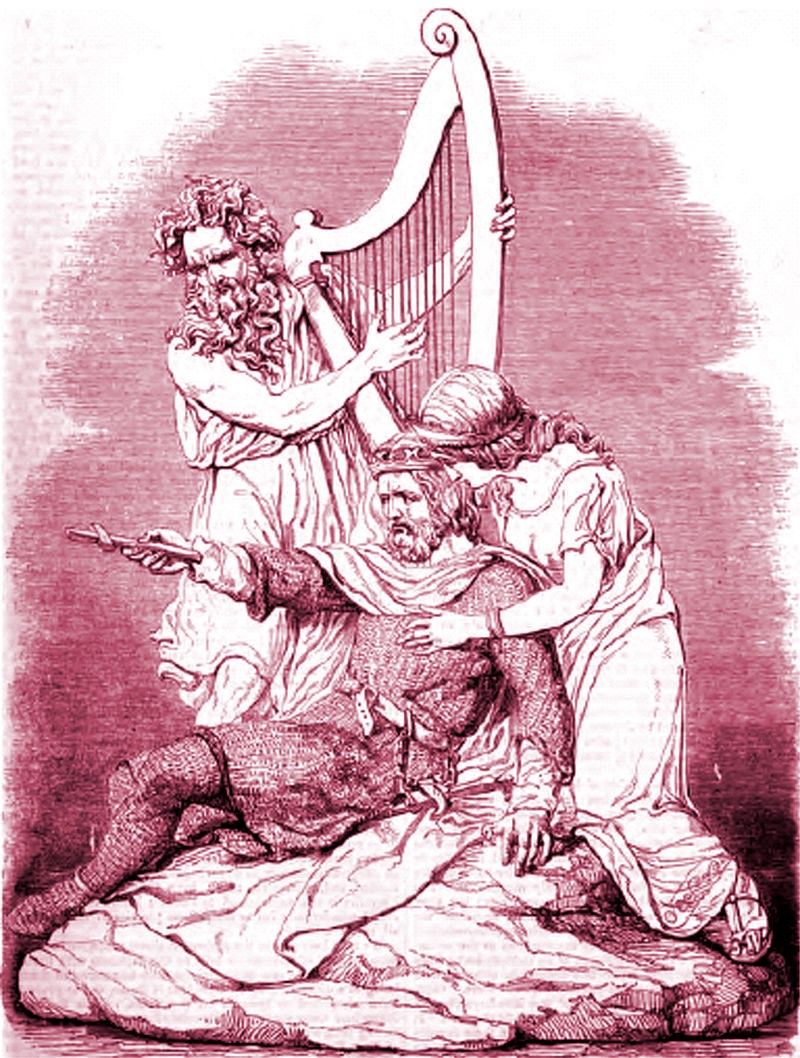
Drawing after a statue by J Evan Thomas: St Tewdrig’s Death,
However, his son called him back to service in order to lead the army against the invading Saxon troops who had previously devastated the area around Hereford. He won the battle but was mortally wounded near his hermitage. He asked to be taken to the Island of Flat Holm but died before reaching the destination, in Mathern, after three days’ travel.
Tradition tells us that the journey was made in a cart drawn by two stags. Wherever the deer rested, a miraculous spring sprang up.
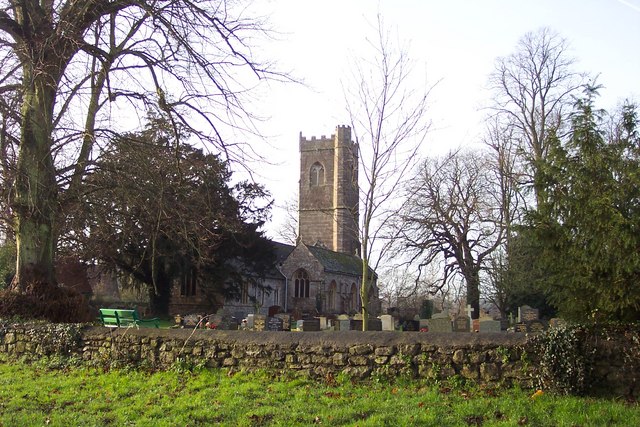
Since the Saxons were pagans and Tewdrig was a Christian, he is considered a Martyr. His son, Meurig had a Church built on the site of his Grave in Mathern The story of Tewdrig is recorded in the Book of Llandaff which was written around 1125, to justify the rights of this Episcopate’s See against the rival Sees of St David’s and Hereford. In 1615, Bishop Godwin of Llandaff reported seeing a skull, with a hole through it in a coffin before the Altar of the Church in Mathern, presumably being St Tewdrig’s Relics. The image below is the Church in Mathern dedicated to our Saint.
Blessed Abraham of Bulgaria Blessed Alexander of Sicily Saint Anastasio Blessed Antonius of Noto Saint Berhard of Amiens Blessed Bernhardin of Noto
Saint Celsus (c1080-1129) Archbishop of Armagh, Reformer. He was responsible for the change from lay control of the Church in Ireland, to a Clerical-Episcopal model. Himself a hereditary lay administrator, he decided to seek Priestly Ordination and be embraced celibacy in order that the reform introduced by Pope St Gregory VIII on the Continent, could take effect also in Ireland. Holy and Brave St Celsus: https://anastpaul.com/2023/04/01/saint-of-the-day-1-april-saint-celsus-of-armagh-c1080-1129-archbishop/
Saint Dodolinus of Vienne Blessed Enrico Alfrieri OFM (1315-1405) Vicar General of the Friar’s Minor Blessed Gerard of Sassoferrato Saint Gilbert de Moray Blessed Giuseppe Girott Blessed Hugh of Bonnevaux
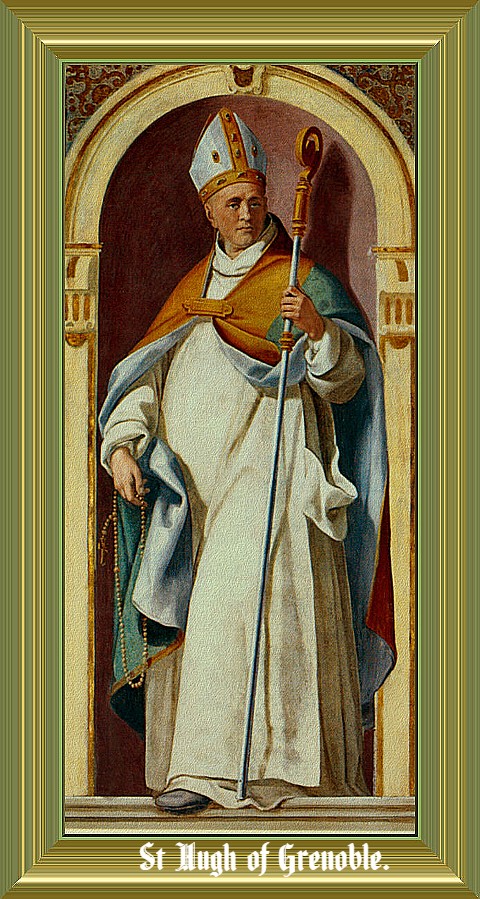
Saint Hugh (1053-1232) Bishop of Grenoble , Reformer, in the foundation of the Carthusian Order, founded a Monastery at Chalais. The Roman Martyrology reads: “In Grenoble in Burgundia, in today’s France, St Hugh, Bishop, who worked for the reform of the customs of the clergy and the people and, during his Episcopate, ardently loving solitude, gave St Bruno at the time, his teacher and to his companions, the hermitage of Chartroux, of which he was also the first Abbot. He ruled his Church for about fifty years with the thoughtful example of his charity.” This Wonderful Zealous St Hugh: https://anastpaul.com/2022/04/01/saint-of-the-day-1-april-saint-hugh-of-grenoble-1053-1232/
Saint Jacoba of Rome Blessed John Bretton Saint Leucone of Troyes
Saint Melito (Died c 180) Early Church Father, Bishop of Sardis (Died c 180), ecclesiastical Writer, Confessor, Apologist, Defender of Christ’s dual nature. Saint Melito is believed to have been martyred around the time he wrote his apology to Marcus Aurelius circa 180. Brilliant St Melito: https://anastpaul.com/2019/04/01/saint-of-the-day-1-april-st-melito-died-c-180/
Blessed Nicolò of Noto Saint Prudentius of Atina Saint Tewdrig (5th-6th Century) Hermit, Martyr Saint Theodora of Rome
Saint Valéry of Leucone (c565-c619) Priest, Abbot, Founder of the Abbey of Saint-Valery-sur-Somme, a man of Miracles and Visions. Born around 565 in the Auvergne in France and died on 1 April c619 (?) in Leuconay, today St-Valéry-sur-Somme. Patronages – of horticulturists and gardeners, of Death Row Prisoners,fishermen and of of Saint-Valéry-sur-Somme. The Roman Martyrology reads: “At Amiens, the Abbot, St Valéry, whose Tomb is made illustrious by frequent miracles.” Miraculous St Valéry: https://anastpaul.com/2024/04/01/saint-of-the-day-1-april-saint-valery-of-leucone-c565-c619-priest-abbot/
Saint Venantius of Spalato Blessed Vinebault
Apostles of Picardy – Martyrs: Saint Caidoc Saint Fricor
Martyrs of Thessalonica – 6 Saints: A group of Christians Martyred. We know nothing about them but the names Alexander, Dionysius, Ingenianus, Panterus, Parthenius and Saturninus. Martyred in Thessalonica, Greece, date unknown.












 AnaStpaul
You must be logged in to post a comment.