
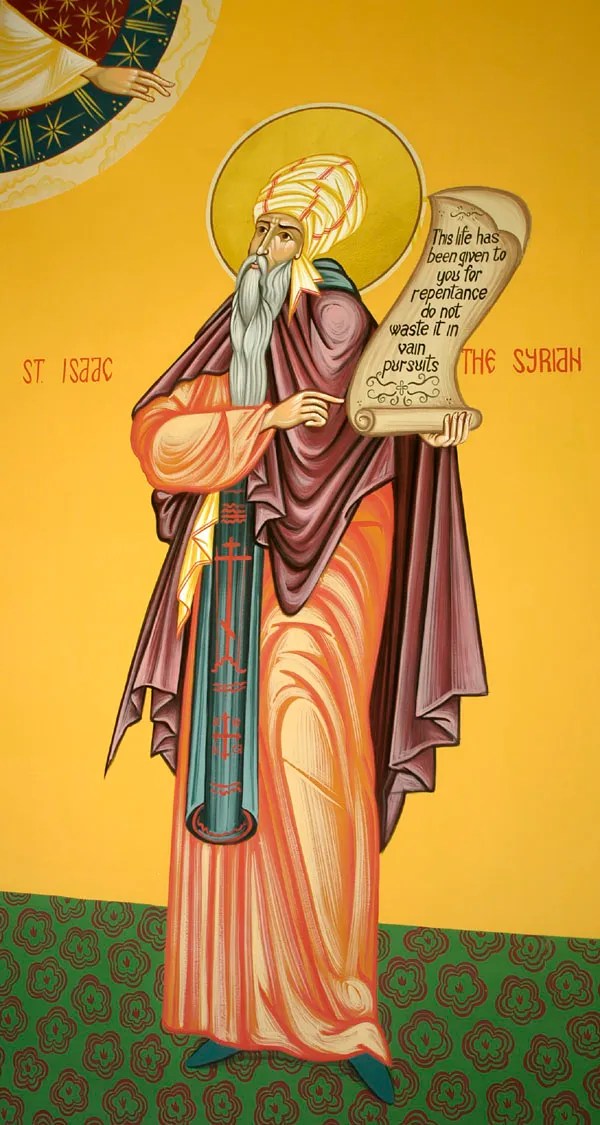
Saint of the Day – 11 April – St Isaac of Spoleto (Died c550) Abbot and Confessor, Hermit, Founded a Monastery,in Monteluco, graced with the charism of Prophecy and Miracles, many of his sermons have been preserved. Born in Syria on an unknown date and died in c550 in Spoleto, Italy of natural causes. Also known as – Isaac of Monteluco, Isaac the Syrian.
The Roman Martyrology reads today: “At Spoleto, St Isaac, Monk and Confessor, whose virtues are recorded by Pope St Gregory.”

St Isaac in the Dialogues of St Gregory the Great:
According to the Dialogues of St Pope Gregory I, St Isaac, a man of God, arrived in Spoleto from Syria “at the time that the Goths first invaded Italy” and lived there “almost to the last days of the Goths.” When he first arrived in Spoleto, “the keepers” of a Church allowed him to stay there overnight. However, on the third night, one of the keepers denounced him as a “hypocrite and one that desired to be reputed an holy man” and ejected him by force. The keeper was immediately possessed by “a wicked spirit” and had to implore Isaac to drive it out. As the news of the exorcism spread, “men and women, rich and poor, came running, everyone striving to bring him home to their own house.”
Many offered land and/or money for an Abbey but Isaac refused and left the City. “Not far off, he found a desert place, where he built a little cottage for himself.” He attracted many converts who “under his discipline and government, gave themselves to the service of Almighty God.”
Some of his new followers argued that “it was good for the necessity of the Abbey to take such livings as were offered” but St Isaac refused, saying: “A Monk whoseeketh for livings upon earth is no Monk!”
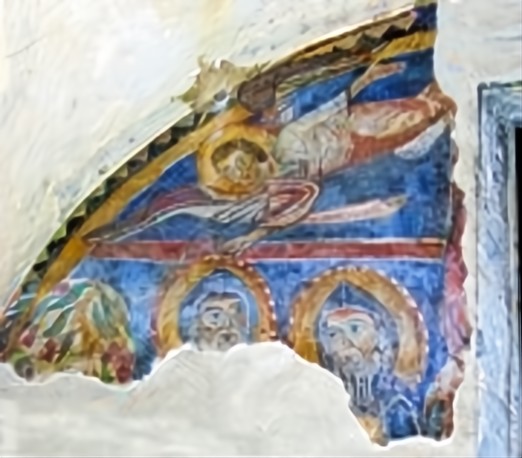
Isaac became renowned for his gift of prophecy and for the miracles which he was granted by God:
One night, Isaac told his Monks to leave a certain number of spades in the garden and to “make pottage for our workmen.” Later, a number of thieves, one for each spade, entered the garden, as Isaac had expected. God inspired them to turn from their planned robbery and instead, to use the spades to till the ground. Isaac greeted them the next morning with the words: “God save you, good brethren, you have laboured long, wherefore now rest yourselves.” He gave them the pottage and then admonished: “Do not any more, hereafter, harm but when you desire anything in the garden, come to the gate, quietly ask it and take it with God’s blessing.”
On another occasion, some beggars approached him in tattered rags and begged for new clothes. He quietly sent one of his Monks into the surrounding woods to look for a hollow tree and to bring to him the clothes he found therein. The Monk did as he was told and duly found the clothes which Isaac gave to the beggars. They, of course, recognised them as their own and were filled with shame.
On a third occasion, a man sent his servant with two baskets of meat for Isaac and a request to be remembered in his prayers. The servant hid one basket in a bush and gave only one to Isaac. Isaac knew what had happened and warned the servant that a poisonous snake had slipped into the second basket. When he found this to be the case, he too was filled with shame.
St Gregory had two source of information for this account:
One was “the holy virgin Gregoria” who, when she was young, had sought Isaac’s assistance in order to avoid marriage and to become a Nun. She had later moved to the nunnery next to the Monastery of St Gregoryin Rome.
The other was “the reverent man Eleutherius” who, as Abbot of San Marco,, had been “familiarly acquainted with” Isaac. He had later moved to the Monastery of St Gregory in Rome, where he had become close to St Gregory. At the time Gregory was writing, St Eleutherius had recently died.
Isaac, famous for his sanctity, miracles and prophetic gifts, died around 550 and his Relics are preserved in Spoleto. 63 sermons are attributed to him, perhaps confused with those of St Isaac of Antioch.


 AnaStpaul