
Saint of the Day – 16 May – St Ubaldus Baldassini (c1085-1160) Bishop and Confessor, Reformer, untiring Shepherd and protector of his flock both in spiritual and temporal affairs, Apostle of all the needs of the poor and Defender of his City, Miracle-worker. Born in c1085 in Gubbio near Ancona, Umbria, Italy as Ubaldo Baldassini and died in the same City at around sunrise on Monday 16 May 1160 . Also known as – Ubaldus of Gubbio, Ubaldo… Ubald… Ubalde… Patronages – of Gubbio and Montovi, in Italy, St Ubaldus was Canonised in 1192 by Pope Celestine III.
The Roman Martyrology reads today: “At Gubbio, St Ubaldus, a Bishop renowned for miracles.”
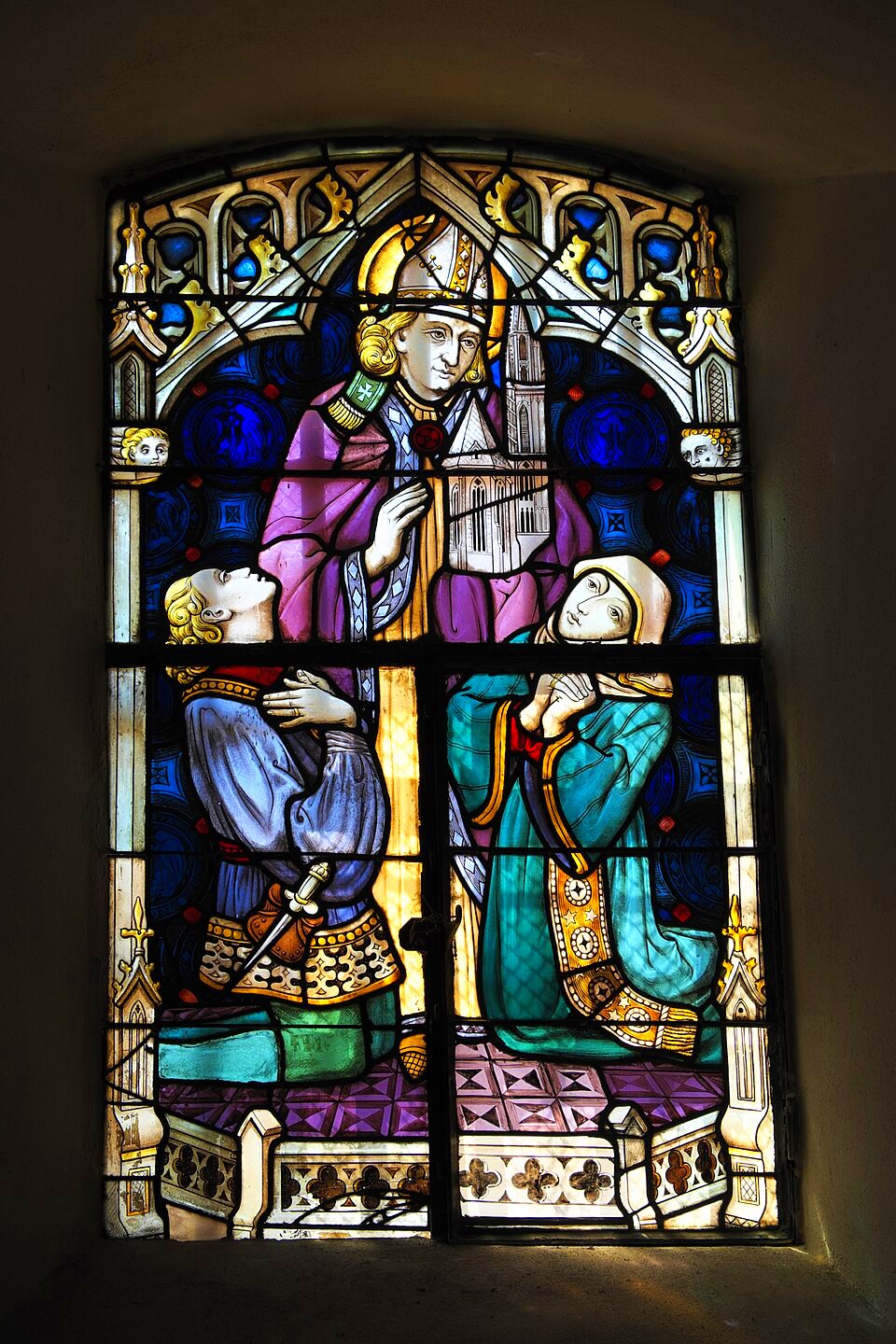
Ubaldus was born into the noble Baldassini family in c1085. His parents died while he was still a child and he was raised by an uncle. He was educated at St Secondus Monastery and then at St Marianus. However, he disapproved of the way of life of the Clergy of San Marianus and, in 1104, he return to St Secondus.
The old Bishop Rusticus died and was succeeded by St John of Lodi. At the request of the new Bishop, St Ubaldus returned to Sant Marianus.
Ubaldus was Ordained in 1114 and was elected Prior of the St Marianus Canonric some four years later He was sympathetic to the cause of Church reform and imposed an ascetic Rule on his community. [He imposed what is known as the Portuense Rule which Pope Paschal II had confirmed in 1116 for a community of Regular Canons at the Church of Santa Maria in Portu on the Island of Corizo near Ravenna. This Rule subsequently became widely diffused in Italy, France, Spain and Germany.]
In 1126, when a fire destroyed much of Gubbio, including the Cathedral and the Monastery, Ubaldus fled to the Eremo di Fonte Avellana, intent on dedicating himself to the monastic life. Ubaldus had donated his inheritance to the poor and to the restoration of Monasteries. Several bishoprics were offered to him,but he refused them all. However, when in 1128, the Episcopal See of Gubbio becoming vacant, he was sent, with some Clerics, by the faithful, to ask Pope Honorius II, for a newBishop. The Pope immediately Consecrated Ubaldus and sent him back to Gubbio. To his people he became a perfect pattern of all Christian virtues and a powerful protector in all their spiritual and temporal needs.
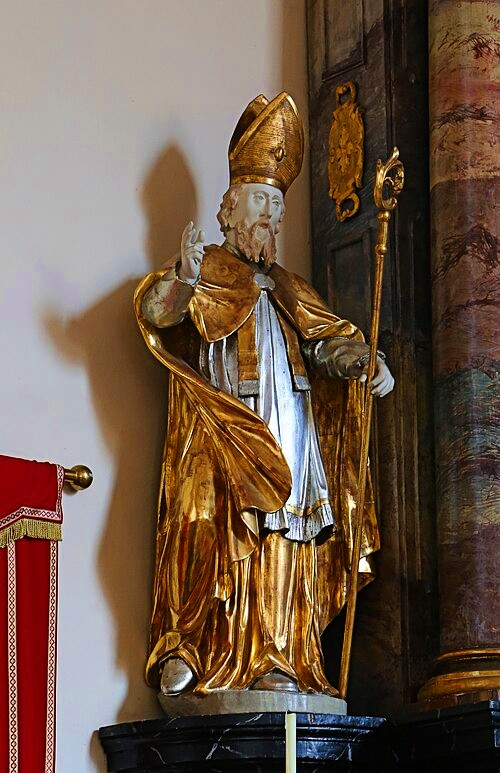
Ubaldus became its Bishop, just a year before the start of the Papal schism. His support Pope Innocent II (perhaps because this was the candidate supported by St Bernard) seems to have been influential in deciding the obedience of the Cities of Umbria.
One of his first acts as the Bishop was to begin the rebuilding of the City. During the years 1135-1140, our Saint Ubaldus, calmed the civil unrest which culminated in the establishment of the government of the region and the election of Consuls. In 1151, exiled nobles from Gubbio seem to have mobilised support from some eleven neighbouring Cities and a force under Perugian leadership attacked Gubbio. However, Ubaldus had rebuilt the walls of the City and the invaders were forced to mount a siege. Fortunately, St Ubaldus was able to dispatch soldiers to the surrounding mountains under cover of darkness. The following day the besieging army found itself surrounded and was forced to withdraw.
His assistance was again needed in 1155, when the Emperor Frederick I, who was camped with a large army after the sack of Spoleto, demanded a huge payment from Gubbio to prevent a similar seige. St Ubaldus pleaded with Frederick I, who was so impressed that he left the City in peace and granted it a number of territorial privileges.
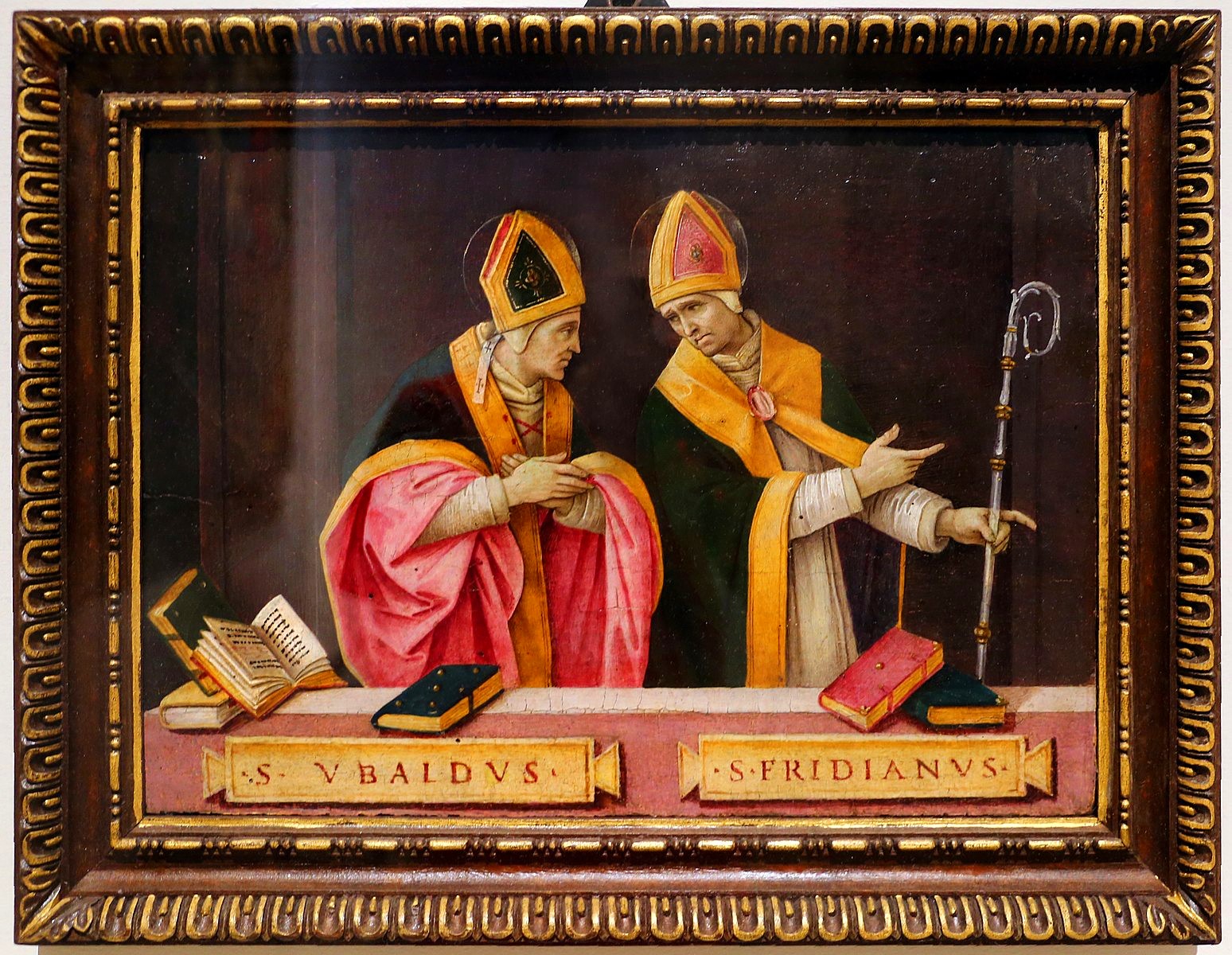
Ubaldus was known for his patience and heroic gentleness and was considered to have the gift of healing. Once it happened, that in repairing the wall of the City, the workmen encroached upon his vineyard. The Bishop mildly put them in mind of it, and desired them to forbear. The overseer of the work moved with fury, scornfully pushed him into a great heap of mortar. The good Bishop got up all covered with lime and dirt, without making the least expostulation. The people demanded that the overseer, in punishment for the offence, should be banished and his goods confiscated. The Saint endeavoured to present the incident as an accident but when that did not satisfy the people, who knew how it happened, he, being desirous to deliver the man out of the hands of the magistrates, maintained that the consideration of the misdemeanour belonging to his own jurisdiction, he would take care to render justice himself. Ubaldus then pardoned him.
Numerous miracles were attributed to St Ubaldus during his life and after his death. A number of miraculous cures were attributed to his intercession. The life of St Ubaldus was written by Theobald, his immediate successor in the Episcopal See.
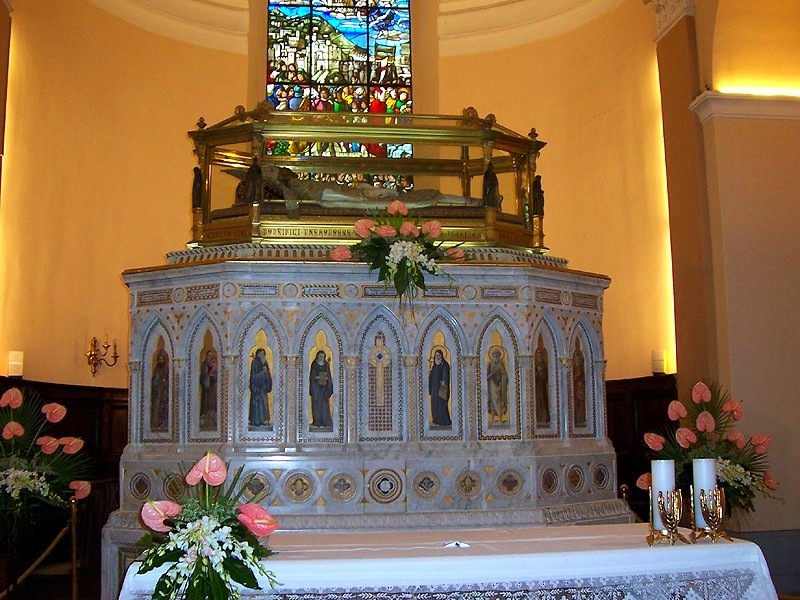
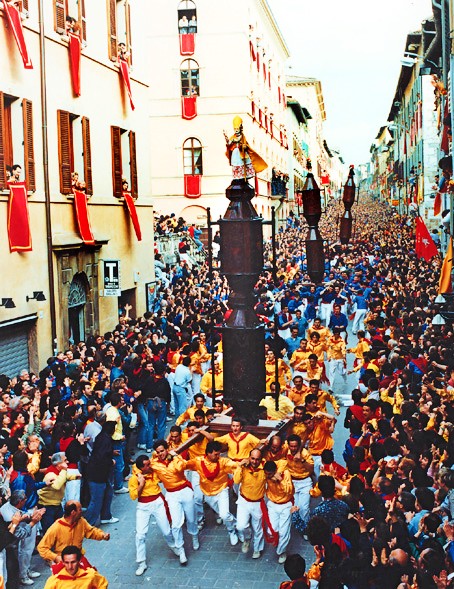
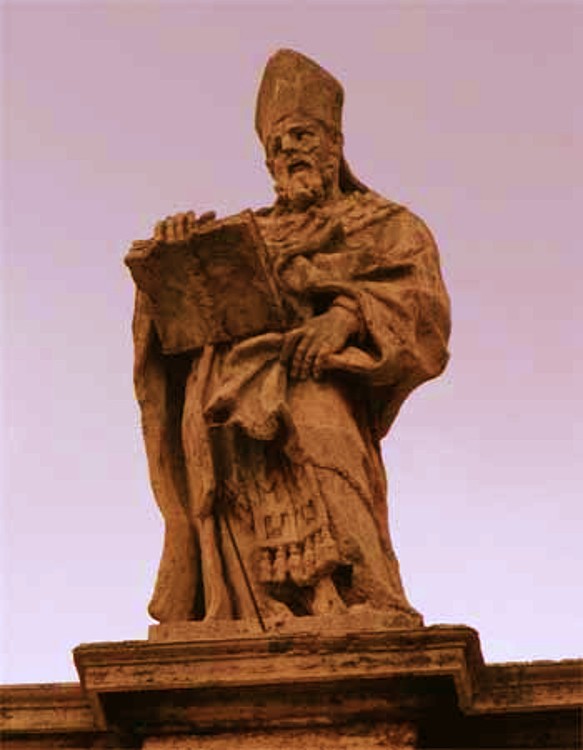
When St Ubaldus died in 1160, he was buried in the old Duomo, beside the Relics of Sts Marianus and James. In 1188, Pope Clement III gave permission to Bishop Benedetto Bentivoglio, for the translation of the Relics of the saints of Gubbio, (presumably including the body of the future St Ubaldus) from the olf City to the site on the mountain, where the new City Cathedral had been constructed. Now known as the Basilica of St Ubaldus, it is frequented by numerous pilgrims.
Dante mentions Ubaldus in the Divine Comedy (Heaven Canto XI): “Between Tupino and the stream which falls from the blest Ubaldus’ chosen hill, the slope is green, a lofty mount below.”


 AnaStpaul