
Saint of the Day – 22 May – St Quiteria (5th Century) Virgin Martyr., Princess. Born in the 5th Century in Braga, Lusitania (now Portugal) and died in Aire-sur-l’Adouron the borders between France and Spain by beheading. Patronages – against rabies and rabid dogs, against anger, of the City of Higueruela in Spain. Also known as – Kitheriammal, Quiteira, Quitterie.
The Roman Martyrology reads today: “In Spain, St Quiteria, Virgin Martyr.”
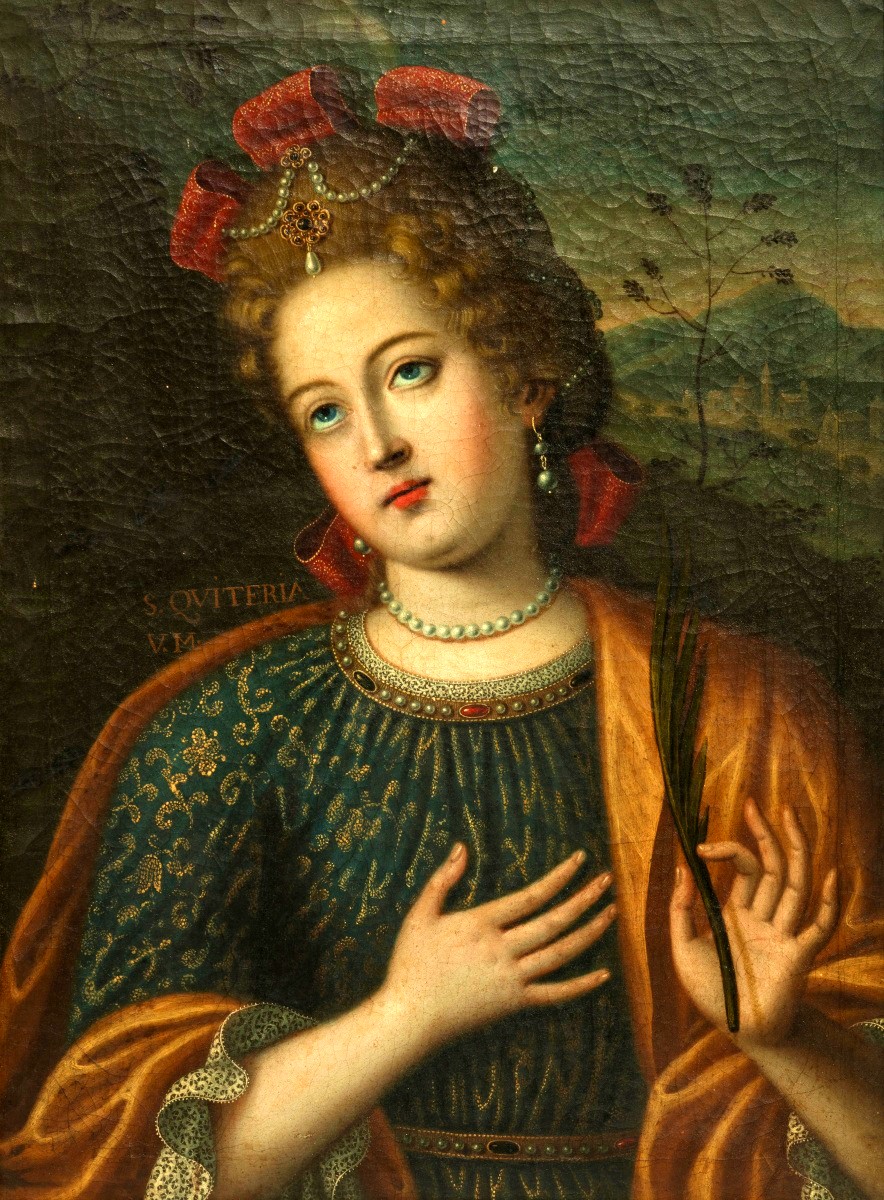
One will discover several Churches dedicated to Saint Quiteria while wandering between the south-west of France and the north of Spain, areas which, in the first centuries of Christianity, formed a single cultural entity. Several apostles of the area, such as Saint Saturnin of Toulouse, in fact worked on both sides of the Pyrenees. Furthermore, it should not be forgotten that a few centuries later ,a good part of southern Spain fell into the hands of the Arabs and this constituted a powerful stimulus to strengthen the Christian ties across the Pyrenees.
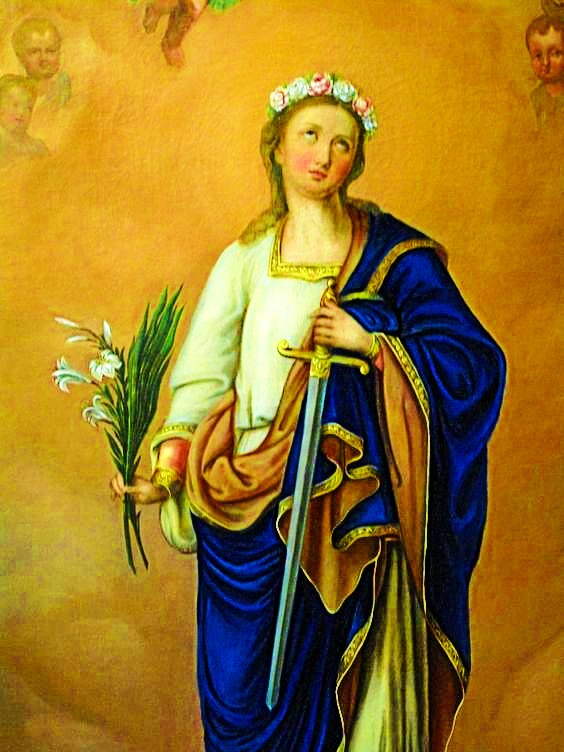
The centre of the cult paid to Quiteria is constituted by her ancient and valuable sarcophagus, kept since time immemorial, in the French City of Aire-Sur-Adour, in Gascony, on the banks of the Adour River, on the route which crosses the Pyrenees from north to south.
Ancient references help to strengthen the evidence of her cult which St Gregory of Tours also mentions. She is usually considered a virgin and marty, but her life is almost totally unknown.
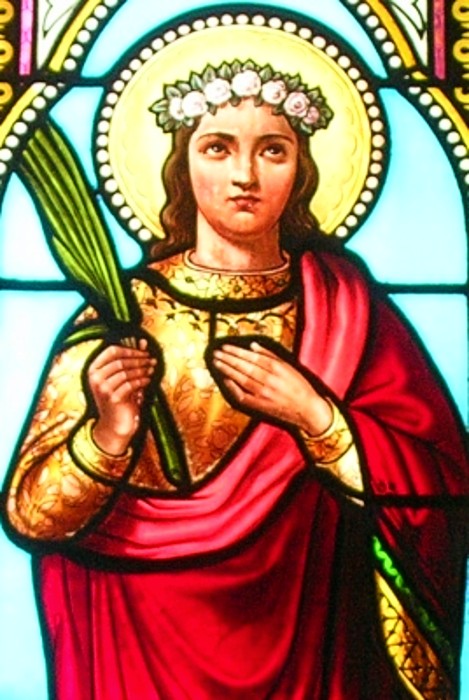
Believed to have been a Princess, originally from Spanish Galicia, she ran away from home because her father wanted to marry her and make her renounce her personal vows within the Christian Faith.
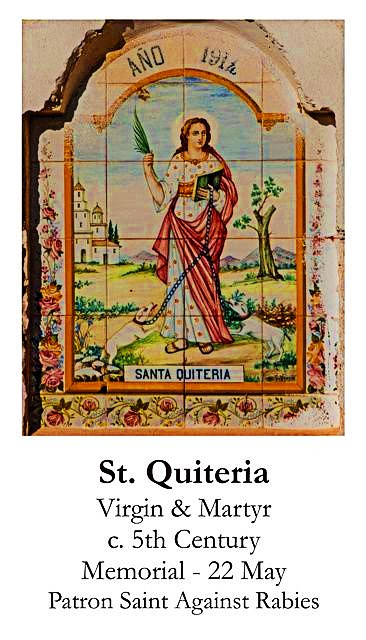
Quiteria firmly refused and sought refuge in the Aire region but her father’s emissaries reached her and ruthlessly beheaded her. Legend tells that a dog then grabbed the Saint’s head by the hair, now detached and the depiction of this curious episode has spread the belief among the people that the Saint is a powerful defence against rabid dogs.
Quiteria is also venerated in Portugal, where, however, a different legend is attributed to her. The Martyrologium Romanum places the Feastday on the traditional date of 22 May.


 AnaStpaul