
Saint of the Day – 11 September – St Patiens (Died c491) Bishop of Lyon, a most zealous and devoted shepherd of his flock for around 40 years and at the same time, the lover and caregiver of the needy and poor regardless of where they lived and to which Diocese they belonged – as we should, he did not ask whether they were pagans or Christians. Also known as – Patrient, Patient, Patriens, Paziente.
The Roman Martyrology reads today: “At Lyon, the decease of St Patiens, Bishop.”
In the official chronology, Patiens is listed in20th place. He succeeds Saint Eucherius and precedes Saint Lupicinus.
The name of Saint Patiens is recorded in the oldest Episcopal records, contained in a Litergical Gospel book from the mid-9th Century. The catalogue was compiled around 799-814 duringthe reign of Bishop Leidradus and is based on the original of the Lyonnais Church.
The name of Saint Patiens is also mentioned in a second Episcopal catalogue, reported by Hugues of Flavigny in his Chronica Universalis.
Patriens governed the Diocese for forty years, between 451 and 491. Considering this lengthy period of service, we know very little about his personal history.
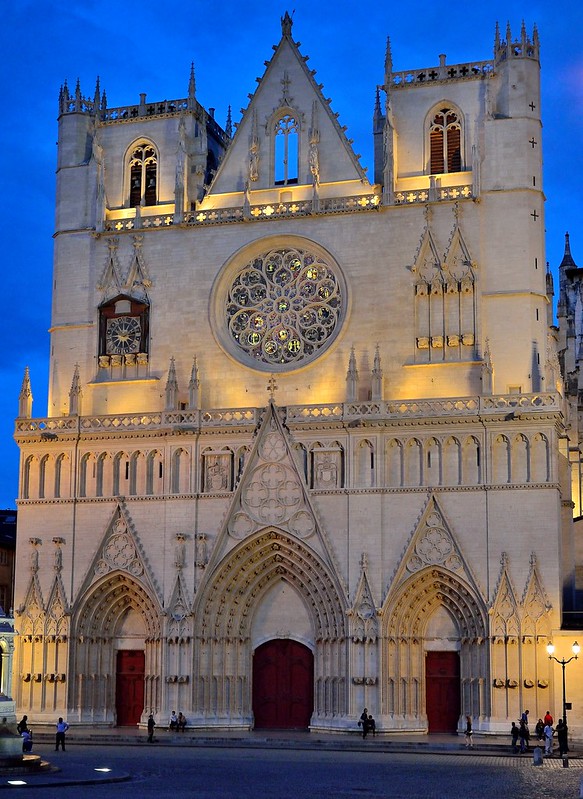
But it was Bishop Patiens who commissioned St Constantius of Lyon to write theVita of St Germanud (Life of Germanus). Patiens also built a new Cathedral, dedicated to Saint Stephen. Later, in the 7th Century, a baptistery dedicated to Saint John was constructed as an accessory to the Church. This later became the site of the Cathédrale Saint-Jean-Baptiste de Lyon.
Patient, moved by great charity to help the people oppresssd by hunger, distributed free grain from the stores located in his See. He is also membered as a Bishop who devoted himself to a continuous apostolate, caring for his flock especially for the needy. He was deeply committed to the conversion of heretics.
His contemporary, the remarkable St Sidonius Apollinaris (c 30 – 489), admired Patiens and said that, despite the austerity of his life, he made himself “all things to all men.” He played his part zealously in repressing the heresies of his time but is especially remembered for his great dedication to the poor, not only of his own Diocese but of other parts of Gaul. He devoted all his resources to their relief. During a famine, he arrived in Lyon with wheat, to feed the entire population.


 AnaStpaul