
Just a reminder of this beautiful Catholic tradition
Prepare for the arrival of our King!


Thought for the Day – 28 November – Meditations with Antonio Cardinal Bacci (1881-1971)
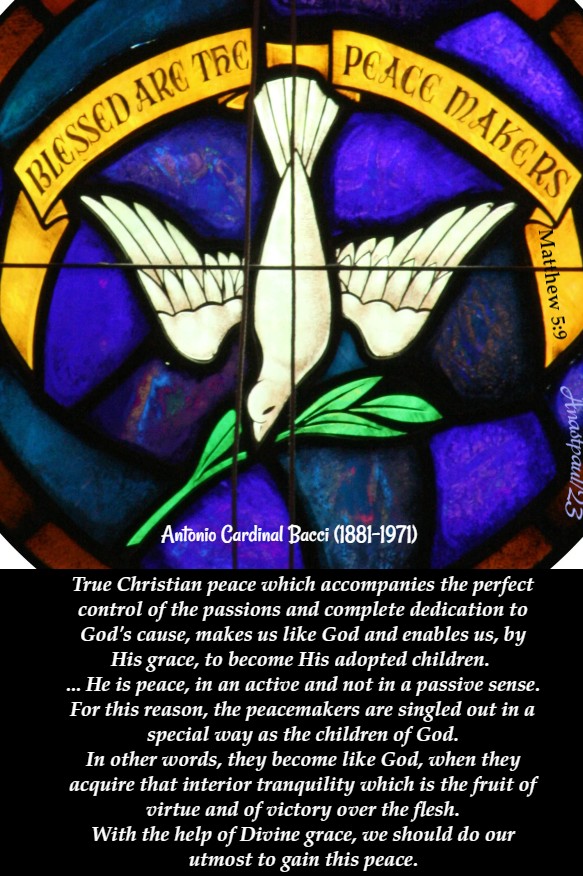
“Blessed are the peacemakers,” said Jesus in the Sermon on the Mount, “for they shall be called children of God” (Mt 5:9).
True Christian peace which accompanies the perfect control of the passions and complete dedication to God’s cause, makes us like God and enables us, by His grace, to become His adopted children.
He is the God of peace, in Whom there is no conflict but only perfect order and harmony.
Since He is pure act, He understands Himself fully in all His beauty and perfection and, knowing Himself, He loves Himself.
He is peace, in an active and not in a passive sense.
For this reason, the peacemakers are singled out in a special way as the children of God.
In other words, they become like God, when they acquire that interior tranquility which is the fruit of virtue and of victory over the flesh.
With the help of Divine grace, we should do our utmost to gain this peace.”
PART ONE:
https://anastpaul.com/2021/12/05/thought-for-the-day-5-december-the-blessedness-of-the-peracemakers/
PART TWO:
https://anastpaul.com/2022/11/28/thought-for-the-day-28-november-the-blessedness-of-the-peracemakers/

Quote/s of the Day – 28 November – The Memorial of St Catherine Labouré DC (1806-1876) Virgin, Religious Sister of the Daughters of Charity of Saint Vincent de Paul and the Marian visionary of the Miraculous Medal.
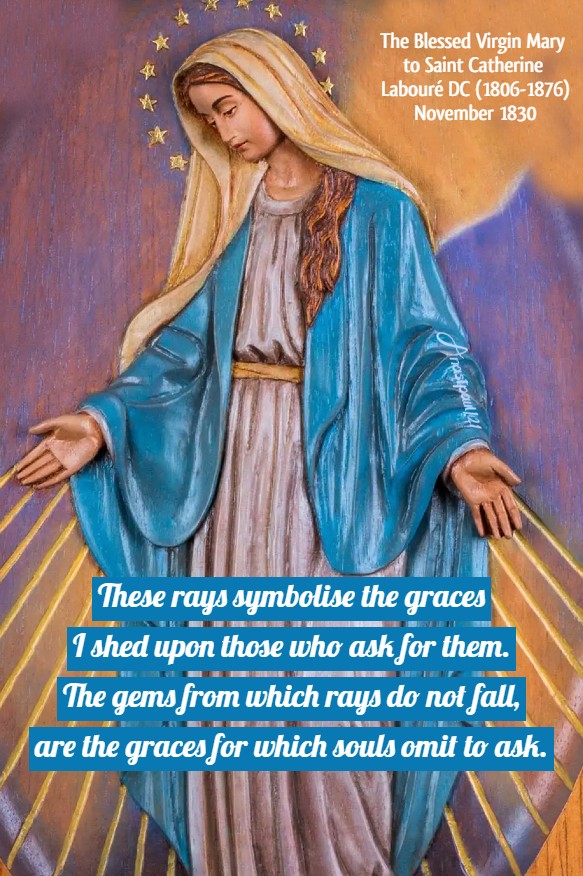
“These rays symbolise the graces
I shed upon those who ask for them.
The gems from which rays do not fall
are the graces for which souls omit to ask.”
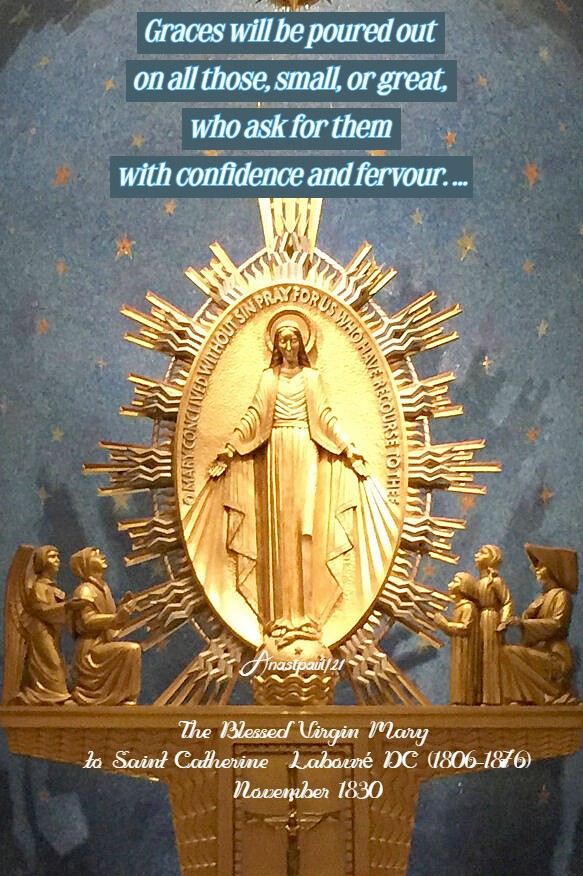
“Graces will be poured out
on all those, small, or great,
who ask for them
with confidence and fervour. … ”
MORE:
https://anastpaul.com/2024/11/28/quote-s-of-the-day-28-november-st-catherine-laboure-2/
One Minute Reflection – 28 November – “The Month of The Holy Souls in Purgatory” – St Catherine Labouré DC (1806-1876) Virgin, Religious Sister of the Daughters of Charity of Saint Vincent de Paul and the Marian Visionary of the Miraculous Medal – Ferial Day – Colossians 1:9-14 – Matthew 24:15-35 – Scripture search here: https://www.drbo.org/
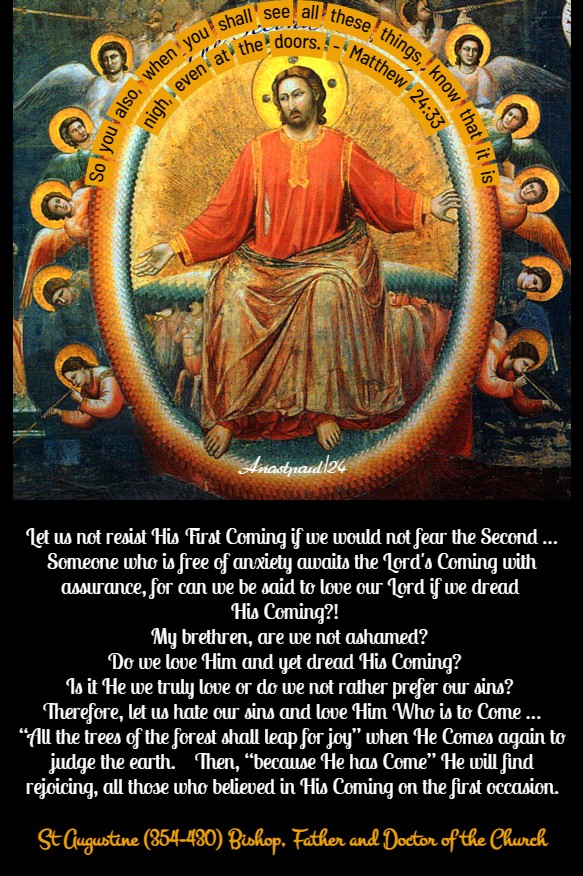
“So you also, when you shall see all these things, know that it is nigh, even at the doors.” – Matthew 24:33
REFLECTION – “Then, all the trees of the forest shall leap for joy before the Lord, for He Comes, He Comes to rule the earth” (Ps 95:12-13). Our Lord came the first time and will come again anew. He came into His Church to begin with “on the clouds” (Mt 26:64). What are those clouds which bore Him? Apostles, preachers… He came, borne by His preachers to begin with and He filled the whole earth. Let us not resist His First Coming if we would not fear the Second…
What, then, should Christians do? Take advantage of this world but do not serve this world. What does that mean? “Possess as if one did not possess.” This is what Saint Paul said … “Brothers, the time is growing short. From now on… let those who weep act like those who do not weep, those rejoicing as not rejoicing, those buying as not owning, those using the world as not using it fully, For the world in its present form is passing away. I should like you to be free of anxieties” (1 Cor 7:29-32). Someone who is free of anxiety awaits the Lord’s Coming with assurance, for can we be said to love our Lord if we dread His Coming?! My brethren, are we not ashamed? Do we love Him and yet dread His Coming? Is it He we truly love or do we not rather prefer our sins? Therefore, let us hate our sins and love Him Who is to Come …
“All the trees of the forest shall leap for joy before the Lord, for He has Come” for the first time… “All the trees of the forest shall leap for joy” when He Comes again to judge the earth. Then, “because He has Come” He will find rejoicing, all those who believed in His Coming on the first occasion.” – St Augustine (354-430) Bishop, Father and Doctor of the Church (Discourses on the Psalms Ps 95).
PRAYER – From all perils of soul and body, defend us, O Lord, we beseech Thee and by the intercession of blessed and glorious ever Virgin Mary, Mother of God, of blessed Joseph, of thy blessed Apostles Peter and Paul and of blessed Catherine Labouré and all the Saints, graciously grant us safety and peace that all adversities and errors, being overcome, Thy Church may serve Thee in security and freedom. Through Jesus Christ, Thy Son our Lord, Who lives and reigns with Thee, in the unity of the Holy Ghost, God, world without end. Amen (Collect).

Our Morning Offering – 28 Novemer – “The Month of The Holy Souls in Purgatory”
Prayer for the Dead
From My Prayer Book, 1927
By Fr Francis Xavier Lasance (1860-1946)
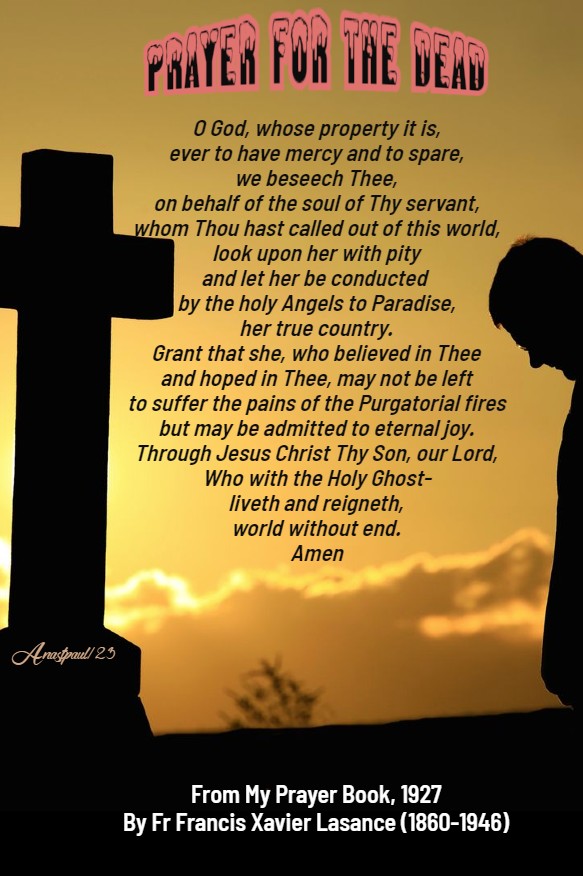
O God, whose property it is,
ever to have mercy and to spare,
we beseech Thee,
on behalf of the soul of Thy servant,
whom Thou hast called out of this world,
look upon her with pity
and let her be conducted
by the holy Angels to Paradise,
her true country.
Grant that she, who believed in Thee
and hoped in Thee, may not be left
to suffer the pains of the Purgatorial fires
but may be admitted to eternal joy.
Through Jesus Christ Thy Son, our Lord,
Who with the Holy Ghost-
liveth and reigneth,
world without end.
Amen
Saint of the Day – 28 November – Saint Stephen the Younger (c713-764) Abbot Martyr, Defender of Sacred Images, Born in c713 in Constantinople and died there in 764 by being scourged, stoned and dragged to death through the streets. Patronage – coin collectors, numismatists, smelters.
The Roman Martyrology reads today: “At Constantinople in the time of Constantine Copronymus, the holy Martyrs, Stephen the Younger, Basil, Peter, Andrew and their companions, numbering 339 Monks who were subjected to various torments for the veneration of holy images and confirmed the Catholic truth with the shedding of their blood.”
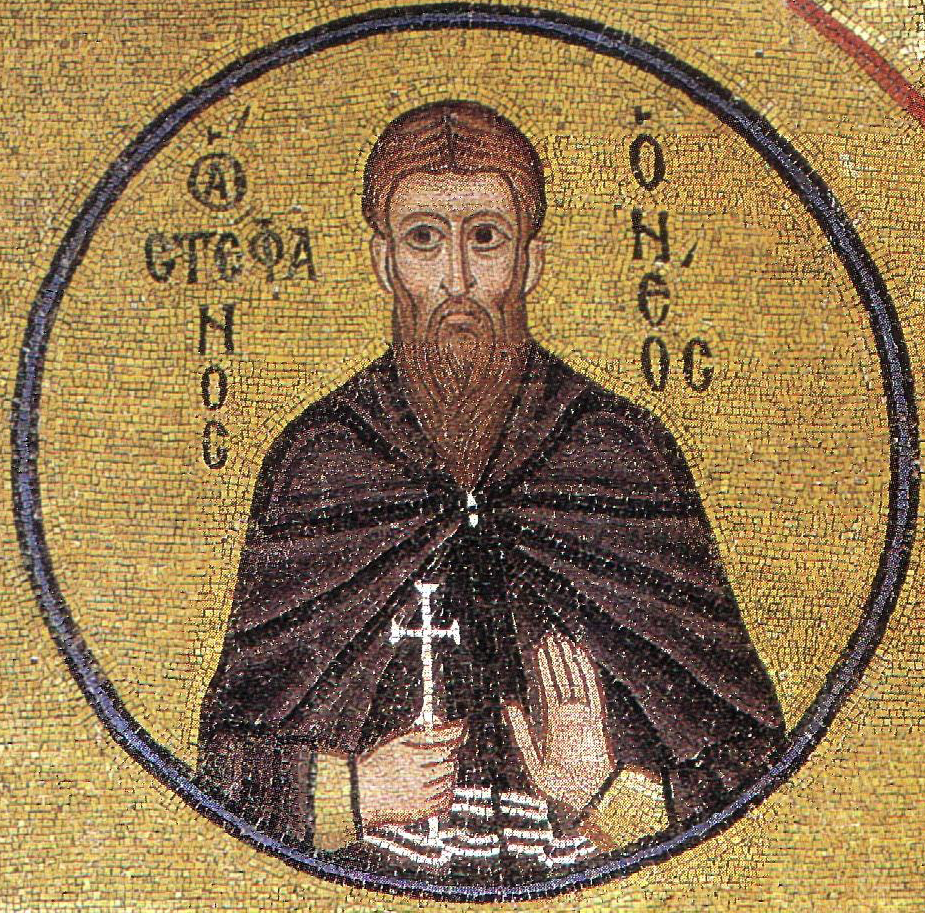
The ‘Life’ of this Monk was written around the year 809 by his namesake, the Deacon Stephen of Constantinople.
The holy Abbot Stephen the Younger, was born in 713-715 in Constantinople, ancient Byzantium. As a young man, he initially placed himself under the guidance of a Hermit but then, choosing the religious life, entered the Monastery of Mount Auxentius in Bithynia, near Chalcedon. Here, he later became its Abbot.
He lived in this Monastery for ymany ears, devoted to prayer and as a copyist, the meritorious work of the Monks who copied ancient texts. At that time, the Eastern Emperor Constantine V Copronymus (718-775) was ruling, son of Leo III the Isaurian (675-741), the Emperor who, in 726, had initiated the religious policy against the veneration of images.
This iconoclastic movement continued with his son Constantine V, who waged a fierce struggle, especially against the Monks, even convening the Council of Hiera, in 753 which condemned the defenders of the cult of sacred images.
Our Saint, the Abbot Stephen, openly opposed the decrees of this Council convened by the Emperor and not by the Pope, decrees which would later be disavowed with the approval of the veneration of images at the subsequent Second Council of Nicaea in 787.
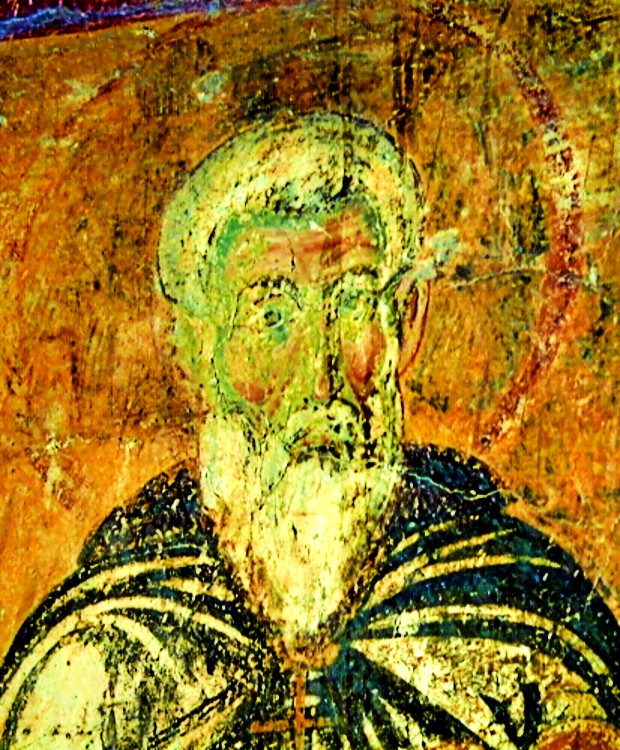
Meanwhile, Constantine V Copronymus, in June 762, enjoined the Abbot of Mount Auxentius, to respect and adhere to the canons promulgated at Hiera; when he refused, he was taken to the Monastery of Chrysopolis near Constantinople and from there sent into exile on the Island of Proconnesus, allowing his mother and sister to join him.
After a year, in 763, he was brought back to Constantinople, where more than 300 Monks had been imprisoned for their devotion to the veneration of sacred images. Then, after another year of constant harassment and insults, on 28 November 764, Abbot Stephen was killed by Palace Officials during celebrations for Empress Eudoxia but without any order from the Emperor.
His Relics are recorded in various Churches and Monasteries during the 13th–15th Centuries. His body was deposited either at the Lips Monastery or the cemetary of St Stephen the Protomartyr, in Constantininople and his right hand was at the Pantokrator Monastery.
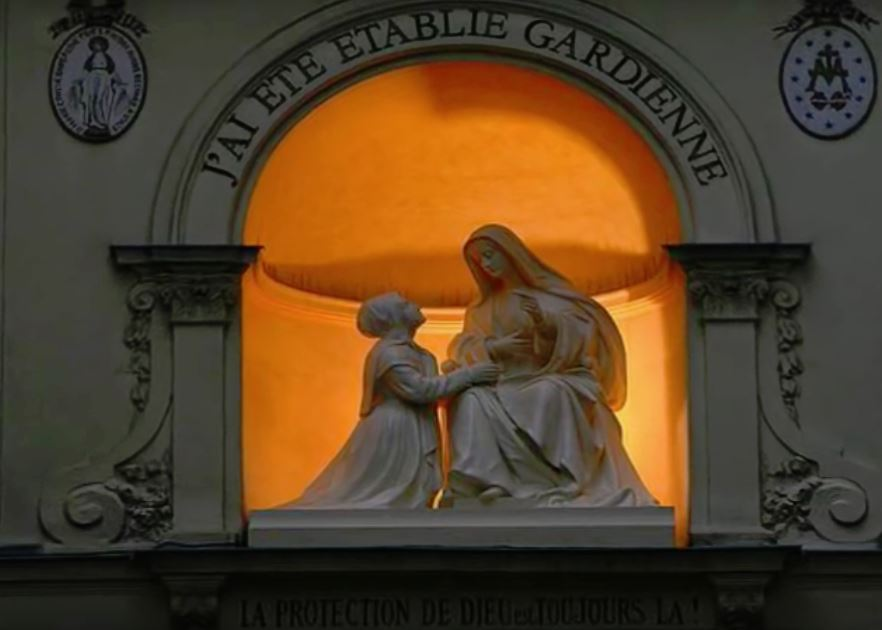
St Catherine Labouré DC (1806-1876) Virgin, Religious Sister of the Daughters of Charity of Saint Vincent de Paul and the Marian visionary of the Miraculous Medal. St Catherine was Canonised on 27 July 1947 by Pope Pius XII. Her body is Incorrupt
St Catherine’s Story:
https://anastpaul.com/2018/11/28/saint-of-the-day-28-november-st-catherine-laboure-dc-1806-1876/
Bl Calimerius of Montechiaro
St Fionnchu of Bangor
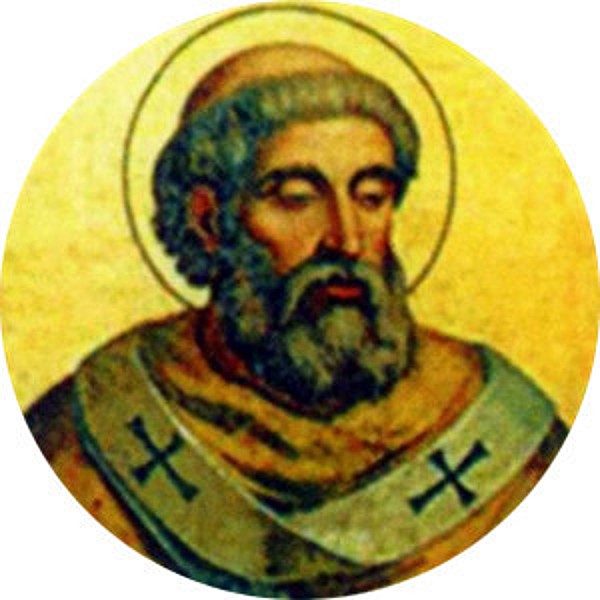
St Pope Gregory III (Died 741) Bishop of Rome 11 February 731 until his death on 28 November 741. (His Feast was moved to 10 December in 1969), The Roman Martyrology states: “At Rome, the blessed Pope Gregory III, who departed for Heaven with a reputation for great sanctity and miracles.“
His Life:
https://anastpaul.com/2021/11/28/saint-of-the-day-28-november-saint-pope-gregory-iii-died-741/
St Hilary of Dijon
St Hippolytus of Saint Claude
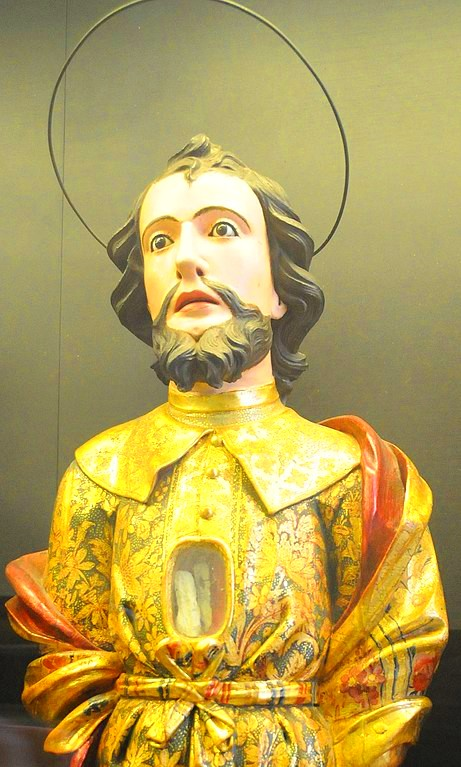
St Honestus of Nimes (Died 270) Priest Martyr, Missionary. A disciple of St Saturninus of Toulouse (Died c257) Bishop and Martyr and a native of Nîmes.
His Life and Death:
https://anastpaul.com/2024/11/28/saint-of-the-day-28-november-saint-honestus-of-nimes-died-270-priest-martyr/
St Irenarcus
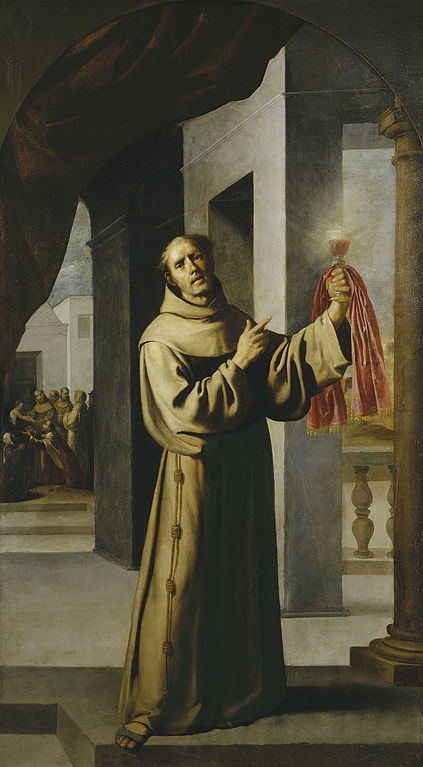
St James of the Marches OFM Conv. (1391-1476) Priest of the Friars Minor Conventional, Confessor, brilliant Preacher, Penitent, Reformer, Writer, Papal legate, Inquisitor, founder of several monasteries in Bohemia, Hungary and Austria. St James was Canonised on 10 December 1726 by Pope Benedict XIII. His body is Incorrupt.
About St James:
https://anastpaul.com/2019/11/28/saint-of-the-day-28-november-saint-james-of-the-marches-ofm-1391-1476/
Blessed James Thompson (Died 1582) Priest Martyr.
He was Beatified on 29 December 1886 by Pope Leo XIII. Additional Memorial – 29 October as one of the Martyrs of Douai.
His Life and Death:
https://anastpaul.com/2022/11/28/saint-of-the-day-28-november-blessed-james-thompson-died-1582-priest-martyr/
St Papius
St Quieta of Dijon
St Rufus
St Simeon the Logothete
St Sosthenes (1st Century) Bishop, Martyr, Jewish Ruler in Corinth, Converted by St Paul and became his disciple, who is mentioned by him in his First Epistle to the Corinthians (1 Corinthians 1:1–2) and by St Luke in Acts 18:12–17.
The Roman Martyrology reads: “At Corinth, the birthday of St Sosthenes, disciple of the blessed Apostle Paul, who is mentioned by that Apostle in his first Epistle to the Corinthians. He was chief of the synagogue when converted to Christ and, as a glorious beginning, consecrated the first fruits of his faith by being scourged in the presence of the Proconsul, Gallio.”
His Life and Death:
https://anastpaul.com/2023/11/28/saint-of-the-day-28-november-st-sosthenes-1st-century-bishop/
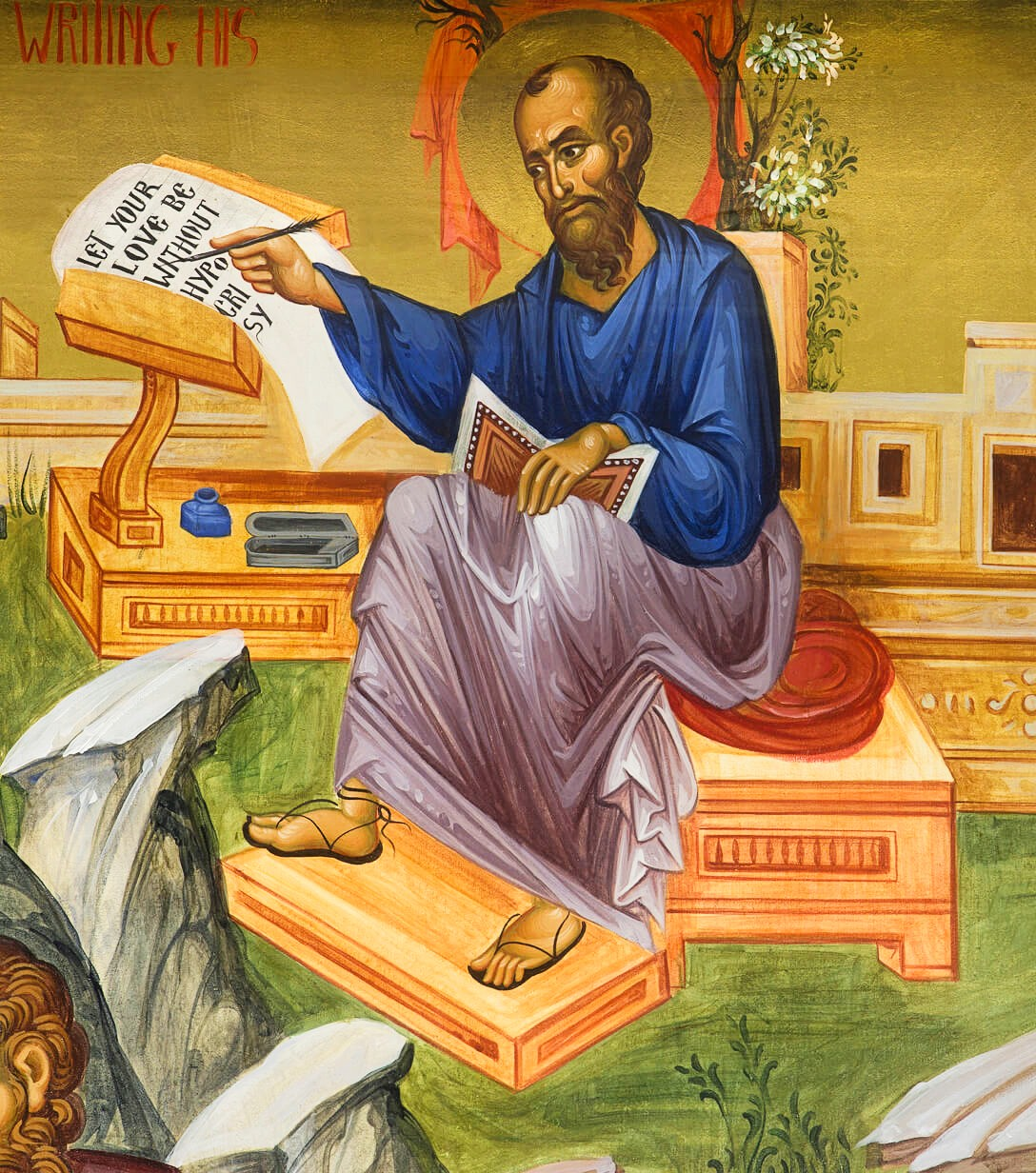
St Stephen the Younger (c713-764) Abbot Martyr
Bl Theodora of Rossano
Martyrs of Constantinople – 8 Saints: A group of over 300 Christians Martyred during the persecutions of the Iconoclast Emperors. We have a lot of information on Saint Stephen the Younger but for the others we have nothing but seven of their names – Andrew, Auxentius, Basil, Gregor, John, Peter and Stefan. They were
scourged, stoned and/or dragged to death through the streets of Constantinople in 764.
Martyrs of North Africa – 13 Saints: A group of thirteen Clerics killed or exiled in the persecutions of Arian Vandals in North Africa – Crescens, Crescentian, Cresconius, Eustace, Felix, Florentian, Habetdeum, Hortulanus, Mansuetus, Papinianus, Quodvultdeus, Urban and Valerian.
Martyrs of Tiberiopolis – 14 Saints: A group of fourteen Christian Laymen, Deacons, Priests and Bishops who were Martyred together in the persecutions of Julian the Apostate – Basil, Chariton, Comasios, Daniel, Etymasius, Hierotheos, John, Nicephorus, Peter, Sergius, Socrates, Theodore, Thomas and Timothy.
361 at Tiberiopolis, Phyrgia (in modern Turkey)
 AnaStpaul
You must be logged in to post a comment.