
Saint of the Day – 5 December – Saint Nicetius (c513-c566) Bishop of Trier (formerly Treves), a most zealous shepherd, travelling extensively and preaching with tireless teaching. A courageous Reformer and Defender of the Church against all heresies and all forms of immoral living. Nicetius was one of the most important Bishops of his era. Born into a Gallo-Roman family in the latter 5th Century in Auvergne, France and died in c566 at his See in Trier. Also known as – Nicetus, Nicezio, Nizier, or Niketius. Additional Feast – 1 October in Trier.
The Roman Martyrology reads today: “At Treves, St Nicetius, Bishop, a man of great sanctity.”
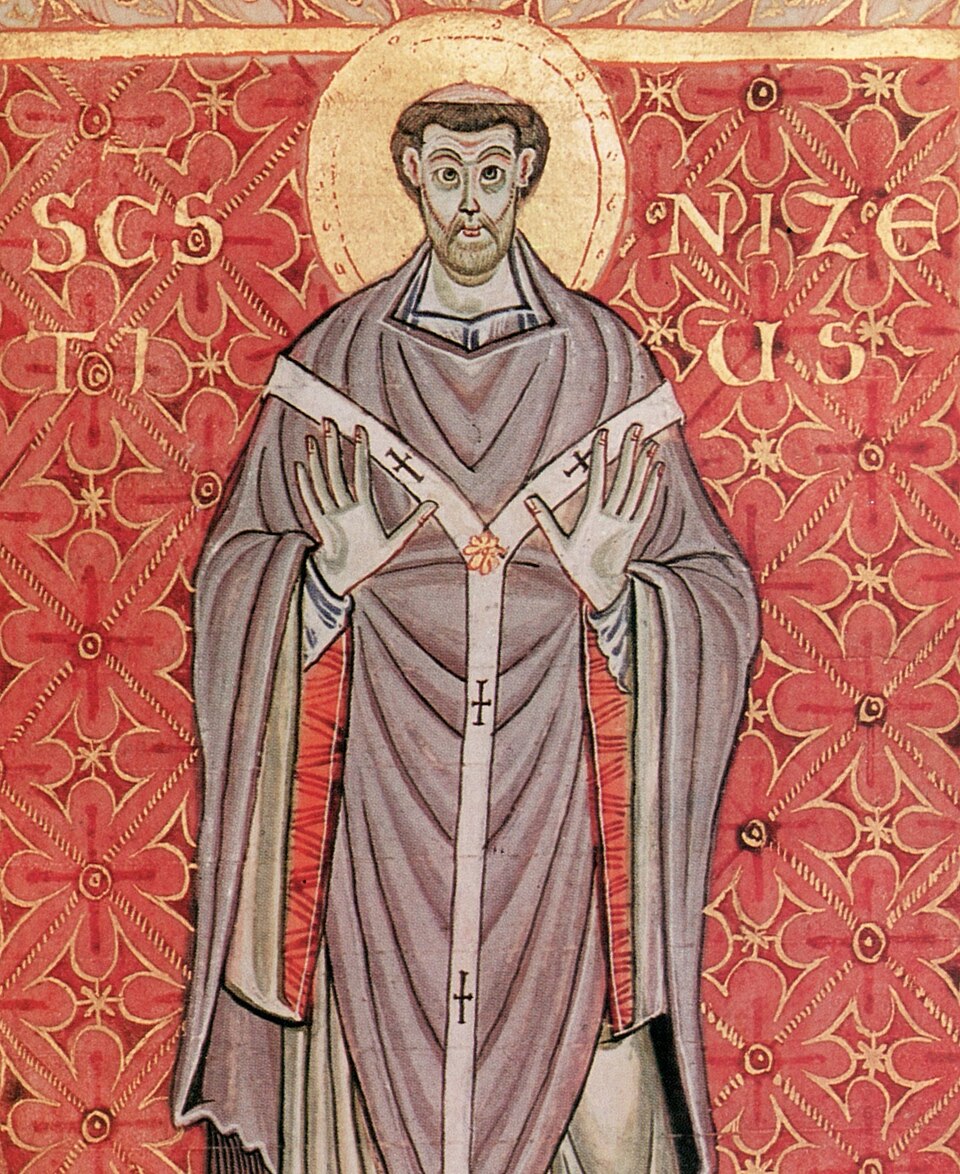
From a young age, Nicetius displayed a deep religious devotion and was drawn towards a life of piety and service to God. He entered monastic life at Limoges and quickly distinguished himself by his dedication and holiness.
His reputation reached the ears of King Theodoric I, who held Nicetius in high regard for his virtue and wisdom. Impressed by his qualities, King Theodoric supported Nicetius in his pursuit of the Episcopacy. In 532, Nicetius was Consecrated as the Bishop of Trier, Gaul which is part of modern Germany. He inherited a Diocese which had become indifferent towards the Faith and he immediately began to bring about much-needed reforms and revitalisation. One of his first acts as Bishop was to rebuild the Cathedral, a symbol of his commitment to restoring the prominence of Christianity in the area.
Nicetius was a tireless advocate for the Faith and he dedicated himself to preaching and teaching to reawaken the love of God among the people. He travelled extensively throughout his Diocese, delivering daily sermons and exhorting, both commoners and aristocracy, to live virtuous lives in accordance with Christian principles.
His fearless denunciations of immorality were evident in his excommunication of King Clotaire I, who was known for his immoral conduct. This courageous act resulted in his exile from his own Diocese.
Throughout his life, Nicetius attended several important Councilss, including those held in Clermont in 535, Orleans in 549, Toul in 550 and Paris in 555. At these Councils, he played a key role in formulating Decrees and defending the orthodox Faith against various heresies, most notably Monophysitism.
In addition to his role as a reformer and defender of the Faith, Nicetius also focused on the internal affairs of his See. He undertook efforts to restore discipline among the Clergy and promote holiness and genuine devotion. His reforms were successful in rejuvenating the spiritual life of the Clergy in his Diocese.
Saint Nicetius of Trier died in around 566. He was buried in the Church of Saint Maximin in Trier, Germany, where his Tomb became a site of veneration by the faithful. Although no specific Patronages have been attributed to him, Saint Nicetius remains an exemplary figure of moral courage, piety and zeal for the Church of Christ. His legacy as a reformer and revitaliser of the Church lives on, inspiring generations of believers to strive for holiness and the preservation of Christian obedience and the principles of sanctity. He was recognised as a Saint by the Catholic Church before the formal process of Canonisation was established.

 AnaStpaul