Thought for the Day –19 December – Meditations with Antonio Cardinal Bacci (1881-1971)
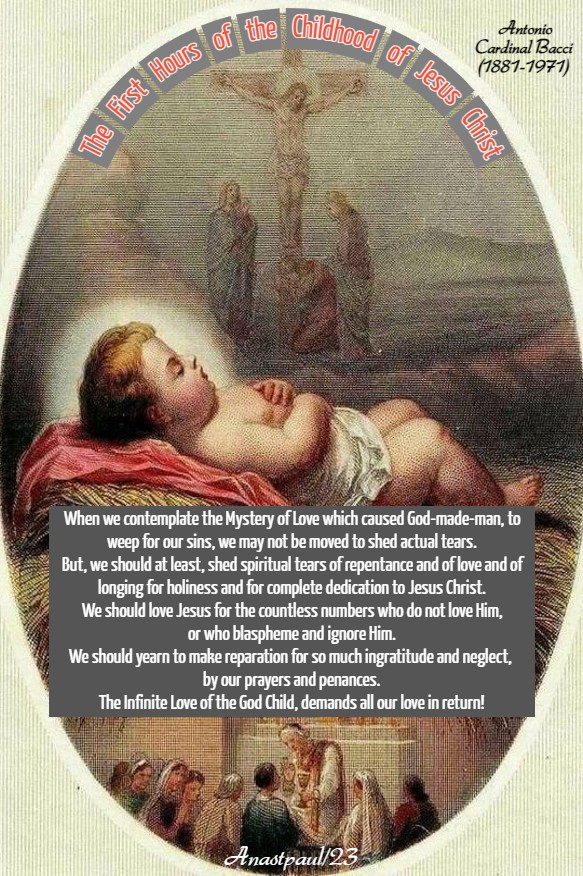
A Christmas Novena IV The First Hours of the Childhood of Jesus Christ
“When we contemplate the Mystery of Love which caused God-made-man, to weep for our sins, we may not be moved to shed actual tears. But, we should at least, shed spiritual tears of repentance and of love and of longing for holiness and for complete dedication to Jesus Christ. We should love Jesus for the countless numbers who do not love Him, or who blaspheme and ignore Him. We should yearn to make reparation for so much ingratitude and neglect, by our prayers and penances. The Infinite Love of the God Child, demands all our love in return!”
Quote of the Day – 19 December – “The Month of the Divine Infancy and the Immaculate Conception of the Blessed Virgin Mary”
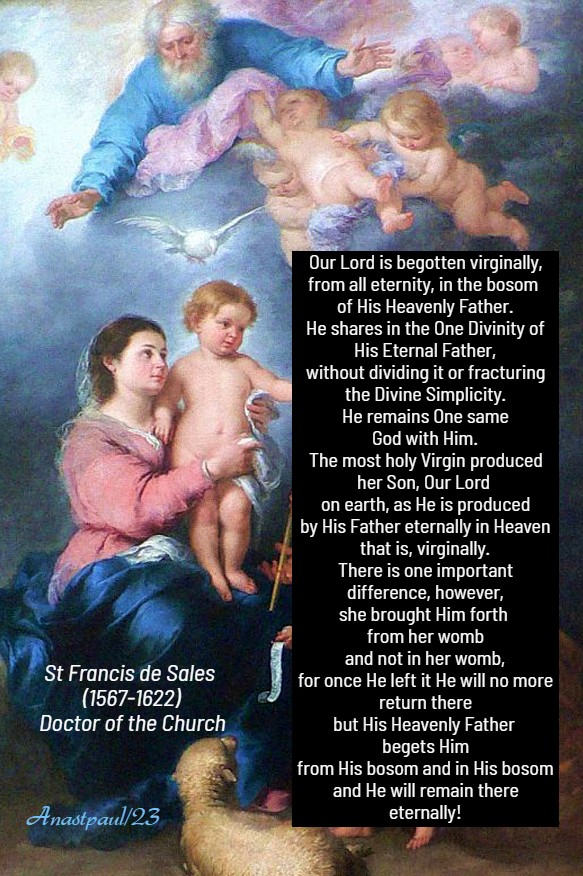
“Our Lord is begotten virginally, from all eternity, in the bosom of His Heavenly Father. He shares in the One Divinity of His Eternal Father, without dividing it or fracturing the Divine Simplicity. He remains One same God with Him. The most holy Virgin produced her Son, Our Lord on earth, as He is produced by His Father eternally in Heaven that is, virginally. There is one important difference, however, she brought Him forth from her womb and not in her womb, for once He left it He will no more return there but His Heavenly Father begets Him from His bosom and in His bosom and He will remain there eternally!”
(The Coming of the Divine Infant 24 December 1613 Sermon for Christmas Eve)
St Francis de Sales (1567-1622) Doctor of the Church
One Minute Reflection – 19 December – “The Month of the Divine Infancy and the Immaculate Conception of the Blessed Virgin Mary” – Ember Friday – Isaias 11:1-5 – Luke 1:39-47 – Scripture search here: https://www.drbo.org/
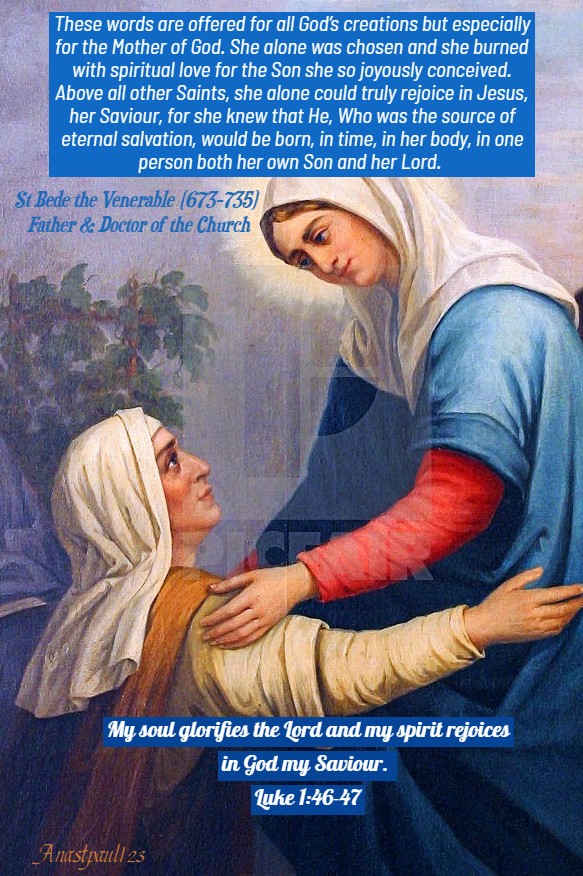
“My soul glorifies the Lord and my spirit rejoices in God my Saviour.”- Luke 1:46-47
REFLECTION – “When a man devotes all his thoughts to the praise and service of the Lord, he proclaims God’s greatness. His observance of God’s commands, moreover, shows that he has God’s power and greatness always at heart. His spirit rejoices in God his Saviour and delights in the mere recollection of his Creator Who gives him hope for eternal salvation.
These words are offered for all God’s creations but especially for the Mother of God. She alone was chosen and she burned with spiritual love for the Son she so joyously conceived. Above all other Saints, she alone could truly rejoice in Jesus, her Saviour, for she knew that He, Who was the source of eternal salvation, would be born, in time, in her body, in one person both her own Son and her Lord.
Therefore, it is an excellent and fruitful custom of holy Church that we should sing Mary’s hymn at the time of evening prayer. By meditating upon the Incarnation, our devotion is kindled and, by remembering the example of God’s Mother, we are encouraged to lead a life of virtue. Such virtues are best achieved in the evening. We are weary after the day’s work and worn out by our distractions. The time for rest is near and our minds are ready for contemplation.” – St Bede the Venerable (673-735) Father & Doctor of the Church
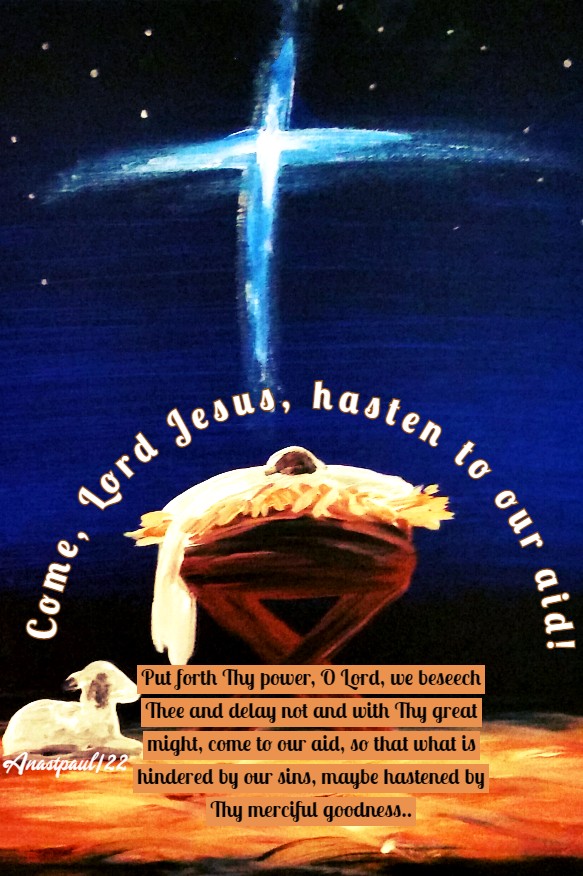
PRAYER – Put forth Thy power, O Lord, we beseech Thee and delay not and with Thy great might, come to our aid, so that what is hindered by our sins, maybe hastened by Thy merciful goodness. Who livest and reignest with God the Father, in the unity of the Holy Spirit, God, world without end. Amen (Collect).
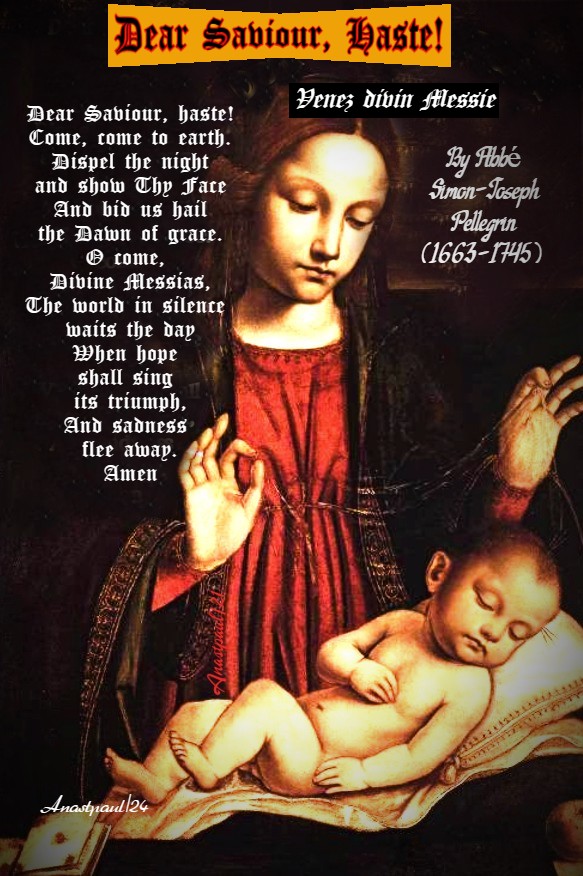
Dear Saviour, haste! Come, come to earth. Dispel the night and show Thy Face And bid us hail the Dawn of grace. O come, Divine Messias, The world in silence waits the day When hope shall sing its triumph, And sadness flee away. Amen
This is the Refrain from a beautiful Advent Hymn by Abbé Simon-Joseph Pellegrin, a French Cluniac Monk, Poet, Composer and Playwright.
Saint of the Day – 19 December – St Avitus (Died c530) Abbot of Saint-Mesmin de Micy Abbey near Orleans and later at his own Monastery now called St Avy of Chateau-dun. St Avitus was renowned for demonstrating the grace of prophecy. Also known as – Adjutus, Avit, Avy. Additional Memorial – 17 June on some calendars.
The Roman Martyrology reads today: “At Orleans, St Avitus, an Abbot renowned for the spirit of prophecy.”
Micy Abbey: drawing by Louis Boudan, 1707
Avitus was a native of Orleans and retiring into Auvergne, took the monastic habit together with St Calais in the Abbey of Menat, at that time very small; though afterwards enriched by Queen Brunehault and by St Boner, the Bishop of Clermont.
The two Saints soon after returned to Micy, a famous Abbey situated on the Loiret, a league and a half below Orleans. It was founded towards the end of the reign of Clovis I. by St Euspicius a holy Priest and his nephew, St Maximin, or Mesmin, whose name this Monastery, which is now of the Cistercian order bears.
Many call St Maximin the 1st Abbot, others St Euspicius the 1st, St Maximin the 2nd and St Avitus the 3rd. But our Saint and St Calais, did not remain very long at Mici, although St Maximin gave them a gracious reception.
In quest of a closer union with God, Avitus, who had succeeded St Maximin, soon after resigned the Abbacy, as Lethuld, a learned Monk of Micy, assures us and, with St Calais lived as Hermits in the territory now called Dunois, on the frontiers of la Perche.
Others joining them, St Calais retired into a forest in Maine and King Clotaire built a Church and Monastery for St Avitus and his companions. This is at present a Carmelite Nunnery called St Avy of Chateau-dun and is situated on the Loire at the foot of the hill on which the Town of Chateau-dun is built, in the Diocese of Chartres.
Three famous Monks, Leobin, afterwards Bishop of Chartres, Euphronius and Rusticus, attended our Saint to his happy death which happened about the year 530. His body was carried up the Loire to Orleans and buried with great pomp in that City. A Church was built over his Tomb which still subsists and his Feast is kept in Orleans, Paris and in other places.
Some distinguish St Avitus Abbot of Micy from the Abbot of Chateau-dun but all circumstances show that it was the same holy man who retired from Mici into the territory of Chateau-dun. See the life of St Avitus published by Henschenius in 1701 and also the New Paris Breviary on the 17th of June.
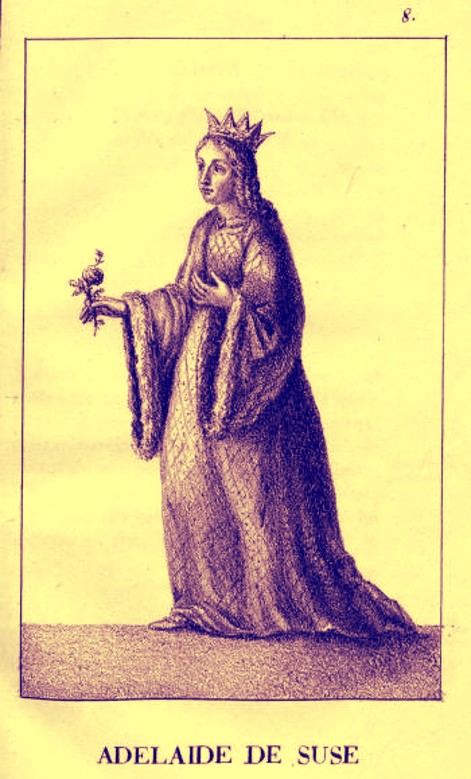
St Adelaide (c1014-1091) Countess, Married Laywoman, mother of 5, widowed 3 times. Born in c1014 in Turin, Italy and died on 19 December 1091 also in Italy. Adelaide made donations to the Monasteries of Turin, founded the Monastery of Santa Maria at Pinerolo and received communication from many leading Ecclesiastical dignitaries of the day. She also furthered the processes of reform within the Church hierarchy. Her Devoted Life: https://anastpaul.com/2023/12/19/saint-of-the-day-19-december-saint-adelaide-of-susa-c1014-1091-widow/
St Avius (Died c530) Abbot of Saint-Mesmin de Micy Abbey near Orleans Bl Berengar of Banares
Blessed Mercedarian Fathers – (6 Beati): A group of Mercedarian Friars noted for their dedication to the Order’s Rule, for their continuous prayer life and their personal piety. Blessed Bartolomeo of Podio Blessed Giovanni of Verdera Blessed Guglielmo de Gallinaris Blessed Guglielmo of Prunera Blessed Pietro of Benevento Blessed Pietro of Gualba
Martyrs of Nicaea – (4 Saints): A group of Christians Martyred together. The only surviving details are four of their names – Darius, Paul, Secundus and Zosimus. They were martyred at Nicaea, Bithynia (modern Izmit, Turkey).
Martyrs of Nicomedia – 5 Saints: A group of Christians Martyred together in the persecutions of Diocletian. We know little more than the names of five – Anastasius, Cyriacus, Paulillus, Secundus and Syndimius. They were martyred in 303 at Nicomedia, Asia Minor.






 AnaStpaul
You must be logged in to post a comment.