Quote/s of the Day – 4 December – St Peter Chrysologus (c400-450) “Golden Words” Confessor, Father & Doctor of the Church
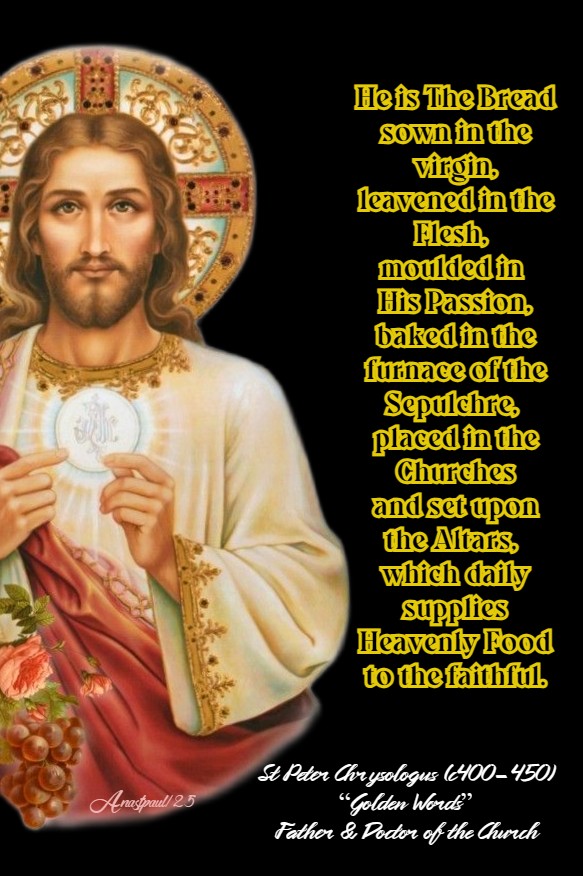
“He is The Bread sown in the virgin, leavened in the Flesh, moulded in His Passion, baked in the furnace of the Sepulchre, placed in the Churches and set upon the Altars, which daily supplies Heavenly Food to the faithful.”
“For he who touches the Body of Christ unworthily receives his damnation!”
One Minute Reflection – 4 December – “The Month of the Divine Infancy and the Immaculate Conception of the Blessed Virgin Mary” – St Peter Chrysologus (c400-450) “Golden Words” Confessor, Father & Doctor of the Church – Romans 13:11-14 – Luke 21:25-33 – – – – – – – Scripture search here: https://www.drbo.org/
“But put on the Lord Jesus Christ.” – Romans 13:14
REFLECTION – “Put on the Lord Jesus Christ and make no provision for the flesh and its desires, so that you may be clothed with the Life of Him, Whom you have put on in this Sacrament. You have all been clothed with Christ by your Baptism in Him. There is neither Jew nor Greek, there is neither slave nor freeman, there is neither male nor female, you are all one in Christ Jesus.
Such is the power of this Sacrament: it is a Sacrament of new life which begins here and now, with the forgiveness of all past sins and will be brought to completion, in the resurrection of the dead. You have been buried with Christ by Baptism into death, in order that, as Christ has risen from the dead, you also may walk in newness of life.
You are walking now by faith, still on pilgrimage in a mortal body away from the Lord but He, to Whom your steps are directed, is Himself the sure and certain Way for you – Jesus Christ, Who, for our sake became man. For all who fear Him, He has stored up abundant happiness which He will reveal to those who hope in Him, bringing it to completion, when we have attained the reality which, even now, we possess, in hope.
This is the octave day of your new birth. Today is fulfilled in you, the sign of faith that was prefigured in the Old Testament by the circumcision of the flesh, on the eighth day after birth. When the Lord rose from the dead, He put off the mortality of the flesh; His Risen Body was still the same Body but it was no longer subject to death. By His Resurrection, He consecrated Sunday, or the Lord’s Day. Though the third after His Passion, this day is the eighth after the Sabbath and thus also, the first day of the week.
And so, your own hope of resurrection, though not yet realised, is sure and certain because you have received the Sacrament or sign of this reality and have been given the pledge of the Spirit. If, then, you have risen with Christ, seek the things which are above, where Christ is seated at the Right Hand of God. Set your hearts on heavenly things, not the things that are on earth. For you have died and your life is hidden with Christ in God. When Christ, your Life, appears, then you too will appear with Him in glory.” – St Augustine (354-430) Father and Doctor of Grace (An excerpt from: Sermon 8 – On the Paschal Octave).
PRAYER – O God, Who willed to foreshow divinely that blessed Peter Chrysologus would be a great Doctor to rule and teach Thy Church, grant, we beseech Thee that we may be worthy to have him as our intercessor in Heaven, who on earth was a teacher of life. Through the same Jesus Christ, Thy Son our Lord, Who lives and reigns with Thee, in the unity of the Holy Ghost, God, world without end. Amen (Collect).
Our Morning Offering – 4 December – “The Month of the Divine Infancy and the Immaculate Conception of the Blessed Virgin Mary”
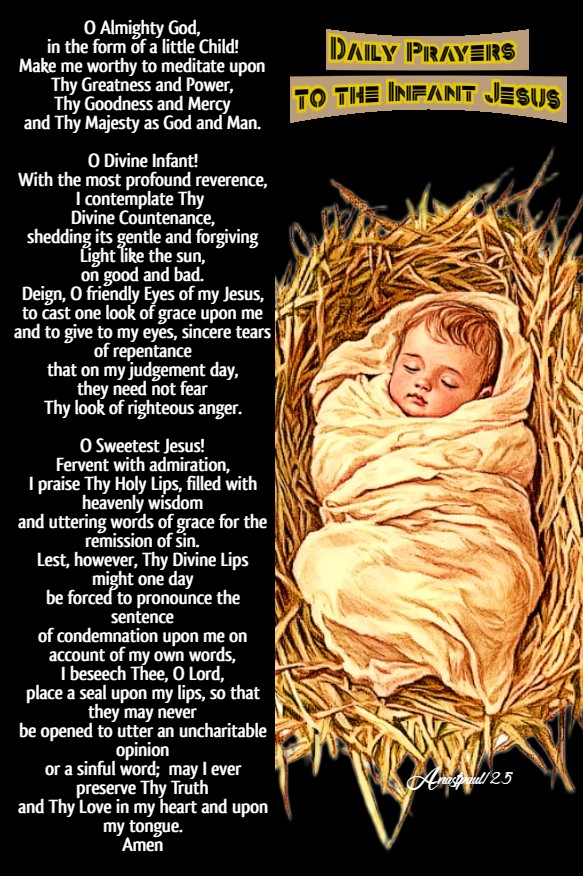
Daily Prayers to the Infant Jesus
O Almighty God, in the form of a little Child! Make me worthy to meditate upon Thy Greatness and Power, Thy Goodness and Mercy and Thy Majesty as God and Man.
O Divine Infant! With the most profound reverence, I contemplate Thy Divine Countenance, shedding its gentle and forgiving Light like the sun, on good and bad. Deign, O friendly Eyes of my Jesus, to cast one look of grace upon me and to give to my eyes, sincere tears of repentance that on my judgement day, they need not fear Thy look of righteous anger.
O Sweetest Jesus! Fervent with admiration, I praise Thy Holy Lips, filled with heavenly wisdom and uttering words of grace for the remission of sin. Lest, however, Thy Divine Lips might one day be forced to pronounce the sentence of condemnation upon me on account of my own words, I beseech Thee, O Lord, place a seal upon my lips, so that they may never be opened to utter an uncharitable opinion or a sinful word; may I ever preserve Thy Truth and Thy Love in my heart and upon my tongue. Amen
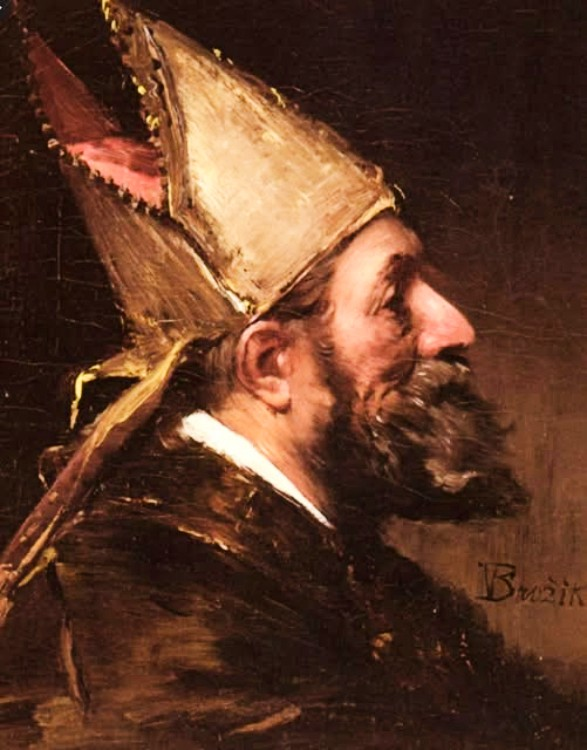
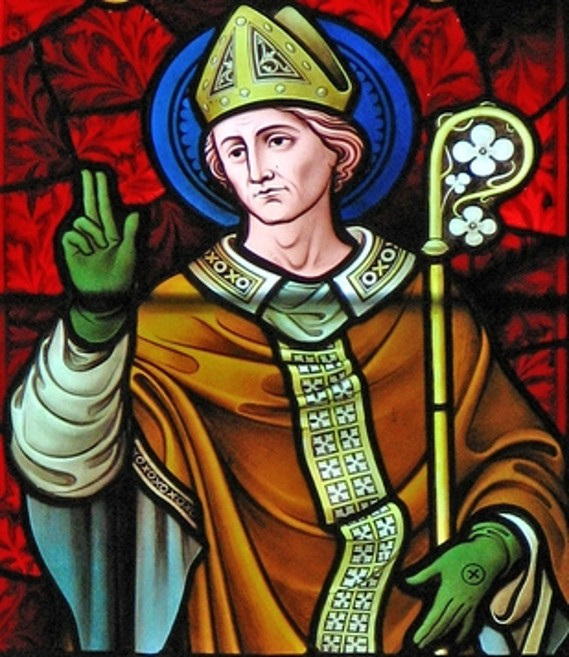
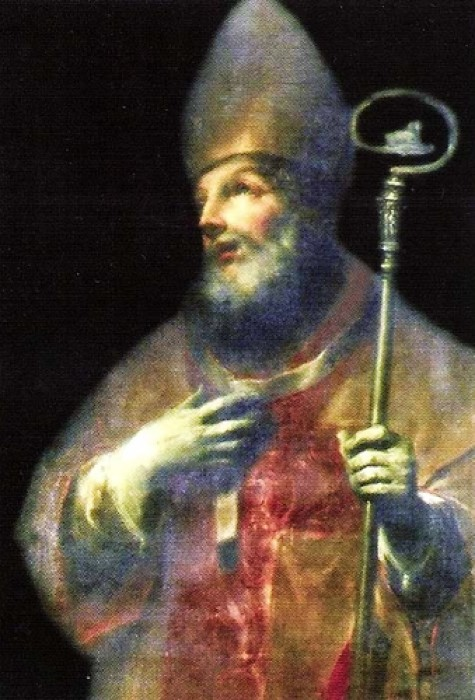
Saint of the Day – 4 December – St Meletus (4th Century) Bishop of Pontus, Scholar and learned Bishop of great sanctity. Pontus is a region within Anatolia on the southern coast of the Black Sea, located in the modern-day eastern Black Sea region of Turkey … Also known as – Meletiu, Melitiusi, Melezio.
The Roman Martyrology reads today: “In Pontus, blessed St Meletus, Bishop and Confessor, who, joined to an eminent gift of knowledge, the more distinguished glory of fortitude and integrity of life.”
After praising the Martyr Saint Pamphilus, St Eusebius, in his Historia Ecclesiastica, adds: “Among the men of rare qualities who are of our time, (i.e. of the 4th Century) we know Pierius, an Alexandrian Priest and Meletus, Bishop of the Churches of Pontus.”
After pausing to praise Pierius, he continues: “Meletus—called *Attic Honey by men of learning—answered the ideal of the erudite in every field of doctrine. One could not sufficiently admire the force of his eloquence. Perhaps some will say this was a natural gift in him but who was superior to him in terms of the sum of his experience and the breadth of his erudition? Even at a single test you would have had to admit that in all disciplines based on reasoning he was the most able and eloquent. The sanctity of his life, moreover, was not inferior to his other qualities. I learned to know him for 7 years, when during the persecution, he had withdrawn to the regions of Palestine.”
It was necessary to cite this in full, as it is the principal source which, through such a laudatory portrait, introduces us to this Prelate.
According to Philostorgius, Meletus was the Bishop of Sevastopol. However, one can hardly give credence to this author’s assertions when he places Meletus in the Arian sect. This could not be reconciled with the praise given to him by both St Athanasius of Alexandria and St Basil of Caesarea.
Usuard is the first to include him in his, Martyrology, with a eulogy taken from St Eusebius on the arbitrary date of 4 December. P. Galesini, influenced by Usuard, introduced Meletus on this same day. G Meulen (Molano) takes up the eulgy of Usuard that Baronius reproduced almost verbatim in the Roman Martyrology.
*Attic Honey used as an analogy referring to a rare Greek Honey crafted from by the bees from fine herbs and flowers.
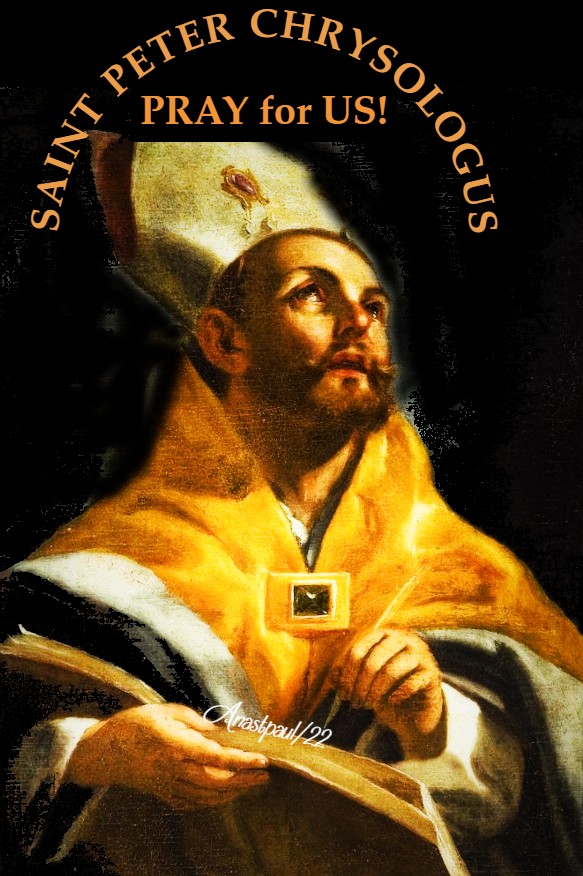
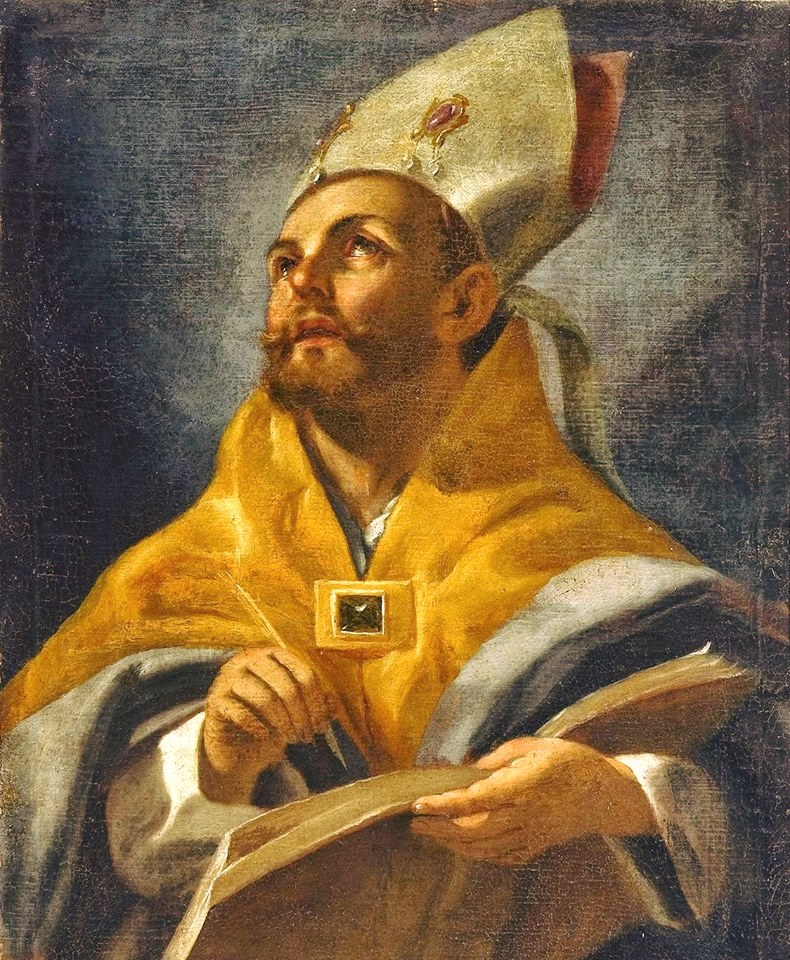
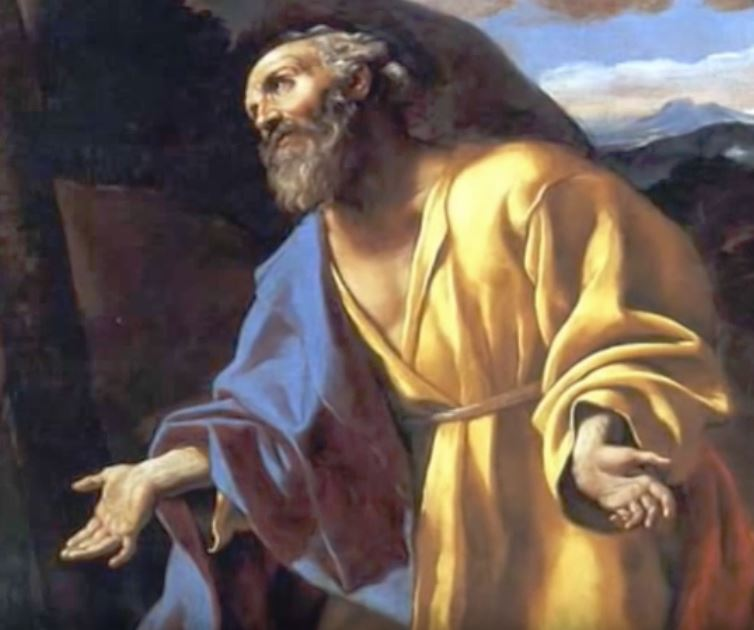
St Peter Chrysologus (c 400-450) “Golden Words” Confessor,, Father & Doctor of the Church – Bishop of Ravenna, Italy. Today we celebrate the Memorial of Saint Peter Chrysologus, a fifth-century Italian Bishop known for testifying courageously to Christ’s full humanity and divinity during a period of the heresy called “Monophysite.” The saint’s title, Chrysologus, signifies “golden speech” in Greek. Named as a Doctor of the Church in 1729 by Pope Benedict XIII., he is distinguished as the “Doctor of Homilies” for the concise but theologically rich reflections he delivered during his time as the Bishop of Ravenna. 176 of his sermons have survived – it is the strength of these beautiful explanations of the Incarnation, the Creed, the place of Mary and John the Baptist in the great plan of salvation, Mary’s perpetual Virginity, the penitential value of Lent, Christ’s Eucharistic presence and the Primacy of St Peter and his successors in the Church. FEAST DAY: 4 December (General Roman Calendar 1729-1969) https://anastpaul.com/2018/07/30/saint-of-the-day-30-july-st-peter-chrysologus-c-400-450-golden-words/
Bl Francis Galvez St Heraclas of Alexandria Bl Jerome de Angelis St John the Wonder Worker
St Maruthas (Died c415) Bishop, Confessor, Theologian, Writer, honoured in the Syrian Rite Church as a Doctor of the Church. He was a friend of Saint John Chrysostom and acted as an Ambassador between the East Roman Emperor and the Persian Emperor. The Roman Martyrology reads: “In the kingdom of Persia, St Maruta, Bishop, who, having restored peace for the Church, presided over the Council of Seleucia, restored the Churches of God which had collapsed during the persecution of King Sabor and placed the relics of the Martyrs of Persia in the City Seat of the Bishop, since then called Martiropoli.” Feast Day seems to have fallen victim to the changes made byy VII. His Holy Life: https://anastpaul.com/2022/02/16/saint-of-the-day-16-february-saint-maruta-died-c-415/
Thought for the Day – 3 December – Meditations with Antonio Cardinal Bacci (1881-1971)
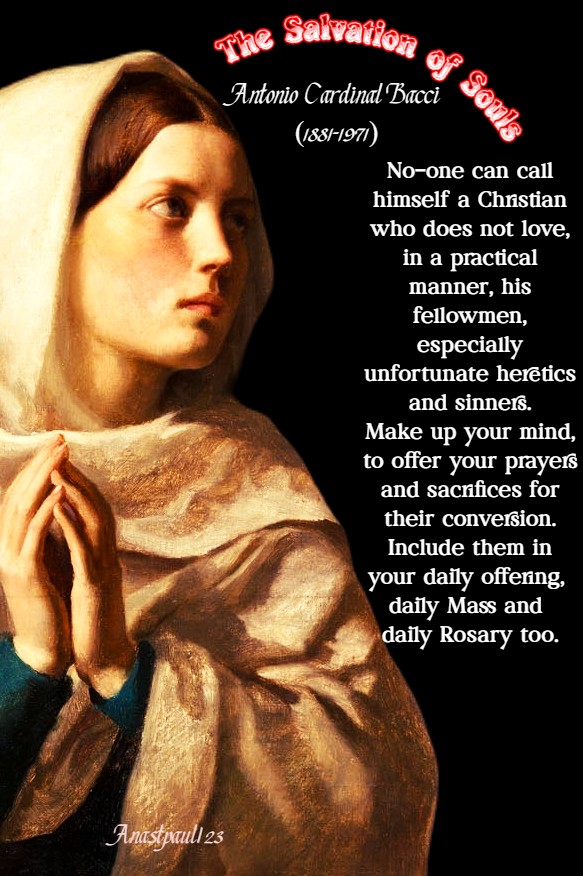
The Salvation of Souls
“Remember the countless conversions effected by the Saints as a result of their prayers, mortifications and heroic sacrifices. No-one can call himself a Christian who does not love, in a practical manner, his fellowmen, especially unfortunate heretics and sinners.
Make up your mind, to offer your prayers and sacrifices for their conversion. Include them in your daily offering, daily Mass and daily Rosary too.”
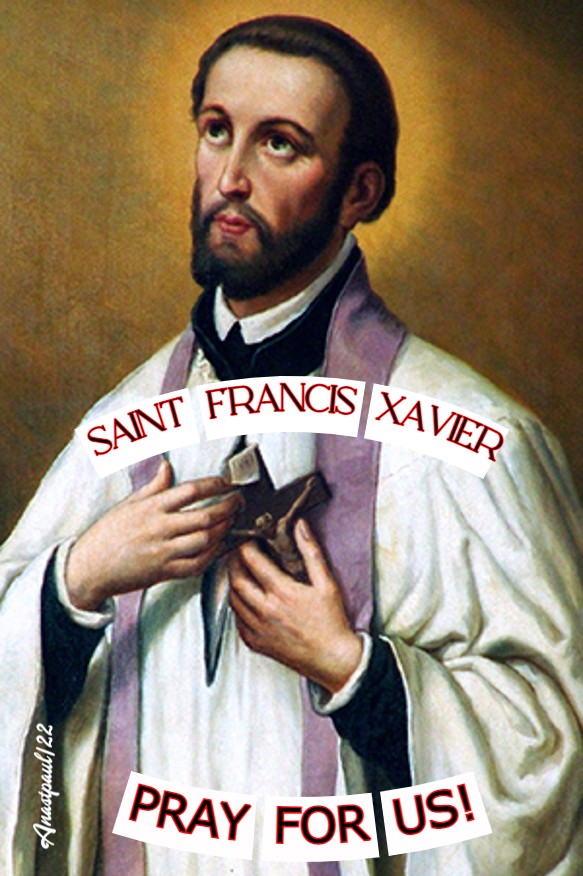
Quote/s of the Day – 3 December – St Francis Xavier SJ (1506-1552) Confessor
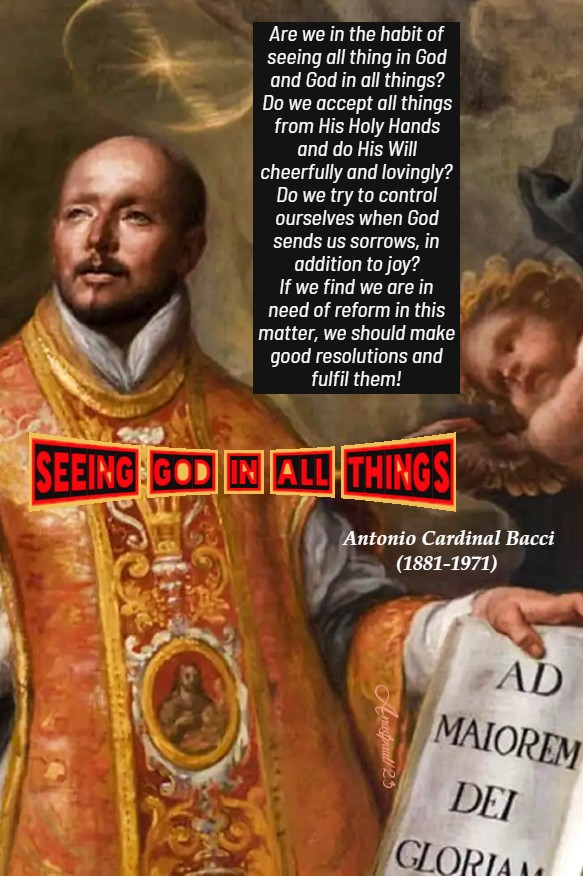
“Are we in the habit of seeing all thing in God and God in all things? Do we accept all things from His Holy Hands and do His Will cheerfully and lovingly? Do we try to control ourselves when God sends us sorrows, in addition to joy? If we find we are in need of reform in this matter, we should make good resolutions and fulfil them!”
Antonio Cardinal Bacci (1881-1971)
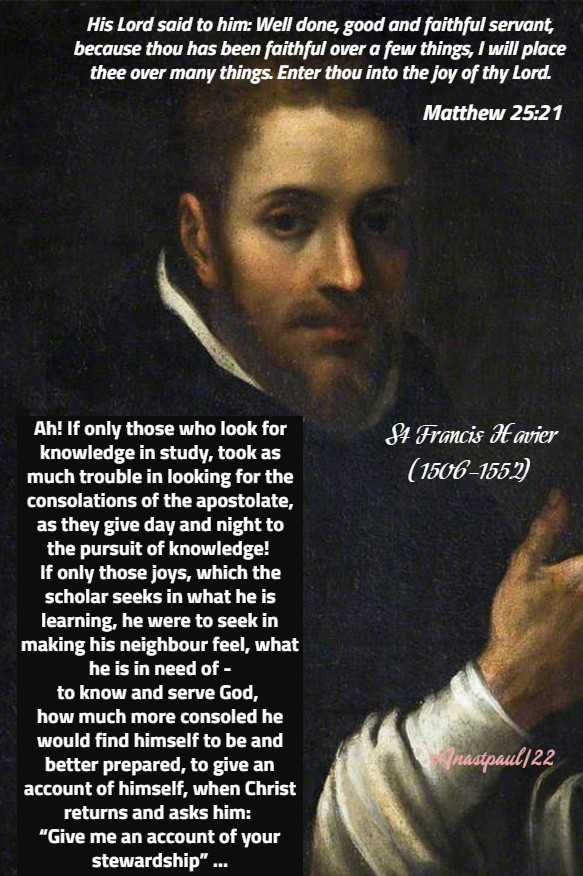
“His Lord said to him: Well done, good and faithful servant because thou has been faithful over a few things, I will place thee over many thing. Enter thou into the joy of thy Lord.” Matthew 25:21
“ Ah! If only those who look for knowledge in study, took as much trouble in looking for the consolations of the apostolate, as they give day and night to the pursuit of knowledge! If only those joys which the scholar seeks in what he is learning, he were to seek in making his neighbour feel, what he is in need of – to know and serve God, how much more consoled he would find himself to be and better prepared, to give an account of himself, when Christ returns and asks him: “Give me an account of your stewardship”
One Minute Reflection – 3 December – “The Month of the Divine Infancy and the Immaculate Conception of the Blessed Virgin Mary” – St Francis Xavier SJ (1506-1552) Confessor – Romans 10:10-18 – Mark 16:15-18 – Scripture search here: https://www.drbo.org/
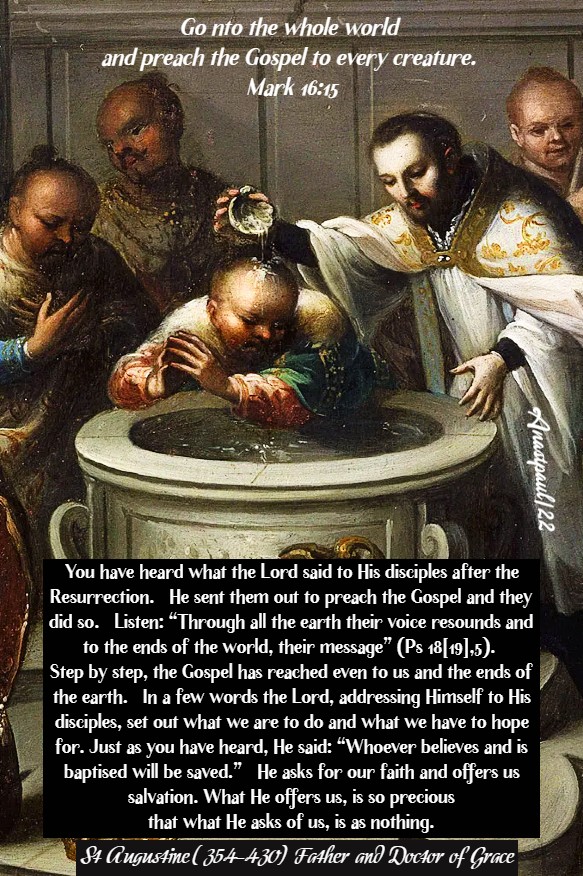
“Go into the whole world and preach the Gospel to every creature.” – Mark 16:15
REFLECTION – “You have heard what the Lord said to His disciples after the Resurrection. He sent them out to preach the Gospel and they did so. Listen: “Through all the earth their voice resounds and to the ends of the world, their message” (Ps 18:5). Step by step, the Gospel has reached even to us and the ends of the earth. In a few words the Lord, addressing Himself to His disciples, set out what we are to do and what we have to hope for. Just as you have heard, He said: “Whoever believes and is Baptised will be saved.” He asks for our faith and offers us salvation. What He offers us, is so precious that what He asks of us, is as nothing.
“The children of men take refuge in the shadow of Thy wings, O my God… from Thy delightful stream, Thou gives them to drink, for with Thee, is the Fountain of Life” (Ps 35[36],8f.). Jesus Christ is the Fountain of Life. Before the Fountain of Life came to us, we had only a human salvation like that of the beasts, of which the psalm speaks: “Man and beast you save, O Lord” (Ps 35[36],7). But now the Fountain of Life has come even to us, the Fountain of Life died for our sakes. Will He refuse us His Life,Who, for our sakes, gave His Death? He is salvation and this salvation is not worthless, like the other one. Why? Because it does not pass away. The Lord has come. He died but He killed death. In Himself, He brought an end to death. He assumed it and He killed it. Where is death now, then? Look for it in Christ and it is no longer there. It used to be there but there it died. O Life, Death of death! Take heart: it will also die in us. What was fulfilled in the Head will also be fulfilled in the members and death will die in us, too!” – St Augustine (354-430) Father and Doctor of Grace (Sermon 233).
PRAYER – O God, Thou Who were pleased to gather into Thy Church the peoples of the Indies by the preaching and miracles of blessed Francis, mercifully grant that we, who honour his glorious merits, may also imitate the example of his virtues. Through Jesus Christ, Thy Son our Lord, Who lives and reigns with Thee, in the unity of the Holy Ghost, God, world without end. Amen (Collect).
Our Morning Offering – 3 December – The Memorial of St Francis Xavier SJ (1506-1552) Confessor
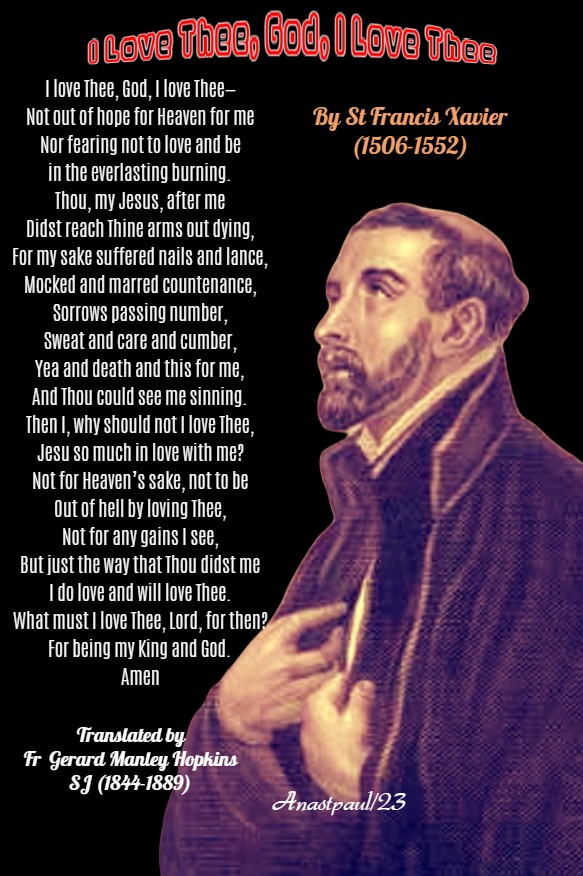
I Love Thee, God, I Love Thee By St Francis Xavier (1506-1552) Translated by Gerard Manley Hopkins SJ (1844-1889)
I love Thee, God, I love Thee— Not out of hope for Heaven for me Nor fearing not to love and be in the everlasting burning. Thou, my Jesus, after me Didst reach Thine arms out dying, For my sake suffered nails and lance, Mocked and marred countenance, Sorrows passing number, Sweat and care and cumber, Yea and death and this for me, And Thou could see me sinning. Then I, why should not I love Thee, Jesu so much in love with me? Not for Heaven’s sake, not to be Out of hell by loving Thee, Not for any gains I see, But just the way that Thou didst me I do love and will love Thee. What must I love Thee, Lord, for then? For being my King and God. Amen
Saint of the Day – 3 December – St Lucius, King and Bishop (Died c200) Patronages of Liechtenstein, the City and Diocese of Chur, Switzerland, Llandaff, Wales, the Diocese of Vaduz, Liechtenstein. Also known as – Lucius Curiensis, Luzi, Luzius…Lucius of Chur, … of Coire … of Briton.
The Roman Martyrology reads today: “At Coire, in Switzerland, St Lucius, King of the Britons, who was the first of those Kings who received the faith of Christ, in the time of Pope Eleutherius.”
According to the Legendary Life, Lucius went from England to Rhaetia in the 2nd Century where he became a missionaryand Bishop and Hermit.
It states that he was Martyred there around 200, (although the Roman Martyrology does not accord him this title), by the pagan Governor.
Since ancient times, it was believed that the Saint died on December. A Monastery was soon built over his Tomb. The Reliquary Crypt from the Merovingian era has survived to this day.
Cult evidence dates to the 8th Century and extended to the Diocese of the King Bishop of Chur which also included Tyrol and to the neighbouring Diocese of Constance and Sion. Recent research shows that the Saint later lived as a Hermit on the Luziensteig but nothing else is known. Relics of the saint are found in many Churches of the Diocese of Chur and in several Monasteries.
St Ethernan St Hilaria the Martyr St Jason the Martyr St John of Africa St Lucius, King (Died c200) St Lucy the Chaste St Magina of Africa St Mamas St Marcos García Rodríguez St Maurus the Martyr
St Seleucus St Stephen of Africa St Theodore of Alexandria St Theodulus of Edessa St Veranus St Zephaniah the Prophet
Martyrs of Nicomedia: Christians Martyred together in the persecutions of Diocletian – Ambicus, Julius and Victor. c 303 in Nicomedia, Bithynia (modern Izmit, Turkey).
Thought for the Day – 2 December – Meditations with Antonio Cardinal Bacci (1881-1971)
Recollection
“We may imagine that all this applies only to Monks but that is not so. We all need interior recollection and we can find it even during our work and in the midst of turmoil and confusion. If we fail to find it, moreover, it is too bad for us, as The Imitation of Christ warns us. “Peace is not in the heart of the carnal man, nor in the man who is devoted to outward things but, in the fervent and spiritual man” (Bk 1 Ch 6:2).
Let us make sure, therefore, that we shall not be distracted by worldly affairs. In the midst of all our occupations, let us preserve a spirit of detachment and live in the presence of God. May God be our first thought and our first desire and may He be the true goal of all our actions!”
Quote/s of the Day – 2 December – Sirach 51:13-17; Matthew 13:44-52 – Scripture search here: https://www.drbo.org/
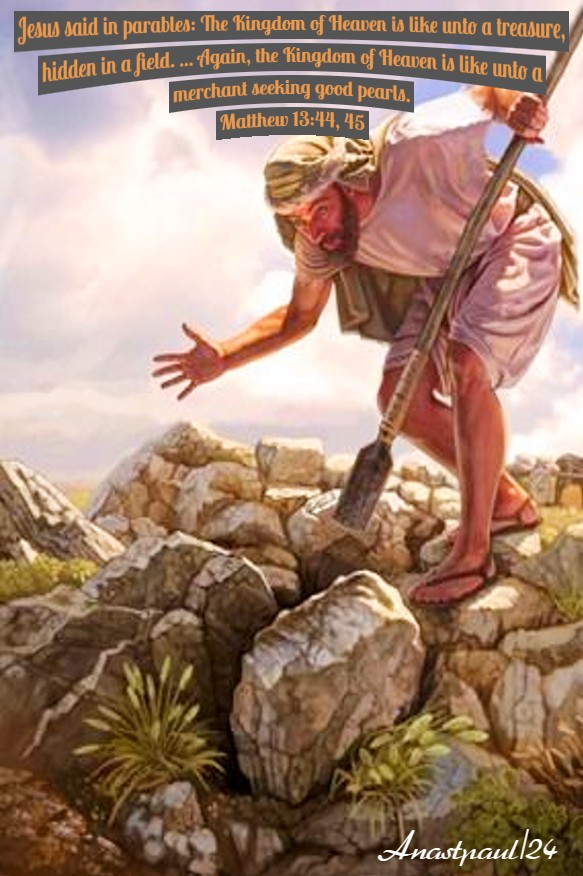
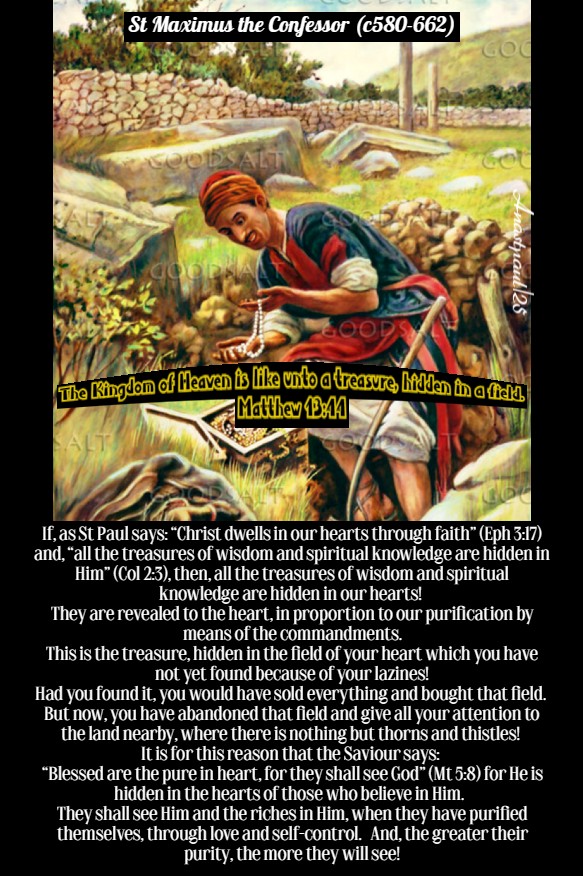
“Jesus said in parables: The Kingdom of Heaven is like unto a treasure, hidden in a field. … Again, the Kingdom of Heaven is like unto a merchant seeking good pearls. ”
Matthew 13:44, 45
“The two parables of the treasure and the pearl, both teach us the same thing – we should prefer the Gospel before all earthly treasures. … However, there is something even more praiseworthy than this – we should delight to give it preference, joyfully, unhesitatingly. Let us never forget this, to abandon all else, so as to follow God, is to gain more, than one loses. The preaching of the Gospel is hidden in this world like a hidden treasure, a treasure without price!”
St John Chrysostom (347-407) Father and Doctor of the Church
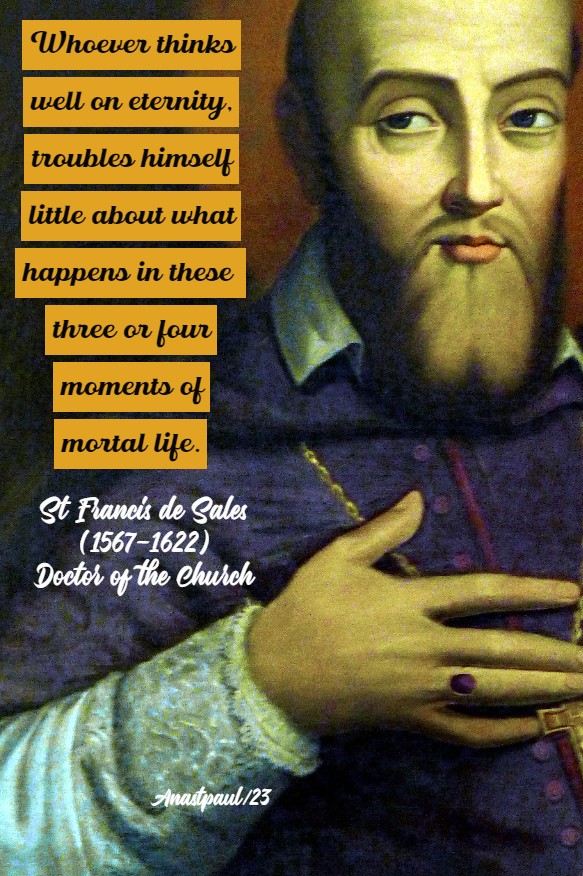
“Whoever thinks well on eternity, troubles himself little about what happens in these three or four moments of mortal life.”
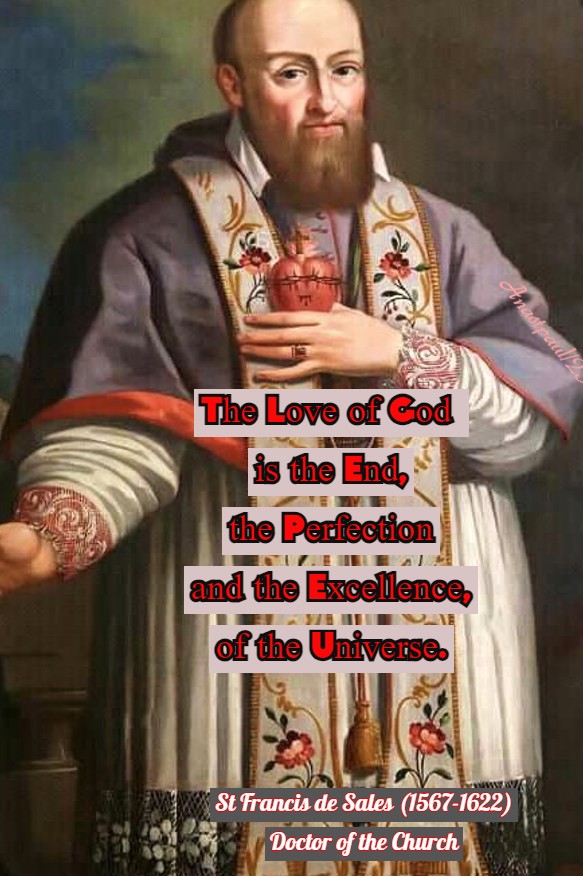
“The love of God is the end, the perfection and the excellence, of the universe. ”
(Treatise on the Love of God, Book 10, Chapter 1)
St Francis de Sales (1567-1622) Doctor of the Church
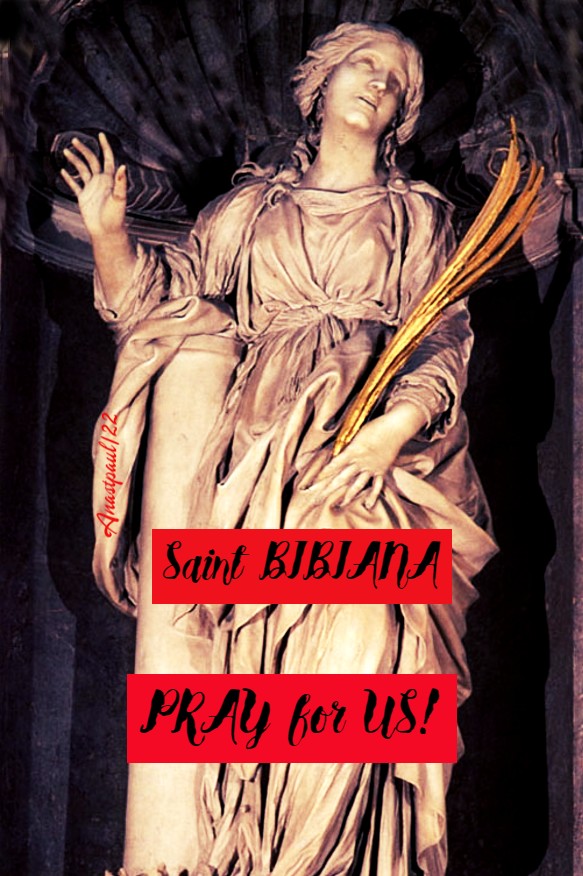
One Minute Reflection – 2 December – “The Month of the Divine Infancy and the Immaculate Conception of the Blessed Virgin Mary” – St Bibiana (Died c 361) Virgin Martyr – Sirach 51:13-17; Matthew 13:44-52 – Scripture search here: https://www.drbo.org/
“The Kingdom of Heaven is like unto a treasure, hidden in a field.” – Matthew 13:44
REFLECTION – “Some of the brethren think that they are excluded from the Holy Ghost’s gifts of grace. Because they neglect to practise the commandments, they do not know that he who has an unadulterated faith in Christ, has within himself, the sum total of all the Divine gifts. Since, through our laziness, we are far from having an active love for Him — a love which shows us the Divine Treasures within us — we naturally think that we are excluded from these gifts.
If, as St Paul says: “Christ dwells in our hearts through faith” (Eph 3:17) and, “all the treasures of wisdom and spiritual knowledge are hidden in Him” (Col 2:3), then, all the treasures of wisdom and spiritual knowledge are hidden in our hearts! They are revealed to the heart, in proportion to our purification by means of the commandments. This is the treasure, hidden in the field of your heart which you have not yet found because of your laziness! Had you found it, you would have sold everything and bought that field. But now, you have abandoned that field and give all your attention to the land nearby, where there is nothing but thorns and thistles! It is for this reason that the Saviour says: “Blessed are the pure in heart, for they shall see God” (Mt 5:8) for He is hidden in the hearts of those who believe in Him.They shall see Him and the riches in Him, when they have purified themselves, through love and self-control. And, the greater their purity, the more they will see!” – St Maximus the Confessor (c580-662) Abbot and Theologian (Centuries of love 4:69).
PRAYER – O God, giver of all good gifts, Thou Who in Thy servant, Bibiana, joined the flower of virginity with the palm of Martyrdom, by her intercession unite our hearts to Thee in charity, so that, saved from all dangers, we may obtain the rewards of eternal life. Through the same Jesus Christ, Thy Son our Lord, Who lives and reigns with Thee, in the unity of the Holy Ghost, God, world without end. Amen (Collect).
Our Morning Offering – 2 December – “The Month of the Divine Infancy and the Immaculate Conception of the Blessed Virgin Mary” – First Saturday of the Month
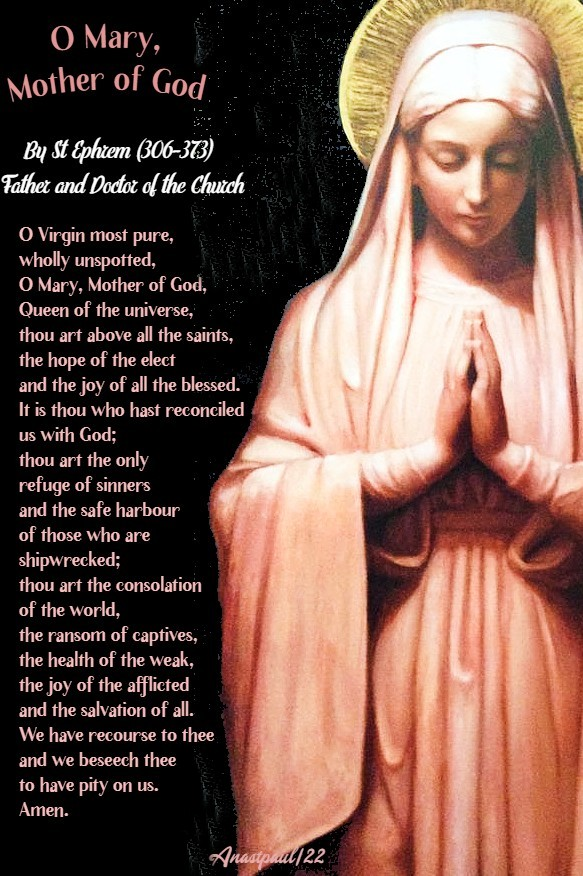
O Mary, Mother of God (O Virgin Most Pure, Wholly Unspotted) By St Ephrem of Syria (306-373) Father and Doctor of the Church
O Virgin most pure, wholly unspotted, O Mary, Mother of God, Queen of the universe, thou art above all the saints, the hope of the elect and the joy of all the blessed. It is thou who hast reconciled us with God; thou art the only refuge of sinners and the safe harbour of those who are shipwrecked; thou art the consolation of the world, the ransom of captives, the health of the weak, the joy of the afflicted and the salvation of all. We have recourse to thee and we beseech thee to have pity on us. Amen.
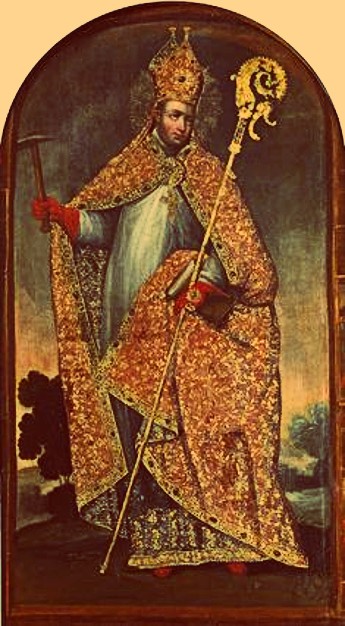
Saint of the Day – 2 December – Saint Robert (Died 1185) O.Cist. Abbot of the Cistercian Monastery at Matallana, in Valladolid, Spain. Possibly born in Champagne, France and died at his Monastery in Spain. Patronages – against locusts, against vermin, of Champagne, France.
The Cistercian Order celebrates St Robert on 2 December but historians of the Order have handed down very little information about him.
It is not known when he was born but in 1175 he was already a Cistercian Monk at the Monastery of La Creste in Burgundy; a historic region of France, which was the seat of the monastic reforms of the Cluniacs and the Cistercians.
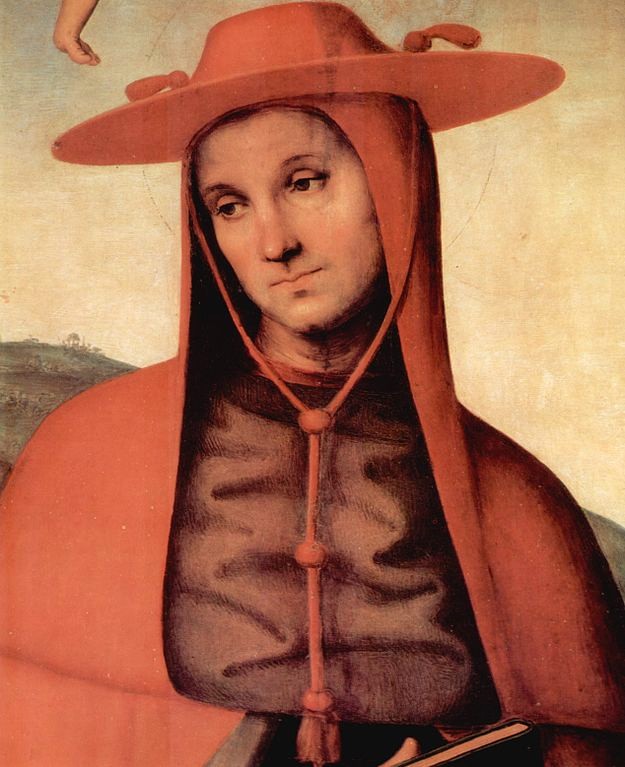
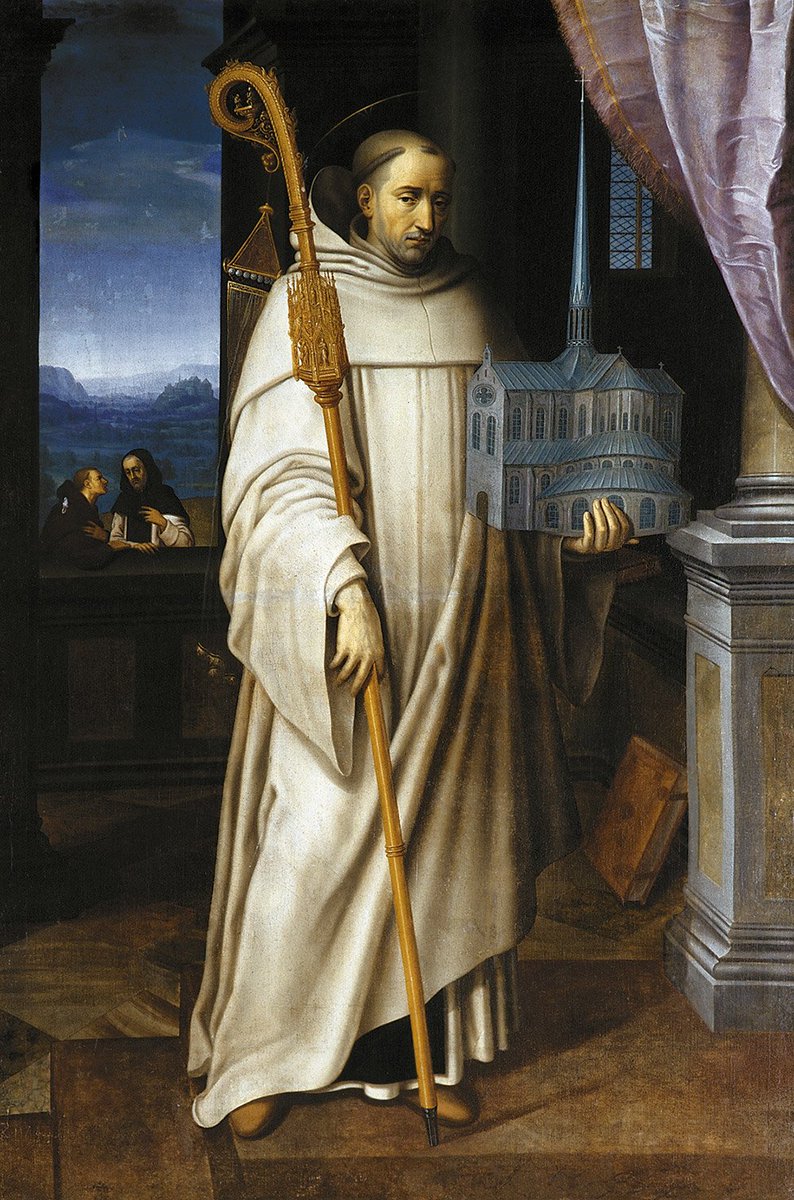
St Bernard
In 1175 he left his Monastery with some Monks and went to found a new one in Matallana, about 25 km from present-day Valladolid in Spain, placing it under the protection of King Alfonso VIII of Castile (1155-1214), known as the Noble.
We do not know the precise date of his death but he died ten years after arriving in Matallana, in 1185 and his remains were placed in the High Altar of the Monastery Church, built with great munificence by Queen Beatrice, wife of King St Ferdinand III of Castile (1199-1252) and the Abbess of the Monastery of Las Huelgas (Burgos), Doña Berenguela. This deposition is certainly a testament to the life of a founder which, in those times, was already a title of sanctity, as well as a man of God and a worthy Abbot and leader of his Cistercian Monks.
His Relics are currently venerated in the Parish Church of Matallana where, it is said many miracles have occurred at his Shrine. He has been invoked as a protector against rural disasters, particularly against locusts.
St Robert O.Cist. (Died 1185) Abbot atMatallana, Spain St Silvanus (Died c450) Bishop of Troas, Phrygia.
Greek Martyrs of Rome – 9 Saints: Several Greek Christians Martyred in the persecutions of Valerian – Adria, Aurelia, Eusebius, Hippolytus, Marcellus, Mary Martana, Maximus, Neon and Paulina. They were martyred by various means between 254 and 259 in Rome, Italy and are buried in the Callistus catacombs, Rome.
Martyrs of Africa – 4 Saints: Four Christians Martyred in Africa in the persecutions of Arian Vandals – Januarius, Securus, Severus and Victorinus.
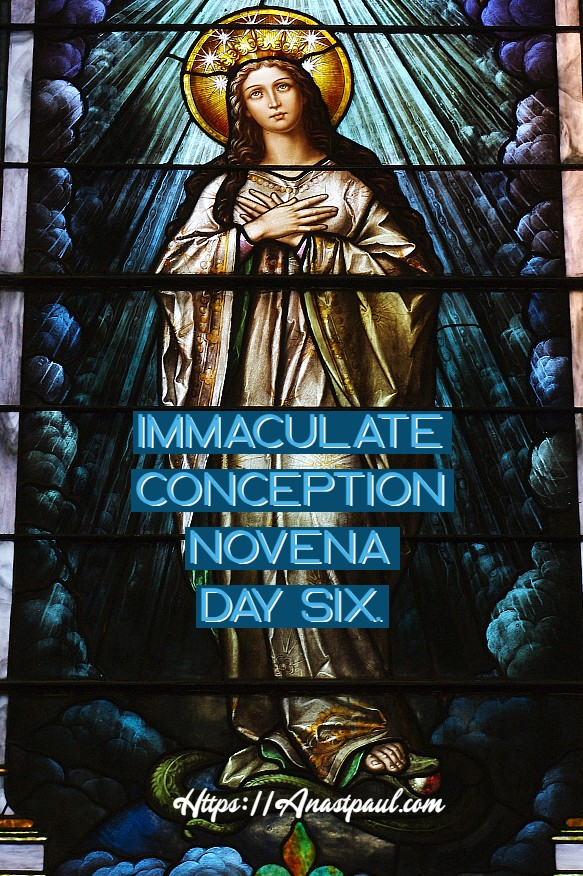
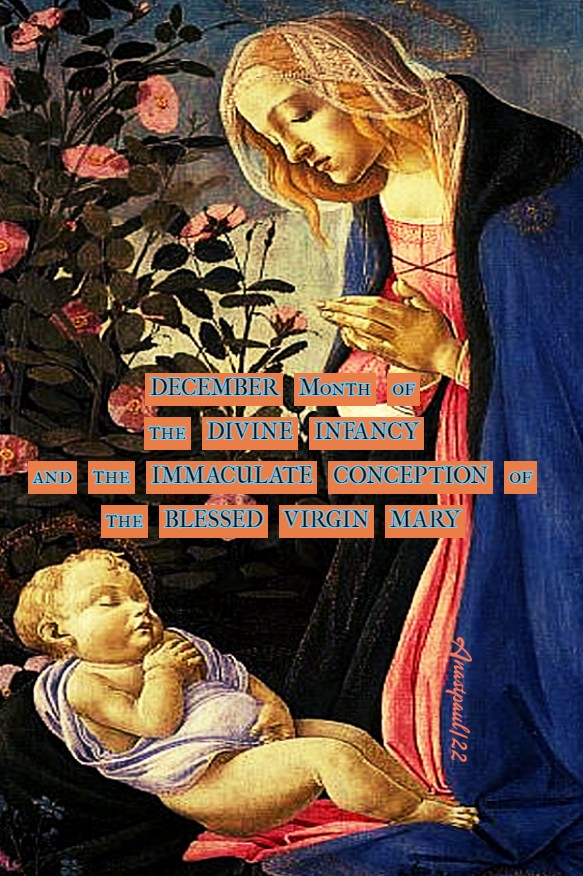
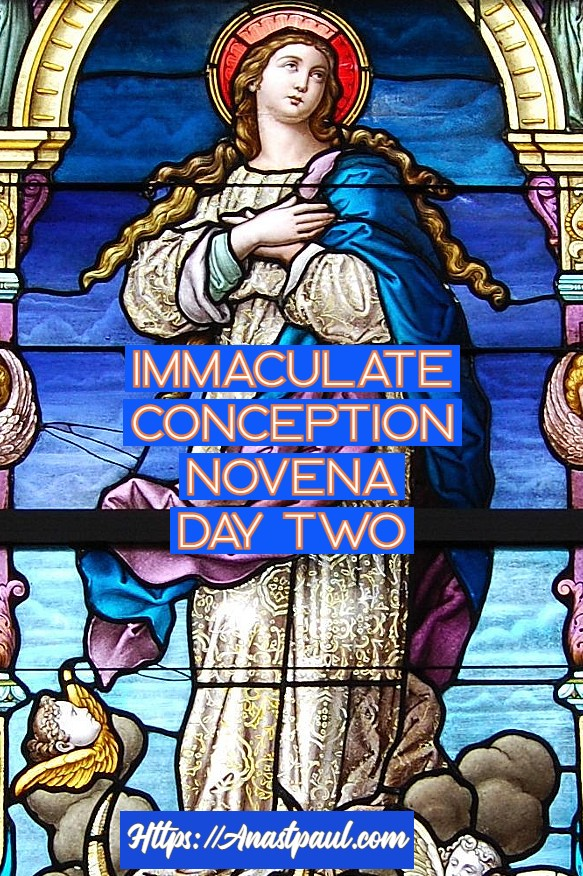
DECEMBER: The Month of Devotion to The DIVINE INFANCY and The IMMACULATE CONCEPTION of the BLESSED VIRGIN MARY
The observance of Divine Infancy Month recalls the first Christmas more than 2,000 years ago when Jesus humbled Himself and became Completely Human, while remaining Completely Divine. The Blessed Virgin Mary was chosen to be the glorious Tabernacle of the Son of God. Therefore, in the first moment of her existence, God, called her into being that she might assume the exalted dignity of the Mother of His Son and, therefore, granted her the singular privilege of exemption from Original Sin.
Look to Our Lady – she is already waiting at the crib, desiring to teach us to make our hearts a pleasant crib for the Christ Child to dwell in.
Cultivate a spirit of prayer and attentiveness to His Presence as the Divine Infant by adopting Aspirations suitable to the season, such as:
Divine Infant King Jesus, come down into our hearts! Lord Jesus, through Thy Infant cries in the manger, when Thou was born for me; through Thy tears, when Thou died for me on the Cross; throughThy love, as Thou do live for me in the Tabernacle, have mercy upon me and save me. Amen!
Thought for the Day – 1 December – Meditations with Antonio Cardinal Bacci (1881-1971)
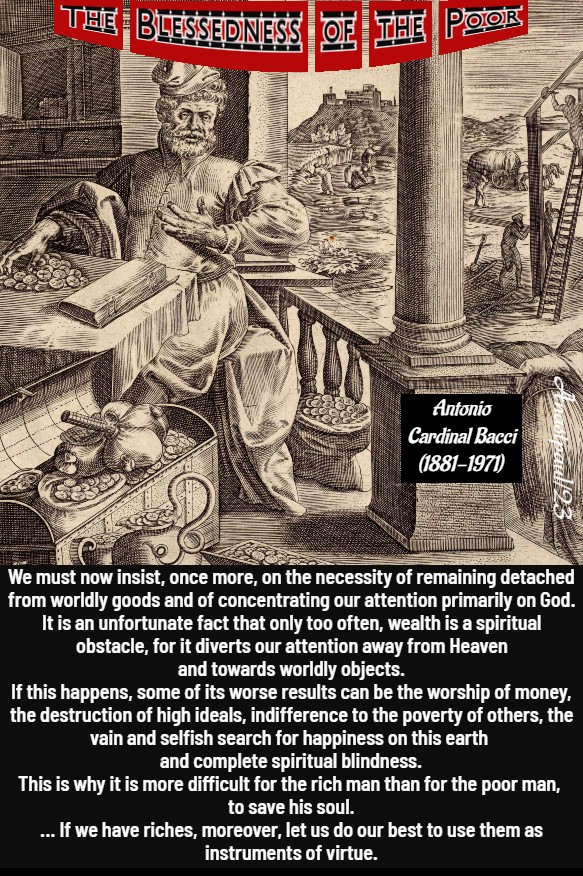
The Blessedness of the Poor
“We have established the principle that wealth is, in itself, good and is a gift from God but that, “it is good, insofar, as it leads us towards virtue and evil, insofar, as it leads us towards vice” (Summa Contra Gentiles III 134). We must now insist, once more, on the necessity of remaining detached from worldly goods and of concentrating our attention primarily on God. It is an unfortunate fact that only too often, wealth is a spiritual obstacle, for it diverts our attention away from Heaven and towards worldly objects. If this happens, some of its worse results can be the worship of money, the destruction of high ideals, indifference to the poverty of others, the vain and selfish search for happiness on this earth and complete spiritual blindness. This is why it is more difficult for the rich man than for the poor man, to save his soul.
“If thou wilt be perfect, go, sell what thou hast and give to the poor” (Mt 19:21). This is an evangelical counsel which we may have neither the courage, nor the vocation to pursue. At least, however, let us seek to purify ourselves of all attachments to wealth. If we have riches, moreover, let us do our best to use them as instruments of virtue.”
Quote of the Day – 1 December – The Feast of St Andrew, Apostle of Christ, Martyr on the Cross for Christ
It is claimed, that the words below were spoken by St Andrew, according to an ancient account (which dates to the beginning of the 6th Century), entitled –
The Passion of Andrew
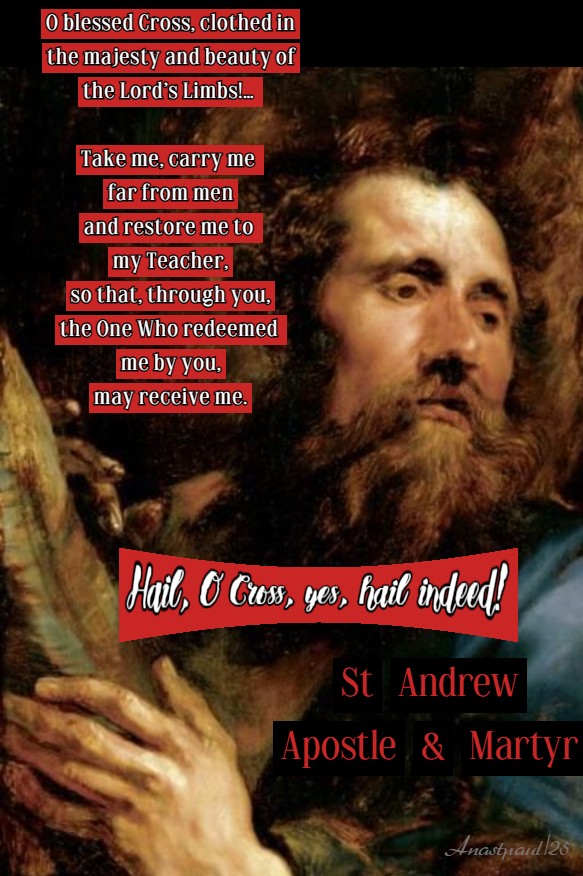
“Hail, O Cross, inaugurated by the Body of Christ and adorned with His Limbs as though they were precious pearls. Before the Lord mounted you, you inspired an earthly fear. Now, instead, endowed with heavenly love, you are accepted as a gift.
Believers know of the great joy that you possess and of the multitude of gifts you have prepared. I come to you, therefore, confident and joyful, so that you too may receive me, exultant as a disciple of the One Who was hung upon you….
O blessed Cross, clothed in the majesty and beauty of the Lord’s Limbs!…
Take me, carry me far from men and restore me to my Teacher, so that, through you, the One Who redeemed me by you, may receive me.
One Minute Reflection – 1 December – “The Month of the Divine Infancy and the Immaculate Conception of the Blessed Virgin Mary” – The Feast of St Andrew, Apostle of Christ – Romans 10: 10-18 – Matthew 4: 18 -22 – Scripture search here: https://www.drbo.org/
“At once they left their nets and followed him.” – Matthew 4:20
REFLECTION – “After Andrew had remained with Jesus (Jn 1:39) and had learned what he did learn, he did not keep his treasure concealed for himself but hastened to run quickly to his brother, Simon Peter, to share with him, the good things he had received. Consider what he told his brother: “We have found the Messiah (which interpreted is Christ)” (Jn 1:41). Do you perceive, in these words, the fruit of what he had learned in such a short time? It shows, at once, the authority of the Teacher Who taught His disciples and, their own enthusiasm and will, to learn from Him, since the very beginning.
Indeed Andrew’s eagerness, his zeal in wanting to immediately spread such a good news, supposes a soul who was longing to see the accomplishment of the many prophecies concerning Christ. It is a mark of brotherly kindness, of loving kinship, of genuine goodwill, to hasten to stretch out a helping hand to one another in spiritual matters. … ”We have found the Messiah” he says – not any messiah but “the Messiah,” the One Christ they were awaiting.” – St John Chrysostom (347-407) Father and Doctor of the Church (Homely on the Gospel of Saint John, 19:1).
PRAYER – Lord, in Your kindness hear our petitions. You called Andrew the Apostle, to preach the Gospel and guide Your Church in faith. May he always be our friend in Your Presence, to help us with his prayers. We ask this through our Lord Jesus Christ, Your Son, who lives and reigns with You and the Holy Spirit, one God, forever and ever. Amen. (Collect)
Our Morning Offering – 1 December – “The Month of the Divine Infancy and the Immaculate Conception of the Blessed Virgin Mary” – The Feast of St Andrew, Apostle and Martyr
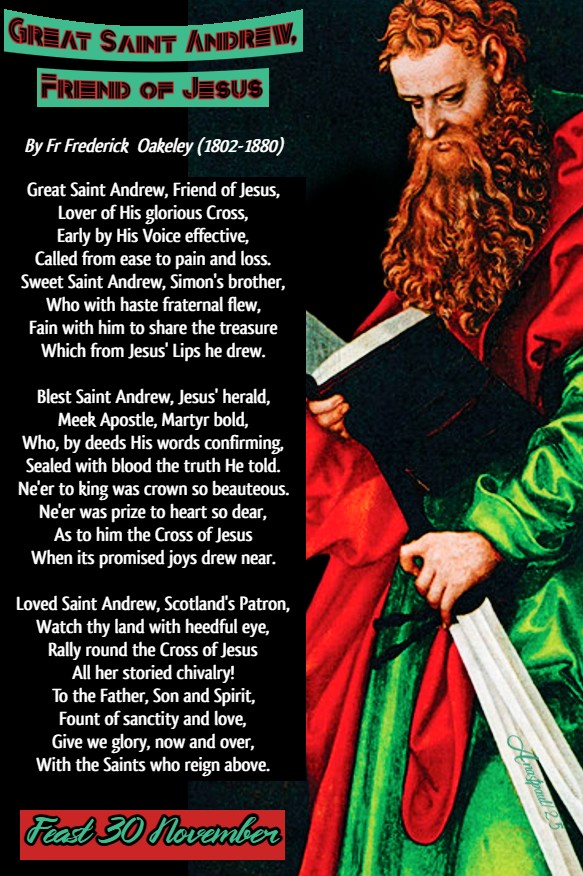
Great Saint Andrew, Friend of Jesus By Fr Frederick Oakeley (1802-1880)
Great Saint Andrew, Friend of Jesus, Lover of His glorious Cross, Early by His Voice effective, Called from ease to pain and loss. Sweet Saint Andrew, Simon’s brother, Who with haste fraternal flew, Fain with him to share the treasure Which from Jesus’ Lips he drew.
Blest Saint Andrew, Jesus’ herald, Meek Apostle, Martyr bold, Who, by deeds His words confirming, Sealed with blood the truth He told. Ne’er to king was crown so beauteous. Ne’er was prize to heart so dear, As to him the Cross of Jesus When its promised joys drew near.
Loved Saint Andrew, Scotland’s Patron, Watch thy land with heedful eye, Rally round the Cross of Jesus All her storied chivalry! To the Father, Son and Spirit, Fount of sanctity and love, Give we glory, now and over, With the Saints who reign above.
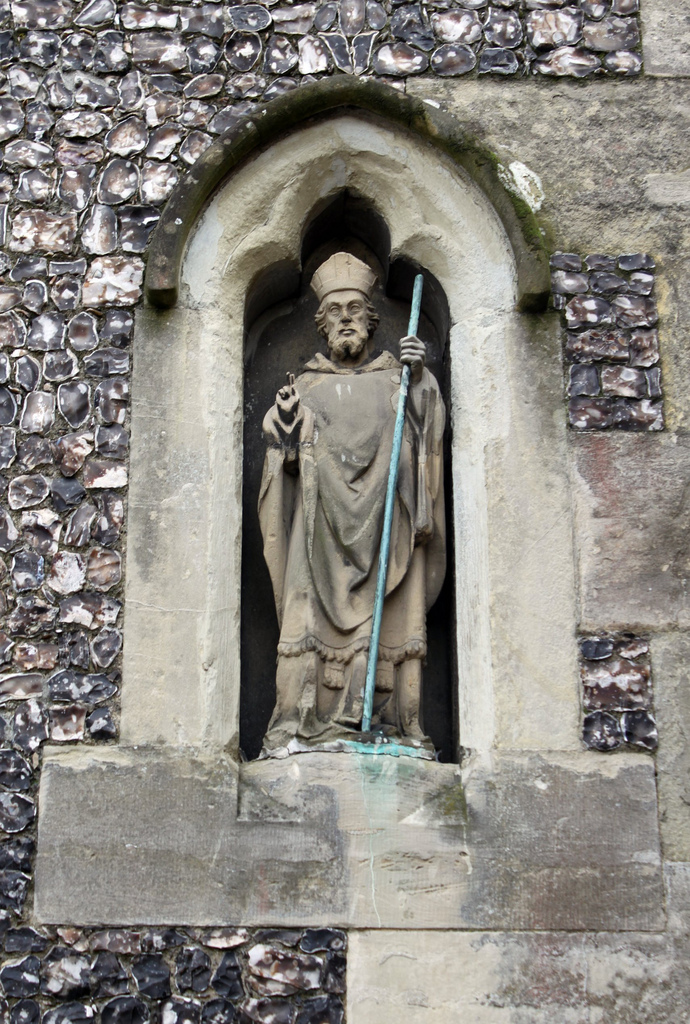
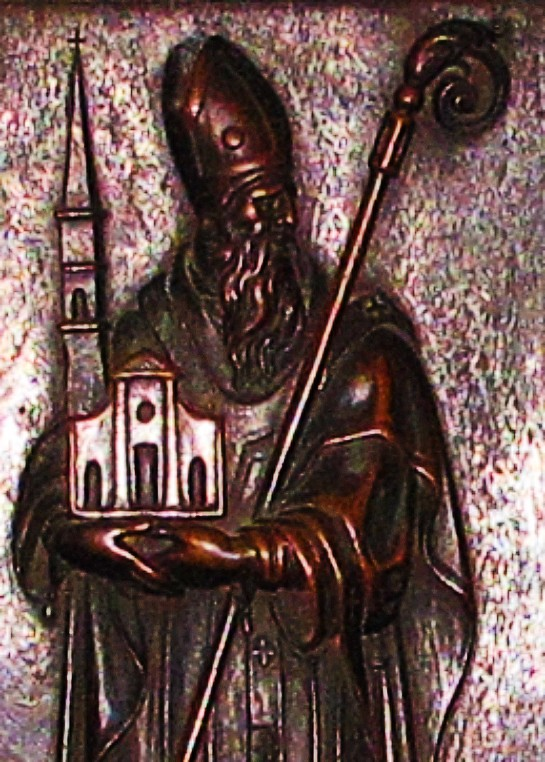
Saint of the Day – 1 December – Saint Ursicinus (Died c347) Bishop of Brescia, Lombardy, Italy, powerful Defender of the Faith against heresy, particularly Arianism. Also known as – Ursaci, Ursicino. Additional Memorial – 20 April as one of the Saints of Diocese of Brescia.
The Roman Martyrology reads today: “At Brescia, St Ursicinus, Bishop.”
Ursicinus was the Bishop of Brescia who lived between the 3rd and 4th Centuries. In the list of Bishops, he is listed 5th or 6th, after Saint Apollonius and before Saint Faustinus.
Ursicinus is the first bishop of Brescia to whom a chronologically correct date can be assigned. Indeed, St Hilary of Poitiers, in listing the Prelates present at the Council of Sardica which took place between the end of 343 and the beginning of 344, documents his participation with the signature “Ursacinus ab Italia de Brixia.” This presence was also confirmed by St Athanasius, who noted the Bishop’s support for orthodoxy against Arian doctrine.
This signature sparked a controversy over the name of the Brescian Prelate, who, according to Guerrini, should have been called Ursacius and not Ursicinus. But the name Ursicinus has prevailed since ancient records attested in Rampertus’ Sermon and in calendars prior to the 16th Century.
We have no further information about Saint Ursicinus’ leadership of the Brescia Diocese.
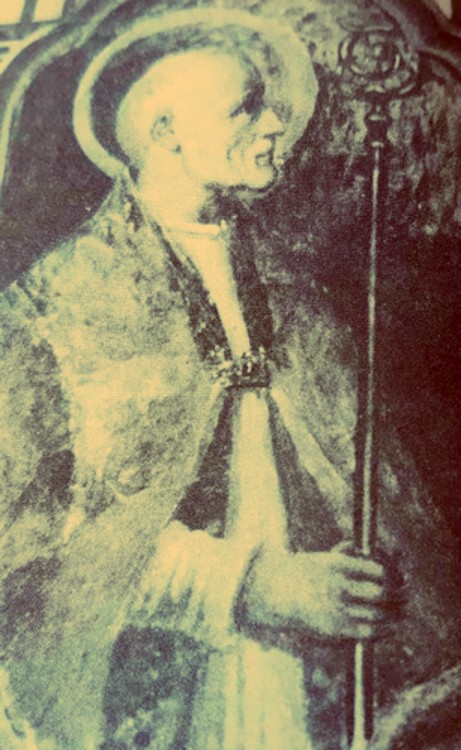
He was buried in the Church of Sant’Apollonio, located outside the City Walls. In 1517, when the Venetians demolished the Church, his Relics were transferred to the Church of San Giuseppe, inside the City, and placed under the Altar of San Rocco, where they remain today, in a marble antependium beneath the Altar.
The highly raised apse, resting above a clearly visible crypt, is dedicated to San Rocco and was frescoed in the 18th Century by Sante Cattaneo Artist of the monochromes of San Rocco and Ursicinus, Co-Patrons of the Church.
The cult of Saint Ursicinus is attested in the 7 Liturgical Calendars of the 11th-15th Centuries and in the 3 Litanic orders, one of which dates to the 9th Century and is contained in a codex of the Monastery of San Salvatore. Currently, the feast of Saint Ursicinus has been absorbed into the single memorial of the Brescian Saints on 20 April. In the various Martyrologies, Saint Ursicinus is remembered and celebrated on 1 December.
St Agericus of Verdun St Agnofleta St Alexander Briant St Ambon of Rome St Ananias of Arbela St Ansanus the Baptizer Bl Antony Bonfadini St Candida of Rome St Candres of Maestricht St Cassian of Rome
St Latinus of Rome St Leontius of Fréjus St Lucius of Rome St Marianus St Marina of Rome St Martinus St Nahum the Prophet St Natalia of Nicomedia St Olympiades St Proculus of Narni St Resignatus of Maastricht Bl Richard Langley St Rogatus of Rome St Simon of Cyrene St Superatus of Rome St Ursicinus (Died c347) Bishop of Brescia
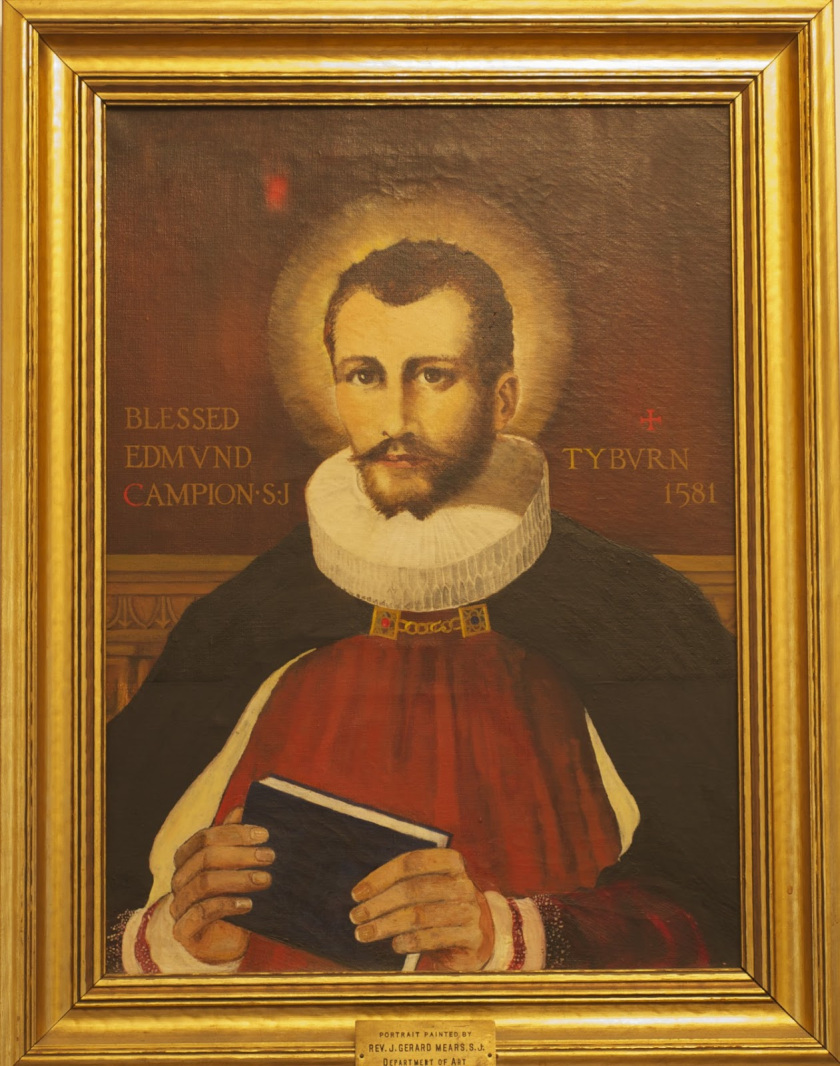
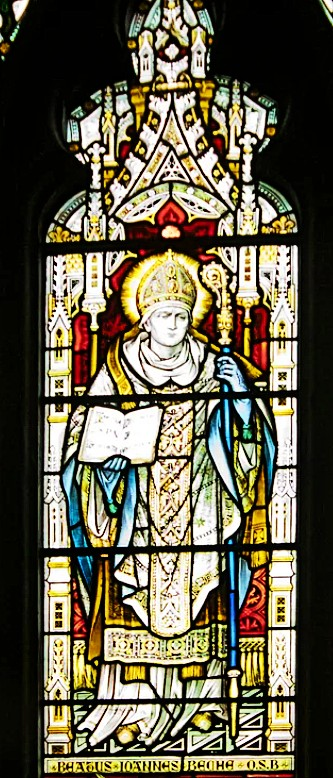
Martyrs of Oxford University: A joint commemoration of all the men who studied at one of the colleges of Oxford University and who were later Martyred for their loyalty to the Catholic Church during the official persecutions in the Protestant Reformation in England under Elizabeth I. They are: Blessed Edward James • Blessed Edward Powell • Blessed Edward Stransham • Blessed George Napper • Blessed George Nichols • Blessed Hugh More • Blessed Humphrey Pritchard • Blessed James Bell • Blessed James Fenn • Blessed John Bodey • Blessed John Cornelius • Blessed John Forest • Blessed John Ingram • Blessed John Mason • Blessed John Munden • Blessed John Shert • Blessed John Slade • Blessed John Storey • Blessed Lawrence Richardson • Blessed Mark Barkworth • Blessed Richard Bere • Blessed Richard Rolle de Hampole • Blessed Richard Sergeant • Blessed Richard Thirkeld • Blessed Richard Yaxley • Blessed Robert Anderton • Blessed Robert Nutter • Blessed Robert Widmerpool • Blessed Stephen Rowsham • Blessed Thomas Belson • Blessed Thomas Cottam • Blessed Thomas Pilcher • Blessed Thomas Plumtree • Blessed Thomas Reynolds • Blessed William Filby • Blessed William Hart • Blessed William Hartley • Saint Alexander Briant • Saint Cuthbert Mayne • Saint Edmund Campion • Saint John Boste • Saint John of Bridlington • Saint John Roberts • Saint Ralph Sherwin • Saint Thomas Garnet • Saint Thomas More.
DISCLAIMER: Please note: I cannot control the content of the Advertisements on this Site, or of pop-ups which may appear, The revenue from the Advertisements, however, does provide a little assistance in the support of the Site. I do apologise for any inappropriate content.

















 AnaStpaul
You must be logged in to post a comment.