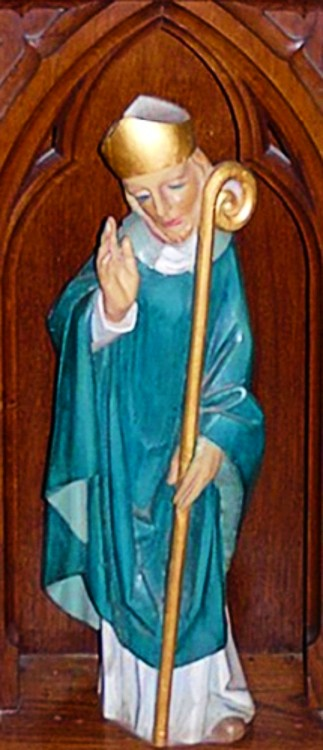
Posted in GOD is LOVE, LENT 2026, The PASSION, Thomas Aquinas

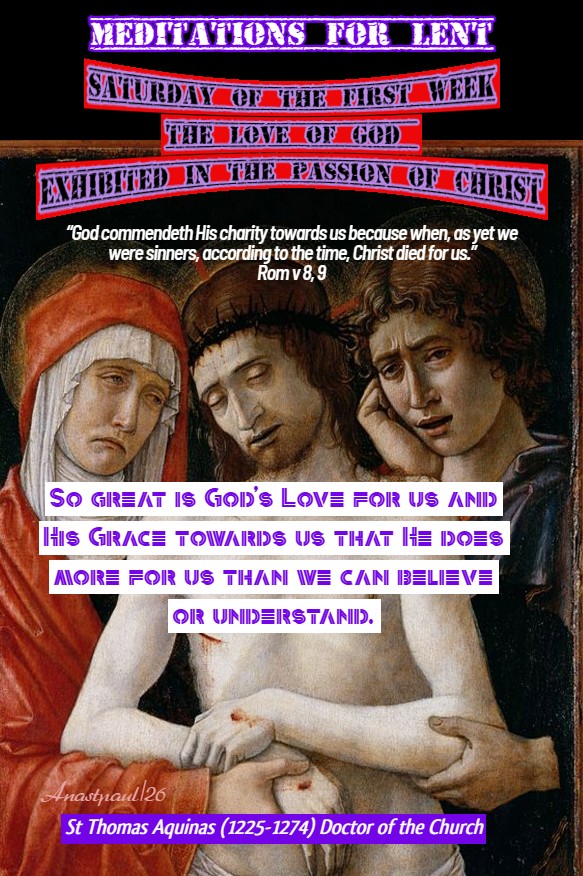
Saturday of the First Week of Lent – 28 February – Our Lenten Journey With St Thomas Aquinas – The Love of God Exhibited in the Passion of Christ

Saturday of the First Week of Lent – 28 February – Our Lenten Journey With St Thomas Aquinas (1225-1274) Doctor of the Church

Saturday of the First Week
The Love of God
Exhibited in the Passion of Christ

God commendeth His charity towards us because when, as yet we were sinners, according to the time, Christ died for us.
Rom v 8, 9

  1. “Christ died for the ungodly” (ibid 6
    This is a great thing if we consider Who it is Who died, a great thing too if we consider on whose behalf He died.
    For scarcely for a just man, will one die (ibid 6), that is to say that you will not find anyone who will die even to set free a man who is innocent, nay even, it is said, “The just perisheth and no man layeth it to heart” (Isaias l vii).

Rightly, therefore, does St.Paul say scarcely will one die. There might perhaps be found one, someone rare person, who out of sa uperabundance of courage, would be so bold as to die for a good man. But this is rare, for the simple reason that so to act is the greatest of all things. “Greater love than this, no man hath, says Our Lord Himself, that a man lay down his life for his friends (John xv. 13).

But the like of that which Christ Himself did, to die for evildoers and the wicked, has never been seen.
Wherefore rightly do we ask in wonderment, why Christ did this.

  1. If in fact it be asked, why Christ died for the wicked, the answer is that God, in this way, commendeth His Charity towards us. He exhibits to us in this way that He Loves us with a Love which knows no limits, for while we were as yet sinners, Christ died for us.

The very death of Christ for us, depicts the Love of God, for it was His Son Whom He gave to die that satisfaction might be made for us. God so Loved the world, as to give His Only Begotten Son (John iii. 16).
And thus, as the Love of God the Father for us is proved in His giving us His Holy Spirit, so also is it proved in this way, by His Gift of His Only Son.

The Apostle says, God commendeth, signifying thereby that the Love of God cannot be measured. This is exhibited by the very fact of the matter, namely the fact that He gave His Son to die for us and it is proved too by reason of the kind of people we are, for whom He died.
“Christ was not stirred up to die for us by any merits of ours, when as yet we were sinners. God (who is rich in mercy) for His exceeding Charity wherewith He Loved us, even when we were dead in sins, hath quickened us together in Christ ” (Eph ii. 4).

  1. All this is almost too much to be believed.
    “A work is done in your days which no man will believe when it shall be told” (Habac i. 5).
    This Truth that Christ died for us is so difficult a Truth that scarcely can our intellect grasp it. Nay it is a Truth which our intellect can, in no way understand.
    And St Paul preaching, makes echo to Habacuc, I work a work in your days, a work which you will not believe, if any man shall tell it to you (Acts xiii 14).

So great is God’s Love for us and His Grace towards us that He does more for us than we can believe or understand.

ST THOMAS AQUINAS (1225-1274)
Priest, Theologian, Dominican
Doctor Angelicus (Angelic Doctor)
Doctor Communis (Common Doctor)
Added by Pope Saint Pius V in 1568
Posted in AUGUSTINIANS OSA, DOCTORS of the Church, FATHERS of the Church, QUOTES on HUMILITY

Quote of the Day – 28 February – If you wish to reach high, then begin at the lowest level.

Quote of the Day – 28 February – Ember Saturday

If you wish to reach high, then begin at the lowest level.
If you are trying to construct some mighty edifice in height,
you will begin with the lowest foundation.
This is humility.
However great the mass of the building
you may wish to design or erect,
the taller the building is to be,
the deeper you will dig the foundation.
The building in the course of its erection,
rises up high but he who digs its foundation,
must first go down very low.
So then, you see even a building is low
before it is high and the tower is raised,
only after humiliation.

St Augustine (354-430)
Father and Doctor of Grace

Posted in BLESSED TRINITY PRAYERS, Holy Name PRAYERS, JANUARY month of THE MOST HOLY NAME of JESUS, LENT 2026, LENTEN PRAYERS & NOVENAS, Our MORNING Offering, PRAYERS of the CHURCH, QUOTES on BLASPHEMY, QUOTES on REPARATION/EXPIATION

Our Morning Offering – 28 February – The Golden Arrow

Our Morning Offering – 28 February – “The Month of the Most Holy and Blessed Trinity” – Saturday of the First Week of Lent

The Golden Arrow

This prayer was revealed by Jesus Himself to a Carmelite Nun of Tours in 1843 as a Reparation for Blasphemy. “This Golden Arrow will wound My Heart delightfully” He said “and heal the wounds, inflicted by blasphemy.”

May the Most Holy,
Most Sacred,
Most Adorable,
Most Mysterious
and Unutterable Name of God
be always praised,
blessed, loved, adored
and glorified in Heaven.
on earth and under the earth,
by all the creatures of God
and by the Sacred Heart
of our Lord Jesus Christ
in the most Holy Sacrament
of the Altar.
Amen

Posted in SAINT of the DAY

Saint/s of the Day – 28 February – St Cyra AND St Marana (Circa Mid 5th Century) Virgins and Hermits

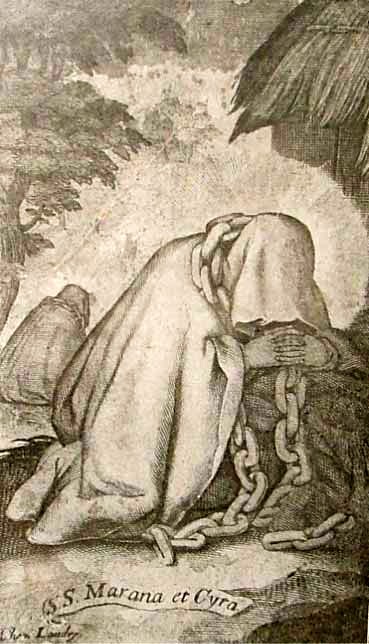
Saint/s of the Day – 28 February – St Cyra AND St Marana (Circa Mid 5th Century) Virgins and Hermits of Beroea in Syria. Two female Syrian Hermits of noble lineage who led an austere life of fasting, prayer, and silence for 42o years. They also made pilgrimages to holy places in Jerusalem and Isauria.

St Theodoret (c393-c457) devotes a Chapter (the 29th) of his Religiosa Historia to Marana and Cyra, who were still alive when he wrote his work in around 440.

In his word:
“Their country is Beroea (modern Aleppo), where they descended from an illustrious race and were educated according to their condition and birth.
But despising all the advantages granted them by nature, they shut themselves up in a small site near the City, having the gate walled up.

Wishing to imitate them in this way of life, some of their female servants built them a small house, adjacent to the hermitage, in which they ordered them to live; observing their actions through a small window, they often made them do prayer exercises and inflamed them with the love of God…

Instead of the door, they had a small window through which they received what was necessary for their life and spoke with the women who came to visit them only during the time of the ‘cinquantin’ (= Easter time), spending the rest of the year in constant silence, I mean with regard to Marana, the only one who speaks to these women. As for Cyra, in fact, no one has ever heard her utter the slightest word.

Cyra, who is of a more delicate constitution than the other, is always bent to the ground, unable to stand up. They wear dresses so long that they cover their feet and in front they have a kind of veil that comes down to the waist and completely covers the face, hands and stomach.”

When Teodoreto wrote these lines, Marana and Cyra had already been leading this life of Hermits for 42 years, making it even more painful by wearing heavy chains and sometimes prolonging the fast up to forty days.

“Driven by the desire to see the holy places whichJesus Christ honoured with His sufferings, they went fasting to Jerusalem, eating only after worshiping God.
On their return, they resumed fasting, even though it would have taken them no less than 20 days to make such a long journey.”

Another time, they similarly travelled to Isauria to visit the Church of Saint Thecla, the first Martyr of that region. As time passed, Marana and Cyra did not slow domn in this way of life; on the contrary, they continued with ever-renewed ardour toward the crown which Christ would place upon their heads after their victory.

We do not know the date of Marana and Cyra’s death, since Theodoret is our only source.

Posted in EMBER DAYS, SAINT of the DAY

EMBER SATURDAY of the FIRST WEEK of LENT – Fast & Abstinence and the Saints for 28 February

EMBER SATURDAY
of the FIRST WEEK of LENT – Fast & Abstinence

https://anastpaul.com/2020/12/16/today-is-an-ember-day-did-you-remember/

St Abercius

St Caerealis
St Caerealis of Alexandria
St Cyra AND St Marana (Circa Mid 5th Century) Virgins and Hermits of Beroea
St Ermine
St Gaius of Alexandria

St Justus the Potter
St Llibio
St Macarius the Potter
St Maidoc

St Proterius of Alexandria
St Pupulus of Alexandria

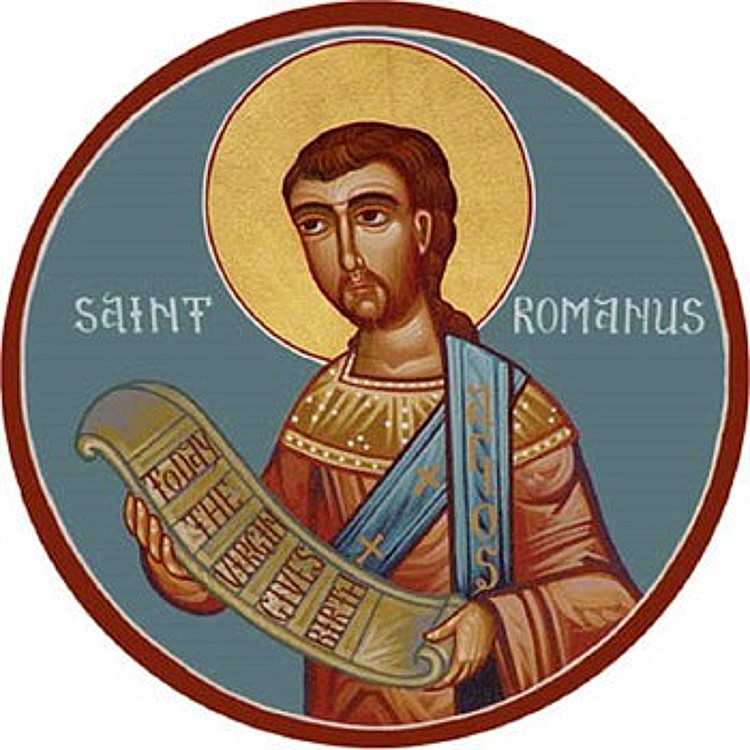
St Romanus (c390–c 463) Abbot, Hermit.
His Holy Life:

https://anastpaul.com/2022/02/28/saint-of-the-day-28-february-saint-romanus-of-condat-c-390-c-463/

St Ruellinus (6th Century) Bishop ofof Treguier. He was the 2nd Bishop of his See in Brittany, France.
His Zealous Life:

https://anastpaul.com/2025/02/28/saint-of-the-day-28-february-saint-ruellinus-6th-century-bishop/

St Rufinus the Potter
St Serapion of Alexandria
St Sillan of Bangor
St Theophilus the Potter

Blessed Villana de’Botti OP (1332-1361) Widow, Mother, Penitent, MysticLay Religious of the Order of Preachers. She was gifted with visions of Our Lady and of the Saints and was granted the gift of prophecy.
Her Grace-filled Life:

https://anastpaul.com/2024/02/28/saint-of-the-day-28-february-blessed-villana-debotti-op-1332-1361-widow/

Martyrs of Alexandria – A number of clerics and layman who died as Martyrs of charity for ministering to the sick during a plague that ravaged Alexandria, Egypt in 261.

Martyrs of Antwerp – 14 Christians who were Martyred together. We know nothing about them but the names Alexander, Anicetus, Cyriacus, Eulalia, Faustus, Genesius, Hirena, Macarius, Mauritius, Modestus, Placidus, Rochus, Symforian and Victorinus. Died in Rome, Italy, date unknown. Their Relics were transferred and enshrined in Antwerp, Belgium.

Martyrs of Corinth – A group of Christians Martyred together in Corinth, Greece. The only information we have about them are the names Basilia, Betha, Caius, Claudius, Diodorus, Donatus, Enuclus, Felix, Hermes, Januaria, Januarius, Maccaris, Maninlia, Mansuetus, Nicophorus, Papias, Quinquianus, Rufunia, Serapion, Servilia, Silvana, Stercola, Tella, Veneria, Victor and Victorinus.